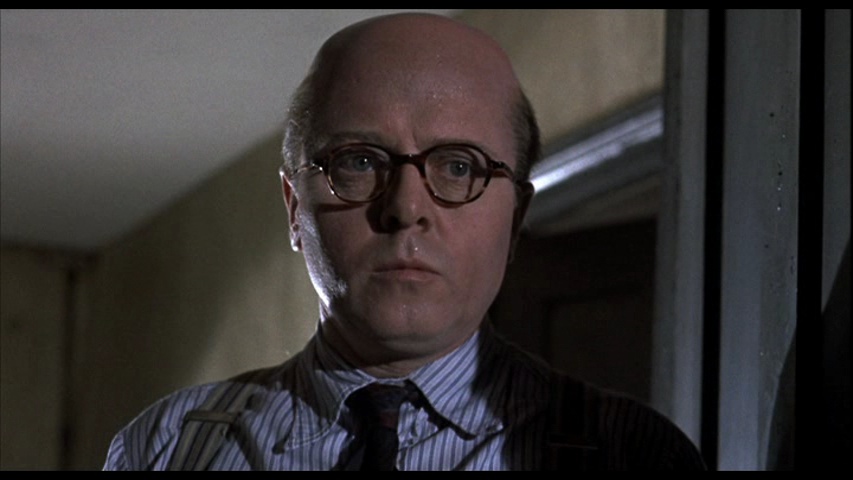
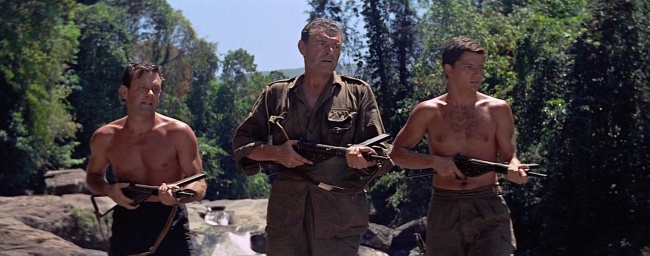
Tag: André Morell

Summertime (1955)

Summertime (1955)

An independent woman finds romance in Venice in this luscious travelogue, one of the best of its genre

Director: David Lean

Cast: Katharine Hepburn (Jane Hudson), Rossano Brazzi (Renato de Rossi), Darren McGavin (Eddie Yaeger), Jane Rose (Mrs McIlhenny), Mari Aldon (Phyl Yaeger), Macdonald Parker (Mr McIlhenny), Gaetano Autiero (Mauro), Jeremy Spender (Vito de Rossi), Isa Miranda (Signore Fiorini)

American spinster Jane Hudson (Katharine Hepburn) has dreamed of her holiday-of-a-lifetime in Venice for as long as she can remember. So long in fact, that she wants to capture every single minute on camera and not miss a single sight in the gloriously romantic city. But there is more in this canal city than she expected, something her life of proud, self-sufficient, isolation has had little of: romance – namely from antiques dealer Renato (Rossano Brazzi), the two of them thrown together by chance, in a meeting of hearts and minds.

Summertime was, surprisingly, referred to by David Lean as his personal favourite of his films. It feels like an odd choice: the final film shot in the period between his ever-green 1940s British classics (and Summertime has echoes of Brief Encounter, from love affairs to train stations) and the super-epics that would fill the rest of his career. But, in its patient, quiet and slightly sad look at the continuous presence of regret in our lives and our feelings of loneliness, it perhaps speaks of something in the soul of this surprisingly vulnerable great director.

It won’t have hurt either that Lean himself fell in love with Venice during the shooting of the film. Summertime is very much in the genre of “romantic holiday travelogue” so beloved of the 1950s, when it was practically de rigeur to send glamourous Hollywood stars to exotic locations to conduct star-cross’d love affairs. Summertime might just be the finest of these, combining one of Hollywood’s all-time greats with a director and cameraman who made the setting truly cinematic, rather than the holiday snaps the journeymen who shot similar films reduced the locations to.

I’ll admit it helps I love Venice as well (and it’s amazing, watching this, how little the city has changed in the past 70 years). But Lean and gifted photographer Jack Hildyard shoot it with an intimate wonder. We follow Hepburn down the city’s winding streets and across its many bridges with a close intimacy that doesn’t shy away from the bustle of the city. A beautiful moment sees the camera slowly reveal the appearance of the St Mark’s Square campanile through an arched streetway. Carefully cut imagery flicks over striking features of Venetian architecture. Lean and Hildyard make the city feel like both a dream of a destination, but also a real, organic place, full of delightful nooks and crannies. It’s a masterclass in how to shoot a city both for impact and truth.

It’s a backdrop for an affecting, low-key, character study that gains hugely from the intelligent, emotionally precise performance from Hepburn. No actress in Hollywood could convince more as a woman full of enough brio and confidence to be very comfortable in her own solitude. The brilliance of Hepburn though is to play this all as a carefully maintained front shielding a loneliness she is always aware of but doesn’t want to acknowledge. It’s there from her compulsive need to make conversation with a fellow passenger (a lovely uncredited cameo from André Morell) on the train into the city, or with the people she meets at her hotel. The desire for human contact fills the easy rapport she builds with street urchin Mauro (a lovely performance from Gaetano Autiero) or the awkwardness she feels sitting alone in the bustle of St Mark’s.

It’s why romance – or perhaps the lack of it in her life – creeps up on Jane. Her first chance encounter with Renato is at a café in St Mark’s when he signals down the waiter she’s struggled to catch the eye of, leaving her discombobulated and uncomfortable, as if surprised that a man has taken even a passing interest in her, and uncertain how to respond. She retreats and sit on the canal-side, her eyes caught by a lion-headed drain that water laps in and out of. Perhaps only Hepburn could turn such a small moment into one of such profound passing reflection – and Lean shoots it with a beautiful simplicity.

The relationship slowly builds as she happens to chance on Renato’s antiques shop and he sells her an 18th-century Venetian red glass goblet. Hepburn has a beautifully sensitive, almost girlish tentativeness to her as they walk idly together the next night through the streets. After they kiss under a bridge, she impulsively mumbles she loves him and then runs, as if she was startled by her own confession. The next night she prepares to meet him with a pampering session not out of place in a teen drama, sitting waiting for him with a giddy excitement.

As her beau, Rossano Brazzi has a wonderful unknowable quality to him. There are touches of his own sensitivity and isolation. There is also the worry, as he sits with cosmopolitan ease at a café table or (possibly) flogs Jane a worthless red glass goblet (she later discovers they are ten a penny, though he swears his is a genuine antique) that he could be a heartless roué. Jane worries it as well. But does she care? After all, this is a holiday-of-a-lifetime and perhaps a love affair is just part of that. It might well be the same for Renato: like Brief Encounter, two lonely people who recognise qualities in each other come together for a brief time, to find a little comfort. Let the fireworks explode (which Lean literally does in one more-than-suggestive cross-cut late in the film).

Summertime is very romantic, but it’s also very true. Both Jane and Renato know exactly what they are getting going into this: a blissful moment in time, but not a lasting commitment. There is something very true about this: and a pleasing acknowledgement that independence isn’t a condition to be fixed, but a state that allows bursts of companionship in between voyages of self-contentment. It’s mixes this with touches of humour (Hepburn sportingly performs a pratfall into the Venetian water – although it left her with an eye infection that troubled her for the rest of her life).

It’s possibly the finest travelogue romance ever made, very well paced and gently but handsomely filmed by Lean. Hepburn gives a stunningly intelligent, gentle and wise performance and its honest look at loneliness and passing regret at that loneliness – but still being contented at the choices you have made in life – also make it perhaps one of the most realistic and true-to-life.

Ben-Hur (1959)

Charlton Heston fights for freedom in the large scale but strangely empty Ben-Hur

Director: William Wyler

Cast: Charlton Heston (Judah Ben-Hur), Jack Hawkins (Quintus Arrius), Haya Harareet (Esther), Stephen Boyd (Messala), Hugh Griffith (Sheik Ilderim), Martha Scott (Miriam), Cathy O’Donnell (Tirzah), Sam Jaffe (Simonides), Finlay Currie (Balthasar), Frank Thring (Pontius Pilate), Terence Longdon (Drusus), George Relph (Tiberius Caesar), Andre Morell (Sextus)

Ben-Hur is big. Hammering home its monumentalism, the poster features the colossal stone-carved title dwarfing the people below. It’s the sort of Hollywood epic where the numbers – 10,000 extras! 2,500 horses! Over a million props! 1.1 million feet of film! 11 Oscars! – are as much a part of what you are sitting down to watch as the characters and story. Ben-Hur sits at the apex of the Hollywood Biblical epic: three and a half hours long, the most expensive film ever made (at the time). Age hasn’t always treated it kindly, and its eleven Oscars give it a sort of classic status it’s very hard for the first-time viewer to reconcile with what you actually see on the screen. Fundamentally, Ben-Hur is part spectacle, part pageant: some striking sequences linked together by the twee and the forgettable. Entertainingly middle-brow and over honoured, it’s a classic mostly because of what it represents rather than what it is.

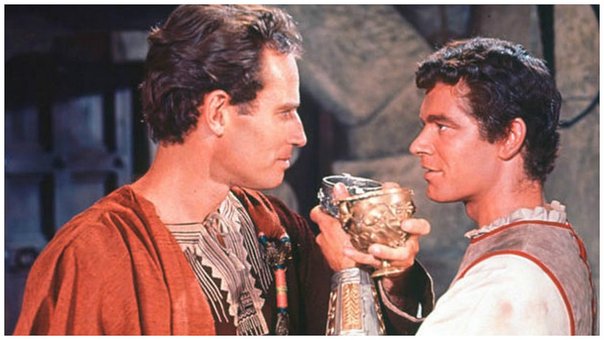
Adapted from General Lew Wallace’s best-selling doorstop (he basically invented the airport novel, decades before the first airport ever opened), the story follows the fortunes of Jewish prince Judah Ben-Hur (Charlton Heston) in the early years of the first millennium. Ben-Hur grew up regarding Roman officer Messala (Stephen Boyd) as a brother. But when Ben-Hur refuses to help Messala identify Jewish insurgents, their friendship comes to an end. Before we know it, Messala suses trumped up charges to send Ben-Hur in chains to a life rowing as a galley slave while his mother Miriam (Martha Scott) and sister Tirzah (Cathy O’Donnell) are imprisoned. Ben-Hur survives the galleys – even becoming the adopted son of Roman Consul Quintus Arrius (Jack Hawkins). When he returns to Jerusalem, will he take his revenge on Messala? Or will the teachings of the mysterious preacher spreading the word of God change his life?

For bursts of its (huge) run-time Ben-Hur is gripping, exciting stuff. The action when it comes is superbly done and some of the moments of high-emotion really hit the spot. But it’s impossible to avoid that, for large chunks of time in-between, Ben-Hur is ponderous, overlong, more than a bit self-important and a little twee. Frequently the film grinds to a halt to parade its numbers: after all we need a long intro to the chariot race so we can see all those extras and horses. Things like this frequently don’t drive forward the story, or help the pace: but Ben-Hur was at least as much about wowing the audience as it was about telling a story.

William Wyler was offered more money than any director in history to bring it to the screen. He produces a film as faultless in its professionalism, as it is impersonal. Wyler – a director who worked best with actor-led stories – struggled with the vastness of Hur: his visual compositions often an awkward attempt to mix the width of the frame with the intimacy of two characters talking. His style doesn’t help here: the heaviness of the cameras made them difficult to move, making many of the conversation scenes of the film rather flat and dull to look at. Wyler doesn’t put a foot wrong, but it feels more like a competent professional ticking boxes.

It’s the big set piece moments – of which there three – which really have stuck in people’s minds. Those would be: the early scenes with Messala/Ben-Hur, the naval battle sequence and the chariot race. Outside of those moments – which are all, in their own ways, very memorable – it’s amazing to me every time I watch it how much of the film I fail to remember. I certainly had forgotten how damn much of the movie is left post Chariot race (over 45 minutes!), the film dragging on through the Miriam/Tirzah leprosy sub-plot intercut with moments from the life of Jesus (often with dialogue of the “He’s giving a Sermon on that Mount” variety). There are several moments in the film where events play out at great length inversely proportional to their interest.

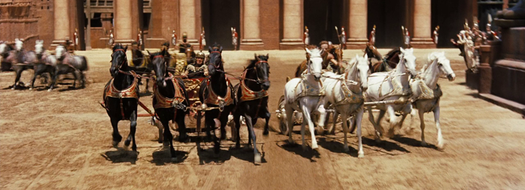
But those set-pieces are great. The chariot race alone probably made the film the success it is. It’s ten minutes of compelling drama, gripping stunts: a feast of tight editing, dynamic camera work and thundering sound effects. Shot by a second unit – although, to be fair, supervised in its planning and editing by Wyler – it’s the heart of the movie. Viscerally enjoyable, it perhaps stands out because it’s the most earthy, exciting, real thing in a movie that can be rather stagy and turgid.

Running it close is the naval battle sequence – show-casing a gravely Jack Hawkins – very well-done (and disguising its water tank shooting origins), particularly because Wyler keeps most of the focus on the slave rowers in the bowels of the ship. While fire and arrows fly up top, and boarding parties clash, it’s from the slaves perspective that we see a vessel approach to ram the ship – and their terror at drowning that we feel. It’s another fine use of the epic big-screen. With virtually no dialogue, it’s also a triumph of visual story-telling, communicating a host of emotions and actions with brilliant efficiency.

The Messala/Ben-Hur sequences have stuck in the mind for other reasons. Long-running debates exist about who actually wrote the script. The credit goes to Ken Turnberg, but Gore Vidal long claimed his fingerprints were on most of the dialogue. (Wyler and Heston disagreed, giving the credit to playwright Christopher Fry – Heston even thanked Fry in his Oscar acceptance speech.) Vidal liked to claim he directed Boyd to play these scenes as if Messala was a spurned lover of Ben-Hur – taking an equal delight in claiming Heston had no idea of this subtext. Wyler argued he had no memory of this, and denied any such direction to Boyd took place. The truth will never really be known, but to me the idea of the writer on a film like this taking creative control seems a stretch.

Anyway, it adds a frisson to the scenes – and its undeniable there is more than a touch of camp to them. To be honest I think a lot of this is due to Stephen Boyd’s OTT performance as Messala. He plays every single scene at a ludicrous pitch – throughout the chariot race he makes Dick Dastardly look the model of underplaying – and I can well imagine Vidal enjoyed taking advantage of his over-emphasis in these sequences to spin an amusing story of sneaking in a homo-erotic subtext.

The acting in general is fairly mundane – for all the film won two Oscars for its performers. Heston (in his only nomination) was named Best Actor. He’s a monumental actor, best used in roles that could have been chiselled from marble, but this is not his best (look to Khartoum, Agony and the Ecstasy or Planet of the Apes for starters). Much like Boyd he’s prone to over-emotionalism (most of the last 40 minutes feature him throwing his face into his hands), intermixed with moments of stony po-facedness. Hugh Griffith won the other Oscar (insanely generous considering he beat out Scott and O’Connell in Anatomy of a Murder) and his hammy, black-face is increasingly uncomfortable. Few of the other performers make much of an impact (although I enjoyed seeing an unbilled John Le Mesurier as a Roman doctor).

The one thing about Ben-Hur that lives up to its grandness is Miklos Rosza’s brilliant -and hugely influential – score. A brilliant mix of the inspiring epic, the grandiose and the deeply spiritual, you can hear its DNA throughout the works of John Williams and several others. It’s one of the longest scores of all time (three hours of music!) but it captures the tone of every scene perfectly, helping to build the overall effect.

It even manages to make some of the Jesus sequences work. The film is never more twee than when it touches on the Bible. Jesus is only ever shown from behind, but always as the classic long-haired, beatific figure, practically floating through the ether. Sequences that show the nativity, the sermon on the mount and the crucifixion have a Sunday School earnestness about them, largely free of drama and seem designed to be as inoffensive (and uninteresting) as possible. It’s when the film is as its most self-consciously earnest.

And Ben-Hur is a very earnest film. A professional job – with a director wrestling all those numbers – it’s got some striking sequences but even more flat, twee and forgettable moments. With acting that ranges from overly-earnest to just over the top, its classic status is more about what it is. The largest, most expensive, most honoured film of the Biblical epic genre. Its’ most famous for all those Oscars and the chariot race: in other words ten minutes of its screen time and garlands from a ceremony we often say honours the wrong films. Judged on film merits, Ben-Hur is not the best but not the worst. But it’s more about all its numbers, the vast array of things in it. It represents Big Studio investment: it’s about money. No wonder Hollywood garlanded it with so many Oscars.

The Hound of the Baskervilles (1959)

Hound of the baskervilles header
Peter Cushing is the great detective in The Hound of the Baskervilles

Director: Terence Fisher

Cast: Peter Cushing (Sherlock Holmes), André Morell (Doctor Watson), Christopher Lee (Sir Henry Baskerville), Marla Landi (Cecile Stapleton), David Oxley (Sir Hugo Baskerville), Francis de Wolff (Dr Mortimer), Miles Malleson (Bishop Frankland), Ewen Solon (Stapleton), John Le Mesurier (Barrymore), Helen Gross (Mrs Barrymore)

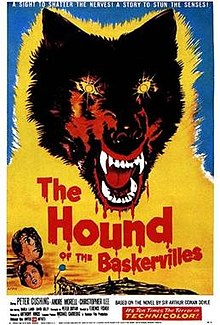
Arthur Conan Doyle’s most famous story hardly needs introduction. In 1959 it was told with a Hammer Horror twist. With its demonic dog, fog covered moor and blood-laden backstory surely no Sherlock Holmes story could be better suited to the studio. The film is fairly faithful to the basic outline of the original, although with added tarantulas and (more controversially) a new villain.

But it all works pretty much a treat, largely due to the performances of Cushing and Morell as Holmes and Watson. Cushing’s Holmes is sharp, analytical, has bursts of energy mixed with impatient distraction. Cushing went back to the stories and threw in many small details – from lines from Doyle to physical moments such as securing notes to the mantelpiece with a knife. His Holmes also uses rudeness in a Doylesque way he rarely does in film. Cushing has the intelligence and dynamism of the Detective – he’s one of the more overlooked actors to play the role – and had been determined to be faithful in his interpretation (sadly sequels were not forthcoming, although Cushing played the role several more times on the BBC).

Morell also returned to the novels to present a Dr Watson who was smooth, professional, assured and competent if uninspired. It was a far cry from the blundering buffoon which – thanks to Nigel Bruce – the public expected from Holmes’ faithful Boswell. Morell’s more patrician style made him a fine contrast with Cushing’s bohemian tinged Holmes. The two actors also spark beautifully off each other and create a feeling of a genuine friendship, underpinned by affection and loyalty, frequently showing genuine concern for each other’s safety.

Aside from these two excellent performances in the leads, the film is a solid if not spectacular adaptation, competently filmed. Terence Fisher’s direction sometimes struggles to cover the cheapness of the enterprise and some sets convince more than others. For a film that is quite short, the pace sometimes slackens (the Baskerville legend in particular gets far too much screen time, probably connected to the presence of the buxom servant girl Sir Hugo is planning to bed). Moments such as an attempt to assassinate Sir Henry via tarantula in London (which makes no sense at all) provides decent moments of tension but are basically filler.

The film does manage to address some of the problems of the novel by introducing a greater sense of mystery, in particular by providing motivations for several characters. Saying that, just as in the novel (where the mystery is solved by Holmes travelling to Scotland and reading some records – not good drama), here much of the mystery is resolved by Holmes carrying out an off-stage conversation with convict Seldon. Much as in the book, Holmes travelling to the area incognito doesn’t really add much to the story other than providing a late reveal.

Better invention however comes in the introduce of a femme fatale in Marla Landi’s Cecile Stapleton, here re-imagined as a sexy, wild girl of undefined (and nonsensical) European origin. She sparks off a neat chemistry with Christopher Lee’s Sir Henry – here playing for the only time in his career not the villain but the romantic lead! – and her development late in the film presents a fresh take on the resolution.

It’s certainly a little more fresh than the eventual scuffle with the dog – which to be honest doesn’t look either that intimidating or convincing. The dog itself is rather underwhelming, and more threat is actually conveyed by the moor itself, a mysterious stretch of land coated in fog covering treacherous bogs.

What Fisher and Hammer do really well is atmosphere, and the gothic feel of the piece is pretty much spot on. There is the expected claret red blood – and a suggestion of something really grotesque which befalls a victim on the moor – mixed in with sexy ladies. It’s an exploitation twist on Holmes, but then the novel itself was basically pretty much a B-movie in text. And the fundamental story is largely unchanged, with both the virtues and vices of the book captured.

The finest thing about it is the acting. Several scene-stealing actors chuck in neat cameos. Le Mesurier is perfect as the reserved butler Barrymore. De Wolff is a sharp and arrogant Mortimer. Malleson steals his scenes as an absent-minded Frankland (here re-imagined as an eccentric cleric). Christopher Lee relishes the chance to play against type, making Sir Henry a pillar of upright, honest decency. But the real delight is Cushing and Morell as Holmes and Watson, a brilliant combination.

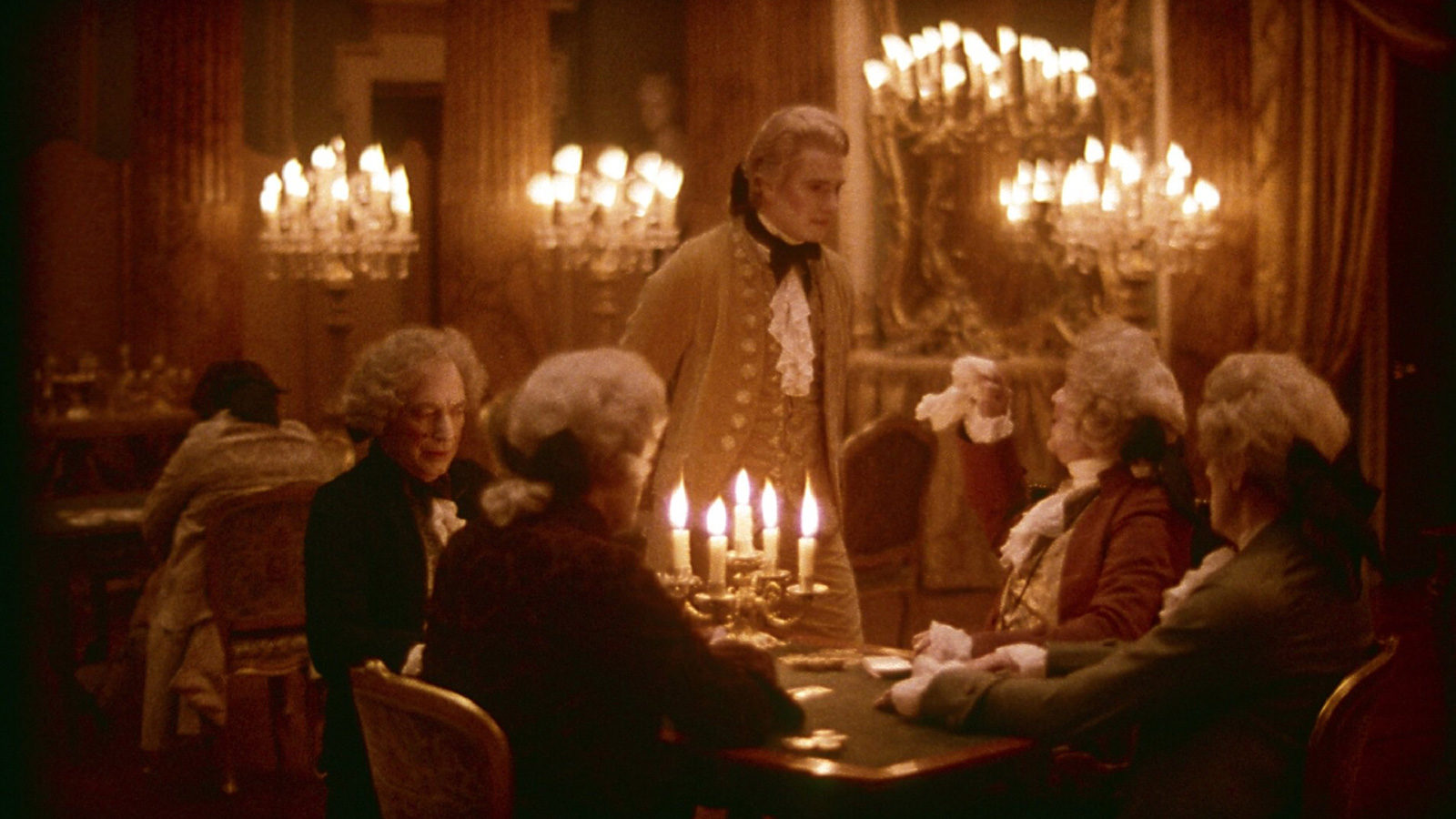
Barry Lyndon (1975)

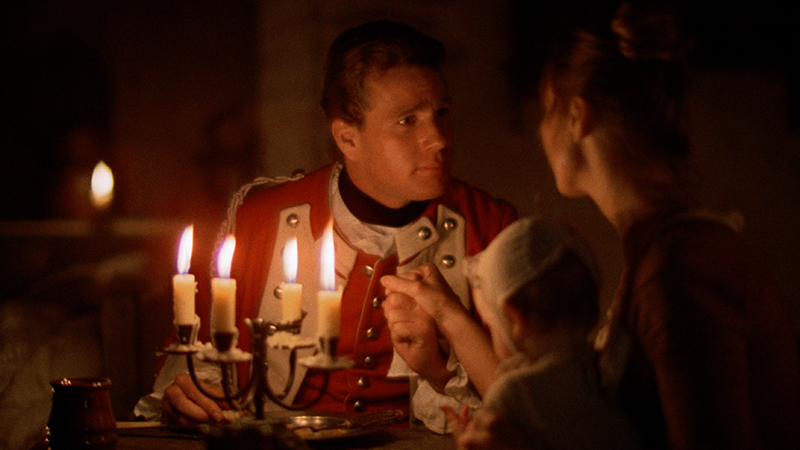
Ryan O’Neal is Barry Lyndon in Kubrick’s brilliantly distant epic

Director: Stanley Kubrick

Cast: Ryan O’Neal (Redmond Barry), Marisa Berenson (Lady Lyndon), Michael Hordern (Narrator), Patrick Magee (Chevalier du Balibari), Hardy Krüger (Captain Potzdorf), Marie Kean (Belle Barry), Gay Hamilton (Nora Brady), Godfrey Quigley (Captain Grogan), Murray Melvin (Reverend Samuel Runt), Steven Berkoff (Lord Ludd), Frank Middlemass (Sir Charles Reginald Lyndon), Leon Vitali (Lord Bullingdon), Leonard Rossiter (Captain John Quin), André Morell (Lord Wendover), Anthony Sharp (Lord Hallam), Philip Stone (Graham), Arthur O’Sullivan (Captain Feeney)

Kubrick has been criticised as a director more interested in style and the technical tricks of cinema than emotion, and there is perhaps no argument for the prosecution than Barry Lyndon. It now seems to the cineaste’s choice du jour as the greatest Kubrick film (probably partly because it is less well-known). Barry Lyndon however is like an exercise in all Kubrick’s strengths and weaknesses, a film that you can admire at great length while simultaneously caring very little about anything that happens in it.

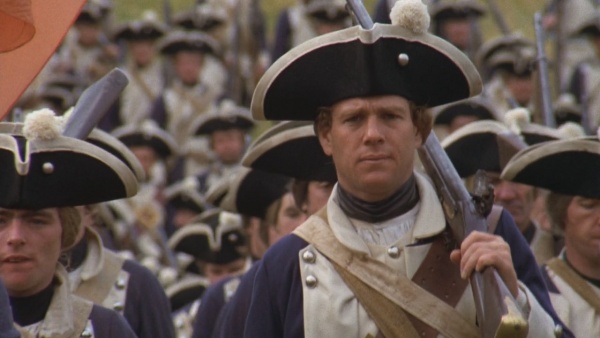
Based on a William Makepeace Thackeray (although it feels in spirit only), Barry Lyndon tells the story of Irish chancer Redmond Barry (Ryan O’Neal) in the mid eighteenth century. Fleeing Ireland after (he believes) killing an English officer in a duel, Barry goes from the British arm to the Prussian army, to card-sharping the courts of Europe to marrying into the aristocracy, as husband to Lady Lyndon (Marisa Berenson). But, however hard he tries, it’s difficult for an Irish chancer to be accepted by the British aristocracy, particularly when he suffers from the vocal hatred of his wife’s son Lord Bullingdon (Leon Vitali). 

Kubrick spent several years carrying out research for an epic biopic of Napoleon (he had Ian Holm lined up for the lead role – Holm read multiple biographies and spent months working on a script with Kubrick). The flop of Waterloo (with a deliciously hammy Rod Steiger as Napoleon) killed off the chances of that film making it to the screen. Never-the-less Kubrick now had a vast archive of research for the period – and how easy it was to shift the focus of this research back a few decades. Thackeray’s novel was his chance to put all this to use – and allow Kubrick to indulge what had become a passion for the style of the era.

Barry Lyndon won four Oscars – and all in the areas where the film deserves unqualified praise. This is a stunningly beautiful piece of work, surely a contender for one of the most strikingly gorgeous films ever made. Ken Adam’s set design utilises a superb range of locations across the UK, dressed to breath-taking effect. The costumes, completely accurate to the period, are exquisitely detailed (Milan Canonero and Ulla-Britt Söderland) and lusciously mounted. Leonard Rosenman’s score is a wonderful riff on a range of masterpieces from classical music, including Handel, Bach, Schubert and Mozart.

Most strikingly Kubrick decided to film as much as possible with natural lighting only, rather than the vast array of lighting bought in for most films. This was part of Kubrick’s intention to avoid any sense of the studio to his film – everything was to be shot on location and to help immerse the viewer in the detail of the period. Shots were framed to imitate artists of the period, in particular Hogarth. Evening scenes were shot lit only by candle-light, leading to truly stunning images, simply superbly lit. John Alcott’s photograhy utilised (and I’m serious here) NASA designed cameras used for the moon landings to capture images in such low light. Visually, Barry Lyndon may be one of the most perfect films ever made. It’s wonderful – and any doubts that Kubrick is not a true master of cinema should be dismissed.

But Kubrick’s problem, as always? He’s a technocrat artist who lacks some soul. So much time and energy has been expelled on the visuals and the design – the film took almost a year to shoot – that, while you are constantly almost hypnotised by its sublime imagery, it slowly occurs to you that you couldn’t care less about most of the events that happen in it. For all the film’s great length and beauty, it’s a cold and distant film. Kubrick turns Thackeray’s rogueish comic tale – a picaresque dance – into a chillingly sterile meditation on fate, with Barry transformed from a rogue and chancer into a lifeless, passive figure to whom things happen rather than ever attempting to instigate them. 

Is this Kubrick’s idea of humanity? Perhaps it suits the director who was the great master of intricate design and traps, that he would be tempted to turn this story into one where humans are just another piece of set dressing moved around and manipulated by an unseen force (fate, or rather a director?). The distancing effect is further by super-imposing an all-knowing narrator over the events, who frequently pre-empts what will happen and stresses the powerlessness of men. (On a side note, the book is narrated by Barry as were early screenplay drafts – perhaps the idea of O’Neal’s flat voice narrating so much of the action horrified Kubrick. It’s a definite improvement to get Michael Hordern’s tones talking to us for three hours.)

Perhaps though, the failure to capture any sense of Thackeray’s satirical wit, is a sharp reveal of Kubrick’s own inability to appreciate comedy – without the guiding hand of a Peter Sellers to support him. The problem is exacerbated by Ryan O’Neal in the lead role. Kubrick was ordered to hire one of the top ten box office draws of 1972 in the lead role – alas only O’Neal and Redford were the correct age and sex, and Redford (first choice) could never see himself as an Irishman masquerading as an Englishman. So O’Neal got the job – and the film is a damning indictment of his lack of charisma, flat and dry delivery and inability to bring life and energy to the proceedings (although O’Neal has blamed the editing partly for this, as well as the extended shoot). The film helped put an end to O’Neal’s career as a star (already on the wane) – and he is the film’s greatest weakness, in a role that needed more of the impish charm of Malcolm McDowell (although the lead actor from any of Kubrick’s films would have been superior). O’Neal’s presence turns Barry into a character we care nothing for, in a story already coldly distant.

O’Neal is also not helped by Kubrick’s utilising again his great love of striking British character actors – every role is filled with a recognisable face from 1970s British film and TV, each bringing colour and vibrancy to their (often brief) scenes. From Leonard Rossiter – weasily as you’d expect – as the captain Barry thinks he kills, through Patrick Magee’s ambivalently sinister Chevalier, Marie Kean’s loving mother, Murray Melvin’s obsequious priest, Godfrey Quigley’s matey army officer there is not a weak turn elsewhere in the movie. Leon Vitali brings real depth and energy into the film late on as Barry’s son-in-law and hated rival. Even Marisa Berenson – reduced to a dozen lines at most – makes an emotional impression as a woman trapped into serving the needs of the men in her life.

All these actors however are revolving in a movie that gets stuck and overwhelmed in its own grandeur and beauty. There are many wonderful sequences – with the film bookended by two duelling sequences that explore the strange rules and conventions with this society with a vicious black humour. Kubrick’s points about the oppressive insularity of the establishment – and the amount of forgiveness it has for its own, compared to the instant judgement of the outsider – are generally well-made, but are at times so laced with the director’s own cynical views of humanity in general (an increasingly clear trait in his later work) that they carry little impact. Despite this the film is never less than strangely captivating, even if its very easy to let it drift past you rather than invest in it.

But above all, while the film is stunning and the direction of Kubrick near faultless, the film itself gets so close to a great painting that it becomes something you hang on the wall to admire, but not to invest in. Kubrick couldn’t match his genius with the sort of emotion or wit that the story needed (much as it’s vastly superior to Tom Jones, that film gets closer to the spirit of authors like Thackeray than this ever does). Instead, he creates a coldly sterile world, like a perfect experiment in form and style that totally forgets such trivial elements as character and story. For all the film is full of character and events, you’ll find you care very little about them – and that the brilliance of Kubrick is only a partial consolation for that loss.

The First Great Train Robbery (1978)


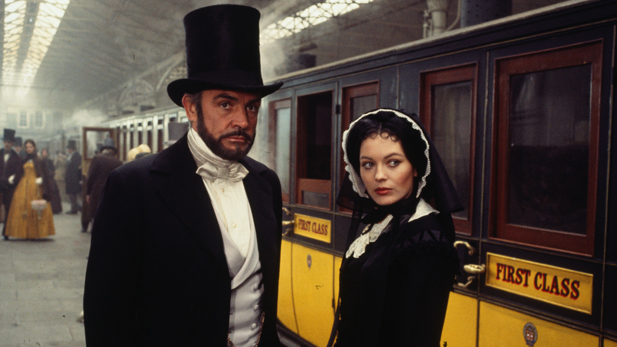
Sean Connery and Lesley-Anne Down grab a train ride in The First Great Train Robbery

Director: Michael Crichton

Cast: Sean Connery (Edward Pierce), Donald Sutherland (Robert Agar), Lesley-Anne Down (Miriam) Alan Webb (Trent), Malcolm Terris (Henry Fowler), Robert Lang (Inspector Sharp), Michael Elphick (Burgess), Wayne Sleep (Clean Willy), Pamela Salem (Emily Trent), Gabrielle Lloyd (Elizabeth Trent), James Cossins (Harranby), André Morell (Judge)

When you think about Michael Crichton, it’s easy to forget he had many more strings to his bow than just writing airport plot boilers. He created ER, he wrote and directed a number of films (most famously WestWorld) – and one of his best books is actually a piece of semi-history, The Great Train Robbery. This book – a brilliantly researched and entertaining part history, part fictionalisation – covers the story of the Great Gold Robbery of 1855, a train-based gold heist. 

Crichton’s film of this book takes a slightly different tone – its realism is toned down slightly, its nose-thumbing anti-establishmentism shaved off, in favour of a lighter comic farce, a caper movie. It makes for an enjoyable movie – but it’s less interesting than the book’s documentary realism and its careful construction of the vast number of obstacles the criminals needed to ingeniously overcome.

Edward Pierce (Sean Connery) is a professional criminal who can pose as an upper-class gent. Having befriended a number of senior people from a leading city bank, he plans a daring heist on a train carrying gold from London to Dover – gold bound for the Crimean war. Pierce puts together a detailed plan – that involves gaining possession of copies of four keys essential for getting access to the safe on the train containing the gold – and recruits a team including expert locksmith and pickpocket Robert Agar (Donald Sutherland) and cunning courtesan Miriam (Lesley-Anne Down). 

The First Great Train Robbery is a caper – and it has all the structure and energy you would expect. From Jerry Goldsmith’s lyrical score to the framing device that constantly returns to Pierce’s key box getting fuller and fuller (like fingers flying up when recruiting The Magnificent Seven), the whole shebang is told with real lightness. Nothing is too serious – the criminals’ actions aren’t designed to hurt anyone (apart from one of their number who turns informant) – and the overall mood is a lark, with the criminals engaging in a boys’ own adventure.

This is helped by the excellent light-comedic playing from Sean Connery and Donald Sutherland as the two main architects of the crime. Connery uses his smoothness (hiding a chippy edge) extremely well – he’s the charming man you’d want to spend time with, and he wraps you up in his own sense of fun. Any obstacles are usually met with a wry smile – like some sort of period Danny Ocean, Pierce is always one-step ahead of the game. Sutherland – with an odd, half Irish accent – makes a very good put-upon wingman, grumbling but still enjoying the ride.

Most of the rest of the cast don’t make much of an impact. Lesley Anne-Down gets some comedic business – particularly a seduction that is designed to go wrong to gain possession of a key – but not a lot else to do. Malcolm Terris and Alan Webb bluster as arrogant dupes. Robert Lang growls as an angry cop. Wayne Sleep of all people pops up as an expert burglar.

The film sweeps from set-up to set-up, very competently filmed, with some decent design and photography (it was the last film of legendary photographer Geoffrey Unsworth). Crichton is a decent director, and if some moments look a bit dated or are a little too much (some make-up for Sutherland at one point looks rubbish) it’s still pretty good.

The real problem is that you lose the sense that, by-and-large, a lot of this actually happened – I mean, sure, it was probably with less banter and jokes, but people really did a lot of this stuff. The film doesn’t always dwell enough on the problems the thieves face, and doesn’t always explain why these obstacles are so vital to overcome. It misses a trick here with its eagerness to keep barrelling forward.

What this means is that film sometimes misses the sense of triumph and satisfaction of overcoming real hurdles – or the frisson of having it clear that a lot of these were real solutions that a real person came up with. The film also rushes its final conclusions. Historically we don’t know what happened to the gold and there was a trial of some of those involved – but the film never really makes that clear. Its conclusion zeroes in again on some hi-jinks, but it doesn’t really make clear the impact, the consequences or what happened to the Macguffin at its centre. You also don’t get the sense of hypocrisy the book mines so well, with the corruption of the upper classes being glossed over by society, but the thievery of the working classes being outright condemned. I missed that a lot from the film – fun as it is.

It’s an entertaining film but, to be honest, it’s not as good as the book – which is actually really worth a read. Crichton is a man with more talent than people give him credit for.

Ten Rillington Place (1971)


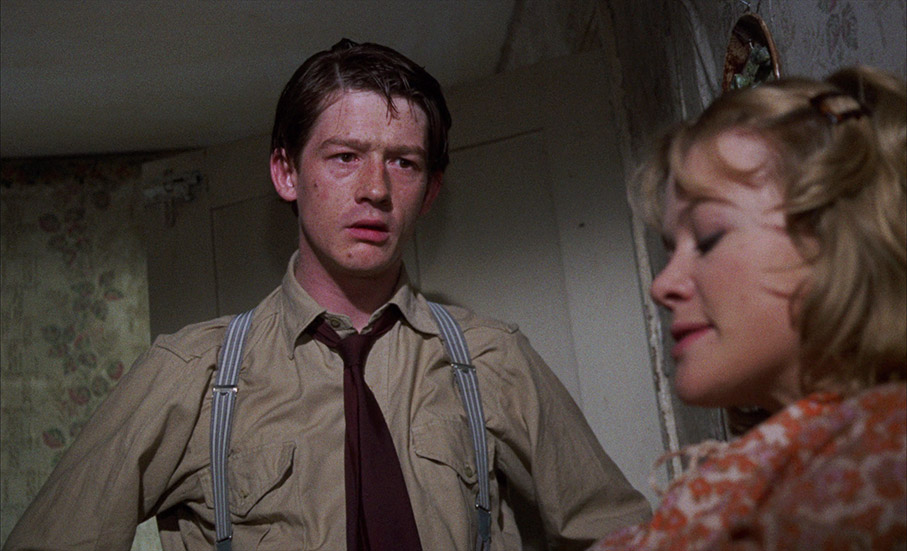
Richard Attenborough brings the killer John Reginald Christie to life in Ten Rillington Place

Director: Richard Fleischer

Cast: Richard Attenborough (John Reginald Christie), Judy Geeson (Beryl Evans), John Hurt (Timothy Evans), Pat Heywood (Ethel Christie), Isabel Black (Alice), Robert Hardy (Malcolm Morris), Geoffrey Chater (Christmas Humphreys), André Morell (Judge Lewis), Tenniel Evans (Detective Sergeant)

Films about real-life serial killers have that eternal problem: how far can they go in giving us answers? How much can we ever really understand why a killer does what they do? Is there any way of really putting ourselves in their shoes – and do we really want to? Ten Rillington Place avoids a lot of these issues by making no attempt to give understanding to Christie at all, simply presenting his actions, and by putting the focus on the tragic death of Timothy Evans.

In a miscarriage of justice Timothy Evans (John Hurt) was tried and executed for the murder of his wife Beryl (Judy Geeson) and their baby daughter in 1950. The real murderer? The man who lived downstairs, John Christie (Richard Attenborough), a socially maladjusted, softly spoken man who confessed to killing at least eight people three years later at his trial for murdering his wife. Christie had an uncanny gift for gaining the confidence of desperate women, would offer to perform illegal (and free) medical procedures (such as abortions), during the course of which he would gas them with carbon monoxide, strangle them, possibly carry out acts of necrophilia and then bury them in his garden or in the walls of his house. Evans never suspects until far too late that Christie is the killer and, scared that he will be accused, follows Christie’s advice to the letter – advice that will only make him look all the more guilty.

Richard Fleischer’s chillingly documentary-style film-making goes into forensic detail on the events of the murder of Beryl Evans and her daughter, and the wrongful conviction of Timothy Evans for the crime – largely on the basis of Christie’s testimony at Evans’ trial. Fleischer shoots the film with a deeply disciplined restraint, a calm documentary style that avoids any sensation lingering on the crimes, but still carries great emotional impact.

The film covers the period from Evans moving into the flat above Christie, Christie’s murder of Beryl, Evans panicked flight to Wales on Christie’s advice, his series of confessions to the police, his trial and execution. Book ending the film we get a scene with Christie murdering his neighbour Muriel Eady – a terrifying demonstration of Christie’s murder rituals, as well as an indicator of how easily he could gain the trust of his victims. What it strikingly doesn’t try to give us is any psychological explanation for why Christie did what he did. There are no revealing flashbanks, no cod-psychology. Instead we just see a killer, kill people. We might get an idea of what he gets out of it, but no explanation of what turned him to it. The film is all the more powerful for it. 

Instead the focus is on the victims, and the Evans story is heart-rending, partly because of Fleischer’s calm, sensitive direction, but mainly due to John Hurt’s astonishingly powerful performance. The film, and Hurt, don’t shy away from the qualities that made Evans seem like such a natural fit for a murderer at his trial. He’s a compulsive liar. He brags. He fights and argues with a fury. He’s not really that sympathetic a guy at first. But he’s certainly innocent. Hurt brilliantly demonstrates his vulnerability and simplicity – Evans was illiterate and almost unbelievably trusting, a liar who fell victim to a superb, manipulative liar.

His shock and slowly growing realisation of the nightmare he is in are incredibly moving, as is his powerful grief when he finds his wife killed – and his trusting innocence when he turns (unknowingly) straight to his wife’s killer for advice on what to do. Every action Evans takes in the film makes you want to jump in and urge him to do something – anything – different.  Unsympathetic as he is at the start, by the conclusion you almost can’t bear to watch him incriminate himself with each action. Hurt is sublime, with his weak manner, his confusion, his touching faith that it will all be okay and his feeble mantra of “Christie Done It” – it’s one of the greatest performances in his career.

Judy Geeson gives a marvellously emotional performance as Beryl Evans. Geeson has the perfect look for the part, and she completely embodies a woman who has found herself in a difficult situation, in love with a weak man. You understand completely how she is drawn towards Christie as a confidant, and why she would feel the desperation to abort a child she and Evans could never afford. Her eventual murder is horrifying in its struggle and desperation, the growing horrible realisation in her eyes that she is in mortal danger – this is a particularly strong sequence, difficult to watch for the viewer, as we know what a terrible series of decisions she is making. 

Fleischer’s film was motivated by a very firm anti-death sentence stance. The scene of Evans’ execution is shocking in its brutal suddenness. Shot with a handheld camera and in a single take (in near silence other than Hurt’s deep breathing), the execution is over and done with in less than a minute – from Evans sitting in a room, to the reveal of the executioner’s noose next door and the terrible drop (with a jump cut straight to Christie stretching his back). It’s a brilliantly low-key, but resoundingly powerful scene that sticks with you for all time.

All this way and we’ve not mentioned Richard Attenborough’s transformative performance as Christie. Attenborough presents the softly spoken monster as a bland, empty non-entity, a man who has almost nothing to make him stand out from the crowd. He never makes the part into a great monster or any sort of domineering force of nature. In partnership with Fleischer, he shows Christie was a total blank canvas of a man, “evil” only in the most mundane and uninteresting way. He’s so mild-mannered, you can see why so many women trusted him. Attenborough is chillingly blank throughout, in a deeply unsettling performance of crushing mundanity. He’s brilliant in this film – Attenborough was completely committed to its anti-death penalty stance – and he avoids the temptation of trying to explain or make sense of Christie. 

That’s the trick of the film – Christie is not a special man. He performs dreadful acts, but he is a nothing of a person, devoid of motive (the lack of motive is something those at Evans’ trial use most to argue against Christie’s possible guilt), a totally forgettable man who committed crimes memorable only for their cruelty. Fleischer, and Clive Exton’s careful, thoroughly researched script, is simply superb in presenting Christie with all his filthy blankness, Rillington Place in all its crushed lack of colour, and the murders in un-flashy documentary sadness. Ten Rillington Place is an engrossing true-life story that turns a miscarriage of justice into a Greek tragedy. It’s a much overlooked classic.

The Bridge on the River Kwai (1957)


Alec Guinness is the British Colonel in captivity whose principles are sadly misguided in The Bridge on the River Kwai

Director: David Lean

Cast: William Holden (Commander Shears), Alec Guinness (Lt Colonel Nicholson), Jack Hawkins (Major Warden), Sessue Hayakawa (Colonel Saito), James Donald (Major Clipton), Geoffrey Horne (Lt Joyce), André Morell (Colonel Green), Peter Williams (Captain Reeves), John Boxer (Major Hughes)

“Madness! Madness!”Are there many better final lines of films – or any delivered with more emphatic, meaningful gusto than James Donald manages at the close of this David Lean classic? The Bridge on the River Kwai is a constantly reliable, wonderfully assembled classic film, and a never-ending joy to watch. It’s not only a gripping epic, it’s also a wonderful psychological study of a series of men and the impact war has on their psyches. It’s all madness after all.

In 1943, Colonel Nicholson (Alec Guinness) and his men arrive in a Japanese prisoner of war camp in Burma. Camp Commander Colonel Saito (Sesse Hayakawa) has been tasked with building a bridge over the river Kwai, and demands officers and men go to work. When Nicholson adamantly refuses to allow officers to do manual labour (as per the Geneva Convention), he and Saito are set for a clash of wills, in which the iron-willed, rigid certainty of Nicholson eventually triumphs. However, once Nicholson is released from solitary confinement, he is so horrified by the decline in discipline of his men, he decides building the bridge is the perfect opportunity to rebuild morale and demonstrate British character=. So he sets upon building a better, stronger bridge than the Japanese had designed. Meanwhile, fellow prisoner American Commander Shears (William Holden) escapes from the camp back to Allied headquarters – only to be forced to return to the jungle on a commando raid to destroy the bridge, led by Major Warden (Jack Hawkins).

Wow this is one hell of a film. It was garlanded with seven Oscars, and totally deserves each and every one of them. Kwai is a deeply engaging, wonderfully structured epic that balances perfectly the sweep of Hollywood cinema with a keen understanding of the complexities of psychologies under pressure. Because like Clipton says, this is a film about madness. Virtually everyone in this is mad in some way. Lean brilliantly positions these psyches in a series of conflicts and clashes: we have Nicholson vs. Saito, Nicholson vs. Shears, Shears vs. Warden – in every relationship in the film there is conflict and disagreement. It makes for extraordinary drama.

Pile on top of that the fact that David Lean is a consummate film maker. Every moment of Kwai is a display of wondrous visual storytelling, from the arrival of the British in the prison camp – a triumph of defiance, pride and hubris – to the final attack on the bridge. The final sequence around the bridge is exquisitely assembled. The editing is flawless, the tension build-up (nearly 20 minutes!) never flags, but carefully establishes the who, what, why and where. The sequence itself builds up both events and problems with daunting skill. In between, every sequence of the film has some masterful work in it.

The heartbeat is Alec Guinness, simply marvellous as Nicholson. It’s hard to believe watching it that he was not the first choice – in a parallel universe Charles Laughton starred opposite Cary Grant’s Commander Shears! – because he is superb in this Oscar-winning role. Guinness’s Nicholson is mad. Not in the cuckoo way or a cruel or arrogant way. He’s blinded by the rule book, by the middle-class values of duty, order and dignity that govern his life. Mad because he takes a task from his Japanese enemies and does it better than they ever could have: “Must we work so well? Must we build them a better bridge than they could have built themselves?” Clipton asks of him. Too true. Nicholson’s response? That one day people will remember the bridge was built not by “a gang of slaves, but soldiers, British soldiers…even in captivity”. 

So Nicholson doesn’t see it that way. It doesn’t match his narrow world view of a place for everything and everything in its place. Because he has no vision beyond his own immediate circumstances. The important thing for him is to build the bridge, because it’s his duty to keep his men together, and demonstrate British resolve. So it’s Nicholson who visits Clipton’s sick bay and gently questions the wounded men, encouraging them to go back to work on the bridge so it can be finished on time (they ironically march through the graveyard of the camp on the way). For Nicholson the bridge is everything – and Guinness’ eyes are full of rigid monomania (needless to say, by the end of the film Nicholson himself off-handedly informs Clipton with pride that the officers have volunteered to work on the bridge to make sure it will be finished before the deadline).

His manner contrasts fascinatingly with Sesse Hawakaya’s Colonel Saito. Saito, a bank manager type if ever you saw one, clearly struggles with holding his command together and to deliver the bridge as planned. He has the strength of office, but not the strength of character of Nicholson. Hawakaya plays a weak man – and it’s fascinating how Lean charts the shift in power from Saito to Nicholson. Nicholson stands for principle and simply cannot imagine backing down – and then, with a sense of certainty and natural authority that governs his life, swiftly takes over the entire planning of the bridge from Saito. Poor Saito is a broken, weakened man: and in his own form of madness, is left with Nicholson alone as a confidant (the two of them talk more to each other about their loneliness and uncertainties than they do anyone else – Nicholson in particular gets a marvellous speech about the sad transience of the soldier’s life – “it’s a good life, but still there are times…”).

The madness doesn’t stop there. Jack Hawkins’ Major Warden is as fanatical as Nicholson: the mission is everything. Hawkins is excellent, turning Warden into a sort of over-grown schoolboy, playing at soldiers but with an adolescent aggressive willingness to sacrifice the pieces for the greater good. For Warden, no life in the team is sacred (including his own), and everything must be about the target. Warden’s gung-ho, take-no-prisoners attitude, his lack of empathy for the lives of those around him, makes him as much of an insane danger as Nicholson, perhaps more so.

Holden’s more humane Shears is the counterbalance with these three lunatics. Of course, Shears is sucked even more into the madness than anyone else – who else would escape from a prison camp, only to be forced to head back into the jungle on a fool’s errand? Holden is damned impressive as the naturally anti-authoritarian Shears, a man who never seems to have seen a boss without questioning him, who recognises the insanity of the war around him but when push comes to shove throws himself into the mission he has been given. 

He’s the big addition to the original source material – but it’s an idea so good that Pierre Boullé said he wished he had thought of it himself. Boullé won the screenplay Oscar, but the writers of the script were really the black-listed Michael Wilson and Carl Foreman. These two put together a superb script, and the structure contrasting Shears with Nicholson works perfectly. These two are mirror images, but never really antagonists. Their final meeting towards the end of the film has a poetic sadness about it. It adds a whole extra dimension to the film – while one storyline sees the bridge being built, a parallel one prepares for its destruction.

All these threads come together beautifully on the morning of the bridge’s opening, after a triumphant celebration by the prisoners on the completion of the bridge – a moment Nicholson describes to them as “turn[ing] defeat into victory”. He is of course both right and wrong – and the triumph of the film is that you can’t help but share Nicholson’s desire to save this bridge that we have seen so much work, effort and love go into constructing. 

“Madness”. That’s how Clipton sees it – James Donald is by the way wonderful as the one sane man – and yes of course he’s right. It’s all part of what is a masterful film made by a master storyteller, beautifully filmed and edited. Alec Guinness gives a performance for the ages as stubborn, small-minded man whom we somehow still end up strangely admiring and respecting. Holden, Hawkins and Hayakara offer intelligent, engaging portrayals. The Bridge on the River Kwaiis a film that you can watch again and again. In fact you should, because Lean here marries an epic scale with a story that feels small, personal and deeply felt – that places the psychology of real people at the centre of an epic stage. It’s simply a classic.