Tag: Anton Lesser

Benediction (2021)

Benediction (2021)

Davies’ final film is a beautifully made, deeply sad, exploration of the long-term impact of trauma

Director: Terence Davies

Cast: Jack Lowden (Siegfried Sassoon), Peter Capaldi (Older Siegfried Sassoon), Simon Russell Beale (Robbie Ross), Jeremy Irvine (Ivor Novello), Kate Phillips (Hester Gatty), Gemma Jones (Older Hester Gatty), Ben Daniels (Dr Rivers), Calam Lynch (Stephen Tennant), Anton Lesser (Older Stephen Tennant), Tom Blyth (Glen Byam Shaw), Matthew Tennyson (Wilfred Owen), Geraldine James (Theresa Thornycroft), Richard Goulding (George Sassoon), Lia Williams (Edith Sitwell), Julian Sands (Chief Medical Officer)

Few generations carried scars as deep as that which saw millions of their fellows mown down in the endless bloody slaughter of World War One. For us, whatever understanding of the horrors of that conflict we have is often filtered through the war poets, who fought in unimaginable conditions. Terence Davies’ final film explores the life of Siegfried Sassoon (Jack Lowden, ageing into Peter Capaldi) whose life never escaped the shadow of those terrible sights and awful losses.

Benediction is a sombre, mellow, deeply sad portrait of a man who spent a lifetime searching for something, anything to fill the void the war had left in him. Following Sassoon’s life in a series of tableaux-style scenes that mix poetry reading, period music, news footage with flash-forwards to the tetchy, weary older man he will become, it’s a sad, reflective work that presents memory as a sort of prison that consigns everyone to a life sentence. Davies catches this beautifully in his stately, melancholic film where survival guilt goes hand in hand with bitter regret at missed opportunities.

It opens with Sassoon’s protest against the war – denouncing its content from his first-hand experience. Saved from the possibility of a firing squad by influential friends (chief among them, Simon Russell Beale’s good-natured Robbie Ross) Sassoon is dispatched to an Edinburgh military hospital to “recuperate”. There he meets and falls in love with the sensitive, shy poet Wilfrid Owen (Matthew Tennyson), a love he is scared to confess. After Owen is killed, Sassoon commits himself to a series of romantic relationships with selfish, bitchy men including Ivor Novello (a marvellously supercilious Jeremy Irvine, whose eyes are stone cold) and the shallow, vain Stephen Tennent (Calam Lynch, full of Bright Young Thing smugness, turning into a lonely, tragic Anton Lesser). As an older man, he converts to Catholicism and struggles to understand his son George (Richard Goulding).

Davies’ film posits a Sassoon who never recovered from grief at the death of Wilfrid Owen and could never truly forgive himself for being too timid to express his feelings. Davies films Sassoon and Owen in scenes that sing of unspoken intimacy, from an overhead shot of a swimming pool dip that feels like a pirouette, to the matching body language they exhibit while sitting watching a variety show at the hospital. They laugh and dance together, but at parting Sassoon cannot move himself beyond a tightly clasped handshake and a whispered urge to stay a few minutes longer.

In discussions with his doctor and friend Rivers (a lovely tender cameo from Ben Daniels), Sassoon tearfully talks of his fear of expressing his own emotions. Perhaps this, coupled with his self-blame, is why Sassoon placed himself in so many relationships with such transparently flamboyant shits? Davies certainly seems to suggest so: Sassoon had less fear of “being himself” when he was with arrogantly confident men like Novello and Tennant. Did he also, the film suggests, feel so crippled with regret and survivor guilt, that he couldn’t believe himself worthy of the love of gentle, decent men, such as the Owen-like Glen Byam Shaw (Tom Blyth).

Sassoon becomes a man who can never fully escape the never-ending hurt of memories. Even as an older man, Davies shows Capaldi’s Sassoon sitting in his garden, the background replaced by news footage of slaughter in the trenches. It’s mixed in with the shame Sassoon felt at his “stand” against the war being, in the end, a moment that changed nothing. Davies further paints his poetry as declining post-war, as if parts of his creative life never survived the shocks he experienced.

And always he hopes something might make him whole again. Sassoon races through these false dawns during the film: relationships with men, marriage to Hetty (Kate Phillips as the younger Hetty is nearly as oppressed with unspoken sadness as Sassoon), the birth of his son – all fail to deliver. So as an older man – in a neat CGI transition during a 360 camera move – Davies transforms Lowden to Capaldi as he tries Catholicism (there is another wonderful cut that takes us from young Sassoon’s silver military cross being dropped into a river, that transitions into the grey-suited older Sassoon lying in a crucifix position on the floor of a church).

But the tragedy of Benediction – and there is no denying it’s a deeply sad and even slightly depressing film – is none of these attempts fill his soul. The older Sassoon – sharp, prickly and with a stare that goes on and on from Capaldi – snaps at things he doesn’t understand, cruelly dismisses the older Tennant and bitterly complains at the lack of recognition his later work received. He’s a man desperate for companionship, but comfortable only on his own.

It’s particularly sad having seen the brighter, passionate and warm man he was. Much of Benediction succeeds due to an exceptional performance by Jack Lowden. Lowden brilliantly conveys Sassoon’s lingering depression and loss under the surface of every interaction. The cheery wit that covers the self-loathing that leads him into destructive relationships and painful situations is as well captured as the self-deceiving optimism he had that everything could be different. Lowden ends the film with an extraordinary emotional moment – filmed in tight one-shot by Davies – where we see, one the last day of the war, his impossible burdens lead him to a single, quiet, emotional outburst of the vast reams of pain that then continued to burn inside him for the rest of his life.

Benediction is about guilt, loss, regret and denying yourself opportunities at happiness and joy through an internal determination that it is not for you. There is something profoundly personal in this – Sassoon’s life in this film, mirroring many of the regrets Davies spoke of in his own life – a fact increased by the heartfelt, gentle construction of the film with its melancholic air and rich sense of empathy for its subject. As a final work, it’s a fitting tribute to both the poet and its director.

The Courier (2021)

The Courier (2021)

True-life Cold War thrills, as two spies battle to prevent the Cuban Missile crisis

Director: Dominic Cooke

Cast: Benedict Cumberbatch (Greville Wynne), Merab Ninidze (Oleg Penkovsky), Rachel Brosnahan (Helen Talbot), Jessie Buckley (Shelia Wynne), Angus Wright (Dickie Franks), Željko Ivanek (John McClone), Kirill Pirogov (Oleg Gribanov), Anton Lesser (Bertrand), Maria Mironova (Vera)

In October 1962 the world nearly ended, as the USA and the USSR clashed over Soviet missiles in Cuba. The history of this grim month is well known, as the fate of the world hung in the balance. What’s less known is the role Soviet double agent Oleg Penkovsky played in passing information on Soviet capabilities and strategy to the West – and how crucial this was to bringing the crisis to a (world-surviving) end.

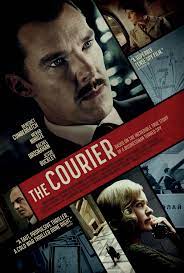
The Courier covers – in a pleasingly old-fashioned, Le Carré-ish way – Penkovsky’s (Merab Ninidze) dangerous espionage career, and the relationship he built with British businessman Greville Wynne (Benedict Cumberbatch). Wynne – totally unconnected to the Secret Services – was chosen by MI6 to make initial contact with Penkovsky. He then served as Penkovsky’s courier, carrying secret documents and microfilm back to the West under cover of business trips to the Soviet Union – and the two men became close friends. When the Cuban Missile Crisis increases the risks to Penkovsky, it’s Wynne who pushes for a risky mission to extract him before he is uncovered and killed.

Directed with confident, low-key aplomb by Dominic Cooke, The Courier mixes shady, spy-thriller tropes (secret meetings, scratched signals, one-time pads, secret cameras) with a genuine friendship between two very different people. All taking place in a grim, Soviet environment where the risk of discovery lurks around every corner. Ordinary receptionists and chauffeurs could all be active or potential informants of the KGB, and there is not a single room that cannot be bugged.

It’s a very unusual world fish-out-of-water Wynne finds himself in. Expertly played by Cumberbatch as a stiff-necked people-pleasing fixer (introduced deliberately losing a game of golf to close a business deal with the triumphant winners), Wynne uncovers depths he didn’t suspect in himself. He at first has no interest in spying – or the Soviet Union – and simply wants a quiet life rebuilding trust with his wife (Jessie Buckley making a great deal of a rather thankless part of a woman kept in the dark about her husband’s activities) after a past affair.

He needs brow-beating from MI6 to even carry out his first mission – which he executes with a nervy unease – and reacts with horror at the idea of repeating it. What draws him in is the same quality that will see him take huge risks: his sense of humanity and fair play and the bond of mutual friendship and understanding between him and Penkovsky. Wynne willingly accepts dangers and sacrifices others would blanche at, out of loyalty and a sharply defined sense of right and wrong.

Wonderfully played by Ninidze, The Courier makes clear the huge risks Penkovsky is taking even considering talking to the West. This is a country where a Western spy is executed in the middle of a special staff meeting at his ministry. Whose leader is hell-bent on asserting Russian dominance and devil-take the consequences (sound familiar?). A country taking part in an arms race that could destroy the world, and disregarding the risks that could lead to those weapons being used. A quiet, loving family man, Penkovsky is appalled at the aggressive posturing of his country and how it is endangering his family and millions like them around the world.

It’s the bond between these two men, their sense of duty and their desire to protect, their quiet wit and small acts of thoughtfulness – as well as their capacity for betrayal (Penkovsky of his country, Wynne of his wife) – that draws them together. For Wynne, the selfless risks of Penkovksy create a deep well of respect and admiration, as well as pushing this businessman to develop into a justified-risk-taking moralist with a greater emotional connection to the beauty of life (represented by two contrasting scenes showing the two of them attending a Russian ballet – the second performance moves them both to tears, as if reminding them why they fight).

Around them, shot in a beautifully drained out style that really adds to the sense of terror and danger, plays out a sharp, well-paced spy thriller. Rachel Brosnahan plays Penkovsky’s CIA handler – an invented female agent, allowing the film to take a few shots at the stuffed-shirt unimaginativeness of her superiors – while Angus Wright (all stiff realpolitik) is his MI6 one. The official agencies play a more pragmatic bat, pushing Penkovsky to greater-and-greater calculated risks to improve their access. They also coldly accept any double agent has only a limited shelf-life before discovery, and getting the maximum out of them while they can is essential.

The film’s final act explores the impact of this, as Penkovsky is exposed and Wynne goes to dangerous lengths to try and help him escape. Shifting at this point into something more claustrophobic and hand-held, the film’s final act layers on the grim suffering spies face when uncovered – and includes several moments of genuinely moving suffering.

The Courier is a low-key, efficient, well-made and well-paced true-life espionage story, that feels like the professional, smartly assembled, film-making that often gets squeezed out of cinemas today. Very well acted by a strong cast, every frame has a perfect mixture of 50s/60s style and Cold War paranoia and its final sequence carries a decent emotional punch. A fine retelling of an overlooked story.

Disobedience (2017)

Rachel Weisz and Rachel McAdams deal with love and faith in Disobedience

Director: Sebastian Lelio

Cast: Rachel Weisz (Ronit Krushka), Rachel McAdams (Esti Kuperman), Alessandro Nivola (Dovid Kuperman), Allan Corduner (Moshe Hartog), Bernice Stegers (Fruma Hartog), Anton Lesser (Rav Krushka), Nicholas Woodeson (Rabbi Goldfarb), Liza Sadoby (Rebbetzin Goldfarb)

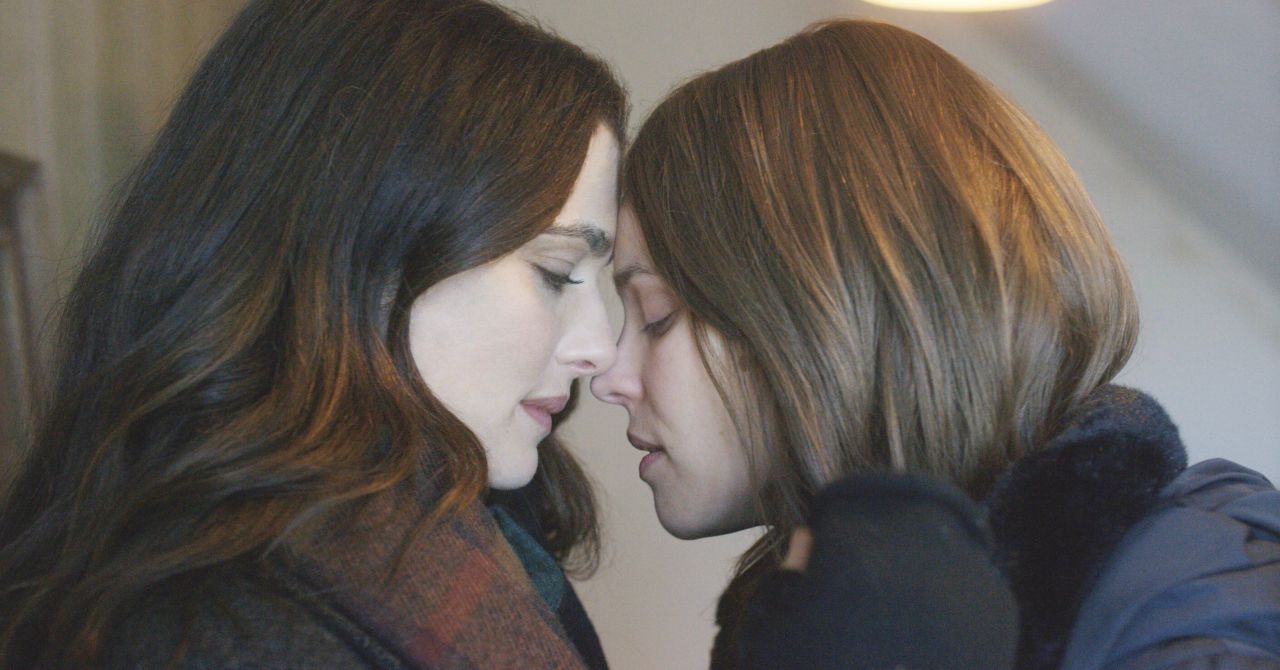
After the death of her father, a highly respected member of a Jewish Orthodox community in London, photographer Ronit (Rachel Weisz) returns from New York for his funeral. Estranged from her father, due to her rejection of Orthodoxy, Ronit has been quietly forgotten by her community. She stays with old childhood friends, now married, Dovid (Alessandro Nivola) and Esti (Rachel McAdams) Kuperman. Dovid, her father’s chosen disciple, has been offered his place in the synagogue. Esti is a teacher at the local primary school. However, Ronit and Esti are more than just friends – their love for each other being the unspoken reason for Ronit’s departure.

Disobedience is a tender, thought-provoking exploration of the struggles between faith and love – or rather the longing to be a part of a community, that rejects a big part of who you are. While Ronit is our entry point into this world, the real tragedy here is Esti. Both a believer in Jewish Orthodoxy and a lesbian, Esti has struggled her whole life to find a balance between these two. While Ronit has, to a certain extent, chosen – deciding to leave her family life behind to allow some personal freedom for her bisexuality – Esti has remained and tried to reconcile the contradictions in her life.

What works really well about Disobedience is that it avoids moral judgements. The Orthodox community is never condemned or hold up backward or wicked. Those who live in it may be traditional, but they are not cruel. Ronit felt she had to leave, and there is an awkwardness around her return (and she is not mentioned in her father’s obituary), but apart from a few individuals, the community acknowledges her. This proves especially effectively as it allows the film to focus on a very tenderly drawn love-and-relationship triangle between the three leads, rather than scoring easier political or religious points.

It becomes a beautifully acted depiction of a three close childhood friends who are torn between affection, bitterness and longing for each other. In particular, the love between Ronit and Esti is immediately apparent, but also the tensions of confusion, missed opportunities and confused messages. These are two women deeply in love, but held apart by pressures of their community and conflicts in themselves. Between them falls Dovid, the loyal scholar of Orthodoxy, desperate to make his marriage to Esti work but also feeling a genuine affection to his adopted sister Ronit.

There is no easy answers to this mess – and the film looks carefully at questions of freedom, choice and free will. How can you reconcile your faith and the pressures of your community with the things you want in your heart? How do you compress the guilt when you feel you are forcing choices onto someone you love? How willing are we to sacrifice everything we have grown up with to make our own choices? You’d expect the answers to come down on the obvious sides, but instead Disobedience frequently operates in shades of grey and complex, messy realities. Its endings are open, its conclusions emotionally strong but not clear-cut. It reflects the ambiguity of life in its refusal to supply simple, reassuring endings.

The film is directed, in a muted palette, with great sensitivity and restraint by Sebastian Leilo. The camera has a wonderful eye for passing moments, for suppressed looks of affection. He uses long takes to allow his actors to relax into their performances, helping them create characters who feel extremely natural. The moment when Esti and Ronit finally surrender to their feelings to each other is shot with an urgency and intimacy – which then makes the restraint of much of the rest of the film all the more striking, as reality returns.

He also constantly surprises us, skilfully shifting perceptions from character to character. At first we feel that this is the story of the rebellious Ronit, but as the story progresses Esti emerges as a truly tragic figure, while Dovid is a man holding back huge waves of doubt and uncertainty about the rules that have defined his life.

The three lead actors are wonderful. Weisz is edgy, cagey and unapologetic about the air of rebelliousness she outwardly displays – but its clear that underneath she is full of regret, grief and a powerful sense of loss about the family and love she left behind. McAdams grows in statue from scene to scene as a woman who seems naïve but actually is all-too-aware of the compromises life demands – and has struggled all her life with sexual feelings alien to her culture. Nivola superbly turns a character who could have been an obstructive bore into a man who knows suffering deep down with the knowledge that his functional marriage based on duty will never bring him (or Esti) the happiness he desires.

Disobedience balances these three characters wonderfully. At times it luxuriates too much in its languid pace and stolen, lingering glances – a sense of urgency is often missing. But intelligent, sensitive, respectful and with a respect for faith that many other films would have avoided, it’s brilliantly played and sensitively directed.

On Chesil Beach (2017)

Billy Howle and Saoirse Ronan share a disastrous wedding night in On Chesil Beach

Director: Dominic Cooke

Cast: Saoirse Ronan (Florence Ponting), Billy Howle (Edward Mayhew), Emily Watson (Violet Ponting), Anne-Marie Duff (Marjorie Mayhew), Samuel West (Geoffrey Ponting), Adrian Scarborough (Lionel Mayhew), Anton Lesser (Reverend Woollett), Tamara Lawrence (Molly)

There are few things sadder than the road not taken. And few novels capture the tragedy of a single moment in time shaping a whole life’s course better than Ian McEwan’s On Chesil Beach. This slim novella starts as a romance but quickly collapses into a tragedy – and this film adaptation, adapted beautifully by McEwan, hums with a constant sense of sadness and gloom.

Edward Mayhew (Billy Howle) is a middle-class boy and would-be historian who falls in love with promising violin player Florence Ponting (Saoirse Ronan) in 1962, after they both graduate from their respective universities with first class degrees. But their wedding night is a disaster – Edward is in tune with the swinging sixties and flushed with sexual desire, Florence is still living with the values of the 1950s and extremely uncomfortable with sex (possibly connected to a past relationship with her domineering father, expertly played by Samuel West). A conversation on Chesil beach leads to a ruinous split – and for Edward a life of regret.

On Chesil Beach is a film that expertly demonstrates contrasts – between the oppressive 1950s and the more bohemian 1960s (sexual freedom, socialism, nuclear disarmament), and the skilful use of the rock ‘n’ roll favoured by Edward and the classical music that is central to Florence’s life. Dominic Cooke’s low-key, carefully structured film wonderfully balances these themes, showing throughout how cultural, social and relationship clashes can cause pain and strife. 

Sex is of course the problem. At first nervous romance seems to be the theme – but it’s actually physical misunderstanding and incompatibility. Cooke’s film cuts back and forth from the wedding evening to fill in the gaps of their timeline that have brought Edward and Florence to this point, and explain their psychology going into this wedding night that will shape their lives. Edward has no understanding of Florence’s nerves and fear about sex, while Florence fails to effectively articulate these feelings in a way that Edward can understand or sympathise with.

Essentially, it’s a tragedy about a failure of communication and how hasty, ill thought out words and decisions can shatter an otherwise extremely happy relationship. Because there is no doubt – and McEwan makes it even clearer here than in the novella – of how this couple are perfectly suited together. Cooke’s film captures the halcyon dreaminess of their courtship in the giddy summer of 1962, in the beautiful Oxfordshire countryside. The film hums with their immediate attraction and strong feelings for each other – while also laying the groundwork of their failure to really and fully communicate with each other. The sexual encounter between them is agonising in its clumsiness, nerves, awkwardness, functionality and eventual total failure.

It works so well in these segments as both leads bring expressive, empathy filled performances to the screen. Howle is very good as a man struggling with his place in the world, who juggles bohemian ideals and longings with a keen desire to be seen as “a man”, to be well regarded by others. Ronan is also excellent as a young woman who in many ways is both ahead of her time and left behind it, ambitious and forward thinking but oppressed and terrified by physical contact. The tragedy is that she relaxes so much with Edward, but can’t bring herself to voice her concerns, fears and tortured history to him.

It’s that tortured history where the film leans a little too hard. The book holds dark suggestions that Florence may have been abused by her father, but in the film McEwan moves them from subtext into full-on text. Samuel West is very good as this intimidating figure, but the explanation that much of Florence’s sexual discomfort is directly related to ill-defined sexual misdemeanours from her father feels slightly pat. Far more interesting is the idea that she is simply scared of contact, and struggling to adapt the prim 1950s ideas she has been brought up with to the modern era.

But the film wants to give a deeper meaning to a drama that is more interesting when it looks at troubled psychologies at a time when the world was shifting from one generation to another. It remains a very slight story – and even at 100 minutes it feels like it is stretching the content of the novel – but also one that does carry a lot of emotional weight. The film’s coda, set in 2007, leans a little too heavily on the actors now layered under old-age pancake make-up (it’s noticeably not included in the novella, which gives no information about Florence’s future life at all) but it carries a real sense of sadness and loss for both characters, one of whom has seen their life drift into nothingness, another who has achieved but still carries a sense of sadness for a lost love. McEwan’s careful, elegant script captures a lot of this small-scale tragedy and if the film is slight and at times a little too obvious, it’s also able to induce a tear or two.