Tag: Best Picture

Schindler's List (1993)

Liam Neeson and Ben Kingsley excel in Spielberg’s masterpiece Schindler’s List

Director: Steven Spielberg

Cast: Liam Neeson (Oskar Schindler), Ben Kingsley (Itzhak Stern), Ralph Fiennes (Amon Goth), Caroline Goodall (Emilie Schindler), Jonathan Sagall (Poldek Pfefferberg), Embeth Davidtz (Helen Hirsch), Malgorzata Gebel (Wiktoria Klonowska), Mark Ivanir (Marcel Goldberg), Beatrice Macola (Ingrid), Andrzej Seweryn (Julian Scherner), Friedrich von Thun (Rolf Czurda)
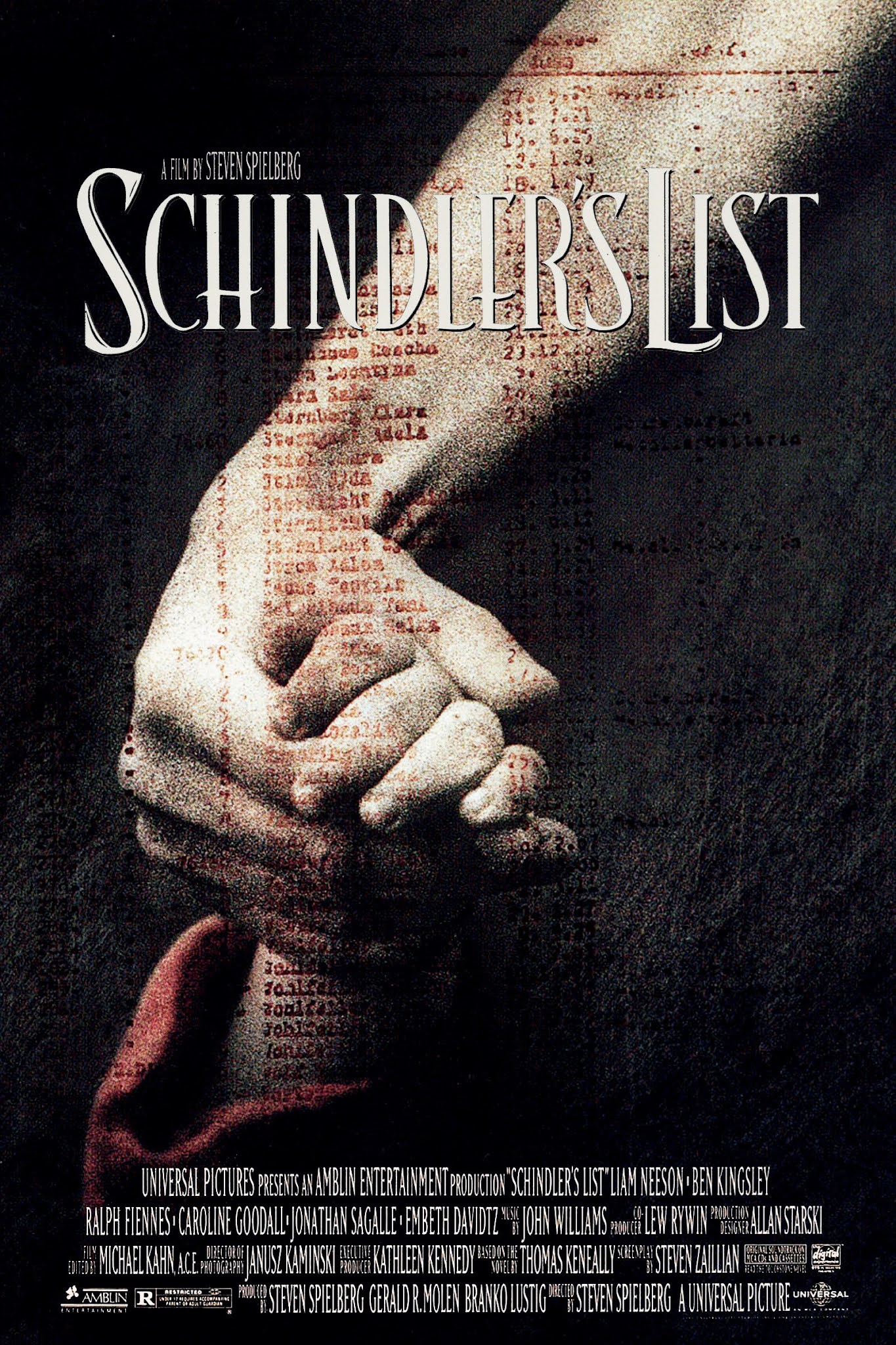
It was the film Spielberg spent over a decade building up the courage to make. Schindler’s List not only marked a new era for him as a film-maker, it also helped a wider audience directly confront the horrors of the Holocaust. At a time when Holocaust denial was starting to rise, Schindler’s List straight-forwardly but powerfully placed the reality of this crime firmly in the eyes of the world. Schindler’s List today remains one of the most emotionally powerful Holocaust movies, the standard to which all others are judged – and peerless example of committed and passionate film-making.

Based on Thomas Keneally’s Booker-prize winning “non-fiction novel” Schindler’s Ark, the film is set in Krakow during the Second World War. As the German occupying force crowds the Jews into the overcrowded Ghetto in the first step of what will become systematic extermination, Oskar Schindler (Liam Neeson) arrives in town looking to make his fortune. Charming, gregarious and quick with a bribe, Schindler soon makes friends with senior SS members. Setting up an enamelware factory to supply the Wehrmacht, it is staffed entirely by cheap Jewish labour (supplied by the SS) and run by skilled Jewish accountant Itzhak Stern (Ben Kingsley) while Schindler handles ‘public relations’ (bribes and schmoozing) with the SS. But, over time, Schindler struggles more and more to close his eyes to the murder of the Jews – a fact made even more prominent with the arrival of brutal SS commander Amon Goth (Ralph Fiennes).

Schindler’s List is chillingly, shockingly honest in its depiction of the horrors of the Holocaust. But it’s easy to forget how cunningly and gently it eases you into the nightmare you are about to watch. This is after all a film that uses Schindler as its POV character. What we are experiencing is his perception of the Holocaust, and through that trying to grasp what could potentially have made this opportunist and profiteer into a humanitarian. As such, the film is careful to give a slow build to the monstrous genocidal fury of Nazism.

In fact, much of the first thirty minutes could almost play out as a sort of triumphant against-the-odds success of a morally flexible charmer. There are a surprising number of laughs in that opening thirty minutes, at Schindler’s chutzpah and weakness for a pretty face. The opening sequence is a delightful demonstration of his confidence: we know he has nothing but the clothes he stands up in and what cash he can scrape together when he enters a nightclub frequented by the SS bigwigs we needs to impress. When he walks in no-one knows who he is: by the end of the evening a waiter is dumbfounded another guest doesn’t know who Oscar Schindler is. Much of the first act is a chronicle of Schindler playing the angles, crossing the right palms with silver and charming left right and centre to make himself a somebody from nothing.

Imagine you didn’t know what the Holocaust was. You’d think this could be a very different film. There are clues: the unspoken loathing Ben Kingsley’s Itzhak Stern clearly feels for this man who smilingly hires cheap Jewish workers from the SS (the workers get nothing) to staff his factory. The fear any Jewish character expresses when confronted with a German officer. The desperation and dirt of the Ghetto. But, like Schindler, there is enough there for you to think “yeah, it’s tough on the Jews, but it’s could be worse, it’s not my problem”.

Schindler wants to be thought of as a good man, but deep down he knows he isn’t: you can see his discomfort when he’s thanked by a one-armed man Stern has inveigled into working in the factory. He already knows he doesn’t deserve thanks – guilt that expresses itself at anger against Stern for hiring a one-armed ‘machinist’ in the first place. After all he’s running a business here.
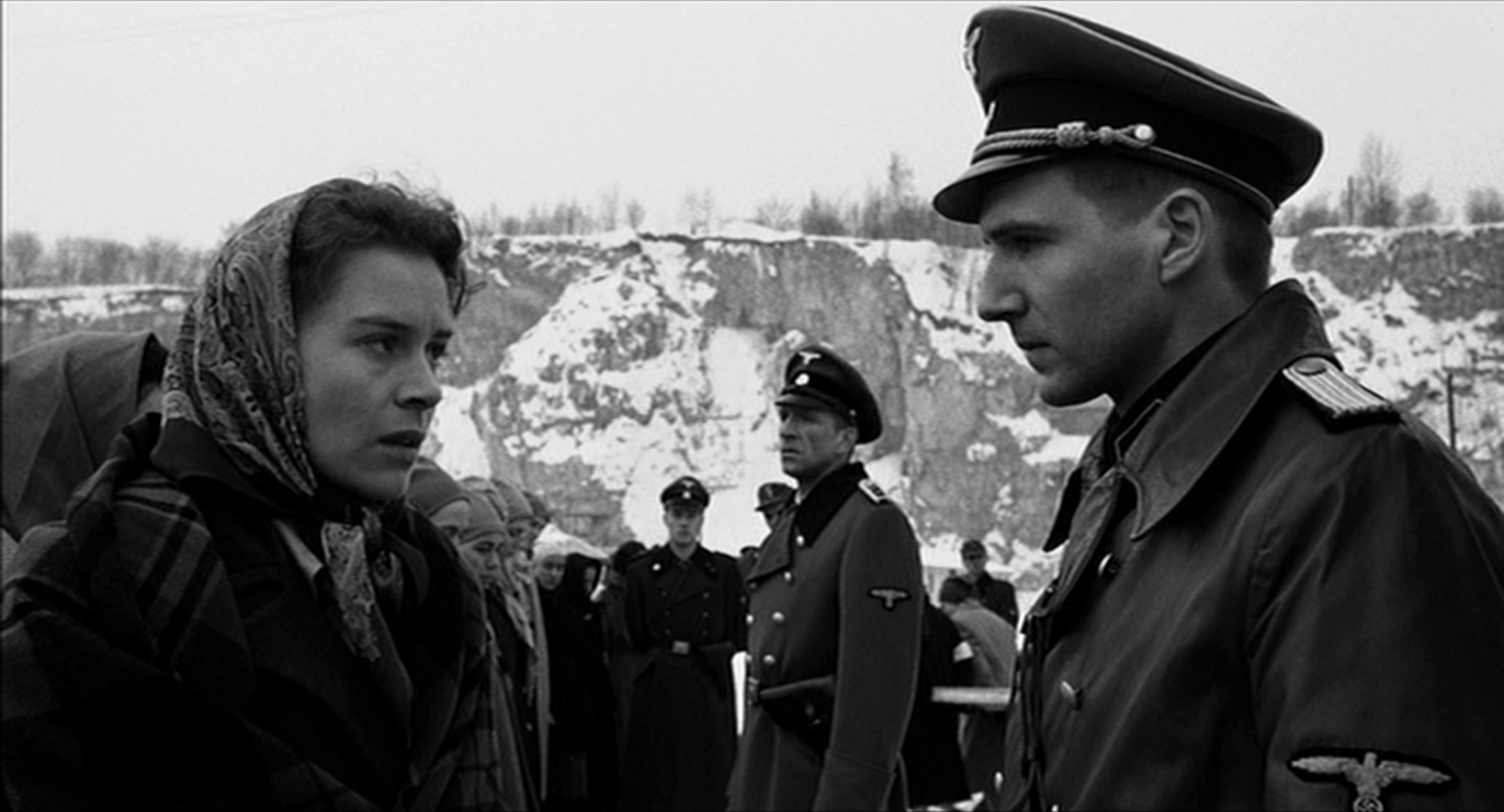
That one-armed man is the first death we see, executed at a roadside for not being able to shovel snow from the road. Any chance of turning your face away again is lost with the arrival of Amon Goth to liquidate the Krakow Ghetto and build a new concentration camp. Played with a bloated, dead-eyed sadistic sadness by Ralph Fiennes (Goth bitches constantly about his workload, drinks to excess and is as desperate to be liked as he is uncaringly brutal), Goth oversees acts of inhumanity that leave the viewer shocked and appalled.

Spielberg films the liquidation of the Krakow Ghetto like a documentary observer and doesn’t flinch from the brutality: summary executions, dead bodies left in the street, the late night slaughter of any hiding in the Ghetto. Doctors euthanise their patients (who drink the poison with thanks in their eyes) before SS guards can machine gun them in their beds. Spielberg embodies this in a single red-coated girl (one of the few splashes of colour in the film), who walks through this nightmareish hell, witnessed from a hill by the horrified Schindler. Later the same red-headed girl will be wheeled on a cart of twisted, exhumed bodies to be thrown onto a bonfire of rotting corpses.

It’s but an entrée into the nightmare of Goth’s camp and the later hell of Auschwitz. In the camp, Goth snipers those not ‘working’ from the balcony of his hilltop villa. Anyone can be executed at any time. Selections see naked inhabitants of the camp running in circles, the weak pulled out to be dispatched to the death camps. Mountains of corpses are burnt, their ashes falling like snow on Krakow. Later, a misdirected train of Schindler Jews arrives in Auschwitz where human ashes form a constant mist. Terrified the women are stripped, their hair removed and herded into a shower room: the terror of this sequence alleviated only when water not gas falls from the shower heads. Spielberg shoots all this with a careful but horrific immersiveness, which never lingers on horrors but always acknowledges them while moving you onto the next terror.

You can criticise Schindler’s List for focusing on the few thousand who survived this senseless barbarism rather than the millions of dead – but the film offers a cause for hope. That, even when things are at their worst, people can decide to do good. Itzhak Stern (a beautifully judged, deeply humane performance from Ben Kingsley) calls the list “an ultimate good”, with everything around it evil. Faced with such horrors, perhaps we need to know that a man like Oscar Schindler can turn the skills he used to enrich himself towards saving lives: bribing officials, spinning stories, presenting a front to his SS partners of an uncaring businessmen while saving as many lives as he can.

Played with huge charm and authority, mixed with a fascinatingly unknowability by Liam Neeson, the film bravely never offers a definitive answer as to what turned Schindler into a man dedicated to others rather than himself. There is no single moment where he makes the conscious turn, instead the film presents the shift as a gradual but inevitable change: as the real-life Schindler himself said, in such a situation there was no other choice.

Schindler’s List isn’t perfect. Despite his best efforts, Spielberg’s sentimentality creeps in. Neeson’s final scene takes things too far, culminating in a blatantly manipulative breakdown, weeping that he did not do more – as if Spielberg is worried we didn’t get the point. Some moments lean into Hollywood convention, from Goth’s gun repeatedly misfiring when attempting to execute a worker (who survives) to Goth and Schindler cutting cards to decide the fate of Goth’s brutalised maid Helene (a sensitive and heartfelt Embeth Davidtz). But what it gets right far outweighs this.
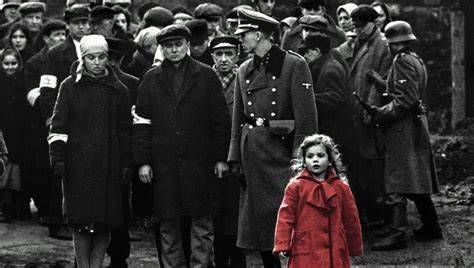
Spielberg presents the Holocaust with unflinching emotion and a carefully controlled sense of moral outrage. Beautifully (some argued too beautifully) filmed by Janusz Kaminski in cool black-and-white with a sensitive score from John Williams, it introduced the Holocaust to an entire generation. No other director could perhaps have done that.

In a sense Spielberg’s career was building towards this, his mastery of cinematic language (this is a superbly edited film by Michael Kahn) utilised not for thrills but to illuminate one of the darkest hours of history. But with that, it also provides hope for humanity, perhaps the key to its emotional impact. The acting is sensational – Neeson has never been better, Fiennes is extraordinary, Kingsley far too easily overlooked as the film’s heart. Traumatising, horrifying but vital and essential, Schindler’s List brings to life with deep respect the worst of history.
The Lord of the Rings: The Return of the King (2003)

The Fellowship face one final battle in the conclusion of Jackson’s stunning trilogy

Director: Peter Jackson

Cast: Elijah Wood (Frodo Baggins), Ian McKellen (Gandalf), Viggo Mortensen (Aragorn), Sean Astin (Samwise Gamgee), Andy Serkis (Gollum), Billy Boyd (Peregrin Took), Dominic Monaghan (Meriadoc Brandybuck), John Rhys-Davies (Gimli), Orlando Bloom (Legolas), Bernard Hill (Theoden), Miranda Otto (Eowyn), David Wenham (Faramir), Karl Urban (Eomer), Hugo Weaving (Elrond), Liv Tyler (Arwen), Cate Blanchett (Galadriel), John Noble (Denethor), Ian Holm (Bilbo), Christopher Lee (Saruman), Brad Dourif (Grima Wormtongue), Sean Bean (Boromir)

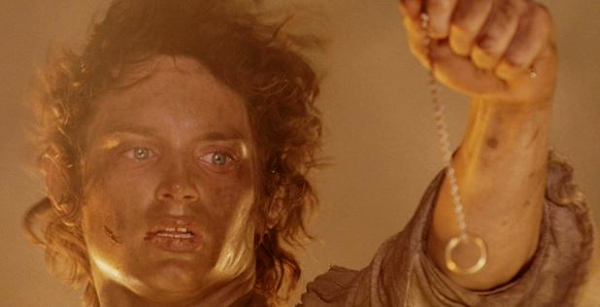
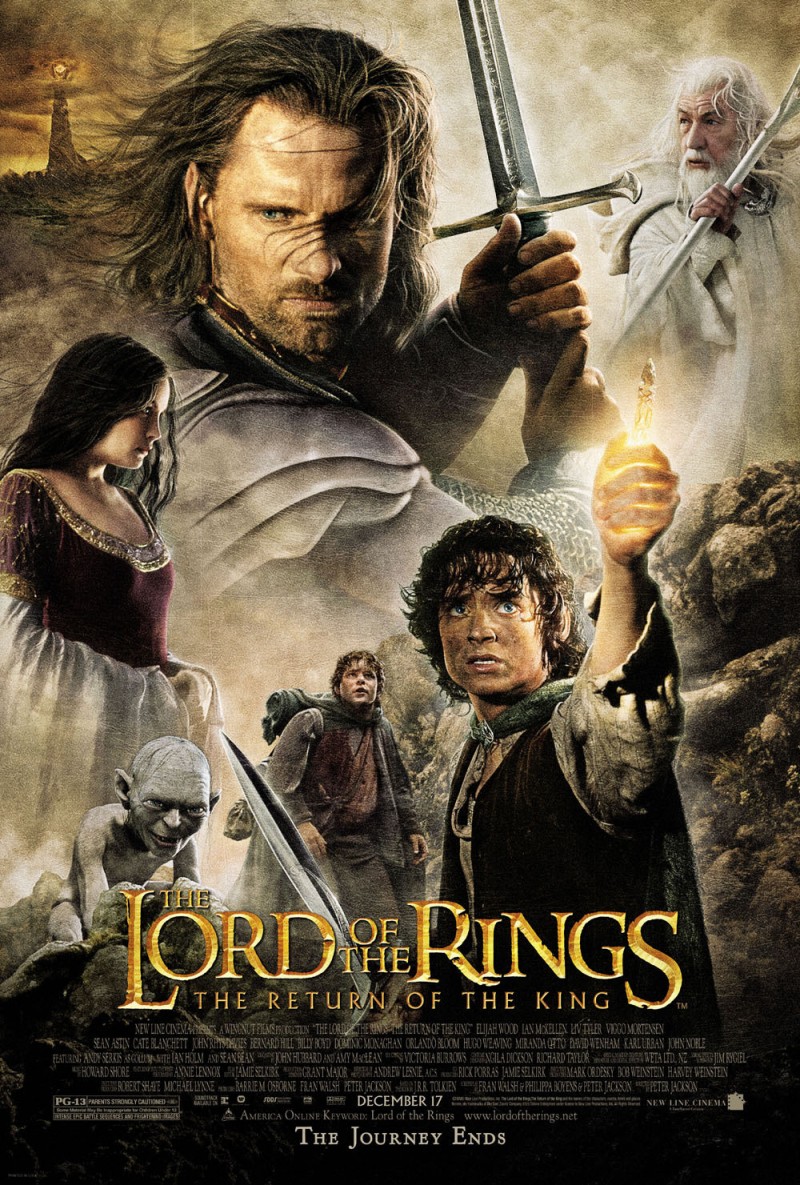
By the time the third film in Jackson’s Lord of the Rings trilogy came out, we all knew this was something very special. Readers of Empiremagazine voted it the 9th Best Film Ever Made the month it was released. It was showered with awards, winning every Oscar it was nominated for (11, including three for Jackson) and grossed over a billion dollars worldwide. The Return of the King is a landmark – and it’s a stunning sign-off for a triumphant trilogy.

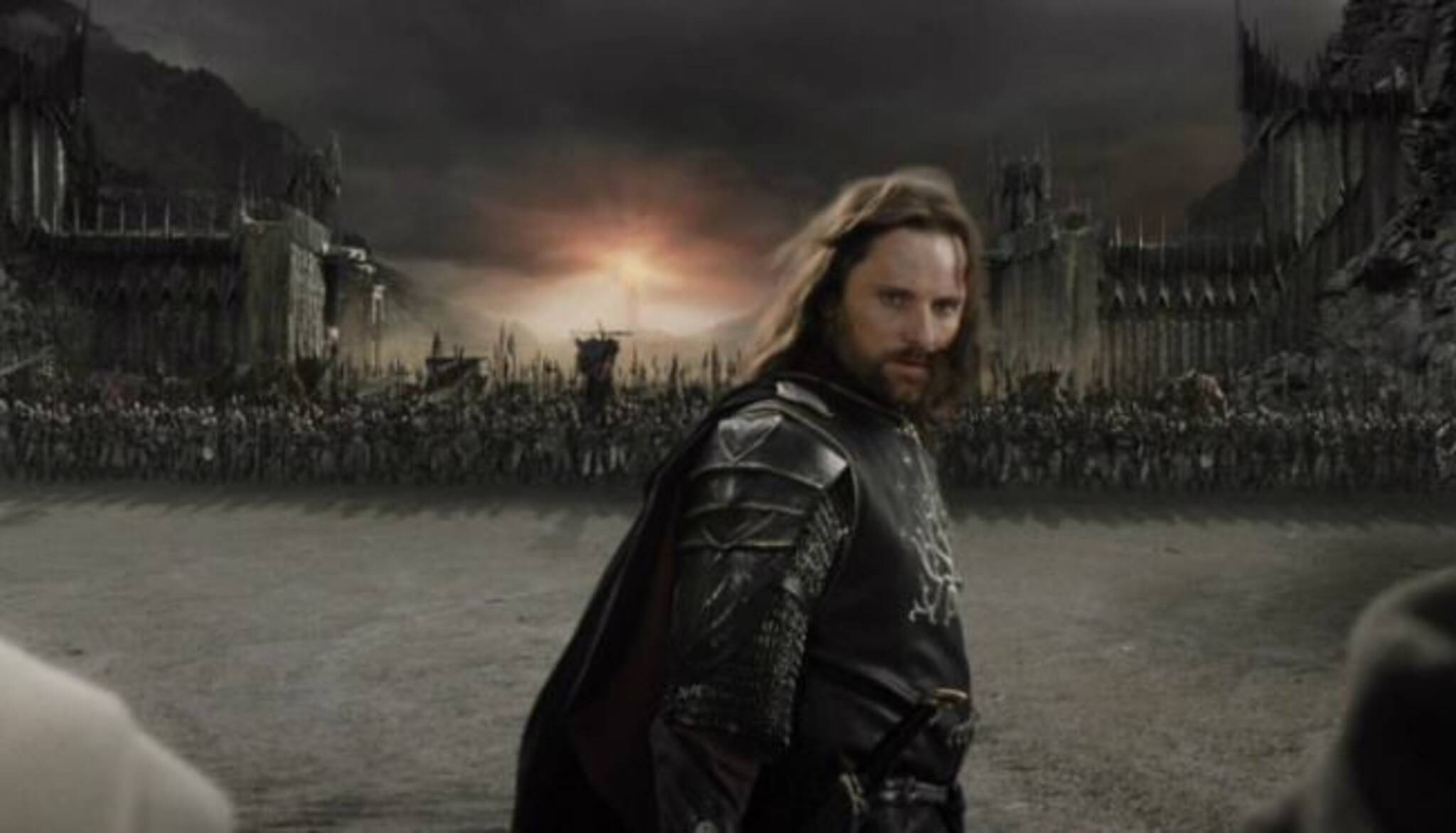
Frodo (Elijah Wood) and Sam (Sean Astin) are even closer now to Mount Doom, guided by the treacherous former ring-bearer Gollum (Andy Serkis). While they must negotiate the dangers of Mordor, Sauron has sent his forces out to conquer Middle Earth. The city of Minas Tirith is his target. Facing an army of thousands of orcs, the city’s only hope is if Gandalf (Ian McKellen) can defend it long enough to allow Aragorn (Viggo Mortensen) – the man destined to become king of Gondor – to lead a relief force. Will Frodo resist temptation and destroy the ring? And will Aragorn be able to defend the city and become its king?

I think it’s fair to say, with books as widely loved as this, no one is going to agree with every single decision Jackson and fellow writers Fran Walsh and Phillipa Boyens made. Here again, changes have been made – famously the scouring of the Shire that closes the novel has been cut (with Saruman dispatched in the opening scenes of the extended edition). What the screenplay seeks to do is increase the pace and tension – it’s probably why Denethor, leader of Gondor, is reinvented as an antagonist (of which more later) and events charge ahead with a relentless forward motion. There is no stopping to catch breath here: there is always a new crisis to solve.

Where changes have been made, they largely have a positive impact. For example, the film takes the decision to introduce conflict between Frodo and Sam – as well as increasing further the scheming malice of Gollum – by having the disturbed ring-addict manipulate the two hobbits into a falling out. This allows Frodo to enter the lair of the giant spider Shelob (a disgustingly visceral creation) alone. Not only does this make Frodo more vulnerable, it also increases the bravery and nobility of Sam, by having him return to save the day (and allow for a classic Hollywood nick-of-time entrance).

The change also adds to the devious brilliance of Gollum, once again superbly played by Andy Serkis. After spending much of The Two Towers bringing out the depth and sadness in this fragile character, The Return of the King carefully shows how this doesn’t excuse his fundamental ruthlessness. The film opens with a flashback showing Smeagol finding the ring, serving as a neat reminder of the Ring’s fundamental wickedness: within seconds its pushes Smeagol to murder his best friend. The sequence following Smeagol’s moral and physical collapse neatly reminds us of its danger and also how close Frodo is to all this happening to him.

Frodo’s suffering and painful growing maturity is more central here. Wood brilliantly charts Frodo’s continuing moral and emotional decline under the Ring’s influence. Increasingly a physical wreck, Jackson carefully lets the suspicion grow that Frodo’s not going to be capable of chucking the ring away. Balancing this, Astin’s Sam Gamgee (the most heartfelt and affecting performance) becomes the moral centre, self-sacrificing, optimistic and fundamentally decent – a beacon of light in the grimness of Mordor.

Again, Jackson ups the stakes, with TROK taking place on the grandest scale you could imagine. The battle sequences are breath-taking in their depth and ambition. But, as with the other films, Jackson knows the scale counts for nothing if you didn’t care about the characters at its heart. So, while the events are epically earth-shattering, the film always brings us back to simple emotion. Even in the siege of Gondor, it finds time for a quiet moment of humanity between Gandalf and Pippin.

But those battle scenes are still stunning. The orc armies are terrifyingly vast, while the strafing run of the airborne Nazgul (soldiers snatched from towers are thrown hundreds of feet to their deaths) adds to the sense that victory is hopeless. Soldiers fight desperately for their, and others, lives. The film even tops the Two Towers’ charge of the Rohirrim with a stunningly rousing charge involving thousands of horses into the massed ranks of Orc (and tops that minutes later with a second change accompanied by a sweeping camera movement and swelling musical cue that is just about perfect).

Jackson brilliantly communicates how much the stakes are against our heroes. We really feel their bravery and desperation as they take on impossible odds – and it’s that which really gives the scenes their power, not the scale or the special effects. No moment is lost without bringing us back to moments of bravery and vulnerability from our leads. There are powerful moments of warmth, kindness, loyalty and generosity throughout. It’s finally what makes the film so effective – it’s a tribute to the power of friendship.

It’s all powered with a beautifully operatic score by Howard Shore. Shore’s music captures perfectly the world of Tolkien. A few years after this, an ill-fated musical version of LOTR was launched – and flopped. Because, essentially, Shore has already turned these novels into a sort of opera-slash-concerto, with perfect themes for everything from martial orcs to whimsical hobbits. Some of the musical cues are so luscious and stirring, they make you want to stand and applaud. The music accompanying Gandalf’s rescue of the retreat from Osgiliath is a wonderful highlight, the triumphant and tense music for the Rohirrim charge is stunning, the score for our heroes leaving for the Undying Lands beautiful. LOTR is so beautifully scored, Shore’s work so gorgeous, LOTRis a film you could certainly watch with just the music playing and still understand it perfectly.

Of course, there are things you can criticise. Denethor – in the novel a portrait of corrupted nobility, his intelligence and pride turned to despair – is repositioned here as a sort of heartless WW1 General, gobbling food while his soldiers die and embracing a nihilistic death wish (although this change does allow for the absolutely beautiful Gandalf/Pippin beacon lighting sequence, in defiance of Denethor). It’s not helped by Noble’s lip-smacking performance, stripping the character of nuance. It’s gives Gandalf more to struggle against, but it’s a crude approach for a character who would have worked better as a mis-guided elitist rather than a crass, hissable villain.

Lots of people have had a pop at the multiple endings as well. Jackson certainly teases us a little too much with fades to black. But I’d argue the lack of a definitive full stop adds greater depth to the story. Tolkien was partly inspired by his experiences in WW1. In that war, the hell of the trenches came to an end, but people’s lives didn’t end with a triumphant parade. Instead, they needed to return home and adjust back into civilian life. I think it’s powerfully affecting that the hobbits return to an unscoured Shire, which hasn’t changed at all while they (and us) have seen Middle Earth torn apart. And it adds real force to why Frodo, in particular, can’t return to “life as normal”.

It gives a powerfully moving, bitter-sweet ending and, I think, brings out a rich, emotional message from Tolkien’s story often missed: Frodo and his friends are fighting to protect their home, but find that they have changed so much they can never settle back into that home in the same way again. It’s something soldiers serving in WW1 experienced, and it feels fitting echoed in Jackson’s LOTR.

Jackson’s LOTR will always spark conversations around faithfulness and otherwise to the source material. Not everyone will agree with every choice. But surely no one can argue with the majesty, scale and wonder of these films, the sublimely perfect casting choices, or the loving detail in every touch of the design. When I first saw Return of the King in the cinema, the audience got to their feet and applauded. You can’t blame them: watch this and you are watching something very special, a true landmark in cinema.

It Happened One Night (1934)

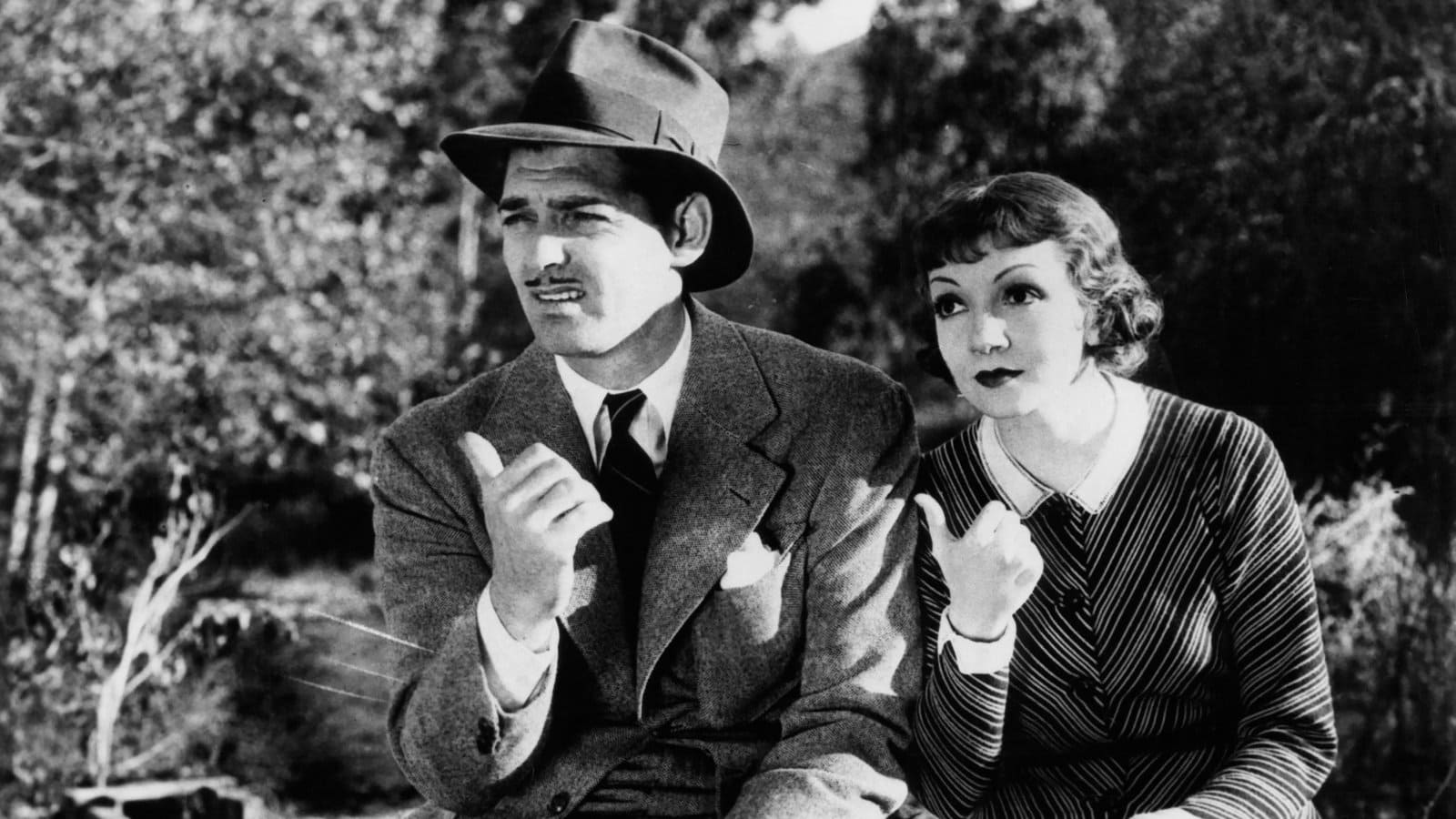
Clark Gable and Claudette Colbert as the original odd-couple who find love in It Happened One Night

Director: Frank Capra

Cast: Clark Gable (Peter Warne), Claudette Colbert (Ellie Andrews), Walter Connolly (Alexander Andrews), Roscoe Karns (Oscar Shapeley), Jameson Thomas (“King” Westley), Alan Hale (Danker), Arthur Hoyt (Zeke), Blanche Friderici (Zeke’s wife), Charles G Wilson (Joe Gordon)

Two contrasting people thrown together over a set period of time, at first rub each other up the wrong way but then, doncha know it, frustration turns to love and suddenly we’re nervously watching to see if a last minute complication will throw a spanner into the works. If it sounds like a classic set-up – that’s because it is. Where did you think the set-up came from? Capra’s comedy – which scooped the Big Five at the Oscars (Picture, Director, Actor, Actress and Screenplay) is one of the most influential films ever made – and one of the funniest and sharpest examples of great film-making from Hollywood’s Golden Age.

“Daughter escaped again, watch all roads, airports, and railway stations in Miami.” Heiress Ellie Andrews (Claudette Colbert) has eloped with daring-but-dull flying ace “King” Westley (Jameson Thomas) but her father Alexander (Walter Connolly) won’t wear it as he’s sure Westley is only after her money. So, Ellie literally jumps ship in Florida (swimming to shore from her father’s yacht, she’s got some guts that girl) and decides to make her way to New York to reunite with her husband. Hopping on a Greyhound bus to New York, she meets recently fired New York reporter Peter Warne (Clark Gable) and, after a series of unfortunate incidents, the two of them end up penniless and travelling across America together. Will their waspish banter blossom into something else?

It Happened One Night is so delightful, as soon as its finished, you fancy skipping back and watch it again. It’s such a brilliant, sexy, romantic comedy it’s odd to think nearly everyone involved wasn’t even sure they wanted to do it. Re-named from the less catchy Night Bus (and who cares if the film actually takes place over several nights), it was rushed into production to take advantage of Colbert’s availability (she only agreed to do it if it filming took four weeks). Gable was loaned out by MGM against his will. Capra and Colbert didn’t really get in and screenwriter Robert Riskin re-wrote the script on set. If you ever needed proof adversity leads to a classic, take a look at this.

It Happened One Night beautifully charts how two mismatched people can be surprised by how much in common they have. Both are, in their own way, fiercely independent. Ellie will marry the man she wants, and hang the consequences. Peter gets the spike permanently because his unique way of doing things doesn’t fit with his editor. They are both quick-witted people with dreams who don’t suffer fools. At first she thinks he’s smug (and in a way he is), he feels she’s entitled (after all its day two before she asks his name). But they bounce off each other from the start, each an equal match for wit (not to mention they both clearly fancy the pants off each immediately).

What’s going to bring the “walls of Jericho” tumbling down between these two? Forced into sharing a hotel room at night, Peter astounds Ellie’s expectations by throwing a sheet up between them, their own little wall of Jericho. Colbert judges perfectly this scene how Ellie’s exasperation also mixes with something pretty close to disappointment. After all she’s already cuddled up to Peter, sleeping on the bus – and Peter in no way objected. Later, in a mirroring hotel room scene Peter will speak openly about how he’s longed for a woman with freedom and spirit (and Gable does this with a beautiful wistfulness) – exactly the qualities he has seen grow in Ellie over their days together.

What works wonderfully is how naturally this relationship becomes first a friendship, then something deeper. Improvising a marital argument, pretending to be a plumber and his wife to put detectives off her scent, they complement each other perfectly. What’s fabulous about this scene, is that (to their surprise) they are equally delighted by how smart and witty the other is. Their gleeful giggling is not only very sweet, but also the start of a new chapter in their relationship. The scene culminates with one of the few moments of intimacy on film involving clothes going on, as Peter helps Ellie button up her blouse.

What’s endearing about them – helped by Riskin’s sparkling dialogue – is how they settle into ‘roles’ and eagerly bounce off each other. Peter increasingly effects a parody of self-importance, claiming to be a world expert on everything from donot dunking to hitchhiking. Ellie gleefully punctures his grandiose claims, but enjoys playing up to her own image of the heiress, at sea in the real world. This is how real people fall in love – and the film is confident enough to have them exchange private jokes we can’t hear on the backseat of a car. It’s gloriously romantic because it feels true.

Gable and Colbert’s chemistry is scintillating. Both are supremely funny, but also grounded. When they lark about they feel like real-life sweethearts. Colbert gives Ellie a wonderful vulnerability under the self-entitlement. She’s snappy and quick-witted but confused and even a bit frightened by her growing feelings. Gable’s easy charm also has a slight chip on his shoulder: but he’s also laid-back and more than willing to look silly, proud but self-aware with it. He’s also a hugely adept physical comedian (his demonstration of how to hitch-hike is hilarious).

Moments have passed into film lore. Gable’s extraordinarily silly hitch-hiking routine, cars streaming past, until Colbert flashes a bit of leg. This is a beautifully staged scene, a cheeky bit of sexuality a brilliant punchline to an extended showcase for Gable’s comic timing and Colbert’s reactive skills and composure. The dialogue exchanges between the two are superbly delivered. The film was a massive sleeper hit – it even has one of the best examples of reverse product placement, when the reveal Gable’s character didn’t wear an undershirt allegedly led to sales of that garment plummeting.

The direction from Capra is spot-on, classic Hollywood but mixed with some beautiful framing and some dynamic camera movements, including some lovely tracking shots particularly through the bus (Capra’s visual direction in a confined space here doesn’t get enough credit). Capra also ensures we don’t forget this was the time of depression: money is tight for everyone, many of those on the bus are desperate for work and the out-of-touch affluence of Ellie rightly raises heckles.

Above all, Capra creates a hugely sweet romance – with lashings of sexy chemistry but not a jot of sex. Wipes and fast transitions keep the pace up. The dialogue pacing is perfect. He uses light wonderfully: in the two hotel room scenes, light carefully divides up and then unifies our two leads, dancing off their Ellie’s eyes and reflecting how they are beginning to see each other in a new light. It has a reputation as a screwball comedy, but really its a carefully paced character comedy, where Capra lets the relationship flourish organically from scene-to-scene (only Peter’s “hold-the-press” editor and irritating fellow bus rider Shapely – the inspiration for Bugs Bunny – are characters who could walk into screwball unchanged).

Above all, he draws fresh, relaxed and emotional performances from the two leads. The bond between them has been so comfortably formed – and resonates so strongly – that the film can get away with being possibly the only romantic comedy in history where the couple never kiss and don’t share the screen in the final act. It’s a film where two characters bantering and sharing heartfelt truths, sleeping in separate beds on opposite sides of a sheet has more sexiness and emotion to it than a world of rumpy-pumpy. It Happened One Night is just about the perfect romantic comedy, oft-imitated but never-bettered. You’ll want to watch it again as soon as it finishes.

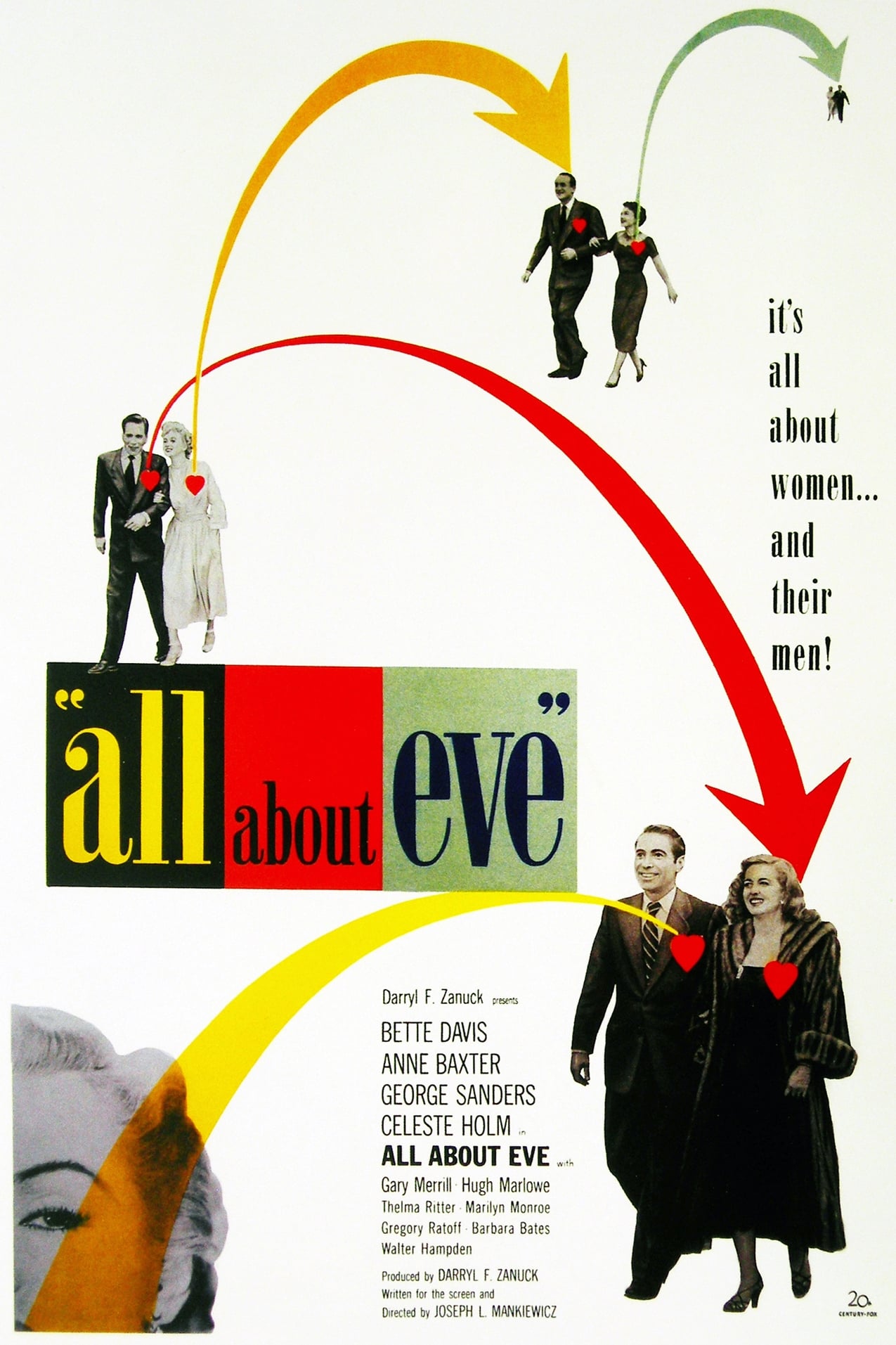
All About Eve (1950)

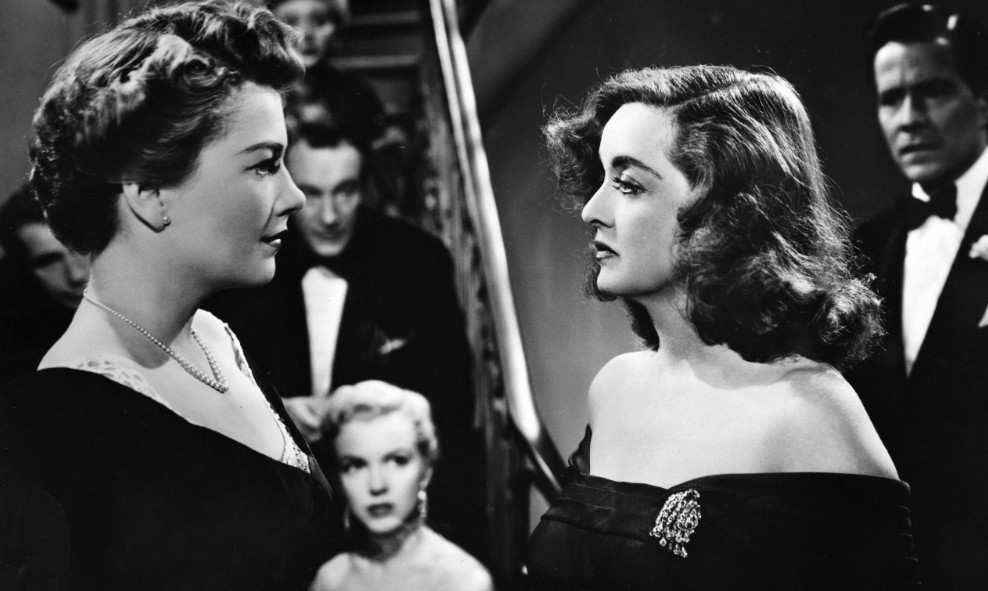
Anne Baxter and Bette Davis become deadly rivals in All About Eve

Director: Joseph L Mankiewicz

Cast: Bette Davis (Margo Channing), Anne Baxter (Eve Harrington), George Sanders (Addison DeWitt), Celeste Holm (Karen Richards), Gary Merill (Bill Sampson), Hugh Marlowe (Lloyd Richards), Thelma Ritter (Birdie), Gregory Ratoff (Max Fabian), Marilyn Monroe (Claudia Casswell)

At a theatre awards ceremony, a table of people watch Eve Harrington (Anne Baxter) collect the Sarah Siddons Award for Distinguished Achievement. She thanks them all effusively. They stare at her with mute loathing. I guess that’s show business. Mankiewicz’s biting and witty film boasts possibly one of the greatest scripts for the movies ever written, a biting expose of rivalries and backstage politics, that also manages to find a lot of warmth for its characters. Arch, but in its own strange way tender hearted and hopeful, its Mankiewciz’s greatest achievement.

Margo Channing (Bette Davis) is a gifted actress and one of the leading lights of Broadway, as well as the on-stage muse of playwright Lloyd Richards (Hugh Marlowe), close friends with his wife Karen (Celeste Holm) and in love with her director Bill Sampson (Gary Merill). But Margo is just beginning to worry, now she has reached her forties, that her parts are drying up. Into her world arrives Eve (Anne Baxter), a besotted fan who swiftly becomes first her assistant then her understudy and eventual replacement. Despite her sweet exterior, Eve is fiercely ambitious determined to find fame and success – and only cynical theatre critic Addison DeWitt (George Sanders) seems to notice.

All About Eve cemented Mankiewicz as Hollywood’s go-to for high-brow literary entertainment. Which is odd when you think about it, because what makes All About Eve work – and enduringly popular – is that it’s a fantastically quotable soap, played with relish. It’s not a million miles away from a ten-part, cliff-hangers aplenty Netflix drama. But it stands out because of Mankiewicz’s craft – when you pen lines as cutting, acerbic, tender and true as those in All About Eve, is it any wonder that Hollywood sees you as the next Fitzgerald?

And the dialogue is sparkling, from start to finish. From a cuttingly dry opening voiceover from George Sander’s Addison DeWitt – beautifully delivered, crammed with cynicism, cattiness, pride and purring contempt (“Minor awards are for such as the writer and director since their function is merely to construct a tower so that the world can applaud a light which flashes on top of it.”) that it sets the tone for a film where dialogue is king. Mankiewicz is not much of a visual stylist – only the final shot, a besotted fan starring into an endless series of mirrors – sticks in the mind, and his approach as a director is intensely theatrical, but it doesn’t matter when his dialogue sings.

All About Eve works as both a supremely entertaining peek behind the curtain and also a neat parable about ageing, change and relevance. Perhaps there are few better examples of the changing of the guard, than the impact of growing old on a woman in theatre: from girlfriend to mother, with hardly a role in between. It’s the change Margo is dreading. And as she grows too old for her leading lady roles, what has she actually to show for it? Not much in the way of family or happiness.

If Eve looked closer, perhaps she’d wonder if it was worth it. As Margo makes clear in her dressing room and at a party thrown for Bill, she’s not got much to look forward to. (It’s not often commented on that the film’s most famous line, “Fasten your seatbelts it’s going to be a bumpy night”, is followed by an evening of Margo’s maudlin self-pity). For all her glamour and fame, it’s clear Margo is unhappy: “So many people know me. I wish I did” she says at one point, and for all the whirlwind of her life, she’s not exactly over-burdened by close friends.

It’s easy to forget, because All About Eve is so well known for being a bitchfest – and Mankiewicz’s cutting one-liners are genius – that you forget its lead is a sad and lonely figure, and the film presents a conservative view of motherhood being a crucial role for a woman. We don’t automatically remember this speech’ but it’s crucial for Margo: “There’s one career all females have in common – whether we like it or not: being a woman. Sooner or later, we’ve got to work at it, no matter how many other careers we’ve had or wanted. And, in the last analysis, nothing is any good unless you can look up just before dinner or turn around in bed – and there he is.”

Margo is the signature part for Bette Davis, but memory has distorted it. You can expect it to be a parade of sharply barbed attacks, but it is much more than this. Yes, she does these with aplomb (“I wouldn’t worry too much about your heart. You can always put that award where your heart ought to be”), but under the regal grande dame, there is a rather vulnerable woman, scared about where her life is going and terrified of being unloved. For all the Davis fireworks, it’s an affecting – and perhaps this is why it became such a gay icon, during those years of people forced into the closet –vulnerable and lonely performance.

That vulnerability contributes to the sense of vampire story. Eve arrives in the dead of night, inveigles her way into Margo’s life and then slowly takes that life over. Eve is almost draining Margo’s life force, leaving her even more aware of the lonely impact of her choices. There’s the suggestion of sexual obsession in Eve – standing on stage, holding Margo’s costume in front of her and imagining the applause, Eve seems as much besotted with Margo as she does with becoming her. And of course Eve is a unknowable fake. Anne Baxter’s gentle, butter-wouldn’t-melt sweetness is just the right side of phoney. Only Thelma Ritter’s (very funny) bitchy dresser detects dictates her invented backstory about a deceased husband is baloney (“What a story! Everything but the bloodhounds snappin’ at her rear end.”).

Later Birdie will comment Eve is studying to become Margo – and that’s spot on. As Eve moves further up the ladder, Baxter drops her gentleness and becomes increasingly steely. “A contempt for humanity, an inability to love and be loved, insatiable ambition – and talent. We deserve each other” Addison will tell her – and he’s spot on. Eve’s driving motivation is ambition, and anyone is fair game if it will help her move up the greasy ladder of theatrical success.

Eve uses everyone. She manipulates Karen into making Margo missing a performance – then invites the press in advance to her performance, which is met with raves. Afterwards Eve gives an interview in which she lacerates Margo as a bitter has-been holding her back. It’s enough for Karen – and Celeste Holm is very good as this gently supportive woman, with the firmest principles of anyone on show here – but the men can’t let go. It takes an attempted seduction to drive away Bill, but the weaker Lloyd seems to be sucked into her web (the film is coy about the implied affair). It should be clear that Eve is a force draining energy out of everything she can, determined to get to the top.

And we know she gets there: after all we’ve seen her win the Sarah Siddons prize! But Eve has none of Margo’s soul. The film ends with her meeting the even more vainly empty Phoebe, who Addison immediately recognises is intent on the same scheme as Eve was. And so, the whirligig of time brings in its revenges. Eve has learnt everything from Margo, except how to be a human: she has all her technique and none of her heart. The film even manages to feel a bit sorry for her – a woman who has achieved everything she wants, and finds it makes her neither happy nor popular.

It’s the heart of Mankiewicz’s film, perhaps even its warning message. What is the point of all this greatness, if all you have to show for it are false-friendships with poisonous pals like Addison? It’s the moral message behind a film filled with one-liners and wonderful speeches, a masterclass in theatrical writing for cinema. Bette Davis is superb, funny and heartfelt. Baxter is quietly terrifying. Ritter and Holm are superb and Sanders is so well case in this role, you wonder if Mankiewicz somehow invented him specially for it. All About Eve may be grand, soapy entertainment – but soap has never been smarter than this.

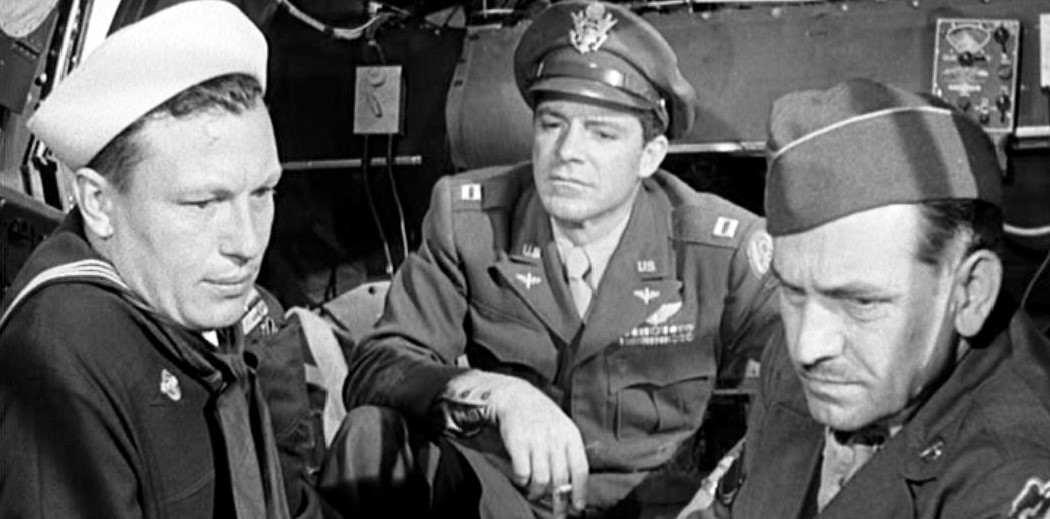
The Best Years of Our Lives (1946)

Harold Rusell, Dana Andrews and Fredric March find coming home can be as tough as war in The Best Years of Our Lives

Director: William Wyler

Cast: Myrna Loy (Milly Stephenson), Fredric March (Sgt Al Stephenson), Dana Andrews (Captain Fred Derry), Teresa Wright (Peggy Stephenson), Virginia Mayo (Marie Derry), Cathy O’Donnell (Wilma Cameron), Harold Russell (PO Homer Parish), Hoagy Carmichael (Butch Eagle), Gladys George (Hortense Derry), Roman Bohnen (Pat Derry), Ray Collins (Mr Milton)

Three men return from the Second World War. They’ve changed, but everything around them seems the same. How do they even begin to adjust when no one really understands what they’ve been through? The Best Years of Our Lives was a sensation when it was released, speaking to a whole country reeling from the shock of war. Many films focus on the gruelling experience of war, but few take on the struggle to find a place for veterans and help them reintegrate into normal life.

Our three veterans all meet at the airport, trying to home to the same small (fictional) city in the Midwest. Normally they would probably have never met: but war has given them a shared bond they will find hard to replicate back home. Al Stephenson (Fredric March) is a banker, who has developed something of a drinking problem to the surprise of his wife Milly (Myrna). Fred Derry (Dana Andrews) was a café worker who became an Air Force Captain – but finds that doesn’t interest employers back home. He also now has nothing in common with the flighty, flirty wife Marie (Virginia Mayo) he married before shipping out – and far more in common with Al’s thoughtful daughter Peggy (Teresa Wright). Homer Parish (Harold Russell) lost both his hands, replaced with mechanical hooks. Can he overcome the adjustments – and allow himself to be loved by Wilma (Cathy O’Donnell)?

What The Best Years of Our Lives explores brilliantly is how quick we are to praise heroes, but how slow we can be to offer them practical help and support. These problems aren’t just restricted to an unlucky one or two – the film goes out of its way to demonstrate the problem is universal. Our three leads are from different services, and radically different walks of life: an important businessman who served as a sergeant, a wash-out who found a purpose in the air force and an athletic sailor who returns without his hands. Rich or poor, it’s tough to find your place whoever you are.

Wyler shoots all this with a documentary realism, with extensive use of deep focus photography. It helps make this a frequently moving film. It sometimes feels like Wyler just captured real events. Flying home our heroes see “people playing golf like nothing happened”. They are all so nervous going home that both Al and Homer both suggest going for a drink rather than leave the cab they are sharing. Everyday problems about going to the office or looking for a job seem more affecting because we know they’ve come back from the war and don’t deserve knock-backs like this.

The heart of this film is Fred’s struggles to find some sort of purpose on civvie street. War offered more opportunities to him more than anyone else. He is a nobody who became a respected somebody. Now he can’t get a job in a department store. As a potential employer tells him, his CV is stuffed with irrelevant experience and his years out of the job market mean he’s fallen behind the rest. This is how a man with a chest full of medals, winds up serving ice cream and busting a gut trying to flog perfume to housewives who let their children run wild around his stand.

Dana Andrews is the heart of this film, giving a marvellous performance of great depth and sadness. Haunted by nightmares, Fred’s optimism drips away the longer he fails to find proper work. Perhaps most heart-breakingly of all, he increasingly makes himself the target of his dry wit. By the time he has surrounded to the indignity of taking back his old soda jerk job (and reporting to the spotty kid who used to be his assistant), Fred is disparagingly belittling his own wartime accomplishments.

If someone as matinee idol handsome, with a wonderful war record, as Fred can’t get ahead, what chance does anyone have? Fred’s wife (Virginia Mayo, marvellously smackable as this shallow girl) isn’t even interested in him, only the idea of him – begging him to wear his uniform (medals and all) for as long as possible so she can show him off like a new handbag. Fred is knocked back so many times, he comes to believe he deserves it. In a beautiful scene, late in the film, he walks through a field covered in old air force bombers. It’s a striking visual metaphor – one Fred is all too aware of – that he’s as much on the scrap heap as them.

The Best Years of Our Lives shows time and again how quick we are to forget. Al is hauled over the coals for offering a loan to a collateral-free GI who wants to start a farm. But Al feels a loyalty to men like this – and he recognises, unlike his superiors, there are qualities you just won’t find in a bank account. Homer is confronted at Fred’s workplace by an arrogant anti-Commie, who suggests the entire war was a waste of time, spent fighting the wrong foes. Calling Homer “a sucker” for losing his hands in the wrong war leads to a fight – and Fred losing his job for punching the guy out. Where is the sense of debt to these people?

Homer not only has to deal with disability – but also the metallic claws which get him all the wrong attention. The army trained him how to use the claws – but as Al observes, watching Homer’s awkward homecoming “couldn’t train him to put his arms round his girl”. They can solve the practical problem, but there is no support for actually coming to terms with the emotional impact.

Homer is played by real-life veteran paraplegic (and non-actor) Harold Russell, in a poignantly sincere, unstudied performance. It becomes even more heart-breaking, as his torment clearly rooted in Russell’s own experiences. When Homer demonstrates to Wilma how vulnerable he is without his hands –  if a door shuts, he’s trapped in a room, he can’t dress himself– it’s almost unbearably sad (O’Donnell is equally good in this scene). Russell’s simple, matter-of-factness is more moving than any histrionics.

The only plot that doesn’t get fully explored is Al’s implied drinking problem. He gets pissed the first night home (and his wife comments several times on his growing reliance). Everything to Al feels a little different – his kids are older, his bankwork seems stuffier. Today the film would dive more into Al’s probable survivor guilt. But Al makes a stand when others won’t to help his veterans – and March has a superb, low-key speech at a banquet in his honour where he vows to invest small loans into returning GIs. The film also gently probes – and in some ways leaves open – the ongoing problems he and Milly (warmly played by Myrna Loy) have had in their marriage, problems which Al’s absence and drinking have not helped solve.

Wyler pulls these threads together in a restrained style that largely avoids melodrama (though Hugo Freidhofer’s score is frequently overblown – Wyler apparently hated it). Instead, dilemmas are grounded in reality. Al might like Fred, but the last thing he wants is for Fred to get his daughter Peggy (Teresa Wright in a gentle, touching performance) caught up in a divorce. In a perfect example of Wyler’s restrained, documentary style, Al and Fred have a quiet man-to-man discussion, before Fred calls Peggy to see he can’t see her anymore. He does this in the back corner of the frame while the foreground shows Al listening to Homer and his uncle play the piano. It’s a perfect example of the way Wyler uses deep focus to give the film a fly-on-the-wall quality.

There is something extraordinarily modern about The Best Years of Our Lives. It feels calm and un-histrionic – and of course many veterans still struggle today. The camera feels observational and unobtrusive and the characters respond to situations in a very natural way. It’s also helped by the wonderfully natural acting. It all comes together in a film that is important without feeling like it’s trying to be important. An observant, sensitive exploration of the experience of veterans (made by a veteran), that never feels false and looks at our world with affection but realism.

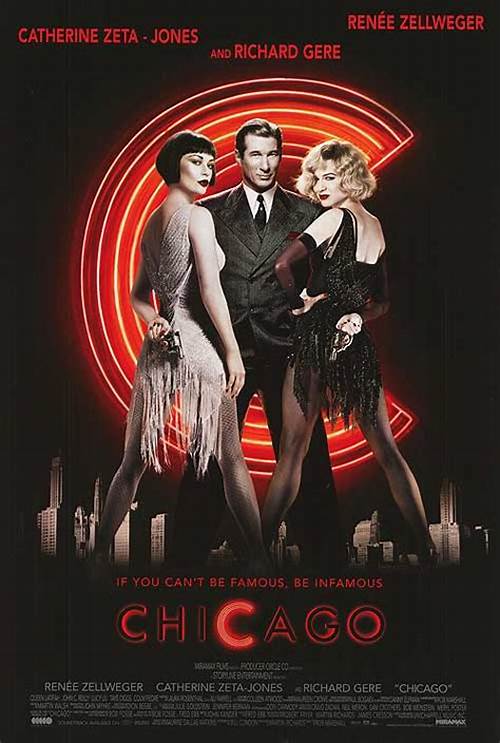
Chicago (2002)

Catherine Zeta-Jones struts her stuff in Rob Marshall’s fabulous Oscar winner Chicago

Director: Rob Marshall

Cast: Renée Zellweger (Roxie Hart), Catherine Zeta-Jones (Velma Kelly), Richard Gere (Billy Flynn), Queen Latifah (“Mama” Morton), John C. Reilly (Amos Hart), Christine Baranski (Mary Sunshine), Taye Diggs (The Bandleader), Colm Feore (Martin Harrison), Lucy Liu (Kitty Baxter), Dominic West (Fred Casely), Mya (Mona), Susan Misner (Liz), Denise Faye (Annie), Deidre Goodwin (June)

It’s become quite the fashion to knock Chicago. Heck I’ve done it myself. How did this mere musical win Best Picture? It’s not even as if the original production was much more than an entertainment. It’s another of those films diminished by whispers that it doesn’t deserve the title of Best Picture. But, look at the film with an unprejudiced eye, and you’ll see that this is the best stage-to-screen musical theatre adaptation since Cabaret. Chicago is such dynamic, high octane entertainment, you would have to a really cold heart not to enjoy it.

A heart as cold, perhaps, as most of the characters. Its set in a 1920s Chicago where it doesn’t matter what you are famous for, so long as you are famous. Who are the bigger stars? The people on stage of the infamous on death row? Roxie Hart (Renée Zellweger) is a wannabe who guns down her conman lover Fred Casely (Dominic West) when his promises of the stage career she’s dreaming of turns out to be all hot air. Roxie works out that she can turn her infamy into just plain fame – following the inspiration of vaudeville-star-turned-accused-murderer Velma Kelly (Catherine Zeta-Jones), who is now more famous than ever. With amoral lawyer Billy Flynn (Richard Gere) in their corner, can they play all sides against the middle and find freedom and fame?

Chicago’s debt to Bob Fosse is in almost every single frame. Rob Marshall’s brilliant choreography is inspired by Fosse’s own work for the original production. It means the entire film drips with the passionate sexiness of Fosse’s best work. It’s also inspired by Fosse’s Cabaret in its use of the musical numbers. There all the musical numbers were kept within the nightclub, acting as a subtle commentary on the events of the film. Here they occur in Roxie’s imagination, staged in a shadowy empty theatre with a mysterious band leader (a charismatic Taye Diggs) introducing each song. It’s a brilliant concept, that allows them to be staged with the sort of exuberance and theatricality that would look plain odd in a ‘real’ setting.

And what musical numbers they are! These are toe-tappingly, finger-clickingly fun, that will make you want to jump up and join in. Marshall’s choreography and direction is not only faultless, but also covers a range of styles. From the sultry opening of All That Jazz performed by Catherine Zeta-Jones, we get burlesque (When You’re Good to Mama), sensual sexiness (Cell Block Tango), knock-about farce (We Both Reached for the Gun), classic 1930s Astaire and Rogers (Roxie) and surreal madness (Razzle Dazzle). The one thing they all have in common is the high-octane energy they are performed with (no wonder all those dancers are so slim!), with no one leaving anything in the dressing room.

Chicago is possibly one of the best edited musicals ever made. Marshall gets a superb balance between camera movements, cutting and the dance numbers. We can appreciate – and see – every step of the intricate choreography, with clear camera movements and angles. But the film is also edited practically on the beat. Cuts accentuate changes in the tempo and even marry up with the exact movements of the dancers. Not only that, the numbers frequently cut from reality to fantasy and back again – and this parallel montage is superbly done, with perfectly timed transitions. The cutting complements each number so well, it actually makes them more exciting and dynamic. It’s a masterclass in using the language of cinema to accentuate the impact of dancing.

But Marshall manages to make Chicago not just a collection of amazing dances and fabulous tunes. In our celebrity worship age, Chicago feels increasingly more relevant – you can imagine Roxie would love to be on reality TV and would never be off Twitter. It doesn’t matter that she’s got no real talent (in fact it makes the fact that all the musical numbers are fantasies even more witty), she’s just desperate to be known. Shooting her lover is the best thing that’s ever happened to her and she’ll do anything to stay in the newspapers, from a fake pregnancy to playing the timid ingenue.

Everyone in Chicago is just playing the game. Velma is just as desperate to cling to fame – and her growing desperation at losing the limelight to Roxie is almost touching. Mama Morton, the quietly corrupt prison warden, lives vicariously through her inmates (she even dyes her hair to match Roxie’s). The media lap up the details of every killing, turning the trials into huge soap operas. And at the heart you have Billy Flynn, as much a showman as he is a lawyer, playing every angle and knowing its all about telling a good story rather than truth or justice.

Chicago is played with absolute commitment. Renée Zellweger is excellent as the fiercely ambitious, amoral Roxie, her fragile softness perfect for the image Roxie likes to project, just as she is able to twist her face into selfish meanness. Zeta-Jones clearly hadn’t forgotten her years of musical theatre, demonstrating she is a superb singer and dancer, her vampish glamour perfect for Velma’s dark ambition. Richard Gere (in a role turned down by Travolta, as he ‘didn’t get’ the framing device) channels his natural charisma and good natured smirk into a role that could have been made for him. Reilly is surprisingly sweet and effective as Roxie’s put-upon husband and Latifah hugely entertaining as the knowingly manipulative Mama.

Chicago may be “just a musical” – but you’d be hard pressed to find a better entertainment. The song and dance numbers are superb and the film still manages to land some blows on celebrity culture. Hollywood has always loved musicals – can you imagine how the viewers of Broadway Melody would have responded if they had seen this? – and with Chicago we get something we’ve not seen since the golden days of Bob Fosse. There are few Oscar winners as straight forwardly entertaining as this.

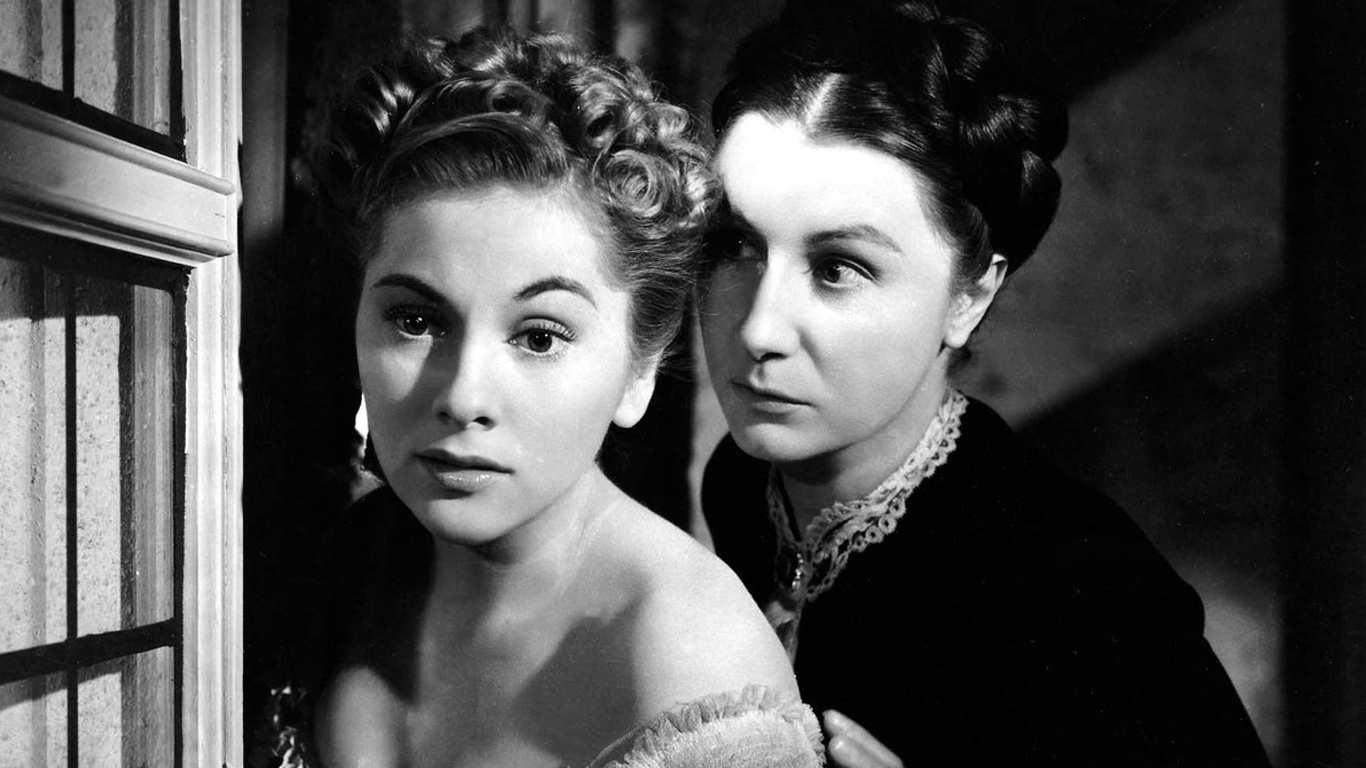
Rebecca (1940)

Joan Fontaine and Laurence Olivier find married life isn’t a bed of roses in Rebecca

Director: Alfred Hitchcock

Cast: Joan Fontaine (The second Mrs de Winter), Laurence Olivier (Maxim de Winter), Judith Anderson (Mrs Danvers), George Sanders (Jack Favell), Reginald Denny (Frank Crawley), Gladys Cooper (Beatrice Lacy), C. Aubrey Smith (Colonel Julyan), Nigel Bruce (Major Giles Lacy), Florence Bates (Mrs Edythe Van Hopper), Edward Fielding (Frith), Leo G. Carroll (Dr Baker)

It’s impossible to know what people are really thinking isn’t it? Rebecca is a film all about secrets and misconceptions, the biggest enigma of them all being that title character, the deceased wife casting a ghostly shadow over every scene. Adapted from Daphne du Maurier’s best-selling novel, Rebecca was Hitchcock’s first American picture and a masterclass in atmosphere with a vulnerable and deeply sympathetic lead, packaged into a wonderfully entertaining film combining the best of producer David O. Selznick’s sense for literary translation with Hitchcock’s filmic virtuosity.

On the French Riviera, a naïve young woman (Joan Fontaine), working as a paid companion for widower Mrs Van Hopper (Florence Bates), meets and becomes engaged to the aristocratic Maxim de Winter (Laurence Olivier). Maxim is a widower, whose previous wife Rebecca drowned. Becoming the second Mrs de Winter, our heroine quickly finds herself out of her depth in Manderley, Maxim’s colossal country home. Every where she goes there are memories of Rebecca, her husband still seems to be in love with his first wife and the housekeeper Mrs Danvers (Judith Anderson), still fanatically loyal to Rebecca, takes every opportunity to subtly remind the second Mrs de Winter of her own inadequacy. But is there a darker mystery behind the death of Rebecca?

Hitchcock’s Oscar-winning film (his only one, although he didn’t get the Director award) is a gothic delight. The action takes place in a mist-filled Cornwall, in a house where every nook and cranny has a dark secret. From its opening sequence, with the camera tracking through a fogbound forest before emerging in sight of a the intimidatingly grand Manderley, this is a film swimming in atmosphere and a dread of dark, psychological secrets, wrapped up in a dynamic melodrama.

At its heart is the vulnerable second Mrs de Winter – so timid we never even learn her name – beautifully embodied by Joan Fontaine. Nervous, awkward and shy, her hands often clasped together and shoulders (under a parade of unglamourous cardigans) tense, she rarely (if ever) looks comfortable. Fontaine’s wonderfully judged performance makes her bashful and deferential but also kind and guileless. Her polite eagerness to do the right thing and help people makes us warm to her instantly. And it’s impossible not to empathise with this gentle middle-class girl, parachuted into being the grand mistress of a huge house. Everyone seems to find her wanting – even Maxim’s decent sister (a droll performance by Gladys Cooper) good naturedly criticises everything from her lack of hobbies to poor dress sense.

That house would make anyone feel inadequate. Hitchcock frequently shoots Fontaine dwarfed by Manderley’s huge interiors, with its walls which seem to stretch on forever. She looks like a small frightened rabbit, as hopelessly oppressed by the building as she is bewildered by the procedures involved in running a house like this. Plus, there are all those reminders of Rebecca – everything seems to carry a monograph and not an item in the house seems to be without her personal touch. In many ways Rebecca is a ghost story without a ghost, where Rebecca’s presence (or lack of it) dominates the entire world of the film.

And our heroine (so uncertain of who she is, she tells a phone caller “I’m sorry Mrs de Winter has been dead for some time” before she suddenly remembers that is now her) won’t be allowed to escape that legacy. Not least because Mrs Danvers is there to remind her. In a superbly cold, calculating and chilling performance of barely repressed obsessiveness, Judith Anderson is outstanding as this housekeeper from your nightmares. Mrs Danvers is determined to turn Manderley into a mausoleum to her lost mistress – and ideally the new Mrs de Winter into a human sacrifice. Hitchcock manages to suggest more than a hint of sexual obsession into Mrs Danvers – she fondles with awe Rebecca’s negligee, drapes herself in Rebecca’s fur coats and remembers her with a breathless intensity. It’s an obsession that makes her subtly unbalanced and deeply dangerous.

Rebecca contains many of the themes that would run through Hitchcock’s work. Obsession obviously has a dark hold over Manderley, not least over Maxim who has the air of a man capable of violence. Unspoken, unknown crimes haunt over Manderley. The death of Rebecca is constantly bought back to us, not least with the film’s continual visual reference to crashing waves. The second Mrs de Winter feels isolated and watched at every turn, a stranger (and potential victim) in her own home. Several shots hammer home giddy, vertigo-inducing heights – from Maxim’s introduction on the cliffs, to the long drop from the heights of Manderley which Mrs Danvers urges a distraught Mrs de Winter to consider taking.

But what’s superb about Rebecca is that the reveals we expect to find are of course totally different to the reveals we get. A lot of this hinges on Olivier’s complicated and fascinating performance as Maxim. In many ways a man of total self-assurance – he barely breaks away from his breakfast to phone Mrs Van Hopper and inform her he will marry her companion – the more time we spend with him, the more his vulnerability, insecurity becomes clear, as does his patrician pride which leads to a self-damaging bluntness. When the secrets are revealed, its striking how this scion of the upper classes becomes suddenly lost – just as finally receiving some answers and reassurance turns Fontaine’s Mrs de Winter into someone more sure of herself than we have ever seen.

The film’s final act spools out a well-paced, intriguing courtroom drama, turned reversed murder-mystery. While some of the original novel’s developments are changed for code-related reasons (the usual provisos on crime and punishment), it makes very little impact on the compelling nature of the vice that seems to be trapping Maxim and his wife. Much of this is powered by George Sander’s superbly hissable turn as a preening playboy (and total shit), purring lines such as “I say marriage to Max is hardly a bed of roses is it?” with a near sadistic glee. It builds to a denouement straight out of horror, with Mrs Danvers taking rightful place as a demonic lord of misrule.

Rebecca was a product of the collaboration between Selznick and Hitchcock: two strong personalities who knew their own mind. Their relationship was fraught and troubled – they basically agreed on almost nothing – but the clash produced a work that stands as some of their best. Selznick demanded Hitchcock stick to the book – he had wanted to name the lead character ‘Daphne’, and introduce a running joke of sea sickness and a Jane Eyre-ish ‘mad woman in the attic’ – and in turn Hitchcock refused to film Selznick’s suggested flourishes (such as a smokey “R” filling the night sky for the final shot). Goes to show that conflict can produce great art.

Rebecca is an outstanding gothic melodrama, superbly acted (there is not a weak link in the cast) and brilliantly directed with a mist-filled flair and sense of heightened tension. A fascinating psychological puzzle while also being superbly gripping entertaining, it’s one of the finest Best Picture winning films of all time.

Cimarron (1931)

Richard Dix strikes a pose as Irene Dunne looks on in the appalling Cimarron

Director: Wesley Ruggles

Cast: Richard Dix (Yancey Cravat), Irene Dunne (Sabra Cavat), Estelle Tayler (Dixie Lee), Nance O’Neil (Felica), William Collier Jnr (The Kid), Roscoe Ates (Jesse Rickey), Stanley Fields (Lon Yountis), Robert McWade (Louis Hafner), Edna May Oliver (Tracy Wyatt), Judith Barrett (Donna Cravat), Eugene Jackson (Isaiah)

The only reason Cimarron doesn’t regularly top polls of the worst Best Picture winners ever made, must surely be because so few people have seen it since 1931. Believe me you are not missing anything. A ponderous, pompous, puff of a movie, Cimarron might have tricked people into thinking it looked radical, daring and inventive at the time – but it’s fooling no-one today.

Over 40 years in Oklahoma, from the Land Rush of 1889, the town of Osage grows from tents and mud hats to a thriving modern 1920s city. Part of the story of the town are the lives of two of its founders, Yancey Cravat (Richard Dix) and his wife Sabra (Irene Dunne). Yancey is a noble, man’s man with wanderlust, who rides into Osage, guns down the bullies and campaigns for the rights of the poor and down-trodden via his newspaper. Sabra picks up the pieces when he wanders off (often years or decades at a time) raising the children, running the newspaper and eventually becoming a congresswoman.

It should be a sprawling epic, but Cimarron is a dull fart of a film that runs out of any narrative drive after its opening hour (which largely focuses on 1889-1893) and collapses into a series of disconnected, uninteresting scenes, very dully filmed, that sees our characters obtain increasing amounts of old age make-up while shedding what little personalities they had to begin with.

Ruggles shoots the film with such tepid flatness, you might as well be in the theatre. Most of the scenes sees the camera set in a static position (to capture the sound – the sound mix on the film, by the way, is appalling making most of the dialogue extremely hard to hear) with scenes taking place in medium shot allowing us to see the sets and follow the actors walking in and out. You might as well be sitting in the theatre – although, if you were, it would be harder to leave.

It’s not helped by the generally terrible acting, pretty much across the board. Irene Dunne just about emerges with some dignity by underplaying and even showcases a surprising amount of feminine independence – even if her character is an insufferable prig, demonstrating flashes of racism as and when the plot requires. But you can at least see why she continued to have a career – just as you can see why this was Richard Dix’s highest profile sound film. Dix doesn’t know whether to go for a declamatory theatrical style or to telegraph every emotion with poses, silent movie style. So, he does both. The result is a ludicrous collection of poses and grandstanding, that his wild eyes, dyed hair and middle-distance starring stance doesn’t help with. It’s a dreadful performance.

It’s fitting it sits in a film as bad as this one. The only moment of invention the film manages is its opening sequence, restaging the Oklahoma Land Rush. This set piece uses an army of carts and horses to restage the entire land grab from start to finish, the camera capturing these waves of prospectors charging into Oklahoma to grab the best bits. Nothing else in the film beats it, not even the gun fight that occurs part way through. Instead, the film degenerates into long, vague scenes, usually centring around a self-important speech of self-righteous bluster from Dix.

Nothing looks more dated in the film than its depiction of anyone not white and Christian. Now I will cut the film a little bit of slack here. It’s clearly trying to make a plea for greater toleration. Dix’s character passionately campaigns for the rights of Native Americans (or “the red men” as he puts it). He treats his black servant Isaiah with love and affection. He defends the Jewish prospectors. This film is trying to push an agenda more advanced than its time. It gets points for that.

It loses them all though for how these characters are presented. The Jewish characters are smiling, wizened Shylocks. The Native Americans are exotics, forever “How”-ing and happily accepting their status as second-class citizens. Worst of all, Yancey’s servant Isaiah is one of the most shockingly racist caricatures put on film. You think Gone with the Wind is bad? Watch this. Isaiah is stupid, muddle-headed, speaks in a clumsy patois, ridiculously fawning, delighted to be a servant and treats the white men like Gods. The film encourages us to chuckle at him, while patting his head with a smiling paternalism. All the tragic death scenes in the world can’t wash the bad taste out of the mouth. Back then it was fairly forward-thinking – today its jaw dropping.

The main problem is the film is a dull, drifting, dawdling mess that goes nowhere and asks us to root for two characters who are both, in their ways, self-important prigs, convinced they are right about everything. It builds to nothing at all, other than mirroring the sort of relentless march of time you’ll experience while watching it. It’s patronising, uninteresting and outstays its welcome. I can’t even work out why it’s called Cimarron (the name of Yancey and Sabra’s son). Is it because it’s a film asking us to think about the future? It can’t be because Cimarron is important – in ten minutes he ages from about 12 to 40. But then the fact the title refers to an empty non-character is somehow fitting for a film that really should be put down at the earliest opportunity.

Unforgiven (1992)

Clint Eastwood rediscovers the dangers of killing in classic Western Unforgiven

Director: Clint Eastwood

Cast: Clint Eastwood (William Munny), Gene Hackman (Sheriff Little Bill Daggett), Morgan Freeman (Ned Logan), Richard Harris (English Bob), Jaimz Woolvett (The Schofield Kid), Saul Rubinek (WW Beauchamp), Frances Fisher (Strawberry Alice), Anna Thomson (Delilah Fitzgerald), David Mucci (Quick Mike), Rob Campbell (Davey Bunting), Anthony James (Skinny Dubois)

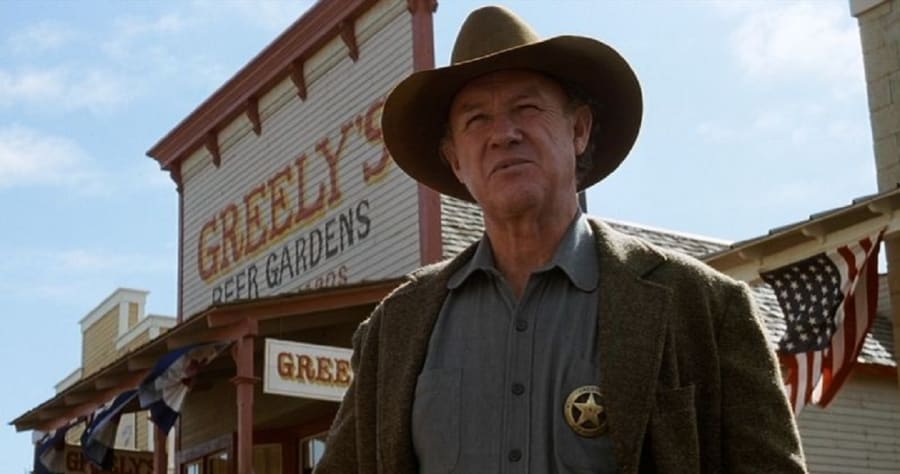
The Western has a reputation for “white hats” and “black hats” – goodies and baddies, with sheriffs taking on ruthless killers with the backdrop of civilisation hewn out of the wildness of the West. It had passed out of fashion by 1992, and this memory is largely what remained. That helps describe the impact of Unforgiven. A great revisionist Western, searingly honest about the brutality of the West, it was made by an actor more associated with the Western than almost any other since Wayne, Clint Eastwood. Articulate, sensitive, intelligent and superbly made, it marked the transition of Eastwood from star to Hollywood artist. It’s still his greatest movie.

In 1880 in Big Whiskey, Wyoming, the face of prostitute Delilah (Anna Thomson) is slashed with a knife after she sniggers at a customer’s unimpressive manhood. The two cowboys responsible are ordered to compensate her pimp by sheriff “Little Bill” Daggett (Gene Hackman). Disgusted, the other prostitutes chip in for a $1000 bounty on the men responsible. A young man calling himself ‘The Schofield Kid’ (Jamiz Woolvett) seeks out famed gunslinger William Munny (Clint Eastwood) to help claim the bounty. Once a brutal killer, Munny is now a repentant widower raising two children – and desperate for money. Recruiting old friend Ned Logan (Morgan Freeman), Munny rides to Big Whiskey – but will he return to his violent ways?

Unforgiven explodes the romantic mythology of the West, in a way that really made people sit up and notice. In truth, revisionist Westerns had been made for decades before 1992 – Eastwood himself had already directed at least two – but as the public hadn’t flocked to see films like McCabe and Mrs Miller (wrongly!) the main memory of the Western was of the (excellent) likes of High Noon, Shane and John Wayne (but not the Wayne of Red River). Nearly every classic Western, to be frank, has a dark heart and questions the mythology. But few films so starkly exposed the violence, ruthlessness, cruelty and empty morality of the West – or more viciously attacked the romanticism built up around it.

In Unforgiven characters – particularly Munny – are constantly haunted by their past killings. The violence described is always cheap, pointless and brutal, fuelled by huge amounts of booze. Munny never seems to remember why he even did something – be it blowing a man’s face off to killing women and children. Whenever we hear about the past, it is a parade of short-tempered, violent, pissed men using the gun as a first-and-last resort, and never thinking of the consequences. The real ‘heroes’ of the West kill without batting an eyelid and, no matter how charming they might seem, have a terrifying capacity for sadism and violence. Place Munny back into this environment, and it isn’t long before his long-hardened ease with killing emerges once again.

It’s men like this the bounty will draw to Big Whiskey – and Little Bill knows it. Little Bill is superbly played by Gene Hackman (he won every award going), full of bonhomie and charisma matched only by a ruthless “end-justifies-the-means” philosophy that sees this law-giver carry out increasingly brutal and sadistic acts to preserve order. Brutally beating gunslingers – and worse – are justified in his mind, to prevent the chaos and slaughter they bring. And he mocks the pretensions of gunslingers fancying themselves romantic heroes, but doesn’t half enjoy telling tales of his own of exploits.

It’s not a surprise that the film’s face of law-and-order is shown to be just as at ease with violence as the killers he is protecting the town from. It’s part of Unforgiven’s intriguing study of morality. When, if ever, is violence justified? Do the ends justify the means, or is killing never acceptable? Or is it fine if you are convinced the cause is right or the target deserving? How long before you’ve slid so far down this slippery slope, that questions of right-and-wrong don’t even enter your head before you pick up a gun?

There couldn’t be a better face for this than Eastwood. Clint looks old, ravaged and tired, just as Munny is, haunted by the screams of men he no longer even remembers. He’s soulful enough to know he has no soul, capable of understanding he needs to change, but also able to revert to dealing out murder. Eastwood deconstructs his own screen personae of “the man with no name” into an old man who can’t face his past and is filled with regrets. As the film progresses, more and more Munny rebuilds his ease with killing – eventually exacting a revenge that leaves a trail of bodies behind.

There is nothing romantic about any of this: despite the best efforts of journalist WW Beauchamp (played with wide-eyed gusto and energy by Saul Rubinek) to inject it. Beauchamp has made a living turning the adventures of gunslingers into romantic best sellers – and is the films’ clearest attack on Hollywood itself for romanticising an era of violence and mayhem. Beauchamp is the biographer of genteel killer English Bob, who has made his money “shooting Chinamen” for the railroads. Played with a self-important grandness by Richard Harris (one of his finest performances), English Bob (actually a working-class oik masquerading as a gentleman) is living his own press release as a gentleman gunslinger. The fact that – as Little Bill delightedly reveals – he is just as much an alcoholic murderer with no principles is just another example of how little reality and fiction meet.

At least Munny accepts he’s a bad man. Perhaps that’s why his late wife shocked her mother by marrying him – he has enough self-knowledge to want to change even if he can’t. But of his three companions – Morgan Freeman is brilliant as the jovial Ned who has lost his taste for killing – only he lasts the course. That’s not a good thing. When we finally see a fully reverted Munny, downing a bottle of whiskey and shooting up a saloon he’s terrifying: brutally efficient with shooting, in a way that panicked shooters can never compete with.

In Unforgiven violence comes with a cost. A shot man takes a long time to die. The women who called most for violence, are left speechless by meeting the reality of it. A man’s soul is marked forever by taking life – “It’s a hell of thing killing a man. You take away everything he’s got and everything he’s ever going to have”. It’s a responsibility only a fool takes on lightly – or sober. Munny and Little Bill are they only ones we see who have come to terms with it in some way, one as a necessary evil, the other as an evil he can switch on and off like a tap. Their ruthless coldness is hardly an advert for wanting to be part of this world.

Eastwood’s masterpiece tackles all these ideas with gusto, while telling an engrossing story powered by brilliant performances – Hackman in particular, Freeman and Eastwood are all stunning – and asks you to take a deep look at what we admire so much about violence. It does this in a subtle, autumnal way (with a haunting score), its muted colours helping to drain any further romance from the West. Gripping, thought-provoking and engrossing, Unforgiven is one of the greatest of Westerns.

The Last Emperor (1987)

Bernardo Bertolucci directs the epic, intriguing but slightly hollow The Last Emperor

Director: Bernardo Bertolucci

Cast: John Lone (Puyi), Joan Chen (Wanrong), Peter O’Toole (Reginald Johnston), Ying Roucheng (Prison Camp Governor), Victor Wong (Chen Baochen), Dennis Dun (Big Li), Ryuichi Sakamoto (Masahiko Amakasu), Maggie Han (Yoshiko Kawashima), Ric Young (Interrogator), Wu Junmei (Wenxiu), Cary-Hiroyuki Tagawa (Chang), Jade Go (Ar Mo), Henry O (Lord Chamberlain)

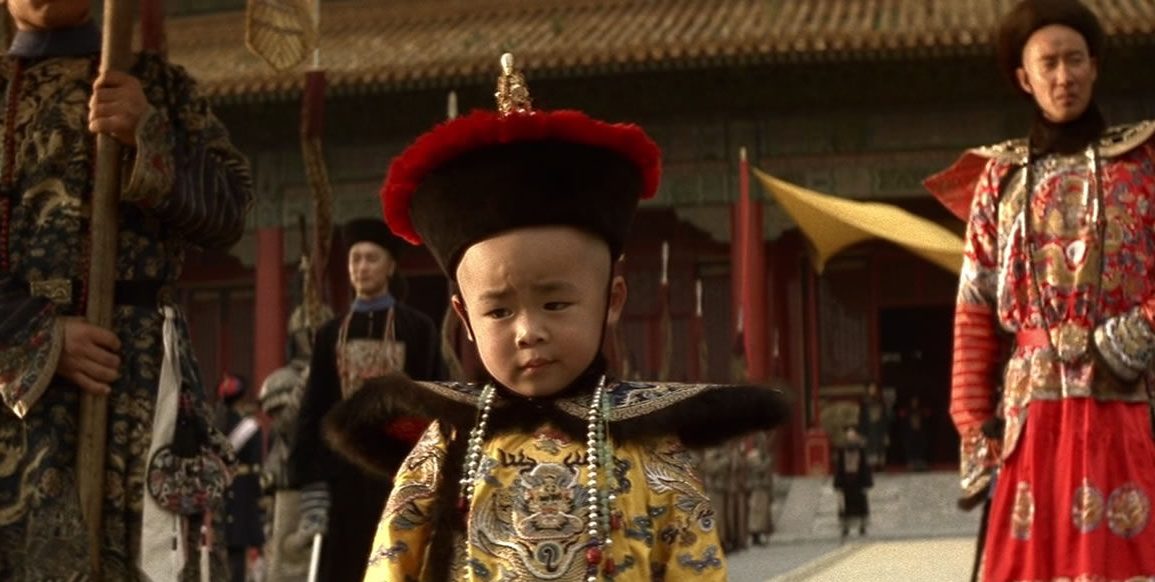
In 1908 a toddler, Puyi, became the last Emperor of China – but in 1912, revolution made China  a Republic and he was reduced to only being Emperor of The Forbidden City, a place he has never left since 1908 and will not leave until 1924 when he is expelled from the city. As an adult Puyi (John Lone) remains a puppet, becoming Emperor of the Japanese puppet state of Manchukuo, where he is again largely confined to his palace, his Empress Wanrong (Joan Chen) becoming an opium addict. After World War II, Puyi is imprisoned for ten years by the Maoist government, being re-educated into becoming an ordinary citizen of China.

Bertolucci’s film explores the life of this slight historical figure. I say slight, as Puyi is always and forever a puppet, buffeted by history. He owes whatever prominence he has to a quirk of fate, but never truly learns who he is or his purpose, only slowly realising his power is an illusion. It’s the main flaw of The Last Emperor – otherwise a sumptuous epic – that it is such a grand film about such a shallow person. Puyi is not particularly interesting in himself, and the film largely fails to turn him into an intriguing enigma. The Last Emperor – which hoovered up 9 Oscars, including Best Picture – is brilliantly made, frequently fascinating and breath-taking, but also strangely lifeless.

Bertolucci and producer Jeremy Thomas spent years raising the money and negotiating with the Chinese government to have unrestricted, exclusive access to the Forbidden City. It’s that which really makes the film effective. The first half of the film is set almost exclusively in The Forbidden City (flash forwards see the adult Puyi in post-war captivity, being questioned by his guards). The scale is stunning and is shot by Vittoro Storaro with a breath-taking opulence and fascinating eye for Chinese culture. Storaro also carefully distinguishes with colours each section of Puyi’s life, from the reds and golds of his childhood to the washed-out greens of his adulthood. The impact of this on screen remains impressive today – and Chinese co-operation produced almost 19,000 extras to populate it.

These early sections are the film’s strongest. Bertolucci was frequently intrigued with complex coming-of-age tales, balanced with leftish politics. The film is fascinated with the power/non-power of this child. He leads a strange dance of being a puppet and figurehead, who can still order his servants to obey his every whim. It’s an upbringing that would pervert any child – and Bertolucci shows it creates a man who lacks any sense of emotional awareness and maturity; not cruel as such, but unable to fully understand what it is to be human because he has never known anyone who is an equal.

His ‘power’ expresses itself in petulance, selfishness and sometimes acts of cruelty – and he becomes a man drifting through life, aware that he should feel more of a connection with people, but lacking the emotional self-awareness forming connections with people requires. It’s not helped by Puyi’s weak personality. Growing up effectively imprisoned – but all-powerful – in a single city means he constantly gravitates towards similar situations, be that a puppet ruler signing whatever he is told to in Manchukuo or expecting his servants to continue to dress him in prison (how is prison different really from the rest of his life?)

Bertolucci films this with an acute emotional understanding that counterpoints the wonderfully luscious scale of the film. All those expansive costumes, the gorgeous filming and the awe-inspiring location shooting helps us to understand the smallness and meekness of Puyi and his stunted emotional world. Only the arrival of an English tutor – played with an expressive playfulness by Peter O’Toole – shakes up this world and offers Puyi the chance of some sort of personality development. Sadly, his influence is all too short – and Puyi seems to take mostly the wrong lessons from it, of English exceptionalism and ‘doing your duty’ that convince him he’s got to try and maintain his position.

The first half of the film is breath-takingly, with Bertolucci carefully interweaving grace notes around Puyi’s lack of true parental love (his beloved wet nurse is expelled), his growing sexual awakening – from suckling at a late age to taking both a wife and a consort (and, for Bertolucci, the inevitable threesome scene – tastefully done). The bizarreness of this world, a tiny kingdom with its own rules and an empty figurehead living in a fantasy land are striking.

It’s after Puyi leaves that the film weakens. Perhaps knowing the Forbidden City sequences were the finest – and most gorgeous – parts of the film, most of Puyi’s life after is shunted into the final hour. This makes for rushed scenes and a number of “tell not show” moments, where characters bluntly (and swiftly) fill in various political and social events or openly state their thoughts and feelings. Puyi’s reasons for becoming Emperor of Manchukuo are only briefly sketched, but not as briefly of the characters of his new Japanese masters (Ryuichi Sakamoto – also the Oscar-winning composer – and Maggie Han, a seductive collaborator) as scenes race by as the film rushes towards its conclusion.

Perhaps also not surprisingly for an old Marxist (and with that need to secure the Chinese co-operation) the Maoist government gets a fairly easy ride, with the main representative of Maoist authority being a genial, supportive chap and the re-education camp treated as a genuine programme of self-improvement rather than indoctrination. But then you can also say it’s a sign of the film’s relative even-handedness – and it does touch on the Cultural Revolution (and its random denunciations) late, albeit with a gentle eye.

It’s a shame the second half of the film doesn’t hold up as well as the first half (a longer Director’s Cut fixes some of these problems), but the first half is intriguing, dynamically made and full of emotional insight. John Lone does a fine job in a rather thanklessly bland role as Puyi and Joan Chen moves from austere to depressed as his wife, but to be honest few other members of the cast make an impact (it’s one of the few modern Best Picture winners with no acting nominations).

Bertolucci’s film is superbly made, beautiful to look at, intriguing – and you can see its influence on Farewell My Concubine among others (Chen Kaige has a small role in the film, as does Zhang Yimou) – but it suffers slightly from being about such a non-person. You wonder how it might have worked better if it had kept a tighter focus – or skimmed over more of Puyi’s life rather than hurriedly trying to cover the whole lot – but what we end up with mixes the rushed with the extraordinary.