Tag: Biography

Colette (2018)

Keira Knightley tries her best in this light but safe biography Colette

Director: Wash Westmoreland

Cast: Keira Knightley (Gabrielle Colette), Dominic West (Henry Gauthier-Villars/Willy), Eleanor Tomlinson (Georgie Raoul-Duval), Aiysha Hart (Polaire), Fiona Shaw (Sido), Denise Gough (Missy), Robert Pugh (Jules), Rebecca Root (Rachilde), Julian Wadham (Ollendorff)
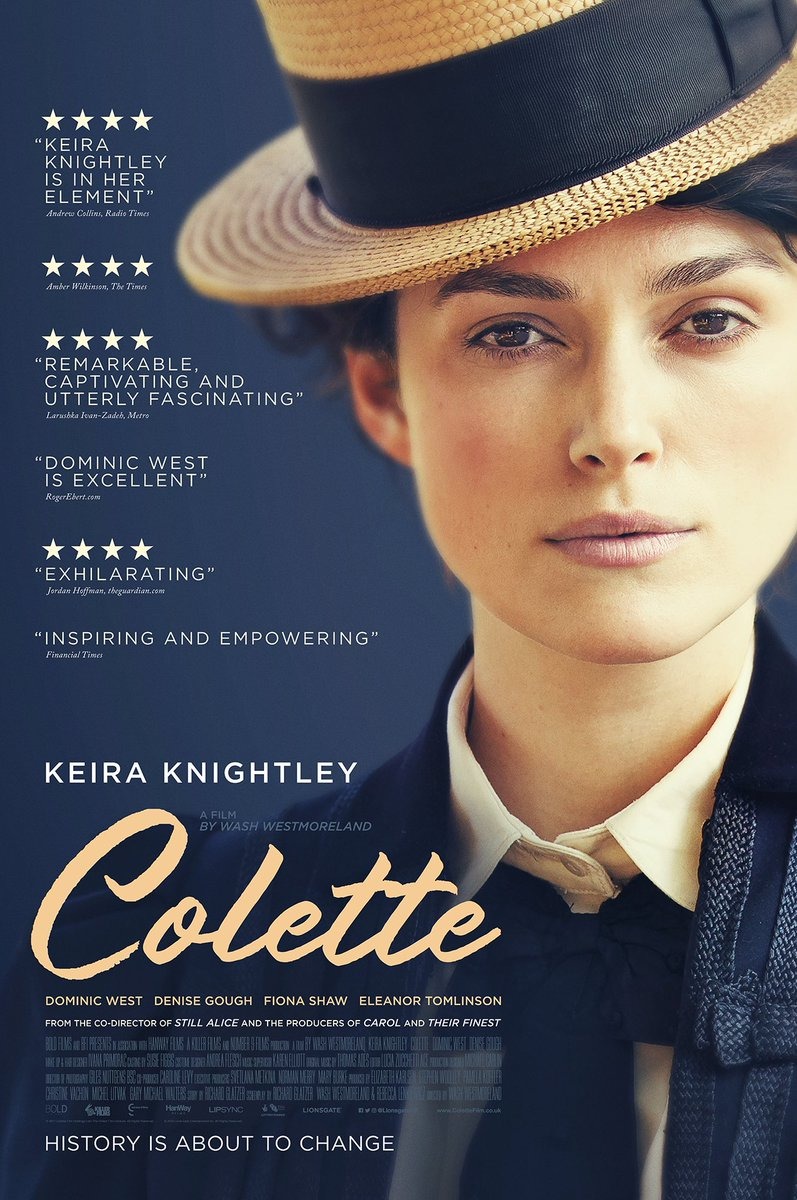
In the era of #metoo what could make for a more relevant storyline today than this biography of Gabrielle Colette (Kiera Knightley), a young woman who marries literary playboy Henry Gauthier-Villars (Dominic West) aka Willy. Henry brings her back to Paris, and reveals the secrets of his success – he is the front man for a host of ghostwriters, producing articles and even novels for the public. Colette writes a novel for the “factory”, based on her own childhood – Claudine àl’école – which Willy initially rejects but later publishes under his own name (after he has suggested revisions to improve its plot and general raunchiness). The book is a smash – and Willy is a sensation – as are the sequels, but the growing frustration Colette feels at her lack of recognition, combined with the growing sense of freedom she finds in their open marriage, starts to lead her to question what she wants from her own life.

Colette is a decent, rather middle-of-the-road and middlebrow literary biography, that dabbles with controversy and racy content, but essentially follows a fairly traditional structure of our hero finding her own voice. The most interesting thing about it, despite the obvious surface message of the woman exploited by a man, is to suggest that while Willy certainly profited from Colette’s work, he was also the primary driver in her development as a writer and that the two of them maintained a stable working partnership for years until events led to their collapse. 

Much has been made in particular of a scene where Willy locks Colette into a room to write – and there isn’t a single review that hasn’t mentioned it – but, in the context, it’s Colette who has failed to focus on the writing (which the pair have already been paid for), or wdo the work she has committed to do, much to Willy’s disappointment when he returns to the country home that the advance for the book has paid for. While her objections are at first furious she swiftly settles into writing in the room (and there is no suggestion that this event is any more than a single one-off, a shock tactic from Willy to get Colette creating again). This isn’t to say the film is suggesting that Colette shouldn’t have received all the credit and freedom from the start, but it does raise more interesting questions: yes Willy was taking advantage of her, but yes he also pushed her to achieve things she would never have done herself.

It’s all part of Dominic West’s superb performance as Willy, skilfully balancing a man who (until the final act of the film) is neither flat-out villain or misunderstood hero, but a man of shades of grey: flawed, selfish, lazy, thoughtless but also encouraging of his wife’s exploration of her own sexuality and creativity, supportive and capable of acts of charming sweetness and kindness. Westmoreland makes clear that for much of the marriage their relationship was functional and a good match, for all it was founded on the false sands of Colette being denied the public credit for her own work. Sure he spunks their money up the wall continuously, but he also helps her become an artist. 

For all the film’s workmanlike structure and obvious telling, this does make for a far more interesting version of the story than the straight “ogre-victim” story you might expect, even if it does start to get a bit bogged down in sexual shenanigans. The mostly focus around bisexual American socialite Georgie (Eleanor Tomlinson with a soapy Southern accent), who becomes the lover of both Colette and Willy. It’s part of the sense of Colette questing for an identity, but the idea of what this is and what the journey is never quite solidifies into something really incoherent. Though I suppose you could argue the journey is Colette realising she doesn’t need Willy, and that shorn of him she can survive far better on her own than he can without her.

Part of this is connected to Keira Knightley’s solid, but not quite deep enough, performance as Colette. As is often the way with her best work, Knightley works her socks off here and is clearly completely committed to the role and the film – but she just isn’t quite capable of elevating the depths of her skill to meet the full demands of the film. She doesn’t disgrace herself at all, but it’s a performance that never had enough fire and life to really become compelling.

It means you don’t quite get the powerful feminist message the film is aiming for. Knightley’s performance isn’t quite strong enough to counter-balance West, and the film’s failure to put together a compelling story line around what Colette actually wants – the film eventually settles for a rather ill-thought out phrase about wanting to lead her own life – means it peters out without much impact. There is a powerful story in here around women being denied recognition for their own talents and skills, but it never quite coalesces as it should.

The Two Popes (2019)

Hopkins and Pryce excel in Fernando Merielles’ witty and thought-provoking The Two Popes

Director: Fernando Meirelles

Cast: Jonathan Pryce (Cardinal Jorge Mario Bergoglio/Pope Francis), Anthony Hopkins (Cardinal Joseph Ratzinger/Pope Benedict XVI)

Hollywood loves a buddy movie. And what buddy movie could be more off the wall than Two Popes: one a German traditionalist with a reputation for rigid interpretation of church law who reads Latin for fun, the other an easy-going Argentinian reformer with a love of football and tango. So that’s what you get with The Two Popes, a surprisingly funny and engaging film about Papal politics, dashed with a pleasingly even-handed perspective on its two central characters.

In 2012, Cardinal Jorge Mario Bergoglio (Jonathan Pryce) is planning to hand in his resignation as Archbishop of Buenos Aires to Pope Benedict XVI (Anthony Hopkins), now in his seventh year of Pope. Bergoglio feels that he has little left to offer the church, and this own reformist ideas are out of step with the current leadership. He feels his best calling would be to return to a simpler, parish priest life. But Benedict XVI summons him to the Vatican to dissuade him – leading to a series of prolonged heart-to-heart conversations between the two that see a thaw in their relationship, heartfelt confessions from both men on their failings, and Benedict’s revelation that he plans to resign from the Pontificate – and wants Bergoglio to succeed him, as Bergoglio can offer the reform to the church that Benedict cannot.

The Two Popes is a terrific adaptation by Anthony McCarten of his own stage play. It shows us Benedict’s conservative, safety-first policies (towards everything from financial scandals to child abuse scandals) and Bergoglio’s more modern, inclusive church, but largely avoids holding one up as wholly superior to the other, or turning the story into a simple good guy/bad guy conflict. Instead it focuses on showing the faults and positives of both men, and how both men felt a calling and need for their service at different times – and how this loss of calling (something both men suffer from at the start of the film) can be reborn through patience, listening and reflection. Meirelles directs this very theatrical piece sharply, with a keen eye for expanding it into film with a combination of intriguing angles, visual style and confident editing.

Unfolding over the course of several increasingly heartfelt conversations – which progress from awkwardly blunt confrontation, through thawing openness, to something near to a confessional – this is a film that uses the Hollywood convention of a mismatched couple to allow an intriguing exploration of the price and value of faith and the difficulty of duty. Sharp commentary is made on the backgrounds of both men – Benedict growing up in Nazi Germany, the sharp criticism of Bergoglio’s perceived lack of action during the Military Junta coup, which led to his dismissal as head of the Jesuit order in Argentina. Both express guilt, regret and even touches of self-loathing – but both also react to those feelings in the other with patience and support.

It also helps that these conversations around church politics and religious intent are told with plenty of fresh and entertaining jokes. There is always a lot of mileage to be had from seeing people like the Pope delightedly watching trashy TV or failing to recognise either ABBA or the Beatles, while Bergoglio’s homespun openness and willingness to talk with anyone about anything (not to mention his passion for football) throw open no end of comic possibilities from seeing this prince of the Church insist on being treated as just a regular joe.

It also gives loads of opportunities for its two stars, arguably Wales’ leading actors (both highly deserving of their Oscar nods). Hopkins, given his best material in years, is brilliant as Benedict: irascible, imposing, morally certain and firm but also playful just below the surface and a man profoundly aware of his own mistakes and failings. Hopkins delivers the lines with just the right touch of twinkle in his eye. 

He also bounces wonderfully off Pryce who is possibly at a career best as Bergoglio. A brilliant physical match for Pope Francis, Pryce’s performance captures perfectly the unaffected humility of the man, but also his intensely sharp personal reflection and the burdens of guilt, as well as the shying away from confrontation that is Bergoglio’s greatest failing. Pryce’s comic timing is impeccable, but he also carries the movie’s heart and soul with affecting skill, pulling off the difficult trick of making a good man a compelling one.

Meirelles’ film is a talky affair – and its construction is a little pat at times, like a very well assembled production line buddy movie and biopic. It never completely escapes the clichés of two-very-different-people-coming-together that is one of its heartbeats, but it does it all so well, with such grace and wit – and two such terrific performances – that it hardly matters. Another big success for Netflix.

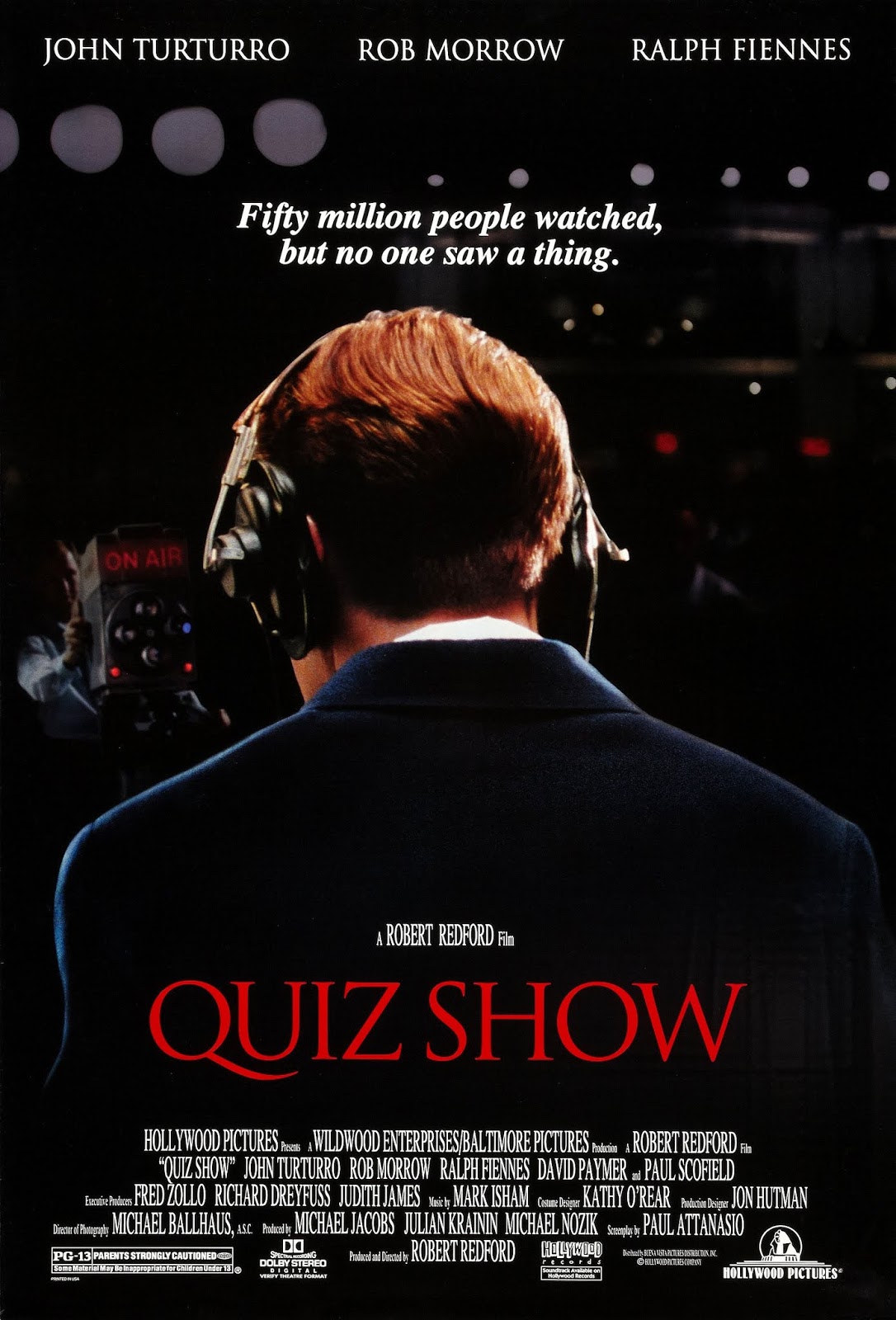
Quiz Show (1994)

Ralph Fiennes excels as the man who as the answers he shouldn’t have in Quiz Show

Director: Robert Redford

Cast: John Turturro (Herb Stempel), Rob Morrow (Richard Goodwin), Ralph Fiennes (Charles Van Doren), David Paymer (Dan Enright), Paul Scofield (Mark Van Doren), Hank Azaria (Albert Freedman), Christopher McDonald (Jack Barry), Elizabeth Wilson (Dorothy Van Doren), Mira Sorvino (Sandra Goodwin), Allan Rich (Robert Kintner), George Martin (Chairman Oren Harris), Paul Guilfoyle (Lishman), Martin Scorsese (Martin Rittenhome), Barry Levinson (Dave Garroway)

Imagine, if you can, a time when we trusted everything we saw on television. When whole nations crowded around to watch a show, and would run home to make sure they didn’t miss it. When the people appearing on the box in the corner were like members of the family invited into our home. In our cynical age of streaming and distrust, such ideas are impossible to imagine. Now we doubt anything we are shown on the box – and the first brick in that wall fell into place with the rigged quiz show scandals on American television in the 1950s.

Twenty-One is the biggest hit on NBC, with reigning champion Herb Stempel (John Turturro) correctly answering every question that comes his way. But the show’s sponsor, Geritol, is worried: Stempel’s ratings are at a plateau, and they feel the show needs a new champion. So producers Dan Enright (David Paymer) and Albert Freedman (Hank Azaria) look to recruit the sort of face of Twenty-One the sponsors want – and find him in clean-cut, Ivy league, charming Columbia League instructor (or “Professor” as they insist on calling him – and Van Doren’s move from reminding him he hasn’t qualified for that title, to happily accepting it is telling in itself) Charles Van Doren (Ralph Fiennes). 

They offer Van Doren the chance to win the show by telling him the answers in advance, while offering Stempel a career in television if he will agree to throw the next edition of the programme. Both men are plagued with indecision, but Stempel throws the game and Van Doren provides the correct answer to his final question – the exact same question he had been asked at his audition. Van Doren, seduced by the fame, quickly agrees to be given the answers in advance of the show, but the unreliable Stemple is dropped by NBC and instigates Grand Jury proceedings. The records are sealed but this piques the interest of Congressional lawyer Richard Goodwin (Rob Morrow), who begins to see the potential to “put television on trial” – while being deeply conflicted by his growing friendship with Van Doren, keen to be seen as co-operating with any investigation.

Quiz Show remains Redford’s finest directorial achievement by far, a rich, fascinating, beautifully made film with a profoundly rewarding and engrossing reflection on fame, television and the media in 20th-century America. Told at a gentle but compelling pace, probably the strongest weapon in its arsenal is a fantastically literate, well-constructed, dryly amusing and affecting script by Paul Attanasio. Scenes are beautifully assembled, crammed with well observed character beats and wonderfully quotable lines. It’s a script that would stand up extraordinarily well as a play itself, and Redford allows it plenty of room to breathe in his assured, unshowy and perfectly judged direction.

This is a film that analyses exactly how truth and entertainment are supposed to be inter-related. The rigging of quiz shows – and it was systematic across a range of shows on all channels – was a detailed lie to the American people. But, the film asks, what was the real harm of this? What are these quiz shows for? Tests of intellectual attainment or pieces of entertainment for the masses? As Scorsese’s Geritol executive says, people weren’t watching the questions, they were watching the money. 

And money is where the villainy lies in this film. For a film rich in period detail, Redford makes clear that there is a definite sense of class that underlies all the action. Decisions are made on the show based on selling things – advertising hours and Geritol products. And there are people in this show – the heads of corporations like NBC – who are making millions out of peddling rigged entertainment shows to the people. And when the chips come crashing down, it’s not these executives who are in the firing lines; it’s the little people who were the face of the enterprise – the contestants themselves – who pay the price.

It’s the exact opposite of what Goodwin wishes to achieve when he starts his investigation. He wants to add some moral force, some legislative control, to what you can and cannot present as fact and fiction on television. What he fails to understand – and what the film does – is that deep down people don’t want this. They want the excitement and the thrills – and at the end of the day wouldn’t care less if they never found out everything presented to them was carefully scripted. This lasts today: do we care that comedy sketches are not improvised but carefully scripted? Do we care if game show contestants are carefully pre-selected? Again, as Scorsese’s sponsor representative states, all any investigation will accomplish is TV shows figuring out other ways to get the high ratings: and simpler questions and less erudite competitors will be the way to go.

Because it’s all the glamour and excitement and drama we like to watch, not displays of intellectual accomplishment. It’s something the film understands – and something that comes across very clearly in Ralph Fiennes’ exquisitely well-judged performance as Charles van Doren. A genuinely intelligent, decent man, Fiennes’ performance works so well because he makes clear that under the WASPish, patrician decency of van Doren is a fundamental shallowness, a laziness and hunger for the quick buck and easy success. Constantly, Fiennes’ confident grin and easy manner hide his unease and guilt at his conduct. But he clearly can’t help himself, a Faust wrapped up in his pact.

After all what would his father – the famous poet and academic Mark van Doren, played with a beautiful ease, grace, intelligence and iron-clad honesty by Paul Scofield, a sublime actor at the top of his game – think of this all if he found out? The scenes between the two men – one the proud, loving but quietly demanding father, the other the successful, shallow, quietly desperate son – are the film’s strongest moments, consumed with the tension of the unspoken. We can see the pressure of familial expectations reflected elsewhere in Herb Stempel’s wife’s disappointment at finding that Stempel himself was a coached as much as van Doren.

John Turturro goes larger as Stempel, a bitter and frustrated man addicted to the attention and glamour TV has bought him which he has always felt has been denied him. Stempel’s desire for fame, his assumption of a persona in the public eye which is part studied, part eagerness to please his audience, gets to the heart of TV’s power. It’s the box in every room, and it can turn the ordinary into the extraordinary. It’s a box with the potential to weave magic – and it’s the tricks behind the magic that are difficult to see. For all we know the magician doesn’t saw the assistant in half (as Hank Azaria’s crude producer puts it), it makes it hard to enjoy the trick when you know it is one.

It’s ideas like this that the film gets to  so cleverly, and which turns the American quiz show into an intelligent metaphor for the corrupted ambition of America itself. The dream is to get to the top, and this was a way of offering a short cut for it – and all to help big business sell its products and make money. This is the subversive truth at the heart of Quiz Show, but it’s easy to forget as we, like the American people, have the obvious villains of the ordinary contestants be crucified by the media, rather than those who really profited. Redford’s film is smart enough to constantly remind us of this, to humanise the contestants and to show the darker elements underneath. Quiz Show is a great film.

Loving (2016)

Joel Edgerton and Ruth Negga in a love story that fails to capture fire

Director: Jeff Nichols

Cast: Joel Edgerton (Richard Loving), Ruth Negga (Mildred Loving), Marton Csokas (Sheriff Brooks), Nick Kroll (Bernie Cohen), Michael Shannon (Grey Villet), Terri Abney (Garnet Jeter), Alano Miller (Raymond Green), Bill Camp (Frank Beazley)

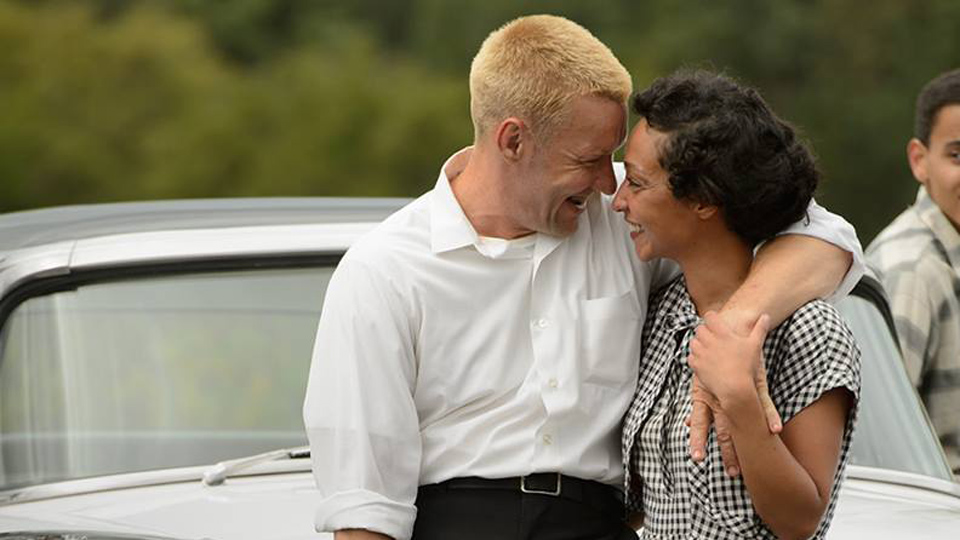
Imagine the idea of the state dictating whom you could and couldn’t marry. This was the predicament Richard and Mildred Loving found themselves in, when the appalling segregationist policies of America in the 1950s saw them arrested for the crime of a white man marrying a black woman. Over time, especially from the 60s onwards, their case was seized upon by Civil Rights movements as a possible cause celebre for repealing many of the worst excesses of laws against mixed-race marriages. But the Lovings themselves remained quiet, private and determined to lead as normal a life as possible, while others fought this battle for them in the court.

Jeff Nichols’ film is full of affection, empathy and regard for these very everyday, normal people. What it is not – for all the skill of Joel Edgerton and Ruth Negga’s performances in the leads – is a film that manages to raise any real interest at all. This is a frequently slow-moving story that manages to drain any drama out of what should be a really dramatic story.

Racial inequality is the sort of topic that desperately should be throwing up rage and anger. Imagine Spike Lee tackling this sort of content. Loving settles instead for being a polite, even rather patronising homage to the quiet lack of drive and energy in Richard Loving (in particular). The sort of film that honours his decision to, essentially, get involved as little as possible in the case, to avoid engaging as much as he can in the wider implications their legal battle has for the nation and to studiously resist any attempts to get either side involved in it.

This may be great for reality, but it’s strikingly poor drama. You feel that a drama that focused instead on those actively campaigning for the rights for equal marriage rights to be recognised, the ones who actually fought these battles in court and brought energy and fire to the debate might be a more interesting film. Instead this settles for being a film about regular, not special people, while around the edges of their lives far more interesting events and actions are constantly taking place. 

There are some things to admire in the making of the film – Nichols’ brings his usual poetic skill to it – but this is a glacially paced, unabsorbing, overlong film that manages to make a scintillating and passionate subject as dull as dish water. Negga and Edgerton both do fine jobs – and clearly really admire the everyday nature of their characters – but these softly spoken, unengaged people to whom events happen, but who never take a stand of any sort of try and shape these events or set the direction of their own life, slowly switches the audience off.

Where is the fire here? Nichols’ film instead tries to become a tribute to the honesty of the working man, to Richard’s everyday values, simple, homespun viewpoints. It hails his lack of education (the film dances around where on the education spectrum Richard would be placed today), social awareness or even opinions as something which somehow makes him more “real” than anything else. This attitude, to be honest, becomes both trying and even a little patronising in its bluntness and sense of importance.

Just in case we are ever in danger of ever forgetting that he is a working man, the film can’t go longer than about five minutes without showing Richard laying some bricks. Mildred gets a little more engagement with the social issues of the 1960s – and the film does a good job of suggesting that she was a woman of considerably more hinterland than her husband, but who loyally followed his lead in the world. But neither of them come into focus as truly engaging characters. And because they are so hard to invest in, because the story and their film gives us so little personality for either of them to latch onto,  in the end you don’t get as fired up by the injustice of their case as you should do.

Instead you are left thinking at the end that this sort of racism is bad because, well, we know it was at the start. Following the story of two basically boring people who were in the right place at the right time to become the face of overturning some terrible laws, doesn’t make them interesting and doesn’t make a story that focuses on their lives at the cost of any of the wider issues or actual battles that were being fought, suddenly interesting either.

Malcolm X (1992)

Denzel Washington dominates in Spike Lee’s masterpiece Malcolm X

Director: Spike Lee

Cast: Denzel Washington (Malcolm X), Angela Bassett (Betty Shabazz), Albert Hall (Brother Baines), Al Freeman Jnr (Elijah Muhammad), Delroy Lindo (West Indian Archie), Spike Lee (Shorty), Roger Guenveur Smith (Rudy), Theresa Randal (Laura), Kate Vernon (Sophia), Lonette McKee (Louise Little), Tommy Hollis (Earl Little), James McDaniel (Brother Earl), Steve White (Brother Johnson), Ernest Lee Thomas (Sidney), Christopher Plummer (Prison Chaplin Gill), Peter Boyle (NYPD Captain Green)

In the early 1990s, Norman Jewison was attached to direct a biopic of Malcolm X, the powerful African-American activist, tragically assassinated in 1965. It was the project of Spike Lee’s dreams – and Jewison conceded he did not have the vision for the film that Lee clearly had. Lee stepped in – and thank goodness, as this is perhaps a film only he could have made. It splices together Lee’s customary political savvy and (accurate) sense of the injustice Black Americans have faced with a surprisingly adept use of the cinematic language of David Lean and other sweeping epics. In bringing these together, he created a superb biography, a great piece of epic cinema and a vital piece of American film-making.

The film covers the life of Malcolm X in three clear stages. Firstly his young days as a tearaway in Harlem, with drug addiction and crime, all with best friend Shorty (Spike Lee), a local gangster whom he admires (Delroy Lindo) and white girlfriend Sophia (Kate Vernon). The second act is his conversion to Islam under the guidance of (fictional) Brother Baines (Albert Hall) and his rise as an incendiary speaker with the Nation of Islam under the influence of its leader Elijah Muhammad (Al Freeman Jnr). The final act covers his disillusionment and departure from that organisation after a host of scandals and political disagreements, his pilgrimage to Mecca and his return looking to work with other civil rights movements before his assassination by former members of the Nation of Islam.

It’s hard to know whose film to call this, because Spike Lee and Denzel Washington both invest this film with so much passion, director and actor working in perfect synchronicity, that it’s impossible to imagine the film without one or other of them. Washington’s performance is quite simply extraordinary. He spent over a year of focused preparation on the film, and every pore of his body seems to have soaked in the mood, manners and attitudes of Malcolm X. It’s a transformative performance of purest emotional commitment: impassioned, empowering and enthralling, charismatic in the extreme. He never shies away from the anger and the faults of Malcolm X, but so engrossingly human is his work that he brings to life in a way few people had before Malcolm’s humanity, his generosity, his love, his decency. It’s a performance that seems to have transformed the actor into the man and the film works so well because Washington completely involves you in his story. 

Washington should have won the Oscar that year – it went instead to Al Pacino – and Malcolm X also should have been nominated for Best Picture and Best Director, far more so than Scent of a Woman nominated in both categories. It’s a film that builds its audience’s empathy so successfully with its lead character, and so clearly understands what Malcolm was trying to do, that you come away from it full of respect and admiration for the man. Even when the film was made, many people saw Malcolm X as a divisive, even dangerous figure – but watching the film you forget that and invest in him as a man.

It’s also inarguable – as n-words and racial bias from many whites in the film litter the screen – that it opened the eyes of many people as to exactly how harsh living in America was at the time if you were black. Put simply, it was a country labouring constantly under injustice, persecution and suffering where a black life was worth less than a white one. It’s a theme that Lee has returned to time and again in his work – and quite rightly – and it’s the sort of masterclass of simmering political anger that powers the best of his work. Would any other director under the sun have chosen to open this film with footage of the Rodney King beating? Would anyone else have thought of ending it with a coda in South Africa, as Nelson Mandela (yes the real Nelson Mandela) addresses a classroom full of children about the importance and power of Malcolm’s vision of black people taking pride in themselves and their heritage – a pride beaten out of them still today, as Lee’s Rodney King footage shows.

Lee’s direction is quite simply superb, a wonderful fusion of his own styles with a classical sweep of David Lean, spiced with the textual play of Oliver Stone. The photography from Ernest Dickerson is wonderful, the film is beautifully cut and assembled and the recreation of period detail from set to costume is remarkable. Lee’s style is sublime, from a riotously fun Harlem song and dance routine (really impressive) with Malcolm others dancing a superb Lindy Hop, to the harshness of prison, through to the intelligent and acute analysis of growing divisions in the Nation of Islam (Al Freeman Jnr is fabulous as Elijah Muhammed) and Malcolm’s developing political stance.

Lee’s film is even-handed on the whole – Malcolm’s real opponents are ideological disagreements, the film dramatizes a moment Malcolm considered a great regret where he rudely brushed aside a white college student keen to help his cause, and the film makes a lot of play over his controversial opinions on Kennedy’s assassination (essentially that he deserved it). But it also builds a superb sense of Malcolm’s personal life alongside, and the film is crammed with moments of quiet intimacy and a wonderfully developed performance of supportive love from Angela Bassett as Betty.

But the Lee touch is in that sense of anger. The politics and fury of Malcolm’s speeches and his message to black people today to save themselves and find pride in themselves carry through the whole film. Lee was sick and tired of the “white saviour” film and he triumphantly made here a film that was by black people, about black people but had something for all to hear. Malcolm X is a superb piece of biography cinema that leaves you with justifiable admiration for a man it’s easy to misjudge, engrosses you in a complex and disturbing era, angers you at racism and its impact, and also leaves you entertained. In many ways the most classical of Lee’s films – but a reminder that he is a unique and compelling voice. He thought he was the only one that could tell this story. He was right.

The Theory of Everything (2014)

Felicity Jones and  Eddie Redmayne bring to the screen the life of Stephen Hawking

Director: James Marsh

Cast: Eddie Redmayne (Stephen Hawking), Felicity Jones (Jane Hawking), Charlie Cox (Jonathan Jones), David Thewlis (Dennis Sciama), Simon McBurney (Frank Hawking), Emily Watson (Beryl Wilde), Maxine Peake (Elaine Mason), Harry Lloyd (Brian), Guy Oliver-Watts (George Wilde), Abigail Cruttenden (Isobel Hawking), Christian McKay (Roger Penrose), Enzo Cilenti (Kip Thorne)

If you want a story of a triumph over adversity, there are few where adversity was faced off so successfully and publicly than the life of Stephen Hawking. Diagnosed with motor-neurone disease while still a postgraduate, Hawing defied the diagnosis that gave him little more than a few years to live, to shape a life and career that would have a profound impact on the world and make him probably the most famous scientist alive. Not bad for a man who spent a large part of his life confined to a wheelchair, only able to communicate through a synthesised computer voice.

But his life was not just a story where he was the only character. Many of his accomplishments came about because of the unflagging support of his wife Jane. This film takes as its source the book Jane wrote about their life together. And while it arguably sugar-coats or plays down some of the more uncomfortable or divisive elements of their marriage (a marriage that was eventually to end in divorce and several years where they did not speak), it also serves as a warm tribute to the many years they spent together where their support for each other was total and offered with no agenda or demands.

Here in James Marsh’s inventive and well-made film, which manages to more-or-less transcend its “movie of the week” roots, Hawking and Jane are played by Eddie Redmayne and Felicity Jones in performances that scooped an Oscar and a nomination respectively. Both are deserved, as these are rich, dedicated and empathetic performances, crammed with admiration for their subjects. It all fits perfectly well in Marsh’s moving if (at times) rather conventional film, which he directs with a lack of flash and plenty of heart. 

It’s a film that sometimes avoids delving too deeply into the emotional heartlands of its lead characters, and the frequently messy situations that life throws you into (the end of this relationship comes with a remarkably calm sadness, which contrasts heavily with the furious argument Jane describes in her book). It’s also a film that has a very clear agenda of framing Jane as a near saint in her devotion and patience, and Stephen as a brave soul with a superhuman perseverance and regard for his wife. So the introduction of choir leader Jonathan Jones (played with a sweet charm by Charlie Cox) into their domestic life as a surrogate father to the Hawking children and friend to Jane (very definitely not a lover, the film is eager to make clear) is very much something accepted by both without a hint of doubt or recrimination. Similarly, Hawking’s later divorce of Jane is set in a context of “setting her free” rather than the more (allegedly) definitive break it was in real life.

Real life, you suspect, was messier than this. The film does mine some excellent emotional honesty from Jane’s decision to marry Stephen being, at least partly, based on her belief that this man she loves only has a few years to live. From the start she doesn’t anticipate signing up for a lifetime of providing care and abandoning her own aspirations to support Stephen’s (the film makes no real mention of her own dreams of becoming a translator) – but Jane does so with a decided willingness and sense of duty. Similarly, Stephen does not anticipate a life essentially trapped in a wheelchair – finally speechless – and the film allows beats of frustration from him, alongside the determination to not let these problems prevent him from achieving his potential.

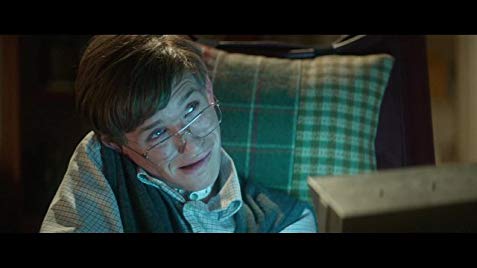
The film revolves around Eddie Redmayne’s performance as Hawking. Needless to say it’s a technical marvel, a stunning accomplishment not only in its physical mastery (especially as it was all shot out of sequence, so in each scene Redmayne needed to carefully map how far the symptoms had progressed) and commitment, but also in its searing emotionality. Hawking’s brightness, his bashful playfulness, his intelligence and sense of cheeky charm are all there – and they’re later married with a pained, just-controlled bitterness mixed with stern mouthed resentment and gutsy determination to deal with the hand he has been given. Redmayne’s performance is a superb capturing of the all-consuming feelings of being betrayed by your own body, of no longer being the master of your own frame and being forced to adjust your plans and expectations to meet the limits nature has put on you.

Felicity Jones is equally good in a superbly heartfelt performance as Jane, a woman who gifts Stephen the determination and will to see past the limits the disease places on him. But it’s also a performance that acknowledges the draining burden of having to support someone this ill, of having to constantly be the strong member of the marriage, the one who must always be as ready to save her husband from choking at dinner as she must be to drop everything and fly across Europe to take life-saving medical decisions about him. Jones’ performance never slips into self-pity, but mines a rich vein of willing sacrifice powered by love.

Marsh’s film is largely unflinching around the everyday miseries and sorrow of the terminally ill and restrictingly disabled. We are confronted in every scene with the limits that Hawking’s body places upon him, from deteriorating handwriting and clumsiness to the loss of all speech and movement. This progression is presented with a detail uncoloured by maudlin sentimentality. Doctors are sympathetic but bluntly clear about the dangers and risks of treatment, each adversity is met with a quiet determination to carry on.

The Theory of Everything is a heart-warming watch – and features two superb performances. The portrait of a marriage that works, for the most part of their lives together, despite all obstacles is inspiring. While the film glosses over well-publicised issues over the end of the relationship – and perhaps downplays the emotional strains on both towards its end – it still succeeds in making a largely unsentimental picture of a genius who overcame all, and the brave woman who gave him the dedication he needed to do it.

The Last King of Scotland (2006)

Forest Whitaker dominates as Idi Amin in The Last King of Scotland

Director: Kevin Macdonald

Cast: Forest Whitaker (Idi Amin), James McAvoy (Nicholas Garrigan), Kerry Washington (Kay Amin), Gillian Anderson (Sarah Merrit), Simon McBurney (Stone), David Oyelowo (Dr Junju)

Forest Whitaker won every award going for his performance as Idi Amin. A film can perhaps only begin to scratch the surface of what a megalomaniac nutjob Amin was, and the depths of his depravity and corruption. But The Last King of Scotland is perhaps less focused on that, and more on the pull that people as charismatically self-absorbed and larger-than-life like Amin can have on the weak-minded and, on a wider basis, how this can end up with him leading an entire country on a not-so-merry dance, everyone desperate to gain the love and approval of a single dominant personality.

That weakling is Dr Nicholas Garrigan (James McAvoy) a young medical graduate from Edinburgh, who is arrogant, cocksure over-sexed and over-here in Uganda, keen for adventure and to get as much sex and experiences in as he can while he’s over here. A gap-year student with a desire for the easy life, after a chance meeting Garrigan becomes chief-physician and confidant to Amin, a man with a deep love for Scotland and who likes to think of himself as a father to those around him. It takes Garrigan a long time to realise that this indulgent, if bad-tempered, charismatic father-figure  is in fact a brutal dictator, his eyes eventually opened by the experiences of one of Amin’s wives Kay (Kerry Washington) who pays a heavy price for mothering an epileptic and adultery. Will Garrigan escape from Uganda?

Macdonald’s film gets a brilliant sense of both the exotic appeal of Uganda at the time (and or Amin) and it’s heat-embroiled danger. The camera work is flooded with yellows and grimy details, that makes every scene feel like its bathed in heat (and later danger) as well as giving it a documentary realism (helped by its use of handheld and immediate footage). The story of the film itself is a fairly basic morality tale, but these stories work because of their universality and it’s clear that Garrigan’s selfishness, shallowness and self-interest is going to lead to a terrible awakening.

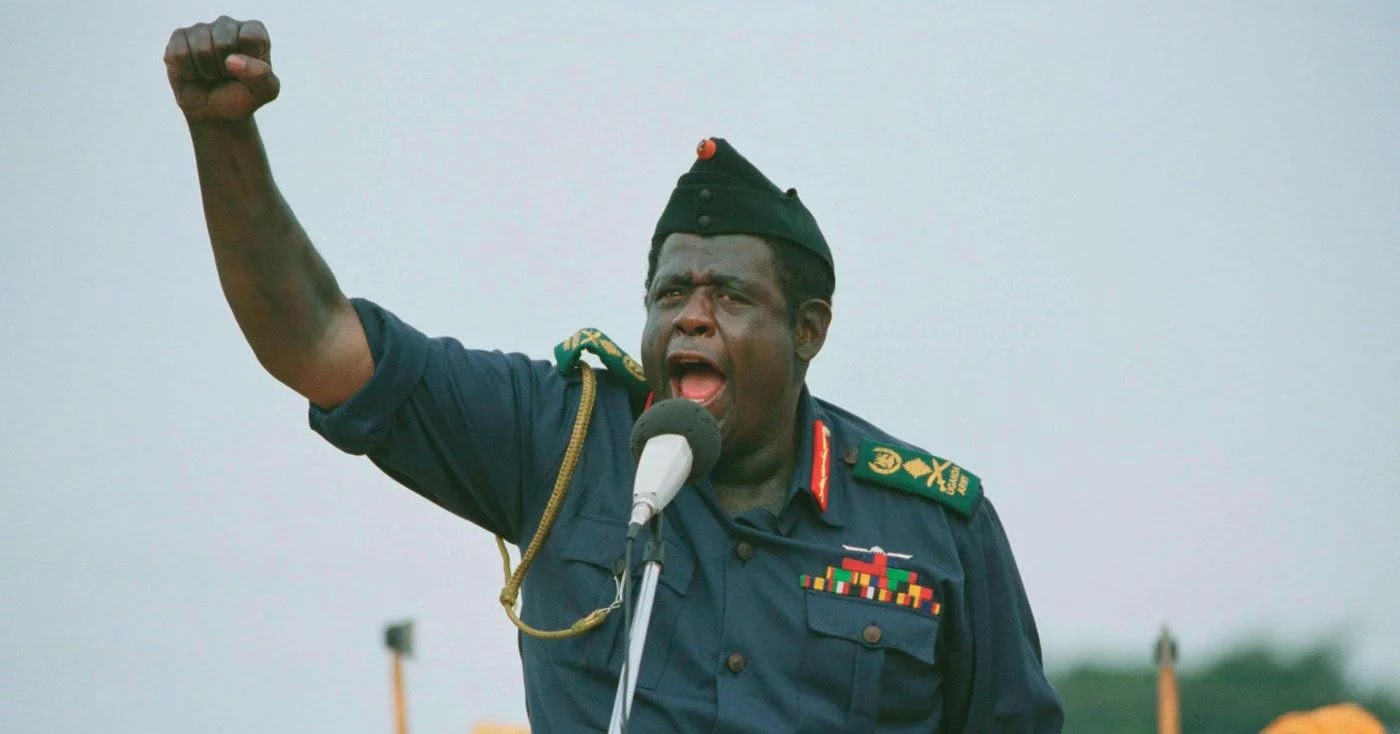
The film’s real strength is Whitaker’s tour-de-force as Idi Amin. Whitaker is an actor who has been straining at the leash for an explosive roll, and he gets one here. If ever there was a part that would allow an actor to let rip it’s the one, with Amin part Hannibal Lector, part decadent Roman emperor, a low-rent Hitler with an ego larger than his country. But the bombast and childish fury work because it is built within the framework of a sort of puffed-up magnetism, a charismatic “hail-fellow-well-met” bonhomie that suggests this guy could be the best fun in the room. So dripping in assurance and confidence is Amin that he becomes strangely attractive – and the sort of all-powerful force of nature that would have most of us smiling if we caught a word of approval from him.

The trick of the film is to front-and-centre this lighter, fun-loving aspect. It’s easy to enjoy it like Garrigan as Amin charms the audience as much as he does its lead character. Sure there may be violence at the margins, but good-old-Amin is just doing what needs to be done. He’s brilliant with the people. It’s funny when he on-a-whim appoints Garrigan to decide a major architectural pitch from several countries. He’s playful and enthusiastic. When he’s cross with people he seems at first more disappointed than angry. It’s only as the film goes on that we realise we have been gaslit as much as Garrigan, that Amin may be a fun guy but he also cares nothing for anyone and that the more his focus shifts away, the more we see his callous paranoia and lack of any moral scruples.

Certainly we start getting a sense of the ruthlessness he is prepared to exhibit to enforce his rule in Uganda and the brutality with which he will suppress any resistance. Aides killed in a failed assassination attempt illicit no sympathy. He feels no guilt or responsibility for anything he does. In one brutal moment he berates Garrigan for failing to counsel him against expelling all Asians from Uganda. When Garrigan protests he did, Amin only responds with “Yes, but you did not persuade me Nicholas!” the sort of inverted logic practised only by the insanely self-obsessed.

Whitaker’s performance powers all this, a magnetic masterclass in insanity, charisma and paranoia. He’s well matched by James McAvoy (the film’s real lead) whose performance is similarly a masterclass is shallowness and petty triteness. If anything the film is almost too successful in this. A Garrigan is such a little arsehole it takes quite a force of will to build up any sympathy for this serial shagger playboy. It’s capable to think as the fire turns on him that perhaps he deserves this – and the number of (mostly black) characters who lay down their lives to protect him starts to get a bit wearing after a while.

Because this in part is a film where actual Ugandans are not heard that much. The two principle characters we see are both victims: Kerry Washington in a thankless part as the attractive young wife you just know from day one Garrigan will climb into bed with and David Oyelowo as the sort of noble doctor you only seem to find in movies. For all its horror at Amin’s crimes, it’s still largely filtered through the eyes of a young, white, innocent abroad who sees up-front the dangers but the real victims of Amin, the Ugandans themselves, are clichés or elevated clichés.

While you could say that was not the point of the film, it still means we miss some of the real danger and psychopathy of the leading character, so absorbed are we in seeing the increasing peril of the white man caught up in it all. It’s why The Last King of Scotland doesn’t quite work as well as it should, any why it settles in the end for a being a morality tale plot-boiler about a monster at the heart of the forest, rather than a deeper and more intelligent film about the tragedy of an African state. It’s still enjoyable for all that, but it could have been more.

Capote (2005)

Philip Seymour Hoffman excels as the morally complex author in Capote

Director: Bennett Miller

Cast: Philip Seymour Hoffman (Truman Capote), Catherine Kenner (Nelle Harper Lee), Clifton Collins Jnr (Perry Smith), Chris Cooper (Alvin Dewey), Bob Balaban (William Shawn), Bruce Greenwood (Jack Dunphy), Katherine Shindle (Rose), Amy Ryan (Marie Dewey), Mark Pellegrino (Dick Hickock)

What profits a man if he gains the whole world but loses his own soul? It’s the sort of summation that I imagine Truman Capote himself would object to as trite and obvious. But it’s a question at the heart of Bennett Miller’s thoughtful, low-key biographical drama that seems to capture not only the agony of writing and creation, but also something of the soul of its lead.

In November 1959, two drifters Perry Smith (Clifton Collins Jnr) and Dick Hickock (Mark Pellegrino) kill an entire family in a remote farmhouse in Kansas. News of this is spotted by Truman Capote (Philip Seymour Hoffman), a brilliant novelist and New York intellectual, looking for his new project. Heading to Kansas, with assistant, novelist and lifelong friend Harper Lee (Catherine Keener), Capote’s initial plan for an article on the reaction of small-time America to unspeakable violence balloons into a full scale book, fuelled by his growing fascination for Perry Smith. While the book takes years – and the trial and appeals of the killer take longer and longer to resolve, the entire experience has an increasingly haunting effect on Capote himself.

Miller’s quietly and professionally assembled film, with a superbly haunting, autumnal feel to it that immediately echoes the blackness of the crime, and the traumatic effect being involved in it has on Capote. It’s also a superb film that understands how writers often work – the seizing of inspiration, the quiet observation, the shaping of moments and titbits of conversation into perfectly captured sentences that can be reproduced in the book. It helps that Capote has – despite his larger than life unusualness and eccentricity – a sort of unusual chameleon like ability, or rather the ability of the charismatically self-obsessed to make all others yearn for his attention and approval.

It’s all part of the many facets of the Capote’s personality that is brought out in Hoffman’s superb performance. Winning the Oscar – and almost every other award going – Hoffman perfectly captures not just every single physical and vocal attribute of Capote, but also seems to seize part of his soul as well. This is such a masterful examination of a person’s psyche, mixed desires and conflicting feelings that Hoffman’s psychological insight seems totally legitimate. Hoffman’s performance is strikingly perfect, transformative in the way few actors manage.

Hoffman’s Capote is a man who flits between arrogance and a caring tenderness, self-doubt and ruthless, consideration and selfishness, who slowly becomes more and more unnerved not only perhaps by his fascination with a brutal killer, but also the own moral depths he is willing to go to. He’s manipulative, emotionally intelligent and genuine enough to gain the confidence of a wide range of people – from Chris Cooper’s gimlet-eyed agent investigating the case (won other by his wife’s fondness for Capote’s novels and Capote’s starry Hollywood anecdotes) to Perry Smith’s would-be intellectual and sensitive soul who is also a hardened killer. 

It’s that relationship with Smith that is the heart of the film, Captoe’s growing closeness with him akin to a seduction, Smith the willing talker, flattered to share his insights into life with the famous writer, Capote eager to gain secret confessions of what was flashing through Smith’s mind while he committed the killings. But it goes deeper than that: Capote grows – or persuades himself he does, so great is his deception – a genuine affection and regard for Smith, wanting perhaps to see that there is more to him than appears. Nursing Smith through a hunger-strike he feeds him by hand. He spends hours in his cell. He reads every scrap Smith gives him of his writing. There is a slight breathless tension to their scenes together, and Capote agonises over the idea of Smith being executed, even as he begins to be repelled by the influence of letting someone else into his life is having over him, and his ability to finish the book.

Because finishing the book is his aim, and his every action is based around getting to that goal. Every moment of flattery and openness gains some other advantage, every second of his time in Kansas is based around soaking up the information he needs to complete the work. But the book will never be complete and finished, because Capote himself has become such a part of the story – by becoming a part of Smith’s life – it seems to almost start draining Capote himself. Writing the book, is like writing his own life, pulling out elements of his own psyche, his own darkness, you feel Capote would rather not explore.

Because as much as he enjoys the recognition and glory readings of the book bring him – he is increasingly unnerved by his own ruthless treatment of Smith. Lying to Smith about the progress of the book, lying about the title, ignoring his phone calls, finally brow beating Smith into telling all of his story about the killing by disparaging all of Smith’s “insight” by claiming there is no concept or idea that Smith can express that has not already occurred to Capote. Smith is a killer, but he is also somehow a sort of lost boy – Collins performance brings a lot out of the strange innocence and promise in Smith – and it still alarms Capote privately that he can so use Smith, lie so completely to him and still feel such overwhelming unnerved grief – or fear or something – when Smith is executed, and execution he has done nothing to help prevent despite his promises to the contrary.

Capote feels equal mixed feelings about fellow writers. His partner Jack Dunphy (Bruce Greenwood in a very good performance) seems to accept his role as the lesser light – and their relationship works all the better for it. Easier than the friendship between himself and Harper Lee, superbly played by Catherine Keener. Keener and Hoffman have a natural chemistry, reflecting Capote and Lee who know each other so well they can literally finish each other’s sentences and completely understand each other. Capote however cannot accept Lee’s success of her own, striking a wedge in the relationship – just as Lee begins to believe that Capote is manipulating real people like fictional tools for his journalistic novel.

Capote tackles complex and fascinating ideas in a coolly well-assembled, extremely well directed, framework that gets some sense of the difficulties and challenges involved in artistic creation – and the moral compromises that some people are driven to make to achieve them. Not to mention the way we are can make ourselves increasingly more and more uncomfortable as we discover more and more about our own personalities and flaws.

The Railway Man (2013)

Colin Firth is haunted by the past in The Railway Man

Director: Jonathan Teplitzky

Cast: Colin Firth (Eric Lomax), Nicole Kidman (Patricia Lomax), Stellan Skarsgård (Finlay), Hiroyuki Sanada (Takashi Nagase), Jeremy Irvine (Young Eric Lomax), Sam Reid (Young Finlay), Tanroh Ishida (Young Takashi Nagase)

There is perhaps nothing harder to do in life than to put the past behind you and forgive. We all seem to be hot wired to want revenge and to seek it against all odds. It’s rare indeed the man who learns to put the rage against the past behind him and to extend the hand of friendship.

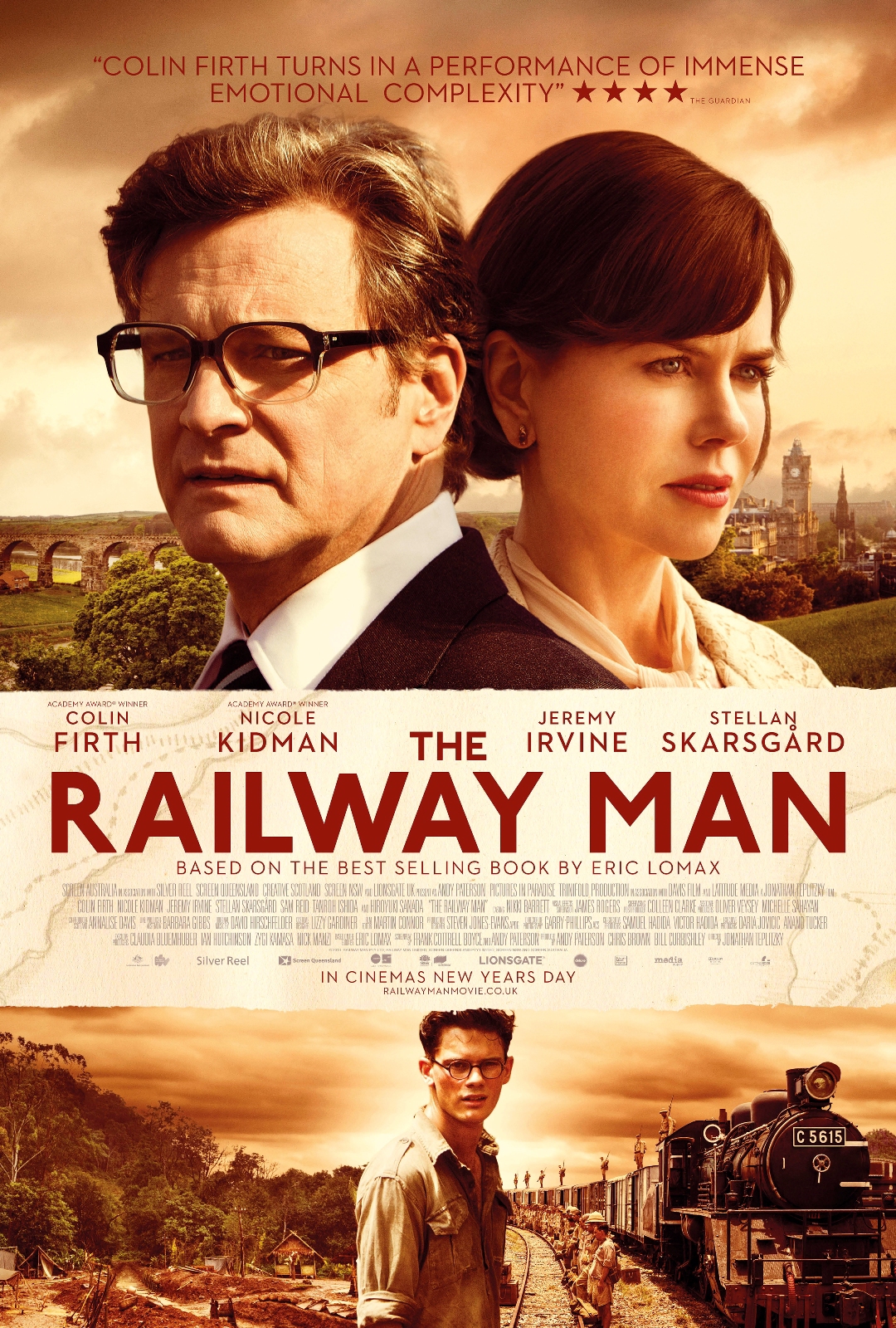
Such a man was Eric Lomax (played here by Colin Firth). In the 1970s Eric meets and falls in love with Patricia (Nicole Kidman). The two are married, but Patricia soon discovers Eric is still plagued by memories of his imprisonment as a young man (played by Jeremy Irvine) by the Japanese during the Second World War, and in particular a prolonged period he spent being tortured by the Japanese secret police for building a radio. Lomax is unable to begin to talk about his experiences, even as trauma causes his life to deteriorate. Fellow ex-POW Finlay (Stellan Skarsgård – very good in a small but vital role) is the only one who has even the faintest idea of his experience, but cannot persuade him to even speak about his past or try and move on. After discovering his torturer Takashi Nagase (Hiroyuki Sanada) is alive and well and working as a tourist guide in the very camp where Lomax was tortured, he travels to Japan, torn about what he should do.

Teplitzy’s film is powered by several marvellous performances, not least Colin Firth who is excellent in the lead role as the deeply repressed, tormented Lomax who in his heart has never left the prison where he suffered unbelievable torment. The film is a carefully structured, and deeply moving, character study of how atrocious and inhumane actions trap us all – both the victims and perpetrators – in patterns of suffering where we feel our own humanity drain away. Even handed, honest and generous, like Lomax’s book, it’s an engaging and moving tribute to the strength of the human spirit and our capacity for generosity.

Not least because when we finally meet the aged Nagase, he is far from the monster we expected. Like Lomax he too is haunted by the past, but where Lomax cannot escape the horrors he suffered, Nagase is plagued by guilt and disgust as he realises his actions as a young man were far from those of a righteous soldier, but rather a brainwashed pawn in a brutal army. Nagase, like Lomax, is desperate to purge himself of memories of this past, and has worked his whole life to try and make amends for the suffering he has caused. No simple good guys and bad guys here – both torturer and tortured are dehumanised, scarred and traumatised by the actions they have carried out. 

Teplitzky films that torture with an unflinching honesty, that leaves you in no doubt about why it has had such impact on Lomax. Jeremy Irvine is very good as the young Lomax, scared, vulnerable but brave and self-sacrificing who puts himself in the way of danger to try and protect his friends and then goes through savage beatings, interrogations and water boarding for information he doesn’t have. It’s difficult to watch, but never sensationalised and the traumatic pointlessness of these methods is abundantly clear. 

These memories, slowly revealed, are all too apparent in any case in Firth’s blasted face.  The film slowly reveals his psychological damage, with the opening sequence in fact suggesting a far lighter film ahead. The opening follows the meeting of Lomax and Patricia on a chance train journey. Playful and charming, these scenes work so well due to the wonderful chemistry between Firth and Kidman. It plays off in spadeas the plot gets darker and more disturbing. Kidman is very easy to overlook here in the “wife” role, but she invests it with an emotional honesty, a supportive woman eventually driven to the edge of her capabilities.

After the lightness of the opening, Terplitzky introduces the past literally like ghosts, with Lomax caught in a sudden delusion of himself being dragged through the hotel on his honeymoon, screaming in panic, to be carried to his torture danger. Throughout the film, the image of his torturer as a young man appears at various points (including at one point in a field as a train passes behind him), a constant reminder of how the past is here and now for Lomax.

It builds towards a sensational series of scenes as Lomax confronts Nagase, powered by two exceptional performances from Firth (barely able to control his anger, rage and pain) and a beaten down, distressed performance of shame from Hiroyuki Sanada, who matches him step for step. Sanada is superb as a man who confronts his nightmare – a man from his past – but also overwhelmed with the opportunity this gives him for amends. 

That’s what the film captures so well. This tension between past and present encapsulates the universal theme of our desire for revenge and our human need to connect coming together. Lomax and Nagase had every reason to kill each other, but their reaction to seeing each other is surprising, moving and a deep tribute to the human capacity to connect and move on. Grief and the past will destroy us all if we let it. The heroic examples of both Lomax and Nagase show us this doesn’t need to be the case.

American Sniper (2014)

Bradley Cooper takes aim as the American Sniper in Eastwood’s surprisingly thoughtful war film

Director: Clint Eastwood

Cast: Bradley Cooper (Chris Kyle), Sienna Miller (Taya Kyle), Luke Grimes (Marc Lee), Jake McDorman (Ryan “Biggles” Job), Cory Hardrict (D), Kevin Lacz (Dauber), Navid Negahban (Sheikh Al-Obodi), Keir O’Donnell (Jeff Kyle), Sammy Sheik (Mustafa), Mido Hamada (The Butcher), Eric Close (Agent Snead)

All war films walk a fine line: too far one way, and you glorify the violence of conflict; too far the other way and demean the bravery of the soldiers sent to fight it. It’s a tricky balance, but one American Sniper handles with real confidence, astutely putting together a film that can celebrate the bravery, skill and professionalism of its lead character but deplore the psychological impact killing has on him, while subtly suggesting the war he was fighting was scarcely worth the sacrifice.

Chris Kyle (played by an almost unrecognisably beefed up Bradley Cooper) is a Navy SEAL sniper stationed in Iraq. Kyle’s role as a sniper is to protect the troops on the ground from threats they can’t see, and it’s a job he treats with immense seriousness, believing he has a duty to protect others. Kyle soon builds up an astonishing number of kills (a record for US soldiers), but increasingly the burden of killing from a distance impacts Kyle more and more. Over the course of four tours in Iraq, Kyle becomes distant and withdrawn at home from his wife Taya (Sienna Miller) and children. Only after his final tour does he begin to seek help, finding a new purpose in life in helping other veterans suffering from post-traumatic stress. Which, tragically, leads to Kyle’s death, as he is killed in February 2013 by a veteran whom he was trying to help.

Eastwood directs with his expected unfussy smoothness and American Sniper is one of his finest films, a largely unsentimental, gritty look at the true cost of war physically and emotionally. Eastwood balances respecting Kyle’s skill and deploring the impact using that skill had on him. The film stresses the perverse necessity for empathy the role of sniper demands. Kyle is so good at the role because he will go the extra mile to protect his brothers-in-arms on the ground. The psychological impact is heavy because this man, hard-wired to protect others, has to do so by gunning down hundreds of people. Is it any wonder it has such a huge impact on him?

The sequences set in Iraq have the grimy air of reality to them, with dust, dirt, sweat and glare dominating every frame. Eastwood pulls no punches on the impact of bullets from distance on bodies, the violence of direct combat, the terror of being pinned down by enemy fire or the waste of lives (both civilian and military). While the film celebrates the bravery of frontline soldiers, it’s telling we see very few officers at all, but stay with the grunts, and the film is one of their stories and their choices. The politics behind why the soldiers are even there are barely touched upon and, as the tours tick by, the feeling of being there because they are there permeates the film. There is always another insurgent leader to take out, another target to find, and the soldiers make so little progress towards their actual target (locating al-Zarqawi) that he’s barely even mentioned.

Eastwood still subtly suggests our cause in Iraq hardly helps to win over hearts and minds. The soldiers’ interactions with the population are consumed with tension and violence, usually involving scared soldiers shouting at unarmed people, cable-tying men on the floor and failing to relate to or understand the cultures they are in. Any attempts to do so usually end with poor consequences, and the closest to a bond Kyle forms with someone outside of the soldier circle leads to a tragic ending. It’s not a film that has an affinity with the consequences of war, or the impact it has on lives.

If you have any doubt about that, then watching the slow breakdown of Kyle over the course of the film (manfully shrugged off and denied for as long as possible by the man himself) should shake that. Much of the impact of this comes from the excellent performance of Bradley Cooper, who slowly turns the light, fun and intelligent man we meet at the start of the film into someone sullen, withdrawn and permanently on the edge of anger, unwilling to even to begin to think about the possibility that anything he has seen has had any lasting impact on him. There is even some questioning of the damage extreme masculinity and an unwillingness to be open about your problems has on people (themes that Eastwood has always been far more interested in than he is given credit for). 

In fact, excellently assembled as the sequences in Iraq are (especially the tension around a semi-duel between Kyle and an insurgent sniper known only as “Mustafa”), I could actually have had more time given over at the end of the film to exploring how this man with such a warm empathy in him discovered a new purpose in his life. Kyle’s other heroism – and perhaps the secret to the regard he was held in by so many when he was murdered – was his commitment to helping people any way he could. His refocusing his life to help veterans deal with PTSD and physical disabilities could have been brought out into greater focus. Kyle’s greatest strength was his empathy and he became so open about his own problems, and his struggle to readjust, that it helped inspire many others to do the same – and it’s a plot thread I feel deserved a few more minutes at the end of the film.

It does however make a wise call by ending the morning of the day that Kyle was killed, with him leaving his family to spend a few hours with the veteran who killed him. Kyle had been involved in the development of the film, and it stands as a fitting, honest, tribute to him. Powered by Cooper’s superb performance, well supported by Sienna Miller as the wife who wants him to acknowledge the impact war is having on him, Eastwood assembles a fine war film, that acknowledges the sacrifices and heroism of soldiers, but also deplores the horrors conflict enacts on their psyche. It’s a mature, intelligent and well-handled film and well worth your time and effort.