Tag: Boxing films

Rocky (1976)

Rocky (1976)

Doubters and some very steep steps are conquered in the Best Picture winning Granddaddy of Sports movies

Director: John G. Avildsen

Cast: Sylvester Stallone (Rocky Balboa), Talia Shire (Adrian Pennino), Burt Young (Paulie Pennino), Carl Weathers (Apollo Creed), Burgess Meredith (Mickey Goodmill), Thayer David (Miles Jergens), Joe Spinell (Tony Gazzo), Tony Burton (Tony “Duke” Evers), Pedro Lovell (Spider Rico)
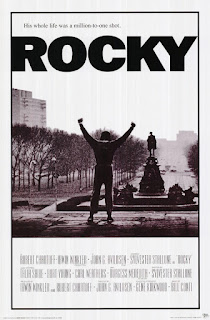
How many people have run up those steps to the Philadelphia Museum of Art? So many, they’ve renamed them “the Rocky Steps” – and placed a statue of Stallone (from Rocky III) there. You can be sure everyone hummed Gonna Fly Now while they did it. It’s all a tribute to the impact of Rocky, the iconic smash hit that led to no less than seven sequels (and counting!) and, arguably, kickstarted the 80s in Hollywood (a decade Stallone would stand tall across with both Rocky and Rambo). The original Rocky mixes genre-defining delights and a feel-good, crowd-pleasing story with a surprisingly low-key setting that deals in a bit of Loachesque reality and social commentary.

Rocky Balboa (Sylvester Stallone) is a journeyman southpaw boxer, fallen on hard times. He’s making ends meet with a bit of loan shark enforcement (although of course he’s far too nice to actually break any bones) and getting seven bells knocked out of him at low-key fights. His trainer Mickey (Burgess Meredith) thinks he’s wasting his talent, and Rocky spends the day casting puppy dog eyes at Adrian (Talia Shire) sister of Rocky’s chancer best friend Paulie (Burt Young). But Rocky’s life changes overnight when Heavyweight Champion of the World Apollo Creed (Carl Weathers) picks him at random as the nobody he will fight in a title bout (to get Apollo some free publicity). Can Rocky dedicate himself to training so he can “go the distance”?

Surely everyone knows by now, don’t they? The big fight only takes up the last ten minutes of the film. What we’ve spent our time doing beforehand is watching possibly the one of the best ever packaged feel-good stories, full of lovable characters and punch-the-air moments, directed with a smooth, professional (but personality free) charm by Avildsen. Rocky genuinely looked and felt like a little slice of Capra, a fairy tale triumph for the little guy struggling less against the world and more against his own doubts.

And it overcame some real heavyweights to win Best Picture: it knocked aside All the President’s Men, Taxi Driver and Network in a shock win. Is Rocky better than those films? No. But is it more fun to watch? Yes, it probably is – and I would be willing to bet many more people have come back to it time and time again. It was also a triumph for Stallone, a jobbing actor, who produced a first draft of the script in three days and fought tooth and nail to make sure he played the lead.
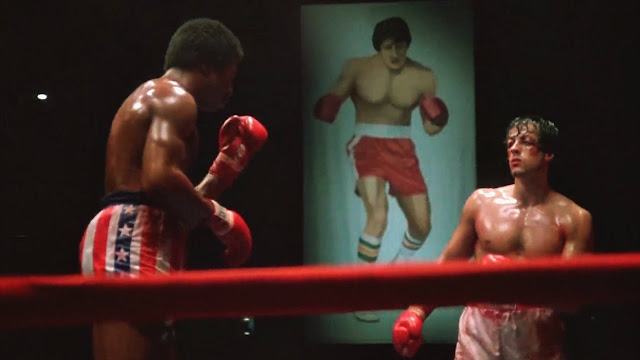
And Stallone’s performance is absolutely central to its success (can you imagine what it would have been like with, say, James Caan in the role?). Stallone gives Rocky exactly the sort of humble, shy, sweetness that makes him easy to root for. Rocky is no genius, but he’s loyal, polite, well-meaning and Stallone taps into his little-used qualities of softness and naivety. Rocky is lovable because, for all the punching, he’s very gentle – just look at him make a mess of money collecting or the way he talks like a little kid with his pets. Stallone has a De Niroish – yes seriously! – quality here: he absent-mindedly shadow boxes throughout and gives a semi-articulate passion to his outburst at Mickey. His romance with Adrian is intimate and gentle. The whole performance feels lived in and real.

Real is actually what the whole film feels like – despite the fact it’s a ridiculous fairy tale of a boy who becomes a prince for a day. It helps that its shot deep in the streets of Philadelphia, on the cheap and on the fly in neighbourhoods and locations that feel supremely unstaged (Avildsen avoided the cost of extras by frequently shooting at night or very early morning). Even that run up the stairs was a semi-improvised moment. Rocky’s world is a recognisable working-class one that for all its roughness, also feels like a community in a way Ken Loach might be proud of (even the loan sharks are easy-going). Day-to-day the film manages to capture some of the feel of a socio-realist film with a touch of working-class charm.

It also makes a lovely backdrop to the genuinely sweet romance that grounds the film: and a recognition of the film’s smarts that a great crowd-pleaser needs a big dollop of romance alongside a big slice of action. Very adorably played with Talia Shire (original choices Carrie Snodgrass and Susan Sarandon were considered too movie-star striking), Adrian feels like a slightly mousy figure (and she is as sweet as Rocky) but also has a strength to her. She’s led a tough life as sister to the demanding Paulie (and Burt Young does a great job of making a complete shitbag strangely lovable and even a bit vulnerable), but it’s not stopped her feeling love. She and Rocky complement each other perfectly – gentle, shy people, who have something to prove to themselves and the world.
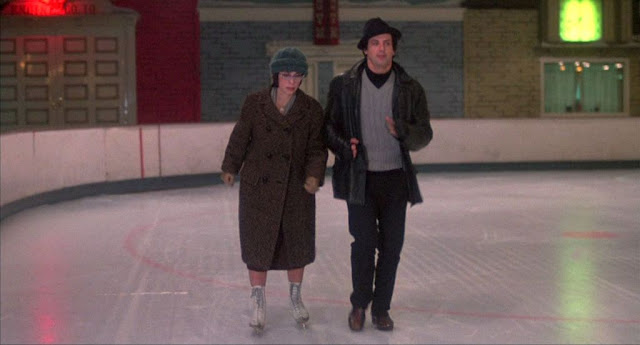
Is there a sweeter first date in movies than that solo trip to the ice rink? Cost cutting saved the day here (it was intended to be packed), that stolen few minutes skating while Rocky hurriedly tries to find out a much about Adrian as he can (an attendant counting down the time they have as they go), Adrian both charmed and bashful. It’s a lovely scene and goes a long way to us giving these characters the sort of emotional devotion that would keep audiences coming back for decades.

That and those boxing fights of course. Rocky’s final fight sets a template most of the rest of the films would pretty much follow beat for beat. But it’s still fun watching Rocky go toe-to-toe against all odds. Particularly as we know what is important to Rocky is not victory but proving something to himself. It helps as well that Stallone still looks like an underdog of sorts (over the next ten years he would turn himself into a slab of muscular stone).

Opposite him is Apollo Creed, with Carl Weathers channelling his very best Mohammad Ali. The underdog story makes for fine drama, and Rocky is superably packaged: there is a reason why so many other films essentially copied it. From montage, to an “against all odds” fight to Burgess Meredith’s grizzled trainer (a part you’d see time-and-again in the future from different respected character actors) there is a superb formula Rocky takes and repackages from classic films of the 40s and 50s and re-presents to huge and successful effect.

And it works because it’s so entertaining. Stallone is hugely winning in the lead role – more sweet and sensitive than he would be in later Rocky films (traits he would allow himself to rediscover in the more recent films) and it’s a perfectly packaged feel-good entertainment. But it’s also got a grounded sense of realism and reality, with an affecting love story. It’s one of the first – and best – films of the 80s, where formula and crowd-pleasing would be king.

Raging Bull (1980)

Robert De Niro takes to the ring in Scorsese’s marvellous Raging Bull

Director: Martin Scorsese

Cast: Robert De Niro (Jake LaMotta), Joe Pesci (Joey LaMotta), Cathy Moriarty (Vickie LaMotta), Nicholas Colasanto (Tommy Como), Theresa Saldana (Lenora LaMotta), Frank Vincent (Salvy Batts), Lori Anne Flax (Irma LaMotta)

On the surface, Raging Bull seems an unusual topic for Scorsese. A sports biopic? For this, the least sports-engaged director in Hollywood? Even in Scorsese’s most masculine works, sports are always noticeable for their absence. But Raging Bull is a masterpiece, a film whose legacy has seen it named as the greatest film of the 1980s, showcasing possibly Robert De Niro’s most famous performance. A brilliant combination of art, searing personal drama and boxing, Raging Bull may not always be the easiest watch in the world, but it’s a scintillating piece of cinema.

Opening in 1964, we see the overweight, ageing Jake LaMotta (Robert DeNiro) preparing for a comic stand-up routine. From there, the film flashes back to the younger Jake in the ring, with the film following LaMotta’s boxing career. However, the real drama is in his out-of-the-ring relationships, with his brother and manager Joey (Joe Pesci) and his second, younger, wife Vickie (Cathy Moriarty). LaMotta inside the ring is a bull, a man who can take unbelievable levels of punishment. Outside the ring though he is a fragile, paranoid, self-loathing man with a sharp self-destructive streak, whose envy and jealousy systematically destroys every relationship he touches.

Watching the film, its clear Scorsese knows very little about boxing but fortunately he knows everything about filmmaking. Raging Bull is a marvel, a superbly made and directed marvel. Scorsese’s triumphant decision was to shoot the film in black-and-white (some truly beautiful work from Michael Chapman). This gives the film both the classic, gorgeous feel of a 1940s Hollywood movie, but also allows the boxing matches themselves to take on an almost impressionistic artistry, with powerfully emotive monochrome images. The photography also creates a stark, documentary like sense of reality for the many scenes of domestic disharmony and violence, while later shots brilliantly allow LaMotta (lost in self-loathing and disgust) to almost disappear into the inky darkness of the frame. Raging Bull would be half the film it is, if it was in full colour.

Recovering from a cocaine addiction that nearly killed him, Scorsese was intimately familiar with self-destruction – and its perhaps this that drew him towards LaMotta’s jealousy, possibly the film’s major theme. LaMotta is a self-loathing individual, who sees little value in himself, who treats pummellings in the ring like just punishments and believes everyone is betraying him. It’s one of the finest films about the green-eyed monster ever made. Obsessed with his younger wife – whom LaMotta first encounters at age 15 and whom he marries as soon as she is legal – LaMotta also earnestly believes she is sleeping with every man around. It’s clear that these paranoid fantasies stem from his own disgust at himself, LaMotta’s own conviction that there is nothing of value in him.

It’s this jealousy that really destroys LaMotta, his trigger-happy temper seeing him able to switch on an instant from a calm – but monomaniacal – insistence that he just wants to know the truth about his wife, to indiscriminate violence. LaMotta is an impulsive, excessive creature who does everything to a huge degree, from doubting his wife, to shovelling food into his guts. Scorsese’s camerawork – particularly it’s La Dolce Vitaish love of Cathy Moriarty – reflects LaMotta’s internal dysfunction. It worships Moriarty in the same way LaMotta does, but also reflects his obsessive possessiveness.  

All of this is further captured in Robert De Niro’s iconic performance. De Niro won the Oscar for this stunning tour de force. Raging Bull became almost as famous for De Niro’s all-consuming preparation: he trained for months to achieve the physique and skill of a professional boxer (he even entered some professional bouts, winning two out of three). He then went completely the other way, the entire film going on a four month hiatus while De Niro went on an eating tour around Italy to pile on the pounds for the ageing, overweight LaMotta. At the time it seemed like no other actor had gone to such levels.

This focus on De Niro’s preparation sometimes obscures in the mind the genius of the actual performance, as if we have almost been blinded by the training and technique behind it. De Niro’s energy, his fury, his intelligent understanding of the fractured mind of the paranoid brilliantly brings LaMotta to life. So intense is the actor’s understanding of the disgust that lies at the heart of LaMotta’s personality that, even at his worst, the man is never completely unsympathetic. De Niro rages through scenes of jealous outbursts and violence, but he also has a childish gentleness of the man unable to understand the world around him, twice in the film collapsing into bursts of affecting tears. The older LaMotta is perhaps wiser, but just as inarticulate in emotions as his younger version and as unable to fix the damage. It’s a masterful performance, a physical and emotional tour-de-force.

De Niro also worked closely on the choreography of the boxing scenes, which allowed Scorsese the freedom to shoot these with an imagination and brilliance that had never been seen before. Each fight has its own unique feel, with Scorsese understanding that this sport is a neat parallel for how LaMotta sees life, a series of brutal clashes with pride and self-regard on the line. Scorsese’s fights are elemental clashes – the soundtrack frequently uses slowed sounds to create an animalistic roar.

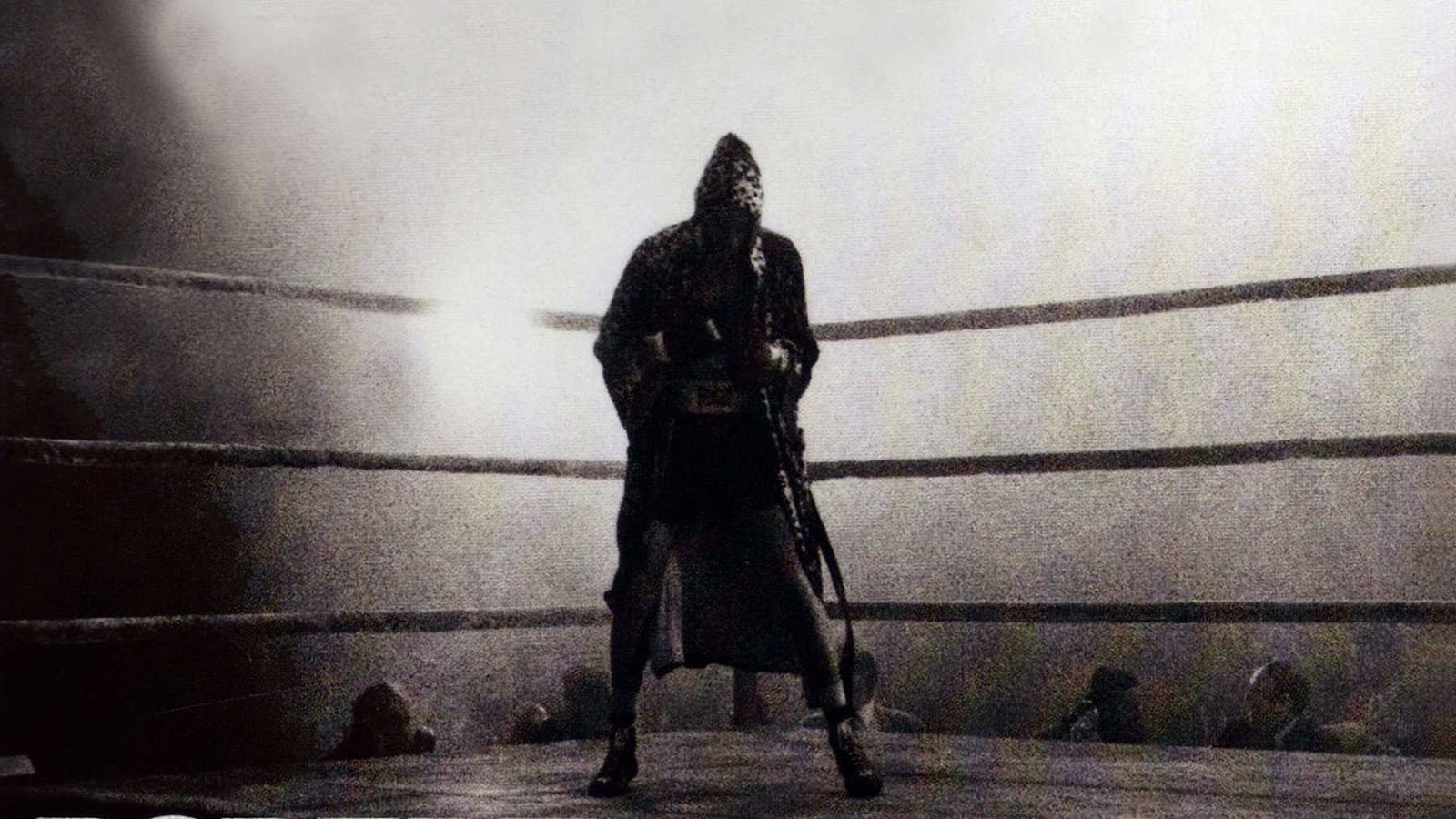
The camera is frequently thrown into the ring with the pugilist – and LaMotta here is really more of a pugilist than a boxer, there is very little sense of tactics – with low angles and tight camerawork. Scorsese puts the camera – and the viewer – into the ring, making us part of the fights. Every punch and blow carries impact, and this is perhaps the most blood drenched boxing film in history, with the darkened liquid covering the faces of the fighters and dripping from the ropes of the ring. The fights reflect LaMotta’s mood, with one late fight seeming like an almost medieval battle, mist rolling in and the fighters flying at each other with a reckless abandon. There is nothing romantic about boxing here, it’s a grimy reality of violence with a purpose and brute strength, endurance challenges that only the strongest can emerge from.

LaMotta’s confidence and mastery of the ring is contrasted throughout with his lack of nous and understanding in the real world, and his ability to destroy everything he touches. Joe Pesci excels as his supportive brother who realises far too late the uncontrollable anger at the heart of this fighter, while Cathy Moriarty is also excellent as a young woman whose only real mistake is to want to live some part of her own life. Scorsese charts LaMotta’s destruction of both of these relationships, culminating in the washed up boxer pounding the walls of a jail cell weeping and screaming “Why! Why! Why!”, hatred for his self-destruction dripping from every pore.

Raging Bull looks unlike any other boxing film, instead like a perfectly formed art piece, its soundtrack full of classical tunes and its photography adjusting between the beauty of neo-realism and the cold realities of documentary film making. It’s superb, a masterful film, a work of art and also a profound understanding of the destructive impact of jealousy and self-loathing. Showcasing career defining work from De Niro, it’s no wonder this is still hailed as the greatest film of the 1980s and one of the greatest of all time.

Fat City (1972)

Stacy Keach and Jeff Bridges excel as boxers failing to live The Dream in Fat City

Director: John Huston

Cast: Stacy Keach (Billy Tully), Jeff Bridges (Ernie Munger), Susan Tyrell (Oma Lee Greer), Candy Clark (Faye), Nicholas Colasanto (Ruben), Art Aragon (Babe), Curtis Cokes (Earl)

The American Dream has an underbelly. For all those dreamers who find fame, fortune and glory in the Land of Free there are thousands who never made it. Thousands who stayed rooted at the bottom of the rung of the ladder and saw their dreams disappear and lives head into turnaround. Fat City – the good life, according to the slang of San Francisco, the crazy goal you’ll never achieve – is all about those left behind by their dreams.

Billy Tully (Stacy Keach) is a former boxer, now down on his luck and now possibly struggling with alcoholism. Ernie Munger (Jeff Bridges) is a young prospect who shows some promise in the ring. Both of them dream of getting into the limelight – but what hope do they have when it’s nearly impossible to turn your life around in smalltown America?

John Huston’s film is unflashily assembled, but carries a fundamental emotional power as it investigates with a simplicity and honesty the difficult dynamics of real life. It’s a film which has no pat answers, no simple solutions and doesn’t offer much in the way of hope. Which is not to say that it is a depressing vision of the world. Just a recognisable one. Because, sure, for most of us there isn’t any real chance of seeing our lives change. 

Huston’s film – brilliantly shot with a 1970’s muddy graininess mixed with flashes of revealing light by Conrad Hall – is wonderfully well observed and beautifully paced and keeps refreshingly loyal to its essentially downbeat vision of life. There is nothing forced in Huston’s well-paced touch and his embracing of the ordinariness of the drama and the lives of the characters. Because for both of them what we see in this film – and it ain’t much – is still clearly the high point of their life. Just getting into the ring and being beat (and only one fight in the film ends with one of our heroes winning – and even then he’s unaware of his win, he’s so punchdrunk) makes them something rather than nothing. These small moments are the best they can hope for.

Because both men have lives of nothingness in front of them. Keach’s Tully is a man whose best years are already behind them, but keeps up a touching air of hope and belief that maybe that could change, even while he drunkenly stumbles from one moment to the next. And maybe he did have something in the past – but he certainly doesn’t have something to come. Keach captures this superbly – like a reliable pro embracing what he feels might be the highlight of his career – investing Tully with a gentleness but also touch of fantasy, a man who can’t quite accept where his life is, but despite a lack of bitterness he’s still a man balancing fantasies. 

Jeff Bridges makes a perfect balance to this amiable failure of a man as Ernie, a young man who may well have more promise than Tully but lacks any sense of personal drive. He’s a friendly but empty shell. While Tully at least goes through spells of wanting success – even if he drifts and falls into alcoholic patches of non-achievement and becomes lost in recollections – Ernie has no desire. He’ll allow himself to be put forward but will do no work at all to push himself forward. He’s a young man with no hurry, a man who seems destined to never achieve anything because he has no desire to do so. It’s a great performance of amiable emptiness from Bridges.

But then you hope that Ernie won’t be heading to the alcoholism that consumes Tully and his romantic interest Orma. Played by an Oscar-nominated Susan Tyrell, Orma is the picture of a failed life, a semi-bloated, rambling alcoholic who oscillates between small insights and far more common drunken ramblings and bitter drunken whining but believes strongly in what she does. Huston’s film places her firmly as much of a drifter through life as Ernie in her way, taking up with Tully while her lover serves prison time – and moving easily and with little impact from one domestic set-up to another. Tyrell and Keach give outstandingly strong performances of drunkenness, never over-playing and totally convincing in their slurred speech, attempts to not appear as drunk as they are and emotional swings from calm to sudden and consuming fury.

But then what is there to look forward to in this life than the next drink? Certainly not the fights. For all the dreams of trainer Ruben (Nicolas Colosanto – very good) to find the next big thing, every fight we see is a tragic and painful affair mostly ending in defeat. Ruben drives carfuls of beaten, ring fodder from place to place, watches them get duffed up and then takes them home all the while dreaming of a title shot. It is dreams shared by Tully – even while we watch his slow, alcoholic fuelled body struggle to get through a few minutes of shadow boxing.

But then that’s the message of Fat City the anti-Rocky – and probably more realistic for it. Huston;s simple touch and pure vision help to make this one of his finest films, his unfussy and naturalistic camera encouraging truthful and powerful performances from his leads. And every small moment is full of it, including a marvellous wordless sequence that sees Tully’s Mexican opponent arrive in town (on a rundown bus), wordlessly check into a motel, piss blood and then head to the ring to be (only just) beaten – a moment of victory so fleeting and small it barely counts (and is only a hiatus on Tully’s return to shambling from bar to bar on the streets). The American Dream is a great thing – but for many people it’s just that: a dream.

Creed II (2018)

Sylvester Stallone and Michael B Jordan take to the ring once more in Rocky IV/Creed remake Creed II

Director: Steven Caple Jr

Cast: Michael B Jordan (Adonis Creed), Sylvester Stallone (Rocky Balboa), Tessa Thompson (Bianca Taylor), Dolph Lundgren (Ivan Drago), Florian Munteanu (Viktor Drago), Phylicia Rashad (Mary Anne Creed), Andre Ward (Danny “Stuntman” Wheeler), Wood Harris (Tony “Little Duke” Evers), Brigitte Nielsen (Ludmila Drago), Milo Ventimiglia (Robert Balboa), Russell Hornsby (Buddy Marcelle)

After eight films, in a franchise that has been running for over 40 years, you have to ask if there are any original stories left to tell in the Rocky universe. The answer? Yes there probably are. Does this film tell one? Well no not really, even if there are moments where you feel it wants to. Instead it basically gives us the formula we expected going into it.

Adonis Creed (Michael B Jordan) is finally heavyweight champion of the world – but why is he so glum? Maybe because he still can’t seem to shake off the shadow of his deceased father Apollo Creed. So he finds it hard to resist when Ivan Drago (Dolph Lundgren), the man who killed Apollo, emerges from disgrace in the Ukraine (I’m not sure the makers of this film realise that the Ukraine is different country to Russia). Drago brings with him his super-fighter son Viktor (Florian Munteanu, virtually mute for the whole film) who challenges Adonis to a title fight. Rocky (Sylvester Stallone) doesn’t approve and wants nothing to do with it. Adonis’ pregnant wife Bianca (Tessa Thompson) isn’t sure it’s a good idea. But Adonis gives it a go – and is left hospitalised after a mauling, though Viktor is disqualified in the fight on a technicality. Adonis has to rebuild his confidence from nothing, lay to rest his daddy issues and, of course, take on Viktor in a rematch – stop me if you have heard any of this before.

Because you almost certainly have. This is a film that repackages themes from Creed, the basic plot structure of Rocky IV ,and mixes in elements from several other films to come up with a sort of Frankenstein’s monster that feels familiar rather than fresh. Practically every beat can be predicted in advance, and there are no surprises or challenges to your expectations. Essentially everything plays out so closely to what you might expect, and is so clearly signposted in the film, that it’s almost impossible to spoil. 

Which is a shame as there is a better, more intelligent film in here which is thrashing around trying to get out. There was a film to be made here about the shadows fathers cast over us. After all, Adonis and Viktor are basically fighting the battles of their fathers and adopted fathers rather than their own. For Adonis in particular, his struggles to live in the shadow of his father is hammered home with decreasing subtly as the film goes on. Director Steven Caple Jnr was clearly so pleased with his framing of a shot where Adonis trains while a window with a picture of his father towers above him that he repeated it several times in the film. It’s as far as the film goes to questioning the wisdom of these people being weighed down by legacies.

Because this is a film that is trying to have its cake and eat it. All of the characters close to Adonis oppose his first fight with Viktor – Rocky even tells him it’s not his fight – but come the second fight all these characters are cheering him on in the rematch. It seems the only way to escape your father’s shadow… is to climb deeper under it. (Interesting note: all references to Creed being the son of a girlfriend of Creed’s rather than with his wife are deleted in the film, which feels odd.)

You know what would have been interesting? Perhaps Adonis thinking he doesn’t need to win the fight to match his father’s achievements. Or perhaps Adonis deciding that fighting alone proved his point, and he didn’t need to match Rocky’s success in Rocky IV. Or deciding that he didn’t need to rise to the bait. Instead the film shows him pushing against his father’s legacy – and finally doubling down on it in order to create his own legacy. Thinking about it doesn’t make a load of sense.

It would also have been nice if the intervening years had changed Ivan Drago in some way – but he’s established very early on as a villain, and that’s it. Of course this is partly due to Lundgren’s limitations as an actor – wisely it’s nearly half an hour before Ivan speaks, and he does only one scene in English – but it would have been nice if Drago perhaps expressed some regret to suggest he has changed in some way since 1986. Viktor has an equally unclear trajectory – Ivan’s determination to reclaim glory via his son seems to be leading towards some bust up between them, but it never does (is it just me or does Viktor seem like he almost hates his domineering father?). The film tries to pay this off with a moment of familial affection between the two but it comes from nowhere and seems unclear.

So the story is predictable. So predictable by the way, that the film seriously sags in the middle as we wait (with no tension) for Adonis to decide he will get into the ring again and fight Viktor. It also has a slightly manipulative relationship between Bianca and Adonis (Tessa Thompson is wasted again in a bit of a nothing role – and her musician character is saddled with some of the worst music you’ll ever hear). But it’s still a well made film. The fight scenes in the ring are of course excellent as always. The main actors are all good – Jordan is very convincing and Stallone continues to get a load of pathos from the ageing Rocky.

But it’s just a little bit dull and familiar. There is too much of the same old same old here. Where are the new ideas? Even all these father themes were explored to a conclusion in Creed – why retread it all again? What does this do that is new and different – nothing really. It’s another chapter in their lives. But nothing else. And with the birth of Adonis’ daughter we’ve got to get ready for a whole new series of films in 30 years, as Amora Creed takes on Clubber Lang’s grandson’s nephew in Kid Creed. Or something like that.

Creed (2015)

Sylvester Stallone and Michael B Jordan keep the flag flying in Rocky relaunch Creed

Director: Ryan Coogler

Cast: Michael B Jordan (Adonis Creed), Sylvester Stallone (Rocky Balboa), Tessa Thompson (Bianca), Phylicia Rashad (Mary Anne Creed), Graham McTavish (Tommy Holiday), Wood Harris (Tony “Little Duke” Evans), Ritchie Coster (Pete Sporino), Anthony Bellow (“Pretty” Ricky Conlan)

Remember Rocky IV? It’s a bizarre film that opens with the plot twist of Apollo Creed, Rocky’s rival-turned-friend, slain in the ring by a Russian fighting monstrosity. Well that film, for all its rubbishness, partly redeems itself by being the jumping-off point for this spirited and well-made re-launch of the series. (Strange as it is for a film as grounded as this one to bounce off from such a bizarre piece of 1980s nonsense as Rocky IV.)

Adonis Creed (Michael B Jordan) is the son of Apollo  Creed from an extramarital affair. Adopted as a young boy by Creed’s widow Mary Anne (Phylicia Rashad), Creed grows up to be a man who yearns to fight as a boxer – although whether this is motivated by a desire to get closer to his father or to try and outdo him the film subtly plays around with as a major theme. He approaches Rocky Balboa (Sylvester Stallone) to train him, who eventually reluctantly agrees, inspired by seeing something of himself in the young man. When Creed unexpectantly lands a title shot – while Rocky deals with increasing ill health – both men have to come together to fight for their pride and future. 

Creed is a film that captures what works about this franchise, and repackages basically a very familiar story (this is almost point-for-point a Rocky remake) with a great deal of dynamism. Coogler, a talented and original director, brings imagination and intelligence to essentially pulpy material and makes something old seem new again. It does this while still homaging the previous films (even the rubbish ones!) at several points, from small stills on the walls of Rocky’s restaurant, to bit-part characters, to the marvellously beguiling score that gently riffs on the familiar motifs from the series.

It’s also helped by a fine performance from Michael B Jordan with a pretty much spot-on re-interpretation of the Rocky character in a new form. Jordan’s Creed is impulsive and quick-tempered, but also kind and charming. In fact it’s refreshing to have such a clean-living and well-brought up hero centring a film! Jordan gets some intelligent and subtle character work over Creed’s mixed feelings for his father: both resentful of never knowing him and also desperate to gain a sort of posthumous approval. It’s a basic daddy-problems story line but it’s done with a lot of subtlety.

Stallone’s performance as the ageing, slightly world-weary, lonely Rocky is another stand-out. This film’s Rocky is punched out, weighted down by life and unable to get over the sadness of his wife’s death; he sees young Creed as both a chance to find a new family and a reminder of his guilt over Apollo’s death. It’s a fine performance he gives here, detailed, moving and pretty much perfectly judged, with real moments of humour among the pathos. There is also an extraordinarily subtle make-up job on Stallone to make him appear far weaker and vulnerable than he actually is. It’s probably his best performance since the original film.

Coogler’s direction is spot-on, the pacing of the film is pretty much perfect. He shoots the fight scenes with particular freshness, the camera darting in and around the fighters as they beat each other in the ring. This immediacy adds a lot to these sequences – although the heavily choreographed fights, while great cinema, barely resemble a real boxing match! The film also balances really well both the training montages (many of which affectionately homage similar sequences from the early films) with a sensitive and well-constructed romance plotline between Creed and singer Bianca (well played by Tessa Thompson, who makes a lot of what is on paper quite an underwritten part).

It’s not perfect, don’t get me wrong. The decision to cast actual boxers in pivotal roles doesn’t always pan out, not least Anthony Bellow as Creed’s title rival (surely it’s easier to train up an actor than try to teach a boxer to act). For the English viewers it’s hard not to feel a few sniggers at the slightly strange sight of a title fight taking place at Goodison Park of all places (surely this film is the closest any Everton fan has got to seeing major silverware). 

But its affectionate reworking of the tropes of the series works really well, it’s extremely well-acted, it has intelligent character work for both Creed and Balboa who become fully rounded and intriguing characters, and it’s very well directed. It becomes a film about the importance of family as much as it is about legacy, about the two lead characters having to come to terms with the loss of their loved ones and build a new family. For all that the events in the film are pretty close to a straight re-tread of Rocky, this is such a lovely, heartfelt film it’s hard not to like it a lot.

Rocky IV (1985)

Sly Stallone takes on the towering Dolph in Cold War ending boxing fable Rocky IV

Director: Sylvester Stallone

Cast: Sylvester Stallone (Rocky Balboa), Talia Shire (Adrian Balboa), Burt Young (Paulie Pennino), Carl Weathers (Apollo Creed), Dolph Lundgren (Ivan Drago), Brigitte Nielsen (Ludmilla Drago), Tony Burton (“Duke” Evers), Michael Pataki (Nicolai Koloff)

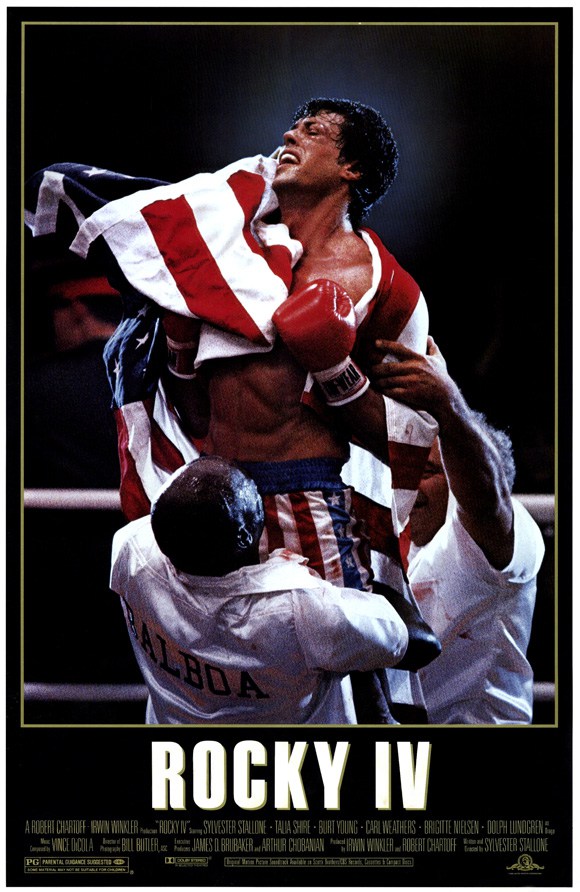
By 1985, Rocky Balboa had come from behind to overcome adversity through sheer willpower no fewer than three times. We’d seen him come from obscurity to fight Apollo Creed, lose his money, fight Creed again, win, get shamed in the ring and lose his belt and trainer on the same night, then come storming back to beat Mr T. We’d had training montages aplenty as, for every major fight, Rocky needed to learn how to box in a new way. We’d seen him take punishment like nobody’s business in the ring as better opponents pummelled him before coming up against Rocky’s iron will. So in Rocky IV we got… well, more or less exactly all that. Again. But in Russia.

The ideas had gone, the inspiration had tanked. There was nothing new to do. Rocky IV is a very short film – and it could easily be shorter again if the padding had been removed. Apollo Creed (Carl Weathers) takes on Russian uber-fighter Ivan Drago (Dolph Lundgren) in the ring in a charity match. Drago is a mountain of Soviet athletic engineering and he beats Creed so badly, Creed dies. In Rocky’s arms of course. So Rocky Balboa (Sylvester Stallone) does what a man has to do – he’ll fly to Siberia and he’ll fight Drago on his own turf, all to avenge the memory of Creed. And for American pride. And along the way he’ll only go and get the Russians to rethink this whole Cold War thing.

Rocky IV is so painfully short of ideas, you’ll feel like you’ve seen it even before you’ve seen it. In fact, at least 10 minutes of it you have. The film opens with essentially a complete recap of Rocky III, including the closing scenes of that film. Later Rocky goes driving to the airport. Along the way he hits the radio in his Lamborghini (the product placement in this film is shockingly crude) and listens to the whole of No Easy Way Out by Robert Tepper, while the film plays a montage that recaps all three of the previous films. The scene might as well end with the title of the song appearing in the bottom left hand corner like an old MTV video. (Stallone’s rolodex was obviously well thumbed, as James Brown later pops up to deliver a rendition of the whole of Living in America.) This sort of stuff pads the plot absurdly.

Either side of that, we have two long training montages comparing the homespun honesty of Rocky’s training with the naughty, doping inspired, technological training of Drago. But then this is not a subtle film. Any film that opens with two boxing gloves – one American, one Soviet – flying towards each other and exploding isn’t exactly pulling its punches on the subtlety front. The political commentary in the film is laughably naïve, from Creed’s inane chatter about American pride, to the laughable depiction of the Soviet officials as distant Bond villains, to Rocky’s closing speech after his victory (spoilers) with its infamous “If I can change, you can change!” refrain. Did the makers think they were putting a hammer to the Berlin Wall here or something?

Most of the rest of the film moves between padding and the bizarre. Almost every single scene ends with a freeze frame, possibly one of the most clunky visual devices you could hope to see. Stallone as director focuses his camera with such loving intensity on his own chiselled frame that it’s almost a sort of camp classic. Some of the conversation and physicality between Creed and Rocky is almost laughable in its inadvertent homoeroticism. 

Then there is plenty of dumb stuff as well. I’d totally forgotten this film showpieces a robot servant whom Rocky’s brother-in-law Paulie (Burt Young) spends most the film treating like a hen-pecking wife. This robot is a bizarre sci-fi addition to the story, which seems to have walked in from a different film.

The fighting when it comes is pretty good, I’ll give it that. Yes literally everything in the boxing ring is so predictable you could write it down in advance, but as always there is something quite moving about watching Rocky take such punishment to emerge as victor. Heck even the Soviet crowd start chanting his name (take that Cold War!). But it’s fine. Drago isn’t even a character (he doesn’t even really have any lines), but that doesn’t really matter as its Lundgren’s size and strength that sells the show (he towers over famously titchy Stallone).

Rocky IV is predictable hokum, that offers precisely zero surprises and must have taken a wet weekend to write. Its bizarre robot sub plot, matched with the endless music videos, montages and flashbacks to old movies, shows that the well was pretty much dry by the time this film came around. But you know the formula still sorta works, and you still cheer as Rocky turns an epic pummelling into triumph. Carl Weathers is pretty good, Creed’s death is as strangely affecting as it is totally ludicrous (never in a million years, by the way, would either of the fights in this film be allowed to continue) but Rocky IV’s okay. And of course it ended the Cold War.