Tag: Brenda Blethyn

Secrets and Lies (1996)

Secrets and Lies (1996)

Hard truths and deep emotion combine with Mike Leigh’s warmth and humanism in this powerful, spectacular film

Director: Mike Leigh

Cast: Timothy Spall (Maurice), Phyllis Logan (Monica), Brenda Blethyn (Cynthia), Claire Rushbrook (Roxanne), Marianne Jean-Baptiste (Hortense), Elizabeth Berrington (Jane), Michele Austin (Dionne), Lee Ross (Paul), Lesley Manville (Social worker), Ron Cook (Stuart), Emma Amos (Scarred girl)

“Secrets and lies. We’re all in pain! Why can’t we share our pain?”. These words come from family photographer Maurice (Timothy Spall), fighting a losing battle against his own pain while doing his best to hold his family together. It’s the mission statement for one of Mike Leigh’s most powerful films, a heart-rending drama that left me tearful. This is as gut-wrenching as Leigh can get, with actors delivering performances that feel ripped from their souls. Despite this, it gets me because this is a hopeful film about the power of love, whose anguish builds from watching what could (and should) be a loving family, failing (almost until the end) to share pain long suppressed due to shame.

That family are the Purley’s. Maurice is a successful photographer with a charming house in suburbia, dotingly maintained by his perfectionist wife Monica (Phyllis Logan). Sister Cynthia, who effectively raised Maurice, remains a working-class single-Mum to 21-year-old Roxanne (Claire Rushbrook). This class difference fuels resentments between Cynthia and Monica.

Unspoken secrets abound. But our first introduction is middle-class black optometrist played by Marianne Jean-Baptiste, Hortense Cumberbatch. (A running joke in the film is everyone’s unfamiliarity with this surname – how times change!). Hortense was adopted and now, with both her parents dead, wants to make contact with her birth mother. That birth mother – to her shock – is Cynthia, who gave birth to Hortense at 15. The relationship between Hortense and Cynthia becomes a catalyst for searing revelations, and shattering of emotional barriers, in the Purley family.

Leigh’s film is a triumph of his quiet, observational, unobtrusive directorial style, grounded on a deep and profound understanding of people and their strengths and foibles. As with his earlier films, the characters were developed after an intensive rehearsal process, with the actors given information only when their characters were. Secrets and Lies takes his approach to everyday life to its zenith, finding levels of tragedy (and warmth) in the simple pain of carrying on that other dramas can only dream of.

It is about how hopes can be both sustaining and damaging. A refrain heard in the movie is “You can’t miss what you’ve never had”. Au contrarie. The film is stuffed with people deep in grief about, or desperate to find, things they’ve never had. Hortense wants to discover where she came from. Cynthia’s life is one of lonely disappointment, resenting the domestic contentment of Maurice and Monica. Maurice and Monica are anguished by their childless marriage, Monica resenting Cynthia for having had the child she longs for. Roxanne wants a stable family, resenting her mother’s clumsy confirmation seemingly everyday that her birth was an accident (even if not a regretted one).

But, in typical British style, no one can talk about any of this. Instead, the Purleys cling to impressions of what the other family members are like. Monica sees Cynthia as a hopeless deadbeat, who can’t care for her children. Cynthia sees Monica as a snob, who stopped Maurice having a child. Roxanne sees Cynthia as constantly disappointed in her, Cynthia sees her as difficult, rebellious young woman unable to look after herself. And Maurice attempts to hold all this together, positioning himself as a jovial head-of-the-family, and whacking down any pain of his own.

Hortense, by comparison, is a model of well-adjusted upbringing. Leigh’s film doesn’t let us see much of her family – we witness her (non-adopted) siblings feuding over an inheritance – but the film constantly enforces the love she got from her parents, from the film’s beautifully staged opening at her mother’s funeral to her smiling reminiscences of parents (flaws and all) who did their best, were honest with her and taught her she was loved. Seen in conversation with her best friend Dionne (a neat single scene cameo by Michele Austin), she’s humane, warm and self-aware enough about her hopes and failings.

But she also has the fixated determination of the middle-classes – the sort of go-getting attitude completely alien to Cynthia, to whom events always happen rather than being something she starts. She disregards the advice of a social worker (a wonderful cameo of rushed professionalism, tinged with just enough genuine care by Lesley Manville) to make contact through social services and instead takes the plunge to contact Cynthia herself.

One of Secrets and Lies many strengths is its open-eyed honesty about the joy and pain of adoption. Hortense, as noted, found a loving family through adoption. But still she wants to know, why did her mother not even hold her when she was born? The answer isn’t simple, as Cynthia’s devastated reaction to the question shows: because if she held her, she would never have let go. This is the emotional centre-piece of an emotionally devastating but deeply uplifting scene at the centre of the movie as Hortense and Cynthia meet for the first time.

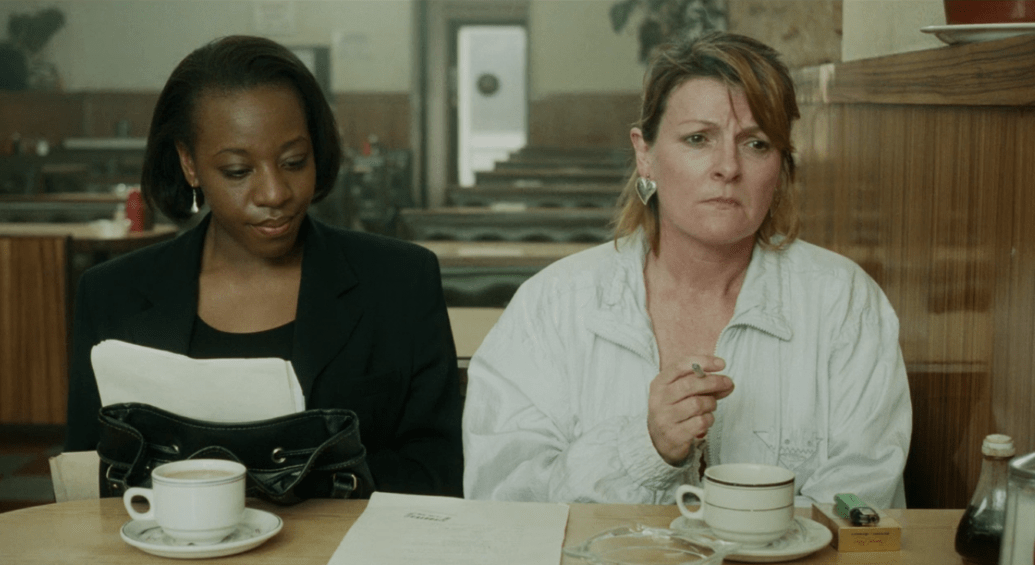
Shot in a café in a single near-seven-minute uninterrupted take with a stationary camera (a stylistic choice Leigh repeats at a family BBQ later in the film, as we wait for inevitable secrets to flood out), this is an acting masterpiece. Blethyn and Jean-Baptiste (both Oscar-nominated) give extraordinary performances throughout, but achieve the sublime here. Blethyn delivers nearly every line as if it was being pulled out of her soul by pliers, at points convulsed with teary shame unable to look Hortense in the eye: Jean-Baptiste, so assured throughout, is quiet, almost abashed but clinging to a professionalism to help resolve facing emotion head-on (right down to sitting next to Cynthia rather than opposite her).

Emotionally truthful performances run throughout. Spall is superb as a man who is no pushover – he quietly but determinedly shrugs off a drunken former mentor (a neat cameo from Ron Cook) asking to be given a chance – but who will bend over backwards to accommodate those he loves. Logan battens down hysterical guilt and grief under a house-proud fussiness. Rushbrook is a cauldron of resentments under a surly exterior. The relationship between Cynthia and Hortense – beautifully played by both actresses – quickly becomes one of genuine affection, for all their vast differences.

The film builds towards a celebratory BBQ for Roxanne’s birthday – which Cynthia brings Hortense to, claiming her as work friend. Leigh uses a long take as the family eats (we, the audience, constantly awaiting the emotional walls to break) before a devastating sequence as one after another family secrets come tumbling out, shattering emotional reserves, characters clinging to each other for comfort in floods of repressed tears, stunned onlookers open-mouthed.

It’s a scene of huge emotional impact – I cried – as regrets, loss and resentments built from years of understanding tumble out. But it’s hopeful, uplifting almost, because this is not the end. It’s a start. It’s very clear that, having finally said what they are really feeling, the extended family can move in a way that was impossible at the start. That they are closer now than ever. Hortense is the agent of positivity, and Leigh’s film closes with a quiet scene with Roxanne that suggests they have every chance of forming a warm, genuine, relationship.

Secrets and Lies is a superb film, a masterclass observation and domestic near-tragedy, powered by extraordinary performances of lived-in reality from the actors, that carries emotional strength but also has a rich vein of hope running through it. It is one of Leigh’s masterpieces.

Atonement (2007)

Atonement (2007)

Moderately successful literary drama, that succumbs to tricksy showboating

Director: Joe Wright

Cast: James McAvoy (Robbie Turner), Keira Knightley (Cecilia Tallis), Saoirse Ronan (Briony Tallis, aged 13), Romola Garai (Briony Tallis, aged 18), Vanessa Redgrave (Older Briony Tallis), Brenda Blethyn (Grace Turner), Juno Temple (Lola Quincey), Benedict Cumberbatch (Paul Marshall), Patrick Kennedy (Leon Tallis), Harriet Walter (Emily Tallis), Peter Wight (Inspector), Daniel Mays (Tommy Nettle), Nonso Anozie (Frank Mace), Gina McKee (Sister Drummond), Michelle Duncan (Fiona)

The past is a foreign country. Sadly, it’s not always the case that they do things differently there. Instead, it can be a land of regrets and mistakes that we can never undo. Events that once seemed so certain, end up twisting our lives and shaping our destinies. A single mistake can mean a lifetime of never being able to atone. These are ideas thrillingly explored in Ian McEwan’s novel Atonement, one of the finest in his career. The same ideas carry across to this handsomely mounted adaptation, which looks gorgeous but often tries too hard to impress.

In 1935, the Tallis family owns a grand country house. Precocious Briony Tallis (Saoirse Ronan) is on the cusp of her teenage years, and believes she understands the world perfectly. A budding writer, her imagination, curiosity and romanticism overflow. But her youthful mis-interpretation of the romantic interactions between her sister Cecilia (Keira Knightley) and the housekeeper’s son Robbie Turner (James McAvoy)ends in a tragically mistaken accusation that destroys Robbie’s life. Five years later, Robbie serves as a private during the British retreat from Dunkirk, Cecilia is a nurse in London and Briony is training to become the same – their lives still shaped by those misunderstandings on that fateful night.

Atonement is a film I’m not sure time has been kind to. Released in 2007 to waves of praise (including Oscar nominations and a BAFTA and Golden Globe for Best Film), it has the classic combination of literary adaptation, period beauty and big themes. But re-watching it (and it’s the third time for me), the film rewards less and less. Instead, my overwhelming feeling this time was it was a tricksy, show-off film that – despite some strong performances, in particular from McAvoy and Ronan – strained every second to demonstrate to the viewer that Joe Wright belonged with the big boys as a cinema director.

Constantly, the emotional impact of the film is undermined because nearly every scene has an overwhelming feeling of being ”Directed”. Wright pours buckets of cinematic tricksiness and flair into the film – so much so that it overwhelms the story and drowns out the emotion. With repeat viewings this overt flashiness becomes ever more wearing. Scenes very rarely escape having some directorial invention slathered on them. Direct-to-camera addresses where the background fades to back (giving the air of a confessional). Events unspooling (and at one tiresome moment played in reverse) to illustrate time reversing to allow us to see events from a different perspective. Other visual images seem cliched beyond belief: a divine flash of light behind McAvoy while he struggles against death in Dunkirk or, worst of all, Nurse Briony talking about never being able to shed the guilt from her childhood actions while vigorously washing her hands.

Perhaps most grinding of all is the (Oscar winning) score from Dario Marinelli which hammers home the questionably reality of some of the scenes we are watching (or at least the creative filter that Briony is placing over them) by building in excessive typewriter whirs and clicks into its structure. It hammers home one of the film’s key themes: that at least part of what we are watching is based solely (it is revealed) on the recollections of the much older Briony, now a respected novelist. That perhaps, some of the events are her creative interpretation, wishes or even flat-out invention. This is a neat device, but perhaps one that could have worked better with a framing device to place it into context. Instead the reveal feels tacked on at the end – for all that this is the same approach McEwan takes in the novel (with greater effect).

But then, for all the film faithfully follows the structure of the novel (in a respectful adaptation by Christopher Hampton), too often its warmth and feeling get lost in the showy staging. Although part of the tragedy is that Robbie and Cecilia’s relationship is destroyed before they even get a chance to explore it fully, the chemistry between the two of them isn’t quite there and the film doesn’t quite communicate the bond between them being as deep as it would need to be. So much of this in the book was communicated through interior monologue – and the film refuses to take a second away from its flashiness to compensate for this by allowing the relationship between the two to breathe.

Instead Joe Wright prioritises his directorial effects. For all that his over five-minute tracking shot through the beach of Dunkirk is hugely impressive and dynamic – and it really captures a sense of the madness, despair, fear and confusion of the evacuation – this isn’t a film about Dunkirk. It is a film about a relationship – and using the same flair to make us fully buy into, and invest in, this relationship would perhaps have served the film better. It’s striking that, in the long-term, the most impressive scenes are the quieter ones: Benedict Cumberbatch’s chilling house guest’s subtly ambiguous conversation with Briony’s young cousins, or Robbie and Cecilia meeting in a crowded café after years and struggling to find both the words and body language to communicate feelings they themselves barely understand. In the long term, scenes like this are worth a dozen tracking shots – and demonstrate Wright has real talent behind all the showing off.

But the film is striking, looks wonderful – as a mix of both The Go Between and a war film – and in James McAvoy’s performance has a striking lead. McAvoy’s career was transformed by his work here – boyish charm with a slight air of cockiness under his decency, turned by events into fragility, vulnerability, fear and an anger he can’t quite place into words. Knightley gives one of her best performances – although, as always, even at her best she hasn’t the skill and depth of a Kate Winslet. Or a Saoirse Ronan for that matter, who is outstanding as the young Briony – convinced that she is right and that she understands the world perfectly, but as confused and vulnerable as any child thrown into a world that in fact she doesn’t comprehend.

Atonement has its virtues. But too often these are buried underneath showing off, ambition and tricksiness. Sadly this reduces its effect and leaves it not as successful a film as it should be.

Pride and Prejudice (2005)


Keira Knightley and Matthew Macfadyen are drowned in the shadow of the BBC adaptation of Pride and Prejudice

Director: Joe Wright

Cast: Keira Knightley (Elizabeth Bennet), Matthew Macfadyen (Mr Darcy), Brenda Blethyn (Mrs Bennet), Donald Sutherland (Mr Bennet), Tom Hollander (Mr Collins), Rosamund Pike (Jane Bennet), Carey Mulligan (Kitty Bennet), Jena Malone (Lydia Bennet), Talulah Riley (Mary Bennet), Judi Dench (Lady Catherine de Bourgh), Simon Woods (Mr Bingley), Tamzin Merchant (Georgiana Darcy), Claudie Blakely (Charlotte Lucas), Kelly Reilly (Caroline Bingley), Rupert Friend (Mr Wickham), Penelope Wilton (Mrs Gardner), Peter Wight (Mr Gardiner)

I’ve written before about certain books having been adapted so successfully there feels very little point rolling out another. If ever an adaptation set this principle, it’s the 1995 BBC adaptation of Pride and Prejudice. Not only did it perfectly capture the spirit and style of the book, with perfect scripting and direction, but the two lead actors – Jennifer Ehle and especially Colin Firth – were simply perfect (for all his achievements, the first line of Firth’s obituary will forever be “Darcy Dies”.)

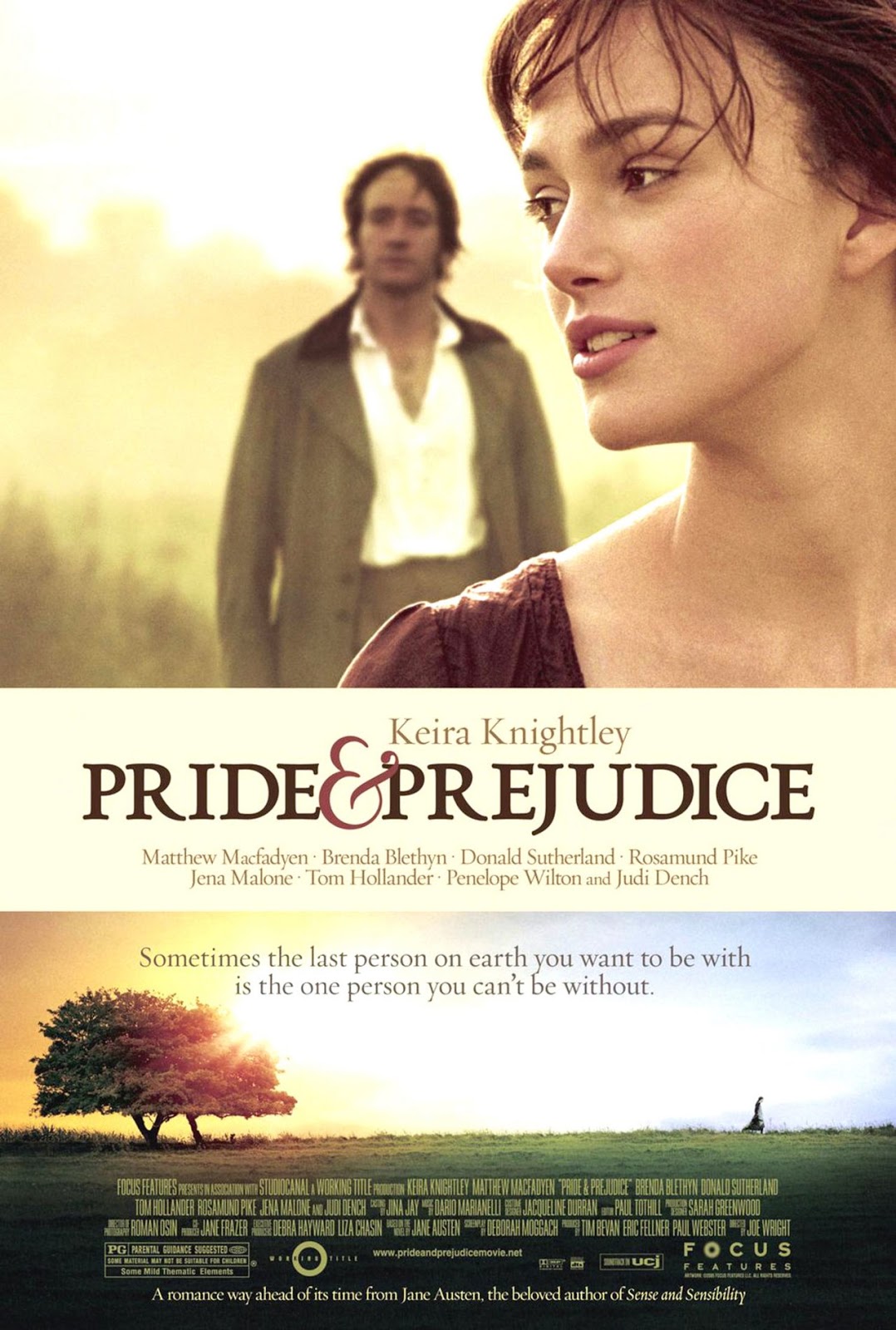
So Joe Wright and his team were already climbing a mountain when they announced plans to make a new adaptation of Jane Austen’s most beloved novel. What they’ve produced in the end is a well-made, handsomely mounted film full of visual invention – that has been pretty much rejected by nearly everyone I know who loves Austen. It’s a film that, in attempting to plough its own furlough, has ended up not really pleasing anyone: for the casual viewer it’s an entertaining but forgettable watch. For the Austen fan it’s just plain not right.

Structurally the film places Elizabeth’s relationship with Darcy slap bang at the centre, and has little to no interest in anything else. This leads to major themes and relationships being neglected or outright abandoned in some bizarre cut choices. The film wants to front-and-centre Lizzy’s increasing isolation – so Jane is dispatched from the film for almost over an hour. Even more oddly, Wickham is cut down to a few spare scenes – which makes her passionate sympathy for him and anger against Darcy make very little sense. All this isolation also means we never really understand the social implications and importance of marriage – in fact the whole thing is basically turned into a Cinderella romance: Rich Man Meets Poor Girl (And No One Else Matters). 

Which means a lot of the focus for the film lands on Keira Knightley. Is there a more controversial actor in film than Knightley? Oscar-nominated for the role, among my Austen-loving friends I have found only revulsion against her performance. She plays it with spirit but too much of a modern sensibility. She’s fine, but she’s just not convincing: she doesn’t look like her, she doesn’t have her warmth and wit and seems more like she’s wandered in from some sort of “flirty girls” comedy. Nothing really communicates the character’s intelligence and wit – and Knightley probably looks a little too modern for the whole thing to work. 

On top of that the film doesn’t want her to be too unsympathetic at any point, so dials down her judgemental nature, and also reduces any possibility of us judging her partiality for Wickham by mostly removing him from the film. However, this also removes many of the obstacles from the plot that stand in the way of romance.

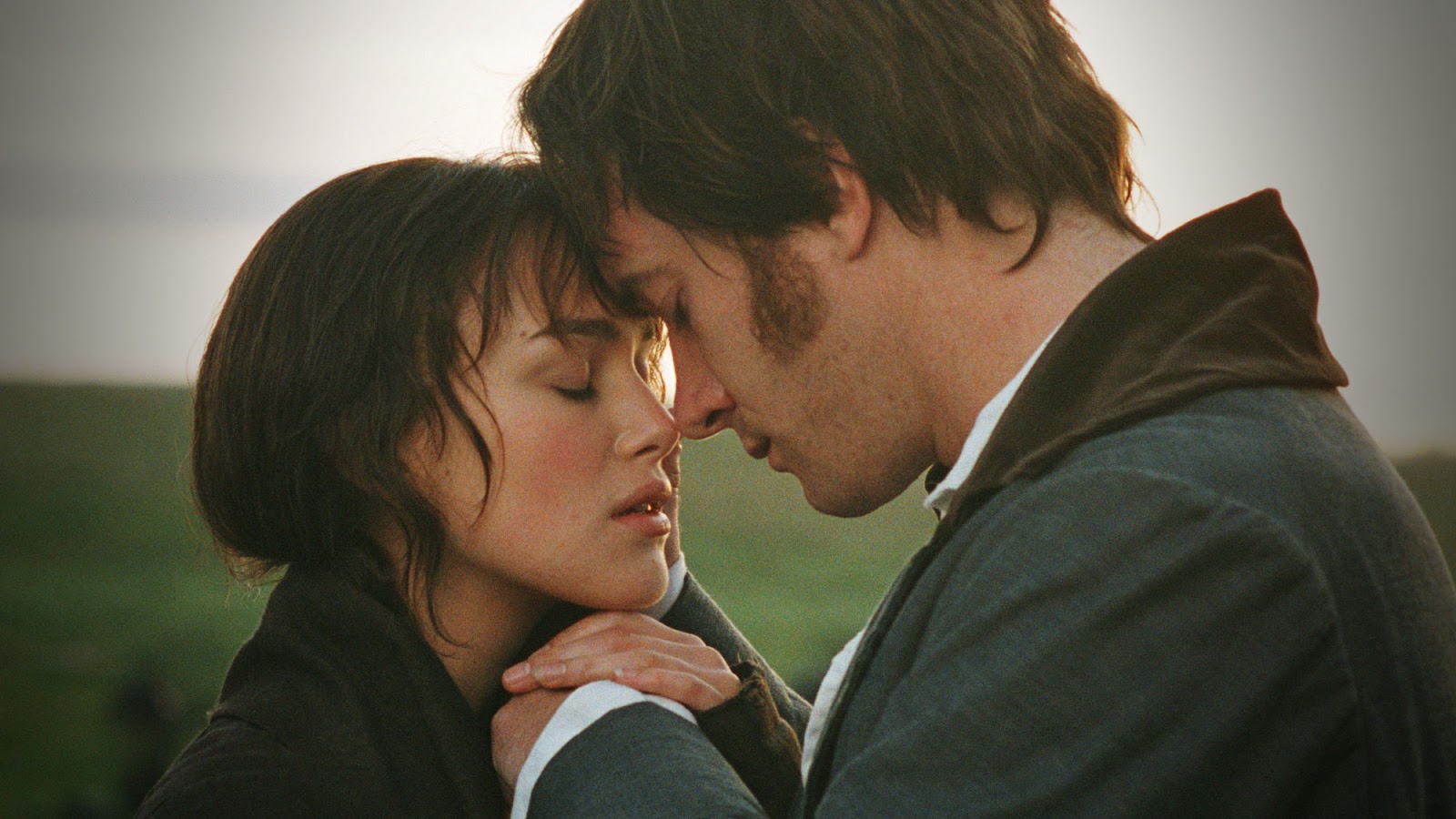
Matthew MacFadyen does a decent job as “Nice Guy In A Period Drama”, but the character is just wrong for Darcy. Like Lizzy’s tendency to rush to judgement, Darcy’s apparent coldness and snobbery have been watered down to almost invisibility. His first announcement of love is so genuine, so gentle, so loving that you are amazed that Elizabeth dismisses him out of hand. It’s no surprise this Darcy turns out to be a decent bloke, the edges of the character have been completely shaved off. This puts a big old dent in the plot, reduces his character development, and ruins the impact of sweet later moments like Darcy’s uncertainty when the two meet at Pemberley. 

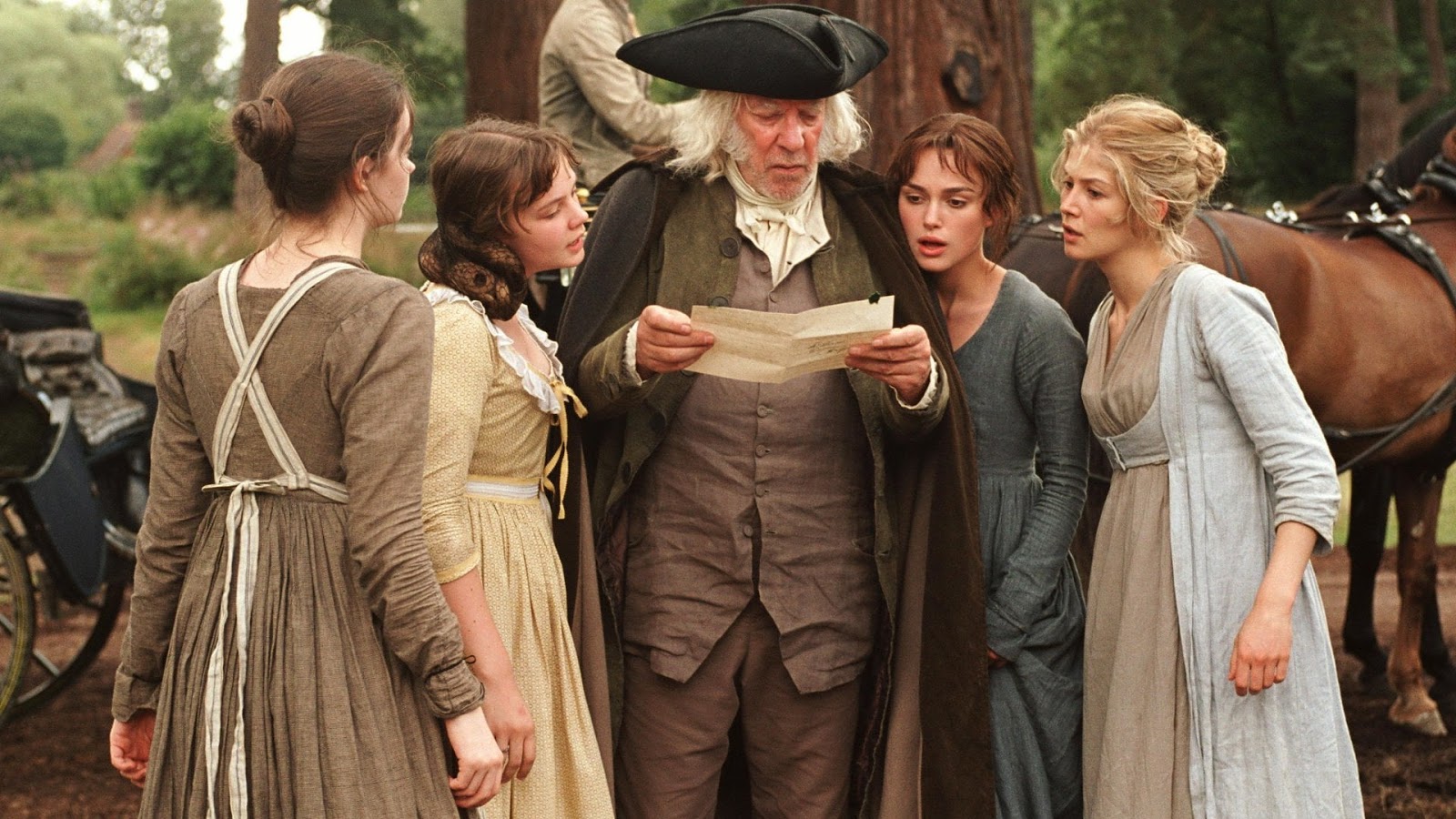
There are some good performances though. Tom Hollander is very funny as a social-climbing Mr Collins. Donald Sutherland gets so much warmth and twinkly good humour out of Mr Bennet that Wright even ends the film on him (another odd choice, but never mind). Judi Dench could play Lady Catherine standing on her head. Rosamund Pike is rather good as Jane – she totally feels right for the period. Brenda Blethyn largely manages to avoid turning Mrs Bennet into a complete stereotype. Saying that, Simon Woods portrays a version of Bingley so bumbling, tittering and awkward you are amazed either Jane or Darcy could be interested in him, let alone bear to spend time with him.

But then large chunks of the film feel odd. The screenplay works overtime to turn the film into a straight-forward star-crossed lovers story: so it’s Darcy and Elizabeth all the way, and the film is desperate to make them both likeable from the off. And if that means that, in a film called Pride and Prejudice, both the pride and the prejudice have to be junked to make sure even the stupidest audience member will like the hero and heroine, well that’s apparently a price worth paying. Lowering the Bennets’ social status as far as the film does, also turns the story into a full-on Cinderella territory. Darcy and Bingley are so posh an entire room falls silent when they walk in – in comparison the Bennets are so poor they share their house with pigs.

Ah yes the pigs. Why? The Bennets aren’t paupers. If they were, why would Collins want the place? Why would they be invited to the ball? Why would Bingley and Darcy even consider them as partners? Why would a family so aware of impressions have a home that is literallyfull of shit all the time? Why is Mr Bennet scruffy and unshaven – and why doesn’t anyone care? Who designed this? If the Bennets are so fixated on getting good marriages why do they literally live in a pig sty? It’s a visual idea that undermines the whole story.

I’m not joking. Here is a pig walking through the Bennet house.

It’s full of things like this that don’t feel right. The film junks most of the language of the original book, which makes it sound jarring (it even re-works Darcy’s first proposal: “in vain I have struggled, it will not do…” – large numbers of Austen lovers I know can recite those lines verbatim. This film apparently thought it could create a better version. It couldn’t). Large chunks of the film happen in the rain like some sort of version of Wuthering Heights. Why is that? Is it because professions of love in the rain are romantic in a Mills and Boonish sort of way? Or is it an echo back to Firth’s wet shirt?

Emma Thompson’s sublime adaptation of Sense and Sensibility demonstrated that it is completely possible to adapt an Austen novel into a two-hour film and still preserve the characters, relationships, major events and themes of the book, while also making a story that stands on its own two feet for non-Austen-ites. This film bungles its attempt to do the same. 

But there are things Wright gets right. The camera work and transitions are lovely. A long tracking shot that weaves in and around the ball early in the film, taking in every single character is not only a technical marvel but really gets across a feeling of what these hectic and bustling social events are like. There is a beautiful time transition at Longbourn, as Elizabeth rotates on a screen and the camera takes on a POV shot, showing the seasons changing each time the camera revolves around through 180 degrees. The cinematography is luscious and Wright – his first film – shows he was more than ready for the step-up from TV.

It’s just a shame that the film they made doesn’t quite work. It doesn’t capture the sense of the book. It doesn’t capture the sense of the characters. It makes bizarre and just plain wrong choices. It’s a decent film, but it is not a good adaptation of the novel. And that’s a major problem, because if you are going to adapt something as widely loved and revered as this, you better bloody well understand the novel – and I don’t think enough people here did. It’s told with a sweeping romantic style – but they are adapting the perception of Pride and Prejudice rather than the actual story. The chemistry and romance aren’t there: the film even ends with an odd sequence of Sutherland and Knightley, probably because there was better chemistry between these two than the two leads. It’s a film that basically doesn’t work at all.