Tag: British Films

Another Year (2010)

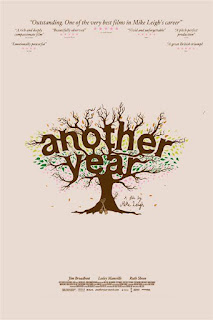
Another Year header
Ruth Sheen and Jim Broadbent are either a blissfully happy and kind or rather smug couple in Another Year

Director: Mike Leigh

Cast: Jim Broadbent (Tom Hepple), Ruth Sheen (Gerri Hepple), Lesley Manville (Mary Smith), Peter Wight (Ken), Oliver Maltman (Joe Hepple), David Bradley (Ronnie Hepple), Karina Fernandez (Katie), Martin Savage (Carl Hepple), Michele Austin (Tanya), Phil Davis (Jack), Imelda Staunton (Janet)
Tom (Jim Broadbent) and Gerri (Ruth Sheen) are a blissfully content middle-class London couple. He’s a successful geologist, she’s an attentive NHS counsellor. They divide their time between work, their allotment and socialising with friends. But many of their friends are disaster zones. Gerri’s work colleague Mary (Lesley Manville) is a divorcee who falls over herself to tell people how happy she is, but is clearly depressed with a drink problem. Similarly, Tom’s old uni friend Ken (Peter Wight) is a lonely alcoholic, seriously overweight and equally depressed.

The fascinating question at the heart of Mike Leigh’s heart-felt and beautiful film is: are Tom and Gerri a sweetly loving couple who go out of their way to support friends – or are they a desperately smug pair, facilitating those around them in self-destructive patterns? It’s hard to say either way: and that’s the beauty of Leigh’s honest, subtle character study which presents a single year in the lives of these characters.

It’s also, of course, superbly acted by the cast – all of them regulars in the work of Leigh. Broadbent and Sheen are brilliant as a couple completely content and happy in themselves and confident that they essentially have life sussed. They are kind, considerate and supportive of everyone. But how much is this genuine and how much is it performative? They fuss and smile to each other around the depressed and fragile Mary – but do nothing to help her change and improve her life, and merrily continue to fill the glasses of both her and the even more alcohol ravaged Ken.

When Tom’s sister-in-law dies, they rush to support his quiet, reserved brother Ronnie (David Bradley). They arrange every detail of the funeral and do everything they can to remove any burden from him. Tom is furious at the selfish and uncaring attitude of Ronnie’s son Carl (a grimly chippy Martin Savage) who seems convinced he is somehow being cheated by them. They bring Ronnie back to stay with them for a few weeks – but frequently leave him alone or allow him to sit watching their own insular conversations. Sure, they give him a home and support, but do they really care or are they going through the motions of people who want to believe they really care?

Wouldn’t a real friend of Ken, tell the obviously over-weight, permanently drunk, desperately self-loathing man that he has serious problems and help him change his life, rather than refill his glass at every opportunity? Or is it a sign of Tom and Gerri’s decency that they don’t see it as their place to tell other people to live their lives? In addition, Tom sticks loyally by Ken in a way very few people would – its clear during a golf game with Ken, Tom, son Joe (Oliver Maltman) and pal Jack (Phil Davis) no-one else wants Ken there – and gives him more warmth and attention than you suspect anyone else ever has. Does it just not occur to him a real friend would help Ken change his life?
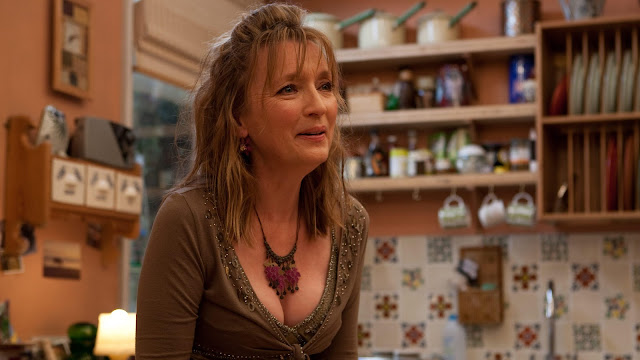
Above all, we see the frantic desperation and all-consuming anxiety, fear and neediness of Mary, played with a heartfelt and deeply moving frankness by a never-better Lesley Manville. Mary is a very sweet woman, who has lost her place in the world and clings to the idea – now long since departed from reality – that she is a young glamour puss, rather than a desperate, divorcee in her fifties. Tom and Gerri support Mary, making her a part of their lives. She is a frequent overnight guest in their house, has known Joe since he was little and relies on Gerri utterly for friendship.

But there is also a slight air of judgement with their treatment of Mary. Does having this all-too-obviously tragic case, this failure who is utterly emotionally dependent on them, make them feel better about themselves? What have they done over the years, for all those sympathetic ears and shoulders to cry on, to help Mary deal with the root cause of problems? While they are willing to listen at great length to her (often tedious and repetitive) conversation, they never once really step into help her effect real change.

Events bubble up as the lonely Mary begins to fixate on a fantasy of her forming a relationship with Joe. It’s implied everyone is aware of this, but politely do their best to hope the situation will go away. Manville is of course brilliant in playing the tragically self-deluded hope under this longing for a never-will-be relationship – particularly as she never once looks down on Mary, but plays with a real empathetic warmth, that helps us feel an immense sorrow for this woman, while still acknowledging she can be deeply frustrating.

And Mary perhaps has more warmth, and ability to connect naturally with people, than Tom and Gerri. This is suggested during a wonderful late scene with Ronnie (a brilliantly quiet David Bradley), where in a long conversation she forms more of a bond of him than we’ve seen Tom and Gerri, for all their patience, ever form. It’s impossible not to relate to Mary as she’s so clearly such a vulnerable person, desperate for love and human connection. Seeing her slow-motion collapse across the film is heart-rending. For all her flaws, she’s someone you are desperate to see happy.

Mike Leigh is able to capture all this in his beautifully observant film, perfectly placed, low-key but deeply affecting. There are never obvious beats and he is willing to show the positives as well as the flaws in every character. He never tips the deck either for or against Tom and Gerri, allowing us to judge them by their actions: they could be warm, friendly, open-house people who stick loyally to troubled friends most people would drop immediately; or they could be subconsciously using these tragic cases to feel even more blissfully happy with their own perfect lives. Leigh never tips it either way, and the breathtakingly emotional performances and beautifully played and written scenes mean that, even though the film is short on plot, it feels rich in character and emotion. It ends with a beautiful held long shot on Mary that, like the rest of this film, is deeply moving but also leaves you with more questions than answers. A triumph.
Heat and Dust (1983)

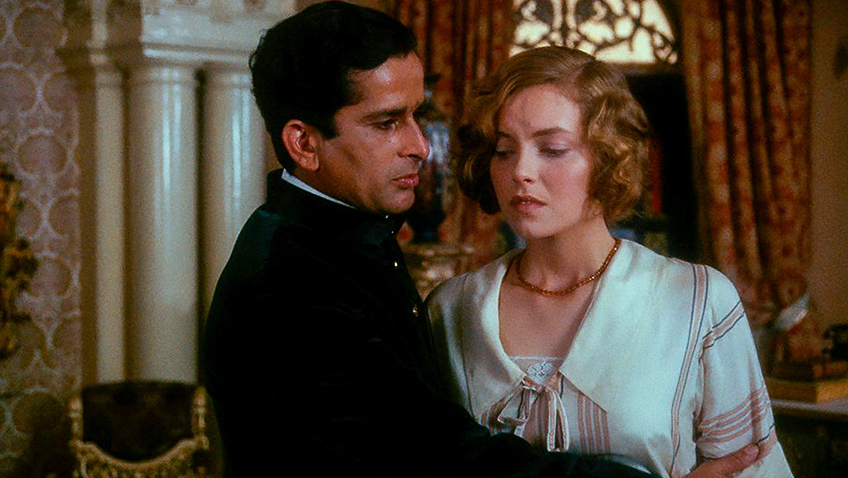
Shashi Kapoor and Greta Scacchi in a love across the divide in Heat and Dust

Director: James Ivory

Cast: Julie Christie (Anne), Greta Scacchi (Olivia Rivers), Shashi Kapoor (The Nawab), Christopher Cazenove (Douglas Rivers), Nickolas Grace (Harry Hamilton-Paul), Zakir Hussain (Inder Lal), Julian Glover (Crawford), Susan Fleetwood (Mrs Crawford), Patrick Godfrey (Dr Saunders), Jennifer Kendal (Mrs Saunders), Charles McCaughan (Chid), Madhur Jaffrey (Begum Mussarat Jahan), Barry Foster (Major Minnies)

Adapted by Ruth Prawer Jhabvala from her Booker-prize winning novel, Ivory-Merchant’s production of Heat and Dust is much like the source: precise, admirable and both faintly enigmatic and intriguingly slight. In 1982 Anne (Julie Christie) travels to India to discover more about the life of her great-aunt Olivia (Greta Scacchi). In 1923, Olivia lived in Satipur as wife to local official Douglas Rivers (Christopher Cazenove). The Nawab (Shashi Kapoor) is the local Indian prince, a charismatic man who may or may not be in league with local bandits. Enthralled by India, bored by British India but deeply in love with Douglas, Olivia still finds herself drawn to the Nawab. Scandal is round the corner.

Heat and Dust is a delicate, well-mounted adaptation, but it never quite engages as much as it should. Perhaps this is because its central plot – a white woman is fascinated by India – is a familiar trope in both novels and films of the Raj. It does take a different approach by intercutting between the present and the 1920s. This presents intriguing opportunities to show ways India has changed physically (the homes of the British Raj have become offices) but also ways it has remained the same culturally.

This carries across in the contrasting stories of two women, both of whom become intrigued by their surroundings and romantically entangled with Indian men. While Olivia is (eventually) disgraced and ostracised by her community, Anne has the freedom to make her own choices. Both women find themselves drifting into life-changes through male seduction. Perhaps this is one of the points of the film in the end – that women, no matter the timeline, are people that things (or men) happen to, rather than being the true owners of their own lives?

It seems the case with Olivia, who never feels in full control her own life, but instead moves inexorably towards a destiny she can’t really influence. Charmingly played, with a sparkle and playful innocence by Greta Scacchi in her film debut, Olivia’s motivations are almost deliberately obscured. Although Ivory uses a device at first of Olivia’s letters being dramatised by Scacchi addressing the camera, this device is swiftly dropped. The letters remain a presence, but we never hear from them. Instead most of Olivia’s actions are narrated by her friend Harry (Nickolas Grace), now an old man. It places a distance between the viewer and Olivia, making her actions harder to understand.

But then that is part of the enigma. India is a land of heat and dust, where normal rules don’t apply and people (particularly those from the West) find themselves reformed by. Olivia has no time for the stuffy, racist British population (especially the frightful woman). But she’s drawn to the Nawab partly because he’s a fusion of East and West, an Indian exotic with the charm of an English gentleman. For his part the Nawab, very well played by Shashi Kapoor, plans a seduction but his motives are as hard to read as Olivia. Is it attraction or revenge on the British for their contempt?

Perhaps it’s a film where we look for deep meaning and motivations, but it is in fact about how we don’t necessarily make grand decisions about our lives, but make a series of in-the-moment decisions. Both Anne and Olivia never seem to proactively make decisions, but instead events largely occur to them. Although this can make for a film sometimes lacking in energy, it does avoid making things obvious for the audience. Even if that can be frustrating when characters remain almost deliberately oblique.

What’s also oddly frustrating about the film is its more modern section. The commentary comparing the present and the past promises much but actually adds little. Anne is a curiously uninvolving character, played with a sweet tenderness by Julie Christie. Anne is hardly proactive and there is very little narrative drive behind her exploration of the past. Strangely the issues the more modern section deals with – including digs at Western cultural tourists – end up feeling less relevant than the issues of race and empire in the 1920s.

And its unfortunate that the 1920s plot line, although well staged and managed, seems extremely familiar – with echoes of A Passage to India and The Jewel in the Crown for starters. While it’s well acted (as well as those mentioned, Christopher Cazenove is very good) and creates an enigmatic atmosphere, you often feel you’re seeing something done better elsewhere. It starts as an investigation into the past, but becomes something more freeform, as if in the heat and dust of India, plans come to nothing. But its air of enigma and portrayal of characters buffeted by small events doesn’t come together into a compelling story or a rich insight into India.

Odd Man Out (1947)

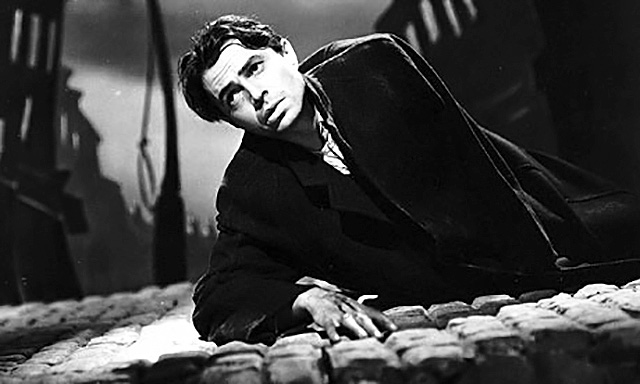
James Mason is wounded and on the run in Odd Man Out

Director: Carol Reed

Cast: James Mason (Johnny McQueen), Kathleen Ryan (Kathleen Sullivan), Robert Newton (Lukey), Robert Beatty (Dennis), Cyril Cusack (Pat), FJ McCormick (Shell), William Hartnell (Fencie), Fay Compton (Rosie), Denis O’Dea (Inspector), WG Fay (Father Tom), Maureen Delaney (Theresa O’Brien), Dan O’Herlihy (Nolan), Elwyn Brook-Jones (Tober)

Is it set in Belfast, or is it set in Purgatory? We follow in the footsteps of Johnny McQueen (James Mason), a leader of “the organisation” (the IRA by another name), on the run in an Irish city with a bullet buried in him. With the police looking to bring him to book, Johnny has to find his way to safety – easier said than done when pain and blood-loss keeps you moving between consciousness and collapse. Is this Johnny’s dying fever dream? It’s a tempting interpretation of Carol Reed’s stunning Odd Man Out (the first of a hat trick of masterpieces from Reed over three years, the others being The Fallen Idol and The Third Man).

It’s a perfect marriage of styles. It opens with a sense of documentary realism that would do Rossellini proud, the camera flying over its unnamed Irish city. As we dive into the house where Johnny and his cell are hiding out, planning a robbery for much-needed funds, the film tips into a marriage of noir and classic gangster film. After the disastrous robbery, where Johnny shoots a man dead in a scuffle, the film becomes more and more an impressionistic series of vignettes as an at-times delirious Johnny stumbles from encounter to encounter, meeting a host of people who help or hinder him, many of whom want him for their own ends (from reward to bizarre artistic inspiration). All this is intermixed with his own increasingly tenuous grip on reality, some scenes floating and soaring with Johnny’s own fantasies and visions as the bullet in him slowly drains his lifeforce.

As Reed’s film increasingly moves into a world that is a few degrees less real than our own, you could argue that perhaps Johnny was dead from the start. That this is his own journey through some sort of Dante-inspired purgatory. His own odyssey, where he will encounter some who want to save him and others who want to damn him.  Reed brilliantly helps us share Johnny’s vulnerability by taking the film ever more off-balance. From Johnny’s visions of the past in the air raid shelter where he takes shelter we spiral down into a surreal bombed out house and an ending that has the sniff of Greek tragedy.

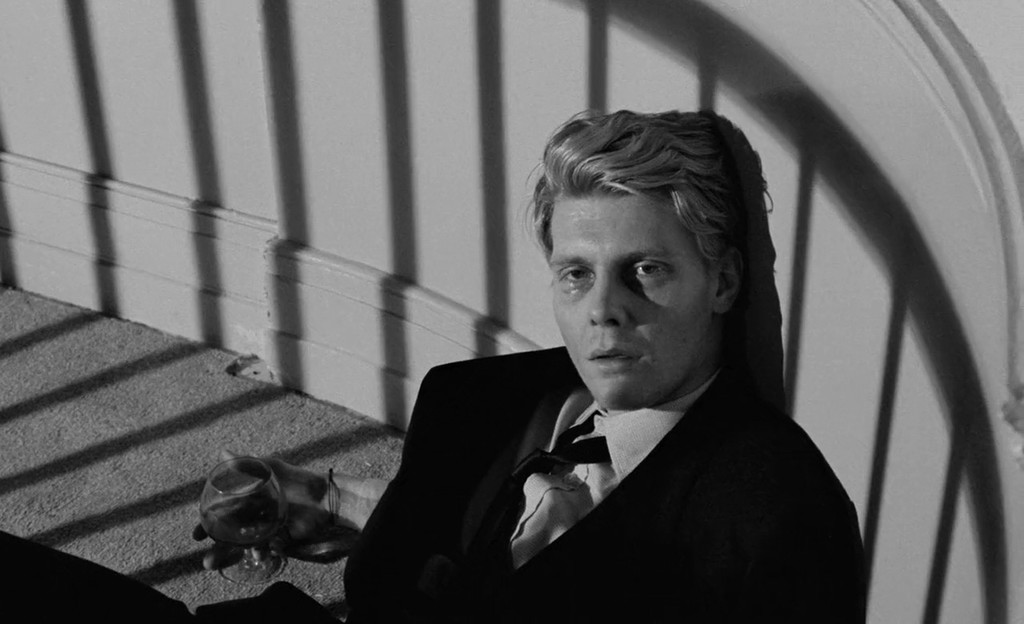
No wonder Johnny feels disconcerted, as this is a rag-tag city with its own rules. Half under construction, half well-established, where the streets are a mix of cars and horse-drawn cabs, Johnny’s journey takes him from dotty housewives to tramps to saviour priests and Dickensian artists. As his fever takes hold, so does the bizarreness of his settings, until he finds himself in an abandoned grand house leaking snow from outside, being painted by a drunken artist who wants to capture the moment of death on his canvas. It’s a million miles from the forensic reality of the robbery that the film started with. Yet it never feels out of place.

A large part of that is because of how brilliantly the film invests us in Johnny’s journey – with Reed’s inspired camera-work and story-telling pulling us into his experience. James Mason spends large chunks of the film in silence, but his performance is extraordinary. A man who seems partly aware that he’s dying, guiltily wanting to know if the man he shot died. Who even from the start seems to have lost his purpose, doubting if violence can bring the results “the organisation” wants, dazzled by sunlight after years in prison, who leads his cell through habit rather than inspiration. Mason’s brilliance here is capturing the very essence of suffering humanity, a confused and frightened man who struggles to understand what is happening around him. Buffeted by events, he’s sympathetic because he never feels in control.

Partly that’s because death feels like its always been waiting for Johnny. You can see it from the start, as he sits in his hide out wondering what its all been for. Kathleen (well played by an impressionable Kathleen Ryan) can’t get death off her mind as she talks about finding and saving Johnny or dying with him. Sympathetic priest Father Tom (a devout WG Fay) just wants to have the chance to save his soul. There is a sense of inevitability about the film – helped by Mason’s crumbling weakness – that destruction is coming and nothing can avoid it.

Reed’s film also has a brilliant sense of the compromises and shady questions of right-and-wrong. Johnny is a murderer and a terrorist – even if he also is a man plagued with doubt. Kathleen is a romantic and a fanatic. Hotel owner Theresa plays both ends against the middle. The coppers will do their duty, but they don’t seem vindictive, just determined to do what they must. There are no clear moral answers in this film, everyone has shades of grey.

It all combines together into one of the most inventive, dynamic and compelling British films of the 1940s by a director who was entering a purple patch where he could claim to be the greatest director in the world. This is a perfect fusion of styles – part realist, part impressionist – that puts you into a cold reality before tipping us into a poetic never-world where the boundary between life and death seems blurred. With a superb performance from Mason (and the rest of the cast), this is still one of the all-time greats.

Rocks (2020)

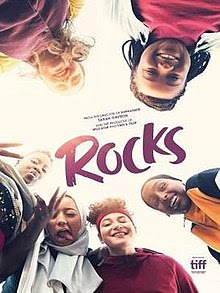
The lives of a group of friends in a London school is wonderfully bought to life in Rocks

Director: Sarah Gavron

Cast: Bukky Bakray (Olushola “Rocks” Omotoso), Kosar Ali (Sumaya), D’angelou Osei Kissiedu (Emmanuel Omotoso), Shaneigha-Monik Greyson (Roshé), Ruby Stokes (Agnes), Tawheda Begum (Khadijah), Afi Okaidja (Yawa), Anastasia Dymitrow (Sabina), Sarah Niles (Ms. Booker), Layo-Christina Akinlude (Funke Omotoso), Sharon D. Clarke (Anita)

It may have surprised people when Rocks emerged as the most nominated film at the BAFTA Awards for 2020. It really shouldn’t, as this independent film is not only rich, expressive and humanitarian film-making, it’s also a deeply heartfelt and emotional insight into overlooked lives in Britain, made with an expressive skill and richness.

Set in an inner-London school, the film follows Rocks (Bukky Bakray), a black teenage girl, left caring for her young brother Emmanuel (D’angelou Osei Kissiedu) after her mother walks out on them (leaving just a note and small envelope of cash). Terrified of being taken in and separated by social services, Rocks struggles to cope with the pressures forced upon her.

It’s a simple plot – and could have been told with a Loachesque bleakness, like a modern-day Cathy Come Home. Instead though Gavon and writers Theresa Ikoko and Claire Wilson frame a story that could have been misery with warmth, love and hope. The film’s essential optimism and faith in the goodness of people makes it – for all the heart-breaking sadness it includes – a far more involving and moving film than a social lecture would have been.

It also treats its teenage characters not as future tearaways, thoughtless millennials or shallow bullies. Instead they feel like real, breathing and genuine people, capable of moments of thoughtlessness but still fundamentally decent. Rocks’ best friend Sumaya (Kosar Ali, who is brilliant) is desperate to help her friend – and, for all the tears Rocks jealousy of her settled family causes, persists in being loyal and mature to the end. Even the disastrous mistake caused by Rocks’ friend Agnes comes only from an overwhelming desire to help. What also makes this film feel optimistic and real is that these disagreements are resolved with a mature kindness and emotional intelligence we could all learn from.

At the centre of is Rocks herself, played with an astonishingly naturalness and emotional rawness by Bukky Bakray. Rocks is a child forced to become an adult too early – eventually dragging Emmanuel around streets, from house to house and pretending she is his mother to book rooms in a hotel – all the time terrified to let her situation become known to social services. Rocks doesn’t have much in her life – a deceased father, a useless mother – and the thought of losing what family she has left is agonising to her. It’s what lies behind her bitter, subconscious, envy and rage at seeing the large and supportive family Sumaya has. It’s everything she has ever wanted but never had.

The only place where she can truly relax and be a child is at school. There she is free for a while of the pressures of home and caring for her brother. Gavron’s film shows an extraordinarily refreshing look at inner-city school life. These are kids who may behave ‘badly’ at points (but boisterous more than anything, captured in a food fight that breaks out in a cooking class), but they are passionate, engaged and ambitious. They have genuine dreams for the future – lawyer, businessmen, make-up artist are all careers mentioned – they seize with fascination on a lesson taught about Picasso. Far from the cliché of drifters, the film shows a world of teenagers full of passion, interest and talent – some of which, you fear, may never be truly tapped into.

It makes a real contrast with the harried doubts and concerns Rocks has to deal with in the ‘adult’ world. Her situation drives her to theft, lying and puts divides between her and her friends, who she seems unable to really open herself up to and ask for help. Her anxiety is picked up on by her adorable brother Emmanuel (D’angelou Osei Kissiedu gives a phenomenal performance of warmth, cheek and later devastating fear), who makes it his mission to cheer her up: a scene in a hotel where his simple, gentle attempts to comfort her and make her laugh are tear-inducingly endearing.

It’s all part of the winning humanity at the heart of the film. There are mistakes made in this film by its characters, forced separations and painful arguments. But, where other films would have used this as a bitter spiral to hammer home a depressing message about the bleakness of the world (and by implication of communities like this), this film remains optimistic. Despite everything, it ends with an image of a group of friends laughing and playing on a beach – they’ve feuded but have an emotional maturity to forgive adults could do with. It’s part of the fundamentally positive outlook.

The film even manages to not demonise social services in the way so many similar films do. Truth be told its clear Rocks can’t cope with these pressures – her friends know it even she and Emmanuel know it. The contrast between the girl we see in the opening moments and the increasingly insular and harassed figure she becomes is striking. Social services are genuinely concerned people – who are right to be concerned. The eventual resolution is remarkable for its normality and even touches of positivity and hope for a new beginning. It’s a film that explores the life of the less well off in the inner-city without preaching at or depressing us.

And that optimism is its greatest strength, as it allows us to see people rather than social issues. It’s an agenda-free film that simply tries to tell a human story – and, with the energy and passion its shot with, immerses us in the lives of a group of people many of us would walk past without thinking about. Rocks is about a world where people want to rally round and help, where hope and new beginnings can be found in any situation. It doesn’t shy away from moments of pain – and there are moments here that will break your heart – but it never loses its optimism and humanity.

Victoria and Abdul (2017)

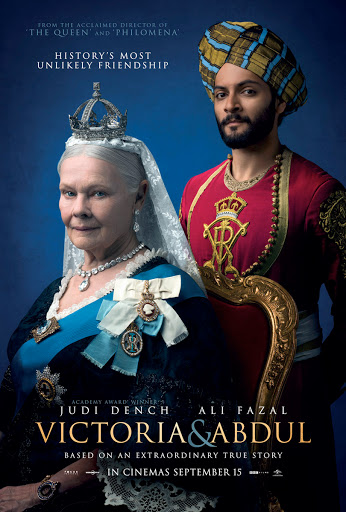
Victoria and Abdul
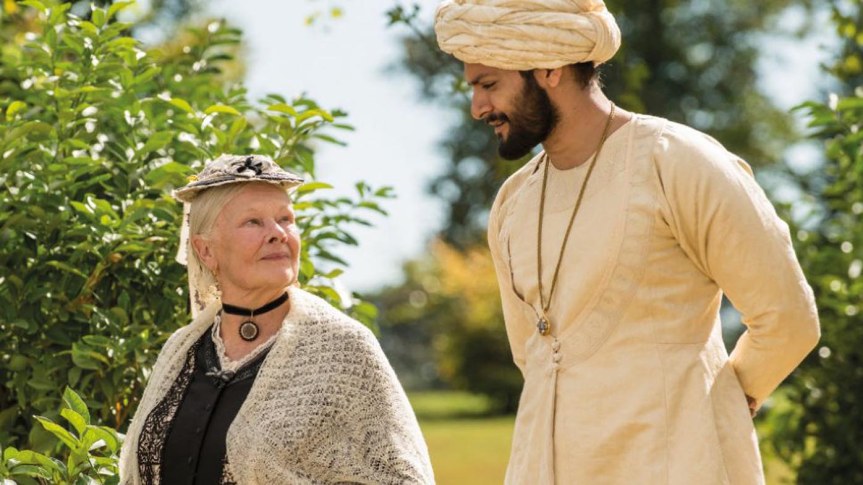
Judi Dench and Ali Fazal forge an unlikely friendship in the tame heritage flick Victoria and Abdul

Director: Stephen Frears

Cast: Judi Dench (Queen Victoria), Ali Fazal (Abdul Karim), Tim Pigott-Smith (Sir Henry Ponsonby), Eddie Izzard (Prince Albert), Adeel Akhtar (Mohammad Bakhsh), Michael Gambon (Lord Salisbury), Paul Higgins (Dr James Reid), Olivia Williams (Baroness Spencer), Fenella Woolgar (Harriet Phipps), Robin Soans (Lord Stamfordham), Simon Callow (Giacomo Puccini)

In the last decade of her life, Queen Victoria (Judi Dench – who else?) makes an Indian servant, Abdul Karim (Ali Fazal), one of her closest friends and advisors. As Victoria and Abdul become closer, the rest of the court are outraged – bad enough that the Queen is spending all this time with an over-promoted servant, but an Indian as well?!

The fundamental events of Victoria & Abdul are true. There was a man called Abdul Karim – and Victoria did raise him from servant to a confidant. He did cause conflict in the royal household and was finally sent back to India after her death, after surrendering most of his papers. But Victoria & Abdul repackages this friendship into a cosy, Sunday-afternoon entertainment, bereft of depth. And carefully works on the rough surfaces to make the story smooth and easy to digest.

The film is clearly trying to ape the success of Mrs Brown – a far more intelligent and emotionally complex (if similarly heritage) film that looked at Victoria’s previous all-consuming friendship with a male servant, John Brown. But that film didn’t close its eyes to the negatives of such relationships, as this one does. It made clear royal attention can be fickle – and being elevated above others can help make you your own worst enemy. In that film, after a honeymoon, the friendship declines into one of residual loyalty but reduced affection. It’s a realistic look at how we might lean on someone at times of grief, but separate ourselves from them later. Victoria & Abdul takes only one lesson from Mrs Brown: that a close bond between monarch and commoner is heart-warming.

The film in general is in love with the idea that if the Queen could only speak directly to her people, the world would be a better place. It presents a Victoria stifled by court procedure who knows very little about her empire and is constrained by the courtiers around her. It wants us to think that if the Queen took direct rule, she’d be kinder, wiser and more humane. That this figurehead symbol could craft a better British Empire if she was an absolute monarch.

Unfortunately, it doesn’t work. This romantic view of “Victoria the Good” is comforting stuff, but undermined even within the film by our introduction to the Queen at a royal dinner, where Victoria stuffs food down herself so quickly that mountains of untouched food goes uneaten on the plates of the other diners (as all plates are removed the moment she is finished). And despite being told that the Koh-i-noor diamond was stolen by the British (to her surprise), she still doesn’t think twice about wearing it later in the film while in the midst of her Indian passion. And while the real Victoria loathed the racist attitudes of some at her court, she still clearly sees herself as a paternalistic mother figure for India, which could of course never be able to make its own decisions about things.

Not that the film is interested in tackling more complex ideas of the position of India and its independence. It’s similarly confused by Abdul himself. In a more interesting film, Abdul would have been partly naïve servant and partly charming rogue. He very carefully spins an invented story of himself as a teacher and thinker (he’s actually a clerk from a fabric office) and it would have been interesting to see his building of a relationship with Victoria at least partly being based on self-gain. He certainly gains an awful lot from her – from his own carriage on her train to a home and his own servants. It would have been possible to have this side of him and still have his loyalty and friendship to the Queen being genuine. But it’s too much for the film to tackle.

An Abdul who was consciously playing a role of exotic thinker might have come across as a scam-artist – but would have given the film a lot more to play with, when the royal court is full of people positioning and presenting themselves for influence. Adeel Ahktar’s fellow-servant Mohammed even suggests in one scene that this is what Abdul is doing – and good luck to him. But the film is scared that this could be seen as endorsing the court’s fears about Abdul. So the character is neutered into nothing: he becomes exactly the sort of empty “exotic”, free of opinion and character, that filled out the extras list of a 1940s epic. He has no agency, never makes any decision or expresses any opinion. And his feelings for Victoria are presented as totally genuine which, combined with his foot kissing, turns him into someone who looks and feels really servile.

This is because the film wants to tell the story of a perfect friendship, with the British upper classes as the hissable baddies (never mind that no one is more upper class than Victoria). Never mind that Abdul’s action will indirectly condemn Mohammed to death in the British climate – or that while Abdul rises, Mohammed becomes his servant, still consigned to sleeping on the floor of his railway carriage. We learn nothing about Abdul. How did this clean-living saint become riddled with the clap? Why did he die so young? Did he really think nothing of the riches and honours Victoria showered him with? We don’t have a clue.

Instead the film keeps it simple with goodies (Victoria and Abdul) and baddies (almost everyone else). The most politically astute character, Mohammed, disappears and never allows things to get unpleasant. Jokes of the courtiers standing around aghast saying things like “Now he’s teaching her Urdu” are repeated multiple times. They’re fun, but it substitutes for dealing with the real issues.

It all has the air of ticking boxes. Frears’ direction is brisk, efficient and free of personality. Dench is great, but she could play this role standing on her head while asleep. Pigott-Smith (in his final role) is fine but Farzal has nothing to work with and Izzard provides a laughable pantomime role of lip-smacking villainy as the future Edward VII. The finest performance – handling the most interesting material – is from Ahktar. He’s the only character who seems to place what we see here in any form of context. Other than that, this film is just a string of very comforting heritage ideas, thrown together with professionalism but a total lack of inspiration.

The Dig (2020)

THe Dig header
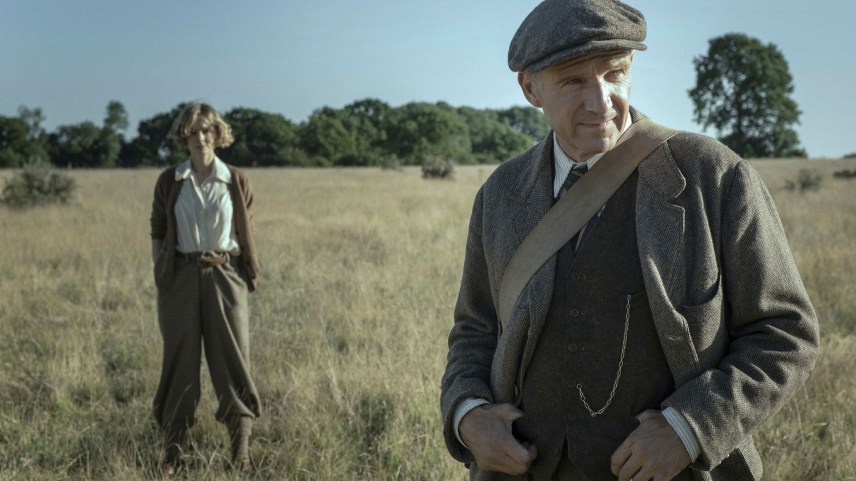
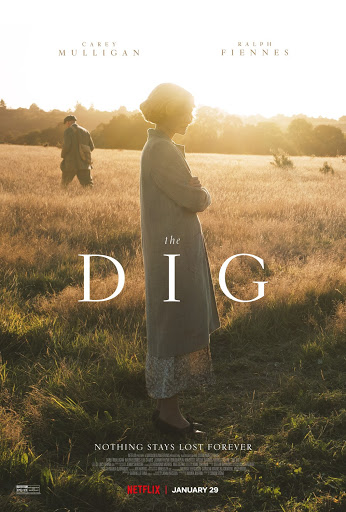
Ralph Fiennes plays an amateur digger who makes a huge discovery in the poetic The Dig

Director: Simon Stone

Cast: Carey Mulligan (Edith Pretty), Ralph Fiennes (Basil Brown), Lily James (Peggy Piggott), Johnny Flynn (Rory Lomax), Ben Chaplin (Stuart Piggott), Ken Stott (Charles Phillips), Archie Barnes (Robert Pretty), Monica Dolan (May Brown)

One of the greatest archaeological finds in British History, the Anglo-Saxon burial ship in Sutton Hoo revealed vast treasures and cultural insights that are very rarely glimpsed. Land-owner Edith Pretty (Carey Mulligan), a widow with a young son Robert (Archie Barnes), hires self-taught excavator Basil Brown (Ralph Fiennes) to investigate the curious mounds on her land. Brown discovers one of them holds the buried ship. But the dig is taken from his control by the British Museum, led by Charlie Phillips (Ken Stott): professional archaeologists who want to ensure the work is ‘done properly’. With tensions of class and profession, everyone must race against time to complete as much of the work as possible before the outbreak of the Second World War.

On the surface, The Dig is a charming, heart-felt reconstruction of a fascinating moment of archaeological history, mixed with engaging (but familiar) stories of a working-class amateurs being patronised by upper-class professionals. However, Stone’s film manages to have a richer second layer. With war approaching, and mortality constantly on the mind of most of the characters, it’s also a subtle investigation of legacy, the past and death itself.

Stone’s film develops this with its rich, poetic filming style. Beautifully shot in a series of gorgeous hazy hues, with dynamic use of low-angles and wide-angle lenses, Sutton Hoo is given an almost mystical beauty. Stone also makes extensive use of playing dialogue over images not of the conversation, but smaller moments in character’s lives, from casual meetings to cleaning shoes, that as such take on a profounder meaning. It’s a visual representation of how our legacy is often a snapshot of images and relics, moments that stay in the memory even when events (or conversation in this case) has moved on. It’s subtly done, but carries a beautiful impact.

Then of course, it’s not surprising legacy in on the mind. Each of the characters is at a tipping point in their own lives. Edith Pretty – so consumed with quiet grief over the loss of her husband that she is desperate for there to be something on the other side – is struggling with her own health, aware she will shortly leave her son an orphan. Her cousin Rory prepares for service in the RAF – service she fears will shortly leave him dead (the dangers of the airforce are clearly shown when a trainee pilot crashes and drowns near to the dig).

This connection to the briefness and intangibility of life pushes people to address their own choices. After all they are all standing in the grave of a man considered so important at that the time, a ship was dragged several miles to honour him – and today we have no idea who he was. Married archaeologist couple Stuart and Peggy Piggott confront an amiable loveless marriage (he’s gay, she’s falling in love with Rory) that shouldn’t define their lives. Basil has dealt with quiet grief at a childless marriage, and sees his work in astronomy and archaeology as his legacy.

These ideas are gently, but expertly, threaded together with a reconstruction of the key issues around the dig. Needless to say, the academics – led by Ken Stott at his most pompous – have no time for Basil’s home-spun methods. Basil’s predictions of the Anglo-Saxon tomb are constantly dismissed until he literally digs the ship up. Immediately he is benched to clearing soil (and only on Edith’s insistence is he allowed to remain at all) and later his name will be scrubbed out of the official record. It’s always the way with Britain – and a sign of how tenuous our legacies can be.

The personal stories are not always as well explored. The film has its flaws, not least the sad miscasting of Carey Mulligan as Edith. In reality, Edith was in her mid-50s when the ship was discovered. The film was developed for Nicole Kidman, but with her withdrawal Mulligan (twenty years too young) was drafted in. Sadly, nothing was changed to reflect this: meaning the characters years of spinsterhood before marriage lose impact (seriously how old can she have been when she married? She’s got a 12 year old son!). A softly underplayed romantic interest between Edith and Basil is also rather unsettling considering the vast age difference between them. (It’s better to imagine it as a platonic bond).

It’s still more engaging than the rather awkward love triangle the film introduces late on between the married Piggotts and Edith’s (fictional) cousin Rory. It’s fairly familiar stuff – the closeted gay Piggott, the growing realisation of this by Peggy and the obvious charm and gentle interest of Rory – and more or less pans out as you might expect, although at least with a dollop of human kindness.

The film’s other delight is the acting. Ralph Fiennes is superb as the taciturn Basil, a dedicated self-taught man who knows what he is worth, but struggles to gain that recognition. Fiennes not only has excellent chemistry with Mulligan and Barnes, he also suggests a quiet regret in Basil as well as a fundamental decency tinged with pride. For all that she is miscast, Mulligan does very good work as Edith while Chaplin, James and Flynn make a lot of some slightly uninspired material.

The Dig is at its best when asking quiet and gentle questions about life and when it focuses on the platonic romance between Basil and Edith. Directed with a poetic assurance by Simon Stone, it doesn’t push its points too far and gets a good balance between fascinating historic reconstruction and more profound questions of mortality.

The Servant (1963)

Through a glass darkly: Dirk Bogarde and James Fox in a dark drama as master and The Servant 

Director: Joseph Losey

Cast: Dirk Bogarde (Hugo Barrett), Sarah Miles (Vera), James Fox (Tony) Wendy Craig (Susan Stewart), Catherine Lacey (Lady Agatha Mounset), Richard Vernon (Lord Willie Mounset)

Imagine a world where Bertie Wooster was a weak-willed, sexually confused drunk and Jeeves a malign force, to whom control over and destruction of his master go hand-in-hand. That’s the basic set-up of Joseph Losey’s masterpiece The Servant, a fascinating and brilliant exploration of class and sex in Britain in the 1960s, a lean, razor sharp, gripping and sinister film that lingers in your memory like a nightmare you can’t shake off.

Tony (James Fox) is a louche, rich young man returning home to Blighty, looking to expand his inherited fortune through dodgy property investments in Brazil. Before then, he needs a home to call his own – and a gentlemen’s gentlemen to run it. Tony hires Barrett (Dirk Bogarde), a scrupulously polite, observant man, able to meet every single one of his employer’s needs. But why is Tony’s fiancé Susan (Wendy Craig) so instinctively hostile to Barrett? And what is Barrett’s exact relationship with the housemaid Vera (Sarah Miles) he introduces into the house – and who quickly becomes the focus of Tony’s interest? Over time, the balance of power between servant and master becomes more and more uncertain.

Losey was an ex-pat American, driven out of the country by the McCarthy hearings. This adaptation of a Robin Maugham novel is the sort of brilliant deconstruction of (and assault on) the British class system and manners that perhaps only an outsider) could have made. The film drips with an air of corruption and vice. Even the earliest, most unobtrusive frames carry an air of over-observant malice. No coincidence this is also the leading quality of Barrett, perhaps one of the most darkly malign forces on film, whose piercing intelligence sees everything and whose self-control never slips. Losey’s camera constantly lingers over the slightest shot and detail, to an increasingly unsettling degree. As the plot becomes increasingly dark, claustrophobic and horrifying, the film’s exploration of the class-fuelled psycho-sexual, alcohol-fuelled relationship between Barrett and Tony becomes ever more pointed.

Losey partnered with the perfect script writer in Harold Pinter (who also briefly appears as a posh restaurant goer). Pinter’s lean, spare and menacing dialogue, with its corrupted poetry and acute psychological insight, is easily his finest film script – and perhaps the only one that truly could sit alongside his finest stage work. Pinter’s brutal vision of this twisted world is coated in a dark menacing commentary on Wodehouse (Susan and Barrett’s “duel” over the placing of a vase comes almost straight out of Jeeves) – and above all on the weakness that underlies those dependent on servants, as well as the loathing a servant can develop for his master, while still loving the control he has over his life.

Losey responds to this masterful script with some inspired work, making the house where the action takes place increasingly claustrophobic and disturbing. The camera work slowly becomes more intimate as the film progresses – and Barrett entraps Tony increasingly into a total, infantile dependence on him. Takes become longer as the house itself – increasingly dishevelled, with Barrett’s property increasingly appearing throughout the property, while Tony’s goods are disposed of – seems to close in around the action. Reflections and mirrors increasingly dominate the film, as if pulling us with Tony through a glass darkly.

It’s a good servant who understands his master’s needs before he knows them. Barrett is the best kind of servant. Within seconds, the unctuous, Uriah Heap-like Barrett (ever so ‘umble), has dissected the character of the foppishly weak playboy Tony, and identified him as man with no will of his own, ripe to be dominated and manipulated. Dirk Bogarde has never been better than his work here, a terrifyingly precise and soulless manipulator, whose veneer of obsequious service drops away with his affected accent to reveal a deeply corrupted, terrifyingly cruel man. Bogarde never allows a second of doubt to enter Barrett’s mind – even when it (briefly) looks like he’s lost his position, Barrett’s face is contorted with a contemptuous curl of the mouth and a cocky defiance. It’s brilliant work from Bogarde, creating one of cinema’s greatest monsters, destroying because he can.

His tools are of course to use his master’s fondness for booze and pretty faces against him. Vera – played with a sparkingly flirtatious richness by Sarah Miles, which disguises her ruthless disgust for Tony and his selfishness – is inveigled into the house as Barrett’s “sister” (actually his mistress), and swiftly instructed to seduce the hapless Tony, bending this playboy to her will. Losey’s camera follows in smooth shots as this woman moves from one man’s bed to another – while you can feel the influence of Pinter in the spare, sexually charged power Vera uses to seduce Tony (and the hints of submissive excitement in Tony). Losey soundtracks their first encounter – Miles erotically discussing the weather, pure Pinter genius, while Fox’s throat is so dry you can almost feel it yourself – with first the dripping of a tap, then the rocking back and forth of a pan in the sink. It brilliantly suggests the way Tony himself seems to be being consumed in a hypnotic trap.

Not that Tony is particularly sympathetic himself: a weak-willed, rather feckless and languid playboy whose interests in pleasure quickly tip into addiction. James Fox is perfectly cast in a role that plays on his aristocratic assurance, but finds deep reserves of doubt and inadequacy in him. Pinter and Losey draw more than a bit of a question mark over the sexual undertone in the relationship between Barrett (at least metrosexual) and Tony, that travels across sharing the favours of Vera. After (temporarily) throwing Vera and Barrett out, Tony collapses into a grief-stricken mess over Vera’s bed – the bed shared with Barrett – the camera gliding gently over male nudes pinned to the wall. Later Tony will debase himself fully to Barrett, reduced to crawling around the floor, his tie used as leash, dragged to perform with prostitutes for Barrett’s dark amusement.

If there is a character who sees through this early it’s Wendy Craig’s sensitively played Susan – but even she can have no idea of the horrors of Barrett’s plans to break Tony completely to his will. Susan recognises – even if she can’t understand why – the sinister satanic nature of Barrett, even while she seems powerless to do anything about it. Her attempts to empower Tony to break his dependence on this omniscient figure fail completely. In a beautiful Pinterish touch, at the end she almost considers joining their bizarre, sex and alcohol fuelled menage – as close as cinema as perhaps got to skirting a sort of sexual hell.

The final act of the film (it has a neat three act structure, Pinter superbly constructing the screenplay to show Barrett and Tony’s shifting power relationship), sees an almost infantalised Tony now meekly accepting (almost apologising) as Barrett lets rip – all pretence at humbleness gone and Northern vowels increasingly let loose – with his abuse and disgust.

In a brilliantly dark commentary on the upper and serving class, such is the dependence on one for the other, that the house collapses in Barrett’s temporary absence. The power may lie with Tony – but when Barrett stops collaborating with that, the imbalance between them is revealed. It’s Barrett who can actually do things – from cleaning to cooking – that Tony cannot. The drive and will of the middle classes eventually overwhelms and breaks the upper class, turning them into a vehicle for their own entertainment, like some sort of dark National Trust.

The Servant is a profoundly brilliant film, one that could stake a claim for being one of the greatest British films ever made. Losey’s sharp outsider’s eye brilliantly dissects both the tensions between the classes, but also the disturbingly awkward relationship the British have about sex, a drug for the reserved, a pot of unspoken but deeply desired treats. Bogarde is quite simply superb, Barrett is one of the greatest monsters of cinema who could strike fear into the heart of Hannibal Lecter. Pinter’s dialogue is brilliant. This psycho-sexual class drama is a work of art and essential viewing.

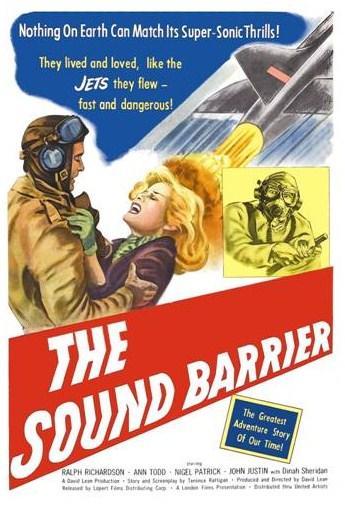
The Sound Barrier (1952)

Sound barrier header
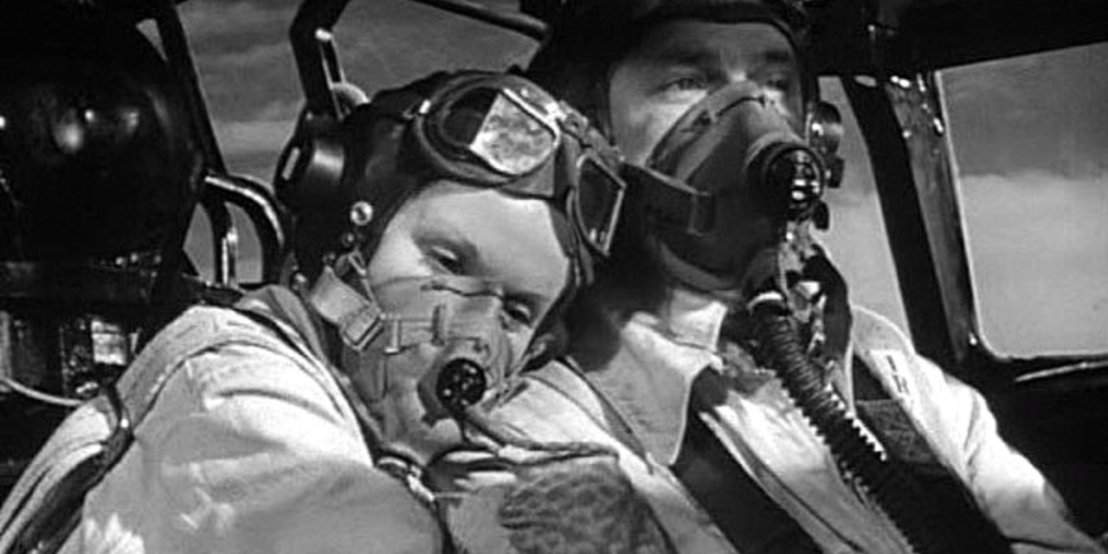
Ann Todd and Nigel Patrick on a dangerous mission to break The Sound Barrier

Director: David Lean

Cast: Ralph Richardson (John Ridgefield), Ann Todd (Susan Garthwaite), Nigel Patrick (Tony Garthwaite), John Justin (Philip Peel), Dinah Sheridan (Jess Peel), Joseph Tomelty (Will Sparks), Denholm Elliott (Christopher Ridgefield), Jack Allen (‘Windy’ Williams), Ralph Michael (Fletcher)

David Lean’s film career can be divided into two eras: his early films are British-based literary adaptations and family dramas, many of them front-and-centring the experiences and tribulations of women. The later era are the jaw-dropping epics he became best known for. The Sound Barrier is towards the end of the first era – and it’s almost a bridge between the two, an impressively filmed story of man’s triumph over nature, that sneaks under the wire an emotional family-in-crisis storyline, with a daughter suffering the damaging impact of her father’s obsession.

That father is John Ridgefield (Ralph Richardson), a famous aeronautical engineer and airline entrepreneur who, with the end of the war, returns to his fixation: discovering a way to make a plane fly so fast it breaks the sound barrier. It’s a vision that has dominated his life, but which his daughter Susan (Ann Todd) finds hard to understand. John is a domineering, demanding father, whose son Christopher (Denholm Elliott) gets himself killed trying to qualify as a pilot to win his father’s respect. In his place, Susan’s husband Tony (Nigel Patrick), a test pilot, is claimed by John as a surrogate son and equally pushed to risk all to try and fly faster than sound.

Lean’s film is a wonderful mix of post-war military-based exploits and stiff-upper lip exploration of family dynamics, where resentments and passions go unspoken but shape everything. With a superb script by Terence Rattigan, whose work is filled with monomaniacs like Ridgefield and sympathetic and emotionally intelligent women like Susan, The Sound Barrier might seem like a celebration of British pluck (it hardly matters that we Brits didn’t actually break the sound barrier first – no mention of Chuck Yaeger here…), with some stunning aerial photography. But it’s a lot more than that.

What’s fascinating about The Sound Barrier – and what makes it such a rewarding watch – is how much it questions the value of these sort of quests. The film’s focus is less on the engineering struggles and the bravery of the pilots (compare and contrast this film with the more straightforwardly triumphant The Dam Busters), and more on the human cost of obsession and this sort of adrenalin-fuelled airborne machismo.

The Ridgefield family has been damaged almost beyond repair – under their wealth and comfort – by their father’s demanding perfectionism. Ralph Richardson is superb as this bluntly-spoken man who sees no reason to sugar coat anything or hide any disappointment. The character has more than a hint of a Gradgrind of engineering – and just like Hard Times patriarch, his well-intentioned but misguided parenting has distorted both his children.

His hero-worshipping son Christopher (a wonderfully fragile and charming Denholm Elliott) pushes himself through chronic air-sickness to lay down his life trying to follow in his father’s footsteps (John greets his death with a sad criticism of his flying skills and goes back to work with his jet-plane models straight after the funeral). Susan has a cold relationship with her father (strikingly she calls him Father while everyone else – even her husband Tony – calls him Dad), and can’t understand why all this goal is worth sacrificing lives and any chance of simple domestic happiness. Her father’s coldness and distance from his children – not to mention his obvious and continual disappointment that she was born a girl – has led her to treat him with respect but not love.

It’s a dynamic completely missed by her husband Tony, played here with a bluff simplicity by Nigel Patrick. But then it’s pretty clear that this risk-taking pilot is quite simply not that bright. His lack of independent thinking is even identified by engineer Will Sparks (a ‘sparkling’ performance of avuncular surrogate fatherdom by Joseph Tomelty) as his major weakness as a test pilot. Tony has no idea of his wife’s concerns or emotional problems with her father, and instead quickly gets sucked into filling the role of “son I never had” for John. But then Tony has everything John wants – the flying skills Christopher never had without the questioning independence of Susan. He’s exactly the sort of weak-willed would-be-hero who can be quickly sucked into taking huge risks.

The film’s sympathies though are with Susan, played with a real warmth tinged with a sad expectation for disaster by Ann Todd, whose presence slowly grows to dominate the film. She can’t understand why it is necessary to risk all for this nebulous goal: it’s a refrain she repeats throughout the film “I wish I knew, I really wish I knew”. We’ve just gone through a second calamitous war – why are we throwing our lives away for a concept? Why should her husband put himself at huge risk like this for a brief mention in the history books and nothing else? Why not be content with a happy family life and living to see his son? Not to mention that the film proves her right – the nice-but-dim Tony isn’t good test pilot material and Susan’s new family is destroyed just like her old one.

At first it might seem that Todd’s character is the stay-at-home “don’t go Darling” type, but the film increasingly shows the validity of her doubts. There is a slightly toxic “carry on” Englishness about Tony and her father. Obsession is shown to drive out all over considerations – and Richardson has a late scene that carefully but brilliantly demonstrates how it has left him isolated and alone. It’s telling the barrier is finally broken by devoted husband and father Philip (a very decent John Justin), who is aware of the danger and has the most settled family life of the lot (and who greets his triumph with tears of relief rather than cheers).

The Sound Barrier could have easily been a “Britain triumphs in the skies!” with soaring music and heroic filming. Instead, it demonstrates the danger of obsession and the damaging impact it can have on people and their families. It concentrates not on the men in the sky, but increasingly the potential widows on the ground, forced to acknowledge that life with the family is less important than the chance of glory. It’s a rich and emotionally intelligent film, very well directed by Lean with warmth and humanity and with three terrific actors leading from the front.

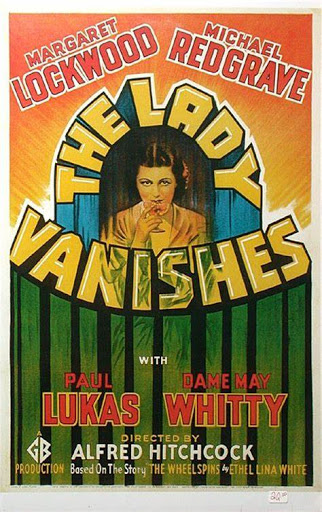
The Lady Vanishes (1938)

lady vanishes
May Whitty is searched for by Margaret Lockwood and Michael Redgrave in The Lady Vanishes

Director: Alfred Hitchcock

Cast: Margaret Lockwood (Iris Henderson), Michael Redgrave (Gilbert Redman), Paul Lukas (Dr Hartz), May Whitty (Miss Froy), Cecil Parker (Mr Todhunter), Linden Travers (“Mrs” Tothunter), Naunton Wayne (Caldicott), Basil Radford (Charters), Mary Clare (Baroness), Catherine Lacey (Nun), Googie Withers (Blanche), Sally Stewart (Julie)

In his conversations with Hitchcock, Francois Truffaut declared every time he tried to study The Lady Vanishes, all its tricks and mechanics, he always ended up too wrapped up in the plot to notice them. It’s about as fitting a tribute as a film can get, that it got one of the world’s ultimate film buffs just sit down and enjoy the ride. The Lady Vanishes is Hitchcock’s penultimate British film and it might well be one of the most enjoyable and entertaining films he ever made.

It’s late 1930s in Europe and a group of mostly British travellers have got stuck waiting for a train in the fictional country of Bandrika (but it’s clearly Germany). Iris Henderson (Margaret Lockwood) is on her way back home to (perhaps somewhat reluctantly) get married, exasperated by the loud noise made in the room above through the night by folk music expert Gilbert (Michael Redgrave). Charters (Basil Radford) and Caldicott (Naunton Wayne) are cricket obsessives, desperate to get home for the big test match. Mr Todhunter (Cecil Parker) is a lawyer, keen not to draw attention to the fact Mrs Todhunter (Linden Travers) isn’t actually his wife. When the train finally leaves the station the next day, Iris is hit on the head by a plant plot (was it pushed?) that very nearly hits governess Miss Froy (May Whitty). Miss Froy takes care of Iris on the train – but when Iris wakes after a rest, she finds Miss Froy has disappeared and – furthermore – everyone denies she ever existed in the first place. While a Bandrikan psychiatrist Dr Hartz (Paul Lukas) claims she may be suffering from concussion, only Gilbert believes her story. Will they be able to prove Miss Froy is real and rescue her from whatever peril she has found herself in?

Hitchcock’s The Lady Vanishes shouldn’t really work – not least since it takes nearly 20 minutes before we get any indication that we are watching anything other than a romantic comedy. But perhaps that’s also why it works, because those first 20 minutes are beautifully scripted, with some cracking dialogue and some skilfully drawn character work that invests us in these people long before any danger arises. It also serves as a brilliant counterpoint to the nearly non-stop tension and action that comes in the final hour of the film – who could have believed that all that light hearted banter in a guest house could end in a ruthless shoot out in the woods?

It all seems to change pace on a classic Hitchcock touch – a folk singer is suddenly, violently, strangled by an unseen assailant (why? I’ve no idea. The film doesn’t think you’ll care about the logic gap, and you don’t). But a large part of the film’s success stems from Hitchcock’s collaboration with Sidney Gilliat and Frank Launder on script-writing duties. Gilliat and Launder made a number of changes to the original novel, adding a greater espionage element. Even more importantly, they overhauled several of the characters, not least changing the Gilbert character from an engineer into a charming (if eccentric) folk music expert with a deadpan wit. Even more successfully, they introduced the hilarious ultra-British Charters and Caldicott, classic eccentric grown-up public schoolboys with a fascination with cricket (the combo was so popular Naunton and Wayne played versions of these characters another eleven times).

The script’s wit, playfulness and scintillating dialogue is what drives most of the film’s energy – and certainly what helps to make it as entertaining as it is. In particular, the dialogue exchanges between Lockwood and Redgrave hum with the sort of love-them-hate-them banter that wouldn’t seem out of place in a screwball comedy (“You’re the most contemptible person I’ve met in all my life!” “Confidentially I think you’re a bit of a stinker as well”), and the two actors shine in roles that start with classic feuding but subtly and beautifully come together as a romantic couple by the film’s end. Lockwood has pluck, guts and determination, a mix of socialite and head girl determination. Redgrave is superb as Gilbert, showing the sort of matinee idol wit and charm – not to mention an unconventional romantic sex appeal – that he very rarely got to exhibit again (sadly he didn’t get on with Hitchcock, and never worked with him again).

The film is full of wit and invention, but mixes it with a properly engrossing mystery. Every character has very clear reasons for denying the existence of Miss Froy (May Whitty is superb as a seemingly dotty old woman, hiding cunning and an unexpected capacity for action). We know that of course Iris is right – but even so, it’s hard not to begin to suspect that maybe the oily Dr Hartz (Paul Lukas whose professional smoothness neatly tips into cruelty) is right and she is suffering from concussion. The unravelling of this mystery is half Agatha Christie (vital clues pop up here and there), half famous five adventure – but the nearly “real time” playing out of the mystery injects huge amounts of tension and excitement, particularly as the villains start to be revealed.

The film also serves, interestingly, as a plea for British invention in European affairs in the era of appeasement. The train is stuffed nearly exclusively by Brits, most of whom are quite content at first to let things drift and not rock the boat. However, when the chips are finally down and its time to make a stand, the majority of the characters knuckle down and get their hands dirty to fight for justice. Even Charters and Caldicott take up arms (with a typical British reserve) to protect their fellow passengers, while Gilbert has already shown himself capable of being a man of action (as well as a pretty neat impressionist and physical comedian) when called upon. It’s telling that Cecil Parker’s Mr Todhunter is the nearest thing we see to an appeaser on the train (with a fear-and-hope-tinged expectation that everyone is playing by his own antiquated rules), and he’s the only one who angrily questions taking a stand.

It’s not surprising from Hitchcock, who made an even more passionate plea for intervention a few years later with Foreign Correspondent. Neither is it a surprise how superbly the film is made. Hitchcock is at the top of his game here, shooting the train brilliantly (the set was tiny, not that you could tell from the number of angles Hitch finds here). His mastery of the pace and tone of the film is spot on: the second half never lets up, and you never for one minute lose the film’s wit, even while the stakes become more bigger and bigger. The film has possibly the most winning romantic pairing in all of Hitch’s movies, helped hugely by the natural and winning playing of Redgrave and Lockwood. It so successfully builds up the possibility of Iris being mistaken, that it makes the audience start to question what they’ve seen.

It’s a superbly directed film, but above all it’s supremely entertaining in a way few other films can hope to be. Its re-watch value – from hearing the jokes again, to spotting the early clues – means it will be rewarding audiences for decades to come.

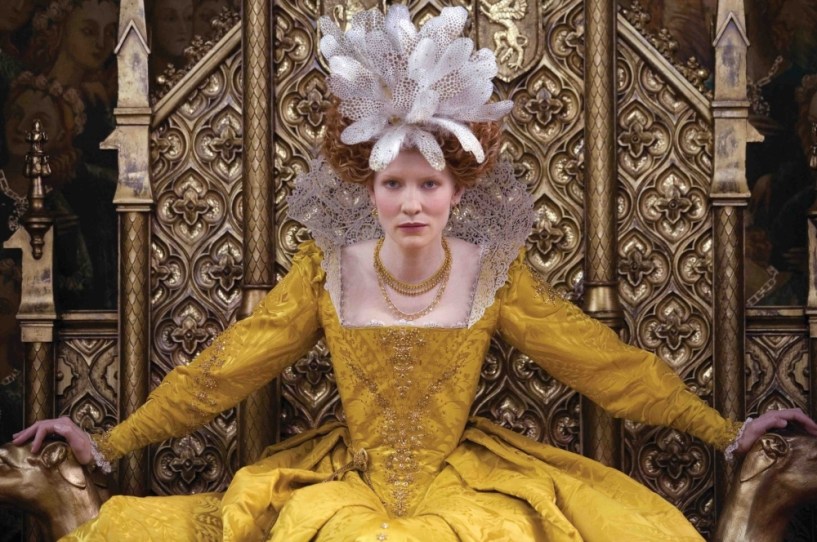
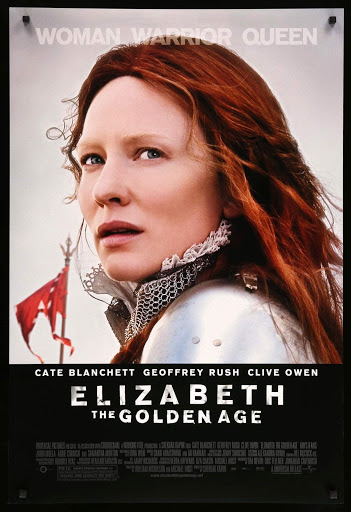
Elizabeth: The Golden Age (2007)

Elizabeth the golden age
Cate Blanchett returns as Elizabeth I in the slightly underwhelming Elizabeth: The Golden Age

Director: Shekhar Kapur

Cast: Cate Blanchett (Elizabeth I), Geoffrey Rush (Sir Francis Walsingham), Clive Owen (Sir Walter Raleigh), Abbie Cornish (Bess Throckmorton), Samantha Morton (Mary Queen of Scots), Jordi Molla (King Philip II), Susan Lynch (Annette Fleming), Rhys Ifans (Robert Reston), Eddie Redmayne (Anthony Babington), Tom Hollander (Amias Paulet), David Threlfall (John Dee), Steven Robertson (Sir Francis Throckmorton), Adam Godley (William Walsingham), Laurence Fox (Sir Christopher Hatton), William Houston (Guerae de Espes)

Its 1585 and the reign of Elizabeth I (Cate Blanchett) has seen England enter a Golden Age. But tensions are rising with the Spanish and their king Philip II (Jordi Molla). The Spanish plot to replace the protestant Elizabeth on the throne with the catholic Mary Queen of Scots (Samantha Morton), sending their agents (including the likes of Rhys Ifans and Eddie Redmayne) to England to ferment rebellion. Can Elizabeth’s trusted advisor Sir Francis Walsingham (Geoffrey Rush) root out this potential rebellion? Or could this be a trap to lure England into a naval war with Spain and its chilling armada of ships?

Elizabeth: The Golden Age is a late sequel to the more influential Elizabeth, which mixed in the ruthlessness of The Godfather, with a sprinkling of sex in a darkly tinged Elizabeth England which seemed to drip conspiracy (setting the tone for costume dramas for the next ten years at least). Compared to its original, Elizabeth: The Golden Age seems a much more traditional piece of filmmaking. It’s luscious and handsomely filmed, with the darkness and oppression of the original replaced with golden hued lighting, sumptuous (Oscar-winning) costumes and some very impressive set-designs, all of which help to point up the glamour of the past in a way that seems much more similar to a 1970s epic than the more inventive work of the original.

It’s a part of the film’s idea of the country now enjoying the glory Elizabeth’s reign has bought, with the dark corridors replaced by the bright lights of peace and opulence. The film’s reimagining of Tudor history does still present some interesting perspectives, not least in the character of Elizabeth. Now firmly in middle-age – and committed to a life of celibate singledom – Cate Blanchett’s regally imperious Elizabeth is still emotionally vulnerable with a deep sense of longing in her. Unable to live the life of romantic freedom she could in her youth, she now lives an emotional life vicariously through her ladies in waiting, particularly Abbie Cornish’s sharp and knowing Bess Throckmorton.

This focuses on Elizabeth alternating between encouraging and discouraging (due to her own half-realised romantic longing) a romance between Bess and famed explorer Walter Raleigh. Played by Clive Owen at his most buccaneering (with an accent that playfully lies between Norfolk and New England, suggesting the American accent came from Raleigh), Raleigh bewitches the Queen with exciting tales of abroad – but with her unable to flirt with him fully as she wishes, Bess is encouraged to dance intimately with him among other romantic gestures. The most important thing throughout for Elizabeth is that it is she controls and dictates the relationship – and when the couple start to make their own decisions, it leads to disaster.

It’s all part of Michael Hirst’s (here sharing script writing duties with William Nicholson) imaginative reinvention of Tudor history (remixed into an exciting version of what could have happened). This also comes together very nicely in an interesting conspiracy thriller take on the Babington plot and the goals of the Spanish to use it to manipulate both Elizabeth and Mary Queen of Scots. The film is at its strongest when playing with historical expectations.

However, too often it plays into the sort of “Britain Triumphant” nonsense that made Michael Gove on release (and you imagine Laurence Fox today – here popping up as Christopher Hatton) thrilled. The British characters – Elizabeth, Raleigh, Walsingham – are brave, charismatic, ingenious and attractive. The villainous Spanish are thick-lipped, spittle flecked, bad-haired meanies with Philip II literally a sinister limping hunchback. No scene in Spain is complete without dark lighting, chanting monks, massive crucifixes and a general air of oppression. When ships sink, the camera doesn’t miss the chance to capture a crucifix sinking to the bottom of the briny. The Babington conspirators plot out of a dyers shop, where blood red dye drips all around them. The plot culminates in a “just missed her” point blank gun confrontation (the film’s most silly flourish). Subtle it ain’t.

And also it feels more Little Englander than its predecessor. Whereas the first film saw as much darkness and dirty dealing among the British as it did Europe, this film feels like a “Britain Stands Alone” against treacherous, lecherous, sanctimonious (or all three) Europeans. Sure the Armada was a terrific win for Britain – here with much of the credit reassigned to Raleigh who steers fire ships into the path of the Spanish ships (Drake is reimagined as a lumpen bureaucrat dazzled by Raleigh’s pizzazz) – but it owed as much (as even the Tudors themselves admitted) to the weather and luck as it did bravery and skill. Unlike the first film, Elizabeth: The Golden Age seems determined to define European and Catholic as suspiciously “other”. It makes for a less rewarding film.

And a less interesting one. For all its playing with psychology, this is a very much more traditional costume drama, celebrating Merrie Olde Englande where the original film challenged us to question our expectations. Kapur and Hirst settle for spectacle and style, over drama and truth. Blanchett is impressive as always – and the rest of the cast very sound – but this is a sequel that only lives as a counterpoint for the original.