Tag: Buster Keaton

Steamboat Bill Jnr (1928)

Steamboat Bill Jnr (1928)

Keaton struggles to win his father’s approval in this brilliantly fast-paced farce

Director: Charles Reisner (& Buster Keaton)

Cast: Buster Keaton (William Canfield Jnr), Ernest Torrance (William Canfield Snr), Marion Byron (Kitty King), Tom McGuire (John James King), Tom Lewis (Tom Carter), Joe Keaton (Barber)
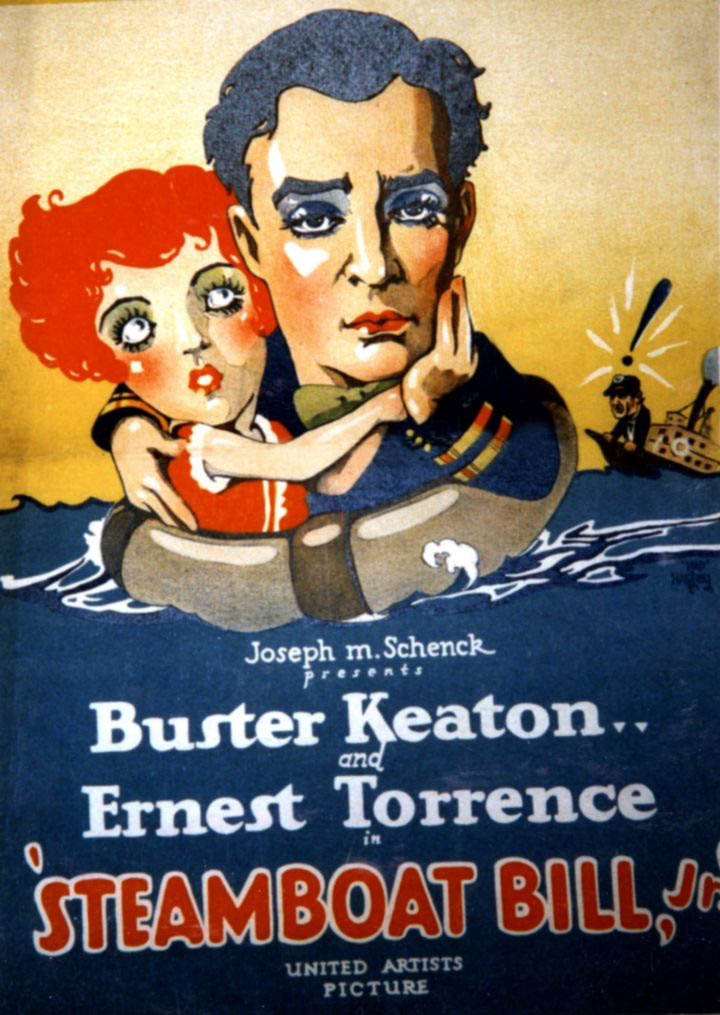
Steamboat Bill Jnr was meant to be a return to glory after the box-office disappointment of The General. Unfortunately for Keaton it shared all the traits of his previous film. An artistic triumph, today seen as one of the great silent comedies: but at the time an expensive misfire that hammered the final nail into Keaton’s filmmaking independence. Before he was swallowed by the MGM machine, Steamboat Bill Jnr was the last pure Keaton film, the last display of the master’s gravity defying stuntwork and all-in physical gag commitment.

Keaton is the forgotten son of paddle steamer operator William “Steamboat Bill” Canfield (Ernest Torrance) whose craft, the Stonewall Jackson, is being put out of business by the cutting-edge steamer The King named after its wealthy owner JJ King (Tom McGuire). William Jnr is a disappointment to his manly father: he’s clumsy, polite, decent has a pencil moustache (but not for long) and plays the ukelele. What kind of son is that? Worst of all, he falls in love with Kitty King (Marion Bryon), daughter of Steamboat Bill’s love rival. Can his son prove his worth when disaster piles on disaster and a cyclone hits the town?

Steamboat Bill Jnr is Keaton at his best. Although it has a romance plotline, this wisely plays second fiddle to the sort of role Keaton was born to play: slightly naïve and foolish sons, who are disappointments to their father. With his sad sack, impassive face and earnest, try-hard determination, Keaton was guaranteed to win the sympathies of the masses and Steamboat Bill Jnr is the fine-tuned ultimate expression of this classic Keaton role. He’s horrendously unlucky – he seems destined to trip over and activate vital levers or if he opens a door it will inevitable send someone tumbling off the boat – and at every turn well-meaning attempts to win his father’s favour backfire. It’s a superb exploration of a key theme in Keaton’s life and work – the struggle to win the regard of a domineering father in his own line of work, something Keaton had faced in his own life.

But despite that, like all the best Keaton heroes, he never, ever gives up. Adversity is milk-and-drink to him and, despite everything, his ingenuity and determination always wins out. He may look like a clueless, slightly ridiculous college kid adrift on a boat, walking around in his over-elaborate uniform: but the final reel, which shows him hooking up the boats systems via ropes and pulleys so he can control it singlehandedly proves it certainly wasn’t lack of attention that lay behind his mishaps.

And what’s really wrong with being a clearly middle-class kid who hasn’t spent much time on boats? It’s not like he’s a dandy or a layabout – he just doesn’t fit the mould his father expects – that of a flat-capped, oil-stained, tobacco chewer (and who knows not to swallow it!) never happier than when getting his hands dirty. Ernest Torrance is very good as this exasperated working-man, whose ideas of what counts as “manly” are very narrow (barely extending beyond the mirror) and sees any deviation in his son as highly suspicious metropolitan laxness.

Perhaps he feels his son looks too much like his puffed-up, slightly dandyish rival JJ King (an effective Tom McGuire). There is more than a touch of class warfare between these two, as well as a romantism that values the run-down-but-reliable Stonewall Jackson (right down to its Civil War era name) and the overly-polished-can’t-trust-it King. There are echoes (and not just in the names) in the generational family feud of Our Hospitality­ – not least in the fact that marriage seems destined to eventually bring the two families together in something approaching love and harmony.

Marion Byron gives a decent performance as Kitty – even if the film has little interest in her beyond love-interest device, including the inevitable moment where she becomes convinced Keaton’s character has let her down and decides to snub him. This snubbing takes place in a very funny scene of missed meetings and attempted evasions on the street; although this scene is itself a shadow of father and son meeting at the station, the son writing he will be recognisable by his white carnation, a flower everyone arriving at the train seems to be wearing (not helped by Keaton losing his).

Eventually matters proceed to blows and the arrest of Canfield Snr (and an attempted break-out foiled by the son’s inability to get his father to trust him) before the town is blown away in one of the great Keaton set-pieces. Rain and bad weather peppers the final thirty minutes of the film – including an exquisite sight gag when Keaton steps into a puddle and disappears up to his waist – and erupts into a cyclone that rips buildings apart, blows others across fields and raises the waters to wreck the paddleboats and wash other buildings out to sea.

And this storm is the centrepiece of another peerless display of Keaton’s physical determination and courage in the name of comedy. He gets trapped in a hospital bed blowing through the streets (after the building rips away to reveal him, a stunning in camera trick). He walks at almost 45 degrees against the wind. And, most famously, he stands in the perfect spot for the window of the façade of a house to save him when it falls on top of him. For this final stunt – insanely dangerous by any standards – even Keaton would later reflect on the suicidal risks he took. Either way, it’s a brilliantly elaborate set-piece (a riff on another set-piece from an earlier short) and a clear sign no-one did better than Keaton.

And no-one did. Watching Keaton bound like a squirrel up and down a paddle boat and dive into the flooded river, you know you are watching someone who really understand both the beauty of visual imagery and the peerless excitement of reality on film. Steamboat Bill Jnr combines this with a strong story, full of characters to root for and stuffed with sight gags (from a parade of hats stuffed on Keaton’s head, to a shaving from his father Joe) that make you laugh time and again. It’s a tragedy that this, one of his finest comedies, would also be his last where he had creative control.
The General (1927)

The General (1927)

Keaton’s masterpiece, less of a comedy and more an inspiration for hundreds of action films

Director: Buster Keatson & Clyde Bruckman

Cast: Buster Keaton (Johnnie Gray), Marian Mack (Annabel Lee), Glen Cavander (Captain Anderson), Jim Farley (General Thatcher), Frederick Vroom (Southern General), Charles Smith (Mr Lee), Frank Barnes (Annabel’s brother), Joe Keaton (Union General)

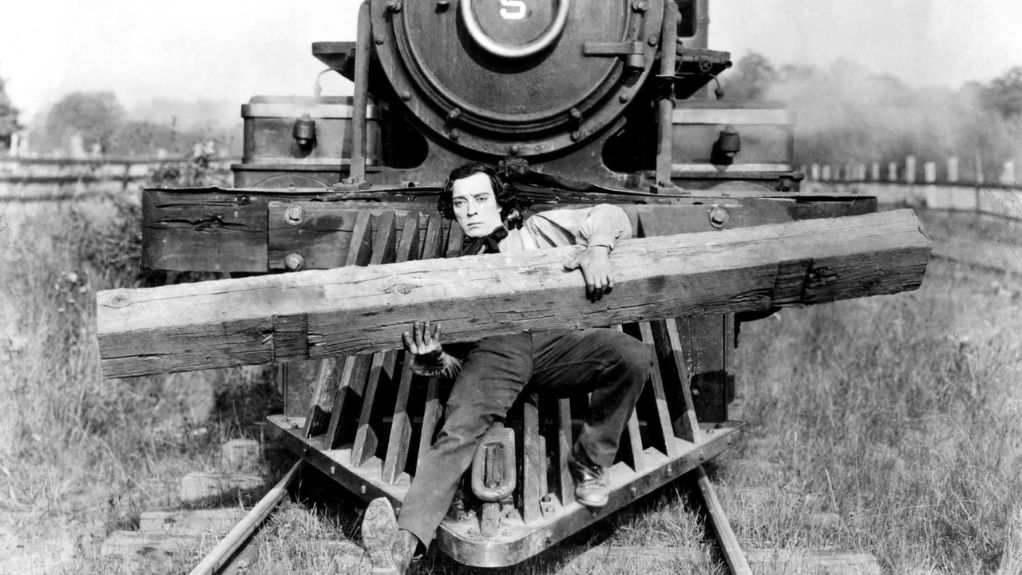
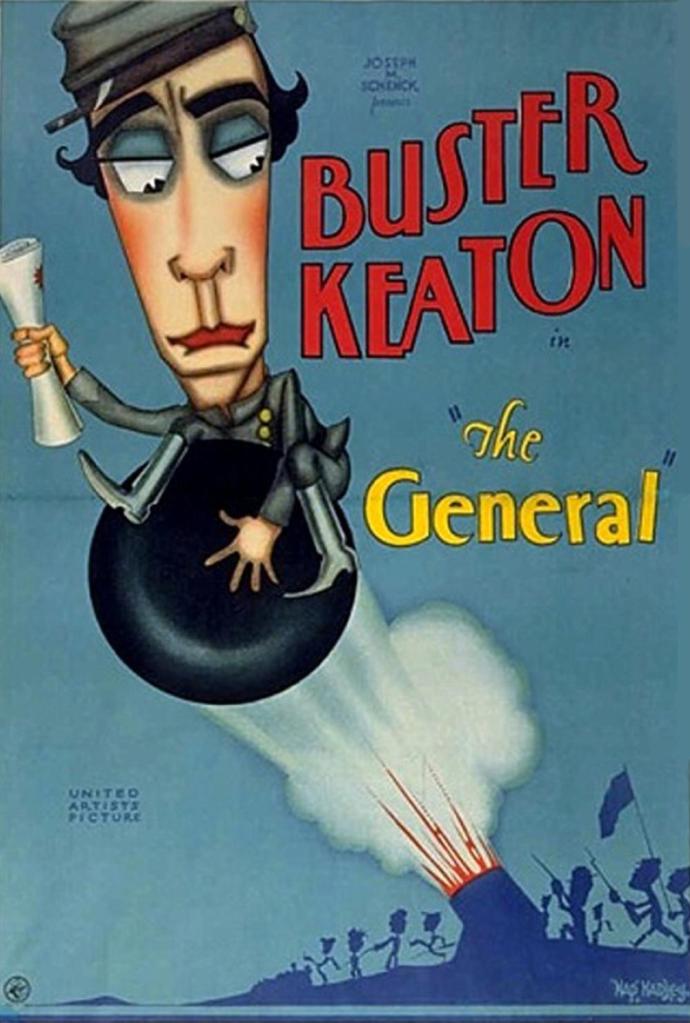
The General frequently features in the lists of greatest comedies of all-time. It’s a bit of a misnomer: while The General has its fair share of jokes, it’s really a sort of action film. A Mad Max: Fury Road with gags, the greatest chase you’ll ever see and one of the most dynamic stunt spectaculars ever made. It’s Keaton’s apogee, one of the most influential and greatest films ever made. If you’ve ever seen a stunt-filled epic, you’ve seen something that takes inspiration from the tireless physical tricks Keaton pulled here and the stunning, cinematic grace he films it with. The General is a classic that is instantly, and constantly, rewarding.

Keaton plays Johnnie Gray, a respected engine driver of the South with two loves in his life: Annabel (Marian Mack) and his steam engine The General. He’s about to propose to Annabel when the Civil War breaks out. She wants him to enlist: he tries his best but is rejected, unbeknownst to him, because the army considers him more valuable as a train driver. Mistakenly seen as a coward by Annabel, she vows never to speak to him again. A year later The General is hi-jacked by Union soldiers as part of a surprise offensive. Johnnie gives chase in a second engine, The Texas, unaware Annabel is aboard the kidnapped General. The wild chase takes Johnnie North then South again to bring Annabel home and report to the Confederate army the approaching attack.

The General was the most expensive film Keaton’s company had ever made. No expense was spared in bringing two period-accurate engines to the screen, with everything shot in location (in Oregon, admittedly, due to the Tennessee not being keen on staging a Civil War Keaton comedy) and all executed in perfect period detail. The film contained the most expensive single shot ever mounted – costing a whopping $42,000, it would show a real bridge collapse and hurl a real engine into a real river (Keaton filmed in long shot, with real horses moving around near the bridge, to stress this was a real stunt not a model). Despite all this, the film was a box-office disappointment.

Why? Well frankly, I’m not sure the world was ready for something that promised itself as being a comedy set during what was still a raw scar in the American psyche. The marketing material also promised more laughs than you can shake a stick at – a misrepresentation of a film that is more a stunt-filled poem than a slapstick riot. For those expecting The Navigator, The General was a disappointment. For us today, it is one of the great American films, a piece of cinematic mastery.

The General is for a large chunk of its run-time (almost 40 of its just under 80 minutes) a glorious chase, in which every sequence show-pieces invention at high-speed. The majority of the stunt filled tricks were executed by Keaton himself, surely at some considerable risk to life and limb. As you watch him bound over railway carriages, dive through port holes, sprint alongside steaming trains or sit atop the hurling railway sleepers to remove obstructions, you can only marvel at his physical dexterity and commitment.

Keaton’s character is also subtly, and impressively, different from his other roles. These were often defined by their haplessness – would-be detectives and empty-headed heirs. But within his professional sphere, Johnnie is a master. He knows the capabilities of engines and dynamics of the railroad better than anyone. He is relentless and endlessly inventive in overcoming myriad problems just as he can use his knowledge to place near-insurmountable barriers in the way of his pursuers.

The opening of the film stresses the respect people hold him in – he’s hero-worshipped by children, greeted warmly by all and has no doubts about asking Annabel to marry him. Sure Johnnie can get pre-occupied and miss the bigger picture – a few times, he is almost left behind by the steaming train while resolving problems on the line – and away from the train, especially when he joins the soldiers in the film’s finale, he suffers from the same clumsy, cluelessness as Keaton did fighting to defend his ship in The Navigator. But he’s also brave, indefatigable, ingenious and relentless. He’s more of a model for every action hero maverick since than you could imagine.

And those stunts! Keaton was a master film-maker, framing the action to accentuate its speed, scale and reality. The camera runs alongside the train, demonstrating its speed by showing objects move by. The action is frequently framed in medium and long shot to demonstrate its scale and the grandness. This goes for Keaton bounding across carriages and for simple gags, such as the famous shot of a forlorn, jilted Johnnie sitting on a drive rod of the moving train, lifted up and down as it shunts forward. The complexities of this chase are always made clear and camera angles are key to the various attempt each train makes to stop the other. This is placed above the standard comedic reaction close-ups audiences expected – but make for a richer, more rewarding film.

In fact, watching the film, you can grow to admire Johnnie so much you start to wonder what he sees in Annabel. Perhaps Keaton, to an extent, wondered the same. Annabel is kidnapped, tied up, caught in a bear trap, tossed around in a sack and doused in engine water. Is this woman being partially punished by the film? After all, it’s her demand that Johnnie turn his life upside down to fight in (what we know) will be a brutal war – and her kneejerk condemnation of him – that sets events in motion. Does she need this humbling to learn her lesson? It perhaps helps her and Johnnie become an ever more effective partnership on their flight back South, setting traps and keeping the engine going (with the odd comic misunderstanding, one of which sees Johnnie running down then back up a hill to reboard the train) that leads to their eventual reconciliation.

Interestingly, what’s less comfortable with The General today is its avoidance of the core issues of the civil war. Slavery never rears its head, and the film takes a largely sympathetic view of the romantic Southern gentlemen vs the nefarious Northerner, with their under-hand schemes. Peter Kramer, in an excellent BFI book, lays out a compelling argument that The General exposes, especially through its final battle sequence which sees real people die and a hapless Johnnie charging into heroics like a lost child, the dangerously blind embrace of violence in the South and a subtle criticism of a horrific war that led to so many needless deaths. While there might be beats of that under the surface here (especially if you are familiar with the shocking death toll of the war), it’s not enough to overcome the generally sympathetic view of the Confederacy and its leaders.

But politics is not at the heart of Keaton’s film. The appeal for him, just as for Johnnie, was that engine and, by extension, the glory of the chase. Only someone who loved trains as much as Keaton could have made such a guilty pleasure of plunging one thirty feet to its doom on camera. And in Johnnie Flynn he created a genuinely little-guy hero, a character who shared his dynamism and pluck and, above all, his love for all things mechanical.

The General isn’t a comedy really – there are few real belly laughs in it, and the film is played straight by all and sundry, devoid of reaction shots. Its laughs come in shock at its audacity, its epic scale and from how much it causes you to invest in the trials and tribulations of its lead character. It’s an action film that you embrace with fervent love, because it’s pure, unadulterated, cinematic beauty. It’s a masterpiece.

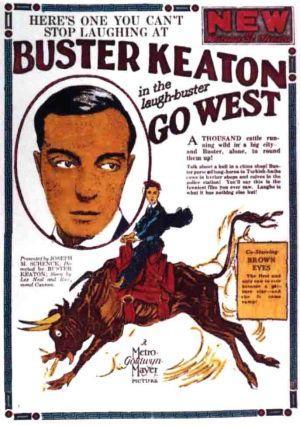
Go West (1925)

Go West (1925)

Keaton meets his finest leading lady – a cow – in this adorably charming comedy

Director: Buster Keaton

Cast: Buster Keaton (Friendless), Howard Truesdale (Ranch owner), Kathleen Myers (Ranch owner’s daughter), Ray Thompson (Ranch foreman)

Keaton had been unconvinced by Seven Chances, the theatrical farce he’d been asked to film that saw him chased left, right and centre by women. Perhaps his reaction to playing a somewhat cold man pursuing and pursued by ladies persuaded him to try something completely different. What if he could make a film where he removed the “romantic” girl from the equation altogether? Could Keaton make an affecting comedy where his character’s strongest bond is to a cow?

Go West is Keaton back to his best, a glorious Western spoof (a happy return to the grounds of Our Hospitality). Keaton is Friendless, a hard-working guy adrift in the cut-and-thrust of the world. So much so that, visiting New York, he is literally trampled by bustling crowds. He heads out West to try his luck, becoming a ranch hand on a farm. There he finally meets someone who sees him as a friend – ‘Blue Eyes’, a cow who like him is an outcast from the herd. For the first time both of them has a friend – but what will Friendless do when Blue Eyes is to be packed off to a Los Angeles slaughterhouse?

You would never think that a man and a cow could be as sweet as they are together in this film. Keaton spent almost a month with the cow who plays Blue Eyes, going everywhere with her, feeding her and spending weeks with her. By the time they came to filming, the cow followed him without the slightest hesitation and never once seemed anything less than completely comfortable in his presence. Keaton (half) joked he never had a better leading lady than Blue Eyes – and his earnest, gentle and sincere playing of this friendship between man and beast gives Go West its heart.

Taking a gentle pop at DW Griffith again – Friendless and Blue Eyes both share names with leading characters from the director’s Intolerance – Keaton creates a film that many have called his one excursion into pathos but, for me, is all about creating character and story and having it service comedy. The laughs come faster for me in Go West than a farce like The Navigator because Keaton invests real warmth into this unlikely screen partnership. You invest in their story – these two outsiders, lonely and illtreated on the ranch, who find themselves as unlikely soul mates – and once you have that investment, you laugh along with their exploits.

Keaton also creates a variation on his usual character. Friendless is stoic but unlike other Keaton characters, he’s not bumbling or naïve, instead he seems to have accepted that he has no place in the world of men. Unlike other Keaton characters, he’s got an impressive ability to teach himself new skills rather than relying heavily on imitating others and reading instruction manuals. Friendless, slowly, picks up the skills of a ranch hand himself. Sure, he bungles his first attempts – his hilariously poor saddling of a horse (the saddle almost on the horses’ rump) being a case in point – but give him time and he’ll get there.

He’ll even win odd moments of respect. He gets two bulls back into the pen through skilful, unfazed, use of a red handkerchief (two ranch hands look on in grudging respect). He improvises an elastic string for his tiny pistol which works surprisingly well. He spots a cheat in a card-game and then skilfully disarms him (by placing his finger in the way of the trigger). In the film’s closing act – where a herd of bulls walk wildly around Los Angeles – he’s able to herd them back together with a great deal of skill, cunning and improvisation. He’s he’s undeniably good at the things he does – and gets better.

Go West has several great jokes, many of them initially based around Friendless’ place as an outsider. Selling his remaining goods to a pawnbroker in the films opening, he forgets to remove his shaving kit and mother’s picture from a desk: of course, the pawnbroker immediately charges him for taking the goods (making his money back in moments). On the ranch, Friendless inevitably times his arrival at the daily meals with everyone else finishing up and leaving the table, forcing Friendless to leave as well (he doesn’t eat for days on this ranch). His clumsy attempts at ranch life leads to several pratfalls of inevitable high-standard.

But it all starts to change as he forms a friendship with Blue Eyes. He’ll bend over backwards to help her. He’ll stay up all night with a gun to protect her from wolves. He’ll strap antlers to her head to help her ward off bulls. He’ll shave a brand (thank goodness he grabbed that shaving kit) into her back to save her from the fire. And he’ll raise what money he can to try and buy her and, when that fails, he’ll jump on a train to travel with her to save her.

It leads into the film’s action packed third act. It starts with a classic Keaton piece of business. Trying to earn the money to buy Blue Eyes, he buys into a rigged poker game. Calling the dealer on cheating, the ranch hand pulls a gun and orders Keaton “When you say that – SMILE”. Will cinema’s most famous stony-faced comic finally crack a grin? It’s a lovely in-joke – and Keaton’s two fingered mouth push grin the perfect response, as his ingeniously shrewd solution to prevent violence. Jumping on a train from here (this is another classic train sequence from a Keaton film) he dodges bullets from an attack from outlaws and ends up the only man on board with an army of cows.

The final sequence – a series of sight gags as cows invade shops, Turkish baths and street stalls in Los Angeles before Keaton dons a red-devil suit to lead them back into a holding pens in a perverse twist on Seven Chances – is sometimes overlong, but offers plenty of delights. But none match the sweetness and innocence of that friendship between man and cow. Keaton’s chemistry with Blue Eyes – and his understanding that the beauty of silence makes animals as legitimate characters in many ways as humans – shines out. It gives the film a real heart and tenderness that grounds all the jokes in something real, as well as providing the film with real stakes (because, after all, Blue Eyes is in danger of being turned into one).

Go West is often overlooked in the Keaton CV but, despite being a fraction overlong, it’s a warm, tender and sweet story packed with excellent gags. This isn’t manipulative pathos – instead this is Keaton using humanity to deliver a unique sort of pure romance. This is possibly one of the finest films about friendship ever made – and Blue Eyes stands with Balthasar as one of the greatest animal actors on screen.

Seven Chances (1925)

Seven Chances (1925)

Sub-par Keaton comedy, remembered only for its chase scene, but otherwise best forgotten

Director: Buster Keaton

Cast: Buster Keaton (James Shannon), T Roy Barnes (Billy Meekin), Snitz Edwards (Lawyer), Ruth Dwyer (Mary Jones), Frances Raymond (Mrs Jones), Erwin Connelly (Clergyman), Jules Cowles (Hired Hand), Jean Arthur (Receptionist)

It’s the film Keaton didn’t care for – so much so he told a film restorer working on his films to essentially not bother with it. It was a play purchased for him by producer Joseph Schenck, rather than chosen by the physical-comedy gag-meister, who called it a “sappy farce”. Still, he did his best with it – and then some, since it became one of his biggest hits – and, if it’s far from a stand-out on his CV, that’s not Keaton’s fault. In fact, the only parts of the film anyone remembers are all due to Keaton alone.

The plot follows businessman James Shannon (Buster Keaton). He finds out from a lawyer (Snitz Edwards) that he is to inherit $7million – but only if he is married by 7pm on his 27th birthday. And naturally, today is his 27th birthday! Bungling his proposal to the girl he loves (but was always too shy to ask) Mary (Ruth Dwyer), he and his business partner (T Roy Barnes) head to a country club and ask every girl he can see to marry him. They all say no (guess how many he asks) until an advert in the paper revealing the fortune awaiting a willing bride, produces an army of ladies who will chase Shannon to the ends of the earth for marriage. Can he get back to Mary, reconcile and marry by 7pm?

You can see why Seven Chances is an awkward fit for Keaton. He was more comfortable in a role where the world was awash with obstacles. From natural elements to modern machinery, Keaton was the impassive little guy struggling against the odds. He was much less suited to the faintly unsympathetic Shannon, where coincidence, shyness and poor explanations were his problem. Keaton reworked the character to make him more sympathetic – it’s shyness rather than unwillingness that delays his proposal (in an opening technicolour sequence showing the passing of the seasons around Shannon’s ever-delayed proposal), but its still a role he lacks affinity for.

The film’s opening is too dialogue driven – it throws up more title cards than almost any Keaton film you can think of – and Keaton looks restrained by the role. It’s telling that the “Keaton” part for the first ten minutes goes to Snitz Edwards (very funny with his eternally put-upon face) who struggles to get anyone to listen to his news about a possible inheritance. The film rushes through much of the plays plot in its opening 40 minutes, recognising that it’s essentially the same gag – Keaton asks a woman to marry him, she says no – repeated over and over again.

Those seven chances whizz by in the country club, as a progression of women (including an unbilled, pre-fame Jean Arthur) turn him down with a mix of laughter, anger and contempt. To be honest its diminishing returns, even with some Keaton directorial flair (one proposal takes place walking up the stairs, without breaking step after rejection Keaton walks down the stairs with a second unwilling woman). There is nothing for Keaton to get his teeth stuck into.

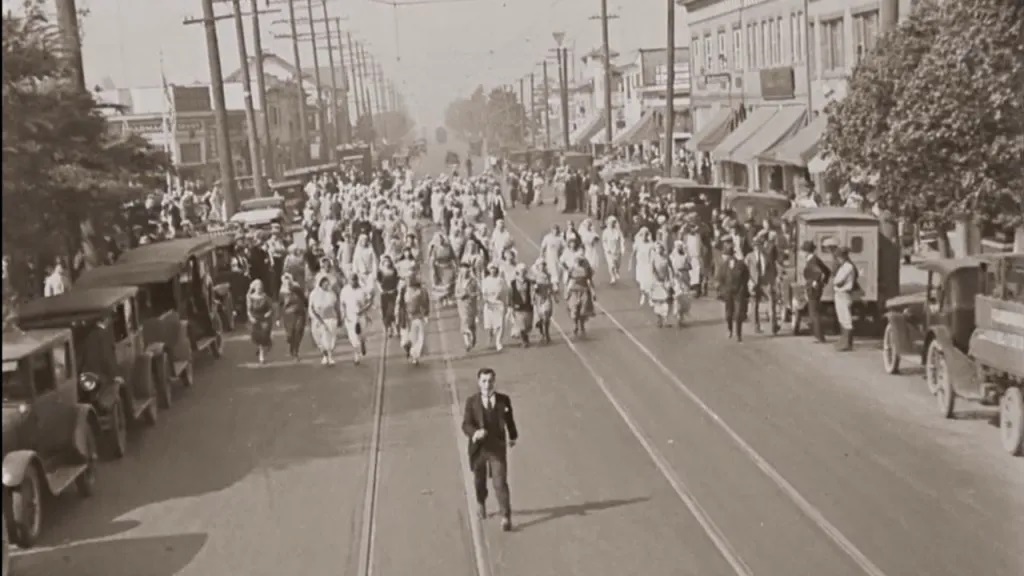
It’s only in the second half, the play forgotten, that Keaton finds sure ground – and the films memorable moments. The advert produces an army of women – in some shots, it looks like hundreds if not more. As Keaton sleeps in a church pew, it slowly fills up around him. Eventually a clever cross fade (similar to an early cross fade that moves a cars location without it moving in frame from one house to the other – Keaton understood editing like few others) sees the church filled with women. Keaton awakes, is ambushed under a scrum of would-be brides and makes his escape.

What follows is a madcap chase through the streets – including several inspired tracking and crane shots stressing the speed and the size of the pursuing crowd. The chase passes through a police march, a football game (where the players are all crushed by the mob), an industrial plant and then into the countryside, Keaton running for all he is worth.

At one point Keaton intended to end the film like this. It wasn’t until a test audience failed to laugh that he realised it needed to change – and he cottoned onto the unexpectedly loud laugh from when he had thrown himself down a hill (a suicidal looking jump on screen) and dislodged some rocks, causing a small avalanche. Back out to location they went, accompanied by dozens of papier-mâché rocks of various sizes, and scaled up the gag to huge levels, Keaton running, leaping and climbing up trees to escape this onslaught of boulders. It also created a reason for the women to be blocked off – and allow Keaton to escape to propose to his girl and create the just-in-time happy ending.

It’s that chase people remember – and gives Seven Chances a fonder public image than it deserves. But its ten minutes of great material in over an hour of sub-par Keaton. It doesn’t help that this film, more than any other Keaton, has a parade of black-face gags (Jules Cowles in a head-in-hands performance today) revolving around Mary’s servant, who is (of course) stupid, slow and lazy. It’s compounded by a gag where Keaton rejects (in horror) the idea of proposing to a Black woman.

Seven Chances is fondly remembered for its chase – but if you want to watch a Keaton chase, there are many better options than this, a film meaner and less good-natured than his best work.

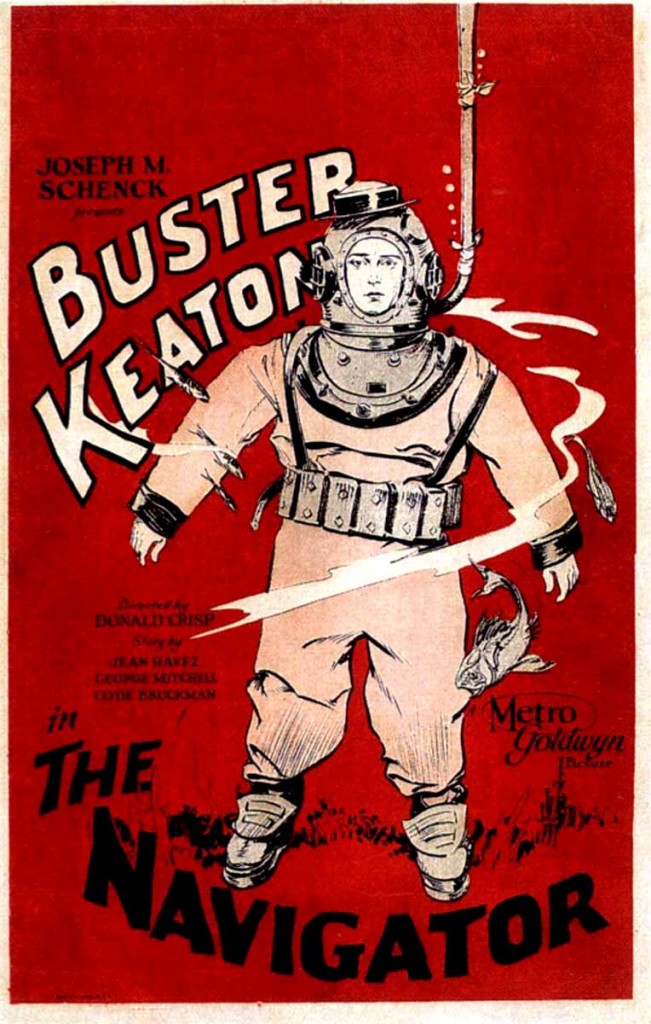
The Navigator (1924)

The Navigator (1924)

Keaton is cast adrift in a film that is all gags and no story or stakes and not the better for it

Director: Buster Keaton (& Donald Crisp)

Cast: Buster Keaton (Rollo Treadaway), Kathryn McGuire (Betsy O’Brien), Frederick Vroom (John O’Brien), Noble Johnson (Chief), Clarence Burton (Spy)

Buster Keaton claimed The Navigator was his best film. With all due respect he’s wrong. The Navigator was born out of the ahead-of-its-time failure of Sherlock Jr. When that marvel of cinematic invention didn’t land with audiences, Keaton played safe. He put a lid on the tricks and focused on the gags. In fact, he cast himself away in a boat with only Kathryn McGuire for company and they told jokes for 45 minutes. That’s the basics of The Navigator and, for me, the lack of plot, stakes or character ends up in a much weaker film.

Buster is Rollo Treadaway, a rich sap, who one day decides to get married and books the honeymoon before he’s asked his planned intended Betsy (Kathryn McGuire). When she says no, Rollo goes on honeymoon anyway but in a confusion at the docks ends up on the wrong ship, The Navigator. It’s owned by Betsy’s father – but spies for a foreign power plan to set it adrift. In further confusion, Betsy also ends up on board and she and Rollo wake-up drifting at sea. How will two pampered rich people work out how to look after themselves on a deserted ship?

The Navigator keeps things simple, cranking up the jokes in a film much closer in spirit to his shorts, all designed to be easy to digest and just tickly the funny bone. You feel they genuinely did just cast the ship out to sea and waited for Keaton to work out as many gags as he could until the camera ran out of film. Donald Crisp was hired to direct the dramatic stuff, but Keaton quickly realised he didn’t need him and didn’t like Crisp’s vague prologue about wicked spies (he was right, it’s totally forgettable unlike the equivalent opening of Our Hospitality) so set off to sea without him. (Crisp makes a visual cameo as the painting of the ship’s captain that swings in front of a porthole).

There are, for me, three key gags that work in The Navigator. Rollo’s spontaneous decision to get married (based on seeing a happy couple outside of the window), after which he distractedly bathes fully clothed then gets his chauffeur to drive him to Betsy’s house – on the opposite side of the street (the car does a big circular loop across the street). After the rejected proposal he informs the chauffeur, he needs a walk home to clear his mind.

This is, in many ways, the funniest, most inventive moment in The Navigator. It’s a great little showpiece as well for the (passionately not-getting-married) Kathryn McGuire and the finest example of Keaton’s capacity for easily led saps, overwhelmingly influenced by things they see around them. It’s the part of the film I enjoyed the most and its over after ten minutes.

The Navigator starts to drift as soon as it heads to sea. There is some neat camera work that suggests the haunting emptiness of the ship (it’s so vast we get an amusing series of visual jokes as Keaton and McGuire consistently miss bumping into each other while walking around it), but where other Keaton films would have explored more the ghostly darkness of this technological marvel (or the oppressive nature of it emptiness) The Navigator largely shies away from this.

The best sequence on the ship follows McGuire and Keaton’s attempts to cook a meal in a massive galley, hampered by the fact that (a) everything on the ship is set-up to cook for hundreds not two and (b) the two pampered souls have no idea how to open a tin can or boil a kettle, let alone cook a meal. Three potatoes are thrown into an enormous vat. Keaton goes through a series of trial error involving drills and carving knives to get into tins. McGuire can’t work out that sea water isn’t drinkable or how much coffee is needed for a cup. They are both befuddled by fish (which they basically eat raw) and can’t find cutlery so make do with kitchen utensils. It’s a sharply observed, well-constructed scene.

But other than this, the film struggles with a series of gags that rather disappoint. There is a painfully overlong underwater sequence where Keaton wrestles with a fake swordfish. There is a lack of Keaton’s trademark physical stunts (aside from a bit of business with a deckchair). An encounter with an island tribe – a bit uncomfortable today to watch these Black-skinned savages – is overlong and heads into a siege that is never particularly funny (other than a gag of Keaton accidentally dragging around a miniature cannon that no matter where he turns is always aimed at him – a gag later lifted for Jar-Jar Binks in The Phantom Menace).

The main problem I have about The Navigator is that this bag of gags never engages me because the film isn’t about anything. Neither of these people feel like real people (and, lord knows, Keaton characters were often lightly-sketched comic roles, but this is ridiculous), the film has no stakes and has no plot momentum, drifting like the boat they are stuck on. I need more for a comedy, to feel invested. Without that investment, it’s just stuff happening. A Keaton’s I won’t revisit. It was, however, his biggest hit. What do I know?

Sherlock Jr (1924)

Sherlock Jr (1924)

Keaton invents Looney Tunes in this master-class in both cinema and comedy

Director: Buster Keaton

Cast: Buster Keaton (Projectionist/Sherlock Jr), Kathryn McGuire (The Girl), Joe Keaton (The Girl’s Father), Erwin Connelly (The Hired Man/The Butler), Ward Crane (The Local Sheik/The Villain), Ford West (Theatre Manager/Gillette)

If there is one thing you learn from watching Keaton’s masterpiece, Sherlock Jr, it’s this: all Looney Tunes cartoons are Buster Keaton films. The level of astounding, frantic, comic genius in Sherlock Jr hits new heights and its mix of slapstick, improbable stunts, chases and poker-faced reactions basically makes it resemble nothing less than the world’s greatest cartoon made real. There is something either delightful or double-takingly how-did-they-do-that impressive in every scene and the entire film is assembled and designed with invention dripping from every pore.

Buster is an absent-minded, day-dreaming projectionist in a local theatre. But what he really wants to be is a detective. He gets his chance when he discovers that the father (Joe Keaton) of the girl (Kathyn McGuire) he’s in love with has had his watch stolen. We know it’s her villainous suitor (Ward Crane), but Buster’s clumsy investigation only ends up getting himself framed, with only the Girl to clear his name. Back in the theatre, Buster daydreams himself into the film he’s projecting, where he is the famed Sherlock Jr, master-detective besting scheming villains and winning the heart of the Girl, all of whom now look like the people he encountered in the real world.

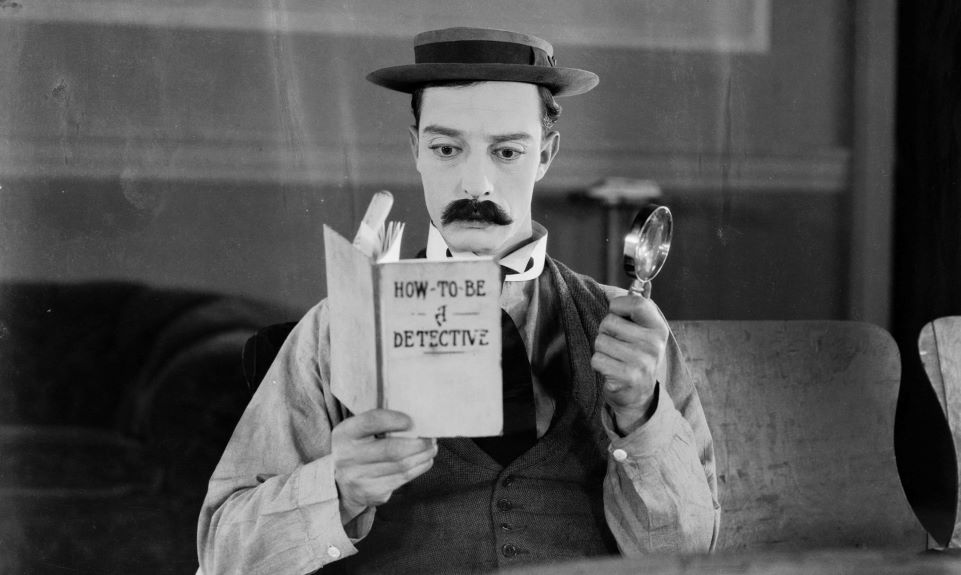
Sherlock Jnr resolves almost its entire plot in the opening fifteen minutes after Buster fails to prove his mettle as a detective. Bless, he goes about his investigation with a robotic lack of imagination, slavishly following the steps in his How to be a Detective book right down to following his suspect by almost literally dogging his footsteps (requiring a parade of sudden jerks, turns and dodges to avoid being seen). Fortunately, the Girl solves the crime for him, clears his name and heads to the theatre to tell him while he drifts off to sleep. What this means is that we can enjoy Buster’s day-dream of the movies without ever worrying about how he will solve the pickle he is in in real life.

Sherlock Jr can focus on its delightful fantasy sequence. In an oft-imitated stroke of double exposure shooting, the dream Buster emerges from the body of the sleeping Buster, picks up his (dream) hat and walks out of the projection room to the theatre where he is flabbergasted to see people he knows playing roles in the film. Why shouldn’t he be tempted to walk down the aisle and try to climb into the picture? Of course, the villain responds by tossing him out of the frame and back into the auditorium (just to reassure us again, Keaton cuts to the sleeping Buster in the projection room).

Keaton’s film has hugely inventive, creative fun with the medium as Buster re-enters the movie only to find – with the power of editing – his location changing with dizzying speed, without his position changing from shot-to-shot. He steps down a flight of stairs to find it turn immediately into a bench. He tries to sit on the bench but lands in a busy road. He walks down the road to find himself on a cliff edge. He peers off the edge to find himself among lions, then crawling through the desert, sitting on the shore, diving into a snow drift. This whole sequence is effortlessly, brilliantly assembled with Keaton’s position seemingly never changing but the location changing almost a dozen times. Think that cartoon when Daffy Duck goes to war with the cartoonist. No one before had understood the comic potential of editing, shifting locations and changed perspectives.

It’s perhaps the stroke of defining genius in a film crammed with moments from here to the end that leave you breathless with their chutzpah, daring and invention. From here, Sherlock Jr is full to the brim with hilarious comic stunts that Keaton makes look effortless but required such complex planning (and endless repetition on set to get right) that your admiration for their humour is matched only by the wonder at the dedication and sweat it took to deliver them.

In the dream-film, Sherlock Jr has just enough of Keaton’s comic clumsiness to be amusingly recognisable, but every detecting trick he plays turns up trumps. He tails suspects successfully, locates stolen jewels, unmasks criminals and he is never outwitted by the criminals (saying that he can also ride on the handlebars of a motorbike for miles not noticing that the driver has long since fallen off). Through it all, Keaton gives every set-piece the sort of physical commitment Hollywood wouldn’t see again until Tom Cruise started to embark on Impossible Missions.

All of this needed time. Imagine, if you will, the innumerable takes Keaton needed to execute a deluge of seemingly impossible trick shots in a game of pool, where every ball is pocketed except the number 13 (which has been replaced by a bomb). This is the sort of Newtonian logic of a Bugs Bunny cartoon but done for real. It’s doubly funny later when you realise Sherlock Jr wasn’t being phenomenally lucky but was in fact aware the ball was a bomb and was missing deliberately. Even without that knowledge, watching balls bend round the number 13 or divide perfectly so that two balls pass by without contact is breath-taking.

Equally so a stunt which sees Keaton fold up a disguise dress in a window, head into the room, then dive out of the window, straight into the dress, and walk away. The stunt is so incredible, Keaton even dissolves part of the wall of the building so we can see it done in one take. If that’s not enough, moments later he will seemingly dive into a wall through the chest of an accomplice who will then walk away – all in one take. Keaton wanted these magic tricks to seem impossible, to leave the audience helplessly trying to work out what they have seen. The answer, in every case, was endless attempts and vaudeville expertise. Just as Keaton worked out the comic potential of editing could transport him, in a single step, hundreds of miles – so he also worked out it could make impossible events look effortless by removing all the failed attempts.

The film culminates in a chase scene the Looney Tunes cartoons would riff on endlessly (the entire Wile-E-Coyote/Road Runner series is effectively a long version of the end of Sherlock Jr). Sherlock Jr races to rescue a girl, on the handles of a rider-less motorbike, racing over roads, blockages, train tracks and all sorts then switches with her to a car, that similarly does a series of improbably manoeuvres before it crashes into a lake and turns into a slowly sinking boat. All hilarious, all directed and played with a super abundant energy.

And then he wakes into a romantic reconciliation where our hero, slavishly, follows the romantic gestures of the man in the movie he is watching to win a kiss from the Girl. We knew the happy ending was coming – that’s why we enjoyed, pressure-free, the fantasy sequence where nothing was at stake. Sherlock Jr delivers a comic tour-de-force so packed with delightful tricks, committed stunts and joyous invention that it feels like it sails by even quicker than its 45 minutes. It’s a perfectly sustained and balanced series of gags all wrapped up in something that uses the medium perfectly. It’s the first and best Looney Tunes cartoon ever made.

Watch it now!

Our Hospitality (1923)

Our Hospitality (1923)

Keaton’s feature-length debut is a masterpiece of comic invention and slapstick stunt thrills

Director: Buster Keaton (& John G Blystone)

Cast: Buster Keaton (Willie McKay), Joe Roberts (Joseph Canfield), Natalie Talmadge (Virginia Canfield), Ralph Bushman (Clayton Canfield), Craig Ward (Lee Canfield), Monte Collins (Parson), Joe Keaton (Train engineer), Jack Duffy (Train conductor)

It starts with a dark and stormy night. If that sounds like cheap melodrama that’s kind of the point. Keaton’s first feature length comedy would be different from his joke-crammed shorts. This would be plot-led comedy, a drama full of jokes. As part of that, Keaton started the film with a storm-filled, joke-free, DW Griffith-inspired opening salvo that sees the lead character’s father dead in Intolerance inspired opening. With its gun flashes and bodies, we know in this film bullets kill.

The father is John McKay and he dies along with James Canfield in a deadly exchange. It’s part of a long-running feud betwixt McKays and Canfields (any similarity to the legendary Hatfield-McCoy feud is entirely deliberate), and the rest of the Canfields swear revenge on McKay’s baby son-and-heir. Twenty-one years later, Willie McKay (Buster Keaton) has grown up in New York, ignorant of the feud. When he returns to his father’s ranch, he finds himself in the awkward position of having fallen in love with Virginia Canfield (Natalie Talmadge), daughter of his newly discovered deadly enemy Joseph Canfield (Joe Roberts). How will matters be resolved?

With a great deal of laughs and a breath-taking series of stunts. Our Hospitality is early Keaton but already it cements his legend of comic invention and physical daring as well as his dynamism and imagination as a filmmaker. Our Hospitality is crammed with comic bits of pieces that Keaton would go on to explore and finetune in even greater detail in later films, but also culminates in a (admittedly slightly tongue-in-cheek) but still surprisingly gripping action sequence as our hero battles to survive a mountainous waterfall and save his love from toppling.

The film neatly divides into four acts, each subtly different in tone but all unified by Keaton’s creativity. Stone-faced and implacable, Keaton never mugs or goes overboard for the laugh but trusts that, with the intimacy of the camera, the smallest inflection or slightest turn of the head will raise a chuckle. He’s also charmingly innocent, refreshingly resourceful and rather brave – a perfect combination for a little guy (it helps, as always, that Keaton is literally a little guy) we root for.

That charm powers a lot of the film’s second act, a long incident-filled train journey McKay takes to the South. Keaton was fascinated by the comic potential of early technology – watching Willie, po-facedly, cycling with an early peddle-free bike, his feet alternately propelling the bike and lifted in the air is hilarious (the Smithsonian even asked if it could display this perfect replica) – and he deliberately set the film in 1831 to introduce a Stephenson-style rocket train, pulling its open carriages behind it. This vehicle not only looks hilariously ramshackle and strangely incongruous, it also opens an ocean of possibilities.

It is, for starters, hilariously slow – Willie’s dog has no problem keeping up with it. Its tracks have been laid with a rigid rule-following lack of imagination – at one point they ride up over a fallen tree log, the train and carriages bumping over it. The train is forced to stop by a donkey that refuses to leave the line (eventually the engineer simply drags the tracks around the donkey). There is an on-going feud between the Engineer (played by Keaton’s father Joe) and ticket-master about who is actually in charge of the train. At one point it veers off the tracks and down a road (everyone comments about how much more smoother this is) and later gets separated from the carriages at a junction, requiring Keaton gymnastics to bring it together. By the time it trundles into the station – and note how beautifully the train is filmed – you’ve had more comic invention than most other comedies.

During this journey Willie falls in love with fellow passenger Virginia (played, a little awkwardly, by Keaton’s wife Natalie Talmadge), little knowing she is a Canfield. The Canfields swiftly discover his identity: Willie asks one of her brother’s directions to his ranch, and the brother guides him there, all the while darting away at every opportunity to try and borrow a gun to take his revenge.

Most of the second act, which gives the film its title, revolves around Willie’s invite from Natalie to dinner at the Canfield house. Southern gentility declares the Canfields cannot take revenge on Willie while he is their guest – as soon as Willie realises this he does everything he can to remain in the house, as the (literal) instant he steps outside the door, guns come out. (Keaton also gets a lot of comic mileage from the cumbersome one-shot guns, which Willie frequently pinches to discharge to give himself a few precious moments to move outside while various Canfield’s reload).

When Willie eventually flees the house – disguised as a lady – it leads into a glorious, action-packed chase scene. Scaling mountains and cliffs, shot with a vertigo inducing brilliance (in reality Keaton placed the camera on its side and made it appear with his genius physicality that he was climbing rather than crawling). There are falls into rapids, Willie is dragged behind a racing train carriage and finally bobs and floats down a rapid (including one shot, kept in the film, where Keaton’s rope snapped and he was literally washed head first down a river). It culminates in an athletic, stunt-filled, precarious balance on a log suspended over a waterfall (a brilliant backdrop shot makes this feel impossibly high), swinging desperately on a rope to save Virginia from falling.

Our Hospitality is awash with comic energy and genius touches of business but it’s also an impressively ahead-of-its-time in the skill of its plotting and structure – you could pretty much remake it exactly today (but with words) without changing a detail, and it would still be a hit. But it wouldn’t be a legend because the only thing you wouldn’t have is Keaton. And he’s the lodestone that balances the whole thing.

Around the World in Eighty Days (1956)

Around the world header
David Niven and Cantinflas head Around the World in Eight Days in this Oscar-winning epic

Director: Michael Anderson

Cast: David Niven (Phileas Fogg), Cantinflas (Passepartout), Shirley MacLaine (Princess Aouda), Robert Newton (Inspector Fix), Charles Boyer (Monsieur Gasse), Joe E. Brown (Stationmaster), John Carradine (Colonel Proctor), Charles Coburn (Steamship clerk), Ronald Colman (Railway official), Melville Cooper (Mr Talley), Noel Coward (Roland Hesketh-Baggott), Finlay Currie (Andrew Stuart), Marlene Dietrich (Hostess), Fernandel (Paris coachman), Hermione Gingold (Sporting lady #1), Cedric Hardwicke (Sir Francis Cromarty), John Gielgud (Foster), Trevor Howard (Denis Fallentin), Glynis Johns (Sporting lady #2), Evelyn Keyes (Paris flirt), Buster Keaton (Train conductor), Beatrice Lille (Revivalist), Peter Lorre (Steward), Victor McLaglen (SS Henrietta helmsman), John Mills (London coachman), Robert Morley (Gauthier Ralph), Jack Oakie (SS Henrietta captain), George Raft (Bouncer), Frank Sinatra (Piano player), Red Skelton (Drunk), Harcourt Williams (Hinshaw)

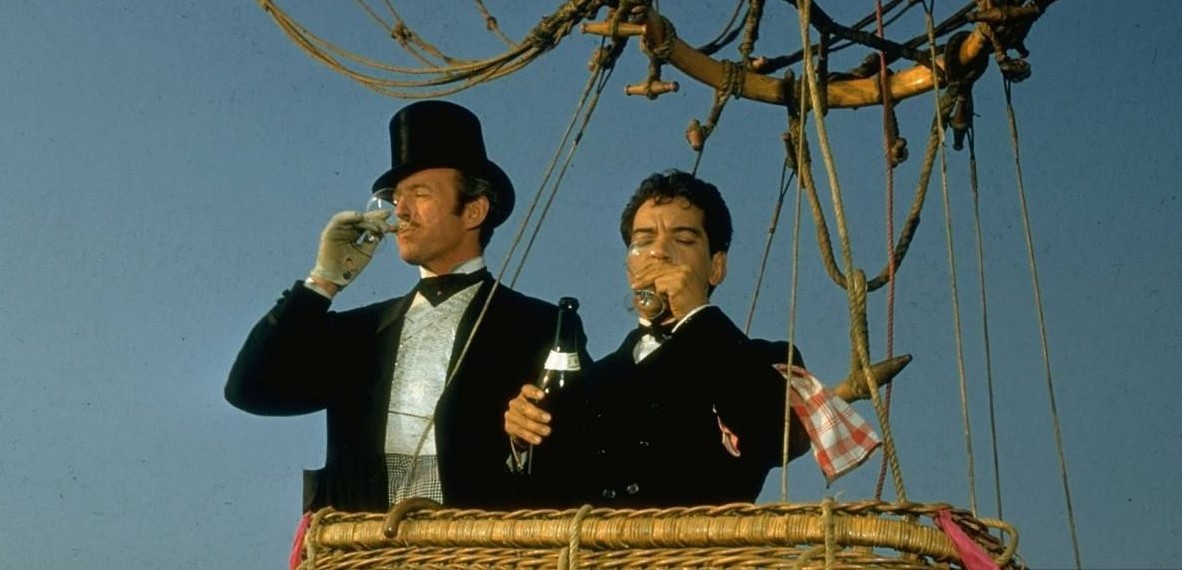
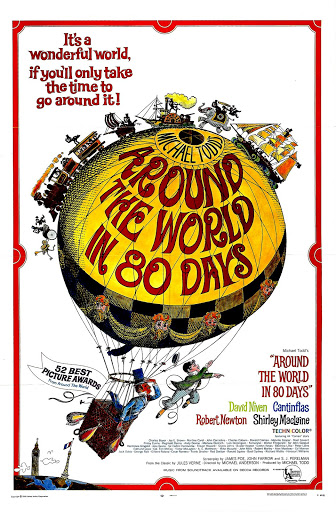
In the 1950s, cinema struggled to encourage people to come out of their homes and leave that picture box in the corner behind. Big technicolour panoramas and famous faces was what the movies could offer that TV couldn’t. This led to a trend in filmmaking that perhaps culminated in 1956 with Around the World in Eighty Days triumphing among one of the weakest Best Picture slates ever seen at the Oscars. Around the World had everything cinema knew it could do well: big, screen-filling shots of exotic locations filmed in gorgeous colour; and in almost every frame some sort of famous name the audience could have fun spotting. It’s perhaps more of a coffee table book mixed with a red carpet rather than a narrative film: entertaining, but overlong.

Faithfully following Jules Verne’s original novel (with added balloon trips), Phileas Fogg (David Niven) is a punctilious and precise Englishman of the old school, whose life is run like clockwork and whose only passion is whist. Nevertheless he accepts a challenge from his fellow members of the Reform Club (among them Trevor Howard, Robert Morley and Finlay Currie) to circumnavigate the globe in 80 days or less. Setting off with his manservant – the recently hired, accident prone Passeportout (Cantinflas) – Fogg races around the world, from Paris to Cairo to India to Hong Kong to Japan to San Francisco. Along the way he rescues Princess Aouda (Shirley Maclaine) from death by human sacrifice in India and has to confront the suspicions of Inspector Fix (Robert Newton) who is convinced that Fogg is responsible for a huge theft at the Bank of England. Can Fogg make it back to the Reform Club hall on time to win his bet?

Around the World was the brain-child of its producer Michael Todd. A noted Broadway producer, Todd had been looking to make a similar splash in the movies. Perhaps it’s no surprise that he decided the finest way to do this (after the mixed success of a movie version of Oklahoma) was to produce something that‘s pretty much akin to a massive Broadway variety show. Around the World – as you would expect – is an incredibly episodic film, seemingly designed to be broken down into a number of small sequences either to showcase the scene’s guest star or to provide comic opportunities for Cantinflas to display his Chaplinesque physical comedy.

That and lots of opportunities for some lovely scenic photography. Nearly every major sequence is bridged with luscious photography capturing some exotic part of the world – from the coast of Asia to the Great American Plains. It’s pretty clear this is a major attraction of the film: come to the movies and see those parts of the world you’ve always dreamed of, just for the price of a movie ticket! Surely introduction of a hot air balloon to allow Fogg and Cantinflas to travel from Paris to Spain was purely to allow lovely aerial shots of the French countryside and chateaux. It’s the sort of film that proudly trumpeted in its publicity the number of locations (112 in 13 countries!), the vast number of extras (68,894!) and even the number of animals (15 elephants! 17 fighting bulls! 3,800 sheep!). It’s all about the scale.

That scale also carries across to the guest cameos. Between enjoying the scenic photography, viewers can have fun spotting cameos. Can that really be Noel Coward running that employment agency! The chap who owns the balloon, I’d swear that’s Charles Boyer! Wait that steward: that’s Peter Lorre! Good lord that’s Charles Coburn selling Fogg tickets for the steamer! Oh my, Buster Keaton is helping them to their seats on the train! Marlene Dietrich is running that saloon – and good grief that’s Frank Sinatra playing the piano! Most of the stars enter into the spirit of the thing, even if they frequently start their shots with backs to the camera, before turning to reveal their star-studded magnificence. Sadly time has faded some of the face recognition here, not helped by David Niven (perfectly cast as the urbane and profoundly English Fogg, so precise that his idea of romantic talk is to recount past games of whist) probably today being one of the most famous people in it.

Todd marshals all this with consummate showman skill. It’s handsome, very well mounted and generally entertaining – even if it is painfully long (it’s not quite told in real time, but can feel like it at points). The film is nominally directed by Michael Anderson. However, I think it’s pretty clear his job was effectively to point the camera at the things Michael Todd had lined up (be they location or stars) – Todd had already dismissed the original director, John Farrow, after a day’s shooting for not being sufficiently ”co-operative”. To be honest it’s fine as this is an entertainment bereft of personality, instead focused on being “more is more”.

Part of its extended runtime is due to the long comedic sequences given to Cantinflas. A charming performer – and possibly the most famous comedian in Latin-America at the time – Cantinflas can be seen doing everything from bicycle riding, to bull fighting (for a prolonged time), to gymnastics to horseback riding. (Far different from the unflappable and spotless English gentleman Niven is playing.) Your enjoyment of this may depend on how far your patience lasts. I’m not sure mine quite managed to last the course. Sadly one of Cantinflas’ greatest comedic weapons, his Spanish wordplay, was completely lost in translation.

There are some decent sections. The iconic balloon flight is well mounted and gives the most impressive images (the famously vertigo-suffering Niven was replaced by a double for much of this). Others, like the bullfight or an interminable parade in San Francisco go on forever. The casting of Shirley MacLaine as an Indian princess is an uncomfortable misstep (even at the time MacLaine felt she was painfully miscast), made worse by an offensive “human sacrifice” storyline – that got cut when the film was screened in India. Robert Newton though is very good value as the misguided but officious Inspector Fix.

Around the World in Eighty Days is grand, handsomely mounted entertainment. But to consider it as a Best Picture winner feels very strange. It’s not a lot more than an entertaining variety show, its plot impossibly slight (made to feel even more so by its vastly over-extended run time). While you can enjoy it in pieces, it finally goes on too long for its own good. Entertainingly slight as it is, it’s still one of the weakest Best Picture winners ever.

Sunset Boulevard (1950)

William Holden falls under Gloria Swanson’s spell in Billy Wilder’s superb Hollywood satire Sunset Boulevard

Director: Billy Wilder

Cast: William Holden (Joe Gillis), Gloria Swanson (Norma Desmond), Erich von Stroheim (Max von Mayerling), Nancy Olson (Betty Schaefer), Jack Webb (Artie Green), Fred Clark (Sheldrake), Robert Emmett O’Connor (Jonesy), Lloyd Gough (Morino); as themselves: Cecil B. DeMille, Hedda Hopper, Buster Keaton, Anna Q. Nilsson, HB Warner

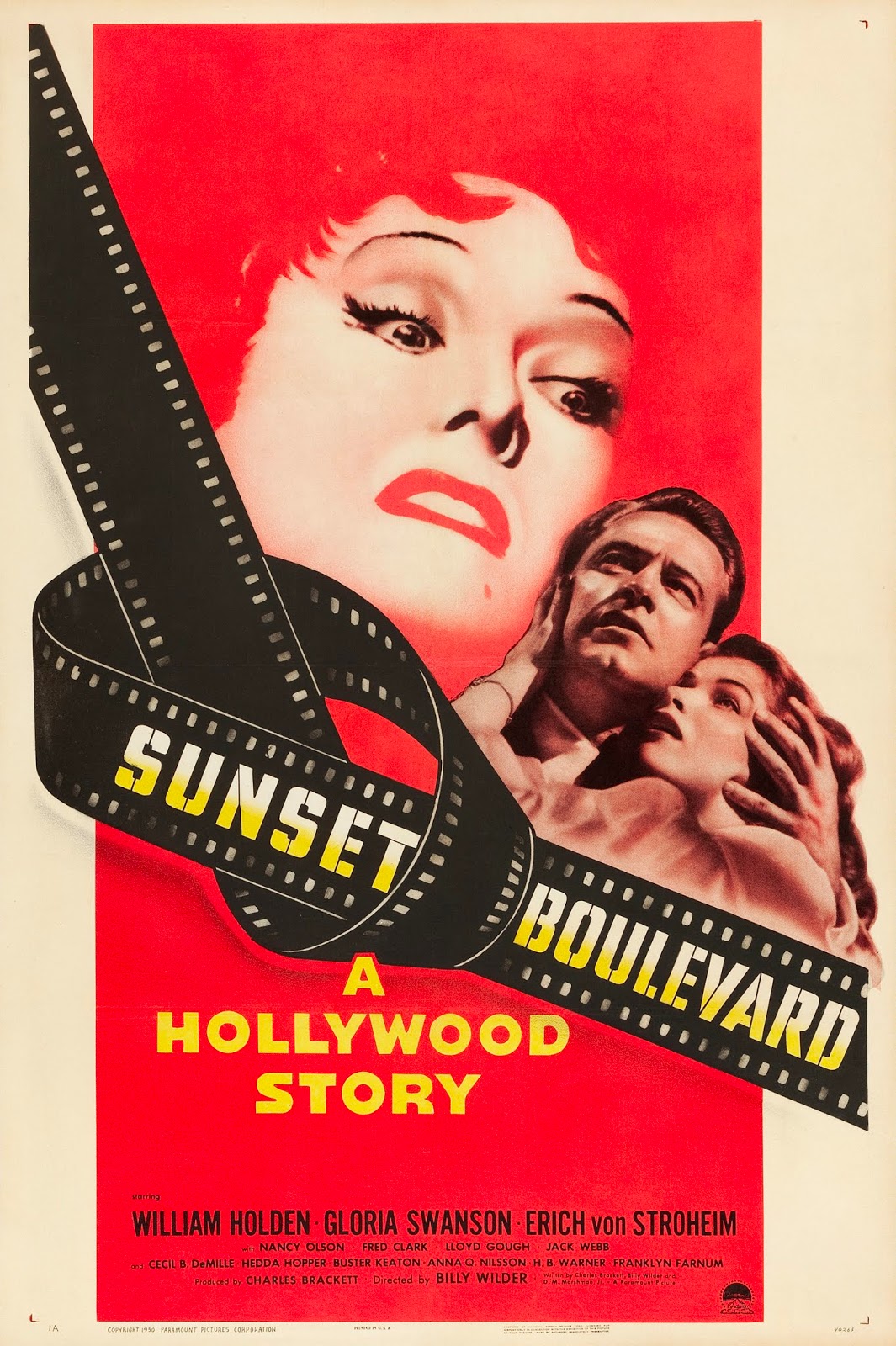
Imagine if Charles Dickens had been born a hundred years later. He would surely have headed to Hollywood – and if he had, surely would have written something like Sunset Boulevard. Because who is Joe Gillis but another shallow Pip, dreaming of fortune and wasting his brains, who turns up at Satis House but stays on to become Miss Havisham’s live-in lover? Sure Wilder is more cynical and bitter than Dickens, but I guess even optimist Dickens killed off Little Nell so maybe he too would have had Joe Gillis end (and start) the film face-down in a swimming pool with three bullets in his back?

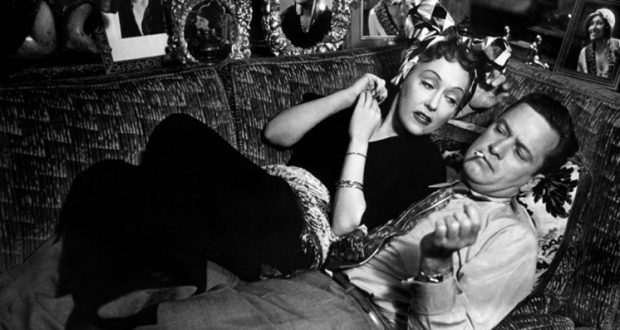
The cops arrive to find Joe (William Holden) exactly like that, while we hear Joe’s acidic commentary outlining exactly how this state of affairs came about. Joe is a screenwriter in Hollywood (he’s in the second tier of a second tier profession in the movies) who can’t get his latest script made for love nor money. Dodging the debt collectors set on reclaiming his car, he pulls into the drive of a mysterious house. It’s the home of Norma Desmond (Gloria Swanson), a forgotten silent film star who now lives out her days in her mansion, dreaming of her past glories and planning for a return to stardom that will never come, tended to by her loyal butler Max (Erich von Stroheim). Joe is roped in first to rewrite the (terrible) script she has been working on for her comeback, and then to become her live-in lover. But can such a situation survive Hollywood’s cold heart and Joe’s own self-loathing and desires to restart his screenwriting career in partnership with ambitious young studio script reader Betty Schaefer (Nancy Olson)?

Billy Wilder’s poison-pen love letter to Hollywood skewers the coldness at its heart. It does this with a triumphant mix of the grotesque and the heartfelt, the surreal and the coldly realistic, an insider’s guide to the world behind the magic of film-making and a story about those shut out of that very world. Hollywood is a shallow, bitter town where you’re either top of the bill or no-one at all. Would people from any other profession write such a bitter denunciation of their job that is also laced with affection and love? Maybe it has something to do with this being a unique profession which you have to love to enter, but once there you work with people who see it as a business.

The smell of desperation is there from the start, with Joe peddling his dreadful sounding baseball movie The Base Is Loaded to a polite but uninterested producer. Dropping a host of names and accepting any number of changes to the story (including changing it into an all-female sporting musical), Joe might once have had a talent but, as he says, “that was last year, this year I need money”.  William Holden was a late choice for Joe, but he is perfect in the part, capturing the air of the self-loathing cynic, a man bright enough to understand he’s shallow, a hack and desperate for any touch of the fame and fortune Hollywood can bring him.

Just like Pip, Joe is a young man who feels he is entitled to a life he scarcely seems to be qualified for. No wonder he settles into a life as Norma Desmond’s gigolo – it may well damage his sense of masculine pride to be an emasculated house-boy, but my God the suits are nice. And what talent does Joe even really have anyway? The script he is peddling barely seems to have any merit at all, and his extensive polish of Norma’s vehicle is still so alarmingly bad it never even gets the slightest consideration from Cecil B. DeMille. But Joe can’t let it go because he’s like a moth drawn towards those bright Hollywood lights.

And those bright Hollywood lights have consumed forever Norma Desmond. Wilder pulled Gloria Swanson out of an enforced semi-retirement to play the silent screen siren, whose career her own so closely parallels. It’s easy to remember Norma as a sort of Psycho-ish grotesque, a demented Miss Havisham living in her own crazy patchwork world of memory and delusion. Swanson certainly channels brilliantly the expression and body language of silent cinema into the part, and Desmond’s use of the sort of exaggerated gestures from that era in everyday life hammers home how her life hasn’t moved on from her glory days. 

But that would be to overlook the immense skill in Swanson’s performance. Norma may be sad, desperate, probably more than a little unhinged – a larger than life Miss Havisham to whom the “the pictures got small”, but she’s also a real person. Swanson makes it clear she genuinely loves Joe, she’s generous when she wants to be, devoted in her own way and immensely fragile. She takes a delighted pleasure in entertaining – a sequence of her reliving her glory days for Joe’s amusement (he couldn’t give a toss, making it all the more painful), capped with a charmingly delightful Chaplin impersonation shows a Norma who loves entertaining, loves putting a smile on people’s faces. Sure she’s obsessed with fame and desperate to reclaim it, but she’s also deep-down a real person.

But then that’s part also of Wilder’s romantic look at cinema. He can totally understand the bitter, destructive “business” part of it, but he still loves the show. His insiderish film is full of loving tributes to old Hollywood. Norma sits and watches real film footage of the real Gloria Swanson. The visit to Paramount Studios delights not only with its “backstage pass” feel, but also in the excitement with which the ageing extras and stage hands greet Norma. Norma’s weekly card games are staffed with genuine silent movie stars like Buster Keaton. Cecil B DeMille even pops up as himself (on the set of his film Samson and Delilah), kindly trying to guide Norma out of the studio even as he lacks the guts to tell her that her dream of a comeback is stillborn.

So how can you not feel sorry for Norma, who is clearly locked up in her haunted house on the outskirts of town, a million miles from reality, surrounded by endless reminders of her past glories. It’s so all-encompassing it traps Joe as well – at one point Wilder shows him trying to storm out, only for his pocket watch to literally get caught on the door. This place of dreams is staffed by the butler Max, a beautifully judged performance of Germanic chill mixed with doe-eyed devotion from Erich von Stroheim, also playing a dark version of himself as Norma’s pioneering former director (and husband) now reduced to protective butler. The entire house is a mausoleum without any escape.

The only character who seems truly positive is Nancy Olson’s wonderfully sweet Betty Schaefer, passionate about crafting a career for herself in the cinema. But even she is ruthlessly ambitious, a woman quite happy to consider jilting her fiancée for Joe’s attentions and has her eye on the price of success. She may have the talent, but she’s also got the sharpness.

Billy Wilder’s film brilliantly explores all these divides and contradictions in Hollywood and its history. Because what is Hollywood but a town that pays lip service to the past, but only has eyes for the future? Particularly with women. Female stars have a short shelf life and then they are dispatched. Poor Norma is still glamourous, still clearly has star quality – but as far as Hollywood is concerned she may as well be a million years old. No wonder Joe, used to these attitudes, is so ashamed to be kept by her – a woman he constantly refers to as a middle-aged friend. 

The dialogue, as you would expect from Brackett and Wilder, is superb from top to bottom with zingers and well-constructed dialogue exchanges so well placed they will survive for as long as there are movies. The film is beautifully shot by John F Seitz – part gothic horror, part dark romance, part neo-realist. Its pacing is perfect, its four act construction perfectly put together. All four of the principals (all Oscar nominated, none winning) are pitch perfect, sketching out characters that feel real and mixed with tragedy and loss as much as they are larger-than-life otherworldliness.

It’s the mixture of the freak show and the heart, in the massive Havishamesque estate, that marks this out as Hollywood does Dickens. The astute understanding of central characters, with enough depth to understand their shallowness, the grotesques that revolve around them but still have their humanity, it’s all there. Wilder mixes it with his own Hollywood emotions and his dry wit and cynicism to create a damn near perfect movie.