Tag: Chris Pine

Dungeons and Dragons: Honour Among Thieves (2023)

Dungeons and Dragons: Honour Among Thieves (2023)

Delightful fantasy action-adventure, well-made fun that leaves you with a warm glow inside

Director: Jonathan Goldstein, John Francis Daley

Cast: Chris Pine (Edgin Darvis), Michelle Rodriguez (Holga Kilgore), Regé-Jean Page (Xenk Yendar), Justice Smith (Simon Aumar), Sophia Lillis (Doric), Hugh Grant (Forge Fitzwilliam), Chloe Coleman (Kira Davis), Daisy Head (Sofina), Jason Wong (Dralas), Bradley Cooper (Marlamin)

I can’t be the only person who had low expectations heading into Dungeons and Dragons: Honour Among Thieves. A swords-and-spells epic based on a game that is a by-word for geeky sadness? No wonder quite a few people said “count me out”. Well, they were wrong. D&D: HAT is a left-field treat, a bouncy adventure that is both loads of fun and also true to the spirit of the original game, full of content for fans while welcoming newcomers with open arms. This is the sort of treat that years from now people will remember as one of the best adventure films of its era.

Set in the world of Dungeons and Dragons – and don’t worry about the overwhelming backstory and cultures of this sprawling role play game, they only intrude when essential to the plot – our heroes are crooks-with-hearts-of-gold: former-Harper (a sort of heroic knight) turned thief Edgin Darvis (Chris Pine) and his best friend, barbarian warrior Holga (Michelle Rodriguez). They’ve been banged up in an arctic prison after a job-gone-wrong, escaping only to discover they were betrayed by oily conman Forge (Hugh Grant), who has used their incarceration to turn Darvis’ daughter Kira (Chloe Coleman) against them. To win her back – and find an amulet that could bring Edgin’s late wife back from the dead – they assemble a team for a dangerous quest. One that could become even more dangerous, since Forge is in league with evil red witch Sofina (Daisy Head).

Perhaps the best thing about D&D: HAT is that it never takes itself too seriously, but also never laughs at or looks down on its source material. It sounds easier than it is: pulling off this sort of trick is extremely hard. Lean too far one way, and the jokes can suggest the cast and crew feel contemptuous about what they doing; go too serious, and the po-faced treatment of a parade of silly names and gobbledegook backstories practically invites the viewer to laugh at it. D&D: HAT though is bouncy entertainment that knows exactly when to ease off the gags for moments of drama, danger and emotion to really land. If you’d told me I’d get a bit choked up watching the end of a role-play game adaptation, I’d have said you were mad.

Pretty much every scene provides a little piece of comic business that delights, almost all of them perfectly executed by a director and cast whose affection for the original material shines out. Watching D&D: HAT you get the impression it must have been fun to make – and to successfully make that sense of fun be shared by the viewing audience is a real challenge to pull-off (take a look at the horrific Thor: Love and Thunder). But there is a real charm here that means emotional plots about loss of a partner, father-daughter divides, broken marriages, traumatised children and persecuted victims carry real impact because we invest in the characters.

That’s in large part due to some knock-out performances of comedy vigour. Chris Pine is the perfect lead for material like this: charming and fun to be around, witty without ever trying too hard (he’s the master here of the throwaway pun) but skilled enough to make us see the heart and yearning below the surface of a fast-talking trickster with a line for everything. He sparks wonderfully off the gruff Michelle Rodriguez, whose surliness hides depths. Fellow gang members Justice Smith and Sophia Lillis (both Americans juggling, it has to be said, very good accents) match them perfectly, turning potentially one-note characters into heartfelt heroes.

D&D: HAT also manages to be true to the spirit of playing games like this. Goldstein and Daley wisely avoided the obvious idea for a film of D&D (“people playing the game in the real world are sucked inside it!”) to instead create the wild, improvisational tone of the game where your decisions guide the narrative. Like gamers, our heroes are a disparate collection of people and species, all with different skills that complement and conflict, given a loosely-defined mission and responding to unexpected curveballs thrown at them by the invisible game runner (the scriptwriters and directors) that keeps them on their toes.

It also captures the way best laid plans in the game can go awry (a portal in a picture, foiled by a picture falling face down onto a stone floor) or how a sudden unlucky movement (or random dice roll) can lead to disaster – a moment perfectly captured where a laboriously detailed series of instructions about crossing a bridge are rendered moot when a character absent-mindedly places a rogue foot on the first stone and instantly collapses it. The characters have a constant feeling of flying by the seat of the pants, much like D&D players often do, and D&D: HAT wonderfully captures this improvisational wildness on screen.

It’s also a very entertaining spells-and-swords romp. There are some great set-pieces, not least a sequence in a sort of lava-filled mine (with the inevitable dragon – both dungeons and dragons make several appearances throughout) and a wild and crazy chase through a death-filled maze arena. The film throws in some inventive Ocean’s Eleven style trickery to get out of difficult situations. In all these moments the cast’s energy, likeability and blend of wit and heart makes each development sing and ensures even routine plots (Can wizard Simon overcome his self-doubt? Can persecuted animagus Doric learn to trust?  Can Holga learn to be honest to the people she loves? Can Edgrin learn to put other people’s needs first?) become tender and engrossing plotlines.

It bounces along perfectly, all hugely entertainingly and with a real winning charm. It spices things up just right with some brilliantly engaging comic turns: no one does slimy insincerity better than Hugh Grant (hysterical), while Regé-Jean Page is a revelation as a hilariously earnest super-powered knight, the only character who really speaks like you sort-of-expect a po-faced D&D character to. Above all, it’s huge fun with a lot of heart. I’ve seen it twice and it knocks spots off almost every other blockbuster for the last couple of years, being purely enjoyable, clever, funny and sweet.

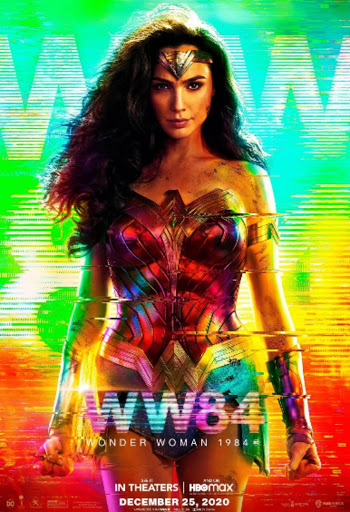
Wonder Woman 1984 (2020)

wonder woman 1984
Gal Gadot is delightful again in superior sequel Wonder Woman 1984

Director: Patty Jenkins

Cast: Gal Gadot (Diana Prince/Wonder Woman), Chris Pine (Steve Trevor), Kristen Wiig (Dr Barbara Minerva), Pedro Pascal (Maxwell Lord), Robin Wright (Antiope), Connie Nielsen (Hippolyta), Kristogger Polaha (Handsome man), Lucian Perez (Alistair), Ravi Patel (Baba Jide), Oliver Cotton (Simon Stagg), Stuart Milligan (President of the United States)

Wonder Woman in 2017 received the sort of rave reviews superhero films dream of. It was refreshing to have an action flick with a woman as the driving force. But Wonder Woman was, aside from that, very much a conventional superhero origins movie, with little truly original about it. Perhaps memories of it as being more revolutionary than it in fact was, lie behind the more hesitant critical reaction to Wonder Woman 1984, in many ways a more entertaining and smarter film.

In 1984, Diana Prince (Gal Gadot) works at the Smithsonian, and fights for justice in her spare time as Wonder Woman (it’s not clear how she this striking woman manages to keep her identity secret bar smashing a few CCTV cameras). However, she leads a private and lonely life, still mourning the death of Steve Trevor (Chris Pine) during the First World War. Her confidence is admired by her ditzy and nervous (and clearly smitten!) colleague Dr Barbara Minerva (Kristen Wiig), who longs to be like her. An exhibit arrives at the Smithsonian – a mysterious stone that legend has it will grant any wish that the person holding it asks. Diana, in a whimsical moment, wishes for the return of Steve – and is shocked when a man claiming to be Steve appears in her life. Dr Minerva meanwhile wishes to be like Diana in every way – little knowing her secret powers. But the stone has other people interested in it: it could be just the tool that ambitious, but failed, entrepreneur Maxwell Lord (Pedro Pascal) needs to turn his life around. But is there a cost for all this gift giving? What will the stone take in return – and can humanity survive a world where the slightest wish could come true?

Wonder Woman 1984 has a clear theme: taking the easy path might help you to get what you want, but an unearned victory is never a true one. It’s a concept introduced from the start, in an opening flashback section where a child Diana takes a shortcut in an Olympics race, and is denied victory by her mentor Antiope (Robin Wright in a welcome cameo). Antiope, in the way of all mentors, reminds her we learn lessons from loss and defeat, and short-cutting around failure never pays off in the end. It’s a clear message that being granted your wishes without working for them is empty.

And of course there is a cost! The stone takes from you the thing you value most, in exchange for what you want the most. In Diana’s case – having made her wish unknowingly, in a single moment of whimsy – what she loses is her strength, the thing that makes possible the thing she values most: her ability to change the world for the better. In turn, when Barbara wishes to be like Diana, the stone takes from her the very humanity that made her such an endearing and sweet person.

These sort of exchanges are not new to anyone who has ever read a fairy tale. But they are told here with refreshing honesty, not to mention a certain level of charm. Above all, this simple morality tale works because we are invested in the characters. Even without the memory of their relationship from the first film, Gadot and Pine are so likeable and charming in this film (Pine in particular is a delight, his eyes filling with wonder at the modern era – from a childish glee at escalators to tear-filled awe at the space programme) that, even though you know from the start what they are doing is “wrong” (after all Steve is inhabiting another man’s body, and every audience eventually the hero needs to do the right thing and give that body back), you still feel their joy at being together and Diana’s anguish at the thought of giving up the only (selfish) thing she’s ever wanted.

The same is true for the other two characters affected by the stone. Although nominally villains, both Wiig and Pascal play characters who, if anything, are deeply-flawed anti-heroes. Wiig is absolutely endearing as the gentle and shy Barbara, so much so it’s heartbreaking to see her freeze up as the film progresses. Pascal is hilariously overblown as a wannabe Gordon Gekko, but his relationship with his son is nicely drawn and his character is tinged with an underlying insecurity. Wonder Woman 1984 is refreshing in that it doesn’t present heroes and villains, but ordinary people needing to find the courage to reject their dreams for reality. Some do, others don’t.

It’s not a perfect film by a long stretch. As with the previous film, a final act fight scene lacks humanity and is dull. The film is probably fifteen minutes overlong. The various action scenes are well staged, but lack freshness. Some of the humour doesn’t always land. It’s hard not to snigger at a late act revelation of a new power for Wonder Woman. And while the film thankfully avoids the crassness of the first and its trenches setting, a photo of Wonder Woman helping to liberate concentration camps feels horrendously out of place (it’s meant to show her goodness, but I just wondered why on earth did she wait so long to do anything about the Holocaust?).

But the bad is outweighed by the good in a genuinely entertaining and charming movie whose freshness and lightness exceeds the original. Gal Gadot is still wonderful in the lead role – determined but sweet – Chris Pine does some of his best work and Wiig and Pascal are very good. I’d confidently say this is a better film than the first, a richer character study inspired by fairy tales, that really gets to the emotional heart of its lead character. I may be alone in that, but that’s what I think.

Outlaw King (2018)

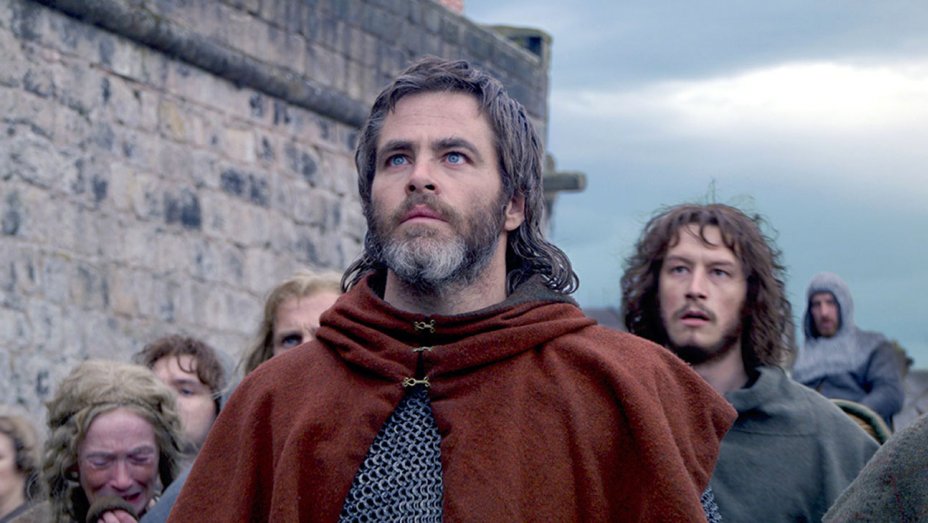
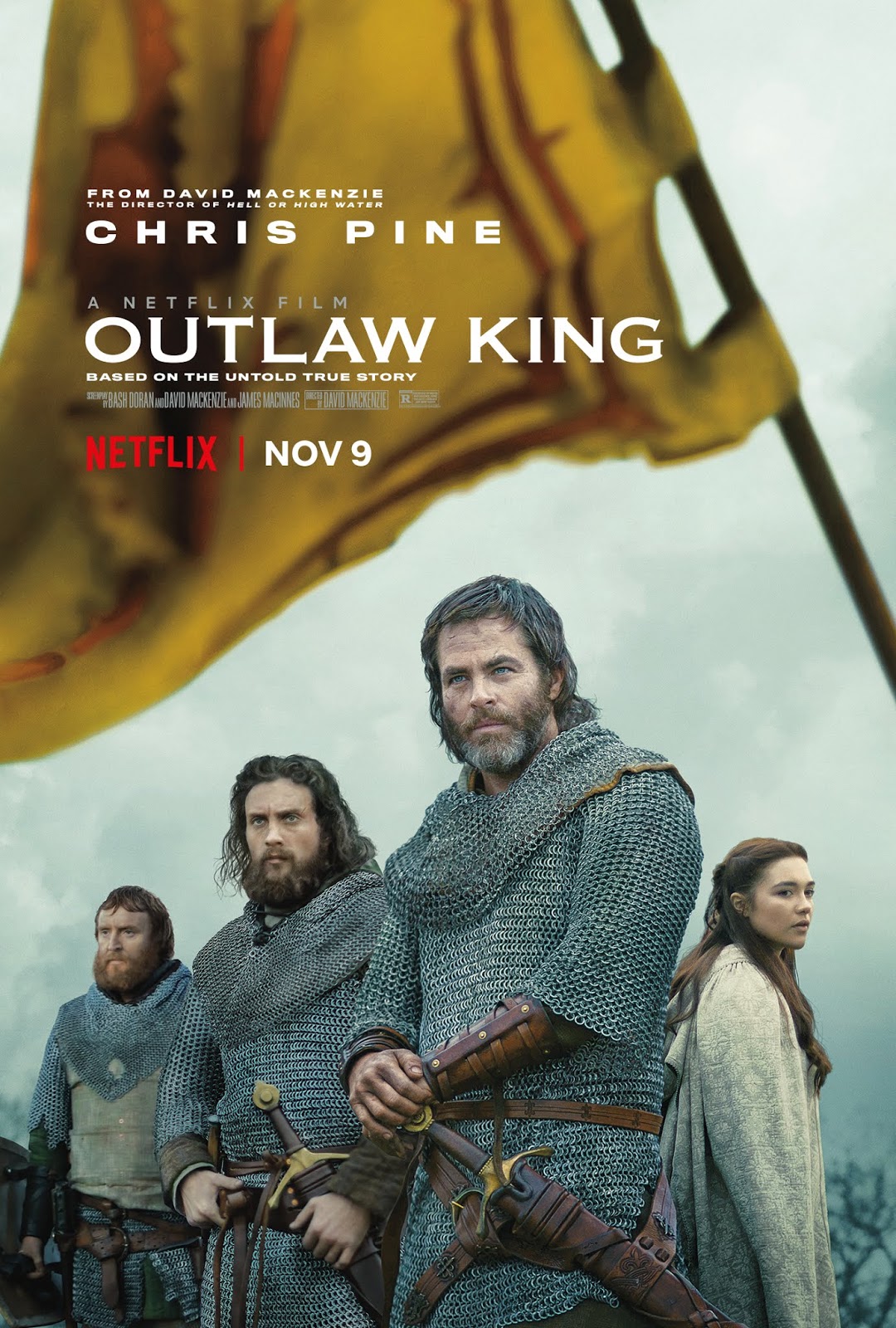
Chris Pine leads Scottish rebellion in Netflix’s Outlaw King

Director: David Mackenzie

Cast: Chris Pine (Robert the Bruce), Aaron Taylor-Johnson (James Douglas), Florence Pugh (Elizabeth de Burgh), Stephen Dillane (Edward I), Billy Howle (Edward II), Tony Curran (Angus Macdonald), Sam Spruell (Aymer de Valence), Lorne Macfadyen (Neil Bruce), Alastair Mackenzie (Lord Atholl), James Cosmo (Robert de Bruce), Callan Mulvey (John Comyn)

In 1995 the world went crazy for Mel Gibson’s Braveheart, which turned William Wallace from a largely forgotten historical rebel into a martyr for independence. Outlaw King is an almost spiritual sequel that follows the life of Robert the Bruce, the eventual winner of Scottish independence. It picks up almost immediately from the death of Wallace and follows the struggle of the Bruce to take the throne. But I’d be surprised if it has the same impact.

Outlaw King is a fairly decent pick-up of events, and it tries to get a balance between drama and history – one it more or less manages until the final act. In the aftermath of a failed Scottish rebellion, Robert the Bruce has the advantage of his father (James Cosmo) being an old friend of Edward I (Stephen Dillane). After renewing his oath of loyalty to Edward, Robert is given land, influence and a marriage to wealthy noblewoman Elizabeth de Burgh (Florence Pugh). However, after his father dies regretting the pact and William Wallace is brutally executed by the English, Robert uses the public outrage as a boost to putting together his own claim to the Scottish throne. Murdering his chief rival in a church, he raises the flag of rebellion against the English and leads an army to take back Scotland. But things swiftly go wrong, and Bruce finds himself on the run and declared a rebel.

Outlaw King gets a lot right. It’s impressively filmed and looks fantastic. The photography by Barry Ackroyd is wonderful, in particular the use of candles for interior scenes which bring a brilliant golden glow to the action. Mackenzie is an ambitious and imaginative director, and he pushes himself to the limit here. The opening nine minutes of the film is one long continuous shot that takes in debate, a sword fight, court room intrigue and the firing of the largest trebuchet you are going to see outside of Warwick Castle. With the camera swaying and bobbing around in this sequence you have to admire the chutzpah – even if I can see that some viewers (my wife included!) might think it showing off. 

Mackenzie gets equal flourish out of the film’s many combat scenes. There is, to tell the truth, probably one too many of these bloody melees, but the camera gets a real sense of the blood, mud and gore that medieval battle involved. With brilliant use of hand-held immersive camerawork, each of these battles really gives you a sense of bloo-spattered chaos. Sometimes things are hard to follow – at least one death in combat is met with fury, but I’m not entirely sure who that guy even was (and it’s never mentioned again). But you’ve got to admire the skill of the film-making.

It’s the story itself where the film sometimes falls a bit flat. It does get a really good sense of the medieval, I will certainly give it that. The design and attitudes of the film are pretty perfect, and the stakes that everyone is clashing for feel very real. But the film encounters problems more and more as the film drifts into fiction and away from history. While the realpolitik of Bruce’s move to have himself declared king has a ruthlessness that feels real, the film’s attempt to build a personal rivalry between Bruce and the future Edward II feels forced from the start. By the time the film’s conclusion attempts to boil the entire campaign for Scottish independence into a mano-a-mano clash between the two on the battlefield (that of course never actually happened) you start to feel it’s getting very silly. Not least as figures who in real life would be invaluable bargaining chips are allowed to walk free from the battle field, to demonstrate the moral superiority of our heroes.

It’s a part of the general drift of the storyline that gets a little less compelling the longer it goes on. Maybe this is because once Bruce has his initial army destroyed and his first campaign to grasp power defeated, the story of him being on the run and carrying out guerrilla hits never feels fresh and original. We’ve seen it before – and the way the film generally avoids developing the supporting characters fully often means your focus starts to shift. After a really strong start, the film becomes more and more generic, Bruce himself becomes more and more a perfect leader rather than the almost Machiavellian character he started as, and the focus turns more and more into making it a conventional goodie-vs-baddie clash. It becomes something more forgettable, more like something you’ve seen before, and turns a campaign that took almost ten years into a rushed “and then they won this battle and everything was fine” ending.

There are many strong moments in there though, not least the generally decent performances from the cast. Chris Pine as Robert the Bruce sounds like the sort of casting decision made in hell, but he actually handles himself very well. His accent is very good, he captures a lot of the complexity of Bruce as a man who wants to be good but must sometimes be ruthless, and he brings a large dollop of charisma to the role so that you never really find yourself questioning whether he is a man others would follow. He doesn’t set the world alight, but does a good job.

The film’s stand-out turn however comes from Florence Pugh, who brings her customary intelligence and charisma to the complex part of the Bruce’s wife. At first positioned into an arranged marriage, she quickly proves both her independence and value, but also her strength of character. Far from being just a hostage – the role history largely assigned her – Pugh’s performance always makes her a character with agency, a woman determined enough to be loyal to the end once she has made her choices. There are other decent performances as well, in particular from Stephen Dillane as an authoritarian hard-ass Edward I, while Billy Howle gets to a play an Edward II who feels true (the film avoids references to his homosexuality, but does allow him to be the fearsome warrior – if hopeless general – he was, as opposed to the homophobic cartoon he was in Braveheart).

Outlaw King,though, just isn’t quite good enough. It’s fine for a decent watch on a Saturday night. In fact Netflix is just about its perfect platform: if you stumbled across this while scrolling through the library, and you were in the mood to click on it, you wouldn’t be disappointed. But even though it’s visually impressive and enjoyable, it’s also increasingly predictable and even a little bit empty. It doesn’t quite come to life as much as it should and eventually settles for being something quite traditional.

Into the Woods (2014)

James Corden and Meryl Streep in the strangely flat Into the Woods

Director: Rob Marshall

Cast: Meryl Streep (The Witch), Emily Blunt (The Baker’s Wife), James Corden (The Baker), Anna Kendrick (Cinderella), Chris Pine (Cinderella’s Prince), Tracey Ullman (Jack’s Mother), Christine Baranski (Cinderella’s Mother), Johnny Depp (The Big Bad Wolf), Lilla Crawford (Little Red Riding Hood), Daniel Huttlestone (Jack), Mackenzie Mauzy (Rapunzel), Billy Magnussen (Rapunzel’s Prince), Tammy Blanchard (Florinda), Lucy Punch (Lucinda), Frances de la Tour (Giant’s Wife), Simon Russell Beale (Baker’s Father)

Musicals are big box office. Everyone has a side of themselves that enjoys the razzmatazz of song and dance numbers. In the world of the musical, Stephen Sondheim is often seen as the pinnacle of musical master craftsmen – and for years, studios had tried to bring Into the Woods, his musical reimagining of fairy tales, to the big screen. Was it worth it? Um, possibly not.

A baker (James Corden) and his wife (Emily Blunt) are desperate to have a child. A witch (Meryl Streep) claims she has cursed them after the baker’s father (Simon Russell Beale) stole magic beans from her garden. She will lift the curse in return for four items she can use to lift a curse on her – a milk white cow, a red coat, a glass slipper and some golden hair. Well if you know anything about fairy tales it won’t take you long to figure out which tales we are going to be heading into with that list – and sure enough Jack (Daniel Huttlestone), Red Riding Hood (Lilla Crawford), Cinderella (Anna Kendrick) and Rapunzel (Mackenzie Mauzy) all make appearances. But here the happy ending comes half way through the story – how will the characters deal with the impact of their choices when they have to face the consequences of their actions?

Okay I’m going to be honest, Into the Woods left me a little cold as just a musical. I didn’t really get into any of the numbers as they were playing, and the basic storyline is an odd combo: half satire, half social commentary on the dangers of getting what you want at all costs. I mean that’s clever stuff, and some big themes, but the movie certainly seems to wear them very heavily. And the movie also fails to make the musical sections engaging or inspiring – instead they are rather leadenly staged with very little real vibrancy or joy.

What’s already a rather disengaging musical isn’t helped by Rob Marshall’s leaden direction, which positions each scene with a flatness where the actors get lost in the wide screen and murky set design. Into the Woods is an astonishingly boring film to look at, murky and dimly lit, mistaking lighting (or lack of it) for mood. Every single scene is dingy and poorly framed, with events occurring in front of the viewer but never really getting engaging or interesting. Nothing strikes you interest.

It becomes a film that really isn’t that interesting to watch. This is despite some very strong efforts from nearly all the cast. Meryl Streep inevitably captured most of the praise as the Witch, and she is good, but there is something a little too artificial about her performance for my taste, something not quite heartfelt. But Emily Blunt is very good (and an excellent singer as well – who knew!) as the Baker’s wife, full of humanity and warmth. Chris Pine brings some excellent comic timing to the impossibly vain and preening Prince. There are plenty of other good moments as well, as most of the cast throw themselves into it. 

But these moments keep getting lost in sequences that just aren’t interesting. For every amusing sing-off between the two princes on a waterfall, or moment of genuine warmth and charm between the baker and his wife, we get sequences of unbearable smugness (principally Johnny Depp’s appalling look-at-me cameo as the Big Bad Wolf). British character actors abound all over the place, but most have virtually nothing to do. In addition, the violence and horror elements of the original musical – as the cast deal with the terrible consequences of their actions and turn on each other – are toned down considerably.

In fact, as leading characters start dying left, right and centre, it’s not really shocking enough (as the darkness of their fates is skirted around), as Marshall’s camera meekly turns away  from anything that might cause a fraction of upset. Wasn’t the whole point of fairy tales – and I suppose the original musical – to deal with both the darkness and the light? Why make such a dark musical and then try and force it into being a 12A rating? Why make a movie that tackles dark themes and then shy away from them as often as possible?

It’s part of the slightly incoherent mood of Into the Woods – it never really clicks. It doesn’t really offer much to enjoy: the musical numbers (after the opening title number) are pretty unengaging, and they are filmed with a dull unimaginativeness. Despite the money spent on it, the film looks really cheap. While there are a couple of good performances, others – like Anna Kendrick – are trying a little too hard. It’s a story that is supposed to be about the dark heart of fairy tales, and how reality after a happy ending often isn’t as jolly as we think it is – instead it’s a story that never really feels like it’s about anything.

Jack Ryan: Shadow Recruit (2014)


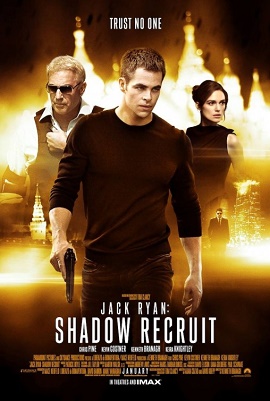
Chris Pine comes out from behind the desk to head into the field in Jack Ryan: Shadow Recruit

Director: Kenneth Branagh

Cast: Chris Pine (Jack Ryan), Keira Knightley (Cathy Muller), Kevin Costner (Commander Thomas Harper), Kenneth Branagh (Viktor Cherevin), Len Kudrjawizki (Konstantin), Alec Utgoff (Aleksandr Borovsky), Peter Andersson (Dimitri Lemkov), Elena Velikanova (Katya), Nonso Anozie (Embee Deng), Colm Feore (Rob Behringer), Gemma Chan (Amy Chang), Mikhail Baryshnikov (Minister Sorkin)

Jack Ryan is the all-American, ordinary-analyst-turned-CIA Agent at the centre of the late Tom Clancy’s books. He’s been played by a range of actors, from Alec Baldwin to Ben Affleck via Harrison Ford, but his character remains the same – a boy scout, a man of principle and simple courage, pushed to do what must be done. He’s smart and quick-witted. Jack Ryan: Shadow Recruit was meant to serve as another reboot, to restart the Jack Ryan franchise after a mixed reception to Ben Affleck’s The Sum of All Fears. Sadly, it was another false start.

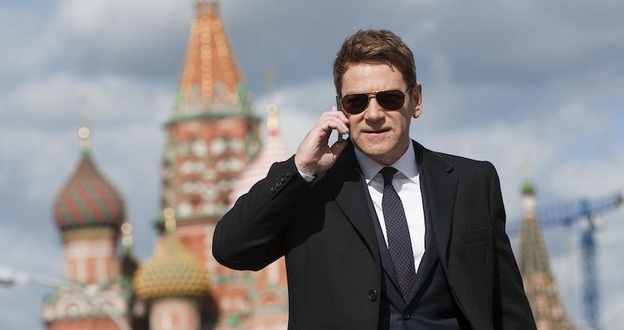
An origins story, it opens with Ryan (Chris Pine) studying at the LSE, before joining the marines in the wake of 9/11. He is critically injured in a helicopter crash, where he hauls two men from the wreckage while suffering from a broken back. Learning to walk again, he falls in love with Dr Cathy Muller (Kiera Knightley) and is recruited as a financial analyst by Thomas Harper (an effectively gruff but charismatic Kevin Costner) from the CIA’s Department of Making-Sure-We-Don’t-Get-Hit-Again (catchy name). Collecting financial intelligence while working as an auditor at a Wall Street firm, he notices some worrying financial deals from funds controlled by Russian tycoon Viktor Cherevin (Kenneth Branagh). Going to Moscow under the guise of auditing Cherevin, he and Cathy quickly find themselves embroiled in a dangerous terrorist conspiracy.

Jack Ryan: Shadow Recruit is decent fun. It’s also a rather impersonal and safe piece of film-making, that structurally and creatively feels like a 1990s action film reset in the 2010s. In a world of Jason Bourne, it genuinely feels a little old-fashioned and uninspired. It takes recognisable elements from dozens of action films and remixes them with a certain flair, but not a lot of imagination. It feels like the least “Branagh” film Branagh has directed, the camerawork being surprisingly restrained and contained considering his love of sweeping opera and dynamic, showy visuals.

But Jack Ryan is not a bad film, it’s just an enjoyably average one. It puts Ryan front-and-centre of the film, and Chris Pine really delivers in establishing Ryan’s old-fashioned principles of right and wrong, his sense of duty and his willingness to do what needs to be done when called. Pine also does a great job of demonstrating Ryan’s fear and panic as he finds himself increasingly out of his comfort zone – not least in a terrifying hotel bathroom brawl with an under-used Nonso Anonzie – in the aftermath of which he drops his mobile while trying to call for backup, and then can’t remember where the hell “Location Gamma” is when told to report there to meet a contact.

Of course, this incarnation of Ryan as an analyst rushed into the field doesn’t last, and the film succumbs from there to turning Ryan into an old-school action man, the sort of guy who drives cars at 85 mph through Moscow streets with ease, jumps on a motorbike and roars off in pursuit of a bomb with maverick self-assurance and takes on a trained assassin with a Die Hard-ish confidence. It’s a shame that the interesting character work of the first 2/3rd of the movie gets lost in the final third – but it’s another sign of the film delivering what it feels an action film should be rather than finding something unique and original.

At least Pine gets some good material to work with, which is more than can be said for Kiera Knightley. For all her American accent, this is Knightley at her most British Rose, her toothy, coy grin ever-present in every scene – and that’s about all she contributes. Not that this is entirely her fault, since Cathy is a character sketched on a fag packet, a successful doctor who obsessively worries that her husband is having an affair, making her feel weaker and needier than the filmmakers perhaps realise Later she exists to be a Damsel in Distress, and is then given a spurious involvement in identifying the villain’s target – which she identifies not because it is a medical facility she is familiar with, or perhaps somewhere she visited as a child or on a professional call-out, but solely because Her Man works there. (As if these CIA geniuses couldn’t work out that a financial terror attack on the US might be targeting Wall Street).


The villain’s plot is dully labyrinthine, but can be safely boiled down into having something to do with financial chicanery and a bombing attack, to destroy the US economy. Not that it really matters – it allows a suitable mix of booms, bangs and the sort of tense “breaking into the office to download the files against the clock” sequence that you’ve seen several times before. Kenneth Branagh cuts himself a bit short with Cherevin, a character who seems sinister but is really barely competent and hits every villain trope from pervy leering to executing an underling. We barely get any sense of his motivations or his background.

He’s also probably the only Russian nationalist in the world who is a Napoleon Bonaparte fan. Last time I checked, Napoleon was the enemy in the War of 1812 that redefined Russian history for the next 100 years. But then I’ve read a few Napoleonic era books, so I’m biased… This film clearly knows nothing about Bonaparte, with Ryan declaring at one point that the planned attack is “straight out of Napoleon’s playbook” – how Napoleon’s trademark fast movement and combined use of infantry and artillery, drilled to perfection, relates to a basic distraction strategy I don’t know but never mind. But then this is a dumb action film that name checks Napoleon because you’ve probably heard of him, rather than because it makes sense.

There is a lot to groan at, or say meh to, in Jack Ryan. But yet, I’ve seen it three times and it grows on me each time. Chris Pine is a very likeable screen presence, and the build-up of the film works well. Branagh directs it with a taut efficiency, even if it’s a film that lacks any real inspiration and feels like one for the money. But it presents its 1990s-style action beats with enough conviction and sense of fun that you kinda go with it. Yes it’s totally forgettable, but run with it and you’ll find yourself strangely charmed by it.

Wonder Woman (2017)


Gal Gadot prepares to save the world as Wonder Woman

Director: Patty Jenkins

Cast: Gal Gadot (Diana), Chris Pine (Steve Trevor), Robin Wright (Antiope), Danny Huston (General Erich Ludendorff), David Thewlis (Sir Patrick Morgan), Connie Nielsen (Hippolyta), Elena Anaya (Isabel Maru), Lucy Davis (Etta Candy), Saïd Taghmaouri (Sameer), Ewen Bremner (Charlie), Eugene Brave Rock (Chief Napi)

The DC universe has largely been a feeble attempt to parrot the success of Marvel, but without the latter’s charm or sense of fun. Each film has been a crushingly, overwhelmingly, teenage-boy focused series of grim super-bashing. So it’s a refreshing change that for their fourth film we get something different: lighter, funnier, warmer and focused on women rather than men.

On a hidden island, the Amazons live in hiding, waiting for the day they will return to save humanity from the villainous fallen god Ares. Diana (Gal Gadot) is the daughter of Hippolyta (Connie Nielson) queen of the Amazons, trained by Antiope (Robin Wright) into becoming their greatest warrior. Their timeless world is shattered in 1918, when American pilot Steve Trevor (Chris Pine) crashlands his plane on the island – and explains the world is torn apart by war. Convinced this is Ares’ influence, Diana leaves the island with Steve – and finds herself thrown into a world she scarcely understands, with only her faith in the goodness of mankind to sustain her.

Wonder Woman is a change of pace from previous DC filmes – largely because it is pretty good. For the first time in this struggling universe, we have a bit of lightness and humour, and some engaging central characters. Which, considering the dark grimness of the previous entries is saying something. It’s bright, feels like a comic book (in a good way), has a decent story arc and, most importantly, you care. Is it the best comic book movie ever made? Of course not, but it’s a damn solid effort.

A lot of this is due to Gal Gadot being such an endearing lead. She gives Diana a perfect blend of serene, super-powered action goddess and naïve, charming lost-out-of-time sweetness. So one minute she can cooing over the first baby she’s ever seen, the next she can be laying out baddies in a scuffle. Her unquestioning faith in the fundamental goodness of people makes her innocence very winning. In fact, her secret weapon is empathy, a quality the film really embraces. Gadot’s skill is in keeping such unremitting goodness and positivity hugely loveable. She is terrific.

The film deals with her head-turning beauty with a witty affection (“You put specs on her and she’s suddenly not the most beautiful woman you’ve ever seen?” Etta comments on one particularly feeble disguise option Steve suggests). In fact, the romance between Diana and Steve (Chris Pine similarly engaging as an “above average” man head over heels in love) is really well drawn – he clearly adores her, while she has a shy, almost teenage crush which blossoms over time into a genuine affection. It’s a very innocent and heart-warming romance, that plays out extremely well.

Needless to say as well, the film makes a fine counter-balance to the leering cameras you see in other films. Diana’s unmatchable competence is immediately recognised by Steve: while Steve understands the world, Diana is very much the hero, for all her fish-out-of-water naïveté. The film holds off a reveal of the costume for a long time – but when it is, it’s not a sexualised moment, but one of awe. The opening section of the movie, with its Amazonian islanders, also allows plenty of ass-kicking to be given to the women (Robin Wright is especially terrific as an Amazonian general – she should get her own Taken style action series).

Wonder Woman is not perfect. Structurally it’s pretty similar to other origin stories. Much of the backstory makes little sense, while the powers (or not) of the Amazonians in comparison with Diana are poorly explained. Away from the charm of the lead characters, nothing feels particularly new – none of the action sequences feel unique, and are shot with competence rather than inspiration. The final battle briefly looks like it might do something different, before it becomes an all too familiar CGI bashing.

I’m also not sure about setting the film in the First World War. Seeing Diana lead a successful charge through the trenches where real people died in their thousands, somehow doesn’t sit quite right. It’s uncomfortable to watch a cartoon hero walking across no man’s land into gunfire, just as thousands of real people had to, but without super-powers to make it a moment of awesome cool. They just died; it wasn’t the setting for an action sequence, oh a moment of “wow she’s cool”.

I’m not sure about the film’s use of the grim trenches of the First World War for kick-ass action

Unlike the Second World War (where at least we know the SS were completely despicable) its portrayal of German soldiers as mostly faceless villains feels unjust – these were largely just ordinary people in a horrendous situation. Making Luddendorf a psychotic, lunatic also feels uncomfortable – he was real. Would it have been so difficult to make up a General von Baddie? (It doesn’t help that Danny Huston gives a truly abysmal performance of over-the-top hamminess). This is an area where Captain America handled its setting much better – the film may have been set in a real war, but the villains are specifically Hydra soldiers, a made-up army of made-up people who had consciously sworn allegiance to Evil. The First World War was a complex tragedy in shades of grey – presenting it as a good vs evil, with the Germans eager to embrace a horrifying nerve gas, just doesn’t feel right.

The strengths of the film are away from the action, and I think that’s why it has formed a bond with people. You genuinely care and root for Diana and Steve. It’s got wit and humour and it doesn’t take itself too seriously. When the action really kicks off the film isn’t anything special, but before then it has its moments: a charming sequence where Diana tries on (and breaks with various fighting moves) female costumes of the 1910s; a beautiful Renaissance-painting style flashback to the backstory of how the gods fell; the early fumbling scenes of romantic interest between Diana and Steve. It’s where the heart of the film is.

In fact that’s what the film is really about (and what really makes it work) – the heart at the centre. It gets a little bit lost in all the booms and bombast of the second half, but there is more than enough of it in the first half to carry it through. When the film is tightly focused you can really feel it coming to life. The more of that the better. It’s also a breath of fresh air for presenting such a strong female lead, whom the men are defined by their relationship to (rather than vice versa). It’s fun and it’s heart-warming. Its old ideas presented from a fresh perspective

Hell or High Water (2016)


Chris Pine and Ben Foster carry out a series of personally motivated bank robberies in Hell or High Water

Director: David Mackenzie

Cast: Jeff Bridges (Marcus Hamilton), Chris Pine (Toby Howard), Ben Foster (Tanner Howard), Gil Birmingham (Alberto Parker), Marin Ireland (Debbie Howard), Katy Mixon (Elsie), Kevin Rakin (Billy Rayburn)

In West Texas, two brothers – divorced father Toby Howard (Chris Pine) and his ex-con brother Tanner (Ben Foster) – carry out a series of early morning raids on branches of the Texas Midlands Bank. Their robberies are investigated by Texas Ranger Marcus Hamilton (Jeff Bridges) working his last case before retirement, and his partner Alberto Parker (Gil Birmingham). The brothers however are motivated by more than just a desire for money – and these motivations drive them to ever more desperate and dangerous actions.

Hell or High Water is a fine piece of skilled professional film-making. The story is tightly scripted, and Mackenzie’s direction marries up a modern outlook with the style of a classic John Ford western. But, for me, it reaches for a thematic richness that isn’t quite there. It’s in the same territory as No Country for Old Men but it never achieves that film’s complexity. It creates characters we care about, and the story keeps us gripped, but it lacks that certain extra dimension that profoundly moves us. It tries to tell itself (and us) that it’s a profound exploration of themes around life and death, but it never really reaches these feelings – its grasp is less than its reach.

But it’s still a hugely enjoyable and impressive movie. Mackenzie’s direction is superb, detailed and smooth, and he is able to bring to life both the drama and the action. The story has an old school heist quality, with our gangsters sort of proto-Robin Hoods, naïve enough for us to invest in their actions, but dangerous enough for us to understand why events spin outside their control. Sheridan’s script is full of punchy lines and genuine emotional weight. The plot line gets a bit bogged down in the ins and outs of the reasons why our ‘heroes’ are doing what they are doing, but there is an emotional truth to it that really works.

The film also creates a wonderful sense of Texas as a land that seems to have only just moved on from the Wild West. Everyone in the film seems to be either packing heat or wearing a Stetson (or both). Genuine cowboys guide cattle across a road. The rangers have an old school gruffness about them, staking out banks from across the road in saloon bars that don’t seem to have moved on from the days of Wyatt Earp. At the slightest sign of danger, ordinary people reach for their guns and start shooting. Everything takes place in dusty countries, or rural feeling towns. I can barely remember seeing a computer or mobile phone. The whole film feels slightly out of step with the modern world.

It also draws some very fine performances from its actors. Chris Pine may never have been better than as reluctant bank robber Toby. Toby is a classic western outsider, a man who is working to protect his family and preserve their future – often by dangerous means – but accepts that this family life he is building has no place for him in it. Pine brings the part a finely judged sadness, a sense of a man without a place in the world. Ben Foster is equally good as his firecracker brother, a damaged anarchist at heart whose love of impulsive danger will have fatal consequences.

The heart of the movie though is Jeff Bridges’ ranger, a marvellous portrait of gruff-old school machismo. Bridges invests this role throughout with a humane decency, an anger at the distress and violence. His friendship with his partner Alberto (a touching Gil Birmingham) provides much of the affectionate heart of the movie, their good natured joshing and banter a continual source of humour. Bridges’ world-weary, out-of-time quality matches perfectly with the timeless mood of the movie. It’s a beautifully judged, simple, unshowy performance.

It’s a beautifully judged combination of crime and family thriller, while its ability to balance the old-school feeling and aesthetic of West Texas with a punchy modern-feeling tale of the greed of bankers, works extremely well. It’s got a dark Butch Cassidy feeling to it, and the film’s focus is tightly kept on the four leads, allowing the audiences understanding of them to grow and develop. By the conclusion of the film, your loyalties will be firmly divided between both the law and robbers, summed up best by a beautifully played elegiac final scene, laced with regret, sadness and tension.

But despite all this, it never quite breaks out of its pulpy roots to become something else in the way that No Country for Old Men manages to do. Wonderful character study as it is, it feels like a film that wants to make a broader, spiritual comment about the American way and modern masculinity. It doesn’t quite manage to do this. I don’t feel that this film really succeeds in suggesting it is about much more than what’s on the surface.

But that doesn’t matter so much, when the surface is so strong and as well directed, acted and written as this. If Hell or High Water is, at the end of the day, just a smart cops-and-robbers story, it’s certainly one that’s full of freshness and intelligence and grips your interest from start to finish. In a world where Hollywood churns out over-promoted average films, it stands out as something far more heartfelt, expertly crafted and hugely enjoyable.