Tag: Claire Danes

Me and Orson Welles (2008)

Me and Orson Welles (2008)

A star-turn from McKay and a brilliant theatrical reconstruction makes a charming comedy

Director: Richard Linklater

Cast: Zac Efron (Richard Samuels), Claire Danes (Sonja Jones), Christian McKay (Orson Welles), Ben Chaplin (George Coulouris), James Tupper (Joseph Cotton), Eddie Marsan (John Houseman), Leo Bill (Norman Lloyd), Kelly Reilly (Muriel Brassler), Patrick Kennedy (Grover Burgess), Travis Oliver (John Hoyt), Zoe Kazan (Gretta Adler)
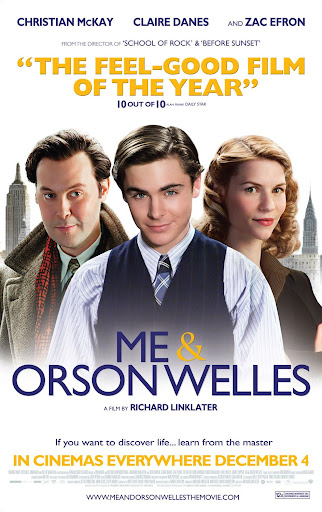
In the 1930s Orson Welles was the Great Man of American theatre, a genius blessed with Midas’ skill to turn everything he touched to Gold. He had conquered the stage and his success on radio transmitted his fame into households across America. All this and he was not even thirty. On top of his boundless charisma, creativity and magnetic leadership qualities, he was also vain, selfish, boundlessly ambitious and self-obsessed, seeing other people as little more than extras in his drama. It’s an exploration of the man central to Linklater’s Me and Orson Welles, combined with the film’s wonderfully fond exploration of that magical world behind the curtain in the theatre.

Me and Orson Welles charts Welles’ landmark Broadway production of Julius Caesar: a modern-dress marvel (‘the fascist Caesar’) that reimagined a sharply cut, pacey production set in a world of jackboots, black shirts and Nuremberg-esque beams of light. Welles (Christian McKay) was, of course, front-and-centre as Brutus with his Mercury theatre players (nearly all of whom followed him to Hollywood for Citizen Kane) all around him. Newest to the cast is 17-year-old Richard Samuels (Zac Efron), away from school, dreaming of being an actor and falling in love with older production manager Sonja Jones (Claire Danes). As the production stumbles towards the stage under Welles’ mercurial hand, Richard worships Welles and loves Sonja – but will his hero-worship survive sustained contact with Welles?

Linklater’s film is set in a gorgeous recreation of 1930s Broadway theatre, full of love for the greasepaint, backstage gossip and theatrical tricks that create a world on stage. It also features an astonishingly accurate recreation of this seminal production, staged and lit to perfection, which gets as close as we can to capturing some sense of the astonishing experience the first night audience had watching the sort of Shakespeare production they had never seen before (Dick Pope, harnessing his experience of recreation Gilbert and Sullivan in Topsy-Turvy deserves major credit for his cinematography here, perfectly capturing Welles’ pioneering use of light).

Welles’ flaws are slowly discovered by Richard Samuels – a charming, deceptively light and winning performance by Zac Efron. Samuels is at first bowled over by Welles charisma – and Welles enjoys the ego-trip of taking a star-struck young man under his wing, who he can tutor and mould (who, after all, doesn’t love having a disciple). What Me and Orson Welles interestingly does is to have its young lead slowly work out that Welles may be a genius – but he’s also a fundamentally, principle-free shit who never means what he says, doesn’t think twice about dropping people when they have served their purpose and largely sees conversation as a one-way street where Welles monologues and the other person listens (and certainly never, ever, contradicts – Welles never forgives correction).

But Welles dominates the film, like he dominated life. He’s brilliantly portrayed by Christian McKay in his first major film role. McKay, an unknown, was selected after Linklater was wowed by his one-man show about the Great Man. (Linklater refused calls from the producers to replace him with a more famous actor). McKay dominates the film in what is not only a superb capturing of Welles vocal and physical mannerisms, but also a capturing of his mix of utter charisma, God-given talent and overwhelmingly selfish egotism. McKay roars through every scene with the same force-of-character you imagine Welles had, bowling over everyone around him and shaping the world into what he wishes it to be. Problems of money, timing and people are waved away (or left to be fixed by Eddie Marsan’s put-upon version of John Houseman) and McKay’s Welles uses sheer force of will to turn every event, outcome and single moment into an intended triumph (whether it is or not). Me and Orson Welles brilliantly captures Welles ability to shape his world.

We see the way he overwhelms the personalities of those around him. People like Joseph Cotton (a superbly captured performance by James Tupper) both love him and know that’s he’s a selfish, arrogant git who doesn’t seem to care about anyone but himself. Others, like Ben Chaplin’s tortured George Coulouris, allow themselves to be mothered by Welles, even though they know his motivations are more for the show itself (and the glory that shall be Welles’). Welles is the guy who gives the same heartfelt pep-talk to multiple actors, and writes identical jovial thank-you cards to all on opening night. The guy who uses nicknames for those around him because it’s a way to subtly assert control. Linklater’s film recognises his genius, makes him overwhelmingly attractive in his gung-ho confidence, but – and this is the brilliant thing about McKay’s stunning performance – also exposes his deep character flaws.

It superbly captures his vanity, selfishness and self-occupation. Welles cares little for anyone, assuming he can brow-beat or overwhelm them to fulfil his wishes. That could be a set designer, furious at Welles hogging credit for his work in the programme (Welles promises this will be amended, forgets about it and then later – when it’s too late to do anything about it – bluntly says he has no intention of not taking credit). It could be the radio show he turns up to record, clearly having not read the script, walking in seconds before live broadcast and promptly improvising a superb monologue (based on The Magnificent Ambersons) which at first puzzles, frustrates and then stuns into fawning admiration his fellow actors. What’s clear is that this is the sort of behaviour you can only get away with when you are flying high and all is perfect – Welles after all would self-destruct like few others in the next few years, never again able to yield such charismatic power again.

Me and Orson Welles uses a familiar structure – a love triangle of sorts – to bring this to life. Claire Danes gives a marvellously winning performance as an ambitious and super-confident woman, trying to make her way in a male world, perhaps drawn towards young Richard because he’s more thoughtful than the rest of the men around her. (Me and Orson Welles makes clear we live in a world where the actors of the company feel comfortable taking bets on who can bed Sonja, while she is also accepts that Welles can use the women of the company like a room-service menu). Both she and Richard are perhaps the forerunners of those who will finally be pushed too far by Welles, that would leave him a perpetual outsider.

This is a fun musing on the personality of one of the greatest film-makers of all time, brilliantly set in a luxurious recreation of classic Broadway. Directed with pace and wit by Linklater, with a fine cast giving it their all (and a career-defining turn from McKay), Me and Orson Welles is light, frothy but fascinating work.
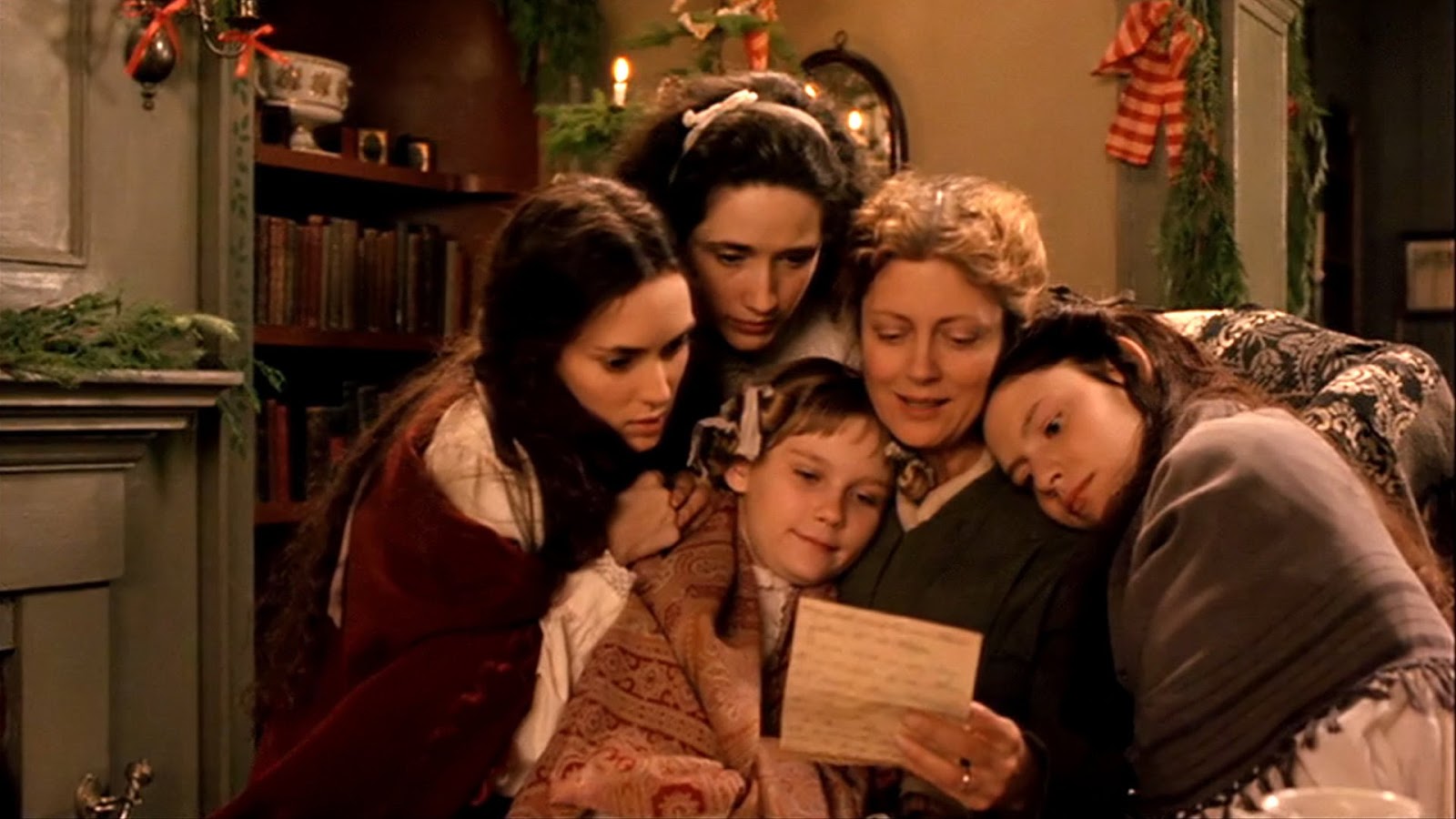
Little Women (1994)


Gillian Armstrong’s beautifully cast and played adaptation of Little Women is a classic

Director: Gillian Armstrong

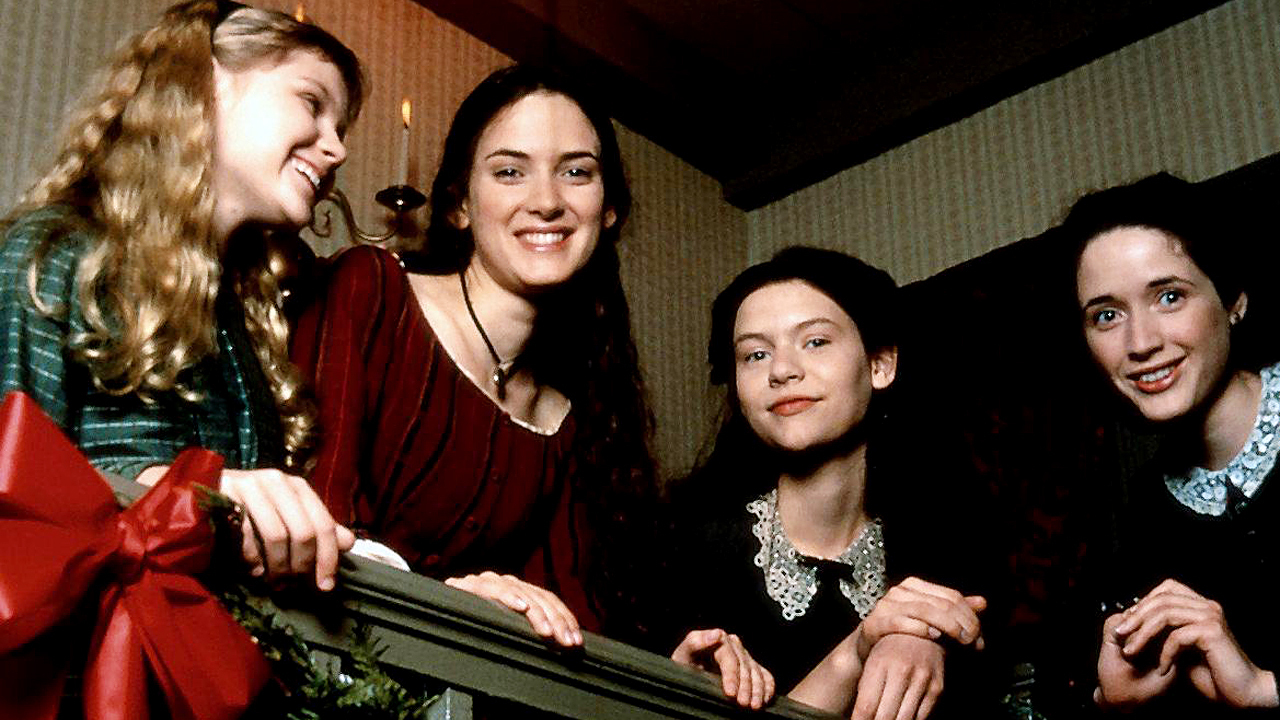
Cast: Winona Ryder (Jo March), Gabriel Byrne (Friedrich Bhaer), Trini Alvarado (Meg March), Kirsten Dunst (Young Amy March), Samantha Mathis (Amy March), Claire Danes (Beth March), Susan Sarandon (Marmee March), Christian Bale (Theodore Laurence), Eric Stoltz (John Brooke), John Neville (Mr Laurence), Mary Wickes (Aunt March)

There are certain adaptations that simply set the standard. I’m thinking of the BBC Pride and Prejudice or Emma Thompson’s Sense and Sensibility. For productions like this, it almost seems superfluous to create another version: why would you want to when you can already watch the whole thing done perfectly? Gillian Armstrong’s superlative production of Little Women is such a film: so perfectly cast, immaculately acted and brilliantly assembled that I simply can’t imagine another production bettering it.

In Massachusetts during the American Civil War, the March sisters live with their mother (Susan Sarandon): sensible Meg (Trini Alvarado), tomboyish Jo (Winona Ryder), gentle Beth (Claire Danes) and temperamental Amy (Kirsten Dunst). While their father is away fighting, the girls grow up and experience the highs and lows of life and love, while never losing sight of the strong bond that holds them together.

Not only is it impossible to imagine another production besting this, I can’t imagine another creating so many “something in my eye” moments as this film manages. Gillian Armstrong’s tender direction gets a guaranteed emotional response from the audience every time, largely because she keeps the film simple, focused and doesn’t overegg the emotion. She recognises the story itself carries delicious highs and heartbreaking lows – and lets these moments speak for themselves. From its opening moments, establishing the girls’ love of theatricals and their own private “Pickwick club”, you know you are in the safe hands of people who fully understand the novel.

It’s a film which plays it very, very simple and lets the beauty of the moments speak for themselves. Many work perfectly: no less than three times I felt myself welling up, from the presentation of Mr Laurence’s piano to Beth, to Beth’s tragic death, to the final scenes between Jo and Professor Bhaer. Each of these moments is quite simply perfectly played and carry a major emotional wallop. It’s because Armstrong sets out a film that is totally straight, and a completely loving and respectful adaptation of Alcott’s novel. Armstrong, and adapter Robin Swicord, also build a profound, focused story of growing up and learning to adjust to loss and the changes life brings us. Focusing on this creates a very clear journey in the movie – as well as a story anyone who has had any life experiences is going to respond to.

Part of the reason why the film is such a complete success is the superb playing from a cast without a weak link among it. The four March sisters genuinely feel like people who have grown up together, so strong are the bonds of chemistry between them. I’d also hugely commend Armstrong and Swicord for so skilfully establishing the different personalities of the sisters – within the opening few minutes you’ll feel like you know all their personalities exactly (a task utterly failed by a recent three-part BBC adaptation).

In the lead role, it’s scintillating to watch Winona Ryder and remember what a superb, heartfelt and gloriously expressive actress she is. Vulnerable but also tomboyish, boisterous and also tender, she brilliantly captures Jo and her semi-bohemian, semi-homespun yearnings, and her passionate love for a life different from the traditional. Ryder also has such wonderful skill with conveying emotion – at several key moments, waves of emotion seem to pass over her face in careful micro-expressions. Several moments carry the weight that they do, because Ryder sells them so well. 

Her three sisters are equally well-cast. If she has a rival for skill of expression and conveying depth of emotion it’s Claire Danes, who is astonishingly good as the gentle Beth (hard to believe she was only 15 at the time!). Danes’ simple joy and her gentle, unassuming love for those around her really hit home. Danes’ joyful warmth makes Beth’s acceptance of the piano from Mr Laurence a beautiful moment, while her tender humanity makes her death incredibly moving. Kirstin Dunst is superb as the young Amy – part brattish pre-teen, part excitable child. Her sudden horror when she realises the gravity of burning Jo’s book again helps this moment work so well. Trini Alvarado has the less interesting part, but her grounded, calm, proper and gentle performance as Meg balances the work of the sisters really well, and Alvarado demonstrates she has real empathy for the role.

The rest of the cast are equally good. Samantha Mathis (taking over the older Amy) delivers an excellent portrayal of a woman keen to head into the world. Susan Sarandon is perfect as a wonderfully loving, all-knowing mother. Christian Bale is perfect as the playboyish Teddy, full of playful fire. John Neville sells a few crucial scenes as a humane Mr Laurence. Gabriel Byrne is certainly far more handsome than his literary counterpart, but he’s so wonderfully gentle, caring and kind that it hardly matters: the relationship between him and Jo is beautifully judged.

Beautifully judged basically sums up the whole thing: there is not a bum note in this whole film. Armstrong and Swicord nail every single decision. Armstrong’s direction is outstanding: a brilliant example is the gently, unbearably sad sequence of sprinkling roses in Beth’s room after her death – it’s so simply done but incredibly moving. The film is crammed with moments like this, beautifully scored by Thomas Newman. Swicord’s script is marvellous, and it successfully draws out the feminist message of the book, without hammering the points: it gently flags up the lack of opportunities often available for women at the time, but also celebrates the contribution they can make. 

Little Women is a simply superb piece of adaptation, and a deeply affecting and heart-warming film. Only a film that lets you invest in the characters as much as this, could move you as much as it does. When Ryder smiles, you feel your whole world light up. When Danes cries with joy you feel your heart sing. When tragedy comes you feel like you’ve had a loss yourself. The story is superbly streamlined, each character is perfectly established, the relationships between them all are so wonderfully done – you can’t help but fall in love with it. If it had been a film about men it would have been littered with Oscar nominations. As it is, despite the sexism of the Academy, it’s a film you’ll treasure and return to again and again.

Stardust (2007)

Claire Danes plays a star and Charlie Cox a village boy in charming adventure fairy-tale Stardust

Director: Matthew Vaughn

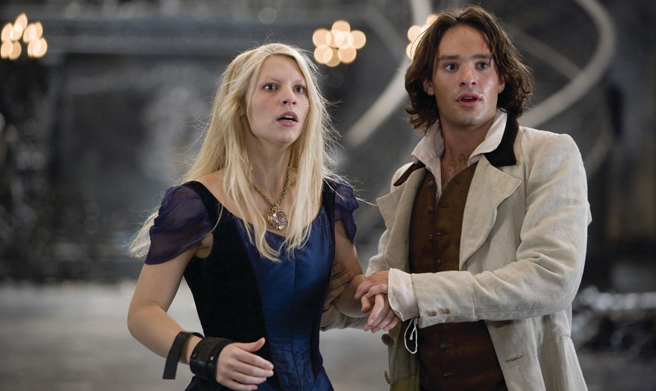
Cast: Claire Danes (Yvaine), Charlie Cox (Tristan), Michelle Pfeiffer (Lamia), Mark Strong (Prince Septimus), Robert De Niro (Captain Shakespeare), Sienna Miller (Victoria Forester), Jason Flemyng (Prince Primus), Rupert Everett (Prince Secundus), Kate Magowan (Una), Ricky Gervais (Ferdy), Peter O’Toole (King of Stormhold), Joanna Scanlan (Mormo), Sarah Alexander (Empusa), Nathaniel Parker (Dunstan Thorn), Henry Cavill (Humphrey), Dexter Fletcher (Skinny Pirate), Ian McKellen (Narrator)

Stardust is loosely adapted from Neil Gaiman’s novel of the same name, an adult fairy tale refashioned into a crowd pleasing family film: a warm and genuine adventure story, stuffed with romance, excitement and drama.

Tristan (Charlie Cox) is a dreamy young man in the village of Wall, which neighbours the mystical and forbidden world of Stormhold. In love with the selfish Victoria (Sienna Miller), Tristan vows to travel to Stormhold and bring her back a fallen star. However, the star has landed in the form of a beautiful young woman, Yvaine (Claire Danes), and the two of them find themselves on a difficult journey to return to Wall. Along the way they must dodge the witch Lamia (Michelle Pfeiffer) who wishes to sacrifice Yvaine to regain her beauty, and the surviving sons of the late king of Stormhold, particularly the ruthless Septimus (Mark Strong), who need Yvaine’s necklace to claim the throne.

What works about Stardust is that it has an air of whimsy about it, without ever feeling whimsical or corny. It’s a grown-up fairy tale, in the sense that it has some black humour and acknowledgement of sex, but really it’s more of a charming adventure story in a fantasy setting, which manages to keep its tongue in its cheek and not take itself too seriously. Matthew Vaughn’s direction has a very light touch and never allows this soufflé of a film to either puff itself up too much, or to deflate. Instead it rolls along with a giddy charm, with a delightful odd-couple love story at the centre. It’s a film that totally gets its tone spot-on, helped by confident direction and a wonderful score.

Charlie Cox plays romantic lead Tristan with a great deal of charm and really captures the romance at his centre. He also manages that extremely difficult task of being likeable – you can’t help but warm to him despite the fact that his self-awareness is completely off for a large chunk of the film. Claire Danes is equally good as the prickly Yvaine, hiding a great capacity for emotion and longing under a defensive exterior. Their romance is of course highly traditional – they bicker because they love each other! – but both actors carry it off with a great deal of style. You can’t help but want them to get over their problems and get together.

The romantic plotline is also never overwhelmed by the faintly Pythonesque comedy that surrounds it, particularly from the ghostly chorus of deceased Princes of Stormhold. Vaughn produces a great cast of comic actors for this group, while entrusting Mark Strong with the lion’s share of the screentime as the dashing decoy antagonist. In fact, the construction of the film’s narrative is rather neatly done, as this plotline of the inheritance of Stormhold is largely kept separate narratively from the romantic Tristan/Yvaine storyline, with the intersections only occurring at key points.

The real antagonist of the film however is Michelle Pfeiffer’s witch Lamia, Pfeiffer offering a neat portrait of vanity intermixed with cruelty. It’s a very decent inversion of a “movie star” glamour performance, and Pfeiffer’s heartless ruthlessness is a very nice contrast with Tristan’s altruistic openness. In fact Pfeiffer is very good in this film: she gets the balance so right that Lamia constantly keeps you on your toes as to how villainous or not she may be. I’m not quite sure that the film quite manages to completely bring the two characters plot lines together to provide a really effective narrative drive to the film, but she certainly works as an effective antagonist.

The film’s structure is a combination shaggy dog story and classic quest structure, which allows each sequence to take on its tone and structure, from thriller to comedy, depending on the characters involved. What threads this together is the growing (and very sweetly structured) love story between Tristan and Yvain which keeps the momentum up as the film moves from location to location, with cameo roles sprinkled throughout, without the film losing momentum (though it is probably 15 minutes too long). The film’s comfort with letting it sequences expand is clear with Robert De Niro’s Captain Shakespeare, a feared cloud pirate whose secret desires are not so secret as he might think. The film delights in essentially extended jokes like this – but it gets away with it because these jokes manage to be quite funny (De Niro in particular turns in a very good comic performance).

It’s a film that manages to remain distinctive and original, while appealing to a wide audience, which is quite some trick to pull off. It also manages to do this without losing its distinctive rhythm, which is both endearing and enjoyable. The “rules” of its world are clearly established, and while many of the actors are slightly tongue in cheek, they never laugh at their characters but only gently tip the wink at the audience. This freedom largely comes from the conviction and honesty Danes and Cox endow the central characters with, to ground the film. It alsohas a great sense of emotional intelligence to it, and brings a lot of depth to the characters. It also helps that it’s brilliantly designed, looks ravishing and is full of several delightful performances.

There’s lots of terrific stuff in this film, with a very sweet story at its centre. In fact this sweetness is probably the secret of its success: it never takes itself very seriously, it dances lightly from scene to scene and never allows itself to become too overblown. It’s got a terrific cast and is well directed, with a snappy bounce. At moments it does feel a little long, and some sequences overstay their welcome a bit too much – but the central characters are so winningly played that you don’t really mind. Sure this is not a masterpiece, but it has a sort of magic about it, the charm, excitement, adventure and romance, all mixed together with such confidence that it’s a pleasure to watch.

The Hours (2002)

Nicole Kidman’s Oscar winning role produced a gallery of nose based puns, everyone convinced they could sniff out comedy gold

Director: Stephen Daldry
Cast: Nicole Kidman (Virginia Woolf), Julianne Moore (Laura Brown), Meryl Streep (Clarrisa Vaughan), Stephen Dillane (Leonard Woolf), Ed Harris (Richie Brown), Allison Janney (Sally Lester), Claire Danes (Julia Vaughan), Jeff Daniels (Louis Waters), John C Reilly (Dan Brown), Toni Collette (Kitty), Miranda Richardson (Vanessa Bell)

I remember when this film was released that it was garlanded with much praise as an intelligent and compassionate piece of filmmaking and a literate masterpiece. Well I’ve never seen it before and I have to say it holds up pretty well, even though it’s much more of a solid, impressive piece of professional film making than anything you might call a masterpiece.

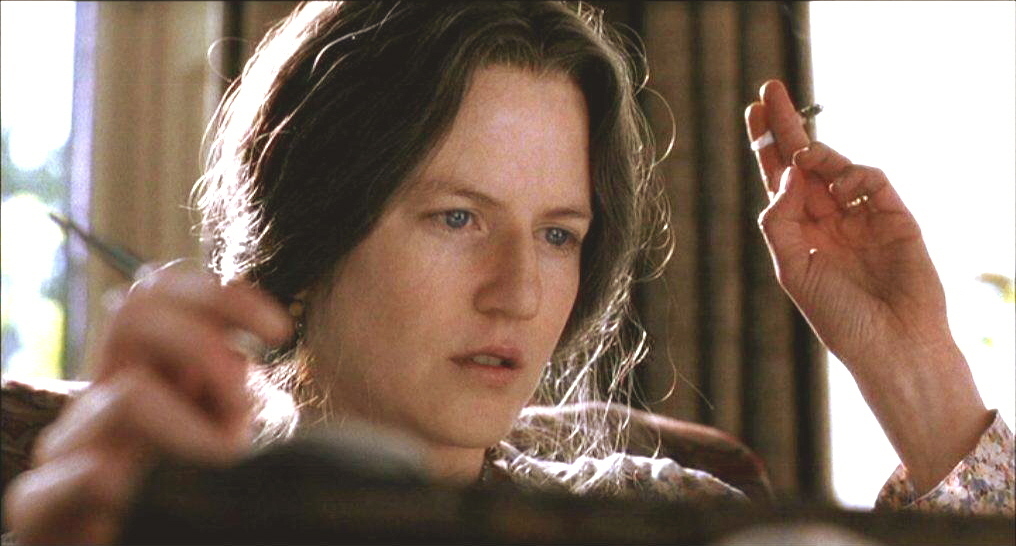
The film covers three time periods each looking at one day in the life of three different women.  Inspired by Virginia Woolf’s novel Mrs. Dalloway, the day we see encapsulates in microcosm the life of each women. So we have Nicole Kidman as Virginia Woolf struggling to deal with depression while working on Mrs.Dalloway; Julianne Moore as a depressed 1950s housewife trapped in a suburban marriage; finally Meryl Streep as an editor in the 200s who has dedicated her life to looking after a poet friend who is dying of AIDS.

Each of these three plot lines are carefully intercut with both sharp scriptwriting and patient direction (Hare and Daldry’s stage experience here is a real boon for a concept that is actually quite theatrical). Although the opening sequence of the film suggests we might be in for a dizzying series of intercuts (the time period in this sequence switches almost every shot) it soon settles down into some well structured conversation scenes, moving almost in a cycle from our plot lines to another and only rarely directly cutting mid scene from time line to time line.

Of the plot lines I found Meryl Streep’s more modern day plot the most engaging and that Streep’s performance as the patient martyr carried the heart of the film. This was despite Ed Harris’ overblown performance as the dying poet, one of those two scene cameos that draw far more praise than they deserve. But this story has a tragic simplicity and Streep brings a lifetime of vicarious hopes and dreams out from every beat of the day.

Nicole Kidman however won the notice and awards as Woolf. Well deserved as these notices were, this is a more traditional part with clearer “award worthy” acting moments. While these are excellently done (Stephen Dillane is terrific as Leonard Woolf), the Woolf parts don’t quite link with the two other plot lines and, for me, didn’t carry the same emotional force that the tragedy of normal lifes did in the later plot lines.

Julianne Moore also does great work as a depressed housewife who lacks the emotional articulacy to fully understand her feelings, though the decision to introduce a direct link between the 1950s and 1990s plot lines later in the film does mean that the Woolf plot line feels even more like a slightly disconnected story. But this section of the film crackles with claustrophobia and Moore demonstrates the confused sexuality below the surface of Americana.I feel like I’ve been hard on this film, which is a very professional piece of work with some great performances and some real emotional high points. There are some great cameos from classy actors like Toni Collette, Jeff Daniels, Miranda Richardson, John C Reilly, Claire Danes and Allison Janney. It also is a very sensitive exploration of the pressure sexuality and emotions can press on people – even in the 1990s where homosexuality isn’t a dirty secret, Streep’s character still has more than enough confused emotional hang ups to sort out.

It’s a very good film but it’s so professionally done and smoothly assembled, the acting so sharp and on the money, that I’m not sure if there is as much heart behind the scenes in its making than appears on screen.