Tag: Colm Feore

Thor (2011)

Thor (2011)

Branagh lives his dream by making the most comic-book, bombastic Shakespeare-homage ever

Director: Kenneth Branagh

Cast: Chris Hemsworth (Thor), Natalie Portman (Dr Jane Foster), Tom Hiddleston (Loki), Anthony Hopkins (Odin), Stellan Skarsgård (Dr Erik Selvig), Kat Dennings (Darcy Lewis), Clark Gregg (Phil Coulson), Rene Russo (Frigga), Colm Feore (Laufrey), Ray Stevenson (Volstagg), Idris Elba (Heimdall), Jaimie Alexander (Sif), Josh Dallas (Fandral), Tadanobu Asano (Hogun), Jeremy Renner (Hawkeye)

If you’d told people after Henry V that one day Kenneth Branagh would direct a high-octane comic book movie about a Norse God who bashes things with a hammer, you’d have been laughed outta town. But Branagh was who Marvel called to launch the Thor franchise – and doncha know it turned out to be a pretty shrewd choice.

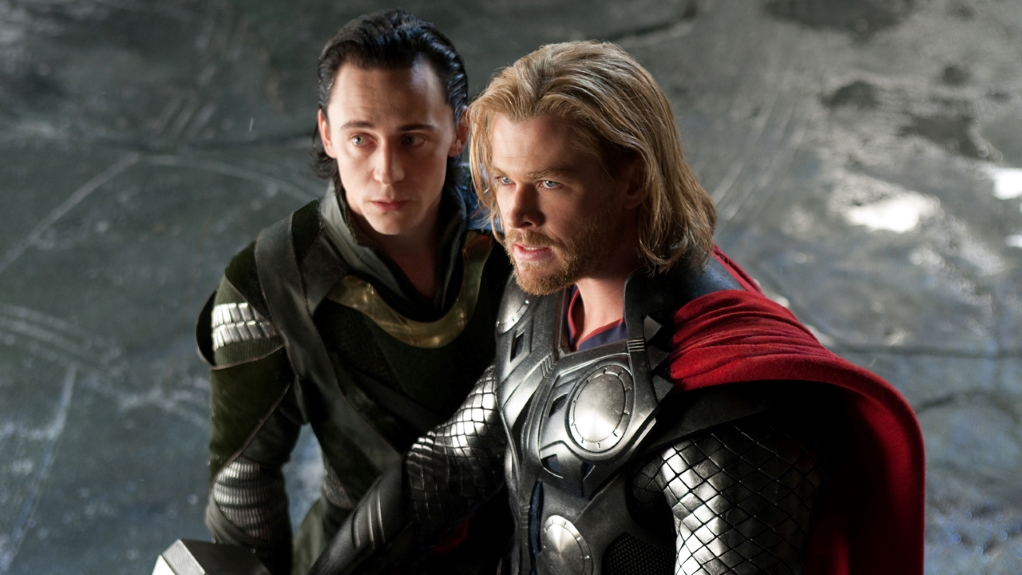
Thor (Chris Hemsworth) is the arrogant son of Odin (Anthony Hopkins) and heir to the throne of Asgard, the planet that keeps peace in the Universe. After an attempt by Asgard’s old enemies, the Frost Giants, to re-capture a stolen super-weapon, Thor leads a reckless attack on their homeworld that threatens to shatter a hard-won peace. Disappointed and furious, Odin strips Thor of his powers and banishes him to Earth, where the fallen God of Thunder must learn humility to be worthy of regaining his powers. On Earth, he falls in love with gifted scientist Jane Foster (Natalie Portman), while on Asgard the realm falls under the control of his brother Loki (Tom Hiddleston), who manipulates events to make his own claim for both the throne and their father’s love.

You can sort of see the Shakespearean bits bubbling away there. Fathers and sons, ambition and power, tragic flaws. Destiny verses desire. Loki as a mix of Edmond, Iago and Cassius. Thor as a Prince Hal earning the maturity to lead. Odin as a kindly Lear. Hell, you could see Thor washing up on the shores of New Mexico, like Twelfth Night’s Viola, forced to pretend to be something he isn’t. He even has his own mini-Falstaff, in gluttonous warrior Volstagg. It’s a heightened story of Kings and Queens, Tempest-style magic and Hamlet­-style family intrigue. Marvel, of course, partly hired Branagh to bring attention to this (effectively, paying Branagh for his Shakespeare-street-cred to make an otherwise snigger-worthy concept of Norse Gods in space get taken seriously), Thor does a great job of bringing this out without drowning the fun.

And of course, for those paying attention, Branagh had been dying to do bombastic nonsense for years. Shakespeare had disguised that Branagh adored loud crashes, big bangs, showy camera work (half of Thor is done in Dutch angles, apeing comic books) and pounding soundtracks. His Hamlet is crammed with half a dozen genres, from romance to action and Mary Shelley’s Frankenstein showed he could fly over the top with the best of them. But he’s also an actor’s director, and he draws performances here from Hemsworth and Hiddleston in particular that would lay the groundwork for making these two of the most popular actors in the whole damn franchise.

Thor above all does a brilliant job of making us care for a lead character initially presented as a likeable but arrogant, immature and cocky hit-first-think-later warrior, cavalier about people’s lives. There is a very funny humiliation conga inflicted upon Thor on arriving on Earth (a classic rule-of-three gag) leaving him successively tasered, tranquilised by a syringe in the ass and knocked over by reversing car. It’s a brilliant way of breaking the haughty – the Mighty Thor, who trashed an army of Frost Giants, laid low by a middle-aged doctor yanking down his hospital pants. But it all sets us on a path for caring about him, helped by how chivalrous and polite he is with Portman’s winning Dr Foster. Sure, he’s still dripping with hubris – assuming once he gets his hands on his hammer Mjolnir again, everything will be as it was – but at wider traces of humanity emerge we start to care for him.

It’s cemented by a very effective scene where Branagh proves his worth as a director of actors. After failing to lift said hammer – being, at this point, unworthy due to having not really learned anything – Thor sits alone in an interrogation room, visited by a disguised Loki. Hemsworth is very good in his scene: he suddenly makes Thor humbled, fragile, accepting his failures, not lashing out but tearfully apologising for his past behaviour, meekly asking to just be allowed to come home then bravely accepts his permanent banishment. It’s actually an effectiveportrait of overcoming hubris: Thor’s true heroism isn’t trashing Loki’s rent-a-robot that is the film’s penultimate foe. It’s accepting, in his depowered state, his role in the battle is to stay out of the way and help get people out of the way before offering his own life as a sacrifice if he will end the robot’s rampage.

If Thor, in Hemsworth’s gently sweet and funny performance, overcomes hubris, Loki succumbs to it. Tom Hiddleston’s charisma here (cemented by his excellent turn in The Avengers) helped him become Marvel’s most popular anti-hero. Like Thor, he’s a complex character: a second brother who secretly resents his brother’s prominence, wants his father’s love, learns things about his past which make him lean into his worst instincts, all to try and be what he mistakenly thinks his family wants. Hiddleston carries all this angst and tragedy with real skill, while also filling the role with wit and playfulness: it’s a great, star-making turn.

It’s a sign of the film’s surprising complexity that it’s hero and villain switch perspectives over its course. Thor starts by dreaming of destroying the Frost Giants to impress Odin while Loki counsels restraint. He ends it by making enormous personal sacrifices to protect them from a genocidal plan unleashed by Loki who wants to prove he’s as tough as Thor. The film ends not with a hero triumphant, but alone and grieving losses. It’s stuff like this that makes Thor a truly interesting, engaging film in a way other MCU outings are not.

And a lot of it comes from Branagh’s skill with actors. Thor might not offer the greatest acting challenges to the rest, but Hopkins in particular was better here than he had been for years (he credited Branagh with helping him rediscover his passion for acting) and Portman and Skarsgård bring a lot of humanity to thinly written roles. Sure, in other ways Thor is less special: it’s action set-pieces are, by and large, fairly uninspired and run-of-the-mill, the small town trashed by a robot looks and feels like a backlot stunt show, some of the comedy lands flatly. But when it focuses on the character drama of two contrasting brothers and their love for their father it’s feels more real and engaging than a host of more technically adept comic book movies.

Thor gets over-looked in the MCU rankings. But it’s a surprisingly thoughtful, well drawn character study about worthiness not being about muscle and force, but on your wisdom, compassion and humility and putting other people before your own needs and desires. All captured in a magic hammer that is otherwise impossible to pick up. Branagh’s film gets that, with added bombastic comic book thrills. Thor has entertained me each time I’ve seen it and will go on doing so.

The Insider (1999)

The Insider (1999)

Mann’s finest film is a chilling breakdown of the insidious strength of corporations

Director: Michael Mann

Cast: Al Pacino (Lowell Bergman), Russell Crowe (Dr Jeffrey Wigand), Christopher Plummer (Mike Wallace), Diane Venora (Liane Wigand), Philip Baker Hall (Don Hewitt), Lindsay Crouse (Sharon Tiller), Debi Mazar (Debbie De Luca), Stephen Tobolowsky (Eric Kluster), Colm Feore (Richard Scruggs), Bruce McGill (Ron Motley), Gina Gershon (Helen Caperelli), Michael Gambon (Thomas Sandefur), Rip Torn (John Scanlon), Cliff Curtis (Sheikh Fadlallah)

For decades we persuaded ourselves smoking was problem-free. Then, when we finally decided sucking tar into your lungs several times a day probably didn’t go hand-in-hand with good health, Big Tobacco bent over backwards to argue they didn’t believe for one minute nicotine was actually addictive. This lie – they were improving the hit to increase the customer base – was blown upon by corporate whistle blower, and former B&W employee, Dr Jeffrey Wigand (Russell Crowe).

But the battle over the reporting of the story also exposed the fault-lines in corporate-owned media companies, as Wigand’s 60 Minutes interview was canned by a CBS network terrified of legal action imperilling a corporate sale, much to the fury of crusading producer Lowell Bergman (Al Pacino) who spent months bringing Wigand in only to see him brushed aside. The Insider charts these two stories merging into each other: the deadly campaign of intimidation and smears against Wigand, segueing into the caving of CBS in the face of legal threats with Bergman left furious, betrayed and turning his campaigning fire against his own employers.

This all comes grippingly to life in Michael Mann’s superb slice of All the President’s Men inspired-reportage, turning this 1996 TV-and-business scandal into a sleek, intelligent thriller that takes a chilling look at how corporate America rigs the game in its own favour with impunity. The Insider is as rightfully furious at the dirty-tricks and menace of the tobacco companies, as it is at the subtly insidious way corporate interests pollutes news reporting. It does this while also presenting its two heroes as flawed men with more in common than they might think: competitive alpha males, both prone to taking rash, destructive actions in fits of head-strong self-righteousness, caring about their own moral code over the needs of others.

The Insider splits into two clear acts: the agonising decision of Wigand to blow the whistle on corporate malfeasance, in the face of immense personal and professional pressure and Bergman’s subsequent struggle to deliver on his word and get Wigand’s confession on air. The first half offers the more traditional heroics – and the more overt hero-and-villain structure, but increasingly I find the second half, of news shows being dictated to by their paymasters more-and-more unsettlingly prescient, becoming increasingly relevant the older the film gets.

But that first half makes for a compellingly tense pressure-cooker view. It’s powered by an excellent performance by Russell Crowe (effortlessly convincing as someone twenty years older, and collecting his first Oscar nomination). Crowe makes Wigand principled but prickly, brave but confrontational and at times frustratingly self-righteous. His moral qualms are finally sharpened into action his fury at the blunt-intimidation from B&W’s sinisterly avuncular CEO (a masterful cameo from Michael Gambon – one of the great single-scene performances in movies) and its implication that he cannot trusted to stick to his NDA. Wigand barely involves his wife (a tightly-wound Diane Venora) in his decisions, only mentioning his dismissal in passing and deciding to appear on 60 minutes (a decision that will shatter their lives) unilaterally.

But Wigand also has higher motives. He wants to be able to look his daughters in the eye, having sold-out to burnish the dirty-deeds of B&W with his scientific skills. He’s rightly affronted by the lies Big Tobacco has sold the public and undergoes enormous sacrifices (financial, marital, professional, legal, death threats and a public smear campaign) to see things through. Mann’s cool mix of starkness and shadows, full of drained out colours and greys, is perfect for a world where Wigand is shadowed by strangers at a driving range, receives bullets in his mailbox and searches late at night for who has left footprints in his garden. Crowe superbly conveys a man acting out of an increasing sense of moral imperative, struggling desperately to hold himself together under immense pressure.

This section of the film – especially with its clear antagonist – plays as a superb personal and political thriller, Mann expertly conveying lurking menace. In 1999 the second half of the film, the struggle to actually broadcast Wigand’s interview, was often seen as slightly underwhelming. But actually it shows a different type of danger: less overt and heavy-handed corporate power with its legal injunctions and bullying FBI guys hoping for a cushy retirement job with the corporation, more how these corporate masters assert control in quiet, less direct ways to decide what we hear or see.

Our journalists have no fear when confronting criminals or terrorists – The Insider’s prologue establishes this with Bergman and host Mike Wallace not flinching in the face of gun-toting Hezbollah fighters guarding the Sheikh they have arranged to interview. But they face far greater threats to their integrity when confronted with lawyers and corporate directors (effectively embodied by Gina Gershon and Stephen Tobolowsky as uncaring suits) whose threats are indirect and insidious. Wigand’s interview could imperil the sale of CBS and the bonus of the corporate suits, and in that scenario journalist principles can go hang. Christopher Plummer is, by the way, superb as the charismatic Wallace, who caves to pressure then convinces himself he hasn’t, a super-star of the airwaves who loses part of his wider integrity trying to protect his position.

And doesn’t the idea that corporations can squeeze the life out of journalistic stories feel even more chilling today? After all, virtually every single news outlet out there is owned by a major business, all with their own agendas. Can we really believe they’ve not all made calls on gets reported, based on what their shareholders might think? Mann’s film skilfully – and rather chillingly – shows how quickly they can re-work the agenda. It leaves Lowell Bergman raging (as only Al Pacino can) against the betrayal of trust he’s being forced to make towards Wigand.

Crowe’s pressure-cooker performance stole many of the headlines on release but The Insider also benefits from an excellent Pacino performance. Utterly committed to his principles and – just like Wigand – utterly unwilling to compromise them even an inch, no matter the cost, Bergman will pick up the windmill-tilting banner, and charge with it at his own paymasters. No one can rip through speeches quite like Pacino, but he gives Bergman a real genuineness, grounded in a fundamental decency, whose righteous anger is underpinned with world-weary disbelief that it’s come to this.

It grounds an excellently studied breakdown of a journalistic turf war. The Insider plays like All the President’s Men, if Woodward and Bernstein had been spiked after they nailed the story. Mann demonstrates the influence in The Insider’s crisply immersive photography that employs depth of frame and gyroscopic deep-focus, as well as in the crisp editing and the film’s mesmerising emersion in the complex details of building a story. Combine that with a gripping conspiracy thriller on the machinations of ruthless corporations and The Insider makes for a compelling film.

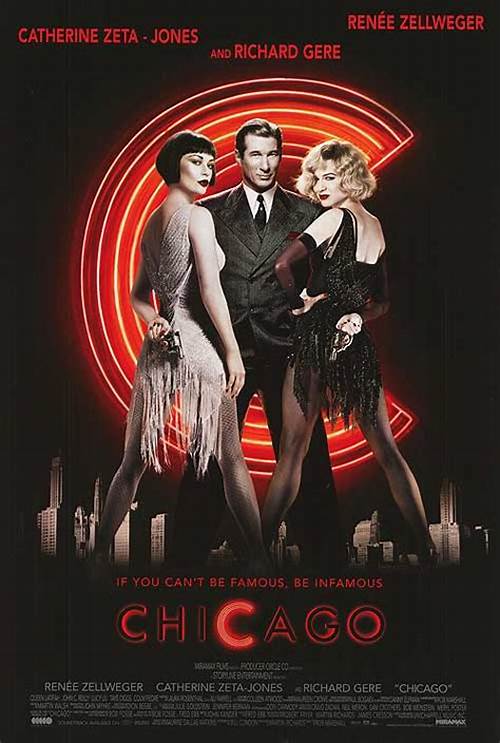
Chicago (2002)

Catherine Zeta-Jones struts her stuff in Rob Marshall’s fabulous Oscar winner Chicago

Director: Rob Marshall

Cast: Renée Zellweger (Roxie Hart), Catherine Zeta-Jones (Velma Kelly), Richard Gere (Billy Flynn), Queen Latifah (“Mama” Morton), John C. Reilly (Amos Hart), Christine Baranski (Mary Sunshine), Taye Diggs (The Bandleader), Colm Feore (Martin Harrison), Lucy Liu (Kitty Baxter), Dominic West (Fred Casely), Mya (Mona), Susan Misner (Liz), Denise Faye (Annie), Deidre Goodwin (June)

It’s become quite the fashion to knock Chicago. Heck I’ve done it myself. How did this mere musical win Best Picture? It’s not even as if the original production was much more than an entertainment. It’s another of those films diminished by whispers that it doesn’t deserve the title of Best Picture. But, look at the film with an unprejudiced eye, and you’ll see that this is the best stage-to-screen musical theatre adaptation since Cabaret. Chicago is such dynamic, high octane entertainment, you would have to a really cold heart not to enjoy it.

A heart as cold, perhaps, as most of the characters. Its set in a 1920s Chicago where it doesn’t matter what you are famous for, so long as you are famous. Who are the bigger stars? The people on stage of the infamous on death row? Roxie Hart (Renée Zellweger) is a wannabe who guns down her conman lover Fred Casely (Dominic West) when his promises of the stage career she’s dreaming of turns out to be all hot air. Roxie works out that she can turn her infamy into just plain fame – following the inspiration of vaudeville-star-turned-accused-murderer Velma Kelly (Catherine Zeta-Jones), who is now more famous than ever. With amoral lawyer Billy Flynn (Richard Gere) in their corner, can they play all sides against the middle and find freedom and fame?

Chicago’s debt to Bob Fosse is in almost every single frame. Rob Marshall’s brilliant choreography is inspired by Fosse’s own work for the original production. It means the entire film drips with the passionate sexiness of Fosse’s best work. It’s also inspired by Fosse’s Cabaret in its use of the musical numbers. There all the musical numbers were kept within the nightclub, acting as a subtle commentary on the events of the film. Here they occur in Roxie’s imagination, staged in a shadowy empty theatre with a mysterious band leader (a charismatic Taye Diggs) introducing each song. It’s a brilliant concept, that allows them to be staged with the sort of exuberance and theatricality that would look plain odd in a ‘real’ setting.

And what musical numbers they are! These are toe-tappingly, finger-clickingly fun, that will make you want to jump up and join in. Marshall’s choreography and direction is not only faultless, but also covers a range of styles. From the sultry opening of All That Jazz performed by Catherine Zeta-Jones, we get burlesque (When You’re Good to Mama), sensual sexiness (Cell Block Tango), knock-about farce (We Both Reached for the Gun), classic 1930s Astaire and Rogers (Roxie) and surreal madness (Razzle Dazzle). The one thing they all have in common is the high-octane energy they are performed with (no wonder all those dancers are so slim!), with no one leaving anything in the dressing room.

Chicago is possibly one of the best edited musicals ever made. Marshall gets a superb balance between camera movements, cutting and the dance numbers. We can appreciate – and see – every step of the intricate choreography, with clear camera movements and angles. But the film is also edited practically on the beat. Cuts accentuate changes in the tempo and even marry up with the exact movements of the dancers. Not only that, the numbers frequently cut from reality to fantasy and back again – and this parallel montage is superbly done, with perfectly timed transitions. The cutting complements each number so well, it actually makes them more exciting and dynamic. It’s a masterclass in using the language of cinema to accentuate the impact of dancing.

But Marshall manages to make Chicago not just a collection of amazing dances and fabulous tunes. In our celebrity worship age, Chicago feels increasingly more relevant – you can imagine Roxie would love to be on reality TV and would never be off Twitter. It doesn’t matter that she’s got no real talent (in fact it makes the fact that all the musical numbers are fantasies even more witty), she’s just desperate to be known. Shooting her lover is the best thing that’s ever happened to her and she’ll do anything to stay in the newspapers, from a fake pregnancy to playing the timid ingenue.

Everyone in Chicago is just playing the game. Velma is just as desperate to cling to fame – and her growing desperation at losing the limelight to Roxie is almost touching. Mama Morton, the quietly corrupt prison warden, lives vicariously through her inmates (she even dyes her hair to match Roxie’s). The media lap up the details of every killing, turning the trials into huge soap operas. And at the heart you have Billy Flynn, as much a showman as he is a lawyer, playing every angle and knowing its all about telling a good story rather than truth or justice.

Chicago is played with absolute commitment. Renée Zellweger is excellent as the fiercely ambitious, amoral Roxie, her fragile softness perfect for the image Roxie likes to project, just as she is able to twist her face into selfish meanness. Zeta-Jones clearly hadn’t forgotten her years of musical theatre, demonstrating she is a superb singer and dancer, her vampish glamour perfect for Velma’s dark ambition. Richard Gere (in a role turned down by Travolta, as he ‘didn’t get’ the framing device) channels his natural charisma and good natured smirk into a role that could have been made for him. Reilly is surprisingly sweet and effective as Roxie’s put-upon husband and Latifah hugely entertaining as the knowingly manipulative Mama.

Chicago may be “just a musical” – but you’d be hard pressed to find a better entertainment. The song and dance numbers are superb and the film still manages to land some blows on celebrity culture. Hollywood has always loved musicals – can you imagine how the viewers of Broadway Melody would have responded if they had seen this? – and with Chicago we get something we’ve not seen since the golden days of Bob Fosse. There are few Oscar winners as straight forwardly entertaining as this.

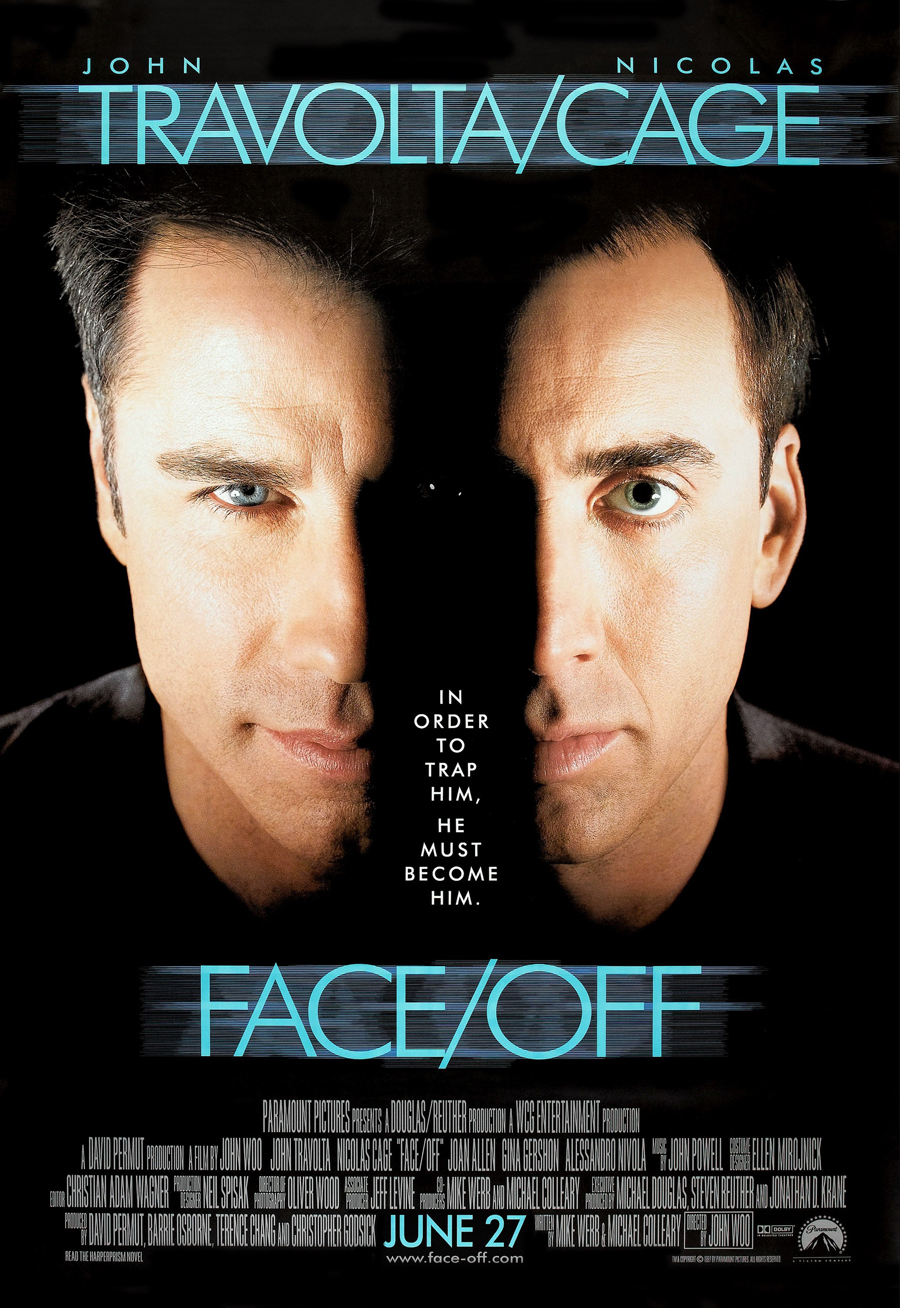
Face/Off (1997)

Nicolas Cage and John Travolta swop faces (yes really) in Face/Off

Director: John Woo

Cast: John Travolta (FBI Agent Sean Archer), Nicolas Cage (Castor Troy), Joan Allen (Eve Archer), Alessandro Nivola (Pollux Troy), Gina Gershon (Sasha Hassler), Dominique Swain (Jamie Archer), Nick Cassavetes (Dietrich Hassler), Harve Presnell (FBI Director Victor Lazarro), Colm Feore (Dr Malcolm Walsh), John Carroll Lynch (Guard Walton), CCH Pounder (Hollis Miller)

After five years, Sean Archer (John Travolta) has finally caught his nemesis, terrorist-for-hire Castor Troy (Nicolas Cage). But, with Castor in a coma, only his brother Pollux (Alessandro Nivola) – yup really – knows the location of the deadly bomb they planted in Los Angeles. With Pollux now in prison how can they get him to talk? Well obviously the easiest way is for Archer to undergo extensive, experimental surgery to alter his build, voice and (piece de resistance) have his face removed and replaced with Castor Troy’s. And of course, this should be top secret so no-one knows it happened. Because there is absolutely no chance Castor will wake up from his coma and have Archer’s face placed on his own head is there? But of course. Let the violent mayhem ensue, as Troy/Archer (Travolta) manipulates the FBI for his own ends and Archer/Troy (Cage) battles to reclaim his life and face.

Reading that, it won’t surprise you to hear that Face/Off is a hyper-reality film. Hailing from the 90s, when Hong Kong gun-fu director John Woo was seen as the auteur of action, every single thing is dialled up to eleven. Early in the film Archer is told that the voice-alterer attached to his vocal codes could be dislodged ‘by a violent cough’. Needless to say, it doesn’t shift once during the orgy of intense, balletic violence that follows, no matter how many times Archer/Troy flings himself through the air, guns blazing, or flips backwards to avoid bullets.

Face/Off it’s clear is a very silly film. It works, because it knows it is a very silly film. It dabbles only lightly in the psychological trauma of finding yourself in another body – and in Archer’s case not just any body, but the body of his son’s killer. But it’s less interested in that than in seeing the two actors have immense fun apeing each other’s intonations and mannerisms. Travolta in particular has a whale of a time as the id-like Troy/Archer, campily springing about the stage and good-naturedly mocking his own physique (“This ridiculous chin”), while prancing about with all the wide-eyed, giggling mania Cage has made his own.

In case you hadn’t worked it out in a film where faces can be swopped, nothing feels like it’s happening in the real world. Gun battles defy logic and physics. Archer’s obsessive pursuit of Troy in the film’s opening battle causes a jaw-dropping level of destruction, mayhem and death (in a real world, with his obvious psychological problems, he would have been off the case years ago). But then, he’s so reckless perhaps that’s why people don’t really notice when he’s replaced by Troy.

There are some interesting beats, many of them centred around Troy/Archer’s arrival in the Archer family home where he forms a superficial bond with Archer’s daughter (including saving her from assault from a creepy boyfriend) that, aside from his obvious insanity, perhaps things could be different (and there is a suggestion Troy/Archer plays with the idea of going straight – or at least a corrupt version of it). Joan Allen comes on board to add acting lustre as Archer’s doctor wife, so distant from her husband for years that she needs time to work out he’s been replaced.

But the film’s heart is in the violence. There are five or six action set-pieces that use every weapon in the Woo arsenal. Slow-mo? Check. Operatic grandness? Check. Walking with intent? Check. Diving forward while firing two guns? You betcha. Doves? But of course. Any real sense of logic is thrown out of the window, and really the film at heart is a comedy of two famous actors pretending to be each other, in between jumping at each other, screaming their heads off, practically making gun noises while they point their weapons, like maniac kids.

And, you know what? It works. Sure the entire enterprise feels very much of its time: and Face/Off captures Woo’s style so perfectly (with its huge body-count and reckless disregard for life and property) that he never topped it again. A director who basically could do one thing really well (future films would merely demonstrate his limitations), throwing himself into a film of intense silliness, with big-name stars having a whale of time and action set-pieces that make no real sense but are impressive to watch, he aces it here. Face/Off is an odd classic of its time, ludicrously silly but always choosing to double-down on its intense silliness – to gloriously entertaining effect.

Jack Ryan: Shadow Recruit (2014)


Chris Pine comes out from behind the desk to head into the field in Jack Ryan: Shadow Recruit

Director: Kenneth Branagh

Cast: Chris Pine (Jack Ryan), Keira Knightley (Cathy Muller), Kevin Costner (Commander Thomas Harper), Kenneth Branagh (Viktor Cherevin), Len Kudrjawizki (Konstantin), Alec Utgoff (Aleksandr Borovsky), Peter Andersson (Dimitri Lemkov), Elena Velikanova (Katya), Nonso Anozie (Embee Deng), Colm Feore (Rob Behringer), Gemma Chan (Amy Chang), Mikhail Baryshnikov (Minister Sorkin)

Jack Ryan is the all-American, ordinary-analyst-turned-CIA Agent at the centre of the late Tom Clancy’s books. He’s been played by a range of actors, from Alec Baldwin to Ben Affleck via Harrison Ford, but his character remains the same – a boy scout, a man of principle and simple courage, pushed to do what must be done. He’s smart and quick-witted. Jack Ryan: Shadow Recruit was meant to serve as another reboot, to restart the Jack Ryan franchise after a mixed reception to Ben Affleck’s The Sum of All Fears. Sadly, it was another false start.

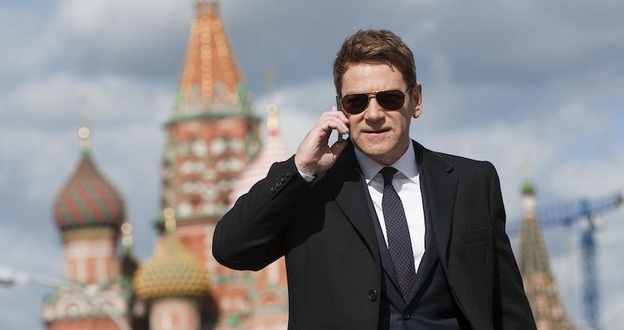
An origins story, it opens with Ryan (Chris Pine) studying at the LSE, before joining the marines in the wake of 9/11. He is critically injured in a helicopter crash, where he hauls two men from the wreckage while suffering from a broken back. Learning to walk again, he falls in love with Dr Cathy Muller (Kiera Knightley) and is recruited as a financial analyst by Thomas Harper (an effectively gruff but charismatic Kevin Costner) from the CIA’s Department of Making-Sure-We-Don’t-Get-Hit-Again (catchy name). Collecting financial intelligence while working as an auditor at a Wall Street firm, he notices some worrying financial deals from funds controlled by Russian tycoon Viktor Cherevin (Kenneth Branagh). Going to Moscow under the guise of auditing Cherevin, he and Cathy quickly find themselves embroiled in a dangerous terrorist conspiracy.

Jack Ryan: Shadow Recruit is decent fun. It’s also a rather impersonal and safe piece of film-making, that structurally and creatively feels like a 1990s action film reset in the 2010s. In a world of Jason Bourne, it genuinely feels a little old-fashioned and uninspired. It takes recognisable elements from dozens of action films and remixes them with a certain flair, but not a lot of imagination. It feels like the least “Branagh” film Branagh has directed, the camerawork being surprisingly restrained and contained considering his love of sweeping opera and dynamic, showy visuals.

But Jack Ryan is not a bad film, it’s just an enjoyably average one. It puts Ryan front-and-centre of the film, and Chris Pine really delivers in establishing Ryan’s old-fashioned principles of right and wrong, his sense of duty and his willingness to do what needs to be done when called. Pine also does a great job of demonstrating Ryan’s fear and panic as he finds himself increasingly out of his comfort zone – not least in a terrifying hotel bathroom brawl with an under-used Nonso Anonzie – in the aftermath of which he drops his mobile while trying to call for backup, and then can’t remember where the hell “Location Gamma” is when told to report there to meet a contact.

Of course, this incarnation of Ryan as an analyst rushed into the field doesn’t last, and the film succumbs from there to turning Ryan into an old-school action man, the sort of guy who drives cars at 85 mph through Moscow streets with ease, jumps on a motorbike and roars off in pursuit of a bomb with maverick self-assurance and takes on a trained assassin with a Die Hard-ish confidence. It’s a shame that the interesting character work of the first 2/3rd of the movie gets lost in the final third – but it’s another sign of the film delivering what it feels an action film should be rather than finding something unique and original.

At least Pine gets some good material to work with, which is more than can be said for Kiera Knightley. For all her American accent, this is Knightley at her most British Rose, her toothy, coy grin ever-present in every scene – and that’s about all she contributes. Not that this is entirely her fault, since Cathy is a character sketched on a fag packet, a successful doctor who obsessively worries that her husband is having an affair, making her feel weaker and needier than the filmmakers perhaps realise Later she exists to be a Damsel in Distress, and is then given a spurious involvement in identifying the villain’s target – which she identifies not because it is a medical facility she is familiar with, or perhaps somewhere she visited as a child or on a professional call-out, but solely because Her Man works there. (As if these CIA geniuses couldn’t work out that a financial terror attack on the US might be targeting Wall Street).


The villain’s plot is dully labyrinthine, but can be safely boiled down into having something to do with financial chicanery and a bombing attack, to destroy the US economy. Not that it really matters – it allows a suitable mix of booms, bangs and the sort of tense “breaking into the office to download the files against the clock” sequence that you’ve seen several times before. Kenneth Branagh cuts himself a bit short with Cherevin, a character who seems sinister but is really barely competent and hits every villain trope from pervy leering to executing an underling. We barely get any sense of his motivations or his background.

He’s also probably the only Russian nationalist in the world who is a Napoleon Bonaparte fan. Last time I checked, Napoleon was the enemy in the War of 1812 that redefined Russian history for the next 100 years. But then I’ve read a few Napoleonic era books, so I’m biased… This film clearly knows nothing about Bonaparte, with Ryan declaring at one point that the planned attack is “straight out of Napoleon’s playbook” – how Napoleon’s trademark fast movement and combined use of infantry and artillery, drilled to perfection, relates to a basic distraction strategy I don’t know but never mind. But then this is a dumb action film that name checks Napoleon because you’ve probably heard of him, rather than because it makes sense.

There is a lot to groan at, or say meh to, in Jack Ryan. But yet, I’ve seen it three times and it grows on me each time. Chris Pine is a very likeable screen presence, and the build-up of the film works well. Branagh directs it with a taut efficiency, even if it’s a film that lacks any real inspiration and feels like one for the money. But it presents its 1990s-style action beats with enough conviction and sense of fun that you kinda go with it. Yes it’s totally forgettable, but run with it and you’ll find yourself strangely charmed by it.