Tag: Dan Duryea

Winchester ’73 (1950)

Winchester ’73 (1950)

Psychological darkness underpins this dark and exciting Western from Mann and Stewart

Director: Anthony Mann

Cast: James Stewart (Lin McAdam), Shelley Winters (Lola Manners), Dan Duryea (‘Waco’ Johnny Dean), Stephen McNally (‘Dutch’ Henry Brown), Millard Mitchell (Frankie ‘High Spade’ Wilson), Charles Drake (Steve Miller), John McIntire (Joe Lamont), Will Geer (Wyatt Earp), Jay C Flippen (Sergeant Wilkes), Rock Hudson (Young Bull), Tony Curtis (Private)

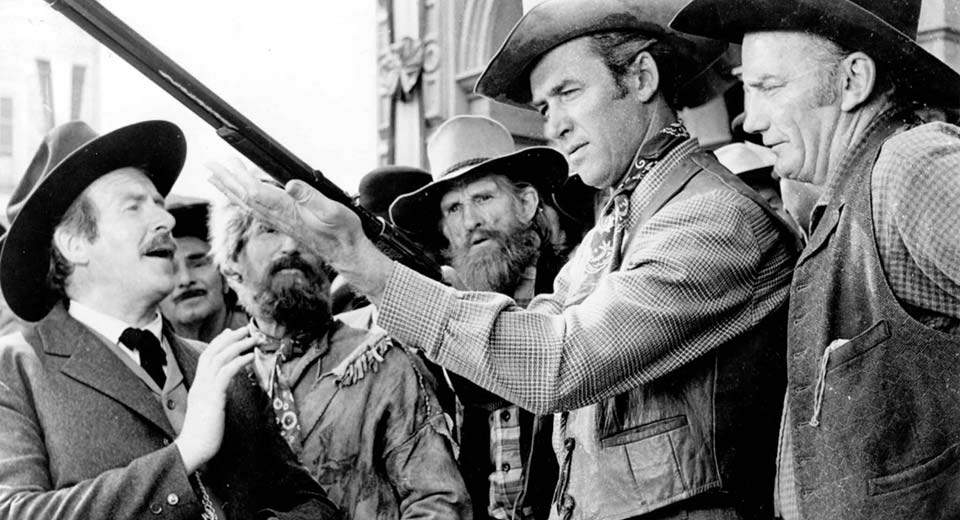
“The Gun That Won the West” was the proud boast of the Winchester Repeating Arms Company of its rifle ((it can fire several shots before reloading unlike normal rifles). As Winchester 73 puts it, such guns built the West and any Indian would give his soul for one. In Anthony Mann’s complex psychological western, it’s also an instrument of death defining a whole era. Winchester 73 follows the path of one ‘perfect’ repeating rifle, won in a shooting competition by Lin McAdam (James Stewart) but stolen from him and passed from hand-to-hand, seeming to curse everyone who touches it to death.

McAdam has his own mission, searching for the man who killed his father, ruthless criminal ‘Dutch’ Henry Brown (Stephen McNally). These two compete for the rifle, in a Tombstone shooting content refereed by legendary Wyatt Earp (Will Geer) whose orders to keep the peace in this town stop the two of them turning guns on each other from the off. Defeated, Dutch steals the rifle (after getting the jump on McAdam), but he doesn’t keep it long as it moves from owner-to-owner. Meanwhile, McAdam purses Dutch, with faithful friend High Space (Millard Mitchell) in tow, encountering war bands, cavalry troops and Lola Manners (Shelley Winters), a luckless woman tied to a string of undeserving men.

Winchester 73 unspools across 90 lean, pacey minutes and gives you all the action you could desire, directed with taut, masterful tension by Mann. It opens with a cracking Hawkesian shooting contest, with the equally matched McAdam and Dutch moving from shooting bullseyes, to dimes out of the sky to through the hoops of tossed rings. Among what follows is a tense face-off between cavalry and Indians, a burning house siege of Dutch’s ruthless ally ‘Waco’ Johnny Dean (Dan Duryea), a high noon shoot-out and a final, deadly, rifle shooting wilderness cat-and-mouse shoot-out between McAdam and Dutch. It’s all pulled together superbly, mixing little touches of humour with genuine excitement.

However, what makes Winchester 73 really stand out is the psychological depth it finds. Audiences were sceptical of James Stewart – George Bailey himself – as a hard-bitten sharp-shooter out for revenge. But Stewart – deeply affected by his war service – wanted a change and Mann knew there was darkness bubbling just under the surface. McAdam is frequently surly, moody and struggles to express warmth and kindness. He can only confess his fondness for High Spade while glancing down at the rifle he’s cleaning and the most romantic gesture he can give Lola is a gun when they are caught up in a cavalry siege, wordlessly suggesting she save the final bullet for herself. McAdam is driven and obsessively focused, stopping for nothing and no-one on his manhunt, a manhunt High Spade worries he is starting to enjoy too much.

And he’s right to worry. In hand-to-hand combat, Stewart lets wildness and savagery cross his face, his teeth gritted, eyes wild. Scuffling for the rifle with Dutch, there is a mania in his eyes that tells us he is capable of killing with his own hands, a look that returns when he later savagely beats the cocky Waco (it’s even more shocking, as Waco’s ruthless skill is well established, before McAdam whoops him like an errant child). Stewart plays a man deeply scarred by the loss of his father, his emotional hinterland laid waste by a burning need for revenge to fill his soul.

This is the West Winchester 73 sees, one of anger, self-obsession and lies. Seemingly charming trader Joe Lamont (John McIntire, very good) is a shameless card sharp who cheats everyone left-right-and-centre. Waco is perfectly happy to sacrifice his own gang so that he can escape the law – just as he’s perfectly happy to use women and children as human shields and provoke a hapless Steve Miller (Charles Drake), Lola’s luckless lover, into out-matched violence. Steve is hard to sympathise for, having left Lola in the lurch without a second thought when they are caught in the open by a war band (he rides off shouting ‘I’ll get help’ and only returns after finding it by complete fluke).

In this West, a gun is the ultimate symbol. Mann opens every section of the film with a close-up shot of the gun itself, this most prized of possessions, each time in the hands of a new owner. Earp keeps his town strictly gun-free, and both McAdam and Dutch instinctively reach for their holster-less waists when they first meet. (Will Geer does a fine line in avuncular authority as Earp, treated with affectionate patience which becomes quiet fear when he smilingly reveals who he is). The cursed rifle, like Sauron’s ring, seems to tempt everyone and then betray anyone who touches it. Of all its owners, only Dutch and McAdam seem to understand how to use it: and of course, McAdam is the only man with the determination to truly master it.

There isn’t much room for women in all this. Much like the rifle, Lola herself is passed from man-to-man. Played with a gutsy determination by Shelley Winters, she’s first seen thrown out of Tombstone on suspicion of being a shameless floozy, before passing from the useless Steve (who Winters wonderfully balances both affection and a feeling of contempt for) to the psychopathic Waco (few people did grinning black hats better than Dan Duryea). It’s been argued that Lola fills all the traditional female Western roles in one go – hooker, faithful wife, independent women, damsel-in-distress, redemptive girlfriend – and there’s a lot to be said for that. So masculine and violent is this world, women constantly need to re-shape and re-form themselves for new situations.

Fascinating ideas around violence, obsession and sexuality underpin a frontier world where, it’s made clear repeatedly, life is cheap make Winchester 73 really stand out. Led by a bravura performance by James Stewart (who negotiated the first ever ‘points deal’ for this film and made a fortune), with striking early appearances from Rock Hudson (awkwardly as a native chief) and Tony Curtis (as a possibly too pretty cavalry private), it’s both exciting and thought-provoking in its dark Western under-currents

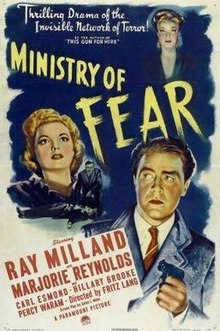
Ministry of Fear (1944)

Ray Milland and Marjorie Reynolds take on Nazi agents in Ministry of Fear

Director: Fritz Lang

Cast: Ray Milland (Stephen Neale), Marjorie Reynolds (Carla Hilfe), Carl Esmond (Willi Hilfe), Hillary Brooke (Second Mrs Bellane), Percy Waram (Inspector Prentice), Dan Duryea (Cost/Travers), Alan Napier (Dr Forrester), Erskine Sanford (George Rennit)

Neither Fritz Lang nor Graham Greene (the author of the original book) cared much for Ministry of Fear. Both of them thought that the film they ended up with was only a shadow of the original novel, with both of them largely blaming the script by Seton I Miller and the producers for turning Greene’s novel into a more simplistic B-movie. And yes the film is at heart just a B-movie, that races through a conspiracy thriller – and you’d have no idea that it ever came from Greene-land unless you were told so – but it’s put together with such professionalism that you admire its skill, even while it’s no Third Man.

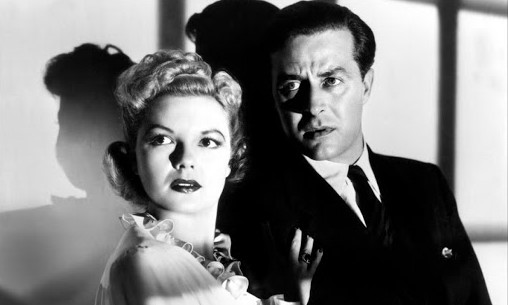
At the height of the Blitz Stephen Neale (Ray Milland) is released from an asylum only to find himself immediately embroiled in a load of shady goings-on with suspicious séances, hidden microfilm and Nazi sympathisers. Can the fragile Stephen get to the heart of it?

Ministry of Fear has a slightly dream like quality to it – probably because it’s a fragmented narrative that makes quick jumps from event to event, sometimes with very few links between them. Stephen emerges from an asylum straight into a charity fete, hence to a train, the centre of London and a séance, with all the speed of a logic-skipping dream. Everything is swift and somewhat low in logic. The plot of the film becomes sheer B-movie fluff, with the typical spy hijinks you might expect, lacking any of the complexity of the book. 

Greene was particularly disappointed by the deletion of the guilt Stephen feels around the death of his wife – and the film indeed skims over this very swiftly, leaving the reasons for Stephen’s being in an asylum in the first place largely unexplored and dispatched as swiftly from the film as possible. It’s not a film that has the time to explore the complexity of personalities of characters – instead it’s all about turning the content of the novel as much as possible into a high-flung spy thriller.

It’s why Lang was so disappointed with the script – and he became more and more dismissive of the film as he got older, claiming it to be bad film that he fell asleep in during a later showing – but he still bought to it a visual magic. The film is crammed with beautiful expressionistic images, present right at the start with Stephen watching a ticking pendulum through to some of its beautiful later images, in particular a shooting through a door that allows a beam of light to shine through a bullet hole in a door. Lang crams the film with striking images that help lift it above its B-movie roots.

Which is just as well because the general drift of the plot isn’t always that special, playing like the off-cuts from several Hitchcock films. Despite the artistry with which Lang presents it, he can’t hide the basically generic stuff that Greene’s book has been turned into. And its fast pace and logic jumps can perhaps find their root in the general contempt Lang had for the material he had to work with. Nothing in this feels particularly right – the England it presents is laughably wrong on several counts – while as always much of the mystery is reduced from the small cast list and tiny selection of possible suspects. 

There are some good sequences, don’t get me wrong. A séance is beautifully made and carries a fair degree of tension. The final confrontation with the architect of the misdeeds makes for a decent scene. It’s just a shame it’s counterbalanced with clumsy “this is what’s going on” scenes, such as Stephen’s briefing from British Intelligence. 

There are some good performances among the cast. Milland gives a well-judged performance of vulnerability, confusion and growing strength. He has just the right good-looking-but-not-drop-dead-handsome look to him to make him someone you can sympathise with but not completely trust (if the film hadn’t dropped some of the more interesting questions around Stephen’s guilt or innocence for past crimes this casting would have really worked to strengthen that). But he gives a fine performance. The array of suspicious characters around him are confidently performed, with Hillary Brooke a particular stand-out as a manipulative, seductive medium.

But Lang’s film is a covering of class and technique other soil that isn’t rich enough. The complexities of Greene has been lost and the film’s general plot and content doesn’t give much more than the sort of cheap thrills you could expect from a well-made B movie. With those involved this could have been more, but it never becomes a classic.

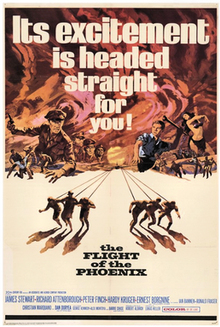
The Flight of the Phoenix (1965)

Fury and despair are never far away in brilliant survivalist film The Flight of the Phoenix

Director: Robert Aldrich

Cast: James Stewart (Captain Frank Towns), Richard Attenborough (Lew Moran), Hardy Krüger (Henrich Dorfmann), Peter Finch (Captain Harris), Ernest Borgnine (Trucker Cobb), Ian Bannen (“Ratbags” Crow), Ronald Fraser (Sergeant Watson), Christian Marquand (Dr Renaud), Dan Duryea (Standish), George Kennedy (Mike Bellamy)

Every so often you watch a film and say “where have you been my whole life!”. That’s the case with The Flight of the Phoenix– I can’t even imagine how much I would have loved this film if I had seen it when I was younger. This one has got it all for fans of anything from disaster movies to personality clashes. Aldrich’s film is a Sunday afternoon classic with bite, a brilliantly constructed actors’ piece set in the claustrophobic confines of the only shelter for miles around in the Gobi Desert.

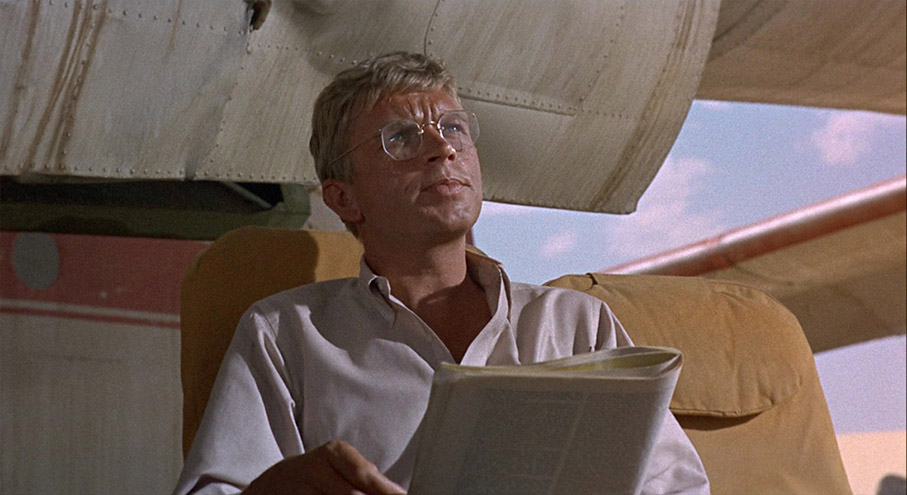
Frank Towns (James Stewart) and Lew Moran (Richard Attenborough) are the pilot and navigator on a cargo plane flying to Benghazi, with several passengers. Caught in a sandstorm, the plane crashes in the desert over 100 miles off course. The chances of being located are small and the survivors have only enough water for a little under a fortnight, so long as they avoid exertion. While Towns quietly struggles with the guilt, and different (hopeless) solutions are suggested, German aeronautical engineer Heinrich Dorfman (Hardy Krüger) believes that they can build a new airplane from the wreckage to fly themselves to safety. Towns and Dorfman are incompatible people, leaving Moran to play peacemaker and to support the building of the new aeroplane which may be (as Towns believes) a forlorn hope in any case.

Amazingly the film was a box-office flop on release – but time rewards skill, because you watch the film and marvel at the economy of its storytelling, its expert direction, wonderful acting and fantastically drawn characters. It’s a film of immense tension, with nearly all of this coming from the bubbling potential for deadly clashes between the trapped men. The rest is supplied by the ever-present threat of diminishing resources – none more so than the limited supply of cartridges needed to start the new plane’s engine (they’ve got seven and, best case, need at least five). 

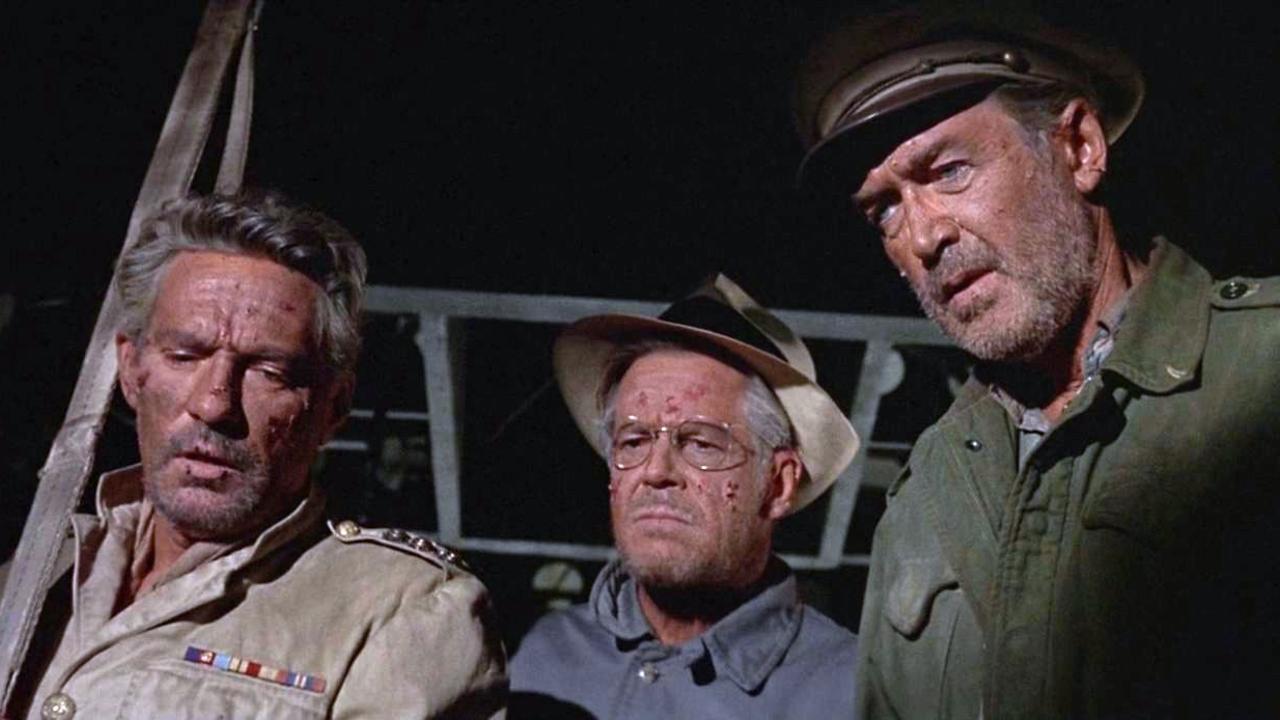
It’s this grim awareness of the knife-edge everyone is living on that powers the film. Every single resource is precious, and the pressure and fatigue show in every scene. As the film progresses, each of the men slowly disintegrates, growing increasingly scruffy, unshaven, dry skinned and weak and more and more susceptible to anger. Aldrich charts all this with professional excellence, the editing skilfully cutting away at several points to reaction shots from the actors as feuds come to a head, helped by some gloriously subtle and intelligent acting. 

And it’s not surprising really – few films capture the grim pressure of the desert better than this. Sand dries out skin and throats, reflecting the beating heat of the sun everywhere. The clear sky and burning sun turn every surface into smouldering heat – even the shade offers little respite. The viewer is left with no doubt about the insanity of spending time out of the shade in these conditions. You know immediately Captain Harris’ plan to walk 500 miles over the desert with a single canteen of water is absurd (it doesn’t end well of course). It’s a beautifully shot film that makes the mystical glamour of the desert beautiful and terrifying.

One of the things I like best about the film is that it is almost impossible to predict who will come out alive and who won’t. Unlike most Hollywood films, characters are not punished for deviating from goodness and purity – some of the most noble characters don’t come out alive, while some of the most self-serving, selfish and cowardly ones do. Even the central heroes are flawed: Towns is struggling with depression and a near crippling guilt that almost leave him fatalistically accepting death; Moran is a drunk possibly to blame for the whole disaster; Dorfman is arrogant, difficult, prickly and in many ways flat out unlikeable. 

Ah yes, Dorfmann. What a superb performance from Krüger (the first actor cast). In a masterstroke of invention, the character was changed from British (in the novel) to German. This opens up a whole world of additional prejudice between Dorfmann and the other passengers. “What did you do during the war?” antagonistic joker Ratbags asks Dorfman pointedly. It’s a tension that underlies most of the clashes. Dorfmann doesn’t help with his almost complete lack of awareness of social etiquette and his Germanic insistence on probabilities of survival: he sees no problem with treating the rest of the survivors like staff, openly debates the wisdom of helping the critically wounded, refuses to explain his thinking until absolutely pressed and has no empathy for their flagging strength and morale. But he also has a strange naivety which plays into a late plot reveal hinging on Dorfmann’s inability to read the reactions of the people sitting next to him. The film and Krüger flirt brilliantly with Germanic stereotypes – is there a more “German” character in film than Dorfmann? He’s about as far from a white knight as you can get.

But then so is James Stewart’s Towns. One of the things I like most about the film is the difficult psychology of survival. Towns is clearly struck with a barely understood guilt about the people killed in the crash, and seems ready to fatalistically accept death. His clash with Dorfmann is powered by numerous factors, not least a sense Towns has of his generation being replaced by a younger, technically minded one and a sense of losing control of his destiny. Nevertheless, Towns almost fanatically opposes the project at one point – and basically only accepts it when Moran and Dr Renard (an immensely noble Christian Marquand) tell him it’s better to have a chance of something to live for than to sit around dying. Stewart brilliantly taps into the ambiguity in his screen persona – a decency beneath the surface, but also a psychological weakness, a need for control under the nice-guy persona, a man struggling to accept he is out of his depth. It’s a brilliantly low-key psychological performance of a man struggling to button up guilt, pressure and unease.

The whole cast is superb. Attenborough plays the closest to type as a loyal number 2, but even he is clearly struggling to hold acres of despair while constantly playing peace-maker. Ronald Fraser is exceptional as a career army sergeant tottering on the edge of open-rebellion throughout the film, who betrays his commander’s trust no less than three times and is the most unknown wildcard in the pack. Ian Bannen was Oscar-nominated for his electric performance as a bitter, sarcastic Scots oil-worker who surprises everyone with his hard work while never letting up for a moment his bitter commentary on events. Peter Finch gives an excellent, ram-rod straight, almost naively decent stiff-upper lip performance as Captain Harris, a man a few degrees away from a noble idiot. Ernest Borgnine is touching as an oil foreman suffering from exhaustion and stress.

All this comes together in a superior package of film making, expertly made and superbly directed, with the actors embracing their well-developed characters with glee, making this in many ways part disaster movie, part chamber piece play. I love the little surprises it throws at you – just as you think you know a character there is a moment that surprises you or makes you reassess them. The tensions and dangers of survival in extreme conditions are brilliantly captured. There isn’t a weak moment in the film, and plot twists and surprises throw curveballs at the audience, some of which bring terrifying consequences. For any lovers of survival stories, acting or tense movies this is an absolute must.