Tag: Edith Evans

The Nun's Story (1959)

The Nun's Story (1959)

A nun struggles to balance faith and duty in this handsomely made, beautifully paced drama

Director: Fred Zinnemann

Cast: Audrey Hepburn (Sister Luke/Gabrielle van der Mal), Peter Finch (Dr Fortunati), Edith Evans (Reverend Mother Emmanuel), Peggy Ashcroft (Mother Mathilde), Dean Jagger (Dr van der Mal), Mildred Dunnock (Sister Margharita), Beatrice Straight (Mother Christophe), Patricia Collinge (Sister William), Rosalie Crutchley (Sister Eleanor), Ruth White (Mother Marcella), Barbara O’Neil (Mother Didyma), Colleen Dewhurst (“Archangel Gabriel”)
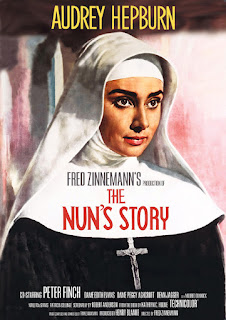
Gabrille van der Mal (Audrey Hepburn) has two passions in her life: her faith and a desire to heal the sick. Dreaming of combining these and working with native patients suffering from tropical diseases in the Belgian Congo, at 19 she joins an order of nuns who specialise in nursing. But the life of nun is far from an easy one, and Sister Luke (as she becomes) constantly struggles to square the circle of her faith, passion for medicine, ambitions and her natural antipathy towards authority. It’s a square she struggles with for almost twenty years, culminating in a crisis of faith during the German occupation of Belgium during World War II.

Zinnemann’s gracefully directed film, not surprisingly won the warm support of the Production Code Office, with its faithful depiction of the life and work of Nuns ticking all the boxes of a devout picture. However, The Nun’s Story is a more complex and intriguing film than this. While it finds much to praise in the self-sacrifice and devotion of the nun’s life, it isn’t afraid to look at how this institution (like many others) values obedience over innovation and praises submission over individualism. It stresses, in a way very few other films have done, how strikingly difficult it must be to lead your life in a religious devotion, and how much such orders (by their nature) demand we must put aside our natural inclinations.

Sister Luke is warned from the start by her doctor father (a genial Dean Jagger) that, with her stubbornness and independence, she is likely to find strictures on obedience hard to follow. He’s right. Superbly played by Audrey Hepburn (in her personal favourite performance), Sister Luke constantly finds it a near impossible struggle to submit herself to the authority of the order. Hepburn makes clear Sister Luke’s sincere faith, and her desire to belong, but also her unwillingness to accept that this might involve any compromise on her work as a nurse.

From the first she demonstrates she is unwilling to stop tending to a patient when the bell rings for her to attend prayer. She constantly reproofs herself for her inability to subjugate her personality to the requirements of her religious order. Training in tropical diseases at her medical college, she refuses a request from Mother Marcella to deliberately flunk an exam to prove her humility. As a ‘reward’, the best qualified nun in tropical diseases is dispatched to a sanatorium in Belgium to further learn obedience. Even when she is eventually allowed to work in the Congo it’s only in the “White’s Only” hospital (as they need the staff) and she is reproved for showing off when she makes much needed improvements to the hospitals working practices.

In many ways the film is a fascinating look at how hard it was for a woman to make a mark in the early 20th century. Clearly Sister Luke should have trained as a doctor – she graduates fourth in her class in tropical medicines – but that door was closed to her, and her only chance of working in Africa was as a member of a religious order. She ends up working in a system where she must constantly make difficult calls between her two passions (faith and medicine) – with her order placing devotion and obedience as the primary goal.

Not that the film is disparaging of religion. The devotion and goodness of the nuns is above question. Their ability to turn the other cheek and forgive is shown as an unparalleled virtue – even a shocking crime in the Congo is patiently forgiven. Many senior nuns are more than capable of balancing Sister Luke’s devotion to medicine with the orders demands. Mother Christophe (wonderfully and warmly played by Beatrice Straight) at the sanatorium, disagrees with the exam choice forced on Sister Luke and supports her to find a balance between her work and her order’s demand for obedience. Mother Mathilde (a matronly Peggy Ashcroft) in the Congo encourages her improvements – with the proviso she is told first. Others – such as Reverend Mother Emmanuel (a gently reserved Edith Evans) – consider it more important that Sister Luke dilutes her individualism in the order.

It makes for a fascinating film, that praises the devotion and self-sacrifice of religious orders, while not shying away from how rigid they often (by their very nature) are. Sister Luke in many ways is an ill-fit for being a nun. She can’t, or won’t, put her own beliefs about what is right second and she has an obstinance and pride (which she admits herself) that should really have ruled her out from the order in the first place. While the film doesn’t quite do enough to give as much space to her faith as it does her passion for medicine, it also makes it clear many characters – most astutely Peter Finch’s coolly professional Congo-based atheist doctor – recognise that she isn’t able to make the ultimate sacrifice that being a nun requires: the full submission of her own will.

Zinnemann directs this with a graceful, careful pace that finds many moments of quiet emotion amongst the imposing world of the order. The film is bookended by beautifully done sequences of departure and arrival, with possessions carefully left-behind and doors opening onto new and radically different worlds (the ending in particular plays out in a powerful silence). The film is beautifully shot by Franz Planer, with a wonderfully restrained score by Franz Waxman. It’s perfect material for this director, who was always strongest when showing the individual struggling within a system that demands they turn against their own nature.

The Nun’s Story is perhaps a little overlong and at times takes it stately pace a little too slowly. But it has a wonderful performance by Audrey Hepburn (who is in nearly every single frame), gorgeous location shooting and is directed with restraint and intelligence by Zinnemann. It also manages the difficult duty of finding things to both praise and criticise in the life of a religious order and both respects and questions the lifestyle and its rules. A middle brow film no doubt, but a fine example of highly skilled and professional Hollywood film-making.
Tom Jones (1963)

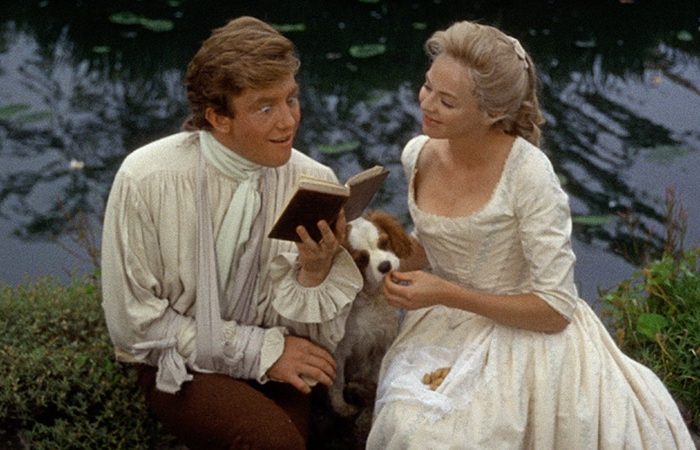
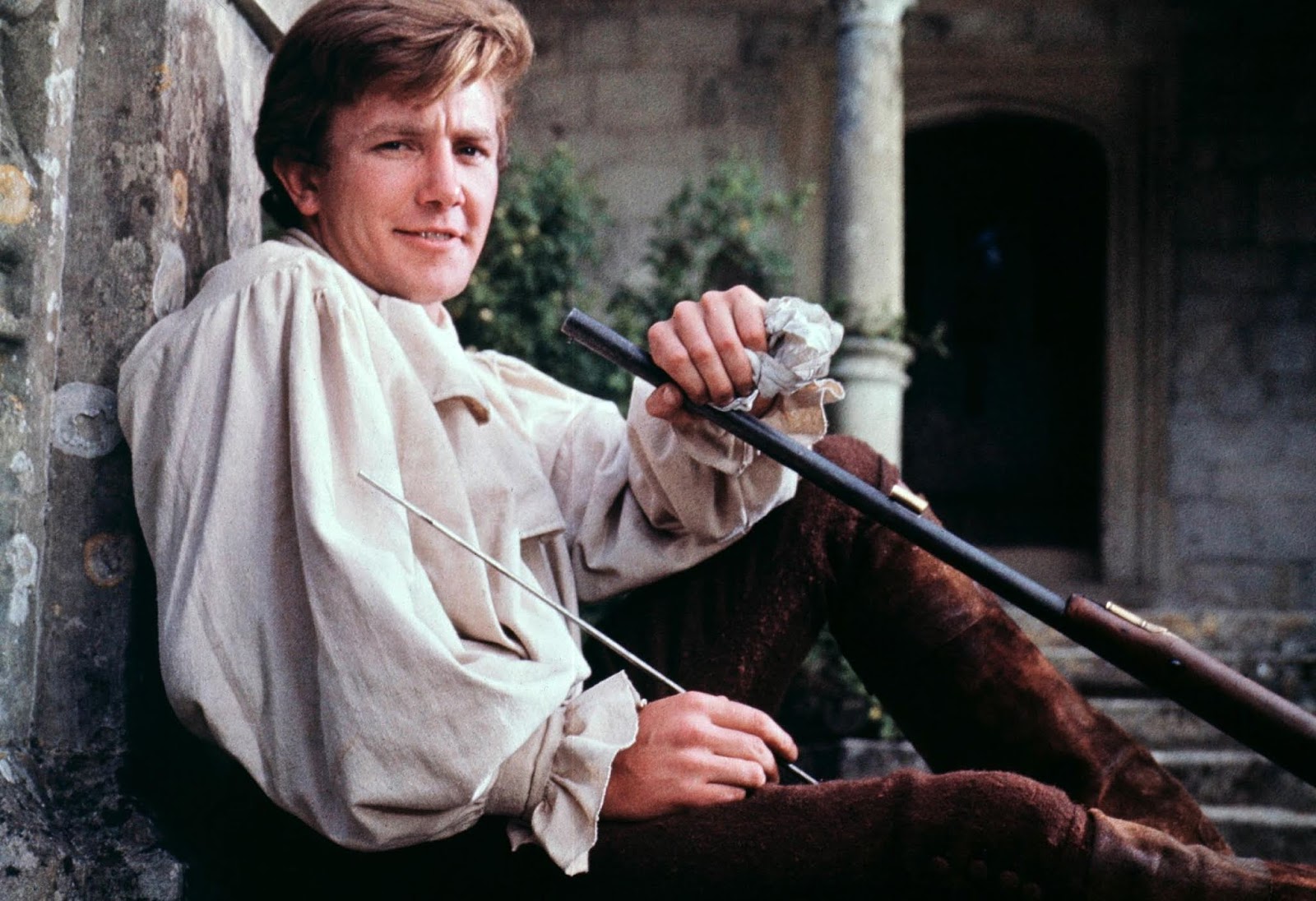
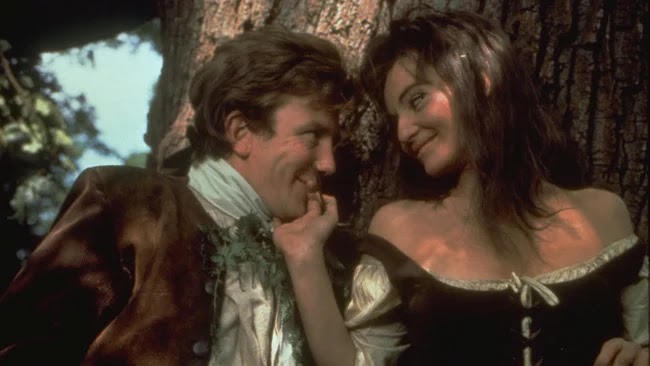
Albert Finney flirts with Diane Cilento (among many, many others) in Oscar winner Tom Jones

Director: Tony Richardson

Cast: Albert Finney (Tom Jones), Susannah York (Sophie Western), Hugh Griffith (Squire Western), Edith Evans (Miss Western), Joan Greenwood (Lady Bellaston), Diane Cilento (Molly Seagrim), George Devine (Squire Allworthy), David Tomlinson (Lord Fellamer), Rosalind Atkinson (Mrs Millar), Wilfrid Lawson (Black George), Rosalind Knight (Mrs Fitzpatrick), Jack Macgowan (Patridge), Freda Jackson (Mrs Seagrim), David Warner (Blifil), Joyce Redman (Mrs Waters/Jenny Jones), Rachel Kempson (Bridget Allworthy), Peter Bull (Thwackum), Angela Baddeley (Mrs Wilkins), Julian Glover (Northerton)

In early 1964, America was at the height of Beatlemania. Everything about Swinging Sixties London was the height of cool, so what better way to reflect that at the Oscars than naming Best Film of the previous year as being Tom Jones, the film that turned Henry Fielding’s work into the epitome of the era’s vibe. Watching Tom Jones today is a cruel reminder that generally nothing dates as hard or as fast as cutting-edge film techniques, and that time is often not kind to comedy. But Tom Jones was the first truly British film to lift Best Picture since Olivier’s Hamlet in 1948, so it was a sign of the short-lived all-conquering cool of British culture.

Adapted with a frenetic style from Henry Fielding’s novel, the film follows the trials and tribulations of Tom Jones (Albert Finney), adopted by Squire Allworthy (George Devine) after he is found abandoned on Allworthy’s bed as a baby. Growing up, Tom is a roisterer and rodgerer (especially keen on rodgering) but fundamentally decent, in love with Sophia Western (Susannah York) and the target of jealous rumours from his cousin Blifil (David Warner, looking a bit lost in his film debut). Banished as a result of Blifil’s schemes, he journeys to London encountering adventures along the way, not least a night of bliss with a Mrs Waters (Joyce Redman) who may (or may not) be his mother. Will Tom be able to prove his innocence, win the love of Sophia and escape his destiny of being “born to hang”?

Tony Richardson came to Tom Jones fresh from directing several searching, morally complex kitchen-sink dramas – and basically seemed determined to cut loose with this film by having fun. What he comes up with is an explosion of multiple different styles, from silent film to sped-up Benny Hill chases. Not a single editing or camera trick is unused, with the film stuffed to the gills with fades, wipes and freeze frames. Richardson basically used every single trick in the book. He was also lucky to have a perfectly judged score from John Addison (winning an Oscar).

It makes for a frenetic and fast-paced film, in love with its own 60s cool of anarchic comedy, sexual liberation and tongue-in-cheek lack of reverence all washed down with a bucket load of thigh-slapping bawdiness. It’s a film that’s inordinately pleased with itself, using Fielding’s interventionist narration style as the licence to break the fourth wall frequently and introduce a dryly hammy voiceover from Michael MacLiammóir. All of this was seen as the height of daring film-making back in the day – especially since Hollywood expected literary adaptations to be treated with reverence rather than as a high-brow Carry-On. But it’s dated badly.

Its smug, overbearing sense of zeitgeist cool comes across terrifyingly passé today, and the film’s daring use of every single cinema style makes it tonally feel like a complete mess. Richardson will segue from farce straight to an immersive hunting sequence where we are invited to feel every moment of the blood lust and violence, straight to a pastoral sequence showing the courtship of Tom and Sophia in glorious countryside.

Richardson himself – despite winning Best Director for his very self-consciously flashy work – also had mixed feelings about the film, recutting it shortly after its Oscar win into a shorter version which remains the version most people have seen today. He said of it that it “felt incomplete…and botched in much of its execution…whenever someone gushes to me about Tom Jones, I always cringe little inside”.

It’s a fair assessment of a film that is all flash – and way too much of it – and so little substance that it frequently becomes trite, smug and unpleasant to watch. John Osborne’s script (which apparently he submitted than refused to redraft) is in all honesty a mess (much of it was rewritten on set while the narration was a post-production addition to make it all make sense), with barely any quotable lines, and whatever skill the film has is all in the telling and the editing. 

Did Richardson take the whole thing as a lark and then work out later on that comedy is harder than it looks? The entire film was a complete mess on set – several errors were in fact left in the film (such as Western falling off his horse due to Griffith’s drunkenness) and then turned into jokes through the voiceover. There is a slight air from all involved that this isn’t proper film-making, that this is just one to flog for a bit of cash. Its Oscar win is inexplicable, but can be chalked up to a horrendously weak year at the Oscars.

Albert Finney goes through the entire film on autopilot – little matter than it made him a star – and he seems a curious choice for a young lover, throughout the film he channels instead a sort of horny Arthur Seaton. Finney thought the entire thing bosh and a waste of his talents – an attitude that does come across on the screen. Lightness is not always Finney’s strength, and his distant disengagement with the film becomes more striking with every viewing. 

Many of the rest of the cast mug shamelessly. Hugh Griffith bizarrely landed an Oscar nomination for a performance of gurning over-the-top mania. The film had three nominations for Best Supporting Actress: Edith Evans emerges best, although she could play this domineering Mrs Western standing on her head; Diane Cilento brings an attractive lightness to buxom Molly while Joyce Redman is good value and gets the film’s most famous sequence, a slobbery eating sequence with Finney where food is consumed in a very suggestive way as foreplay. Arguably the best supporting roles come from Joan Greenwood as the sexual but cruel Lady Bellaston and George Devine as the decent Squire Allworthy (the only character who isn’t some sort of caricature).

Tom Jones is most of all a memento of a particular brand of fast-paced, technique heavy, manic sixties comedy. It made a lot of money and won a lot of awards, so led to a torrent of similar films from bawdy Hogarthian costume dramas to sex comedies in modern London with naïve but well-endowed young men. Richardson and co. should have credit for catching this vibe first – but it makes for an odd experience today, like a slightly uncomfortable museum piece.