Tag: Film noir

Bunny Lake is Missing (1965)

Carol Lynley’s daughter ‘Bunny’ goes missing – but is the girl real or not? Classic noir mystery Bunny Lake is Missing

Director: Otto Preminger

Cast: Laurence Olivier (Superintendent Newhouse), Carol Lynley (Ann Lake), Kier Dullea (Steven Lake), Martita Hunt (Ada Ford), Anna Massey (Elvira Smollett), Clive Revill (Sergeant Andrews), Finlay Currie (The Doll Maker), Lucia Mannheim (The Cook), Noël Coward (Horatio Wilson)
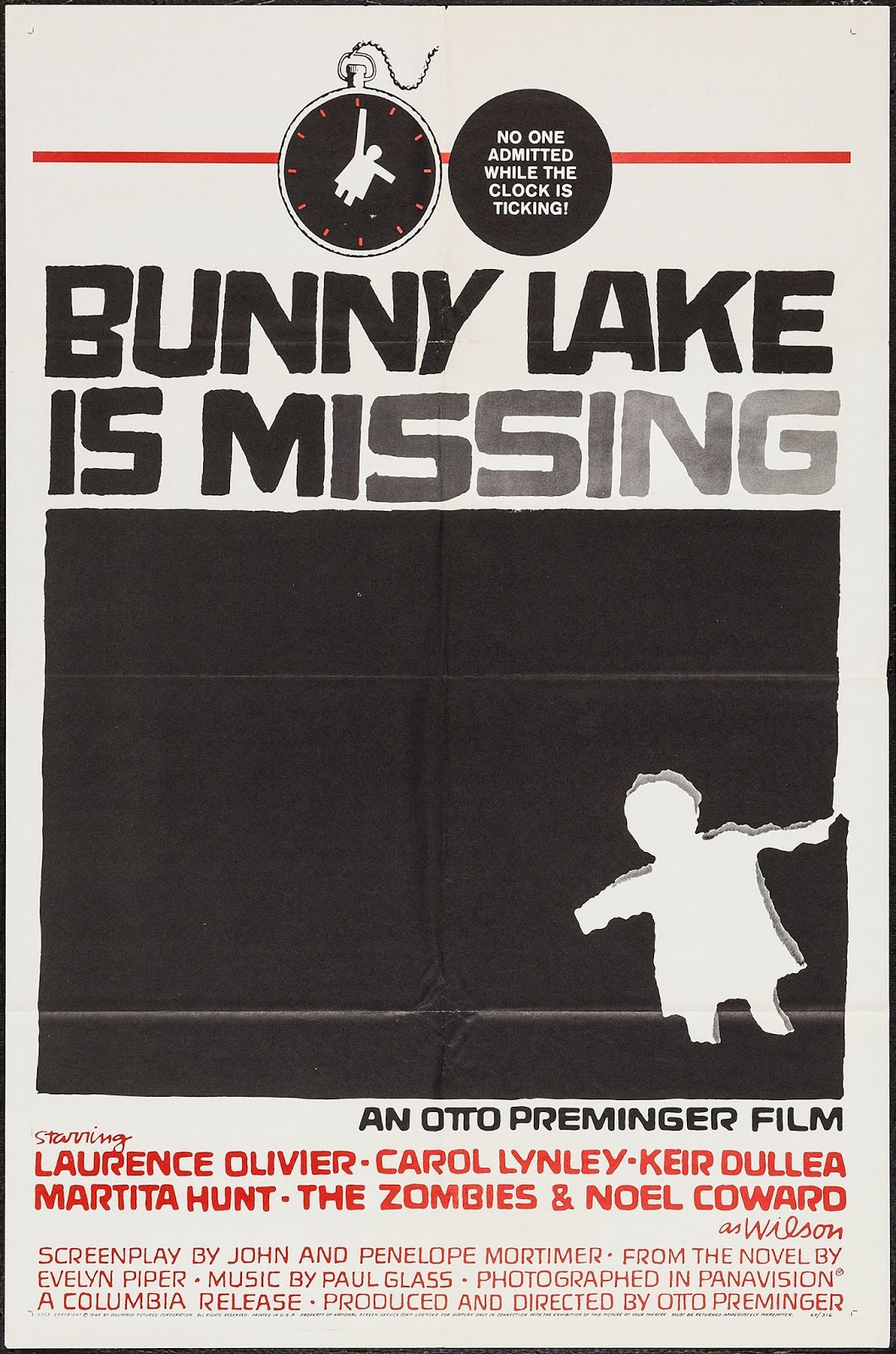
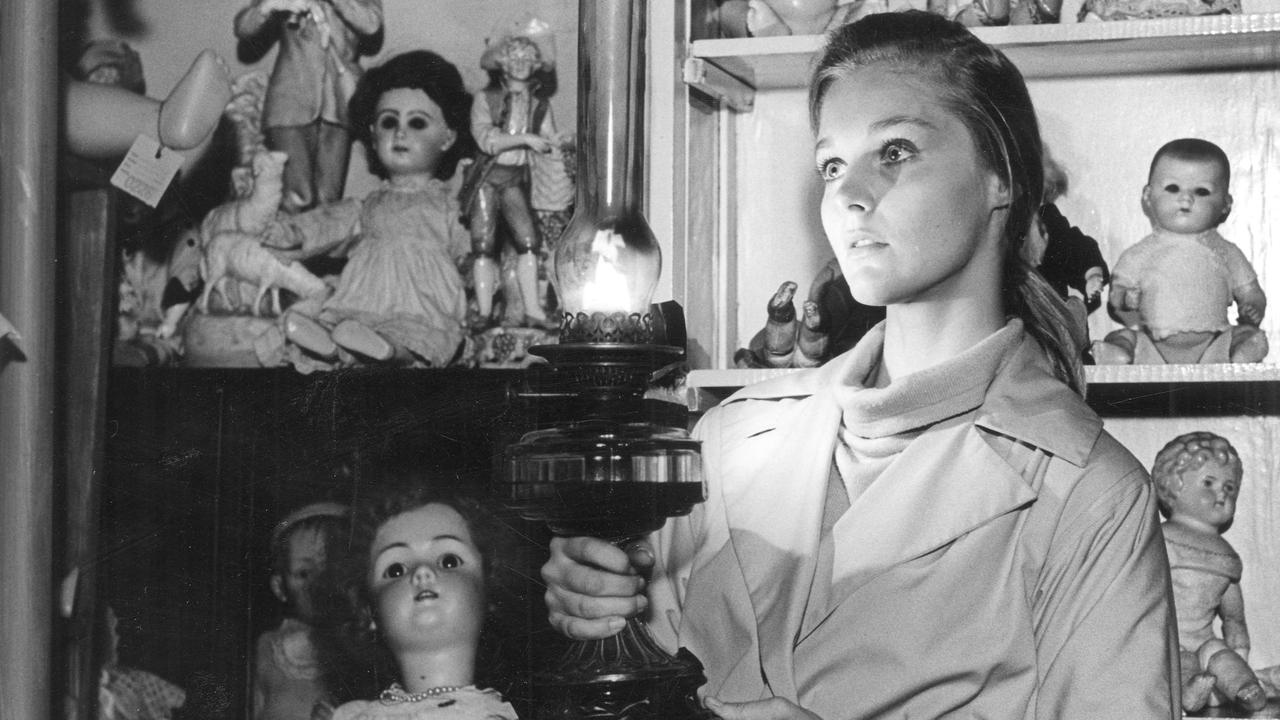
Otto Preminger’s career was an interesting mixture of high-brow, noirish thrillers and pulpish adaptations. Bunny Lake Is Missing is a mixture of these, a restructuring of a hit novel. Transplanting the novel from New York to London, the film covers a single day and the investigation into a missing child ‘Bunny’ Lake. Her American mother Ann Lake (Carol Lynley) drops her at her new school, and returns at the end of the day to find no one has seen her daughter or any record of her existence. While her protective brother Steven (Kier Dullea) rants and rages, Superintendent Newhouse (Laurence Olivier) leads the investigation. As Newhouse fails to find any evidence for the child’s existence at all, the question is asked: is she a figment of Ann’s fragile imagination?

Preminger plays this delicate game of “guess who” with the audience for a skilled and enjoyable 90 minutes before giving us any form of answer. The film throws us straight into the mystery of whether Bunny is real or not from the off, as our first shot of Ann is her alone in the school after dropping her daughter off. We see as little evidence of Bunny’s existence as the cast does. From there it’s a careful balance between giving us enough reasons to both trust Ann’s conviction her daughter is real and also give us enough reasons to suspect that Ann may be as unbalanced as Newhouse is concerned she might be. 

It’s quite the game the film plays, and Preminger does it very well, the film never tipping the hand too much one way or the other. Shot in luscious black and white, it’s a film of noirish shadows and imposing blackness where everything feels a little bit out of kilter and untrustworthy. Preminger throws us into Ann’s perspective by using a number of clever tracking shots that allow us to follow her through the events of each scenes. These shots are sustained, subtle and also give us a further subconscious reason to trust her – we are effectively seeing the events of the film side-by-side with her. It makes for a rather empathetic film, and one you find yourself investing into.

Not least because it completely understands the twin horrors of both losing a child and not being believed by anyone no matter how desperate you plead that you are telling the truth (no matter how generous people are while doing so). Preminger acutely understands we all deep down worry that we are going to be let down by those we need to believe in – and this feeling of concern, mixed with frustration and pity for Ann is what draws us to her. Even while we think there is more behind Bunny’s existence than meets the eye.

The screenplay by John and Penelope Mortimer also throws plenty of potential suspects at us. These are largely a series of delicious cameos for vintage British actors. These extreme odd-balls also make the two Americans in London (Ann in particular) seem even more like fishes out of water. Martita Hunt is excellent value as a retired school headmistress, seemingly confined to a bedroom in the attic of the school (!) whose hobby is recording children talking about their nightmares. Anna Massey is equally good as a harassed matron more concerned about the negative impact on the school’s reputation than child’s safety. Pick of the bunch of this rogues gallery is Noël Coward (having a whale of a time) as Ann’s drunken landlord, a faded actor and sexually ambiguous seductress who in one priceless scene gleefully shows a group of police detectives some of his favourite whips (“I find the sensation [of being whipped] rather titillating…[this was] reputed to belong to the great one himself. The Marquis de Sade”) from his collection of bizarre sex toys.
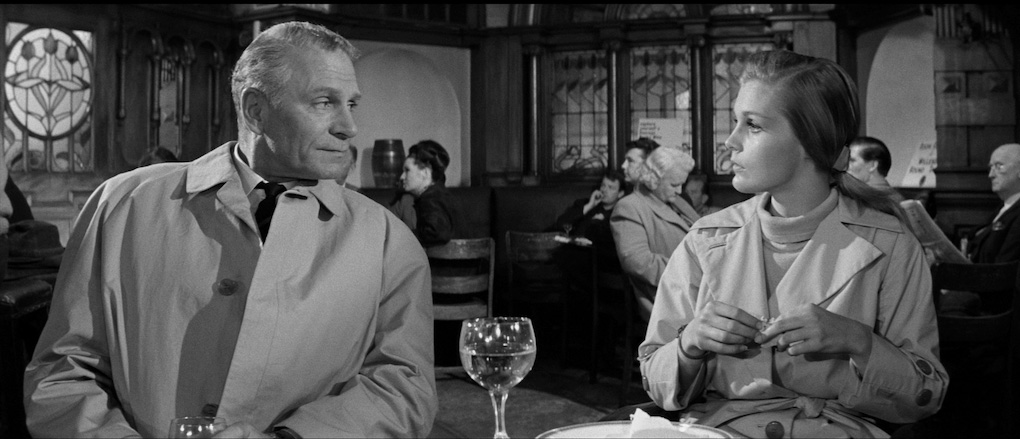
These perverts, oddballs and weirdos are all investigated with a cool professionalism by Laurence Olivier’s Superintendent Newhouse. Olivier gives possibly one of his most humane, restrained and engaging performances: he’s the epitome of caring, dedicated professionalism and a superbly humane detective. Carrying much of the burden of conveying the films narrative, Olivier is superb here – and he manages to make Newhouse exactly the sort of man you would long to investigate your child’s disappearance, even as he starts to doubt the child even exists. Olivier is in fact so strong, that the parts of the film where he disappears suffer noticeably from his absence – no one else among the principles can match him for presence.

Saying that, Carol Lynley does an excellent job as a character we invest in and sympathise with, but can never quite bring ourselves to be sure is reliable. It’s a difficult line she walks between being believably distraught and simultaneously slightly off kilter, enough to make you worry that she be (knowingly or not) making the whole thing up. The feeling may be more than helped by the exceptionally weird relationship between herself and her brother, one of an incestuously unsettling intensity (their relationship as brother and sister isn’t divulged until almost 15 minutes into the film and it’s as much a surprise to the audience as it is to the characters).

Kier Dullea as her brother gives a decent, if rather strained performance, as Steven. Dullea’s slight emptiness in the role can perhaps be partly attributed to his terrible relationship with Preminger, later claiming making the film was the worst experience of his life. (Olivier was also unimpressed calling Preminger a bully). 

It’s a shame as Dullea is crucial to the final sections of the film. I won’t give away the reveal and solution, but Preminger overplays his hand here, stretching the final sequence of the film out to a full 15 minutes which rather overstays its welcome. Maybe the sort of psychological complexity it’s aiming for is a bit more familiar to use today, than it was in 1965, but it certainly feels like a scene overstretched. But that’s a blemish on a very solid mystery before then that brings more than enough pulpish pleasure, fine performances and interesting film making to reward rewatching.

Laura (1944)

Dana Andrews investigates in the shadow of Gene Tierney in film noir Laura

Director: Otto Preminger

Cast: Gene Tierney (Laura Hunt), Dana Andrews (Mark McPherson), Clifton Webb (Waldo Lydecker), Vincent Price (Shelby Carpenter), Judith Anderson (Ann Treadwell), Dorothy Adams (Bessie Clary)

Laura is the sort of film noir that on the surface gives you what you would expect, but actually shakes its formula up pretty successfully. The femme fatale starts the film dead (although anyone who has seen a mystery will be expecting a twist when we hear a shotgun has destroyed her face beyond recognition). The detective does very little detecting, and engages in hardly any police business. One of the lead suspects is allowed to tag along to every interrogation to spray witty barbs around. There are only four potential suspects and barely any other characters. The solving of the mystery often takes a back seat to flashbacks and character beats. When the reveal comes, it feels like it’s been hiding in plain sight the whole time. But yet it really works.

Laura Hunt (Gene Tierney) is a leading female advertising executive found murdered in her apartment. Detective McPherson (Dana Andrews) is called in to investigate, with the suspects being: Walso Lydecker (Clifton Webb), a waspish newspaper columnist who was her mentor; Shelby Carpenter (Vincent Price), a parasitic southerner, sponging off Laura’s success; and Ann Treadwell (Judith Anderson), a matriarch who may or may not be conducting an affair with Shelby. But is all as it seems? Well of course it isn’t, and as McPherson gets more obsessed with Laura, so does the mystery of her murder deepen.

Otto Preminger took over the direction of Laura mid-way through the production, after the rushes of the original director (Rouben Mamoulian) underwhelmed. Preminger repackaged the film as a sort of part-thriller, part-shrewd black comedy, and gave huge scope to Clifton Webb’s hugely enjoyable performance as the waspish Waldo, a turn that totally dominates the film. Clifton Webb’s arch performance is a complete delight, and the film plays subtly with Waldo’s sexuality. Introduced in a bath with a typewriter, like some gossipy Marat, Waldo is heavily implied to be at least ambiguous in his sexuality, a dandy about town with more knowledge about clothing and high society than the initial ingénue Laura. 

To be honest, watching it today, Waldo is so clearly a possessive creep – a preening, domineering personality who takes an obsessive pleasure from “owning” Laura – that you’re far less likely to be surprised to find he has a considerable dark side than many of the viewers of the original film. For all the witty barbs he throws about – “Haven’t you heard about science’s latest invention, the doorbell?” he snaps at an welcome intrusion from MacPherson – Waldo remains part comic delight, part intensely black-hearted weirdo. It’s a line Webb’s performance walks extremely well.

It does mean that there is very little room in the film for Andrews and Tierney as the film’s two leads. Laura is the presence that hangs over the film – quite literally at times, with many scenes taking place in her flat, beneath an enormous portrait of her. But despite this, she becomes less and less interesting as the film progresses. Essentially, Gene Tierney is so striking looking as the lead – and the build-up she gets from Waldo in particular is so extreme – that her acting can’t quite live up to the presence. The character is possibly the least well written of the film, an enigma that we never quite get into – or feel inclined to try.

McPherson is a far more interesting part. The film suggests (indeed Waldo says it outright) that McPherson is falling hard for the victim. There is a wonderful sequence where McPherson stays overnight in Laura’s apartment, moving through the flat, rearranging things in her rooms, drinking her whisky then settling into a chair and starring up at her painting before going to sleep. It’s like a date with only one person there. McPherson gets a very personal investment in the case – so it’s a shame that he’s played so flatly and boringly by Dana Andrews, a serviceable sort of B-list film noir lead who brings no spark to the part at all.

The two leads can’t compete with Webb, or the playful performances in the supporting roles from Price and Anderson. Preminger gets the tone just right with these big performers, playing both characters just on the edge of satire. Price is languidly dry, delighting in his gauche lack of interest in other people and his selfishness. Anderson is a strangely needy matriarch, a woman hiding her need for the interest of a younger man, archly proud but slightly tragic. Throw these colourful performers at the edge of the picture and it’s not hard to lose interest in the two leads – especially as they are playing characters so different from what you expect from these films.

The mystery itself is not too much of a puzzle. There are two or three twists in there, two of which I was able to predict and the third one I didn’t pick up on some early signposting (including in the opening lines). But the enjoyment here isn’t from the puzzle but from the colour that it’s put together with. Preminger stages the whole thing like a jet black comedy and mixes it with plenty of gorgeous film noir lighting. The story is slight but staged with real energy and dynamism – you can’t believe how swiftly it flies by. The film probably has more sympathy for the eventual murder than a modern audience will feel – but that’s no big deal. Well written, spicily played by the supporting cast and well directed, you can see why this is one of the classic film noirs.

The Lady from Shanghai (1947)

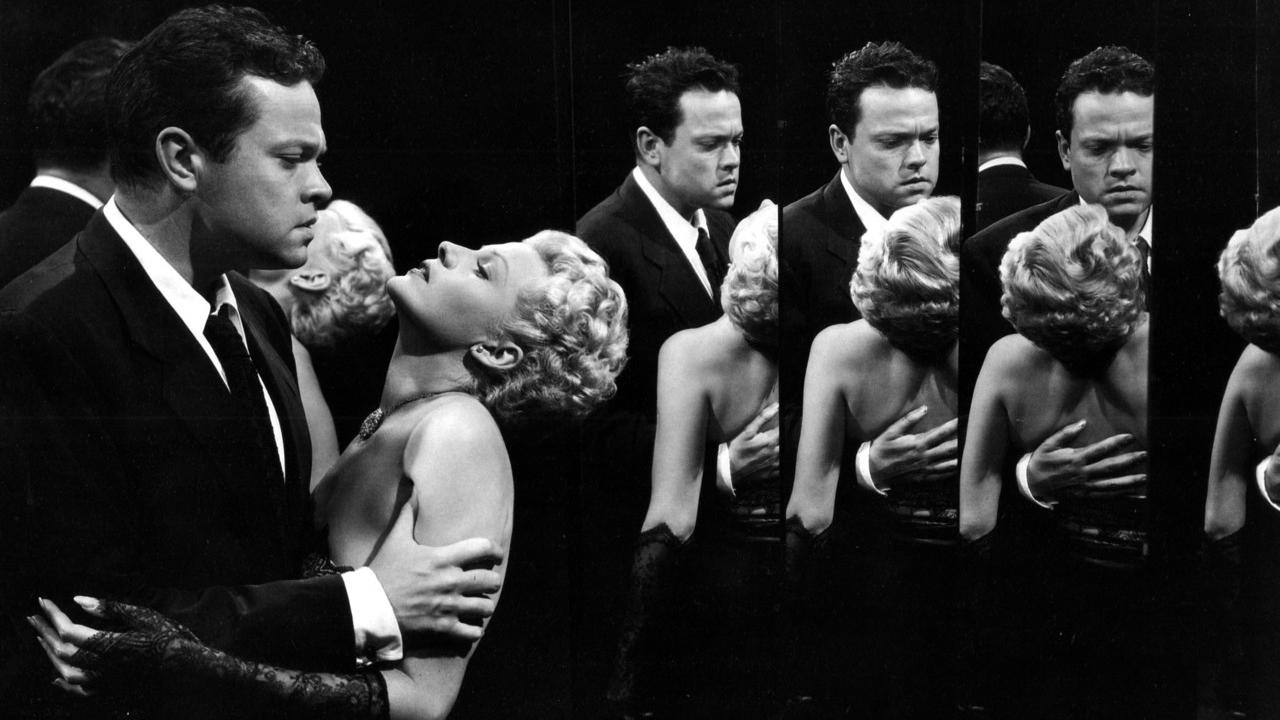
Orson Welles and Rita Hayworth in hall of mirror mystery The Lady from Shanghai

Director: Orson Welles

Cast: Rita Hayworth (Elsa Bannister), Orson Welles (Michael O’Hara), Everett Sloane (Arthur Bannister), Glenn Anders (George Grisby), Ted de Corsia (Sidney Broome), Erskine Schilling (“Goldie” Goldfish), Carl Frank (DA Galloway)

Orson Welles’ career is littered with coulda, woulda, shoulda moments. The Lady from Shanghai is perhaps the most telling lost opportunity in all his extensive CV of recut products and studio interference. Unlike Touch of Evil, there remains no trace of the footage removed from the film by the studio – instead we are left with the remains of the picture that escaped rejigging.

Michael O’Hara (Orson Welles) is an Irish drifter, who saves the glamourous Elsa Bannister (Rita Hayworth) from muggers in a park. Attracted to him (perhaps), as he is to her, she hires him to work on a yacht she and her husband, famed lawyer Arthur Bannister (Everett Sloane), are sailing around the coast. During the voyage, O’Hara is approached by Bannister’s business partner George Grisby (Glenn Anders) with a deadly proposition – and is sucked into a web of cross and double cross.

The Lady from Shanghai is an odd curiosity. At the time it was condemned by critics as a scarcely coherent film noir, struggling to involve the audience in its ins and outs. Today it’s seen more as a missed opportunity classic, which Welles nearly managed to turn into a landmark film before the studio heads recut the entire thing over his head. The reality is probably somewhere in between.

Welles agreed to do the movie for nothing, in return for funding for his stage production of a Cole Porter musical based on Around the World in 80 Days. Stories change depend on who you talk to, but essentially Welles agreed to do the first piece of work that was chucked his way – which happened to be this moderate plot-boiler. Welles shot a lot of the film with an imaginative eye and provided several fascinating set-pieces. But was he really that interested in the film?

It’s hard to say. Certainly it makes you wonder when you look at his rather disengaged performance. Welles (unwisely) takes on an Irish accent and basically feels distracted and bored throughout – as if he felt the whole thing was beneath him. O’Hara becomes a pretty bland character whom it’s impossible to really develop an affinity for. Welles hardly looks cut out for the fighting he’s called on to do – has an actor in a good movie thrown a less convincing punches in a scuffle before?

Because the rest of the film is fairly good, by and large. The plot is almost impossible to follow, but that is partly the point – the growing number of double crosses are designed to feel like we are spiralling down a rabbit hole with O’Hara. But it’s the style it’s told with – brash and exciting camera shots, and an edgy jaggedness in performance and storytelling that alternates with a dreamy sense of unreality. Welles throws this all the wall, but somehow manages to hold it more or less together – perhaps helped by the fact that he treated it like a slightly disposable piece of pulp.

The film’s final act culminates in an extraordinary shoot-out in a hall of mirrors, with characters replicated over and over again in reflection, lines of them appearing as if from nowhere. There is a quirky surrealness about this, with reflections superimposed over each other, or armies of a single character marching towards the camera. Bannister’s walking stick movement, stiff and awkward, also really helps here as he starts to look like a pack of spiders. 

Of course Welles intended this sequence to be almost twice the length, but it was cut down by a bewildered studio. They also insisted that Welles insert a parade of close-ups of characters, in particular of Rita Hayworth, which was exactly contrary to Welles’ intention to use as many distancing long and medium shots. Welles’ original plan for the score was also ditched in favour of a rather flat, dull, traditional score.

But then there are the moments of exotic, heated sex that Welles managed to leave in. As our heroes sail off into the tropics, the bubbling sexual tension between O’Hara and Elsa boils over. It bubbles over into other relationships as well – does every man desire Elsa? Or are there other elements at play? The final offers for murder and money are almost deliberately hard to follow – is it all a summertime madness? As the plot becomes more and more odd, so the film begins to become more bizarre in its setting, finally heading into Chinatown and then an abandoned funfair.

Away from Welles’ weaker turn in the lead, there are some strong performances. Everett Sloane is fantastic as the sinister lawyer, propelling himself forward with walking sticks, his motives impossible to read. Glenn Anders is wonderfully slimy as a creepy lawyer, whose every line has some sort of cackling insinuation. Rita Hayworth brings a sexual charge to the film, mixing manipulation and genuine feeling.

These performances fit neatly into the film, which continues forward with its bamboozling plot. This story never quite engages the audience – and there isn’t quite enough in the film itself that has been left us to be sure that, even with the cut material put back in, it could have been a classic. But there are enough interesting notes in there to keep you watching – and the final sequence is extraordinary and haunting in its extravagant oddness. But I’m still not sure this is a major work – rather it seems to be a curiosity from a great director.

Blade Runner (1982)


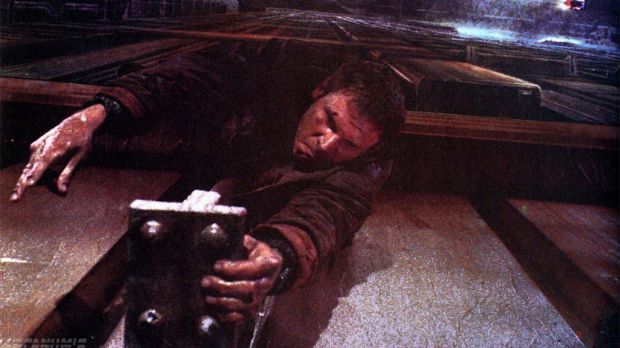
Harrison Ford hangs on for dear life in Blade Runner

Director: Ridley Scott

Cast: Harrison Ford (Rick Deckard), Rutger Hauer (Roy Batty), Sean Young (Rachael), Edward James Olmos (Gaff), M. Emmet Walsh (Harry Bryant), Daryl Hannah (Pris Stratton), William Sanderson (JF Sebastian), Brion James (Leon Kowalski), Joe Turkel (Dr Eldon Tyrell), Joanna Cassidy (Zhora Salome)

Everyone knows Blade Runner surely? And everyone has a viewpoint on its central mysteries. Why for a film largely ignored on release? Because as well as being tight and engaging, this is a rich thematic film, crammed with mystery and enigma. And there are few things more engaging than a film that succeeds in being as open to interpretation as possible.

In 2019 a dystopian, polluted Los Angeles is a launch pad for the wealthy to head out into the new colonies in the stars. Off-world, the unpleasant tasks are carried out by artificial humans known as replicants. Replicants are banned from returning to Earth – but a group of five led by soldier Roy Batty (Rutger Hauer) have come to Earth looking to extend their pre-programmed limited lifespans (no more than five years). On Earth, Rick Deckard (Harrison Ford) is reinstated as a Blade Runner, an agent whose job is to ‘retire’ (i.e. kill) replicants on Earth. Deckard is reluctant, having an increasing distaste for his work, but begins to hunt and eliminate the replicants.

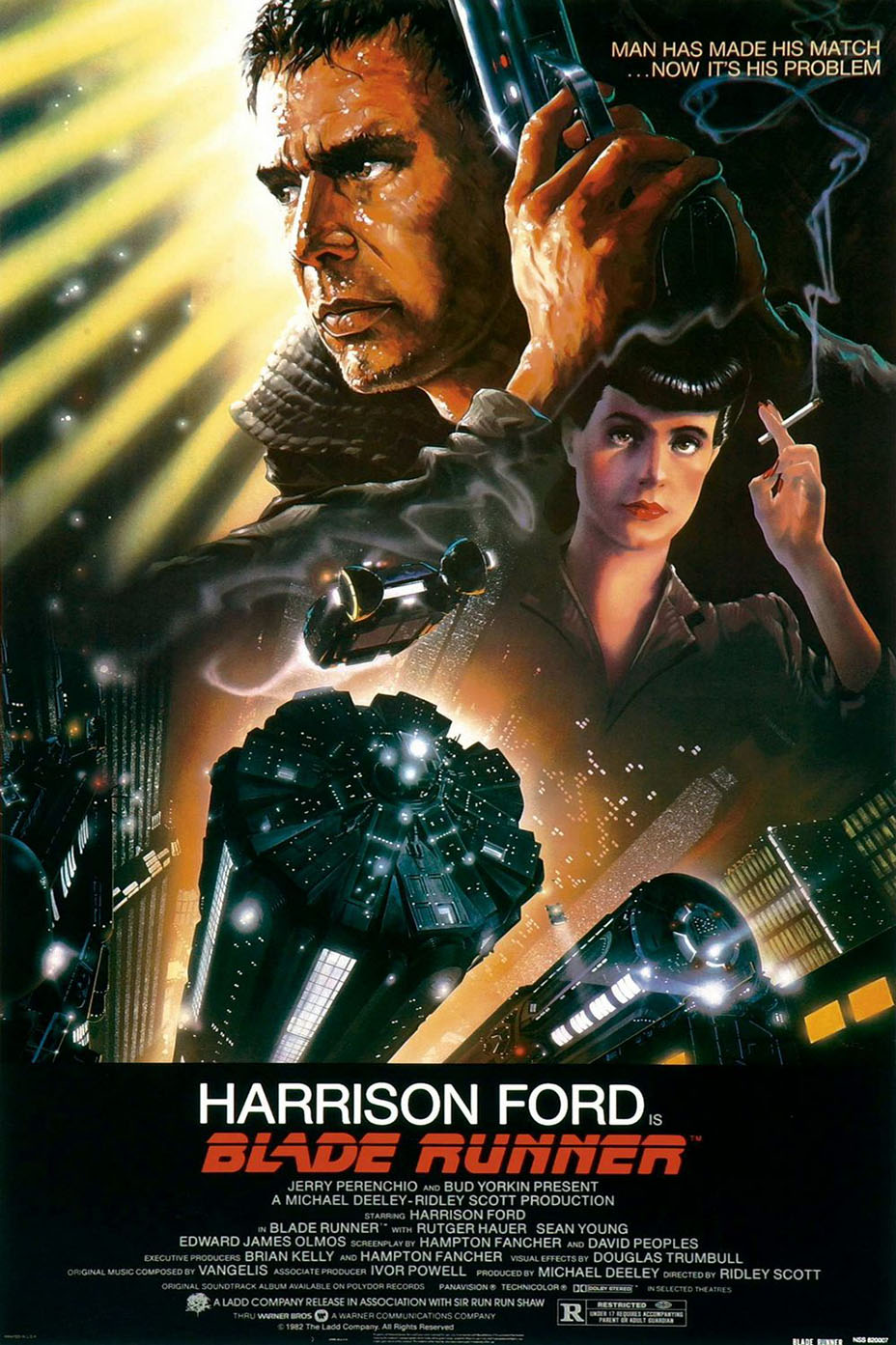
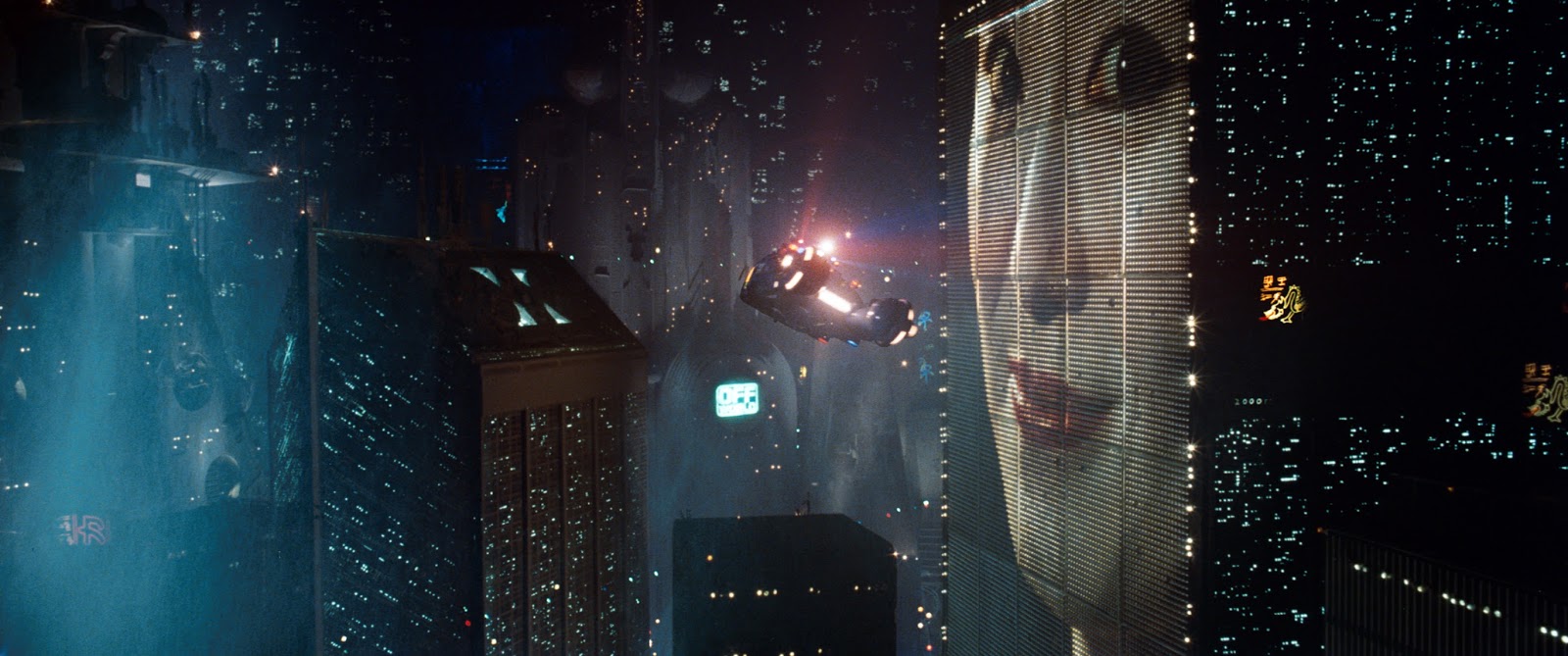
Blade Runner may be one of the most influential science fiction films ever made. Its look and style influenced virtually every other dystopian future you’ve seen in any other film since. Tall, run-down buildings. Overbearing corporate advertising. Flashing neon lights. Terrible weather. Everything dark all the time. Poverty and degeneracy on every corner. You’ve seen it in every dystopian future since. Visually, the film is a landmark, a testament to Ridley Scott’s graphic artistry.

But that wouldn’t be enough for Blade Runner to last the course. When released it was perhaps too elliptical and hard to categorise – equal parts dystopian thriller, noir detective story, sci-fi morality tale, dark romance – for audiences to really understand. Certainly the studio didn’t. After disastrous test screenings, it was re-cut. So began a fable of slice and dice that made Blade Runner perhaps second only to Brazil in the annals of re-versioned films.

The release included an overtly “happy ending” (bizarre images of our heroes driving into a blissful countryside, totally at odds with the rest of the film) and a disengaged voiceover from Harrison Ford that eradicated all the film’s subtlety. This was the only version for 10 years until a “Director’s cut” was released. This removed these elements, retooled scenes and introduced the famous “unicorn dream” sequence (of which more later). Fifteen years after that, Scott finally found the time to work on a “Final cut” which presented the film as Scott had intended it – with all its mysteries and questions intact. Has there been any other film with so many different “official” versions?

Anyway, was it worth the struggle? Certainly. While you could argue it is predominantly a triumph of style, Scott laces the film with a sense of mystery and profundity that makes it a rich and rewarding viewing experience. It’s a trim detective thriller that also questions the nature of humanity. It is a perfectly formed elliptical mystery, an archetypal cult film that engrosses the viewers to such an extent that 30 years later there is still a healthy debate about what the film means.

Humanity is =the key issue. The human characters are functional, cold, distant and unengaging. The hunt for the replicants (who are basically slaves) is brutally and unremorsefully executed. The replicants have been designed to learn and grow but cruelly had their lives capped to stop them taking advantage of this. Their world is polluted, tawdry, soulless and lost.

Meanwhile, the replicants exhibit far more (whisper it) humanity than the aloof human characters, ]despite the fact we are repeatedly reminded they cannot feel empathy. Clearly this is not completely true. And, the film argues, if an artificial human can display loyalty, fear, love, anger and pain, what actually is the difference between that and a “real” person. If a replicant can only be identified after dozens of questions in a test, can they really be that different from a human being?

Questions about this coalesce around Deckard. If the film has remained such a part of cultural discussions, it’s partly because of the fun of theorising about his true nature. Is he a replicant? Scott’s insertion of Deckard’s unicorn dream (implying the origami unicorn left by Gaff at the film’s end shows Gaff knows Deckard’s dream, meaning the dream is an implant in an artificial mind) very much suggests so. There is a case to be made either way, both of which work.

Deckard’s ruthless replicant hunt is deliberately juxtaposed with their own warm feelings. Deckard grows in humanity and reluctance as the film progresses – is this him becoming more human, or is it is humanity emerging? His coldness and reserved hostility contrast with the vibrancy of Batty, Pris and the replicants. In many ways, he fits in as the quintessential human in this world – a vague discomfort with what he is doing, but no real hesitation about continuing. Thematically, it makes more sense if Deckard is human – that he represents dehumanisation (and gradually realising it) while the replicants become more human.

However, clues are sprinkled throughout that Deckard is not what he appears. His distance from other characters. The treatment he receives from his co-workers. The photographs that fill his apartment (replicants enjoy photos as it gives them a sense of a past). His bond with Rachael. His relentlessness – and the fact that he is clearly considered expendable by the police. Then there is the rich irony: the best way of hunting down replicants is to create a hunter replicant. Either way, it’s a debate and conversation that sustains the film – and allows multiple interpretations of every scene.

It’s a debate that feeds into the main theme of the film: humanity, free will and our God complex. Batty, the dying replicant searching for new life, confronts his maker – a distant, arrogant man with no interest in his creation. And kills him. But Batty feels more human than any other character. He shows more affection, frustration, anger and grief than anyone else. His last words (the famous “tears in rain” speech) had such cultural impact because it has such poetic joy and depth to it. They are lines enthused with a desire to live, a romantic vitality. It’s the most poetic moment in the film and it comes from someone who isn’t “real”. What more sign do we need that the replicants are human? If we can create poetry in a machine, does it stop being a machine?

Empathy is the quality the replicants are judged on – but as we see replicants dispatched with little sense of regret, and then witness Batty and Leon’s grief for their fallen comrades, or Pris’ ease with man-child Sebastian, the lack of empathy from humans is all the more clear. Deckard is a fascinating character as he falls between two stools – either a human who has buried empathy, or a replicant discovering empathy. Strange and disjointed as the relationship between Deckard and Rachel is (and there is an uncomfortable moment where Deckard gets too physically forceful) it fits into this – are these two artificial people discovering the ability to bond? Or is it an emotionally stunted human finding himself drawn towards someone who feels more real than the other humans?

What makes the film work is that it doesn’t hammer home, these issues. It allows us to make our own minds up. It frames the action within a noirish detective thriller, laced with mood and awesome visuals. It’s sharply and sparingly written, with real intelligence. For all its discussions about humanity, it does feel at times a cold film – but it’s so rich in suggestion and implication that it doesn’t really matter. Yes you could argue the implication and playful suggestion imply more depth than actually exists, – but the film gets away with it, because it works so well.

Rutger Hauer gives easily the finest performance as Batty (he allegedly wrote the famous speech on the day). Batty is the most vibrant and dominant force in the film, who goes on the most engaging emotional arc. For me the dark secret of the film is Harrison Ford is slightly miscast– he’s aiming for moody, Bogartish disillusionment, but he comes across more disengaged (he’s strikingly better in Blade Runner 2049). I think Ford struggled with the character – it’s a role better suited to a John Hurt or James Caan, rather than Ford’s more conventional (if world-weary) magnetism – he’s not a natural fit for a bitter cynic. Olmos, Cassidy, Walsh, Sanderson and James give strong support.

Blade Runner is a visual triumph and a rich experience. Its story is compelling, but the real richness is the thematic layers under its skin. Scott created a film open to interpretation, and that’s what really grabbed the imagination. It marries mystery with curiosity and avoids pretension, becoming intriguing and engrossing. Scott has rarely made a film with such intense ideas and poignant confusion before. You could argue the final cut leans too far one way in the central mystery, but there is more than enough eerie richness under that – helped by Vangelis’ unsettlingly grand score – to keep people viewing and talking about it for another 30 years.

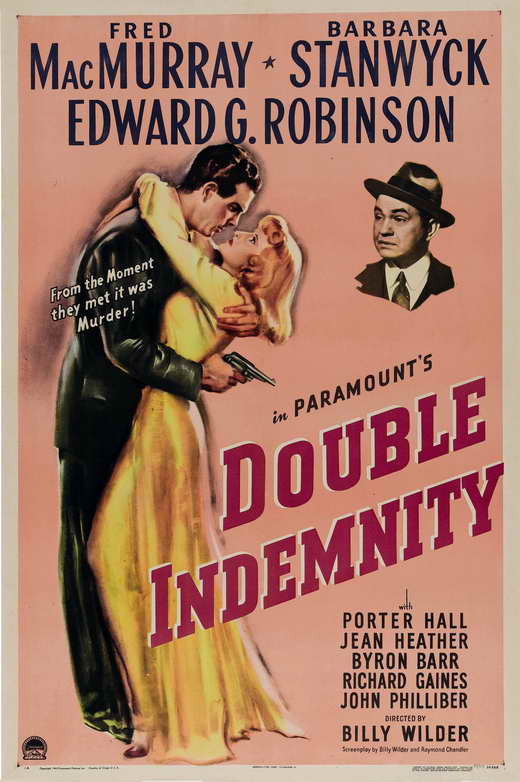
Double Indemnity (1944)

Barbara Stanwyck is the dark force beyond Fred MacMurray in Wilder’s classic Double Indemnity

Director: Billy Wilder

Cast: Fred MacMurray (Walter Neff), Barbara Stanwyck (Phyllis Dietrichson), Edward G. Robinson (Barton Keyes), Porter Hall (Mr Jackson), Jean Heather (Lola Dietrichson), Tom Powers (Mr Dietrichson), Bryon Barr (Nina Zachett), Richard Gaines (Edward Norton)

In the wake of the Second World War, morally complex and dark (in every sense of the word) stories spoke to a nation coming to terms with what it had been through. Out of this was born a new genre: film noir. Double Indemnity might just be the best example and one of Billy Wilder’s best films.

Walter Neff (Fred MacMurray) is a bored insurance salesman, smitten with the sexually alluring Phyllis Dietrichson (Barbara Stanwyck), wife of a potential client. When she suggests that, with his help, they could get rid of her husband and collect a massive insurance payout on his death, Neff is quickly won over. But murder is a hard thing to get away with – particularly when Neff’s colleague and close friend Barton Keyes (Edward G Robinson), the best investigator in the business, smells something amiss in the ‘accident’.

Double Indemnity is one of those films that it’s easy to forget was as influential as it was, precisely because it’s narrative and filmic techniques have been so comprehensively imitated in a host of films since. But imagine: this was one of the very first real film noirs. It was one of the first films that used shadows and darkness as effectively as this to reflect mood and atmosphere. It was the one of the first films to use a femme fatale as prominently (and unapologetically) as this. It’s also one of the first films where sex permeates almost everything you see in the picture.

Phyllis is a woman who understands the power of sensuality, who is well aware of how she can use her body and aloof mystery to get what she wants out of men. But even more than that, Stanwyck’s wonderfully cold performance suggests she hardly seems to care about anything at all: in fact the impression is almost that she is locked into moving forward, passing through husbands and lovers, leaving men dead on the wayside. That’s the magic of Stanwyck in this film: can you remember a character as unremittingly, unapologetically sinful, manipulative and conscience-free as this?

Of course Fred MacMurray’s Walter Neff is the perfect rube for this fiercely intelligent and determined woman. MacMurray’s slight B-movie blandness – his lack of star quality, his everyday, folky unimaginativeness – is perfect for the overconfident, slightly smarmy, laziness of Neff. It’s never said outright, but you suspect that the attraction of the danger Phyllis offers is escape from his own dull life. Does he love Phyllis? I would say almost certainly not – but is he horny for her? You better believe it. It’s a man on the cusp of a mid-life crisis getting a chance to throw himself into a sex-driven affair.

What do these two think of each other? Both of them seem barely capable of trusting each other, using sex and flirting almost as a filler between bouts of mutual suspicion. Does she care for him even a little behind her use of him? And does he feel anything like a bond with her inbetween the bouts of sex? They stumble so quickly into the plan that it almost feels like they are going through the motions – she is so used to manipulation and murder, it’s all she knows; he is so bored with his life that the excitement of violence and murder with his sex seems impossible to resist.

And Wilder lets sex run through this whole film. From Phyllis’ long descent down her flight of stairs at her first entrance to the irresistible anklet, everything about Stanwyck in this film is about the power of her sex. The dialogue exchanges between Neff and Phyllis crackle with magnetism. Later, Wilder skilfully shoots a sex scene without showing a thing: we cut from the two of them kissing on a sofa, to their positions shifted, Phyllis fixing her dress and Neff reclining smoking.

It helps that the dialogue is scintillating. Each exchange is packed with crackling and quotable lines. You get a perfect marriage here between Wilder’s acerbic cynicism and dry wit, and Raymond Chandler’s arch, spiky, carefully constructed dialogue, with its gritty poetry. I mean just watch the exchange here – perfection.

And they write some knock-out speeches too – but then you would if you had an actor as brilliant as Edward G. Robinson to deliver them.

Neff’s voiceover uses the technique where it should be used – not to tell us information any well informed viewer can already work out for themselves, but to allow us insight into Neff himself and his situation, that complements and develops our appreciation of the picture (it’s also beautifully well delivered by MacMurray). I’d also add it’s the same conceit as Sunset Boulevard – its lead character narrates the film mortally wounded – and it works just as well here, stressing the disaster that hangs over every action by our anti-heroes.

Added to this, the film looks beautiful. The shadows have an all-consuming inky depth. Cinematographer John Seitz is not afraid of turning the lights down and down, and the darkness absorbs and consumes the whole picture. It allows striking lighting effects – the blinds that seem to be in every room allow slits of light through them that draw lines across the faces and bodies of the actors (as many viewers have commented, it also has the effect of making half the characters appear like they are behind bars). The darkness looms in from the corners of the frame, trapping the leads into the action – and into their own disastrous decisions.

Wilder’s skilful camera placement is what makes this film really work. He presents action constantly in challenging and different ways, never doing the expected. During the actual murder (committed while Phyllis drives), the camera never looks at Neff committing the crime, but closely follows the look of almost sensual satisfaction on Phyllis’ face: she never once looks at what is happening in the seat next to her, but her face makes us experience the killing in an even more disturbingly intimate way than watching it would be.

But what makes this film truly brilliant and unique is that its main relationship isn’t even the one you expect. Neff and Phyllis may have an electric physical relationship, but the real romance in the film is between Neff and his colleague Keyes. These two share a deeply close and personal bond. Theirs is a friendship that skirts around a platonic romance – made sharper of course as Keyes is the only man who stands a chance of working out what exactly is going on. There is a fine visual motif throughout of Neff lighting matches (with his thumb!) for Keyes – a gesture that feels both manly and intimate.

Keyes is played by a career-best Edward G. Robinson. Robinson blazes through the big speeches – but with a confident skill that never makes them feel like showboating moments. He gives Keyes an eccentric brilliance, mixed with a delicate humanism. To be that good at sniffing out wrongdoing and deceit from his fellow men, you can’t help feeling that he must have a pretty good idea about what human fallibility feels like. It’s this warm human understanding that Robinson does so brilliantly. It’s also what helps to make this relationship so moving. It’s hard not to share the obvious awkward discomfort MacMurray gives to Neff when he feels as if he is letting down his friend, and betraying the trust between them.

It’s this that makes Double Indemnity stand out. It’s a film that’s actually about the relationship between two men – part friendship, part father-and-son, part romantic – their love for each other, which happens to have an irresistible femme fatale thrown into the middle. It feels like a very unique and different approach – a touch of Wilder magic if you will – that makes the film stand out. It’s also what lies behind the link it has with audiences, the human interest that makes you come back again and again to this film about two ruthless killers.

This is a film in which everyone was at their best. MacMurray never did anything again to match it, Stanwyck seized the part with such commitment that she spawned countless imitators, Robinson is just magnificent. Wilder’s direction is perfect, the film looks ravishing, the script is to die for. Double Indemnity may not only be the most influential film noir ever. It might also be the best.

Hangmen Also Die! (1943)


Brian Donley on the run in Fritz Lang’s Nazi occupation thriller

Director: Fritz Lang

Cast: Hans Heinrich von Twardowski (Reinhard Heydrich), Brian Donlevy (Dr Franticek Svoboda), Walter Brennan (Professor Stephen Novotny), Anna Lee (Mascha Novotny), Gene Lockhart (Emil Czaka), Dennis O’Keefe (Jan Horak), Nana Bryant (Hellie Novotny), Margaret Wycherly (Ludmilla Novotny), Tonio Selwart (Chief of Gestapo Kurt Haas), Alexander Granach (Inspector Alois Gruber), Reinhold Schünzel (Inspector Ritter), Jonathan Hale (Dedic)

Film dramas “ripped from the headlines” have a mixed track record. Making a drama about an event that happened so recently the dust has hardly settled leaves you open to making decisions in your film that could later be exposed as mistakes. Few films in history are more headline-ripping though than Hangmen Must Die!, a film about the assassination of Heydrich, the planning of which must have started almost immediately after the news broke.

Dr Svoboda (Brian Donlevy) is on the run in Prague after shooting dead Reinhard Heydrich, Hitler’s deputy in occupied Czechoslovakia. After a chance meeting, he pleads with Mascha Novotny (Anna Lee) for shelter – but this only serves to endanger her family, particularly her father Professor Novotny (Walter Brennan), in the affair. Meanwhile the Gestapo, led by Alois Gruber (Alexander Granach) investigates and the Nazis take hundreds of Czech notables, including Novotny, into custody as hostages. The Germans promise to execute hostages until the assassin is handed over.

First things first: unlike 2016’s Anthropoid, this film is a complete work of fiction. It is first and foremost a film made by European exiles in the middle of World War II to sing the praises of those defying the march of fascism. Heydrich only appears at the start of the film, played with a sinister, mincing campness by von Twardowski (a notable German socialist exile). Despite this, the arrogance and cruelty of Heydrich is hammered home, with his lines delivered in a bullying, untranslated German. The film uses a dark humour to stress his villainy, Heydrich nonchalantly strolls down a crowded meeting room, forcing those in attendance to remain saluting, swivelling to follow Heydrich, until he finally settles and returns the salute allowing them to relax. It’s a neat little joke and perhaps one of the clear signs of the hand of co-writer Bertolt Brecht. Take a look at the sequence (and rest of the movie as well!) here:

That’s one of the film’s other claims to fame: noted director Fritz Lang worked with fellow exile Brecht to craft the script. As such, the film is a slightly unusual mix between the left-wing, idealist politics of Brecht and the film noir style of Lang. The primary aim is to serve as a propaganda tool, and the courage and bravery of the Czech people is repeatedly stressed. With a few key exceptions, the Czechs are loyal, honest and willing to make huge sacrifices. Lang films this with a stirring simplicity, low angle shots, skilful use of light, and dynamically involving crowd scenes, bringing this courage visually to life. Brechtian touches, such as a crowd of Prague locals confronting Mascha (with increasing menace) when she considers betraying the assassin to save her father’s life, are perfectly complemented by Lang’s skilful film making. The film’s final tribute to the heroes of Europe, with the people of Prague joining together to sing a hymn to the fallen hostages, surges with a left-wing Brechtian political outrage.

What’s most unusual about the film – and one of its problems – is the curious mixture of tones. Perhaps because of its film noir styles, perhaps because of the American accents of many of the Czech characters (interestingly, the exiles overwhelmingly play villainous Germans), this film becomes a sort of behind-the-lines 1930s hard boiled gangster thriller – with the difference that the cops are the baddies. The Gestapo go about their jobs like gangster gumshoes from Hollywood movies. The Czech people, for all their gumption, look and act like streetwise New Yorkers. It’s an odd tone that takes some getting used to.

On top of that, the film shows several hostages (including characters we get to know) shot due to the refusal to hand over the assassin. I can’t watch this without thinking about how little it gets near the true horror of Nazism. The Gestapo here are relative pussycats, compared to the brutal lengths they went to in real life: the Gestapo chief even prudishly talks about a need for evidence. Compared to the thousands of civilians killed in real life, this is nothing. The Germans even essentially “give up” in a coda and accept a defeat. This makes terrific propaganda of course, but it just ties into the sense that this film doesn’t even begin to touch the villainy of the occupation. It makes for better entertainment, but it’s strange to watch today.

Finally, the last problem with the film is the rather mixed performers. Put simply, Brian Donlevy is totally miscast as the assassin, a B-movie actor who is far too American for the part, and incapable of giving the role the depth it needs. Svobada just isn’t interesting or sympathetic. Anna Lee is similarly bland, while the less said about O’Keefe as her fiancée, the better. Not one of the American actors is completely convincing in their role, although Walter Brennan is close to an exception, effectively gentle and wise as the brave Novotny. The best performances are from the exiles, with Graucher in particular excellent as a shrewd, soulless, corrupt detective, with no guilt about the means he uses.

The film culminates in a rather hard-to-follow and far-fetched attempt by the resistance to frame a collaborator (played with weaselly self-importance by Gene Lockhart) for the crime. This plot tends to meander, but there are several very good scenes showing the Czech resistance, including a wonderful sequence in a restaurant that goes from a sit-down, to an unveiling, to a shootout. Lang skilfully builds the tension throughout, and the creeping relentlessness of hostage executions and Svoboda’s attempts to run from the Gestapo are very well done. Sequences such as Svobda ducking into a movie cinema, only to find a keen collaborator inside, sizzle with excitement.

In fact there are many excellent moments in the film. It is beautifully filmed, with a gorgeous use of expressionist shadow and camera angles to create a claustrophobic, doom laden world. Lang’s strength of plotting by-and-large works very well. Though it can’t bring across the full horror of Nazi occupation, the dread of the Gestapo is clear in the movie. “Enhanced interrogation” is underplayed, but it is sinisterly embodied in the fate that befalls an arthritic shopkeeper. We see him exhausted, but not broken, in a prison cell, forced to constantly pick up a chair under interrogation with her weakened hands. Later, a character throws himself out of a window rather than risk being interrogated to reveal information about the resistance. The hostages are brutally dispatched, with the level of panic, fear, collaboration or defiance having no impact on their fates.

It’s a fractured film, overlong but very well filmed, which creates a brilliant tribute to the strength of the Czech people. Trim 20 minutes off it and I think this could have been a great thriller.  It’s a strange mix of acting styles, but the marriage of Brecht and Lang works very well (it’s a real shame Brecht never made another film) and the drama of the film carries it over the strange bumps in the road. Brecht, by the way, spent the rest of his life rubbishing Lang, as he couldn’t understand why Lang put all the plot and character into a movie Brecht saw as being purely political.

It’s in many ways a strange historical monument – perhaps its makers couldn’t imagine the depths of Nazi atrocities, perhaps Hollywood wasn’t willing to bring such horrors to the screen. It’s not perfect, but in its own way, it’s a piece of cinematic history.

The Long Goodbye (1973)

Philip Marlowe: You ain’t seen the great detective this dishevelled before

Director: Robert Altman
Cast: Elliott Gould (Philip Marlowe), Nina van Pallandt (Eileen Wade), Sterling Hayden (Roger Wade), Mark Rydell (Marty Augustine), Henry Gibson (Dr. Verringer), David Arkin (Harry), Jim Bouton (Terry Lennox), Ken Sansom (Colony Guard)

Philip Marlowe: The Great Gumshoe as you’ve never seen him before. Altman has taken Chandler’s original novel and re-set it into the 1970s. Marlowe (Elliot Gould) is still a private eye but a sort of eccentric Don Quixote, an ambling, mumbling oddity too noble to take on “divorce work”. After he gives his friend Terry Lennox (Jim Bouton) a lift to Mexico, he is left facing police wrath after Terry’s wife is found dead. He is cleared only when Terry is found dead in Mexico, having signed a confession. But Marlowe can’t believe his friend capable of murder – and investigates further.

Altman’s Chandler adaptation was widely criticised at the time – largely because it was completely mis-sold as a mystery detective yarn, which it certainly is not. There are no clues, the mystery is pretty vague at best and the detective hero not only does virtually no detective whatsoever, but is such a naïve soul with such a trusting 1950s style code of honour that he seems swept along by events like a broken reed in a stream. Far from the Marlowe of Bogart or Mitchum, Gould’s Marlowe was an almost wilfully uncool, awkward social misfit, whose lack of engagement with the world stemmed far more from his own lack of understanding than any cynicism.

On top of that, the film is an unusual blend of old and new. Marlowe is a scruffy man out of time, constantly smoking (no one else in the film does) and shuffling from encounter to encounter. Vital conversations happen outside of our (and Marlowe’s) hearing. The camera roams as wilfully as its lead character, rarely standing still to let us absorb the action, but constantly offering us a series of subjective angles. Like much of Altman’s work, the naturalistic sound recording lets dialogue overlap and clash. The entire soundtrack is a riff on the themes in the title song, the music popping up throughout like pleasant musak. Vilmos Zsigmond’s photography is both an inversion of film noir with its California brightness and (through a technique of deliberate overexposure called ‘flashing’) a sepia infected look at the 1970s that draws a link back to the source material’s 1940s origins.

But the tone of the movie is the most unusual thing: a strangely addictive hipsterish take on Marlowe, in which the majority of other characters are as shallow and self-obsessed as you would expect of the 1970s: aside from Marlowe, the only character who seems to apologise or keep to his word at any point is the film’s least sympathetic and most violent character. The eventual killer reacts to being confronted with his crime with a blasé self-entitlement. Across the apartment from Marlowe’s bizarre old-school Hollywood apartment block, a commune of hippie ladies exercise topless outside at all hours; everywhere you turn there are clashes between the old and the new.

The film’s opening immediately establishes what the film is going to be like, and is also one of the best sequences in the film: a quiet, gently paced quest Marlowe undertakes to find cat-food in the middle of the night and his inability to persuade said cat to eat the “wrong” brand of food that he brings back home. This secluded existence is only broken by the arrival of Terry Lennox, who immediately beats Marlowe at a bet on the number of 7s in the serial number on a $10 bill (which he wins despite Marlowe having the higher number of 7s, as he successfully lures Marlowe into an incorrect challenge). It’s a wonderful summation of the film’s plot, as well as a series of clear insights into Marlowe’s personality: a man out of time easily manipulated by those around him, who can’t fool a cat or win a bet with the best hand.

Gould’s performance is absolutely central to the mood and tone of the film. His Marlowe is a counterpoint to the hard-bitten detectives of film noir. Instead, he is a scruffy mumbler, whose continual, conversational patter throughout the film feels more like a commentary he is running for his own amusement than any attempt to communicate with the world around him. Gould’s charm and otherworldly quality basically is the film: he’s hardly off screen and he “sets the tone”: the film’s ambling, slightly confused glances at the modern world, where dialogue and motives are both equally unclear, exactly match the beats of Gould’s interpretation of the character. It’s a perfect performance for the film, a sly gag that also has heart and character.

The film’s off beat tone and lackadaisical attitude are punctured at several moments by astonishingly sudden upturns in tempo, and scenes that sizzle with the threat of (or actual) violence. These moments are linked to Mark Rydell’s brilliant performance as fast-talking Marty Augustine, a man whose actions are totally unpredictable. He is responsible for the film’s only real act of violence – but it’s a striking moment of brutality that no-one sees coming (least of all the other characters, on whose shocked faces and stunned silence the camera lingers).

Rydell’s exceptional performance is the stand out supporting one here, but there is also some very good work from Nina van Pallandt as a woman who is part vulnerable wife, part femme fatale, and whose emotional state and motivations constantly seem to shift and change (at a pace the audience barely keeps up with, let alone poor Marlowe). Sterling Hayden’s Hemingway-esque author is one of those primal force-of-nature performances that can grate, but it works in a film where so many of the other characters are restrained.

The film is an absorbing character study, and at the same time a sly commentary on both the 1970s, the source material and film itself: Gould’s Marlowe at points seems to be pushing on the wall of self-awareness (most notably in a hospital scene late in the film, a masterpiece of misdirection): later, Third Man style, he walks past another character without offering a beat of recognition, before (as the credits roll) he inexplicably starts dancing down a boulevard, the camera watching him in long shot. Hooray for Hollywood (the only other music in the film) bookends the film.

It’s a fascinating and highly enjoyable film with a series of striking scenes and character moments that capture the attention and imagination. It’s a film that needs, however, a certain expectation going into it. Don’t expect a detective story, don’t expect detection even, but instead a unique merging of comedy, social commentary, satire and drama powered by an almost wilfully off-hand lead performance. It’s the sort of unique concoction only Altman could have made. There isn’t really anything else like it.

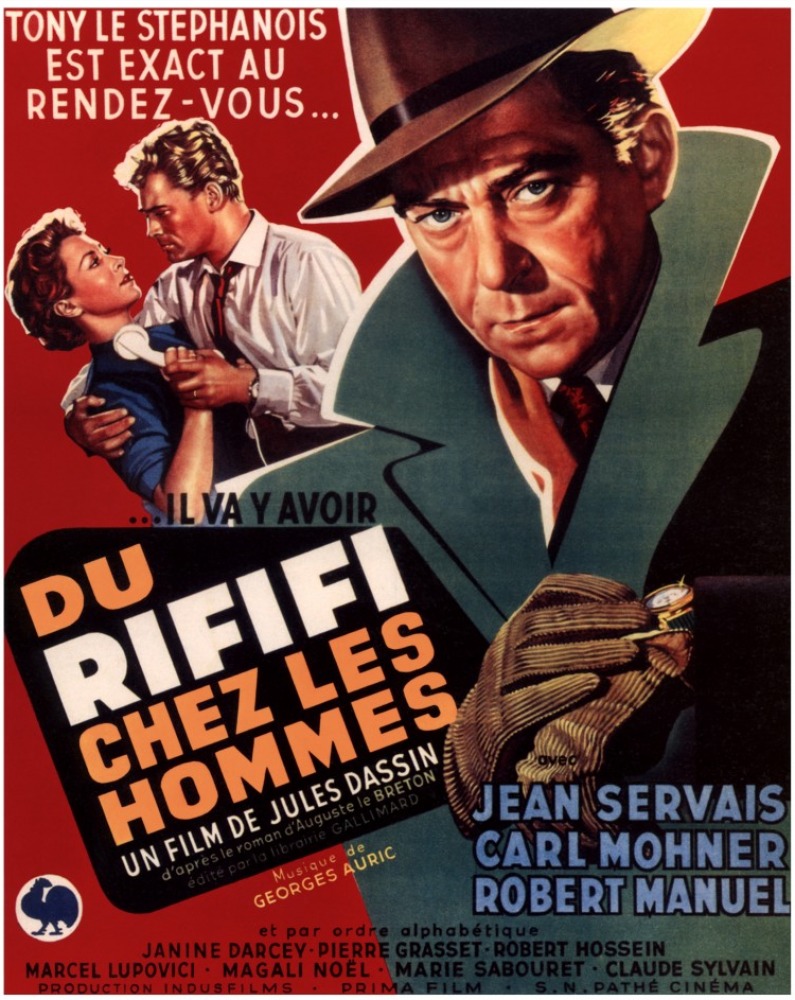
Rififi (1955)


Master thieves at work!

Director: Jules Dassin

Cast: Jean Servais (Tony “le Stéphanois”), Carl Möhner (Jo “le Suédois”), Robert Manuel (Mario Ferrati), Jules Dassin (César “le Milanais”), Magali Noël (Viviane), Claude Sylvain (Ida), Marcel Lupovici (Pierre Grutter), Robert Hossein (Rémy Grutter), Pierre Grasset (Louis Grutter), Marie Sabouret (Mado), Janine Darcey (Louise)

After you’ve spent some time watching some pretty duff films, finally sitting down and watching a masterpiece of any genre is a complete relief. That’s pretty much what this film is. Which is particularly interesting when you learn the film is based on a book that Dassin (it’s director) described as one of the worst books that he had ever read. He took the job only because (with his blacklisting in Hollywood) he was worried he would never work again, and only on condition that he could completely restructure the original script.

Newly released from prison, Tony (Jean Servais) is approached to take part in a smash-and-grab raid on a jewellery store by his old criminal contacts. He rejects the idea, but after discovering his former lover has left him for a gangster rival in his absence he changes his mind, on condition that the smash-and-grab plan is replaced by a complex operation that will clear out the shop’s safe containing over 250 million Francs’ worth of jewels. But in the criminal underworld, they discover there are always bigger fish circling to take their cut by any means they can.

I watched this film three days ago, and its effect was so lasting I feel almost as if I have watched it several times in my mind’s eye since then. Jules Dassin, an under-rated director, has a mastery of visual language and tense narrative that burns nearly every single scene into your retina. Rififi is a technically assured, dazzling piece of cinema that gives heft and weight to a simple story, and also has something interesting to say about human nature and the codes that dictate the lives of thieves.

Any discussion of the film probably needs to start with its highlight: a 28 minute sequence detailing the robbery itself, told in near silence and shot with forensic detail. In fact, so intelligently thought-through was this scene that in many countries it earned the film a ban, as it was feared it was too much of a “how-to” guide for thieves. The scene is a unique creation of Dassin’s – the comparative scene in the book is no more than 2-3 pages. Here it’s a quarter of the movie.

The scene is blisteringly tense, and the decision to keep the action silent means every single noise (a piano key, the whirr of a drill, the bang of a hammer) carries huge tension. There is, as many reviewers have noted, no particular reason for the thieves to keep to strict silence – but it’s dynamite cinema. Dassin combines this tension with a delighted observance of the ingenuity of these criminals. Everyday items are brilliantly repurposed to perform specific tasks (I particularly enjoyed the use of an umbrella as a vital tool). Dassin celebrates the effectiveness and skill of these burglars, and their technique and skill is infectiously entertaining.

Dassin probably invented the genre of the heist movie here – and he encourages us to feel a delight in the accomplishment and ambition of the heist. But he also reminds us that these are criminals: weapons are banned as they will guarantee a long prison stretch; the couple whose house they invade are ruthlessly chloroformed and tied up; a policeman is bludgeoned as part of the get-away. In the third act of the film we see that Tony in particular is no shrinking violet when it comes to violence.

The build-up to the heist establishes each of the characters clearly, along with the flaws that will revisit them later: Tony makes enemies too easily, Jo’s loyalty affects his judgement, Mario is too happy-go-lucky, César has a weakness for women. A number of sequences show us the gang’s preparations – from hours of surveillance, to an amusing sequence where they experiment with methods to beat the store’s top-of-the-line alarm before a moment of inspiration hits them.

The third act of the film however takes us into a dark exploration of the loyalties and codes of honour that govern the criminal underworld. Tony’s enemies try to muscle in on the proceeds, leading to a series of increasingly violent episodes, as move and counter move is made to secure control of the funds. Here Dassin again pulls no punches – we have swearing, we have murder, we have a strung-out junkie kidnapping a child in return for a free hit – and it’s brilliantly put together.

It also tells us something. Tony has a code – and whether we agree with it or not, he’s faithful to it. Dassin himself plays the man whose fondness for a vain singer will leak out the plot details (it’s a lovely performance – and the man who was blacklisted must have had some delight here in playing a grass) and the confrontation scene with Tony is great: “I really liked you” Tony states sadly and regretfully: that doesn’t change his mind. Tony’s rival Grutter lacks even Tony’s sense of fairplay and his ruthlessness puts the other gangsters into perspective and questions Tony’s ideas of a code of honour among thieves: Grutter is a success precisely because he doesn’t give a toss about that sort of thing.

If the film has a flaw, it’s in its treatment of the female characters. Although Dassin arguably suggests that in this mileu many of them are just powerless passengers swept along by the actions of their men, they still seem less than fully formed characters, defined by simple character traits (Louise is a mother, Viviane is shallow, Ida is a flirt). The one dull section of the film follows Viviane singing in a nightclub – a scene introduced solely to drop the title and explain its meaning.

The film is also, at best, neutral in what it expects us to make of Tony brief whipping (off-screen) his ex-girlfriend Mado with a belt, after she betrays him with the gangster Grutter. Particularly as Mado seems to believe herself at fault rather than Tony. The scene is more about Tony – it’s his feeling of powerlessness that the camera focuses on – and Mado seems to shrug off the three blows she receives as just the price of living. Ah well, that’s the fifties for you I guess. And it’s not as if Tony – a moody man perfectly capable of cold blooded killing later – is a saint in any case. We also have the balance of Jo and Mario’s loving regard for their wives – and César’s misguided affection for Viviane.

And of course Tony our “hero” is certainly an anti-hero. In his first scene he’s stroppily demanding “in” on a poker game he doesn’t have the funds for. He’s demanding and surly with everyone except his godson. He is ruthless when he needs to be. Jean Servais’ crumpled, baggy face and dead-eyed stare genuinely make him look like a man who has spent five years inside. His adherence to his moral code is so rigid no level of regret will stop him punishing those whom he deems have deserved death. Dassin also undercuts his potential tragic greatness, as trivial events – a missed phone call principally – lead him to destruction. 

The film’s final sequence is inspired, and again wordless. A dying man races a car through the city to return a child to his mother. Is it devotion to the child? Does he want to get the money back to the only family he has? Has he accepted death? Is he racing for a chance of living? Around him the camera whirls, the editing is frantic and the child cavorts in the car oblivious of the danger. It’s a sequence that is both moving and strangely profound. It’s the final masterstroke in a film full of them.

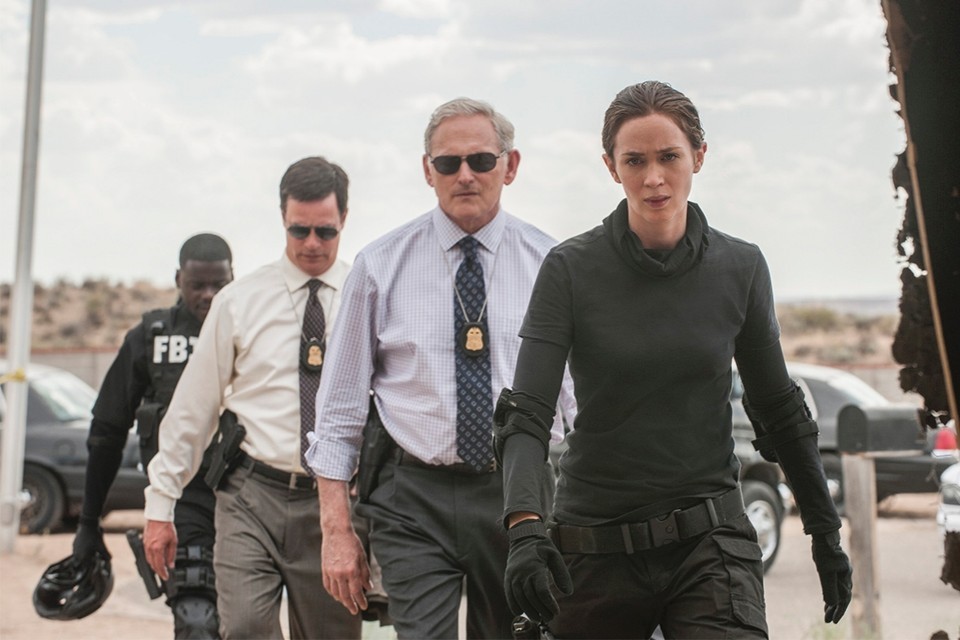
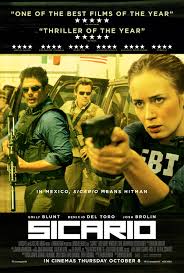
Sicario (2015)


Emily Blunt goes to war with the Cartels, not realising she’s just a pawn.

Director: Denis Villeneuve

Cast: Emily Blunt (Kate Macer), Benicio del Toro (Alejandro Gillick), Josh Brolin (Matt Graver), Daniel Kaluuya (Reggie Wayne), Maximiliano Hernández (Silvio), Victor Garber (Dave Jennings), Jon Bernthal (Ted), Jeffrey Donovan (Steve Forsing), Raoul Trujillo (Rafael), Julio Cedillo (Fausto Alarcón)

The War on Drugs. Smack a military title on it and it helps people think that there is some sort of system to it, that it carries some sort of rules of engagement. Whereas the truth is that it is a nebulous non-conflict where the sides are completely unclear and the collaborators are legion.

Sicario follows a shady covert operation, run by a combination of the FBI, the CIA, Columbian and Mexican law enforcement and, well, other interested parties. Kate Macer (Emily Blunt) is recruited to the task force because someone with her experience is needed, and finds herself working for maverick, almost pathologically unconcerned, CIA man Matt Graver (Josh Brolin). Graver, in turn, is working closely with a South American freelance operative (Del Toro) whose background and goals remain a mystery to Kate. Far from a clear targeted operation, Kate slowly realises the operation is effectively an off-the-books black op, which she has almost no control or influence over.

Villeneuve has directed here an accomplished, if rather cold, thriller. It denies its audience the release of action, the reassurance of justice or the satisfaction of integrity being rewarded. Instead the film takes place in a hazy never-world, never fully explained to either the viewer or Kate (our surrogate), where it gradually becomes almost impossible to tell who is working for whom and for what reasons – and there is a feeling that those in the film don’t know either.

The whole film has a sense of Alice in Wonderland about it (at the end of the film our heroine literally goes down a tunnel into a strange new land). Emily Blunt’s Kate seems at first to be on the ball, but events throughout the film demonstrate time and again that she is hopelessly out of her depth and little more than a fig leaf to enable her new bosses to bend laws to breaking point. Instead the world she finds herself in is dark, unsettling, confusing and lacks any sense of clear moral “sides”.

In fact, that is one of the most interesting things about this movie. It presents a female lead who is constantly manipulated and defeated throughout the film. Kate is in fact totally ineffective throughout and serves no real narrative purpose to the events of the film other than allowing those events to take place. At the same time, she’s strong-willed, she’s determined and she’s fiercely principled, as well as being an engaging character (helped immensely by Emily Blunt’s empathetic and intelligent performance).

This works so well because Kate represents what we would normally expect in a film – we keep waiting for that moment where she makes a successful stand, or blows the scandal open, or brings someone to justice – this never happens. Instead the film is a clear indication of the powerlessness of the liberal and the just in a world of violence, aggression and corruption – that people like Kate will always be steamrollered by people who are willing to smilingly do anything to achieve their goals and don’t play by any semblance of rules that we would recognise. In a more traditional film, she would end the film arresting some (or all) of the other characters with a defiant one-liner. Instead, she never lays a glove on anyone.

The flip side of her naïve optimism here is Benecio Del Toro’s nihilistic, dead-behind-the-eyes mysterious freelance operative. Del Toro is magnetic here, his character a dark mirror image of the role he played in Traffic, as if that character witnessed every kid he watched playing baseball in that film gunned down before him. He’s like a dark growly end-justifying-the-means shark, who conveys just enough of a flicker of paternal interest in Kate (does he see her as a reminder of what he used to be like?) to show there is someone still human in there. He prowls the edges of scenes before seizing the movie by the scruff of the neck in the final quarter with horrifying brutality.

Del Toro’s rumpled smoothness is a perfect match for the ink jet blacks and bright desert shine of this wonderfully photographed film. Roger Deakin’s cinematography is beautiful to look at and also rich with variation and imagination – from bleached out, hazy mornings to red dawns, from subterranean tunnels to neon lit nightclubs, Deakins presents images in striking new ways. The use of sound is also brilliant in the film – lingering, unsettling silences throughout slowly give way to Jóhann Jóhannsson’s beautiful spare score. There are fine supporting performances from Maximiliano Hernández as a doomed cop, sleepwalking through a corrupt life, Daniel Kaluuya, who is very good as an even more idealistic FBI agent who thinks he understands the world better than he does, as well as from Josh Brolin and Victor Garber.

Sicario offers no comfortable answers. In fact, it offers almost no answers at all. The world it shows us is one where there is no conventional right or wrong, only attempts to control the chaos. Our expectations as a viewer are so persistently subverted that it almost demands to be seen twice to truly understand what sort of story it is actually trying to tell. This helps to make it a cold and distancing film – but it lives in a cold, distant world where sometimes you reach the final frame and only then begin to understand who the baddies might have been and how you’ve only helped funnel the badness towards a controlled point rather than slow down or stop it.

23 Paces to Baker Street (1956)


Van Johnson hears something’s up

Director: Henry Hathaway

Cast: Van Johnson (Philip Hannon), Vera Miles (Jean Lennox), Cecil Parker (Bob Matthews), Maurice Denham (Inspector Grovening), Isobel Elsom (Lady Syrett), Estelle Winwood (Barmaid), Liam Redmond (Mr. Murch), Martin Benson (Pillings), Patricia Laffan (Alice MacDonald) 

It’s an age-old truth that the movies always believe we can admire a hero more, if we see them struggling to overcome some form of disadvantage or disability that would normally rule them out of carrying out the actions they are trying to do. So what fits into that mould better than a blind man going up against a gang of criminals?

Philip Hannon (Van Johnson) is a successful American playwright living in London, who has lost his sight. One day in a pub, he overhears a conversation between a man and a woman that he suspects is related to the planning of a crime. But, unable to persuade the police of his suspicions, he has only his former secretary Jean (Vera Miles) and butler Bob (Cecil Parker) to help him investigate.

This is the sort of reliable B movie material, with some decent parts and interesting twists, that usually gets remade as a big-star, big-budget modern Hollywood drama. You know the sort of thing: Russell Crowe is a blind writer investigating a crime. In fact, it’s almost a surprise that this has never been remade, as it is an entertaining, diverting small-scale movie – the sort of thing that you can imagine settling down in front on a wet Sunday afternoon.

It’s a sort of sub-Hitchcock drama –fairly similar in tone to Rear Window – and there are several beats in there that totally fit with the master’s dramatic style. In fact, that’s what makes it such a quintessential B movie: everything about it feels like a slightly cheaper alternative to a major picture. Which isn’t a criticism as such: it’s just a very workmanlike, efficient little thriller, which fits neatly into Hathaway’s CV of safe, unspectacular film making. It’s still well made and does exactly what you would expect, but it’s not going to knock anyone’s socks off.

Van Johnson may similarly be a low rent Jimmy Stewart, but he’s pretty effective in this role, suitably vulnerable in places, while still suggesting enough of the prickly demeanour of the man who doesn’t want to be a victim. He also resists the temptation to overplay the blindness – something the whole film actually does quite well. As the man holding the entire film together he does a good job, and he even manages to be more or less believable as a successful playwright. Watching it, you think it’s a bit of shame he’s not better known today – he’s a good (if unspectacular) actor. Vera Miles offers some good support as a supportive love interest while Cecil Parker is quite droll as the butler.

The mystery itself has a few nice twists in it – the final twist is nicely set-up, enough for you to see it coming as we reach the dénouement (a well-staged confrontation in a darkened flat, which gets a lot of tension from watching our blind lead trying to identify all the lights in the house so he can remove their bulbs). The story sometimes doesn’t give us too much of a chance to work out the twists and turns before key clues are revealed by Hannon, but that’s no major problem. It’s also quite well filmed, with some nice shots of 50s London skylines.

It’s a decent and interestingly done film that gets some fresh content out of the blindness of its hero, never portraying him as a victim but as a proactive and determined man. Claims that this is some sort of lost classic are overdone – it’s never more than a sub-Hitchcock B picture – but it’s still highly watchable, has some engaging characters and some decent thriller sequences, and you care about the lead characters, even if you don’t particularly care about the crime itself and its victims (the victims in particular are pretty vague characters). It also relies rather heavily on the legendary heightened senses that blind always seem to have in Hollywood films. But for something that basically sounds like the plot of an ITV two part drama, this is solid craftsmanship.

One final note: the title means nothing. At one point Hannon guides a man through the fog. Turns out he’s 23 paces from his destination: Baker Street. The Hollywood suits were keen to drop in the “Baker Street” reference, to suggest a link to Sherlock Holmes. So goes to show – Conan Doyle, always good box office!