Tag: Forest Whitaker

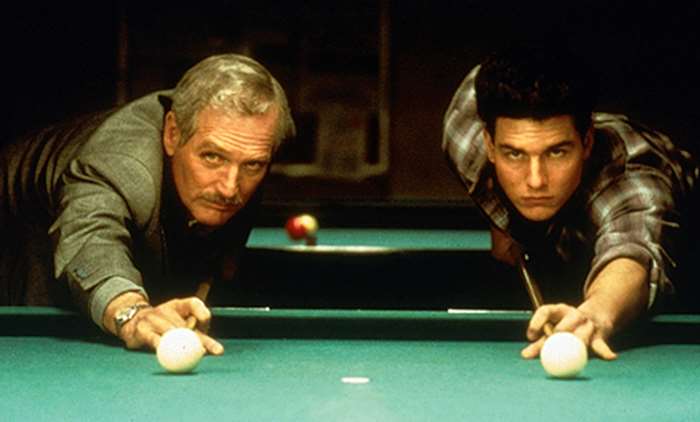
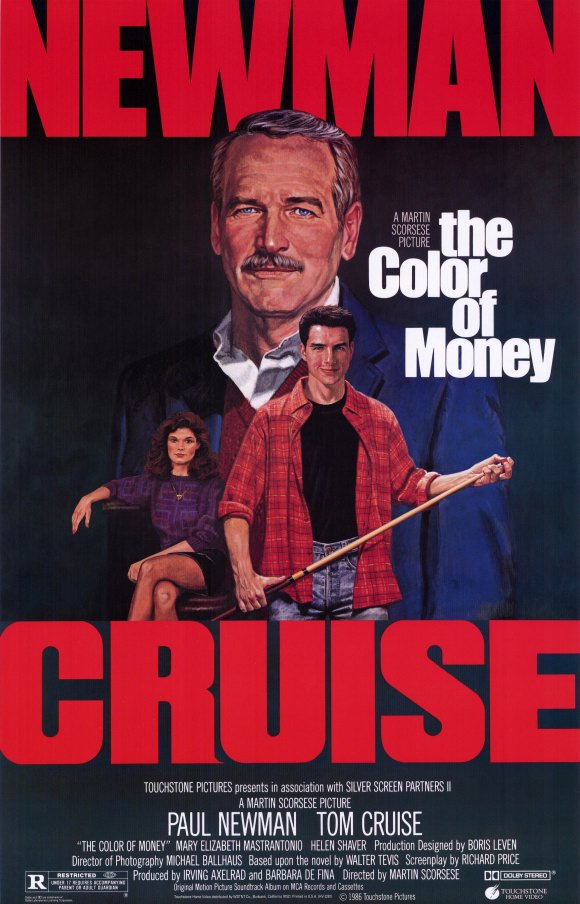
The Color of Money (1986)

Newman and Cruise set the table in The Color of Money

Director: Martin Scorsese

Cast: Paul Newman (“Fast” Eddie Felsen), Tom Cruise (Vincent Lauria), Mary Elizabeth Mastrantonio (Carmen), Helen Shaver (Janelle), John Turturro (Julian), Bill Cobbs (Orvis), Forest Whitaker (Amos), Keith McGready (Grady Sessions)
The Hustler is one of Newman’s most iconic roles. It’s remembered for his cocksure cool, leaning across the table and dispatching balls with a twinkling smirk. What people don’t remember is that The Hustler is actually more of a kitchen-sink drama than a Rat Pack party. It deals with depression, assault, corruption, injustice and suicide. It’s not even remotely a laugh a minute. The Color of Money is a belated sequel, that feels made by people who remember their impression of what The Hustler was, but don’t actually remember the tone of the film itself. But then, Scorsese intended from the very start to make an entertainment to showcase a star, so I’m sure he knew that making a real tonal companion to the original film was always going to be a no-no.

It’s 25 years since “Fast Eddie” Felsen (Paul Newman) was banished from pool clubs throughout the land by gangsters. He now earns a living selling booze to clubs, largely so he can hang out pool clubs and mentor and stake the ‘hustler’s and stars of tomorrow. The kid who catches his eye is Vincent Lauria (Tom Cruise) an exceptionally gifted pool player with a cocksure confidence and a love of the game, that perhaps reminds Eddie more than a little of himself. Vincent, and his girlfriend Carmen’s (Mary Elizabeth Mastrantonio) grifting skills leave a lot to be desired: but Eddie sees promise and takes them out on a road trip to train them up and make a fortune.

It’s a fitting title, as it’s pretty clear that The Color of Money was the main thing on Scorsese’s mind when he made this. Don’t get me wrong, this is an enjoyable and well-made star vehicle, but it’s also the only time Scorsese was a hired gun working for a star who made films he grew up watching. Scorsese has spoken openly that his main aim here was to bring it in on time and on budget (he made it faster and cheaper than that), in order to help win studio backing for The Last Temptation of Christ. (Ironically of course, most people have far fonder memories of The Color of Money than that film, but then this is a film designed to entertain not challenge.)

It’s a fairly traditional and even predictable storyline. The mentor and the mentee, the latter jaded but rediscovering some of his old fire from the callow exuberance of the other. To be honest not very much actually happens in the film other than pool games and some predictable feuds before the final reconciliation. Inevitable lessons are learned and understandings are achieved. Compared to The Hustler, this is a very callow piece of work indeed, a straight entertainment vehicle that takes the fun, memorable beats of the original and crafts a whole film around them. In many ways you could argue it’s as much a sort of spiritual sequel to Newman’s work in The Sting as anything else.

But Scorsese shoots the hell out of it, so there is always something to look at. No end of editing and camera tricks are used for the pool games, which are shot like action sequences. Swift pans, tracking shots, sharp camera spins are all used to turn a game of knocking nine balls into pockets into something epic. Interesting shots abound, especially several sequences where a camera is mounted on a car bonnet to product an odd Steadicam effect. This is work way beyond a journey-man-pro director, but compared to Scorsese’s other works it’s minor. Scorsese opens the film by delivering a voiceover introducing nine-ball-pool, but the film never feels personal.

What it is, is a triumph for its two leading men. The year before Newman had won an honorary ‘career’ Oscar, which he accepted with a slight air of surprised resentment. No wonder, since he won a ‘real’ Oscar a year later for this reprise. To be honest, the film doesn’t ask anything particularly demanding of Newman, compared to the heights he had achieved in, for instance, The Verdict. It’s a lot of charm and aged confidence, mixed with a mentor exasperation and an unspoken concern that his powers are fading. Newman does spice things up with some interesting character work – there is a great scene when Eddie berates himself for being suckered by pool shark Amos (also a beautiful cameo from Forest Whitaker), humiliated for having lost his touch. But, whereas the first film was a below-the-skin character study, this is more like a victory parade for a charismatic star who even signs off the film by stating “I’m back!”. He’s great but not challenged.

Cruise raises game as he always does when working with legends (see also his work with Hoffman and Nicholson). The film captures perfectly both his cocksure confidence and the gentleness and vulnerability that Cruise manages to hide beneath it. You only need to see how vulnerable and scared Vincent is of being abandoned by the more sophisticated Carmen, to know that his karate moves with a pool cue while singing along to Werewolves of London is a front of a young man wanting to look like a big one to the world. Mastrantonio is pretty good in a fairly simplistic role, that is essentially a twist on a hooker-with-a-heart-of-gold.

The Color of Money offers up fairly predictable charms and plot twists and no real surprises at all. While its original film was a piece of neo-realism tinged social drama, this is a brash entertainment, stuffed with pop songs and charismatic actors doing their thing. All pulled together by a director who wanted to prove he could make something as glossy and empty as the next man. Entertaining but forgettable.
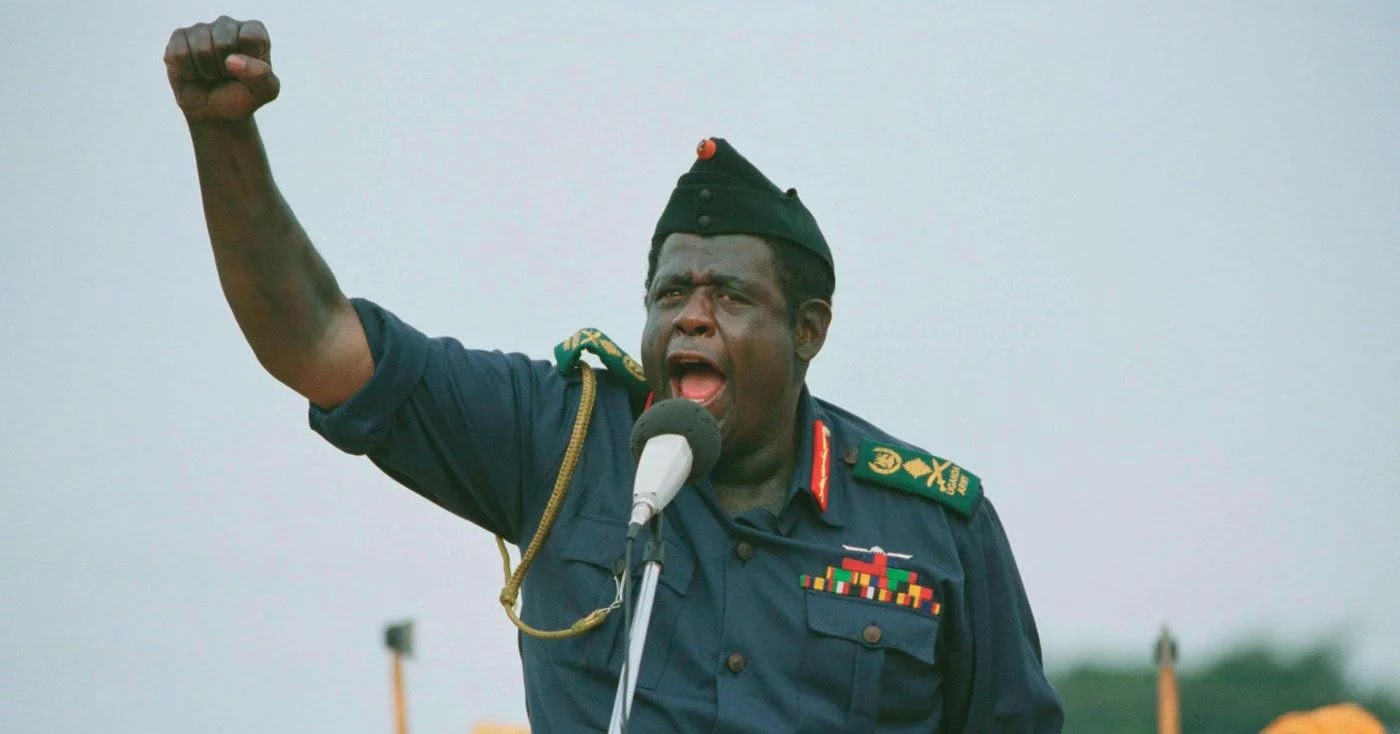
The Last King of Scotland (2006)

Forest Whitaker dominates as Idi Amin in The Last King of Scotland

Director: Kevin Macdonald

Cast: Forest Whitaker (Idi Amin), James McAvoy (Nicholas Garrigan), Kerry Washington (Kay Amin), Gillian Anderson (Sarah Merrit), Simon McBurney (Stone), David Oyelowo (Dr Junju)

Forest Whitaker won every award going for his performance as Idi Amin. A film can perhaps only begin to scratch the surface of what a megalomaniac nutjob Amin was, and the depths of his depravity and corruption. But The Last King of Scotland is perhaps less focused on that, and more on the pull that people as charismatically self-absorbed and larger-than-life like Amin can have on the weak-minded and, on a wider basis, how this can end up with him leading an entire country on a not-so-merry dance, everyone desperate to gain the love and approval of a single dominant personality.

That weakling is Dr Nicholas Garrigan (James McAvoy) a young medical graduate from Edinburgh, who is arrogant, cocksure over-sexed and over-here in Uganda, keen for adventure and to get as much sex and experiences in as he can while he’s over here. A gap-year student with a desire for the easy life, after a chance meeting Garrigan becomes chief-physician and confidant to Amin, a man with a deep love for Scotland and who likes to think of himself as a father to those around him. It takes Garrigan a long time to realise that this indulgent, if bad-tempered, charismatic father-figure  is in fact a brutal dictator, his eyes eventually opened by the experiences of one of Amin’s wives Kay (Kerry Washington) who pays a heavy price for mothering an epileptic and adultery. Will Garrigan escape from Uganda?

Macdonald’s film gets a brilliant sense of both the exotic appeal of Uganda at the time (and or Amin) and it’s heat-embroiled danger. The camera work is flooded with yellows and grimy details, that makes every scene feel like its bathed in heat (and later danger) as well as giving it a documentary realism (helped by its use of handheld and immediate footage). The story of the film itself is a fairly basic morality tale, but these stories work because of their universality and it’s clear that Garrigan’s selfishness, shallowness and self-interest is going to lead to a terrible awakening.

The film’s real strength is Whitaker’s tour-de-force as Idi Amin. Whitaker is an actor who has been straining at the leash for an explosive roll, and he gets one here. If ever there was a part that would allow an actor to let rip it’s the one, with Amin part Hannibal Lector, part decadent Roman emperor, a low-rent Hitler with an ego larger than his country. But the bombast and childish fury work because it is built within the framework of a sort of puffed-up magnetism, a charismatic “hail-fellow-well-met” bonhomie that suggests this guy could be the best fun in the room. So dripping in assurance and confidence is Amin that he becomes strangely attractive – and the sort of all-powerful force of nature that would have most of us smiling if we caught a word of approval from him.

The trick of the film is to front-and-centre this lighter, fun-loving aspect. It’s easy to enjoy it like Garrigan as Amin charms the audience as much as he does its lead character. Sure there may be violence at the margins, but good-old-Amin is just doing what needs to be done. He’s brilliant with the people. It’s funny when he on-a-whim appoints Garrigan to decide a major architectural pitch from several countries. He’s playful and enthusiastic. When he’s cross with people he seems at first more disappointed than angry. It’s only as the film goes on that we realise we have been gaslit as much as Garrigan, that Amin may be a fun guy but he also cares nothing for anyone and that the more his focus shifts away, the more we see his callous paranoia and lack of any moral scruples.

Certainly we start getting a sense of the ruthlessness he is prepared to exhibit to enforce his rule in Uganda and the brutality with which he will suppress any resistance. Aides killed in a failed assassination attempt illicit no sympathy. He feels no guilt or responsibility for anything he does. In one brutal moment he berates Garrigan for failing to counsel him against expelling all Asians from Uganda. When Garrigan protests he did, Amin only responds with “Yes, but you did not persuade me Nicholas!” the sort of inverted logic practised only by the insanely self-obsessed.

Whitaker’s performance powers all this, a magnetic masterclass in insanity, charisma and paranoia. He’s well matched by James McAvoy (the film’s real lead) whose performance is similarly a masterclass is shallowness and petty triteness. If anything the film is almost too successful in this. A Garrigan is such a little arsehole it takes quite a force of will to build up any sympathy for this serial shagger playboy. It’s capable to think as the fire turns on him that perhaps he deserves this – and the number of (mostly black) characters who lay down their lives to protect him starts to get a bit wearing after a while.

Because this in part is a film where actual Ugandans are not heard that much. The two principle characters we see are both victims: Kerry Washington in a thankless part as the attractive young wife you just know from day one Garrigan will climb into bed with and David Oyelowo as the sort of noble doctor you only seem to find in movies. For all its horror at Amin’s crimes, it’s still largely filtered through the eyes of a young, white, innocent abroad who sees up-front the dangers but the real victims of Amin, the Ugandans themselves, are clichés or elevated clichés.

While you could say that was not the point of the film, it still means we miss some of the real danger and psychopathy of the leading character, so absorbed are we in seeing the increasing peril of the white man caught up in it all. It’s why The Last King of Scotland doesn’t quite work as well as it should, any why it settles in the end for a being a morality tale plot-boiler about a monster at the heart of the forest, rather than a deeper and more intelligent film about the tragedy of an African state. It’s still enjoyable for all that, but it could have been more.

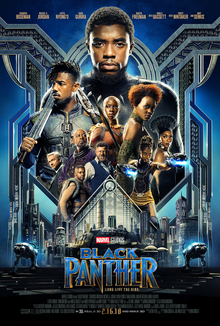
Black Panther (2018)

Chadwick Boseman is the legendary Black Panther in Marvel’s solid comic book outing

Director: Ryan Coogler

Cast: Chadwick Boseman (T’Challa/Black Panther), Michael B. Jordan (N’Jadaka/Erik Kilmonger Stevens), Lupita Nyong’o (Nakia), Danai Gurira (Okoye), Martin Freeman (Everett K Ross), Daniel Kaluuya (W’Kabi), Letitia Wright (Shuri), Winston Duke (M’Baku), Angela Bassett (Ramonda), Forest Whitaker (Zuri), Andy Serkis (Ulysses Klaue), John Kani (T’Chaka)

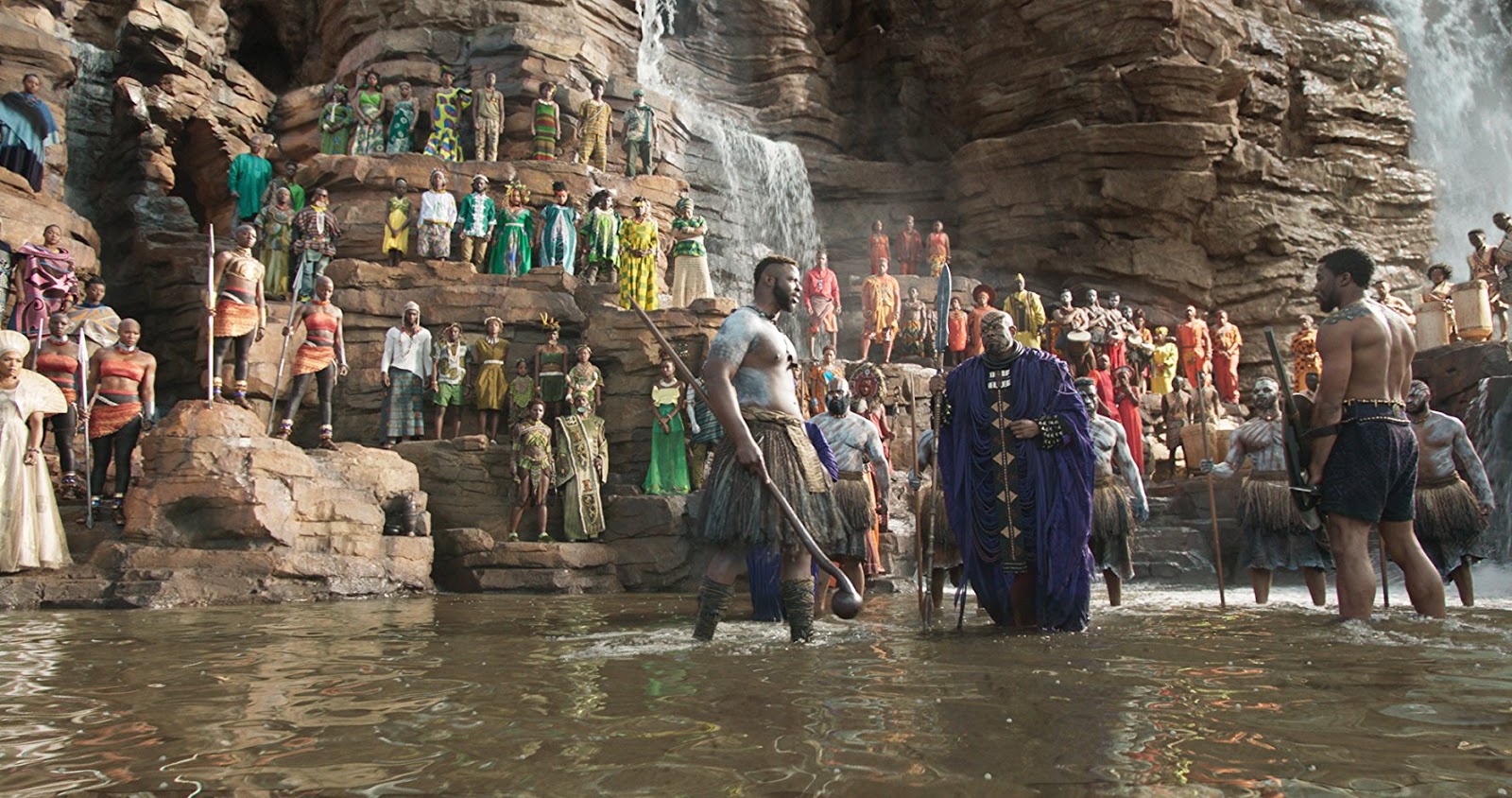
Marvel’s comic book world is now so stuffed with characters, worlds and dimensions that it is remarkable how many of its heroes are white and male. Black Panther does something completely different, giving us a set of African heroes and placing the common framework of a Marvel film within a very proud, and distinct, African heritage. So you can pretty much guarantee you ain’t seen a comic book film quite like this one.

After the death of his father (in Captain America: Civil War), T’Challa (Chadwick Boseman) becomes king of the secretive nation of Wakanda. Camouflaging itself as a poor and unadvanced nation in order to avoid interaction with the rest of the world, Wakanda has in fact for centuries been mining a remarkable metal, vibranium, that has helped the nation become hugely technologically advanced. Its king also bears the responsibility of being the “Black Panther”, ingesting a vibranium-infused herb to gain superhuman speed and strength. However, others have their eye on the throne, not least Erik “Kilmonger” Stevens (Michael B Jordan), who wants to turn Wakanda into a force that could protect the black people of the world from their historical oppressors and avenge centuries of slavery.

Black Panther never fails to be entertaining. The film is shot with a genuinely vibrant excitement, and I love the way it proudly embraces a comic book twist on African tribal heritage. In fact the film’s depiction of an African nation which is secretly the most powerful and advanced nation in the world is really quite an impressive political statement.

Ryan Coogler directs the film with flashy brilliance and comes up with a few ways of presenting what are (essentially) action sequences we’ve seen many times before in unique new ways. The stand-out is an early action scene in a Korean bar, filmed to appear as an immersive single take around a large set, the camera dipping and zooming from character to character. Coogler also brings a fair amount of visual wit to the fights while not losing the emotional and character depth the story is aiming for.

The film also has some fine performances, with Boseman dripping dignity, nobility and decency as T’Challa. Regular Coogler collaborator Michael B. Jordan gives a great contrast as bitter LA slums kid turned misguided would-be dictator Kilmonger. Danai Gurira stands out as proud general Okoye, torn between duty and personal loyalties. Hell even Forest Whitaker – clearly loving every moment of this OTT Marvel world – gets some weight and dignity out of his typical grandstanding style.

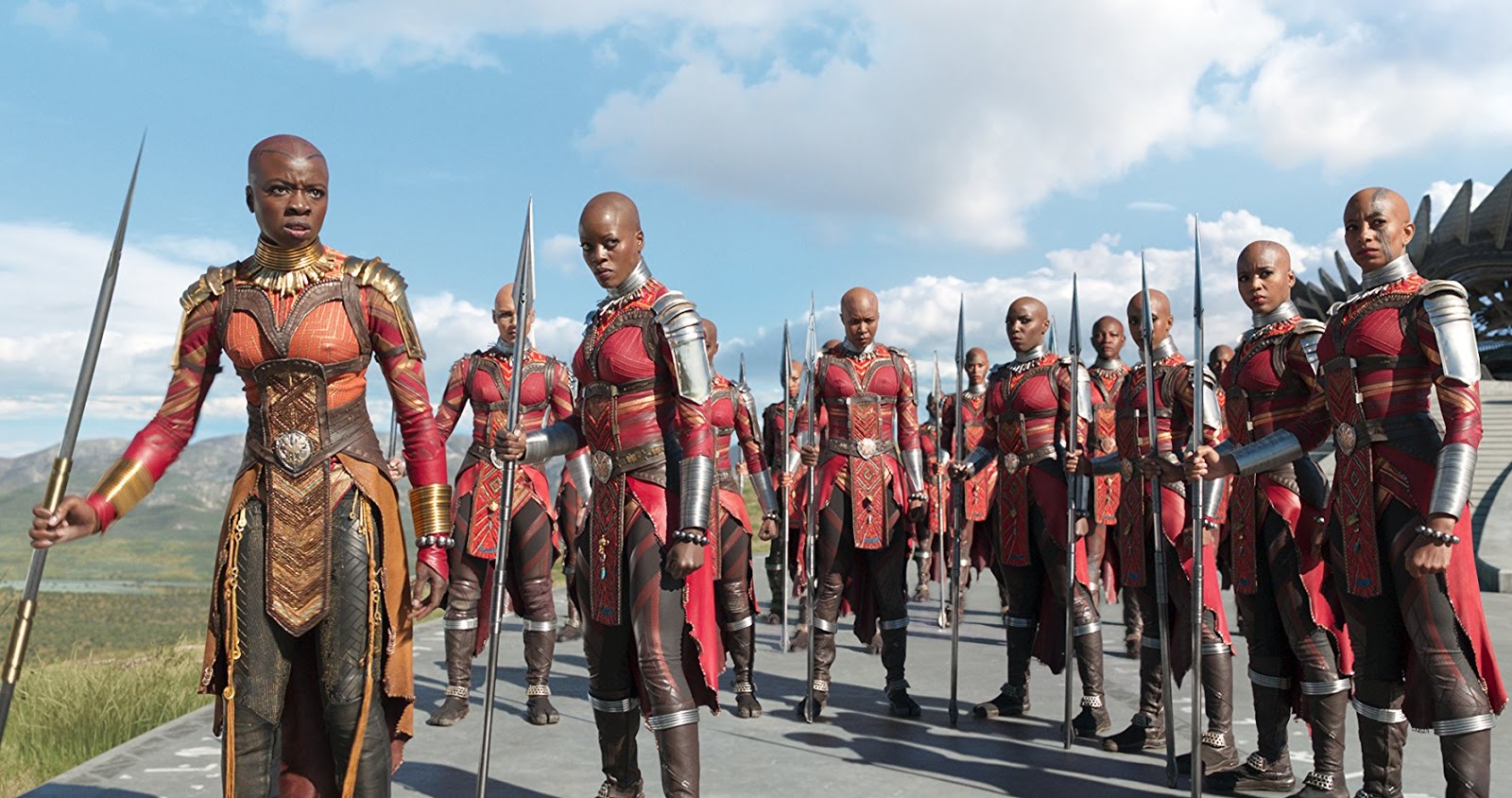
It’s another mark for the film that the world of Wakanda is so effectively gender neutral. Kings of Wakanda have a Praetorian Guard of female warriors, most of the leading voices on its council are women, and its technical genius is T’Challa’s sister Shuri (played by Letitia Wright in a charming, star-making performance). Sure it doesn’t feel like the role of Black Panther himself is up for grabs for anyone lacking a penis, but this is a world where women are equal, if not leading, partners in the action.

The film also addresses issues of post-colonial struggle, not least attitudes towards slavery and oppression handed out to Africa over centuries. Kilmonger’s fiendish plot is, in many ways, actually quite sympathetic – he wants to use Wakanda’s resources to protect those of African descent across the world. Jordan gets some good moments from his speeches laced with anger at the historical treatment of Afro-Caribbeans and, to be honest, it’s hard not to see his point. So hard in fact that the film has to drop hints that Kilmonger is a potential tyrant to stop him from seeing too reasonable. 

This is where the film’s plot starts to get slightly hazy. The character arc of T’Challa himself is pretty unclear. Traditionally in these films, the character must embrace his destiny. Problem is, a lot of this arc was covered in Captain America: Civil War. The writers are unable to give him a truly compelling replacement arc here. T’Challa drops a few references early on to not feeling ready – but basically swiftly embraces it. He never outlines a real alternative agenda to Kilmonger – there are characters in the film who argue “Wakanda doesn’t get involved in the world”, but he isn’t one of them, so there is no journey towards engagement with the outside world (on far more humanitarian terms than Kilmonger advocates). 

Frankly, Okoye is given a better character arc than T’Challa, beginning by advocating “we must serve the throne and respect our traditions even if we doubt them”, and learning later to follow her own conscience. T’Challa, in contrast, is no discernibly different at the end of the film to how he was at the beginning. 

T’Challa’s journey is basically getting something, losing it and then getting it back. Strip away Boseman’s performance and the character is basically pretty dull. He partly suffers, as does the rest of the film, from an overstuffed cast spreading the focus of the film far too thinly and leading to character arcs and interconnections feeling rushed. Kilmonger’s connection with T’Challa is forced – they only know each other for at best two days! – and there is a superfluity of villains. There’s not only decoy antagonist Klaue (and his gang) hanging about for a good chunk of the film, but also Daniel Kaluuya’s ill-defined best friend turned opponent, W’Kabi. Combining Kilmonger and W’Kabi would have helped no end, allowing two different, divergent agendas to develop and cause a relationship rift between two friends (Kaluuya is instead totally wasted in a nothing part, whose allegiances change depending on the demands of the plot). 

The good guys fare no better: Lupita Nyong’o is completely wasted as a love interest who feels stuffed into the movie because, y’know, these films gotta have one. She does nothing in the film that could not be easily done by another character, and nearly all of T’Challa’s emotional scenes – and personal motivation – are tied into his sister rather than this are-they-aren’t-they-a-couple. 

It’s all part of the traditionalism that underlies the film. Its structure is familiar and, like many Marvel origin films, the villain is a dark reflection of the hero with similar skills. The final battle is traditional and a little dull (and feels very similar to Avengers: Infinity War). The film avoids showing T’Challa torn between isolation and intervention – he in fact advocates both in the first 15 minutes – and doesn’t really make much of the prospect of a hero changing his mind or developing his views to embrace a wider world.

But it stands out because it is different. And it deserves no end of praise for making such a film so full of love and respect for its heritage. It walks a very difficult line between enjoying the bright exotic colours while not making the film patronising or overly “other-worldly”. How many other Hollywood films have, at best, two white characters (well played in both cases by Martin Freeman and Andy Serkis)? How many others would dare have the villain make a defiant, sizzling and emotionally inspirational speech about racial oppression and the hypocrisy of the West (though the film goes easy on America, with the speech taking place at the hilarious “Museum of Great Britain”. Where is this place – please get my tickets!).

That it slightly dodges and fudges the implication of these themes in its plotting and the conception of its hero – who is basically a dull character played by a charismatic actor – doesn’t reduce its pleasure at doing something different. I’m not sure it will stand up to repeated viewings – look past the setting and it does little new – but it’s a worthy entrance in a crowded universe.

Platoon (1986)

Charlie Sheen goes to war in Oliver Stone’s Oscar winning Vietnam film Platoon

Director: Oliver Stone

Cast: Charlie Sheen (Chris Taylor), Tom Berenger (Sgt Barnes), Willem Dafoe (Sgt Elias), Kevin Dillon (Bunny), Keith David (King), Forest Whitaker (Big Harold), Mark Moses (Lt Wolfe), John C. McGinley (Sgt O’Neill), Francesco Quinn (Rhah), Reggie Johnson (Junior), Johnny Depp (Lerner)

Vietnam has been a long-standing scar on the American psyche. For over 12 years, American soldiers were rolled into Vietnam to fight for something many of them were pretty unclear about. Vietnam was a bloody shadow boxing match for super powers to indirectly combat each other. American casualties were high, and the country that sees itself as championing justice and the free world ended the war with the blood of millions of Vietnamese and Cambodians on its hands. Is it any wonder the country still struggles to compute this?

Before Platoon there had been films that had dealt with the Vietnamese experience. Apocalypse Now had embraced the druggy, morally confused insanity of the war. The Deer Hunter had effectively shown the traumatic impact the war had on regular blue-collar steel-workers. But Platoon was something different. This was the war on the ground, with privates and sergeants as the focus (many of them poor, working class and also black) – the lower rungs of American society flung into a war they don’t understand, in a country they can’t recognise, fighting an enemy they have no comprehension of. 

Platoon throws the audience into the visceral, cruel, terrifying horror of pointless conflict, with a feeling that the war will never end. Stone pulls off a difficult trick here: the film shows a horrifying picture of war and killing, but combines this with successfully showing the adrenalin rush that comes from conflict – and the excitement of visceral film-making. 

Oliver Stone had fought as a young man in a similar unit, after dropping out of college. Chris Taylor (Charlie Sheen) is effectively a surrogate figure for the director, with the film crafted from Stone’s own experiences and those of his fellow soldiers. The film is a simple, intense experience with a straightforward plot: Taylor is torn between two potential “father figures”. One, Sgt Barnes (Tom Berenger), is a supernaturally ferocious warrior and martinet whom the men hold in awe. The other, St Elias (Willem Dafoe), is an equally fierce fighter, but also a hippy, nearly saint-like protective figure. Which of these two will Taylor side with?

Well okay it’s not a massive surprise really is it? The strength of Oliver Stone’s film is its visceral, bloody, impressive intensity. You are thrown into the midst of a series of terrible battles, interspersed with bored soldiers bickering or taking pot. At no time is the viewer (or the soldiers) given any real idea about what is going on, what the aims of the war are, what is really happening in the battles. Stone plays the film totally from the soldier’s POV. Battles are a confused mess at night. The location of the enemy is frequently unclear. There are no indications of any tactics at all. There is barely any leadership – Mark Moses’ Lt Wolfe is an almost hilariously ineffective moral weakling, who follows the leads of his sergeants. The soldiers (or rather the two sergeants) essentially operate as lone wolves, doing what they think best for any particular circumstance.

The film pivots on a confused raid on a Vietnamese village, as the platoon descends on a village for no very clear reason – apart from seemingly being pissed off that one of their number has been killed in the night. Nominally they are searching for Vietcong fighters. But really it seems like an excuse to let off steam. Platoon must have hit hard in the 1980s, as it doesn’t flinch at all from watching American soldiers committing atrocities. Women are shot, teenagers are beaten to death, a fox hole containing what looks like a child is exploded after a brief warning. The soldiers are all terrified, thrusting guns into Vietnamese faces. Above all Sgt Barnes feels no guilt at all at executing villagers in order to pressure the elders into telling what he thinks they might know about the Vietcong (who equally are largely faceless figures of terror in the distance stalking the platoon).

Where the film is less strong is in its plotting and narrative ideas. These are straightforward in the extreme, with Barnes and Elias almost literally as opposing devil and angel on Taylor’s shoulders. The film is clearly weighted in favour of Elias’ hippie mentality, his desire to preserve innocent lives and his caring attitude to his men. Barnes is presented far more harshly – even though his brutality stems from his own deep-rooted desire to keep his men safe, and his belief that Vietnam is hell and you can’t pussyfoot your way around hell. 

Saying that, it’s hard to argue against Stone’s feelings that compromising your humanity is not worth it no matter the struggles to keep yourself and others alive. But these are (forgive me) rather obvious, even traditional points – and its part of the film being essentially a conventional morality tale with a breath-taking military setting laid over the top. The ideas in this film won’t really challenge you – and in fact the film itself is really more of an experience than something that rewards reflection.

Stone’s direction is extremely good – even though he at times falls too much into the trap of overblown, overly operatic visuals (Taylor’s final confrontation with Barnes in the forest falls heavily into this trap). Stone has never been accused of being the most subtle of directors, and there is no stone (sorry) left unturned here to get the message across. In fact Platoon frequently hits its points so hard and with such unsubtle force, that it actually leaves you very little to think about after its finished – the film does all the work for you, like an angry rant that goes into unbelievable depth of detail.

But the acting has a very healthy commitment to it. Sheen shows why he was an actor of promise before he became a self-destructing punchline. Dafoe is very good as the serene Elias – a man’s man, but one comfortable in his own skin, with a strange campness about him, whose courage extends to doing the right thing no matter what. Tom Berenger is hugely impressive as the cold-edged Barnes, who has had to stamp out his humanity to survive. The rest of the characters split into two rival camps following these different soldiers, and there are some fine performances here from some now far more recognisable actors.

Platoon was garlanded with Oscars, partly because it talked about the American experience in Vietnam in a manner (and from a perspective) that had not been addressed before. It is an important historical landmark of a film, even if it is possibly not a great film. A simple, at times less than subtle anti-war film dressed up as a war film, it will immerse you in the conflict and the horror – but I’m not sure it will give you as much to think about as it thinks it does.

Rogue One: A Star Wars Story (2016)


The characters of Rogue One. I struggle to remember their Dingly-Dang sci-fi names.

Director: Gareth Edwards (Tony Gilroy)

Cast: Felicity Jones (Jyn Erso), Diego Luna (Cassian Andor), Ben Mendelsohn (Director Krennic), Donnie Yen (Chirrut Imwe), Mads Mikkelsen (Galen Erso), Alan Tudyk (K-2SO), Riz Ahmed (Bohdi Rook), Jiang Wen (Baze Malbus), Forest Whitaker (Saw Gerrera), Genevieve O’Reilly (Mon Mothma), Jimmy Smits (Bail Organa), Guy Henry (Grand Moff Tarkin), Alistair Petrie (General Draven)

When Disney got hold of the complete rights for Star Wars, they were motivated by one thing above all: making a shitload of cash. In that goal, they’ve been very, very successful. Rogue One fills out (pads out) the story of how the Rebels got hold of the Death Star plans, something the original film (correctly?) reckoned could be covered in a few lines of dialogue. Anyway, for complex, muddily explained reasons, the rebels needs Jyn Erso (Felicity Jones), daughter of chief designer on the Death Star Galen (Mads Mikkelsen), to rescue a pilot from a rogue general to get a message from her father. Or something. Anyway, things eventually lead to a major space battle as our heroes try to steal the plans from a giant computer database.

Rogue One is hugely popular. You’ll go a long way before you meet someone willing to say a bad word about it. It’s been hailed as a far superior dip into the franchise ocean than JJ Abrams’ The Force Awakens. This is inexplicable to me. I genuinely can’t understand it. As far as I can tell, Rogue One is little more than a fair to middling action film, hugely reliant on ramming in as many references and easter eggs from previous films as it can, rather than actually doing anything new or unique with the franchise. 

For me it’s a sprawling, rather dull film with no depth or patience. The first hour is genuinely quite boring, with each over-designed location blending into the next. The whole film seems designed to require as little attention as possible: short scenes, planet to planet, each having little real impact on the next emotionally. The battles are designed and shot like things intended to be cut up into YouTube clips. No-one talks during the fights, we rarely learn anything about characters during the prolonged action – instead it’s a series of moments, straining at the leash to be cool, with personal sacrifices determined by plot requirements rather than by natural character growth. 

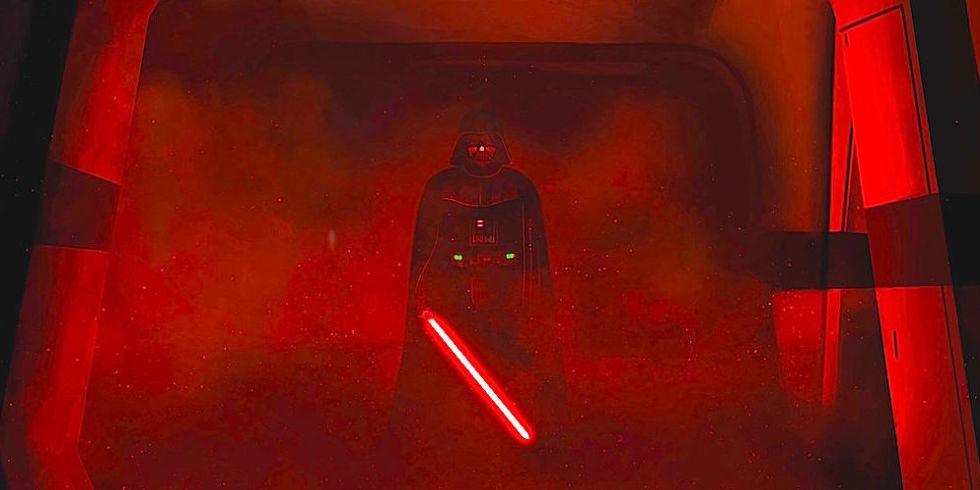
Watching parts of it you can enjoy the moments: a blind man taking out Stormtroopers, or Darth Vader cutting down rebels. But there is little to tie these moments together. Plot and characterisation are treated in the same chunked way – events grind to a halt so Mads Mikkelson can tell us what happens next, or Cassian can bluntly talk about how being a rebel is tough on the nerves. In the original Star Wars, plot, character and action were woven together so we learned about all three together. Here they are silos, with action the focus. It feels like a film made for YouTube, more interested in pop culture references with only the flimsiest story propping it up, designed to be spliced up online.

Darth Vader lets rip in a section that seems designed as a YouTube moment of the future

Now the lead character, Jyn Erso. I don’t understand this character. Who is she? What is it she actually wants? For the first hour or so of the film she makes no decisions at all, but does what a series of older male characters tell her to do. There is nothing in the film that allows us to get to know her. Her actions aren’t dictated by character, or even logic, she simply shuttles around the carousel of ever-changing planets whenever the plot needs her to, mouthing whatever sentiments the film needs in order to move on. The film needs her to be a disaffected criminal? She is. The film needs her to be a distraught daddy’s girl? There we go. The film needs her conversion into a rebel freedom fighter? Boom. What does she feel about this? What awakes her idealism, and converts her from criminal to self-sacrificing hero? Nobody knows, the film doesn’t care. It doesn’t help that Felicity Jones’ headgirlish primness is a total mismatch for a gritty, tough-as-nails fighter from the wrong-end-of-the-tracks.

There are many people in this film, but precious few characters. It’s quite damning that the person who makes the biggest impact isn’t a person at all but a robot – and K-2SO is basically a walking cynical punchline, a battle-ready C3PO. Diego Luna’s Cassian is so thinly sketched it’s hard to invest in him at all: the film has no interest in character development so we are bluntly told his characteristics in ham-fisted dialogue. He has a vague speech about how he’s Seen Bad Things, and that’s deemed sufficient to explain all his actions. The worst is Riz Ahmed’s pilot, whose motivations are so unaddressed he spits out some final words to supply his motivation just as he snuffs it. Donnie Yen and Jiang Wen are little more than a collection of cool sounding quirks – Blind One, and Blind One’s Friend. Can you even remember their names? 

On the plus side, Ben Mendelsohn is pretty good as an ambitious Imperial officer edging his way up the greasy pole – most of the more interesting dialogue scenes feature Death Star office politics. Mads Mikkelson mines every inch of humanity and compassion from his role. At the other end of the spectrum, an unrestrained Forest Whitaker lets rip as a plot mouthpiece, delivered in his most overripe manner. (There’s some kind of backstory to his relationship with Jyn, but the film never bothers to go into this, because that time is better spent with Whitaker spouting bland, faux-epic, lines like “Save the rebellion. Save the dream”, round mouthfuls of scenery.)

There has been a lot of discussion of the digital recreation of Peter Cushing as Grand Moff Tarkin – I’ve no real moral problem with it (lord knows, a glance at his CV tells you Cushing would probably have loved to have been in this film), and Guy Henry does a pretty good vocal recreation of Cushing. It looks a little odd the more you watch it – it’s probably going to date the film quite badly in ten years time – with more than a hint of the “uncanny valley” in Tarkin’s face. It makes sense, though, including the character in the film – and at least we get some characterisation and motivation.

Edward’s visual ability allows him to film his toy collection in a way that at least feels a bit fresh, but it’s a film made by a fanboy, more interested in getting as many references from the past in than creating something new. Edwards rams in everything from Blue Milk to AT-ATs. Now there is a certain pleasure in spotting this stuff, don’t get me wrong. But will it reward future viewing? The final space battle sequence might as well be a child filming smashing his toys together.

My point is, remove all the vast amount of Star Wars ephemera from this, and what do you have left? Once you’ve exhausted the pleasure of seeing that bloke Obi-Wan cuts the arm off in the bar in the first film, or you’re no longer excited by admiring the recreation of the Rebels’ base, what is there left in the film for you to enjoy? Imagine this was a stand-alone story – what would really make you come back? It’s so shrunken and dependent on Star Wars that it stops almost exactly 5 minutes before Star Wars starts – and, I would argue, means the start of that film makes much less sense.

That’s the final problem – for all the talk of Star Wars being a huge universe, this film only stresses how small it is, how reliant it is on events that have already happened or spinning its plotlines off from references in other films. No matter where we go, the same people keep popping up, the same beats keep getting hit. The film is daring, I suppose, in killing off nearly the entire cast over the course of the film – but these characters have been so poorly developed that their deaths lack any impact. It’s a film overwhelmingly fascinated by surface and fan-wanking over the old films, than showing anything new. 

Now I know you could level some of these charges against The Force Awakens – but that was a film with engaging characters and fresh, enjoyable dialogue that introduced a few new concepts for the films to go forward with. Within moments of their first appearances, you knew what kind of person Rey was (bold, determined, wistful, searching) or Finn (conscience-stricken, inventive, desperate) – hell the dinky robot had more character than the cardboard cutouts here. The internet obsession with shipping Finn & Po shows how much these characters came alive. Can you imagine anyone spinning out theories of backstory or subtext about any of the people here? No, because they’re not people, they’re plot devices. 

If a truly inventive director had got hold of this material, we could have ended up with something that felt really fresh. Instead we have something that is basically juvenile and dim: front row seats at a child’s game that jumps from set-piece to set-piece with no interest in weaving them together. Possibly only the 6th best Star Wars film.

Arrival (2016)


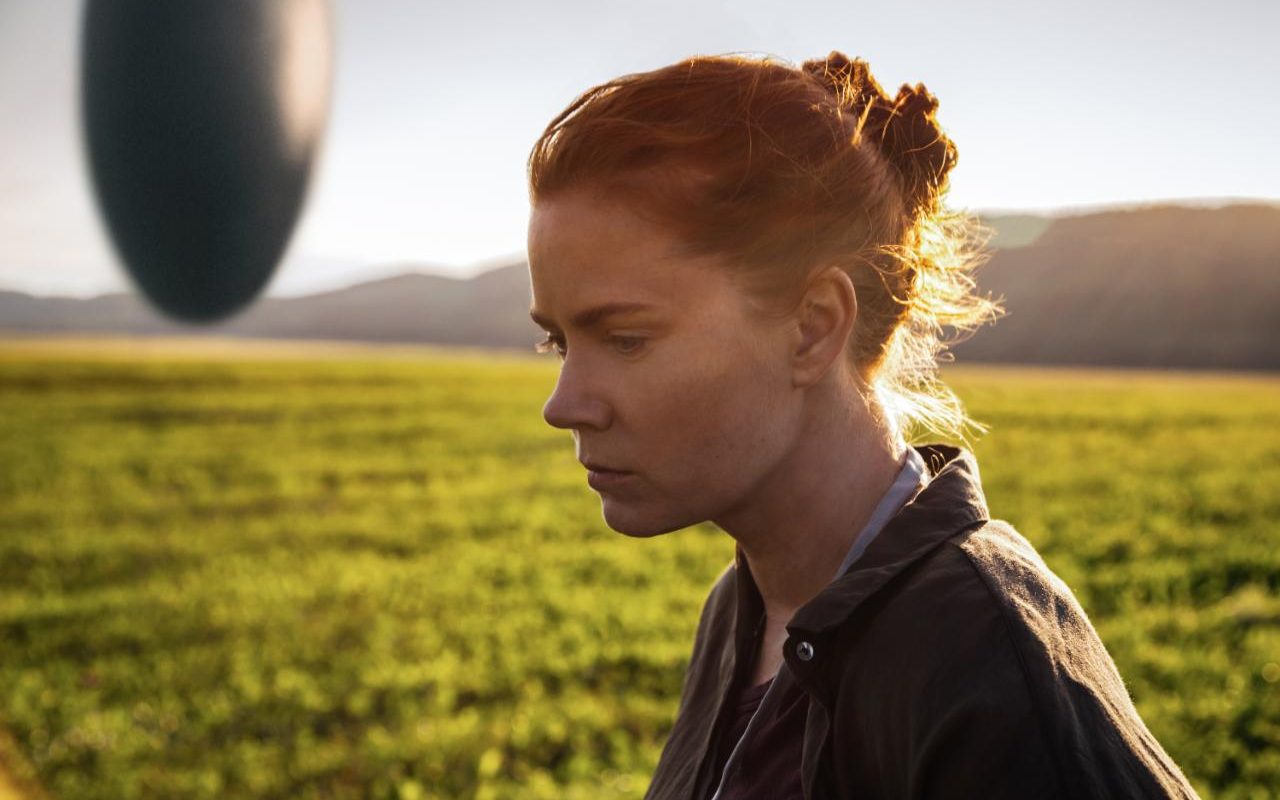
Amy Adams tries to build an understanding with Earth’s visitors in this thinking man’s sci-fi film

Director: Denis Villeneuve

Cast: Amy Adams (Louise Banks), Jeremy Renner (Ian Donnelly), Forest Whitaker (Colonel Weber), Michael Stuhlberg (David Halpern), Tzi Ma (General Shang), Mark O’Brien (Captain Marks)

Aliens in Hollywood movies don’t often seem to mean well. For every ET you’ve got a dozen Independence Day city destroyers. But few films have really dealt directly with the complexities that might be involved in engaging with a species for the first time. How would we talk to them? How could we find out what they want?

Those are the questions that Dr Louise Banks (Amy Adams), the world’s leading linguist, has to juggle with after she is called in by Colonel Weber (Forest Whitaker) to establish communication with the inhabitants of an alien ship, one of 12 that have appeared across the globe. Working with physicist Ian Donnelly (Jeremy Renner), Banks strives to build trust and a basis for common language with the aliens. Throughout, she must deal with her military superiors’ lack of understanding of the painstaking nature of her work, the paranoia and fear of the nations of the world, and her own increasingly intrusive dreams and memories.

This is grown-up sci-fi, directed intelligently by Denis Villeneuve, whose confidence and artistry behind the camera oozes out of every shot. It’s a film that wants us to think, and urges us to consider the nature of humanity. Communication between humans and the “heptapods” is the film’s obvious focus, but it is equally interested in demonstrating how distrust and paranoia undermine how we talk to each other. Not only is this in the clashes between nations, but on a smaller scale by the communication between military and science, the uniforms in charge largely failing to grasp the slow and painstaking nature of Banks’ work. On a personal and emotional level, we see the slow growth of understanding between Banks and Donnelly, their increasing ease with each other as they break down the barriers between them, and between humanity and the aliens. 

Far from the bangs and leaps of inspiration that science normally sees itself represented by onscreen, this film attempts to follow the methodical process of building an understanding of a concept from nothing, and the careful hours of work that underpin sudden revelations. The film is very strong on the complexities of linguistics and the difficulty of conveying exact translations, including intent, context and meaning, from one language to another. In fact it’s a wonderful primer on the work of linguistics experts, offering a fascinating breakdown of how language is understood, translated and defined between two groups without a common tongue. 

This is also helped by making the aliens truly alien: I can’t remember a set of Hollywood aliens as otherworldly as these are. Not only is their language completely different (based on symbols and strange echoes like whale song), but physically they bear no resemblance to humans at all (I confess that I was momentarily distracted here, as their tentacles and residence in a gas-filled box rather reminded me of The 465 in Torchwood: Children of Earth). They lack clear arms, legs or even faces. Their technology is advanced and immediately unsettling. Jóhann Jóhannsson’s wonderfully eerie and imposing score brilliantly helps to capture this otherworldly sense, as does the crisp photography and unique production design of the alien ship. The film walks a brilliantly fine line between wonder at the aliens and a sense of unsettling dread that means we (like the characters) are never comfortable in making assumptions about their motives.

Much of the film’s success as a viewing experience also depends on knowing very little about it. For me this film delivered one of the most effective late-plot re-evaluations I’ve seen: I had no inkling of this gear shift, or how a late piece of information demands that we adjust our understanding of everything we have seen so far in the film. This is actually one of the best done examples I’ve seen of a twist (calling it a twist seems somehow a little demeaning, as if this was a Shyamalan thriller, but a twist it is) – I in no way saw it coming, but it suddenly makes the film about something completely different than you originally believed it would be. I won’t go into huge details, but the film raises a number of fascinating questions around pre-determination and fate that challenge our perceptions of how we might change our lives if we knew more about them. To say more would be to reveal too much, but this twist not only alters your perceptions of the films but deeply enriches its hinterland.

I would say the film needs this enrichment as, brilliant and intellectual as it is, it’s also a strangely cold film that never quite balances the “thinking sci-fi” with the “emotional human drama” in the way it’s aiming for. Part of this is the aesthetic of the film, which has a distancing, medical correctness to it – from sound design to crisp cinematography – and which, brilliant as it is, does serve to distance the viewer emotionally from the film. Despite the excellence of much of the work involved, I never quite found myself as moved by the plights of the characters, or as completely wrapped up empathetically with Adams’ character, as the film wanted me to be. While the ideas in the film are handled superbly, it doesn’t have quite as much heart as the plot perhaps needs to strike a perfect balance.

What emotional force the film does have comes from Amy Adams. It’s a performance that you grow to appreciate more, the longer you think about it. It’s a subtle understated performance, soulful and mourning, that speaks of a character with a deep, almost undefinable sense of loss and sadness at her core. You feel a life dedicated to communication and language has only led to her being distanced from the world. Adams is the driving force of the film – though very good support is offered from Renner as a charming scientist who also convinces as a passionate expert – and the film’s story is delivered largely through her eyes, just as the aliens’ perception of humanity becomes linked to her own growing bond with them. I will also say that Adams also has to shoulder much of the twist of the film – and it is a huge tribute to her that she not only makes this twist coherent but also never hints at the reveal until the film chooses to. 

Arrival is a film that in many ways is possibly easier to respect than it is to love: but I find that I respect it the more I think about it. It does put you in mind of other films – the aliens have more than a touch of 2001’s monolith to them and Villeneuve’s work is clearly inspired by a mixture of that film and Close Encounters. But this is a challenging, thought-provoking piece of work in its own right and one that I think demands repeat viewings in order to engage the more with its complexity and the emotional story it is attempting to tell. It may well be that on second viewing, removed from puzzling about the mystery in the centre, I will find myself more drawn towards it on an emotional rather than just intellectual level. That is something I am more than willing to try and find out from a film that I think could become a landmark piece of intelligent sci-fi.

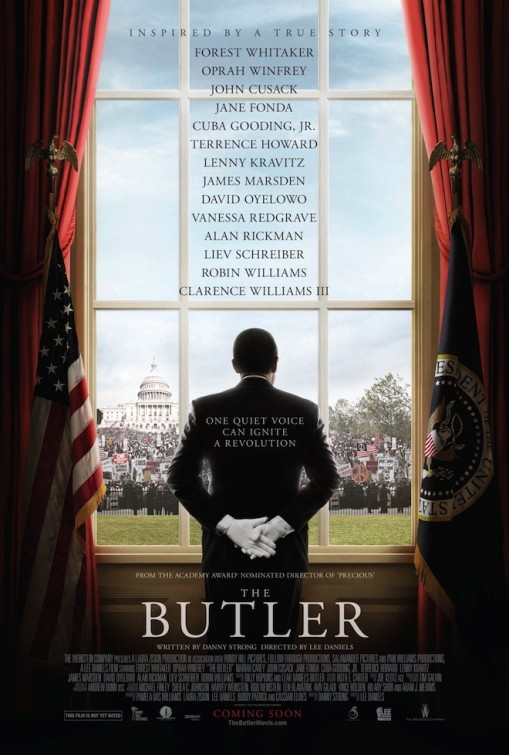
The Butler (2013)


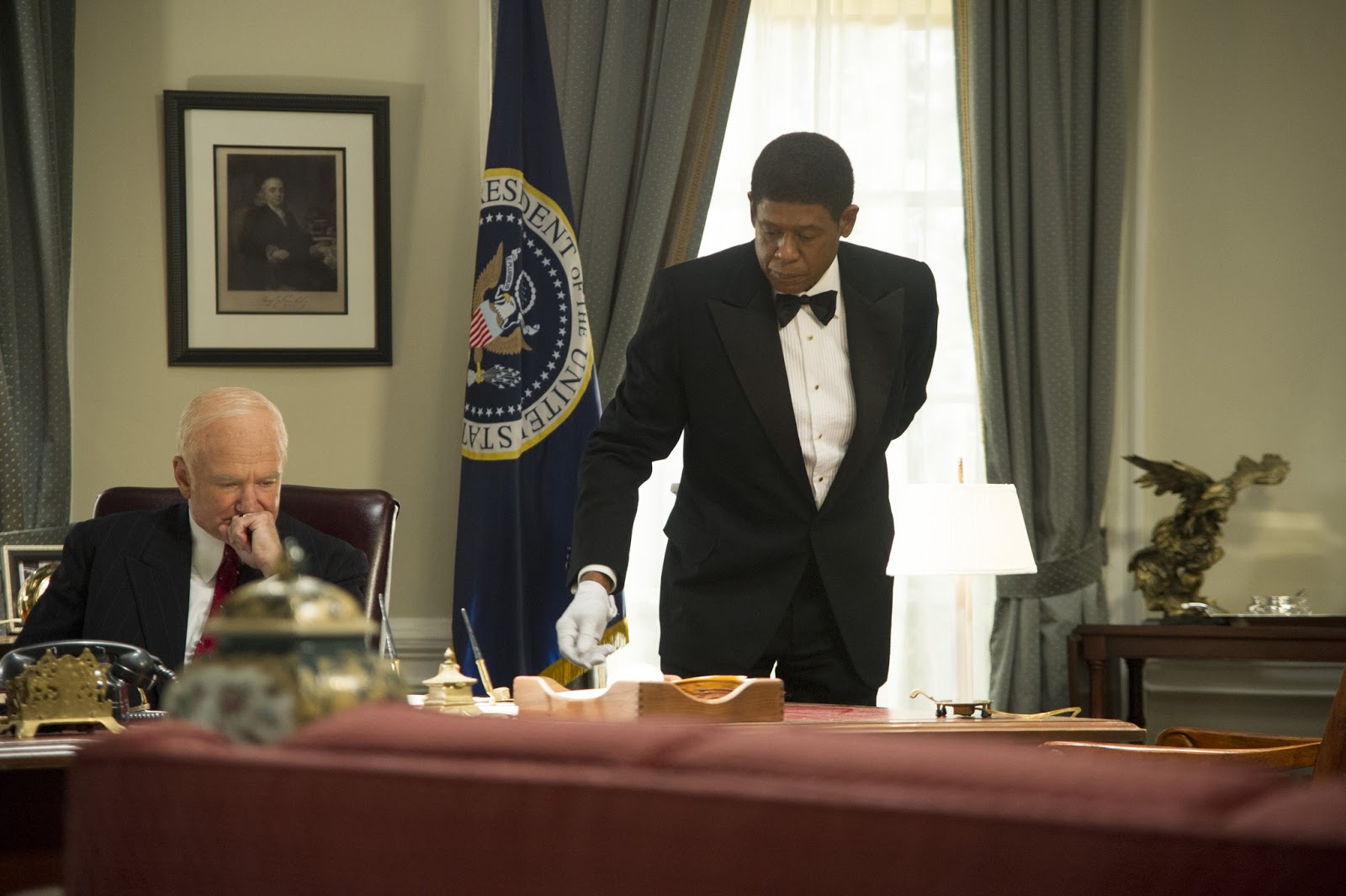
Forest Whitaker takes on a lifetime of service, as the Civil Rights movement meets Downton Abbey

Director: Lee Daniels

Cast: Forest Whitaker (Cecil Gaines), Oprah Winfrey (Gloria Gaines), David Oyelowo (Louis Gaines), Cuba Gooding Jnr (Carter Wilson), Lenny Kravitz (James Holloway), Colman Domingo (Freddie Fallows), Yaya DeCosta (Carol Hammie), Terrence Howard (Howard), Adriane Lenox (Gina), Elijah Kelley (Charlie Gaines), Clarence Williams III (Maynard), John Cusack (Richard Nixon), Jane Fonda (Nancy Reagan), James Marsden (John F. Kennedy), Vanessa Redgrave (Annabeth Westfall), Alan Rickman (Ronald Reagan), Liev Schreiber (Lyndon B. Johnson), Robin Williams (Dwight D Eisenhower)

Cecil Gaines (Forest Whitaker) grows up on a plantation in the South; after his mother is raped and his father killed by the son of the house, the family matriarch (Vanessa Redgrave) takes him on as a house servant as a token gesture of regret. His training here sets him on the path to working in a succession of increasingly wealthy hotels and, finally, the White House. Over 30 years, he serves the Presidents in office, never involving himself or commenting on policy, proud of his service to his country. This often puts him in conflict with his Civil Rights activist son Louis (David Oyelowo), with his wife Gloria (Oprah Winfrey) stuck in the middle.

This is the sort of film that feels designed to win awards. It’s based on a vague true story (it changes nearly all the events of course) and it’s about a big subject. It’s got big name actors doing acting. It aims at big themes. What it actually is, is a film that misses its marks. It’s a film that spends time with big themes but has nothing to say about them, or in fact anything interesting to say full stop. It assumes that the historical context will do the work, and leaves it at that. Instead, it settles for trite sentimentality and cliché, personal stories played on a stage that makes those stories seem slight and inconsequential rather than giving them reflective depth.

The biggest problem about the film, leaving aside its heavy-handed sentimentality and mundane predictable storytelling, is that all the way through it feels like we are following the wrong story. It’s such a vibrant and exciting period of history, so full of events, passion and struggle: and instead we follow the story of Cecil, essentially a bland passive character who achieves very little and influences even less. There are vague references to leading “the regular life” and how working in domestic service is like some sort of subversive act to demonstrate the education and hard-working possibilities of the minority, but to be honest it never really convinces.

The film promises that Cecil was a man who had a profound impact on the people he served – but this doesn’t come across at all. Instead, the parade of star turns playing US Presidents are there it seems for little more than box office: we see them speaking about Civil Rights issues or planning policy, but we get very little sense of Cecil having any bond with them. The cameos instead become a rather distracting parade, as if the film was worried (perhaps rightly) that Cecil’s story was so slight and bland that they needed the historical all-stars to drum up any interest in it. It doesn’t help that the cameos are mixed – Rickman, Schreiber and Marsden do okay with cardboard cut-out expressions, but Cusack in particular seems horribly miscast. A braver film would have kept these pointless camoes in the background and focused the narrative on Cecil and his colleagues below stairs, and their struggles to gain equal payment with their white colleagues. This film is seduced by the famous events and names it spends the rest of the time backing away from.

The performance at the centre is also difficult to engage with. Forest Whitaker is such an extreme, grand guignol actor that it’s almost sad to see him squeeze himself into a dull jobsworth such as Cecil. Whitaker seems so determined to play it down that he mumbles inaudibly at great length (it’s genuinely really difficult to understand what he is saying half the time), slouching and buttoning himself into Cecil’s character. It doesn’t come across as a great piece of character creation, more a case of miscasting. Oprah Winfrey does well as his wife, although her character is utterly inconsistent: at times a drunk depressive, at others level-headed and calm. The link of either of these characters to the hardships of life as a Black American or their role in racial politics is murkily unclear.

The star turn of the film – and virtually all its interesting content – is from David Oyelowo, who ages convincingly through the film from idealist to activist to elder statesman. His story also intersects with the actual historical events that are taking place in America and he is an active participant – unlike Cecil the passive viewer, just as likely to switch the TV off as follow the news. Often I found myself wishing the film could follow his character rather than Whitaker’s.

That’s the problem with the film: what point is it trying to make? The film seems to want to honour Cecil’s service in the White house – but the film is a slow journey towards Cecil’s sudden revelation that maybe his son’s campaigning for Civil Rights was the right thing to do. This flies in the face of the film’s tribute to Cecil’s decades of quiet, unjudging service: the film can’t make up its mind whether it wants to salute Cecil for being an unjudging, dedicated servant to a long line of Presidents, or for having the courage to take a political stance towards the end. It’s having its cake and eating it. It’s this shallow lack of stance that finally makes it an empty and rather dull viewing experience.

The Crying Game (1992)


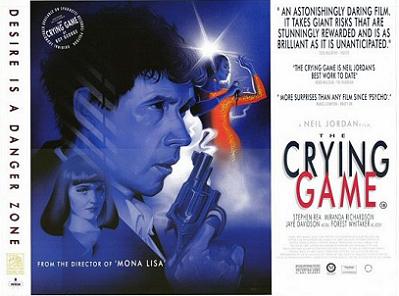
Jaye Davidson and Stephen Rea play a dangerous game of attraction

Director: Neil Jordan

Cast: Stephen Rea (Fergus), Miranda Richardson (Jude), Forest Whitaker (Jody), Jaye Davidson (Dil), Adrian Dunbar (Peter Maguire), Tony Slattery (Deveroux), Jim Broadbent (Col), Ralph Brown (Dave)

The Crying Game is one of those little movies that could: a small scale British/Irish drama about human nature and dangerous relationships, which suddenly burst into the world big, was nominated for five Oscars and won one for its creator, turning him into a widely respected writer/director.

The film follows Fergus (Stephen Rea), an IRA soldier who, over a long night, bonds deeply with Jody (Forest Whitaker) a British soldier his unit are holding hostage with the intent of killing him if their comrades are not released. When Jody is accidentally killed trying to escape his execution, and British soldiers wipe out his cell, Fergus escapes to a new life in London, aiming to track down Jody’s girlfriend Dil (Jaye Davidson) whom Jody asked him to find. Fergus discovers things about himself and Jody in London he little anticipated – and also finds that his IRA companions, especially the dangerous Jude (Miranda Richardson), are not as deceased as he believed.

When it was first released in the UK, The Crying Game was a critical and box-office disaster. This was linked to its IRA plotline, largely on account of the film’s unwillingness to stick an unequivocally clear condemnatory label on the IRA. Of course, the film is not a film about terrorism at all – and whatever it says about the rights and wrongs of the British presence in Ireland (very little indeed), I think it’s pretty clear that it shows killing and violence are completely wrong. However, the film was saved by its huge success in America. There, its subject matter didn’t provoke the same level of controversy it was re-marketed as the biggest “twist” film since Psycho.

And ever since then I would say it has stayed in that list of great “twist” films – up there with The Usual Suspects, The Sixth Sense, Planet of the Apes, Fight Club and of course Psycho, among many others. Most of its mystique at the time was due to the fact that the twist was revealed just over halfway through the film and was based around a theme that has gained far more familiarity to us today. I won’t say what the twist is (just in case), as seeing it unfold is a pleasant surprise that turns what we think we know about several of the characters on its head. I’ll simply say that it is a question of identify and leave it at that.

Identity is appropriate, as that’s what this film is about: the images we build about ourselves and how we project those to the people around us. The way our environment, and the people we spend time with, help to shape the people we are. The sometimes unexpected depths that we discover within ourselves. The film is dramatically opposed to label altogether: hence it can present a gunman for the IRA who is a sensitive and kindly soul, whose relationships with others are based on gentleness (and Fergus is just one of three characters in the film who turn out to be very different from our initial perception of them). Many of these reveals are connected to understanding how love and affection can overlap with feelings of attraction and how we express these feelings. This is all parts of the film’s fundamentally humanitarian outlook.

The film has a poetic, at times almost dreamlike, quality about it. There is a lyrical ambience to many of the scenes, with the camera drifting comfortably through the action. Visions of Jody plague Fergus throughout, both day-to-day and (tellingly) during a sexual encounter with Dil. Jody’s image haunts the film, ghost-like, through the many photos of him in Dil’s flat. Many of the events have a similarly haunting sense of being a few degrees out of reality. It’s got the sense of a violent bedtime story or fairy tale in London.

Jordan’s script is outstanding – humane, witty, deeply felt – and the actors embrace the opportunity to play such multi-levelled, difficult-to-pigeonhole characters. It’s also brilliantly constructed into three clear acts, each of which comment upon and deepen the others: we have Fergus and Jody together in Ireland, a tragic growth of friendship and respect between two men; Fergus and Dil in London, a sweet and tentative romance built on secrets; and finally the return of the IRA to London, a destructive thriller. Each act feels like a natural development and there are no juddering changes of tone, as Jordan keeps the focus on the characters and their personal stories and feelings.

A large part of the film’s success is linked to Stephen Rea’s thoughtful and sensitive performance as Fergus, a man who has clearly stumbled into a life of violence despite his sensitive and rather tender nature (and our underlying natures guiding our actions is a major theme of the film). He’s a true lost soul, and his deep (and sudden) friendship with the kidnapped Jody has an ease about it that reveals depths about his character. His relationship with Dil has a sweetness to it, while Fergus is engagingly nervous and tentative of openly expressed love (not to mention that he lies to her – non-maliciously – from the start, as he knows far more about her than she realises). It’s a low-key but commanding performance with a real depth of feeling, and Jordan gives the character a powerful redemptive arc that Rea plays to the hilt.

There is also terrific work from the rest of the cast. This is one of only two films Jaye Davidson ever made, and the untrained naturalness of the acting adds a huge amount to the mystique of the character, as well as making Dil truly sympathetic and intriguing. Davidson’s short career also preserved the unique mystery around the character that was so essential to the film’s success. Forest Whitaker’s English accent is an up-hill battle, but the actor brings his force-of-nature charisma to the part so completely you overlook that he isn’t convincing as a Londoner, a solider or a cricketer. What you do believe is his connection with Fergus, while Whitaker is able to suggest dark hints throughout that his bond with Fergus is as least part manipulation.

Miranda Richardson has the grandest role as a death-dealing IRA hitwoman, which she delivers with aplomb, her dark eyed fanatical fury making her a dangerous antagonist for the film. Jim Broadbent also shines in an early role as an enigmatic barman, but there is hardly a bum note in the acting, although Tony Slattery is perhaps a little too broad as Fergus’ worksite boss.

The Crying Game is a hugely rewarding film to watch, a deep and thoughtful film, packed with wonderful scenes, great acting and guaranteed to lead to discussion and debate after it has finished. Yes it’s a film with a famous twist – but it is not a film defined by that twist. Instead that is only part of the rich tapestry of the film’s exploration of identity, desire and self-knowledge, in which the images we are present to others are as difficult to interpret as the images we present to ourselves.