Tag: Gary Cooper

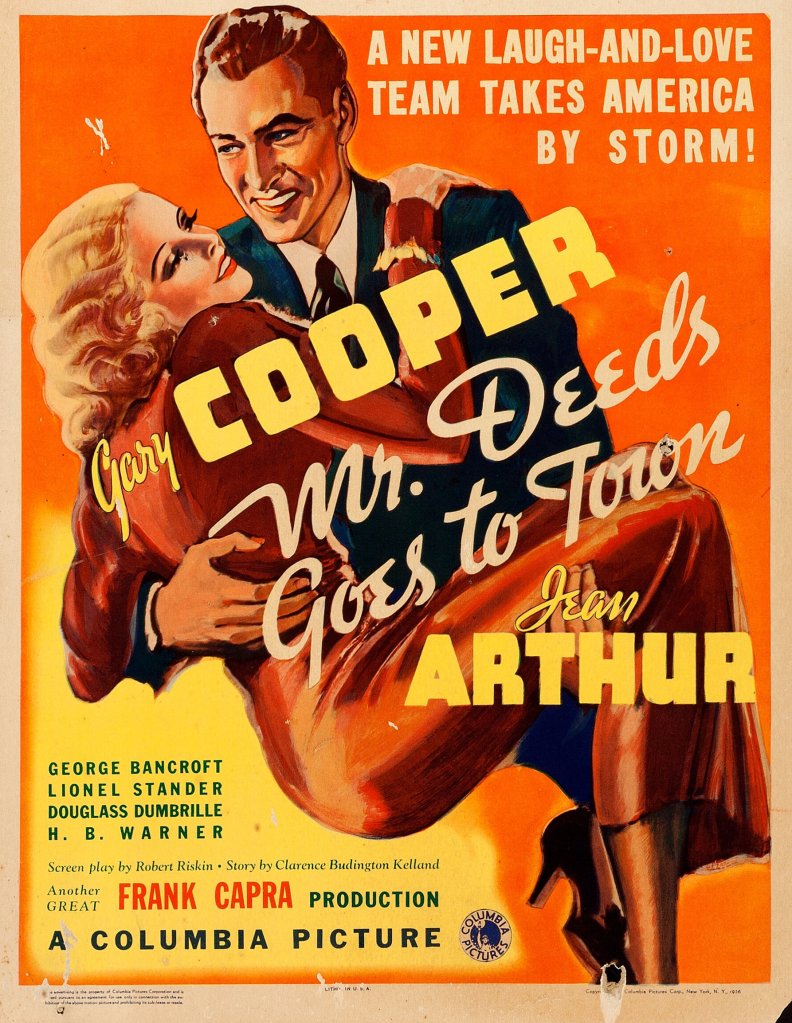
Mr Deeds Goes to Town (1936)

Mr Deeds Goes to Town (1936)

Capra’s brilliant comedy lays out his world version – and is extremely entertaining to boot

Director: Frank Capra

Cast: Gary Cooper (Longfellow Deeds), Jean Arthur (Babe Bennett), George Bancroft (McWade), Lionel Stander (Cornelius Cobb), Douglass Dumbrille (John Cedar), Raymond Walburn (Walter), HB Warner (Judge May), Ruth Donnelly (Mabel Dawson), Walter Catlett (Morrow), John Wray (Farmer)

If any film first set out what we think of today as ‘Capraesque’ it might well be Mr Deeds Goes to Town. This was the film where so many of the elements we associate Capra – the honest little guy and his small-town, homespun American values against the selfish, two-faced, disingenuousness of the elites – really came into focus. Mr Deeds Goes to Town develops these ideas with a crisp, sharp comic wit, with Capra’s reassuringly liberal-conservative message delivered to perfect, audience-winning effect. It led to the even-better Mr Smith Goes to Washington and the template for every film which celebrates the little guy asking ‘why’ things have to be done this way.

Longfellow Deeds (Gary Cooper) is just your-average-Joe from small-town Mandrake Falls in Vermont who suddenly finds that he has inherited the unheard-of sum of $20million from a recently deceased uncle. His uncle’s assorted lawyers, led by suavely corrupt John Cedar (Douglass Drumbille) expect the naïve Deeds will happily allow them to continue riding the gravy train they’ve enjoyed for years. However, Deeds proves to have a mind of his own, refusing to kowtow to opportunists.

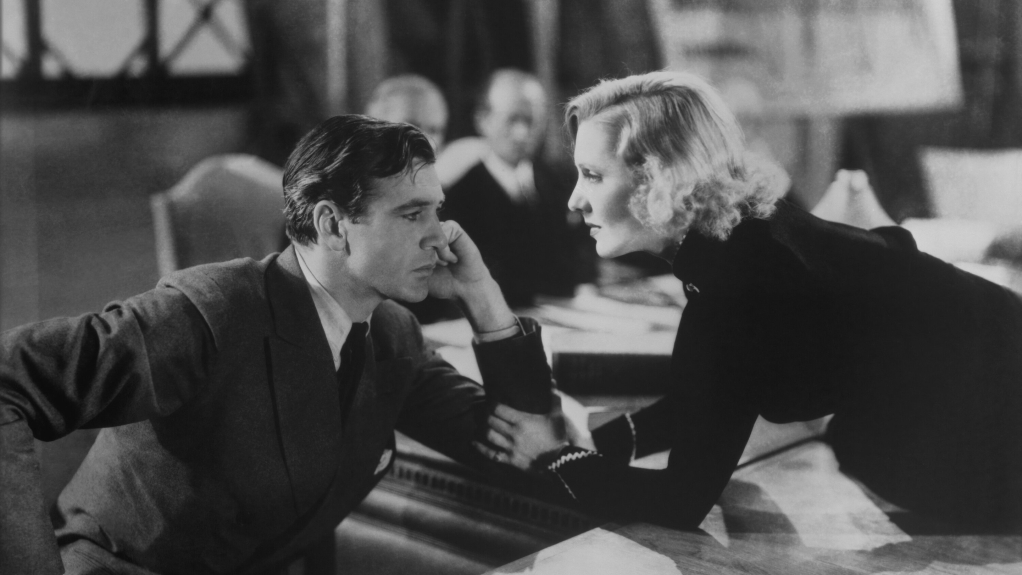
However, Deeds has an Achilles heel: he’s fallen hard for Babe Bennett (Jean Arthur), who he believes to be an out-of-work office girl but is in fact a star reporter, spinning the stories she picks up from their dates into articles about Deed that make him a laughing stock (the ‘Cinderella Man’). When Deeds discovers the truth – and is simultaneously threatened by Cedar with institutionalisation over his plans to give away his fortune to help the poor – he’s flung into a desperate court case to establish his sanity. Will a heart-broken Deeds defend himself?

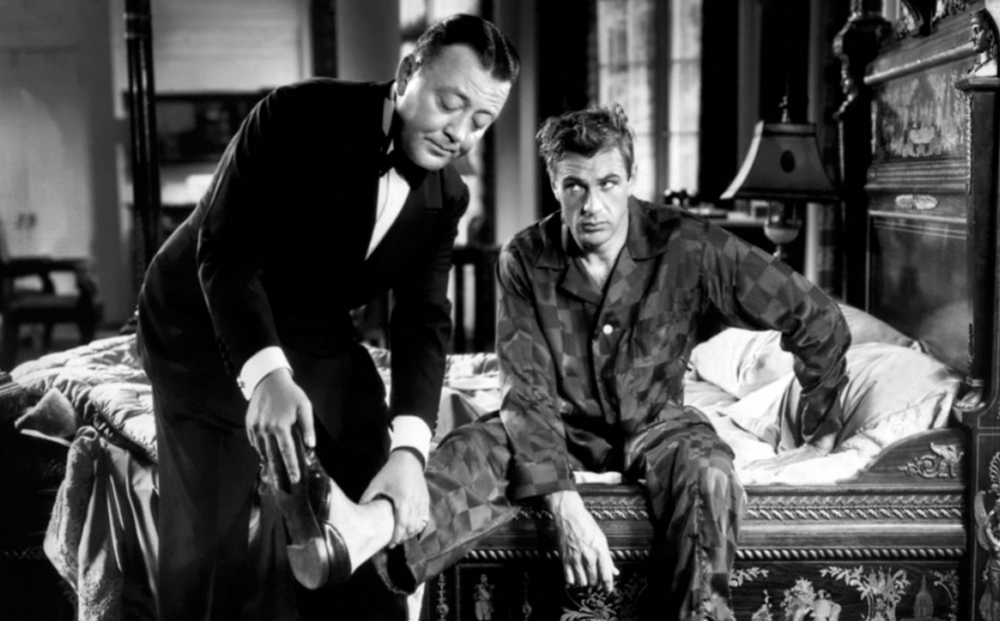
Mr Deeds, with a sparkling script from Riskin, captures Capra’s idea of true American values. Deeds is a softly-spoken, unfailingly honest, no-nonsense type who won’t waste a minute on flattery and forlock-tugging and respects hard-work and plain, simple decency. He’s an independent spirit: be that playing the tuba, sliding down the banisters of his grand home, jumping on board fire trucks to help out or sweetly scribbling limericks, he’s as endearingly enthusiastic as he is lacking in patience for pretension.

He also proves an honest man is no fool, but a shrewd judge of character – expertly recognising a lawyer who turns up pushing for his uncle’s ‘common law wife’ to take a share of his fortune is an ambulance-chasing crook – and he’s no push-over or empty suit (made the chair of his uncle’s Opera board, he shocks the rest by actually proceeding to chair the meeting and make decisions). He’s the sort of humble-stock, common-roots, middle-class hero without any sense of snobbery or self-importance, just like his hero President Grant, judging people on their merits not their finery.

It is, in short, a near perfect role for Gary Cooper, at the absolute top-of-his game here: funny, charming and hugely endearing. Cooper can also convincingly back-up Deeds’ affability with a (literal) fist when pushed too far. Cooper is an expert at preventing an otherwise almost-too-good-to-be-true character from becoming grating or irritating. He’s also extremely touching when called upon – his giddy, bed-rolling phone call to Jean Arthur’s Babe is as sweet as his broken edge-of-tears sadness when he discovers she’s been lying to him (I can think of very few 30s actors who would have been comfortable looking as emotionally vulnerable as Cooper does here).

But Capra’s world view was always more complex though than we think. It’s easy to see Mr Deeds as arguing we should re-direct our efforts to helping the poor and needy, and the greed and hypocrisy of the rich (the sort of snobs who mock Deeds to his face at the dinner table). That might be closer to screenwriter Robert Riskin’s views: but actually, Capra’s vision has more of an Edwardian paternalism to it. He sees Deeds’s destiny – once he renounces the wild living of suddenly being loaded – not be a Tony Benn style-radical but the sort of paternalistic benefactor of the deserving poor you might see in a cosy Downton Abbey-style costume-drama.

Because the people Deeds ends up helping share his view of the world, as one where hard-work and having the right attitude should lead to rewards (with the implicit message, that if you can’t succeed then, it’s your fault). Deeds is tugged out of his slowly forming playboy lifestyle by John Wray’s desperate farmer. Wray is at the heart of a genuinely affecting sequence, determined to cause Deeds harm (believing stories of him frittering away money on eccentric trifles) and ending it in shameful tears, accepting Deeds unasked-for help. Like this man, those Deeds helps have lost farms and land due to the depression, screwed by the games of the financial elites.

But Mr Deeds Goes to Town never once tries to suggest there is anything fundamentally wrong with this system – only some of the people who have risen to the top. And even then, it’s their personal greed and inverted snobbery that’s their crime, not the fundamentally unbalanced financial system. The main strawman for elite’s financial frippery is the Opera house committee Deeds chairs for: he can’t see the point of taking a loss on an art institution, essentially arguing it should focus more on commerce to earn its way – the sort of art view that it’s only good if loads of people pay for it (on that basis Avengers Endgame is the greatest film ever made).

It’s part of a criticism of snobbery that the homely, common-man, Deeds can’t abide: captured in the idea that enjoying the plays and books ordinary people don’t want to read is somehow proof of an elitist coldness that doesnt value ordinary people. There’s an inverted Conservative snobbery here.

Now, don’t get me wrong: there’s still a decent world-view in Capra at valuing hard working people who want to help themselves. In the big city where life is a “crazy competition for nothing”, it’s refreshing to have someone who doesn’t care about societies ins and outs society, but does care that hungry farmers have a sandwich to eat. But it’s also a more conservative, and safe message than people remember.

Saying all that, Mr Deeds is a hugely entertaining film. The romance between Cooper and Jean Arthur (absolutely in her element as the screwball femme fatale with a heart-of-gold) expertly mixes genuine sweetness with spark. The film’s Act Five trial scene is perfectly executed, a brilliant parade of snobs and slander leading to an inevitable final reel rebuttal from Cooper that the actor knocks out of the park. (It works so well, the whole structure would be largely repeated in Mr Smith with the twist that here Deeds doesn’t speak at all) There are a host of superb performances: Stander is perfect as the cynical hack who finds himself surprised at his own conscience, perfectly balanced by Drumbrille as the suave lawyer who has no conscience at all.

All of these elements come together to sublime effect in a film that is rich, entertaining and genuinely sweet – with a possibly career-best performance from Cooper (Again, it’s refreshing to see an alpha-male actor so willing to be vulnerable). Capra’s direction is sublime: dynamic, witty and providing constant visual and emotional interest. Its politics are more conservative and simplistic than at first appears, but as a setting-out of Capra’s mission statement for warmer, kinder, small-town American values of simplicity, plainness, honesty and decency it entertainingly puts forward as brilliant a case as Deeds does.

Sergeant York (1941)

Sergeant York (1941)

Patriotic flag-waver with a great performance from Cooper and plenty of genuine heart

Director: Howard Hawks

Cast: Gary Cooper (Alvin C. York), Walter Brennan (Pastor Rosier Pile), Joan Leslie (Gracie Williams), George Tobias (“Pusher” Ross), Stanley Ridges (Major Buxton), Margaret Wycherly (Mother York), Ward Bond (Ike Botkin), Noah Beery Jr. (Buck Lipscomb), June Lockhart (Rosie York), Dickie Moore (George York), Clem Bevans (Zeke), Howard Da Silva (Lem), Charles Trowbridge (Cordell Hull)

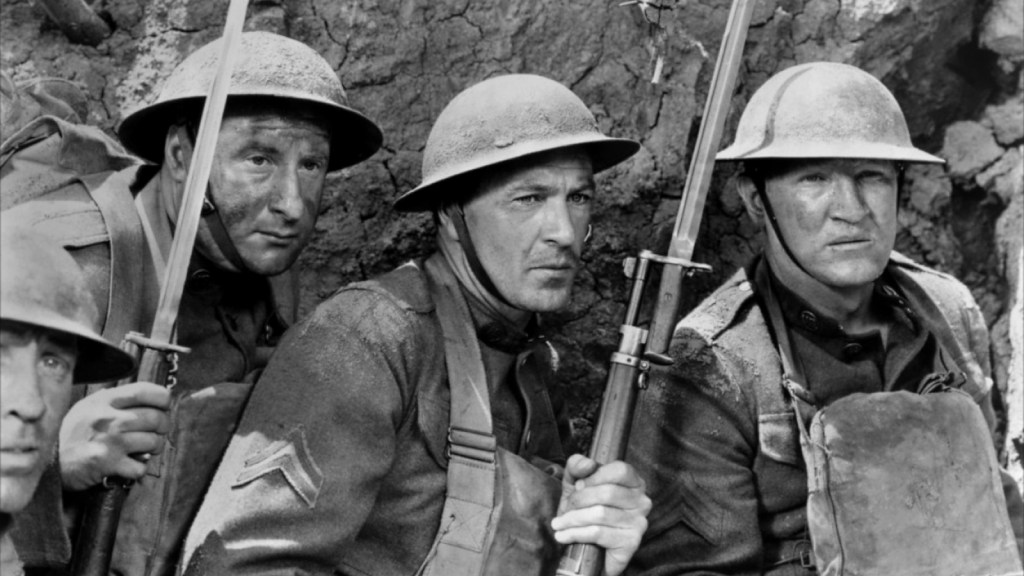
In 1941, after Japanese bombs landed on Pearl Harbor, America needed patriotic big-screen heroes. Few stood out more than Alvin York. A young man (over ten years younger than Gary Cooper) who had lived a youth of drunken rough-and-tumble before he found the light. When America joined the First World War, the 30-year-old York was called up. A gifted sharp-shooter, York was perfect for soldiering – but had to wrestle with his conviction to stick to the Commandments from the Good Book. Finding a solution to his moral quandary, York fought in France where his sharp-shooting instincts saw him almost single handedly capture a German machine gun embankment and 132 Germans (it’s an achievement that sounds pure Hollywood, but is in fact entirely true).

It’s an inspiring hero story that Warner Brothers bought to the screen at the perfect time, it’s release seeing tales of streams of young men walking from the cinema straight to the enlistment office. Producer Jesse L Lasky spent no less than twenty-two years attempting to persuade the notoriously publicity-shy and modest York (just as in the film, the real York couldn’t wait to leave the glitz and glamour of his triumphant homecoming behind and return to his fiancé, farm and work with the Church) to grant him the film rights to his life. York agreed only with the advance of Hitler, a hefty payment to his Church and a promise that no-less than Gary Cooper would play.

Cooper was reluctant – pointing out he was far too old to play this national hero – but really no other actor could have done it. Cooper won his first Oscar for the role, and it’s his understated sincerity and decency that really sells the film. He turns what could otherwise by a potentially cloyingly perfect man into someone utterly sympathetic and endearing. There is an aw shucks quality to Cooper, as he captures York’s modesty, his shrugging off his accomplishments as no more than his duty, his palpable discomfort with attention (be it from congressmen or his fellow Tennessee farmers commending his shooting) and a deep-rooted genuineness in his love for his beau Gracie (Joan Leslie giving a commendable performance of endearing brightness that helps you overlook she was 24 years younger than Cooper – thankfully she doesn’t look it).

Cooper’s performance powers a sprightly, very enjoyable film by Howard Hawks (who picked up his only Oscar nomination for this) that manages to transcend the danger of being an overbearing flag-waver. (Don’t get me wrong though – this film waves the flag so much, you can practically feel the strain in its arms). Hawks produces a film that in many ways owes as much to The Adventures of Robin Hood as an heroic All Quiet on the Western Front. Despite the patriotic focus being the final few Acts, as York carries out his act of astonishing heroism, the film’s real heart is in the opening half and the conversion of a man who is never-too-naughty into one who casts aside the demon drink, works hard to earn what he has, and puts his faith and the good of others before his own concerns.

Hawks shoots this part of the film with a palpable energy and a rough-and-tumble sense of humour. It’s there from the film’s opening as Walter Brennan (in a role he invests with all his wheezy, twinkly dignity) finds his sermon constantly interrupted by the gunplay of the drunken York and his buddies. There is a light humour when Margaret Wycherly – a little too ethereal for my taste as York’s saintly mum (although her casting does make York and White Heat’s Cody Jarrett siblings) – archly observes that, even when drunk, her son’s accuracy with a shooter is second to none. That’s the skill of Sergeant York there: in it’s end is it’s beginning, York is already deeply skilled and as his slightly embarrassed reaction shows when he sobers up, reformation is not a long journey.

A large part of the success is making York one of us. Striving to save the money he needs to buy the farmland of his dreams, Hawks provides a sweet montage of York undertaking no end of backbreaking, thankless work and returning home to tick off his slowly accumulating dollars under the smiling approval of Ma. When, after all his work, he finds the land has nevertheless been sold (because the owner never believed this previously idle lush could hold on to his hard-earned pennies), his outrage at the breaking of another man’s word is a clarion call to all of us who have played by the rules and been shafted. When his conversion comes, it’s not as out-of-the-blue as it could seem, but a logical conclusion for a journey we’ve watched him go on.

It’s undercut with scenes that drip with Hawksian skill. A marksmanship competition is crammed with a playful Robin Hoodesque skill. A bar-fight that the drunken York gets wrapped up in is so full of comedic tumbles and prat falls it’s hilarious. York’s constantly being fetched for various tasks by his kid brother is expertly played for subtle laughs. Alongside this, the romance between York and Gracie (and the off-screen slapping he hands out to a rival who treats her with disrespect) is beautifully handled.

The only real Hawksian touch missing is that little slice of cynicism, that ability to look under the skin of a legend (like with Wayne in Red River) and see a more flawed person. York basically is perfect, and in a film dripping with patriotism there can’t be any fault with either the army or the moral question of whether gunning down your fellow humans is alright in the service of your country. There is a version of Sergeant York where his commanding officer’s invitation that he take some time and read his way through the history of America (a replacement good book) was an act of naked manipulation of a guileless man. Or where we see the sort of guilt at his taking of life that the real York felt, play out across Cooper’s face. There’s none of that here.

In fact, after the vibrant, playful, heartfelt first few acts, you feel Hawks felt less interested in the war itself. There is a functionality about the final acts of Sergeant York as York aces his shooting tests on the range (although the flabbergasted reaction of his training officer and York’s apologetic manner at his failure to only manage five dead-on bulls-eyes on his first time using an army-issue rifle are funny). Hawks spices it up with York’s turkey-shoot metaphor, and a warm supporting turn from George Tobias (as a New Yorker soldier) and York’s gobble-gobbles to distract his German opponents. But, for all the realism of the trenches, there is an air of duty about this sequence.

But then Sergeant York works not because of the deed, but the man. And the film’s success in investing us in a man who could very easily have been all-too-perfect, in a playful and energetic first half works wonders. With a very fine, perfectly judged performance by Gary Cooper, this may not be Hawks most characterful work – but as the sort of film to showcase a man who inspires you to achieve acts of heroism, it hits the target perfectly.

The Lives of a Bengal Lancer (1935)

The Lives of a Bengal Lancer (1935)

Old-school adventure mixes with some slightly dated Imperial attitudes in a film that’s still good fun

Director: Henry Hathaway

Cast: Gary Cooper (Lt McGregor), Franchot Tone (Lt Forsythe), Richard Cromwell (Lt Stone), Guy Standing (Colonel Stone), C. Aubrey Smith (Major Hamilton), Douglass Dumbrille (Mohammed Khan), Monte Blue (Hamzulla Khan), Kathleen Burke (Tania Volkanskaya), Colin Tapley (Lt Barrett), Akim Tamiroff (Emir), J Carroll Naish (Grand Vizier)

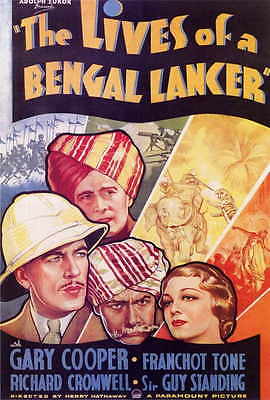
Tales of adventure and derring-do in the British Empire were meat and drink for generations of schoolboys. Few adventures were as well known as The Lives of a Bengal Lancer, a stirring tale of three lieutenants in the Bengal Lancers who become fast friends while defending Queen and country. We’ve got decent, impulsive but luckless McGregor (Gary Cooper), upper-class joker Forsythe (Franchot Tone) and eager-to-please Stone (Richard Cromwell), whose also the son of commanding officer Colonel Stone (Guy Standing). They go up against Oxford-educated Mohammed Khan (Douglass Drumbille), who schemes to seize an ammunition shipment. Can our heroes face down dastardly natives, exotic tortures and desperate escapes? All in a day’s work for a Bengal Lancer.

The Lives of a Bengal Lancer was a big hit on release, despite sharing nothing except the title, location and general theme with the semi-autobiographical novel from former-lancer Francis Yeats-Brown. It’s rollicking adventure and the boys-own mateyness of its leads, sparked a wave of spiritual follow-ups set everywhere from the Canadian mountains to the deserts of Africa. It scooped seven Oscar nominations and was celebrated as one of the greatest adventures on screen. Unfortunately, it’s not as fondly remembered now with its uncritical celebration of colonial India, spiritual links to Kipling’s White Man’s Burden and the fact Hitler of all people named it his one of his favourite film, loving its celebration of how a few white men could ‘protect’ (control) millions of natives.

It’s fair to say you have to close your eyes to some of this stuff when watching The Lives of a Bengal Lancer today. Otherwise you might flinch at our heroes threats to various squirming, cowardly Islamic rebels that if they don’t confess they’ll be sown inside a pig skin (even in 1935, outraged questions were raised about this in Parliament). You need to roll with Douglass Drumbille blacking-up as the well-spoken Mohammed Khan (not just him: nearly all the Indian characters are men-in-face-paint and for good measure our heroes also black-up to disguise themselves). There isn’t a second’s questioning about the morality of Empire and the implicit suggestion runs throughout that the Indian people should be grateful the British were there to run their country for them.

But put all that to one side, and The Lives of a Bengal Lancer is still rather fun. One of the factors making it easier to bench your misgivings is that, really, this film isn’t really interested in India or the themes of Empire anyway. For starters, all three of our heroes are played by Americans making no effort to hide their transatlantic accents (McGregor is suggested as being ‘Scotch Canadian’, but a few words of Cooper’s awful Scottish accent makes you relieved he didn’t bother to keep it up). Any insight into British-Indian relationships is extremely brief. The film is clearly shot in California, in locations identical to the sort of Westerns Hollywood was churning out. And a Western is what Bengal Lancer really is.

Our three heroes do feel more like cowboys shooting the breeze for large chunks of the film rather than army officers. Although there have been criticisms of the leads – Cooper in particular, probably because an actor so iconically American feels strange as an oddly accented Brit – all three of give entertaining, complementary, performances. Cooper is strongly charismatic, rather charming in his earnest attempts to do the right thing and his luckless incompetence at anything that isn’t soldiering (a running joke sees him building up increasing tab in a series of ill-considered bets with the good-at-everything Forsythe). But when action comes calling, McGregor is courageous, quick thinking and selfless. It’s immediately clear why Cooper essentially replayed versions of this relatable role several times. Franchot Tone is equally fine as the witty, smooth Forsythe who never takes anything seriously until things are really serious. Cromwell does sterling work as the naïve Stone.

Most of the film works because we end up liking these three characters – just as well since most of the first half is essentially watching them go about their daily tasks: riding, cleaning horses, heading out on patrol, shooting the breeze in the barracks. There is a small character-led crisis over whether the ram-rod Colonel Stone (a suitably dry Guy Standing) will accept his puppy of a son, but the biggest action drama in the first half is a wild boar hunt that nearly goes terribly wrong. If we didn’t enjoy Forsythe and McGregor deliberately rubbing each other up the wrong way, between teasing and taking a big-brother interest in Stone, we’d struggle to enjoy the rest of the film.

The second half is where the real action kicks in. During a dinner where our heroes dress up in native garb to make nice with a local Emir, Bengal Lancer throws in a bizarre Mata Hari figure, in the mysterious Russian Tania (Kathleen Burke). It’s not a remote surprise she ends up being no-good, or that the disillusioned Stone is swiftly honey-trapped into imprisonment by Dumbrille’s vaguely-motivated smooth-talking villain (it’s hilariously ironic that the villain is the most cut-glass Brit in the film). McGregor and Forsythe don Indian disguise – against orders naturally – to do what men do, which is stand by their friends.

A parade of exciting set-pieces follow thick-and fast, culminating in an impressively staged battle with towers toppling in explosives, machine gun fire spattering left-right-and-centre and our heroes literally coming to blows over who gets to make a heroic sacrifice. We get there via dastardly torture – Bengal Lancer coined the famous “We have ways of making men talk line” – as Mohammed Khan employs bamboo sticks under the fingernails (thankfully shown largely in shadow and Cooper’s stoic grimaces) to get information from our heroes. It’s all part of these men being forged by fire into exactly the sort of hardened men-of-combat we need to protect a frontier.

The Bengal Lancers ride in towards the end like the cavalry, and the air of a Western in Red Coats sticks with Lives of a Bengal Lancer throughout. Sure, it combines this with the stench of White Man’s Burden and an attitude of edgy distrust of foreigners, but The Lives of a Bengal Lancer is also riotous, old-fashioned fun, well shot and charismatically played. It might be a rather slight action-adventure fable, and sure its politics have not aged well, but it is still fun.

Wings (1927)

Charles Rogers, Clara Bow and Richard Arlen are in a wartime love triangle of sorts in the first ever Best Picture winner Wings

Director: William A Wellman

Cast: Clara Bow (Mary Preston), Charles Rogers (Jack Powell), Richard Arlen (David Armstrong), Jobyna Ralston (Sylvia Lewis), El Brendel (Herman Schwipf), Richard Tucker (Air Commander), Gary Cooper (Cadet White), Gunboat Smith (Sergeant), Henry B Walthall (Mr Armstrong), Roscoe Karns (Lt Cameron)

As the first ever Best Picture winner – and the only silent winner (until The Artist almost 85 years later) – Wings will always have a place in history. Is it the greatest silent film ever made? Of course not. In fact, it’s odd looking at Wings as a ‘Best Picture’ winner: with its rollicking action sequences, odd slap-stick comedy and slightly sentimental romance, it’s far more of a crowd-pleaser than the sort of film we think of as an Oscar winner. But it’s also filmed with an invention and verve that looks light years ahead of many other early winners – and a very enjoyable piece of story-telling.

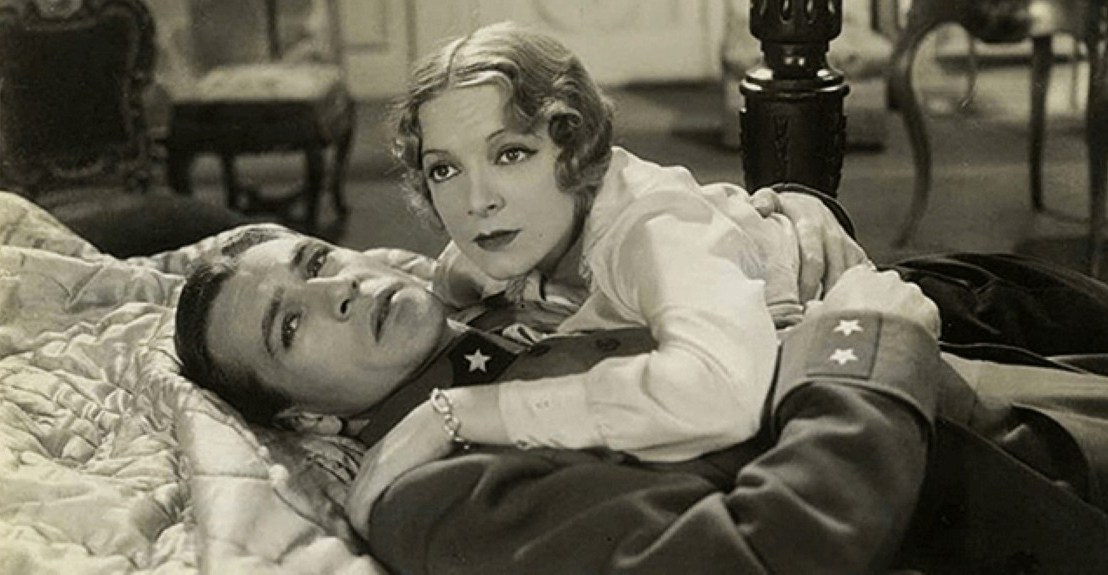
It’s the First World War and Jack Powell (Charles Rogers) and David Armstrong (Richard Arlen) are both rivals for the affections of the beautiful Sylvia Lewis (Jobyna Ralston). Sylvia actually prefers David – but both she and David are too noble to let disappoint Jack when both men enlist as pilots. Jack has also failed to notice that his delightful neighbour (literally the “girl next door”) Mary Preston (Clara Bow) is in love with him, and that she is perfect for him. Jack and David train as pilots – a dangerous profession – and head for the front and become best friends and comrades in arms. Mary follows them to serve as a nurse – but Jack is still convinced he is in love with Sylvia, completely ignorant of the fact she is engaged to David. Will these romantic problems solve themselves, while the two men fly into dog fights in the skies?

Wings is a fabulous reminder of how dynamite and dynamic Hollywood could be before the Talkies and those years of reduced camera movement to capture live sound, with more stately editing and composition that continued to hold influence over film-making for much of the next fifteen years. I loved the visual invention of this film. Wellman pushes the camera into unusual positions and uses some truly unique shots. In an early scene Wellman straps the camera to a swing David and Sylvia are sitting in. We swing and sway with the swing, in an advance feel for what it’s going to be like in the dogfights to come. When Jack runs into frame, he actually looks wild rather than the characters on the swing (fitting considering his personality).

Wings is full of invention like this. It has a hugely influential tracking shot, which zooms across a number of tables and couples in a Parisian restaurant, getting closer and closer towards and intoxicated Jack and finally zooming in on his champagne glass. This is the sort of stuff you wouldn’t see in a Hollywood movie again for decades to come.

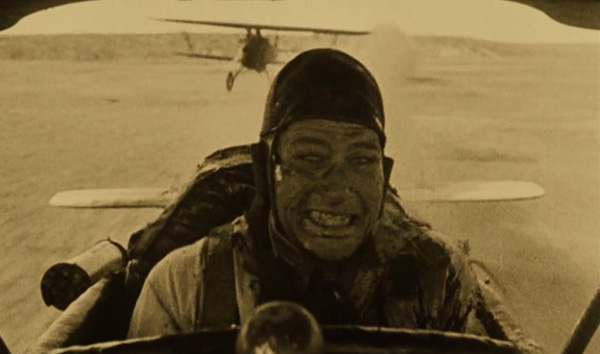
It all carries across into the dog-fighting scenes that will come. Wellman shot the film among the skies, with cameras following the action, others strapped to the planes to capture the actors faces (who are really up there!). Clouds are frequently used to communicate the speed the planes were moving at. Hundreds of stunt and military pilots took part in these re-staged battles which are still, despite the advances since, hugely impressive. Wellman, a former WW1 pilot, even took to the skies himself briefly when a pilot fell ill. Planes swoop, dive into clouds and plummet to the ground trailing smoke. It’s all shot with a boy’s own adventure and makes for gripping action.

The film is also a realistic look at the horrors of war, something Wellman was extremely aware of. When the action gets down into the trenches it doesn’t shirk in showing the costs of warfare, close-ups and tracking shots capturing the violence and human cost. Bodies slump in death. A tank looms over the camera. There are moments of realism: a sergeant, marching along the road, nudges a resting private only to discover (as his body slumps forward) that the man is dead. At first the sergeant marches on then he turns back, salutes and gently puts out the man’s cigarette. It’s a thoughtful little moment of human reaction in a film full of them.

It sits alongside an almost Pearl Harbor-esque plotline of romantic entanglements and confusion. Charles Rogers’ Jack is an enthusiastic, passionate but almost wilfully blind, bowled along with passion for anything that takes his interest from Sylvia to flying to his friendship with David. There is something quite sweetly old-fashioned – almost a fairy tale – about David and Sylvia keeping quiet about their love, so as to give Jack something to survive for. Richard Arlen is more restrained, but gives a decent performance. There is more than a hint of the homoerotic between Jack and David, the more exhibitionist acting style of the silent movies lending itself to an idea that the real love affair here is between these two rugged pilots (who wrestle, cuddle and even kiss), but that’s probably wishful thinking. Saying that though, the film is surprisingly daring: that French restaurant clearly has gay couples among its clientele (not to mention later a brief pre-code nude scene for Clara Bow).

But it’s still a straight-laced action film, where men are men with a key sub-plot of Mary’s unrequited love for Jack. Clara Bow, one of the biggest stars in Hollywood, landed top billing as Mary and you can almost feel her physical pain at her obvious devotion going unnoticed time and time again. Mary is basically a saint – and the film misses a chance to really explore her experiences as a Nurse on the Western Front – and to be honest her plot line is rather shoe-horned in to give a bit of feminine interest to an otherwise male-heavy plot.

It’s part of what makes Wings at times overlong. There is a slimmer two hour or so film about wartime flyers waiting in here, but Wellman’s film tries to do so much (war is hell, love, romance and rivals turned friends) that the run time balloons up to fit it all in. That stunning restaurant shot is part of an otherwise rather pointless extended “comic” sequence, involving Jack getting pissed and gleefully watching champagne bubbles (that fill the screen) before being saved from a French floozy by Mary, that outstays its welcome. The sequence largely exists to give Clara Bow something to do, but is neither particularly funny or memorable.

Certainly not compared to the action, or the moments of sadness and melancholia from the war. Gary Cooper, in one of his first roles, supplies a one-scene turn as an ace pilot who immediately dies in a training accident: we are never allowed to forget the dangers and loss of war. When our two heroes leave their lucky charms behind before flying out on one more mission, you know that things won’t go well. Wings ends with a tragic mistake and a sad homeward return coda where we really feel the cost of loss. It’s a film that maybe wrapped up in flag-waving heroics and daring-do, but has lots of genuine heart beneath the action. Sure, it’s overlong with a rather obvious romance, but it’s got more than a little brain among the thrills.

Morocco (1930)

Morocco header
Marlene Dietrich and Gary Cooper romance in the heat of Morocco

Director: Josef von Sternberg

Cast: Gary Cooper (Legionnaire Tom Brown), Marlene Dietrich (Mademoiselle Amy Jolly), Adolphe Menjou (La Bessiere), Ulrich Haupt (Adjutant Caesar), Eve Southern (Madame Caesar), Francis McDonald (Sergeant), Paul Porcasi (Lo Tinto)

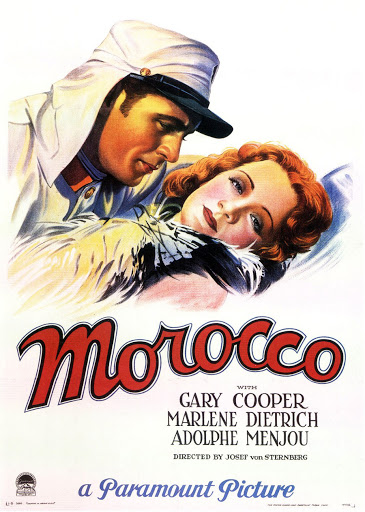
Josef von Sternberg was one of the greatest directors of early cinema – and Marlene Dietrich was his muse. Or was he her Svengali? Either way, they first worked together on German film The Blue Angel and such was the impression made by Dietrich, Hollywood was desperate to get her and von Sternberg together for a new picture that would channel her star power into ticket sales. Morocco is the picture they come up with, a romance tinged with heartbreak set in French occupied-Morocco around a Foreign Legion troop passing through town.

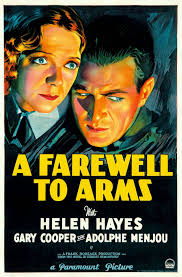
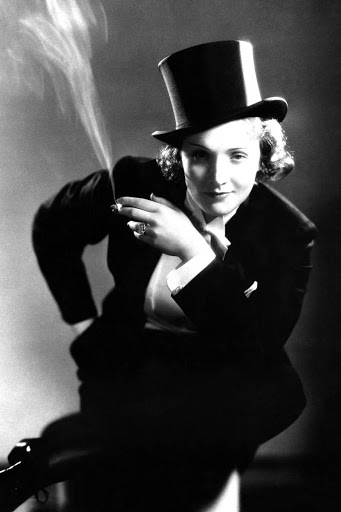
Dietrich was Amy Jolly, a woman of uncertain and shady past, new in town and making a living as a night club singer. There here routine encompasses everything from erotic singing in top hat and tails (complete with a bisexual vibe – you can tell this is pre-Code Hollywood?) to an apple selling singing routine. She’s loved by La Bessiere (a rather bland Adolphe Menjou), a stuffed shirt rich guy. But her heart belongs to man’s-man legionnaire Tom Brown (Gary Cooper), a toughened old soldier with a girl in every barracks town. Who will Amy end up with? Will she follow her heart or her head? Can she bear to live the life of a soldier’s mistress amongst the camp followers?

Writing it all down, there are probably few mysteries about the resolution you get from Morocco, which even at its 90 minute run time feels like an impossibly slim piece of fluff. But that hardly really matters when von Sternberg shoots the film with a romantic flourish and with Dietrich and Cooper as such compelling leads. It’s odd to think, looking at it now, that Morocco was acclaimed as one of the greatest films ever made on release (it’s not even the best or most lasting Dietrich/von Sternberg Hollywood collaboration of which there were five more to come).

But it lasts in history because it introduced Dietrich to the wider world. Von Sternberg took control over every aspect of her image to best present her to the world – including a torturous 45 takes of her first line (because after all the first line was the one that will make the first impression on an audience). Von Sternberg and cinematographer Lee Garmes choose lighting methods and angles that would enhance her features, and shot huge parts of the film to favour her (much to the annoyance of Gary Cooper, who resented von Sternberg’s shunting of him to the sidelines).

Von Sternberg was determined that Dietrich would make an impression: and she certainly did with her cabaret act, still probably the film’s highlight. Dressed in a striking male garb, her rendition of When Love Dies is sold on her confidence, sexual allure and tinge of bisexuality (viewers were scandalised and titalated that the routine ended with Dietrich playfully kissing a woman in the audience) to make a lasting impact. Von Sternberg lets the tension build as well by holding the camera calmly on Dietrich (in drag) while the audience at first boo before silencing and then being swept up in her performances. This is the approach taken for the rest of the film – and its rather weak plot – focusing on the a magnetic quality, the indefinable star quality some people have to just make you watch them.

It’s recognised by von Sternberg, who builds the film around her. It’s tempting to see Adolphe Menjou – the jilted would-be husband, in awe of the star – as a von Sternberg self-portrait, dressed as he is to resemble the director. But von Sternberg felt so confident over his control of Dietrich and her career, I suspect there is actually far more of him in lothario Tom Brown, the sort of man who may love a woman but also very much likes her to submit her will to his own. Brown may have his moments of decency – he wants Amy to have the best chance in life, which is clearly with La Bessiere rather than him – but he’s also an at times ruthless opportunist and adventurer, with a string of broken hearts behind him. Interestingly, considering their later films and her reputation, Dietrich’s Jolly is actually a fairly passive figure throughout the film, to whom events happen and who never feels in charge of her destiny. Perhaps more than a little of life drippling through to the screen?

Saying that the film has some bite in it, with the dialogue from Jules Furthman often rich, rough and ready, creating characters who speak at times bluntly but with a sort of urban poetry. Sadly, the dialogue scenes are often frequently the dullest in the film. Von Sternberg was still at the time a natural director of silent film, not the talkies. Hollywood itself had still not really learned how to do record dialogue and do camera movements at the same time, so most of the dialogue scenes are visually flat and rather forced (not helped by the storyline itself being often less then enthralling).

Where Morocco really comes into its own is when it falls back on visuals. As a director of pictures, von Sternberg is outstanding. The camera perfectly captures the bustle of the Moroccan market town. There is a beautiful sequence where Amy raises through a seemingly never-ending row of soldiers to try and find Tom. The Morocco in this film may bear almost no resemblance to the real Morocco – it’s clearly a Hollywood fantasy land – but it also looks at no time like it was shot on a Hollywood backlot. Tom Brown’s slow and sad browse through Amy’s dressing room, before deciding he should leave for her own good is hauntingly well done in near total silence, matched with beautifully empathetic camera moves. The final imagery, as our heroes head out into the sands of Morocco, is marvellous, a perfect collection of shots and reactions leading to an image for the ages.

And Morocco is a film of images strung together with a rather dull plot and a very stilted scenes of dialogue. Marlene Dietrich is at the centre of many of these images. This was her only Oscar nomination – but it’s not her finest performance. She’s still learning her craft and – above all you feel – still very much an elaborate prop for von Sternberg. The more they became something like equals the stronger the pictures would become. Gary Cooper was unhappy on the film – but actually his performance is remarkably strong and assured, dripping sexuality (von Sternberg also works a lovely little scene that pokes fun at Cooper’s height).

Morocco seems like a landmark of cinema that is of greater academic interest at times than it is dramatic. But when the dialogue fades away and the film is able to relax into the series of arresting images that make up most of it, it’s still a marvellous and intriguing work.

High Noon (1952)

Gary Cooper stands alone in High Noon

Director: Fred Zinnemann

Cast: Gary Cooper (Marshal Will Kane), Grace Kelly (Amy Fowler Kane), Thomas Mitchell (Mayor Jonas Henderson), Lloyd Bridges (Deputy Marshal Harvey Pell), Katy Jurado (Helen Ramirez), Otto Kruger (Judge Percy Mettrick), Lon Chaney Jny (Marshal Martin Howe), Eve McVeagh (Mildred Fuller), Harry Morgan (Sam Fuller), Morgan Farley (Minister Mahin), Ian MacDonald (Frank Miller), Lee Van Cleef (Jack Colby)

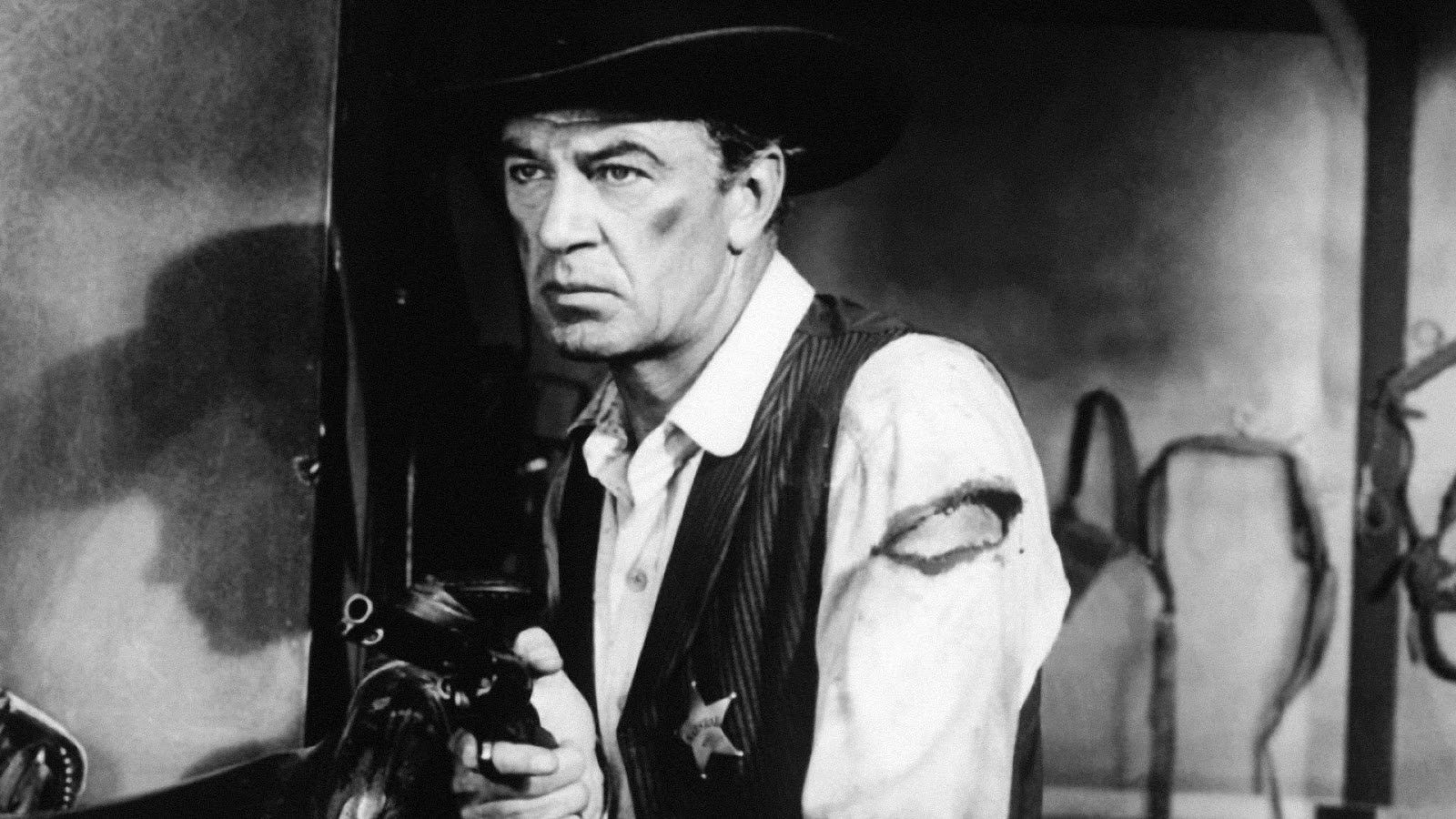
It’s 10:35 am on the day of the wedding of retiring Marshal Will Kane (Gary Cooper) to Quaker Amy Fowler (Grace Kelly). It should be the happiest day of his life – but events are interrupted by news that Frank Miller (Ian MacDonald), a killer Kane put away, has been released and will arrive on the midday train with his gang to kill Kane. Kane’s first instinct – and the town’s – is for Kane to flee the town: but Kane doesn’t want to spend his life looking over his shoulder, and besides his friends and colleagues in the town will stand with him right? He decides to make his stand – to the outrage of his pacifist wife – only to find one-by-one the citizens of the town excuse themselves from helping Kane. After all, who wants to die?

Playing out like a Western 24, Kane has got a little under 90 minutes to put together a posse to give himself a fighting chance against these hardened killers. Zinnemann’s film is full of carefully placed shots of clocks that hammer home the ominous approach of Kane’s seemingly inevitable death. In a brilliant use of contrasts, Kane walks with growing desperation in virtually every shot through the increasingly abandoned town, mixed with clever cut-backs to the Miller gang waiting patiently at the train station (with deep focus shots of the train lines stretching on forever) for Miller to arrive and kick off the killing. Using a wonderful combination of low-angles, tracking shots and one superb crane shot that pulls out and away to show Kane stranded alone in the abandoned town, Zinnemann’s film stresses Kane’s isolation, anxiety and growing desperation.

Because Kane is scared. And why shouldn’t he be? He’s past-his-best and over-the-hill, a long-serving hero on his last day in the job, outmatched by his opponent. Why on earth wouldn’t he be desperate for help? John Wayne and Howard Hawks hated the film, loathed its perceived anti-American-spirit and, most of all, couldn’t stand the idea of a Western hero being scared and desperate for help. They even made a twist on the film, Rio Bravo, where Wayne played a marshal turning down any and all help in order to do what a man needs to do alone. For them that was a Western hero, and this self-doubting, anxious pussy Kane – the man even cries at one point! – was an abomination.

Cooper seemed to be no-one’s choice for the film – Heston, Brando, Fonda, Douglas, Clift and Lancaster all turned it down – but scooped the Oscar as Kane. Then 51, his obvious age and vulnerability – at one point Lloyd Bridges almost beats the crap out of him – make him feel even more at risk from this threat. In a performance devoid of vanity – other than perhaps Kane landing the radiant (and thirty years younger) Grace Kelly as his wife – Cooper is sweaty, nervous, twitchy and a mix of All-American duty and genuine nerves, resentment and terror at what feels almost certain to be his end. Kane knows why he must do it, but to Wayne’s disgust, he still doesn’t like it.

Carl Foreman, the screenwriter, was to be pulled before the House of Un-American Activities for his communist sympathies. And the entire film is pretty clearly a commentary on the McCarthyite era, specifically the abandonment of those pulled before the house by those who seemed to be their friends. Like the blacklisted Hollywood writers and actors, Kane opens the film with admirers and friends all of whom eulogise his greatness and decency: and all of them turn their back on him as the chips go crumbling down.

Most of the film is given over to Kane desperately going from ally to ally, only to find that he is offered only platitudes, excuses and outright cowardice. His deputy demands a recommendation for Kane’s job, and chucks in his star when Kane refuses. Old friends hide in their houses and refuse to come out when Kane comes calling. Lon Chaney Jnr’s retired marshal pleads illness. The judge rides straight out of town and suggests Kane does the same. At a town meeting in the church, the voices calling to help Kane are few and far between, and Mayor Thomas Mitchell praises Kane to the skies, before concluding the town would be better off if he could ride away and not come back. The one man who volunteers backs down when he finds out no one else has volunteered, and the only person eager to fight is a 14 year old boy. 

So much for loyalty and the American way. When the chips are down, words mean nothing and it’s the actions that show the man. Customers in the saloon talk about how life wasn’t that bad when the Millers ruled the town (to show how wrong this is, literally their first action when riding into town is to steal something from a milliners). Others moan that all this law enforcement from Kane has actually made business a bit worse for the town. Why do the hard thing, why make the stand, when it’s so much easier to just look down, keep quiet and let the just suffer while your life ticks on.

Cooper’s Kane is masterfully low-key, subtle, using only the slightest gestures to show deep-rooted, only barely hidden resentment and bitterness, covering fear. What he’s doing he’d give anything not to do, but he sees no choice. There is no other Western where the hero writes a will, and quietly weeps with his head on his hands on his desk. There is no other Western where the hero spends so long trying to make a manly task easier to do. There is no other Western where the self-serving cowardice and hypocrisy of the townsfolk are more blatant. No wonder Cooper – in the final insult for Wayne – drops his tin star in the dirt at the film’s end, as the townsfolk rush out to congratulate him on winning the duel. This is a film that looks at America as it really is – and many people didn’t like that one little bit.

Zinnemann’s direction is spot on, a perfect blend of tension build and technical mastery, mixed with superb dialogue from Carl Foreman. Not a word or shot is wasted, and every single character and event is carefully sketched in, established and build up with no effort at all. Cooper is superb, Grace Kelly just as good in a thankless role as the humourless Quaker wife who struggles with her life-long principles against her love for her husband. Beautifully filmed, with a wonderful score with Dimitri Tiomkin, High Noon is a classic for a reason, a masterpiece of slow-build and enlightened social commentary.

The Westerner (1940)

The Westerner (1940)

Entertaining but unspectacular Western fun as odd-couple friends turn rivals

Director: William Wyler

Cast: Gary Cooper (Cole Harden), Walter Brennan (Judge Roy Bean), Doris Davenport (Jane Ellen Matthews), Fred Stone (Caliphet Mathews), Forrest Tucker (Wade Harper), Paul Hurst (Chickenfoot), Chill Wills (Southeast), Lilian Bond (Lillie Langtry), Dana Andrews (Hod Johnson)

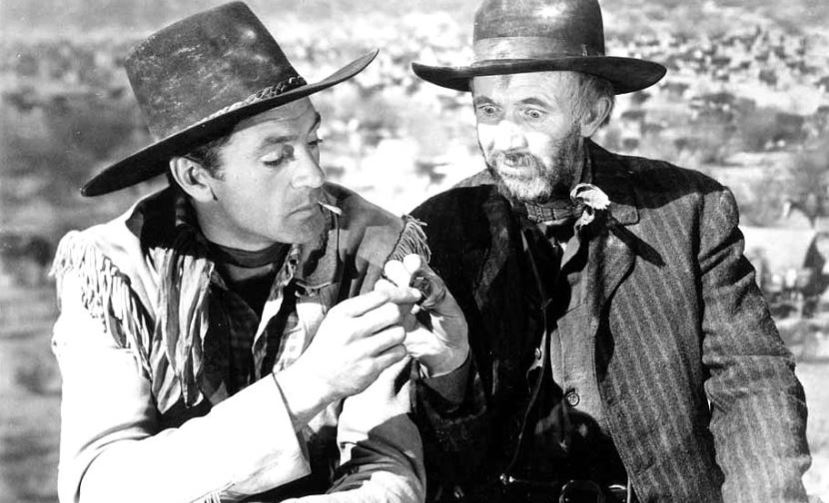
In 1882, Cole Harden (Gary Cooper) arrives in the town of Vinegaroon in Texas. The town is ruled by “Judge” Roy Bean (Walter Brennan), a corrupt, self-proclaimed justice of the land, who collects unfair fines and hands out “suspended sentences” (i.e. hangings). Nearly hanged, Harden escapes by peddling a story of his (fake) friendship with Lillie Langtry, the obsessive focus of Bean’s love. Over time the two men find themselves drawn to each other, forming a friendship – which is challenged by Bean’s favouring the violent cattle ranchers over the homesteaders.

The Westerner is a well-constructed, decent old-style Western that doesn’t do anything particularly radical – as if those making it needed a bit of downtime between more demanding projects, so put together something quite enjoyable to fill their time. It’s nominally a film about the clash between cowboys and homesteaders, but this plotline actually gets very little play – and is pretty unclear.

What it really is, is a sort of romance between Harden and Bean. They are two people surprisingly drawn together, who have a similar outlook on the world, and share a very natural and immediate bond. They have very real chemistry. In fact their chemistry is so strong there is barely room for anyone else to get a look in. 

So the film is a sort of bromance tragedy, because of course it’s clear that they will end up on opposite sides. Because Bean has principles of control which Harden cannot allow to stand. Because the same instincts that lead Bean to champion the cowboys, are the same ones that lead Harden to champion the homesteaders. Both men think that they are basically in the right. The main difference between them is probably that, if push comes to shove, Bean would rather win than be right, while Harden is more concerned with meeting his moral standards than anything else.

Wyler brings all this together with professional crispness, shooting the action and more chamber-piece moments with skill. He draws a real playfulness from Brennan and Cooper – could many other directors have thought about including a scene where Cooper wakes up slightly confused in a bed with Brennan’s arm around him after a night of drinking? Confrontations throughout the film have a playful edge to them, even when guns are on the table. Even the final gun fight between the two has a reluctant edge to it, as if this was a game with a few more consequences than normal. 

The bond between Bean and Harden is so strong, and so central to the film, that the relationship between Harden and Jane Ellen Mathews never quite clicks into gear. There is a charming scene where Cooper (with an honest flirtatiousness) cuts a lock of Jane Ellen’s hair – but the film isn’t really interested in this relationship. It feels like it exists for plot and scripting reasons – that the writers felt a romantic plot was needed, and wanted to give Harden a very clear personal motivation above and beyond his sense of justice. Doris Davenport is fine as Jane Ellen, but it’s not a performance you really remember.

Gary Cooper is rather good as Cole Harden, despite his reluctance to do the film. Cooper identified that Brennan had the best role and the best lines, and felt that he would actually be playing the support rather than the lead. Contractual obligation got him into the film. And it’s a good thing, as Cooper is actually very good. He has a light comedic touch which you don’t often associate with him, which he matches with his upright honesty and unflinching decency. But there is a playful grin behind his eyes throughout, and you get a real sense of his conflicting loyalties.

But Cooper was right – Judge Roy Bean is the role in this film, and Walter Brennan (who won his third supporting actor Oscar in five years for this) is quite simply terrific. His Bean is a wily, slightly crooked, maverick bully with a warped sense of personal justice – but he’s also a charming, rather sweet old man with a tough streak. The script gives a lot of focus to Bean’s obsessive love for the actress Lillie Langtry, which not only humanises him, but turns someone who we first see carrying out a ruthless judicial murder into some sort of teenage, love-struck rogue. That’s the genius here – Bean could be awful, but actually we (like Harden) end up loving him. Brennan’s effortlessly charismatic performance is central here – he is terrific in the role.

Take away these performances though and you probably only have flashes here and there of class alongside. Scenes are well constructed, and the entire film is very well filmed by the great Gregg Toland, but it’s very much a solid piece of professional work rather than a great classic. Brennan is brilliant and Cooper impressive, but not much more of the rest of the film really settles into the memory.