
Tag: Gary Raymond

El Cid (1961)

El Cid (1961)

Epic history with just the right amount of seriousness among the scale and thrills

Director: Anthony Mann

Cast: Charlton Heston (Don Rodrigo Díaz de Vivar/El Cid), Sophia Loren (Doña Ximena), Herbert Lom (Ben Yusuf), Raf Vallone (García Ordóñez), Geneviève Page (Doña Urraca), John Fraser (Alfonso VI), Douglas Wilmer (Al-Mu’tamin), Frank Thring (Al-Kadir), Michael Hordern (Don Diego), Andrew Cruickshank (Count Gormaz), Gary Raymond (Prince Sancho), Ralph Truman (King Ferdinand), Massimo Serato (Fañez), Hurd Hatfield (Arias)
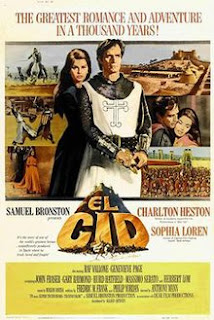
Its 11th century Spain, and the country is a mass of feuding Christian and Muslim kingdoms. All that could end if the invasion plans of warlord Ben Yusof (Herbert Lom) come to fruition. To defeat him, the Christians will need Muslim allies in Spain. But of course, none of their leaders have the vision to imagine such a thing: except Don Rodrigo Díaz de Vivar (Charlton Heston) who, after releasing rather than executing two Emirs, is known as “El Cid”. Problem is Don Rodrigo falls continually in and out of favour at court, not helped by his unbending principles. These principles even alienate the woman he loves, Doña Ximena (Sophia Loren), when Don Rodrigo regretfully kills her father in a duel. Will El Cid be able to unite the forces of Castille and his Muslim allies to defeat Ben Yusof?

El Cid was shot on location in Spain, and no expense was spared. Its location footage is beautiful and combined with some impressive sets. Producer Samuel Bronstein was determined to get the best money can buy. The ancient city of Valencia was rebuilt and thousands of soldiers from the Spanish army recruited into the two opposing sides. Thousands of costumes, pieces of armour and weapons were made. Bronstein’s dream cast was assembled (hilariously of course not a Spaniard or Arab among them), led by Hollywood’s biggest stars Charlton Heston and Sophia Loren.

What we get is an at times rather po-faced, sombre even slow epic that still succeeds because it is delivered with such absolute commitment and luscious beauty. Anthony Mann is not the most inventive of directors – and so much of this sort of film is really about producing rather than visionary direction – but he pulls together a collection of visual styles into something that feels wonderfully coherent and suitably dramatic. The castle interiors could have stepped out of Adventures of Robin Hood (Heston and Cruickshank even fight their duel on a winding staircase), the Spanish exteriors rival Ben-Hur and the medieval pageantry brings back memories of Ivanhoe.

It’s pulled together in a script that manages to juggle just about enough action – duels, fights to the death, ambushes, battles, sieges, murders – to sit alongside its earnest attempts to plead for a little love and understanding. Heston’s El Cid is radically ahead of his time, preaching messages of equality and arguing that anyone can kill but only a leader can grant mercy. It’s a film that refreshingly urges that there is more that unites us, than divides us. Yes, it casts Arab characters in most of the villainous roles – while the Christian opponents of El Cid all eventually see the error of their ways – but it still makes several Arab characters (especially Douglas Wilmer’s wonderful Al-Mu’tamin) pinnacles of honour and decency, far more so than most of the bitter and feuding Christians.

At the heart of the film is Charlton Heston, in possibly his most interesting and intelligent ‘epic’ performance. His El Cid is principled to the point of self-harming, but there is a little boy innocence to him that can’t seem to understand why he keeps landing himself in the shit. Duelling with his fiancée’s father, he genuinely can’t understand why he won’t stand down and let the matter rest. Later he marries Ximena with the sad-sack hope that she might remember why she loved him in the first place. He vainly tries to support both sides in the feud to succeed King Ferdinand, because he swore to support all the King’s children. It never occurs to him that Castille might turn down the assistance of the Muslim Emirs he’s recruited. He can understand military nuances, but can’t seem to find the way to translate this effectiveness into courtly politics. And he seems to know it.
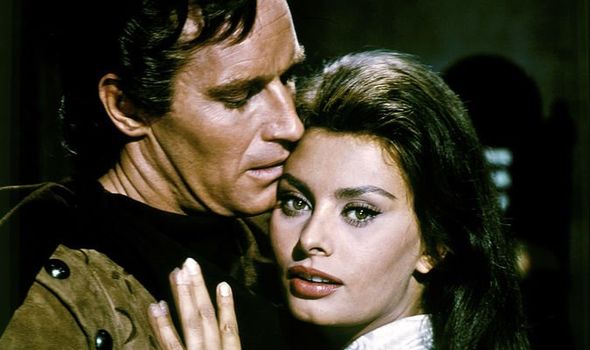
But we know he’s a good guy – so it’s also why we know Sophia Loren’s hatred for him won’t really last. To be honest the chemistry isn’t quite there between them – the two of them famously didn’t get on (Heston famously refused to look at her in many of the romance scenes, hence the odd side-to-side faces in several shots) – and the part of Ximena is incredibly thinly written (she changes her mind about Rodrigo seemingly on a sixpence). But you can’t argue with Loren’s charisma (and she looks ravishingly stunning here) or the force which she can act the hell out of these straightforward scenes (all shot in a few weeks, due to Loren’s availability and Borstein’s determination to get her for the role).

Besides she needed to be the goodie so we could have a dynamic Geraldine Page as the scheming villainous, the Princess of Castille scheming to support her brother Alfonso (a wonderfully fecklessly weak John Fraser), to whom she’s offering more than sisterly love. What chance does headstrong but not-so-bright Gary Raymond’s Sancho have against them? Elsewhere in the cast, Herbert Lom’s voice is used to superb effect as Ben Yusof (like all the actors playing Arabs he’s browned up) and Douglas Wilmer strikes up a wonderful bromance with Heston as an Arabic version of El Cid.

The film is long an often gets slightly bogged down in questions of politics and questions of succession that, at the end of the day, are less interesting than whether Loren will forgive Chuck or our long wait for that Muslim invasion. It is a very long wait: the film opens with Rodrigo a young man – by the time Ben Yusof arrives he’s an old one with two children. Enough events occur sprinkled through the story that it never feels too slow – and you have to admire its attempt at even-handed justice to all.

It culminates as well in a superb sequence covering the siege of Valencia, where all narrative threads are skilfully bought together towards a satisfying conclusion. Mann stages a handsome beach battle here and culminates the film in a long night of the soul that ends with El Cid riding into history in an ironically unique way. The film’s final act is an outstanding mix of epic themes and personal tragedy and loss, that brings the film to a superb finish.

El Cid takes itself seriously – I’m pretty sure there isn’t a joke in it – but it’s well made and acted with a great deal of flair, looks fabulous and never squeezes the life out of itself. As an example of Hollywood’s late epics, there are few that can match it.

Jason and the Argonauts (1963)


The Argonauts take on dreadful monsters in Jason and the Argonauts. You gotta love it.

Director: Don Chaffey

Cast: Todd Armstrong (Jason), Nancy Kovack (Medea), Gary Raymond (Arcastus), Laurence Naismith (Argus), Niall MacGinnis (Zeus), Michael Gwynn (Hermes), Douglas Wilmer (Pelias), Jack Gwillim (King Aeëtes), Honor Blackman (Hera), John Cairney (Hylas), Patrick Troughton (Phineus), Nigel Green (Hercules)

Watching this film it’s impossible not to get swept up in childish glee. It’s one of the most gloriously entertaining, wonderfully imaginative and brilliantly enjoyable films ever made. Watch this at the right age and it’s got you for life. Its best remembered of course for its wonderful Ray Harryhausen stop-motion effects – but to be honest the whole film is a brilliantly assembled package from start to finish, full of thrills and spills. I love it, I’ll always love it, and it’s got to be one of the best adventure stories ever filmed. Not much point writing more is there? But I guess I will.

The plot hews fairly closely (give and take) to the mythology. Pelias (Douglas Wilmer) seizes the Kingdom of Thessaly. Terrified of a prophecy that says a child of King Aristo of Thessaly will take the throne from him, he kills Aristo’s daughter at the temple of Hera (Honor Blackman). Outraged, Hera becomes the protector of Aristo’s surviving son Jason (Todd Armstrong), and 20 years later he returns. Jason needs to prove himself if he is to re-take the throne, and decides to find the legendary Golden Fleece in the distant land of Colchius. He builds the greatest ship ever – the Argus – and holds games to find the finest crew in Greece. But danger awaits!

If any film is associated the most with Ray Harryhausen, it’s this one. So it’s almost a shock to realise he didn’t direct it, and that the monster moments are carefully placed only at key moments – and that a lot of the rest of the film relies on human action. Jason and the Argonauts is so good because all these elements are brilliantly put together and superbly staged, with an old-school, boys-own adventurousness. How can you not enjoy this film?

The Harryhausen effects are astonishingly good, and their stop-motion brilliance have a grounded reality to them. The staggering copper monster Talos is fabulous – grinding joints, groaning weight and size. The shrieking harpies that plague Patrick Troughton’s put-upon Phineas have an unpleasant, grasping dirtiness to them. The Hydra guarding the fleece is a rattlesnake-like vicious beast. All brilliant. I love them all – just sequences to dream of.

But the highlight is of course the skeletons’ battle. Oh wow. This sequence still holds up so well. It took Harryhausen years in the making and planning, but really paid off. The skeletons are terrifying in their cold-eyed ferocity. For skulls, Harryhausen gives their faces a lot of expressiveness. I just love this sequence – it speaks to the child in all of us. And there is something extra magical from knowing that the sequence was put together frame-by-frame and the live action shots carefully choreographed to match-up with it. Not for nothing did Tom Hanks namecheck this film when presenting Harryhausen with an honorary Oscar. 

These sequences really work though because the film has a wonderful Sunday-morning-serial briskness to it. Pacily directed by Don Chaffrey, the film motors so swiftly through its plot that you are surprised to find it’s only about an hour and a half. Its story structure is not always perfect: apart from Jason and Arcastus most of the rest of the Argonauts are so briefly introduced (despite the recruitment Olympics montage at the start) you’ll find them hard to tell apart. The arc of the story is often a little messy, and iIn fact it’s easy to forget the film ends on a cliffhanger (the sequel was never made) and that Douglas Wilmer’s sinister Pelias is totally forgotten after the first half an hour. But it’s so well done it doesn’t matter. 

But Chaffey keeps the events moving forward so well, the tone so perfectly balanced between heroics, gods debating and thigh slapping jokiness that the film’s tone and momentum never slackens, with the Harryhausen monster sequences as exciting tent-poles in the film’s action. A lot of this feeling is carried across from Bernard Herrmann’s excellent score, a hummable mixture of bombast and slightly eerie mysticism that reflects and compliments the action throughout.

The film is extremely well-made and put together. The Gods as these gigantic figures living in Olympus (Jason is not a lot bigger than the chess pieces they use to guide the wars of the humanity) are great fun: Niall MacGinnis is a very 1960s idea of Zeus (the gods would be hot younger guys today, not tubby Brits), but gives it a headmasterly briskness. Honor Blackman is very good as a proud but caring Hera – the use of the Argus’ headpiece as her voicepiece works really well. It’s quite something that all this interference from the Gods never feels silly at all.

Todd Armstrong and Nancy Kovacks are, to be honest, pretty wooden as the leads but that seems to be what the film needs. Armstrong does a very neat line in middle-distance staring. Gary Raymond has a lot more fun as a scheming Arcastus. The film also manages to shuffle some perceptions: Nigel Green’s Hercules is more of a roisterer than the great warrior (and, with his meat-headed over-confidence, causes more problem for the Argonauts than most). Other performances are perfect adventure-story ham: Jack Gwillim chews the scenery outrageously as King Aeëtes, which kind of matches up with the overblown hyper-reality of the skeleton fight.

Talking about this film, it’s hard not to treat it as a sequence of scenes that I really love. But every scene in it has something. I love the moment where Hylas proves his worth via clever stone-skimming. The approach to the clashing rocks – and the intervention of Poseidon to hold the rocks apart – is brilliant. Hermes’ disguise being unveiled. Hercules doing something decent by staying behind on an island to look for a missing Hylas. All those brilliant Harryhausen sequences.

There is something about this film that is just endlessly and constantly entertaining. No matter your age, it’s a film for every single generation of children (young and old!) to enjoy. It’s simply marvellous, and Chaffey and Harryhausen deliver it wonderfully. Every scene is exciting, the pace never slackens, the special effects are brilliant. But on top of that, it’s a brilliantly put together, well directed, beautifully scored film. It’s exciting, it’s gripping, it’s wonderfully entertaining. I’m gutted they never made that sequel (although since Jason and Medea’s story is literally all down-hill from here, it’s probably just as well).