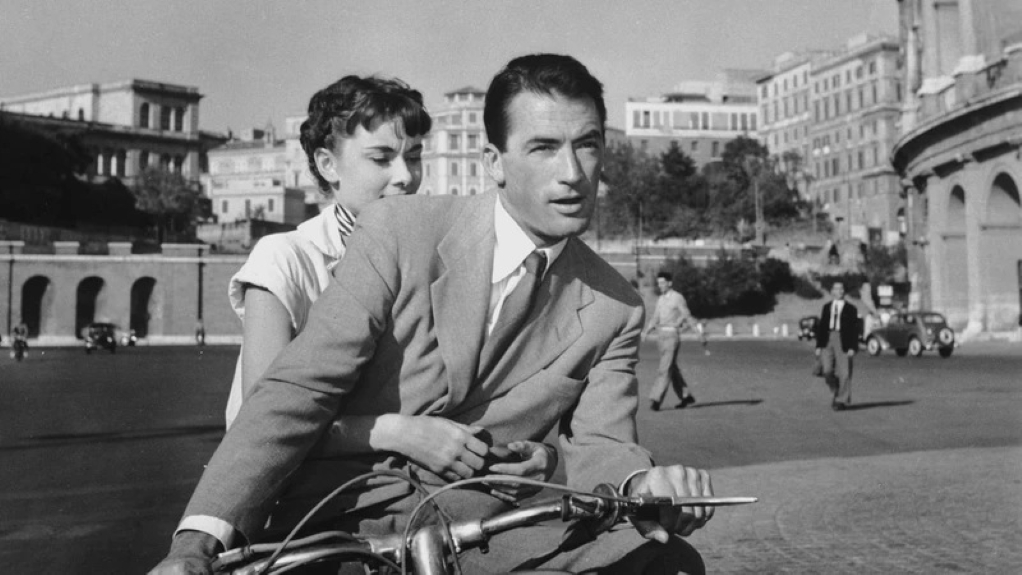
Tag: Gregory Peck

Spellbound (1945)

Spellbound (1945)

Hitchcock dives into psychiatry with mixed success in a middle-brow effort

Director: Alfred Hitchcock

Cast: Ingrid Bergman (Dr Constance Petersen), Gregory Peck (Dr Edwardes/John Brown/John Ballantyne), Michael Chekhov (Dr Alexander Brulov), Leo G Carroll (Dr Murchison), Rhonda Fleming (Mary Carmichael), John Emery (Dr Fleurot), Norman Lloyd (Mr Garmes)

Spellbound was born out of Selznick’s faith in the magic of psychiatry. It opens with a touchingly naïve dedication that stresses a little touch of Freud is a magic bullet: “once the complexes that have been disturbing the patient are uncovered and interpreted, the illness and confusion disappear and the devils of unreason are driven from the human soul”. Oh, would that it was so easy. Spellbound turns psychiatry as a sort of detective game, the subconscious a sort of smorgasbord of clues that, when shuffled into the correct order, will produce the answer.

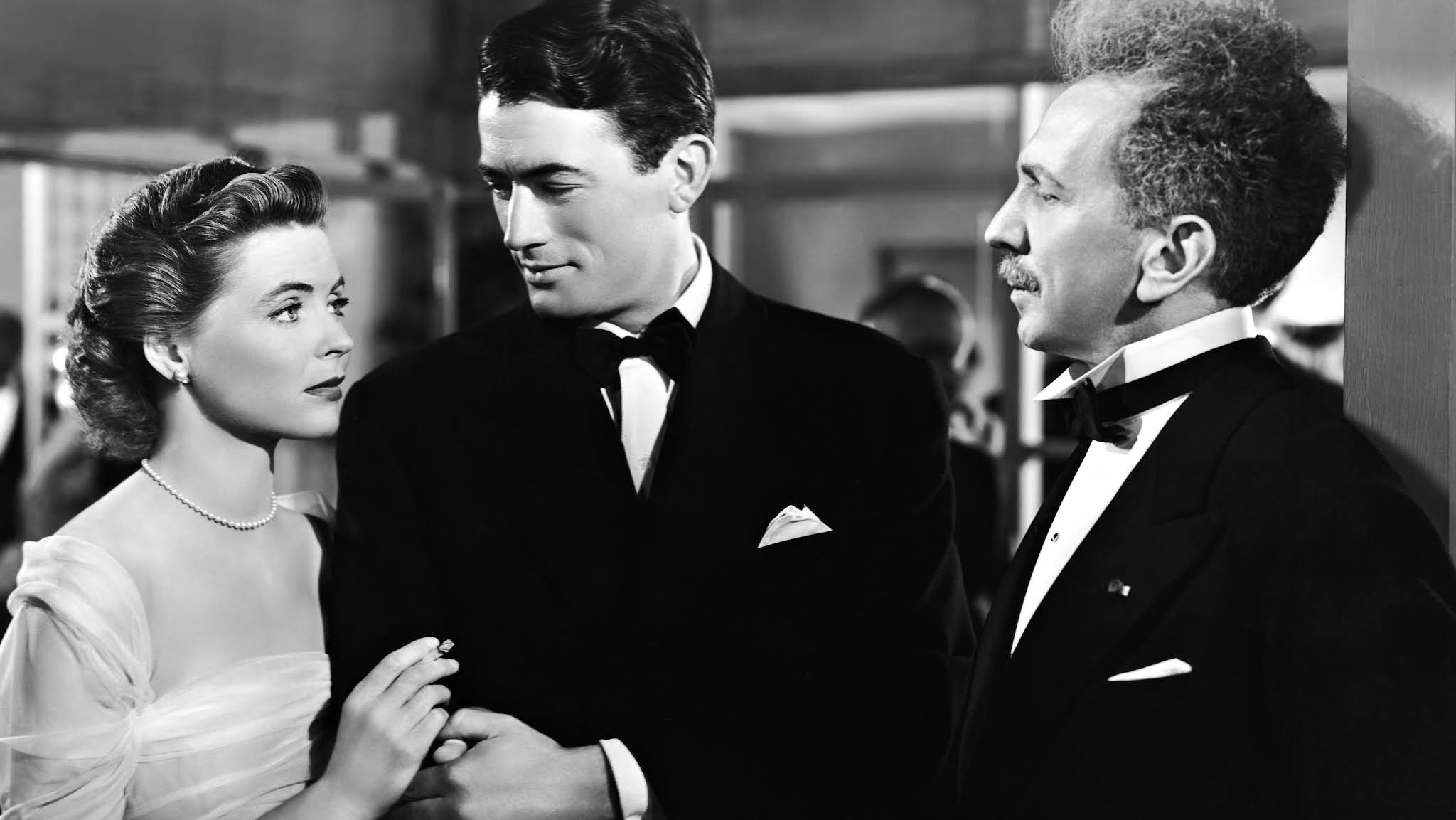
The mystery is what exactly has happened to the new head of Green Manors Psychiatric Hospital, Dr Edwardes, here to replace the not-exactly-happy-to-retire Dr Murchison (Leo G Carroll)? The man who has arrived claiming to be Edwardes (Gregory Peck) may be charming but his odd obsessions with dark parallel markings on white surfaces, tendency to faint and lack of familiarity with psychiatry in general raise suspicions. Dr Constance Petersen (Ingrid Bergman), leading light of the Hospital, deduces Edwardes or “JB” as he vaguely remembers his initials being, is suffering from guilt-induced amnesia. Petersen refuses to believe – despite mounting evidence – that this man she has fallen in love with could be a killer. On the run, she recruits her old mentor Dr Brulov (Michael Chekov) to help analyse JB’S dreams, convinced the answer to the mystery is there.

Selznick hired his psychiatrist to act as a consultant on the film. This didn’t matter that much to Hitchcock, who considered the film essentially another murder-mystery thriller with a bit of Freudian dressing and bluntly told the advisor at one point when she protested yet another inaccuracy “my dear, it’s only a movie”. Spellbound is a decent, mid-level Hitchcock effort, with a touch or two of the master’s invention and magic, but which slows down for an extended act three analysis scene crammed with dodgy psychiatry and a detailed Salvador Dali-inspired dream sequence.

Of course, no one watching the film (rather like Cary Grant in Suspicion) could ever believe for a minute that the charming, handsome Gregory Peck is actually a murderer. Hitchcock’s trick is to keep the tension up, since (at best) there are only two suspects (and only one of them has a heavily advertised motive). You could argue here the trick is a “howdunnit” rather than a “who”. What mystery is Peck holding in his head and why can’t he remember who he is? Hitchcock throws in a host of little flourishes to keep us guessing, and if he clearly cares very little about Freudian insight (just as well, imagine the field day Freud would have had with Hitch) that hardly seems to matter.

Spellbound still manages to fairly barrel along, with a sparky script by Ben Hecht interweaving screwball banter between Peck and Bergman with cod-psychiatry. Hitchcock lets most of this play out fairly traditionally, but punctuates it with moments of flair. An early romance dialogue takes place in voiceover over a series of shots of doors opening to reveal a never-ending corridor (a neat visual metaphor for delving inside the mind). A tracking shot on a disturbed Peck down a flight of stairs, focuses on a cut-throat razor in his hand, ending with the razor alarmingly large in-shot. Disturbing POV shots make objects appear ultra-large, from a glass of milk (echoes of Suspicion) to a gun barrel turned to face us at the film’s conclusion. All of this is accompanied by an excellent score by Miklos Rosza which brings together romantic strings and the theremin to suggest the unsettling undercurrents of the subconscious. Rosza, rightly, won an Oscar for his hugely atmospheric work.

Spellbound is also notable for the way it inverts gender expectations. Peck effectively plays the damsel-in-distress here. Vulnerable and scared about what he could do, he lapses into catatonic panicked silence as much as smooth banter. Instead, for all the film stresses her feminine weakness when in love, it’s Dr Petersen who is the protagonist here. Played with a relaxed authority by Bergman, Constance is an assured professional and a dedicated campaigner for the truth. It’s she who constantly drives the plot forward and its her who plays both doctor and detective to crack the case and confront (with an assured coolness) the killer.

Hitchcock’s film provides a subtle commentary on the experience of women. Searching for JB in a hotel lobby, Petersen is first pestered by a drunk traveller who drunkenly all-but calls her a cock-tease when she asks him to leave her alone. Even when saved from an unpleasant scene by a hotel detective, he assumes her to be a schoolteacher or governess, and Petersen immediately recognises that disguising her accomplishments is a perfect way to gain this would-be-saviour’s help. Petersen also has to shrug off the pestering attentions of a colleague (John Emery).

But it’s her who eventually deduces the meaning of JB’s dream. This dream was heavily promoted as the work of Salvador Dali. While full of striking imagery, it feels more like a pastiche of Dali, as if a Hollywood art director threw The Persistence of Memory and Eyes for Your Eyes at the wall see what stuck. Which is pretty much what happened: Dali’s work was largely discarded for being too weird and overlong and William Cameron Menzies was bought into create something in Dali’s style. Selznick hardly cared – what mattered was promoting the Dali collaboration (Hitchcock had little to do with the scene, until it drew praise and he then claimed authorship).

It’s another striking moment in Spellbound. But truthfully the film is a careful construction of striking moments and performances, which power a simplistic and unrealistic plot which relies on coincidence and bizarre logic gaps. Psychiatry is a magic bullet – it’s hard to imagine anyone in real life reacting with the sort of glee JB does here when he discovers he didn’t murder his brother in his childhood, only accidentally fatally impaled him on some railings outside his house. The “revelations” from the analysis takes an over-extended single session with the unconscious yielding a series of Agatha Christie-style clues.

But then that fits Spellbound in the tradition of Hollywood psychiatry, from this to Ordinary People to Good Will Hunting, a touch of confession on a couch eventually solves all problems (all the kissing Peck gets from Bergman – which didn’t stop off camera – also clearly helped). Hitchcock’s work here is professional, but middlebrow. However, the odd imaginative shot, and the impressive performances (Bergman, Peck and also famous acting-coach Michael Chekov, immensely playful and Oscar-nominated as Constance’s cuddly mentor) still make this an entertaining watch.

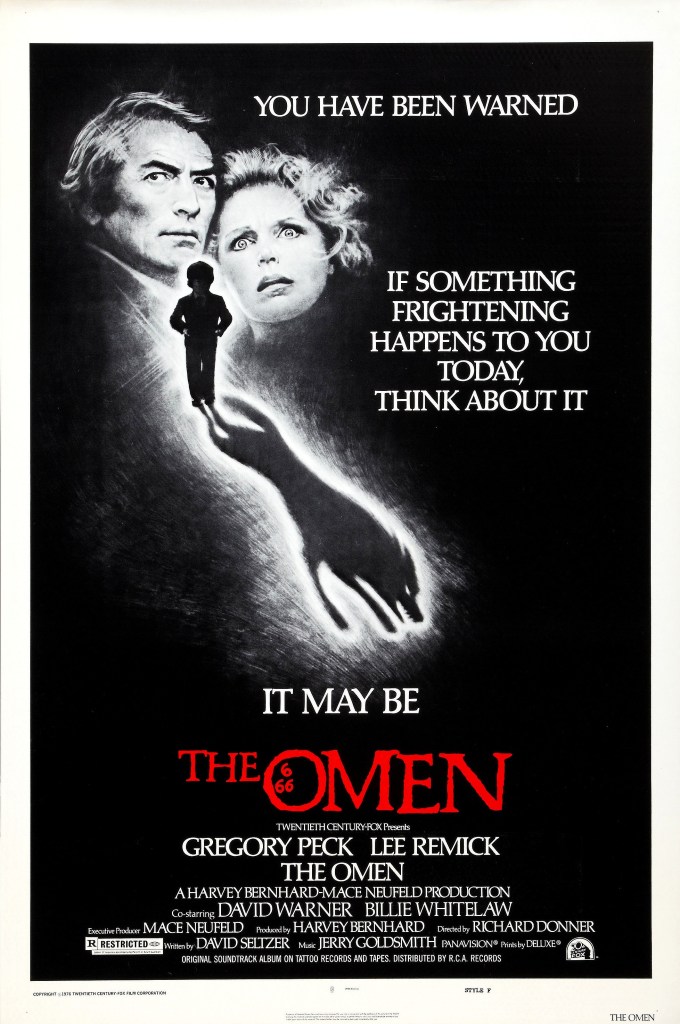
The Omen (1976)

The Omen (1976)

Extremely silly horror with a great score, more interested in inventive deaths and genuine fear or dread

Director: Richard Donner

Cast: Gregory Peck (Robert Thorn), Lee Remick (Katherine Thorn), David Warner (Keith Jennings), Billie Whitelaw (Mrs Baylock), Patrick Troughton (Father Brennan), Leo McKern (Carl Bugenhagen), Harvey Stephens (Damien Thorn), Martin Benson (Father Spiletto), Robert Rietty (Monk), John Stride (Psychiatrist), Anthony Nicholls (Dr Becker), Holly Palance (Nanny)

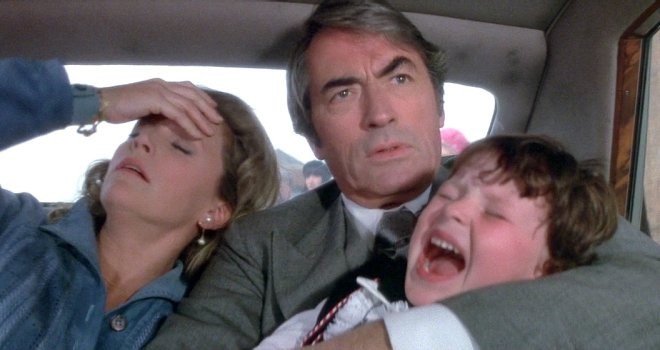
“Let him that hath understanding count the number of the beast; for it is the number of a man; and his number is 666.” One of the sweetest things about The Omen is that the number of the Beast was considered such an unknown concept to original viewers, that its painstakingly explained to us. In some ways The Omen is quite sweet, a big, silly Halloween pantomime which everyone involved takes very seriously. If The Exorcist was about tapping into primal fears, The Omen is a gory slasher (with a cracking score) that’s about making you go “Did you fucking see that!” as actors are dispatched in inventively gory ways. It’s brash, overblown and (if we’re honest) not very good.

Robert Thorn (Gregory Peck, selling every inch of his innate dignity for cold, hard lucre) is an American diplomat told one night in Rome that his pregnant wife Katherine (Lee Remick) has given birth to a stillborn child. “Not a problem” he’s told by an absurdly creepy Priest (Martin Benson) – just so happens there’s another motherless new-born child in the hospital tonight so he can have that one, no questions asked, and his wife need never know. Flash forward five years: Thorn is Ambassador to the Court of St James and young Damien (Harvey Stephens) is a creepy kid, with few words and piercing stare. In a series of tragic accidents people start dying around him. Could those people warning Thorn that his son is in fact the literal anti-Christ himself, be correct?

Want to see how powerful music can be? Check out how The Omen owes nearly all the menace it has to it imposing, Oscar-winning score from Jerry Goldsmith (wonderfullyGothic full of Latin-chanting and percussive beats). It certainly owes very little to anything else. The Omen is an exploitative, overblown mess of a film, delighting in crash-zooms, jump-cuts and extreme, multi-cut build-ups to gore. Richard Donner never misses an opportunity to signpost an approaching grisly death, by cutting between the horrified face of the victim, the object of their demise and then often back again. For the best stunts – including a famous demise at the hands of a sheet of glass – Donner delights in showing us the death multiple times from multiple angles.

This slasher delight in knocking off actors – people are hanged, impaled, crushed and decapitated in increasingly inventive manners – is what’s really at the heart of The Omen. None of this is particularly scary in itself (with the possible exception of the hypnotised madness in the eyes of Holly Palance’s nurse before her shocking suicide at Damien’s birthday party) just plugging into the sort of delight we take in watching blood and guts that would be taken in further in series like Halloween (which owed a huge debt to the nonsense here). Donner isn’t even really that good at shooting this stuff, with his afore-mentioned crude intercutting and even-at-the-time old-fashioned crash zooms.

With Goldsmith’s score providing the fear, The Omen similarly relies on its actors to make all this nonsense feel ultra serious and important. They couldn’t have picked a better actor than Gregory Peck to shoulder the burden of playing step-dad to the Devil’s spawn. Peck has such natural authority – and such an absence of anything approaching fourth-wall leaning playfulness – that he invests this silliness with a strange dignity. Of course, Atticus Finch is going to spend a fair bit of time weighing up the moral right-and-wrongs of crucifying with heavenly knives the son of Satan! Peck wades through The Omen with a gravelly bombast, managing to not betray his “for the pay cheque” motivations, and investing it with his own seriousness of purpose.

Peck’s status also probably helps lift the games of the rest of the cast. Lee Remick may have a part that requires her to do little more than scream (and fall from a great height twice) but she does manage to convey a neat sense of dread as a mother realising her son is not quite right. David Warner gives a nice degree of pluck to a sceptical photojournalist (while also bagging the best death scene). Troughton and McKern ham it up gloriously as a drunken former devil-worshipping priest and an exorcist archaeologist respectively. Best in show is Billie Whitelaw who filters her Beckettian experience into a series of chillingly dead-eyed stares as Damien’s demonic nanny.

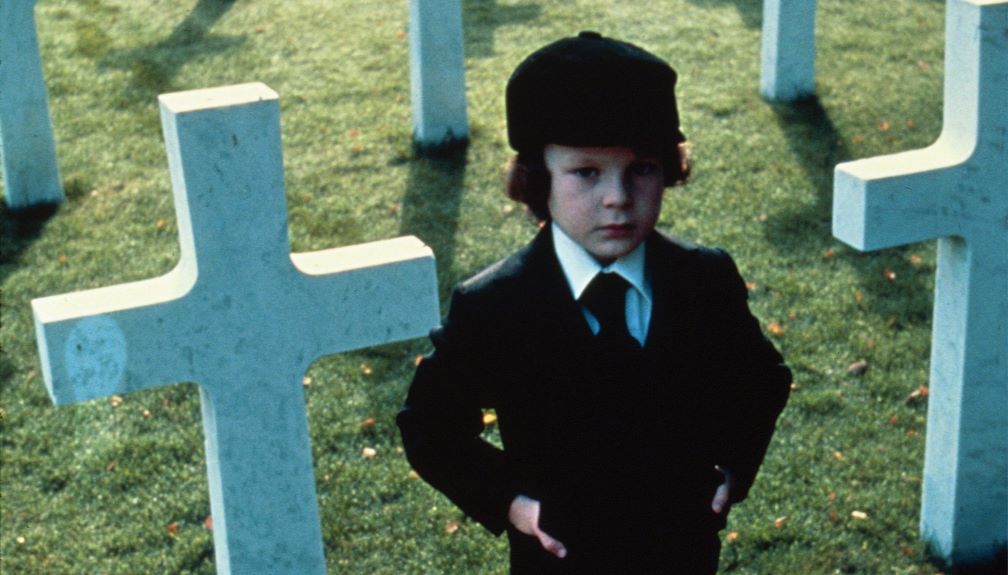
The Omen does make some good hay of its neat paedophobia. Harvey Stephens with his shaggy hair, impish smile and pale skin (not to mention darkly sombre wardrobe) looks like your worst nightmare – he’s creepy enough that the film doesn’t need to gift him a vicious rottweiler as well. Donner’s decision to never have Damien show a touch of any real emotion for most of the film also pays off, meaning even something as silly as Damien inflicting slaughter from behind the pedals of a child’s tricycle seems scary.

Of course, if Damien was savvy enough to present himself as a bright and sunny child perhaps Troughton, Warner, McKern and co would have struggled to convince Peck he was the Devil’s seed. In that sense he takes after his dad: Satan loves an over-elaborate death, and from a storm herding one victim to a fatal impalement under a tumbling church spire to popping the handbrake of a glass-bearing van for another, no trouble is too much for Satan when bumping off those who cross him. (The Omen could be trying to suggest that maybe everything is a freak accident and Thorn goes wild and crazy with grief – but that Goldsmith score discounts any possibility other than Damien is exactly what we’re repeatedly told he is.)

The Omen trundles along until its downbeat, sequel-teasing ending, via a gun-totting British policeman who sticks out like a sore thumb in a country where the cops carry truncheons not pistols. Donner balances the dialled up, tricksy, overblown scares with scenes of po-faced actors talking about prophecies and the apocalypse, all shot with placid straight-forwardness. There is a really scary film to be made here about finding out your beloved son is literally a monster, or how a depressed father could misinterpret a series of accidents as a diabolical scheme. But it ain’t The Omen – this is a bump-ride of the macabre. The Devil may have the best tunes – but he needs to talk to his Hollywood agent.

Twelve O'Clock High (1949)

Twelve OClock High header
Gregory Peck takes on the burden of command in Twelve O’Clock High

Director: Henry King

Cast: Gregory Peck (Brg General Frank Savage), Hugh Marlowe (Lt Colonel Ben Gately), Gary Merrill (Colonel Keith Davenport), Millard Mitchell (Mj General Pritchard), Dean Jagger (Major Harvey Stovall), Robert Arthur (Sgt McIllhenny), Paul Stewart (Major “Doc” Kaiser), John Kellogg (Major Cobb)

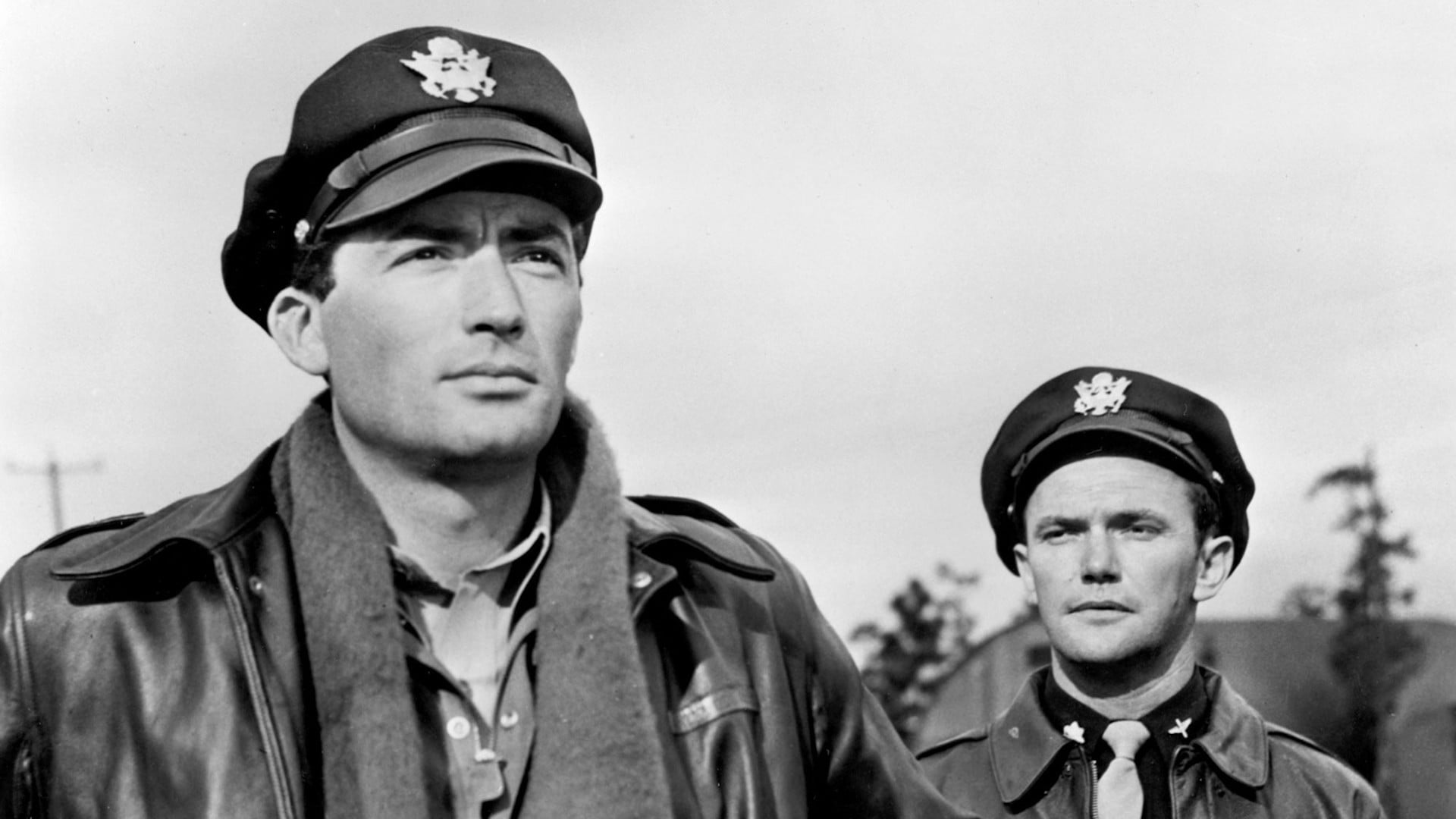
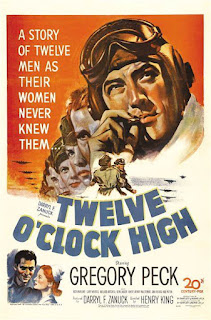
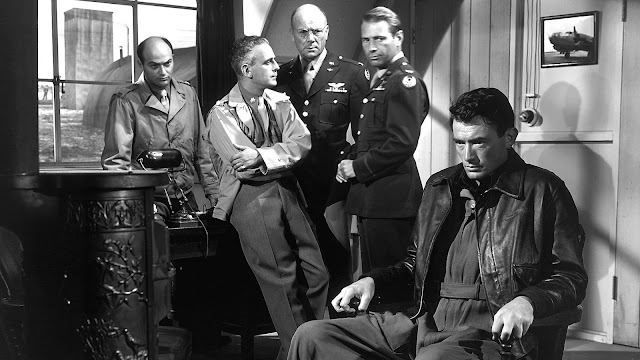
It’s tough at the top. Imagine how much tougher it would be if you job involved pushing people to their limits, and then a little bit further, in a job that puts their lives at daily risk? It’s the sort of burden commanders of American Bomber wings faced during the Second World War. It’s already got to Lt Colonel Keith Davenport (Gary Merrill), a decent guy and much-loved officer, who has grown so close to his men he can’t face sending them off to get killed over Europe any more. He’s replaced by Brigadier General Frank Savage (Gregory Peck), a by-the-book tough son-of-a-bitch who won’t tolerate men who can’t or won’t do their duty. But will the pressure of constant action, escalating casualties and a growing bond with his men also get to Savage?

With Peck at the top of his game, in one of his finest performances of stoical dependability and Lincolnonian authority concealing a carefully nurtured warmth and humanity, Twelve O’Clock High is a very different war film. Here the focus is much less on derring-do and heroism and more on the unbearable psychological pressure a life on the front lines brings. It’s all presented with a documentary style realism – so much so, that the film was used for decades in the USAAF as a training film on successful styles of command.

It’s about the impact that sustained trauma has – how it can make even the toughest man eventually paralysed by over-thinking, uncertainty and doubt. Davenport is a very popular CO – and good in the job in many ways – except the key one: he’s lost the ability to push the men and his willingness to sacrifice them. Essentially, in the nicest possible way, he’s damaging morale by letting the company reflect his own exhaustion, depression and amiable defeatism. He’s lost the ability to push men to want to achieve everything they can for the cause: meaning they are now doing the military equivalent of punching the clock, delivering the barest minimum an attack requires. Mistakes and errors are tolerated and, perversely, casualty rates are rising.

It’s what Savage is sent in to fix. Which he does by essentially blowing apart the cozy, boys-club feel of the Bomber Group. Air Exec, Lt Colonel Ben Gately (a great performance from Hugh Marlowe), is stripped of his command (for not leading from the front) and assigned to commanding the “The Leper Colony” a plane crewed by those Savage believes least likely to pull their weight. Drills are bought in and under-performance is no longer tolerated. Dropping out of formation for whatever reason – a move that puts the rest of the Bomber Group at risk – is punished harshly (a pilot is demoted to the “Leper Colony” for breaking formation to support another a plane, a decision that could have doomed the Group to death). Savage is the ultimate heartless drill sergeant.

Only of course he’s not: as Peck makes clear, the burdens of command weigh as heavy on him as they did on Davenport. But Savage is a professional who knows tough love is what’s going to keep most of the Group alive, accomplishing their missions and bringing the war to an end. And Savage’s policies work: the Bomber Group starts to achieve well above their previous performance. The pilots greet Savage by handing in a group transfer request, but by the time the request is heard by the army (Savage’s adjutant Stovall having delayed the requests with red tape) as a man they back the General. Savage gets then to take pride in themselves and their unit – so much so that, during their first strike on German soil, off duty men smuggle their way onto planes to be part of the mission. (Savage of course doesn’t let slip his pride, rebuking men for abandoning their posts on the base).

Underneath it all, Savage is starting to feel closer to his men. A young pilot, decorated but starting to get worried about flying, is mentored and encouraged by him. Gately responds to the tough love from Savage by aiming to prove to him he is indeed the best pilot in the squadron – winning Savage’s respect, not least when he flies several missions concealing a spinal injury. The pressure inevitably builds on Savage as he finds it harder and harder to maintain his professional demeanour while becoming closer and closer to his men (he even refuses a transfer back to his original job in HQ, as he feels the group isn’t ready for him to leave yet).

It all builds to one of the most famous breakdowns in film, as Savage goes from physically unable to climb into the cockpit to a confused state on the runaway and then catatonic until the Group returns home. This is beyond daring stuff for a 1940s Hollywood film, a true portrait of the effects of wartime pressure on a hero, which never once questions his competence and cowardice but in fact holds up the qualities that led to his breakdown as admirable ones. Peck plays all this with great power and control – and if Savage shrugs off his catatonic state later and the film doesn’t really explore the long-term impacts, the very fact that it showed someone as admirable, competent and professional as this suffering psychological damage from war was quite something.

It’s not a perfect film. King’s shooting style is often unimaginative and the film takes too long to get going – much of the first half an hour is a slow chug towards Davenport being relieved and Savage taking the post. More could be made of the impact of the war on the rest of the men on the group: it’s telling that only Jagger’s Stovell gets a scene where he also is allowed to let off steam against the pressure, getting drunk the night of a big raid, and he won an Oscar for it. But as something very different in Hollywood’s approach to the War, it really stands out as a companion piece to The Best Years of Our Lives.

The Big Country (1958)

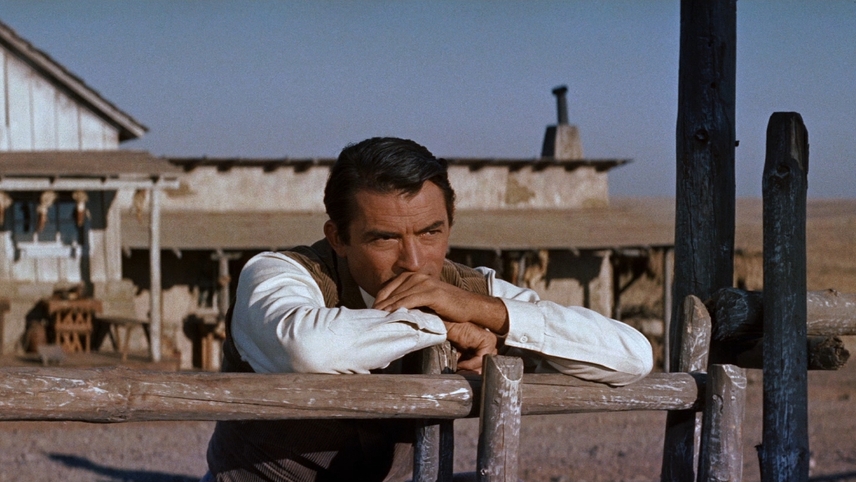
Gregory Peck rides into town in The Big Country

Director: William Wyler

Cast: Gregory Peck (James McKay), Jean Simmons (Julie Maragon), Carroll Baker (Patricia Terrill), Charlton Heston (Steve Leech), Burl Ives (Rufus Hannassey), Charles Bickford (Major Henry Terrill), Alfonso Bedoya (Ramon Gutierrez), Chuck Connors (Buck Hannassey), Chuck Hayward (Rafe Hannassey)

From the very first frame when that score kicks in, you know you are in safe hands. The Big Country is a big film, and big entertainment. When I re-watched it I hadn’t seen it for years. I loved it. It’s a slab of prime Hollywood entertainment, not perfect, but it’s one of those films that always delivers.

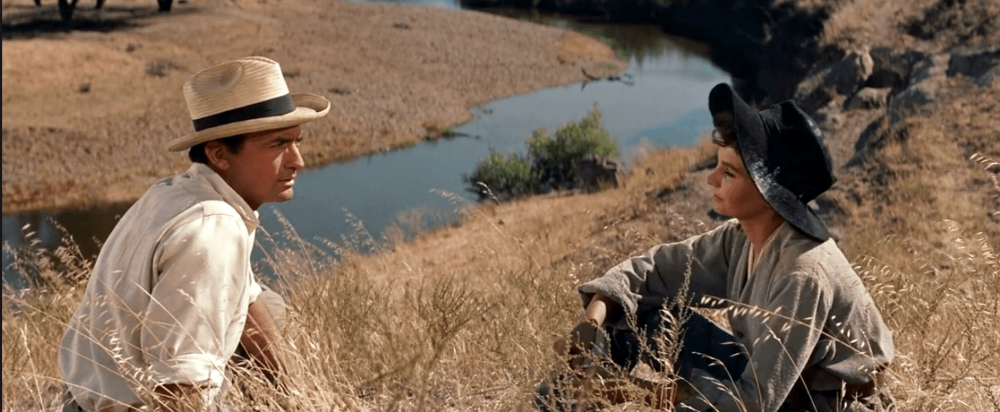
It’s the American West, and James McKay (Gregory Peck) arrives in town to marry Patricia Terrill (Carroll Baker), daughter of local landowner Major Henry Terrill (Charles Bickford) who is in the middle of a turf feud with patriarch of a cowboy clan, Rufus Hannassey (Burl Ives). This is a town where men-are-men and a harsh word is met with a sock to the mouth. It’s a world where McKay is out of step: a seasoned naval captain, with more experience than anyone, he couldn’t care less what people think of him and won’t be goaded into doing something foolish. His self-assurance and strength of character are interpreted as wimpy yellow-belly-ness by nearly everyone, including Patricia and Terrill’s macho foreman Steve (Charlton Heston). Only local schoolteacher Julie Maragon (Jean Simmons) understands him. But as events come to a head, only McKay has the strength of character to step up and try resolve things without mass bloodshed.

The Big Country is the classic set-up: a stranger in town, who has the guts to stand up. The only difference here, is that McKay has the guts to stand up and not conform to the macho bullshit being driven by the two feuding patriarchs. Both of these men are, of course, far more similar than they would admit, being perfectly contrasting personalities. Charles Bickford plays a genteel man with the principles of a thug, while Burl Ives plays a thug with the principles of a genteel man. No wonder they can’t get on, both see in each other qualities they most likely despise in themselves.

Compared to them, McKay looks like the very model of twentieth century liberal coalition building. Or at least McKay is a liberal who packs a punch, since it’s pretty clear Peck is probably the toughest son-of-a-bitch in the town. What’s glorious in McKay – and Peck’s sensational performance of reserved warmth and wry amusement, mixed with world-weary sufferance – is that you get a definite sense he’s seen way worse than this before. A man who has sailed around the world for decades, in the hardiest conditions, who has been keelhauled and saved men from sharks, recognises this for the slightly pathetic parochial dust-up it really is, and has no interest – or need – to put his life or the lives of others at risk to make crude points about his manliness.

If only, the film argues, we could all be as confident in our own skin. McKay keeps his cool in a way no-one in film, except perhaps Tracy in Bad Day at Black Rock, has managed so successfully. He laughs off his irritation at a hazing from the Hannassey’s – and makes clear, as the Terrill’s saddle up to fight back, that in doing so they are not acting in his name. He won’t make a fool of himself by trying to ride a wild horse in front of a crowd. He won’t rise to Steve’s provocation for a punch-up in front of the entire Terrill gang. McKay is a man who only needs to prove things to himself: so he’ll tame that horse in front of no crowd and swear the only witness to secrecy. He’s not one to brag.

And if it’s a fight that Steve wants, he’ll give him one on his own time and his own terms – those being a dusky morning in private. Wyler shoots one of the greatest fights of all time, an exhausting slugging match between Peck and Heston, played out mostly in long shot that soaks up the dawn Western atmosphere, as the two men fight themselves to an exhausted score-draw, with each punch landing with a punishing wallop. There is something very compelling about this unflashy, in-the-dust, clash of two alpha males, and the strange sense of respect that grows between them (as well as the dry wit of the script – “You certainly take your time to say goodbye”, Heston deadpans after this exhausting ‘I’m leaving but first this’ fight).

It also showcases how well Wyler uses sound (or the lack of it), the fight taking place often in a longshot silence that somehow makes the dusty scuffle even more effective. Silence also comes into play brilliantly to stress McKay’s isolation when first the Terrill men ride away to extract vengeance and then the disgusted Patricia closes the front door on him, leaving him standing in magnificent isolation on the porch. Silence will also come effectively into play during the late act ride of various characters through a white chalk lined gorge and to stress the danger that the kidnapped Julie is under when being held by the Hannassey’s.

The final act brings all the threats of danger and threat together into a brilliantly tense final confrontation. This sequence showcases, not only Peck’s granite principles and nobility, but also gives excellent opportunities for Ives to explore hidden depths in Old Hannassey (it surely helped him win the Oscar for Supporting Actor) and his dumb son Buck (excellently played with a swaggering arrogance by Chuck Connors) who is all mouth and no trousers.

Sure, at times the film overplays the anti-violence card. It’s particularly noticeable as it sometimes wants to have its cake and eat it, favouring probably a sort of gun-toting liberalism, of the “I could kill you but I want to make it so I don’t have to” variety. But then the film would be a heck of a less effective if we weren’t so convinced that Peck was as tough as they come and that his unwillingness to throw himself into events thoughtlessly is a mark of his unparalleled strength. Again, Wyler uses silence as effectively as sweeping camera movements and that brilliant score, to suggest moral strength.

There is probably very little tension about where the romantic plotlines are going, but both Carroll Baker and Jean Simmons are very good as two very different, but equally strong, women (although both women allegedly found Wyler’s perfectionist Kubrickian retakes on set extremely trying). But it still works a treat because of the strength of the acting, and its strongly scripted characterisation.

That and I’ve hardly mentioned the score, by Jerome Moross, which is powerful and famous you’ll instantly know it even if you’ve never seen the film. The Big Country is a Western where the hero has the strength to stick to his principles while still getting the job done. It’s superbly acted by Peck, with Simmons, Baker, Heston, Ives, Bickford and Connors all excellent in support. Wyler combines visual and a compelling story into a film that, while at points a little long, is still a bona fide classic. Again I’ll say: I loved it.

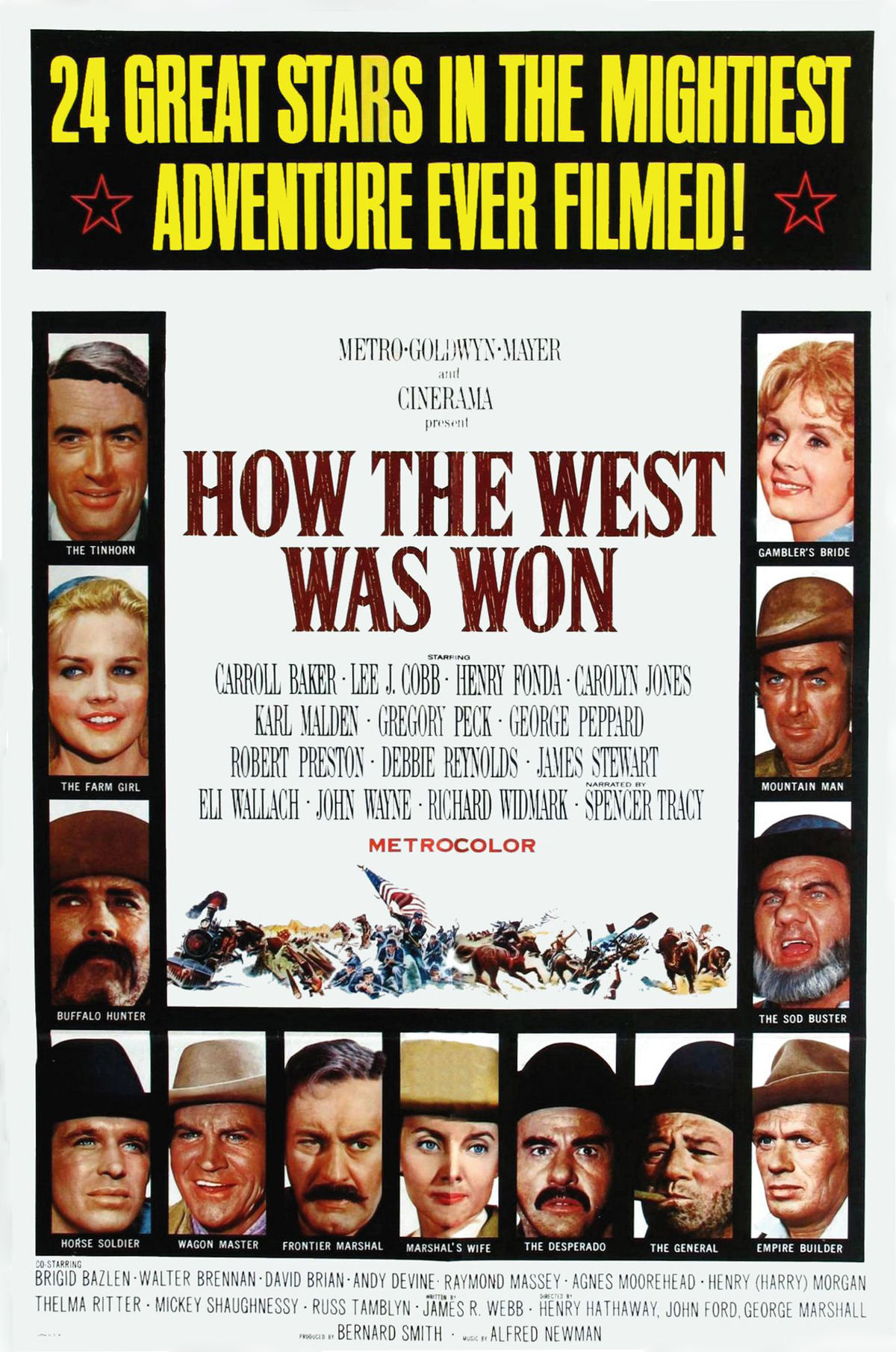
How the West Was Won (1963)

James Stewart helps us see How the West Was Won

Director: Henry Hathaway, John Ford, George Marshall

Cast: Spencer Tracy (Narrator), Carroll Baker (Eve Prescott Rawlings), Walter Brennan (Colonel Jeb Hawkins), Lee J Cobb (Marshal Lou Ramsey), Henry Fonda (Jethro Stuart), Carolyn Jones (Julie Rawlings), Karl Malden (Zebulon Prescott), Raymond Massey (Abraham Lincoln), Agnes Moorehead (Rebecca Prescott), Harry Morgan (Ulysses S Grant), Gregory Peck (Cleve van Valen), George Peppard (Zeb Rawlings), Robert Preston (Roger Morgan), Debbie Reynolds (Lilith Prescott van Valen), Thelma Ritter (Agatha Clegg), James Stewart (Linus Rawlings), Rus Tamblyn (Confederate deserter), Eli Wallach (Charlie Grant), John Wayne (William Sherman), Richard Widmark (Mike King)

How the West Was Won was the Avengers: Endgame of its day: every star of the biggest box-office genre in America coming together for one epic adventure that would stretch over generations. Stewart! Fonda! Peck! Wayne! Together for the first time (only of course they are not, none of them appearing the in same scene). Even more than that, How the West Was Won would be filmed in Cinerama, a three-screen shooting method producing a panoramic image. All this would make How the West Was Won the biggest, grandest, largest film ever made. It was a massive box-office success, nominated for eight Oscars (including Best Picture) and wowed audiences.

Plot wise though, it’s basically a series of short films cobbled together into a single film. The stories are basically self-contained, although some actors cross over (especially George Peppard and Debbie Reynolds). The first episode The Rivers covers the migration west, down the river, of the Prescott family, taking on river pirates and allying with James Stewart (looking at least twenty years too old as a young drifter). The Plains sees Debbie Reynolds, daughter of the Prescott family, migrate further West and eventually marry gambler Gregory Peck. The Civil War sees Stewart’s son George Peppard caught up in the war. In The Railroad, Peppard reluctantly runs security for ruthless railway builder Richard Widmark. Finally, in The Outlaws an older Peppard attempts to retire, but not before one final shoot out with old enemy Eli Wallach during an attempted train heist.

All these short stories – each about 30-45 minutes in length – are entertaining. So entertaining that you won’t mind at the end that you have no idea how the west was actually won (I assume it’s something to do with progress and the law) or that the characters are basically actors riffing off their own personas rather than fully realised individuals. Despite the attempt to build the story around one  family (the Prescott-Rawlings), the stories are so disconnected and the characters so lightly sketched, with such huge time jumps, each story might as well be about completely new characters.

Not that there is anything particularly wrong with that. But it boils down to the key issue with How the West Was Won, a very flabbily constructed film that lacks any real sense of guiding narrative or vision behind it. It’s a series of set pieces, which are all about scale – the river rapids, the battles of the Civil War, the final train-set shoot out – in which some loosely defined characters live their lives. There are some decent performances – Debbie Reynolds does a very good job anchoring a couple of stories (plus we get to see her do some song-and-dance routines), while Peck (a smooth operator) and Fonda (a gruff woodsman) have the best parts among the stars. Others, like Wayne, pop up for but a few seconds.

They needed all these stars to fill the frame. How the West Was Won’s main problem is also its principle reason to exist. It was designed to showcase the wideness of Cinerama, one of only two films to use the technique. Designed to be projected into curved screens, the technique essentially used one massive camera to produce an image so large it needed three synchronised projectors to screen it. This led to an impossible wide frame to fill, with two clear joins in the middle. The challenge of shooting this was not an enjoyable one for the directors.

To cover the visible joins, nearly every scene in the film sees an object placed one-third and two-thirds of the way through the image (usually a tree or a post). The actors stand carefully on their marks in their assigned third of the image. Close ups involved flying the massive camera almost into the faces of the actors (and even then it only produced an image from the waist up). Awkward compositions abound – either with actors standing rock still in front of huge scenery, or actors standing in carefully assigned rows, standing on marks they never move from.

The sweeping shots of the American west look impressive, but in a National Geographic way – it’s simply fitting as much of the imagery of the countryside in as possible. It was a hugely difficult job for the directors. It was not helped by two of them being competent journeymen and all three of them having done their best work in 4:3. Quite frankly I don’t think any of them have a clue about how to fill a frame this mighty. Instead, the film for all its grandeur is frequently visually conservative and unimaginative to look at. It’s got huge landscapes, but no real inspiration.

How the West Was Won is an enjoyable curiosity. It is very rarely, if ever, seen as it was intended on a Cinerama screen (the version I watched on a large television, still showed the slight fish-eye effect at points of a curved image flattened). Telling five short stories, each of them entertaining enough, it keeps the interest. It has a lusciously beautiful (famous) score by Alfred Newman that captures the spirit of the West. But, for all its grandness, it’s a strangely small experience.

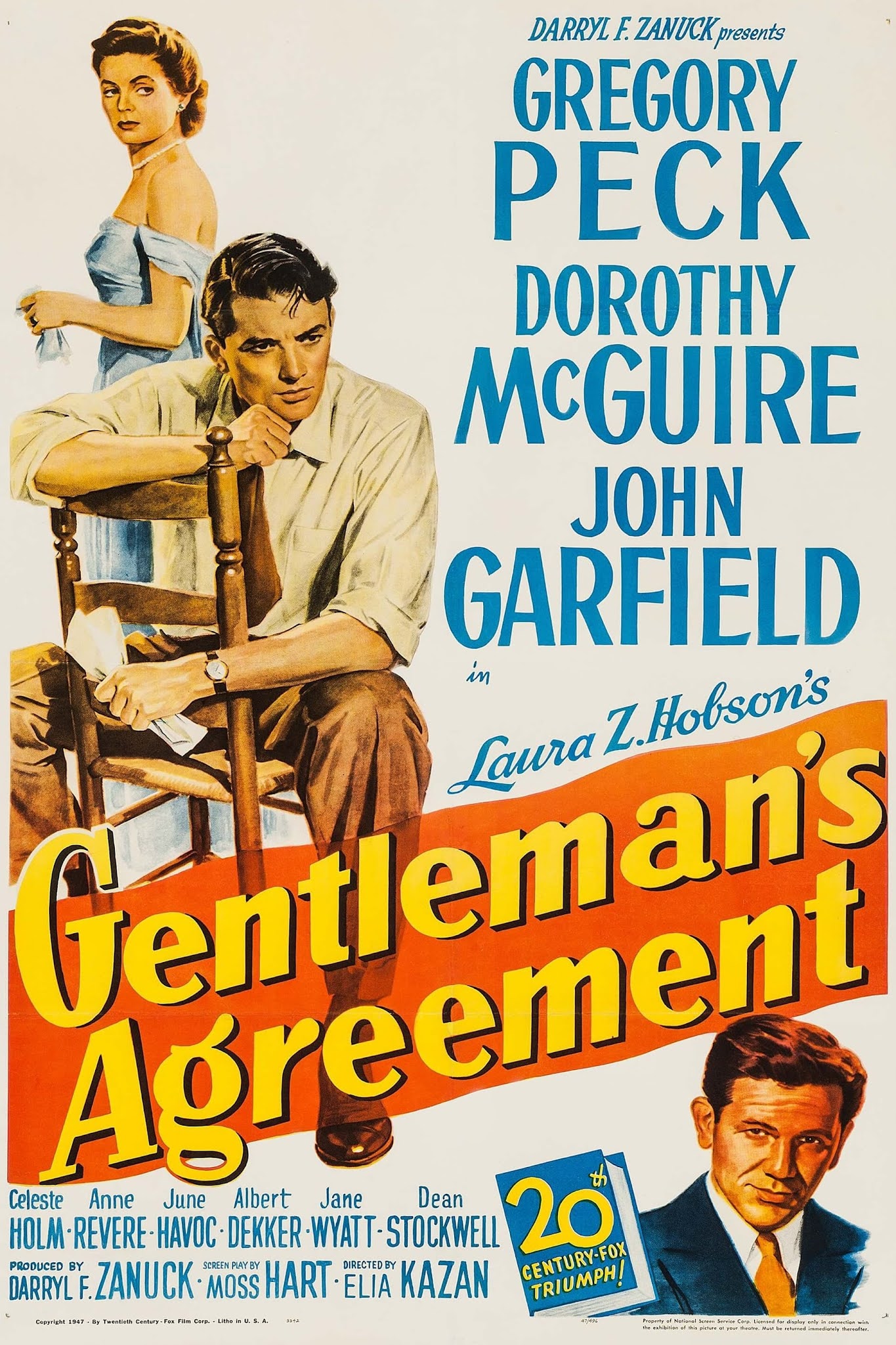
Gentleman's Agreement (1947)

Gregory Peck takes on anti-Semitic prejudice in Gentleman’s Agreement

Director: Elia Kazan

Cast: Gregory Peck (Philip Schuyler Green), Dorothy McGuire (Kathy Lacey), John Garfield (Dave Goldman), Celeste Holm (Anne Dettrey), Anne Revere (Mrs Green), June Havoc (Elaine Wales), Albert Dekker (John Minify), Jane Wyatt (Jane), Dean Stockwell (Tommy Green), Sam Jaffe (Professor Fred Lieberman)

What was daring 60 years ago, often seems tame today. In 1947, Gentleman’s Agreement, an expose of anti-Semitism in America, was a potential career-ending risk for its stars. It won three Oscars, including the Big One (beating the similarly themed Crossfire, an anti-Semitic murder mystery – and better, more entertaining film). Today, Gentleman’s Agreement seems like a time capsule on celluloid: extremely earnest Hollywood movie-making at its most socially responsible – and only scratches the surface of prejudice and its dangers, capping everything with a neat happy ending.

Journalist Philip Schuyler Green (Gregory Peck) is commissioned to write a series of expose pieces on anti-Semitism. His editor doesn’t want the “cold facts”, he wants the sort of unique “angle” that’s Green’s specialism. Phil decides to pass himself off as a Jew so he can find out what it’s really like. Only Phil’s fiancée Kathy (Dorothy McGuire) will know the truth. Phil finds out first-hand the knee-jerk prejudice and barriers Jews in New York face – something hammered home as he begins to relate to the experiences of his Jewish school-friend-turned-war-hero Dave Goldman (John Garfield). Phil starts to realise even Kathy may talk the talk of opposing prejudice, but doesn’t always walk the walk.

Gentleman’s Agreement is an extraordinarily earnest piece of film-making, that doesn’t just wear its liberal heart on its sleeve, it stretches it across its entire shirt. The plot frequently halts for someone to deliver a set-piece speech on the evils of prejudice, and Phil’s son (well played by a young Dean Stockwell) serves as an audience surrogate for Peck to fill us in on how prejudice is the enemy-within. There is no doubting, watching the film, everyone passionately believes in its importance (Garfield, a Jew born in Brooklyn, took a huge pay cut to be involved). It’s just a shame that the film itself is to flat, overburdened by its own sense of importance.

It’s as least as interesting for what it doesn’t say. There is something damning about the fact Hollywood only felt comfortable making films about anti-Semitism after the Holocaust. A Jewish character objects to the Phil’s article with the standard line used by Hollywood Jewish studio owners – drawing attention to it only makes the problem worse (remember all references to Jewishness was removed from The Life of Emile Zola). Additionally, there are only passing references (if that) to sexism or any other form of racism or prejudice, and virtually every character we see is white, WASPY and middle-class. Hollywood could only handle one prejudice at a time, apparently.

Gentleman’s Agreement is strong on the everyday nature of prejudice – off-hand remarks about money and facial characteristics, a character protesting “that some of my best friends…” and so on. But, considering it was made in the shadow of one of the worst racially-motivated atrocities in history (the closest reference to the Holocaust is Peck refering to anti-Semitism being not just happening “far away in some dark place with low-class morons”), the film could (and should) have gone further on the dangers of prejudice. Saying that, this was still a big step for Hollywood. And while the film frequently appears preachy, po-faced and stodgy today, it was still a brave piece of film-making, even if it’s gingerly taking kid-steps towards confronting a problem.

Phil’s investigation of anti-Semitism is unfocused and vague. He speaks to only three Jews – a schoolfriend, an atheist Einstein figure (played by Sam Jaffe) he bumps into at a dinner party, and a secretary ashamed of her heritage who despises “the wrong sort” of Jew. Never once do we see him go to a Synagogue, visit a Jewish community or step outside the bounds of his world of country clubs, posh hotels and gated communities. The story may be about how prejudice exists in places we wouldn’t expect, but a film on anti-Jewish prejudice really should have a place in it for more than this, rather than Jewishness being a label Phil puts on and shrugs off later with a “ta da, gotcha!”

The film’s heart is in showing how “someone like us” could be prejudiced, sometimes without even realising it. Phil’s fiancée Kathy (a decent performance in a thankless part by Dorothy McGuire) turns out to have more than a few anti-Semitic bones in her body. Kathy is the classic liberal, believing every word of her own press about equal opportunities, while quietly urging people to fit in and be like her (gentile) friends. The film slowly exposes Kathy’s subconscious unease, her willingness to accept certain inequalities to avoid confronting the status quo. Watching today, it’s hard not to see Kathy as a pretty dreadful, hypocritical person. But while Gentleman’s Agreement wants to shake us, it still wants a happy ending – so she repents and learns her lesson.

It’s a shame, as this rather dull love plot is the film’s weakest thread. Far more interesting would have been seeing Phil actually out in the real world (Kazan’s immersive location shooting, which he used for Panic on the Streets and On the Waterfront, would have improved this film ten-fold). It’s also unfortunate Phil’s colleague Anne (played with Oscar-winning charisma by Celeste Holm) not only seems better suited to Phil, but a much nicer, braver person – it’s hard not to watch the whole film rooting for Phil to dump the tiresome Kathy for the engaging Anne.

Gentleman’s Agreement’s study of prejudice seems very tame, but its heart is in the right place. For even tackling the issue it deserves praise, even if it’s rather stunted dramatically. Kazan’s direction is as earnest (and at times lifeless) as the film, but he does fine work with actors. Peck is at his most morally certain, with a great sense of affronted liberalism, McGuire is very good, Garfield wonderfully humane, Holm marvellous, Anne Revere excellent as Phil’s drily witty mum. A braver film could (and should) have been made – and Crossfire makes all the same points, but quicker and with a lot more dramatic interest. Gentleman’s Agreement sometimes feels like a rather self-important bore at a dinner party, but at least you know it has conviction and means well.

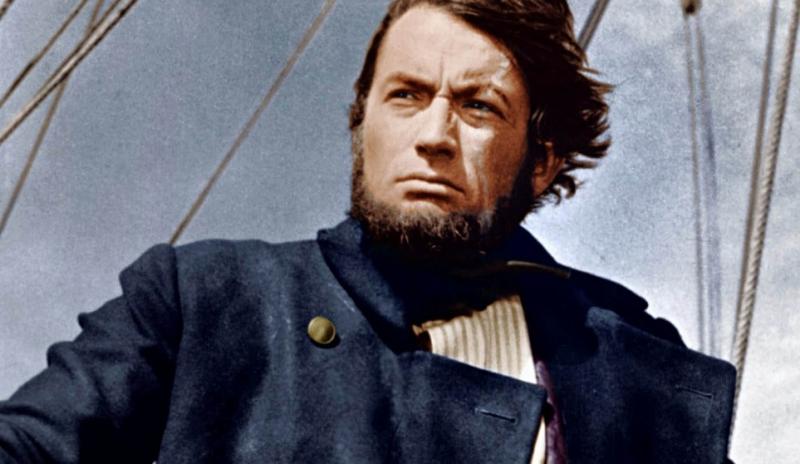
Moby Dick (1956)

Gregory Peck on a voyage of obsession as Ahab hunting Moby Dick

Director: John Huston

Cast: Gregory Peck (Captain Ahab), Richard Basehart (Ishmael), Leo Genn (Starbuck), Orson Welles (Father Mapple), Friedrich von Ledebur (Queequeg), James Robertson Justice (Captain Boomer), Harry Andrews (Stubb), Bernard Miles (The Manxman), Noel Purcell (Carpennter), Edric Connor (Daggoo), Meryn Johns (Pelog), Joseph Tomelty (Peter Coffin), Francis de Wolff (Captain Gardiner)

There might be fewer books that lend themselves less to being turned into a film than Herman Melville’s monumental Moby Dick. Perhaps the greatest of all American novels, its’ the story of New England whaler the Pequod’s Captain Ahab’s obsessive quest to kill Moby Dick, the great white whale that took his leg. But it’s also an intense intellectual and spiritual journey into the nature of humanity, which has thrown the book open to multiple interpretations, even more tempting with a book that defies explanation. Try capturing that on film.

John Huston’s Moby Dick is a noble attempt, more criticised at the time than it probably deserves, with the visual language of film unable to ever capture the metaphorical weight of the original novel. What Huston needed to do is to try and capture some of the spirit of the novel, bring its central story to life and make a film that ideally makes you want to search the book out. I would say Moby Dick succeeds on that score.

Reducing the monumental novel (often described as one of the great “unread” books in people’s homes) to under two hours, brings out the narrative, stressing the surface story as an adventure on the high seas, a doomed quest under an obsessive captain. The detail of the reconstruction of the whaling ship, its operations on the sea (including some graphic slaughter of some, fortunately, fake whales) and the atmosphere of the time is brilliantly reconstructed. The film is staffed by an extraordinary collection of actors, whose faces speak of lives led in salt-spray. 

So, starting with the idea that no film could ever capture the depth and richness of the book, Moby Dick is a decent, smart enough attempt. The key themes are there in strength. It captures obsession and the idea of the ship being a sort of microcosm of society, led astray by a leader who has his own passions at heart, over and above the well-being of the crew, but has enough magnetism to pull the crew with him nevertheless. 

Huston laboured long and hard to bring the film to life, in a wrestle with Melville. Even adapter Ray Bradbury claimed he had “never been able to read the damn thing”, with Huston and Bradbury clashing constantly during the writing process. It works, and Bradbury’s adaptation is beautifully done, but in a way John Huston himself was a sort of Ahab with the book as his whale. 

In fact you could argue – as many have – that Huston himself was the natural casting for Ahab (take a look at Chinatown to see what I mean). A charismatic raconteur, ruthless and fixated on his goals, that’s an Ahab we could buy into. Perhaps in that world, Orson Welles – here giving a neat little cameo that avoids bombast as Father Mapple – would have been the perfect director, marrying mastery of cinema with a wonderful understanding of transforming literature into film.

Gregory Peck is the Ahab we do get. At the time the casting was strongly criticised – people just couldn’t buy the straight-as-an-arrow Peck as the destructively bullying Ahab. Peck himself remained strongly critical of his performance here all his life. Separated from the time, Peck’s performance is stronger than you anticipate, capturing a gruff fixation and magnetic charisma that you can believe pulls people in. Peck may strain a little too hard for the elemental anger, but Peck’s Ahab has a bass richness, a sort of inverted Lincolnish (he even looks a little like Lincoln) self-righteousness that makes you believe he could rouse a ship to choose its own destruction. Peck also brings a spiritually dead look to Ahab, a man turned from hope to destruction. Huston teasingly keeps Ahab in reserve for almost a quarter of the film until his first appearance, allowing the build in the audience’s expectations.

The casting of the crew uses a fine selection of British and Irish actors (the film was shot in Ireland), with Harry Andrews particularly strong as jolly but non boat-rocking first mate Stubb. Leo Genn gets the meatiest material as Starbuck, a decent, working man with a firm sense of principle but who lacks any sense of the charisma needed to swing people to his point of view. The film bumps up Starbuck’s role, centralising his growing unease at Ahab’s madness, opportunities which Genn (nearly underplaying to contrast with Peck’s theatricality) works a treat. Richard Basehart – a good voice for narration but much less of a presence – gets a bit lost as Ishmael. There is an intriguing bit of casting – something that would never happen today – that sees Austrian aristocrat turned actor Friedrich von Ledebur play the Maori-inspired Queequeg, a visual disconnect that is more than a little distracting for a while.

Moby Dick is beautifully filmed and assembled, even if Huston throws in the odd obvious shot – sun beating down on the ship, a close up of the whale’s eye. It has a unique look – on the remastered blu-ray – with the image reflecting the faded, bleached look of whale prints (an effect achieved by superimposing a black-and-white negative over a colour one, draining most of the colours our), which gives it a great deal of visual interest. It’s never going to replace the book – but honestly what could? As an exploration of the ideas at its heart it’s wonderful – and a great prompt to pick it up – but with a marvellous sense of life on sea, a stirring score and a wonderful sense of intelligent construction it more than works.

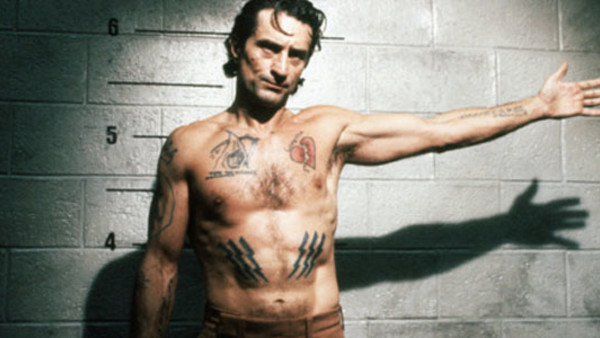
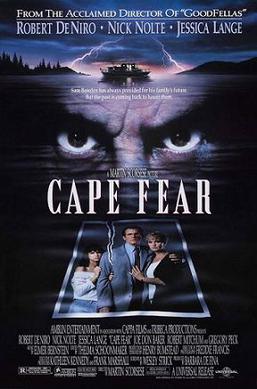
Cape Fear (1991)

Robert De Niro terrorises his lawyer’s family in Cape Fear

Director: Martin Scorsese

Cast: Robert De Niro (Max Cady), Nick Nolte (Sam Bowden), Jessica Lange (Leigh Bowden), Juliette Lewis (Danielle Bowden), Joe Don Baker (Claude Kersek), Robert Mitchum (Lt Elgart), Gregory Peck (Lee Heller), Illeana Douglas (Lori Davis), Fred Dalton Thompson (Tom Broadbent), Martin Balsam (Judge)

Max Cady (Robert De Niro) is out of prison after 14 years. He went in as an ill-educated psychotic bum, sent down for the rape and assault of a young woman after his appalled lawyer Sam Bowden (Nick Nolte) buried evidence on her sexual history that might have lightened his sentence. He comes out as a self-educated, articulate and psychotic force of nature, not sorry for one minute and intent on making Sam and his wife Leigh (Jessica Lange) and daughter Danielle (Juliette Lewis) pay. 

Scorsese’s remake of J. Lee-Thompson’s deliberately Hitchcock-esque thriller sees the great director go one better by trying to channel Hitchcock’s style as closely as possible. Framing and editing decisions echo Hitchcock, its design apes as much as possible cinematographer Robert Burk’s lensing, Elmer Bernstein remixes the original film’s Bernard Herrmann score into something even more Hitchcockesque than the original. Scorsese throws in several of the master’s favourite themes, with sexual obsession and frustrated, working men forced to defend themselves in extreme situations. Combined with the sort of lavish violence and extreme imagery Hitchcock couldn’t use, we end up with something like an odd film-school experiment, by film students who have watched too many slashers. It’s grim, tasteless, overlong and troubling – and not in a good way.

The film adjusts Nolte’s character from a lawyer and witness against Cady into his corrupt lawyer (no matter that his corruption in this case was well intentioned). The film has a slightly unpleasant concern with modern worries about masculinity, with Bowden now concerned he is not “man enough” to defend his home – the film constantly passes subtle judgement against Bowden’s lack of physical prowess. It also readjusts Bowden into a weasel, corrupt at work and having an affair with a young attorney (whom Cady then beats and rapes later in the film, with a slightly queasy air that she is at least partly culpable by allowing Cady to pick her up in a bar beforehand). To be honest Bowden is hard to sympathise with, and his quest to assert his masculinity rather than rely on the law or hiring others to do his dirty work not really that pleasant. Frankly Nolte was never the actor to engage sympathies in the way original choice Harrison Ford (he wanted to play Cady) would do.

Cady himself is played by Robert De Niro, channelling heavily the original’s star Robert Mitchum (with lashings of The Night of the Hunter) as the sort of articulate psychopath so beloved by film. It’s fun to watch De Niro grandstanding as this sort of violent Tyrannosaur, weaving both psychological and shockingly violent games to unnerve and panic Bowden and his family. The film doesn’t give much scope to make Cady much more than a sort of comic-book monster, but De Niro does at least have moments of reflection in amongst his insanity. And there is a sort of admirable emotional intelligence in Cady’s knack of detecting the underlying tensions in the Bowden’s marriage and family life and exploiting these to torment the family.

The film’s most effective moments are the quieter ones, none more so than Cady’s quiet befriending/seduction of Bowden’s daughter Danielle behind her parents’ back. This culminates in a deeply unsettlingly seduction scene in Danielle’s school hall, where Juliette Lewis (extremely good) fascinatingly and bashfully becomes entranced with Cady’s interest in her teenage reading list and problems with her parents. The sexuality of the scene is possibly even more unnerving today and a highlight of the film – not least, ending as it does, with Danielle sucking Cady’s thumb before kissing him and leaving with the giddy, confused excitement of someone both scared and fascinated. Few other things in the film match this moment for psychological complexity – or the unsettling exploration of teenage sexuality overlapping with rebellion against domineering parents. 

Least of all the film’s overblown and final confrontation between the Bowden family and Cady, in which Cady rises from death no  less than three times and which stretches on forever, jettisoning all the small stock of goodwill the film had built up in its quieter moments. But then this is just part of a film that chooses the graphic and the overblown over calculated and chilling, every chance it gets. It’s a shame as there is a more chilling, psychological terror film – with Cady as a demonically clever opponent – struggling to come out here, but which keeps tripping into slasher territory with Cady as an invulnerable Michael Myers.

Perhaps Scorsese just thought of the whole thing as a sort of cineaste’s private joke? All the Hitchcock references, the careful apeing of styles, even the casting of the original’s leads in small roles (a joke further amplified by casting Mitchum as the police officer, while ultimate straight arrow Gregory Peck plays a lawyer even more corrupt than Bowden). But jokes like this don’t really make for long-term entertaining films, and Cape Fear is so full of basically horrible people doing horrible things to each other (in an increasingly Grand Guignol fashion) that after a while you more than cease caring about it. You start getting actively annoyed by it.

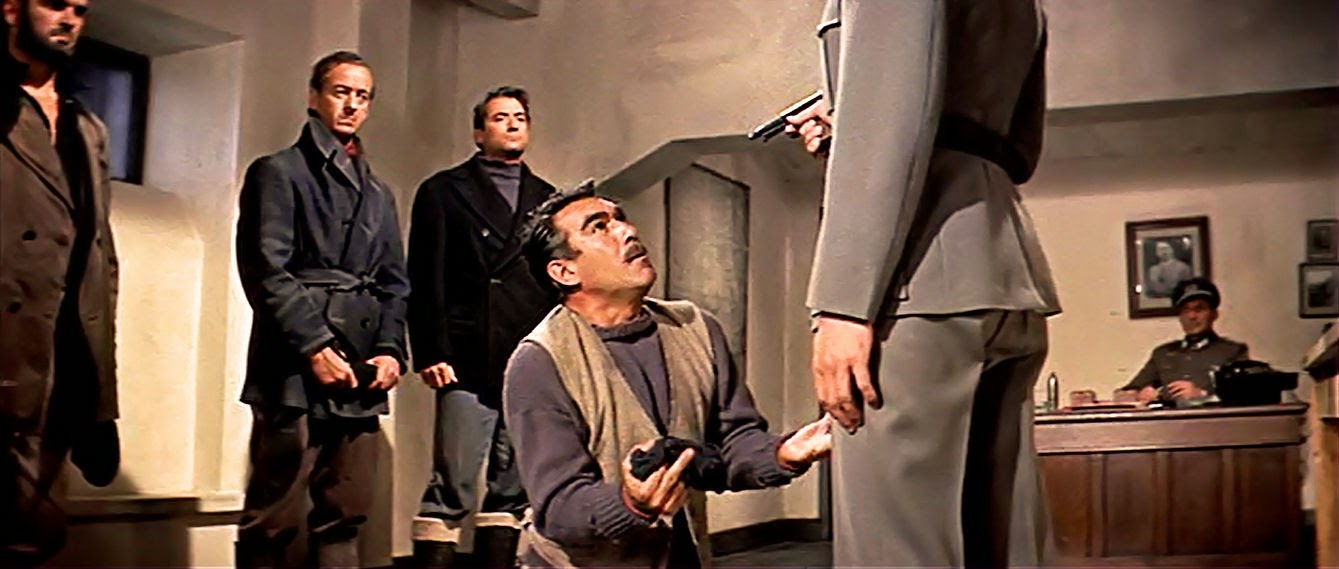
The Guns of Navarone (1961)


Gregory Peck leads one of the first men-on-a-mission films in The Guns of Nararone

Director: J. Lee Thompson

Cast: Gregory Peck (Captain Keith Mallory), David Niven (Corporal Miller), Anthony Quinn (Colonel Andrea Stavrou), Stanley Baker (Private “Butcher” Brown), Anthony Quayle (Major Roy Franklin), Irene Papas (Maria Pappadimos), Gia Scala (Anna), James Darren (Private Spyro Pappadimos), James Robertson Justice (Commodore Jensen), Richard Harris (Squadron Leader Barnsby), Bryan Forbes (Cohn), Allan Cuthbertson (Major Baker), Walter Gotell (Oberleutnant Meusel), George Mikell (Hauptstaumführer Sessler)

The Guns of Navarone is the archetypical “men on a mission” classic – it was the first major film to feature a team of specialists, all played by famous actors, going behind the lines to carry out some impossible task, leaving a trail of explosions and dead Nazis in their wake. Guns of Navarone was lavished with box-office success – and Oscar nominations, surprisingly – and although it’s a little too long, and a little weakly paced at times (as Thompson himself has admitted) it’s still got a cracking, bank holiday afternoon enjoyability about it. It’s not perfect, but honestly who could resist it?

In 1943, 2,000 British soldiers are stranded on the Greek island of Kheros. The Royal Navy plans to rescue them – but the way is blocked by two massive, radar controlled guns, in an impenetrable mountain base. The air force can’t take it out: so it’s up to Commando leader Major Roy Franklin (Anthony Quayle) to put together a team to do it. Recruiting mountaineer-turned-intelligence-agent Keith Mallory (Gregory Peck), explosives expert Miller (David Niven) and Greek-resistance leader Andrea Stavrou (who else but Anthony Quinn?), Franklin leads the team in. But when he is injured, the ruthless Mallory takes command – and leads the team in a perilous behind-the-lines raid.

I’d not seen Guns of the Navarone for a few years, and I’d forgotten what a brilliantly fun, boys-own-adventure thriller it is. I’d also forgotten what a lot of time is given early on into establishing what a team of bad-asses this group are. There seems to be no limit to their ruthless, knife wielding, gun running, cold-eyed killer bravery. And they hired a hell of a cast to play it as well – so damn good that you completely forget Peck, Niven, Quayle and Quinn are all just a little bit too over-the-hill for the derring-do they are called on to carry out.

Guns of Navarone brilliantly explains the mission aims, all the stakes and introduces each of the characters and their basic backstory, before the film basically gives us a series of action set-pieces – on a boat, at the coast, on a cliff, in a village, in a German cell, in Greek ruins, in a German base. It covers everything, and each scene is directed with real verve and increasing tension, with a simplicity to camera-work and editing that really lets the action breathe. The final sequence, waiting for the booby trap to explode among the guns, is a brilliantly done “rule of three” waiting game, with the tension building up each time.

The film is also rattling good fun, and gives each of its actors’ set-piece moments. Gregory Peck grounds the film perfectly as the increasingly ruthless Mallory, willing to sacrifice a number of pawns to achieve the target, but has a war weariness that still makes him sympathetic (as a side note, Peck’s German accent was so woeful all his German was dubbed). Niven plays Miller as a mixture of louche whiner, chippy middle-class man and natural-born troublemaker – and gets some knock-out speeches on the morality of war (Niven by the way nearly died after catching pneumonia during the boat wreck sequence).

Anthony Quinn had a monopoly on playing exotic roles at the time – from Mexicans to Arabs, from Gaugain to Zorba the Greek – so no great surprise he plays the Greek colonel here. He’s terrific though, a cold-eyed ruthless killer – and the sequence where he pretends to be a cowardly awkward fisherman is wonderful (not least for Stavrou’s reaction to Miller’s praise for his performance – a half shrug and a “so-so” hand gesture, one of my favourite ever “character” touches in the movies). Irene Papas is perfect as his female equivalent, while Anthony Quayle puts together another of his “decent army officer chaps” as boys-own adventurer Franklin. Baker and Darren don’t get huge amounts to do, but Baker does well with a “lost my taste for this killing malarkey” sub-plot.

Many of the character beats were so well-done they basically became archetypes for every “group on a mission” film since (the austere leader, the difficult whiner, the old-school traditionalist, the ruthless warrior, the maverick, the one who’s lost his nerve – and, uh, I guess James Darren is the “sexy” one). The actors play off each other superbly. There are also some great cameos – Robertson Justice is great as “the man in charge”, Walter Gotell very good as an archetypical “worthy adversary” German – there is even a slightly bizarre cameo from Richard Harris as an Aussie pilot (yup you read that right). 

Navarone’s pace doesn’t always quite work – the gaps between the action sequences do lag. It takes nearly 45 minutes for our heroes to even get to Navarone. The film also can’t quite decide its stance on warfare. We get Miller’s passionate speeches on the pointlessness of missions when wars are always going to happen anyway. The unmasking of a traitor leads to a long debate on the morality of killing them or not. Several of the characters question the point and morality of war. But then, the film spends plenty of time on Alistair MacLean thriller beats: there is killing-a-plenty of German soldiers, gunned down with ruthless efficiency (not quite as many as Where Eagles Dare but pretty close!). There are small references to Greek villages paying a heavy price in retribution for the gang’s action – but these considerations never even slow them down, or make them stop to think.

Not that it really matters – this is a boy’s own action film, full of hard-as-nails actors grimly “doing what a man’s gotta do” throughout. And, despite being a little too long and aiming for a depth it doesn’t always follow through on, it’s brilliantly assembled, the action sequences are tightly directed, and the acting has a square-jawed confidence to it. Niven is pretty much perfect as the slightly dishevelled Miller, and the clashing relationship between him and Peck growing into respect, has fine bromance to it. Navarone is the first of its kind, and it’s still (and always will be) one of the best – really exciting, really thrilling, really damn good fun.