First of the Superhero genre, a light and gentle film with simple black-and-white morality but very charming
Director: Richard Donner
Cast: Christopher Reeve (Clark Kent/Superman), Marlon Brando (Jor-El), Gene Hackman (Lex Luthor), Ned Beatty (Otis), Jackie Cooper (Perry White), Glenn Ford (Jonathan Kent), Trevor Howard (First Elder), Margot Kidder (Lois Lane), Jack O’Halloran (Non), Valerie Perrine (Eve Teschmacher), Maria Schell (Vond-Ah), Terence Stamp (General Zod), Phyllis Thaxter (Martha Kent), Susannah York (Lara), Marc McClure (Jimmy Olsen), Sarah Douglas (Ursa), Harry Andrews (Second Elder)
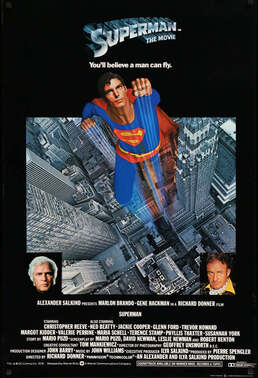
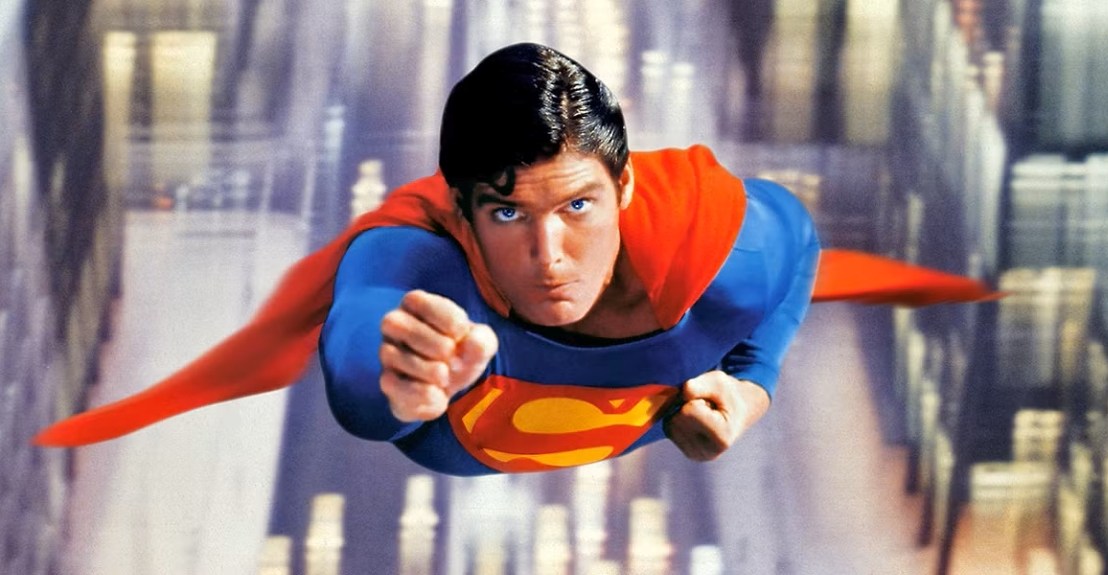
You’ll believe a man can fly! That was Superman’s punchy tagline for one of the first major attempts to bring a comic book hero to the screen. It’s also a landmark in special effects: after all the Man of Steel could fly faster than sound around the world, catch bullets, throw giant objects into space – he was going to need a mega special effects budget to do that. And of course, he would need an epic cinema screen to do it in, something producers Alexander and Ilya Salkind were determined to supply, with no expense spared (or, it seems, controlled) back stage, as a host of top-flight Hollywood hands were bought on board, led by Brando (picking up a record fee and 11% of the gross) for a first act cameo as Superman’s Dad Jor-El.
Superman’s plot tried to balance comic book lore, with some Earth-bound heroics to put our hero through his paces as he gently works out who and what he is. Sent to our world as a baby by his doting parents (Brando and Susannah York) with their world Krypton doomed to destruction, he’s adopted in the Mid-West by the Kents. Growing up and discovering his past, Clark Kent (Christopher Reeve) joins the Daily Planet as a plucky, mild-mannered reporter under lead investigator Lois Lane (Margot Kidder) – who he quickly gets a crush on (and who has a crush on Superman). While he saves people left, right and centre, criminal mastermind Lex Luthor (Gene Hackman) plans to fracture the San Andreas fault in the most hostile landgrab ever. Can Superman stop him?
Superman is structured into four clear acts and is all about putting into place the sort of thing fans of the comic book would have remembered from back-in-the-day. From the prologue in Krypton (including an extended set-up for the sequel, which was being shot simultaneously), via Clark’s teenage years, his arrival in Metropolis and the final San Andreas fault wrestling of the finale that sees Superman swooping around the Golden Gate Bridge and the Hoover Dam, every act rolls with heartfelt, comic book thrills from moment to moment. It’s all very light-weight – the villains, for all their dastardly plans, are goofy and any tragedy never really sticks when Superman can fly fast enough to turn back time – but there is also a gloriously old-fashioned innocence and decency about it.
Donner’s film goes for a mix between a David Lean-ish epicness, with sweeping Western vistas, soaring camerawork through the skies and Space Opera grandness, mixed with a screwball His Girl Friday aesthetic at the Daily Planet with Lois Lane as a fast-talking, story-fixated journo (like Rosalind Russell, only with more hanging off the side of dangling helicopters) and Clark Kent as a dopey, aw shucks mix of Gary Cooper and James Stewart. There is a nice screwball romance between Reeve and Kidder and surprisingly the two moods of the film hang together extremely well, aided enormously by John Williams’ epic score, whose fanfares stir just the right level of heroic wonder as Clark spins in phoneboxes from awkward Clark to unstoppable Superman.
It’s also a huge tribute to Christopher Reeve, who is both charmingly light and funny but also hugely endearing. It’s very easy to make someone so gosh darn perfect as Superman rather wearing. After all, the guy is scrupulously polite to everyone, never holds a grudge, always has a nice word to say and is as untainted by temptation as he is unbeatable in any situation. Basically, Superman is a character it’s very easy to get wrong, but Reeve leans into the everyday simplicity and humbleness. Clark Kent is essentially Superman exactly, but with his bashful earnestness dialled up and his resolute bravery carefully concealed. It’s a performance that really works.
It’s also a performance that plays only third fiddle in the billing. Which is to be expected in a Salkind film: these guys loved a big name. After all, they commissioned Mario Puzo to write the script because he was the most famous writer in the world. Donner called that script camp beyond belief (he claimed he didn’t use a word of it), constantly positioning the film in a more serious light. As befitted the high-brow crew, not least Geoffrey Unsworth as photographer. Top billing went to Brando, reading from cue cards as Jor-El, loaning the crystal set and glowing costumes his reputational seal of approval, while a host of classical actors (Howard, Andrews, Schell, York) flit around the edges as loomingly serious heads intoning grandiose lines.
Second billing went to Hackman as Lex Luthor who, like Brando, did the film as quickly as possible for a large pile of dollars. He dials up the comic ridiculousness as a foppish Lex Luthor. Not keen on shaving his hair (only briefly does he pop up a bald cap on), Hackman bounces comically exasperated dialogue off dim sidekicks Ned Beatty (even more OTT) and Valerie Perrine (giving good air-head glamour) and channels his inner used car salesman. Luthor of course isn’t really threatening at all – even if he does plan to kill millions – which feels about right for a film as playful and hopeful as this one.
He still causes enough havoc, requiring Superman to repair it with a neat mix of wire-work, model work and impressive miniatures, all put together with plenty of fast pace, awe-inspiring energy. Superman’s real enemy effectively becomes time itself – can he race around the world fast enough to save millions, fix the Fault and fish Lois Lane from deathly peril? – which also works very well for a film that positions the Man of Steel as a champion of decency, democracy and community spirit. Reeve gets a well-played moment of emotional torment in this, before the film settles back into its groove of gentle, crowd-pleasing reassurance that nothing really bad will happen.
Superman isn’t exactly a masterpiece. The flimsy lightness of the plot and it fast paced bounding from event to event makes it feel like a comic serial bought to life, where cause and effect aren’t necessarily important to understand. But it’s got a genuine sense of warmth and gentleness to it that perhaps explains why it made such an impact on those watching it. So much so, that every version of the character that followed on film would share major DNA with Reeve and Donner’s vision. I guess they really did make a whole generation of young filmmakers believe that a man could fly.