Tag: Gunnar Björnstrand

Autumn Sonata (1978)

Autumn Sonata (1978)

The great Bergmans collaborate in a raw powerful film that does cover familiar Bergman ground

Director: Ingmar Bergman

Cast: Ingrid Bergman (Charlotte Andergast), Liv Ullmann (Eva), Lena Nyman (Helena), Halvar Björk (Viktor), Erland Josephson (Josef), Gunnar Björnstrand (Paul), Georg Løkkeberg (Leonardo)

In the history of Swedish cinema, there was one mighty collaboration the world was waiting for. The Bergmans (no relation) Ingmar and Ingrid, two generations of iconic Swedish filmmaking, to work together for the first time. It’s ironic that when it finally happened – and Autumn Sonata was the final time both Bergman’s worked on a project exclusively intended for cinema – it came during Ingmar’s self-imposed exile, meaning it was shot in Norway via a German company (and with a title originally in German) with British and American money. But one thing you couldn’t change: this would bring Ingrid back to the artistic Euro-film-making of her own Hollywood exile and that Ingmar wouldn’t flinch on his forensic, emotionally traumatic style for the legend.

Ingrid plays Charlotte, a famed classical pianist whose entire life has been her career, with brief stop-offs between concerts for marriages and kids. It’s meant she’s not seen her now-adult daughter Eva (Liv Ullmann) for over seven years. And that she’s also missed most of Eva’s affectionate-but-passionless marriage to Viktor (Halvar Björk) and the entire life (including birth and funeral) of her grandson Erik. Charlotte also has no idea Eva has moved her disabled younger sister Helena (Lena Nyman) from the nursing home Charlotte deposited her in years ago into her own home. A visit brings mother and daughter together again for an awkward reunion that turns into a cathartic emotional outpouring, as Eva unbottles decades of resentment, anger and pain.

Autumn Sonata revolves around this extended confrontation scene, which takes up a sizeable portion of Ingmar Bergman’s thoughtful, measured film where conversations are all too clearly ticking time bombs leading to revelations that might be best unsaid. It fixates powerfully on the damage parents can inflict on their children and the shattering pain children can cause their parents. It’s a film about the brutal, challenging complexities of family and the unspoken resentments they can cause on those within them, who see their own opportunities and freedoms eaten into by a never-ending stream of demands and expectations from ‘loved ones’.

It’s a feeling familiar to all three of the principles. Ingmar was all-too-aware of his difficult relationship with both his parents and his children, Ullmann wrote about her self-perceived failings as a mother while Ingrid’s elopement with Roberto Rossellini in the 40s led her to not seeing her own daughter for almost five years. And it plays into this incredibly raw film which, while it covers familiar Ingmar ground, is played with such powerful, visceral commitment from its leads (held grippingly in frame by Ingmar’s regular collaborator Sven Nykvist), that it’s still one of his tougher watches.

Ingrid is superb as Charlotte, a woman who arrives in the remote vicarage home of her daughter, bursting with glamour. Assured, certain and utterly confident of her position as the centre of any room, Charlotte has a tendency to narrate her own life, self-assuredly mapping out her actions (from what to wear to the decision to gift Eva a car) and basks in advance in the positive reactions she anticipates. Charlotte maps her life out in terms of concerts and recitals (constantly, when Eva asks about an event from her childhood, Charlotte will ground herself by referring to a performance from that time). She automatically assumes maestro status in the house, including listening to Eva’s piano playing, moving her aside to take over and lecturing her on how the piece should be played.

She’s also though a woman deeply uncomfortable with emotion and emotional commitment. It’s an insight into how distant and unconnected Eva’s childhood must have been (brief flashbacks show Charlotte’s politely affectionate utter lack of interest in the young Eva) that what’s motivated her to visit Eva is to distract herself from the unpleasant burden of dealing with her recent husband’s death. Not grief or the need for comfort mind: it’s the experience of dealing with the events connected to the death that’s unsettled her. Her refusal to engage with anything emotional continues, from avoiding the topic of Eva’s dead son entirely to reacting to something close to barely concealed irritation at discovering her disabled daughter Helena in the home: she didn’t come here to be reminded about this other difficult emotional bond she’d outsourced to a professional.

Charlotte’s emotional coldness and distance under her warm confidence is brilliantly embodied by Ingrid. She’s a woman so overwhelmingly focused on her career she probably should never have had children at all (and perhaps regrets doing do), wasn’t remotely interested in Eva and Helena’s father (a decent, bank-manager sort played silently by Erland Josephson in flashbacks) and wants nothing from this visit except to feel better about herself. The lacerating home truths unleashed on her, see Ingrid’s composure fracture in shock, guilt and regret, her eyes becoming wells of shamed emotion.

Equally brilliant is Liv Ullman, perhaps even more so. Ullmann appears at first mousey, dowdy, humble and deferential – her husband opens the film with a heartfelt monologue about her being convinced she is not worth loving and that he only regrets he has never been able to persuade her otherwise. The cause for this becomes clear as Eva releases years of pent-up fury and anger at her mother’s oscillating from ignoring her to bursts of obsessive attention focused on coaching Eva into becoming what Charlotte wants her to be (Ingrid is fantastic at establishing Charlotte’s dumb-founded amazement that these times she fondly remembers were in fact purgatory for her daughter). Ullman’s delivery of this is powerful, viciously resentful and overwhelmingly painful.

This confrontation is the centre of Autumn Sonata but Ingmar knows that, despite what happens in Hollywood, moments like this don’t cure festering boils. In fact, our great gift as humans is to forget, re-form and move on. The film’s coda sees both women doing this: Charlotte feels her shame, but in a one-sided conversation with her agent (a wordless cameo from Gunnar Björnstrand) has already begun the process of self-justifying self-mythologising of her past. Similarly, having released years of frustration, Eva returns to her compromising self, drafting letters of apology to her mother. Or perhaps these are springs of hope? Somehow in Bergman it’s hard to think so.

You can argue that all of this very familiar to Bergman watchers: and it is (the presence of Ingrid is probably what cements it as one of his best-known films). But this is also a thought-provoking work in its own right. Autumn Sonata suggests we may try to confront or deal with things that have caused us pain. But in reality, the long, continual work of doing so is too much or us: we revert instead to compromise, adjustment and familiar patterns. Flashpoints carry emotional and dramatic weight, but life is made up of forgetting. It’s a powerful closing idea in this viciously raw piece of film-making from Ingmar, that draws such heart-breaking and emotional performances from Ingrid and Ullman.

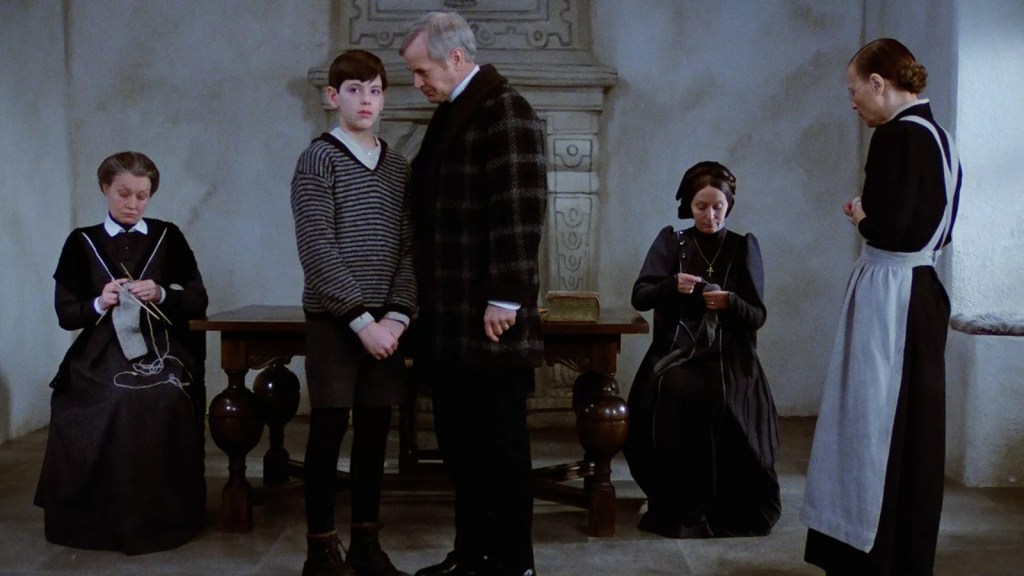
Fanny and Alexander (1982)

Fanny and Alexander (1982)

Bergman’s gorgeous final film, a sublime family saga, that leaves you thinking for days

Director: Ingmar Bergman

Cast: Bertil Guve (Alexander Ekdahl), Pernilla Allwin (Fanny Ekdahl), Ewa Fröling (Emilie Ekdahl), Jan Malmsjö (Bishop Edvard Vergérus), Gunn Wållgren (Helena Ekdahl), Erland Josephson (Isak Jacobi), Jarl Kulle (Gustav Adolf Ekdahl), Allan Edwall (Oscar Ekdahl), Pernilla August (Maj), Mona Malm (Alma Ekdahl), Börje Ahlstedt (Carl Ekdahl), Christina Schollin (Lydia Ekdahl), Harriet Andersson (Justina), Stina Ekblad (Ismael Retzinsky), Mats Bergman (Aron Retzinsky), Gunnar Björnstrand (Filip Landahl)

After many years (and masterpieces) Bergman wanted to move on from film: but before he went, there was time for one more magnum opus, a sprawling family saga that would throw a host of his interests (death, family, sexual openness, God, theatre, infidelity, the unknowable) onto one grand, sprawling canvas. Fanny and Alexander would be a truly personal film, featuring a young protagonist with more than a passing resemblance to Bergman himself. Despite this it’s an irony Bergman might like that the finest version of this film we have is actually a five-hour recut for television (the limits of run-time from distributors being one of many things Bergman was tired of). That version is a beautiful, life-affirming, gorgeous piece of film-making, an extraordinarily humane story tinged with the supernatural told on a luscious, Visconti-like scale. It’s a fitting sign-off from a master.

In 1907, the wealthy Ekdahl family live in a luxurious apartment block, their rooms filled with the rich detail of their love of art and culture. Ten-year-old Alexander’s (Bertil Guve) father Oscar (Allan Edwall) and mother Emilie (Ewa Fröling) run the Ekhdal theatre, where his wealthy grandmother Helena (Gunn Wållgren) once performed. After a fabulous Christmas celebration, Oscar dies after a stroke while rehearsing the role of the Ghost in Hamlet. After a period of mourning, Emilie remarries to the older Bishop Edvard Vergérus (Jan Malmsjö), who turns out to be a domestic tyrant, obsessed with the letter of religious and family law. Will Alexander, his younger sister Fanny (Pernilla Allwin) and their mother escape from Vergérus’ controlling clutches?

What really strikes you first and foremost about Fanny and Alexander is its gorgeous warmth – hardly the first quality you traditionally associate with Bergman. It opens with a prolonged (over an hour) Christmas celebration, with the family and their servants eating, laughing, telling stories and dancing through their gorgeously furnished apartment. It should feel indulgent (and I suppose it is), but this warm reconstruction of an at-times-flawed, but fundamentally loving and vibrant family is actually deeply moving and heart-warming.

The Ekdahls have a bohemian freedom, with their love of theatre and art (only Uncle Carl, a manic depressive businessman, feels slightly out-of-place and even he takes the children to one-side during the festivities to entertain them by blowing out candles with his farts). Their house is charmingly egalitarian, with the servants treated as part of the family, loyalty they return. The theatre troupe (led by Bergman regular Gunnar Björnstrand in his final, small, role) – are equally part of this extended family, the theatre a second magical home where the children take small roles in various productions and delight in the stagecraft and costumes behind-the-scenes.

Fitting a Bergman family (and the Ekdahl’s share some elements with parts of Bergman’s family) they are extremely forward-looking in their morality. Uncle Gustav Adolf (played with bombastic, gentle charm by Jarl Kulle) is a notorious ladies man, but goes about it with such innocence and near-childish openness his patient wife Alma (Mona Malm) indulges him because in all other respects he’s a loving husband and father, and his overall fidelity to her is never in doubt. Alma restricts herself to a single slap of his new lover, maid Maj, but otherwise treats her like a sister. Pernilla August is hugely endearing as this caring young woman, swiftly absorbed into the wider Ekdahl family who value her care for others. The Ekdahl’s have no time for conventional morality, led from the front by matriarch Helena (Gunn Wållgren is fantastic as this wordly-wise, ideal grandmother figure) who has lived a life of sexual openness with her husband and values people not societal conventions.

Oscar, their father (wonderfully played by Allan Edwall as a bashfully mediocre actor and a quietly shy but warm man) takes his role as the leader of this company very seriously, but with a light touch (modestly bemoaning his lack of statue compared to his father). Bergman uses a myriad of small moments to make this father an ideal parent, not least a late-night fantastical story he improvises for the children, spun around their nursery room chair, one of the most tender moments of parent-child bonding in the movies. (This despite hints that Oscar, who has allowed the younger, more sensual Emilie to conduct her own affairs, might not be their true father).

The stunning production and costume design (which won Oscars for Anna Asp and Marik Vos-Lundh) are essential for creating this immersive, rich and vibrant life: one which will be exploded in Dickensian tragedy by the death of Oscar and the arrival of the Murdstone-like Edvard Vergérus (played with chilling, smug hypocrisy by Jan Malmsjö under a fake smile) who is everything the Ekdahls are not. Where they are warm and egalitarian, he is cool and elitist, he is a prude with no regard for art and his home is in bleached-out puritan stone, devoid of personal touches – it literally looks like a different world to that we’ve spent the first few hours in, full of untrustworthy people (like Vergérus’ maid played by a wonderfully two-faced Harriet Andersson).

Vergérus is all about control, something we suspect from the start with his aggressively tender manhandling of Alexander, his hand slamming into the back of his neck. He worms his way into the affections of Emilie – a woman who, with her earth-shattering wails over the body of Oscar, is clearly vulnerable in her raw grief (Ewa Fröling is extraordinary as this gentle figure, prone to appalling judgement and unexpected strength of character) – and then sets out their marriage terms with controlling agendas, not least that in arriving in his house, she and her children must shed every inch of their previous life, from personal connections to the knick-knacks they have grown to love. He’s a poor advert for a God Alexander is already cursing for taking his father (his attic, filled with crumbling religious symbols, feels of a part of Bergman’s world where God is at best a passive observer, at worst a near malicious presence).

Bergman makes clear Vergérus is a man who genuinely believes he is doing the best for his family and that the moral lessons he hands out, at the end of a cane, to Alexander are essential. A weak man who mistakes bullying for strength. In many ways the fact he is not vindictive just weak and convinced of his own moral certainty (re-enforced by his fawning family, who treat him like a sort of prophet). Sure, he’s capable of anger, anti-Semitic slurs and little acts of cruelty, but Malmsjö shows him as a man who is trying, in his own wrong-headed way, to win the love of his adopted wife and children and can’t understand why he is not met with gratitude and love.

Perhaps it’s this sudden dropping into a cold world (one not dissimilar from Bergman’s own troubled relationship with his priest father – in fact you leave Fanny and Alexander wondering if Bergman hated his own father as much as Alexander who literally prays for his death) that so sparks Alexander’s own links to a mystic world around him. There is a rich vein of something other throughout Fanny and Alexander, from the statues Alexander watches move in the opening sequence (not to mention the haunting spectre of Death he witnesses in the same moment), to Oscar constantly appearing to Alexander like Hamlet’s Ghost. Is this haunting Alexander’s guilt at this failure to face his dying father on his deathbed, or a link to a world beyond our understanding?

After all Oscar’s Ghost greets Helena at one point, the two entering into a loving conversation. And he’s not the only supernatural touch around Fanny and Alexander. Family friend (and Helena’s lover) the Jew Isak (a rich performance by Bergman regular Erland Josephson) lives in a house full of mystic puppets that might be able to breath and walk. Isak perhaps uses magic to help smuggle the children out of Vergérus’ house (making them appear in two places at once), while his androgenous son Ismael (played by a woman, Stina Ekbad) is implied to having the spiritual power to channel Alexander’s hatred of Vergérus into actual supernatural revenge in the real world (another classic literary touch, that plays on spirituality and the Mad Woman in the Attic in Jane Eyre).

Fanny and Alexander is an extraordinary film, I feel I have only begun to scratch its surface here. It’s both a Dickensian family fable and a semi-benevolent Ghost story. It’s a family saga and a careful look at a particular time and place. It’s funny and moving. It really feels like one final mighty effort from a master.

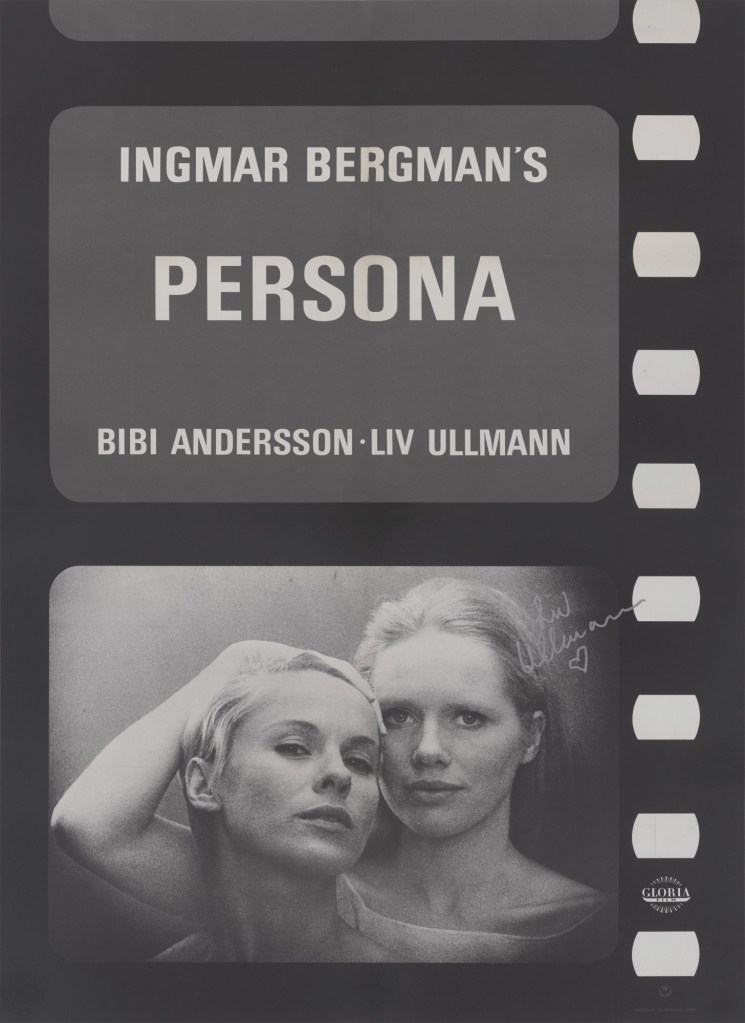
Persona (1966)

Persona (1966)

Bergman’s masterpiece, a fascinatingly brilliant Rorschach test that challenges and rewards the viewer

Director: Ingmar Bergman

Cast: Bibi Andersson (Alma), Liv Ullman (Elizabet Volger), Margareta Krook (Doctor), Gunnar Björnstrand (Herr Volger), Jorgen Lindstrom (Boy)

Even Bergman considered Persona a moment he “had gone as far as I could go…touched wordless secrets that only cinema can discover”. Persona, Bergman’s most consciously artistic and psychologically challenging work is a mass of contradictions and puzzles that defies easy categorisation (even Bergman claimed to be only half sure what definitively was happening). A whirling mix of themes, haunting moments and unknowable incidents all within a framework that constantly reminds us we are watching a film, Persona has been influencing, challenging and fascinating viewers for over 60 years. If cinema’s Everest is Citizen Kane, Persona is its K2.

The plot seems simple. Famed actress Elizabet Volger (Liv Ullman) fell silent for a minute during a production of Electra, then carried on. A day later she stopped speaking and hasn’t spoken since. Her doctors can’t find an answer so she is sent to an island to recuperate, with the support of a nurse, Alma (Bibi Andersson). On the island, Alma fills the silence with long monologues that become more and more confessional, intimate and personal. Does Elizabet betray these confidences in a letter to her doctor? Does Alma plot revenge? Are these events even happening? As the personalities of the two women blur, merge, swop and consume each other the film fractures (at one point literally so) until we are left as uncertain of who and what is real as perhaps the women themselves.

There is, in some ways, no understanding Persona. It perhaps best resembles a cinematic Rorschach test. I’d argue it’s a fool’s journey to stare at it for a definitive answer. Different days, different moods, different conditions will make the picture re-shape and resemble something else. Bergman has created a film devoid of traditional ‘clues’, that provides no trace of an ‘answer’, but instead asks – demands? – us to take away only what we choose.

Throughout, Bergman makes it vitally clear film is a constructed, artificial representation of reality. Persona starts and ends with film literally spooling through a projector, the arc lights cranking up to project a reality. The opening prologue is a host of suggestive images which may, or may not, relate to what we are about to watch. Their meaning is almost deliberately vague – much as the epilogue’s brief shot of Bergman and crew shooting the film is – but it lets us know beyond doubt this is a subjective presentation of a series of images, not real life. Perhaps reading meaning into it is as impossible a task as trying to interpret the contents of a library from the page of a single book.

Which is to say, I think Bergman is both inviting us to interpret the film but also warning us that this isn’t a jigsaw, but a deliberately obtuse and open-ended work, our experience of it controlled by the director. Film is after all a dream – a world where we think we move freely, but in fact we never do. Which might make you think Persona is Bergman’s punking the world, a Thermot’s Last Theorem designed to infuriate. It isn’t because it’s made with such grace, humanity and honesty.

To understand Persona you can only discuss – and wonder – at the complex, multi-layered themes and decide which speaks most to you on the day. A lot of this boils down to how you are affected by the breathtaking, seismic performances from Andersson and Ullman. Playing two characters whose identities merge, shift, mirror and absorb each other both performers give outstandingly intelligent, infinitely challenging and unreadable performances. For Andersson the film is virtually a monologue, where the more Alma talks, the more our grasp on who (or what?) she is slips through our fingers. Ullman’s impassive face, awash with micro-expressions (caught in scintillating close-ups) constantly disorientates – is that a sneer or a smile? Is that head-turn impatience or a desire to know more?

At several points I find myself falling into the trap Bergman lays of wanting to categorise the film, as I became convinced first one than the other of these women was just an element of the psyche of the other. It’s not as simple as that. They are both the same and different, two people and one. Bergman frequently frames their bodies overlapping and, in one horrifying moment, their face literally merged half-and-half. Elizabet, we think at first, is a near vampiric figure sucking the life out of Alma, drawing confessions from Alma to restore herself. Then Elizabet becomes a ghostly figure, moving in the margins of Alma’s life, a horrific silent figure from her subconscious holding her back. Then you feel Alma to be nothing more than Elizabet’s id, demanding her right to be independent.

The unreadability of the film becomes ever more acute at the half-way point. After an enraged Alma deliberately leaves Elizabet to cut her foot on glass, the film pauses, burns away and then restarts with an echo of its earlier montage. Has the story restarted? Did all or any of what went before actually happen? Or is everything from this point a cinematic fantasy? Later in the film Bergman throws in a sequence with Alma and Elizabet back in the hospital before returning to the island – is this a flashback or a dream or a vision or something else entirely?

Bergman’s mastery of horror comes to the fore. The haunting repeated shot of Elizabet embracing Alma from behind, the two of them starring into a mirror (and the camera) at times seems sexually charged, at others disturbingly possessive at others supernaturally controlling. Is Bergman’s point that the context of an image can change its meaning? These hazy definitions of truth and reality lie throughout. The confrontations between the two taking on an increasingly surreal nature.

In a stunning sequence, Bergman repeats the same Alma monologue twice, one focused solely on Elizabet (her face contorted with pain as she hears of her rejection of a child), the second on Alma (now dressed identically to Elizabet), Alma’s bitterness now taking on a totally different light. Alma, back in nurses’ outfit, confronts Elizabet screaming that she is her own person even as her words collapses into an incoherence that might as well match Elizabet’s silence. Which is projection and which reality? When they leave at the film’s end, do they go their separate ways or merge? Does Alma imagine herself with Elizabet’s husband, or when Elizabet’s husband recognises Alma as his wife is he tipping the nod to us?

Bergman gives no clear reasons for Elizabet’s silence. It could be connected to horror at the world’s terrors (Vietnam and the Holocaust are referenced). It could be shame at her own post-natal depression. It could be that the silent Elizabet is a projection of the Alma-Elizabet’s own turmoil and isn’t real in the first place. After all the hospital we are introduced to Elizabet in doesn’t feel like a real place but a sparsely dressed film set (and shot like it).

Sex weaves it’s way tellingly through the film. The sexual bond between Alma and Elizabeth, physically, seductively close and possibly sleeping together is clear. Alma relates a hugely erotic monologue about an orgy she and a friend initiated on a beach, the only time she describes herself a purely happy and content. Is this her memory or a fantasy of Elizabet’s? If Alma is Elizabet, is this what she longs for or the thing she finds missing now from her own life? Alma talks of wanting a family – but in a haphazard, casual way and has already had an abortion. Elizabet has a son but doesn’t want him – is Alma what she dreams she could be, or is Elizabet the truth Alma doesn’t want to face? At various points both, all or nothing of the above could be true.

The film opens with a mysterious boy starring at a blurred series of images of female faces. We never learn who he is (theories abound from Elizabet’s son to Bergman himself). He wakes seemingly from the dead, but perhaps he is given life by the film. Perhaps, Bergman is saying, Alma and Elizabet are themselves given life only by the film. That both of them are fictious illusions, as unreal as the blurred pictures on the wall. Persona is the sort of film only a director of pure courage could have made. An object that fascinates and frustrates but always leaves you wanting to reconsider and reposition it to see if the picture becomes clearer or if new truths are presented if you look at it from a different angle. Maybe Elizabet is a succubus. Maybe Alma is an angry inner self, longing to escape and liver her own life. Maybe Alma is the silent actress. Maybe Elizabet longs for the simpler life of the nurse. Perhaps every single idea is true and perhaps none of them are. That’s part of the mystery that makes Persona one of the greatest films ever made.

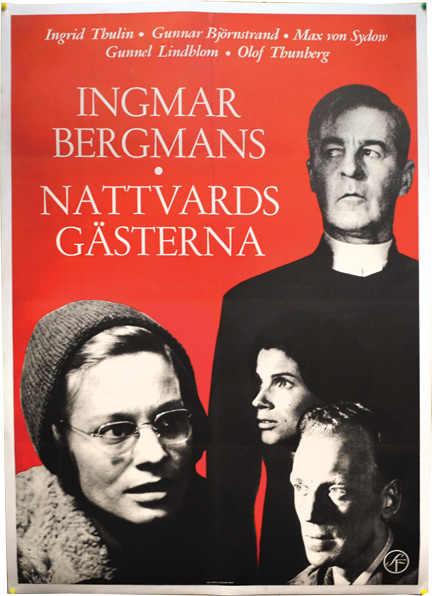
Winter Light (1963)

Winter Light (1963)

Faith is thoughtfully questioned in Ingmar Bergman’s spare, bleak and striking masterpiece

Director: Ingmar Bergman

Cast: Gunnar Björnstrand (Pastor Tomas Ericsson), Ingrid Thulin (Märta Lundberg), Gunnel Lindblom (Karin Persson), Max von Sydow (Jonas Persson), Allan Edwall (Algot Frövik), Kolbjörn Knudsen (Knut Aronsson), Olof Thunberg (Fredrik Blom), Elsa Ebbesen (Magdalena Ledfors)

It would surprise many to hear Bergman held Winter Light in the highest regard among his films. An austere chamber piece, largely set in a cold, naturally lit church, it’s the middle chapter of his thematic trilogy on faith and it serves to correct any sense of hope left remaining from in Through a Glass Darkly. Winter Light – with its lead character a semi-biographical combination of Bergman’s father (himself a Lutheran Pastor) and Bergman himself – begins with a robotic preaching in a Church and ends firing up another such sermon to an empty Church. This is a world where, if there ever was a God, he has long since gone silent and disappeared over the horizon.

You could argue Tomas Ericsson is the most ill-suited priest in the history of cinema. He’s played with a peevish, grumpy lack of hope, inspiration or joy, self-loathing seeping from every pore by Gunnar Björnstrand in what might just be his finest hour. Björnstrand, more comfortable with comedy, struggled with this counter-casting (and his cold, which was written into the script), the bottled-up pressure of the role almost shattering his friendship with Bergman. Following a single afternoon in Ericsson’s life, Winter Light charts his complete disillusionment with his faith, his utter failure to provide spiritual comfort to parishioners and his mix of dependence, indifference and contempt for schoolteacher and some-time lover Märta (Ingrid Thulin), herself a needy, unhappy woman content to play second-fiddle to Tomas’ deceased wife.

Tomas’ faith in God has long since vanished. Winter Light is his own Gethsemane, a parade of painful events and conversations where he waits desperately for some sort of sign or word from the Almighty and is left instead wondering, like Christ, why God has forsaken him. Tomas has become bitter, self-obsessed and self-loathing, going through the motions with a dwindling congregation and unable to muster even the faintest bit of belief in the words that pass his lips.

Winter Light follows up ideas of Through a Glass Darkly (Tomas even talks of a “Spider God”, a destructive force at the centre of a world made of pain). There is an echo throughout of the idea that, if God is love, then letting love into your life (or acknowledging the existence of Love in the world) is proof enough that there is a God, even if he is now silent. If so, Tomas’ rejection of any form of love goes hand-in-hand with his rejection of faith. If he felt love, it was for his late wife – and her death matches the decease of his faith in God. Now he angrily slaps away offers of affection with the same contempt he addresses towards questions of faith.

That offer of love comes from Märta, a mousey teacher trapped under an unflattering hat, the bags under her eyes and spinsterish clothes. She’s played in a performance of sustained, emotive brilliance by Ingrid Thulin. Märta captures her feelings for Tomas – right down to her acknowledgement that she knows he does not love her – in a sprawling, stream-of-consciousness letter (which Tomas has delayed reading – and when he does, he scrunches it into a frustrated ball).

That letter is conveyed to us in a stunning, almost interrupted, seven-minute take where Bergman focuses the camera on Thulin in close-up who delivers the contents of the letter straight to camera. This is a tour-de-force from Thulin, by terms unblinking, honest, self-denying, pained, resigned, hopeful and frustratingly simpering, a masterclass that marks one of Winter Light’s most striking moments of directorial and actorly technique. Few actors could pull this scene off with the grace and emotional commitment Thulin brings to it – and still leave us understanding why Tomas later, with anger frustration, cruelly tells her he has simply had enough of her all-forgiving love.

There is no place for that sort of saintly, Christ-like, love in Tomas’ life. His focus remains his own self-loathing. When meeting with Jonas (Max von Sydow – even more carved from granite than normal, his fixed stillness contrasted with Björnstrand’s twitchy unease), who has come to Tomas for spiritual reassurance to help overcome suicidal thoughts, Tomas can only complain of his own lack of faith. Tomas fails utterly to offer any solace to Jonas, a further mark of his own failure as both a priest and human. Jonas’ suicidal misery at the dread of oncoming Armageddon in the nuclear age, becomes grist to Tomas’ own misery and our priest in turn feels no shame in turning to Märta immediately for reassurance and comfort.

The only person who seems to have considered the nature of faith is disabled sexton Algot (a marvellous performance by Allan Edwall). Algot reflects that the suffering on the cross was not Christ’s true sacrifice – after all that was over in hours. The real suffering was hearing God’s silence on that cross, of the horror of suddenly thinking your life’s work may have been a waste of time, that he evangelised for someone silent or indifferent or worse. It would tie in directly with Tomas’ own doubts – except it’s pretty certain Tomas isn’t listening to him.

Maybe that’s partly the problem. We don’t listen to God, because we no longer expect him to talk. At one point, Tomas asks why God has fallen silent while behind him light suddenly pours through the Church window. Is that a sign of a sort? If it is Tomas doesn’t look and when he does, he doesn’t think. Instead, he contributes to the silence of God – as the closest thing to his vessel he fails to listen, fails to help and focuses only on his own pain.

Winter Light is a gorgeous film, full of striking light and shade by cinematographer Sven Nykvist. It’s also a bleak, grim, hopeless film, the best hope it can offer being God might have been real but he’s long since turned his back on us, just as we’ve turned out back on him. It’s magnified when we reject the thing he might have left for us, love itself. Winter Light is intensely thought-provoking, but rivetingly intelligent in the way the best of Bergman is. Björnstrand is superb and Thulin is extraordinary, in a film that carries worlds of meanings in its spare 80 minute runtime.

Through a Glass Darkly (1961)

Through a Glass Darkly (1961)

Faith, family and femininity are put to the test in Bergman’s bleak meditation on religion and love

Director: Ingmar Bergman

Cast: Harriet Andersson (Karin), Gunnar Björnstrand (David), Max von Sydow (Martin), Lars Passgård (Minus)

Bergman’s Through a Glass Darkly marks a new era in the Master’s filmography. It was the first of three thematically connected films about faith and religion (although you could argue The Virgin Spring really makes this a quartet). It saw Bergman make a firm commitment to seemingly theatrical chamber pieces, with small, focused casts of trusted collaborators handling complex (joke-free) and searching themes. It was also first of his films set on Fårö, a place that would become so associated with him it would effectively be rechristened Bergman Island.

Through a Glass Darkly (Bergman’s second consecutive Oscar winner for Best Foreign Language Picture) is a brooding, intense chamber piece set entirely in a house and beachside jetty on Fårö. It’s a family reunion. Author David (Gunnar Björnstrand) returns to Sweden from Switzerland to see his children. They are 17-year old son and aspiring writer Minus (Lars Passgård) and Karin (Harriet Andersson), now married to respected older doctor Martin (Max von Sydow). The real purpose of the gathering is to monitor the recovery of Karin, a schizophrenic whose condition has (without her knowledge) been declared inoperable. Karin is drawn to obey the commands of voices only she hears which she believes emanate from an abandoned bedroom, covered in cracked wallpaper. There she believes God calls for her to join him on the other side of the wall.

There is much to admire about Through a Glass Darkly, not least the striking, haunting, cinematography of Sven Nykvist. In a film that takes place on an almost silent island – there is no music, other than a few bars of Bach on the soundtrack, and barely any natural sound, so much so that a late arrival of a helicopter seems (deliberately) like an almost demonic visitor – light becomes the main force. It beats down from the sun, wraps across rooms, seems to transform spaces in front of an eye (there is a beautiful stationary shot of it flooding an abandoned boat where Minus and Karin sit in shocked horror). It picks out every feature of the scarred wallpaper in Karin’s room and casts searching shadows and stark, interrogative beams across the character’s faces.

It greatly expands both the intensity and claustrophobia of a challenging chamber piece, exquisitely directed by Bergman. The acting of the four leads – three trusted collaborators and a newcomer – is faultless. Andersson, in particular, tackles an almost impossibly difficult character who we first meet as a carefree young woman and leave as a huddled, shattered figure hiding from the light behind sunglasses. Andersson’s raw and searching performance avoids all overblown histrionics, becoming a detailed and compassionate study of a woman losing control over her actions. Bergman holds the camera on her for long takes, while Andersson lets a multitude of emotions play across her face.

Björnstrand is equally impressive as a (disparaging) Bergman stand-in, an artist neglecting his children in a quest for perfection, coldly distant to others, guilty at his selfishness (at one point he excuses himself to privately weep at his inadequacy as a father, then returns unchanged) but quite happy to take what he can from his family to use in novels. von Sydow takes a quietly restrained role as a sombre, somewhat dour man, hopelessly in love with his wife but clearly little more to her (and he accepts this) than a surrogate father. Passgård more than matches them as a depressed teenager, yearning for approval and frustrated at learning how difficult life is.

Bergman’s family follows this complex and challenging family, which becomes a filter for understanding if love is where God is in our world. The family is distant and uncommunicative with each other – the opening scene sees them laughingly return from a swim, but the second any of them split into pairs for conversations, resentments about the others come bubbling out. Is any love here real or performative? And if it’s performative, where is love and therefore where is God?

In this world, has Karin’s schizophrenia may have emerged as an attempt to insert an acceptable love that is otherwise missing from her life. Her father is a cold-fish, who immediately announces at their reunion dinner he will soon leave for Yugoslavia, then produces a series of gifts “from Switzerland” all too obviously purchased at an airport and unsuitable for the recipient (such as gloves that don’t fit Karin). Her husband overflows with desire for her, but she can hardly raise a flicker of interest in him sexually and behaves him with more like an affectionate daughter.

The most affection filled relationship she has is also the most inappropriate. She and Minus have a relationship of physical intimacy, and she kisses and strokes him with an affection that from the start feels uncomfortably close. They confide in each other emotionally in a way they never would do with others, and Minus is the first witness of one of her schizophrenic breaks, invited by her to view the room she believes is a passageway to God. This unhealthy intensity builds, through confidences and whispered confessions into a terrible encounter in a ruined boat, where Karin is commanded by her voices to seduce Minus into crossing a terrible line.

Perhaps this is a search for love and meaning “to see but through a glass darkly” as St Paul wrote. Karin is searching endlessly for love – and therefore God – but her search seems fruitless. Her family only slowly adjust, she shatters her closest relationship and eventually even her visions in her wallpapered room tip into nightmares. Bergman never lets us see the visions Karin witnesses or hear the voices she does (this places more pressure on Andersson whose controlled and measured performance is more than capable of delivering on) but we see all the traumatic impact on her as they prove as incapable of delivering confirmation of love in her world as anything else.

It’s surprising, for a film which starts as a family drama and becomes a quietly nihilistic drama, that Bergman ends on a moment of hope as David and Minus share a moment of closeness. Bergman later said he regretted this, and the moment does feel forced at the end of a downbeat drama. It may be a reflection of the fact that Through a Glass Darkly, intriguing as it is, is perhaps a little too serious and leans a little too heavily into artistic intensity. It lacks the touches of warmth, hope and humanity that makes Wild Strawberries a masterpiece and at times hits its notes of intense brooding a little too hard (its more or less from here that the Gloomy Swede label stuck).

It’s frequently an artistic triumph, but in some ways I find it less complete than other Bergmans. It’s exploration of its themes of faith and love don’t always coalesce quite as sharply as I would wish. It strains a little too much for profound importance at the cost of some of its humanity and the characters – brilliantly performed as they are – feel a little too much like puppets in the hands of God-like Bergman, going as and when according to his needs. But then, a Bergman film that doesn’t quite make it, would be the crowning achievement of other directors – and Through a Glass Darkly haunts the mind, turning over and over again in your thoughts, for days after you’ve seen it.

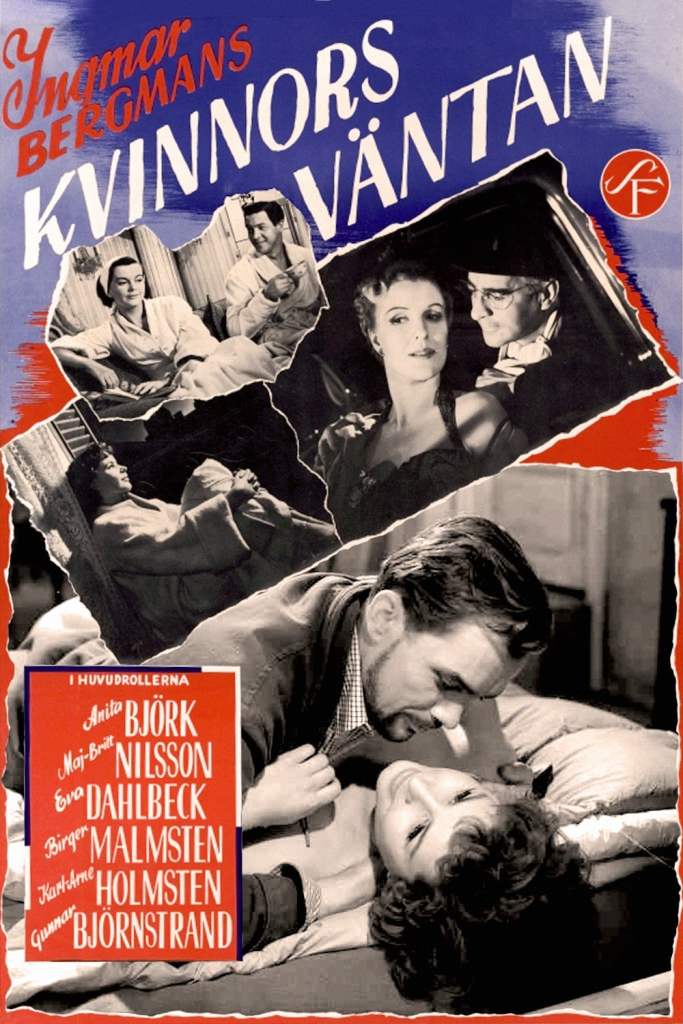
Waiting Women (1952)

Waiting Women (1952)

Bergman experiments with form and genre in this fascinating collection of female-led short stories

Director: Ingmar Bergman

Cast: Anita Björk (Rakel), Eva Dahlbeck (Karin), Maj-Britt Nilsson (Marta), Birger Malmsten (Martin Lobelius), Gunnar Björnstrand (Fredrik Lobelius), Karl-Arne Holmsten (Eugen Lobelius), Jarl Kulle (Kaj), Aino Taube (Annette), Håkan Westergren (Paul Lobelius), Gerd Andersson (Maj), Björn Bjelfvenstam (Henrik Lobelius)

Waiting Women is another early step in Bergman becoming one of the great directors in cinema. It’s easy to feel it’s a film worth seeing largely for completeness sake – I certainly felt that, seeing this unknown nesting at the bottom of a BFI box set containing Wild Strawberries, Smiles of a Summer Night and The Seventh Seal. But Waiting Women is a playful and inventive film that sees Bergman experimenting with form and genre and show-piecing his inventive use of the camera (it’s a key reminder this famed wordsmith also worked with two of the most gifted cinematographers in movie history, Gunnar Fischer and (later) Sven Nykvist).

Three women sit waiting at a country-side retreat (echoes of the holiday home in Wild Strawberries) waiting for their husbands (three brothers) to arrive. While they wait, they share stories. Rakel (Anita Björk) talks about her husband Eugene’s (Karl-Arne Holmsten) suicidal response to discovering her affair with childhood friend Kaj (Jarl Kulle). Marta (Maj-Britt Nilsson) remembers keeping her pregnancy from her now-husband Martin (Birger Malmsten), who she met thinking he was a penniless artist rather than the son of an industrial power-house family. And Karin (Eva Dahlbeck) remembers a night after a function which she and driven husband Fredrik (Gunnar Bjornstrand) spent trapped in a lift and almost rekindled the spark in their marriage.

Bergman’s takes these three stories and presents each in strikingly different ways. The first he packages as a full-blown romantic melodrama, with heightened passions, elaborate threats of death and dramatic proclamations of affection and desperation. The second shifts gear into a moody expressionistic drama, almost a silent-movie, with minimal dialogue and the scene shifting from striking shadow-play on hospital walls to silent comedy in a Parisian nightclub. The third caps the film with a single-location farce with witty wordplay and a dollop of sadness and regret.

It makes for a film that constantly surprises you – and a director looking to experiment and stretch his artistic legs, finding new ways of expressing himself in film. (He even pops up for a Hitchcock-like cameo!) It’s also three entertaining (in different ways) short stories and another, superb, Bergman female-centric film. Because, make no mistake, our sympathies are all with the women, whose stories leave you with more than a little impression – for all they have joyfully prepared the house for their husbands – that each of them are not leading the lives they might have wished.

The first story is the most conventional – perhaps because Rakel’s hormonal love-affair with a long-lost school friend feels like a twist on Bergman’s Summer Interlude. But all is carefully dialled up to eleven in a romance that would not feel out-of-place in Emily Brontë. The flirtatious lust between Rakel and Kaj – centred around a joint trip to a bathing house which drips with illicit sexual energy – simmers. There is an early Chekovian introduction of a gun, before Kaj’s essential coldness is revealed and Eugen’s shock swiftly turns to anger and suicidal resentment. It’s a marvellous Bergman scripting touch that Eugen always feels like the sort of man who will shoot himself to make his wife feel bad about herself rather than because of his own pain.

Bergman shoots it with brisk tracking shots interspersed with close-ups and allows the action to become increasingly bombastic as it builds towards its melodramatic conclusion of Eugen shuttered away in a boat house, threatening to end it all. It makes for a striking gear change as our second story begins, and the visual mastery of Bergman and Fischer’s partnership comes to the fore in a middle-chapter that homages the Silent Masters. Marta’s memories of her pregnancy and her meeting with her husband, begins with the nightmareish image of a face behind frosted glass, distorted out of all recognition (Bergman, as always, the lost great-horror director) before she finds herself in a hospital ward, breathing in anaesthetic gas, and seeing the shadows of the branches from the tree outside, twist and dance like possessive hands on the walls around her.

Played with a sympathetic sweetness, tinged with just the right touch of edgy defiance, by Maj-Britt Nilsson, Marta’s memories of meeting her husband in Paris plays out in her memory like an expressionistic film. In a Parisian nightclub, the camera ducks and swerves around exotic dancers, beautiful compositions of body and movement in every frame. She drops her GI boyfriend for a Martin after a series of surreptitious glances across the room and passed notes. Their courtship and early relationship in his blissful studio play out like a romance – until his family arrive with a chilling explosion of words about expectations and duties that shatter the illusion. The chapter closes with something that could be either memory or dream – Martin and Marta, with the warmth of their early days returned, on a beach together. Reality or regret? Bergman gives reasons to believe both.

The final story is the most enjoyable, lightest and also (in its own way) saddest. Beautifully shot largely in a single confined location – and this is a workshop for Bergman to build his confidence with composition – it gains hugely from the witty and controlled performances of Dahlbeck and Björnstrand as the austere married couple. Home truths and flashes of attraction seep out – and Bergman makes us feel for a moment that a corner has been turned when they return (at last) to their family home. It’s all an illusion though – its still Bergman after all – as the mood is shattered by Fredrik’s almost immediate resumption of his professional duties after a chance phone-call.

If its one thing you can pick up from these three stories, its that finding love, contentment and satisfaction is difficult for women. As three very different women, Björk, Nilsson and Dahlbeck are all superb, and the little hints of sadness Bergman gives all of them turns what could be a collection of shaggy dog stories into something suddenly, surprisingly, profound. Yes they are waiting – but is it for their husbands, or for the lives they (privately) might wish they had? As Marta’s sister Maj (Gerd Andersson) considers elopement with Marta’s nephew Henrik (Björn Bjelfvenstam), the normal expectations of discouraging such an action are challenged. After all, why shouldn’t Marta try for happiness? What’s the worst that could happen: that they could gain wisdom (as the other women have done?) from a summer of forbidden and confused love? Perhaps Bergman wanted to find out: his next film was the romantic first-love fable that turns sour Summer with Monika.

The Magician (1958)

The Magician (1958)

Illusion, faith and rationalism are all explored in Bergman’s fascinating musing on performance

Director: Ingmar Bergman

Cast: Max von Sydow (Albert Emanuel Vogler), Ingrid Thulin (Aman/Manda Vogler), Gunnar Björnstrand (Dr. Vergerus), Naima Wifstrand (Granny Vogler), Bengt Ekerot (Johan Spegel), Bibi Andersson (Sara), Birgitta Pettersson (Sanna), Gertrud Fridh (Ottilia Egerman), Lars Ekborg (Simson), Toivo Pawlo (Police Superintendent Starbeck), Erland Josephson (Consul Egerman), Åke Fridell (Tubal), Sif Ruud (Sofia Garp), Oscar Ljung (Antonsson), Ulla Sjöblom (Henrietta Starbeck), Axel Düberg (Rustan)

He who tells the truth may be the greatest liar. So thinks Mr Aman (Ingrid Thulin), in the carriage carrying him and the rest of Albert Emmanuel Volger’s Magnetic Health Theatre to a performance in a village in nineteenth-century Sweden. It’s fitting for Aman to thinking about it, since he’s actually Vogler’s wife Manda. The mute Vogler (Max von Sydow) claims powers of healing and mesmerism. But perhaps he’s making it up? If we peek behind the curtain, what is the truth?

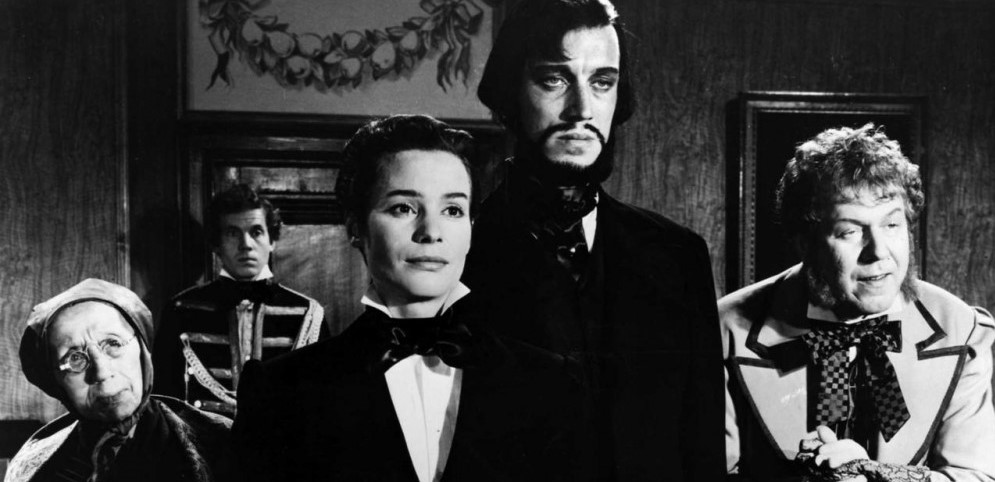
Peeking behind the curtain is exactly what their clients want to do. The troupe is due to perform before a trio of rationalists, practically falling over themselves to debunk every step Vogler takes. Dr Vergerus (Gunnar Björnstrand) is a chilly health official who only believes what his own hands touch. Consul Egerman (Erland Josephson) wants to prove it’s rubbish to his wife Ottila (Gertrude Fridh), while Police Superintendent Starbeck (Tovio Pawlo) is a swaggering bully who just likes making people feel small. But can the imperious Vogler turn the tables on these would-be myth busters?

Bergman first struck upon the idea for The Magician after observing how much audiences at the theatre wanted to go backstage and meet the actors – and how they were invariably disappointed when they did at how everyday it was. Based on a GK Chesterton play, The Magician is a multi-layered musing on the relationship between performance and viewing, and the conflict between rationalism and faith. At heart it sympathises with the plight of the performer, presenting their work to an unsympathetic, uninterested, unengaged and unimpressed audience.

The theatre troupe look all sorts of glamourous, with the eccentric costumes and their intriguingly unknowable personae. They offer a carnival of the weird and wonderful that fascinates the rationalists, in spite of how much they want to debunk it. But, as they strip down the acts, they find plainer, simpler, less mysterious people below. Despite their eagerness to know how the trick is done, they are disappointed to find out. They barely watch the acts, or listen to the skill of the performers, because they are focused on unpicking the minutia and detail (Bergman having a pop at pretentious critical writing like the material here perhaps?).

Our rationalists are, to a man, an unpleasant, smug and often insufferable bunch. They have a clear world view and anything unscientific doesn’t fit in it: even God is “totally out of date”. Tovio Pawlo’s Starbeck is a crude, jumped-up bully, who feels barely more than a step or two higher up the social pyramid than Vogler. Egerman (a wonderfully nervy and insecure Erland Josephson) is so in awe of facts and statistics he can barely think for himself. Really controlling things is Dr Vergerus, a masterful performance of arrogance and self-satisfaction masquerading as open-minded scientific enquiry from Gunnar Björnstrand.

Far from inquiring, Vergeus’ mind is rigidly closed to anything outside of his world view. People are categorised and little more than objects of curiosity – he even speaks (ominously it turns out) of an eagerness to dissect Vogler. Flashes of the supernatural or inexplicable are met with blank terror which Vergeus swiftly covers with cold impassivity. He has made up his mind well before Vogler arrives. Like the rest of the rationalists, he preaches absolute truth but only on his own terms.

And perhaps he’s right to, in a way. The troupe are liars – but at least they are honest about it. They claim magical skills of healing and love potions (“what the bottle looks like and the colour” is far more important than the contents) which they merrily flog to the credulous. Their magic tricks are dressed up in elaborate costumes and quasi-mystical business. Their promoter Tubal (another impressive, bombastic performance for Bergman from Åke Fridell) shamelessly peddles exaggerated stories of their mastery. They may be a glamourous, but they are also cheap.

And then of course there is Vogler, who has practically dressed himself as a prop. Coated in pale make-up, Fu Manchu facial hair and a flowing black wig, von Sydow presents Vogler as an enigmatic showman. Bergman makes fabulous use of his riveting stare – surely he doesn’t need any flim-flam to hypnotise when he can glare at you like that. There is a sadness to Vogler though: his faith in himself has gone. Encountering a dying actor on the road (a neat cameo from Bengt Ekerot – and a nice call-back to his and von Sydow’s Seventh Seal team-up), Vogler’s face leans forward in fascination, curiosity and a strange longing as the actor faces death, as if he is longing to touch powers beyond once more. Manda is adamant his powers used to be real, but behind the contemptuous and defiant stare it’s unclear if Vogler knows where he is going.

Not that it matters. He’s still got the star quality to leave Mrs Egerman weak at the knees, desperate to seduce him to touch a part of his magic. And the powers are still there – even in their first meeting, Vegeus feels a flash of discomfort as Vogler’s fixed stare causes his mind to drift (a fear he dismisses in seconds). Its only as Bergman’s film strips down the performance qualities of Vogler – his costume, his make-up, his stage persona – and leaves an off-duty actor, that the dark fascination of his clients finally snaps all together into smug, rationalist contempt.

But that’s not before Vogler turns the table on Vergeus with an unsettling confrontation in a locked loft, after a performance seems to have gone disastrously wrong. It’s Vogler’s intimidating “real performance” to prove he and his troupe can still engross and deceive their audiences. This horror-tinged, mesmeric sequence of reflections, shadows, distant sounds and small movements is another reminder of what a master of the cinema of terror Bergman could have been (imagine he had joined von Sydow for The Exorcist!). It’s a superb sequence that almost shakes Vergeus’ faith in his certainty, before becoming another confirmation of how dismissive audiences are when they find out how the trick was done (no matter the impact it had on them at the time).

The Magician isn’t perfect. The middle of the film spends a little too long with the servants in the belly of the house (a Bergman trope of delight for the love of simple, everyday pleasures among the working classes). But its exploration of rationalism and artistry is fascinating. There are masterful performances (in addition to the earlier named, Ingrid Thulin is outstanding). But there is a lingering sense underneath that perhaps Bergman is gently accusing us of being little better than the rationalists, eager to know how cinema works but then talking it down when we find out. Which I suppose means a review of it rather makes his point.

Wild Strawberries (1957)

Wild Strawberries (1957)

An aged doctor reflects on his past regrets and failures, in Bergman’s strangely optimistic masterpiece

Director: Ingmar Bergman

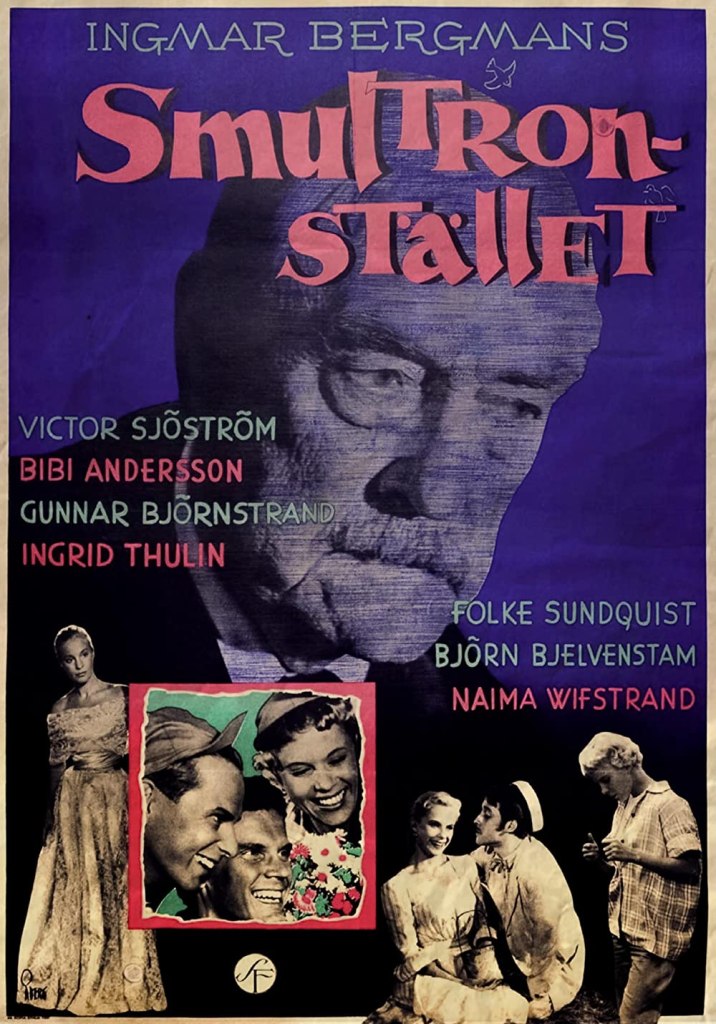
Cast: Victor Sjöström (Professor Isak Borg), Bibi Andersson (Sara/Sara Borg), Ingrid Thulin (Marianne Borg), Gunnar Björnstrand (Evald Borg), Jullan Kindahl (Mrs Agda), Folke Sundquist (Anders), Björn Bjelfvenstam (Viktor), Naima Wifstrand (Isak’s Mother), Gunnel Broström (Berit Alman), Gunnar Sjöberg (Sten Alman/Examiner), Max von Sydow (Henrik Åkerman), Ann-Marie Wiman (Eva Åkerman), Gertrud Fridh (Karin Borg), Åke Fridell (Karin’s lover), Per Sjöstrand (Sigfrid Borg)

Is anything in life more painful than regret? When we look back at our past mistakes, the things we wish had played out differently, the roads not taken, it’s difficult to accept there is nothing we can do about it. It’s the theme of Bergman’s beautiful, strangely optimistic Wild Strawberries (his third consecutive masterpiece, cementing him as one of the most distinctive, visionary directors in the world). Wild Strawberries is filmed with a virtuoso assurance, that still finds a genuine sense of optimism, despite the pain of the past.

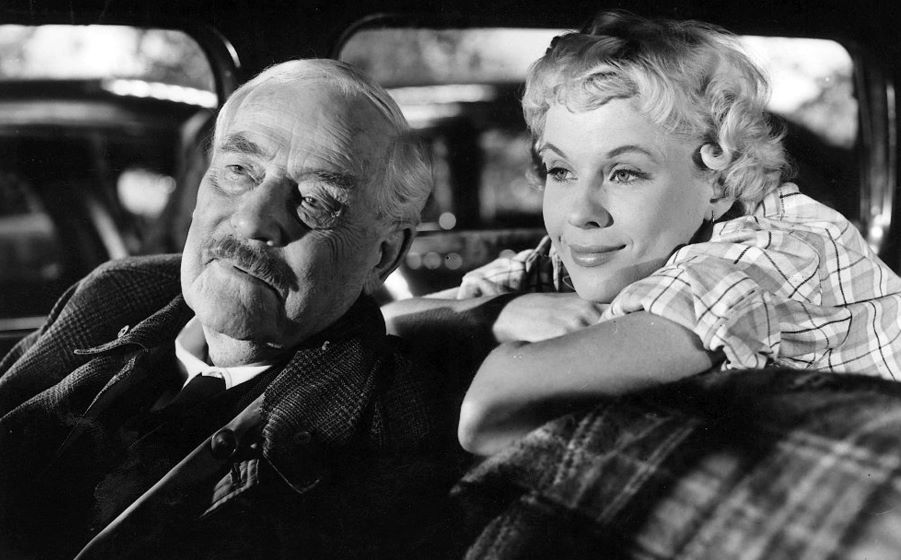
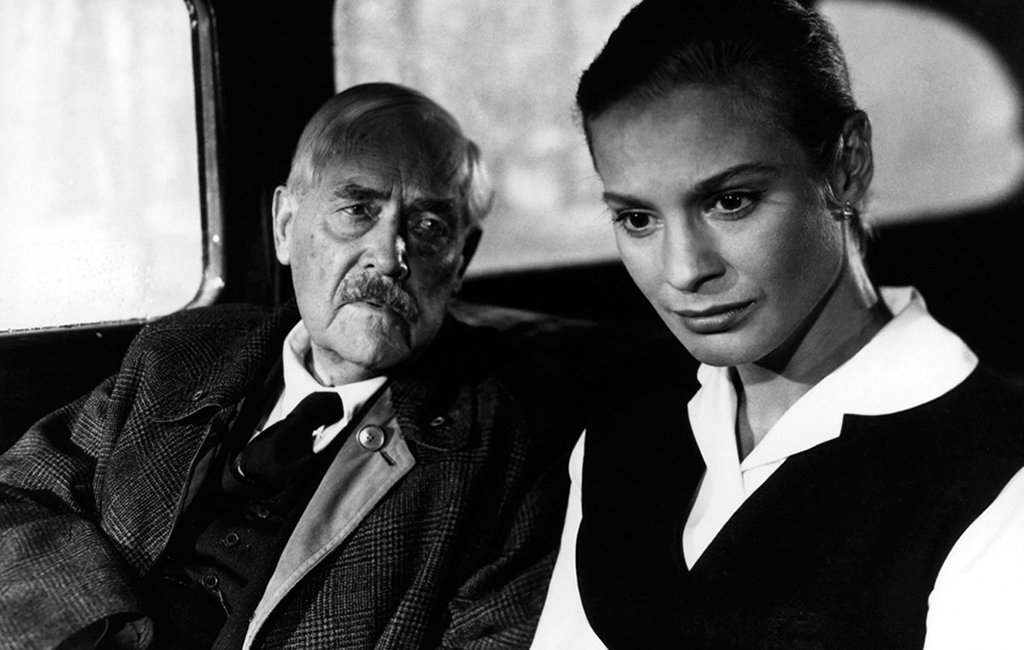
It’s about a long, single-day, road trip taken by famed, retired, medic Professor Isak Borg (Victor Sjöström, Sweden’s legendary father of cinema and Bergman’s idol) and his daughter-in-law Marianne (Ingrid Thulin). Isak is receiving an honorary doctorate in Lund but, after a bad dream, spontaneously decides to drive there. They drop by places with huge personal significance: the country chalet where he loved and lost his cousin Sara (Bibi Andersson) and the home of his mother (Naima Wifstand), who perhaps never really wanted him. Along they way they pick up a trio of young hitchhikers, one of whom, Sara (Bibi Andersson again), reminds him of his lost love. Will Isak come to terms with his regrets and failures?

The Wild Strawberries were collected by Sara on the birthday of her and Isak’s uncle. They are touch points in Isak’s memories, a reminder of the summer when Sara broke off her engagement with him to marry his more fun brother Sigfrid (Per Sjöstrand). Did that moment set Isak on the path of distant, judgmental coolness that defined his whole life? Or was he always bound to become who was, especially since his mother matches him for chilly distance? Is the cycle destined to continue, as Isak’s son Evald (Gunnar Björnstrand, full of cold nihilism) is just as austere as his father?

Bergman‘s radiant memory piece, explores all this without casting judgment. Wild Strawberries profoundly studies the regrets that come with facing your mortality. Isak becomes so lost in his memories, he literally becomes a silent witness in them. Sjöström’s beautifully expressive face lights up with a mixture of powerless pleasure, sadness and longing as he sees Sara once more – its implied the only woman (or indeed person) he has allowed himself to purely love.

What’s striking though, is that Isak’s memory of her – flirting with Sigfrid and then tearfully telling another cousin that Isak is so nice but… – is not a memory he can possibly have. He was never there: it can only be his supposition. It’s the same with the birthday party of his uncle (Bergman fills this with some great comedy, not least two gossipy pre-teens who talk simultaneously), an event he was not present at. Isak clings to these as memories, but they are imaginings. It’s not a card the film plays heavily: but Isak is, essentially, an unreliable narrator showing us his version of the past. It makes you wonder: are we all unreliable narrators of our own memories?

Is Wild Strawberries actually a dream piece? These recollections are daydreams, helping Isak accept his choices, and begin to find peace. The film opens with a striking surreal – and chillingly horror tinged – dream sequence that inspired hundreds of imitators: Isak walks an abandoned street, clocks lack hands, a faceless man collapses into water, a hearse overturns and when Isak investigates his own hand emerges to pull him in. (The unsettling artifice of this sequence is so masterful, it makes you realise Bergman could have become the king of terror if he’s wanted to).

A series of sequences take place halfway between dream and memory. In one he’s challenged by a cold and formal Examiner (a mirror of Isak himself?) with unanswerable questions, diagnosed with guilt and loneliness and then taken to witness his most vivid memory – watching his wife in the throws of passion with another man. The memory changes from reality to dream as Isak’s wife (an unsettling Gertrud Fridh) – who loathes him – sits up and dispassionately recounts their conversation later when she confessed/rubbed-his-face-in her infidelity. These aren’t straight memories.

Isak’s reminiscences creep up on him. It’s started by his daughter-in-law Marianne flatly telling him she can’t stand his aloofness and self-satisfied smugness. He seems unmoved: but does it prompt him to take her to the chalet of his childhood, to try and prove her wrong? Surely it can’t be a complete coincidence he awakes from a dream of Sara, by another Sara (Bibi Andersson brilliantly distinguishes between these two very different women, who both speak to repressed romantic yearnings in Isak) or asks for a lift? My private theory: I think Bergman is implying only Isak sees these two people as identical in appearance, like he plops past-Sara’s face on hitch-hiker-Sara’s body. It’s another walking semi-memory-dream.

Sara is one of several people prompting Isak’s reflection and changing our perceptions. Why did he become a man so detached he barely bats an eyelid when his daughter-in-law rubbishes him? A feuding couple the group pick up after a road accident – whose abuse of each other gets so personal and cruel, Marianne throws them out of the car – could almost be past versions of Isak and his wife. How miserable must his marriage have been? When Isak is feted as a doctor at a small village (a neat Max von Sydow cameo), how much does his sad observation that perhaps he should never have left further trigger his softening character?  As hiker-Sara talks about romance and opportunity, how much does this make Isak think about the staid, loveless respectability of his own life?

Our understanding of Isak is also partly filtered through Marianne’s perception of him. Ingrid Thulin is glorious as a woman whose marriage (to a knock-off prototype of his father) is on the rocks due to her husband’s callous loathing of the world. When she meets Isak’s mother, Thulin’s face radiates understanding of how this woman shaped Isak, who in turn shaped his son. As Isak begins to talk about his past and his fears, it prompts her own willingness to confide in him – something she would never have considered at the film’s start. As Marianne changes her perceptions, so do we.

Wild Strawberries benefits most of all from the wonderfully valedictory performance of Victor Sjöström. Bergman begged his mentor to take the role on, and it produces a cinematic wonder. Sjöström is in every scene and his face fills with such powerful emotion – from distraught regret to wistfulness to confusion to a peaceful radiance – that Bergman allows it to dominate the frame at key points. Its an unforced, gentle and underplayed performance with real emotional force.

Not least because, at heart, this is an optimistic film that tells us its never too late. Sure, we can regret mistakes and lost opportunities: but it shouldn’t close our hearts. Isak learns he has been wrong in closing his heart: there is life, warmth and happiness out there for the taking. It comes together in a final dream/memory, as Isak rediscovers a happy memory of his parents (all the more powerful for how few and far these must be) and Bergman’s camera (shot with majesty by Gunnar Fischer) trains one final time on Sjöström’s face and we understand that he has, at last, come to terms with his life. For a director famed as the master of misery, Wild Strawberries shows he could also frame a story of optimism, growth and understanding, making Wild Strawberries one of his most affecting movies.

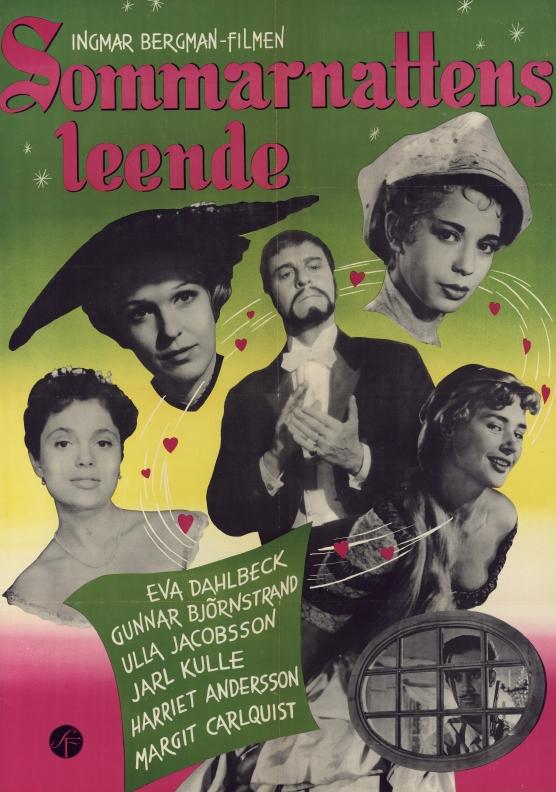
Smiles of a Summer Night (1955)

Smiles of a Summer Night (1955)

Sexual and romantic comeuppances abound in Bergman’s landmark comedy of manners

Director: Ingmar Bergman

Cast: Eva Dahlbeck (Desirée Armfeldt), Gunnar Björnstrand (Fredrik Egerman), Ulla Jacobsson (Anne Egerman), Björn Bjelfvenstam (Henrik Egerman), Harriet Andersson (Petra), Margit Carlqvist (Countess Charlotte Malcolm), Jarl Kulle (Count Carl-Magnus Malcolm), Åke Fridell (Frid), Naima Wifstrand (Mrs. Armfeldt), Jullan Kindahl (Beata), Gull Natorp (Malla), Gunnar Nielsen (Niklas), Birgitta Valberg (Actress), Bibi Andersson (Actress)

An Ingmar Bergman comedy? Surely a contradiction in terms, right? Like Da Vinci spraypainting graffiti or Austen writing a jingle. The Swedish master is near synonymous with glacial, Scandi-misery, not material that will be transformed into a Sondheim musical. But yet: Smiles of a Summer Night was the big smash-hit that guaranteed Bergman lifetime artistic independence (he followed it with the one-two punch of The Seventh Seal and Wild Strawberries that made him untouchable as Sweden’s premiere Artist). A Bergman comedy was never going to be a Ray Cooney farce, and while there are pratfalls and farce here, this film is an exploration of manners with more than hint of Shaw and Wilde, mixed with echoes of filmic greats like Ophüls and Renoir.

Set in turn-of-the-last-century Sweden, the film follows the romantic and sexual entanglements of a series of would-be couples. Fredrik Egerman (Gunnar Björnstrand) is a respected middle-aged solicitor, who hasn’t consummated his two-year marriage with 19-year old Anne (Ulla Jacobssen). This is partly due to her anxiety about sex. But really both of them are in love with someone else. Fredrik with his old mistress, celebrated actress Desirée Armfeldt (Eva Dahlbeck). Anne with Fredrik’s young son Henrik (Björn Bjelfvenstam) who is also in love with her. Henrik is flirting with house maid Petra (Harriet Andersson), who doesn’t seem averse to a relationship with any member of the Egerman family. Desirée is having an affair with Count Malcolm (Jarl Kulle), whose wife Charlotte (Margit Carlqvist) is considering infidelities of her own just to get his attention.

All of these potential couples merge, swop and work out their feelings overnight at the country house of Desirée’s mother (Naima Wifstrand) during one of the longest days of the year, where the sun hardly sets and people traditionally stay up until dawn. There is more than a touch of the theatrical about all of this – particularly with Bergman’s arch, intelligent dialogue – with the country house as a setting beautifully formal and strangely other-wordly. You can sense the theatrical influences here – Bergman had just directed a production of The Merry Widow – with the characters riffing with Wildean wit and insight, in typically Shavian set-ups.

What we get is a high comedy of manners, that’s also coated in a rich, insightful poetry that gives it a great deal of meaning. There is farce here – including a room with a switch that drags a bed from a neighbouring room (with occupant!) into it. There are several funny lines – many from Jarl Kulle’s hilarious heartless count, who doesn’t care who flirts with his wife until someone actually takes him at his word. There are pratfalls – Henrik has a superbly bleak bit of pure farce near the end that tips into erotic joy (“If the world is full of sin, then I want to sin”). The pompous Fredrik is constantly humiliated, from falling in a puddle to being thrown out of Desirée’s apartment in nothing but a borrowed nightshirt and a pair of slippers. There is no end of sexual suggestiveness, from Harriet Andersson’s gorgeously flirtatious maid (“Hurrah for vice!”) to hints about Mrs Armfeldt’s past (“I was given this estate for promising not to write my memoirs”).

Being Bergman though, this is the sort of romantic comedy that ends with a duelling game of Russian roulette and where we learn as much about human nature as we enjoy the scripted bon mots. Namely, that people – especially men – never seem to know what they want. Fredrik spends a huge chunk of the film persuading himself he is deeply in lust with Anne – although its pretty clear that he’s barely interested. Marriage and relationships in this case are gilded cages that lock people into things they barely want. They don’t even lend themselves to communication – the Malcolm’s marriage doesn’t seem to be based on any communication at all.

So, no wonder it needs a bit of Midsummer Night’s Dream style madness to try and sort it all out. Before that short night, the characters all down a particularly intoxicating wine that they are warned will bring down all their restraining impulses (whether that’s true or not, it certainly does). It’s part of a plot by Desirée – a superb Eva Dahlbeck, serene and glamourous, but also a battle-axe force-of-nature who knows exactly what she wants and how to get it – to resolve all complications for the (her) best, carried out in partnership with Caroline, a woman she’s far to savvy to let something petty like sleeping with her husband get in the way of useful friendship.

Contrasted with all these slightly restrained middle-class people who struggle to understand or express their real feelings, or (like the Egermans) seem to feel a slight guilt at sex anyway, we have the more earthy and free Petra, radiantly played by Harriet Andersson. Andersson gives Petra a flirtatiousness that sees her go from unbuttoning her top to attempt to seduce Henrik, to rolling in a bed with Anna. While the upper classes engage in a formal dance, she seizes life and opportunities – and ends up well-matched with the equally down-to-earth chauffeur Frid (an exuberant Åke Fridell), who like her doesn’t muck around when there is a chance to grab a bit of joy.

Not like the Egermans. Fredrik – a beautifully reserved Gunnar Björnstrand – should want Anna, but all the starring at her photos in the world won’t stop him muttering Desirée’s name while he sleeps. Not that it will allow him to try and rekindle his past relationship with her. Anna (a luminous Ulla Jacobsson), nervous about sex or rather nervous about her feelings with Hendrik, channels her feelings into jealous criticisms of his clothing after catching him naively succumbing to Petra’s flirting. Henrik (Björn Bjelfvenstam, very funny in his bemused wetness) is so inept in his romance of either woman, he barely seems to know what he wants.

Perhaps Desirée recognises all this is a bit of prime, Theatrical nonsense and tries to solve it all accordingly. After all her whole life is the theatre – from treading the boards, to singing and dancing while walking late at night with Fredrik. And it was for Bergman – that and film, which is why perhaps the film has echoes of Jean Renoir’s Le Regle de Jue with its country house romantic intrigues and Max Ophüls partner swopping La Ronde. And Smiles of a Summer Night is a beautifully mounted film, shot with a luscious, poetic beauty by Gunnar Fischer.

The whole film is a complex dance – you can see why it was ripe for Sondheim – that also explores profoundly the romantic and gender clashes between men and women. Men who are in a position to take what they want, but have no idea what that is. Women who know far more, but must be smart about how to achieve their goal – or like Petra willing to embrace a wild abandon to live in the moment. It may be a theatrical, drawing-room, sex comedy of sorts: but it’s also a film about humanity and people’s fates, all under the eyes the suggestively supernatural power of a smiling summer night. Perhaps its not such a contradiction of Bergman terms after all.

The Seventh Seal (1957)

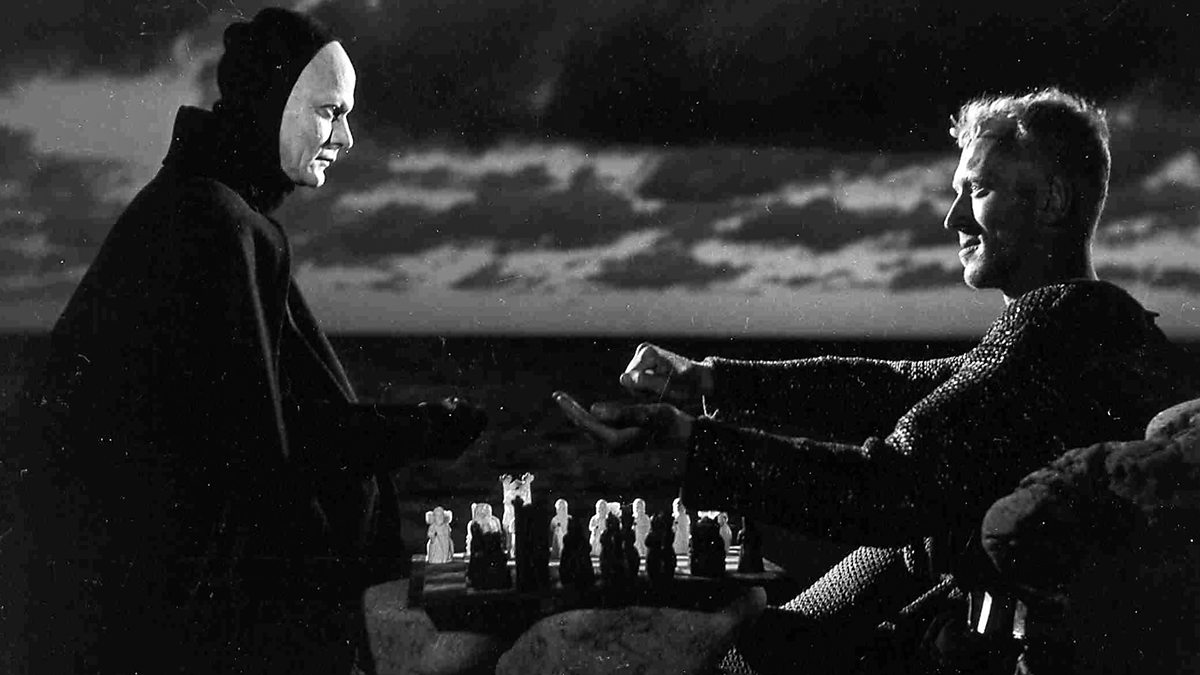
Death plays chess in Ingmar Bergman’s The Seventh Seal

Director: Ingmar Bergman

Cast: Max von Sydow (Antonius Block), Bengt Ekerot (Death), Gunnar Björnstrand (Jöns), Bibi Andersson (Mia), Nils Poppe (Jof), Erik Strandmark (Jonas Skat), Åke Fridell (Plog), Inga Gill (Lisa), Bertil Anderberg (Raval), Gunnel Lindblom (Mute girl), Inga Landgré (Karin)

Is there a more famous arthouse film than The Seventh Seal? Winning the Special Jury Prize at Cannes, the film turned Ingmar Bergman into the doyen of the Arthouse across the world and many of its actors into major figures of world cinema. The film so captured the imagination it became one of those films that falls slightly in and out of fashion, largely because it’s almost impossible to come to it fresh. Its style, images and concepts have been so echoed, parodied and teased ever since that it’s become a corner stone. But it should stay in fashion, because it’s a well-made and intriguing film.

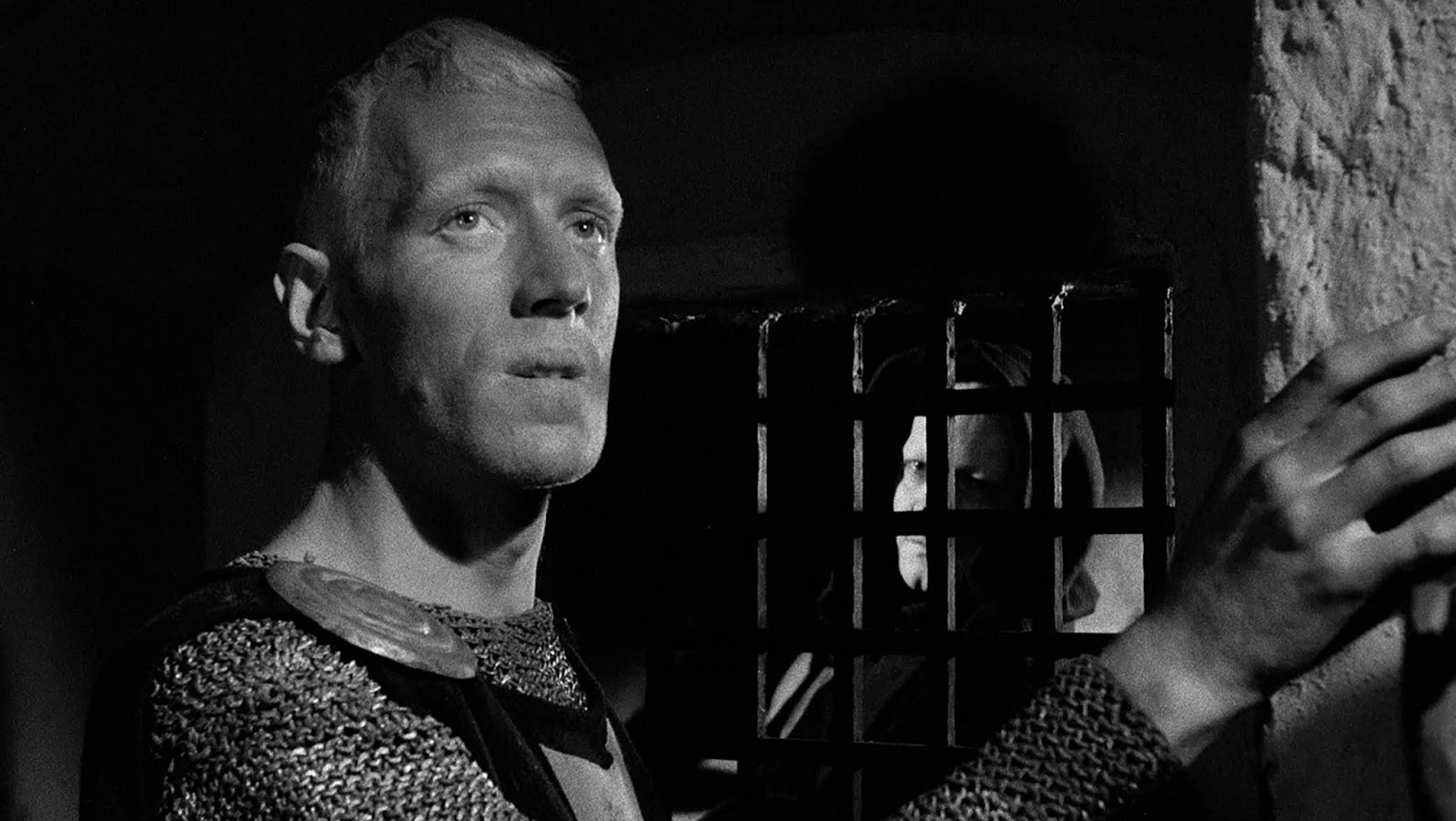
In the fourteenth century, a knight, Antonius Block (Max von Sydow), washes up on the shores of Denmark with his squire Jöns (Gunnar Björnstrand). Death (Bengt Ekerot) comes for them, but Block challenges him to a game of chess. If Block wins, Death will leave him be if Death wins Block will go with him. Death accepts, and Block seizes the time this will give him to try and understand more about faith, destiny and man’s place in God’s plans. As the game stops and starts, Block and Jöns travel to Block’s estate, encountering and befriending along the way Jof (Nils Poppe) and Mia (Bibi Andersson) a pair of travelling actors, just trying to make their way in the world.

Bergman’s film is shot in a luscious but very simple black-and-white and juggles profound issues about mankind and faith with an imagination-capturing central concept of man playing chess with death. Bergman based the film on a woodcut from the famous Swedish artist Albertus Pictor (who appears in the film, decorating a church with images of death and plague – themes that run throughout the film) and used it as a jumping off point for a meditations on the inevitable end.

It makes sense then to set the film in the medieval era, where death indeed may well feel like a constant companion. Bergman’s medieval world is a smorgasbord of medieval tropes – some have criticised the historical accuracy of Crusades, plague, flagellants, Pictur, witch trials etc. all happening at the same time, which seems bizarre criticism for a film that features a white faced Death prowling the countryside with a chess board. It works very well though for creating a sense of a parable around the whole film.

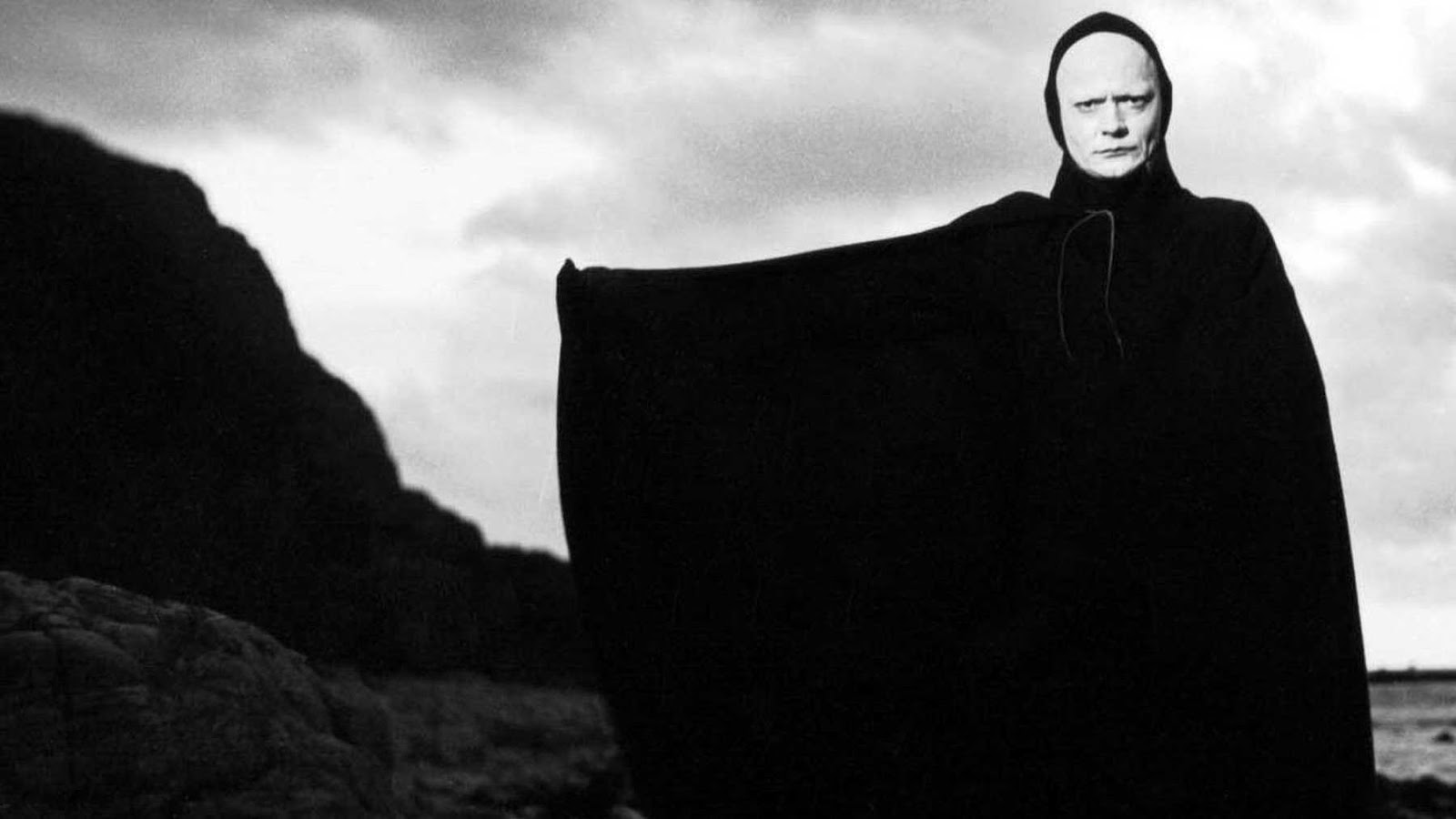
Death is a continual in the film. A crowd of flagellants marches through a village at one point, a monk stopping only to harangue the crowd on the fury of God, before a mist descends and seems to pick off most of the crowd, several flagellants disappearing as they walk, leaving a mostly empty field. It’s a visual picture of death, Plague carries off one and all, an active representation of mortality. It leaves a world in which man either contemplates, gets angry or decides to just live day-to-day – reactions that we see in all the film’s characters.

Of course, Block takes the contemplative route, vainly asking what it is all about – what is God’s plan and what meaning does life have? Perfectly using von Sydow’s imperious chill, Bergman makes Block an intellectual straining for understanding, an aesthete who wants to believe his time on earth has all been part of some plan and that he himself has done (or will do) something that matters. Von Sydow is particularly fine in the role, not least in his agonising confessional scene where he slowly but with an increasing world-weariness unburdens his soul to a priest he cannot see – but who we see is of course Death himself.

But that’s just another low blow from Death, a fascinating figure. Played with a benign politeness by Bengt Ekerot, Bergman presents a Death who is cunning, intrudes on world events and doesn’t play fair. He cons Block into telling him a winning chess stratagem, cuts down a tree to claim the soul of the man hiding it and reveals himself to be the leader of a group intent on burning witches. He may be polite but he’s ruthless. No wonder he inspires such fear, and Ekerot may smile but it’s the smile of a man who knows he will win no matter what and everyone will come with him eventually. 

So what is the secret to what life is all about? In Bergman’s medieval world, God seems silent. We see two religious figures: one the haranguing Monk, the other the fallen Priest Ravel – a thief, a liar and a bully. The priest in the Church they visit turns out to be Death. The countryside is vast, unfriendly and bleak. Block’s quest to understand something of what man’s role in creation is seemingly doomed. Perhaps his squire – an excellent Gunnar Björnstrand – already understands what Block needs to learn: there is no grand secret, we must simply enjoy the moments we have been given. His squire is a simple, decent (for his time), unpretentious man with some sense of justice. And maybe that’s the trick.

It certainly seems to be the case with Jof and Mia, the more homespun actors who take pleasure in their family, their lives and the outside and welcome strangers with open arms. Extremely well played by a naïvely sweet Nils Poppe and a radiantly kind Bibi Andersson, these two (with their baby son) are the only people happy. And that happiness even spreads to Block, who starts to forget his concerns with finding a secret to life in the simple happiness of an honest meal, kindly shared. Even Death comments that Block’s interest in the game seems to fade from here.

Block’s struggle to understand why we are here, his straining for some sign and his belief (perhaps) that with this he can escape Death slowly melts under his understanding that life is what is around us and the people we share it with, perhaps not some sort of cryptic puzzle for him to untangle. And that’s Bergman’s message as well perhaps, that among our concerns to understand and control our destiny, the most truth (and pleasure) can be found in not thinking about these things. Jof sees early on a vision of the Holy Mary (we do not see it only his face). His wife laughs it off, but later only Jof can see Death – if one vision is true, why not the other? Is Jof’s innocence and decency perhaps the key?

And that is why perhaps Jof and Mia are the only two to escape Death’s grasp. Block finds his moment of purpose – and the quiet smile von Sydow gives here is perhaps the finest moment of his performance – distracting an unknowning Death to let the family escape in the forest. Death relentlessly comes for the rest of the characters at Block’s estate – to be met with anger, begging, resignation, bitterness and a strange, beatific acceptance from the mute housekeeper, who Bergman slowly tracks in on until her face fills the frame.

Death then takes them all – giving us the film’s final enduring image, a recreation of Pictur’s painting of Death leading the dead souls in a grim dance to eternity across the hills, each of them flowing in a line behind them seen only by Jof. 

What is Bergman’s marvellously assembled – and it is perfectly filmed and edited – film about exactly? Finding peace and acceptance with what is around us and our place in the world perhaps, but it’s such a rich and rewarding film that it unravels other meanings and messages throughout every frame. It deserves to remain in fashion for as long as there are films.