
Well made Dickens adaptation, that manages to streamline the novel very successfully
Director: Jack Conway
Cast: Ronald Colman (Sydney Carton), Elizabeth Allan (Lucie Manette), Edna May Oliver (Miss Pross), Reginald Owen (C.J. Stryver), Basil Rathbone (Marquis St. Evremonde), Blanche Yurka (Madame Therese De Farge), Henry B. Walthall (Dr. Alexandre Manette), Donald Woods (Charles Darnay), Walter Catlett (John Barsad), Fritz Leiber (Gaspard), H. B. Warner (Theophile Gabelle), Mitchell Lewis (De Farge), Claude Gillingwater (Jarvis Lorry), Billy Bevan (Jerry Cruncher), Isabel Jewell (Seamstress)
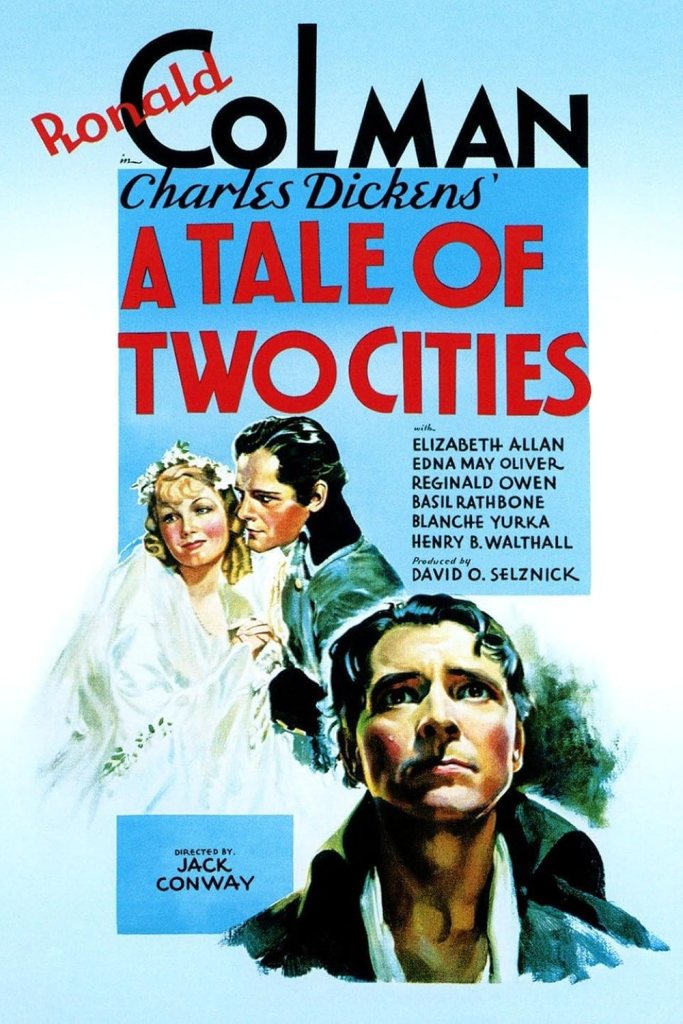
“It was the best of times, it was the worst of times” and “It is a far, far better thing I do now…”. Are there more famous openings and closings in literature than these from Dicken’s A Tale of Two Cities? The novel is bought marvellously to life by David O Selznick in his follow-up to David Copperfield. It still might just be definitive. With several impressive actors embodying some of Dicken’s most memorable characters, grand sets and a fabulous mix of faithfulness and pacey condensing, A Tale of Two Cities stands as one of the finest Dickens adaptations.
The plot sticks faithfully to the book: Lucie Manette’s (Elizabeth Allan) father Dr Manette (Henry B Walthall) is recalled to life and released from the Bastille in the 1780s. They travel to England where Lucie Manette falls in love with the heir to the Maquis St Evermonde (Basil Rathbone), Charle Darney (Donald Woods) who has forsaken his families wealth and cruelty. But she is also loved by dissolute-but-brilliant lawyer Sydney Carton (Ronald Colman). When the French Revolution strikes, Darney returns to France to rescue an old family retainer only to be arrested and condemned to death by a mob whipped up by the vengeful Madame De Farge (Blanche Yurka). How far will Carton go to save the man who has the wife and family he has dreamed of?
A Tale of Two Cities pretty much perfectly captures the atmosphere of Dickens’ novel, from its mist-filled opening with a carriage rattling through the French countryside via its vivid bringing to life of a gallery of Dickensian eccentrics through to its closing sections, deep in the heart of Revolutionary France. The novel has been skilfully condensed down by WP Lipscomb and SN Behrman’s script, so that every beat is recognisably in place without the film stretching out with overwhelming length.
It manages to capture the humour in many of Dickens side characters, from the corrupt chancer Barsard, the puffed-up lawyer Stryver to the surprisingly decent graverobber (or Resurrectionist as he prefers) the brilliantly-named Jerry Cruncher. Sequences, such as Darney’s early trial (on trumped up charges of treason) and his brilliant acquittal by Carton (working silently through Stryver) are perfectly executed. The homely gentleness of the Darney family life, that so crucially melts Carton’s cynical heart, are perfectly captured. The heart of the novel is very effectively bought to life.
So is its portrait of a France crammed with injustice, righteous anger and murderous, indiscriminate fury. The trampling of a young boy by the Maquis’ carriage (the Maquis a perfect portrait of imperious arrogance from Basil Rathbone) is shocking, echoed later when a cavalier’s horse tramples a woman at a food riot (an effect only marginally weakened by the fact it’s clearly a dummy). In impressive, Eisenstein-inspired sequences that cut between grand scale and enraged, impassioned faces, the revolution takes full effect with an impressive storming of the Bastille. (These grand sequences, were directed by Jaques Tourner and Val Lewton).
Among the French it’s easy to feel sympathy at first for the De Farges, Mitchell Lewis’ Ernest a genuinely decent man moved to violence after years of provocation. His wife, brilliantly played by Blanche Yurka, is a similarly impassioned witness to cruelty and abuse, but whose fanaticism and unbending fury tips her from a sympathetic if cold figure into a relentless killer who doesn’t care who pays the price of her quest for a personal revenge. Yurka’s grim-eyed obsession is perfectly portrayed in a low-key performance which bubbles with menace. She also has one of the most striking fights in 30s cinema with Edna May Oliver’s (who is outstanding as one of her patented Maiden Aunt figures) Miss Pross.
Finest of all is Ronald Colman, in a role he was so desperate to take he even agreed to shave off the iconic moustache. Colman superbly brings to life the cynical, sardonic lawyer with a real relish but gives his playful drunkenness a deeply melancholic sense of loneliness. When he speaks with Lucie, Colman’s sadly resigned pleasantness expertly communicates both his live, regret and acceptance that he can never speak of his feelings. Colman insisted that he not, as is often the case in adaptations, also play Darney (the book’s crucial plot point that the two men are all-but identical is completely written out) so he could focus on this crucial character, and it pays dividends with possibly a career-best performance.
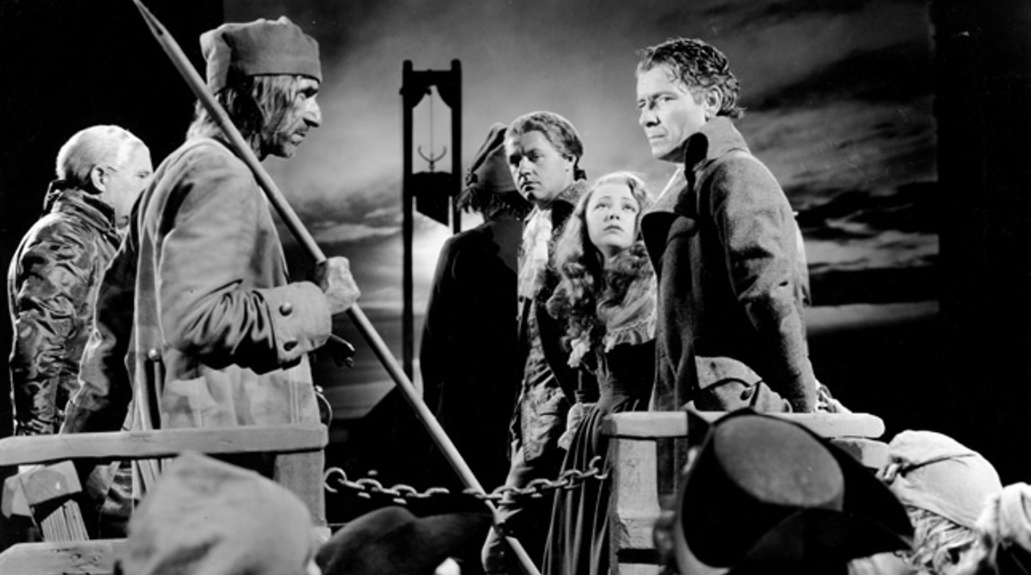
Colman is essential to the film’s powerfully affecting final sequence, that follows the fate of those condemned to die at the guillotine, his brave acceptance of his fate, expertly tinged with a little touch of fear and a genuine contentment that in sacrifice his life finds meaning. Isabel Jewell makes a fine companion in this sequence as a wrongly condemned seamstress, she and Colman forging a tender and genuinely moving bond. The film finds a real nobility and tragic force in this sequence, while not shirking in the horror of mechanised death or mob rule.
Not everything works perfectly. Jack Conway, who directed most of the dialogue parts, is not the world’s most inspired visualist and while he draws fine performances from the cast, these sequences are strikingly flatter and more theatrical than the more epic sequences. Donald Woods, as Darney, admittedly given very little to work with (also from Dickens), makes a particularly bland Darney while Elizabeth Allan’s Lucie is also less of a dynamic presence than the story really needs.
But these are gripes in a production that is actually both an very effective film and has some striking performances of an expert Dickensian nature with Ronald Colman in particular outstandingly and richly humane, funny and moving. It’s telling that no adaptation since as ever managed to so effectively capture the tone of the novel, communicate the story so skilfully or carry as much pathos, tension and even humour as this one manages. As a Dickens adaptation, it very much the best of times.
 Movie Musings