Tag: Jack Conway

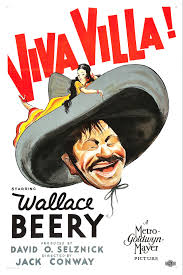
Viva Villa! (1934)

Viva Villa! (1934)

Despite some impressive moments, this largely fictional epic veers wildly in tone from scene to scene

Director: Jack L Conway

Cast: Wallace Beery (Pancho Villa), Leo Carrillo (Sierre), Fay Wray (Teresa), Donald Woods (Don Felipe), Stuart Erwin (Johnny Sykes), Henry B Walthall (Francesco Madero), Joseph Schildkraut (General Pascal), Katherine de Mille (Rosita), George E Stone (Emilio Chavita)

It’s not often a historical epic opens with text explaining pretty much everything you about to see in it is made up. But that’s what you get with Viva Villa!, nominally about the life of Pancho Villa, but so unconnected to real events that the Mexican government (who hosted a fair bit of the filming) called for it to be boycotted. This didn’t stop Viva Villa! becoming the biggest box-office hit of the year. This feels like bit of a mystery today with its strange mix of broad comedy, historical sweep and surrealist darkness. In other hands, it might have been a masterpiece (perhaps Howard Hawks’ hands, if David O Selznick hadn’t fired him and hired placemen Conway), but here it’s merely a competently executed semi-epic that works best if you accept its fictional.

As a boy, Pancho Villa (Wallace Beery) watched his father whipped to death by the Spanish Dons that rule the roost in Mexico. Now it’s the 1910s, and Pancho is a brutal bandit dishing out vigilante justice to the peasant’s oppressors. It takes a gentle man of vision, Francesco Madero (Henry B Walthall), to convince him there are better things to fight for than just grabbing a wife in every town. Pancho joins the revolution, helps place Madero on the (Presidential) throne – only to have his rival General Pascal (Joseph Schildkraut) orchestrate his banishment. But, when Pascal murders Madero, nothing is going to stop Pancho returning to wreak vengeance and bring justice.

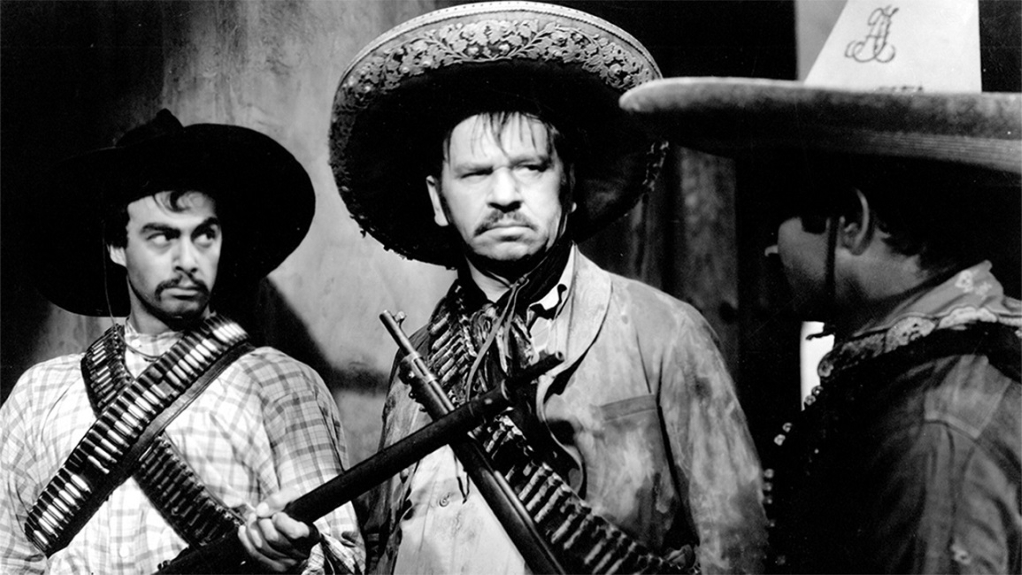
Viva Villa may be, tonely, a very confused film (of which more later), but it undeniably has several moments of grand filming, James Wong Howe’s photography is a gorgeous parade of shadows, with scenes such as Villa’s unilateral execution of a parade of officials playing out with stream of light pouring from a window to cast gigantic shadows of hands and weapons on the walls behind them. Later war sequences, featuring further firing squads and executions, have a Goya feel to them with their thunderous dark lighting and towering shadows. The on-location shooting is impressively grand – so much so, it shows up the painfully unconvincing back projection that places Beery and others in front of troops of real armies.

However, the film never quite decides what to do with its hero (anti-hero?). Wallace Beery basically plays the same character he did in The Big House (but with a painful Mexeecan accent): a not-too-bright lug, with a capacity for violence and a childish sense of loyalty. The film never quite knows what to do with him. He’s introduced like a sort of Mussolini-strong man, cracking smiles when he has a group of “just following orders” officials gunned down in front of a ‘jury’ of recently executed peasants they have (not surprisingly) failed to convince. Like some sort of randy Speedy Gonzalez, there is a lot of fun had at his taking a wife in every town. He excuses his campaign of brutal violence during the revolution with a cheeky smile, like he’s been caught with a hand in the cookie jar. He leers over Fay Wray’s Teresa like a second King Kong and frequently kills with a smile and no second thoughts. He’s a ferocious force of destruction.

But then he’s given moments of genuine heroism. He accepts his banishment with a wry shrug. His loyalty is as highly praised as his “don’t take your hats off to me” egalitarianism. He’s presented as the sort of incorruptible, plain-speaker the country seems to need to solve its problems. Ahistorically becoming President, he remains uncorrupted, talks down his suitability for the job and humbly plays down his achievements – all while doing everything he can to protect those peasants rights. At moments like this, he’s less a chillingly ruthless men capable of great violence but a lovable rogue, bashfully pinching a minor treasure from the Presidential palace. But then he’s also a guy who a few moments earlier made an enemy for life by whipping Fay Wray half-to-death in a fit of frustrated lust (another scene making marvellous use of shadows).

There is no coherence to this: it feels like Villa is whatever the scene requires him to be in the moment. Moments of comedy land a bit awkwardly, when we’ve watched Pancho gun down a relatively inoffensive bank manager. And, vampish as Wray is, she hardly deserves her fate or the general indifference Pancho meets it with. The tone shifts feel awkward and jarring, just as the shifting of Pancho’s character feels random and calculated moment-by-moment. You can say the same for Madero, played with a wispy gentleness by Henry B Walthall: he’s partly a sort of secular-saint (with his own gently inspiring music), partly a naïve, weedy weakling who literally needs someone else to open his heavy office door whose enemies run rings run round him. At least Joseph Schildkraut, a preeningly camp villain caked in brown make-up, has a consistent character (even if its two dimensional) as an unashamedly selfish general, jealous of how much Pancho’s men love him. Similarly, socialist journalist John Reed is reimagined here in a tediously crude performance by Stuart Erwin as a barely competent drunkard.

It’s all part of what is a big, brash, crude epic that frequently aims for the crude, comic angles it can find whenever it can. Which is odd, as I say, for a film with such a ruthlessly high body-count (everyone from countless prisoners of war, weeping officials and even an inoffensive bank manager gets it) and has its vampish female lead fend off possible rape by our hero only to be beaten in silhouette and accidentally shot. What becomes clear in fact as it goes on, is that it seems to see Mexico as a country of wild, destructive children – like a sort of Lord of the Flies among the revolutionary set. Every Mexican character in it, except Manduro, is basically dirty, none-to-bright and impetuous (needless to say none of them are played by actual Mexicans).

Which, when you think about it, is a little uncomfortable (not helped by the fact the Spanish Dons – the likes of Donald Woods – all speak with comfortably refined mid-Atlantic accents). In that context, it’s less of a surprise to remember that the Mexican government basically banned it. There are several handsome moments of filming, and its scale is impressive, but with its tone varying wildly and a Beery lead performance that feels oddly out of place it only rarely works as well as it should.

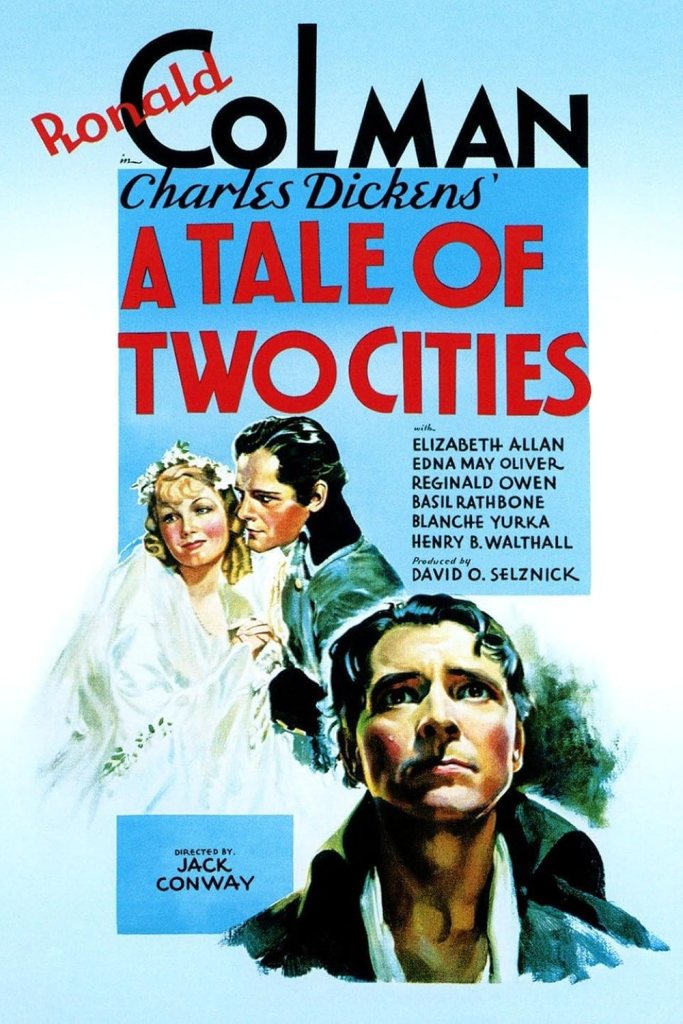
A Tale of Two Cities (1936)

A Tale of Two Cities (1936)

Well made Dickens adaptation, that manages to streamline the novel very successfully

Director: Jack Conway

Cast: Ronald Colman (Sydney Carton), Elizabeth Allan (Lucie Manette), Edna May Oliver (Miss Pross), Reginald Owen (C.J. Stryver), Basil Rathbone (Marquis St. Evremonde), Blanche Yurka (Madame Therese De Farge), Henry B. Walthall (Dr. Alexandre Manette), Donald Woods (Charles Darnay), Walter Catlett (John Barsad), Fritz Leiber (Gaspard), H. B. Warner (Theophile Gabelle), Mitchell Lewis (De Farge), Claude Gillingwater (Jarvis Lorry), Billy Bevan (Jerry Cruncher), Isabel Jewell (Seamstress)

“It was the best of times, it was the worst of times” and “It is a far, far better thing I do now…”. Are there more famous openings and closings in literature than these from Dicken’s A Tale of Two Cities? The novel is bought marvellously to life by David O Selznick in his follow-up to David Copperfield. It still might just be definitive. With several impressive actors embodying some of Dicken’s most memorable characters, grand sets and a fabulous mix of faithfulness and pacey condensing, A Tale of Two Cities stands as one of the finest Dickens adaptations.

The plot sticks faithfully to the book: Lucie Manette’s (Elizabeth Allan) father Dr Manette (Henry B Walthall) is recalled to life and released from the Bastille in the 1780s. They travel to England where Lucie Manette falls in love with the heir to the Maquis St Evermonde (Basil Rathbone), Charle Darney (Donald Woods) who has forsaken his families wealth and cruelty. But she is also loved by dissolute-but-brilliant lawyer Sydney Carton (Ronald Colman). When the French Revolution strikes, Darney returns to France to rescue an old family retainer only to be arrested and condemned to death by a mob whipped up by the vengeful Madame De Farge (Blanche Yurka). How far will Carton go to save the man who has the wife and family he has dreamed of?

A Tale of Two Cities pretty much perfectly captures the atmosphere of Dickens’ novel, from its mist-filled opening with a carriage rattling through the French countryside via its vivid bringing to life of a gallery of Dickensian eccentrics through to its closing sections, deep in the heart of Revolutionary France. The novel has been skilfully condensed down by WP Lipscomb and SN Behrman’s script, so that every beat is recognisably in place without the film stretching out with overwhelming length.

It manages to capture the humour in many of Dickens side characters, from the corrupt chancer Barsard, the puffed-up lawyer Stryver to the surprisingly decent graverobber (or Resurrectionist as he prefers) the brilliantly-named Jerry Cruncher. Sequences, such as Darney’s early trial (on trumped up charges of treason) and his brilliant acquittal by Carton (working silently through Stryver) are perfectly executed. The homely gentleness of the Darney family life, that so crucially melts Carton’s cynical heart, are perfectly captured. The heart of the novel is very effectively bought to life.

So is its portrait of a France crammed with injustice, righteous anger and murderous, indiscriminate fury. The trampling of a young boy by the Maquis’ carriage (the Maquis a perfect portrait of imperious arrogance from Basil Rathbone) is shocking, echoed later when a cavalier’s horse tramples a woman at a food riot (an effect only marginally weakened by the fact it’s clearly a dummy). In impressive, Eisenstein-inspired sequences that cut between grand scale and enraged, impassioned faces, the revolution takes full effect with an impressive storming of the Bastille. (These grand sequences, were directed by Jaques Tourner and Val Lewton).

Among the French it’s easy to feel sympathy at first for the De Farges, Mitchell Lewis’ Ernest a genuinely decent man moved to violence after years of provocation. His wife, brilliantly played by Blanche Yurka, is a similarly impassioned witness to cruelty and abuse, but whose fanaticism and unbending fury tips her from a sympathetic if cold figure into a relentless killer who doesn’t care who pays the price of her quest for a personal revenge. Yurka’s grim-eyed obsession is perfectly portrayed in a low-key performance which bubbles with menace. She also has one of the most striking fights in 30s cinema with Edna May Oliver’s (who is outstanding as one of her patented Maiden Aunt figures) Miss Pross.

Finest of all is Ronald Colman, in a role he was so desperate to take he even agreed to shave off the iconic moustache. Colman superbly brings to life the cynical, sardonic lawyer with a real relish but gives his playful drunkenness a deeply melancholic sense of loneliness. When he speaks with Lucie, Colman’s sadly resigned pleasantness expertly communicates both his live, regret and acceptance that he can never speak of his feelings. Colman insisted that he not, as is often the case in adaptations, also play Darney (the book’s crucial plot point that the two men are all-but identical is completely written out) so he could focus on this crucial character, and it pays dividends with possibly a career-best performance.

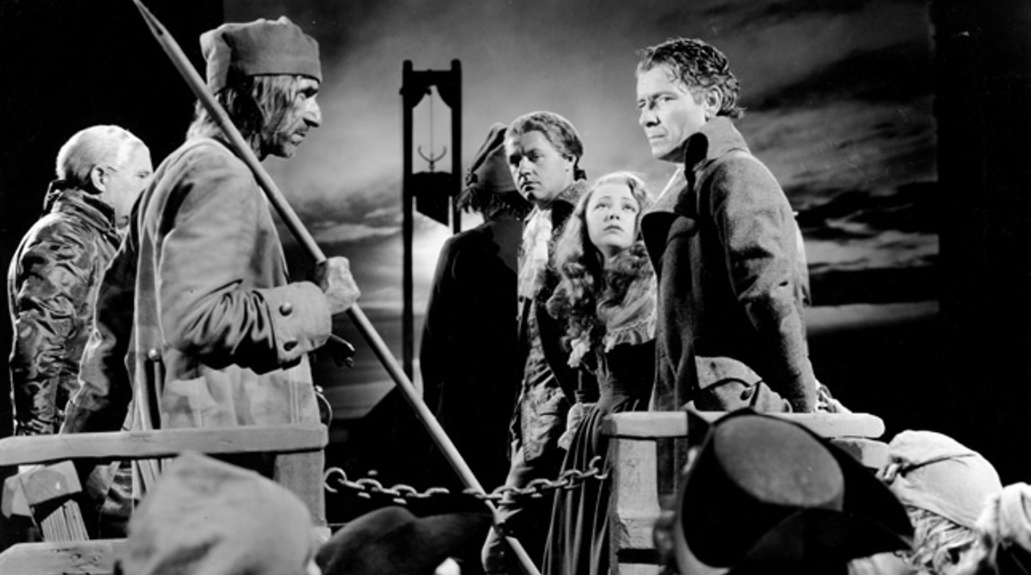
Colman is essential to the film’s powerfully affecting final sequence, that follows the fate of those condemned to die at the guillotine, his brave acceptance of his fate, expertly tinged with a little touch of fear and a genuine contentment that in sacrifice his life finds meaning. Isabel Jewell makes a fine companion in this sequence as a wrongly condemned seamstress, she and Colman forging a tender and genuinely moving bond. The film finds a real nobility and tragic force in this sequence, while not shirking in the horror of mechanised death or mob rule.

Not everything works perfectly. Jack Conway, who directed most of the dialogue parts, is not the world’s most inspired visualist and while he draws fine performances from the cast, these sequences are strikingly flatter and more theatrical than the more epic Tourner and Lewton sequences. Donald Woods, admittedly given very little to work with (also from Dickens), makes a particularly bland Darney while Elizabeth Allan’s Lucie is also less of a dynamic presence than the story really needs.

But these are gripes in a production that is actually both an very effective film and has some striking performances of an expert Dickensian nature with Ronald Colman in particular outstandingly and richly humane, funny and moving. It’s telling that no adaptation since as ever managed to so effectively capture the tone of the novel, communicate the story so skilfully or carry as much pathos, tension and even humour as this one manages. As a Dickens adaptation, it is very much the best of times.