Tag: Henry Hathaway

The Lives of a Bengal Lancer (1935)

The Lives of a Bengal Lancer (1935)

Old-school adventure mixes with some slightly dated Imperial attitudes in a film that’s still good fun

Director: Henry Hathaway

Cast: Gary Cooper (Lt McGregor), Franchot Tone (Lt Forsythe), Richard Cromwell (Lt Stone), Guy Standing (Colonel Stone), C. Aubrey Smith (Major Hamilton), Douglass Dumbrille (Mohammed Khan), Monte Blue (Hamzulla Khan), Kathleen Burke (Tania Volkanskaya), Colin Tapley (Lt Barrett), Akim Tamiroff (Emir), J Carroll Naish (Grand Vizier)
Tales of adventure and derring-do in the British Empire were meat and drink for generations of schoolboys. Few adventures were as well known as The Lives of a Bengal Lancer, a stirring tale of three lieutenants in the Bengal Lancers who become fast friends while defending Queen and country. We’ve got decent, impulsive but luckless McGregor (Gary Cooper), upper-class joker Forsythe (Franchot Tone) and eager-to-please Stone (Richard Cromwell), whose also the son of commanding officer Colonel Stone (Guy Standing). They go up against Oxford-educated Mohammed Khan (Douglass Drumbille), who schemes to seize an ammunition shipment. Can our heroes face down dastardly natives, exotic tortures and desperate escapes? All in a day’s work for a Bengal Lancer.

The Lives of a Bengal Lancer was a big hit on release, despite sharing nothing except the title, location and general theme with the semi-autobiographical novel from former-lancer Francis Yeats-Brown. It’s rollicking adventure and the boys-own mateyness of its leads, sparked a wave of spiritual follow-ups set everywhere from the Canadian mountains to the deserts of Africa. It scooped seven Oscar nominations and was celebrated as one of the greatest adventures on screen. Unfortunately, it’s not as fondly remembered now with its uncritical celebration of colonial India, spiritual links to Kipling’s White Man’s Burden and the fact Hitler of all people named it his one of his favourite film, loving its celebration of how a few white men could ‘protect’ (control) millions of natives.

It’s fair to say you have to close your eyes to some of this stuff when watching The Lives of a Bengal Lancer today. Otherwise you might flinch at our heroes threats to various squirming, cowardly Islamic rebels that if they don’t confess they’ll be sown inside a pig skin (even in 1935, outraged questions were raised about this in Parliament). You need to roll with Douglass Drumbille blacking-up as the well-spoken Mohammed Khan (not just him: nearly all the Indian characters are men-in-face-paint and for good measure our heroes also black-up to disguise themselves). There isn’t a second’s questioning about the morality of Empire and the implicit suggestion runs throughout that the Indian people should be grateful the British were there to run their country for them.

But put all that to one side, and The Lives of a Bengal Lancer is still rather fun. One of the factors making it easier to bench your misgivings is that, really, this film isn’t really interested in India or the themes of Empire anyway. For starters, all three of our heroes are played by Americans making no effort to hide their transatlantic accents (McGregor is suggested as being ‘Scotch Canadian’, but a few words of Cooper’s awful Scottish accent makes you relieved he didn’t bother to keep it up). Any insight into British-Indian relationships is extremely brief. The film is clearly shot in California, in locations identical to the sort of Westerns Hollywood was churning out. And a Western is what Bengal Lancer really is.

Our three heroes do feel more like cowboys shooting the breeze for large chunks of the film rather than army officers. Although there have been criticisms of the leads – Cooper in particular, probably because an actor so iconically American feels strange as an oddly accented Brit – all three of give entertaining, complementary, performances. Cooper is strongly charismatic, rather charming in his earnest attempts to do the right thing and his luckless incompetence at anything that isn’t soldiering (a running joke sees him building up increasing tab in a series of ill-considered bets with the good-at-everything Forsythe). But when action comes calling, McGregor is courageous, quick thinking and selfless. It’s immediately clear why Cooper essentially replayed versions of this relatable role several times. Franchot Tone is equally fine as the witty, smooth Forsythe who never takes anything seriously until things are really serious. Cromwell does sterling work as the naïve Stone.

Most of the film works because we end up liking these three characters – just as well since most of the first half is essentially watching them go about their daily tasks: riding, cleaning horses, heading out on patrol, shooting the breeze in the barracks. There is a small character-led crisis over whether the ram-rod Colonel Stone (a suitably dry Guy Standing) will accept his puppy of a son, but the biggest action drama in the first half is a wild boar hunt that nearly goes terribly wrong. If we didn’t enjoy Forsythe and McGregor deliberately rubbing each other up the wrong way, between teasing and taking a big-brother interest in Stone, we’d struggle to enjoy the rest of the film.

The second half is where the real action kicks in. During a dinner where our heroes dress up in native garb to make nice with a local Emir, Bengal Lancer throws in a bizarre Mata Hari figure, in the mysterious Russian Tania (Kathleen Burke). It’s not a remote surprise she ends up being no-good, or that the disillusioned Stone is swiftly honey-trapped into imprisonment by Dumbrille’s vaguely-motivated smooth-talking villain (it’s hilariously ironic that the villain is the most cut-glass Brit in the film). McGregor and Forsythe don Indian disguise – against orders naturally – to do what men do, which is stand by their friends.

A parade of exciting set-pieces follow thick-and fast, culminating in an impressively staged battle with towers toppling in explosives, machine gun fire spattering left-right-and-centre and our heroes literally coming to blows over who gets to make a heroic sacrifice. We get there via dastardly torture – Bengal Lancer coined the famous “We have ways of making men talk line” – as Mohammed Khan employs bamboo sticks under the fingernails (thankfully shown largely in shadow and Cooper’s stoic grimaces) to get information from our heroes. It’s all part of these men being forged by fire into exactly the sort of hardened men-of-combat we need to protect a frontier.

The Bengal Lancers ride in towards the end like the cavalry, and the air of a Western in Red Coats sticks with Lives of a Bengal Lancer throughout. Sure, it combines this with the stench of White Man’s Burden and an attitude of edgy distrust of foreigners, but The Lives of a Bengal Lancer is also riotous, old-fashioned fun, well shot and charismatically played. It might be a rather slight action-adventure fable, and sure its politics have not aged well, but it is still fun.
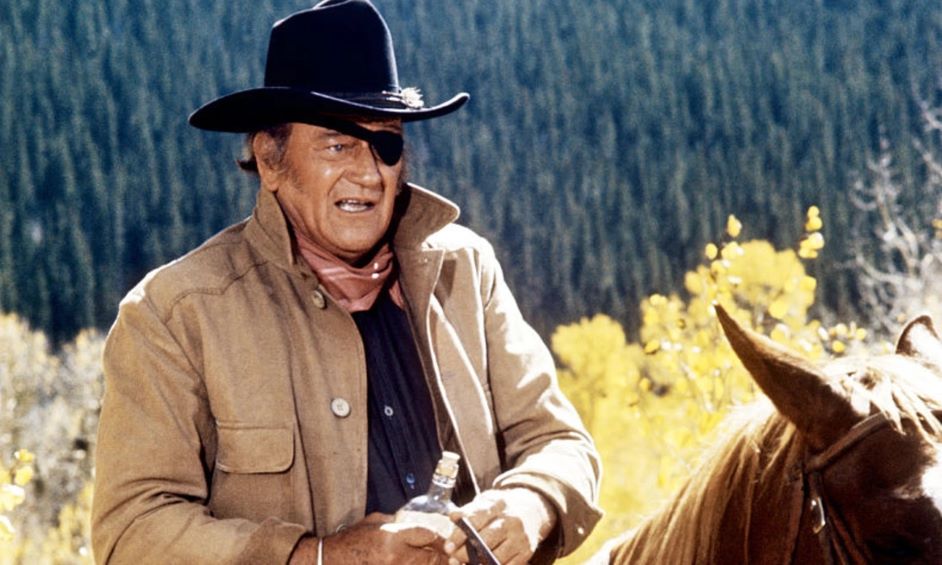
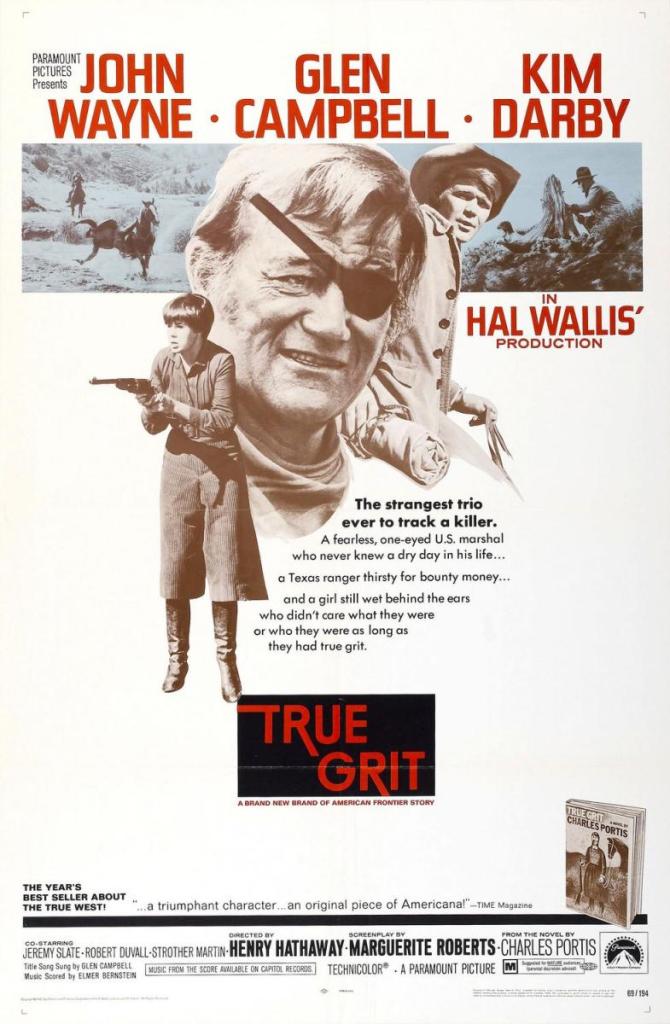
True Grit (1969)

True Grit (1969)

The Duke wins an Oscar in this solid Western (already old-fashioned in 1969) put together with a professional solidity

Director: Henry Hathaway

Cast: John Wayne (Reuben “Rooster” Cogburn), Glen Campbell (La Boeuf), Kim Darby (Mattie Ross), Jeremy Slate (Emmett Quincy), Robert Duvall (Lucky Ned Pepper), Dennis Hopper (Moon), Alfred Ryder (Goudy), Strother Martin (Colonel Stonehill), Jeff Corey (Tom Chaney), John Fiedler (Daggett)

By 1969 John Wayne had been pulling his six shooters against rascals and rapscallions for thirty years, ever since making one of the all-time great entries in Stagecoach. He’d been an American icon, box-office gold and practically the Mount Rushmore of Hollywood. What he never really had was recognition that, underneath the drawl, he was a fine actor who knew his business. He’d only had the single Oscar nomination in 1949, so by 1969 there was a sentimental urge to correct that – especially since illness had already seen the Duke (one of the first major stars to be open and frank about his cancer and urge others to get checks) lose a lung a few years previously.

And correct that they did, as Wayne beat out two respected thespians (the perennially unlucky Burton and O’Toole) as well as the whipper-snapper stars of Midnight Cowboy (the sort of cowboy film the Duke would never even consider making!) to scoop the Best Actor prize for taking a character-role lead (all Wayne roles are lead roles) in True Grit. Wayne was “Rooster” Cogburn, a hard-drinking but hard-riding, always-gets-his-man US Marshal, hired by Mattie Ross (Kim Darby) the teenager daughter of a murdered father to track down his killer Tom Chaney (Jeff Corey). Rooster develops an avuncular relationship with Mattie, despite his penchant to get pissed and (of course!) eventually proves he has the ‘true grit’ that made Mattie hire him in the first place.

True Grit is a traditional yarn, directed with a smooth competence (but lack of inspiration) by Henry Hathaway. It must have felt quite a throwback in 1969: you could imagine it pretty much would have been shot-for-shot identical if it had been filmed in 1949 (especially since Wayne had been playing the veteran since at least Fort Apache). Compared to other major Westerns made that year – Butch Cassidy and the Sundance Kid and, especially, the grim nihilism of The Wild BunchTrue Grit looks like the cosiest film imaginable. It even shies away from the book’s ending where Mattie loses an arm after a snake bite (something the, frankly superior, Coen Brother’s remake would not do 40 years later).

It does feel odd to see Wayne, that bastion of old-school Hollywood, sharing the screen with New Hollywood icons like Dennis Hopper (playing a yellow-bellied squealer at the baddies hideout) and Robert Duvall (a belated villain, looking uncomfortable in this genre saddle-flick as a bad-to-the-bone gang leader). But Hathaway makes sure it’s The Duke’s show. Which it is from start-to-finish.

Rooster isn’t really a stretch for Wayne. Compared to his work in The Searchers and Red River, Cogburn is a cosy and straight-forward hero, a straight-shooter who always holds to his word. But it’s a perfect showpiece for his charisma. Wayne shows a decent comic-timing (he has a nice line in deadpan reactions, particularly when he meets Mattie’s famed lawyer Daggett for the first time, discovering far from the imposing figure he imagined he’s actually the mousy John Fiedler) and there’s just a little hint of lonely sadness in Rooster as he talks about the family who left him or the homes he’s never known.

Wayne also has a lovely chemistry with Kim Darby, the relationship flourishing in a rather sweet big-brother-“little sister” (as Rooster calls her) way. Although of course it takes time to form: Rooster spends most of the first half of the film trying his best to shrug her off so he can hunt down the gang Tom Chaney runs with (and collect the bounty for them) unencumbered. The two of them form a tenuous alliance with Texas Ranger La Bouef, who is far keener to deliver Chaney to another state for a higher bounty than that offered for the killing of Mattie’s father.

La Bouef is played with try-hard gameliness by singer Glen Campbell, largely hired to commit him to singing the film’s best-selling theme tune. To be honest, he makes for a weak third wheel – but it’s hard not to hold it against Campbell when he charmingly later said he’d “never acted in a movie…and every time I see True Grit I think my record’s still clean!”. Far better is Kim Darby, who gives a spunky tom-boyish charm to the shrewd and persistent Mattie who is far too-smart to either by cheated by short-changing landlords or to be ditched from the trail by Rooster and La Bouef.

It’s Wayne’s film though, and a final act face-off with the villains shows that there were few people better with a gun on screen (his one-handed shotgun twirling reload while riding a horse is surely the envy of Schwarzenegger’s similar move in Terminator 2). The whole enterprise is carefully framed to showcase Wayne and he rises to the occasion. Think of it like that, and it hardly matters that Hathaway offers uninspired work behind the camera and fails to provide either any moments of visual interest or dynamism (or work effectively with the weaker actors).

True Grit is an entertaining, second-tier Wayne film, lifted by his charisma and enjoyment for playing a larger-than-life gravelly cool-old-timer and cemented in history by his reward with that sparkling gold bald man. Compared to other Westerns – both before and at the time – it’s traditional, straight-forward and unchallenging. But it’s fun, has some good jokes and offers decent action. And it’s a reminder that no one did this sort of thing better than the Duke.

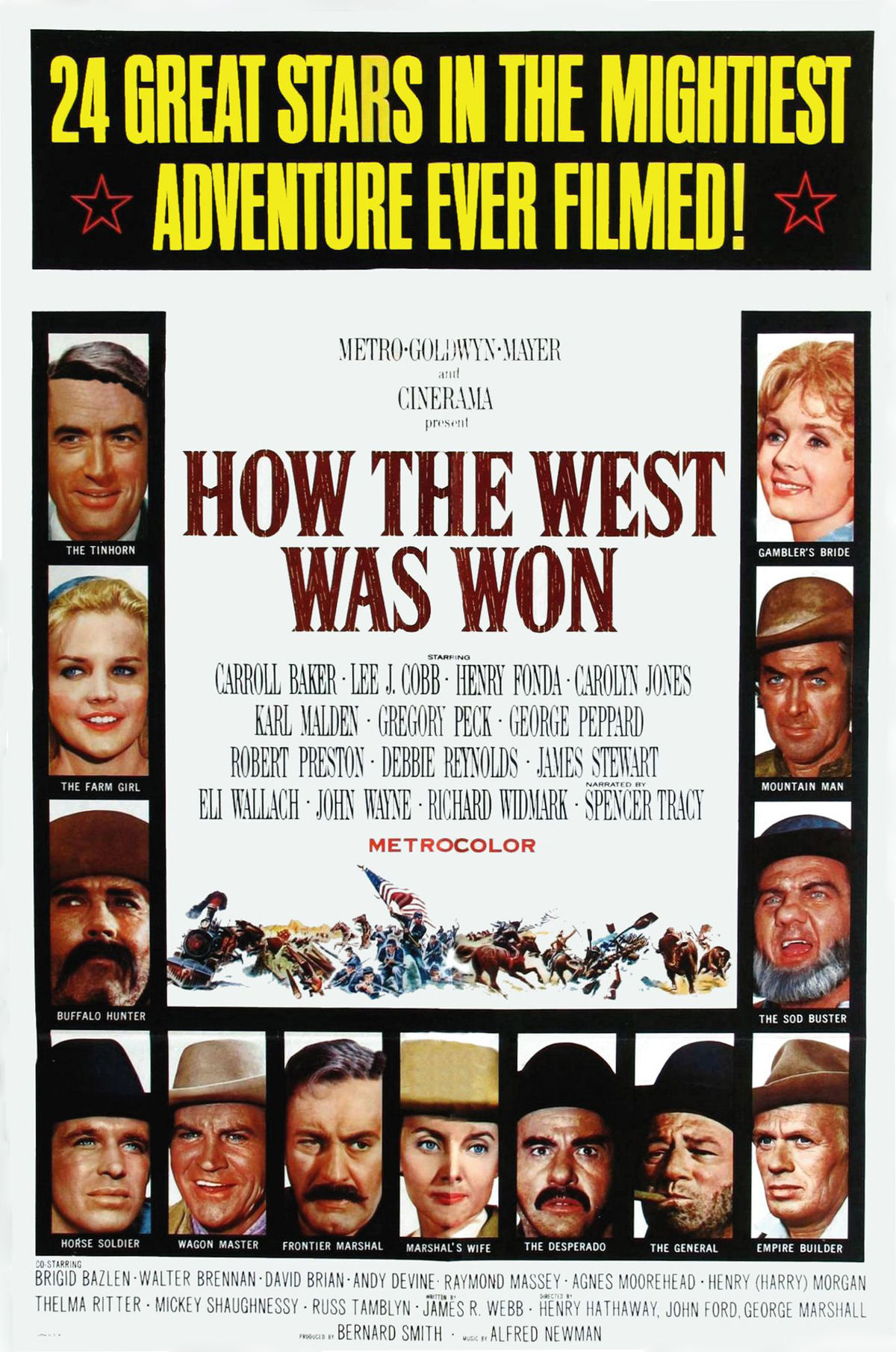
How the West Was Won (1963)

James Stewart helps us see How the West Was Won

Director: Henry Hathaway, John Ford, George Marshall

Cast: Spencer Tracy (Narrator), Carroll Baker (Eve Prescott Rawlings), Walter Brennan (Colonel Jeb Hawkins), Lee J Cobb (Marshal Lou Ramsey), Henry Fonda (Jethro Stuart), Carolyn Jones (Julie Rawlings), Karl Malden (Zebulon Prescott), Raymond Massey (Abraham Lincoln), Agnes Moorehead (Rebecca Prescott), Harry Morgan (Ulysses S Grant), Gregory Peck (Cleve van Valen), George Peppard (Zeb Rawlings), Robert Preston (Roger Morgan), Debbie Reynolds (Lilith Prescott van Valen), Thelma Ritter (Agatha Clegg), James Stewart (Linus Rawlings), Rus Tamblyn (Confederate deserter), Eli Wallach (Charlie Grant), John Wayne (William Sherman), Richard Widmark (Mike King)

How the West Was Won was the Avengers: Endgame of its day: every star of the biggest box-office genre in America coming together for one epic adventure that would stretch over generations. Stewart! Fonda! Peck! Wayne! Together for the first time (only of course they are not, none of them appearing the in same scene). Even more than that, How the West Was Won would be filmed in Cinerama, a three-screen shooting method producing a panoramic image. All this would make How the West Was Won the biggest, grandest, largest film ever made. It was a massive box-office success, nominated for eight Oscars (including Best Picture) and wowed audiences.

Plot wise though, it’s basically a series of short films cobbled together into a single film. The stories are basically self-contained, although some actors cross over (especially George Peppard and Debbie Reynolds). The first episode The Rivers covers the migration west, down the river, of the Prescott family, taking on river pirates and allying with James Stewart (looking at least twenty years too old as a young drifter). The Plains sees Debbie Reynolds, daughter of the Prescott family, migrate further West and eventually marry gambler Gregory Peck. The Civil War sees Stewart’s son George Peppard caught up in the war. In The Railroad, Peppard reluctantly runs security for ruthless railway builder Richard Widmark. Finally, in The Outlaws an older Peppard attempts to retire, but not before one final shoot out with old enemy Eli Wallach during an attempted train heist.

All these short stories – each about 30-45 minutes in length – are entertaining. So entertaining that you won’t mind at the end that you have no idea how the west was actually won (I assume it’s something to do with progress and the law) or that the characters are basically actors riffing off their own personas rather than fully realised individuals. Despite the attempt to build the story around one  family (the Prescott-Rawlings), the stories are so disconnected and the characters so lightly sketched, with such huge time jumps, each story might as well be about completely new characters.

Not that there is anything particularly wrong with that. But it boils down to the key issue with How the West Was Won, a very flabbily constructed film that lacks any real sense of guiding narrative or vision behind it. It’s a series of set pieces, which are all about scale – the river rapids, the battles of the Civil War, the final train-set shoot out – in which some loosely defined characters live their lives. There are some decent performances – Debbie Reynolds does a very good job anchoring a couple of stories (plus we get to see her do some song-and-dance routines), while Peck (a smooth operator) and Fonda (a gruff woodsman) have the best parts among the stars. Others, like Wayne, pop up for but a few seconds.

They needed all these stars to fill the frame. How the West Was Won’s main problem is also its principle reason to exist. It was designed to showcase the wideness of Cinerama, one of only two films to use the technique. Designed to be projected into curved screens, the technique essentially used one massive camera to produce an image so large it needed three synchronised projectors to screen it. This led to an impossible wide frame to fill, with two clear joins in the middle. The challenge of shooting this was not an enjoyable one for the directors.

To cover the visible joins, nearly every scene in the film sees an object placed one-third and two-thirds of the way through the image (usually a tree or a post). The actors stand carefully on their marks in their assigned third of the image. Close ups involved flying the massive camera almost into the faces of the actors (and even then it only produced an image from the waist up). Awkward compositions abound – either with actors standing rock still in front of huge scenery, or actors standing in carefully assigned rows, standing on marks they never move from.

The sweeping shots of the American west look impressive, but in a National Geographic way – it’s simply fitting as much of the imagery of the countryside in as possible. It was a hugely difficult job for the directors. It was not helped by two of them being competent journeymen and all three of them having done their best work in 4:3. Quite frankly I don’t think any of them have a clue about how to fill a frame this mighty. Instead, the film for all its grandeur is frequently visually conservative and unimaginative to look at. It’s got huge landscapes, but no real inspiration.

How the West Was Won is an enjoyable curiosity. It is very rarely, if ever, seen as it was intended on a Cinerama screen (the version I watched on a large television, still showed the slight fish-eye effect at points of a curved image flattened). Telling five short stories, each of them entertaining enough, it keeps the interest. It has a lusciously beautiful (famous) score by Alfred Newman that captures the spirit of the West. But, for all its grandness, it’s a strangely small experience.

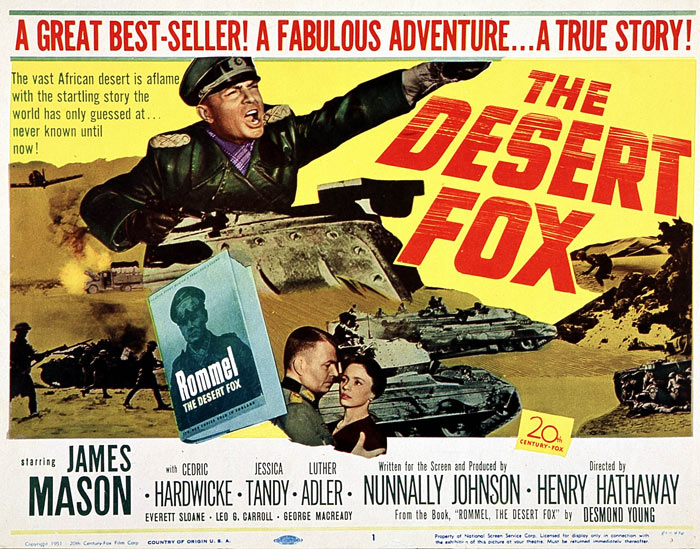
The Desert Fox (1951)


James Mason rides into action as a sympathetic Nazi

Director: Henry Hathaway

Cast: James Mason (Field Marshal Erwin Rommel), Jessica Tandy (Lucie Rommel), William Reynolds (Manfred Rommel), Cedric Hardwicke (Dr Karl Strölin), Luther Adler (Adolf Hitler), Everett Sloane (Gen. Wilhelm Burgdorf), Leo G. Carroll (Field Marshal Gerd von Rundstedt), George Macready (Gen. Fritz Bayerlein), Richard Boone (Capt. Hermann Aldinger), Eduard Franz (Col Claus von Stauffenberg)

It’s pretty astonishing when you think about it that less than six years after World War II ended, Hollywood produced a film about one of Germany’s leading generals which painted him in a largely positive light. Even more of a surprise is that this was a box-office hit. But then this film was designed to be a step towards reconciliation – especially with one eye on the Cold War and the need for Germany as an ally.

James Mason (brilliant in one of his most iconic roles) plays Rommel, with the film beginning just as the tide of war turns in Africa at El Alamein. Of course, this allows a lot of talk of Rommel being a noble fighter and brilliant general, without having to awkwardly show him chasing the Sixth Army across Africa! From his defeat to Montgomery (unseen but often referenced), Rommel slowly loses his faith in Hitler, realising the Fuhrer cares little for the lives of his soldiers. Gradually he becomes closer to the conspirators of the July 1944 bomb plot to assassinate Hitler. When it fails, he is given the choice: suicide and a hero’s funeral or execution as a traitor for him and his family.

The film is notable for opening with an exciting James Bond-style action sequence, a 1941 raid by British commandos on Rommel’s HQ (codenamed Operation Flipper), designed to grab the viewer’s attention – and to provide the action in a war film that otherwise has virtually no combat in it. It’s a terrific opening that immediately establishes the importance Rommel holds. The Desert Fox was one of the first films to use this device of an action prologue to open the story – the sort of thing James Bond has since mastered.

From there, Hathaway’s journalistic film (much of the World War II footage is reused from newsreels) is very smoothly and professionally directed, turning the last few years of Rommel’s life into a classic morality tale. Whether this is completely true or not (more recent research on Rommel suggests he was a much more enthusiastic early supporter of the Nazi party than suggested here), there seems little doubt that he was at the very least sympathetic to the July 1944 bomb plot. Rommel here is a man who sees the light too late – and pays a heavy price.

Nunnally Johnson’s well-researched and tight screenplay focuses on conversations and political manoeuvering, with Rommel presented as apolitical and straight shooting, clumsily working through debates he lacks the political sophistication to understand. Johnson’s script also provides excellent opportunities for sparkling cameos. Leo G. Carroll is particularly good as Rommel’s frustrated and cynical superior, but there are also stand-out performances from Everett Sloane as a lackey from High Command and a memorable cameo of controlled ranting extremity from Luther Adler as Hitler.

The film, though, is carried by James Mason’s subtle and sympathetic performance. Mason has the charisma, his upper class manner perfect for the military man, but he isn’t afraid to play both positive and negative. So we get his arrogance and wilful blindness, showcased in scenes where is passionate defence of Hitler is as much an attempt to persuade himself as others. But we also see his loyalty to his men and the tenderness of his relationship with his wife (played well by Jessica Tandy). Mason’s performance is compelling and soulful.

It’s not a perfect film. There are some slightly clumsy links at the start back to the source book written by Brigadier Desmond Young, who served in North Africa. Young cameos at the start in reconstructions of his meeting-at-a-distance with Rommel and his post-war research. Narration from the book is a worked into the film – and having heard the real Young speak, its mid-Atlantic tone is rather jarring. The narration often serves as a transition from event to event, but this is never completely smooth, meaning there are some odd jumps.

But it’s a very decent, very professionally done piece of film making. Its version of Rommel isn’t seen as the whole story today (there is a whole historiographical argument about the “Rommel Myth” of the man as an apolitical soldier or willing accomplice), but it’s very consistent within the film. Very well acted and scripted and very professionally directed, it’s a political film cunningly disguised as a war film, which does a very good job of creating the atmosphere of Nazi Germany and in re-creating historical events and has an excellent lead performance from James Mason.

23 Paces to Baker Street (1956)


Van Johnson hears something’s up

Director: Henry Hathaway

Cast: Van Johnson (Philip Hannon), Vera Miles (Jean Lennox), Cecil Parker (Bob Matthews), Maurice Denham (Inspector Grovening), Isobel Elsom (Lady Syrett), Estelle Winwood (Barmaid), Liam Redmond (Mr. Murch), Martin Benson (Pillings), Patricia Laffan (Alice MacDonald) 

It’s an age-old truth that the movies always believe we can admire a hero more, if we see them struggling to overcome some form of disadvantage or disability that would normally rule them out of carrying out the actions they are trying to do. So what fits into that mould better than a blind man going up against a gang of criminals?

Philip Hannon (Van Johnson) is a successful American playwright living in London, who has lost his sight. One day in a pub, he overhears a conversation between a man and a woman that he suspects is related to the planning of a crime. But, unable to persuade the police of his suspicions, he has only his former secretary Jean (Vera Miles) and butler Bob (Cecil Parker) to help him investigate.

This is the sort of reliable B movie material, with some decent parts and interesting twists, that usually gets remade as a big-star, big-budget modern Hollywood drama. You know the sort of thing: Russell Crowe is a blind writer investigating a crime. In fact, it’s almost a surprise that this has never been remade, as it is an entertaining, diverting small-scale movie – the sort of thing that you can imagine settling down in front on a wet Sunday afternoon.

It’s a sort of sub-Hitchcock drama –fairly similar in tone to Rear Window – and there are several beats in there that totally fit with the master’s dramatic style. In fact, that’s what makes it such a quintessential B movie: everything about it feels like a slightly cheaper alternative to a major picture. Which isn’t a criticism as such: it’s just a very workmanlike, efficient little thriller, which fits neatly into Hathaway’s CV of safe, unspectacular film making. It’s still well made and does exactly what you would expect, but it’s not going to knock anyone’s socks off.

Van Johnson may similarly be a low rent Jimmy Stewart, but he’s pretty effective in this role, suitably vulnerable in places, while still suggesting enough of the prickly demeanour of the man who doesn’t want to be a victim. He also resists the temptation to overplay the blindness – something the whole film actually does quite well. As the man holding the entire film together he does a good job, and he even manages to be more or less believable as a successful playwright. Watching it, you think it’s a bit of shame he’s not better known today – he’s a good (if unspectacular) actor. Vera Miles offers some good support as a supportive love interest while Cecil Parker is quite droll as the butler.

The mystery itself has a few nice twists in it – the final twist is nicely set-up, enough for you to see it coming as we reach the dénouement (a well-staged confrontation in a darkened flat, which gets a lot of tension from watching our blind lead trying to identify all the lights in the house so he can remove their bulbs). The story sometimes doesn’t give us too much of a chance to work out the twists and turns before key clues are revealed by Hannon, but that’s no major problem. It’s also quite well filmed, with some nice shots of 50s London skylines.

It’s a decent and interestingly done film that gets some fresh content out of the blindness of its hero, never portraying him as a victim but as a proactive and determined man. Claims that this is some sort of lost classic are overdone – it’s never more than a sub-Hitchcock B picture – but it’s still highly watchable, has some engaging characters and some decent thriller sequences, and you care about the lead characters, even if you don’t particularly care about the crime itself and its victims (the victims in particular are pretty vague characters). It also relies rather heavily on the legendary heightened senses that blind always seem to have in Hollywood films. But for something that basically sounds like the plot of an ITV two part drama, this is solid craftsmanship.

One final note: the title means nothing. At one point Hannon guides a man through the fog. Turns out he’s 23 paces from his destination: Baker Street. The Hollywood suits were keen to drop in the “Baker Street” reference, to suggest a link to Sherlock Holmes. So goes to show – Conan Doyle, always good box office!