Tag: Henry Travers

Random Harvest (1942)

Random Harvest (1942)

Two superb leading performances hold together a romantic confection of a film

Director: Mervyn Le Roy

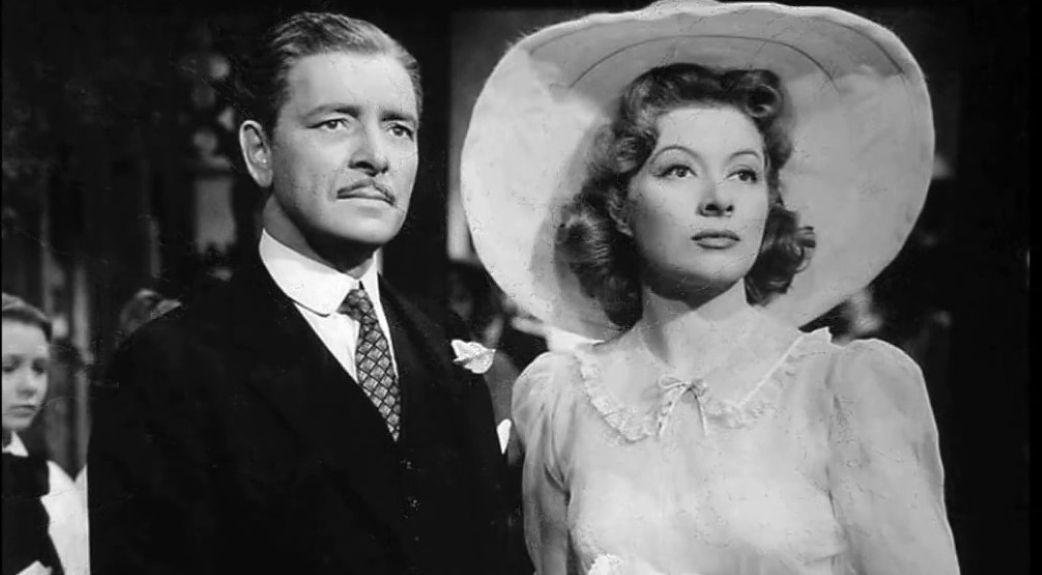
Cast: Ronald Colman (Charles Rainier/”Smithy”), Greer Garson (Paula Ridgeway/ “Margaret Hanson”), Philip Dorn (Dr. Jonathan Benet), Susan Peters (Kitty Chilcet), Henry Travers (Dr. Sims), Reginald Owen (Biffer), Bramwell Fletcher (Harrison), Rhys Williams (Sam), Una O’Connor (Tobacco Shopkeeper), Aubrey Mather (Sheldon), Margaret Wycherly (Mrs. Deventer), Arthur Margetson (Chetwynd Rainier), Melville Cooper (George Rainier), Alan Napier (Julian Rainier), Jill Esmond (Lydia Rainier)

Random Harvest is one of the most fondly remembered romances of Golden Age Hollywood – if you want yearning dedication bought to life, this is the film for you. It might also be one of the barmiest films ever made, stuffed with so many outlandish plot developments, hilarious logic gaps and hand-waved contrivances it would put a Netflix soap to shame. You can see why Syndey Pollack and Anthony Minghella eventually abandoned remakes: you can’t imagine a modern audience going with Random Harvest’s essential loopiness and not laughing somewhere along the line. Which is not to say it isn’t beautifully made and winningly bought to life at times.

It’s the final days of World War One, and amnesic soldier “John Smith” (Ronald Colman) can’t remember anything about his life. On the final day of the war, he sneaks out of the asylum and runs into music hall performer Paula (Greer Garson). She takes a shine to “Smithy” and decides to save him. They run away to the country, fall in love, get married, have a baby, he starts to write, goes to Liverpool to start a journalism career… and gets hit by a cab. The collision restores his original memory – but also causes him to forget everything about Paula and his life as Smithy. Instead, he restarts his original life as industrial heir Charles Rainier, presumed dead by his family. While he lives this life for years, Paula takes a job as his secretary “Margaret”. Will he remember who she is?

It says a lot that that summary only scratches the surface of a plot that throws in the kitchen sink in attempting to ring as many tear-soaked tissues out of you as possible. Smithy and Paula carry out their little memory dance over the course of over twenty years. It’s the sort of a film where millionaire Charles only thinks about investigating what might have happened to him in Liverpool when nudged to do so after over a decade. Where the couple enter a ‘marriage of convenience’ as the memory-free Charles and fake Margaret. Where Charles’ owns a major factory in the town where our lovers first met, but neither (a) stepped foot there in 15 years (since the moment he does his memory starts to return) and (b) the heir to the town’s major employer wasn’t recognised by anyone while living in an asylum five minutes walk down the road.

Take it on the merits of logic and conventional narrative and Random Harvest crashes and burns. But this isn’t a film about those things. This is a classic weepie that stole the hearts of a war-torn nation in 1942 (it was the biggest hit of the year). Powered by two committed and emotional performances, if it hits you in the right mood its probably irresistible. The sort of long-term adversity that makes Romeo and Juliet’s look like a casual dalliance (so full of tragedy, the death of their son is literally a throwaway moment). It’s framed with a great, sensual beauty by Mervyn LeRoy and powered by an emotionally throbbing score by Herbert Stothart that’s just the right side of sickly.

Ronald Colman’s performance is quiet, measured and vulnerable (especially in his “Smithy” performance). From the start, he has eyes of hesitant, unknown sorrow and stumbles into a relationship with Paula like a new-born discovering life. Threads of his gentleness and excitability work their way into his Charles persona, tinged this time with the natural confidence of wealth. Nevertheless, Colman makes Charles a man who has dealt with unnerving amnesia by actively not thinking about it, carrying on a watch-chain the key to his “Smithy” home as a subconscious reminder. It’s a fine performance – so much so you can overlook he’s twenty-five years too old (the restored Charles forgoes returning to university, something that looks long gone for Colman).

Just as fine is Greer Garson, fully embracing an emotional roller-coaster as Paula. Introduced as a good-natured music hall singer (and Garson sings a high-kicking She’s Ma Daisy number in possibly the shortest skirt the Hays Code ever allowed), Garson’s warm and playful Paula is drawn towards “Smithy” in ways she almost can’t understand. But it’s a wonderfully different side for an actress so often associated with self-sacrificing wives and mothers: Paula is vivacious, forward and seizes the things she wants from life. It’s the second half – the patient, yearning desperation of “Margaret” hoping her husband will remember her – that leans more into her Mrs Miniver wheelhouse, but Garson mixes this with a real lingering, desperate sadness tinged with just enough hope that her husband might just recognise her.

Both performers overwhelmingly lift this otherwise (frankly) slightly contrived film into something rather sweet and endearing. It is, however, a film that would be even more so if it was shorter: the general morass of missed opportunities, misunderstandings and wrong ends of sticks being grasped would be easier to sustain over 90 than 120 minutes. It’s a rare film that covers so much ground over so much time that it’s lead character is declared dead twice.

The second declaration is Paula gaining that status for “Smithy”, dissolving their marriage and removing (you suspect for Hay’s Code reasons) the risk that Charles might accidentally commit bigamy by marrying his young niece. This is a lovely performance of youthful idealism and earnest devotion from Susan Peters (a tragic accident shortly after curtailed her promising career), and if the whole years-long subplot of the possibility of Charles marrying his besotted niece is a narrative cul-de-sac the overall film would be better without, it does at least mean we get the pleasure of Peters, performance captured forever.

But Random Harvest remains a pure romance: where no less than two women spend decades of their life in selfless, one-sided devotion for the lead and he still comes across as the sort of saintly man cheered by his own factory workers for sorting out a strike. The whole confection is a very fragile thing, but LeRoy carries this fully-loaded glass ornament with pure skill and the performances of Colman and Garson set the bar for classic Hollywood tragic romance. Minghella and Pollack were right – our cynical age can’t believe the nonsense – but on its own terms it still works.

The Bells of St Mary’s (1945)

The Bells of St Mary’s (1945)

Schmaltzy but also rather charming, a superior sequel to Going My Way

Director: Leo McCarey

Cast: Bing Crosby (Father Chuck O’Malley), Ingrid Bergman (Sister Mary Benedict), Henry Travers (Horace P Bogardus), William Gargan (Joe Gallagher), Ruth Donnelly (Sister Michael), Joan Carroll (Patsy Gallagher), Martha Sleeper (Mary Gallagher), Rhys Williams (Dr McKay), Dickie Tyler (Eddie Breen), Una O’Connor (Mrs Breen)

When Bing Crosby asked America if they were Going My Way in 1944, the answer was a massive yes. It was inevitable we got a sequel –the first sequel to be nominated for Best Picture – The Bells of St Mary’s. In a stunning display of it ain’t broke so don’t fix it, The Bells of St Mary’s drops Father Bing (aka Chuck O’Malley) into another urban-parish-with-problems, this time turning round a rundown convent school, run by straight-laced Sister Ingrid Bergman (aka Mary Benedict). Can Father Bing and Sister Ingrid set aside their incredibly-good-natured rivalry to: (a) convince heartless local businessman Horace Bogardus (Henry Travers) to donate a new school building, (b) save sensitive young Eddie from easy-going bullying and (c) re-build the marriage of easy-going-bad-girl Patsy’s parents? If you have any doubt Father Bing can solve these problems without breaking his easy-going-sweat, you ain’t spent long enough going his way.

The Bells of St Mary’s score over its Oscar-winning forbear by being significantly less gag-inducing in its snowstorm of saccharine schmaltz. This is despite the fact it shares almost all the flaws of the original. It goes on forever, very little really happens, every single problem is solved with a little flash of Father Bing’s gentle insight, and it’s painfully predictable. But The Bells of St Mary’s manages to not outstay its welcome because it’s told with genuine wit and, in Ingrid Bergman, has a consummate performer who is actually charming and lovable rather than someone we are just told is charming and lovable.

It’s also somehow more down-to-earth, the resolution to its problems being a bit more relatable than Going My Way’s MET-opera finale for the tough kids. Father Bing is marginally less saintly smug and has an underhand cunning – having worked out his wise words ain’t melting the heart of Bogardus (how strange it is to see George Bailey’s Clarence as a child-hating arsehole), he quickly switches to a little conspiracy of suggestion to make Bogardus fret about being set on a highway to hell. Despite this of course, O’Malley remains blissfully perfect, a liberal churchman and bathed in perfection.

The Bells of St Mary has complete faith in the fundamental goodness of the church. The only questions are ones of approach: O’Malley favours a manly Christianity where decent men fight bullies, while Mary Benedict’s instinct is to turn the other cheek and take the moral high ground. O’Malley feels the kids will be served best if they relax, Mary Benedict sees virtue in hard work and self-improvement. Naturally, lessons are learned on both sides: O’Malley discovers sending the boys on holiday isn’t a ticket for good behaviour, Mary Benedict teaches bullied Eddie to box and prove himself to his bully.

Sister Ingrid might be a bit more serious because, unlike Father O’Malley, she’s lived a bit in her time. The tomboy-turned-nun can swing a baseball bat with the best of them and when she tells young Patsy you “have to know what you are giving up” when you become a nun, there is more than a hint Sister Mary might have snuck behind a few bike-sheds back in the day. Perhaps this contributes to The Bells of St Mary’s cheekily suggesting a little bit of sexual tension between the eunuch-like O’Malley and Mary Benedict. (Crosby and Bergman played up to this to tease their on-set Catholic advisors, at one point ending a take with an improvised passionate kiss – a gag that’s probably a little funnier than some of those in the film.)

Ingrid Bergman is actually rather marvellous here. It’s a reminder she had fine light comic chops, making Mary charming, warm and rather endearing – for all Sister Mary switches from hard-headed academic realism to a flighty faith that God Will Provide so long as they pray hard enough (very different from O’Malley’s God Helps Those Who Help Themselves angle). Bergman hilariously dances and prances, like Sugar Ray, while teaching Eddie to box but is also touchingly gentle when comforting a distressed Patsy. Bergman is such a good actress she pretty much lifts the entire film another level from its original.

She even lifts the game of Bing Crosby. Though he still largely coasts through on his own charm and persona, but he pushes himself into some more fertile dramatic territory. Even the film’s  contrived plot developments like Sister Ingrid’s TB diagnosis – something which for reasons she can’t be told about (don’t ask) – end up carrying a touch of realistic drama. Not that Bing forgets what the people want to see: of course Patsy’s father is a piano player, so of course within seconds of him turning up at her mother’s flat he and Bing dive straight into a musical number.

Despite all the treacle that The Bells of St Mary’s wades through, there is enough genuine charm here (among all its sentimental, signposted silliness) for you to cut the film some slack. Leo McCarey directs mostly with an unfussy professionalism – although he does sprinkle in the odd good bit of comic business, noticeably a cat stuck crawling around under O’Malley’s signature straw hat, on the mantlepiece behind him during his first meeting with the nuns. And it might largely be due to Bergman’s skilful presence, but there is genuinely more substance here than Going My Way. It might still feel like gorging on candy, but at least this time you don’t feel your stomach groaning in pain after you’ve finished.

Dark Victory (1939)

Dark Victory (1939)

Bette Davis almost single-handedly lifts another tear-jerker into something grander

Director: Edmund Goulding

Cast: Bette Davis (Judith Traherne), George Brent (Dr Frederick Steele), Humphrey Bogart (Michael O’Leary), Geraldine Fitzgerald (Ann King), Ronald Reagan (Alec Hamm), Henry Travers (Dr Parsons), Cora Witherspoon (Carrie Spottswood), Dorothy Peterson (Miss Wainwright)

Judith Traherne (Bette Davis) is vivacious and fun-loving. From her grand Long Island home, her days are taken up with racehorses and fast cars, her nights with parties and booze. No wonder she keeps having headaches and making those small falls, right? Pushed to check it out at the insistence of her best friend Ann (Geraldine Fitzgerald), it doesn’t take long for brain specialist Dr Frederick Steele (George Brent) to diagnose a brain tumour. An operation is a short-term success, but Judith’s condition is terminal. At best, she has a year to live. Steele and Ann decide to keep the news from Judith – but when she discovers the truth she decides to live life to the full with Frederick, the man she has grown to love.

Watching Dark Victory is a reminder of the sometimes-limited opportunities for women in Hollywood at the time. If an actor as radiantly talented as Bette Davis were a man, she would have been playing earth-shattering roles in stirring dramas. This was when Tracy, Muni and March were playing explorers, scientists, world leaders and campaigners. Davis, like other women, saw the vast majority of strong roles for women centred on screwball comedies or as loving wives and mothers. As such she made a career propping up effective, sentimental twaddle like Dark Victory.

Which is to be a little harsh, I will admit, on a fine if unambitious tear-jerker. Dark Victory had been a Broadway play – and a flop. The stage had exposed a little too clearly the blatant emotional manipulation of the story of a woman who falls in love in the final year of her life then facing death with self-sacrificing fortitude. On film though, it could be made to work, not least through the full-throated commitment and intelligence of Bette Davis’ acting.

Davis is too often button-holed into the “camp icon” bucket, but Dark Victory – much like Now Voyager – sees her real strong suit, turning ordinary women, tinged with sadness, into portraits of deep tragedy and emotional self-sacrifice. Davis evolves Judith from a shallow, fun-loving playgirl into someone thoughtful, caring and empathetic. Davis avoids almost completely the obvious histrionics you could resort to playing a woman dying of a terminal brain tumour.

Instead, she meets her diagnosis with a carefully studied casualness that hides her fear, confronts the realisation that she has been deceived with a betrayed disappointment rather than carpet-chewing fury, and faces death with an unselfish concern for others (a physical tour-de-force as Davis acts blind – the final stage of her condition – but hides this from her husband so as not to cause him to abandon a medical research conference he has postponed frequently for her sake).

It’s all, of course, very standard material for a tear-jerking “woman’s picture” of the 1930s. A flighty woman finds love, happiness and inevitable tragedy. Davis fizzes around much of the film’s first 30 minutes with a Hepburnesque energy and wit, jodhpurs and champagne glasses abounding. A great deal of sweet charm brilliantly adds to the poignancy as, in her first consultation with Steele, she fails to identify blindfolded the same object being placed in both hands (a dice, a pencil and a piece of silk, all instantly identified in her left are met with confused incomprehension in her right). This is highly skilled, emotionally committed acting that pays off in spades as the gentle, thoughtful, caring woman underneath is revealed.

It helps that Davis has a trusted director in Edmund Goulding. Never the finest visual stylist or most compelling technician, Goulding’s great strength was his finesse with actors. He worked especially well with Davis, his careful focus on performance over technical flair giving her an excellent showpiece for her skills. Davis paired again with George Brent, a solid but generous actor (with whom Davis started a long-running affair) never better than when breathing humanity and life into an on-paper stiff roll as a noble surgeon who falls in love with his patient.

Brent and Davis’ chemistry and comfort with each other squeeze out all other potential romantic sub-plots, despite the actors in the roles. Lord knows what the Irish Republican Brent made of Bogart’s bizarre Irish accent as Judith’s roguish horse trainer. Bogart looks hilariously uncomfortable, his accent coming and going and he lacks affinity for the role or the film. He still comes off better than the rather wet Ronald Reagan as Judith’s playboy friend. Instead, the film’s finest supporting performer is the wonderful Geraldine Fitzgerald, sparky, firm-jawed and endlessly loyal while torn up with grief for her friend.

Dark Victory, though, rises and falls on the success of Davis’ performance. It certainly makes no secret of the fact that we are heading towards a tragic ending. A parade of doctors emerge to confirm to Steele that, yes, the disease is terminal. When Judith uncovers her case notes, she flips through an army of letters from eminent surgeons repeating the phrase “Prognosis: negative” – she even then asks Steele’s secretary to explain the wording. We are building up constantly towards a show-stopping, three-hankie, climax of Judith’s inevitable decease.

And yet the film still manages to get you. Again, it’s the low-key but honest performance of Davis that makes this. The moment of tragic realisation that death is arriving, then the studied determination to carry on regardless and to spare her loved ones as much pain as possible. It’s the self-sacrificing decency and honour of the very best of the “women’s pictures”. Davis delivers on it so utterly successfully, it does make you wonder what triumphs she might have had if she could have played the sort of roles males stars played, as well as breathing such conviction-filled life into gentle weepies like this.

Shadow of a Doubt (1943)

Shadow of a Doubt (1943)

A small town family is corrupted by a malign force in Hitchcock’s favourite of his films

Director: Alfred Hitchcock

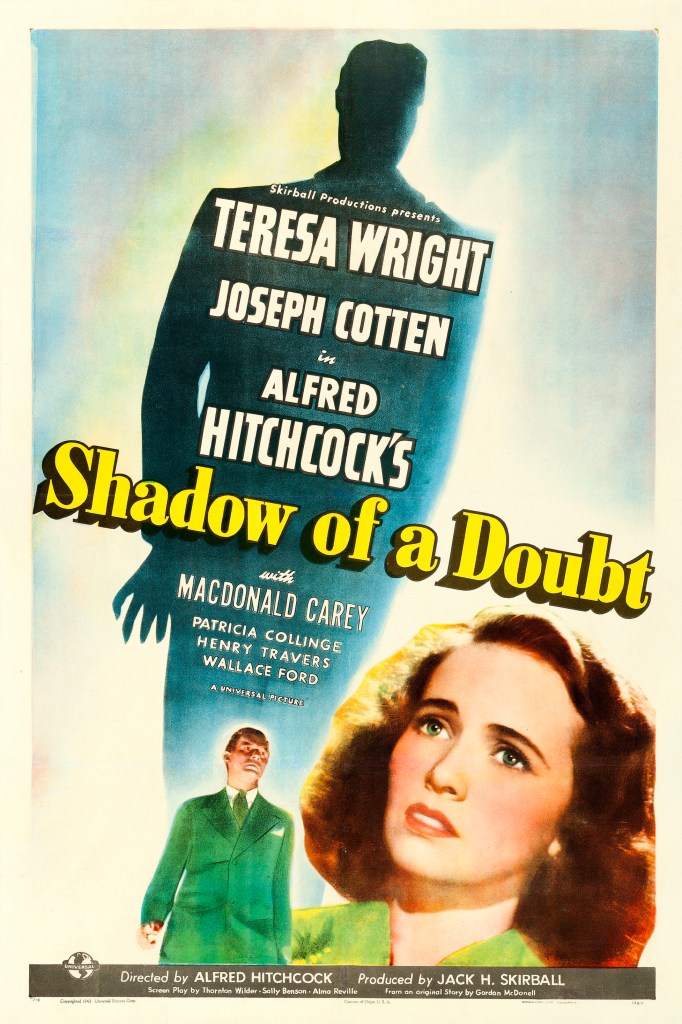
Cast: Teresa Wright (Charlie Newton), Joseph Cotton (Uncle Charlie Oakley), Macdonald Carey (Detective Jack Graham), Henry Travers (Joseph Newton), Patricia Collinge (Emma Newton), Wallace Ford (Detective Fred Saunders), Hume Cronyn (Herbie Hawkins), Edna May Wonacott (Ann Newton), Charles Bates (Roger Newton)

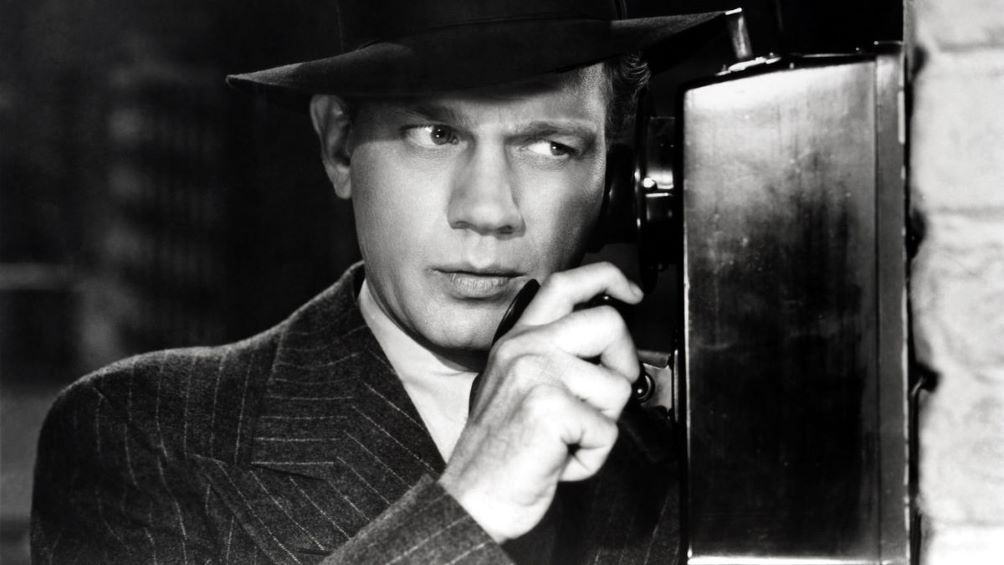
It’s a surprise to discover Shadow of a Doubt was Hitchcock’s favourite of his films (although the Master of Suspense was a notorious kidder). It rarely makes even the top ten of Great Hitchcock’s and for years was semi-forgotten in his CV. But delve into this small-town chiller and it becomes less of a surprise the master was so fond of it. Hitchcock’s first American-set film (his previous American films being British-set), this takes an idyllic, everyone-knows-your-name, no-doors-locked small town in California and injects into the middle of it a ruthless sociopath, as charming as he is shockingly ruthless. Doesn’t that sound like Hitchcock all over?

That small-town is Santa Rosa in California. There the Newton family is thrilled at the imminent arrival of Uncle Charlie (Joseph Cotton) from New York. None more so than his niece Charlie (Teresa Wright), a precocious teenager who shares her uncle’s wit and worldly wisdom. He arrives laden with gifts – but also dragging two police detectives and swirling rumours of terrible crimes. Surely Uncle Charlie – hero to all and idol of his niece – can’t also be the ruthless “Merry Widow” killer, dispatching aged widows for their riches? And, if he is, what on earth will Charlie do about it?

A lot of what would become Hitchcock’s central concerns in his later, darker, mature works make their inaugural appearance in this dark, creeping mystery. Everything in the Newton home is perfect, until they welcome Charlie, whose amiable greed and self-interest tarnishes everything he touches. Despite this, he’s the most likeable, charismatic, charming character in the film. So much so, a big part of us wills him not to be the murderer we can all be pretty confident he is. He’s far too exciting and dynamic for us to want him torn away from us!

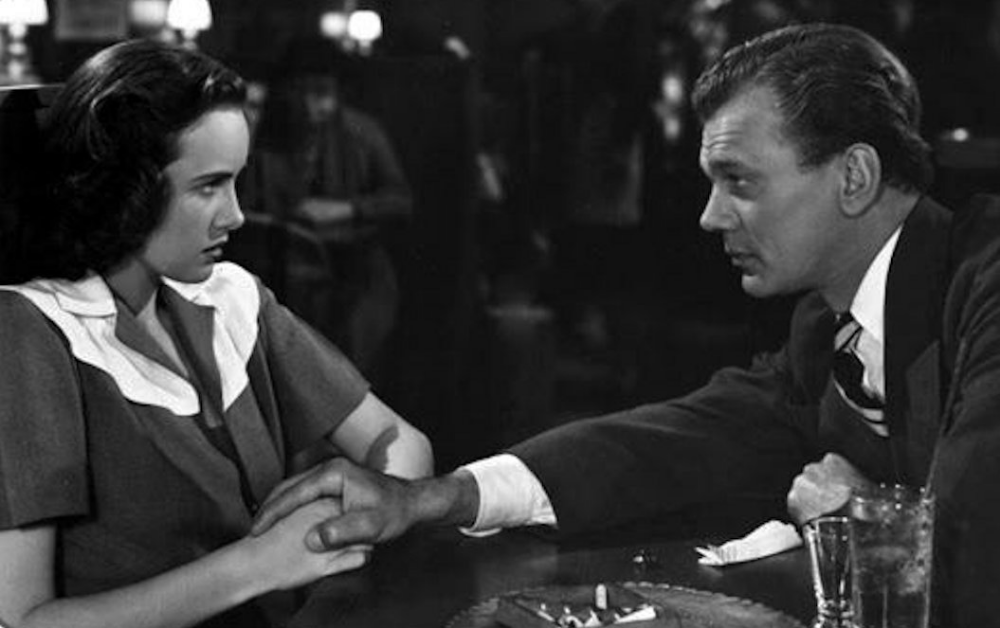
The two Charlies are close – so much so Hitchcock would surely have dialled up the incestuous spark between them even further if he had made the film fifteen years later. They have a near supernatural mental bond, seemingly able to predict where and when the other might be. They laugh and flirt. In arguments Uncle Charlie grasps his niece like a frustrated lover, clutching her too him. As well as sharing many character traits (implying it would be easy for Charlie to become like Uncle Charlie) they’re closeness feels as much like a courtship as it does familial closeness. When Uncle Charlie takes Charlie to a gin bar to gain her confidence and support to hide from the cops, the entire scene feels like the appeal of a would-be lover.

It overlaps another theme future Hitchcock have taken further: the thin line between innocence and killer. Uncle Charlie and his namesake have a special bond. They share the same world-view and many of the same ideas. They’re both charismatic and natural leaders. They both feel stifled by this small-town world. They are both ruthlessly determined when roused. One of them might be innocent and one might be good – but how much of a push would it be to turn one into the other?

Hitchcock probes this possibility throughout in a film stuffed with doubles and duality. Both Charlies are introduced with similar shots of them lying in bed, being questioned by others. Later Uncle Charlie will inherit Charlie’s room in the house. Greeting each other at the station, they move towards each with mirroring shots. They share the same name. Twins, doubles, mirrors and the number two abound in the film – a marvellous blog here captures this all in far more detail and insight than I could here.

Uncle Charlie slithers into Santa Rosa like the serpent into the garden of Eden. He offers temptation left, right and centre. The Newton family receive lavish (stolen) gifts. His brother-in-law’s bank gets a investment from the cash Uncle Charlie carries around (he’s old fashioned you see). He laughs and jokes, reminds Charlie’s mother of the joys of her past and inveigles himself into the heart of the family (he even sits at the head of the table). But he’s also a dark, sinister figure, frequently framed at the top of staircases, marching inexorably towards camera and (in one stand out moment) breaking the fourth wall to address us directly while coldly, contemptuously outlining his theory about the pointless burden useless lives have on the rest of us.

He’s played with a charismatic, cold-hearted, jovial wickedness by Joseph Cotton. Cotton is so good as this on-the-surface amiable man, with a soul devoid of any love, it you’ll wish he’d got parts like this more often. Liberated from playing decent best-friends, Cotton dominates the film with a malignant charisma, married with a growing only-just-concealed desperation at the fragility of his fate. Opposite him, Teresa Wright is marvellous as a young woman who finds her sense of morality fully awakened into outrage by this dark presence corrupting everything in her life.

Corruption is central to Shadow of a Doubt – no wonder Hitchcock loved it – with Uncle Charlie turning everything in the simple, honest town into something darker and tainted by his very presence. There is an almost cliched home-spun decency about the town (almost as if co-writer Thornton Wilder was parodying his Our Town), serving to make Uncle Charlie’s modern sociopathy even more of a destructive force.

Shadow of a Doubt is directed with immense care, but a great deal with subtle flourish. Staircase shots abound, to stress sinister motivations, positions of weakness and unease. Characters lurch towards the camera frequently, as if the whole film was hunting us down. An air of menace, lies and danger builds inexorably as Uncle Charlie’s true-nature leaks out. There is also wit: not least from Charlie’s father (a jovial Henry Travers) and eccentric neighbour (a scene-stealing Hume Cronyn) gleefully discussing true crime throughout. There is also Hitchcock’s love of irony, not least in the fact Charlies problems are largely caused by his attempts to conceal a newspaper article that otherwise would have gone unnoticed.

Hitchcock makes his cameo early on as a card player on a train journey. He’s revealed to be holding all the trumps. That’s how he likes it: and perhaps explains his fondness for Shadow of a Doubt. Low key but perfectly constructed, it’s a film that latches onto themes of corruption, dark temptation and ruthless violence. Film logic abounds – who cares that the detective’s investigation is so inept they’d never be employed again – and the second half is crammed with murder attempts as unsubtle as they are ingeniously dark. Shadow of a Doubt feels like a prototype for darker themes of obsession and temptation Hitchcock would explore in the future. Perhaps that’s why he was so fond of it: it’s where he started to spread his wings.

Mrs Miniver (1942)

Greer Garson and Walter Pidgeon hold the homefront together in Mrs Miniver

Director: William Wyler

Cast: Greer Garson (Kay Miniver), Walter Pidgeon (Clem Miniver), Teresa Wright (Carol Beldon), Dame May Whitty (Lady Beldon), Reginald Owen (Foley), Henry Travers (Mr Ballard), Richard Ney (Vin Miniver), Henry Wilcoxon (Vicar), Christopher Severen (Toby Miniver), Brenda Forbes (Gladys), Clare Sanders (Judy Miniver), Helmut Dantine (German pilot)

Mrs Miniver was made when history was in flux: conceived at the height of the Blitz, shot and then parts re-shot either side of Pearl Harbor and released in 1942 after America had entered the war. A patriotic flag-waver, designed to build American sympathy for a Britain standing alone, it was a huge hit, won Best Picture and had a profound impact on Allied morale (Churchill called it more help to the War effort than a flotilla of battleships). It still carries an inspiring, cockle-warming charm and a hefty emotional punch, made even more affecting by the stoic determination (rather than hand-wringing emotion) every setback is met with.

In a small village just outside London, lives the Miniver family. Kay Miniver (Greer Garson) cares for her family in a large country house. She has three children with architect husband Clem (Walter Pidgeon). Their life is contented – and then war breaks out. Oldest son Vin (Richard Ney) joins the RAF – after falling in love with Carol (Teresa Wright), niece of the local grandee Lady Beldon (May Whitty). Clem joins the ships travelling to Dunkirk. Kay holds the domestic fort, protecting her family from air raids, facing down a German pilot and helping shepherd her small village through the trauma of air raids to something approaching a normal life.

Mrs Miniver is all about that stoic, British stiff-upper-lip attitude, of doing your duty uncomplainingly and quietly. As they said “Britain Can Take It”, and the film is a celebration of the nobility of perseverance. It’s designed to inspire and it does: it’s melodrama played with a low-key reserve, which is genuine and heart-felt. There is a reason Goebbels (and he would know) called this a “refined powerful propagandistic [tool]” – it makes you completely emphasise and relate to its characters. We share their moments of joy just as much as the profound tragedy of their losses.

And there is a lot of loss in Mrs Miniver – way more than you might expect, with the film’s final act throwing at least two painful gut punches you don’t expect. Tragedy touches all of us and war carries away the innocent and undeserving with as much eagerness as it does the militaristic. There seems to be no reason or justice to it – but instead the difficult acceptance of fate and the necessity of being part of a struggle larger than ourselves.

In a powerful speech that concludes the film, the vicar stands in the bombed-out ruins of his local church. It mirrors a scene near the beginning, as he regretfully but with quiet reserve announces the outbreak of war. Now he gives a rousing speech that this is war of all the people, against the tyranny that threatens us, where the dead our mourned but not forgotten. It’s a powerful speech (brilliantly delivered by Henry Wilcoxon), of the painful necessity of duty at the time of war that still stirs (it was distributed nationally by Roosevelt’s insistence).

The stoic, good-natured, supportive community, who protect each other and desperately try to maintain hope and nobility when death could strike at any time, contrasts firmly with the only German we see. A wounded pilot who gains entrance to Kay’s home at gunpoint. Kay calmly disarms him, feeds him and tends to his wounds (after all he is the same age as Vin) – he responds with a vicious speech of violent hate, bragging at the deaths the Luftwaffe have inflicted on Europe. It’s the only time her reserve really breaks, as she slaps him – and even for a moment seems to consider dispatching him. Her delayed shock is clear later when she casually smokes one of Clem’s cigarettes – a mixture of restrained shock, relief, horror and confusion across her face. It’s the closest direct danger comes – and the closest she comes to openly expressing rage and anger at the hand the world has dealt her.

The film revolves around Greer Garson’s (Oscar-winning) performance. Though it’s easy to see Kay as a sort of saint, that’s underestimating the huge burden Garson had: she effectively embodies an entire Homefront of scared people doing their duty. It’s a performance of stiff-upper-lipped warmth, her desperation, fear and protective nature clear in every beat. You can see it in her mix of distracted fear and pride when Vin announces he has joined the RAF, and the front of “everything will be alright” she puts on for the children during an air raid that tears her house apart.

Of course, that disaster is met with a “I always wanted to redo that dining room” fortitude by her husband, Clem. Pidgeon and Garson forged a partnership that would run through several movies here, and spark off each other wonderfully. Pidgeon gives a solid grounding to Garson, while she helps find warmth and humanity in an otherwise distant actor (Pidgeon lacks Peck’s – who he resembles in many ways – ability to convey warmth under reserved dignity). Pidgeon’s stirring sense of duty excels, not least during the Dunkirk sequence.

That sequence is very well executed, a small series of boats gradually growing in size until they fill the Thames. When duty calls, people respond with gusto and pride. Alongside this, normal life continues as much as possible: not even the war will stop the flower show. This remains a heart-warming centre piece – pinched for an episode of Downton Abbey – as Lady Beldon overrules the sycophantic judges and gives the prize to the deserving winner, local station manager Mr Ballard (Henry Travers, sweet but receiving a generous Oscar nomination).

The acting is pretty much spot on. Teresa Wright (Oscar winning) is endearingly genuine and vibrant as Vin’s wife to be (and Lady Beldon’s niece) Carol. May Whitty, channelling those grande-old-dames-with-hearts-of-gold, gets every beat right, from comedy to tragedy, Wilcoxon is marvellous. It’s all so heartfelt and earnest you can overlook the fact most of the (largely American and Canadian) cast go for cod-Brit accents or cliched working class vowels – just as you do the fact that neither the towns or countryside in the film looks particularly British (an opening sequence in London looks plain wrong in every sense).

And you can’t fail be stirred by its celebration of quiet determination and unshowy self-sacrifice. You can certainly argue that it’s not a work of art, like other films nominated that year for Best Picture. But, none of them would have (or continue to have) the emotional impact this has. Sure, it feeds off an American nostalgia for English-country-village life – but it does so with a noble cause. Well-acted, very well directed, it still inspires and continues to provoke pride today.

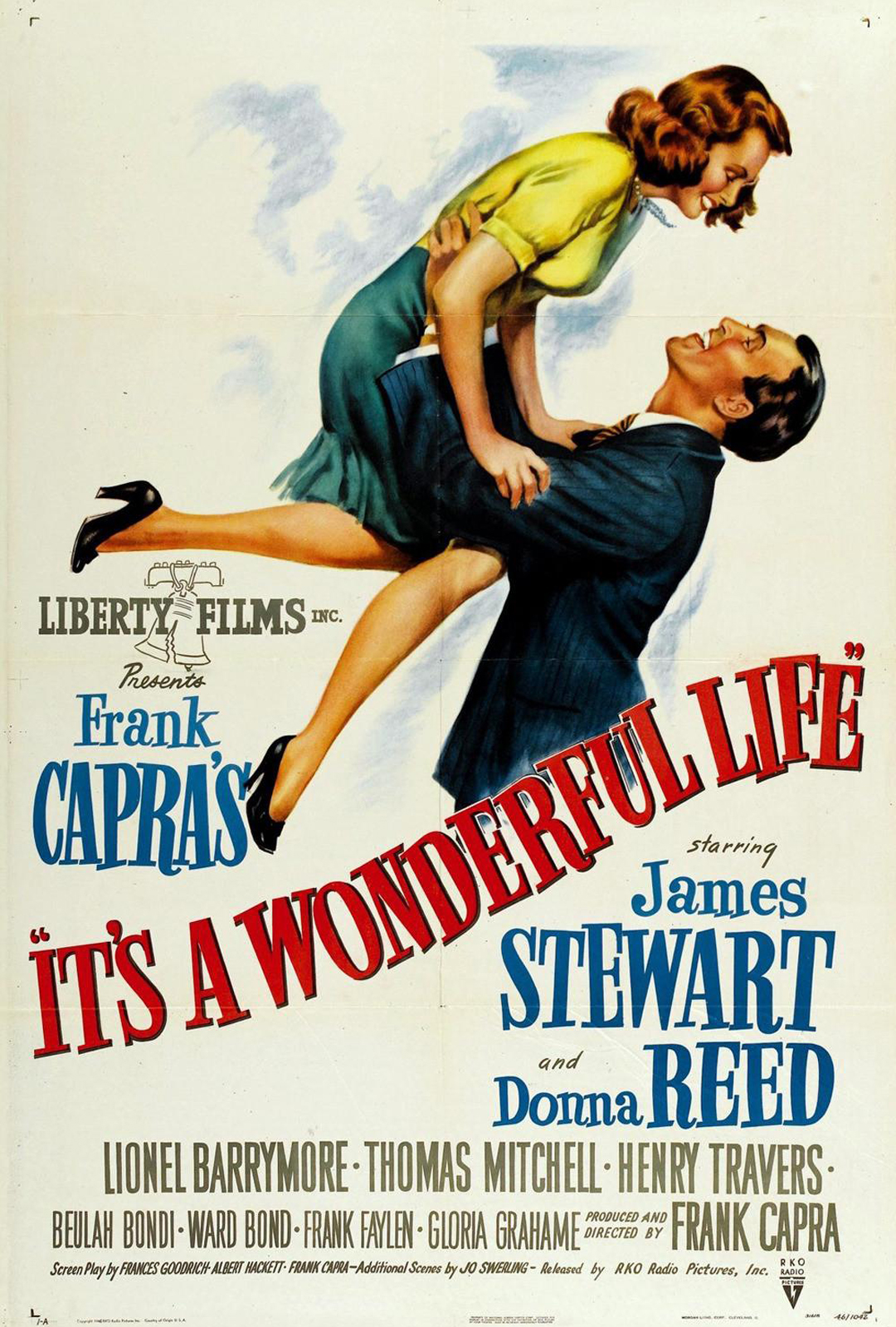
It's a Wonderful Life (1946)

James Stewart discovers he has lived a good life in It’s a Wonderful Life

Director: Frank Capra

Cast: James Stewart (George Bailey), Donna Reed (Mary Hatch), Lionel Barrymore (Henry F Potter), Thomas Mitchell (Uncle Billy Bailey), Henry Travers (Clarence Odbody), Beulah Bondi (Ma Bailey), Frank Faylen (Ernie Bishop), Ward Bond (Bert), Gloria Grahame (Violet Bick), HB Warner (Mr Gower), Frank Albertson (Sam Wainwright), Todd Karns (Harry Bailey), Samuel S Hinds (Pa Bailey)

For many people it’s as much a part of Christmas as mince pies and Santa. Any list of the greatest Christmas films of all time – in fact any list of the most beloved films of all time – isn’t complete without It’s a Wonderful Life. Capra’s emotional, heart-warming, seasonal tale encourages us to take a breath and look at the riches in our life, to look past the surface frustrations and disappointments. It seems to have something to say to everyone. There’s a reason why it has been a staple of Christmas for decades.

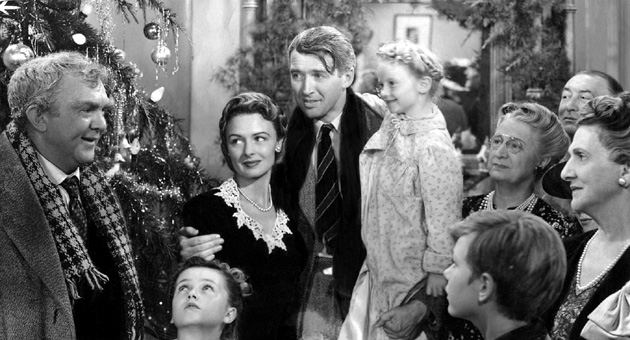
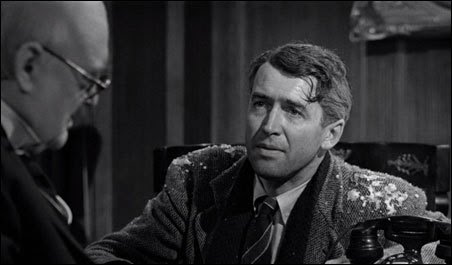
The small town of Bedford Falls is a place George Bailey (James Stewart) has always dreamed of leaving for a life of adventure. However, circumstances always meant he has stayed in the town, running the family savings and loans business. He’s made a success of the business, raised a family with his wife Mary (Donna Reed – extremely good in an unshowy role), helped half the town into decent affordable homes, and changed his whole community for the better. So why is George standing on a bridge on Christmas Eve, contemplating throwing himself into the river? And will his guardian angel Clarence (Henry Travers) persuade him there are things worth living for?

Capra’s film is very easy to see as a wallow in sentimentality. Certainly, the film is in love with its image of small-town America, here a nirvana of folksy lightness where everyone knows everybody’s name. In reality, America as a whole, even at the time, probably had more in common with Potter’s grasping capitalism or the nightmare vision Clarence conjures of a neon-lit Potterville of loose morals and vice. But the film would never have worked if it was just sickly sentimental – or if it had been a cynical satire for that matter. Instead it works because it is overwhelmingly human, empathy dripping from every pore. It invests us deeply in this whole community and succeeds in making the viewer relate to them at every step.

This is partly because Capra has such a masterful skill for how the little touches can make a story come to life. The loose banister cap that Bailey keeps dislodging in his home. The drawing Donna has made of George’s offer to lasso the moon. The film is full of small moments of character, that create the over-whelming richness of a whole life. It’s also a story full of charm and genuine feeling for its characters, that understands the pain little griefs and small tragedies have.

Perhaps that’s also one of the reasons for the love people have for it. Because, let’s not forget, this is a film set on the darkest day of its lead character’s life, when he considers ending it all. One of the things I find the most touching about the film is that it never stigmatises depression, guilt or feelings of inadequacy. If someone as universally loved as George can look at his own life as a disappointment, and that this feeling is treated as both reasonable but also mistaken in the best way, it reassures as all not only that we shouldn’t feel guilty for feeling this but hopefully that we are as mistaken as George is. Failure is all in the perception – and It’s a Wonderful Life reminds us that perception is often unreliable when we turn it on ourselves.

Capra’s film relies strongly on our bond with George – so the casting of James Stewart in the role plays off perfectly. Stewart is quite simply superb, completely human and deeply moving. Capra provides Stewart with several striking set-piece speeches (all of which he delivers with aplomb). The entire film is essentially a riff on Stewart’s charm and likeability – but also his everyday quality, the sense that when we watch him we are looking at someone like us. Stewart makes Bailey honest, decent and kind. You can immediately see why people like him. His principles and sense of justice drive him every day to do the right thing – and what makes him such a deeply relatable character is that this so often flies in the face of his own desires and interests.

What Capra also understands – and taps into so well here – is the darkness in Stewart. Because someone so like us is surely as likely to suffer from  depression and disappointment as the rest of us. You can never forget this is a man who has dreamed his whole life of leaving this town, of making it as an architect, of forging a broader life for himself. He never wanted to be the pillar of the community and family man he becomes. There is disappointment in Bailey at every turn, however much he treats the world around him with warmth. This isn’t what he wanted. No matter if it has won him love and respect from all around him.

And who hasn’t ever felt that? But we know that deep down – even if he doesn’t always realise it – Bailey is happy with his lot. That if he didn’t care deeply about town, friends and family he would have left years ago. We know he’s a good man: that later he will deeply regret berating his poor befuddled Uncle Billy (a gloriously cuddly Thomas Mitchell) for losing $8k and losing his temper at his wife and children on Christmas Eve. There is a pain for us to see such a good man, a loving man, who we feel we understand, angrily ask his wife why they had so many children. Everyone has lashed out like George – and everyone has, at some time, looked at where their life is and felt “I could have been more than this”. Far fewer people have taken the time to look at all the good alone in their lives and what a good mark they have made on the world.

But that’s the genius of the film. Taking its cue from Dicken’s Christmas Carol (I’d also say Lionel Barrymore’s brilliantly hissable Potter is clearly a version of Bleak House’s vile moneylender Smallweed), effectively Clarence is the Ghost of Christmas Present, showing George what the world would have been like without him. Sure some of this is overblown – Potterville for goodness sake! – but the impact is those personal stories. The brother drowned as a child. The pharmacist imprisoned for manslaughter. The affordable homes never built. The family that never even existed. The mix of science fiction and classic morality tale helps us all to reflect – so many of us have people all around who care for us, whose lives would have not been as rich as they are without us, however much we may disappoint ourselves at times.

That’s perhaps behind the love for the film. It’s about hope, while never closing its eyes to despair. It recognises that sometimes we are not happy – and it tells us that that’s okay, so long as we don’t lose hope. It encourages us to take a look at ourselves in the round and to appreciate the whole picture, not just a part of it. You can call that sentimentality if you want – but at Christmas time this message of hope and love is sometimes exactly what you need.