Tag: Hugh Jackman

Deadpool & Wolverine (2024)

Deadpool & Wolverine (2024)

Smug, tiresome gags underpin a shallow piece of fan-pandering that mocks fan-pandering

Director: Shawn Levy

Cast: Ryan Reynolds (Deadpool), Hugh Jackman (Wolverine), Emma Corrin (Cassandra Nova), Matthew Macfadyen (Mr Paradox), Morena Baccarin (Vanessa Carlysle), Rob Delaney (Peter Wisdom), Leslie Uggams (Blind Al), Aaron Stanford (Pyro), Dafne Keen (Laura), Jon Favreau (Happy Hogan)

Deadpool is Marvel Jesus. It’s a joke in the film, but it’s also kinda true. The MCU has struggled in the past few years and it’s hoping the raw-and-ready sociopathic, fourth-wall-breaking merc-with-the-mouth can give its fortunes a jolt. In terms of money take, Deadpool & Wolverine is, I guess, going to do that. In terms of creativity and imagination, we’re still circling the toilet bowl, but hey at least Feige and co are doing it while clutching a wadge of greenbacks.

You say Deadpool’s constant fourth-wall leaning jokes ain’t really funny and that all they do is point out (and neutralising criticism in advance) weaknesses in plot and writing: but that toilet bowl gag was a bit of a turd right?

Wade Wilson aka Deadpool (Ryan Reynolds) has been rejected by the Avengers on Earth-616 “The Sacred Timeline” (otherwise known as the one the MCU happens in) and returns to his friends on Earth-10005 (otherwise known as the 20th Century Fox X-Men Franchise timeline) to retire and work as a used-car salesman. Until he is grabbed by the Time Variance Authority and informed by Mr Paradox (Matthew MacFadyen) his universe is being erased, due to the death of its Anchor Being Wolverine (Hugh Jackman) in Logan. Deadpool’s only chance to save his universe is to find a new Wolverine, eventually pulling in “the worst Wolverine” who failed to save his world. Both are banished to “The Void”, a resting place for “erased” heroes from earlier timelines (aka cancelled movie franchises) run by Cassandra Nova (Emma Corrin), the insane sister of Charles Xavier.

You made that tough to follow on purpose, you absolute bell-end. Ain’t you funny!

Flipping heck. If you think that sounds like a lot going on, don’t worry: it hardly matters. For Deadpool & Wolverine the story is just a very loose framework for a series of slightly smug in-jokes about nineties and noughties nostalgia, and gags about corporate mergers. (In case you missed it, Disney bought 20th Century Fox and swallowed its comic book franchises like a money-Moloch). This matters an awful lot to some. Many others won’t care less. Deadpool & Wolverine very much tailors to the first group. If telling gags about Disney’s caution about jokes on drugs and anal sex, or riffing on the X-Men movies being less-and-less good over many years, sounds like your idea of comedy gold then this is for you.

Moloch and anal sex in the same paragraph – well-read show-off who wants to look cool ain’t ya?

Deadpool & Wolverine prunes a lot of comic mileage (or tries to) from mocking the “special sock” longings of geeks and fanboys, those who wile away hours debating who’s costume looked best or who could beat who in a fight. But this is a film mocking shallow, fanservice wank while itself being a massively shallow, fanservice piece of wank. If the only thing you felt was missing from Hugh Jackman’s previous Wolverine career was that he never wore the yellow-and-blue uniform, then this is the movie for you.

You were so pleased with that fanservice comment I saw you use it several times in Whatsapp hot takes. Twat.

Deadpool & Wolverine mocks fans for their shallow love for the obvious easy hit of seeing Deadpool and Wolverine fight, or a cameo from a well-known actor from an old movie or a celebrity playing a different version of a familiar character, then fills the film with almost literally nothing but this. Am I really meant to get excited seeing an actor revive a comic book role from a noughties superhero film we’ve forgotten and everyone at the time thought was rubbish? For all Deadpool & Wolverine wants to feel like something cheeky and dirty, it’s the safest slab of product out there. Every single thing in it feels like it has been cribbed from a fan’s wishlist on a Reddit thread. It feigns cocking a snook at Disney, but Deadpool is just an in-house jester: tweaking his master’s nose while taking a pay cheque and avoiding anything really pointed in his barbs. After a while you just get tired of it and the film’s embrace of cliché and retreads isn’t justified by Deadpool turning to the camera and pointing it out.

Getting up a head of righteous steam there ain’t you? Still paid to see it didn’t you! Sucker!

Still at least it’s better than when the film tries to have a heart. I’d respect it more if it was willing to make Deadpool a flat-out psychopath with no real sense of morals. Instead, he’s really all (very tiresome) talk, because Deadpool & Wolverine is desperate to turn him into someone the masses can find sympathetic by mixing his mook slaughter with emotive mooning over a group polaroid of the friends he’s trying to save from erasure from existence. Much like Ryan Reynolds’ performance, it often feels like filmmakers enjoying the shock quality of shrieking “FUCK” in a park, before running home to an early bedtime with their families.

Chickened out of writing the C-word there? Guess you don’t want to get blocked.

Deadpool & Wolverine opens with assurance it won’t ‘desecrate’ the legacy of Logan (an actual, good film with a proper story and emotional arc) – before, in one of the film’s better jokes, it has Deadpool dig up the skeleton of the dead Wolverine and use the bones to bloodily slaughter an army of TVA mooks. But then it desecrates it in a different, deliberate, even worse, way by ripping Logan off with shameless abandon. It gives Wolverine pretty much exactly the same plotline, including restaging almost identical emotional conversations, in almost identical locations. In fact, my overwhelming emotion watching Hugh Jackman snooze through this film with a growl was sadness that he came back after his perfect sign-off. But then I guess he get over a dozen million reasons to come back and prostitute himself here for one last runaround.

Like Deadpool doesn’t make that joke himself in the film – if you’re going to knock it, don’t rip it off!

Maybe he thought it was funny. It does feel like a home movie put together by a series of actors in their forties or fifties desperate to show their kids they can do something cool. Is there anything good in Deadpool & Wolverine? There are some good fights, even if Shawn Levy isn’t the best at staging them, but it does spray claret marvellously all over the place to well-chosen Madonna tunes. Matthew MacFadyen, essaying a cartoonish version of Succession’s Tom Wambsgans, is good fun, Emma Corrin makes an effective if under-used villain. There are some good jokes.

Because you gotta give some sugar right?

But the overwhelming air is smugness. None of the fourth-wall, franchise-teasing, corporate digs are that funny and very few of the asides carry any bite (several are about how handsome or muscular its stars are – the only remotely sharp comment is on Hugh Jackman’s divorce). Aside from that it offers nothing new or familiar, its setting is reminiscent of several other films, and it rips off plot galore from Logan and TV’s Loki show. Perhaps worst of all, in a year where an actually original and daring film Mad Max: Fury Road has fatally tanked at the box office, this openly rips off its location and style for The Void and it’s going to make millions.

It’s not as if you were even wild about Furiosa, but like the sanctimonious prick you are, you’ll give a pass to a film from an auteur but then knock a Marvel film. What makes you such a smug, humourless prick eh? Go with the fun!

Look for the last time, it’s not big, clever or funny to just milk some cheap gags out of anticipating the criticism. That’s enough. Fuck off now.

Touchy!

No seriously. Fuck off.
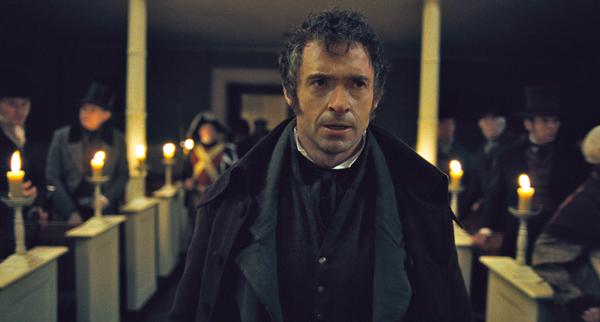
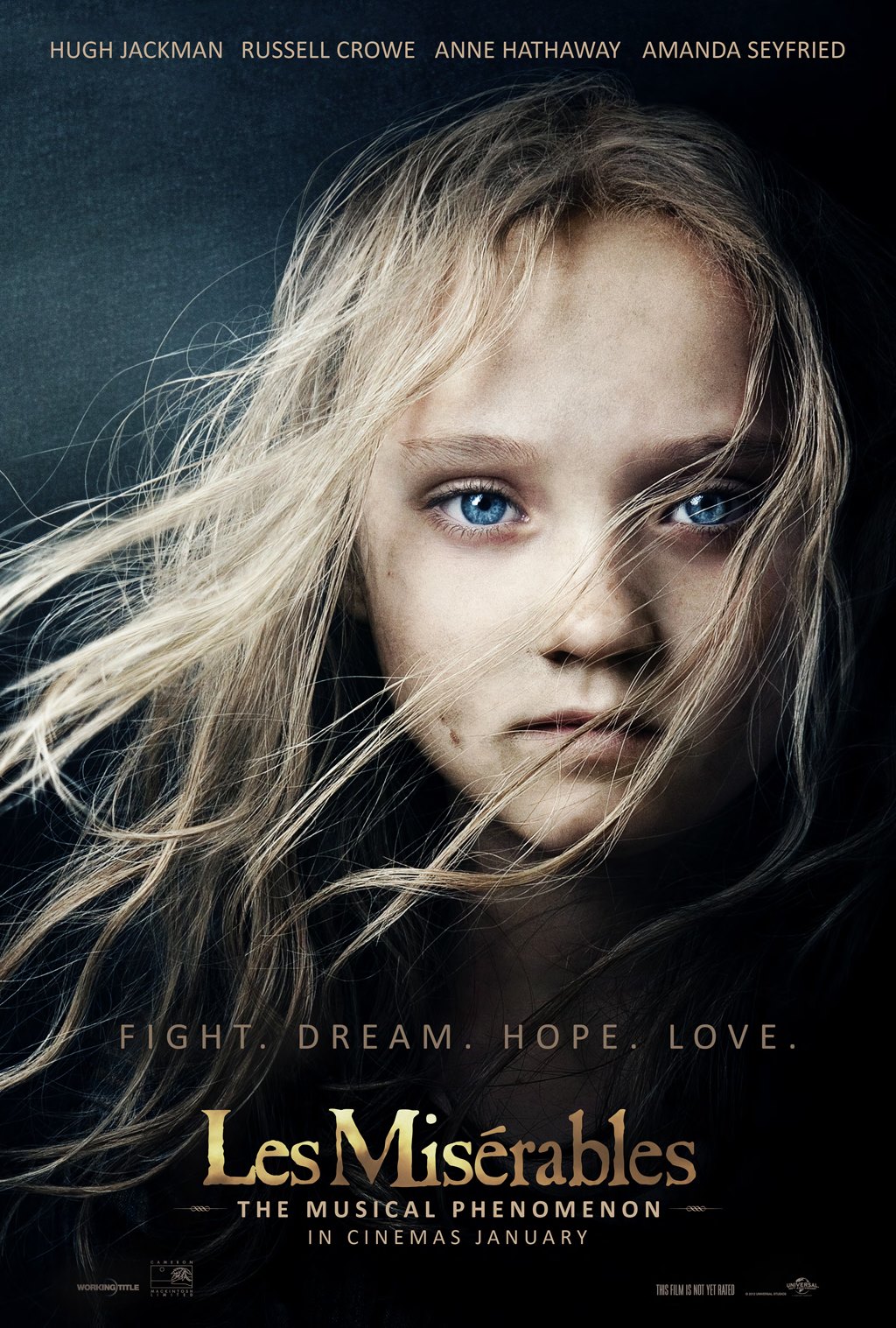
Les Misérables (2012)

Hugh Jackman runs for years in Tom Hooper’s controversial Les Misérables adaptation

Director: Tom Hooper

Cast: Hugh Jackman (Jean Valjean), Russell Crowe (Inspector Javert), Anne Hathaway (Fantine), Amanda Seyfried (Cosette), Eddie Redmayne (Marius), Helena Bonham Carter (Madame Thenadier), Sacha Baron Cohen (Thenardier), Samantha Barks (Eponine), Aaron Tveit (Enjolras), Daniel Huttlestone (Gavroche)

Of all the behemoth musicals of the 1980s, Les Misérables may just be the best. An entirely sung adaptation of Victor Hugo’s door-stop novel, it’s been thrilling sold-out global audiences ever since 1985. It ran on Broadway for 16 years and never stopped playing in the West End. Plans to turn it into a film have took decades, with its scale always the problem (not least since musicals spent a large chunk of the 1990s as far from sure bets at the Box Office). Finally, it came to the screen, with an Oscar-winning director who supplied the ‘fresh new vision’ a show that had been staged literally thousands of times needed. That vision has its merits, but it’s also divisive.

The story follows Jean Valjean (Hugh Jackman), a convict imprisoned for nineteen-years for stealing a loaf of bread. He is persecuted by his nemesis Javert (Russell Crowe), a rigid policeman who believes a man can never change. On parole, Valjean is an outcast but his life is changed forever after encountering a Bishop (played by original West End Valjean, Colm Wilkinson) who claims he had gifted the silverware Valjean had in fact tried to steal. The Bishop charges Valjean to live his life for the good of others. Eight years later he has become a respected mayor of a small town. But his past starts to catch up with him as Javert arrives as the new chief of police. Will helping Fantine (Anne Hathaway), the mother of illegitimate child Cosette (growing up to become Amanda Seyfried), lead to his secret being revealed?

Tom Hooper has a difficult challenge taking on Les Misérables. There can be few people around who haven’t heard at least some of the songs – and no musicals fan who probably hasn’t at a minimum watched a concert version, if not the show itself. How do you even begin to make one of the most famous musicals of all time fresh? Hooper chose a new approach that would up the intimacy and drama, fore-fronting emotion over scale. It also allowed him to fuse his unconventional framing with the raw, hand-held camera work of John Adams, his hit HBO miniseries.

So, Les Misérables, unlike many other musicals was to be all-sung live by the actors, rather than separately recorded and lip-synched on set. The camera would fly into their faces and almost interrogate the actors as they performed, capturing every emotion passing across their face. It would be up-close and intimate. What in the theatre works as a series of powerful, theatre-filling, ballads would be repackaged into something very personal. At times it works extremely effectively.

Having the actors sing live, means all the power of the performances they gave in the moment are captured. Emotions are dialled up, with songs often delivered through cracking voices or snot-filled nose sniffs. This has a particularly huge benefit for Anne Hathaway, whose deeply heartfelt, devastating rendition of I Dreamed a Dream is delivered in a single shot close-up that turns the song into a powerfully raw song about trauma (this sequence alone probably ensured Hathaway won every major gong going). It’s the same with Jackman: Valjean’s Soliloquy in particular plays off the raw guilt, shame and self-disgust Jackman lets play across his face while later Who Am I gains even more impact from the fear, hesitation, regret and moral determination Jackman injects into it, cracked voice and all. Perhaps not a surprise the two most confident performers benefit the most.

The downside is that, repeating the same visual technique for every single song, does make the film at times rather visually oppressive and repetitive. Even the large group numbers sees the camera drill into the faces of the individual singers, rather than offer us any wide shots. In fact, the wide shots in the film are so few you can almost count them on one hand. While Hooper’s approach uses the close-up to present the songs in ways theatre never could (good), it does mean he sacrifices the scale and beauty cinema can bring (less good).

You actually begin to think perhaps Hooper doesn’t really like musicals that much. His vision here is to turn Les Misérables into more of an indie film than an adaptation of West End musical. Choreography isn’t, to be fair, a major part of the stage production, but theatrical spectacle is, and that’s almost completely missing. Some of the most powerful, hairs-on-the-back of the neck power of the big numbers has been sacrificed for grinding the emotion out (Jackman at points speaks some of the lines rather than singing them). Musically, Samantha Barks’ marvellous rendition of On My Own is the only song in the film I would listen to out of context. It makes the show different – but more variety and more willingness to embrace the spectacle of the show – mixed with the intimacy of the solo numbers might have added more.

Les Misérables is still however very entertaining: after all it can’t not be when it has some of the best songs in the business. The acting is extremely strong. Jackman is perfectly cast: he not only has the vocal range and strength, but also the acting chops to bring to life a character who goes from red-eyed fugitive to caring and dutiful surrogate father. Hathaway is hugely affecting as Fantine, vulnerable but also with a deep resentment. Redmayne is hugely engaging and charismatic as Marius. Barks is excellent, Seyfried gives a lot of sensitivity to Cosette and Carter and Cohen are fun as the Thenadiers. The only mis-step is Crowe, who has the presence for the role but notably lacks the vocal strength for a notoriously difficult role.

They all provide some of the most intimate renditions of these songs you’ll ever see and the film unarguably offers a take you will have never seen before, even if you had sat through every single one of the thousands of stagings. It works better for solos than group numbers (which, with their kaleidoscope of voices all in different locations are hard to replicate on screen anyway), and it’s a well the film dips into far too often, but when it works, it really does. Les Misérables divides some – and on repeated viewings its repetitive visuals make it feel longer, with the second half in particular flagging – but Hooper does something a West End show can’t do. It might well have been better if it has used more of the things cinema cando (scale, sets, mise-en-scene – it’s hard to picture an actual image from the film that isn’t a close-up) but a film with actors as good as this and songs as affected as these will always work, no matter what.

The Greatest Showman (2017)

Hugh Jackman excels in The Greatest Showman, like a Broadway show bought straight to film

Director: Michael Gracey

Cast: Hugh Jackman (PT Barnum), Michelle Williams (Charity Hallett-Barnum), Zac Efron (Philip Carlyle), Rebecca Ferguson (Jenny Lind), Zendaya (Anne Wheeler), Keala Settle (Lettie Lutz), Yahya Abdul-Mateen II (WD Wheeler), Natasha Liu Bordizzo (Deng Yan), Paul Sparks (James Gordon Bennett), Sam Humphrey (Charles Stratton)

In early 2018, the whole world seemed to go crazy for The Greatest Showman. A big old-fashioned film musical that wouldn’t look out of place with Gene Kelly in the lead, people went to the cinema again and again to see this escapist song-and-dance epic. Based loosely on the life of PT Barnum (Hugh Jackman), covering his marriage to childhood love Charity (Michelle Williams) and the creation of his Museum of Curiosities (funded through some chicanery with banks), he staffs the museum with “freaks” whom he encourages to embrace their nature and entertain the crowds. The “circus” is a huge success, but will Barnum be seduced by his desire for greater fame and acceptance in the cultural high circles that have no time for his mass entertainment? And how will his fascination with opera singer Jennie Lind (Rebecca Ferguson) affect his marriage?

If you get the idea from that plot summary that this is rather safe and unchallenging plot-wise, you would be right. Structurally this doesn’t offer anything more than hundreds of musicals before it – a hero aims for the stars, loses his roots on the way, only to triumphantly rediscover them and remember why he got into this business in the first place. Yup that’s your classic Hollywood plot here. And it doesn’t matter a damn.

Because The Greatest Showman, like the shows Barnum offered the crowds, knows exactly what it is: an old-fashioned Hollywood musical, shot like a classic piece of Broadway spectacle, crammed to the gills with hugely exciting and dynamic musicals performers ripping through a series of impressive songs and some stunningly choreographed numbers. Who gives a damn if you’ve seen the story before, when it’s so well done, the actors so engaging and the highlights on the way to brilliant to watch. Come to this with your mind set for the West End, and you’ll love it. Expect to see La La Land and you are in for a disappointment (or a pleasant surprise!)

Gracey’s film is unashamedly old-fashioned, and shot with a confident stillness that puts the actors, dancers and singers front-and-centre rather than the flourishes of a director. In contrast to some over-directed musical numbers, Gracey is happy to place the camera so we can see all the numbers perfectly. And why wouldn’t he when all the actors can dance as well as this? I want to see every step of the intricate choreography (that would have thrilled Kelly) from Jackman and Efron in The Other Side. I want to see every step of the thrilling group dance number From Now On. I want to marvel at Efron and Zendaya soaring through the skies on trapeze ropes in Rewrite the Stars.

It’s a musical that chose its cast carefully, requiring that they should all be capable of the sort of feats of physical and musical perfection that we all enjoy watching on Strictly every week. In all this, the snubs of the critics seems neither here nor there – hilariously the film always commentates on its own terrible reviews in advance (!) in the character of James Gordon Bennett, a humourless snobby theatre reviewer – it’s a film that is shot in the arm of pure entertainment. 

I mean you’d need to have a heart of pure cold not to feel some serious emotions during Jackman and Williams’ beautiful rooftop ballet during A Million Dreams. What I particularly liked about this was its unabashed, carefully designed artificiality – like a blast of 1950s Minnelli musicals, this uses painted backdrops and studio locations to beautiful effect to create a larger-than-life, theatrical world of hyper reality. It really helps you to get even more swept up by it all.

But then you also get swept up from having an actor as charismatic as Hugh Jackman in the lead. Oozing charm and grace from every pore, Jackman is riveting in the role, his grin a mile wide, his skills as a singer and (most especially) a dancer shown off to stunning effect. He turns moments that could have rogueish qualities into sweetness, he is impossible not to root for. Sure as an actor he’s not stretched with the conventional arc Barnum has, but does that matter when he is giving this all he has. It’s a hugely, overwhelmingly enjoyable performance of pure charisma that I can’t imagine any other actor in Hollywood having the chutzpah to pull off. It’s so skilled that he never overwhelms the film but you could move the whole performance into a 1,000-seater theatre and it would still work perfectly.

The rest of the cast all lift their considerable game to match the commitment and expertise of the lead. Williams showcases her own musical talents, while Efron and Zendaya have a truly affecting romance at the heart of the film (while also being considerably compelling musical performers). Rebecca Ferguson has the least rewarding role (and is also dubbed for the high soprano singing), but does a decent job as someone you could imagine turning Barnum’s head. The rest of the cast playing assorted circus performers create a truly family atmosphere, with Keala Settle and Sam Humphrey particularly fine.

You could argue that the film – with its message of acceptance and lack of judgement – flies a little bit in the face of the real Barnum (“there’s a sucker born every minute”) who probably was partly exploiting his acts for cash. The treatment of Jennie Lind as an increasingly scheming would-be-seductress is a sad slur on a woman who gave most of her earnings to charity. In fact you wish allthe names had been changed to distance us from reality.

But the film gets away with it because it is basically a heartfelt and genuine piece of work that, most of all, like a huge Broadway musical just wants to entertain the audience. And on that score it works – you’ll get invested in the characters and their story and you’ll find yourself humming the songs afterwards and trying (failing) to dance those steps. Go into it in the right mindset, and you’ll find a delight.

The Wolverine (2013)

Hugh Jackman brings out the claws once more for The Wolverine

Director: James Mangold

Cast: Hugh Jackman (Logan/Wolverine), Hiroyuki Sanada (Shingen Yashida), Tak Okamoto (Mariko Yashida), Rila Fukushima (Yukio), Famke Janssen (Jean Grey), Will Yun Lee (Kenuichio Harada), Svetlana Khodchenkova (Dr Green/Viper), Haruhiko Yamanouchi (Ichiro Yashida), Brian Tee (Noburo Mori), Ken Yamamura (Young Ichiro Yashida)

Before James Mangold and Hugh Jackman teamed up for their triumphant 2017 Wolverine capper Logan, they first made The Wolverine. Adapting one of the most popular comic books to feature the clawed superhero, The Wolverine is set in Japan where Logan’s Ronin-like personality comes into contact with a culture he has more than a little sympathy for. 

Opening with the bombing of Nagasaki in 1945, Logan saves the life of young soldier Ichiro Yashida. Over 60 years later, the ageing Ichiro (Hauhiko Yamanouchi), now a tech billionaire, asks Logan to see him before he dies. He offers Logan the chance to give up his regenerative powers and live a “normal” life. Logan is unsure – but when Yashida dies, he suddenly finds his power gone and that he is embroiled in an inheritance war between Ichiro’s son Shingen (Hiroyuki Sanada) and granddaughter Mariko (Tak Okamoto), with uncertain aid/opposition from Yashida retainers Yukio (Rila Fukushima) and Harada (Will Yun Lee).

The Wolverine wants to be a dark character study, an attempt to drill down into the psyche of its hero. It doesn’t really succeed in doing this. Following on directly from the little-loved X-Men: The Last Stand, the present day section of the film opens with Logan still consumed with guilt over his euthanasia of Jean Grey (Famke Janssen), haunted by dreams of her. Living rough – and of course with the beard of tragedy looming large – the film aims to use the Japanese setting to bring Logan into a greater understanding of himself. In other words to accept the two halves of his personality: Logan and Wolverine. It’s no surprise to say this is what happens, but it fails to really get a sense of the clash between the two halves, or a sense of internal struggle of Logan wanting to reject the Wolverine personae.

Put simply, the film doesn’t manage to give us an idea of the internal war in Logan. He talks of wanting to leave violence behind him, but the sort of existential torment this requires would get in the way too much of the sort of claw-slashing action the fans are handing over their ticket money to see. On top of this, the sort of Samurai-inspired, still semi-feudal Japanese setting (with established families and loyal retainers) doesn’t really end up relating too much to the action. The sort of “masterless samurai” story the film is trying to tell requires a sense of deep honour and duty – themes which are there but don’t really come together into something really coherent. 

Basically, Japanese culture is, by and large, pretty irrelevant to the actual setting. Samurai culture is trivialised down to something that lacks any real thematic depth – the only thing that really matters is Logan learning a Japanese sword is a two-handed weapon – and the clash between Western greed and old-fashioned values of duty, honour and service is barely more than inferred. Effectively, for all the locations, the film could basically have been set anywhere at all, the entire cast replaced with Russians or Ghanaians or French and barely a word of the script would have needed to change.

Alongside this, the action, when we see it, has been watered down to the safest, PG-rated level you can imagine. There is barely any blood seen on the screen. Characters are hacked and slashed but all of it with smooth cleanliness. Action scenes switch between being shot far too closely, and with too much of an admiring air for choreography, or with a super-shiny gloss of special effects. There is a pretty good sequence on top of a bullet train, with Logan and his opponents tumbling and buffeted in the wind, but even this feels a little over produced. By the time the film hits its final battle, it’s hard not to be a little bit bored as Logan takes on a massive special effect, in a battle where the stakes are not altogether clear.

But then that’s the problem of this film, a sort of overly-complex Diet Coke of a film. The film has no fewer than three potential villains, none of whom end up being particularly interesting. It heads towards a final resolution that doesn’t feel like it helps us – or Logan – learn anything new about themselves. “I am the Wolverine” Logan growls at one point – but this claiming of his identity never really feels that earned. It’s a statement, a suggestion of depth, rather than depth itself.

This is hard on the film, and really there is nothing that wrong with it. It’s perfectly entertaining and passes the time. But it leaves the viewer with nothing after it finishes. It happens and then it is not happening and to be honest you won’t really notice the difference. It lands fairly in the middle of the franchise, a bland but not offensive effort that had the potential to be something greater but ends up firmly safe and middle-brow, avoiding diving too far down into its lead character’s psyche or showing us real action. Jackman is still good, much of the cast are fine, and Mangold is a solid director – but it never sets alight. Perhaps the sense of missed opportunity here is what ended up powering a much darker, grittier and engrossing film in Logan?

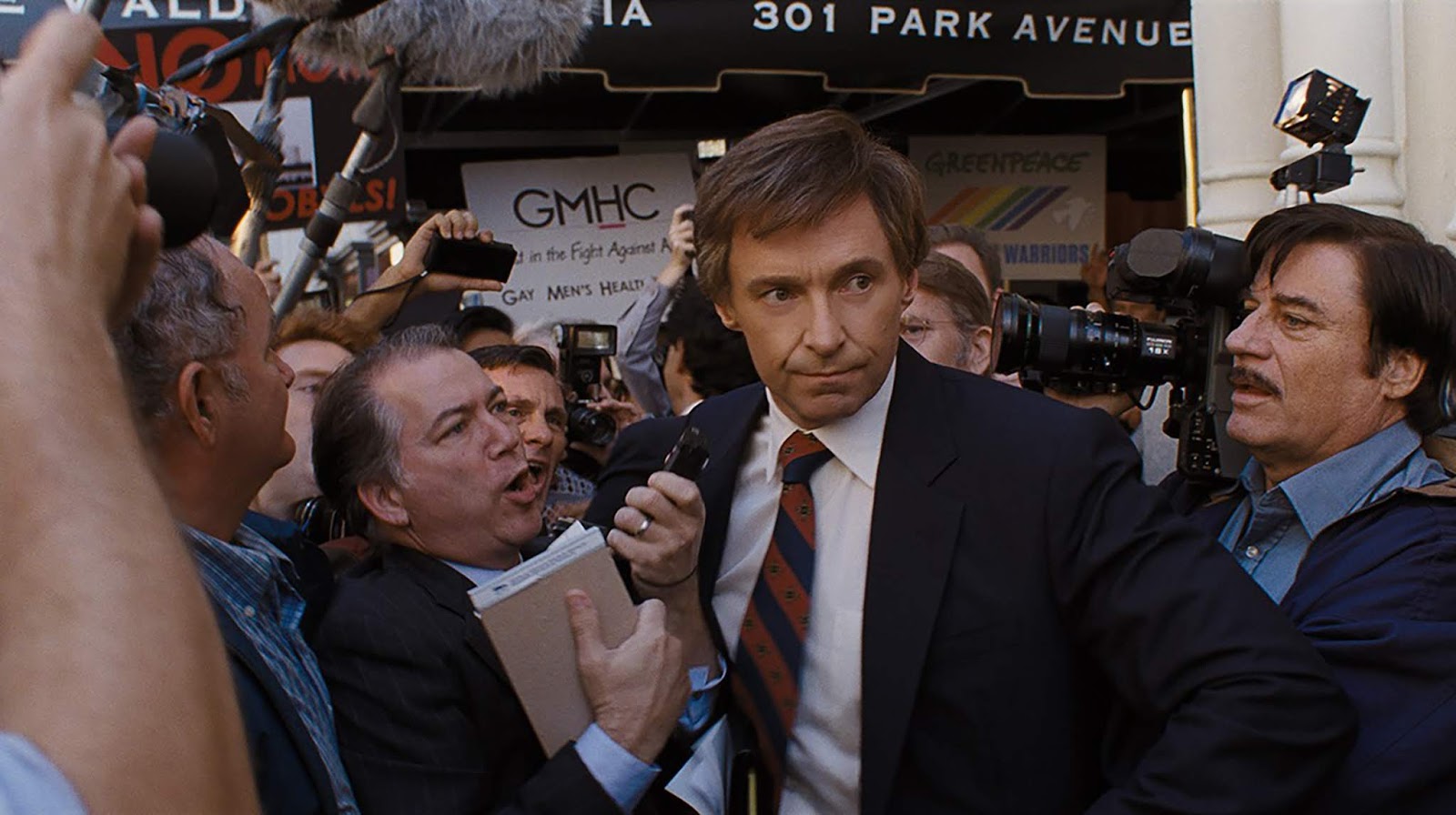
The Front Runner (2018)

Hugh Jackman in the centre of a media scrum in misfiring biopic The Front Runner

Director: Jason Reitman

Cast: Hugh Jackman (Gary Hart), Vera Farmiga (Lee Hart), JK Simmons (Bill Dixon), Alfred Molina (Ben Bradlee), Sara Paxton (Donna Rice), Mamoudou Athie (AJ Parker), John Bedford Lloyd (David S Broder), Spencer Garrett (Bob Woodward), Steve Coulter (Bob Kaiser), Ari Garynor (Ann Devroy), Steve Zissis (Tom Fiedler), Bill Burr (Pete Murphy), Mike Judge (Jim Savage), Kevin Pollak (Bob Martindale)

In the 1988 Democratic primaries, Gary Hart (Hugh Jackman) was the man to beat: a telegenic liberal with an attractive programme of policies and a forward-thinking vision for America. No one could beat Hart. Except for Hart himself. A man with a history of affairs, he became embroiledin a sex scandal after an ill-advised friendship (the film is coy on taking a stance on whether this friendship was sexual or not) with a young woman, Donna Rice (Sara Paxton). Angrily denying anything was going on, Hart unwisely challenged journalists to follow him: which the Miami Herald did, soon finding Hart had skipped campaign events to invite Rice to come and stay with him at his Washington home for a long weekend… Cue a media snowstorm and an imploded campaign.

Reitman’s film is a pretty decent chronicle of this early media sex scandal. I say pretty good because it does what it sets out to do with a solid observation of the facts and a general even handedness between Hart and the media. However it never really quite sparks into life, and Reitman’s attempt to make this story into something with huge relevance for how the modern media has developed, and how the world of politics has led us to Trump, just doesn’t really work. 

What the film instead becomes is a slightly dry but enjoyable enough docu-drama, that covers a period of history that should feel tumultuous and should create a sense of setting the table for the future but doesn’t. The idea that it was only at this point that American politicians suddenly had interest from the press in their personal lives is nonsense for anyone who had even a passing knowledge of the careers of Kennedy and Nixon. The film’s attempt to make us sympathise with Hart is also undermined by the high-handed arrogance with which he treats even the slightest inquiry into his personal life from anyone, be it press to members of staff who simply want an explanation of why their leader consistently demonstrates such astonishing poor judgement.

This is despite a decent performance of charisma from Hugh Jackman, possibly better than Hart deserves. The film does demonstrate – amidst its general sympathy for Hart – his willingness to throw Donna Rice under the media bus and his stubborn refusal to acknowledge any wrong-doing on his own part. I can’t say I actually really felt much sympathy for him over the course of the film, which I’m not sure was the film’s intention.

Neither did I really feel the film really skewered journalism. I think it wants to lay a suggestion that this was the first descent on a slippery slope, where gutter press, personality led journalism led to only egotists of mediocre talent wanting to take on the challenge of running the country. Or rather, that we get the politicians we deserve. While you could say there is some merit in this, I’m not sure this film manages to present that fully (Hart’s behaviour is at least partly self-destructive and would have been in any era) or that it really establishes that we are living in the shadow of times like this. And the investigation into Hart’s lies and evasions is hardly gutter press journalism. Neither does the film make a real case for Hart being some sort of potential great leader: while he has some decent, liberal, ideas he’s also short-tempered, lacks focus and has a tendency to snap at or cold shoulder underlings.

A bit of spin in the movie is got out of Jack Kennedy’s numerous affairs not being covered by the press. And while that is true, this seems less because of a natural shyness of the press, but rather because Kennedy was more astute at making friends in the fourth estate, and more willing to share parts of his life outside politics with them for stories (essentially, he made news for the press, making them more willing to keep quiet about his adulteries, while Kennedy avoided doing anything too blatant that the press would find impossible to ignore). Hart’s real problem was less that he was in a more censorious or gutter press era, and more that he was inept at press (and people) management, treating those around him with high handed contempt, mixed with challenges and threats. The film could almost be a textbook on how not to use the media.

It’s telling Hart’s only real relationship with a reporter in the film is with a young, impressionable (and fictional) Washington Post journalist (played very well by Mamoudou Athie). Hart comforts him through a mild panic attack during a flight and they develop a friendship, which I think the film wants us to think the journalist betrays by asking Hart the difficult questions about his lack of faithfulness and proclivity for affairs (all pretty well documented historically). I’m not sure that is the case. Surely, by this stage almost any thinking human beingin the States was asking these questions, and by putting them to the candidate, surely this journalist was simply doing their job? The “tragedy” of Hart was his incompetence at working with people, rather than his questionable private activities being brought to light.

The film struggles with all these themes and I don’t think it really successfully tackles any of them. The case it tries to set out doesn’t really work and, despite some fine observational moments of politics in action and a good performance from Jackman, it never really takes flight as it should. It’s a decent effort but a misfire.

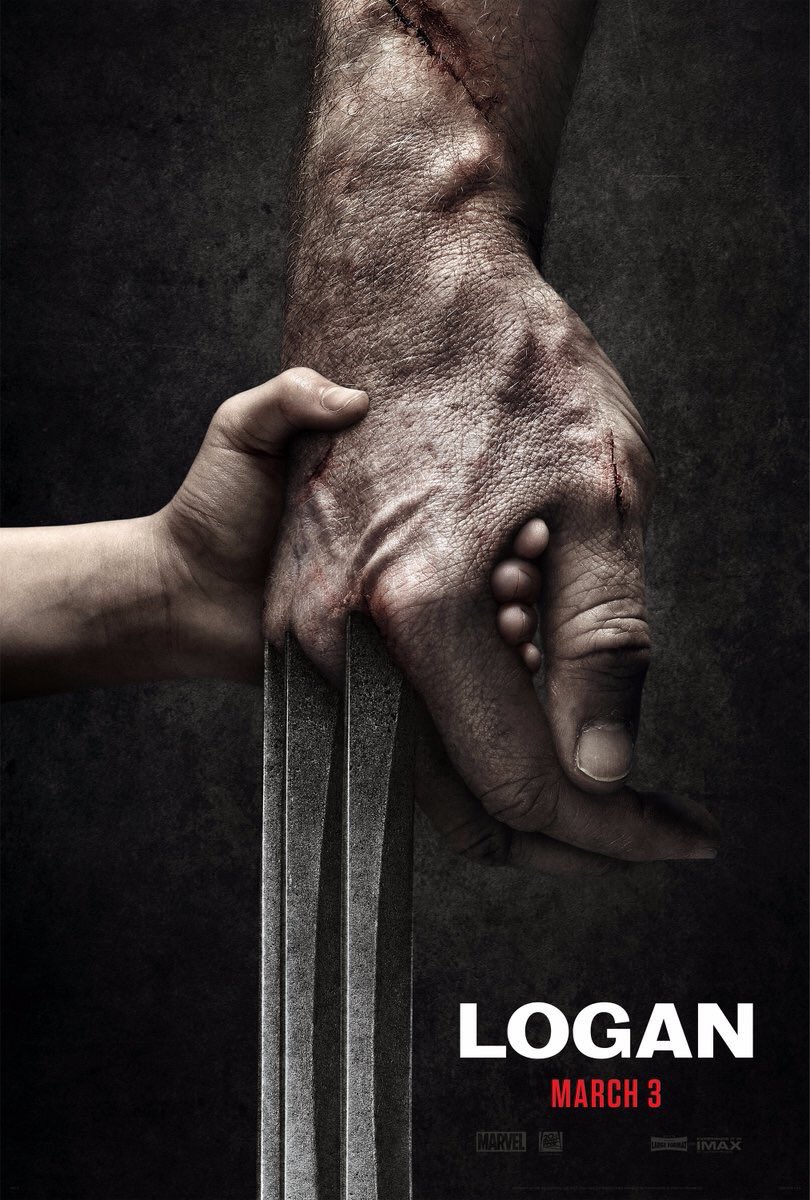
Logan (2017)


One looks at the past, the other their potential future in bleak superhero thriller Logan

Director: James Mangold

Cast: Hugh Jackman (Logan), Patrick Stewart (Charles Xavier), Boyd Holbrook (Donald Pierce), Stephen Merchant (Caliban), Richard E. Grant (Dr Zander Rice), Dafne Keen (Laura), Eriq La Salle (Will Munson), Elisa Neal (Kathryn Munsun), Elizabeth Rodriguez (Gabriela Lopez)

What were you doing 17 years ago? Personally, I was still at school: but Hugh Jackman was being parachuted into X-Men to take on the role of Wolverine after Dougray Scott’s shooting schedule on Mission Impossible 2 forced him to drop out. Since then he has appeared in eight films as the clawed superhero, some good, some shockingly bad – and this is his swansong. Taking a paycut, Jackman wanted to make the Wolverine “you’ve seen in the comics”: did he succeed?

The year is 2029 and mutants are nearly extinct. Logan (Hugh Jackman) lives in Mexico on an abandoned farm, caring for former X-Men leader Charles Xavier (Patrick Stewart), now suffering dementia and brain seizures with lethal effects on those around him. When young mutant Laura (Dafne Keen) arrives needing their help, Logan and Charles find themselves (reluctantly in Logan’s case) on one last adventure, travelling to reunite Laura with other new-born mutants – with a band of lethal mercenaries on their tail. Naturally a string of bodies follows in their wake.

Firstly I think its fair warning to say this is a bone-crunchingly, head-skeweringly, blood-spurtingly violent film. It’s easily more violent than every other X-Men film put together quadrupled. It’s also littered with strong swearing. To be honest, I’m surprised it’s not an 18 certificate – lord knows what strings they had to pull. Mangold’s intention is to show us what battle would actually be like if you were fighting with impossibly sharp knives for hands: limbs are hacked off, chests ripped to pieces, heads are punctured, bits of brain litter the floor. 

There is no romanticism of any of this violence – and the film needs to show it, as its primary theme is the impact a life full of this sort of extreme slaughter would have. Even Logan, his regenerative powers severely decayed, stumbles and limps through the action, often totally outmatched by those he fights – even a gang of car thieves get the jump on him in the opening scene. In fact, that scene serves to establish the mood of the film very quickly: Logan is slow and out of shape and eventually has to resort to extreme and brutal violence to desperately end the fight as quickly as possible. 

The action in the film is impressively filmed but never triumphalist in execution, and the overriding emotion is pain and sorrow. In many ways, it’s a bleak and depressing film, with precious little hope (it does find some peace and optimism in the final frames, but it’s almost the first time this happens). It has a huge body count, and many of the deaths hit home as both deserving and undeserving suffer. In this world there are no good decisions – whatever Logan decides to do, people around him suffer: and it’s the truth of this throughout his life that has led to such pain behind his eyes. The film’s comparatively small scale compared to previous films in the franchise helps keep the focus intimate and personal.

Its setting of course brings Westerns to mind, but also in its sense of the grim passing of an age. Emotionally, both Logan and Charles are exhausted and struggling under impossible burdens of guilt and sorrow., it’s a nihilist Western, a homage to especially perhaps to Shane and The Searchers. Mangold’s direction seizes these contrasts and infuses every frame of the film with visual and stylistic homages to this iconic American genre: even the inclusion of X-Men comic books “in-universe” gives the heroes the feeling of being, Wyatt Earp style, living legends, struggling to carry that burden.

Interestingly this is probably one of the first films that feels like a post-Trump movie. The future America it shows is grim and depressing, with big corporations ruling the roost and the little guy trodden down. The health system is a mess. The film is set partly across the border in Mexico (with brutally tight border control preventing easy passage). A large section of the plot even revolves around a desperate attempt to flee across a border before it is closed down. Of course it’s probably just part and parcel of the standard cinematic crapsack future, but right now the tone and mood of the film feels very much in sync with modern America. 

Hugh Jackman is of course front and centre in this film, and you can see straight away this project is a deeply felt one for him. Unlike any other X-Men film before, this is a character study and allows Jackman to first and foremost act. And he is terrific. With Logan’s powers failing, not only is he able to offer a very different physical performance than ever before, he also allows the character’s vulnerability, defensiveness and fear to come to the fore. Jackman explores the continual conflict in the character between his rage and isolation and his empathy and desire to be good. His protectiveness of Charles is balanced throughout by his deliberate distancing himself from Laura, as if he knows anyone whom he allows to get close will suffer. Jackman makes Logan feel old and beaten down, without losing the sense of fire under the surface.

There are in fact terrific performances throughout the film. Patrick Stewart similarly has never had a better written X-Men role in 17 years, and he makes the witty, profane, bitter but still optimistic and kindly Charles Xavier a stand-out. The interplay between him and Jackman is superb, drawing on the emotion of that years of working together on these films. Dafne Keen is a real find as Laura, convincingly feral and never less than compelling, even though she barely speaks for 2/3rd of the film – Mangold’s direction of her is perfect, drawing maximum impact from her performance. She perfectly captures the sense of being a younger version of Logan, struggling to understand the world and the impact of killing: is it any wonder Logan feels uncomfortable looking at her? Boyd Holbook is very good as a dry mercenary while Richard E Grant draws the maximum from limited screentime as a frightingly calm “mad” scientist.

While this is something very different from previous X-Men films, it’s not a perfect film. In terms of violence, I would argue it sometimes goes too far, like an excited child looking to see how far it can push us. It’s main problems are with narrative: far too many plot devices in the film are signposted like Chekov’s Guns, drawn to our attention in a forced way (often twice in case we forgot) so that most audiences could guess where events are going (there is only one real surprise in the film, and that one I defy you to really see coming). Similarly, while the film’s debt to classic Westerns is clear, to have the characters actually sit down and watch Shane seems a little too much (as well as giving a massive hint about the eventual destination this film is heading towards). Mangold’s direction is good but he lacks the profoundity of a Christopher Nolan to give these comic book happenings a shattering depth – their emotional impact comes from our familiarity with these actors in these roles over many years, not quite so much the film itself.

Saying all that, this is something strikingly different and showpieces some terrific performances. It also feels like it has something it wants to tell us about the burdens of violence on a man and how the past always eventually catches up with us.

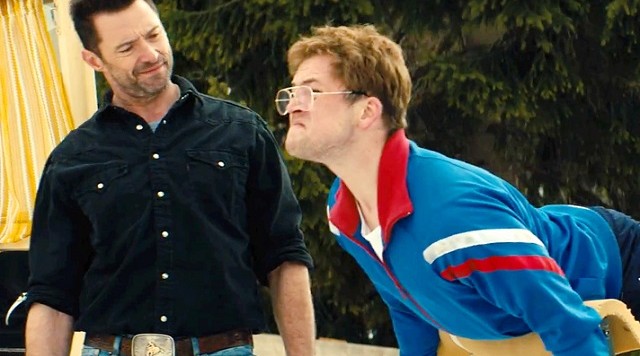
Eddie the Eagle (2016)


Some more comic escapades in the not-really-true-at-all film of Eddie the Eagle’s life

Director: Dexter Fletcher

Cast: Taron Egerton (‘Eddie’ Edwards), Hugh Jackman (Bronson Peary), Iris Berben (Petra), Keith Allen (Terry Edwards), Jo Hartley (Janette Edwards), Tim McInnerny (Dustin Target), Mark Benton (Richmond), Jim Broadbent (BBC Commentator), Christopher Walken (Warren Sharp), Rune Temte (Bjørn), Edvin Endre (Matti Nykänen)

Watching Eddie the Eagle, it’s interesting to think that Edwards was ahead of his time. An unqualified ski jumper with a certain natural talent and a lot of dedication, his unspun, naïve enthusiasm effectively made him a perfect YouTube sensation, 15 years before that term existed. His joyous reactions and “just pleased to be here” manner while coming last in two ski-jumping competitions at the Olympics meant the public couldn’t get enough of him (then or now it seems) and he’s probably about the only thing anyone can really remember about the 1988 Winter Olympics.

I found my heart completely unwarmed by this lamely predictable film, a virtual remake of Cool Runnings and Rocky, which can barely move from scene to scene without tripping over clichés. In other sports films, the snobbery against the underdog feels unjust because we know they deserve to be there. Edwards doesn’t deserve to be there, and doesn’t prove himself anything other than a brave novelty act. Perverse as it sounds, the one area where the film deviates from its predictable formula is the part that makes everything else not really work.

It’s not a particularly funny film. That may be partly because every single comic beat in it is taken from somewhere else, but joke after joke falls flat. Scenes meander towards limp conclusions that can be seen coming a mile off. Every single character is either a cliché, mildly annoying or both. Jackman strolls through the film barely trying. Taron Egerton plays Eddie as virtually a man child, a naïve mummy’s boy, an innocent in the world of men, curiously sexless, but a cheery enthusiast with a never-say-never attitude. However, I often found him less endearing and more mildly irritating.

Virtually nothing in the film is actually true. This doesn’t necessarily matter, but I felt it made the film slightly dishonest. It leaves us with the impression Edwards was set to go on to success in his career – he wasn’t. It doesn’t mention the Olympic committee changed the rules to prevent amateurs taking part in this highly dangerous sport at this level. It doesn’t even begin to mention that almost the entire cast are invented supporting characters, or that many of the real characters (such as Edwards’ father) have had their personalities totally reimagined.

It also reshuffles the truth to make Edwards seem far more incompetent and unlikely than he actually was. In reality an accomplished amateur athlete and skier who just missed the Olympic team, he’s here reinvented as a barely proficient, uncoordinated klutz, a buffoon on skis. Egerton’s otherworldly naivety (at times his childish outlook on the world borders on the mentally deficient) is to be honest rather grating. By hammering up his ineptitude, it’s hard to really think that he should be clinging to these dreams that he’s not suited to perform.

Channel 4 run a TV reality ski-jump show called The Jump. Several celebrities who have taken part in it have suffered serious injuries. With that in mind, is it really wrong to wonder if a sport isn’t right in saying “the unqualified and the amateur shouldn’t be attempting this”? Yes the Olympics is partly about competing in the right manner – but shouldn’t that mean also protecting people from themselves?

The one slightly brave move the film makes is to briefly toy with the idea that Edwards is fundamentally misguided. Before the Olympics begins, his trainer pleads with him to continue his training, wait four years and qualify as a proper athlete rather than a novelty, to have a future of several Olympics rather than cheating into one. Edwards (and the film) ignores him, but I found I was thinking “you know what, he’s right”. The film never manages to remove from Edwards the whiff of the joke act.

I’ve been incredibly hard on this film – it’s not like it’s trying to do anything serious or meaningful. It just wants to tell a nice story about a nice guy. It prides itself on being a bland formulaic piece of film making. But I didn’t find it moving or heartwarming and I didn’t warm to Edwards. I admire his determination, but he’s like those deluded singers chasing their dream on X Factor. The characterisation of Edwards makes him hard to relate to and his final “success” doesn’t mean anything as the film never escapes the feeling that he is being laughed at rather than with. Add the fundamental dishonesty of the film and I found it really unsatisfying.

Give it a miss. Watch Cool Runnings instead. That’s full of invention too of course, but the invention is truer to the facts and the spirit of the truth, and the film itself is far funnier and more satisfying than this one.