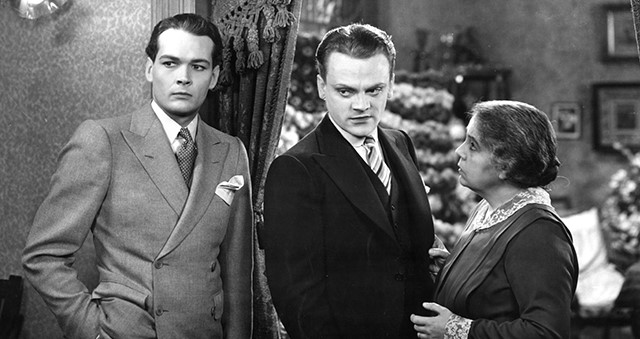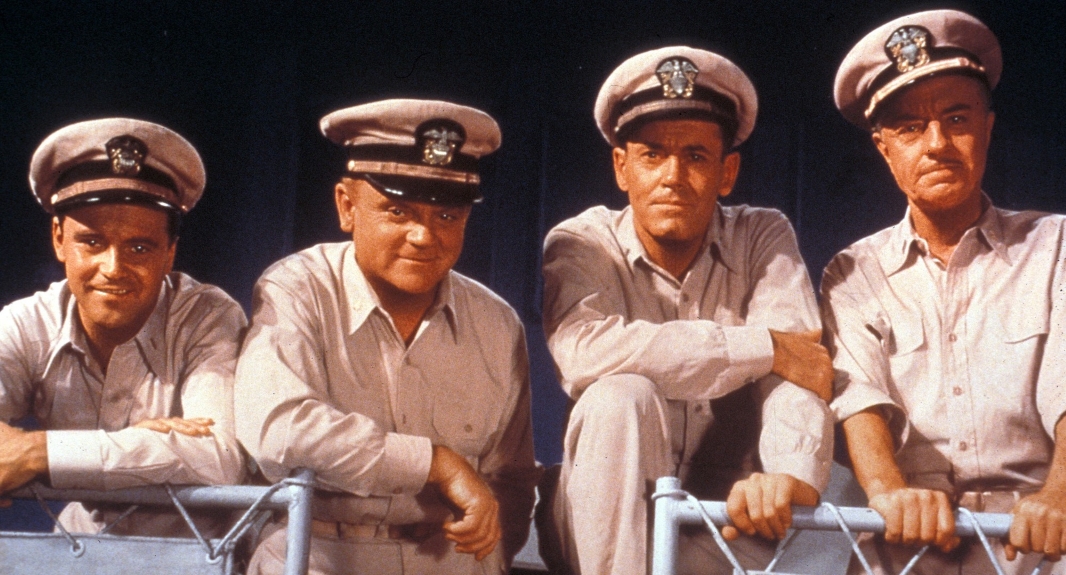
Tag: James Cagney

A Midsummer Night’s Dream (1935)

A Midsummer Night’s Dream (1935)

Handsomely staged and quietly influential production, full of invention and good ideas

Director: Max Reinhardt, William Dieterle

Cast: James Cagney (Bottom), Joe E. Brown (Francis Flute), Dick Powell (Lysander), Jean Muir (Helena), Victor Jory (Oberon), Verree Teasdale (Hippolyta), Hugh Herbert (Snout), Anita Louise (Titania), Frank McHugh (Quince), Ross Alexander (Demetrius), Ian Hunter (Theseus), Mickey Rooney (Puck), Olivia de Havilland (Hermia), Dewey Robinson (Snug), Grant Mitchell (Egeus), Arthur Treacher (Epilogue)

It says something about Hollywood’s back-and-forth relationship with Shakespeare, that Reinhardt and Dieterle’s film can still make a case for being one of its finest Hollywood Shakespeare films. What’s fascinating about it is how much attitudes towards it have changed over time. Opening to a chorus of sniffs from the critics (“It should never have been filmed!”), horrified about the blasphemy of the Bard on celluloid, the things praised at the time now feel the stuffiest while the elements criticised feel fresh and dynamic. Personally, it’s crazy mix of genres, eras, comedic styles and dramatic tone feels like the sort of thing Shakespeare (a consummate showman who spoke in poetry) might have enjoyed.

It came about because Jack Warner wanted a bit of class. Max Reinhardt, internationally famous avant-garde theatre director, as part of Warner’s power thruple: direction by Reinhardt, music by Mendelssohn, words by Shakespeare! Reinhardt had directed a lavish production at the Hollywood Bowl (which also featured Rooney as Puck and de Havilland as Hermia), that would form the basis of his film, incorporating ballet and impressive visual effects. William Dieterle, was bought in to translate Reinhardt’s vision to film (since it quickly became clear Reinhardt didn’t know how to make a movie).

We get an MND that mixes farcical comedy with a dark, sensuous energy. Athen’s forest was transformed by Hal Mohr’s Oscar-winning photography into a glittering fantasy land, created with a mixture of superimposition and miles of cellophane wrapped around the perfectly-recreated trees to reflect the studio lights in a shimmering dance. But in this, is a fairy world of danger and chaos: Reinhardt’s pioneered the interpretation of Puck (played with malicious gusto by Mickey Rooney) as a fire-lighting child, revelling in the chaos his actions cause. Rooney (or rather his double, as Rooney broke a leg early in production) skips and sways, laughing maniacally, tormenting the lovers (possibly even controlling their words and actions), unleashing dark forces of the night.

The film is full of such dark forces – a surprise to critics who saw Dream as a gentle comedy. The ballet sequences, used by Reinhardt to visually demonstrate Oberon’s and Titania’s power to manipulate the environment around them, feature demonic dancers who wouldn’t look out of place in Faust, creepy music-playing goblins and a constant sense of unknowable power. Victor Jory – highly praised at the time, although his precise, poetic reading feels austere and lacking in feeling today – is a darkly imperious Oberon, with barely a trace of warmth to him. (Anita Louise’s Titania also takes a traditional line, speaking with a slightly irritating sing-song that should serve the poetry but instead drains it of life.)

You suspect, if he could have got away with it, Reinhardt might have allowed a trace of bestiality to enter into Titania’s romance with the transformed Bottom. As it is, he settles for Titania snatching a coronet from the Indian boy (nicely introduced early, to cement the split between the two fairy monarchs) who bursts into tears, increasing the feeling that the fairies are inconsistent, temporary creatures, perfectly willing to drop previously treasured people for whoever else captures their attention.

Lavish spectacle runs throughout a play that feels highly indebted to Raphael and the other Renaissance masters. Reinhardt has no problem switching styles: Theseus’ arrival is staged like an Ancient Roman pageant, before settling into a Renaissance style court while the Mechanicals could have stepped straight out of Brueghel. Again, it’s a playing around with style and location that looks very modern today but short-circuited reverentially literal critics at the time. Reinhardt even plays with the idea of Hippolyta being a less-than-willing partner for Theseus (she appears defiantly restrained in the opening scene), although this is largely benched for later scenes.

The lavish opening also shows the production’s ability to balance comedy and drama. Alongside the traditionalist grandiosity, we have low comedy from both the lovers and mechanicals. In a fast-cut, skilfully assembled array of moments (surely Dieterle’s work), the relationships between the four lovers are expertly displayed and mined for comic energy (particularly Lysander’s and Demetrius’ private competition to sing loudest) as are those between the mechanicals (from Bottom’s enthusiasm to Quince’s frustration at the terminal stupidity of Flute).

The mechanicals are one of the greatest divergence in critical opinion between then and now. To critics at the time it was a jaw-dropping mistake to cast Cagney and a host of film comedians in Shakespeare – surely these were roles for the likes of Gielgud? Everything from their delivery to the posture was lambasted for being crude and too damn American for a genre considered the exclusive preserve of the well-spoken likes of Jory and Hunter. However, the energy and naturalness of these actors – and the consummate comic timing they pull out of their roles – is one of the film’s greatest touches.

Cagney was never afraid to look beat-up or ridiculous, and he revels as an explosive ball of energy as Bottom. He flings himself, with the same energy as Bottom, into over-enunciated voices and grand displays of ‘bad acting’, parodying a host of styles from classical to pantomime to stage comedy. Cagney also makes him sweetly naïve and childishly literal, while his gentle, polite mystification about being treated like a king by the fairies seems rather sweet. The other mechanicals are also genuinely excellent, doing one of the hardest things: making Shakespearean comedy work on screen. Joe E Brown is hilarious as a supernaturally dim Flute, barely able to remember what gender he is playing; Hugh Herbert’s Snout has an infectious nervous giggle he can’t control, Frank McHugh’s Quince parodies directors like DeMille. Each of them contributes to a genuinely funny Pyramus and Thisbe that closes the film.

It’s more funny than the sometimes-forced banter between the lovers, not helped by a far too broad performance by Dick Powell (who later claimed he didn’t understand a word he was saying) that makes Lysander somewhere between a buffoon and an egotist. Olivia de Havilland (perhaps not surprisingly) emerges best here as a heartfelt Hermia, although the quarrel between the lovers is perhaps the least well staged sequence in the film (Reinhardt and Dieterle resort to all four of them at points speaking their lines at the same time, as if wanting to get the scene over and done with).

But MND is awash with other touches of cinematic and interpretative invention, it’s darkish vision of the Fairy world (with superimposition and ballet interjections giving it a darkly surreal touch) as influential as it’s haphazard approach to place and setting. Its comic performances come alive with real energy, devoid of the more stately approach from others. Above all, MND feels like an actual interpretation of its source material, rather than just a respectful staging – and its influence played out over decades of productions to come. Overlooked for too long, it’s a fine and daring piece of film Shakespeare, far better than it has a right to be.

The Roaring Twenties (1939)

The Roaring Twenties (1939)

Superb gangster film, that sums up a whole era of film-making with a fast-paced grit

Director: Raoul Walsh

Cast: James Cagney (Eddie Bartlett), Priscilla Lane (Jean Sherman), Humphrey Bogart (George Hally), Gladys George (Panama Smith), Jeffrey Lynn (Lloyd Hart), Frank McHugh (Danny Green), George Meeker (Harold Masters), Paul Kelly (Nick Brown), Elizabeth Risdon (Mrs Sherman), Joseph Sawyer (Sgt Pete Jones)

Three guys fall in a foxhole, might sound like the beginning of an odd wartime joke but it’s the encounter that begins The Roaring Twenties. Framed as both a period piece, looking back to a time already a decade away from the contemporary audience, and a sort of memorial piece to a whole cycle of bootlegger gangster films. It’s also a film far too regularly overlooked when discussing that cycle: in my opinion it’s one of the finest and possibly Cagney’s most complex gangster role (with apologies to White Heat). It’s a fast-paced, hugely entertaining slice of crime drama, with fascinating, multi-faceted characters and an intriguing level of social depth.

Those three foxhole guys are Eddie Bennett (James Cagney), destined to run a bootlegging empire in Chicago; George Hally (Humphrey Bogart), destined to become his sociopathic ruthless partner; and Lloyd Hart (Jeffrey Lynn), destined to become a lawyer walking an awkward line. Returning from World War One, Eddie finds little welcome for returning servicemen, but his pluck and sense of personal loyalty eventually see him stumble into, and then embrace, the bootlegging business with glamourous hostess Panama Smith (Gladys George). Problem is danger abounds in the crime-ridden city and its impossible to work in this business without getting your hands dirty. Throw-in Eddie’s candle-holding love for the quietly uninterested Jean Sherman (Priscilla Lane) and you have a recipe for long-term disaster.

The Roaring Twenties is a punchy, well-cut, overlooked gem. From its opening montage that rolls back over newsreel from 1940 to the trenches of World War One to its closing tracking shot that culminates in Eddie’s fatal tumble on the steps of a church (as always in the gangster film, no-one escape death’s moral judgement no matter how psychologically complex they are) it’s a feast of fast-moving entertainment. Along the way Walsh throws in everything, from gun battles to musical numbers, by way of comedy, obsessive love and social commentary. The Roaring Twenties is arguably a nostalgic cocktail with a dim view of its decade: one of crime, hedonism and hypocrisy.

And it’s corrupted Eddie. This is Cagney firing on all cylinders: and it’s remarkable how skilfully he creates a complex, sympathetic character out of similar material to his despicable hood in Public Enemy or the flat-out psychopath he forged in White Heat. Eddie is in many ways a decent man who finds all the dreams he’s been clinging too are fantasies. He can’t land the mechanic job he dreamed of, his uniform is the subject of mockery, the woman he’s been corresponding with turns out to be a teenager (Cagney’s disappointment, discomfort and faint attraction when he first meets Jean Sherman’s skipping late-teens Priscilla is beautifully done). Eddie is left bumming around town desperate for any opportunity.

Cagney’s performance really works, because Eddie – even with an angry streak that means he can knock out two chucking goons with one punch – is fundamentally a decent bloke, corrupted by circumstances. He sees the liquor-brewing game as a short-term fast buck, which he stumbles into because he’s too chivalrous to allow Panama to take the wrap for a bootlegging delivery he’s made. He’s loyal to his friends and tries to solve problems amicably. He’s got a charming, barrow-boy entrepreneurship to him, brewing booze in his bath and selling it as a high-quality import. Cagney shows how desperately Eddie clings to his self-image that crime isn’t a lifestyle choice, but a short-term necessity he’ll jack in one day for the peace and quiet of running a taxi company.

But Cagney never stops letting us see the corruption soaking in: Eddie is learning to heartlessly take what he can get, to forget the consequences of his actions and when violence comes he’ll shrug off deaths as ‘not his fault’ or respond with an increasing ease viciousness (in a nice call back, he even shoves a cigar into a goons face, an echo of his famous grapefruit scene from Public Enemy). When he faces news, he doesn’t like, or is denied the things he wants, lashing out is his first option – and once he starts necking his own product, his downfall is only a matter of time as he falls prey to the sort of ‘World is Yours!’ attitude that doomed Scarface.

From grasping ever more business opportunities to grooming (in more ways that one) the now adult Priscilla into his ideal girl (he can’t watch her perform without grasping the pained hand of Panama, his eyes locked in monomania desire that he’s clearly convincing himself is a sort of pure, brotherly concern). Eddie clearly sees her as his ‘reward’ for his hardwork, a fantasy that doesn’t have any place for her liking him but not loving him. But there is a neat touch throughout The Roaring Twenties – a momentum packed film that races through years in minutes – that Eddie fundamentally isn’t ruthless enough for this game.

Certainly not compared to Humphrey Bogart’s study in shallow, selfish cruelty. Shown early on grinningly shooting a fifteen-year old German soldier in the dying minutes of the war (“He won’t be 16!”), George Hally is the monster Eddie can’t be. A guy who doesn’t care for anyone, who betrays and kills at the drop of a hat, who doesn’t stop for any sense of form and decency. For all Eddie tells George that time has moved on and people like them don’t have a place in the Thirties, Bogart’s cold-eyed George feels like the sort of man who would flourish in the era to come.

Compared to him, Eddie and Panama are romantics. Gladys George gives a fascinating performance as Panama, one of the most complex gangster dames of all. George brilliantly walks a narrow line, clearly loving Eddie but accepting he doesn’t feel the same way – and (reading between the censor lines) entering a relationship with him anyway. Panama is half-partner, half-mother to Eddie giving him a sort of matronly support and tenderness and, when his fortunes drop off a cliff in the thirties, looking after the slubby, drunken figure Eddie becomes (Cagney looks more bashed up, scruffy and pathetic in the final act than almost any other star would dare).

Fascinating character relationships like this underpin a film that feels like a summation of years of Warner Bros gangster films. Walsh’s direction is pin-point sharp, from his montage construction (including a surprisingly surreal Wall Street Crash sequence with melting buildings), through the shoot-outs. The Roaring Twenties script – by Robert Rossen and Jerry Wald among others – offers characters who are complex, flawed and don’t quite seem to realise at times how terrible their world is.

When the end comes, and Eddie’s body slumps on the steps – after an inspired, sustained tracking shot that follows his teetering bullet-ridden body, the sort of athleticism Cagney was a natural at – it seems fitting the famous closing words are “He used to be a big shot”. That sums up not only the character, but an entire era of film-making being confined (temporarily) to the dustbin of history. It’s a melancholic note to end an extraordinarily good film, one of the great gangster films, in which Cagney, Bogart and George bring life to fascinatingly complex characters.

Yankee Doodle Dandy (1942)

Yankee Doodle Dandy (1942)

Cagney proves there is more far more to him than guns, in this cracking musical

Director: Michael Curtiz

Cast: James Cagney (George M Cohan), Joan Leslie (Mary Cohan), Walter Huston (Jerry Cohan), Richard Whorf (Sam Harris), Irene Manning (Fay Templeton), George Tobias (Dietz), Rosemary DeCamp (Nellie Cohan), Jeanne Cagney (Josie Cohan), Eddie Foy Jnr (Eddie Foy)

To many James Cagney was the definitive gangster. But Cagney wanted to be known as more than just another heavy: at heart he was a song-and-dance man. He got few chances to show it, so when the right film came along, doggone it he didn’t plan to leave anything in the dressing room. Cagney dominates George M Cohan biopic Yankee Doodle Dandy (at times its almost a one-man show with guests). He’s in almost every scene, doing his twist on Cohan’s stiff-legged dancing style with such energy and enthusiasm it leaves you quite exhausted watching it (Cagney sprained his ankle twice making it). It was a massive hit and won Cagney a much-deserved Oscar.

George M Cohan came from a family vaudeville troupe and became “the man who owned Broadway”. An accomplished performer, he was also a prolific writer (banging out more than 50 shows and 300 songs, including nation-defining tunes like Over There, The Yankee Doodle Boy and You’re a Grand Old Flag). The film uses his awarding of the Congressional Gold Medal from President Franklin D Roosevelt (Cohan arrives at the White House fresh from playing an all-singing, all-dancing version of the wheelchair-confined President in I’d Rather Be Right) as a framing device. Naturally, the President wants to know all about this Broadway legend’s life. Cue Cohan settling back to tell him his entire life story: from birth to childhood stardom, knock-backs and a string of successes.

It’s odd to think Cagney wasn’t keen at first. A leading union man – one of the founder members of the Screen Actor’s Guild – Cagney was not an admirer of Cohan, who had taken a strong stand against the 1919 actor’s union strike. What changed Cagney’s mind was accusations of communism from the House of Un-American Activities in 1940: he was cleared but his producer-brother William told him he needed “to make the goddamndest patriotic picture that’s ever been made.” They certainly succeeded with Yankee Doodle Dandy, such an all-singing, all-dancing celebration of the American way it must surely be Sam the Eagle’s favourite film.

Yankee Doodle Dandy is nothing more-or-less than a grand slice of entertainment. It’s very much cut from the same cloth as The Great Ziegfeld, another cradle-to-grave rundown of the life of a Broadway mover-and-shaker. Like that film, Cohan’s rough edges are comprehensively shaved off: his hostility to the actor’s union goes unmentioned as does his divorce and remarriage (instead his two wives are amalgamated into a new fictional wife, conveniently called Mary so that his song Mary’s a Grand Old Name can be named after her). Several events are telescoped or shifted to a new date for dramatic impact. Cohan emerges thoroughly charming (if proud), decent and honest all-round entertainer, overflowing with bonhomie.

Narratively the film does nothing Hollywood hadn’t done before. The big difference here to The Great Ziegfeld is that Curtiz keeps the story moving with real pace and a certain flair (it’s a solid two hours, and never outstays its welcome) and the musical numbers are dynamic and entertaining. A great deal of that is due to Cagney, outstanding in a part that demands an overabundance of personality. Cagney’s dancing and singing doesn’t have the grace of Fred Astaire (the original choice), but it has a gloriously entertaining and breath-taking energy. Cagney studied Cohan’s stiff-legged-marionette dancing style, and used his physical exuberance to bring to life his numerous dance routines with a spectacular stand-and-applaud skill and energy. (Curtiz uses a highly mobile camera to film most of these in single shots, to really capture the skill and energy of Cagney). His singing also follows the Cohan style – the sort of half-singing, half recital style Rex Harrison would later make his own. His impersonation is uncanny and performance superb.

Cagney is gloriously entertaining and makes every single one of his numerous songs thrum with glee. It’s a real reminder of what a modern performer Cagney was: he’s fast-paced, lacks any sense of staginess and has a real emotional honesty. His comic moments are very funny: in Cohan’s first meeting with Mary, still in old-man make-up (fresh from playing father to his own mother on stage), Cagney lets a little moment of glee move across his face as he realises Mary thinks he really is an old-man in his 70s – a confusion he plays up to, before launching into an impromptu tap dance routine. When tragedy strikes he is just as moving: his heart-broken repeat of his mantra “My mother thanks you. My father thanks you. My sister thanks you. And I thank you” at his father’s death-bed not only moves the audience, it also made the stony Curtiz weep on set.

No wonder, when a dying Cohan watched the film, he said “My God, what an act to follow!” Cagney’s performance, with its playful energy, encouraged a greater spontaneity in Curtiz’s disciplined directorial style. The famous sequence, where Cagney walks down the steps inside the White House before bursting into a joyful bout of tap-dancing was improvised on the spot (and a glorious summary of the playful joy of the movie it is). Curtiz uses montage very effectively at several points (a sequence of early knock-backs for Cohan is a wonderful collection of shots of signs, producer refusals and walking feet). He often uses high and low angles to imaginatively shoot the action, and the fluid camera for the musical numbers finds a neat middle ground between theatrical performance and cinema.

Of course, it is damned patriotic. The film recreates several of Cohan’s most stirring numbers in all their pomp. The explosion of Americana (Washington! Lincoln! Teddy Roosevelt!) that is You’re a Grand Old Flag (with hundreds of Stars and Stripes). The cheek and charm of Yankee Doodle Boy. The rousing marvel of Over There. The film plays up Cohan’s determination to do his bit in the First World War – turned down for service as too old, he carries out a full tap-dance routine to show he’s as limber as the next man. But it also has time for finding a way of staging creativity: there is a marvellous little sequence – beautifully shot by James Wong Howe – of Cohan finding the tune for Over There, tinkling experimentally with a piano on an empty stage.

The narrative of the play doesn’t reinvent the wheel, but it delivers a traditional structure with plenty of energy and some good scenes. (I enjoyed Cohan’s mother, struggling to find something nice to say about one of Cohan’s rare-flops, a music-free melodrama, left weakly praising the set). Though Cagney dominates the film, Walter Huston is very fine as his supportive and experienced dad and Joan Leslie charming as his loyal wife Mary (so supportive she’s happy to gift her song to stage star Fay Templeton, because the show needs her more). The balance between standard biopic scenes and musical numbers is very nicely handled.

Yankee Doodle Dandy offers up a familiar package, but one of the most professionally assembled and enjoyable of its type ever made. With Cagney in joyful, dominant form, you’d genuinely be quite happy just sitting and watching him go through as many vaudeville acts as he likes. Shot with flair by Curtiz, Yankee Doodle Dandy is catchy and highly entertaining.

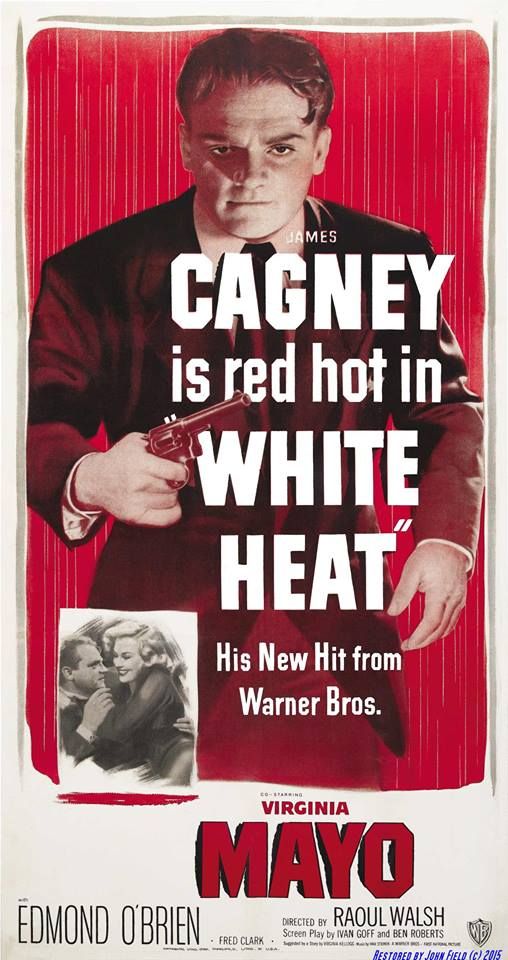
White Heat (1949)

Top of the World Ma! Cagney excels in his final and greatest Gangster role White Heat

Director: Raoul Walsh

Cast: James Cagney (Cody Jarrett), Virginia Mayo (Verna Jarrett), Edmond O’Brien (Hank Fallon/Vic Prado), Margaret Wycherly (Ma Jarrett), Steve Cochan (“Big Ed” Somers), John Archer (Philip Evans), Wally Cassell (“Cotton” Valletti), Fred Clark (Daniel “The Trader” Winston)

After winning an Oscar for Yankee Doodle Dandy, Cagney left Warner Brothers to form his own production company. When that folded, he swallowed his pride and re-entered the Warners’ fold. Money was driving the relationship: and it was the pay cheque that got Cagney to return one last time to the role of a psychotic gangster in White Heat. And if he had to go back, why not make that gangster the most psychotic of the lot? After all who else could make it to “the top of the world”?

Cody Jarrett (James Cagney) is the leader of a gang of criminals, to whom no act of larceny, violence or murder is taboo. A botched train hijack – during which Jarrett shoots two unarmed train drivers – attracts the full attention of the law, but Jarrett dodges justice by having himself sent down for a minor crime that happened at the same time as the train hijack. Not fooled, the Feds send an undercover operative, Hank (Edmond O’Brien), into the prison as Cody’s cellmate “Vic Prado”, tasked with getting the details of the train job and locating the mysterious fixer who set up the job. But such schemes didn’t take into account Jarrett’s psychological disturbance – powered above all by his obsessive, overwhelming love for his mother (Margaret Wycherly), the one dominant influence over his life.

Raoul Walsh’s film is a brutally efficient gangster flick which may be a little too long (the mechanisms of tracing and tracking a car are covered in far too great a depth…), but ticks all the boxes of the genre with exceptional skill and dexterity. It’s shoot-from-the-hip (literally) melodrama, and has all the internal logic of a schoolground game of cops and robbers, but Walsh’s direction is pin-point perfect, and the film is based around a series of stunning and effective set-pieces and crammed with a sort of deep (even disturbing) psychological insight that puts it miles ahead of many of films of the genre. Walsh also throws in some of the finest stylistic touches of film noir, with Virginia Mayo’s femme fatale, darkened frames, dubious morals among even our heroes (one of whom is a practised deceiver and liar) and a whirlwind monster at the centre.

But the film soars and flies because of Cagney, and the no-holds barred sharpness of Jarrett. The film revolves above all around the deep emotional emptiness and need in Jarrett, which sees him lean on O’Brien’s Falon (“like my kid brother!”) and, most famously, fixate like a toddler on his mother. Freud would have had a field day with Jarrett’s obsessive love for his mother, with Cagney turning him into the little boy lost. Consumed with headaches, he literally climbs into her lap so she can comfort him. The slightest criticism of her leads to instant reaction (not least knocking his wife off her chair – how can the poor woman compete with this beatified mother figure?)

This culminates in one of the film’s most famous sequences, as Jarrett digests in prison the news that his mother has died. Sitting in a crowded dining room, he passes word down to a new inmate for an update on his mother. Slowly the question is passed down the line of prisoners – and with trepidation the news of her death is passed back. And here is the Cagney magic. He seems too stunned at first to take it in then a series of low moans explodes into a titanic screaming fit, matched only by the violence he takes out on all who stand in his way. Walsh and Cagney kept the response secret from the entire room of 300 extras, all of whom seem as stunned as us by Jarrett’s total lack of control, his complete consumption in grief.

Cagney’s performance is just about perfect, a simmering mummy’s boy who is also a charismatic leader of men. A dangerous psycho who seems aware that he is not quite normal. A lonely man desperate for love. And Cagney has so many beautiful touches that could only be him – the quip as he plugs with bullets a car boot with a luckless gang member in it, the sly kick away at Virginia Mayo, that screaming sequence. It’s a performance of complete power and charisma, the gangster psychoanalysed and reduced to his bare essentials for a personality barely functional and obsessed with his mother.

Margaret Wycherly is similarly excellent as that mother, as sly and self-confident as her son and clearly as accomplished at leading a gang as him (I love the smug half smile she gives herself after evading the FBI tail she picks up). Edmond O’Brien does sterling work in the “straight man” role of the undercover cop, walking a line between judging and even perhaps sorta liking Jarrett a bit (even if he does get saddled with the mandatory “that’s the moral of the story” final line). Virginia Mayo is a wonderful mix of sex appeal and needling cheapness as Jarrett’s two-faced wife.

The film culminates in one of the most famous endings of all time – one you’ll know even if you haven’t seen the film – as the law catches up with Jarrett at last in a shoot-out at a gas plant. Finally driven mad by betrayal and abandonment – although lord Cagney’s performance makes clear that only a tenuous grip on sanity has been present in Jarrett from the start, fractured beyond repair by the loss of his mother – Jarrett insanely shoots at the police from atop a burning gas plant, before immolating himself (and most of the factory) with the cry “Made it Ma! Top of the world!”. As Jarrett heads down to a firey hell, so Cagney signed off on the gangster flick with perhaps the most dangerous, disturbed and also intriguing gangster on film. It’s such a mighty performance that the Hays-Code mandated final line of tutting disapproval at the criminal life from O’Brien feels even more forced and unnecessary than ever.

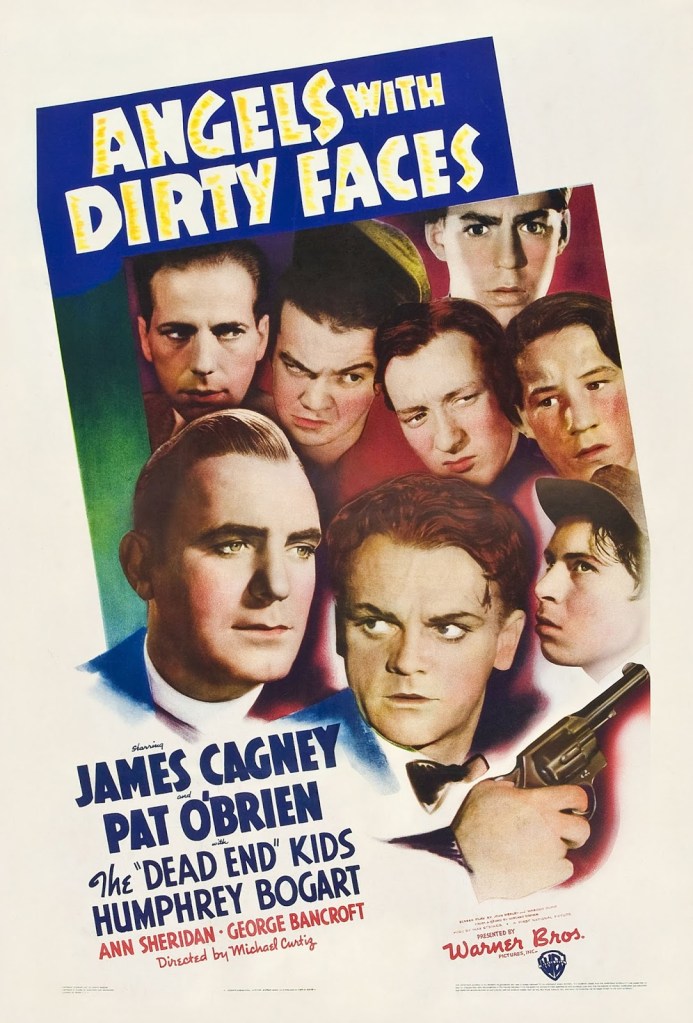
Angels with Dirty Faces (1938)

Angels with Dirty Faces (1938)

Cagney lets rip in this classic gangster film which is all about its barn-storming ending

Director: Michael Curtiz

Cast: James Cagney (Rocky Sullivan), Pat O’Brien (Father Jerry Connolly), Humphrey Bogart (Jim Frazier), Ann Sheridan (Laury Martin), George Bancroft (Mac Keefer), The Dead End Kids

It has perhaps the most famous ending of all gangster films. Faced with his final few minutes on Death Row, charismatic gangster Rocky Sullivan meets with his oldest friend, Father Jerry O’Connell. Rocky is a hero to the kids on the block, and Father Jerry pleads with him: go the chair yellow and just maybe you can help turn these kids away from a life of crime. No way Rocky is going to lose his pride – until the final few moments, when suddenly he collapses into a morass of whimpering fear and terror. Did he decide to listen to Jerry’s pleading? Or did he really go yellow after all?

It’s the question that you are meant to take from Angels with Dirty Faces, a superb example of the gangster genre, brilliantly directed by Michael Curtiz. And it works so well because quite simply no other actor in the history of film could have pulled it off as well as Cagney does. If you have any doubts about whether Cagney deserves to stand as one of the truly greatest film actors of all time, this film erases them. 

Cagney is simply superb as Rocky. Has there ever been a gangster who was so charismatic, so magnetic, so strangely decent in his way, who plays in the corrupt world of crime but has his own absolutely rigid moral code? Few other actors could have you so ready to believe he would ruthlessly pull the trigger at the drop of the hat, and yet would still be someone you’d consider inviting round for dinner. Every single scene hinges on his brilliance as a performer, and his interaction with each character is superbly judged. He is an unapologetic bad guy, a man who openly says that he isn’t sure he is capable of empathy in the same way as normal people, yet he also has a fierce sense of loyalty and doesn’t hesitate to take the rap for others or to put himself in harm’s way to protect those he feels loyalty towards.

It’s all part of the intriguing moral puzzle of the film, that rather bravely inverts the idea of good and evil that the Hays Code mandated. On the surface this is a Board approved plot of two kids from the wrong end of the block, one who ends up good one who ends up bad, with the bad one getting his comeuppance and the good saving souls all around. But scratch the surface and actually this is a film that is making far more subtle points about a world that is in shades of grey. For starters, the most faithful and loyal character in the film is the hoodlum Rocky. 

But more than that, the film stresses that the margin between priest and criminal is very thin indeed. Repeatedly it’s stressed that Jerry is only a priest – rather than a fellow criminal graduate of the reform system like Rocky – because he was able to run away faster from the police during their days of mayhem as tearaway boys. It only takes chance and a few lucky turns, and the priest owes his ability to find God and the good life solely because the criminal happily took the whole rap as a Kid. The priest and the criminal work almost hand-in-hand trying to encourage the local kids to engage more in their community (even if they are teaching subtly different lessons) and their friendship is unaffected by the events of the film. 

Much as the film is building a traditional narrative of crime being attractive but not in the end paying, it is also subtly suggesting that good and evil perhaps coexist in harmony more than we might think (or might be comfortable to acknowledge). Which brings us back to the title I guess: Jerry is an angel with a dirty face from his flawed childhood, but in a way Rocky himself is an angel whose face is covered with the muck of crime. Both characters have lives that have crime and misdemeanours behind them, even if they have eventually chosen different routes.

Curtiz’s film allows this commentary to bubble subtly and cleverly under a host of wonderful scenes and carefully composed sequences. The highlight of which might well be an extraordinarily well made extended shoot out scene, as Rocky faces his final show down with the cops after one crime too many. But it’s a peak of a series of superb sequences that make excellent use of framing and intent. Curtiz even makes the Dead End Kids – a group of, I’ll be honest, rather irritating child actors, whose fates I find it hard to get worked up about – reasonably engaging. There are several other fabulous performances, not least a wonderfully snivelling turn from Humphrey Bogart as a cowardly and corrupt lawyer with more than a few criminal connections.

It all comes back to that final sequence as events catch up with Rocky and the electric chair awaits. Cagney is simply brilliant in this scene, a perfect steel front of composure and pride that we are invited to question whether it cracks or he does so deliberately. Curtiz shoots the sequence in shadow play (apart from one shot of Rocky’s hands clinging desperately to a radiator) – to meet the Hays Code rules about what you could and couldn’t show on screen, the chair being a no – but it works superbly and Cagney’s powerhouse but also restrained performance nails it perfectly. While you like to think Rocky has done the “right thing” you can’t be sure – and it’s that question that hangs over it that helps cement this as a brilliant inversion of the black-and-white morals of the era: we like to think decency has prevailed, but maybe it’s all just being yellow after all…

The Public Enemy (1931)

The Public Enemy (1931)

Cagney’s first landmark gangster film, still a propulsive and gripping thriller

Director: William A Wellman

Cast: James Cagney (Tom Powers), Jean Harlow (Gwen Allen), Edward Woods (Matt Doyle), Joan Blondell (Mamie), Donald Cook (Mike Powers), Leslie Fenton (Nails Nathan), Beryl Mercer (Ma Powers), Robert Emmett O’Connor (Paddy Ryan), Murray Kinnell (Putty Nose)

The gangster film has been popular as long as there have been movies. And if there was an actor that first became synonymous with the hair-trigger violence of the underclasses, it was James Cagney. The Public Enemy was Cagney’s big-break, a career shift from the song-and-dance films that had been his bread-and-butter before this. Cagney seizes the opportunity with relish – and helped set a template that everyone from Tony Montana to Tommy Vito have followed ever since.

Tom Powers (James Cagney) is an impulsive, violent, ambitious small-time crook who gets more and more embroiled in the world of crime, from his boyhood in the 1900s to the introduction of prohibition in the 1920s. Partnered with his lifetime-long best friend Matt Doyle (Edward Woods) – and despite the disapproval of his straight-laced brother and war vet Donald (Mike Powers) – Powers rakes in the crash as an enforcer for Paddy Ryan’s (Robert Emmett O’Connor) liquer business. But when the gang war breaks out, the dangerously impulsive Powers finds himself in the middle of a situation he can no longer control.

Cagney amazingly wasn’t the first choice for Powers. In fact, he started shooting the film playing the terminally dull nothing-part of Matt Doyle, with Edward Woods playing Powers (the two child actors at the start of the film playing their young versions, specially cast for their resemblance to Cagney and Woods, remain noticeably the wrong way round). Cagney’s charisma tore up the screen in the rushes – far overshadowing the bland Woods – and the call came from the top: “Swop these guys round!” And so film history was born.

As silence turned to sound in the movies, so the style of acting that the movies required grew and changed. Originally sound was the preserve of the well-spoken, crystal clear, the mic needs to capture every word, diction of the classically trained actor (half the cast in the film continue to speak with cut-glass, Mid-Western clarity). Cagney was something else. A little spitball of energy, who rushed through the lines, who threw in his own accented casualness, who dropped letters from words, who felt real and alive. 

It’s astonishing watching this what a brilliantly modern actor Cagney is: the little psychological touches that speak to Powers’ many hang-ups and insecurities. The commitment to any bit of business required. The method dedication to doing things for real (not least his insistence that at one point Donald Cook punches him for real). His Powers is a brilliant portrait of searing nervous energy – that lifetime of dance training paid off in spades in Cagney’s mastery of physicality – and ruthless thoughtlessness, spiced with a touch of smartness (“Your hands ain’t so clean. You killed and liked it. You didn’t get them medals for holding hands with the Germans” he sneeringly tells his brother). It’s a masterful performance of magnetism that holds so much influence with films to come you’ll retrospectively see touches of Cagney in nearly every dangerous psycho played by actors such as Pacino, De Niro and Pesci.

Wellman’s film is also hugely influential, practically laying the ground work for the structure of gangster morality tale – from those first trivial involvements in crime, the getting deeper, those terrible relationships (often with a girl with a pauncheon for dangerous men), the isolation and the fall. Wellman shoots it with a brilliant eye for action – there are majestic chases, gun fights and punch ups that still entertain today (for all their slightly old fashioned look). As a piece of pulp story telling this is damn high class.

But the other trick is that some of the best scenes are those away from the action. Powers clashes with his brother are brilliantly done. An early sequence in which as a boy Powers wordlessly takes the strap from his strict father (a scene that is echoed years later in Scorsese’s Goodfellas, with Powers a clear prototype for both Tommy and Henry in that film) is brilliant. Most famously of all, the breakfast sequence when a bored and frustrated Powers shoves a grapefruit in the face of the (legitimate) complaints of a girlfriend. Watching it today it’s amazing to think how influential this scene was – audiences hadn’t really seen anything like it.

And it works as a dance with the devil because Wellman and Cagney both know that we might not want to spend time with Powers, but a part of us wants to see this working-class grasper and charismatic fun-loving criminal to succeed and get-ahead. You end up rooting a bit for him – even though you know, with the Hays Code in place, that Powers won’t still be standing by the end of the film. The executives were so worried about audiences being a little too keen on Powers, they added a sanctimonious message about the dangers of crime to the start of the film.

Fast-paced, pulpy, violent and full of excellent scenes with a real eye for how America grew and changed over the first 25 years of so of the 20th century, Wellman’s Public Enemy is a masterclass of film-making – and about a zillion times more influential than many of the prestige films released at the time. But it also works so well because Cagney is one of the best there is, not just in the gangster films, but films themselves. A performer you can’t tear your eyes away from who turns a pulp character into a sea of complexity, he’s as much one for the ages as the picture.