Tag: Jane Austen

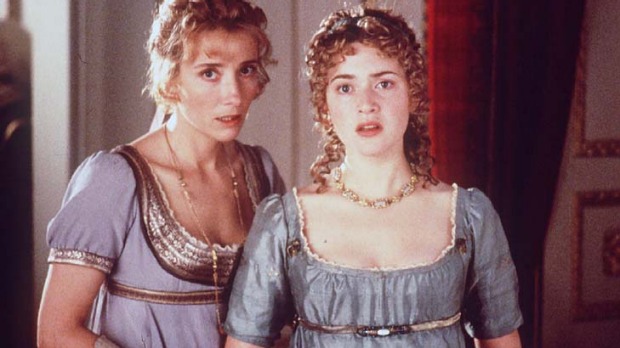
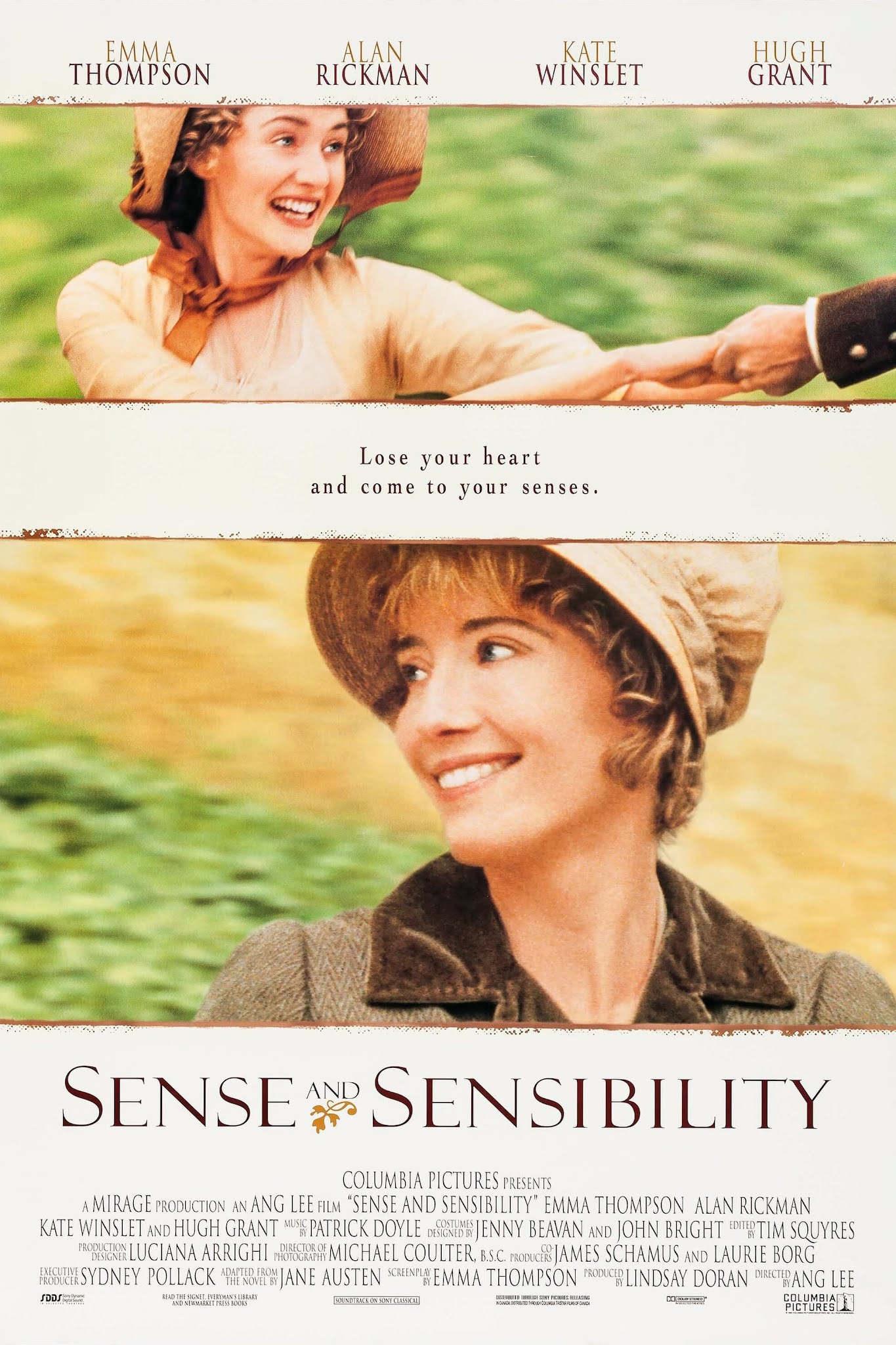
Sense and Sensibility (1995)

Emma Thompson and Kate Winslet are superb in probably the greatest Austen adaptation on film, Sense and Sensibility

Director: Ang Lee

Cast: Emma Thompson (Elinor Dashwood), Kate Winslet (Marianne Dashwood), Alan Rickman (Colonel Brandon), Hugh Grant (Edward Ferrars), Greg Wise (John Willoughby), Gemma Jones (Mrs Dashwood), Harriet Walter (Fanny Dashwood), James Fleet (John Dashwood), Robert Hardy (Sir John Middleton), Elizabeth Spriggs (Mrs Jennings), Imogen Stubbs (Lucy Steele), Hugh Laurie (Mr Palmer), Imelda Staunton (Mrs Palmer), Emilie Francoise (Margaret Dashwood), Tom Wilkinson (Mr Dashwood)
The world of Austen adaptations stands on two pillars – and both of them date from 1995. One is the BBC Pride and Prejudice, the other this luminous adaptation of Austen’s first novel, written by and starring Emma Thompson. It’s hard to pull together a review when a film pretty much plays its hand perfectly: and that’s exactly what Sense and Sensibility does. The film is a complete delight, in which Thompson takes surprisingly large liberties with many of the details of the novel, but brings to the screen a version that never once loses the spirit and heart of Austen’s work. It’s an immensely impressive achievement, and one of the finest literary adaptations ever made.

After the death of Mr Dashwood (Tom Wilkinson), the Dashwood estate passes into the hands of his son John (James Fleet) and John’s ambitious wife Fanny (Harriet Walter), leaving his second wife (Gemma Jones) and their daughters sensible Elinor (Emma Thompson), passionate Marianne (Kate Winslet) and giddy schoolgirl Margaret (Emilie Francoise) suddenly homeless. However, this does bring Fanny’s gentle and kind brother Edward Ferrars (Hugh Grant) into Elinor’s life, and an unspoken romance builds between the pair. There is passion in the air for Marianne at their new home, when she is rescued from a fall in the rain by the dashing Willoughby (Greg Wise). But are there secrets in the pasts of both men that could threaten the sisters’ happiness? And how did Willoughby’s life intersect with the reserved Colonel Brandon (Alan Rickman)?

Thompson’s superbly written script is a faultless adaptation that makes not a single poor choice, and expands and enriches several characters (in particular the three men) to great effect. Thompson not only brings much of the humour and wit in Austen to the fore – the film is frequently very funny – she also understands here truth and tenderness. Which is why the film is so beloved: it’s a film overflowing with empathy and heart for its characters which builds the emotional investment as skilfully as it does the comedy. It culminates in a proposal scene which I don’t think has ever not placed a lump in my throat.

To list all the excellent adaptation ideas would take forever so I’ll use one example. The film wisely expands much of the early character interactions, in particular deepening and exploring the early meeting between Elinor and Edward. A section that takes up barely one of the book’s (very short) chapters here fills the first 20 minutes of the film. It’s vital as it superbly establishes the natural warmth and intimacy between these two, and their perfectly complementing personalities.

It also allows Grant – in one of his most romantically winning performances – to display some deeply endearing light comedy, as well as establishing Edward as a thoughtful, sympathetic and decent man, who forms bonds quickly with all the family (especially young Margaret) through his genuineness. It also keeps us rooting for a relationship – and for a character – who the film often has to leave off screen for vast stretches, and leaves us in no doubt that his (later revealed) engagement to Lucy Steele (a woman he does not love, and who is interested in him solely for his position) comes from the same motives of decency, duty and the desire to do the right thing.

If that’s an example of one of Thompson’s most successful changes in her adaptation, she also unerringly identifies the things it’s most important to keep. Just like the novel, the film places the warmth of the sisters’ relationship at its heart. Helped by the natural chemistry and ease between Thompson and Winslet, the film carefully contrasts the personalities of these two sisters (one sensible and reserved, the other spontaneous and passionate) but takes no sides and also shows the sisters themselves are united by their love for each other. The film frequently features scenes of confidence and intimacy between the two, and continually brings us back to each other as the key relationship in their lives. It also shows how both need to meet in the middle ground: Elinor needs some of Marianne’s sensibility, just as Marianne needs to take on some of Elinor’s sense.

Although sense would not have necessarily helped Marianne uncover the dangerous selfishness of Willoughby. Perhaps the only wrong call in the BBC Pride and Prejudice (like most adaptations of that novel), is that it makes the rogueish Wickham insufficiently handsome and too blatantly smarmy from the start, tipping the audience the wink that this man can’t be trusted. Not so here, with Greg Wise giving Willoughby so much charm, regency handsomeness, dash and warmth that you would not imagine for a moment he could be anything but what he seems. He makes a clear contrast with Marianne’s other suitor, the older, more distant Brandon – superbly played by Alan Rickman – whose qualities of kindness and decency are hidden behind his coolness and lack of flash (Rickman is, again, wonderful here as a man hoping against hope for  a second chance at love).
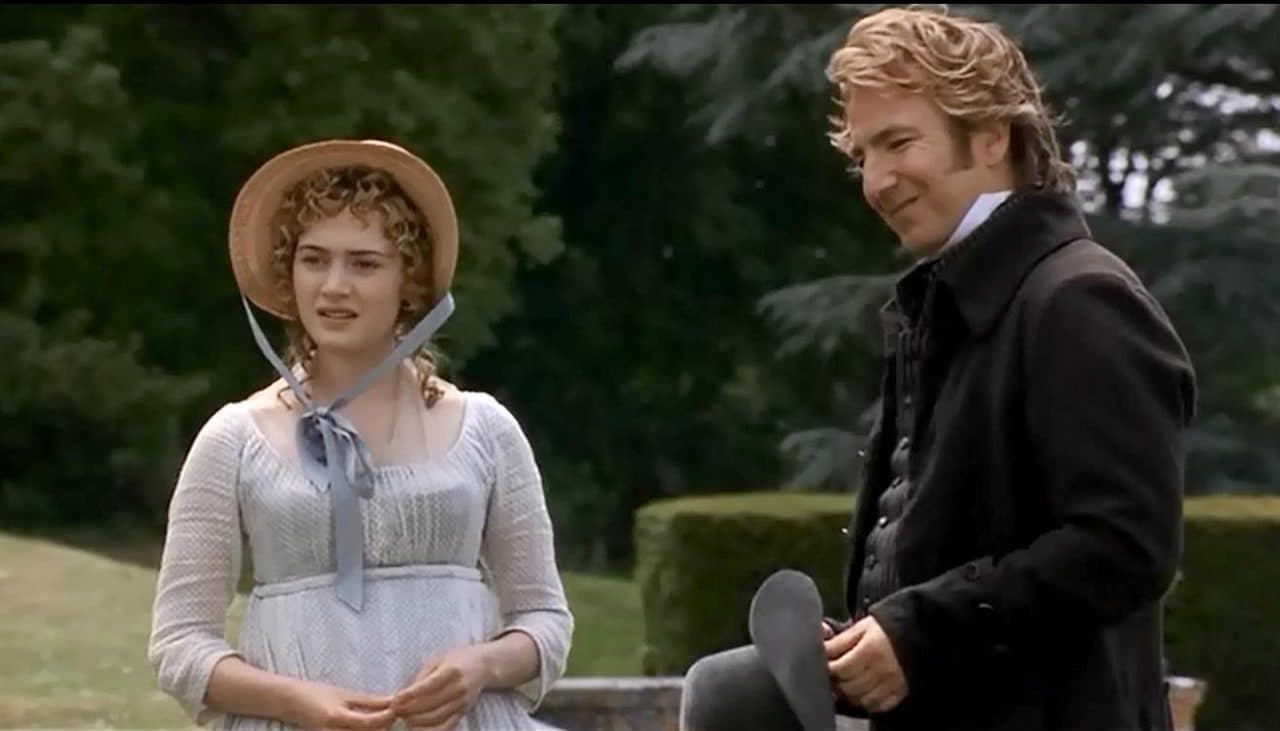
But then the film is filled with perfectly cast actors. Thompson is a brilliant and natural fit for Elinor (even if she is too old for the part, something she acknowledged herself) giving her acres of emotional torment under an exterior she must keep calm and controlled for the sake of her family. Winslet became a star for her enchantingly free-spirited performance, grounded by a warmth and desire for the best for others that keeps the character from ever becoming irritating or overbearing.

Among the rest, there isn’t a bum note. Walter is hilarious as the washpish Fanny, Hardy full of bonhomie as Sir John. Elizabeth Spriggs is perfect as a gossipy old maid who is a pillar of strength when her friends are ill-treated. Hugh Laurie is hilarious in a gift of a part as the dry, cynical Mr Palmer whose nearly every line is laugh-out-loud funny, but who also proves his nobility in a crisis. Staunton is equally good as his flighty, mismatched wife. Imogen Stubbs brings out the simpering manipulative scheming of Lucy Steele perfectly.

The whole is bought together expertly by wonderfully paced and constructed directing by Ang Lee, whom it’s surprisingly easy to over-look. Lee was a considered an odd choice for the film – he barely spoke English at the time and was a stranger to Austen. But the film is an inspired match for him, tapping into his sensitivity, the warm eye he brings to families and their dramas, and also the observer’s wit he brings to social comedy and dynamics. Lee also brings an outsider’s eye to England – it’s a film that looks wonderful, but not simply romantic, with Lee not afraid of a stormy sky or a muddy street. Interiors are shot with a candlelit beauty, and there is a sense throughout of all this taking place in a real world. Patrick Doyle’s perfectly judged score also works wonders to help create the mood.

Sense and Sensibility is a masterful film and a, perfect adaptation of Austen. It’s hard to imagine that it will be bettered for some time. Indeed, like the BBC Pride and Prejudice, it feels like it has made all other adaptations of the book redundant. With a brilliant adaptation, superb acting, sensitive and insightful direction and a true understanding of the spirit and heart of Austen, this is one of the greatest adaptations ever made.
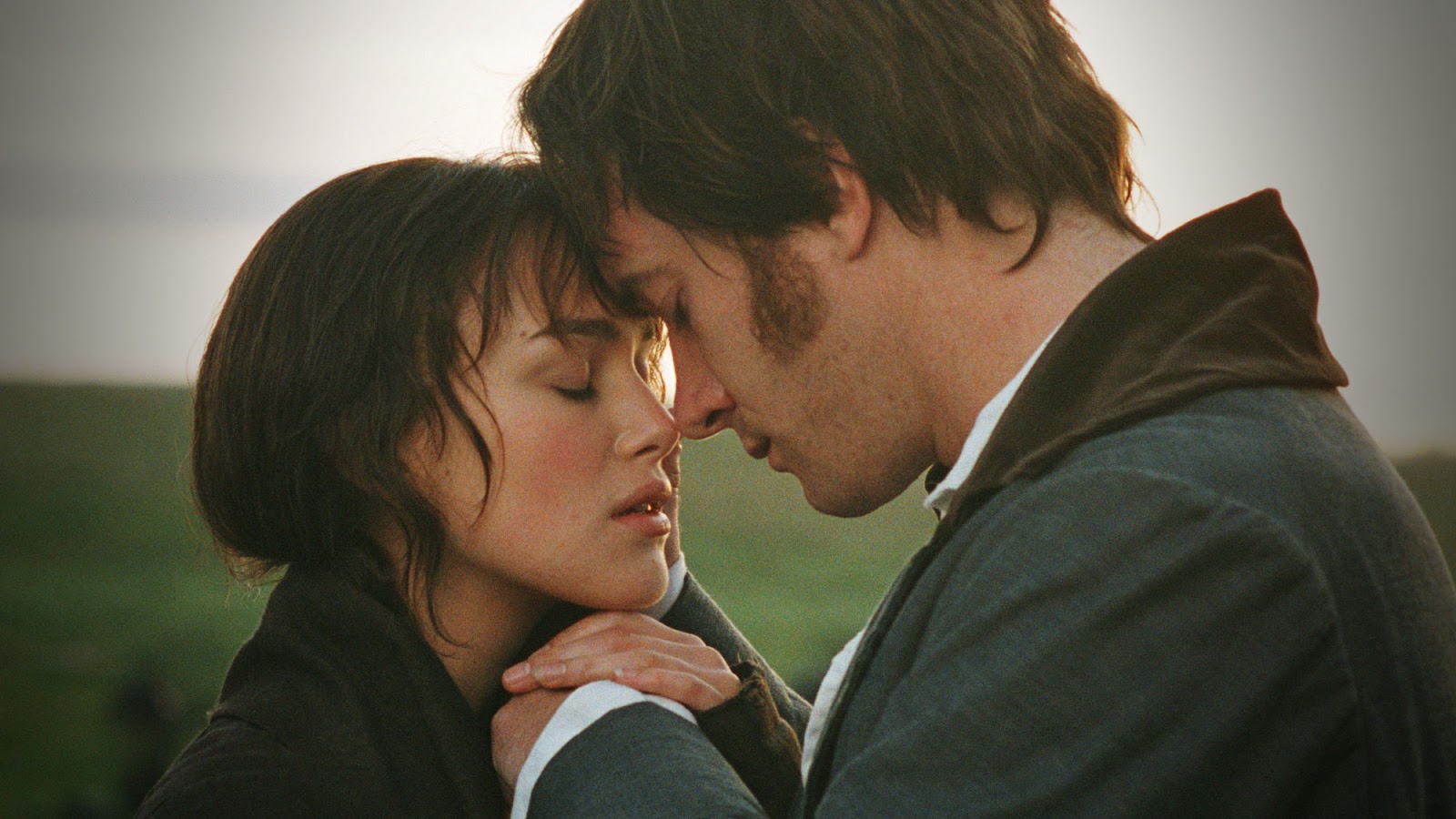
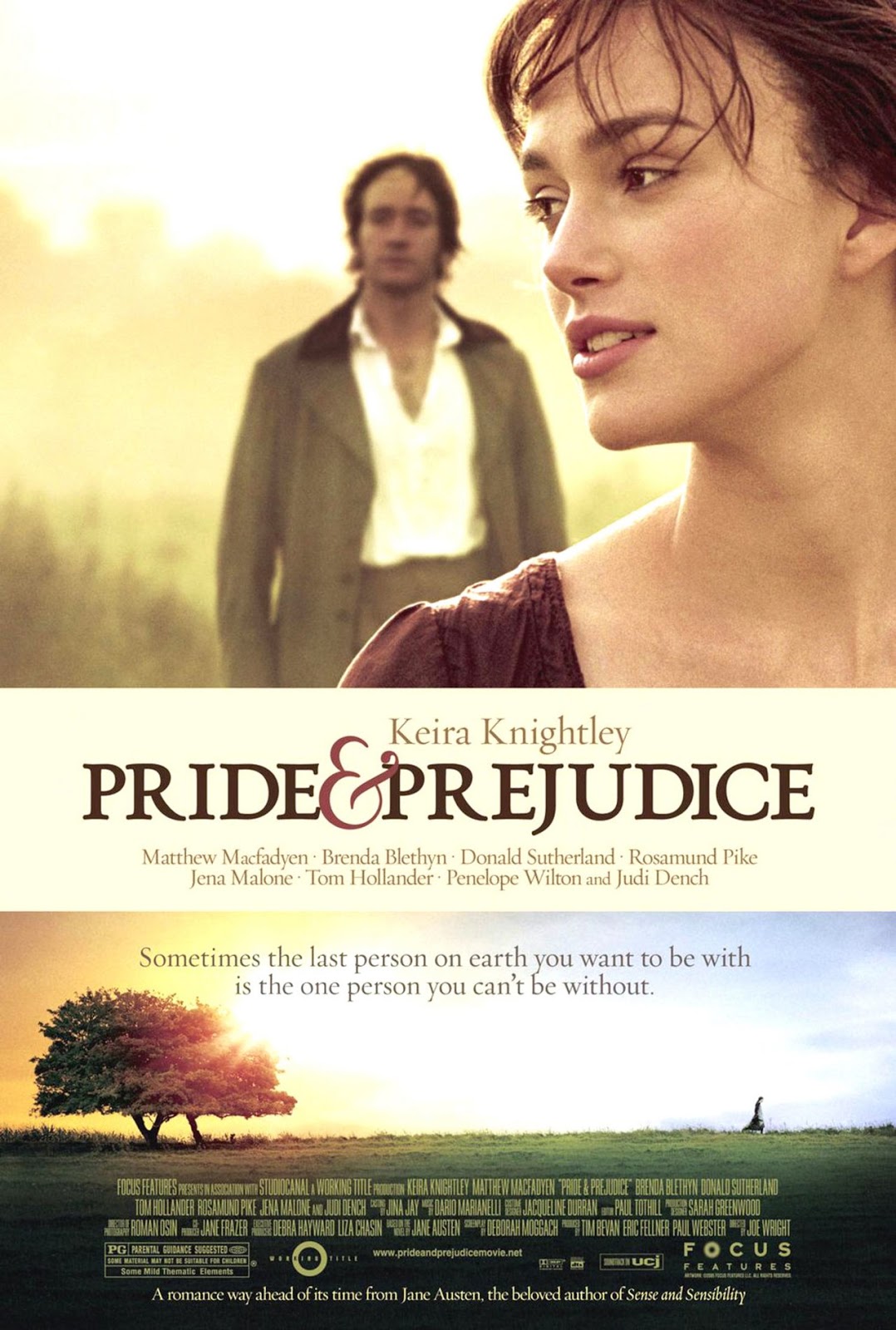
Pride and Prejudice (2005)


Keira Knightley and Matthew Macfadyen are drowned in the shadow of the BBC adaptation of Pride and Prejudice

Director: Joe Wright

Cast: Keira Knightley (Elizabeth Bennet), Matthew Macfadyen (Mr Darcy), Brenda Blethyn (Mrs Bennet), Donald Sutherland (Mr Bennet), Tom Hollander (Mr Collins), Rosamund Pike (Jane Bennet), Carey Mulligan (Kitty Bennet), Jena Malone (Lydia Bennet), Talulah Riley (Mary Bennet), Judi Dench (Lady Catherine de Bourgh), Simon Woods (Mr Bingley), Tamzin Merchant (Georgiana Darcy), Claudie Blakely (Charlotte Lucas), Kelly Reilly (Caroline Bingley), Rupert Friend (Mr Wickham), Penelope Wilton (Mrs Gardner), Peter Wight (Mr Gardiner)

I’ve written before about certain books having been adapted so successfully there feels very little point rolling out another. If ever an adaptation set this principle, it’s the 1995 BBC adaptation of Pride and Prejudice. Not only did it perfectly capture the spirit and style of the book, with perfect scripting and direction, but the two lead actors – Jennifer Ehle and especially Colin Firth – were simply perfect (for all his achievements, the first line of Firth’s obituary will forever be “Darcy Dies”.)

So Joe Wright and his team were already climbing a mountain when they announced plans to make a new adaptation of Jane Austen’s most beloved novel. What they’ve produced in the end is a well-made, handsomely mounted film full of visual invention – that has been pretty much rejected by nearly everyone I know who loves Austen. It’s a film that, in attempting to plough its own furlough, has ended up not really pleasing anyone: for the casual viewer it’s an entertaining but forgettable watch. For the Austen fan it’s just plain not right.

Structurally the film places Elizabeth’s relationship with Darcy slap bang at the centre, and has little to no interest in anything else. This leads to major themes and relationships being neglected or outright abandoned in some bizarre cut choices. The film wants to front-and-centre Lizzy’s increasing isolation – so Jane is dispatched from the film for almost over an hour. Even more oddly, Wickham is cut down to a few spare scenes – which makes her passionate sympathy for him and anger against Darcy make very little sense. All this isolation also means we never really understand the social implications and importance of marriage – in fact the whole thing is basically turned into a Cinderella romance: Rich Man Meets Poor Girl (And No One Else Matters). 

Which means a lot of the focus for the film lands on Keira Knightley. Is there a more controversial actor in film than Knightley? Oscar-nominated for the role, among my Austen-loving friends I have found only revulsion against her performance. She plays it with spirit but too much of a modern sensibility. She’s fine, but she’s just not convincing: she doesn’t look like her, she doesn’t have her warmth and wit and seems more like she’s wandered in from some sort of “flirty girls” comedy. Nothing really communicates the character’s intelligence and wit – and Knightley probably looks a little too modern for the whole thing to work. 

On top of that the film doesn’t want her to be too unsympathetic at any point, so dials down her judgemental nature, and also reduces any possibility of us judging her partiality for Wickham by mostly removing him from the film. However, this also removes many of the obstacles from the plot that stand in the way of romance.

Matthew MacFadyen does a decent job as “Nice Guy In A Period Drama”, but the character is just wrong for Darcy. Like Lizzy’s tendency to rush to judgement, Darcy’s apparent coldness and snobbery have been watered down to almost invisibility. His first announcement of love is so genuine, so gentle, so loving that you are amazed that Elizabeth dismisses him out of hand. It’s no surprise this Darcy turns out to be a decent bloke, the edges of the character have been completely shaved off. This puts a big old dent in the plot, reduces his character development, and ruins the impact of sweet later moments like Darcy’s uncertainty when the two meet at Pemberley. 

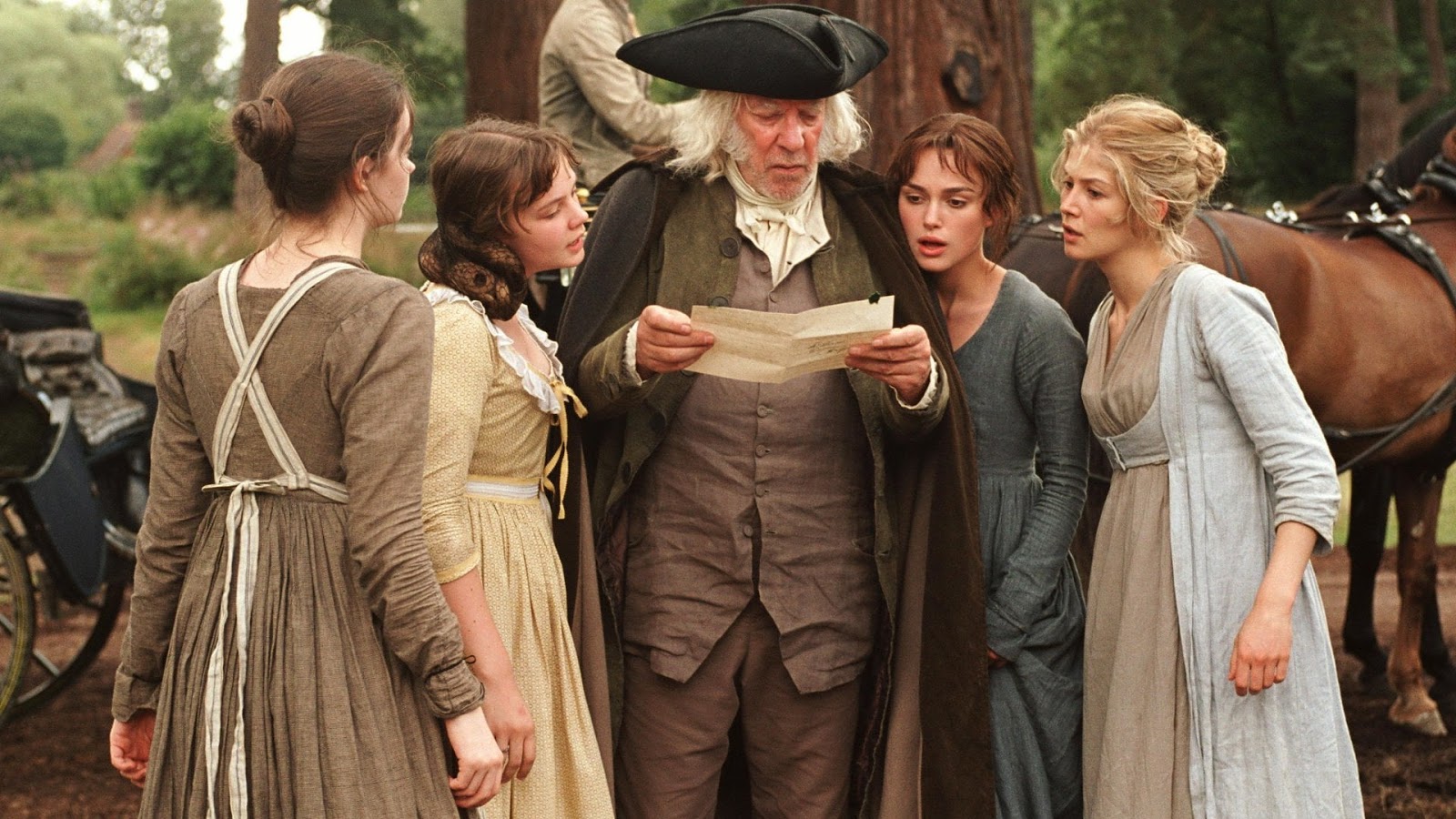
There are some good performances though. Tom Hollander is very funny as a social-climbing Mr Collins. Donald Sutherland gets so much warmth and twinkly good humour out of Mr Bennet that Wright even ends the film on him (another odd choice, but never mind). Judi Dench could play Lady Catherine standing on her head. Rosamund Pike is rather good as Jane – she totally feels right for the period. Brenda Blethyn largely manages to avoid turning Mrs Bennet into a complete stereotype. Saying that, Simon Woods portrays a version of Bingley so bumbling, tittering and awkward you are amazed either Jane or Darcy could be interested in him, let alone bear to spend time with him.

But then large chunks of the film feel odd. The screenplay works overtime to turn the film into a straight-forward star-crossed lovers story: so it’s Darcy and Elizabeth all the way, and the film is desperate to make them both likeable from the off. And if that means that, in a film called Pride and Prejudice, both the pride and the prejudice have to be junked to make sure even the stupidest audience member will like the hero and heroine, well that’s apparently a price worth paying. Lowering the Bennets’ social status as far as the film does, also turns the story into a full-on Cinderella territory. Darcy and Bingley are so posh an entire room falls silent when they walk in – in comparison the Bennets are so poor they share their house with pigs.

Ah yes the pigs. Why? The Bennets aren’t paupers. If they were, why would Collins want the place? Why would they be invited to the ball? Why would Bingley and Darcy even consider them as partners? Why would a family so aware of impressions have a home that is literallyfull of shit all the time? Why is Mr Bennet scruffy and unshaven – and why doesn’t anyone care? Who designed this? If the Bennets are so fixated on getting good marriages why do they literally live in a pig sty? It’s a visual idea that undermines the whole story.

I’m not joking. Here is a pig walking through the Bennet house.

It’s full of things like this that don’t feel right. The film junks most of the language of the original book, which makes it sound jarring (it even re-works Darcy’s first proposal: “in vain I have struggled, it will not do…” – large numbers of Austen lovers I know can recite those lines verbatim. This film apparently thought it could create a better version. It couldn’t). Large chunks of the film happen in the rain like some sort of version of Wuthering Heights. Why is that? Is it because professions of love in the rain are romantic in a Mills and Boonish sort of way? Or is it an echo back to Firth’s wet shirt?

Emma Thompson’s sublime adaptation of Sense and Sensibility demonstrated that it is completely possible to adapt an Austen novel into a two-hour film and still preserve the characters, relationships, major events and themes of the book, while also making a story that stands on its own two feet for non-Austen-ites. This film bungles its attempt to do the same. 

But there are things Wright gets right. The camera work and transitions are lovely. A long tracking shot that weaves in and around the ball early in the film, taking in every single character is not only a technical marvel but really gets across a feeling of what these hectic and bustling social events are like. There is a beautiful time transition at Longbourn, as Elizabeth rotates on a screen and the camera takes on a POV shot, showing the seasons changing each time the camera revolves around through 180 degrees. The cinematography is luscious and Wright – his first film – shows he was more than ready for the step-up from TV.

It’s just a shame that the film they made doesn’t quite work. It doesn’t capture the sense of the book. It doesn’t capture the sense of the characters. It makes bizarre and just plain wrong choices. It’s a decent film, but it is not a good adaptation of the novel. And that’s a major problem, because if you are going to adapt something as widely loved and revered as this, you better bloody well understand the novel – and I don’t think enough people here did. It’s told with a sweeping romantic style – but they are adapting the perception of Pride and Prejudice rather than the actual story. The chemistry and romance aren’t there: the film even ends with an odd sequence of Sutherland and Knightley, probably because there was better chemistry between these two than the two leads. It’s a film that basically doesn’t work at all.

Pride and Prejudice (1940)

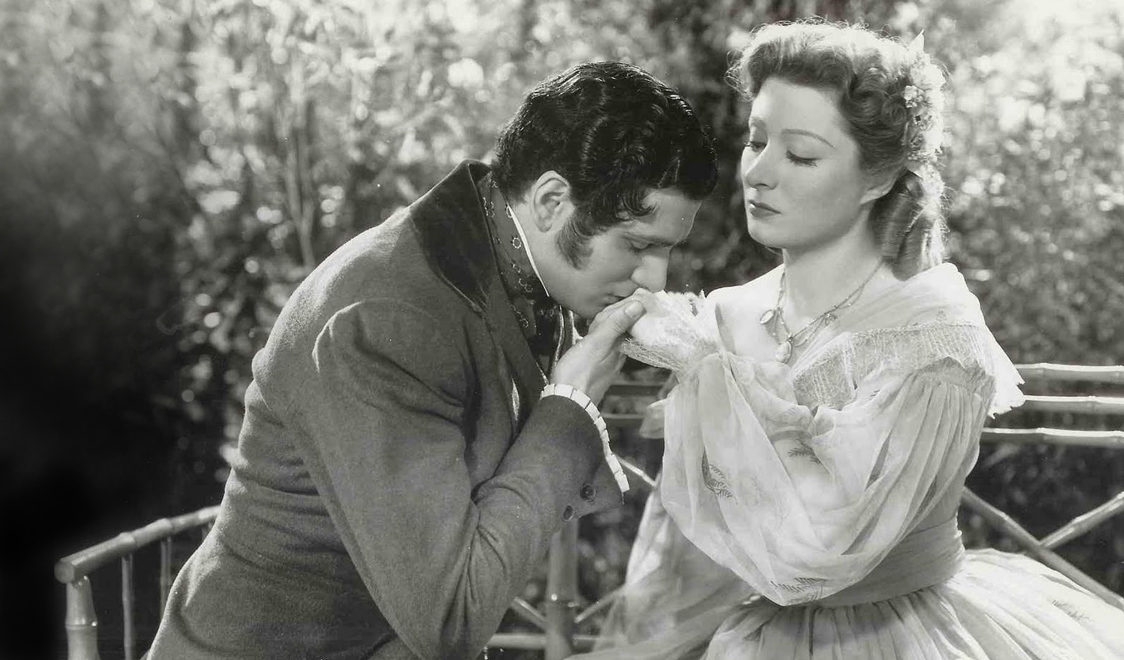
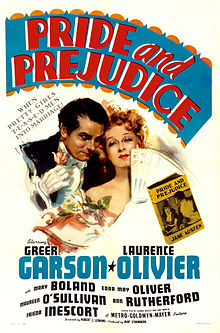
Laurence Olivier and Greer Garson in a just-plain-not-right version of Pride and Prejudice

Director: Robert Z Leonard

Cast: Greer Garson (Elizabeth Bennet), Laurence Olivier (Fitzwilliam Darcy), Mary Boland (Mrs Bennet), Edna May Oliver (Lady Catherine de Burgh), Maureen O’Sullivan (Jane Bennet), Ann Rutherford (Lydia Bennet), Frieda Inescot (Caroline Bingley), Edmund Gwenn (Mr Bennett), Karen Morley (Charlotte Lucas), Melville Cooper (Mr Collins), Edward Ashley Cooper (George Wickham), Bruce Lester (Mr Bingley)
 

There is an expectation that old-school adaptations of literary classics from the Golden Age of Hollywood somehow set the standards of adaptation, that all others will be judged against. That may well be the case with the 1939 Wuthering Heights, among others, but it really isn’t the case with Pride and Prejudice, which is essentially a bastardisation of Austen’s original, as if the book has been humped by Gone with the Wind and we are now watching its offspring.

Do I need to tell you the plot? Well I probably should tell you this movie’s version of it. The Bennet sisters are sassy young things always on the prowl for husbands. Lizzy Bennet (Greer Garson) flirts with the proud Mr Darcy (Laurence Olivier), while her sister Jane (Maureen O’Sullivan) wins the attentions of Mr Bingley (Bruce Lester). But how will pride and prejudice affect the course of true love? Find out in this Aldous Huxley (!) scripted version of Austen’s classic, adapted via a second-rate stage version.

What’s bizarre about this film is how wrong so much of it feels. Now I’m no Austen expert, but even I could see that all the costumes for this production are completely incorrect for the period. Turns out of course that the producers just had a lot of mid-19th century clothing and thought it looked better. Other things feel like low-brow farce: the Bennet sisters and their mother race Caroline Lucas and her mother in carriages in order to be the first to greet Mr Bingley. That’s right, it’s Pride and Prejudice with a horse-drawn drag-race. Who thought that was a good idea? But what can you expect of a film with the tag-line “When Pretty Girls T-E-A-S-E-D Men into Marriage!”? It even takes good lines from the novel and inexplicably rewrites them to make them worse – Darcy’s snobbish and personally hurtful dismissal of Lizzy at the Merryton assembly “I am in no humour to give consequence to young ladies slighted by other men” here becomes “I am in no humour to give consequence to the middle classes”. Why?

I ask you – do these costumes look right?

That’s before you get into the casting. While some of it is pretty good (Edmund Gwenn is very good as an ineffective Mr Bennet, while Mary Boland has a neat line in shrieking as Mrs Bennet) others are downright bad – Bruce Lester is stiff as Mr Bingley, Edward Ashley Cooper is forgettably dull as Wickham, and Melville Cooper hideously overplays as a Collins who seems to have stepped in from a Marx brothers film.

Other parts just feel a bit wrong. Greer Garson and Laurence Olivier as the leads are marvellous actors, but neither of them produces a version of these iconic characters that feels remotely true – or even recognisable. Garson not only looks too old, but she doesn’t have the sense of playful intelligence and spark that Lizzy Bennet needs: she’s more of a slightly aloof tease. Laurence Olivier is reasonably good as Darcy, but the character is re-invented as much softer and more playful from the start, and his willingness to be teased by Lizzy early in the film makes her rejection of him make very little sense.

Their relationship has a flirtatious element throughout, fitting the film’s reimagining of the novel as a sort of romantic comedy in period costume, with elements of Hollywood screwball – but bearing no resemblance at all to the actual relationship Lizzy and Darcy ought to have. At Bingley’s garden party they engage in a playful archery competition (he assumes she’s a novice, she of course is an expert marksman). In itself the scene is good fun, but Darcy’s polite apology and willingness to look a little foolish, means it doesn’t hold together when she condemns him for arrogance. In fact, you’d be pretty hard pressed to identify much pride or prejudice going on at all. The main obstacle to their relationship is shown as Wickham’s denunciation of Darcy – but since Lizzy hasn’t actually seen Darcy do anything particularly bad, it seems particularly forced.

Furthermore, the film makes Lizzy seem like a ditzy schoolgirl, since literally one scene later she has spun on a sixpence and is devoted to Darcy. This is also a flaw of the film’s telescoping of events – within five minutes it feels Wickham elopes with Lydia, then Wickham comes into money, then Darcy reveals his true character, then Wickham and Lydia return. The film rushes through these events, in order to fly towards its artificial happy ending (all the Bennet sisters are given appropriate suitors in a clumsy final shot) without any real sense of Austen, or any real eye for the sort of subtle social satire she had carefully worked into her novels.

The film’s individualist take on Pride and Prejudice does at least distinguish it from other productions I suppose, but it’s terrified of the depths to the story or its characters, and seems to do everything it can to neuter its “bad” characters – Caroline Bingley barely appears, and it’s hard to believe that any reader of the book could picture Lady Catherine as she’s reimagined here: a sort of playful wingman to Darcy’s courtship of Lizzy.

But then this never feels like Austen – it’s got more of an early Gone with the Wind vibe to it, but played as romantic comedy. Lizzy here is an aloof, determined, slightly foolish, but strong-minded Scarlett-O’Hara-lite, while Darcy is a neutered Rhett Butler charmer. The production does everything it can to look like Gone with the Wind in its setting and design. Austen’s social commentary is phased out and replaced with low comedy and bantering lover style dialogue. I suppose as a film in itself, it’s perfectly fine, but as an adaptation of one of the greatest novels of all time, it’s sadly lacking.

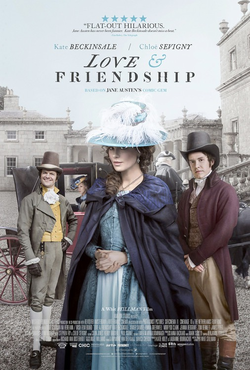
Love and Friendship (2016)


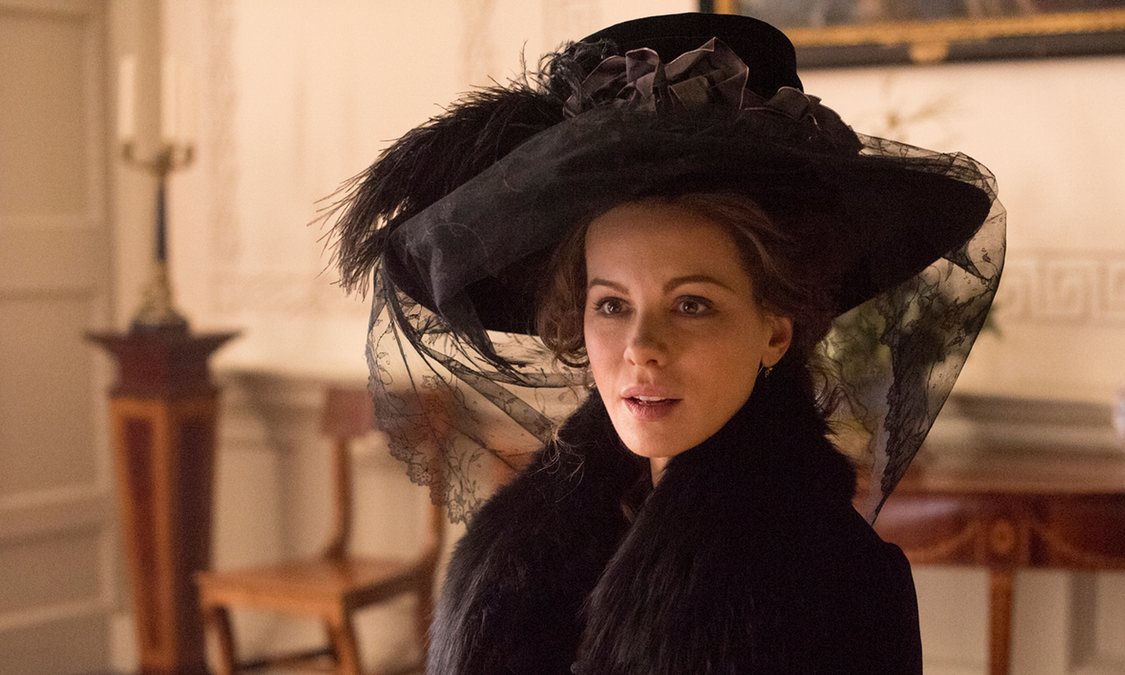
Kate Beckinsale in a true star turn in Whit Stillman’s brilliant Love and Friendship

Director: Whit Stillman

Cast: Kate Beckinsale (Lady Susan Vernon), Chloë Sevigny (Alicia Johnson), Xavier Samuel (Reginald DeCourcy), Emma Greenwell (Catherine Vernon), Morfydd Clark (Frederica Vernon), James Fleet (Sir Reginald DeCourcy), Jemma Redgrave (Lady DeCourcy), Tom Bennett (Sir James Martin), Justin Edwards (Charles Vernon), Stephen Fry (Mr Johnson)

Films based on Jane Austen are hardly a new thing. There have been dozens of productions on film and television of Austen’s biggest hitters (P&P, S&S, Emma…). What a delight therefore to get an Austen adaptation that takes a very different approach and with material much less familiar. Stillman has even renamed the source material (Lady Susan) with the title from another piece of Austen ephemera, making it playfully fit into the famous X & Y titles.

Lady Susan Vernon (Kate Beckinsale) is notorious throughout society as its most outrageous flirt.  After a failed affair with Lord Manwaring, she retreats to the country home of her late husband’s brother Charles (Justin Edwards). There she soon ensnares Charles’ brother-in-law Reginald DeCourcy (Xavier Samuel) into an understanding, while simultaneously promoting the marriage of her reluctant daughter Frederica (Morfydd Clark) to the wealthy bumbler Sir James Martin (Tom Bennett). Naturally there is outrage left and right.

Watching this film the first question that springs to mind is what has Kate Beckinsale been doing her whole career? Clearly on the basis of this been wasting her talents in umpteen Underworld movies. This film plays to all her strengths: her sophistication, elegance, the intelligence and sharpness she can convey in dialogue, mixed in with a distant quality she has. She’s absolutely on top of her game her as the aloof, completely selfish and manipulative Lady Susan, and bitingly funny. Her A-list status translates perfectly into a cast of largely unknowns: just as she would in real life, she seems to glide amongst the other characters in the film like some demi-god descended from the stars.

Beckinsale is one of the brightest stars in this terrifically dry and witty adaption by Whit Stillman of a little known Jane Austen work (I confess I’d never heard of it before!). The film has a frosty tongue and a sharply observant eye, and delights in the absurdities and eccentricities of the Austen upper middle classes as much as it does the ruthless bitchiness and selfish back-biting of the marriage game. It’s the perfect film to remind everyone that there is so much more to Austen than the lazily inaccurate perception of love and romantic clinches in the rain. Stillman really brings to the forefront her accurate understanding of people, and her sharp satirical eye.

The film fairly canters along – sometimes with such haste that the intricacies of who is related to who and how are a little lost, despite some witty freeze-frames that introduce each character like calling cards – and it’s often blisteringly funny. It has a brilliant mixture of verbal put-downs and catty asides (often delivered with a cool sharpness). The film is not afraid to mix this with some near slapstick absurdity, particularly from an exceptional Tom Bennett whose over-eager, nervously talkative, endearingly naïve Sir James threatens to steal the whole movie. His introductory monologue on the confusion between “Churchill” and “Church Hill” is a show-stopping laugh riot. It all serves to create a wonderfully arch and funny dive into Austenland.

There is a fantastic self-awareness around the whole film which Stillman manages to wear very lightly. It’s a very faithful immersion in Austen’s style and humour, but also leans on the wall of gentle humour at the conventions of lesser costume dramas. It’s a hugely difficult line to walk, but the film never staggers or slackens. It stays tight, taut and the story grows with a warmth and reality while Stillman continues to almost tease the source material.

The final resolution of events manages to feel both surprising and strangely inevitable. It’s a perfect summation for a film that is simply marvellous, brilliantly performed and frequently laugh-out-loud funny. Lady Susan is in many ways deplorable, but Stillman avoids all temptation to try and redeem her or to make her into some sort of genuine heroine (“Facts are horrid things” she observes after another accurate condemnation). Stillman expands the implications of Austen’s text to more than hint at secrets behind her final marriage.

Love and Friendship is a terrific film, the best Austen adaptation on screen since Emma Thompson’s virtuoso Sense and Sensibility. It also has the best work of her entire career from Kate Beckinsale, giving the kind of performance which makes you re-evaluate all your impressions of her. Every single moment of the film has a rich emotional depth mixed with hilarity. It’s not just a wonderful costume drama, it’s a wonderful film.

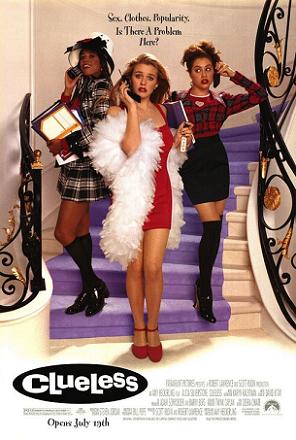
Clueless (1995)


Alicia Silverstone leads her in crowd troop in neat Jane Austen reimagining Clueless

Director: Amy Heckerling

Cast: Alicia Silverstone (Cher Horowitz), Stacey Dash (Dionne Davenport), Brittany Murphy (Tai Frasier), Paul Rudd (Josh Lucas), Dan Hedaya (Mel Horowitz), Elisa Donovan (Amber Mariens), Justin Walker (Christian Stovitz), Wallace Shawn (Mr Hall), Twink Caplan (Ms Geist), Breckin Mayer (Travis Birkenstock), Jeremy Sisto (Elton Tiscia)

The 90s saw a rash of films that reworked classics into US high-school settings, aimed squarely at the teenage market. One of the most successful of these was Clueless: a decent, just-smart-enough reimagining of the plot of Jane Austen’s Emma.

Austen’s wealthy, match-making heroine here becomes Cher Horotwitz (Alicia Silverstone) – queen bee of the in-crowd in her high school. Like Emma Wodehouse, Cher is smart, beautiful and taken to meddling in the lives of those around her, sure she knows best about how they should behave – and whom they should date. She can be selfish and self-obsessed, but beneath it is fundamentally good-natured. When new girl Tai (Brittany Murphy) arrives at the school, Cher sees the scope for a makeover project – but it’s Cher herself who undergoes the greatest transformation.

The obsessions with status that populate Austen’s world actually translate very well into the high school setting, with its in and out crowds. It also a very neat restructuring of the novel, hitting all the basic plot points of Austen’s story, with some smart translations into the modern world (Christian – the Frank Churchill role – is particularly well updated). The film is sprinkled with sharp lines and snappy dialogue exchanges, and the cast are certainly in on the joke, walking a fine line between parody and playing it straight. This all contributes to the film’s fizzing energy and its charming momentum – you can see why teenagers loved it, as Heckerling has a wry wink at the camera at the concerns of teenagers, but also celebrates their potential for fun and friendship.

Watching the film over 20 years on, it’s remarkable how successfully it used the limitations of Alicia Silverstone to such great effect. It’s a bit bizarre to think Silverstone was considered the next big star of Hollywood, considering how few of her films have made any impact since this. However, here her lack of depth and shading, her unmodulated voice and rather bland style somehow work perfectly with a character who is superficial and who believes she is far cleverer than she actually is.

Clueless is that strange thing – a star-making turn that didn’t make a star, but Silverstone clicks perfectly into this role, making Cher engaging and rather charming despite her self-obsession. She delivers what the film requires in spades, even if Cher’s late character blossoming seems something required for the film’s plot rather than growing truly organically over the course of the film.

This abrupt burst of “learning and growing” partly clunks because Heckerling shies away from Emma’s more negative characteristics – tellingly, Emma’s public shaming of another character is here given to a different character. Can’t have anyone not liking the heroine for a second can we? In fact this determination to make Cher constantly as likeable as possible does rather miss the point of the original novel. It also reduces the “tension” (we all know how stories like this end!) of whether the heroine has driven her love interest away through her mistakes and missteps – and with less for the heroine to learn about herself, and less damage to repair in the relationship with the object of her affections, there’s proportionally less emotional impact to the final happy ending.

Speaking of that romantic plotline, you also can’t talk about the film without also commenting on the fact that it makes a bit of a fudge around the attraction between Cher and Josh, who (the film is at very great pains to point out) are not actuallysiblings, but do share the same father/step-father. It’s actually quite a weird twist, but I suppose just as retrospectively unsettling as Mr. Knightley loving Emma from afar from a ludicrously young age. It’s funny though to watch the film fall over itself to hammer home the non-family relationship between the two characters early on, so we don’t start shrieking “incest” by its conclusion.

All in all, the film – like its heroine – is a sweet, but superficial, candyfloss concoction, without the depth that could have lifted it from pleasing popcorn fare to satisfying story.