Tag: Jane Wyatt

Boomerang! (1947)

Boomerang! (1947)

Effective journalistic investigation into a murder case turns into engaging courtroom melodrama

Director: Elia Kazan

Cast: Dana Andrews (State’s Attorney Henry Harvey), Jane Wyatt (Madge Harvey), Lee J Cobb (Chief Harold Robinson), Cara Williams (Irene Nelson), Arthur Kennedy (John Waldron), Sam Levene (Dave Woods), Taylor Holmes (TM Wade), Robert Keith (‘Mac’ McCreery), Ed Begley (Paul Harris), Karl Malden (Lt White)
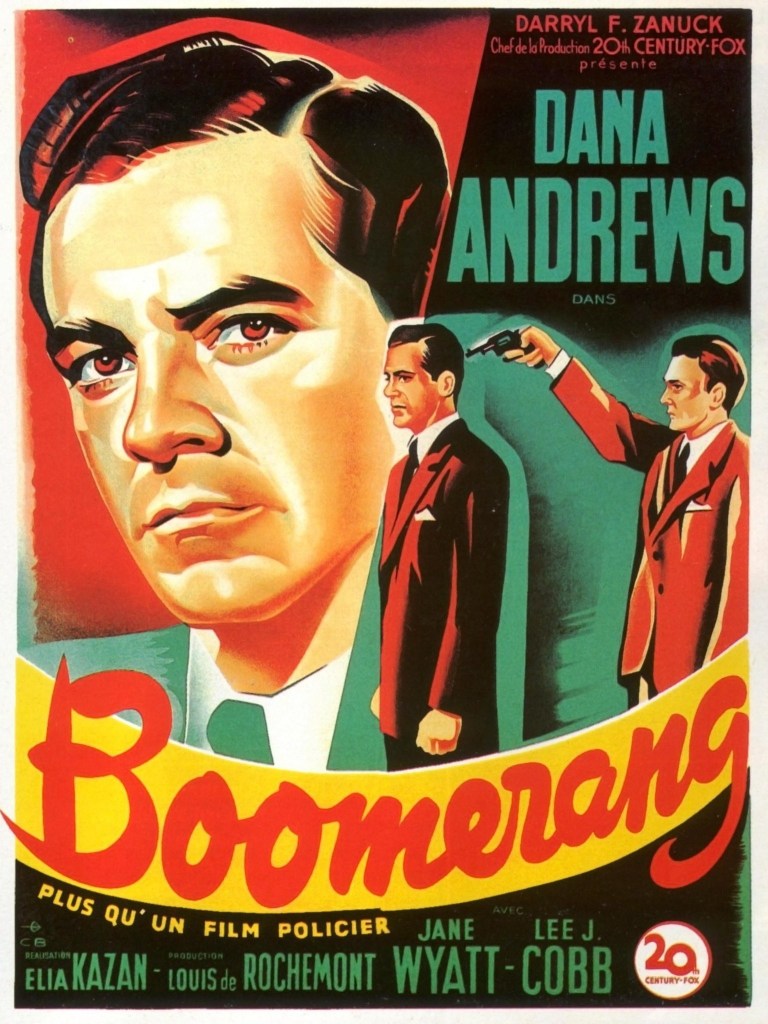
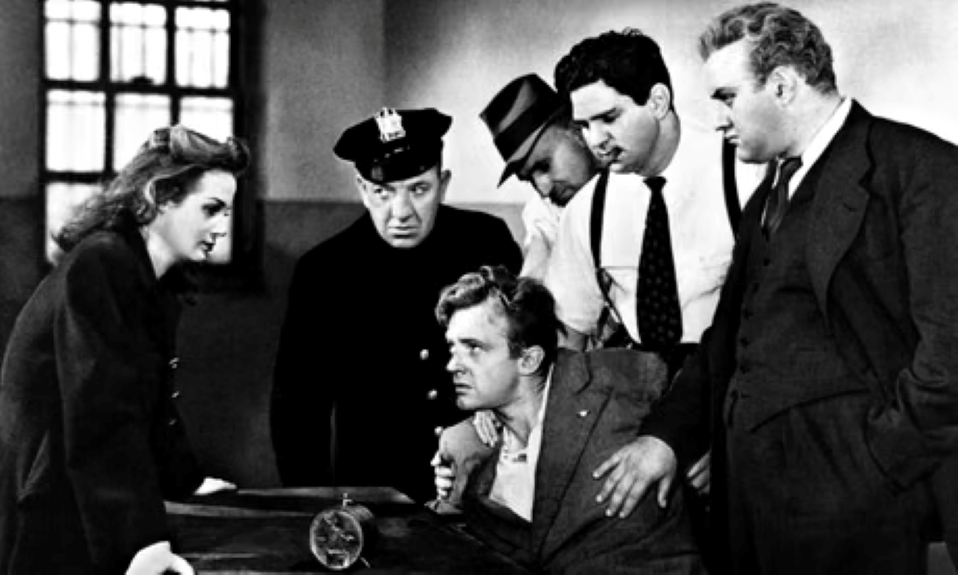
In Bridgeport, Connecticut, a popular priest is gunned down in the street, the killer escaping into the night. The police are baffled. The city turns against the reformist mayor’s administration. Then, after several weeks, there is a lead as twitchy ex-soldier John Waldron (Arthur Kennedy) is dragged in and, after hours-and-hours of interrogation without sleep, signs a confession. But who cares about small details like that, when everyone is sure the police has their man? But State’s Attorney Henry Harvey (Dana Andrews) has doubts – and no pressure from the public or officials will make him build a case against an innocent man.

Based on an actual 1924 murder case, Boomerang! is told with journalistic sharpness by Elia Kazan that smoothly moves from investigative into courtroom drama. Boomerang! was cited by Kazan as when he started to find his voice, establishing a style that would carry him to Oscar-winning success in On the Waterfront and beyond. Shot largely in location (though admittedly in a different Connecticut town than Bridgeport), it’s full of the immediacy of the streets, avoiding sets and forced studio locations. Kazan leans into the journalistic feel, with a voiceover explaining events and an earnest attempt throughout to make it feel like we are watching real events unfold.

It captures people going about their everyday lives: gossiping over laundry, strolling down streets, pounding typewriters in press rooms, gathering in church and shops. This is a film designed to convey a full sense of a real world. That goes as well for reflecting the investigation, which is full of the visceral pounding of pavements and hustling of suspects into police cars as well as the interrogations of the worn-down Waldron, taking place in an inhospitable room where never-ending questions means Waldron’s head has to be literally picked up to continue answering the questions.

The observational strengths of the film’s opening eventually moves into something more straight-forwardly melodramatic, but Kazan’s documentary restraint tries it best to not make this shift too jarring. As Harvey’s doubts grow, he becomes under increasing pressure from officialdom, principally from Ed Begley’s sweaty Paul Harris (who is too noticeably dodgy from the start for his villainy to be anything like a surprise). This is before a series of courtroom dynamics that hue towards the sort of fireworks you find in larger-than-life films than the journalistic reserve Boomerang! starts with.

Which isn’t to say that these courtroom dynamics are not very well-handled, especially by the under-rated Dana Andrews, who brings just the right amount of humanity and dignity to an otherwise stiff-on-paper character of a crusading, too-good-to-be-true attorney. Andrews delivers the courtroom speeches, and the detailed breakdown of the flaws in the police case, with a real quiet passion – just as he brings a nice degree of moral outrage to the bullying attempts to silence him.

Boomerang! provides several opportunities for compelling character actors, many of whom went on to work again for Kazan to great success. Lee J Cobb’s bulldog fierceness is perfect for put-upon police Captain Robinson who lets his determination to prove he can crack the case compromise his judgement. Cobb gives Robinson a powerful sense of authority – there is a wonderful scene where he faces down a would-be lynch mob with little more than growling disapproval. There is also a lovely moment, where he lifts the sleeping Waldron and carries him into his bed with all the care of a loving father. He’s well backed by Karl Malden as an eager-to-please inexperienced cop.

Arthur Kennedy produces one of his expert portraits in weakness as Waldron, an embittered veteran who has found peace offers little more than failure. While never losing track of what makes Waldron suspicious, Kennedy finds a neat line in vulnerability and fear keeps him sympathetic. Opposite him, Cara Williams explodes with righteous fury as a former girlfriend who believes herself wronged, eager to see Waldron condemned. It’s a more interesting role than any other female role in the film, although Jane Wyatt finds some engaging warmth in the dull role of Andrews’ loyal wife.

Boomerang! at heart is a film about the barrel being fine, aside from a few rotten apples. The crime takes place after the old machine politics system has been cast aside by new politicians, not beholden to the system, willing to introduce reforms. And, by and large, they are shown to really mean it – even if, at one point, some express the view that it doesn’t matter if Waldron is guilty or innocent, since winning means the reformists can remain in power. But all the real sins are collected in the hands of Begley’s character: even the police are absolved, despite the fact we watch them essentially brow-beat a man into confessing (a sergeant even suggesting they rough him up a bit to speed things along, which makes you wonder what the system was like for people are not veterans the police captain feels sorry for).

Boomerang! pulls any punches of really exploring systemic flaws, even while it covers an innocent man being bum-rushed into a trial. But then it puts complete faith in the idea that the same system will turn around and do its job by ensuring he is completely absolved – with the only danger from corrupt elected officials, not the blindness of a potential system. It’s a factor Kazan (to be fair) felt the film made too many compromises on – and he’s right. It might tell a scare story, but Boomerang! is fundamentally a reassuring film that is sure everything will turn out right in the end.

Lost Horizon (1937)

Lost Horizon (1937)

Capra’s well-made Utopian dream lacks any of self-awareness of the flaws in its vision

Director: Frank Capra

Cast: Ronald Colman (Robert Conway), Jane Wyatt (Sondra), Edward Everett Horton (Alexander Lovett), John Howard (George Conway), Thomas Mitchell (Henry Barnard), Margo (Maria), Isabel Jewell (Gloria Stone), HB Warner (Chang), Sam Jaffe (High Lama)

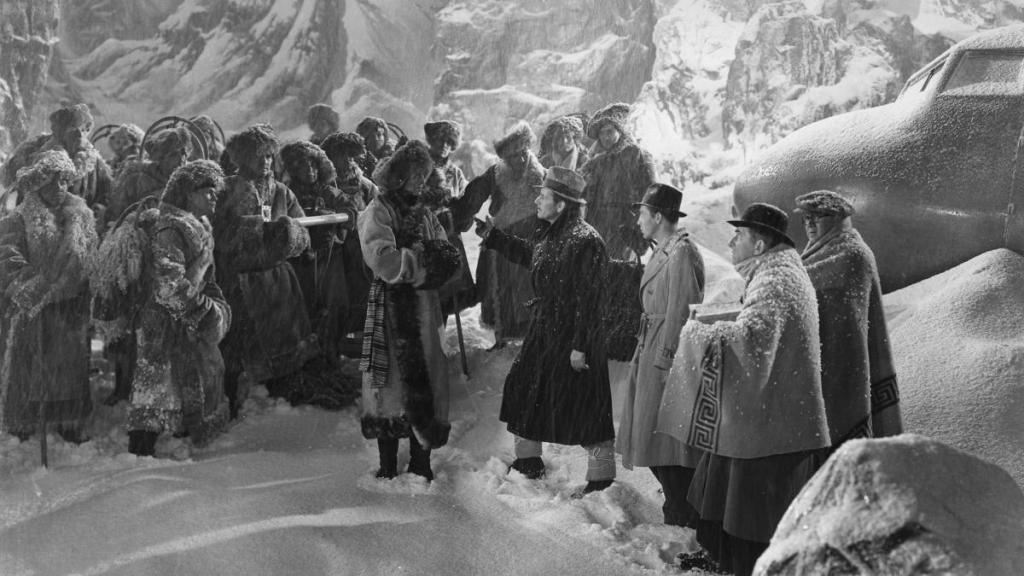
Life can be such a never-ending rat race, the idea of chucking in that relentless pursuit of fortune and glory can be really tempting. Fortunately, it turns out there is a place you can do that: Shangri-La, a halcyon Utopian community buried deep in the Himalayas. There the mountains give it a gloriously perfect climate and preserves its residents youth for potentially hundreds of years. It’s a paradise for legendary diplomat Robert Conway (Ronald Colman), one of a group of Westerners whose plane crashes near-by, all of them invited to make their lives there.

It’s easy to see why this appealed to Frank Capra – even if his real idea of Shangri-La was Small Town America – and he poured years (and millions of dollars) into this dream project (it also took years to make back the investment). Conway is part of a group of mostly British Westerners escaping revolution in China. In Shangri-La, he’s deeply drawn to the peaceful ideology outlined by their host Chang (HB Warner) and Shangri-La’s spiritual leader, the Great Lama (Sam Jaffe). Not to mention the charms of resident Sondra (Jane Wyatt). Problem is, his brother George (John Howard) is desperate to return home. What will Robert choose?

Lost Horizon has a lot to admire about it, in among the incredibly earnest force of its telling, devoid of any drop of cynicism or irony. This is like a 101 of what to expect from Capra? It’s a celebration of the glories of living a simple, pure life without ruthless ambition and realpolitik. It’s filmed on a highly impressive scale by Capra – the gargantuan sets certainly show where the money went. Striking sequences, like a seemingly never-ending torch-lit parade of the people of Shangri-La marching towards Chang’s opulent estate, are breathtaking.

It hosts a fine parade of actors: Colman is perfect as the debonair, world-weary Conway, Horton and Mitchell make their supporting comic double-act genuinely funny (Horton, in particular, litters the film with wonderful bits of comic business using everything from mirrors to jewellery boxes), HB Warner makes a series of infodump ideological sermons more engaging than they deserve and Isabel Jewell creates a great deal of charm in the blousy Gloria. Interestingly, perhaps the most compelling sequence of Lost Horizon occurs before they even arrive, as these characters feud and panic on a hijacked plane taking them in totally the wrong direction.

But there is often something a little too pure about Lost Horizon. Even as the film-making beautifully unspools, it’s hard not to notice that for a huge chunk of this long film very little really happens beyond slightly sanctimonious speechifying comparing ‘our’ civilisation with the peaceful life of Shangri-La. In fact, it’s easy (particularly in our more cynical age) to start feeling a bit twitchy. So earnestly perfect is everything there, with a simplistic and unchallenging view of kindness and brotherly love, it starts to feel like being continually slapped by a SparkNotes copy of Thomas More. Capra uses John Howard’s blowhard George, to put a counter-view – but fills him with such ambition and desire that we are of course never in danger of taking him seriously.

Graham Greene wrote of the film “nothing reveals men’s characters more than their Utopias” before observing the design of Shangri-La resembled nothing more or less than a luxurious Beverly Hills Estate. Rarely has a truer word been spoken: this mountainous paradise, with its carefully designed gardens, well-stocked libraries, grand ballrooms and lush woodland perfect for riding feels like a slice of affluent middle-class Western civilisation in the middle Tibet. It makes for an interesting window into the film today.

Because it’s hard not to see Shangri-La as less of a land of beautiful contentment, and more as a sort of colonialist wet dream. Scratch the surface and it’s a very hierarchical community. Literally at the top of the hill, living in upper-class harmony surrounded by art, books, comfy armchairs and fine dining are the elite (all bar one of them Westerners). At the bottom, in their huts, live the Tibetan natives happily continuing their traditional way of life, happy to live and work (unlike the Chinese revolutionaries who Conway and co flee in the film’s opening) in the shadow of their betters. A smarter film than Lost Horizon might have pointed out the irony that Shangi-La is just a colony where the natives haven’t yet embraced political self-determination – but I’m not sure if such an idea occurred to Capra.

As soon as this crossed my mind, I couldn’t help picking holes in the calamitous internal logic of the film. Shangri-La’s only contact with the outside world is via a group of Tibetan sherpas who trek up and down the mountain once a month bringing supplies from the outside world – presumably its them who have trooped up thousands of books (including the complete works of Robert Conway!), hundreds of mediocre paintings and roomfuls of rococo furniture. The kindly inhabitants of Shangi-La’s palace never considered overseeing the construction of basic plumbing and power generation for the natives living in the valley below them (though they somehow recruited contractors to supply those things to their house on the hill).

In fact, the whole of Shangri-La’s world is set up on maintaining a strict two-tier system that keeps people content by making sure they never think for themselves. (What passes for education, is a series of patronising missionary-style sing-alongs). Even more chilling, the Grand Lama (a softly spoken Sam Jaffe, under mountains of make-up) has dreams of Shangri-La rebuilding global civilisation after its inevitable destruction, the whole world adopting his simplistic ideology. He means well, but I couldn’t help be reminded of Dr Strangelove orgasmically rising from his chair at the thought of creating a fascist Utopia of sexual bliss under an Earth poisoned by nuclear radiation.

None of these ideas enter into Lost Horizon’s simplistic world-view. It sticks with saying what the world needs is to be crafted into a sort of country estate, a sort of Tibetan Downton Abbey, with everyone happy with their assigned place in the chain. Lost Horizon gets as close as it can to any form of social criticism when Conway bemoans 90 ‘whites’ were saved from that opening Chinese revolution while thousands of natives were left to die. But aside from that, is exactly what it says on the tin: there are no flaws in Shangi-La.

And maybe I’m being impossibly cynical. Lost Horizon is a lovely film to bathe in for a while – after all Capra, at his peak, couldn’t make a clanger if he tried. But there is a more complex story on the edges here. If Lost Horizon had showed us more of Conway’s Gulliver-Like return to civilisation, lost in a series of spinning newspaper headlines, it could have given us more of that. But Capra is no Thomas More or Jonathan Swift. The satirical and suppressive elements under a hierarchical Utopia are alien to his mindset. Lost Horizon is a reassuring promise founded on shaky ground indeed.