Tag: Jason Flemyng

The Curious Case of Benjamin Button (2008)

The Curious Case of Benjamin Button (2008)

Ageing, romance and sentiment in Fincher’s handsome shaggy dog story

Director: David Fincher

Cast: Brad Pitt (Benjamin Button), Cate Blanchett (Daisy Fuller), Taraji P Henson (Queenie), Julia Ormond (Caroline Button), Jason Flemyng (Thomas Button), Elias Koteas (Monsieur Gateau), Tilda Swinton (Elizabeth Abbott), Mahershala Ali (Tizzy Weathers), Jared Harris (Captain Mike Clark)
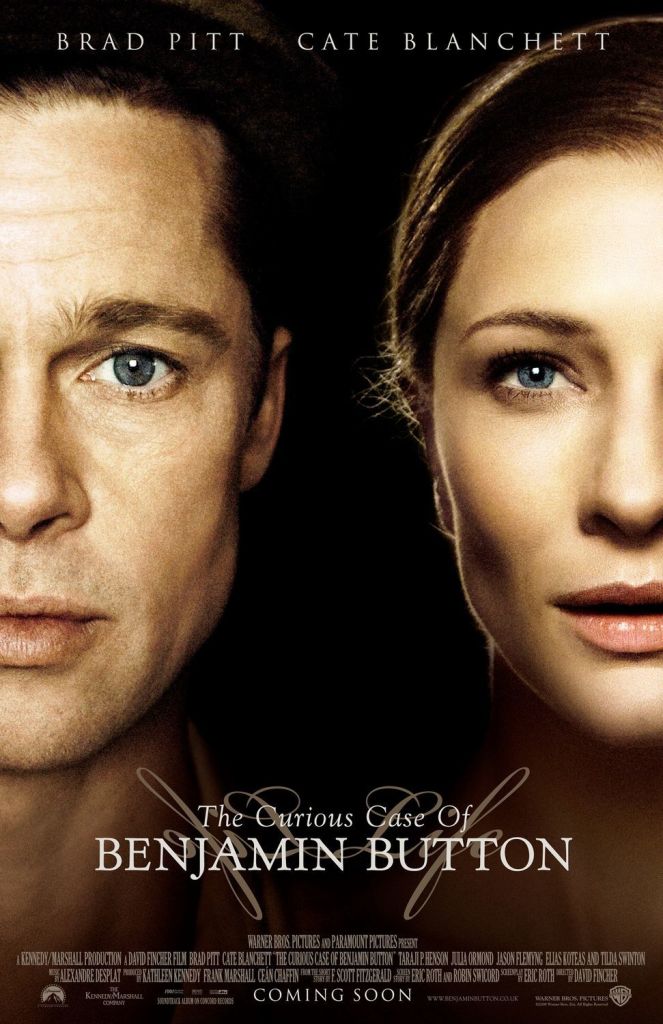
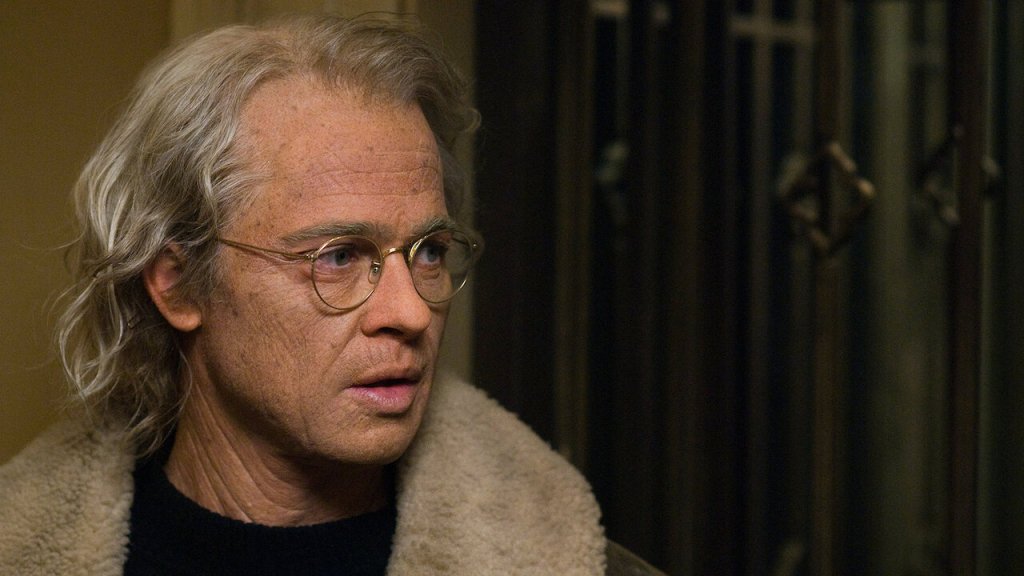
As the eleventh hour of the eleventh day of the eleventh month of 1918 strikes, a baby boy is born. A baby boy unlike any other, with the appearance and illnesses of a very old man. Discarded by his horrified father (Jason Flemyng), the boy is adopted by Queenie (Taraji P Henson), caretaker of a nursing home. There it becomes clear he is growing backwards: the older he gets, the younger he appears. Young Benjamin will eventually grow into Brad Pitt and spend his life watching those around him grow ever older as he grows ever younger. Most joyful, and painful, of all being his childhood friend Daisy (Cate Blanchett), the woman he will love his whole life.

Fincher’s film is a strange beast. A huge technical triumph, that uses cutting edge special effects and astonishing make-up to age – in both directions – Brad Pitt and Cate Blanchett throughout the course of the film (both taken from extreme old age to face-lifted youth), it’s also a whimsical shaggy dog story with elements of a fairy tale that does very little with its astonishing concept other than pepper the script with easily digestible homilies about the purity of the simple life, as if screenwriter Eric Roth was still gorging on the same box of chocolates from which he plucked Forrest Gump.

TCCoBB has a lot going for it: you can see why it was coated with technical Oscars. The ageing and deageing special effects are skilfully and even subtly done, the recreation of a host of periods – from the 1910s to the 1990s and beyond – flawlessly detailed. Claudio Miranda’s photography uses a host of film stocks – from sepia, to scratchy home movie footage style, to luscious technicolour beauty – to reflect time and era constantly. The assemblage of the film has been invested with huge care and attention and, despite its great length, Fincher cuts together (with Kirk Baxter and Angus Wall) an episodic film that manages to keep its momentum and drive going.

Also, it’s a far less vomit-inducing spectacle than the manipulative stylings that coat Forrest Gump. This is in part to Brad Pitt’s restrained and contemplative performance in the lead role: Pitt underplays with surprising effectiveness, capturing Benjamin’s “come what may” attitude and eagerness to go with the flow of the opportunities life offers him. He delivers the narration with an authority just the right side of portentous (for all his rather flat, uninteresting voice) and skilfully manages to invest his body with a physicality quite contrary to his physical appearance (his old body moves with a young man’s casualness, while his younger form carries a slightly world-weary hesitancy).

Benjamin’s mantra becomes one of living your life just as suits you best, not as others expect you to and never worrying about leaving it too late to take chances or make changes. Or at least something like that. To be honest, the weakest part by far of TCCoBB is the lightness and breeziness of its thematic impact. I’ve seen this film three times and, other than a slightly charming shaggy dog story, I’m not quite sure what point it is trying to make – other than straining for a star-cross’d romantic sadness.

This feels like a missed opportunity because there is so much that could be explored here. The film is a nearly unique opportunity to explore how much age – either physical or mental – defines us. A chance to see how our perceptions of a person are shaped as much by what they look like or how they sound, as by who they are. What sort of different perspective on humanity might Benjamin have? How might those around him evaluate, their own lives as they see this him getting younger?
Questions such as these are not touched, the film settling for Benjamin’s whimsical, first-do-no-harm philosophy crossed with a sort of saintly non-interference. The closest it gets to dealing with this is in Benjamin’s friendship and later relationship with Daisy. Old/young Benjamin is told off by Daisy’s grandmother for being a dirty old man, when they first met as children (or old man in his case). Later their lives will drift together and apart, until they form a relationship when both are “the same age” physically. But the film shirks really exploring the implications of this – and outright flees the idea of Benjamin as an increasingly younger man in a romantic relationship with an increasingly older Daisy.

Instead, it settles all too often for easy lessons, comforting parables and charming little vignettes. Benjamin grows up cared for by his adopted mother Queenie (an engaging, if straight forward, performance by Taraji P Henson) – but in the sort of 1920s New Orleans where a racial epithet is never even whispered. He travels the world with Jared Harris’ (rather good) salty sea-dog, falling in love briefly with Tilda Swinton’s lonely champion swimmer turned society wife. He reconnects happily with his father (after all it’s much easier to live a life of free choice if you are the heir to a massive button factory empire). Idyllic 1960s love hits Daisy and Benjamin – a brief shot of a cruise missile taking off is the only reference to those troubled times we see.

It’s all very easy, romantically toned, sweet and easily digestible. Even writing it down highlights how these are charming, eccentrically tinged, vignettes. All events and experiences come together with a vague “lessons learned” impact, as old Benjamin regresses into a teenager, a child and then an infant. But it could have been so much more. A real study of what makes us human, a real look at how events and perspectives define us. It isn’t. Heck, other than watching Pitt travel handsomely around the world on a motorbike in a late montage, we don’t really get much of a sense of how being young/old may impact him.

Which isn’t to say it’s not enjoyable. It all proceeds with a great deal of charm and love, much of which has clearly been invested in every inch of its making. The acting from (and chemistry between) Pitt and Blanchett is very effective. But it feels like a slightly missed opportunity, a film that settles for being a warm, reassuring cuddle when it could have sat you down and helped you understand your life. For all its slight air of importance, it’s a crowd-pleasing, if slightly sentimental, film.

Boiling Point (2021)

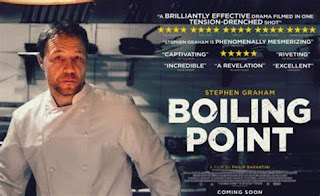
Boiling Point (2021)

A chef struggles to hold it altogether under pressure in this intense one-take drama

Director: Philip Barantini

Cast: Stephen Graham (Andy Jones), Vinette Robinson (Carly), Alice Feetham (Beth), Hannah Walters (Emily), Malachi Kirby (Tony), Izuka Hoyle (Camille), Taz Skylar (Billy), Jason Flemyng (Alastair Skye), Ray Panthaki (Freeman), Lourdes Faberes (Sara Southworth)

Who would want to run a restaurant? Blimey it can be stressful enough to cook for family and friends. Imagine having to prepare meals for hundreds of paying customers. Boiling Point follows – in real time – one single night of service in an over-booked restaurant a few days before Christmas. Chef Andy Jones (Stephen Graham) is feeling the pressure: his wife has left him, he’s let the paperwork slip so much over the past few months that the restaurant’s Food Hygiene Rating has slipped from five stars to three, little mistakes are slipping in and his former partner (and now celebrity chef) Alastair (Jason Flemyng) is sitting out front. It won’t be long before things hit the eponymous Boiling Point.

Expanded from a 22-minute short film made a few years previously, Philip Barantini’s film is shot in one 93-minute continuous take that starts with Andy’s (late) arrival at the restaurant and takes us through a night’s service. There are some films where this one-take device seems like a gimmick – but here it’s an essential part of the success of the film. Following all this in real time, with no single break or cut away, is like taking part in a giant panic attack. I can genuinely think of few films that were as tense as this one. There is a sweaty, edge-of-the-seat panic about the entire film that means you spend its entire runtime biting your fingernails, waiting for something to go wrong.

And there are so many potential disasters teed up. It’s a sign of the film’s intelligent, skilfully swift construction that all of these are established with minimum dialogue – and not all of them lead to disaster – but in short order we see not only the tensions among the staff (the disaffected junior chefs, the under-pressure waiting staff), but also a bullying Dad intent on making trouble on table 7, a drunken gaggle of ladies on a night out, a group of self-proclaimed social media influencers demanding off-the-menu treatment, a woman with a nut allergy that’s not correctly recorded on the ordering system, and that celebrity chef and the food critic he’s bought with him for dinner.

All this is of course bubbling up and hammering into an already deeply-under-pressure Andy, played with great skill by Stephen Graham, who has mastered these terminally weak alpha-males. Andy is the unknowing root cause of many of the problems. The restaurant’s health rating has dropped solely (as explained by a patronising but well-meaning health inspector, while Andy sits through the conversation like a sullen child who’s been caught cheating on his homework) because his lack of essential record keeping has made it impossible for it to be scored higher. Nevertheless, Andy lashes out at his junior chefs for the minor infractions also recorded, as if they were to blame.

Grasping a water bottle that he suspiciously swigs from almost non-stop, Andy has ceased leading in the kitchen: stock orders are not made, junior staff are either unsupported or allowed to shirk their duties (a kitchen hand is delivering the bare minimum, spending most of the shift on the phone or scoring drugs in the car park). Andy barely prepares any food and largely avoids any communication with his game-faced-but-deeply-out-of-her-depth restaurant manager Beth (an all-business Alice Feetham, trying to cover a rising sense of panic and a desperate need to be liked).

Kitchen command has effectively shifted to his deputy chef Carly, superbly played by Vinette Robinson. Calm, authoritative and supportive of the junior staff, Carly is just about holding the operation together by her fingertips, but even she has clearly had enough. There is a scintillating, hands-over-the-mouth dressing down she hands out to Beth – who she furiously points out doesn’t even realise all the things she doesn’t know – which feels like months of stress and frustration bursting out with carefully thought-out, inexorable, calm fury.

Just as pissed off is meat specialist Freeman (a brilliantly surly and resentful Ray Panthaki) who has had enough of cleaning up after Andy’s poor preparation and Beth’s greater interest in social media promotion rather than running a restaurant. The kitchen is full of careful character stories that swirl around the edges of the story, as the camera moves seamlessly from location to location. There is a beautifully done early scene between Hannah Walter’s motherly dessert chef and her young apprentice that literally brought tears to my eyes for its warmth and humanity.

Out front we wait for the inevitable cataclysm to take place. There to see it is Jason Flemyng’s smugly passive aggressive Alastair, mouthing platitudes about how he’s there to support Andy, while taking credit for his menu, mocking the set-up and pontificating about how he would improve every single dish. But even he is at breaking point, as later developments show.

All of this is built up by the single-take effect. Whenever the camera goes somewhere, we know that no second will be wasted and we are set to see something potentially dramatic. We begin to dread every time a young black teenage waitress heads back to table 7, where the customer doesn’t want her touching his glass and plates. Every return to the kitchen brings the sweat of wondering if a fatal mistake will take place. With the camera weaving around, following the action and moving seamlessly (but with obviously a huge amount of forethought) from place to place, this is brilliantly shot film where the one-take effect adds immeasurably to the pressure cooker effect.

Despite this, the final ending doesn’t quite land with the impact it should. But you can forgive it a great deal for the tense, gripping ride you follow to get there. The cast are all faultless – and often even more than that – and the direction is spot-on. This film is an unsung triumph – it should get a lot more recognition.

Ironclad (2011)

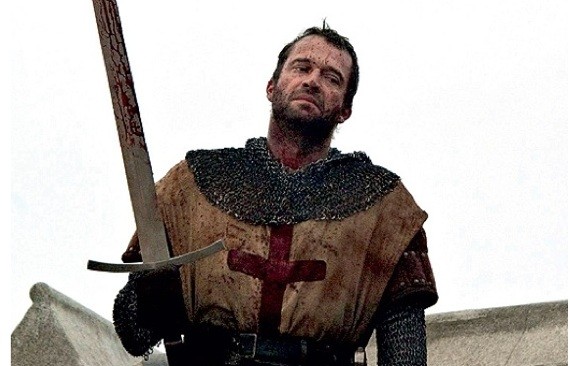
James Purefoy carries a big sword in nonsense medieval blood bath Ironclad

Director: Jonathan English

Cast: James Purefoy (Thomas Marshall), Brian Cox (William d’Aubigny), Derek Jacobi (Reginald de Cornhill), Kate Mara (Lady Isabel), Paul Giamatti (King John), Charles Dance (Archbishop Stephen Langton), Jason Flemyng (Becket), Jamie Foreman (Jedediah Coteral), Mackenzie Crook (Daniel Marks), Rhys Parry Jones (Wulfstan), Aneurin Barnard (Guy), Vladimir Kulich (Tiberius)

Let’s just take a moment to enjoy the fact that the most expensive film ever made entirely in Wales was directed by a guy called English. After that, you can enjoy the guilty-pleasure hack and blood nonsense of this sort of proto-Game of Thrones,which bears almost as much resemblance to British history as George RR Martin’s souped up re-tread with extra dragons.

Anyway, King John (Paul Giamatti) has signed Magna Carta – as always that document which gave the barons some say in the government is here reimagined as some sort of manifesto for a socialist revolution – but now Rome has told John that he doesn’t need to stick to it after all. So John hires (honestly) a load of Viking warriors to take out his enemies. Yes that is just as silly as it sounds. Before we know it, the barons need to take control of Rochester Castle, a stronghold which is apparently the key to the south of England. So Baron William d’Aubigny (Brian Cox) puts together a “Dirty Dozen” (well Dirty Half Dozen, it’s a British budget after all) to defend the castle, led by Templar knight Thomas Marshall (James Purefoy). Let the siege begin!

If that doesn’t give you an idea of the way the film mixes and matches parts of British history into some sort of heady brew, I don’t know what will. We got King John! We got Magna Carta! We got Templar knights! We got Vikings! All of this is frozen into a hyperviolent mixture of historical epic and “men on a mission” war film, with added limbs flying off left, right and centre. Most of it is delivered at an absurdly energised pace. At least all involved seem aware that they are making a stoopid B movie, rather than some sort of genuine historical epic.

Criticising the history of the supposed historical epic seems completely superfluous, so instead sit back and enjoy the skill with which Jonathan English apes Neil Marshall in his blood letting and imaginative slaughter. Sure, he hasn’t got Marshall’s narrative skill or his ability to carve human interest out of even the most basic cardboard characters. But he still manages to present what we see with enough sense of action and adventure. Ridiculous as it might feel that a tiny group of men holds off an entire legion of King John’s troops, you sort of go with it as the film is shot with enough sense of ragged viciousness that you don’t notice the gaps in the tiny budget (less than a single episode of Game of Thrones). 

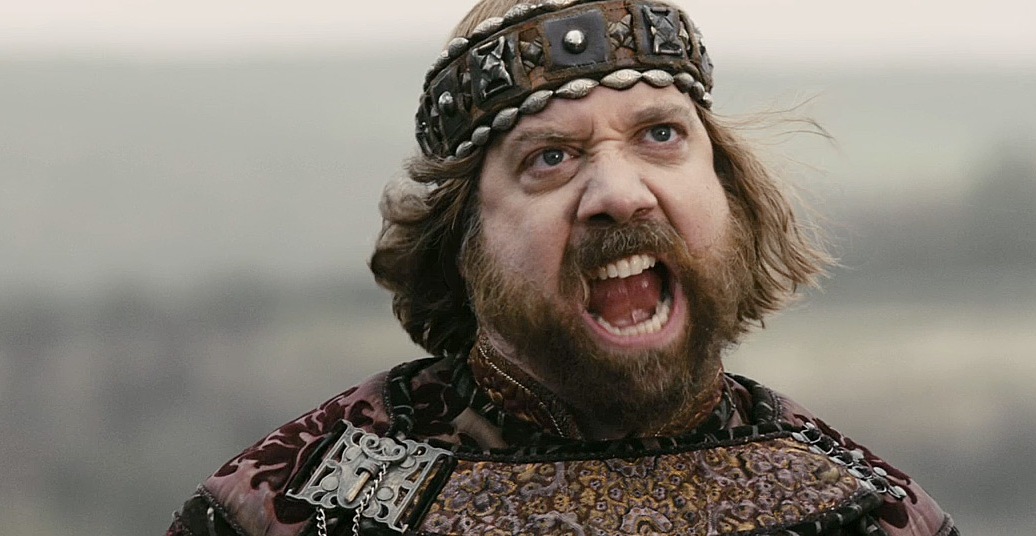
The actors all know they are in something rather silly as well. It’s a bizarre mixture of people, from Hollywood star character actors to B-movie stalwarts to Brit TV stars to slumming classical actors. James Purefoy grounds the stuff with his usual commitment and charisma. Just as well he does as Paul Giamatti clearly rocks up in the spirit of a lark, hammily overacting to such a ludicrous degree that he sounds like John Adams on a bad acid trip. It’s a surprise they don’t turn him on the walls of Rochester Castle and let him chew through the defences. Between these two hardly anyone else gets a look in, although Brian Cox does well as the brave leader of the castle who suffers a particularly brutal death involving mutilation and imaginative use of a catapult. 

Some typically subtle restrained work from Paul Giamatti

There are some impressive set pieces and some very stirring bits of head mashing, limb slicing violence but the overall plot is completely bog standard, as if with all that investment they either didn’t have time to put a story together or felt that they needed to make something that would appeal as much as possible to the lowest common denominator in order to recoup the costs. But at least there is a nice sense of growing comradeship between this hardy gang fighting against the odds and the film gets some sense of honour and duty being causes worth dying for against tyrants. I mean, it’s not there in spades, but it’s there.

And if you like this sort of B movie hack and dash stuff you’ll probably actually rather like this. Heck I’ve seen it twice, and I found the second viewing actually rather good fun in particular, especially as I knew going into it the entire film was an absolutely absurd pile of nonsense designed to just let you watch blood spray across the screen and heads depart bodies. Roll with it – put your critical facilities on hold and forget the history – and you will rather enjoy its earnest B movie antics.

Sunshine on Leith (2013)


Peter Mullan hits the right notes in crowd-pleaser Sunshine on Leith

Director: Dexter Fletcher

Cast: George MacKay (Davy Henshaw), Kevin Guthrie (Ally), Freya Mavor (Liz Henshaw), Antonia Thomas (Yvonne), Jane Horrocks (Jean Henshaw), Peter Mullan (Rab Henshaw), Jason Flemyng (Harry Harper), Sara Vickers (Eilidh)

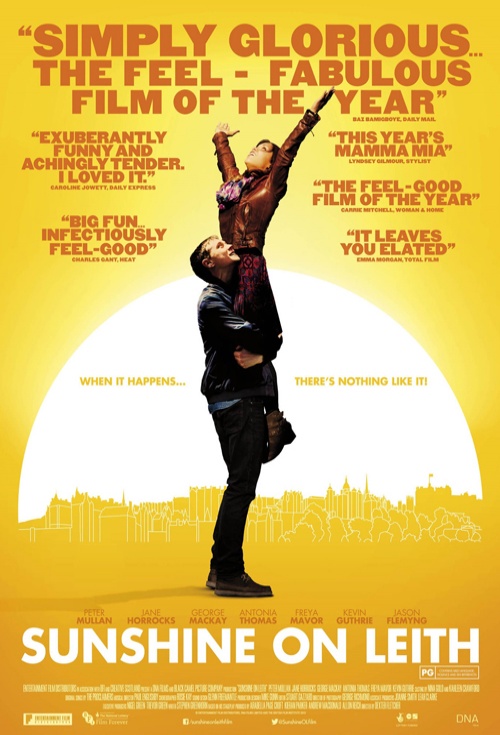
Sunshine on Leith is a jukebox musical that really works, because its story feels natural, its characters are engaging and the songs don’t feel too shoehorned in (even if, of course, we have a character called Jean to allow Oh Jean to be sung, and another moving to Florida which will of course require a Letter from America). It’s a really good reminder of how many really toe-tappingly, hummable, great songs The Proclaimers came up with. It’s not a masterpiece of course – but as a piece of solid, competent, crowd-pleasing cinema it’s hard to beat. 

The plot follows two soldiers returning from Afghanistan. Davy (George MacKay) is keen to start a new life, Ally (Kevin Guthrie) wants to marry Davy’s nurse sister Liz (Freya Mavor). Davy founds himself drawn to Liz’s colleague Yvonne (Antonia Thomas), while Liz struggles to reconcile her love for Ally with her desire to spread her wings and see more of the world. Meanwhile Davy and Liz’s father Rab (Peter Mullan) discovers, on the eve of his 25th wedding anniversary to Jean (Jane Horrocks), that a brief affair in his early marriage led to the birth of a daughter (Sara Vickers) he never knew he had. Love and family problems play out to a string of Proclaimers hits.

Sweeping camera-work from Dexter Fletcher helps to create a romantic, vibrant image of Edinburgh – you’ll want to book your tickets as soon as the film ends, this is such a good advert for the city – and he draws some wonderful performances from the cast, all of whom I suspect had the time of their lives making this film. How lovely is it to see Peter Mullan moving away from gruff hardmen, to play a man as sensitive and humane as Rab – and also to hear him croon with feeling some top songs? He makes a superb partnership with Jane Horrocks, who not surprisingly is the most accomplished singer, and who channels her natural bubbly mumsiness into a genuinely moving portrayal of a wife dealing with completely unexpected betrayal.

The film keeps the humanity of its characters very much at the centre, never over-complicating the plot or overloading us with extraneous detail or drama. The quietly tense opening sequence of Davy and Ally on tour in Afghanistan (with a rendition of Sky Takes the Soul) swiftly helps us invest in their safety – and sets us up to really feel their release once they return to the safety of civilian life. Nothing hugely unexpected happens in the film at all – it can be pretty accurately predicted from the start – but the whole thing is told with genuine warmth and feeling.

There are some stand-out musical sequences. Over and Done With, told as a pub story-telling session, works really well – it’s wonderful up-beat, vibrant sequence. Jason Flemyng has a great dance cameo during a fun-filled number set in the Scottish National Gallery (Should Have Been Loved). Davy and Ally dance thrillingly down the street to I’m On My Way as they celebrate their discharge. The final number – it’s not a surprise – sees what seems like most of Edinburgh corralled into a massive rendition of a song about walking a very long distance…

George MacKay demonstrates he’s a pretty decent song and dance man – and he also has the every-day ordinariness that makes him a perfect audience surrogate. His chemistry with Antonia Thomas is also fantastic. As the secondary couple, Freya Mavor is headturningly watchable as Liz, while Kevin Guthrie gives a nice air of bemused immaturity to Ally.

Sunshine on Leithis a brilliant crowd-pleaser, and has clearly been made with love and affection for the material and the songs, which seeps off the screen. It’s a perfect advert for everything in it. I would say that I am not sure Fletcher is the perfect film director – he’s afraid to let the camera stand still for too long in the larger dance set-pieces, which means we lose the impact of some of these numbers (or the chance to really appreciate the choreography). But he totally gets the tone of the film, and delivers that in spades.

It’s much pretty guaranteed that you’ll laugh, you’ll cry, you’ll fall in love. And you’ll want to watch it over again.

Solomon Kane (2009)


James Purefoy excels in cult-classic in the making Solomon Kane

Director: Michael J Bassett

Cast: James Purefoy (Solomon Kane), Max von Sydow (Josiah Kane), Pete Postlethwaite (William Crowthorn), Alice Krige (Katherine Crowthorn), Rachel Hurd-Wood (Meredith Crowthorn), Jason Flemyng (Malachi), Mackenzie Crook (Father Michael)

Solomon Kane was a pulp-magazine character from the 1920s. I’d never heard of him before – I imagine many others haven’t either – so bringing a film about him to the screen was always going to be a labour of love. That’s certainly what this film is. 

In 1600, Solomon Kane (James Purefoy) is a ruthless mercenary, but is confronted by a demon who tells him his soul is forfeit to the Devil. Horrified, Kane flees to sanctuary in a monastery, forsaking violence and devoting himself to God. After being expelled because the abbot has a dream, he encounters a Puritan family, the Crowthorns, and travels with them. Kane is deeply drawn to the Crowthorns – and when they are ambushed, the family killed, and daughter Meredith (Rachael Hurd-Wood) kidnapped by the servants of the sorcerer Malachi (Jason Flemyng), Kane swears to revenge the Crowthorns and rescue Meredith.

There’s something quite sweet and charming about Solomon Kane. It’s an old fashioned B-movie with a winning style. Is it going to rock any worlds? Probably not, but it’s got plenty of swagger and it makes a small budget go a long way. Bassett’s influences are pretty clear – everything from Witchfinder General to Lord of the Rings – but he shoots the film with a commendable energy. The visual flair is impressive, and successfully creates the feel of an England halfway between civilisation and the middle ages. Bassett also knows how to shoot an action scene, and the film is stuffed with fantastic sword fights that hit the right balance between brutality and dynamism.

Bassett also finds a fair amount of emotional heft in the story. The decision to focus a large chunk of the opening 45 minutes on Kane’s guilt and his attempts to make amends, make him a character we end up caring about. The “good family that wins our hero’s heart” cliché is exactly that, but it works very well here as Bassett takes his time and lets Kane’s bond with the Crowthorn family grow organically. All this patient establishment of Kane’s personality really pays off during the action of the second half.

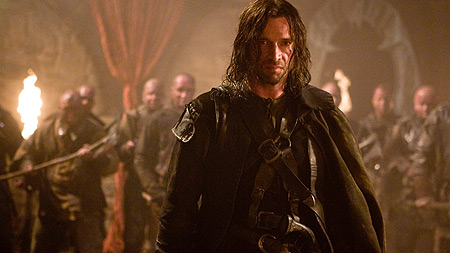
It’s also helped a great deal by James Purefoy’s committed performance in the lead role. Purefoy has long since been a favourite of mine, who never really got the breaks to become a bigger star. His performance has the physicality and charisma, but Purefoy also adds in a Shakespearean depth to create a man desperate for redemption, carrying a pained heart very close to the surface. He dominates the whole film, setting the tone; and I suspect his dedicated performance encouraged fine work from the actors around him, despite almost all the other roles being little more than cameos. There are blockbusters whose leading actors are incapable of holding the screen as well as Purefoy does here.

Bassett’s B-movie spectacle is not perfect. The eventual explanation of why the Devil wants Kane’s soul is inexcusably garbled. Jason Flemyng is miscast as the demonic sorcerer Malachi, and his final confrontation with Kane lacks real impact (largely because Malachi has so little presence throughout the film) and devolves into a face-off with a dull special effects monster that looks rather like Megatron in the live-action Transformers films. There is a smaller-scale, personal ending in this film, but it gets crushed under the foot of the special effects. It’s a shame that a large portion of this film’s budget probably went on this.

Solomon Kane is structured, and plays, like a B-movie – but it’s proud of that. Its low budget demanded inventiveness and dedication from the cast and crew, all of whom delivered. The grimy design of the world is perfect, the story creates a good combination of action and emotion. Its story may be pretty clichéd, but it’s presented with great gusto – and has a terrific leading performance from a heavily under-rated actor in James Purefoy. More people deserve to see this – if this isn’t a cult classic in the making, I’m not sure what is.

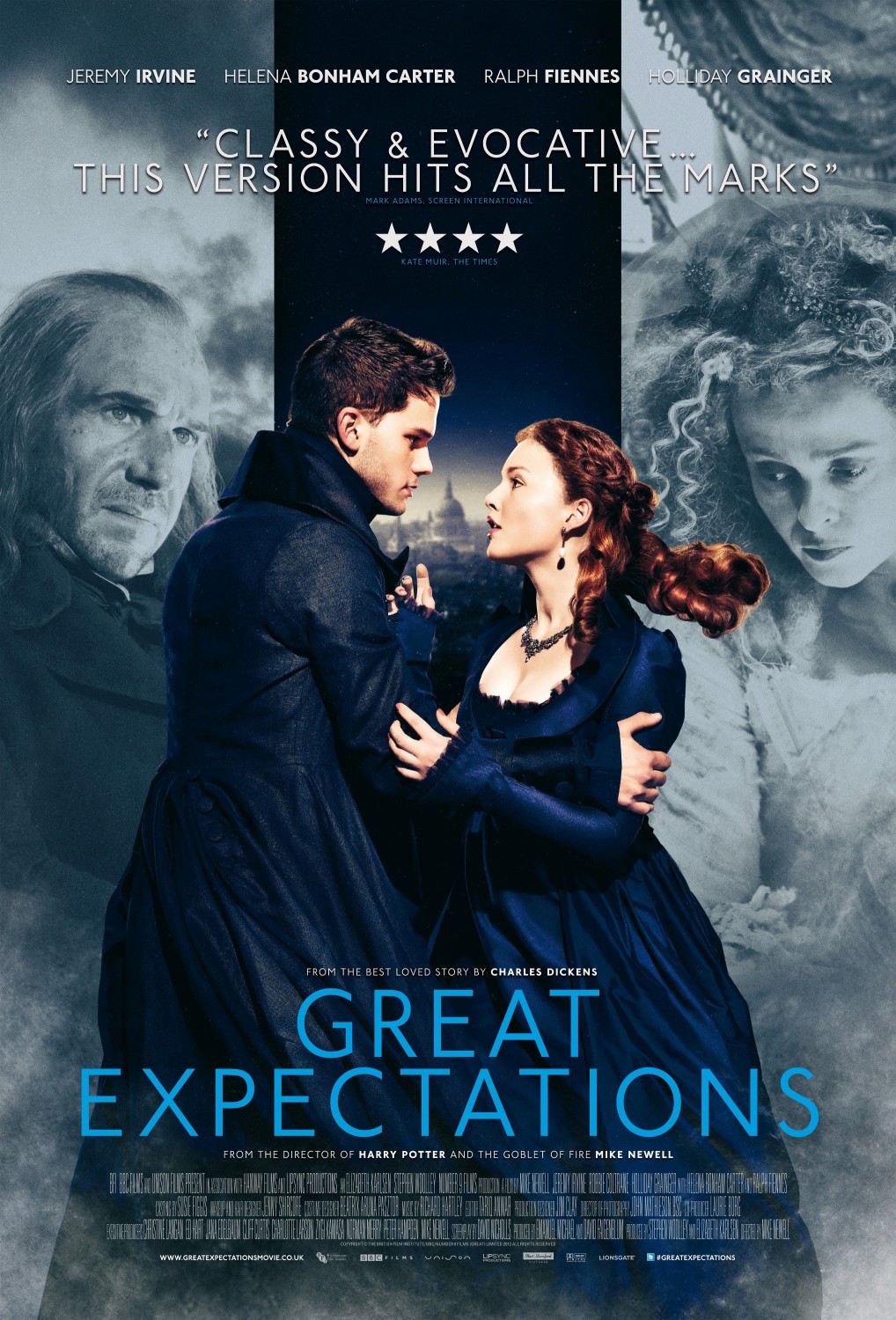
Great Expectations (2012)


Ralph Fiennes is ‘Ungry

Director: Mike Newell

Cast: Jeremy Irvine (Pip), Holliday Grainger (Estella), Helena Bonham-Carter (Miss Havisham), Ralph Fiennes (Magwitch), Robbie Coltrane (Jaggers), Jason Flemyng (Joe Gargery), Ewen Bremner (Wemmick), Sally Hawkins (Mrs. Joe), David Walliams (Pumblechook), Tamzin Outhwaite (Molly), Ben Lloyd-Hughes (Bentley Drummle)

There is one major problem with Mike Newell and screenwriter David Nicholl’s faithful adaptation of Great Expectations, one of Charles Dickens’ best loved novels. It’s such a faithful adaptation that it largely fails to say or do anything unique or interesting with the actual source material itself. Thus it basically joins the parade of adaptations of this novel on film, struggling to define itself from the competition.

For those who don’t know the story: young Pip has two defining encounters in his childhood. One is with escaped convict Magwitch (Ralph Fiennes), to whom he provides some help; the other with eccentric, secluded spinster Miss Havisham (Helena Bonham-Carter), who brings him in as a playfellow for her ward, Estella. As a young man, Pip (Jeremy Irvine) finds himself coming into “great expectations” from a mysterious benefactor, and moves to London where he encounters Estella (Holliday Grainger) once more.

Nicholl’s screenplay is a careful ticking off of all the events you would expect to see from either the book or previous versions: “I’m hungry boy”? Check. Mrs Joe? Check. Boxing with young Herbert Pocket? Check. Jaggers and Molly? Check. Wemmick, the Aged P and the cannon? Check. Bentley Drummle? Check. Joe Gargery in London? Check. Fire? Check. And so on, and so on. What’s really missing from the film is any sense of identity, any sense of a story it wishes to tell, or angle it wants to take on the source material. Instead it’s a picture book accompaniment to the novel. A beautifully filmed one, I will say (John Mathieson’s photography is lavishly good, and brilliantly captures the wide-open spaciousness of Kent compared to the dank, claustrophobic confines of London) but still a picture book.

It’s also decently acted throughout, with Jason Flemyng a stand-out as a decent, kind and loveable Joe (a part I think it’s almost impossible to fail in). Robbie Coltrane makes Jaggers a creepy charmer. Helena Bonham-Carter is, as one reviewer said, “almost too perfect casting” as Miss Havisham – her performance is a bit too familiar as a remix of her parts in Tim Burton films and Bellatrix Lastrange – but she is still very good in this role.

The closest the film gets to putting a twist on the novel is to front and centre the love-story angle between Pip and Estella. Even this, though, is not completely successful, largely due to time. Irvine and Grainger are fine performers (Grainger in particular does an awful lot with what can’t be more than 10-15 minutes of screentime), but adult Pip and Estella don’t have a scene together until halfway through the film. The film also is reluctant to lose anything major from the Gargery or Magwitch plotlines, meaning these get equal weighting with the Estella scenes. It’s possibly the only area where this adaptation is weaker than the BBC adaptation of a few years later, which effectively repositioned the story with a focus on father-son relationships, adding greater prominence to the Pip-Gargery-Magwitch relationships.

Mentioning that BBC adaptation makes a key point about the lack of individuality this production has. Casting my mind back to it, I found it very hard to remember or distinguish the differences between the two – both looked very similar, took similar decisions and featured similar casts. In fact, it became very hard to remember who was in what – an internet search for images for this film throws up plenty of images of Douglas Booth from the mini-series. It’s a small point, but I think captures the lack of uniqueness about this film.

I’ve been very hard on this film, which I feel a bit bad about as it is a very watchable and loyal adaptation and a perfect entry point for Dickens. It also has, in Ralph Fiennes, one superb performance. Of all the versions of Magwitch on screen, this surely has to be the best. Fiennes has the physicality and danger the role needs, but he also has an ethereal, almost child-like quality to him. You can believe this is a dangerous man, but also understand how he can be so passive and easily led. Fiennes’ Magwich takes a delight in the seeing the pleasures of others and has a sweet dedication to his own codes of loyalty. It’s a terrific performance – and actually emerges as the one unique and defining thing the film has to offer.