
Tag: Jean-Marc Vallée

Wild (2014)

Wild (2014)

Reese Witherspoon finds herself in a film that is more than just Eat, Pray, Hike

Director: Jean-Marc Vallée

Cast: Reese Witherspoon (Cheryl Strayed), Laura Dern (“Bobbie” Grey), Thomas Sadoski (Paul), Michel Huisman (Jonathan), Gaby Hoffmann (Aimee), Kevin Rankin (Greg), W. Earl Brown (Frank), Mo McRae (Jimmy Carter), Keene McRae (Leif)
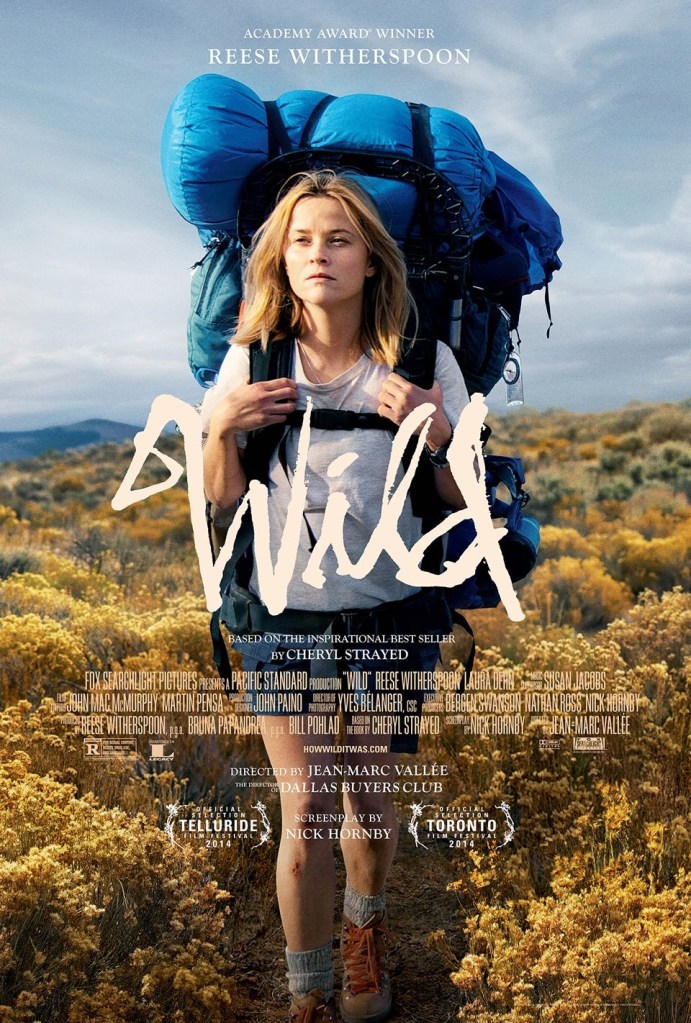
Ever thought tackling a 1,100 mile hike would be a fun adventure? The opening of Wild might change your mind. Gasp as Reese Witherspoon rips out a bleeding toe nail and then throws her ill-fitting hiking boots down a mountain, screaming abuse at them all the way! Want to grab that back-pack now?

In this adaptation of a memoir about loss and self-discovery, Witherspoon plays Cheryl Strayed who (fairly impulsively) decided to hike the Pacific Crest Trail in 1995 to try to find in herself the woman her late mother “Bobbie” (Laura Dern) believed she could be. After Bobbie’s early death from cancer at 45, Cheryl had collapsed – ruining her marriage to Paul (Thomas Sadoski) in an orgy of anonymous sex and heroin addiction. Now she wants to make a new start.

Adapted by Nick Hornby with a good deal of skill and emotional intelligence, Jean-Marc Vallée’s film is an interesting character study via the survivalist genre, mixed with a touching exploration of grief, loss and self-loathing. After throwing us into Day 26 with that bloodied toe-nail, the film rolls back to follow Cheryl’s walk: intercut with powerful memories of her relationship with her mother, each memory activated by different encounters along the way and bubbling into her mind along with a distinctive soundtrack (most especially Simon and Garfunkal’s El Condor Pasa) that reflects the music that reminds Cheryl of her mother.

It could have been a sentimental finding-yourself movie – Eat, Pray, Hike anyone? (I also rather like Reese Witherspoon Finds Herself in a Backpack) – and I won’t lie, there are elements of that. But maybe it caught me in the right mood, maybe because I’ve always fancied testing myself with an epic hike, but I actually found it intelligent, sensitive and just the right side of sentimental.

Wild carefully avoids simple points. It’s a film not about a long journey leading to revelation, but a journey that helps you accept all your past decisions, right or wrong. There is a pointed lack of emotional breakdowns, tearful confessions or flare ups of self-anger and revelation. Instead, it’s about the long grind of starting an internal journey towards contentment. Because trekking 1,100 miles is the long haul: there ain’t any easy ways out or short cuts on this trek.

The film’s principal asset is Reese Witherspoon. Also serving as producer, Witherspoon is in almost every single frame and delivers an under-played but very emotionally satisfying performance. She plays Cheryl as quietly determined, having already hit rock bottom and knowing every step she takes from now is upwards. She meets adversity – aside from the odd flash of frustration – with a stoic will and finds an increasing spiritual freedom in the wild that serves as an escape from the horrific wilderness of her self-destructive years. But she never lets us forget the pain that underpins this journey for Cheryl. It’s a very impressive performance.

The reminders of that pain are distributed through the film, which unflinchingly chronicles Cheryl’s escape from grief in the arms of a parade of sleazy men, anonymous hotel sex and (finally) shooting up heroin on the streets of San Francisco. It ends her marriage to Paul – but not their friendship, in the sort of adult emotional reaction you hardly ever see in a movie. Paul – played with warmth by Thomas Sadoski – may not be able to continue his marriage after discovering his wife’s parade of trust-breaking, but it doesn’t stop him from helping a person he loves who is in need.

All of this is nicely counterpointed by the hike itself. Naturally it’s all slightly episodic, as Cheryl moves from location to location, but Hornby’s script makes these vignettes really work. Vallée’s direction also does a fantastic job of intercutting between the long walk of 1995, and Cheryl’s memories of both her mother (played with a vibrancy that makes a huge impression from limited screen time by an Oscar-nominated Laura Dern) and her own emotional collapse after her death.

I also appreciated that Wild doesn’t shirk from showing the vulnerability of an attractive young woman hiking alone. Some potential predators are revealed to be the opposite: others are exactly what they appear to be. But not every encounter is one of potential danger: far from it.

Cheryl is met time and again by people who only appear to support, share their expertise and help her in her quest. At an early station, a man talks her through the huge amount of equipment she’s bought and advises what she can leave behind (Vallée opens the film with the strenuous effort, including rolling around on the floor, Cheryl has to go through just to put this backpack on). She finds a touch of romance with a handsome musician (a charming Michel Huisman). There’s also comedy, most of all with Cheryl’s encounter with a self-important journalist (Mo McRae), who won’t be convinced that she isn’t a female hobo.

This is all packaged together in a quiet, un-pretentious way that culminates in a thought-provoking monologue about the value of self-acceptance and putting aside regrets. Others would have layered on the sentiment, but here the balance is just right. With Witherspoon at the top of her game, Wild is a well-made and involving road trip that also makes you think.

The Young Victoria (2009)

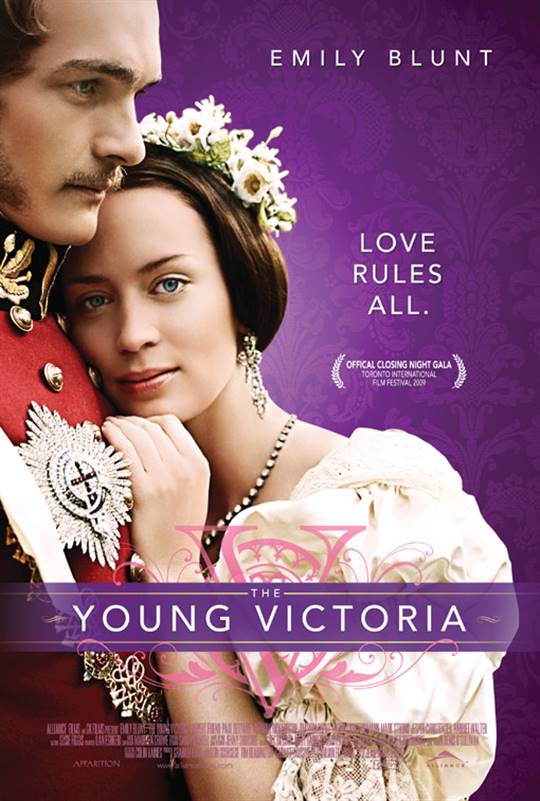
Emily Blunt and Rupert Friend play the royal couple in the cozy The Young Victoria

Director: Jean-Marc Vallée

Cast: Emily Blunt (Queen Victoria), Rupert Friend (Prince Albert), Paul Bettany (Lord Melbourne), Miranda Richardson (Duchess of Kent), Mark Strong (Sir John Conroy), Jim Broadbent (King William IV), Harriet Walter (Queen Adelaide), Thomas Kretschmann (King Leopold), Jesper Christensen (Baron Stockmar), Jeanette Hain (Baroness Lehzen), Julian Glover (Lord Wellington), Michael Maloney (Sir Robert Peel), Michel Huisman (Prince Ernest), Rachael Stirling (Duchess of Sutherland)

Now ITV’s Victoria exists, it’s a bit strange to go back and watch The Young Victoria. With the love today of long-form drama, and the time it can invest in things, it’s funny to see what the drama took almost 8 hours to do being crammed into an hour and a half here. But saying that, The Young Victoria is still an entertaining, luscious viewing experience which, while it has some strange ideas about certain events, is the sort of relaxing Sunday afternoon viewing that will take you out of yourself.

After the death of William IV (a slightly overripe Jim Broadbent), Victoria (Emily Blunt) is elevated to the throne. Finally able to shed the control of her mother’s (Miranda Richardson) domineering secretary Sir John Conway (Mark Strong), Victoria is determined to steer her own course. But she is surrounded by competing influences, not least from the charming arch-politician Lord Melbourne (Paul Bettany). King Leopold of Belgium (Thomas Kretschmann) dispatches his nephew Prince Albert (Rupert Friend) to England with the express interest of marrying Victoria and controlling her – but Albert and Victoria find themselves as kindred spirits, supporting each other to rule.

The Young Victoria is the epitome of prestige costume dramas. It looks fantastic, the cinematography is ravishing, the production and costume design exquisite. It’s pretty clear what the producers thought would sell the picture abroad. The royal regalia is pushed very much to the fore, and we get some wonderfully sweeping scenes, not least an impressively large-scale coronation. The soundtrack brilliantly riffs on Handel, and Julian Fellowes’ script mixes period regal style with a sweeping feeling of romance between Victoria and Albert.

The film actually does a very good job of repositioning Victoria as a young woman, and gives her a strong quality of self-determination and a desire to be herself in a man’s world. It’s really helped in this by the combination of imperial strength, girlish wilfulness and sharp intelligence Emily Blunt brings to the role. Blunt and the film also aren’t afraid to show that, however much Victoria had guts and determination, she was also quite a headstrong woman not above making emotionally led mistaken decisions. In fact, much of the drama spins out of Victoria learning to try and put these youthful crushes and prejudices aside.

Having said that, it’s interesting that the successful conclusion of the film centres on Victoria accepting that she needs the help of Albert to run the kingdom, and that she needs to remove competing influences for her affection – Melbourne and Lehzen – to focus her affection and loyalty on him. The film frames this as a winning romance and a successful partnership (which it was) – but it’s also vaguely creepy if you think about it. Mind you, since all the affectionate influences on Victoria are implied by the script to be at least partly motivated by self-interest, with the possible exception (eventually) of Albert, it manages to suggest this was for the best.

Albert’s background gets some interesting exploration here. He’s very much presented at first as the tool of Leopold as a means of controlling British politics. But he is far too independent, smart and noble to ever be the means of manipulation. Friend is very good here – his performance is quiet, authoritative but also heartfelt. Fellowes guilds the lily a bit to show his devotion by having Albert shot by a would-be assassin late-on in the film. Historically the assassin’s pistol wasn’t loaded, and Albert didn’t get shot (though Fellowes protests Albert didput himself in front of Victoria and that this intent is what’s important, not whether he was shot or not) but the moment does work – it gives the drama a boost and it’s undeniably moving.

While Albert is presented overwhelmingly sympathetically, interestingly Lord Melbourne gets quite a kicking. Paul Bettany is presented far more as a rival love interest than the sort of father-figure Melbourne was in real life (Bettany is probably 20 years younger than the real Prime Minister). Melbourne is shown as cynical, controlling, manipulative and overwhelmingly motivated by self-interest (a few more pushes and he would virtually become the film’s villain). He’s constantly contrasted negatively with Michael Maloney’s upright, honest Sir Robert Peel (one of my favourite statesmen of the 19th century so at least I’m pleased) – and his relationship with Victoria is one of self-promotion, which seems odd seeing as historically the two of them were so close. 

The film introduces other villains for us to hiss at. Kretschmann and Christensen do a good job as arch political schemers. Our real villain though is Mark Strong, who does a great job of scowling, controlling nastiness as the failed-bully Sir John Conroy. Strong’s performance works so well because he makes it clear that Conroy feels that his “Kensington System” (an attempt to manipulate and cow Princess Victoria into being a submissive puppet) is genuinely in her best interest, and that he genuinely cares for her. His partnership with Miranda Richardson as Victoria’s near-love-struck mother works very well.

The Young Victoriathrows in enough interesting character beats like this for it to really work as an enjoyable afternoon period-drama. With some great performances – Emily Blunt carries the movie brilliantly – and while some of the historical characterisation is a bit off, and other moments feel a little too chocolate box it’s a very entertaining, undemanding view., it’s great fun. The hardcore Victorian costume-drama fans will probably prefer Victoriafor the same story in more depth – but this film does it with great sweep (and doesn’t cram in Victoria’s stupid below-stairs plotlines!).