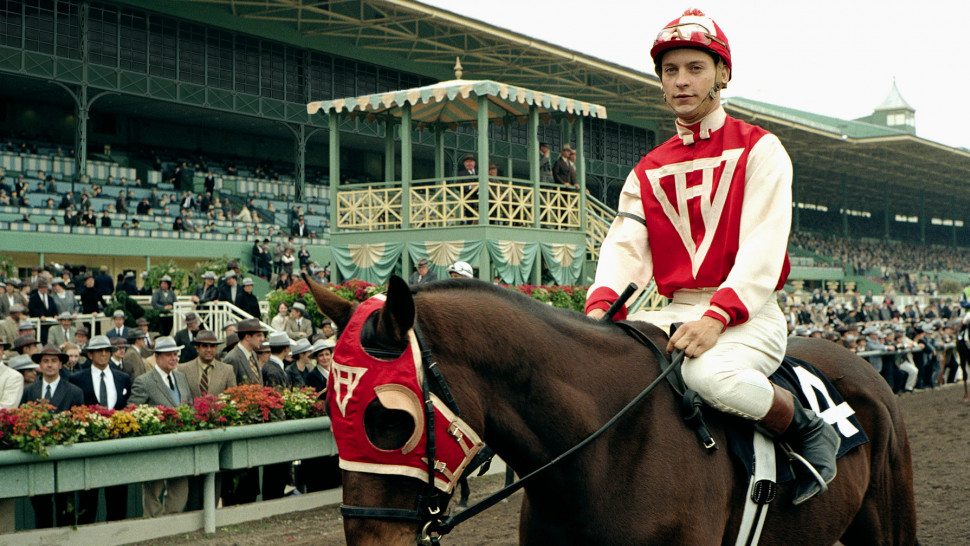
Tag: Jeff Bridges

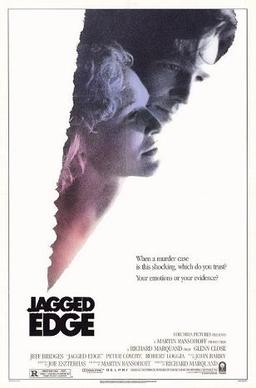
Jagged Edge (1985)

Jagged Edge (1985)

Exploitation and barmy courtroom and steamy romantic couplings abound in this silly but fun mystery

Director: Richard Marquand

Cast: Glenn Close (Teddy Barnes), Jeff Bridges (Jack Forrester), Peter Coyote (DA Thomas Krasny), Robert Loggia (Sam Ransom), John Dehner (Judge Carrigan), Karen Austin (Julie Jenson), Guy Byd (Matthew Barnes), Marshall Colt (Bobby Slade), Louis Giambalvo (Fabrizi), Lance Henricksen (Frank Martin), Leigh Taylor Young (Virginia Howell)

Teddy Barnes (Glenn Close) is done with criminal law after her time at the DA’s office, working under ambitious, unscrupulous Thomas Krasny (Peter Coyote). But she’s dragged back in to defend handsome newspaper editor Jack Forrester (Jeff Bridges), accused of brutally murdering his wife and her maid (for the money naturally). Teddy takes the case and soon crosses that line marked “personally involved” as she and Jack swiftly move from riding horses to riding each other. But what if Jack is really guilty after all?

Jagged Edge is a big, silly courtroom drama, a sort of erotic thriller B-movie that got some serious notice because two critically-acclaimed, three-time Oscar nominated actors fleshed out the cast. Written by Joe Eszterhase (for whom this was the springboard for a career of sex-filled, murder-and-legal dramas that would culminate, via Basic Instinct, with Striptease), Jagged Edge is full of pulpy, super-tough dialogue that its cast loves to chew around their mouths and spit out. It’s got the sort of courtroom dynamics that would see a case thrown out in minutes and would make its lead character unemployable in seconds. It’s daft, dodgy and strangely good fun for all that.

What it is not, really, is either any good or in any way surprising. One look at rugged, casually handsome Jeff Bridges and sharp-suited, charming-but-whipper-smart Glenn Close and you just know its only a matter of time before they end up in bed together. This leads to all sorts of unprofessional sex-capades and legal decisions, not to mention the sort of pathetically readable poker-faces in courtrooms that I would definitely not want from my lawyer.

Jagged Edge makes no secret of its hard-boiled, pulp roots. It opens with a POV home invasion as the killer breaks into his victim’s house that is only barely the right side of exploitative. Marquand doesn’t shirk any opportunities to chuck crime scene photos up on the wall. Peter Coyote’s uber-macho DA loves to say lines like “he has a rap sheet longer than my dick”. Best-in-show Robert Loggia (Oscar-nominated) is the sort of grimy flatfoot investigator who has a fridge full of booze and can’t go more than five words without cussing (when asked if his mother ever washed his mouth out with soap he simply responds “Yeah. Didn’t do no fuckin’ good”).

It’s similarly open about its sexy energy. Close and Bridges have a blue-filtered, late-night roll in the sheets, made even more exciting (perhaps) by the fact she spends half the film suspecting he did the deed. That’s the question the film challenges us with. On the one hand, Bridges seems far too boyish and aw-shucks to have slaughtered two women with a jagged knife. He sure looks upset when he visits the crime scene. Problem is there doesn’t seem to be any other possible suspect, and all that circumstantial evidence just keeps stacking up around him.

Close plays all this with a great deal of force and emotional intelligence, far more than the part (or the film) really deserves. She’s amicably separated from her husband (a very decent guy) and the film even finds a little ahead-of-its time space to make clear that Kransky’s animosity for her (and her loathing of him) is based on his sexual harassment of her as much as his flexibility with courtoom rules. Close balances the whole B-movie set-up with a real dedication – it’s effectively a warm-up (in a way) for the nonsense she’d play in Fatal Attraction.

Bridges is also pretty good, always keeping you guessing from scene-by-scene. How bothered is he when he spreads his wife’s ashes off his yacht? But then how affronted and hurt he looks when he is accused of the crime? It’s a tricky part, but he does a great job of constantly shifting the audience viewpoint and his relationship with Close’s Teddy is just smooth enough to have you guessing how genuine it is.

Wisely – perhaps – he doesn’t hit the stand during the trial. It would probably lead to drama meltdown. The courtroom is full of unbelievable curveballs, witnesses crumbling in a way they never do in real life. Every single disaster for each case is signposted by the fixed horror on the faces of the lawyers. Revelations fly-in and a new suspect effectively incriminates himself mid-trial to the delight of all (this suspect even enforces his caddishness by threatening Teddy in a car park in another moment where the film tries too hard).

The film culminates in the inevitably silly reveal, with plot twists abounding, where we are asked to believe that a killer who has ingeniously considered every single angle of his crime casually leaves incriminating evidence hanging around waiting to be discovered. Its final scene, where the killer is revealed, is either tense or unbearably, ridiculously stupid, depending on your viewpoint (everyone behaves ludicrously out-of-character and takes stupid, unnecessary risks). But for the bulk of its runtime, Jagged Edge is dirty, cheap fun.

The Last Picture Show (1971)

last picture show header
Timothy Bottoms, Jeff Bridges and Cybil Shepherd are making the best of small-time life in The Last Picture Show

Director: Peter Bogdanovich

Cast: Timothy Bottoms (Sonny Crawford), Jeff Bridges (Duane Jackson), Cybill Shepherd (Jacy Farrow), Ben Johnson (Sam the Lion), Cloris Leachman (Ruth Popper), Ellen Burstyn (Lois Farrow), Eileen Brennan (Genevieve), Clu Gulager (Abilene), Sam Bottoms (Billy), Randy Quaid (Lester Marlow), Gary Brockette (Bobby Sheen)

“Anarene, Texas, 1951. Nothing much has changed…” So went the tagline for Peter Bogdanovich’s The Last Picture Show. Change, or rather the lack of it, is the heartbeat of this film. It’s small time (fictional) Texas town isn’t a million miles from the Wild West dustbowls. You feel nothing has really changed for decades, the same faces in the town have just got older. But the tagline suggests that, in many ways, the 1950s were not that different from the progressive 1970s. Sex and scandal lie under the surface of the town, with the inhabitants having little to distract them from boredom other than seducing each other. Unlike the sort of traditional films shown in the picture show – Father of the Bride or Red River – this town is just drifting, a change in America both round the corner but also feeling like something that would slide off the town like water from a duck’s back.

The film largely follows three high schoolers are preparing for graduation. Sonny (Timothy Bottoms) and Duane (Jeff Bridges) are on the town’s useless high school football team (a uselessness no-one will let them forget). Duane is dating Jacy (Cybil Shepherd), a woman just discovering the power of her looks – and Sonny longs for her himself. Instead, Sonny starts an affair with Ruth Popper (Cloris Leachman), the overlooked, lonely housewife of his football coach. Romantic entanglements abound, but life drifts on with the younger generation thinking sometimes of the future, but really repeating the mistakes of the older generation – people like Jacy’s cynical mother Lois (Ellen Burstyn) and the owner of the town’s pool-hall, cinema and diner, the fading conscience of the town Sam the Lion (Ben Johnson).

Bogdanovich’s film was a sensation when it was released, a key part of the New Wave films in Hollywood. It has lasted, in the way other films from the period haven’t, because it has a subtly simple but compelling story, shot as a perfect fusion of French New Wave styles with John Ford and Orson Welles inspired classicism. Bogdanovich’s film buffery is obvious from every frame – not just from the film posters announcing what is being shown at the picture palace, but also from its loving use of French-style realism and lack of glamour, set and framed in the Fordian style, often stressing isolation, intercut with homages to Kane, The Magnificent Ambersons and Touch of Evil.

And in it we have a series of young people who seem to have no idea either where they, or the world is heading. Timothy Bottoms acts with such effortless naturalism, it’s easy to forget he is even acting at all. It’s a perfectly judged performance of a very normal young man, low on aspiration and inspiration, selfish in the way the young are but full of passion and regret. Jeff Bridges is similarly brilliant, playing a not-particularly smart (or particularly successful) school sports star in a performance completely free of any condescension or camera winking, but played with a charming honesty. These are supremely normal young men. Generally decent, well-meaning and naïve, not knowing what it is they want or need from life. They would fit as neatly into 1971, with their dreams, as they do in 1951. Especially as Duane packs off to head to Korea (no real difference from Vietnam).

And a lot of these dreams revolve around sex – and often sex with Jacy. Cybil Shepherd was a sensation on the film’s release, seen as the ultimate late-teen temptress and sexpot. But in fact, Jacy is (in her way) as much of an innocent as the others. She’s a woman only just discovering her own passions and longings. Who doesn’t want to become the jaded figure her mother has become – but working out the easiest way to get what she wants (be that a better boyfriend, better chances or even just some attention) is through using her physical attributes. Her sexual experimentation is, in a way, liberating – and just another attempt to find an answer to her own aimlessness. Sure – encouraged by her mother – she doesn’t invest anything emotionally in these entanglements. But is it really all that different from Sonny’s own using of Ruth Popper?

Ruth Popper is emblematic of the sadder older generation in the town. You can imagine they must have had hopes and dreams – or were once as breezily uncaring – as the younger generation. But they’ve found out, just as they will, that things don’t change. That you can blink and find yourself twenty years down the line, unhappy and lonely in a place you can’t seem to escape.

Cloris Leachman is outstanding as Ruth (she won an Oscar), the only person in the all the film’s couplings that we see expressing tenderness and vulnerability (in a film full of sexual encounters, the most intimate thing we see is her combing Sonny’s hair). She dares to slowly open herself up emotionally to believing in Sonny – to seeing their affair as more than just the booty call it starts as, but as something with a future. From the tearful fragility of her first scenes – her buttoned up matronly appearance, making her look far older than she is – she blossoms into a warmer, excited, person. It makes her inevitable betrayal by Sonny all the more heart-wrenching – along with her self-loathing fury that closes the film.

All the adults are drifting through the same disappointing life. Ellen Burstyn (also nominated) is wonderful as Jacy’s mother, who continually defies expectations. This mother is unfazed by her daughter sleeping with her lover, suggests that she might as well experiment sexually so she can find out it’s not all that and carries a revelation of deep loss and personal tragedy that only comes to light late in the film but is there in the character from the start. Other adults seem equally aware of their pointlessness: the coach is a repressed homosexual, the English teacher seems resigned to teaching Keats to bored students, Jacy’ father is a blow-hard nobody, Sonny’s father is a stranger to him. Only Eileen Brennan (excellent) motherly waitress still seems to have some hope.

Sonny’s surrogate father – and the heart of the film – is local businessman Sam the Lion. Johnson is superb, gifted a surprisingly small number of scenes but which establish both his moral force and his position as a link to a halcyon days past in America that might not really exist. Bogdanovich gives Johnson a knock-out speech (surely what won him the Oscar) – an Everett-Sloane-in-Kane inspired remembrance of a relationship from long ago, where the world seemed full of hope and opportunity, that perhaps get closest to defining the film’s sad reflection on how little those two things actually seem to exist in the present.

But it’s also about the temptation of memory. Bogdanovich’s masterpiece (it was all downhill in his career from here), The Last Picture Show knows only too well how quickly we realise life is a confusing, compromised mess. And the film, for all its old-school Hollywood style, is all about the past being just as a confusing, empty, sex-filled place of loss as the present is. Things have always been like this – and they probably always will. Welcome to Anarene. Nothing has changed.

Fat City (1972)

Stacy Keach and Jeff Bridges excel as boxers failing to live The Dream in Fat City

Director: John Huston

Cast: Stacy Keach (Billy Tully), Jeff Bridges (Ernie Munger), Susan Tyrell (Oma Lee Greer), Candy Clark (Faye), Nicholas Colasanto (Ruben), Art Aragon (Babe), Curtis Cokes (Earl)

The American Dream has an underbelly. For all those dreamers who find fame, fortune and glory in the Land of Free there are thousands who never made it. Thousands who stayed rooted at the bottom of the rung of the ladder and saw their dreams disappear and lives head into turnaround. Fat City – the good life, according to the slang of San Francisco, the crazy goal you’ll never achieve – is all about those left behind by their dreams.

Billy Tully (Stacy Keach) is a former boxer, now down on his luck and now possibly struggling with alcoholism. Ernie Munger (Jeff Bridges) is a young prospect who shows some promise in the ring. Both of them dream of getting into the limelight – but what hope do they have when it’s nearly impossible to turn your life around in smalltown America?

John Huston’s film is unflashily assembled, but carries a fundamental emotional power as it investigates with a simplicity and honesty the difficult dynamics of real life. It’s a film which has no pat answers, no simple solutions and doesn’t offer much in the way of hope. Which is not to say that it is a depressing vision of the world. Just a recognisable one. Because, sure, for most of us there isn’t any real chance of seeing our lives change. 

Huston’s film – brilliantly shot with a 1970’s muddy graininess mixed with flashes of revealing light by Conrad Hall – is wonderfully well observed and beautifully paced and keeps refreshingly loyal to its essentially downbeat vision of life. There is nothing forced in Huston’s well-paced touch and his embracing of the ordinariness of the drama and the lives of the characters. Because for both of them what we see in this film – and it ain’t much – is still clearly the high point of their life. Just getting into the ring and being beat (and only one fight in the film ends with one of our heroes winning – and even then he’s unaware of his win, he’s so punchdrunk) makes them something rather than nothing. These small moments are the best they can hope for.

Because both men have lives of nothingness in front of them. Keach’s Tully is a man whose best years are already behind them, but keeps up a touching air of hope and belief that maybe that could change, even while he drunkenly stumbles from one moment to the next. And maybe he did have something in the past – but he certainly doesn’t have something to come. Keach captures this superbly – like a reliable pro embracing what he feels might be the highlight of his career – investing Tully with a gentleness but also touch of fantasy, a man who can’t quite accept where his life is, but despite a lack of bitterness he’s still a man balancing fantasies. 

Jeff Bridges makes a perfect balance to this amiable failure of a man as Ernie, a young man who may well have more promise than Tully but lacks any sense of personal drive. He’s a friendly but empty shell. While Tully at least goes through spells of wanting success – even if he drifts and falls into alcoholic patches of non-achievement and becomes lost in recollections – Ernie has no desire. He’ll allow himself to be put forward but will do no work at all to push himself forward. He’s a young man with no hurry, a man who seems destined to never achieve anything because he has no desire to do so. It’s a great performance of amiable emptiness from Bridges.

But then you hope that Ernie won’t be heading to the alcoholism that consumes Tully and his romantic interest Orma. Played by an Oscar-nominated Susan Tyrell, Orma is the picture of a failed life, a semi-bloated, rambling alcoholic who oscillates between small insights and far more common drunken ramblings and bitter drunken whining but believes strongly in what she does. Huston’s film places her firmly as much of a drifter through life as Ernie in her way, taking up with Tully while her lover serves prison time – and moving easily and with little impact from one domestic set-up to another. Tyrell and Keach give outstandingly strong performances of drunkenness, never over-playing and totally convincing in their slurred speech, attempts to not appear as drunk as they are and emotional swings from calm to sudden and consuming fury.

But then what is there to look forward to in this life than the next drink? Certainly not the fights. For all the dreams of trainer Ruben (Nicolas Colosanto – very good) to find the next big thing, every fight we see is a tragic and painful affair mostly ending in defeat. Ruben drives carfuls of beaten, ring fodder from place to place, watches them get duffed up and then takes them home all the while dreaming of a title shot. It is dreams shared by Tully – even while we watch his slow, alcoholic fuelled body struggle to get through a few minutes of shadow boxing.

But then that’s the message of Fat City the anti-Rocky – and probably more realistic for it. Huston;s simple touch and pure vision help to make this one of his finest films, his unfussy and naturalistic camera encouraging truthful and powerful performances from his leads. And every small moment is full of it, including a marvellous wordless sequence that sees Tully’s Mexican opponent arrive in town (on a rundown bus), wordlessly check into a motel, piss blood and then head to the ring to be (only just) beaten – a moment of victory so fleeting and small it barely counts (and is only a hiatus on Tully’s return to shambling from bar to bar on the streets). The American Dream is a great thing – but for many people it’s just that: a dream.

The Fisher King (1991)

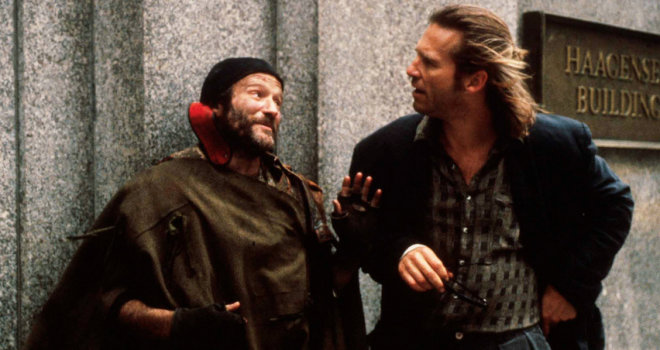
Robin Williams and Jeff Bridges go on a quest in Terry Gilliam’s decent but overlong The Fisher King

Director: Terry Gilliam

Cast: Robin Williams (Parry), Jeff Bridges (Jack Lucas), Mercedes Ruehl (Anne Napolitano), Amanda Plummer (Lydia Sinclair), Michael Jeter (Homeless Cabaret Singer), David Hyde Pierce (Lou Rosen), Lara Harris (Sondra), Harry Shearer (Sitcom actor), John de Lancie (TV Executive), Tom Waits (Veteran)

In 1991 Terry Gilliam was seriously worried he might be unemployable. After the famous feud with his producers over the editing of Brazil, his follow-up The Adventures of Baron Munchausen had flown over budget and bombed at the box-office. For Hollywood Gilliam was the worst kind of maverick – trouble with no record of financial success to give him the licence to do what he wanted. So he was thrilled to be offered the chance to direct The Fisher King, his first ever “for hire” job, a sentimental but surreal romantic buddy movie. It’s financial and critical success almost certainly saved his career.

Jack Lucas (Jeff Bridges) is a New York radio shock jock, whose show accidentally provokes a lonely and confused man to massacre the customers at a late night bar. Three years later and Jack’s career is over and he is working as a co-owner of a video rental star (and live-in lover) with Anne Napolitano (Mercedes Ruehl). One day – drunken and suicidal – he is saved from a gang of young thugs by eccentric homeless man Parry (Robin Williams). Jack discovers three years ago that Parry was a respected professor of English literature, whose life fell apart after his wife was killed in the same bar massacre that ruined Jack’s career. The two men are drawn together – but can they save each other?

The film is based on the myth of the Fisher King, the king charged with finding the Holy Grail but could not find it for years – only for a fool to present it to the king full of water to drink, revealing it was there in the King’s possession the whole time. The fool helps because he is “purer” than those more worldly around him. The idea that Richard LaGravenese’s screenplay is leaning on is that these two characters – Jack and Parry – alternate between them the roles of Fisher King and Fool, both slowly doing things for each other that change their personalities and allow them to adjust back into the world and become comfortable with the people they are.

Reading that it should become clear that this is a sentimental film – and it certainly is. It’s also hellishly overlong for such a slight story of tragedy leading to overcoming personal crisis. We know watching the film from the start that Jack Lucas is a bad guy – and Gilliam shoots his opening scenes of Radio presenting with great skill, using high angles, extreme close-ups and shots that prevent us getting any real sight of Jack, making him as impersonal and contemptable as possible in his shallowness, pride and thoughtless cruelty. It’s not a mystery to expect that we are due to watch a triumph of the human spirit film, in which Jack becomes a better man. The film takes a very long time making this simplistic point.

The catalyst is Robin Williams, in a role tailor made for him as a hyper-active, manic personality mixed with tragedy and depression. To be honest Williams is frequently over indulged in the role – despite his Oscar nomination – heading over the top too often, and often over-egging the pudding both in Parry’s energetic enthusiasm and also in his moments of tragic depression. Parry is given a romantic sub plot with Amanda Plummer’s nervous office worker (a character who is little more than a collection of quirks than a personality, and it’s a shame it’s led to Plummer being typecast in such eccentric roles) that is almost insultingly slight and one-sided (he comes across a bit like a stalker) and lacks any of the charm needed for the story to work.

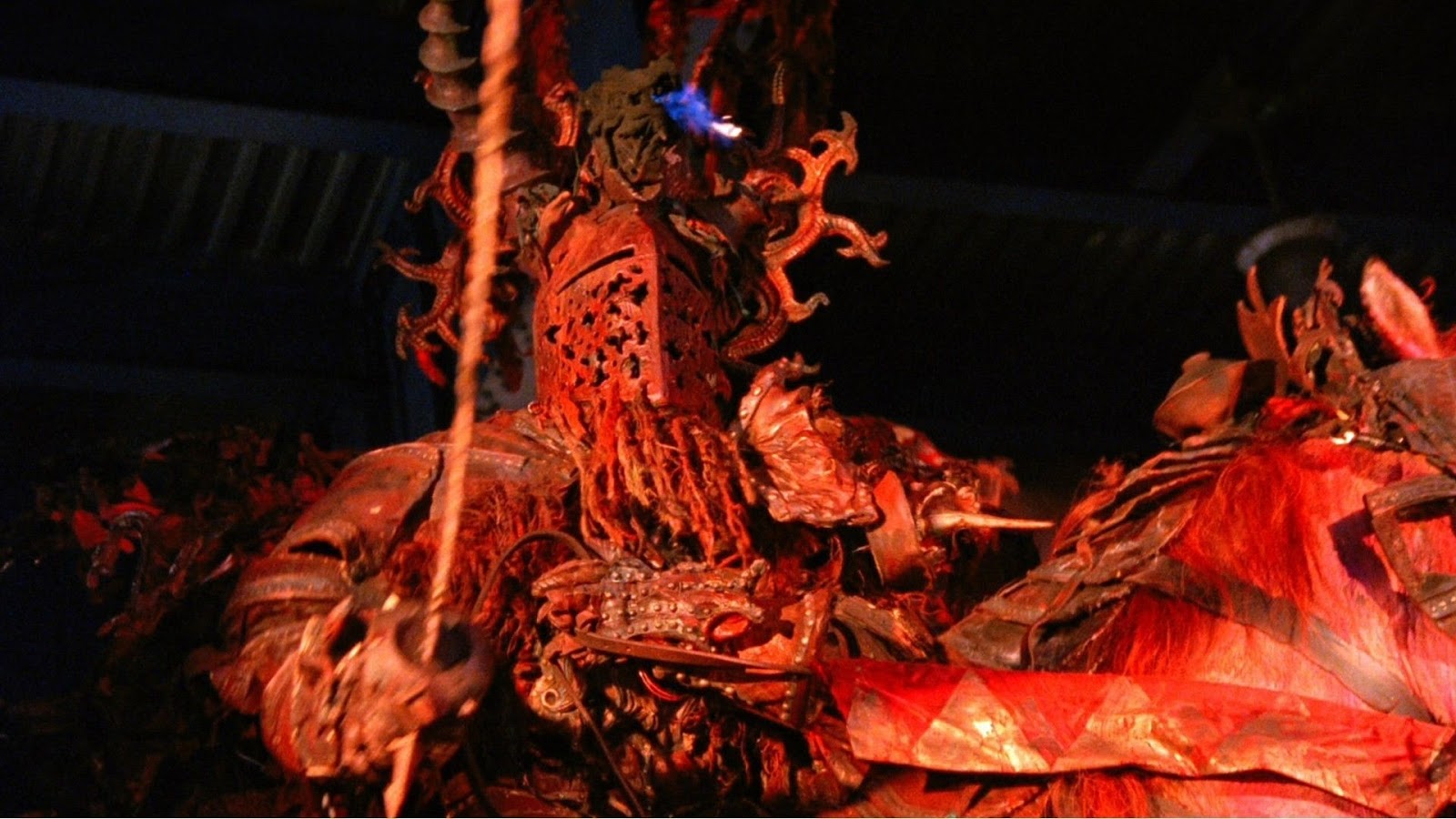
Parry is used to tie the film into further Arthurian flourishes with his obsessions with the legend. Parry visualises a sinister Red Knight – a mental expression of his grief and horror at his wife’s death, which takes the form of the appearance of his wife’s blood splattered face – which chases him through the city. Parry is also obsessed with the discovery of the Holy Grail, which he claims can be found in a millionaire’s faux medieval castle in the centre of Manhattan. This Arthurian stuff is often rather crow-barred in, but holds more interest than traditional plot-lines of people rediscovering their humanity and capability of bonding with others.

Jeff Bridges actually takes on the far harder role as Jack Lucas, a character who has to go on a firm development from start to finish. While Parry is a deliberately eccentric figure, Jack is the one who must journey from arrogance and pride to selflessness and humanity. Bridges does it very well, with a neat line in under playing and an ability to suggest the warmth, shame and self-disgust that Jack works hard to cover up. He’s also blessed to share scenes with Mercedes Ruehl who is outstanding (and Oscar winning) as his girlfriend, the most humane, engaging and real character in the film, a woman who seems at first blowsy and cheap (Jack clearly believes she is beneath him) but reveals more and more depths and capacity for honesty, love and generosity.

Gilliam has a sharp eye for the huge gap between wealth in poverty in 90’s New York, and how the two worlds are geographically only a width of a piece of paper, despite being worlds apart. His direction uses many of his flourishes with great effect. Fish eyed lens POV shots, low angles, stylistic dream sequences, a dream sequence where Grand Central station is full of dancing travellers like a mighty ballroom – many of the sort of things you see in his films are here. To be honest, I found some of the flourishes a bit overwhelming in a story that is so slight and so grounded in just four people’s interactions and quests for salvations. But it works, and Gilliam gets some moments of romantic and platonic love that really work. But it’s still a slight film that goes on far too long, and it eventually loses the viewer in its time-consuming journey towards expected heart-warming moments.

Hell or High Water (2016)


Chris Pine and Ben Foster carry out a series of personally motivated bank robberies in Hell or High Water

Director: David Mackenzie

Cast: Jeff Bridges (Marcus Hamilton), Chris Pine (Toby Howard), Ben Foster (Tanner Howard), Gil Birmingham (Alberto Parker), Marin Ireland (Debbie Howard), Katy Mixon (Elsie), Kevin Rakin (Billy Rayburn)

In West Texas, two brothers – divorced father Toby Howard (Chris Pine) and his ex-con brother Tanner (Ben Foster) – carry out a series of early morning raids on branches of the Texas Midlands Bank. Their robberies are investigated by Texas Ranger Marcus Hamilton (Jeff Bridges) working his last case before retirement, and his partner Alberto Parker (Gil Birmingham). The brothers however are motivated by more than just a desire for money – and these motivations drive them to ever more desperate and dangerous actions.

Hell or High Water is a fine piece of skilled professional film-making. The story is tightly scripted, and Mackenzie’s direction marries up a modern outlook with the style of a classic John Ford western. But, for me, it reaches for a thematic richness that isn’t quite there. It’s in the same territory as No Country for Old Men but it never achieves that film’s complexity. It creates characters we care about, and the story keeps us gripped, but it lacks that certain extra dimension that profoundly moves us. It tries to tell itself (and us) that it’s a profound exploration of themes around life and death, but it never really reaches these feelings – its grasp is less than its reach.

But it’s still a hugely enjoyable and impressive movie. Mackenzie’s direction is superb, detailed and smooth, and he is able to bring to life both the drama and the action. The story has an old school heist quality, with our gangsters sort of proto-Robin Hoods, naïve enough for us to invest in their actions, but dangerous enough for us to understand why events spin outside their control. Sheridan’s script is full of punchy lines and genuine emotional weight. The plot line gets a bit bogged down in the ins and outs of the reasons why our ‘heroes’ are doing what they are doing, but there is an emotional truth to it that really works.

The film also creates a wonderful sense of Texas as a land that seems to have only just moved on from the Wild West. Everyone in the film seems to be either packing heat or wearing a Stetson (or both). Genuine cowboys guide cattle across a road. The rangers have an old school gruffness about them, staking out banks from across the road in saloon bars that don’t seem to have moved on from the days of Wyatt Earp. At the slightest sign of danger, ordinary people reach for their guns and start shooting. Everything takes place in dusty countries, or rural feeling towns. I can barely remember seeing a computer or mobile phone. The whole film feels slightly out of step with the modern world.

It also draws some very fine performances from its actors. Chris Pine may never have been better than as reluctant bank robber Toby. Toby is a classic western outsider, a man who is working to protect his family and preserve their future – often by dangerous means – but accepts that this family life he is building has no place for him in it. Pine brings the part a finely judged sadness, a sense of a man without a place in the world. Ben Foster is equally good as his firecracker brother, a damaged anarchist at heart whose love of impulsive danger will have fatal consequences.

The heart of the movie though is Jeff Bridges’ ranger, a marvellous portrait of gruff-old school machismo. Bridges invests this role throughout with a humane decency, an anger at the distress and violence. His friendship with his partner Alberto (a touching Gil Birmingham) provides much of the affectionate heart of the movie, their good natured joshing and banter a continual source of humour. Bridges’ world-weary, out-of-time quality matches perfectly with the timeless mood of the movie. It’s a beautifully judged, simple, unshowy performance.

It’s a beautifully judged combination of crime and family thriller, while its ability to balance the old-school feeling and aesthetic of West Texas with a punchy modern-feeling tale of the greed of bankers, works extremely well. It’s got a dark Butch Cassidy feeling to it, and the film’s focus is tightly kept on the four leads, allowing the audiences understanding of them to grow and develop. By the conclusion of the film, your loyalties will be firmly divided between both the law and robbers, summed up best by a beautifully played elegiac final scene, laced with regret, sadness and tension.

But despite all this, it never quite breaks out of its pulpy roots to become something else in the way that No Country for Old Men manages to do. Wonderful character study as it is, it feels like a film that wants to make a broader, spiritual comment about the American way and modern masculinity. It doesn’t quite manage to do this. I don’t feel that this film really succeeds in suggesting it is about much more than what’s on the surface.

But that doesn’t matter so much, when the surface is so strong and as well directed, acted and written as this. If Hell or High Water is, at the end of the day, just a smart cops-and-robbers story, it’s certainly one that’s full of freshness and intelligence and grips your interest from start to finish. In a world where Hollywood churns out over-promoted average films, it stands out as something far more heartfelt, expertly crafted and hugely enjoyable.