Tag: Jennifer Jones

Love is a Many-Splendored Thing (1955)

Love is a Many-Splendored Thing (1955)

Very thin romantic drama that finds very little to offer beyond it’s set-up of “love across the divide”

Director: Henry King

Cast: William Holden (Mark Elliott), Jennifer Jones (Dr Han Suyin), Torin Thatcher (Humphrey Palmer-Jones), Isobel Elsom (Adeline Palmer-Jones), Murray Matherson (Dr John Keith), Virginia Gregg (Anne Richards), Richard Loo (Robert Hung), Soo Yong (Nora Hung), Philip Ahn (Third Uncle)

In 1940s Hong Kong, Eurasian Dr Han Suyin (Jennifer Jones) works at a respected hospital and carefully balances her relationship with the Chinese and Western expat communities. All of which is shaken up when she falls in love with American journalist Mark Elliott (William Holden). As China’s civil war sees the country turn Communist – and with war rumblings in Korea – can this love across the divide survive prejudice, Mark’s estranged wife and the disapproval of her friends?

Love is a Many-Splendored Thing was a box-office hit and scooped no fewer than eight nominations (including Best Picture) in a weak year at the Oscars. It won two of them for its main virtues: the lush, romantic score from Alfred Newman and its title song (which became a massive hit). Aside from that, it’s a very slight romance (with a tragic ending) based on Han Suyin’s autobiographical novel (Suyin, who sold the rights because she needed the money, refused to watch it).

It’s very much a film of its time. The focus is at least as much on the locations and wide-screen framing as it is on story (it was made slap-bang in the middle of the era when these were considered cinema’s unique selling point over TV). Before the script was even completed, a second unit team was dispatched with the stars to shoot wordless sequences on location, all to capture that Hong Kong atmosphere. Writer John Patrick and director Henry King’s job was then to build a narrative framework using as many of these as possible, inspired by the book.

What they came up with is as conventional as they come: essentially, two charming, attractive Hollywood stars meet, flirt, fall in love and face the consequences. Despite the earth-shattering events around them, very little intrudes into the story. The outbreak of Chinese Communism gets name checked a few times – one of Suyin’s colleagues at the hospital is a proud Commie – but only a few moments are spent on considering the impact this might have on Hong Kong or the expat community. Similarly, the Korean War might as well have been started by people who just wanted to drag William Holden away from romantic bliss.

Love is a Many-Splendored Thing has its chances to really tackle the racial element of this relationship. But bar a few small moments, it mostly avoids this. Sure, Suyin loses her job for largely unspecified reasons (the implication is there that it’s for crossing this racial divide), and she gets dragged across town to get a ticking off from the grand doyen of the expat community for flirting with a white man (although this could just as well be for the fact he’s separated but still married). But her Chinese family mostly accept Suyin’s relationship with little complaint, and far more easily than they do her cousin’s relationship with a foreigner (guess it’s because Mark is such a top bloke). The whole issue feels slightly swept, awkwardly, under the carpet – which just doesn’t feel true. For all its patronising heavy-handedness, at least Sayonara two years later really engaged with this theme.

But then, maybe it’s because Jennifer Jones doesn’t even look remotely Asian. Reportedly unhappy with her make-up, its toned down to such a subtle extent that honestly half the time she doesn’t look that different than she does in any other role. I suppose, today, we should thank our lucky stars they didn’t go the whole yellow-face hog, but it does look odd considering everyone else of even remotely Asian descent is played by an Asian-American actor.

Despite this, Jones is actually rather good as Suyin: intelligent, sensible and very surprised to find herself falling in love with someone so socially unsuitable for her as Mark appears to be. She’s compassionate, witty and knows her own mind, and if Jones is given a few too many speeches explaining Asian culture to Mark (or rather to the viewer), at least she delivers them with grace and gravitas. Holden is also good, even if he could play this dashing romantic role standing on his head.

Fascinatingly both stars, despite their convincing on-screen chemistry, couldn’t stand each other. As well as having incompatible working styles – Jones was details oriented, Holden more instinctive – they failed to bond personally. (Jones reported she ate garlic to annoy famed lothario Holden, while Holden claimed a bunch of flowers he purchased Jones to clear the air were literally thrown back in his face.) It, surprisingly, doesn’t come across on screen, and the film’s strongest moments by far are the romantic ones between the two leads.

Fortunate, as that’s the meat of a film that barely has anything else on its bones during its swift runtime. King directs with a professional competent flatness that doesn’t give any additional life to the project. Aside from some decent romantic moments atop the couple’s favourite hill and a swimming sequence (obviously imitating From Here to Eternity but without an ounce of that film’s dynamism and sexiness) there is little to keep drawing you back.

Love is a Many-Splendored Thing settles for being a reassuring, lightweight romance, in which two handsome people, in luscious locations, fall in love. It offers very little outside of that, so basically your enjoyment of the film will be decided by how much that sort of thing wins you over. If you want more from your romances, it’s not for you.

The Towering Inferno (1974)

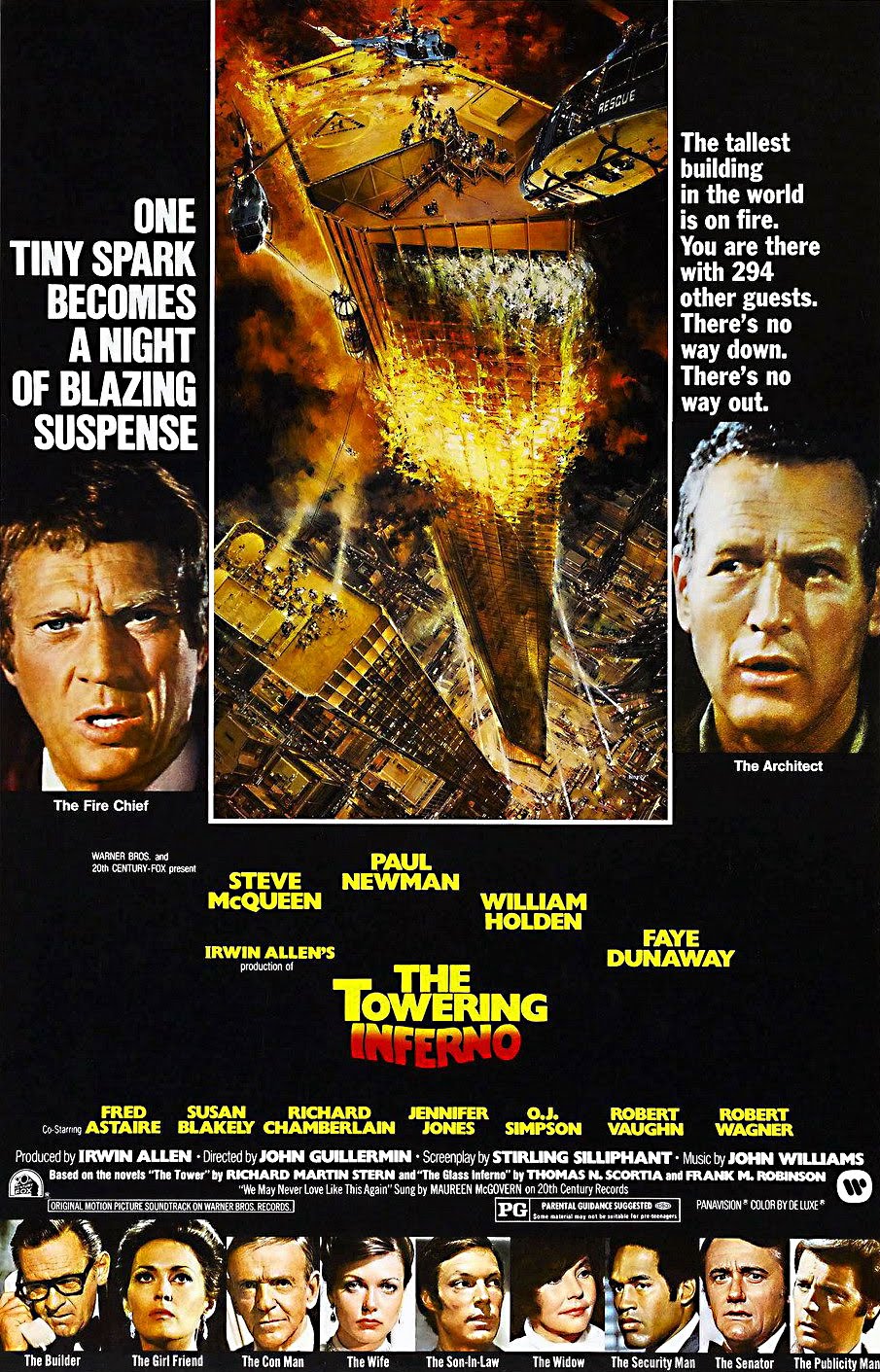
Newman and McQueen tackle a huge blaze in The Towering Inferno

Director: John Guillermin, Irwin Allen

Cast: Steve McQueen (Fire Chief Michael O’Halloran), Paul Newman (Doug Roberts), William Holden (James Duncan), Faye Dunaway (Susan Franklin), Fred Astaire (Harlee Claiborne), Susan Blakely (Patty Duncan Simmons), Richard Chamberlain (Roger Simmons), Jennifer Jones (Lisolette Mueller), OJ Simpson (Harry Jernigan), Robert Vaughn (Senator Gary Parker), Robert Wagner (Dan Bigelow), Susan Flannery (Lorrie), Shelia Matthews Allen (Paula Ramsay), Jack Collins (Mayor Ramsay)

Architect Doug Roberts (Paul Newman) flies into San Francisco for the grand opening of The Glass Tower, the newly constructed tallest building in the world which he has designed for developer James Duncan (William Holden). A celebration with the rich and famous is planned – too bad Duncan’s rogueish son-in-law Roger Simmons (Richard Chamberlain, smarming like his life depends on it) has saved a few dollars by stuffing the building with sub-standard wiring. Surely the world’s largest building can’t catch fire? You bet it could – and only heroic Fire Chief Michael O’Halloran (Steve McQueen) has the expertise to put it out.

The Towering Inferno was the peak of the “all-star disaster” genre. It was bought to the screen by Producer (and “Master of Disaster”) Irwin Allen, and pretty much ticks all the boxes you expect from the genre. A star at every turn! A huge running time! Constant denials that anything could go wrong (of the “This building can’t burn down!” variety)! Kids in peril! Death-defying stunts! A brave pet! An elder statesman of Hollywood risking life and limb! A scoundrel we can boo! A tear-jerking death! The Towering Inferno pretty much has it all, and it plays every single beat with the sort of po-faced seriousness that was already starting to look a bit silly by 1974.

Films like this work because audiences – as we’ve seen time and time again – never lose their taste for watching things get trashed. In the 1970s every studio wanted its own mega-budget disaster film. The Towering Inferno’s real uniqueness is the story behind its making – two studios had competing “Skyscraper on Fire!” projects but, instead of competing, pooled their resources to make one mega hit. So, Warner Brothers The Tower and 20th Century Fox’s The Glass Inferno became this.

Irwin Allen was handed the keys – because no-one did it better – and each studio contributed a star. McQueen and Newman spent almost as much time negotiating equal terms as acting in the movie. Both were paid 10% of the gross and agreed they would have exactly the same number of lines (many of Newman’s final scenes sees him perform stunts wordlessly, as he burned through his allotted lines during the 40 minutes he spends on screen before McQueen turns up). The billing was negotiated carefully: their names would appear on screen together with Newman slightly higher, but McQueen’s name to the left (both could therefore claim they were “first billed”).

Their interest in the film pretty much ended there. Newman was famously disparaging of what he called “a piece of shit” and the only time he did something purely for the money. He coasts through on those blue eyes and twinkly grin. Eager that his character be absolved of responsibility (he has designed a tower that will claim 200 lives!) Newman’s architect is continuously absolved of any responsibility by the rest of the cast and leads on saving lives. McQueen grabbed the better role as the all-action fire-chief, riding in after 45 minutes (thus wisely missing out the tedious build-up of the soapy plot lines), takes charge and does nothing but manly action, but he also looks like someone going through the motions.

But then they know the things that will be remembered are the set-pieces. As flames stretch up the building, our star names dodging explosions, climbing up shattered staircases, dodging collapsing ceilings and taking on vertigo-inducing heights, it’s hard not to be excited. As in all disaster films, the disaster takes a strong moral stance. Of all the characters who die only one ‘doesn’t deserve it’. Aside from that, the actors playing philanderers, swindlers and bastards inevitably bite the dust, while the upstanding and noble pretty much see their way to the end.

The disaster sequences are impressive – and the fire-effects are really well done. Allen directed the ‘action sequences’ – aka the only bits of the film you really remember – while Guillermin handled ‘the acting’ (the dull, soapy, badly written bits you forget). The cardboard characters (no wonder they catch fire so easily!) could have had their personalities scribbled on the back of a stamp, and are pretty much dependent on the charms of the actors playing them. Fred Astaire’s gentle conman (the sweetest grifter you’ll ever meet) is a ludicrous character, but works because of Astaire’s twinkle-toed charm (Astaire grabbed a wave of affectionate awards nominations). Jennifer Jones plays off him rather well in the film’s ‘heroic elder statesman of Hollywood’ role, as a woman who puts herself at huge risk to save two kids (and their deaf mum) from immolation.

But pretty much all the character-based stuff in Towering Inferno is ludicrously silly, with some strikingly bored actors (Faye Dunaway looks like she wants to be anywhere else) but it hardly matters as we are there to watch the world burn. Which it does to spectacular effect, and the reassuringly, camp predictability of the film’s events is endearing – and raises a few good-natured laughs (you have to laugh at something like this, even though it wants to take itself so seriously). The Towering Infernowas the largest of all the disaster flicks of the 1970s. Allen shoehorns in a few points about fire safety in tall buildings for the ‘serious bits’, but his heart is in consigning most of the second tier of his all-star cast to dramatic, firey deaths. Overlong, very silly but rather sweet.

Beat the Devil (1953)

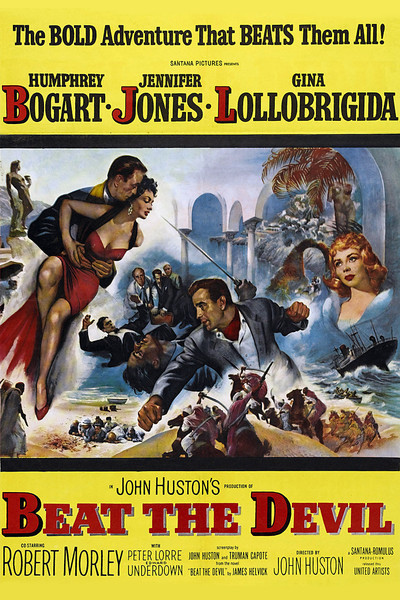
Jennifer Jones, Gina Lollobrigida and Humphrey Bogart in the tongue-in-cheek Beat the Devil

Director: John Huston

Cast: Humphrey Bogart (Billy Dannreuther), Jennifer Jones (Gwendolen Chelm), Gina Lollobrigida (Maria Dannreuther), Robert Morley (Peterson), Peter Lorre (Julius O’Hara), Edward Underdown (Harry Chelm), Ivor Barnard (Major Jack Ross), Marco Tulli (Ravello), Bernard Lee (Inspector Jack Clayton)

Beat the Devil is a curious beast. You could argue it was ahead of its time. Huston and Bogart had started out with the intention of making a straight crime mystery, a sort of Maltese Falcon in Europe. But when they arrived on location, obviously something in the weather got to them and Truman Capote flown in to help redraft the script on a daily basis to turn it into a sort of satirical comedy. For audiences expecting a hard-boiled crime mystery, it left heads scratched and cinema seats empty. Bogart lost a packet on the film – and later claimed to hate it – and it only existed in a badly cut-about version until it was restored in 2016.

The slightly surreal plot hardly really matters. A crowd of unusual people gather in a run-down port in a small Italian town, waiting to take the ship to East Africa. Gwendolen (Jennifer Jones) and Harry Chelm (Edward Underdown) are seemingly upper-class Brits (or are they?). American Billy Dannreuther (Humphrey Bogart) and his European wife Maria (Gina Lollobrigida) might also once have been something, but they sure ain’t now. Peterson (Robert Morley) and his associates the suspiciously un-Irish Julius O’Hara (Peter Lorre), rat-faced bully Major Jack Ross (Ivor Barnard) and nervous Ravello (Marco Tulli) are almost certainly all criminals on their way to a big score in Africa. Thrown together, this unlikely grouping end-up in a heady cocktail of betrayals, schemes, affairs and lies that spools out like a demented shaggy-dog story.

Beat the Devil is really more of an experience, a series of gags and light-hearted scenes played with a grin and a wink. Nothing in it is meant to be taken seriously, and this semi-surreal group of events becomes ever more absurd as it goes on. By the time the cast are abandoning a sinking ship, trudging up a beach to be captured by Arab officials who eventually allow them to row back to port where they find their ship didn’t actually sink…you really should just decide to go with the flow.

Instead the film is about shuffling up familiar tropes from hard-boiled noir with Oscar Wildeish farce. Certainly the Chelms seem to have wandered in from something totally different (not least since Gwendolen’s name is reminiscent of Importance of Being Earnest). Harry (a superbly stiff-upper lipped Edward Underdown) is a blithely unaware would-be English gentleman, pompously aware of his social class and blithely unaware that his wife seems to immediately start an affair with Billy. Gwendolen is the exact sort of character you might expect to see in Wilde, a dreamer tipping into fantasist, who blurts out things she shouldn’t and falls instantly in love with Billy. She’s also whipper-smart – more than capable of defeating Harry at chess without looking (“usually he’s a wonderful loser” she tells Billy, by way of apology for Harry’s strop).

Billy and Gwendolen embark on an immediate affair (although of course, in deference to the Hays Code, its just kept this-side-of-implicit). Mind you the film has a zingy wife-swop feel to it, since it’s pretty clear that Maria is far more interested in the British reserve of Harry (“Emotionally I’m English” she says before eulogising tea and crumpets) than she is in the ordinary-Joe cunning of her husband (although perhaps Harry is just as oblivious to this as everything else around him).

Billy is Bogart deliberately at his most Bogart-ish, channelling every grimy-but-smart dubious-hero the star ever played. Bogart plays the entire film with a grin on his face and delights in lines like “Fat Guys my best friend, and I will not betray him cheaply”. He also sparks delightfully with Jennifer Jones, who seems to having the time of her life as a character so flighty and unpredictable that even she looks like she hasn’t a clue what she is going to do (or feel) from one moment to the next.

The supporting cast of creeps and freaks Dannreuther is conspiring with to make a fortune (its something to do with land and uranium) similarly seem to have walked in from a side-ways Dashiel Hammett universe. For all their dirty deeds – and it seems Petersen had ordered a hit in the UK, although never for a minute would you believe this looking at Robert Morley’s puffed up bluster – they are a rather sweetly naïve and incompetent. Morley’s Petersen, a sort of galloping major, carries no real threat. Peter Lorre is very funny as a suspiciously German sounding Irishman (“Many Germans in Chile have come to be called O’Hara” he comments), prone to flights of verbal fancy and a chronic lack of focus. Ivor Barnard is as close as the film comes to threat as the aggressively incompetent Major Ross, a chippy bully who resents his shortness and eulogises Hitler at the drop of a hat. These heavies are each ridiculous figures.

And it makes sense, since the plot is a great inflated balloon of nonsense. There are chases, sinking ships that stay unsunk, a moment where two major characters are briefly believed dead, obsessive conversations about hot water bottles and reveals that puncture any sense of grandeur for each character. It’s the sort of aimless story you could imagine natural raconteurs like Huston and Capote finding absolutely delightful, and the whole film feels like a dramatization of a dinner-table anecdote.

Take it on those terms and its all rather good fun, even if it makes no sense. The cast look like they are having a whale of a time, and the total lack of seriousness about the whole enterprise generally makes it glide by with ease. Take a couple of drinks, sit back, don’t think about it too much and enjoy the jokes.

The Song of Bernadette (1943)

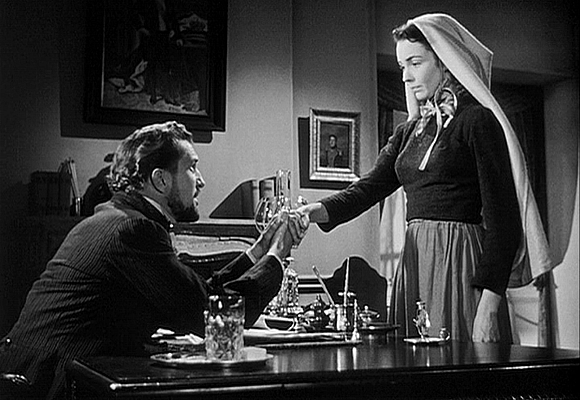
Jennifer Jones sees visions of the Virgin Mary in the moving The Song of Bernadette

Director: Henry King

Cast: Jennifer Jones (Bernadette Soubirous), Charles Bickford (Abbé Dominique Peyramale), Williem Eythe (Antoinie Nicoleau), Gladys Cooper (Marie Theresa Vauzou), Vincent Price (Vital Dutour), Lee J. Cobb (Dr Dozous), Anne Revere (Louise Casteror Soubirious), Roman Bohnen (François Soubirous), Mary Anderson (Jeanne Abadie), Aubrey Maher (Mayor Lacade), Linda Darnell (Virgin Mary)

“For those who believe in God, no explanation is necessary. For those who do not believe, no explanation is possible.”

With these words, this worthy religious epic from the Golden Age of Hollywood kicks off its retelling of how visions of the Virgin Mary from one poorly educated peasant girl, Bernadette Soubirous, turned Lourdes from a backwater near the French-Spanish border into one of the most important Catholic pilgrimage sites in the world. It’s material that you could fairly expect to be pretty dry and sanctimonious stuff. But, surprisingly, it’s rather affecting and engaging work – and, although made with a certain workmanlike competence, carries enough touches of grace to lift it up into the second tier of the Hollywood firmament.

Bernadette Soubirous is played by Jennifer Jones – in one of her first screen roles, for which she became at 25 one of the youngest Best Actress Oscar winners ever. Until her visions begin, she is just an average peasant child, struggling with asthma, her parents (Anne Revere and Roman Bohnen) struggling with poverty, failing at religious school under the strict tutelage of Sister Marie Theresa (Gladys Cooper), and generally looking ahead to a life very much like any other. But visions of the Virgin Mary (played by an unbilled Linda Darnell) bring belief and devotion into her life, and she reports the content of the visions (and her discussions with the Virgin Mary) with an honest simplicity and consistency that wins many backers, not least local priest Abbé Peyramale (Charles Bickford). But the local officials of Lourdes, led by local prosecutor Vital Dutour (Vincent Price), concerned that these visions will impact plans for the town’s development and anxious about the hysteria they could encourage in the simple-minded, try their best to restore what they see as reason over the intoxication of faith.

Faith really is the word of the day in Henry King’s at-times stately, but also shrewdly worldly drama that mixes divine intervention and belief with a fair-hearing for the doubters and the arguments of reason. The miracles, when they come, are followed with several characters – not least Lee J Cobb’s coolly rational doctor – outlining the alternative explanations for why these people may suddenly feel they have been cured. Later Dutour complains wryly that it only takes a handful of cures among the thousands that come for everyone to continue to want – or need – to believe. 

But the film sides squarely with the truth of Bernadette’s visions, not least by stressing at every turn her honesty, guilelessness and principle. Questioned by various church officials – many of them terrified of being duped by a con, having been stung in the past – she sticks with an honest openness to the same version of the story over and over again. Peyramale – initially just as sceptical – is won over to belief by Bernadette’s sudden knowledge of such matters as the immaculate conception, when she seemed barely aware of what the Holy Trinity was while studying at school. 

King – a largely middle-of-the-road director, but who marshals his resources well here – clearly takes inspiration from Carl Dreyer’s films on similar topics of faith and visions in his shooting of Bernadette. Bright light and intense close-ups that study every inch of her rapture help convey the spirituality of her visions. When Bernadette leads groups to her visions – none of whom can see what she sees – light radiates around her and over her, but seems to barely touch those she is with. The cinematography by Arthur C Miller is beautiful, a brilliant use of light and darkness to skilfully sketch both the poverty of Bernadette’s background and the radiance of her visions.

The mood of the film is also helped be Jennifer Jones’ impressive performance. Bernadette is, in many ways, potentially one of the least interesting and dynamic characters in the film, but Jones pulls off the immensely difficult task of making someone stuffed with decency, innocence and honesty into an actually compelling and endearing character. A protégé of David O Selznick (whom she later married), Jones earned her place in the film with her ability to invest Bernadette with humanity, avoiding any hint of cynicism in her performance while never becoming grating either.

It contributes to a beautiful telling of the story, backed by a series of excellent supporting performances. Charles Bickford landed an Oscar nomination as the kindly, decent priest whose initial scepticism and concern that the crowd is being manipulated is washed away by growing belief. Lee J Cobb is very good as a stoutly rationalist doctor. Anne Revere (also nominated) has a protective warmth as Bernadette’s mother.

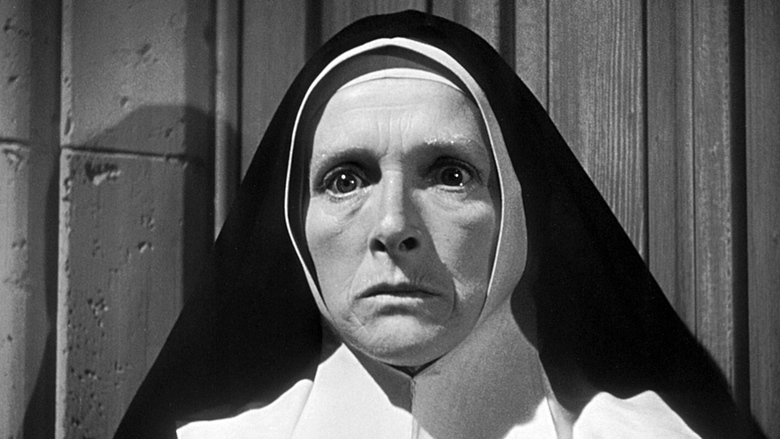
The film’s finest supporting roles though come from Vincent Price and Gladys Cooper. Price is superb as the man of science and reason who worries over the implications of fanaticism and the damage hysteria can cause, but is never simply prejudiced or Dawkinsish in his religious doubts. King’s film treats his concerns with a genuineness that makes both the character more interesting and the film more balanced. Cooper is brilliant as a Salieri-like nun, enraged with envy and jealousy that after years of devotion and suffering it is not she but Bernadette who gets the visions.

And why did Bernadette get those visions? The film is not crude enough to suggest why – Bernadette herself apologises for the trouble she has caused and her unworthiness – but it’s clear that it’s her very innocence and sincerity that makes her worthy of them. The design – and impressive score by Alfred Newman – helps to make the film feel as profound as it does, but it’s the balance that the film handles its characters with that makes it engrossing. There are no simple heroes or villains, just as there are no simple solutions. Like the film says at the start, it’s a question of faith. Those who do not wish to believe can marshal as many arguments in their favour as those who want nothing more than to trust in faith. It makes for a fine, balanced, engaging and well-made classic.