Tag: Jermaine Clement

Avatar: The Way of Water (2022)

Avatar: The Way of Water (2022)

Cameron’s film makes a huge splash despite its soggy plotted, flooded run-time

Director: James Cameron

Cast: Sam Worthington (Jake Sully), Zoe Saldaña (Neytiri), Sigourney Weaver (Kiri Sully), Stephen Lang (Colonel Miles Quaritch), Kate Winslet (Ronal), Cliff Curtis (Tonowari), Jamie Flatters (Neteyam Sully), Britain Dalton (Lo’ak Sully), Timothy Jo-Li Bliss (Tuk Sully), Jack Champion (Spider), Bailey Bass (Reya), Filip Geljo (Aonung), Duane Evans Jr (Rotxo), Edie Falco (General Frances Ardmore), Brendan Cowell (Captain Scoresby), Jermaine Clement (Dr Ian Garvin)

After thirteen years it finally arrived. The sequel to a film that seemed to leave no cultural impact, Avatar. People were convinced it would flop. But they say that about all Cameron films. And, if anyone should have learned anything from Terminator 2, Titanic and Avatar it was don’t bet against Cameron. If Avatar 2’s purpose was to make an awful lot of money, it has succeeded in every level. If its purpose was to make a strong and entertaining film… I’m not so sure.

About the same amount of time has passed on Pandora and Sully (Sam Worthington) and Neytiri (Zoe Saldaña) have raised a family of four children, including Kiri (Sigourney Weaver) born from the avatar of their friend Grace. They have also raised Quaritch’s son ‘Spider’ (Jack Champion) among them. Then the humans return… a bloody war begins, with Sully leading a guerrilla campaign. The company resurrects Colonel Quaritch (Stephen Lang) as a Na’vi super soldier to fight on their own terms. After Spider is captured, Sully and his family flee to live among the Metkayina, a sea-living tribe. But they can’t escape the war and its dangers.

As Avatar: The Way of Water is garlanded with praise and Oscars nominations, I feel like we are all part of a wide conspiracy of silence. So desperate are so many to keep viewers handing over their cash at the box office, that a film completely designed to be seen on the big screen (and this really is) is being praised to the skies by some as a masterpiece. It is not. It’s not even the best Avatar film. Instead, Avatar 2 is a visually impressive but hellishly long, predictable re-tread of the first film that stuffs the eyes with CGI wonders but leaves not a jot for the heart.

I was reminded part way through the overlong runtime that Cameron once made imaginative, thrilling sequels that completely reset the table. Aliens reinvented a haunted house horror movie as a pulsating action film. Terminator 2 turned a chase story into ramped up family story that mused on destiny. Avatar 2… basically tells exactly the same story, but with a familiar generational family conflict storyline and lots of water. It has the same environmental messages and anti-corporation vibe. When this lands, it works. A whale hunt is shot in terrifying detail, a giant mother whale creature brutally trapped and eviscerated for a small cannister of fluid extracted from its brain. This is also probably the most effective sequence and the one that moved me the most.

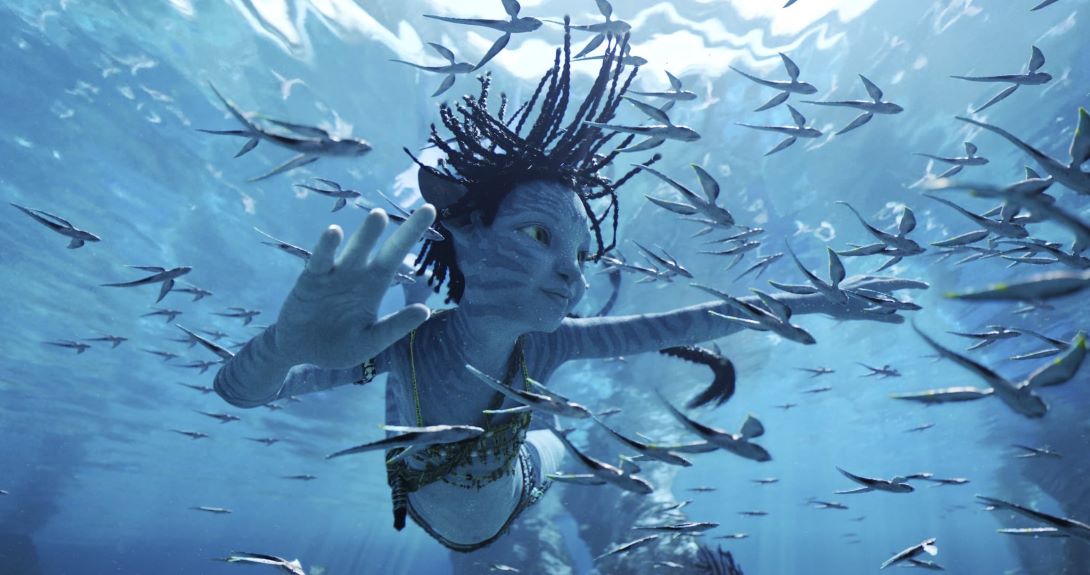
The effects do look impressive. There is no denying that, and the motion capture that turns the actors in blue giants is totally convincing. These Na’vi look and feel like flesh and blood beings. The visual imagination that creates this world, with its sweeping vistas and eclipse-kissed sky not to mention the myriad exotic creatures that populate it are stunning. If Avatar 2 deserves praise it’s for that. Pretty much every single frame looks like it cost a million dollars.

Unfortunately, it often also has a sheen of unreality. I became desperate for something real to appear on screen. But when only one character out of ten is not an effect, you don’t get much of that. On top of which the decision to film in slick, blur-free 48 frames per second means everything glides across the screen with the perfect-focused quality of a videogame. Don’t know what I mean? Try looking at things around you while moving your head at moderate speed. What do you see? Blur. Blur is real. The perfect focus of this world clues you up in every second that nothing in it is real.
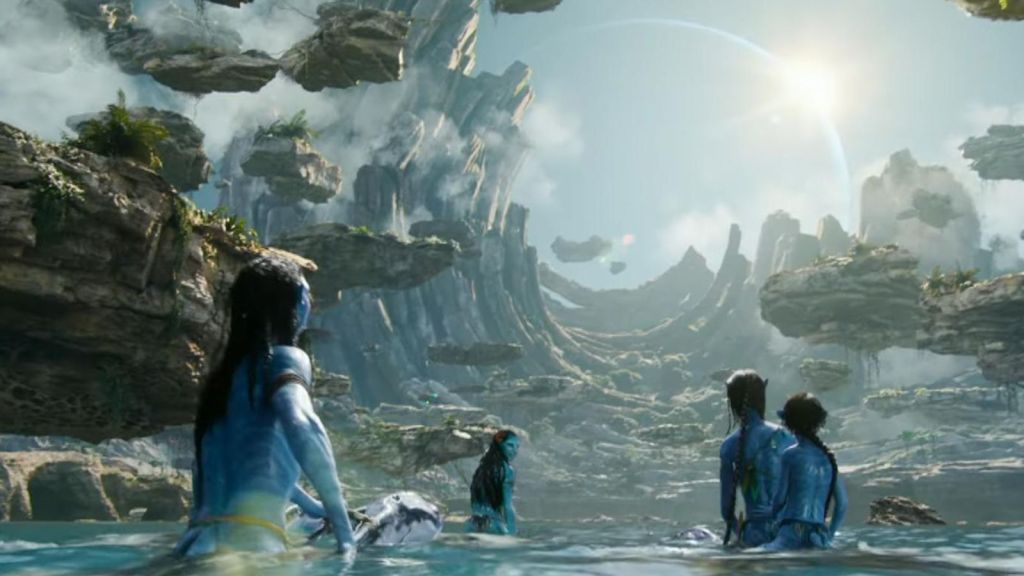
The lack of reality eventually starts to remind you of The Phantom Menace. In fact, the only thing really separating this from that disaster is that James Cameron is a master director of epic, visual cinema. The film-making here, as a technical exercise , is beyond reproach. And few directors shoot action scenes with as much skill and raw excitement as Cameron. I can’t fault anything about that, even while I struggled to care as they dragged out over a huge chunk of time.

But Cameron’s weakness as always been the writing. He is a flat and unimaginative writer of dialogue – the Na’vi dialogue is awful flicking from ponderous (“We Sully’s stick together. That is our greatest weakness. And our greatest strength!”) to painfully bad (the number of “Bros” and “Dudes” from the Na’vi teenagers is fist-bitingly awkward, like your Dad trying to be down with the kids).

That’s not mentioning the fact that it’s so similar to the first film. The earth people return, war starts and eventually our heroes travel to a new part of Pandora where, just like Jake in the first film, they go through a training montage to learn the “way of the water”. This takes up most of the middle act. That’s not forgetting the huge number of themes and characters reshuffled and represented.  We build towards a clash very similar to the first film at the end. Nothing here feels fresh, everything feels like a retread. Our villain is resurrected as a Na’vi but, despite almost being defined by his racism in the first film, he doesn’t bat an eyelid at this.

There is a vague attempt to transfer Sully’s “torn between two cultures” storyline to Spider. But this character remains terminally under-developed and the film’s attempt to explore the father-son dynamic between him and Quaritch is so rushed, you wonder if Cameron was interested (odd since it’s crucial to the final act). Instead, we get a huge amount of generational clash in the Sully family, with Jake butting heads with his second son who struggles with being “the spare” (oddly appropriate right now), a hot head who gets everyone in trouble. These play out with a reassuring predictability, so much so that if I asked you to guess the fates of those involved you probably could.

There are bizarre logic gaps. Quaritch and his soldiers have been resurrected to destroy the Na’vi resistance – but instantly drop this for a personal vendetta against Sully (no one seems to care about the resistance after the first half an hour). When Spider is captured, Sully and gang don’t give a damn or even consider rescuing him. Sully doesn’t want to put the forest Na’vi in danger by staying – but doesn’t care about moving that danger to the water people.

Above all it’s frankly hellishly long, fully of trivial culture clash stuff and just the fact that the people in at are giant and blue or that it looks fabulous doesn’t make it good. Instead, Avatar 2 is a re-tread that feels like its treading water, spinning plates and repeating rather than reinventing. I’d rather watch the original again which, while it wasn’t inspiring, at least felt new.

The BFG (2016)

Mark Rylance motion captures through this rather dull Spielberg kids film The BFG

Director: Steven Spielberg

Cast: Mark Rylance (BFG), Ruby Barnhill (Sophie), Penelope Wilton (Queen Elizabeth II), Jermaine Clement (Fleshlumpeater), Rebecca Hall (Mary), Rafe Spall (Tibbs), Bill Hader (Bloodbottler), Michael Adamthwaite (Butcher Boy), Adam Godley (Manhugger), Ólafur Darri Ólafsson (Maidmasher)

It should be a match made in heaven right? Spielberg, one of the finest connoisseurs of family entertainment in Hollywood, and Roald Dahl, one of the most popular children’s authors of all time. But somewhere along the line, The BFG falls terribly, terribly flat. It’s a film that never really comes to life, that never really entertains or engages the audience until it’s way too late, and is probably something that your regular kid these days is probably going to find (whisper it) a little bit boring. It’s less entertaining, exciting or arguably well-made than the 1980s cartoon version with David Jason voicing the BFG. It doesn’t work.

The story is pretty much unchanged from Dahl. In the early 1980s, Sophie (Ruby Barnhill) is an orphan in a horrible orphanage in London. One night she spots a giant walking the streets of London, Panicked, the giant snatches her and carries her back to Giant Country. There he reveals himself to be a friendly, peaceful, rather sweet fella – the Big Friendly Giant or BFG (Mark Rylance) – but that he lives near a horde of much larger, man-eating monster giants. The BFG spends his days catching dreams and mixing them together, and his nights walking the streets of London giving the happy dreams to children. He and Sophie quickly become firm friends, but she remains at permanent risk of being discovered by the other giants and eaten.

The BFG has a long first act in which not a lot really happens. The first hour of the film is a slow, whimsical, largely plot-free amble through giant country and dream catching that, frankly, stretches on way too long. There is simply no drive to the plot, no impetus. Rather like Hugo,it feels like a children’s film made by someone who doesn’t seem to know what children actually like. Dahl’s book mixed fairy tales, horrible giants and a number of fart gags. This story focuses more on a slow, contemplative bonding between two characters, which seems low on energy and interest.

In fact the whole film – not helped by its John Williams score – feels like an attempt to replicate Harry Potter, with its magic, its extended magic dream trapping sequences, its constant reveals of something wonderful to a wide-eyed child. The problem is that the BFG’s world just isn’t really expansive enough for this approach to work – there isn’t enough magic or stuff to discover to support a constant stream of reveals. Instead, the more the film tries to make of the world of the BFG, the smaller and less epic it feels. 

On top of which, there is no sense of drama and peril about it. There is no plot or objectives for either of the characters for the whole of the first half of the film. The threat of the other giants is hinted at, and appears in other places, but the giants never really seem like truly plausible or terrifying antagonists. They are, quite simply, stupid, easily tricked and don’t seem vicious enough. Compared to the dread that the giants in the animated version carried, these seem like cruel but silly buffoons.

It also doesn’t help that the character of Sophie doesn’t come across as hugely engaging. I don’t blame Ruby Barnhill, who does very well, but the character is written a little bit too hard, a bit too grating in her strident certainty and general bossiness. Somehow, she never really seems like a truly engaging child character, more of a bit of a know-it-all. Too many of her lines carry a strident insistence that makes her finally a little irritating as a character.

The film’s main bonus is Mark Rylance’s heartfelt and very sweet work as the BFG. The film’s motion capture of Rylance (and the other giants) is very impressive, but Rylance is more than just a bag of computer tricks. He makes the BFG a truly gentle giant, tender, witty, kind and thoughtful and most of the film’s effective emotional moments come from him.

It also certainly looks handsome, even if its style feels very reminiscent of the Harry Potter series. You can’t fault the technical work on the film. Similarly the second half of the film kicks more into life, with a plan to stop the other man-eating giants by recruiting Queen Elizabeth (Penelope Wilton) to order the military to stop them. This section of the film brings the best jokes as well as finally giving the narrative of the film a bit of a kick. However, for many it will be too little too late for this meandering film and they will have long since given up hope of it springing into life.

What We Do In the Shadows (2014)


The odd housemates of vampire-comedy What We Do in the Shadow

Director: Jermaine Clement, Taika Waititi

Cast: Taika Waititi (Viago), Jermaine Clement (Vladislav), Jonathan Brugh (Deacon), Ben Fransham (Petyr), Jackie Van Beek (Jackie), Cori Gonzalez-Macuer (Nick), Stu Rutherford (Stu), Rhys Darby (Anton)

The life of a vampire – in between all the blood, what do you actually do? How do you fill the (never ending) time of immortality? Or, more mundanely, how do you find friends to live with? Jermaine Clement and Taika Watiti’s excellent flat-share comedy is a free-wheeling but very sweet vampire and buddy-movie comedy, set in a vampire flat share. It’s Being Human with more jokes, and more heart.

Opening their doors to a fly-on-the-wall mockumentary crew (whom they have taken a solemn vow not to eat), we enter the lives of four vampire friends who live in Wellington. Viagro (Taika Waititi) is a 379-year old dandy: prissy, with a hatred of clutter. Vladislav is a 862-year old former Vlad-the-Impaler style tyrant, still not completely over torturing people in the basement (though definitely ashamed of this vice). Deacon (Jonathan Brugh) is a youthful 183, the baby of the group, a self-absorbed rock-n-roll Byronite type. Petyr is 8,000 years old, and is a Nosferatu-style monster who never comes out of the basement. Their lives are turned upside down when Deacon accidentally turns boorish Nick (Cori Gonzalez-Macuer) – though this also introduces them to Stu (Stu Rutherford), a genial and immensely likeable chap whom they all take a shine to.

What We Do in the Shadows is a very funny spoof of nearly every vampire cliché you can imagine. Each vampire takes on the style and characteristics of a different sub-school of vampire dramas. It rolls along with a genial looseness, creating heart-warmingly endearing characters – despite the fact that the film doesn’t stint on watching our heroes brutally spill blood and guts as they eat various guests. Of course things like this are juxtaposed with brilliant belly laughs – something about vampires bickering about the washing up and the cleaning rota is just inherently hilarious. Watching them dress up for a night out (unable to see their own reflections) is a gem sequence.

The film shows each of its characters are frozen in time, sort of man-children, stuck in their own time periods and totally adrift in the modern world. It’s part of what makes them endearing. Throw in a couple of sweet plotlines, most notably Viagro’s romantic longing for the woman he moved to New Zealand for almost 60 years ago (and who now resides in a care home), and you’ve got a winner. The group’s interaction with Stu is wonderfully sweet – despite their initial irritance with (and hunger for) the ruddy-faced human in their midst, they quickly all bond with his straightforward calmness and his understanding of everything from the internet to working the TV.

It’s packed with plenty of hilariously inventive gags around vampire-lore. Our heroes spend every night prowling nightclubs – hampered by the fact that before they can enter anywhere, they need to be invited in (we see several snapshots of them attempting to get invitations from impassive bouncers). In confrontations they hiss and fly at each other in a way that’s just this side of silly. Viagro constantly bemoans the mess his housemates make when they eat their victims, without clearing up (he futilely attempts to get them to put towels down to protect the sofa). But there are also endearing spins – the vampires crowd around the computer to watch a youtube video of a rising sun, something they’ve obviously not seen for centuries.

The later introduction of a rival werewolf pack adds further comedy opportunities, with the werewolves headed up by an uptight control freak who enforces rules on everything from physical conduct to the use of foul language. It’s just one of many expert beats in a superb comedy.

What We Do in the Shadows is acted with such lightness and openness, it’s very easy to not notice that it’s brilliantly handled. In the hands of other groups of comedians, this could have been smug, self-satisfied and more about the actors amusing themselves than the audience. Instead this is a gleeful series of scenes, the movie like a big hilarious party we’ve been invited to join. As well as being sharply written and directed, the acting is fantastic. 

It’s an unusual, dark comedy – but it’s got a lot of heart and a lot of brains. It’s a comedic joy, that would certainly reward constant viewing – each scene contains comic highlights. Highly recommended!

Moana (2016)


Maui and Moana conquer the seas in this wonderfully fun Disney yarn

Director: Ron Clements, John Musker

Cast: Auli’i Cravalho (Moana), Dwayne Johnson (Maui), Rachel House (Tala), Temuera Morrison (Tui), Jermaine Clement (Tamatoa), Nichole Scherzinger (Sina), Alan Tudyk (Hei-Hei)

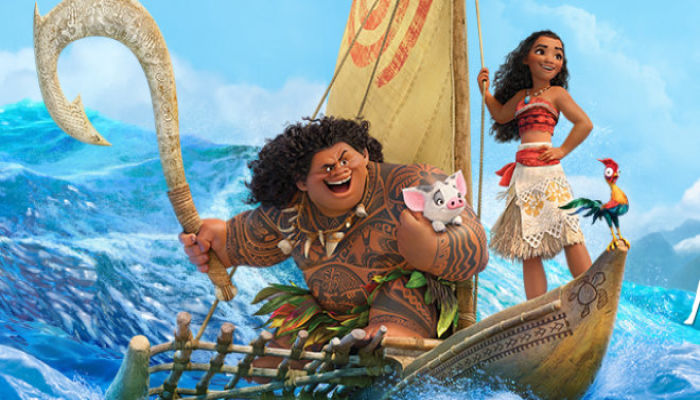
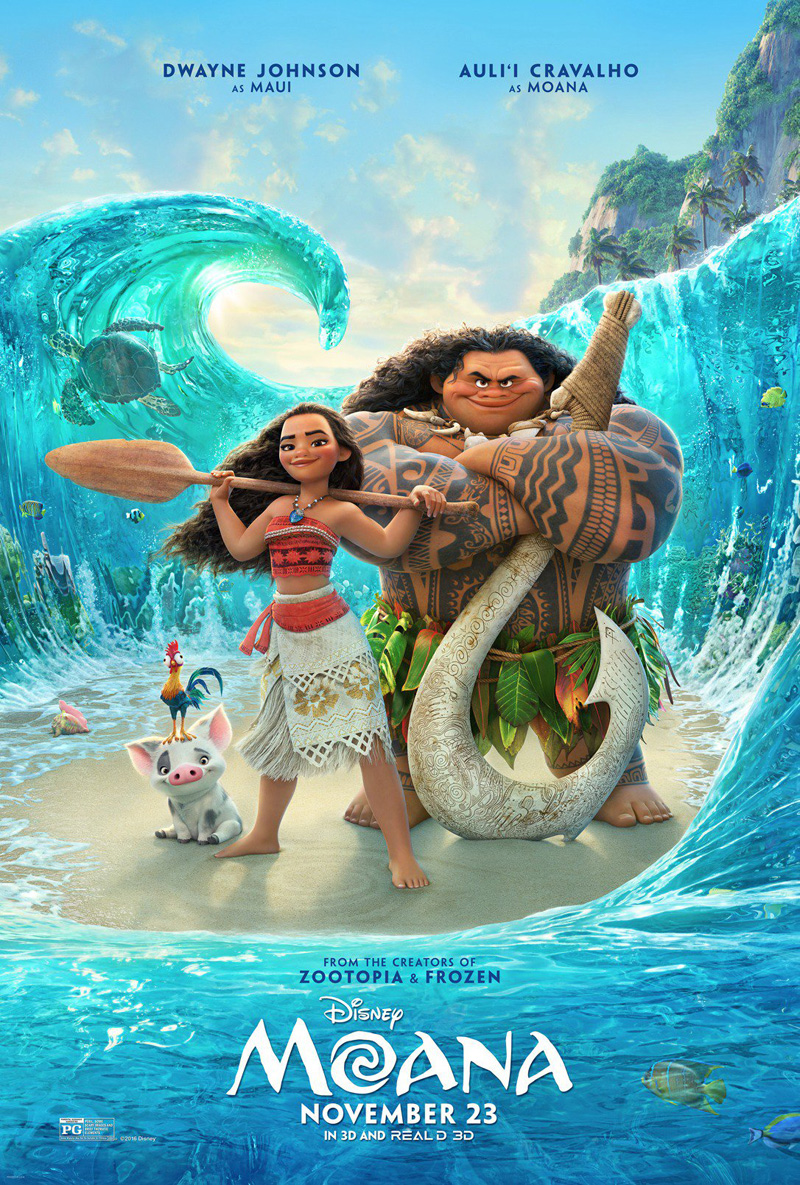
Once upon a time, the demi-God Maui (Dwayne Johnson) stole the heart of the island goddess Te Fiti, in order to give it to humanity. But he was attacked by the lava demon Te Kā and lost the heart and his magical fishhook. A thousand years later, Moana (Auli’I Cravalho), the daughter of the chief of her small island, grows to be a teenager who dreams of exploring beyond the reef. When her island’s crops start to fail, the Ocean chooses her to leave the island to find Maui and restore Te Fiti’s heart, in order to restore health to the world.

Moana is a charming, engaging and witty Disney movie, with strong, well-drawn characters, that immerses itself in its Polynesian mythology setting. What works about it – and what always puts Disney above its competitors – is that the film is interested in telling a story about characters who have real concerns and depth. Compare it to other, more stunted, “joke”-focused animations, produced by companies like Dreamworks, to see how far above those films it is. There are very few jokes here that will date (perhaps one about tweeting) – instead it’s a film that recognises its content for the adults doesn’t need to be sly film references or cheeky gags: a strong plot and engaging characters will entertain all generations.

One of the reasons the movie works so well is because Moana herself is a sympathetic, engaging heroine with dreams and aspirations, but who is still deeply respectful of her background. She’s not a rebellious teen, but someone who wants to improve the world around her, and is beautifully voiced by Cravalho. As such, she’s not only a great role model (take note parents!), but someone you end up totally rooting for. It also helps that she has a wonderful chemistry with Maui (very well voiced by a charmingly sparkling Johnson) – the film quietly subverts the expected Mentor/Pupil relationship between the two, as each teaches the other lessons both practical and spiritual.

Moana learns many of the lessons Disney picked up from Frozen. Like that film, it follows a free-spirited, independent-minded young woman not defined by a romantic interest. Its focus is on the lead overcoming a task to save her world. And it is built around an extremely catchy, very good song. How Far I’ll Go, Moana’s signature song (refrains of which are built into many of the other songs), is a sensational, powerful and tear-prickling power ballad about being yourself and following your own heart. It is remarkably easy to sing along with and carries a great message. It’s also got a brilliant popular appeal – I was stunned to see the YouTube video of it has over 141 millionhits (would that this site had so many). Many of the other songs are similarly excellent, especially the extremely hummable You’re Welcome (the songs are brilliantly composed by Lin-Manuel Miranda, Opetaia Foa’I and Mark Mancina).

Its visuals are outstanding, the animation terrific. I also really liked the way Clements and Musker embraced the strengths of silent characters, and the expressiveness animation can bring to characters. The Ocean, a clear character here who influences events, is nothing more than a shaped concentrated wave with no features, but has an expressiveness that makes it one of the wittiest characters in the film (memories of the carpet from Aladdin spring to mind). Similarly, the silent, dim-witted chicken Hei-Hei supplies many of the film’s laugh-out-loud moments. Maui’s body tattoos (wonderfully illustrated), moving and communicating silently with Maui throughout the movie, are terrifically innovative and feel unique.

Moana has a looseness and coolness to it that makes it an enjoyable, perfect viewing for a Saturday night. The storytelling is brilliantly done and the final confrontations are shot with a daring vibrancy that betters many action films. Clements and Musker have a mastery of the material that creates a gripping and involving story and characters. In many ways, it doesn’t do anything too unique or different from past Disney movies, but it tells the story with such charm and imagination that you’ll get totally wrapped up in it.