
Tag: Jim Carrey

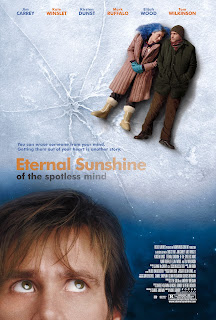
Eternal Sunshine of the Spotless Mind (2004)

Eternal Sunshine of the Spotless Mind (2004)

An impulsive decision leads to a wild tour through mind and memory in this mind-bending, desperately romantic classic

Director: Michel Gondry

Cast: Jim Carrey (Joel Barish), Kate Winslet (Clementine Kruczynski), Kirsten Dunst (Mary Svevo), Mark Ruffalo (Stan Fink), Elijah Wood (Patrick Wertz), Tom Wilkinson (Dr Howard Mierzwiak), Jane Adams (Carrie Eakin), David Cross (Rob Eakin), Dierdre O’Connell (Hollis Mierzwiak)
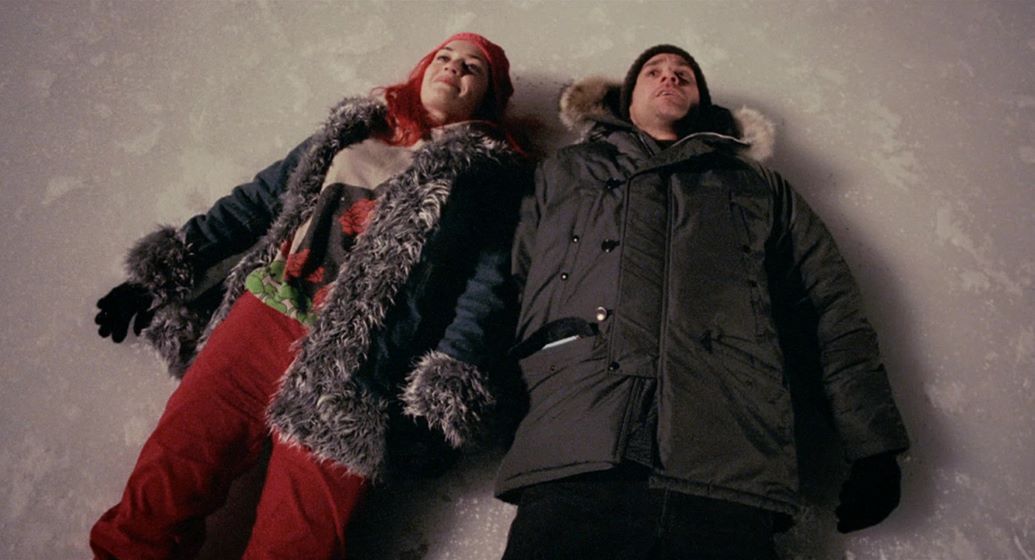
What makes us who we are? If it’s anything, it might just be the sum total of our experiences. The events of our lives, and the emotions they cause in us, shape and define us. If we cut some of them away, what would we be? Is losing painful memories worth it, if we also cut away memories we cling to as treasured possessions? What makes us love someone: instinct or the sum total of our memories with them? Ideas around this and how love works are at the centre of Michel Gondry and Charlie Kaufman’s extraordinarily inventive, imaginative but also romantic and heartfelt Eternal Sunshine of the Spotless Mind, a truly original film crammed with rewarding moments.

Joel Barish (Jim Carrey) wants to make-up with his electric but troubled girlfriend Clementine Kruczynski (Kate Winslet). Imagine his pain when he goes to see her and she seems not to recognise him – and how much worse that might be when he discovers Clementine has erased him from her memory. An experimental surgery, Lacuna, run by Dr Howard Mierzwiak (Tom Wilkinson), offers its clients an unmatchable service: they will erase a person from your memory. Struggling to get over the loss of a partner, wife, friend, child or even dog? No problem, they’ll be gone from your mind and you never need worry about their memory causing you pain again.

Hurt and angry, Joel decides to undergo the same surgery to forget Clementine. While the procedure takes place over night – supervised by techs Stan (Mark Ruffalo) and Patrick (Elijah Wood) and Stan’s girlfriend (and Dr Mierzwiak hero-worshipper) Mary (Kirsten Dunst) – Joel comes to realise in his sub-conscious that he doesn’t want his memory stripped of Clementine. The cost of losing so many good memories isn’t worth it. In his sub conscious he tries to protect his memories – while in the real world the team battle to complete their contract and erase them.

Not many films like that are there? Gondry’s film could have been a slave to its concept. Instead though, it manages to juggle its deeper meanings with a truly heartfelt, winning and very sweet human story about two people who, for all their faults, become people you completely invest in. Kaufman’s script, as you would expect, triumphs as a complex and inventive magic tour but it’s also a wonderfully placed romance and heartfelt relationship story. Effectively the film manages to have something for everyone to invest in, from sci-fi nerds to lovers of romcoms to philosophy students.

It’s also a triumph of style. Set largely in Joel’s mind, the film reflects the fractured nature of the surgery as his memories are assaulted, deconstructed and destroyed. Lights fade, buildings disassemble and disappear, faces melt away from bodies and memories start to crash into each other. In his mind Joel walks through a door in a library to find himself on a beach, or rounds a corner to find himself back in his childhood memories. All of this is filmed with a series of stunning in-camera effects that make characters disappear, duplicate or seem to be in several places at once, all shot in a series of one-take effects that sees buildings disappear in front of us or fascinating memory loops. Visually the film is a feast, a tribute to Gondry’s playful imagination.

But it sticks with people because of the heart at the centre of it. Joel and Clementine become people we care about. We root for Joel to defy the odds and preserve some of his memory. Because, the film makes clear, being consciously aware of his memories being deleted is basically like going through the pain of losing her a second time – only this time knowing you won’t even be left with the parts you want to hold onto. In fact – re-enforced by the distress we see in Clementine when we see her undergoing the panic of being subconsciously aware of memory loss in the real world – Joel’s horror of what he has asked for is likely what all the other patients of Lacuna’s ‘brain damage for your own good’ surgery have gone through.

Superbly played by Jim Carrey and Kate Winslet in cast-well-against-type performances, Joel and Clementine might at times be selfish, frustrating, even irritating people – but it’s clear their love for each other is real. Jim Carrey, dialling down his gonzo mania to an unprecedented degree, is perfect as the shy and gentle Joel, bewitched by this explosive presence in his life. Winslet is electric – cranky, brittle, damaged but also caring and playful. Kaufman’s film shows they hurt and snap at each other, but also that they bring each other happiness they can’t get anywhere else.

So, it comes back to that question: do we accept that part of the price of loving and living is pain? That the people who we love the most, are the ones that may also hurt us the most. The film is also clear that love can’t be forced or replicated. In the ‘real world’ Clementine is being wooed by Elijah Wood’s creepily needy techie, using his records of her romantic memories of Joel to replicate their special moments. The falseness of this isn’t a remote match for the true emotion of the real event: and it’s a testament to the film’s commitment that you can’t forge or force love, and that eventually it might just find a way.

Because, even without our memories, will we still be drawn towards the same people? Can love in fact survive, even if you don’t know who the person who love is anymore? It’s another fascinating thread in this film. Romantic couples throughout find themselves drawn to each other continually, a subconscious emotion surviving the purging of actual memories. It adds even more to the horrific trauma of seeing what’s happening to Joel here. His obvious distress as he realises the implications of what he rashly asked for – and there is plenty of suggestion Clementine feels the same – gets worse and worse as he realises he has signed away his own rights to decide who he loves.

Those ethical questions – is it even possible to make an informed decision here about lobotomizing your memory – mix with those philosophical questions of what makes us what we are. Will Joel and Clementine be the same people or not after this operation? How will they adjust to losing such a hugely important part of their histories? Especially as they won’t even know that they have. Kaufman’s script explores this all carefully, but never once losing track of the emotional story driving it.

So Eternal Sunshine becomes a touching love story, about two people going to huge ends against impossible odds to stay together. That, I think, is what lies behind its appeal. What makes it one of the most lasting films of the 00s is the invention and flair the story is told with – Gondry’s direction and its non-linear structure all only add to the fabulous script from Kaufman and Gondry – and the way it very lightly tackles a whole host of fascinating ideas while never losing track of its nature as an entertainment. It’s a brilliant film.

The Truman Show (1998)

Jim Carrey starts to wonder if there is more to his life than meets the eye in The Truman Show

Director: Peter Weir

Cast: Jim Carrey (Truman Burbank), Ed Harris (Christof), Laura Linney (Hannah Gill/Meryl Burbank), Noah Emmerich (Louis Coltrane/Marlon), Natascha McElhone (Sylvia/Lauren Garland), Holland Taylor (Alanis Montclair/Angela Burbank), Brian Delate (Walter Moore/Kirk Burbank), Paul Giamatti (Simeon), Peter Krause (Truman’s boss), Harry Shearer (Mike Michaelson), Philip Baker Hall (Network executive), John Pleshette (Network executive)

Have you ever fantasised that your whole life was a movie? It would be great wouldn’t it? You’re the star of every scene, the story lines always have a happy ending and you always emerge as the hero. But what if your life really was a massive TV series? What if everyone you had ever met was an actor playing a role? What if every experience in your life had been carefully scripted? What if nothing you knew was a real or even remotely true? That’s no-where near as fun.

Of course the odd thing today is that I suspect there are more than a few people out there who would still consider that a decent pay-off – even if they couldn’t know that they were on television, at least they would be on it. The Truman Show predated much of the surge of reality TV that was to come in the 00s, when shows like Big Brother made putting everyday (at least at first) people into situations and simply watching what happens became TV gold. Truman Burbank (Jim Carrey) is approaching his 30th birthday. Little does he know that his entire life he’s been at the centre of an elaborate TV show and that the hometown he has never left is a giant self-contained film studio. But as incidents begin to pile up, Truman suddenly questions his reality – while the show’s cast and production team work to keep him in ignorance. After all, we can’t let this ratings cash cow die!

With a precise, sharp and intelligent script by Andrew Niccol, Peter Weir’s film is a triumph. It’s partway between drama and satire, but never lets the one compromise another. It could have become a lumpen message film about the intrusion of media into our lives. Instead it’s an acute satire of TV gone mad, with a very real, sympathetic character who we invest in. Effectively the movie works on the same premise as the fictional TV show: the viewers know the world they are seeing is larger than life, but they know the character of Truman is grounded and true. It works as it bases its satirical attacks around a heartfelt story of a man (unwittingly at first) on a quest for freedom.

It’s two horses the film rides extraordinarily well – and even effectively comments on. Throughout the action we cut to the same regular joes watching the show: people in a bar, security cops, a pair of old ladies on a sofa. These people are aware they are watching a show – and watching a man effectively imprisoned – but have their emotions manipulated with ease, first by the producers then by the excitement of Truman’s very real quest. As they gasp and cheer as Truman works his way out of his prison, there is not a shred of acknowledgement to them that buy ‘booing’ the TV network they should also be booing themselves for watching in the first place. Instead they treat it just as another episode of their favourite show, the celebrations as transient and hollow as their tears of joy as the producers reintroducing Truman’s long-lost father in an attempt to ‘explain’ the strange circumstances he’s seen.

The Truman Show itself takes place in a perfect, unintimidating slice of 50’s inspired nostalgia. It’s a perfect picture of Americana – and its conservatism is itself a satire. Of course the producers set the show in the most cosy, comforting setting they could imagine. The rose-tinted past is always something we turn to for comfort viewing (take a look at the success of Downton Abbey). Alongside that, it’s a world run by advertising: Truman’s wife frequently stops to deliver scripted adverts, singing the praises of household products; a pair of old buffers have the job of pushing Truman up against a different advert hoarding every day; Truman’s friend Marlon praises their beer with every sip.

And in the sky: we have the studio itself, run by the shows creator Christof. Superbly played by Ed Harris, as part hipster artist, part messianic genius (“I am the creator” he tells Truman near the end, his voice coming through a beam of skylight, adding after a half-beat “of a television show”), Christof has carefully plotted Truman’s entire life from birth. He partly sees himself as Truman’s father – but he as much sees Truman as a tool he can manipulate for his own ends. A hands-on show-runner, Christof believes himself a genius whose will cannot be questioned. This softly-spoken dictator is a terrifying insight into what happens when self-appointed artistic geniuses can explore their ideas with no regard for morality and no restraints.

Truman himself is a charming, sweet, decent fellow – I suppose if nothing else Christof has done a superb job of bringing him up. But his entire life is a manipulated lie. The whole town is full of subconscious messages encouraging him to stay – as is the advice from his wife and best friend. Most cruelly of all, he has been deliberately traumatised into a terror of water by being made to feel responsible as a boy for the drowning of his father. Christof even boasts of his ingenuity in this “plot line” to help insure Truman would be too scared to ever consider leaving his home.

Jim Carrey was a revelation as Truman – Weir was the first director to refocus his comic mania into something more intimate and true. The part still makes a lot of hay from Carrey’s rubbery comedic chops – its part of Truman’s charm – but he matches it with a Jimmy Stewartish decency and earnestness. As the illusion begins to crack, his bemusement turns to something between disbelief and anger, but never compromises his humanity. You can see why billions of people watched him – and also understand why a man so accommodating and decent has not questioned his life before. Witty, gentle and human it’s a great performance.

But perhaps the film’s greatest strength is Weir’s sharp, clear-eyed, largely unobtrusive direction. The film makes nifty use of all the thousands of cameras contained in Truman’s world – with shots taken from button cams, CCTV, dashboards and all sorts. Its intermixed with normal camera angles, but gives us a beautiful sense of Truman’s world, and the TV world coming together throughout. The pace of the film is perfect and its slow reveal of information delicately done. Weir’s intercutting between ‘fictional’ and real world is superbly judged and the film wears its satire very lightly as well superbly mixing what could have been a dark film of imprisonment and abuse with a lightness and charm. Above all, it manages to both be a compelling story with a sympathetic hero and a sharp-pronged criticism of the shallowness of media and its viewing public.

It might well have been far too ahead of its time when it was released. It looks smarter and smarter each passing year. Truman’s world is an Instagram paradise, and with social media we’ve got even more used to spending our leisure time looking through other people’s lives rather than our own. It’s all part of what helps make Niccol’s script so sharp and prescient. Directed superbly by Weir and wonderfully acted – perhaps most of all by Harris’ Warhol turned dictator – it keeps you entertained, invested and leaves you cheering. Just like the viewers watching Truman being manipulated. Which makes you realise: is the film attacking its audience as much as anyone else? After all, we’d all watch this stuff in real life: look at how we rubberneck at accidents. What’s wrong with us eh?