Tag: Karen Gillan

The Big Short (2015)

The Big Short (2015)

An all-star cast juggle dollars, acronyms and lots of shouting in McKay’s smart but heartless film

Director: Adam McKay

Cast: Christian Bale (Michael Burry), Steve Carell (Mark Baum), Ryan Gosling (Jared Vennett), Brad Pitt (Ben Rickert), John Magure (Charlie Geller), Finn Wittrock (Jamie Shipley), Hamish Linklater (Porter Collins), Rafe Spall (Danny Moses), Jeremy Strong (Vinny Daniel), Marisa Tomei (Cynthia Baum), Tracy Letts (Lawrence Fields), Melissa Leo (Georgia Hale), Karen Gillan (Evie)
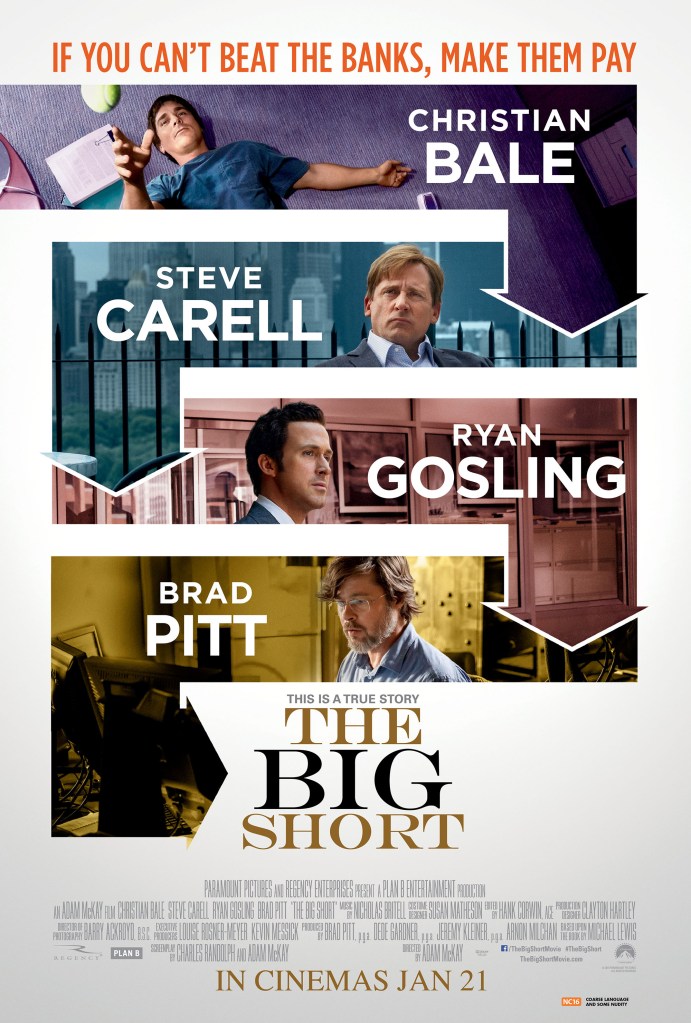
We all experienced the financial crisis of 2007 but very few of us actually understood it: above all, perhaps, what the hell actually happened and why. That’s what McKay’s film – somewhere between drama, satire, black comedy and tongue-in-cheek infomercial – tries to resolve. Adapting a book by leading financial journalist Michael Lewis, The Big Short charts the whys and wherefores of the collapse, by focusing on the money men who saw the signs of the impending crash and bet against the booming economy.

Those men (and they are all men of course) are played by a series of actors enjoying themselves thoroughly playing larger-than-life characters who it’s never entirely clear if we are supposed to empathise with, sympathise with, cheer on or stand aghast at while they make fortunes from the ruin of others. I’m not sure the film does either though.

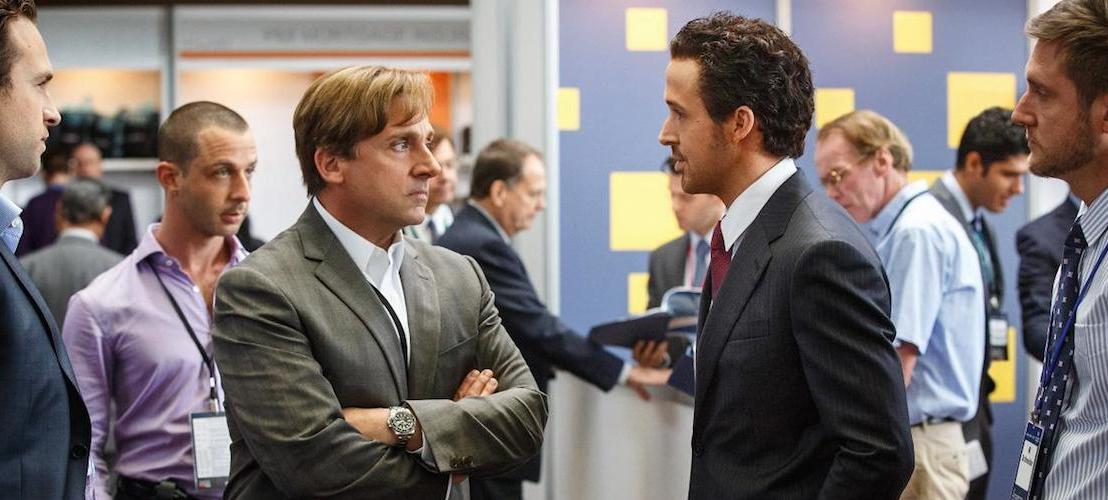
Christian Bale is the eccentric hedge fund manager whose analysis predicts the crash and takes eye-watering investment charges that will pay off thousands of times over when the crash comes. Ryan Gosling is a banking executive who understands that analysis and robs in Steve Carrell’s hedge fund manager to similarly invest to cash in (Carrell’s character, for all his misanthropic oddness is the only one truly outraged at the corruption in the system that will lead to the collapse). Brad Pitt is the retired trader roped in for “one more job” by young traders Finn Wittrock and John Magure to make their own bets against the house. They too will eventually realise the huge impact this will have on people – but are powerless to get anyone to listen as they try and warn against the pending disaster.

McKay’s film, with its tightly-controlled but surprisingly effective off-the-cuff feel (it’s stuffed with neatly edited jokes, straight to camera addresses and a constant running commentary from the characters on the accuracy – or otherwise –  of outlandish moments), may sometimes have the air of a slightly smug student film, but what it does well is explain the financials. If you were unsure about what CDOs, AAA ratings, Quants, credit default swops and sup-prime mortgage were before the start, you’ll have a much better idea later. Neat inventions describe this: from narration, to graphics, to Jenga blocks to famous people (Margot Robbie, Anthony Bourdain and Selena Gomez among others) popping up to glamorously put things in other contexts.

The Big Short does this sort of thing rather well. Sure, it’s got a “lads” feeling to it – there is no “for the girls” equivalent to Margot Robbie in a bath explaining sub-prime mortgages – and the entire dialogue and pace of the film has a frat-house wildness that I suppose does reflect the tone of many of these financial institutions, which were little better than sausage parties. But it presents its ideas nicely and has some good jokes. The verité style McKay goes for is more studied than it natural – and it’s hard not to escape the feeling that the film is very, very pleased with itself, so much so that it’s not a surprise both his follow-up films the dreadful Vice and the shrill Don’t Look Up double down to various degrees on the slightly smug, self-satisfied liberalism here that sees those in power as corrupt, greedy, fools or all three and everyone else as innocent victims.

Where the film is less certain is exactly how it feels about its central characters. In other words, it doesn’t always turn the same critical eye on these people profiting from a disaster that will lead to millions losing their homes (the millions are represented by a single immigrant family). Brad Pitt may reprove his young charges from celebrating gains that will be the losses of millions of others. Steve Carrell gets several lines berating the callous, short-sighted greed of the banks. Christian Bale’s character is appalled by the “you scratch my back, I’ll scratch yours” relationship between banks, investment ratings agencies and insurance companies, all working together to keep artificial profits up. But the film still wants us to celebrate as these plucky outsiders and weirdoes clean out the house and carry home cartloads of cash while the casino burns down.

Basically, the film is all good fun but gives us little to actually care about. It’s highly influenced by the gonzo macho representation of this world Martin Scorsese’s The Wolf of Wall Street gave us, but far less skilled than that film in presenting its players as the childish, amoral vacuums they are. Furthermore, it does far less to really look at the impact of what it’s doing: in fact, it spends so long delighting in how it tells the story, it doesn’t show us what happens. It dwells at the end on abandoned trading floors and closed banks, like the fall of the Roman Empire, but finds no time at any point to hear from a real person who lost their home.

Perhaps because the real impacts are too depressing – and would have made it impossible to feel the triumphal buzz the film wants from seeing its heroes vindicated and the smug assholes we’ve seen from the banks get egg on their face. It might have felt a lot less funny if we had seen even a closing montage of the real victims and the human impact.

It’s where The Big Short falls down and why it feels in the end like a student film made on a huge budget. It nods its head at real mature themes but actually isn’t really interested in them at all.
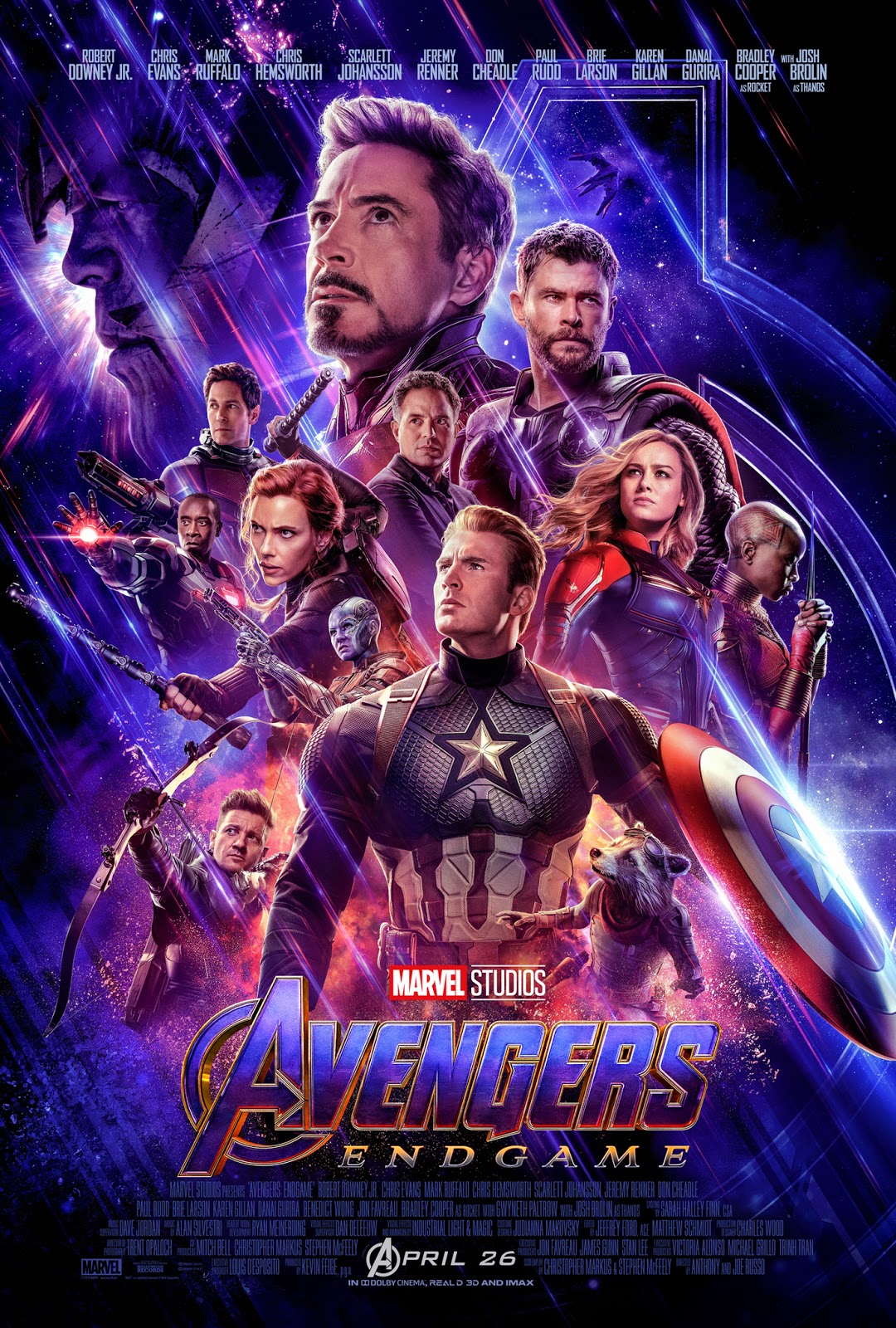
Avengers: Endgame (2019)

Time to got to work: Avengers: Endgame caps off a 22 film series

Director: Anthony and Joe Russo

Cast: Robert Downey Jnr (Tony Stark), Chris Evans (Steve Rodgers), Mark Ruffalo (Bruce Banner/Hulk), Chris Hemsworth (Thor), Scarlett Johansson (Natasha Romanoff), Jeremy Renner (Clint Barton), Don Cheadle (Rhodey), Paul Rudd (Scott Lang), Karen Gillan (Nebula), Bradley Cooper (Rocket), Gwyneth Paltrow (Pepper Potts), Josh Brolin (Thanos), Zoe Saldana (Gamora), Danai Gurira (Okoye), Brie Larson (Carol Danvers), Chadwick Boseman (T’Challa), Benedict Cumberbatch (Dr Stephen Strange), Tom Holland (Peter Parker), Evangeline Lilly (Hope van Dyne), Anthony Mackie (Sam Wilson), Elizabeth Olsen (Wanda Maximoff), Chris Pratt (Peter Quill), Sebastian Stan (Bucky Barnes), Rene Russo (Frigga), John Slattery (Howard Stark), Tilda Swinton (Ancient One), Robert Redford (Alexander Pierce), Linda Cardellini (Laura Barton), Tom Hiddleston (Loki), Tom Vaughen-Lawlor (Ebony Maw)

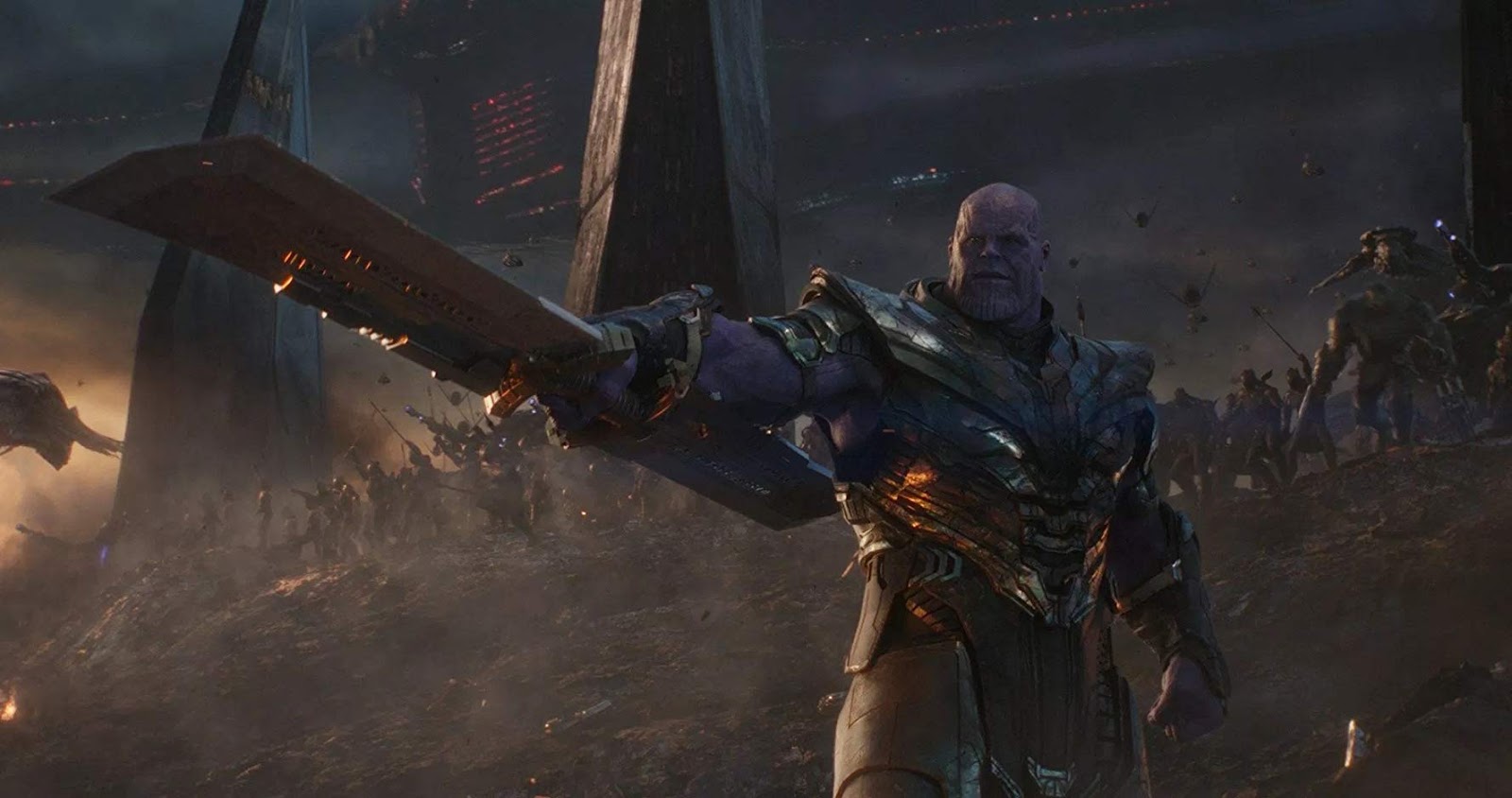
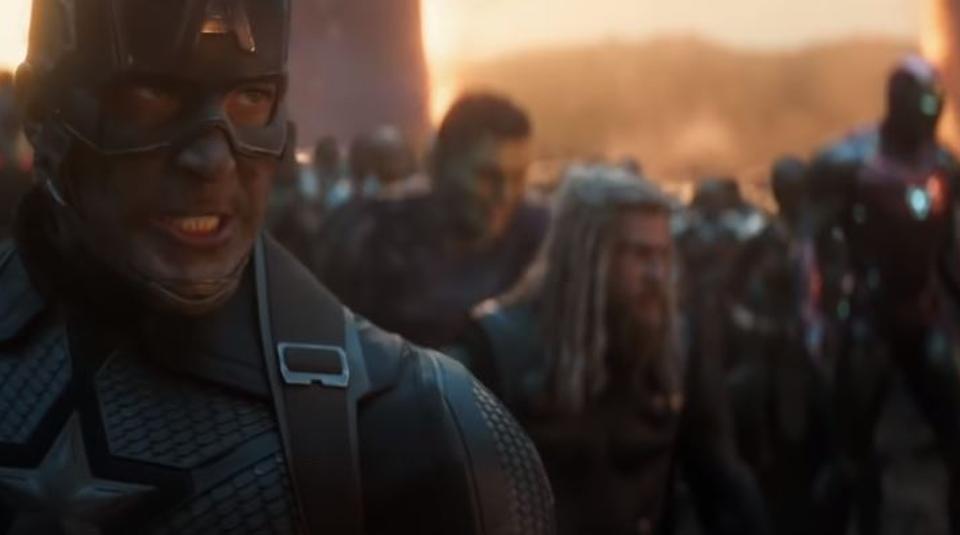
So this really is it. For now. As Dr Strange says at one point “we are into the Endgame now”. Avengers: Endgame is Act Two of the Marvel Cinematic Universe’s ten-years-in-the-making finale. It’s also a sequel that, for me, enriches and improves the “bangs before brains” Infinity War. Where that film played too hard to the fanboy wet dream of seeing X teaming up with Y and lots of bashing, Avengers: Endgame focuses more on the intelligent character work and decent acting and writing that has underpinned what has turned what used to be the preserve of geeks into a franchise now almost universally beloved across the world.

The film picks up almost immediately after über-Baddie and misguided-humanitarian Thanos (James Brolin) has successfully used the powers of the infinity stones (a series of mystical macguffins that have been omnipresent in the series so far) to wipe out half of the population of the universe to save it from overpopulation, including dozens of our heroes. Those that remain – predominantly the original roster from the first Avengers film – must work together to find a way to overturn this destruction that Thanos has wrought. But more sacrifices are inevitable along the way.

Avengers: Endgame is a film that the less you know about where it is going, the more you are likely to enjoy its twists and turns. Viewers who may have been anticipating a series of increasingly brutal smackdowns between the Avengers and their nemesis Thanos will however be disappointed. This is not a film of acative avenging: it’s a film where our heroes cope with the burden of unbearable failure, survivor guilt, PTSD and are desperate to try anything to try and make amends. Surprisingly, for the biggest budget entry in the whole cannon, this feels like a smaller-scale, character driven film which carries far bigger (and realistic) stakes than several films earlier in the franchise.

For the opening two hours of this three hour epic, there is actually precious little in the way of action. Instead we explore individual reactions and struggles of each of our heroes. Some have slumped into depression. Some are struggling to move on. Others have shut down and focus on their work. Some have managed to put their past failure and loss behind them to rebuild their lives. Others have embraced the darkness altogether to extract a revenge upon the world that they feel has taken everything from them. It’s a real change of pace from the high octane action and smart banter of the first film. This feels more earned, more invested and more designed to engage our brains and emotions rather than pound us into joyful submission with its bangs and crashes.

In fact it builds back into what has made this franchise so successful and so beloved. It turns these heroes into people, rather than just monoliths of action. Way back in the day, when making the first Iron Man film, Kevin Feige said if they got the film right the name “Tony Stark” would become as famous as “Iron Man”. It sums the aims of the franchise up – that these should be real people to us rather than just comic book cartoons. If we think of Chris Evans, we think of him as being “Steve” not Captain America. Jeremy Renner is as well-known as Clint Barton as “Hawkeye”. If Scarlett Johansson is addressed as Natasha we don’t blink an eye in the film, in the way we would if she was called “Black Widow”. The Hulk can be calmly addressed as Bruce or Ant Man as “Scott” and we never think it strange. In fact it would feel odd to have them calling each other by their cartoon names. It’s normalised the personalities behind the badges and masks.

And that works so well because the writing, when it works, focuses on making these characters feel real – and the actors they have brought on board to fill out the roles have excelled at adding depth and shading to the roles. Chris Evans will probably forever by the noble, dedicated humanitarian Steve Rodgers and rightly so as he has turned this potential stick-in-the-mud into a person we deeply respect and love. He’s terrific here, marshalling a plot arc that brings his time in this crazy franchise to an end with a neat bow that feels fitting and fair (even if it’s got some logic gaps).

Robert Downey Jnr also does some excellent work in his final sign off from the series. The role here plays to all the strengths Downey Jnr has brought to the role:  the smartness, the intelligence, the slight smugness, the charisma. But also the vulnerability and longing to be genuinely loved and to build a family around him. The desire to protect people. The nobility under the off-the-cuff exterior. Downey Jnr’s departure was well advertised and again it works a treat here.

But then the whole cast are marvellous. Hemsworth gets to stretch his comic muscles even more than his regular ones, and balances marvellously a plot about a hero who has lost his way. Scarlett Johansson gets some of her meatiest material as Natasha, unable to fully take on board what has happened but determined to make amends. Jeremy Renner has some of the film’s darker material – and confirms that he has always been the heart of the team – with a plot line that hinges on the loss of his family. Mark Ruffalo’s Bruce Banner is presented in an intriguing new light that both delights and feels like a real rounding up of his character arc.

The eventual plan to underdo the work of Thanos revolves, it’s not a spoiler to say, around Time Travel. With a run, jump and leap the Russo Brothers acknowledge every cliché of time travel lore from dozens of films (Rhodes and Lang at one point hilariously name check virtually every time-travel-based film ever as back-up for their concerns about the mission) before basically throwing it all out of the window by making up its own rules (since, hey, time travel is impossible anyway so why not say all that “you could kill your own grandfather” stuff is bollocks?).

The time travel allows us to fly back into the plots and events of several other Marvel films, principally the first Avengers film, Guardians of the Galaxy and (hilariously considering it might be the worst one) Thor: The Dark World. This flashback structure works extremely well, with our heroes woven neatly into the events of films past – as well as allowing for “unseen” moments from those films to be staged here for the first time.

For a film that, up until now, has dealt with the pain of loss it also makes for a playful series of missions (or at least until one of them turns out to carry huge personal cost) that contrasts really well with the first half. The missions focus on a “heist” structure also gives us the chance for our heroes to work through the demons, often with the help of several (deceased) characters from past films living again (Rene Russo in particular gets easily her best ever scenes in the series as Thor’s mother in the past urging her son to come to terms with his guilt).

All this intelligent and emotional character work, mixed with sequences that are focused less on action and more on adventure and capery means that when we get the inevitable battle scenes at the end of the film – and I don’t think it’s a spoiler to say most of the film’s final act returns us to the action beats that governed Infinity War – actually feel really earned. Having reminded ourselves why we loved many of these characters in the first place, seeing them fight for good and do incredibly cool things while doing it suddenly feels both really earned and also hugely entertaining. Investment in these action scenes grows from the detailed work earlier.

It’s also a testament to the Russo Brothers direction. I will say right away that while I found part of Infinity War lacking in personality and identity behind the camera, I think I massively overlooked how effortless the Russo brothers make balancing all these plot lines, characters and events seem. Never once does the film seem to dip or droop the ball, and I don’t think there are many directors who could even begin to manage what they achieve here: a fusion of popcorn action with character study, which juggles 20-40 characters at various points. My hat sirs.

Avengers: Endgame is a delightful film. I went into it sceptical after Infinity War left me a little cold, but I needn’t have been so concerned. This is a film that, on its own merits, is almost a sort of masterpiece. Have you ever seen a film that juggled so much – not least the crushing expectation of its fans – and delivered so superbly? Chalk that up as another success for the Russos just turning in a film that the huge fanbase loved. Avengers: Endgame isn’t Citizen Kane – but just as the Russos couldn’t make a film as great as that, you can’t imagine Orson Welles would ever have managed to direct a film like it.

The Circle (2017)


Emma Watson struggles against the surveillance state in shockingly bad adaptation The Circle

Director: James Ponsoldt

Cast: Mae Holland (Emma Watson), Tom Hanks (Eamon Bailey), John Boyega (Ty Lafitte/Kalden), Karen Gillan (Annie Allerton), Ellar Coltrane (Mercer), Patton Oswalt (Tom Stenton), Bill Paxton (Vinnie Holland), Glenne Headly (Bonnie Holland)

Is there anything sadder than seeing a book you thought was fantastic get totally screwed up by film producers? Worst of all, Dave Eggers, the book’s author, even gets a screenwriting credit here. I hope to God his contribution was a rejected earlier draft, rather than the bland, aimless drivel on display here. It would be too depressing to think he gutted his own work and then mutilated its corpse.

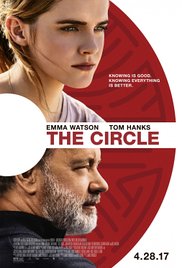
Mae (Emma Watson) is thrilled to land a job at The Circle, an all-powerful, Google-style corporation with a virtual monopoly over the internet. However, she discovers while she works at the Circle that there are (of course!) dark secrets at the heart of the company, and that its charismatic CEO Eamon Bailey (Tom Hanks) may not be all that he seems.

Imagine an adaptation of 1984 at the end of which Winston Smith defeats Big Brother but decides there are positive sides to living under a dictatorship, so carries on doing so. That’s exactly as ballsed-up as this total misreading of Egger’s gripping critique of our internet age. In this terrible adaptation, the novel is neutered beyond recognition into just another bland “Big Corporations Acting All Corporation-y” nonsense. The film is pretty much exactly as awful as the book is brilliant.

Where did it all go so completely and utterly wrong? Did they not understand the book? The novel is not only a critique of the pervasive power of its shady Google-like organisation. It’s also a savage attack on our own tweeting, social media obsessed world – the sort of world where private actions are theft as they rob everyone else from experiencing them vicariously through tweets, photos and posts. It’s this part of the story the film completely (and almost wilfully) misses the point of.

They seem terrified at the thought that the social media Twitteratti might take against the film if it too openly attacks the actual users of systems like this, with their (at times) shallow, demanding and entitled pushing of their own opinions, and intrusions into others’ lives. Instead the film gives a complete pass to all the users of the systems, while attacking the corporation providing them. So we get the bizarre set up of a film that seems to say it’s totally fine for normal people to record everything and push it all onto the internet, turning their world into a judgemental surveillance state, but it’s evil for a corporation to create the devices they use to do it.

Even the film’s criticism of corporations isn’t very clear, largely because we never get a sense of the Circle’s power and its hunger for getting more and more control. The film throws away its involvement in politics and its control over everyday lives. Perhaps because it knows so many of the viewership love gadgets, there is no exploration of the creepy, controlling aspect of the many tracking and recording devices the Circlers wear throughout the film, as there is in the novel. Instead the target is the shady business people at the top (not that we learn anything about what they want) because everyone hates businessmen don’t they? Nice easy target. I can tweet my loathing of them very easily.

It’s a film devoid of any challenge. A character’s suicide from the book is changed to an accidental death. The more vulnerable and desperate of the characters from the book have been deleted. The obsessive self-definition the Circlers gain from what other people tweet about them is downplayed. The ending of the film completely inverts the novel, and leaves us with a bizarre final image of our hero kayaking on the lake, but warmly smiling at the drones watching her, even after she has destroyed the “villains” who run them. It makes no sense whatsoever. My jaw literally dropped when this happened by the way.

Mae is a character who now has no consistency. Her growing obsession with the power of social media – and the destructive effect it has on her actual human relationships – is completely ignored. It’s the key part of her character from the book, and its removed here to try her as traditionally ‘likeable’ as possible. An anti-hero becomes a flat out hero. The film shows the impact of actions she carries out in the book – particularly on Annie – but removes these actions from the film. Why do people slip into depression or depart from the film? Who knows. Left with nothing to work with from the original book, Emma Watson gives a bland and forgettable performance. No one else really makes an impact, playing dull, neutered versions of the characters from the source material, devoid of depth or interest.

The Circle might be one of the worst literary adaptations I’ve ever seen. It guts the original book and removes any of the most challenging and interesting content. It’s terrified of criticising in any way anyone who might be watching. It’s a satire on the social media age that has no satire in it, and is desperate not to talk about social media. Worst of all it will discourage people from reading the original novel. In the words of the modern age: #uttershit.