Tag: Keira Knightley

Atonement (2007)

Atonement (2007)

Moderately successful literary drama, that succumbs to tricksy showboating

Director: Joe Wright

Cast: James McAvoy (Robbie Turner), Keira Knightley (Cecilia Tallis), Saoirse Ronan (Briony Tallis, aged 13), Romola Garai (Briony Tallis, aged 18), Vanessa Redgrave (Older Briony Tallis), Brenda Blethyn (Grace Turner), Juno Temple (Lola Quincey), Benedict Cumberbatch (Paul Marshall), Patrick Kennedy (Leon Tallis), Harriet Walter (Emily Tallis), Peter Wight (Inspector), Daniel Mays (Tommy Nettle), Nonso Anozie (Frank Mace), Gina McKee (Sister Drummond), Michelle Duncan (Fiona)

The past is a foreign country. Sadly, it’s not always the case that they do things differently there. Instead, it can be a land of regrets and mistakes that we can never undo. Events that once seemed so certain, end up twisting our lives and shaping our destinies. A single mistake can mean a lifetime of never being able to atone. These are ideas thrillingly explored in Ian McEwan’s novel Atonement, one of the finest in his career. The same ideas carry across to this handsomely mounted adaptation, which looks gorgeous but often tries too hard to impress.

In 1935, the Tallis family owns a grand country house. Precocious Briony Tallis (Saoirse Ronan) is on the cusp of her teenage years, and believes she understands the world perfectly. A budding writer, her imagination, curiosity and romanticism overflow. But her youthful mis-interpretation of the romantic interactions between her sister Cecilia (Keira Knightley) and the housekeeper’s son Robbie Turner (James McAvoy)ends in a tragically mistaken accusation that destroys Robbie’s life. Five years later, Robbie serves as a private during the British retreat from Dunkirk, Cecilia is a nurse in London and Briony is training to become the same – their lives still shaped by those misunderstandings on that fateful night.

Atonement is a film I’m not sure time has been kind to. Released in 2007 to waves of praise (including Oscar nominations and a BAFTA and Golden Globe for Best Film), it has the classic combination of literary adaptation, period beauty and big themes. But re-watching it (and it’s the third time for me), the film rewards less and less. Instead, my overwhelming feeling this time was it was a tricksy, show-off film that – despite some strong performances, in particular from McAvoy and Ronan – strained every second to demonstrate to the viewer that Joe Wright belonged with the big boys as a cinema director.

Constantly, the emotional impact of the film is undermined because nearly every scene has an overwhelming feeling of being ”Directed”. Wright pours buckets of cinematic tricksiness and flair into the film – so much so that it overwhelms the story and drowns out the emotion. With repeat viewings this overt flashiness becomes ever more wearing. Scenes very rarely escape having some directorial invention slathered on them. Direct-to-camera addresses where the background fades to back (giving the air of a confessional). Events unspooling (and at one tiresome moment played in reverse) to illustrate time reversing to allow us to see events from a different perspective. Other visual images seem cliched beyond belief: a divine flash of light behind McAvoy while he struggles against death in Dunkirk or, worst of all, Nurse Briony talking about never being able to shed the guilt from her childhood actions while vigorously washing her hands.

Perhaps most grinding of all is the (Oscar winning) score from Dario Marinelli which hammers home the questionably reality of some of the scenes we are watching (or at least the creative filter that Briony is placing over them) by building in excessive typewriter whirs and clicks into its structure. It hammers home one of the film’s key themes: that at least part of what we are watching is based solely (it is revealed) on the recollections of the much older Briony, now a respected novelist. That perhaps, some of the events are her creative interpretation, wishes or even flat-out invention. This is a neat device, but perhaps one that could have worked better with a framing device to place it into context. Instead the reveal feels tacked on at the end – for all that this is the same approach McEwan takes in the novel (with greater effect).

But then, for all the film faithfully follows the structure of the novel (in a respectful adaptation by Christopher Hampton), too often its warmth and feeling get lost in the showy staging. Although part of the tragedy is that Robbie and Cecilia’s relationship is destroyed before they even get a chance to explore it fully, the chemistry between the two of them isn’t quite there and the film doesn’t quite communicate the bond between them being as deep as it would need to be. So much of this in the book was communicated through interior monologue – and the film refuses to take a second away from its flashiness to compensate for this by allowing the relationship between the two to breathe.

Instead Joe Wright prioritises his directorial effects. For all that his over five-minute tracking shot through the beach of Dunkirk is hugely impressive and dynamic – and it really captures a sense of the madness, despair, fear and confusion of the evacuation – this isn’t a film about Dunkirk. It is a film about a relationship – and using the same flair to make us fully buy into, and invest in, this relationship would perhaps have served the film better. It’s striking that, in the long-term, the most impressive scenes are the quieter ones: Benedict Cumberbatch’s chilling house guest’s subtly ambiguous conversation with Briony’s young cousins, or Robbie and Cecilia meeting in a crowded café after years and struggling to find both the words and body language to communicate feelings they themselves barely understand. In the long term, scenes like this are worth a dozen tracking shots – and demonstrate Wright has real talent behind all the showing off.

But the film is striking, looks wonderful – as a mix of both The Go Between and a war film – and in James McAvoy’s performance has a striking lead. McAvoy’s career was transformed by his work here – boyish charm with a slight air of cockiness under his decency, turned by events into fragility, vulnerability, fear and an anger he can’t quite place into words. Knightley gives one of her best performances – although, as always, even at her best she hasn’t the skill and depth of a Kate Winslet. Or a Saoirse Ronan for that matter, who is outstanding as the young Briony – convinced that she is right and that she understands the world perfectly, but as confused and vulnerable as any child thrown into a world that in fact she doesn’t comprehend.

Atonement has its virtues. But too often these are buried underneath showing off, ambition and tricksiness. Sadly this reduces its effect and leaves it not as successful a film as it should be.
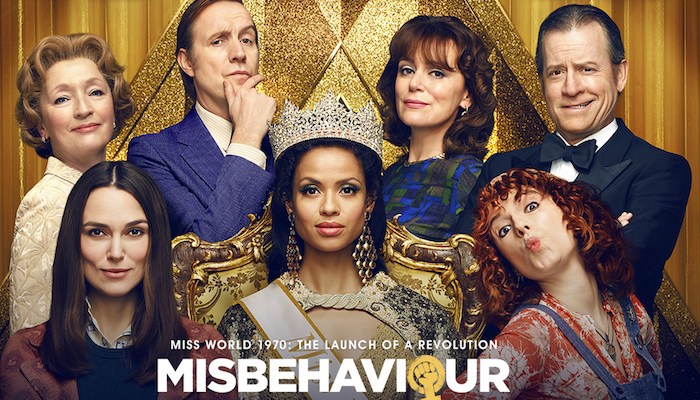
Misbehaviour (2020)

What price progress in Misbehaviour?

Director: Philipa Lowthorpe

Cast: Keira Knightley (Sally Alexander), Gugu Mbatha-Raw (Jennifer Hosten, Miss Grenada), Jessie Buckley (Jo Robinson), Greg Kinnear (Bob Hope), Lesley Manville (Dolores Hope), Rhys Ifans (Eric Morley), Keeley Hawes (Julia Morley), Phyllis Logan (Evelyn Alexander), Loreece Harrison (Pearl Jansen, Miss Africa South), Clara Rosager (Marjorie Johansson, Miss Sweden), Suki Waterhouse (Sandra Wolsfield, Miss USA), John Heffernan (Gareth Stedman Jones)

In 1970, the Miss World Competition in London was disrupted before a world-wide TV audience by Women’s Liberation campaigners, furious at the competition being the public face of a world that judged women on appearance rather than personality. The disruption was led by post-graduate UCL student Sally Alexander (Keira Knightley) and commune radical Jo Robinson (Jessie Buckley), and rather overshadowed for many the fact that, for the first time in history, black female competitors like Miss Grenada Jennifer Hoosten (Gugu Mbatha-Raw) were treated as genuine contenders for the title. Misbehaviour recreates all this wonderfully, but also makes an intriguing exploration of the different ways women can make themselves a place in the world.

It would have been very easy for Philipa Lowthorpe’s engaging film to have designated villains – after all with the casual sexism and objectification of the Miss World competition, you could easily have assigned the competition runners as baddies. Instead the film is richer than that, full of people who genuinely feel they are doing their best in the roles they’ve been given in life. If there is a villain, it’s society itself which traps women into certain roles, and doesn’t allow them to grow.

The film follows three plot lines – the women’s liberation movement, the background of staging the Miss World Competition, and the lives and expectations of the contestants themselves. Of these three plots, the women’s liberation movement is surprisingly the least engaging. Keira Knightley and Jessie Buckley do decent jobs, but their characters are more one-dimensional and lack real development (they start the film as passionate rebels and end the film the same way), with this lack of plot being padded out by movie clichés of the “you’re off the protest” variety. 

The real interest surprisingly is the competitors themselves. Like the protestors, the film is keen to not blame the contestants. The ones we follow are smart, intelligent, passionate women who are, by and large, willing to play the game to get their future ambitions realised. We see this most of all for Miss Grenada and Miss “Africa South” (a black South African shoe-horned into the competition to counter accusations of legitimising apartheid): the competition places them in the position of representing victimised minorities, groups that have their options sharply restricted. Having spent their lives being told that only being white, blonde and blue-eyed is beautiful, the chance to set an example to others is important to them – and the film doesn’t downplay or demean this at all.

This is captured particularly in the exploration of Gugu Mbatha-Raw’s Miss Grenada, Jennifer Hoosten. A woman willing to use the competition as a springboard to try and build herself a professional career, she is an intelligent and dedicated woman who understands the nature of her competition. Hoosten however rejects being positioned as a victim, as well as the way Women’s Liberation crams all women’s aims into a single homogenous goal. Why should another group of women tell her what is best for her – isn’t that what men have been doing all her life? As a black woman, her only way to get the opportunities that someone like Sally Alexander has – education and career – is to play the hand that nature has given her the only way she can. Mbatha-Raw captures this all extremely well in a quietly judged and affecting performance.

Similar feelings motivate the rest of the competitors. Miss Africa South (an engaging Loreece Harrison) just wants to keep her head down and get home to her family, letting her presence alone make her statements. Miss Sweden (a fiery Clara Rosager) rails against the control and management of the organisers on every aspect of her life while at the competition. It’s a film where women are working to find their place in the world, but accepting that not all those goals will be the same. Keeley Hawes does excellent work as Julia Morley (co-runner of the competition with her husband, a brash Rhys Ifans), a woman trying her best to reform the competition from within.

Lowthorpe juggles these interesting themes – giving oxygen to all these points of view – within a fascinatingly precise reconstruction of the competition itself and the protest. As part of this Greg Kinnear contributes a spot-on performance as Bob Hope, here a sexist comedian from a different era who can’t understand the changing world. The film gets a lot of comic mileage as well from the jaw-dropping sexism of the BBC coverage and the drooling perviness of the reporters rushing to interview the competitors.

“This isn’t the end of anything, but this could be a start” says Lesley Manville in her waspishly delightful cameo as Hope’s wife. She’s right, the world didn’t change overnight. But as the film captures it started getting people thinking, even if it accepted that not all women will have the same view. Sally Alexander and her mother can disagree on women’s roles – “Why would I want to grow up like you?” Sally berates her housewife mother (very well played by Phyllis Logan) – but the two characters can still come together and agree that having opportunities is still better than not. And perhaps that’s what the film is arguing for: all these women are stretching for opportunities. And if that means the world needs to change so half the population gets the same chances as the other half, so be it.

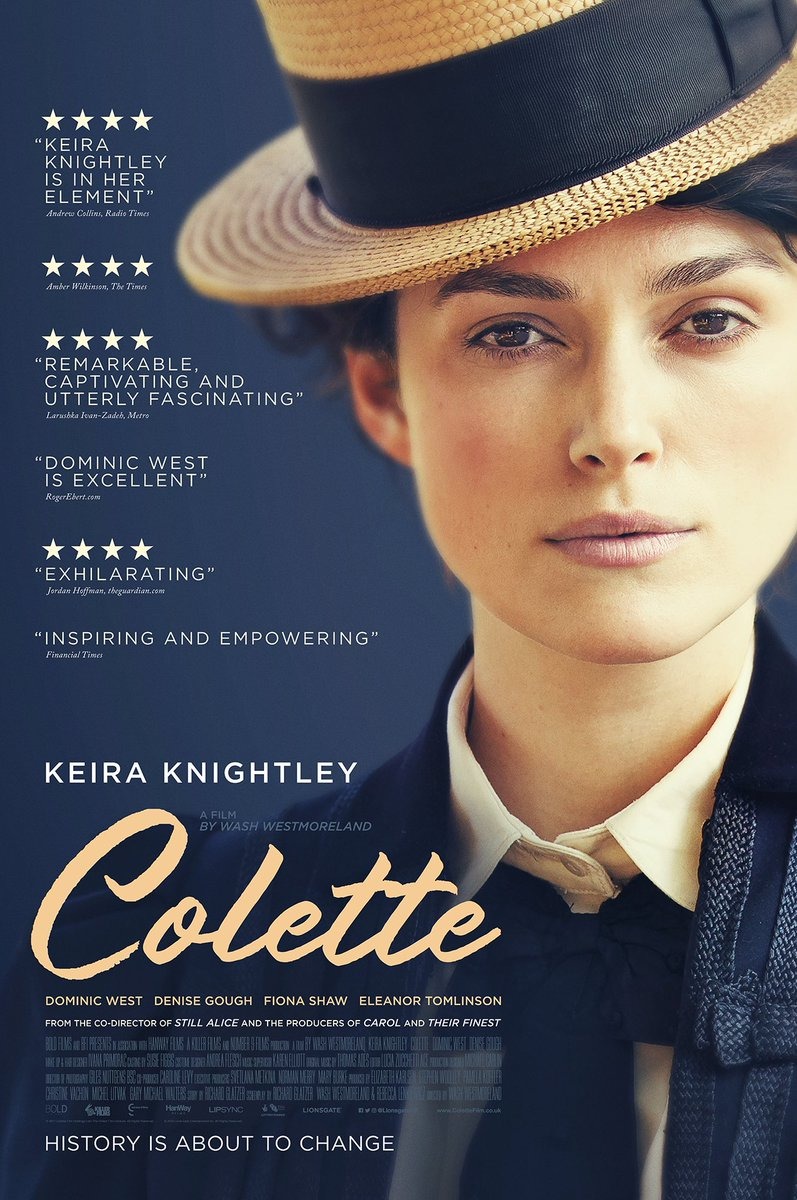
Colette (2018)

Keira Knightley tries her best in this light but safe biography Colette

Director: Wash Westmoreland

Cast: Keira Knightley (Gabrielle Colette), Dominic West (Henry Gauthier-Villars/Willy), Eleanor Tomlinson (Georgie Raoul-Duval), Aiysha Hart (Polaire), Fiona Shaw (Sido), Denise Gough (Missy), Robert Pugh (Jules), Rebecca Root (Rachilde), Julian Wadham (Ollendorff)

In the era of #metoo what could make for a more relevant storyline today than this biography of Gabrielle Colette (Kiera Knightley), a young woman who marries literary playboy Henry Gauthier-Villars (Dominic West) aka Willy. Henry brings her back to Paris, and reveals the secrets of his success – he is the front man for a host of ghostwriters, producing articles and even novels for the public. Colette writes a novel for the “factory”, based on her own childhood – Claudine àl’école – which Willy initially rejects but later publishes under his own name (after he has suggested revisions to improve its plot and general raunchiness). The book is a smash – and Willy is a sensation – as are the sequels, but the growing frustration Colette feels at her lack of recognition, combined with the growing sense of freedom she finds in their open marriage, starts to lead her to question what she wants from her own life.

Colette is a decent, rather middle-of-the-road and middlebrow literary biography, that dabbles with controversy and racy content, but essentially follows a fairly traditional structure of our hero finding her own voice. The most interesting thing about it, despite the obvious surface message of the woman exploited by a man, is to suggest that while Willy certainly profited from Colette’s work, he was also the primary driver in her development as a writer and that the two of them maintained a stable working partnership for years until events led to their collapse. 

Much has been made in particular of a scene where Willy locks Colette into a room to write – and there isn’t a single review that hasn’t mentioned it – but, in the context, it’s Colette who has failed to focus on the writing (which the pair have already been paid for), or wdo the work she has committed to do, much to Willy’s disappointment when he returns to the country home that the advance for the book has paid for. While her objections are at first furious she swiftly settles into writing in the room (and there is no suggestion that this event is any more than a single one-off, a shock tactic from Willy to get Colette creating again). This isn’t to say the film is suggesting that Colette shouldn’t have received all the credit and freedom from the start, but it does raise more interesting questions: yes Willy was taking advantage of her, but yes he also pushed her to achieve things she would never have done herself.

It’s all part of Dominic West’s superb performance as Willy, skilfully balancing a man who (until the final act of the film) is neither flat-out villain or misunderstood hero, but a man of shades of grey: flawed, selfish, lazy, thoughtless but also encouraging of his wife’s exploration of her own sexuality and creativity, supportive and capable of acts of charming sweetness and kindness. Westmoreland makes clear that for much of the marriage their relationship was functional and a good match, for all it was founded on the false sands of Colette being denied the public credit for her own work. Sure he spunks their money up the wall continuously, but he also helps her become an artist. 

For all the film’s workmanlike structure and obvious telling, this does make for a far more interesting version of the story than the straight “ogre-victim” story you might expect, even if it does start to get a bit bogged down in sexual shenanigans. The mostly focus around bisexual American socialite Georgie (Eleanor Tomlinson with a soapy Southern accent), who becomes the lover of both Colette and Willy. It’s part of the sense of Colette questing for an identity, but the idea of what this is and what the journey is never quite solidifies into something really incoherent. Though I suppose you could argue the journey is Colette realising she doesn’t need Willy, and that shorn of him she can survive far better on her own than he can without her.

Part of this is connected to Keira Knightley’s solid, but not quite deep enough, performance as Colette. As is often the way with her best work, Knightley works her socks off here and is clearly completely committed to the role and the film – but she just isn’t quite capable of elevating the depths of her skill to meet the full demands of the film. She doesn’t disgrace herself at all, but it’s a performance that never had enough fire and life to really become compelling.

It means you don’t quite get the powerful feminist message the film is aiming for. Knightley’s performance isn’t quite strong enough to counter-balance West, and the film’s failure to put together a compelling story line around what Colette actually wants – the film eventually settles for a rather ill-thought out phrase about wanting to lead her own life – means it peters out without much impact. There is a powerful story in here around women being denied recognition for their own talents and skills, but it never quite coalesces as it should.

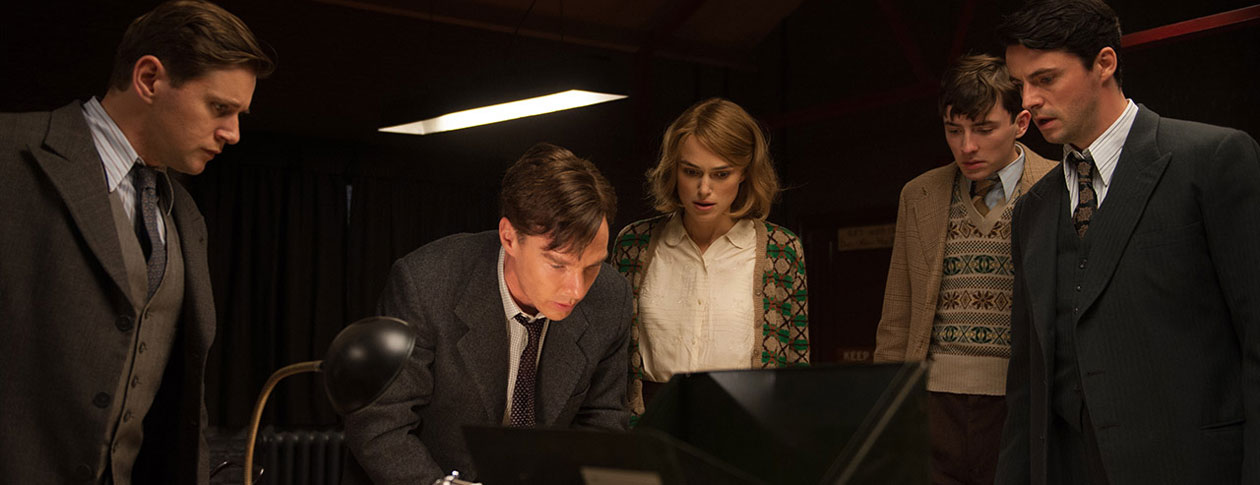
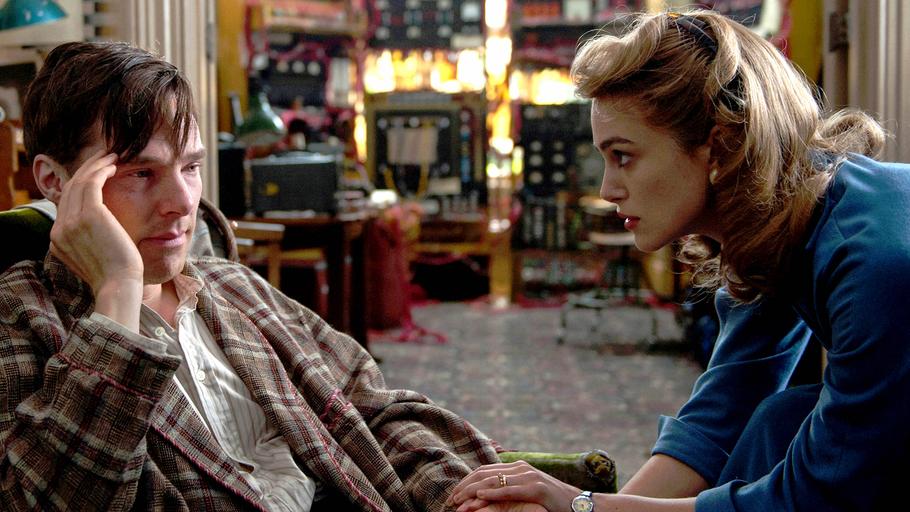
The Imitation Game (2014)

Benedict Cumberbatch saves the world in smug, empty mess The Imitation Game

Director: Morten Tyldum

Cast: Benedict Cumberbatch (Alan Turing), Keira Knightley (Joan Clarke), Matthew Goode (Hugh Alexander), Rory Kinnear (Detective Nock), Allen Leech (John Cairncross), Matthew Beard (Peter Hilton), Charles Dance (Commander Alastair Dennison), Mark Strong (Maj General Stewart Menzies)

“Sometimes it is the people no one imagines anything of who do the things no one can imagine”. If there is anything that captures the smug self-satisfaction of this ludicrously pleased-with-itself film, it’s that convoluted phrase, with which the film is so pleased that it is repeated no fewer than four times. What does it mean really? Nothing of course, it carries all the meaning of a fortune cookie. Turing is certainly someone whom you could expect something of, since the film is at pains from the start to demonstrate he is a maths prodigy and a genius. But then that would spoil the romance of the film suggesting that because Turing is socially maladjusted, he is somehow unlikely to achieve something – or that achieving something would be even more special having overcome the “disability” of his personality.

Alan Turing (Benedict Cumberbatch) is under police suspicion in 1951 after a mysterious break-in at his Manchester home. A keen detective (Rory Kinnear) suspects he may be a Russian agent – why else does he have no military record? But we know different, as flashbacks show Turing working at Bletchley Park on the cracking of the German cipher machine Enigma. Working with the support of an MI6 officer (Mark Strong), Turing has to win the trust of his team – with the support of best friend and maths genius Joan Clarke (Keira Knightley) – to build a ground-breaking computer that could crack the impossible code. But back in 1951, Turing is in trouble: he’s gay and that’s a crime in post-war Britain.

Now, Turing’s personality in this film. In real life, Turing was an eccentric, but perfectly capable of functioning perfectly normally in society. That’s not dramatic enough for the film, so Turing is reimagined as someone practically afflicted by Aspergers syndrome, incapable of understanding or relating to people without severe effort and prompting. Of course this is really there to introduce conflict – first with his team (who need to be won round to loving the old eccentric genius), secondly with his boss (who can’t stand his inability to fit in) and thirdly with the police (who can use it to write him off). It’s a film-disability for a character to overcome, another puffed up triumph that we can celebrate, while at the same time pat ourselves on the back because this is a victory for those “not normal”. But it’s probably bollocks. 

But then that fits in rather nicely with the whole film, which is more or less probably bollocks from start to finish. The film of course can’t dramatise maths or computing very well, so it throws us all sorts of feeble clichés from tired old film genres instead. Charles Dance plays a reimagined Denniston (in real life a cryptographer) as a standard obstructive boss who all but shrieks “you’re off the case Turing!” at the one-hour mark. The key moment of inspiration of course comes from flirty pub conversation with a charming secretary. Running around and frantic throwing of papers takes the place of all that boring maths. 

The film can’t resist any level of dramatic cliché. When a member of the code-breaking team mentions in passing “I have a brother in the navy you know”, as sure as eggs is eggs you can bet the team will decipher a message that could save his life but will be forced to make A Terrible Choice. Of course even this picture of a small code-breaking team making the calls themselves over which messages to act on is nonsense – it’s a decision that would be so far above their pay grade, they should be taking oxygen just thinking about it. But in this bonkers version of the universe, Turing  himself makes the call to keep the initial breaking of the code a secret, and the government happily allows him alone to make the call about which codes to act on. Oh for goodness sake, spare me.

But then this is a film that wants to turn Turing into the man who won the war single-handed. While Turing was one of the key figures who made the breakthrough, this was a massive team effort, not one man’s inspiration, and reducing the victory of the war down to one (film cliché) difficult genius is the same old ripe nonsense we’ve seen many, many times before. The film tries to pretend that Bletchley Park and the breaking of Enigma, and Turing himself, is an unknown story – when it’s been pretty well-known since it was announced by the Government in the 1980s.

The film is rubbish, but it’s also gutless. Of course “fifth man” John Cairncross is part of the team – and of course Turing discovers he is a spy. (The reveal of course is due to the same old tedious movie cliché of “I found a book on his desk that was the key book he used for the code”.) And then in a moment of stunning tastelessness, Cairncross blackmails Turing into keeping his mouth shut which he agrees to do – an action that, if it had ever happened in real life, would have been an appalling moment of treachery from Turing, and reinforces all the suspicions of the time that homosexuals couldn’t be trusted. 

Ah yes, homosexuality. This film is very, very, very proud of its crusading actions to expose the cruel treatment of Turing for his homosexuality. At the same time, the film is of course way too gutless to even begin to show Turing doing anything actually gay (he doesn’t even so much as hold another man’s hand) during the film. The one genuine moment of love the character is allowed to express, is in the form of a crush on a schoolfriend. (The film substitutes renaming Turing’s machine “Victory” after this school friend “Christopher”, the film keen to try and plug the gap of this film featuring virtually no LGBTQ content at all). But the film preaches intensly and proudly about the equal rights of homosexuality, while veering away with squeamishness from putting anything remotely homosexual on the screen.

The shoddy writing, over-written and self-important, is matched up with Morten Tyldum’s flat, “prestige” film-making that reduces everything to a chocolate box. The film does have some acting beyond what it deserves. Benedict Cumberbatch is good as Turing, although his performance is a remix of some of his greatest hits from past projects, from Hawking to Sherlock, and you feel hardly it’s a stretch for him – even if he plays with it real, and genuine, emotional commitment. Keira Knightley’s cut-glass accent is practically a cliché, but this is one of her best performances with real warmth and empathy. Most of the rest of the cast though are serviceable at best.

“Serviceable”, however, is still better than the film itself, which is a cliché-ridden, gutless, plodding and highly average pile of nothing at all – a totally over-hyped, over-promoted and completely empty film that is about a zillion times less interesting, brave or revealing than Hugh Whitemore’s 1980s play Breaking the Code. Not worth your time.

King Arthur (2004)


Clive Owen leads his merry men in clumsy would-be Arthurian epic King Arthur

Director: Antoine Fuqua

Cast: Clive Owen (Arthur), Ioan Gruffudd (Lancelot), Keira Knightley (Guinevere), Stellan Skarsgård (Cerdric), Ray Winstone (Bors), Mads Mikkelsen (Tristan), Joel Edgerton (Gawain), Hugh Dancy (Galahad), Ray Stevenson (Dagonet), Stephen Dillane (Merlin), Til Schweiger (Cyrnic)

The story of King Arthur has entertained generations for so long, it’s actually a bit of a surprise that there hasn’t been a great movie made about it. Sure there have been entertaining guilty pleasures (like my love for the bobbins Excalibur) but there hasn’t been a great action adventure made about the legendary king. And this Jerry Bruckheimer actioner sure ain’t it. But it re-enforces my seemingly never-ending appetite for distinctly poor, big-budget, epic films.

Arthur (Clive Owen) is a half-Celtic Roman cavalry officer who commands a Sarmatian cavalry unit, serving a fixed term of service with Rome. They help to guard Hadrian’s Wall against rebel native Britons. Before their discharge, the knights are given one last job: go behind enemy lines to rescue a prominent Roman citizen living beyond the wall. Once they arrive, they find he has enslaved the local Brits – including imprisoning a young woman named Guinevere (Keira Knightley). Knowing a Saxon invasion force lead by the fearsome Cerdric (Stellan Skarsgård) is ravaging Britain – and that the Romans are withdrawing from the empire – Arthur decides to lead the whole group back to the wall and safety.

King Arthur isn’t a terrible film, just a totally mediocre one. It’s an uninspired coupling together of half-a-dozen other better movie: from its Dirty Dozen line-up, through its Gladiator style score (Hans Zimmer rips himself off again), to its remix of a thousand period sword epics from Spartacus on, mixed with its Braveheart style design and battle scenes. It’s almost completely unoriginal from start to finish. There is no inspiration here at all – it’s made by people who have seen other films and based everything on that rather than wanting to make a film themselves.

It even wraps itself up with an unseemly haste, as if all involved knew they hadn’t nailed it so decided the best thing to was to knock the whole thing on the head and call it a bad job.

The film probably stumbles from the start with its claim to present a sort of “true historical story” of King Arthur. Now I’m not one to get hung up on historical accuracy too much – except when it’s making extravagant claims which are just not true – but the “true story” here is bobbins. Nothing really feels right – from the Roman politics to the idea of a group of loaded Roman settlers setting up a huge estate deep into Scotland (I mean what the fuck was Hadrian’s Wall for eh?). The knights bear very little resemblance indeed to their legendary counterpoints. In fact it’s almost as if they had a script about a brave band of Roman soldiers and just stuck the name King Arthur on it for the name recognition (perish the thought!).

The idea of a group of seasoned, grizzled warriors isn’t a bad one – and it works rather well here because most of the actors in these roles are pretty good (particularly Mads Mikkelsen as a sort of Samurai Tristan). It makes for some interesting dynamics and always some fine character work – the best arc going to Ray Stevenson’s Dagonet as a knight who finds something to fight for. It also contrasts rather well with Stellan Skarsgard’s world-weary villain, who’s seen it all and finds it hard to get excited about ravaging and pillaging anymore.

But it’s a shame that this promising set-up gets wasted. After a good start, when we get to see all our heroes’ personalities reflected in their fighting styles as they repel an attack on a bishop, these dynamics quickly settle down into the usual tropes: you’ve got the joker, the cocky one, the reluctant one who’s only out for himself… Fortunately the Director’s Cut (which I watched) deletes the worst of Ray Winstone’s comic “banter”, but it’s still pretty standard stuff.

The mission behind the wall then pretty much follows the pattern you would expect: the guy they go to rescue is an unsympathetic bastard, they find themselves protecting the weak, it’s a dangerous journey back to safety, blah-blah-blah. Although a battle on the ice has some genuine excitement to it, there isn’t anything new here at all. Everyone just feels like they are going through the motions. 

When the battles kick off in earnest, they are pretty well mounted – even if they are hugely reminiscent of the opening battle of Gladiator and the low-camera, immersive battles of Braveheart. Sure there is a smoky immediacy about them, like a sword wielding Saving Private Ryan, but it’s still pretty much what you would expect. The action pans out with no real surprises – our heroes and villains even match up for the expected clashes.

Clive Owen is a fine actor, but he is manifestly wrong for the role of a classical hero and the awe-inspiring battlefield heroics he is called to carry out here. He’s too modern an actor, with too much of the world-weary smoothness to him, for him to really convince as this hardened medieval warrior. Owen’s delivery and style is so restrained he can’t bring the bombast or elemental force the part requires. Allegedly he was cast because Bruckheimer believed he would be the next James Bond – the actor they turned down for Arthur? Daniel Craig… 

Nope. Sorry.

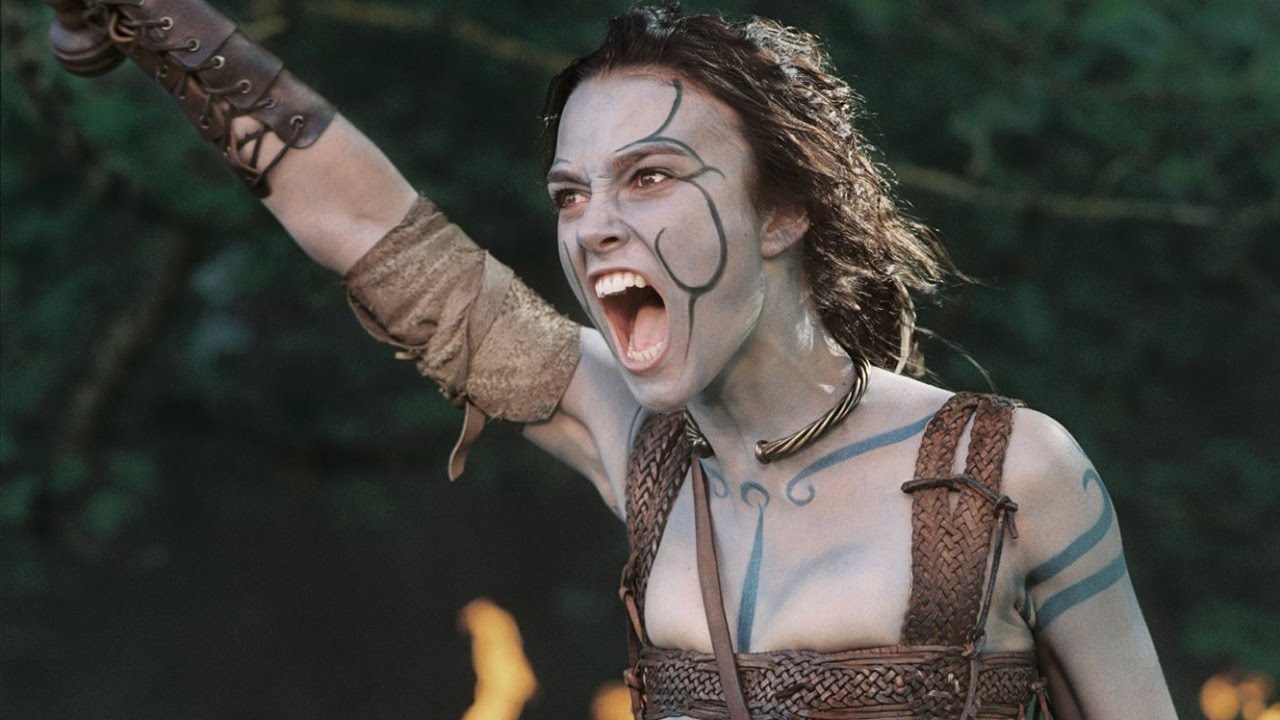
Similarly Kiera Knightley is just as miscast. Let’s put aside the fact that she is half Owen’s age. There is a prep school headgirlishness to her that just doesn’t work when we are asked to buy her as woad-covered warrior princess. She’s too strait-laced, too polite, too sophisticated. When she does step into the full-on Boudicca look, you’ll giggle rather than tremble. For all her exertion, she’s not convincing in the role either.

But then that’s King Arthur all over: trying hard but not convincing, with such a tenuous link back to the original myth that the fact they are just using the Arthur name to flog some more tickets is all the more obvious. Major elements of the legend are missing – in particular the Arthur-Lancelot-Guinevere love triangle is cut down to the merest of suggestions, enough for it to be noticed but not enough for it to feel like a real plot – and other elements (Merlin, the Sword in the Stone, the Round Table) seem shoe-horned in for no real effect. It’s basically just a bombastic B-movie, a sort of Gladiator rip-off without the poetry. Moments of fun, but still not that good.

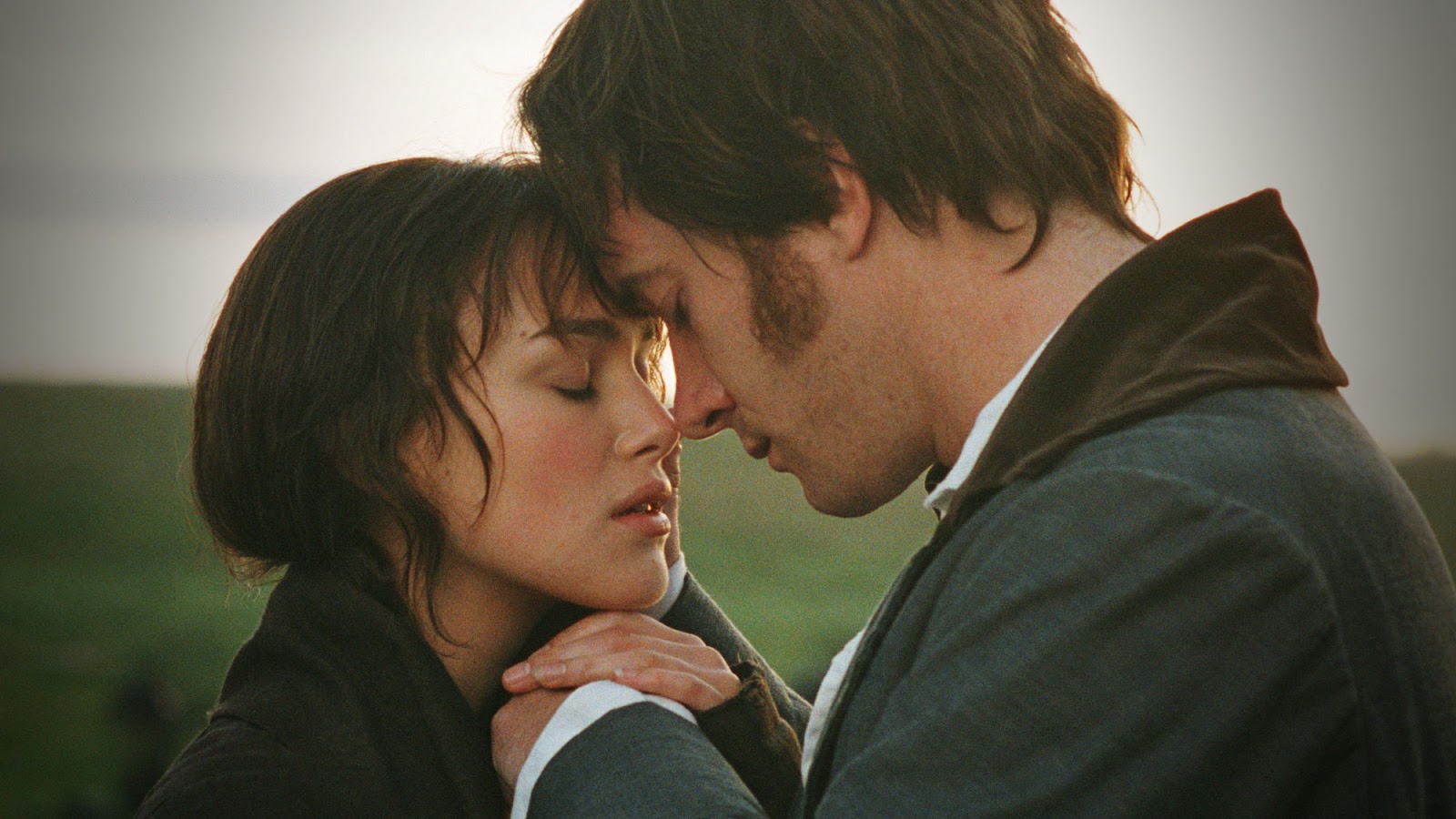
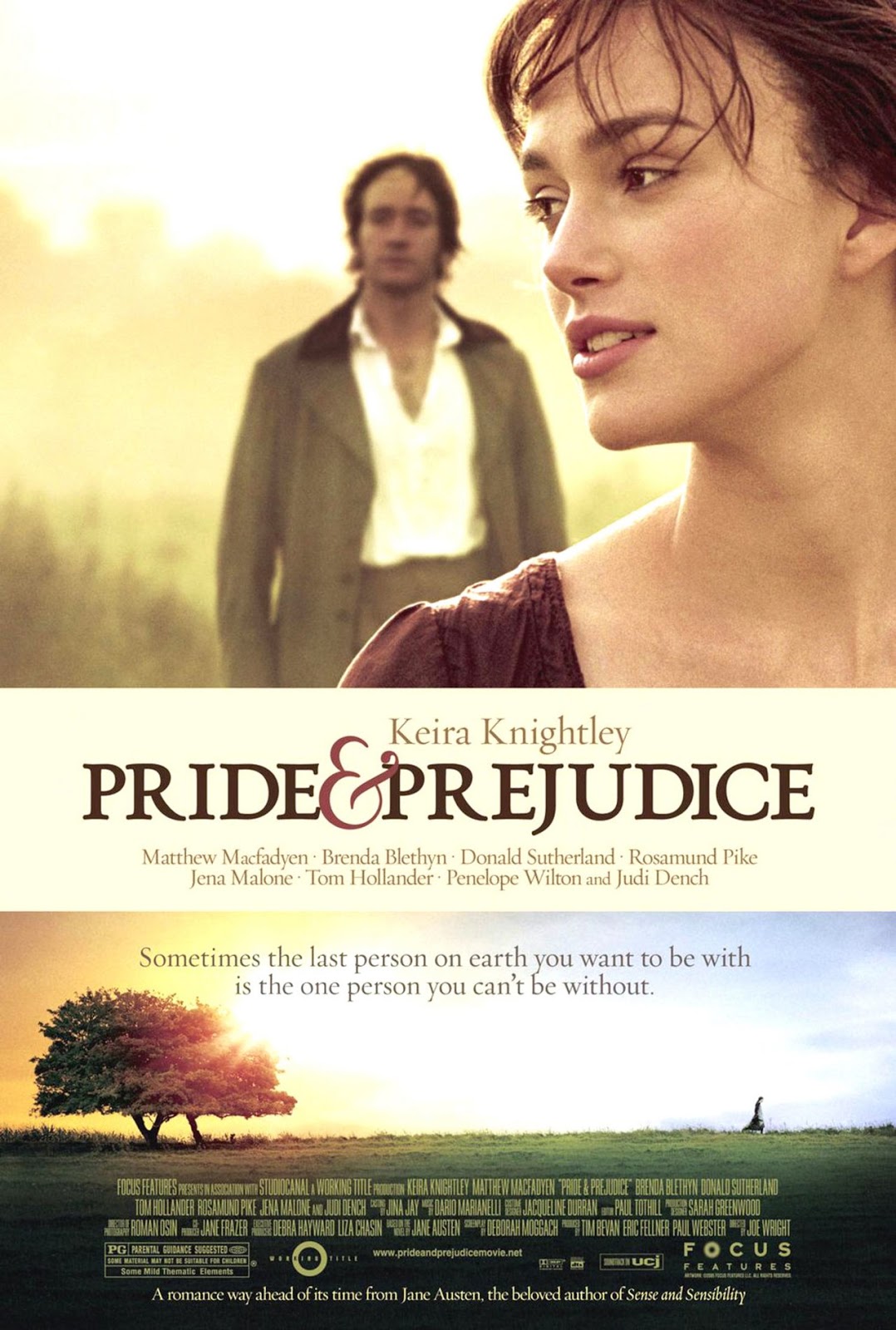
Pride and Prejudice (2005)


Keira Knightley and Matthew Macfadyen are drowned in the shadow of the BBC adaptation of Pride and Prejudice

Director: Joe Wright

Cast: Keira Knightley (Elizabeth Bennet), Matthew Macfadyen (Mr Darcy), Brenda Blethyn (Mrs Bennet), Donald Sutherland (Mr Bennet), Tom Hollander (Mr Collins), Rosamund Pike (Jane Bennet), Carey Mulligan (Kitty Bennet), Jena Malone (Lydia Bennet), Talulah Riley (Mary Bennet), Judi Dench (Lady Catherine de Bourgh), Simon Woods (Mr Bingley), Tamzin Merchant (Georgiana Darcy), Claudie Blakely (Charlotte Lucas), Kelly Reilly (Caroline Bingley), Rupert Friend (Mr Wickham), Penelope Wilton (Mrs Gardner), Peter Wight (Mr Gardiner)

I’ve written before about certain books having been adapted so successfully there feels very little point rolling out another. If ever an adaptation set this principle, it’s the 1995 BBC adaptation of Pride and Prejudice. Not only did it perfectly capture the spirit and style of the book, with perfect scripting and direction, but the two lead actors – Jennifer Ehle and especially Colin Firth – were simply perfect (for all his achievements, the first line of Firth’s obituary will forever be “Darcy Dies”.)

So Joe Wright and his team were already climbing a mountain when they announced plans to make a new adaptation of Jane Austen’s most beloved novel. What they’ve produced in the end is a well-made, handsomely mounted film full of visual invention – that has been pretty much rejected by nearly everyone I know who loves Austen. It’s a film that, in attempting to plough its own furlough, has ended up not really pleasing anyone: for the casual viewer it’s an entertaining but forgettable watch. For the Austen fan it’s just plain not right.

Structurally the film places Elizabeth’s relationship with Darcy slap bang at the centre, and has little to no interest in anything else. This leads to major themes and relationships being neglected or outright abandoned in some bizarre cut choices. The film wants to front-and-centre Lizzy’s increasing isolation – so Jane is dispatched from the film for almost over an hour. Even more oddly, Wickham is cut down to a few spare scenes – which makes her passionate sympathy for him and anger against Darcy make very little sense. All this isolation also means we never really understand the social implications and importance of marriage – in fact the whole thing is basically turned into a Cinderella romance: Rich Man Meets Poor Girl (And No One Else Matters). 

Which means a lot of the focus for the film lands on Keira Knightley. Is there a more controversial actor in film than Knightley? Oscar-nominated for the role, among my Austen-loving friends I have found only revulsion against her performance. She plays it with spirit but too much of a modern sensibility. She’s fine, but she’s just not convincing: she doesn’t look like her, she doesn’t have her warmth and wit and seems more like she’s wandered in from some sort of “flirty girls” comedy. Nothing really communicates the character’s intelligence and wit – and Knightley probably looks a little too modern for the whole thing to work. 

On top of that the film doesn’t want her to be too unsympathetic at any point, so dials down her judgemental nature, and also reduces any possibility of us judging her partiality for Wickham by mostly removing him from the film. However, this also removes many of the obstacles from the plot that stand in the way of romance.

Matthew MacFadyen does a decent job as “Nice Guy In A Period Drama”, but the character is just wrong for Darcy. Like Lizzy’s tendency to rush to judgement, Darcy’s apparent coldness and snobbery have been watered down to almost invisibility. His first announcement of love is so genuine, so gentle, so loving that you are amazed that Elizabeth dismisses him out of hand. It’s no surprise this Darcy turns out to be a decent bloke, the edges of the character have been completely shaved off. This puts a big old dent in the plot, reduces his character development, and ruins the impact of sweet later moments like Darcy’s uncertainty when the two meet at Pemberley. 

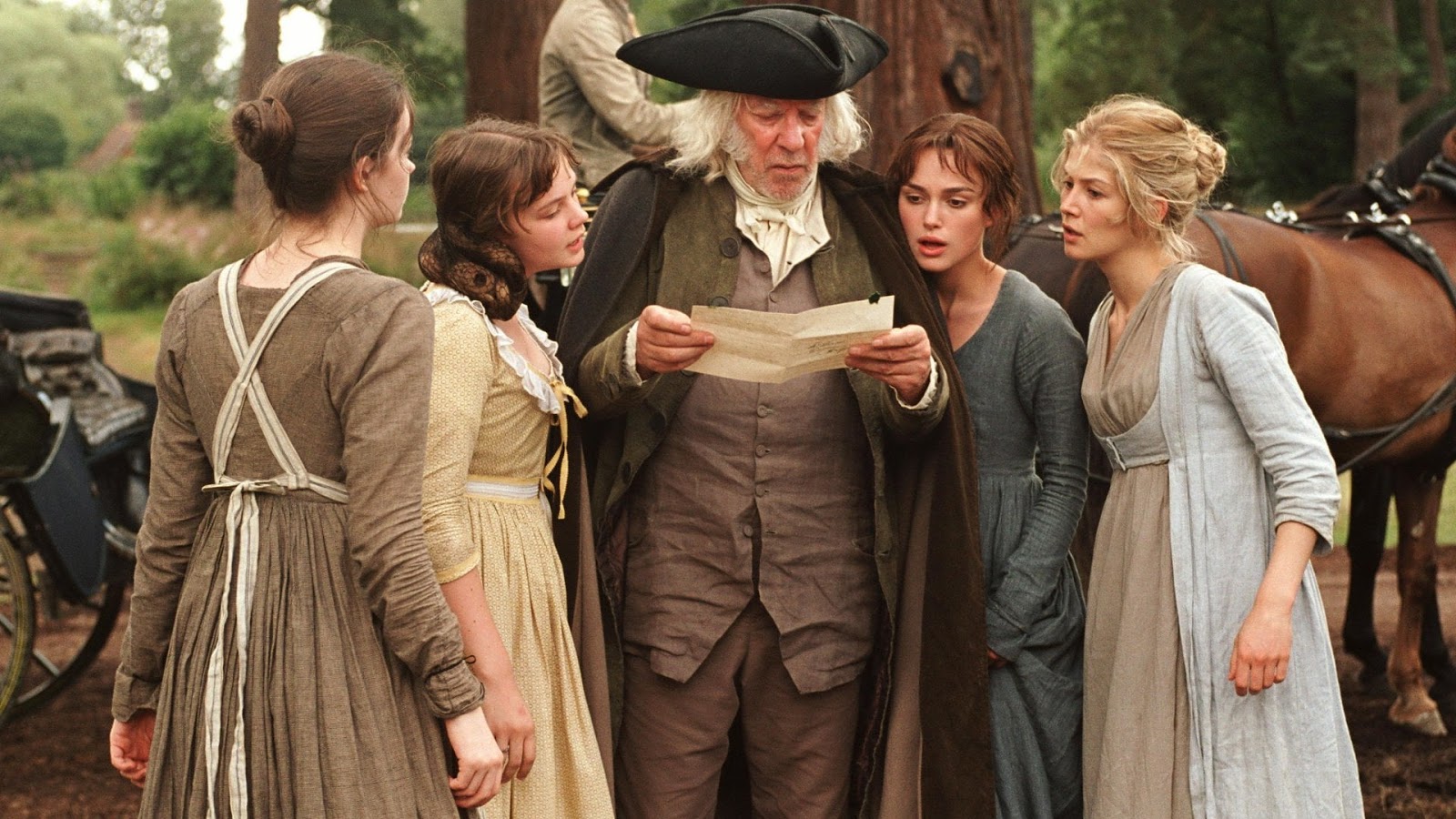
There are some good performances though. Tom Hollander is very funny as a social-climbing Mr Collins. Donald Sutherland gets so much warmth and twinkly good humour out of Mr Bennet that Wright even ends the film on him (another odd choice, but never mind). Judi Dench could play Lady Catherine standing on her head. Rosamund Pike is rather good as Jane – she totally feels right for the period. Brenda Blethyn largely manages to avoid turning Mrs Bennet into a complete stereotype. Saying that, Simon Woods portrays a version of Bingley so bumbling, tittering and awkward you are amazed either Jane or Darcy could be interested in him, let alone bear to spend time with him.

But then large chunks of the film feel odd. The screenplay works overtime to turn the film into a straight-forward star-crossed lovers story: so it’s Darcy and Elizabeth all the way, and the film is desperate to make them both likeable from the off. And if that means that, in a film called Pride and Prejudice, both the pride and the prejudice have to be junked to make sure even the stupidest audience member will like the hero and heroine, well that’s apparently a price worth paying. Lowering the Bennets’ social status as far as the film does, also turns the story into a full-on Cinderella territory. Darcy and Bingley are so posh an entire room falls silent when they walk in – in comparison the Bennets are so poor they share their house with pigs.

Ah yes the pigs. Why? The Bennets aren’t paupers. If they were, why would Collins want the place? Why would they be invited to the ball? Why would Bingley and Darcy even consider them as partners? Why would a family so aware of impressions have a home that is literallyfull of shit all the time? Why is Mr Bennet scruffy and unshaven – and why doesn’t anyone care? Who designed this? If the Bennets are so fixated on getting good marriages why do they literally live in a pig sty? It’s a visual idea that undermines the whole story.

I’m not joking. Here is a pig walking through the Bennet house.

It’s full of things like this that don’t feel right. The film junks most of the language of the original book, which makes it sound jarring (it even re-works Darcy’s first proposal: “in vain I have struggled, it will not do…” – large numbers of Austen lovers I know can recite those lines verbatim. This film apparently thought it could create a better version. It couldn’t). Large chunks of the film happen in the rain like some sort of version of Wuthering Heights. Why is that? Is it because professions of love in the rain are romantic in a Mills and Boonish sort of way? Or is it an echo back to Firth’s wet shirt?

Emma Thompson’s sublime adaptation of Sense and Sensibility demonstrated that it is completely possible to adapt an Austen novel into a two-hour film and still preserve the characters, relationships, major events and themes of the book, while also making a story that stands on its own two feet for non-Austen-ites. This film bungles its attempt to do the same. 

But there are things Wright gets right. The camera work and transitions are lovely. A long tracking shot that weaves in and around the ball early in the film, taking in every single character is not only a technical marvel but really gets across a feeling of what these hectic and bustling social events are like. There is a beautiful time transition at Longbourn, as Elizabeth rotates on a screen and the camera takes on a POV shot, showing the seasons changing each time the camera revolves around through 180 degrees. The cinematography is luscious and Wright – his first film – shows he was more than ready for the step-up from TV.

It’s just a shame that the film they made doesn’t quite work. It doesn’t capture the sense of the book. It doesn’t capture the sense of the characters. It makes bizarre and just plain wrong choices. It’s a decent film, but it is not a good adaptation of the novel. And that’s a major problem, because if you are going to adapt something as widely loved and revered as this, you better bloody well understand the novel – and I don’t think enough people here did. It’s told with a sweeping romantic style – but they are adapting the perception of Pride and Prejudice rather than the actual story. The chemistry and romance aren’t there: the film even ends with an odd sequence of Sutherland and Knightley, probably because there was better chemistry between these two than the two leads. It’s a film that basically doesn’t work at all.

Jack Ryan: Shadow Recruit (2014)


Chris Pine comes out from behind the desk to head into the field in Jack Ryan: Shadow Recruit

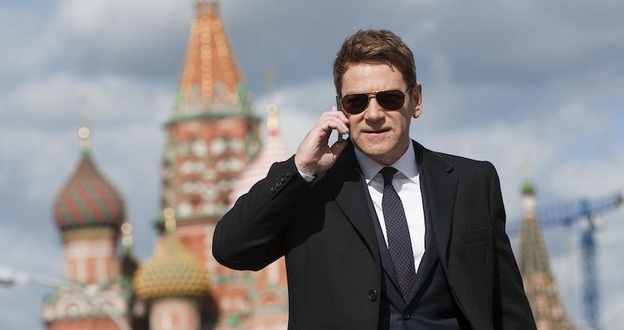
Director: Kenneth Branagh

Cast: Chris Pine (Jack Ryan), Keira Knightley (Cathy Muller), Kevin Costner (Commander Thomas Harper), Kenneth Branagh (Viktor Cherevin), Len Kudrjawizki (Konstantin), Alec Utgoff (Aleksandr Borovsky), Peter Andersson (Dimitri Lemkov), Elena Velikanova (Katya), Nonso Anozie (Embee Deng), Colm Feore (Rob Behringer), Gemma Chan (Amy Chang), Mikhail Baryshnikov (Minister Sorkin)

Jack Ryan is the all-American, ordinary-analyst-turned-CIA Agent at the centre of the late Tom Clancy’s books. He’s been played by a range of actors, from Alec Baldwin to Ben Affleck via Harrison Ford, but his character remains the same – a boy scout, a man of principle and simple courage, pushed to do what must be done. He’s smart and quick-witted. Jack Ryan: Shadow Recruit was meant to serve as another reboot, to restart the Jack Ryan franchise after a mixed reception to Ben Affleck’s The Sum of All Fears. Sadly, it was another false start.

An origins story, it opens with Ryan (Chris Pine) studying at the LSE, before joining the marines in the wake of 9/11. He is critically injured in a helicopter crash, where he hauls two men from the wreckage while suffering from a broken back. Learning to walk again, he falls in love with Dr Cathy Muller (Kiera Knightley) and is recruited as a financial analyst by Thomas Harper (an effectively gruff but charismatic Kevin Costner) from the CIA’s Department of Making-Sure-We-Don’t-Get-Hit-Again (catchy name). Collecting financial intelligence while working as an auditor at a Wall Street firm, he notices some worrying financial deals from funds controlled by Russian tycoon Viktor Cherevin (Kenneth Branagh). Going to Moscow under the guise of auditing Cherevin, he and Cathy quickly find themselves embroiled in a dangerous terrorist conspiracy.

Jack Ryan: Shadow Recruit is decent fun. It’s also a rather impersonal and safe piece of film-making, that structurally and creatively feels like a 1990s action film reset in the 2010s. In a world of Jason Bourne, it genuinely feels a little old-fashioned and uninspired. It takes recognisable elements from dozens of action films and remixes them with a certain flair, but not a lot of imagination. It feels like the least “Branagh” film Branagh has directed, the camerawork being surprisingly restrained and contained considering his love of sweeping opera and dynamic, showy visuals.

But Jack Ryan is not a bad film, it’s just an enjoyably average one. It puts Ryan front-and-centre of the film, and Chris Pine really delivers in establishing Ryan’s old-fashioned principles of right and wrong, his sense of duty and his willingness to do what needs to be done when called. Pine also does a great job of demonstrating Ryan’s fear and panic as he finds himself increasingly out of his comfort zone – not least in a terrifying hotel bathroom brawl with an under-used Nonso Anonzie – in the aftermath of which he drops his mobile while trying to call for backup, and then can’t remember where the hell “Location Gamma” is when told to report there to meet a contact.

Of course, this incarnation of Ryan as an analyst rushed into the field doesn’t last, and the film succumbs from there to turning Ryan into an old-school action man, the sort of guy who drives cars at 85 mph through Moscow streets with ease, jumps on a motorbike and roars off in pursuit of a bomb with maverick self-assurance and takes on a trained assassin with a Die Hard-ish confidence. It’s a shame that the interesting character work of the first 2/3rd of the movie gets lost in the final third – but it’s another sign of the film delivering what it feels an action film should be rather than finding something unique and original.

At least Pine gets some good material to work with, which is more than can be said for Kiera Knightley. For all her American accent, this is Knightley at her most British Rose, her toothy, coy grin ever-present in every scene – and that’s about all she contributes. Not that this is entirely her fault, since Cathy is a character sketched on a fag packet, a successful doctor who obsessively worries that her husband is having an affair, making her feel weaker and needier than the filmmakers perhaps realise Later she exists to be a Damsel in Distress, and is then given a spurious involvement in identifying the villain’s target – which she identifies not because it is a medical facility she is familiar with, or perhaps somewhere she visited as a child or on a professional call-out, but solely because Her Man works there. (As if these CIA geniuses couldn’t work out that a financial terror attack on the US might be targeting Wall Street).


The villain’s plot is dully labyrinthine, but can be safely boiled down into having something to do with financial chicanery and a bombing attack, to destroy the US economy. Not that it really matters – it allows a suitable mix of booms, bangs and the sort of tense “breaking into the office to download the files against the clock” sequence that you’ve seen several times before. Kenneth Branagh cuts himself a bit short with Cherevin, a character who seems sinister but is really barely competent and hits every villain trope from pervy leering to executing an underling. We barely get any sense of his motivations or his background.

He’s also probably the only Russian nationalist in the world who is a Napoleon Bonaparte fan. Last time I checked, Napoleon was the enemy in the War of 1812 that redefined Russian history for the next 100 years. But then I’ve read a few Napoleonic era books, so I’m biased… This film clearly knows nothing about Bonaparte, with Ryan declaring at one point that the planned attack is “straight out of Napoleon’s playbook” – how Napoleon’s trademark fast movement and combined use of infantry and artillery, drilled to perfection, relates to a basic distraction strategy I don’t know but never mind. But then this is a dumb action film that name checks Napoleon because you’ve probably heard of him, rather than because it makes sense.

There is a lot to groan at, or say meh to, in Jack Ryan. But yet, I’ve seen it three times and it grows on me each time. Chris Pine is a very likeable screen presence, and the build-up of the film works well. Branagh directs it with a taut efficiency, even if it’s a film that lacks any real inspiration and feels like one for the money. But it presents its 1990s-style action beats with enough conviction and sense of fun that you kinda go with it. Yes it’s totally forgettable, but run with it and you’ll find yourself strangely charmed by it.

The Duchess (2013)

Keira Knightley in lusciously filmed, but shallow The Duchess

Director: Saul Dibb

Cast: Keira Knightley (Lady Georgiana Devonshire), Ralph Fiennes (Duke of Devonshire), Hayley Atwell (Lady Bess Foster), Charlotte Rampling (Countess Georgina Spencer), Dominic Cooper (Earl Grey), Aidan McArdle (Richard Brinsley Sheridan), Simon McBurney (Charles James Fox)

My main memory of The Duchess is seeing the trailer while watching Mamma Mia in the cinema. The first shot was Keira Knightley’s face, met with an overwhelming groan from the female-dominated audience. There is something about Knightley that seems to get people’s goat.  If you’re one of those who struggle to warm to Knightley as a performer, this probably isn’t going to be the film that changes your mind.

In the late 18th century, Lady Georgiana (Keira Knightley) marries the absurdly wealthy, but older and duller, Duke of Devonshire (Ralph Fiennes). She wants a meeting of minds. He just wants an heir. The marriage flounders – and gets worse when the Duke in turn starts an affair with Lady Bess Foster (Hayley Atwell), Georgiana’s closest friend. As her home-life becomes a menage-a-trois, with the Duke treating both women as wives (with their agreement) she begins to experience deeper feelings for the dashing Charles Grey (Dominic Cooper), an ambitious politician.

So, first things first, Keira Knightley. She does a decent job. She’s pretty good. But, rather like Jonathan Rhys Meyers, it feels like her best is a 7/10 performance. She’s dedicated, she’s really striving here – but always feels like someone trying rather than truly natural and unforced. She brings Georgina’s glamour and does a decent work of her bewildered hurt, but she (and the film) don’t communicate her intelligence and political activism, so she never really develops as a character. You can’t really put your finger on her doing anything wrong as such, it’s just a performance where you always see the acting, and never feel the naturalism.

It’s particularly noticeable here as her two supports – Fiennes and Atwell – are such accomplished performers. In many ways, the film would have been improved with Atwell in the lead. As it is, as the third corner of the triangle, she has just the right mix of guilt, warmth and mercenary self-interest. In a terrific low-key performance, Fiennes manages to turn a character the film always wants to push into being a bullying villain into a man who feels alive, real and often understandable if not (whisper it) even rather sympathetic.

The film is desperate to turn Georgiana into a suffering victim, and to push Devonshire into the role of a domestic despot. But in fact, most of Devonshire’s actions are quite forward thinking: he adopts and cares for his bastard daughter (conceived pre-marriage), he saves Bess’ children and cares for them as his own, he condones a quiet affair from his wife, he treats her with the utmost public respect and allows her to spend time with her son by another man (although this is relegated to a caption at the end). The only problem is he clearly doesn’t love her, while he clearly does love Bess. Hardly able to believe he wasn’t as besotted with Georgiana as the film is, the film works overtime to try and turn someone a little dull, with some surprisingly generous views, into a monster.

In order to make it categorical who is “right” and who is “wrong”, the film chucks in a gratuitous marital rape scene that feels so out of character and over-the-top, it actually makes you step out of the film. Did it really happen? There’s no evidence of it, and it flies in the face of virtually every other action the Duke does in the film. It’s probably also in there to further contrast Georgiana’s joyless couplings with the Duke against her passionate rumpy-pumpy with Dominic Cooper’s Charles Grey (here re-imagined as a penniless adventurer and radical, rather than the son of an Earl) Like Knightley, Cooper has the glamour and dash for the high-class Mills and Boon plot the film is peddling, but fails to convey Grey’s intellect and political ideals.

The film has deliberate echoes of Princess Diana throughout – the crowded marriage, the glamourous outsider marrying into a great family, the sense that her dashing public image made him look like a dullard. And like much of the public reaction to Charles and Diana in real life, the film can’t compute why Devonshire didn’t love this public idol, overlooking the fact that they shared no interests and had nothing in common. Many of Georgiana’s negative aspects are downplayed to help this – the gambling addiction that left her bankrupt is no more than high spirits here.

Basically this is a film interested in style over substance, aiming to turn a fascinating story about a menage-a-trois into something very straightforward and traditional about a husband who treats his wife badly. Now the style is great – Rachel Portman’s score is brilliant, the photography luscious, the make-up and costumes gorgeous – but the substance often isn’t there. The idea of Georgiana’s celebrity is only briefly touched upon, and her intellect barely at all.

Not content with airbrushing out her less appealing characteristics, even her positive ones are done few favours by this candyfloss depiction of her life – one of the first women to take a prominent role in the British political scene, a published writer of novels and poems, and a famously charismatic social figure, here she is little more than a mannequin on which to hang elaborate period hairstyles and costumes, who talks about being a free-spirited intellectual without doing anything that corresponds with these interests.

It shoves in dramatic events which feel out of step with both the characters and the events to push the film towards being as straightforward as possible. Knightley does a decent job – and Fiennes is extremely good as the Duke – but it settles for being something safe and traditional rather than a really interesting look at the cultural moods of the time, or the complexities of the real people it claims to portray. It shares it’s subjects beauty, but reduces her to blandness.