Tag: Lauren Bacall

Written on the Wind (1956)

Written on the Wind (1956)

Sirk’s melodrama packs in plenty of tight psychological observation among soap suds

Director: Douglas Sirk

Cast: Rock Hudson (Mitch Wayne), Lauren Bacall (Lucy Moore Hadley), Robert Stack (Kyle Hadley), Dorothy Malone (Marylee Hadley), Robert Keith (Jasper Hadley), Grant Williams (Biff Miley), Robert J. Wilke (Dan Willis), Edward Platt (Dr. Paul Cochrane), Harry Shannon (Hoak Wayne)

Money can’t buy you love. The oil-rich Hadleys live the high-life off the oil-empire built by patriarch Jasper Hadley (Robert Keith). Unfortunately, his children are both deeply unhappy and emotionally stunted. Kyle (Robert Stack) is an alcoholic playboy, Marylee (Dorothy Malone) a lonely woman who plays with other people’s lives to make herself feel better. Both are, in different ways, in love with sub-consciously resentful Mitch Wayne (Rock Hudson), the poor-boy childhood friend turned geologist who their father sees as the son he wishes he had. Mitch is in love with Lucy Moore (Lauren Bacall), an ambitious secretary at Hadley Oil – but Kyle also falls for her, marrying her. Marylee is in love with Mitch, who doesn’t feel the same. We already know from the film’s prologue all this is going to end with a bullet.

It makes for gorgeous entertainment in Douglas Sirk’s lusciously filmed melodrama, that helped lay out the template for the sort of soapy Dynasty-type TV monoliths that would follow years after. Sirk’s gift with this sort of material was to imbue it with just enough Tennessee Williams’ style psychological drama. Written on the Wind is awash with the glamour and beauty of wealth but, at the same time, demonstrates the immense psychological emptiness at the heart of the American Dream. What’s the point of all this luxury when those who have it are as deeply fucked up as the Hadleys are?

Their family is so wealthy the Texas town they live in is named after them and the run it like a private fiefdom, with the police running around like their errand boys. It’s not made them a jot happy. Both Maryann and Kyle are deeply aware of their own emptiness, rooted in the lack of attention (and love) from their father, a work-obsessed man who seems to have written his children off at an early age and invested far more time in training up Mitch like some sort of cuckoo-in-the-nest. Perhaps to try and win back their father’s love as much as to try and find meaning in their own, both of them want to possess Mitch: Maryann is destructively desperate to marry him, Kyle seems to want to become him and if one-way of doing that is by stealing the girl Mitch loves, all the better.

Wonderfully played by Robert Stack, overflowing with false confidence, jocularity and an utter, all-engulfing emptiness, Kyle talks endlessly about how Mitch is like a brother to him all while repeating as often as he can gently disparaging references to his poor-upbringing and dependence on the Hadley’s patronage. It’s coupled with his homoerotic (unspoken of course – it’s the fifties – but you can’t miss it!) obsession with Mitch. All of these confused, contradictory feelings wrap up in Stack’s (Oscar-nominated) performance, with the weak Kyle all too-readily believing Mitch might just be bedding his wife.

It’s an idea planted by Maryann, played with a scene-stealing bravado by Oscar-winner Dorothy Malone. Despite her vivacious energy and languidly casual confidence in establishing her pre-eminence over the newcomer Lucy, Maryann is a miserable, disappointed, deeply damaged soul, painfully bereft of any love and seeking meaning in casual couplings with a parade of gas attendants and hotel bellboys. Obsessively in love with Mitch, she dwells like Kyle on their childhood and the lost dreams of what might have been, but never was. This bubbles out over the course of Written on the Wind to an ever-more destructive Iago-like manipulation of the haplessly drunk Kyle, out of a mix of wanting everyone to be as miserable as she is and a desire to either own or destroy Mitch.

Malone and Stack triumph in these show-case roles, successfully building both frustration and sympathy in the audience. Opposite them, Hudson and Bacall (the stars!) play the more sensible, less interesting parts. Bacall’s strength and firmness balance rather nicely the contradictions in Lucy. A clear-eyed realist on meeting Kyle, attracted to the display of wealth while repulsed by his shallow, well-oiled, lothario routine, she never-the-less marries him, at least partly out of a desire to mother this fragile figure (she is genuinely moved by Kyle’s cockpit confessions of inadequacy and self-loathing while he flies her from New York to Miami for a date). From this Lucy confronts the psychological mess of the Hadley family with a stoic determination to make the best of things.

When does she start to develop feelings for Mitch? Mitch is clearly smitten on first sight, glancing fascinated at her legs while she stands behind a display board. But Sirk uses Rock Hudson’s similar stoic quality to great effect, turning Mitch into the epitome of duty, loyal enough to the Hadley family to bend over backwards to support the Kyle-Lucy marriage, all while clearly carrying an immense candle for Lucy. Saying that, part of the fun in Written on the Wind is wondering how much the patient Mitch is a conscious cuckoo, displaying all the intelligence, dedication and aptitude that Jasper so publicly lambasts his children for lacking (and whose fault is that?)

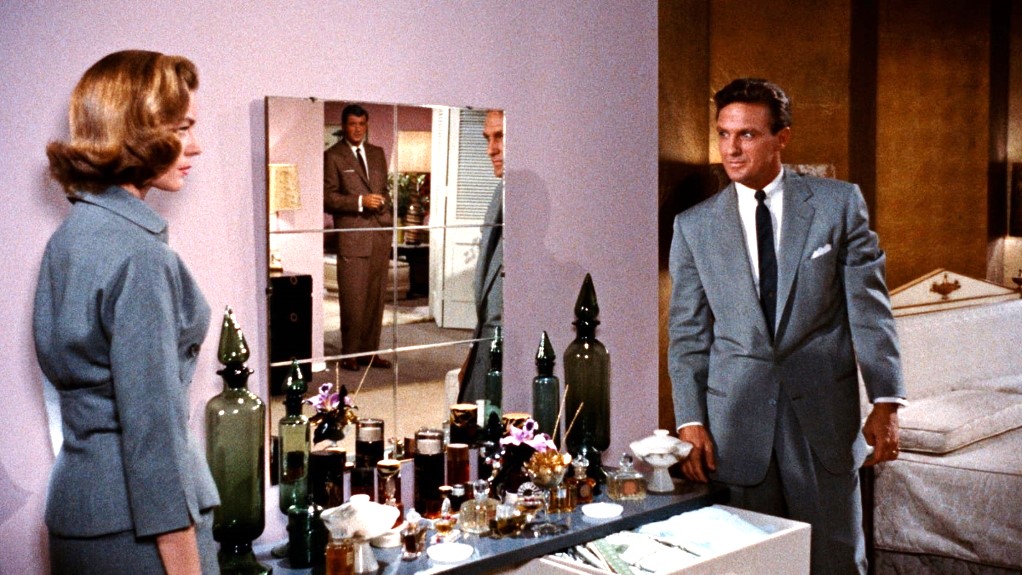
All these psychological soapy suds bubble superbly inside Sirk’s intricately constructed world. Every shot in Written on the Wind is perfectly constructed, splashes of primary colours dominating a world of pristine 50s class. Sirk frames the picture gorgeously, notably using mirrors effectively to place the characters in triangular patterns (Mitch at one point strikingly appearing in a mirror standing between Kyle and Lucy) or to suggest psychological truths (one shot angled to show Lucy brushing her hair in a mirror where we see a reflection of the reclining Maryann and don’t forget that marvellous closing shot of Dorothy subconsciously mirroring her father’s pose in the painting behind her while caressing a phallic model of an oil drill).

Sirk keeps events just the right side of melodramatic excess. A brilliantly staged sequence sees Maryann – dragged home from an assignation by the police – dance with a wild abandon in her bedroom while Jasper, horrified at realising how his disregard has warped Maryann, collapses to a heart-attack on the stairs. It’s a sequence that could be absurd but has just the right amount of reality to it, grounded as it is in Maryann’s self-loathing. Just as Kyle’s belief that impotence is going to consign him to being as much a failure in continuing the Hadley line as he is in everything else. Particularly since he’s constantly reminded of his inadequacy opposite the taller, smarter, better-at-everything Mitch who everyone else in the film openly seems to prefers to him.

It’s an extraordinary balance Sirk keeps, treating the characters with utter respect and affection while placing them in an over-the-top structure full of elaborate sets and overblown, melodramatic events and heightened feelings. Perhaps because Sirk never laughs at the concepts and content he’s created, we invest in both its truth and ridiculous entertainment quality. He does this while avoiding any touch of self-importance, never forgetting this is an old-fashioned melodrama. It makes Written on the Wind a hugely enjoyable, and surprisingly rich, character study mixed with plot-boiler.

The Big Sleep (1946)

The Big Sleep (1946)

Bogie and Bacall flirt their way into legend in the iconic Chandler adaptation

Director: Howard Hawks

Cast: Humphrey Bogart (Philip Marlowe), Lauren Bacall (Vivian Sternwood Rutledge), John Ridgeley (Eddie Mars), Martha Vickers (Carmen Sternwood), Sonia Darrin (Agnes Lowzier), Dorothy Malone (Acme bookstore owner), Regis Toomey (Chief Inspector Bernie Ohls), Peggy Knudsen (Mona Mars), Charles Waldron (General Sternwood), Charles D Brown (Norris), Elisha Cook Jnr (Harry Jones)

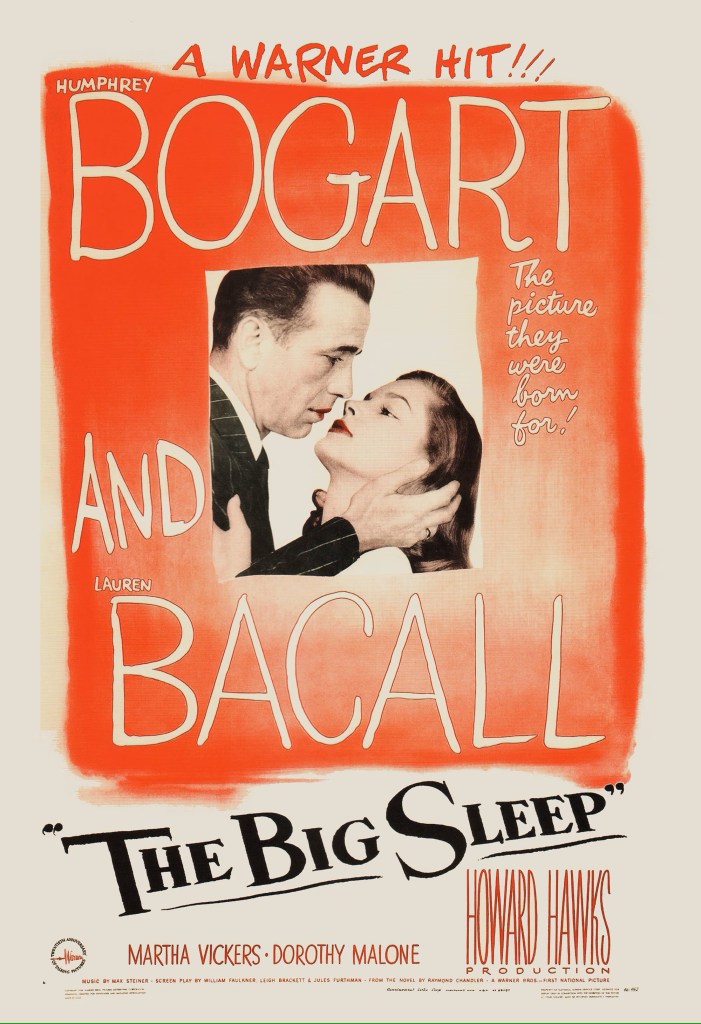
The Big Sleep was actually shot in 1944 – you can spot the odd wartime reference, from a female taxi driver to Marlowe’s special gasoline permit – but was released almost two years later. A lot had changed since then (the end of the war for starters) not least the fact that Bogart and Bacall had become the most famous couple in the world. After previews, Warner Bros quickly twigged they could have a mega-hit if they took out some of the dull bits and replaced them with Bogie and Bacall flirting instead. Which they duly did, helping turn The Big Sleep from what could-have-been a fairly routine Chandler gumshoe adaptation into a sort of genre-defining phenomenon.

The first thing they sacrificed was the plot. Famously, nothing in The Big Sleep really makes that much sense – and it hardly matters. Bogie asked Hawks at one point just who exactly shoved the Sternwood unconscious chauffer’s into the river – neither Hawks or the several scriptwriters (including William Faulkner and Leigh Brackett) had a clue. It doesn’t matter, because few films are about “the ride” as much as The Big Sleep. Every moment has something in it to appeal to the hard-boiled detective fan. Not a scene goes by without either a glamourous lady eager to bed Bogie, a fight, a shooting or some combination of all three. All washed down by a hard-bitten Bogie at his absolutely best, over-flowing with charisma and an impish sense-of-fun at how cool it all was.

The Big Sleep sees Philip Marlowe (Humphrey Bogart) hired by General Sternwood (Charles Waldron) to investigate a series of mysterious debts run up by Sternwood’s carefree and wantonly flirtatious daughter Carmen (Martha Vickers). The plot inevitably thickens as Marlowe uncovers blackmail, prostitution, pornography rings and lord knows what else, all circulating around a sinister bookseller with a sideline in naughty photos, a brazen femme fatale (Agnes Lowzier) manipulating a series of weak-willed men and a tough gangster Eddie Mars (John Ridgeley) willing to use his secrets to win advantage. That’s not even mentioning Carmen’s austerely arch sister Vivian (Lauren Bacall) whose sultry flirtatiousness captures Marlowe’s attention.

The Big Sleep really is a series of hugely entertaining scenes, loosely tired together with a vague plot. The original cut had featured a dull scene with Bogie laboriously explaining what was going on to his dull-as-ditch-water police friend. What Hawks and co realised is no one really wants to see that when they could see Bogie and Bacall puffing cigarettes and talking suggestively (brazenly!) about how you need to ride a horse hard. They were probably right: after all, no one thinks about Psycho and says “my favourite scene is the bit with the psychiatrist’s explanation at the end”. Hawks realised if the viewer enjoyed themselves, no one would give a damn if it made almost no sense.

How else really can you explain scenes like Marlowe’s drop-in on an Acme bookstore where he meets the sort of drop-dead gorgeous bombshell store owner (Dorothy Malone, sexy as hell) who only exists in movies and happily closes the store in the middle of the afternoon to drink a bit of whisky (and more) with Bogie? It offers nothing to the plot that couldn’t be covered with a brief time-lapse montage – it’s all about the mood, the dialogue and the sensual charge between the two characters, with the illicit promise of no-strings sex (which, rather nicely for a 40s movie, they both seem well-up for). Who hasn’t dreamed of that?

It’s the same frisson that lies behind the whole Bogie and Bacall appeal. These two set the screen alight with the sort of temperature that came from basically watching them have an affair right in front of us. The two became an illicit item while filming To Have and Have Not and large chunks of The Big Sleep were held up due to Bogie drinking away his guilt. By ’46 they were an official item, but you couldn’t doubt it from the lingering, heated looks they give each other. Or the screwball lightness – and the one-upmanship and delight in making the other laugh – during their telephone call to the police department, as they pass the phone between each other putting on voices and pretending to be various members of an entire clan of troubled curtain-twitchers.

Humphrey Bogart was in his element here. Literally no one before or since could play this sort of super-smart, more-sensitive-than-he-appears hero who covers himself with a cynical, wise-cracking front than him. His Philip Marlowe has a joke for every occasion but also a strong moral sense close to the surface. He’s playful – the delight in which he affects the fusspot demeanour of a book collector early on is delightful – but superbly unruffled by threats.

No wonder Bacall’s Vivian is drawn towards him. Bacall is sultry and husky voiced, a slice of imperial sexiness. If the film doesn’t call for her to do much more than that, she certainly can deliver it. It’s a performance that is left surprisingly one-note (after all that one-note was all Hawks wanted from her). Chandler believed Martha Vicker’s inspired performance of childish selfishness and sexual shamelessness as her sister Carmen was if anything even better – and he’s probably right. But then Bacall has those famous scenes with Bogie – somewhere between His Girl Friday and Basic Instinct – and it’s those moments that cement themselves in your mind.

That and The Big Sleep’s effective moments of hard-edged violence. Elisha Cook Jnr gets his greatest role as a weakling who bungles his way into an early grave in a partially-silhouetted murder. There is a cracking shoot-out between Marlowe and Mars’ hired gun and a neat (if barely logical) final face-off between the outraged Bogie and Joh Ridgeley’s expertly judged Mars who crumbles from arrogant superiority to snivelling cowardice. There are equal delights in numerous other scenes that play out like stand-alone treats – from Bogie’s imperious swatting of bully-boy Brody to his greenhouse hiring by General Sternwood. Every scene in the film plays out with hard-boiled zing like its own cool little stand-alone movie.

It makes for a fun package – and it’s easy to see why The Big Sleep is the sort of film people list as “their favourite”. It’s playful and manages to seem extremely cool without seeming to make any effort. Bogart is sensational and every second of the film offers something good. What the hell does it matter if none of it really makes sense?

Misery (1990)

Misery (1990)

Obsessive fans wanting to control the narrative is nothing new in this tension-filled King adaptation

Director: Rob Reiner

Cast: James Caan (Paul Sheldon), Kathy Bates (Annie Wilkes), Richard Farnsworth (Sheriff Buster), Frances Sternhagen (Deputy Virginia), Lauren Bacall (Marcia Sindell)

“I’m your number one fan”. Do any other words strike more fear into the hearts of celebrities? Stephen King’s Misery feels more and more ahead of the time. We live in an era where obsessed fans frequently take to YouTube (or obscure blogs – oh dear…) to shout their fury into the ether about how their beloved franchise has taken a wrong (i.e. counter to their head cannon) turn. Stephen King wasn’t a stranger to this: he’d already had fans in the mid-80s lambast his non-horror books. Misery takes it all a step further.

Successful novelist Paul Sheldon (James Caan) has written a series of Mills & Boon style Victorian romance novels about a character called Misery Chastain. Wanting to restart a career as a serious novelist, Paul retreats to the depths of Colorado to put the finishing touches to his new non-Misery novel. Driving back to New York, he has a car accident. With two broken legs and fractured shoulder, he is dragged from his car by nurse and fanatic Misery fan Annie Wilkes (Kathy Bates). Annie tells him not to worry: the phone lines will be back up soon and until then he can stay at her home. Until she discovers Paul has killed off Misery in his recently published book. A furious Annie makes it clear no one knows he’s there and that, if he ever wants to escape her secluded home, he’ll write a new Misery book to Annie’s personal specifications.

Misery is part horror, part deeply black comedy – a heightened fantasy of increasing paranoia powered by a superb performance by Kathy Bates that walks a fine line between grand guignol, farce and deluded tragedy. In many ways Annie, monstrous in her obsession, is a superb dark comic creation. She has an anorak-level obsessive knowledge about her passions, litters her speech with prudish replacement swear-words (“cockadoodie!”), bounces around the room with schoolgirlish excitement at having Paul in her presence and adores her pet pig (named, of course, Misery). Bates is energetic, wide-eyed and times kind of sweet.

But she’s also a chillingly ruthless and capable of great outbursts of rage and fury at the slightest provocation. A lonely woman with clear signs of being either bipolar or deeply depressed, sinking at times into “black dog” moods, stuffing herself with junk food in front of trashy TV, she relies on Paul’s books to give her a slice of the romantic, exciting life she feels she has missed out on. Like the most toxic fans today, she feels such emotion for the Misery books, she believes they belong to her personally – and if they deviate from what she wants it’s a personal affront. She is also so desperate to love and be loved, she takes a brutal control of the world around her, convinced that if she just works really hard the object of her admiration will admit he feels the same.

Bates is extremely good in a performance strikingly similar to Hopkins’ Lecter a year later (also, of course, Oscar winning). It’s a masterclass in actorly tricks, all deployed with triumphant expertise to create a character who is both darkly funny and terrifyingly controlling. Annie is so twisted that, in a way, doping Paul up on drugs and smashing his legs with a sledgehammer is like an expression of love. If he really understood what she was trying to do for him, how she knew the sort of books he should be writing, he’d never want to leave anyway right?

That leg smashing scene – and God it’s almost impossible to watch – is the height of Reiner’s taut direction that brilliantly makes this an endlessly tense chamber piece. The camera frequently shoots Annie from Paul’s prone position, meaning we are craning our heads up to look at her in exactly the same way he is. Later sequences, where Paul finally works out how to pick the lock of his room and explore (in his wheelchair) Annie’s kitsch-filled house with its shrines to her favourite celebrities, also place us on his visual level. Several scenes use tension effectively – you’ll catch your breath at the dropping of a model penguin, clench as Paul hides pills and knives around him for future escape attempts or sweat as Paul rushes to return to his room when Annie arrives home suddenly. But Reiner also threads in Hitchcockian wit throughout, amongst the tension.

It also gains a great deal from James Caan’s measured performance as Paul. Caan was last in a longlist of male actors offered the role (a sharp change from those days when Caan turned down roles that went on to win other actors Oscars) but willingly plays the passive, scared Paul with a low-key humbleness that works very well. He becomes someone who it is easy to root for.

Misery explores the lengths obsessive fans will go to to own their passions very well. Annie rejects Paul’s first attempt at humouring her with a new Misery book for its inconsistencies with previous novels (she clearly knows way more about it then him). That’s not even mentioning she demands he burns the (only) copy of his new non-Misery novel because “it’s not worthy of him” (being full of naughty words). It’s so good – and in a way prescient of where fandom is heading – it feels a cheap cop-out to also reveal Annie is a serial killer. Far more interesting is how quickly an unhealthy fixation could tip a maladjusted person from demands, to threats, to leg smashing fury.

Misery also fits a little too neatly into a trend – common at the time – of “regular guys” having their lives turned upside down by dangerous, deranged women (there are more than a few nods to Fatal Attraction and it’s not a surprise to hear Michael Douglas was offered the role). For all the dark skill Bates plays Annie with, we are rarely invited to sympathise with or understand her (she’s cemented as a freak with the discovery of her killer past) – again, how more interesting (and prescient) would it have been to just have a woman driven to extremes by obsessive monomania?

The film works best as a chamber piece. So much so, that any scene outside of the house feels superfluous – despite the excellent work from Richard Farnsworth as the local sheriff investigating Paul’s disturbance. Misery, with its abandoned house in the middle of nowhere, is sometimes a little too open in its huge debt to Psycho. But it’s ahead of its time in understanding the obsessive anger that lies under the surface of the darker elements of fandom – so much so you wish it had stuck to that.

Murder on the Orient Express (1974)

Albert Finney interrogates an all-star cast in Murder on the Orient Express

Director: Sidney Lumet

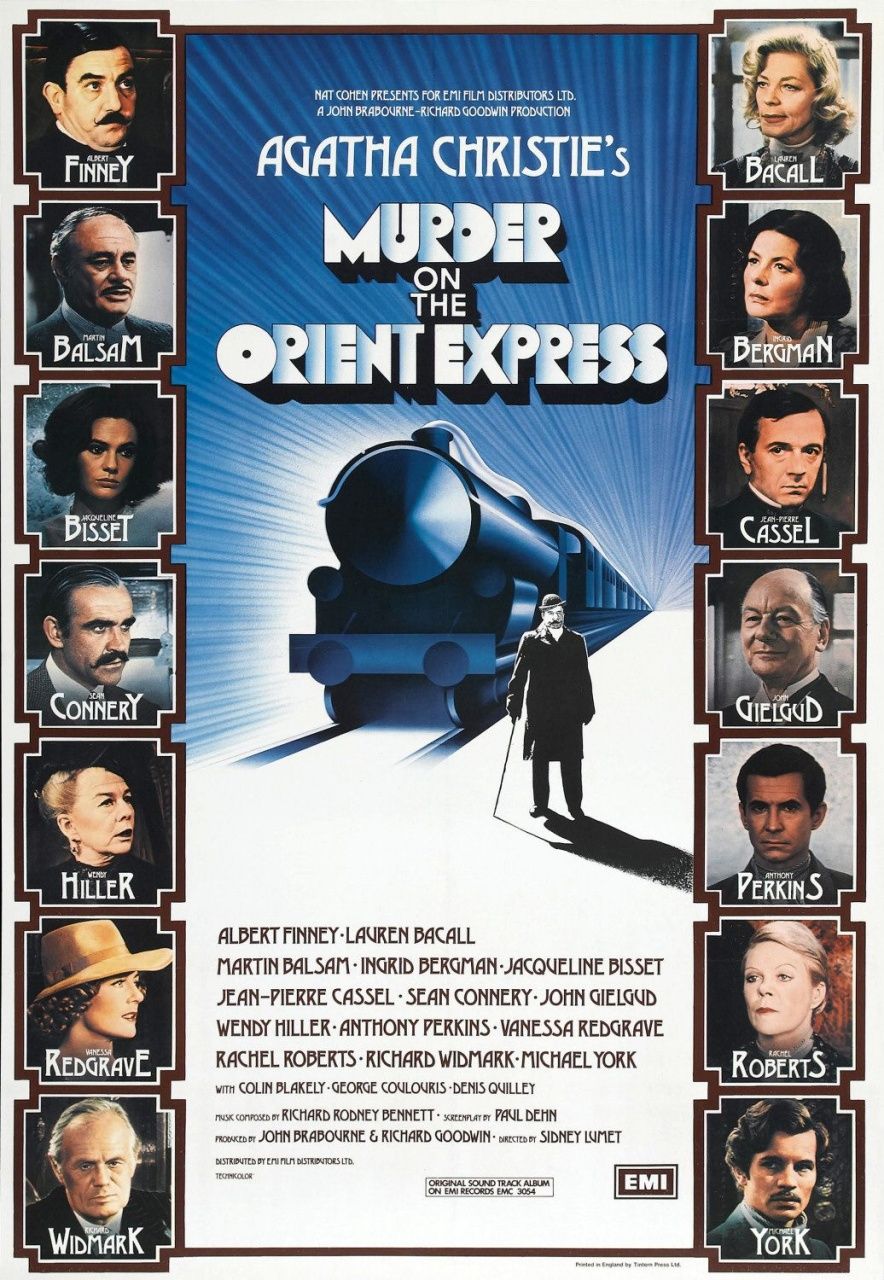
Cast: Albert Finney (Hercule Poirot), Lauren Bacall (Linda Arden), Martin Balsam (Signor Bianchi), Ingrid Bergman (Greta Ohlsson), Jacqueline Bisset (Countess Helena Andrenyi), Jean-Pierre Cassel (Pierre Paul Michel), Sean Connery (Colonel John Arbuthnot), John Gielgud (Edward Beddoes), Wendy Hiller (Princess Natalia Dragomiroff), Anthony Perkins (Hector McQueen), Vanessa Redgrave (Mary Debenham), Rachel Roberts (Hildegarde Schmidt), Richard Widmark (Ratchett), Michael York (Count Rudolf Andrenyi), Colin Blakely (Cyrus Hardman), George Coulouris (Dr Constantine), Denis Quilley (Antonio Foscarelli)

If there was a film that set the template for our expectations for an Agatha Christie adaptation, it was probably this one. A big starry cast. Luscious period detail. An engrossing plot with clues and double meanings in every corner. A healthy mix of the OTT and the chilling. Marshalled by Sidney Lumet, almost certainly the best director to take on a Christie mystery ever, this film was a massive hit then and remains a hugely enjoyable, rewarding treat now, the sort of masterclass in quality film-making and bravura acting that is guaranteed to leave a smile on your face.

You surely must know the plot by now right? Hercule Poirot (Albert Finney) returning from a successful case in the East hitches a ride on the Orient Express on the way home. During the journey he is asked by American businessman Ratchett (Richard Widmark) if he would take up the role of his bodyguard after threats against his life. Poirot turns him down – and sure enough the next morning Ratchett turns up dead in his compartment, with no less than a dozen knife wounds in his chest. With the train stranded in a snow drift, the killer must be one of the other twelve passengers in the carriage. And so the case begins…

Sidney Lumet’s superb, classy piece of murder mystery is a triumph of design and style. The train looks superb, the period detail is perfect, the costumes are luscious. But what Lumet brings to it all underneath all this Sunday afternoon splendour is a genuine sense of chilling menace. Helped a great deal by Richard Rodney Bennett’s haunting musical cues, this film never lets the viewer forget that the heartless destruction of an entire family is at the root of the crime itself, or that the desires for revenge we find in ourselves can take us to dark places. 

Lumet’s film opens with a brilliantly constructed series of newspaper stills, establishing the horrors of the Daisy Armstrong case that underpins the mystery, the kidnapping and murder of a young child (based on the Lindbergh kidnapping) that led to tragic consequences for an entire family. This chillingly sad and tragic back story is echoed throughout the film, and immediately establishes the stakes for all involved.

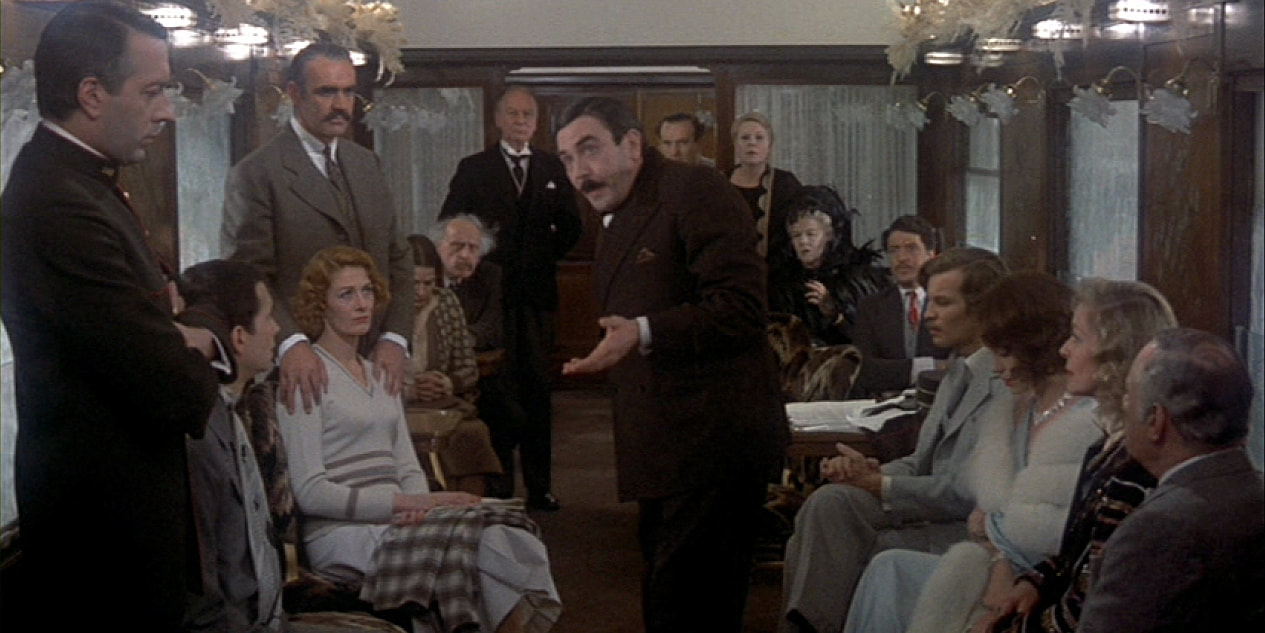
So we spend the film then trying to work out how all the suspects might fit it into this story. Lumet’s concept of bringing together an all-star cast was a brilliant idea, not only giving each of the suspects a quickly established personality (partly inspired by the actor’s body of work), but also assembling a group of such talented actors that they can sketch out a character within a few moments. Lumet’s first recruit for the cast was his old collaborator Sean Connery – and the agreement of Connery to take on a supporting role brought a host of actors to follow. It all adds to the fun, an enjoyable star-spotting exercise, and also an amusing game of watching sometime wildly competing acting styles.

Connery plays Arbuthnot with a stiff-upper lip English reserve, but then you also have a wonderfully arch (and very funny) John Gielgud, a dementedly twitchy Anthony Perkins (McQueen seems to have been adapted into a junior brother of Norman Bates), a show-boatingly larger-than-life Lauren Bacall (great fun), a Germanic stern Rachel Roberts and an inscrutable Vanessa Redgrave. That’s just a few of a terrific collection of actors, and arguably only Wendy Hiller’s overly imperious Princess Dragamiroff is a bit of a miss.

Lumet’s strength in depth allowed him to push his actors into demanding places – complex set-ups and, most especially, a series of long takes in his often confined performance spaces. The highlight – in fact it won her an Oscar – is Ingrid Bergman’s five-minute (practically only) scene where the camera slowly rotates around her across five minutes as she tells her story. Bergman’s shy, nervy, gentle and timid missionary comes across as achingly vulnerable. Bergman had been offered the larger role taken by Wendy Hillier, but wisely turned it down for this show-stopping moment.

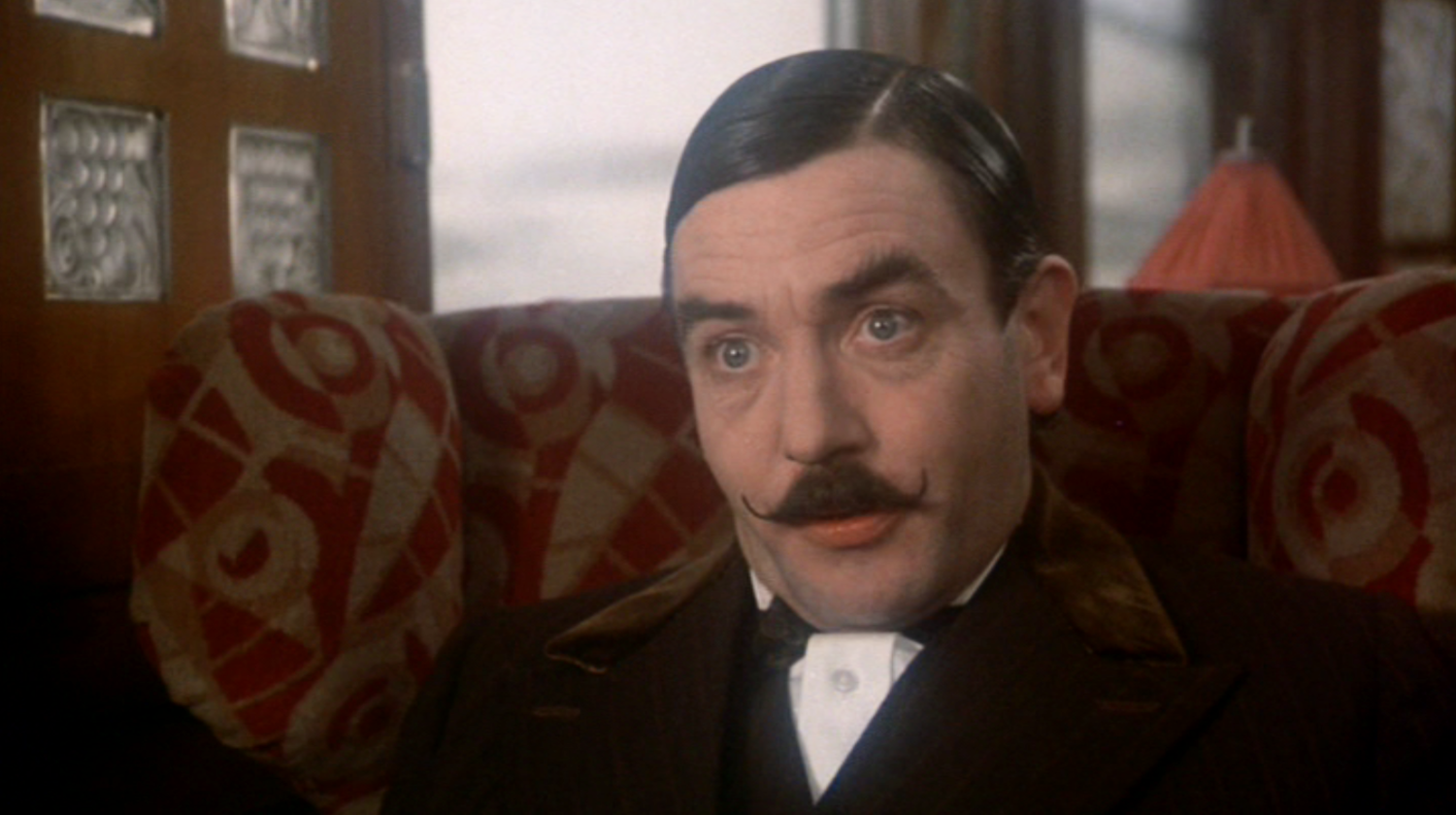
The advantage of having such accomplished actors was most clear in the burden placed on Finney as Poirot. Watching it now – familiar as we are with decades of David Suchet’s definitive performance – it’s easy to see Finney’s performance as a little too much. Covered with make-up and a fat-suit, his shoulders hunched around his neck, his hair plastered down with grease and his accent frequently heading way out over the top, Finney certainly leaves very little in the dressing room. His Poirot is an amiable showman, a man willing to adjust his personality and approach from suspect to suspect, but in the end a man with a well-being arrogance and a deep sense of personal morality as well as a profound sense of humanity.

Finney was a surprising Oscar nominee for Best Actor, but he almost certainly owed this to his final speech, an almost thirty-minute tour-de-force. Lumet, operating in small confines, determined that the best way of getting the most dramatic energy from the speech was to use long takes, elegant camera moves, and the minimum of cutting – to let Poirot cast his spell over the audience as much as he does over the suspect. As such Finney – in a tiny, crowded, set – performed the complete monologue several times (each time apparently flawlessly) so that the camera could be positioned in each point in the confined set at a time. The result is seen in the final sequence, which uses dizzying long takes and careful camera moves to draw us brilliantly into the reveals that come thick and fast.

Finney’s performance is magnetic in its theatricality and commitment, and Lumet’s directing decisions throughout the sequence really help to make this sequence as effective as it is. Lumet’s peppers this sequence with a series of brief flashbacks to earlier in the film, which skilfully present snippets of the characters testimonies represented at different camera angles, which is both eerie and also throws a new light on the scenes we have already seen. For all that Finney is a bit much at times, you can’t help but enjoy this piece of showmanship.

The final resolution remains justly famous, and it largely owes a lot to this film. Agatha Christie even was favourable to the film (one of only two films of her work she liked, the other being Billy Wilder’s adaptation of Witness for the Prosecution) although (in words I presume heard by Kenneth Branagh) she bemoaned the smallness of Finney’s moustache. There have been several film and TV adaptations that have followed, but only David Suchet’s version has challenged it for the title of the best. With its gorgeous settings, imaginative direction and wonderful cast I never tire of watching it.