Tag: Lee Remick

The Omen (1976)

The Omen (1976)

Extremely silly horror with a great score, more interested in inventive deaths and genuine fear or dread

Director: Richard Donner

Cast: Gregory Peck (Robert Thorn), Lee Remick (Katherine Thorn), David Warner (Keith Jennings), Billie Whitelaw (Mrs Baylock), Patrick Troughton (Father Brennan), Leo McKern (Carl Bugenhagen), Harvey Stephens (Damien Thorn), Martin Benson (Father Spiletto), Robert Rietty (Monk), John Stride (Psychiatrist), Anthony Nicholls (Dr Becker), Holly Palance (Nanny)
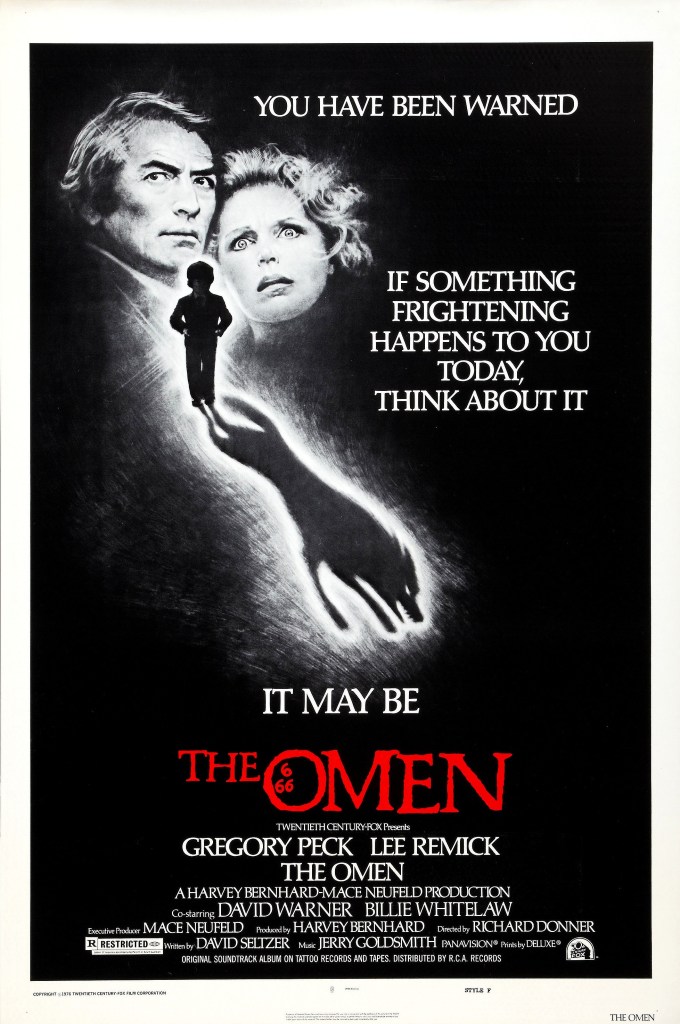
“Let him that hath understanding count the number of the beast; for it is the number of a man; and his number is 666.” One of the sweetest things about The Omen is that the number of the Beast was considered such an unknown concept to original viewers, that its painstakingly explained to us. In some ways The Omen is quite sweet, a big, silly Halloween pantomime which everyone involved takes very seriously. If The Exorcist was about tapping into primal fears, The Omen is a gory slasher (with a cracking score) that’s about making you go “Did you fucking see that!” as actors are dispatched in inventively gory ways. It’s brash, overblown and (if we’re honest) not very good.

Robert Thorn (Gregory Peck, selling every inch of his innate dignity for cold, hard lucre) is an American diplomat told one night in Rome that his pregnant wife Katherine (Lee Remick) has given birth to a stillborn child. “Not a problem” he’s told by an absurdly creepy Priest (Martin Benson) – just so happens there’s another motherless new-born child in the hospital tonight so he can have that one, no questions asked, and his wife need never know. Flash forward five years: Thorn is Ambassador to the Court of St James and young Damien (Harvey Stephens) is a creepy kid, with few words and piercing stare. In a series of tragic accidents people start dying around him. Could those people warning Thorn that his son is in fact the literal anti-Christ himself, be correct?

Want to see how powerful music can be? Check out how The Omen owes nearly all the menace it has to it imposing, Oscar-winning score from Jerry Goldsmith (wonderfullyGothic full of Latin-chanting and percussive beats). It certainly owes very little to anything else. The Omen is an exploitative, overblown mess of a film, delighting in crash-zooms, jump-cuts and extreme, multi-cut build-ups to gore. Richard Donner never misses an opportunity to signpost an approaching grisly death, by cutting between the horrified face of the victim, the object of their demise and then often back again. For the best stunts – including a famous demise at the hands of a sheet of glass – Donner delights in showing us the death multiple times from multiple angles.

This slasher delight in knocking off actors – people are hanged, impaled, crushed and decapitated in increasingly inventive manners – is what’s really at the heart of The Omen. None of this is particularly scary in itself (with the possible exception of the hypnotised madness in the eyes of Holly Palance’s nurse before her shocking suicide at Damien’s birthday party) just plugging into the sort of delight we take in watching blood and guts that would be taken in further in series like Halloween (which owed a huge debt to the nonsense here). Donner isn’t even really that good at shooting this stuff, with his afore-mentioned crude intercutting and even-at-the-time old-fashioned crash zooms.

With Goldsmith’s score providing the fear, The Omen similarly relies on its actors to make all this nonsense feel ultra serious and important. They couldn’t have picked a better actor than Gregory Peck to shoulder the burden of playing step-dad to the Devil’s spawn. Peck has such natural authority – and such an absence of anything approaching fourth-wall leaning playfulness – that he invests this silliness with a strange dignity. Of course, Atticus Finch is going to spend a fair bit of time weighing up the moral right-and-wrongs of crucifying with heavenly knives the son of Satan! Peck wades through The Omen with a gravelly bombast, managing to not betray his “for the pay cheque” motivations, and investing it with his own seriousness of purpose.

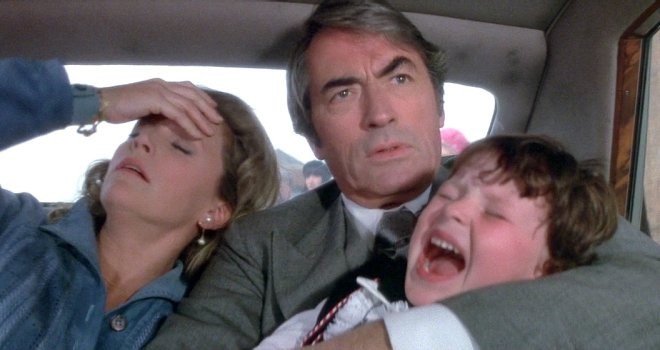
Peck’s status also probably helps lift the games of the rest of the cast. Lee Remick may have a part that requires her to do little more than scream (and fall from a great height twice) but she does manage to convey a neat sense of dread as a mother realising her son is not quite right. David Warner gives a nice degree of pluck to a sceptical photojournalist (while also bagging the best death scene). Troughton and McKern ham it up gloriously as a drunken former devil-worshipping priest and an exorcist archaeologist respectively. Best in show is Billie Whitelaw who filters her Beckettian experience into a series of chillingly dead-eyed stares as Damien’s demonic nanny.
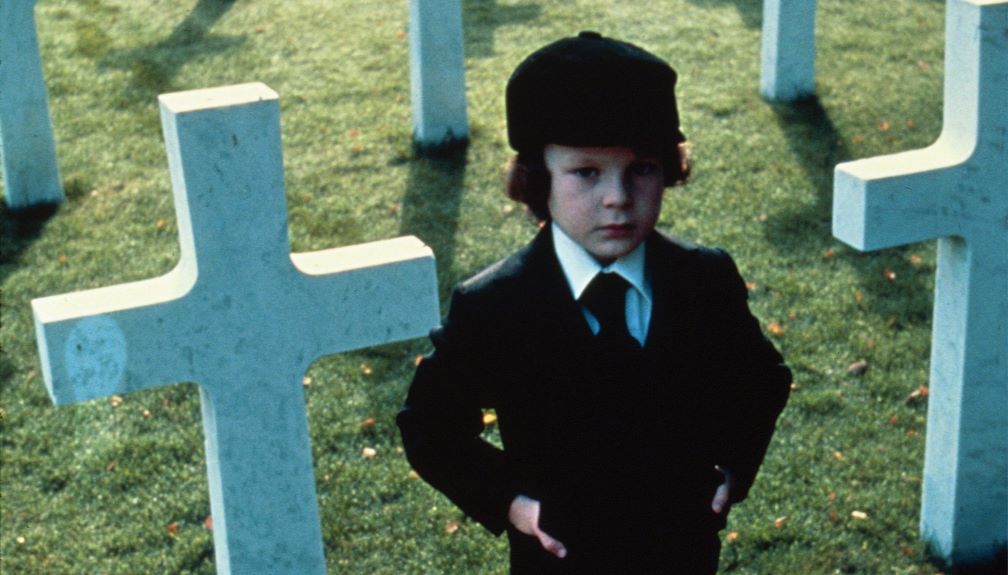
The Omen does make some good hay of its neat paedophobia. Harvey Stephens with his shaggy hair, impish smile and pale skin (not to mention darkly sombre wardrobe) looks like your worst nightmare – he’s creepy enough that the film doesn’t need to gift him a vicious rottweiler as well. Donner’s decision to never have Damien show a touch of any real emotion for most of the film also pays off, meaning even something as silly as Damien inflicting slaughter from behind the pedals of a child’s tricycle seems scary.

Of course, if Damien was savvy enough to present himself as a bright and sunny child perhaps Troughton, Warner, McKern and co would have struggled to convince Peck he was the Devil’s seed. In that sense he takes after his dad: Satan loves an over-elaborate death, and from a storm herding one victim to a fatal impalement under a tumbling church spire to popping the handbrake of a glass-bearing van for another, no trouble is too much for Satan when bumping off those who cross him. (The Omen could be trying to suggest that maybe everything is a freak accident and Thorn goes wild and crazy with grief – but that Goldsmith score discounts any possibility other than Damien is exactly what we’re repeatedly told he is.)

The Omen trundles along until its downbeat, sequel-teasing ending, via a gun-totting British policeman who sticks out like a sore thumb in a country where the cops carry truncheons not pistols. Donner balances the dialled up, tricksy, overblown scares with scenes of po-faced actors talking about prophecies and the apocalypse, all shot with placid straight-forwardness. There is a really scary film to be made here about finding out your beloved son is literally a monster, or how a depressed father could misinterpret a series of accidents as a diabolical scheme. But it ain’t The Omen – this is a bump-ride of the macabre. The Devil may have the best tunes – but he needs to talk to his Hollywood agent.

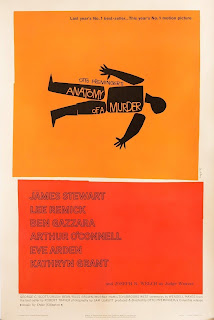
Anatomy of a Murder (1959)

Anatomy of a Murder (1959)

The mechanics of courtroom showmanship is ruthlessly exposed in this gripping drama

Director: Otto Preminger

Cast: James Stewart (Paul Biegler), Lee Remick (Laura Mannion), Ben Gazzara (Lt Frederick Manion), Arthur O’Connell (Parnell McCarthy), Eve Arden (Maida Rutledge), Kathryn Grant (Mary Pilant), George C. Scott (Claude Dancer), Orson Bean (Dr Matthew Smith), Russ Brown (George Lemon), Murray Hamilton (Alphonse Paquette), Brooks West (Mitch Lodwick), Joseph N Welch (Judge Weaver)

Winston Churchill once said Democracy was the worst form of government, except for all the others. You could say something similar about trial by jury: it ain’t perfect, but it’s better than any other justice system we’ve given a spin to in human history. Trials aren’t always forums for discovering truths: they are stages to present arguments (or stories), and they are won by whoever has the best one. Maybe cold, hard facts and evidence make up your story, maybe perceptions. Maybe it’s about how you tell the story. Elements of all three are found in Otto Preminger’s brilliant courtroom drama, Anatomy of a Murder.

In a small town in Michigan, a US army lieutenant, Frederick Manion (Ben Gazzara) is arrested for the murder of innkeeper Barney Quill. Manion says he did the deed only because Quill raped Manion’s wife Laura (Lee Remick). Representing him is lawyer Paul Biegler (James Stewart), a former district attorney looking to start-up a new practise. On the opposite side is new DA Mitch Lodwick (Brooks West) and, far more of a worry, hot-shot lawyer Claude Dancer (George C. Scott) all the way from the Attorney General’s office. They say there was no rape – only a jealous murder after a consensual affair. It’s he-said-she-said, only “he” is dead. How will the trial clear that one up?

Otto Preminger was the son of a noted Austrian jurist, and Anatomy of a Murder can be seen as a tribute to his father, and to the process of the law itself. Not that it’s a hagiography. The film recognises the virtues as well as the faults of the system. Above all, that the system is not perfect, it can’t base every decision on firm facts and often requires people to take leaps of faith based on their gut instinct about who may, or may not, be telling the truth.

Preminger’s film does its very best to put us in the position the jury is in. We get no real evidence about what happened beyond what they get, and very few bits of additional information (except, perhaps, for seeing what many of the characters are like outside of the courtroom). Instead, the viewer is asked to make their mind-up on whether events fell-out as Manion claims (or not) based on our own judgement of the probabilities and of his (and Laura’s) character. The film opens with the crime committed and closes shortly after the verdict: there are no flashbacks or pre-murder scenes to help nudge us towards one view or another. The murder victim appears only as a photo. Like the jury we have to call it on what we see in front of us.

Anatomy of a Murder also makes clear there are plenty of shades of grey in the process of justice. During his first consultation with Manion, Biegler carefully suggests he consider whether he was in fact insane when he committed the deed – as that sort of defence will be much easier, since he doesn’t deny the killing. Sure enough, on their second meeting, Manion is now deeply unsure about his state of mind. Biegler then works backwards to establish precedent for the plea (a finds a single, over 75 years old one) to pull together a defence of irresistible impulse and to peddle hard a picture of the victim as an unrepentant rapist practically asking for a wronged husband to do the deed.

Biegler’s case is flimsy – but the key thing is to present it with pizzazz. And that’s what he’s got. Stewart’s performances in Hitchcock classics are highly regarded, but this might well be his finest dramatic performance. This is a brilliantly sly deconstruction of Stewart’s aw shucks charm: Biegler promotes an image of himself as a down-on-his-heels, bumpkin-like country lawyer, punching above his weight against the big city lawyers, Stewart dialling up the famous drawl. But it’s miles from the truth: Biegler is a former DA, an experienced trial lawyer and a formidable advocate. Stewart flicks the switch constantly, visibly putting on his persona like a skin, shedding it when no longer needed.

There is a constant suggestion that everything Biegler does is for effect. From fiddling with fishing tackle during the prosecution’s opening statements, to furious court-room theatricals as he thuds tables at slights and injustices. All of it is carefully prepared, rehearsed and delivered to make an impact on the jury. The constant parade of effect, manufactured outrage and appeals to an “us against them” mentality provokes exasperation from his opponents and a weary toleration from the Judge (played by real-life McCarthy confronting attorney Joseph N Welch). Stewart uses his Mr Smith Goes to Washington nobility, but punctures it at every point with Biegler’s cynicism and opportunism. Biegler, at best, persuades himself his client is innocent – but I would guess he doesn’t really care either way. He immediately perceives the personalities of his clients and then does his best to shield their less flattering qualities from the jury.

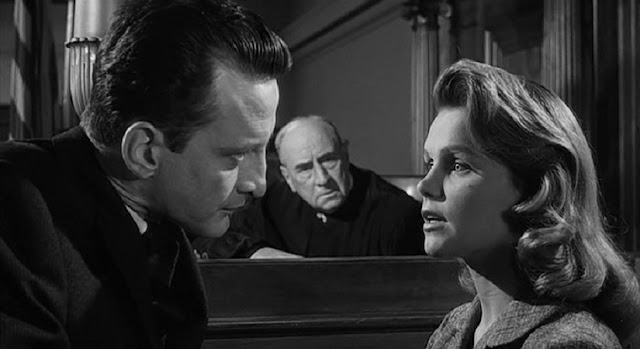
The one advantage we have over the jury is the additional insight we get into this strange couple, living a possibly unhappy, and certainly love-hate, marriage. Manion plays wronged fury in the court – but Gazzara gives him a lot of self-satisfied smarm and bland indifference to his crime in real life, meeting every event with a smirk that suggests he’s sure he can get away with anything. Equally good, Lee Remick’s Laura presents such a front of decency and pain in court, you’ll find it hard to balance that with the promiscuous, blousy woman we see outside of it, who provocatively flirts with intent with anything that moves. But it’s all about the show: present them right, and these unsympathetic people can be successfully shown as a conventional loving couple.

The prosecution is playing the same game. George C. Scott is superb as a coolly professional lawyer, who will use any number of tricks – from angry confrontation, to seductive reasonableness – to cajole a witness to say anything he wishes them to say. He will turn on a sixpence from being your friend, to berating you as a liar. And he’s not averse to his own morally questionable plays in court. Like Biegler, he knows presenting a good story is what is needed to win: the truth (or otherwise) isn’t enough.

Anatomy of a Murder still feels like a hugely insightful look at the legal process. Most of its runtime takes place in court, which Preminger shoots with a calmly controlled series of long-takes and two-shot set-ups, that help turn the film into something of a play (as well as a showpiece for fine acting). Along with its very daring (for the time) exploration of rape, it has a very cool soundtrack from Duke Ellington, that drips with allure and gives the film a lot of edge. The acting is all brilliant – along with those mentioned, Eve Arden is first-class as Biegler’s loyal secretary and Arthur O’Connell sweetly seedy as his heavy-drinking fellow lawyer. Anatomy of a Murder gives a first rate, at times cynical, look at the flaws and strengths of trial by jury – and is an outstanding courtroom drama.