Tag: Leonardo DiCaprio

One Battle After Another (2025)

One Battle After Another (2025)

Fabulously made film, a brilliant merging of half-a-dozen genres is one Andersons’s finest

Director: Paul Thomas Anderson

Cast: Leonardo DiCaprio (Pat Calhoun/Bob Ferguson), Sean Penn (Colonel Steven J Lockjaw), Benicio del Toro (Sergio St Carlos), Regina Hall (Deandra), Teyana Taylor (Perfidia Beverly Hills), Chase Infiniti (Willa Ferguson), Wood Harris (Laredo), Alan Haima (Mae West), Paul Grimstad (Howard Sommerville), Shayna McHayle (Junglepussy), Tony Goldwyn (Virgil Throckmorton), John Hoogenakker (Tim Smith)

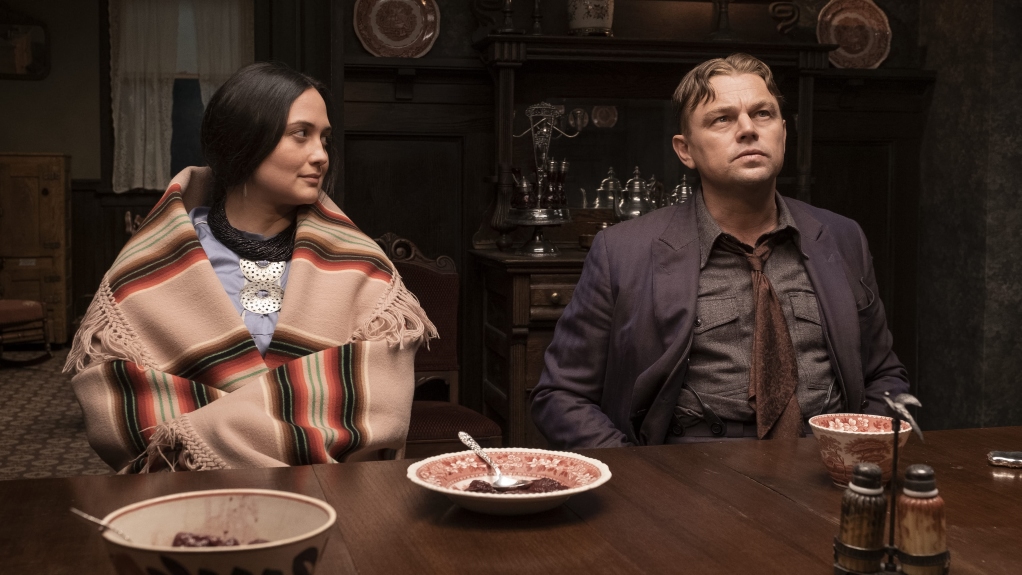
What is revolution – changing the world or just the relentless grind of One Battle After Another? It’s as hard to define as it is to define Paul Thomas Anderson’s incredibly striking Thomas Pynchon adaptation. Look at it one angle, and it’s a sharp political commentary on America; from another it’s a satire on the insular, self-defeating rules of secret societies; from a third it’s a pulpy chase-thriller; from a fourth a touching coming-of-age story of a daughter growing closer to her dad. Anderson’s skill here is that it’s basically all these and more at the same time, an electric, frequently laugh-out loud funny, hugely eccentric film that defies all categorisation.

Pynchon’s novel Vineland saw the radicals of the 1960s pulled, clumsily, back to life in the 90s. Anderson keeps the time skip, but moves the start to the late 00s and the destination to today. Pat (Leonardo DiCaprio) is a dishevelled, but true-believing, junior member of The French 75, a radical Atifa-style organisation on a wave of armed anti-government action. He’s in love with Perfidia (Teyana Taylor), an adrenalin-fuelled militant whose radicalism is often secondary to the rush she gets from guns and bombs. She’s the source of perverted sexual obsession for bottled-up, socially-striving US army officer Stephen Lockjaw (Sean Penn). After Perfidia makes a terrible choice, 16-years later the disillusioned, frequently doped-out, Pat (now living under the alias of Bob Ferguson) is raising their teenage daughter Willa (Chase Infiniti) when Lockjaw explodes back into their life, desperate to clean up his past indiscretions in case they imperil his acceptance into a secretive Neo-Nazi organisation of wealthy American, ‘the Christmas Adventures Club’. Cue a wild and crazy chase.

Anderson’s film bowls along with a whipper-cracker pace, over-flowing with confidence that it doesn’t need to spoon-feed us timelines, details or locations but trusts us to go with narrative flow. Which I for one really did. It’s a film that throws you straight into the mix – a French 75 raid on an immigration detainment facility – and barely lets up from there. Within the first half an hour we’ve seen a wave of direct action events from blowing up campaign offices (after warning phone calls) to sabotaging a city’s electricity supply – alongside Pat and Perfidia overcome with giddy, sexual thrills at thumbing their nose at the system. It’s a great way of grasping what an addictive rush fighting the man can be, something that’s all too-clear in the excited whooping, cheering and bombastic speechifying of many of its members.

These good times can’t last, but Perfidia wants to enjoy them as long as she can. In a blistering, force-of-nature performance from Teyana Taylor, Perfidia acts completely on impulse, thrilled with her life of action, pulling the naïve Bob in her slipstream. Danger of all sorts is addictive, from bombs to risky liaisons. She’ll spontaneously attempt to sexually humiliate Lockjaw on their first encounter (essentially ordering him to ‘stand to attention’ for her), then throw herself into an off-the-books sexual relationship with him (after he obsessively tracks her down for more humiliation) seemingly for kicks. She embodies the risky, thrilling excitement of the revolutionary world.

She’s also what leads to its destruction (her fellow revolutionaries are reduced to frightened shadows of themselves when, during a bank raid. Perfidia actually uses the lethal force everyone else has just talked about). Anderson’s film, after its propulsive start (assembled like an extended montage across an entire act), jumps to a very different future, where the thrills and spills of the underworld are subtly undermined, firstly by the hilarious dark comedy of all communication being managed through obsessive codeword rules and then by comparison with a far more quiet, but far more effective, underground railroad for migrants run by Benecio del Toro’s (underplaying brilliantly, his natural charisma flowing off the screen) Latin community leader and Taekwondo-sensei.

It’s also clear how hard it is to keep the revolutionary fire-burning. One Battle After Another superbly exploits the vulnerability and anxiety that underpins many of DiCaprio’s best performances. For all his involvement with radical violence, Pat/Bob is a sensitive, true believer starry-eyed, but with an appreciation for every-day duties that his fellow revolutionaries lack. It’s him who believes family and their daughter should come first (Perfidia, in the midst of post-natal depression, even admits she’s jealous of her daughter for absorbing so much of Pat’s love and attention).

DiCaprio brilliantly finds in Bob a good heart, whose desire to do the right thing is undermined by his own incompetence. In disappointment, he’s become a paranoid grouch, grumbling about pronouns, like any other middle-aged man adrift in the modern world. DiCaprio burns through the desperate energy of the part, but mixes it with a rich vein of black comedy at Bob’s frequent inability to cope with his situation. It’s a perfectly judged performance of loyalty and love, mixed with exasperation, panic and frequent well-meaning poor judgement.

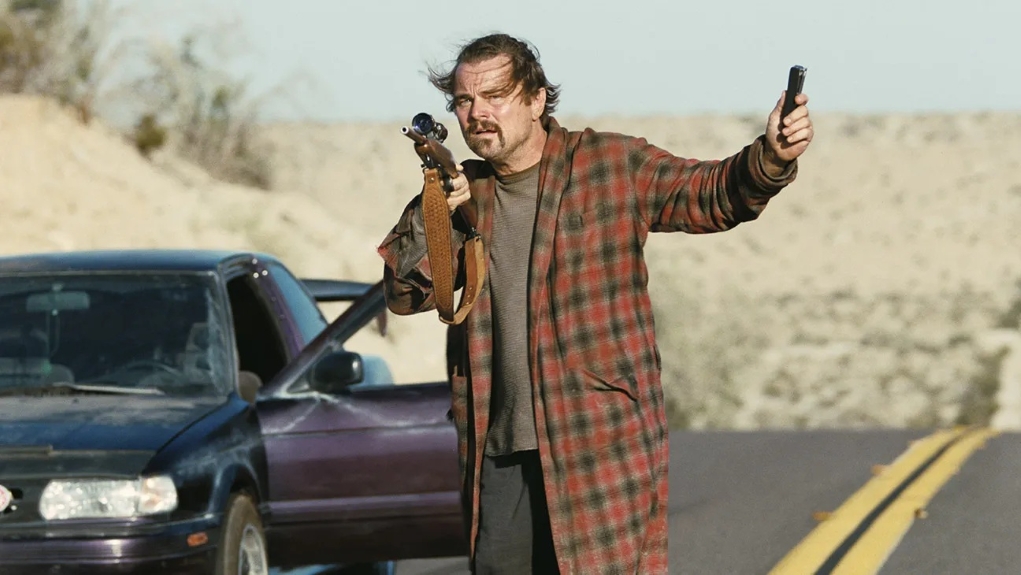
The second-act leans into the satirical comedy of these middle-aged revolutionaries, bought crashingly to life. In a neat comic touch, Bob spends most of the film on the run, desperately trying to find Willa, while dressed, Arthur Dent-style, in the same scuzzy dressing-gown he was wearing before Lockjaw’s raid. Time-and-time again, he’s reduced to swearing impotently down a phone-line like any other middle-aged consumer fed-up with unhelpful customer service, as he repeatedly fails to dredge vital codewords up from his stoned memory. During his escape, he’ll fall off a roof while evading the law, blanch at jumping from a moving car and spectacularly bungle a shoot-out. But what never waivers is his determination to help his daughter. One Battle After Another plays at times like a version of Taken where Neeson’s character had let himself get out of shape but still threw himself into the chase.

Anderson has fun with the bombastic self-importance of revolutionaries and the intricate insularity of their world. But he also has respect for their underlying desire to change the world for the better, even if the film suggests that the carefully, unflashy work being carried out by del Toro’s railroad is a better approach. Among the revolutionaries, there is a genuine warmth and feeling, embodied by Regina Hall’s loyal and humane Deandra (another superb performance in a film packed with them). There is a loyalty and protectiveness among the revolutionaries that bonds them together. And Sergio – del Toro outstanding as a never-fazed Sensei, a performance bubbling with dry wit – has built a community founded on mutual respect and looking out for each other.

And One Battle After Another has no respect at all for the alternative. The Christmas Adventures Club, the bizarre neo-Nazi group Lockjaw dreams of joining, shares the ridiculous language of secret knocks, handshakes and codewords. But it’s repellent in its instinctive racism and treats its members not as allies to be protected, but assets to be exploited and disposed of as needed. And their insidious extremism of its powerful white guys, with their hands on the gears of power, poses a far more dangerous threat.

Lockjaw is superbly played by Sean Penn as a ball of righteous, inadequate anger – from his ludicrous hair (which he frequently combs into an aggressive thrust), his tight t-shirts to accentuate his muscles to the lifts in his shoes to make him taller. Lockjaw is desperate to be a somebody, after a lifetime of social insecurity. Lacking any sense of imagination, with the emotional maturity of a disgruntled teen, Penn makes Lockjaw the embodiment of angry male entitlement trying to grab what power they can.

Anderson fuses all these elements into a film that takes us through several propulsive acts, from it’s French 75 prologue, to Bob’s desperate attempt to evade Lockjaw’s troops to a dusty road-chase that superbly carries an air of Mad Max. But Anderson does this, while never letting the film’s focus slip from the twisted family relationships at its centre: from Bob’s genuine, protective fatherly love, to Lockjaw’s incel jealousy and their twisted struggle for Willa (beautifully played by Chase Infiniti, in a star-making turn, as young woman finding a strength and idealism within herself that surprises her). It finds space for a genuinely moving series of personal relationships, just as it also skilfully shows Willa’s self-belief and social imagination flourishing under insane circumstances.

It’s part of a compelling, exciting, blackly comic and compelling film, which is not afraid to go to extreme, satirical lengths one moment and then pull you up with a scene that is gentle, earnest and heartfelt the next. It also avoids the trap of too directly preaching about America today, while asking several searching (and uncomfortable questions) about where we are now. Superbly acted across the board, it again shows Anderson is one of the finest directors working.
Titanic (1997)

Titanic (1997)

Cameron’s film is easy to knock, but is a triumph of romance, scale and real-life tragedy

Director: James Cameron

Cast: Leonardo DiCaprio (Jack Dawson), Kate Winslet (Rose DeWitt Bukater), Billy Zane (Cal Hockley), Frances Fisher (Ruth DeWitt Bukater), Kathy Bates (Molly Brown), Gloria Stuart (Old Rose), Bill Paxton (Brock Lovett), Suzy Amis (Lizzy Calvert), David Warner (Spicer Lovejoy), Danny Nucci (Fabrizio De Rossi), Victor Garber (Thomas Andrews), Bernard Hill (Captain Smith), Jonathan Hyde (J Bruce Ismay)

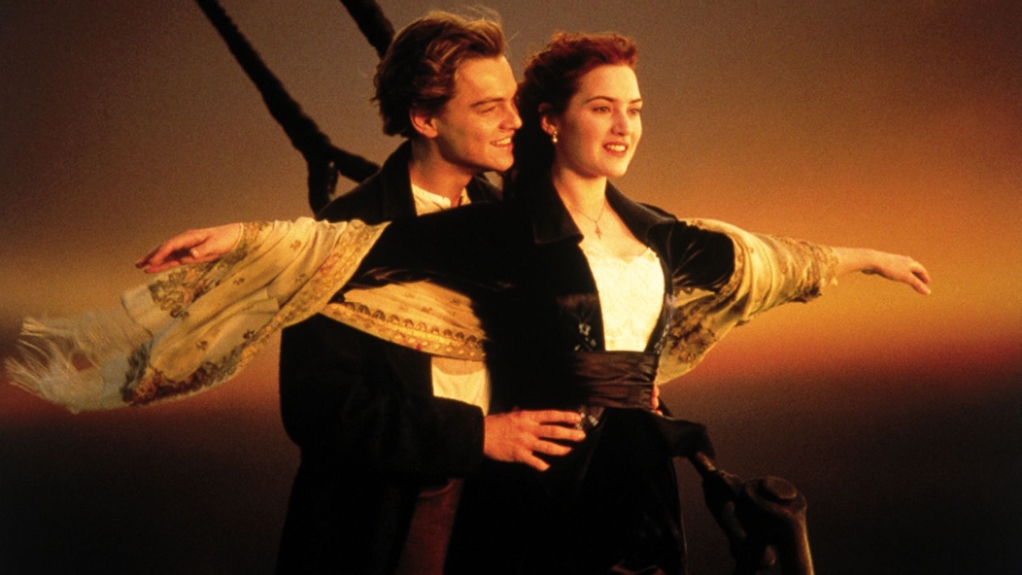
Get on any ship, and I guarantee you’ll see two people at the bow standing, one in front of the other, with their arms stretched out. If that doesn’t tell you something about the lasting impact of Titanic nothing will. Titanic was a sensation: top of the box office for months with the sort of repeat-viewing producers dream of; My Heart Will Go On went platinum and half the world was in love with Leonardo DiCaprio. It won 11 Oscars, made a billion dollars and is a film everyone knows even if (hard to believe) they ain’t seen it. James Cameron took an enormous punt on TitanicRomeo and Juliet meets disaster movie on legendary ship – and it paid off in spades. Because, no matter your cynicism, you can’t deny he created a film millions of people invested in to an extraordinary scale, staged with the epic sweep, gorgeous detail and pounding disaster thrills that channelled David Lean, Luchino Visconti and Irwin Allen all at once.

Rose DeWitt Bukater (Kate Winslet) is destined for a life of dutiful, unimaginative marriage with spoilt millionaire Cal Hockley (Billy Zane) when she boards Titanic as a first-class passenger in Liverpool on 10 April 1912. Also boarding the ship (but in steerage) is drifter and would-be artist Jack Dawson (Leonardo DiCaprio). When he saves her from taking her own life by jumping from the ship, they form a bond which flourishes into a love that will change both their lives. But not as much as the iceberg the ship is ploughing relentlessly towards across the Atlantic.

It’s very easy to take a pop at Titanic. Its romance sometimes succumbs to Mills and Boon cliché and Cameron’s script has more than its fair share of clunky lines (it’s one of those rare Best Picture winners with no screenplay nomination). Plenty of people hated it in a fit of inverted snobbery as a whole generation took this modern romance to its heart. But Titanic reveals the truth of the magic of movies: it uses a traditional romance to build our emotional investment in the sinking and the lives of ordinary passengers, more successfully than any other Titanicfilm had before or since.

Cameron knew the mountain he had to overcome. After all, this was the most famous disaster since Pompeii: where was the tension? So, he opens with a modern-day setting, a treasure hunt among the real ship’s ruins, with the hilariously named Brock Lovett (a game Bill Paxton in a thankless role) searching for a priceless diamond, the Heart of the Ocean. His only link: the older Rose (a plucked-from-retirement performance of charm and hidden fire from 87-year-old Gloria Stuart), who becomes our window to the past. This allows the audience to be told the geekily excited “ain’t it cool” details of the sinking with the same sort of distance we’re used to thinking about it. The film then becomes a lesson in making us learn, like Brock, this wasn’t an anecdote but a horrific disaster that killed 1,500 real people (made worse because we know exactly what’s going to happen to this ship every step of the way). The MacGuffin is intended to look as trivial as it does by the film’s end.

His key tool for this was his Romeo and Juliet love story told, for all its airport-novel lack of originality, with a vibrant, earnest intensity. Helped by fantastic chemistry between two talented actors, you have to work hard not to care for Rose and Jack (no accident those initials). And through their eyes, the whole ship comes to life, Just as the special effects camera sweep through the ruins, turns it from a ghost shop into a living breathing place, where ordinary, real-life dramas play out in every corner. It’s a perfectly judged entry point for bringing history to compelling life, playing on emotions we’ve all felt: love and fear of death.

The film splits neatly into two acts. The first is the romance and, whatever you say, it’s a cinematic romance for the ages in its old-school sweep. As we watch them bounce round the ship, make each other laugh, dance and fall in love, the utter lack of cynicism is really winning. It’s so overwhelmingly genuine and heartfelt, you can’t help feeling it yourself. Both help each other find new depths: for Rose, the willingness to embrace her own choices, for Jack a maturity and responsibility he’s lacked. Bathed in golden cinematic light and backed by James Horner’s superb score, they become two people we really invest in being together. It’s so earnest and honest it even gets away with otherwise ridiculous scenes like “draw me like one of your French girls Jack”.

Both the leads carry-off it off superbly. No mean feat considering the challenge of making the film – not least being submerged for weeks in freezing cold water during night shoots. Kate Winslet makes Rose burst with life from the depths of fear and doubt, effortlessly carrying much of the movie. It’s often overlooked that Rose drives much of the pace of the romance, as well as clearly being the more sexually and romantically experienced partner. Leonardo DiCaprio – who found it a burden for years, as it turned him from proto-DeNiro to heartthrob pin-up – gives an infectious energy to Jack’s fortune-cookie mantras, while growing in authority as the film progresses towards disaster.

Cameron fills his golden-hued recreated Titanic with the sort of detail we’ve not seen since The Leopard. Sure, his view of the haves and have-nots is hardly subtle (from ruthlessly posh, heartless Brits to plucky, happy-go-lucky Irish working-class), but it makes it very easy to relate to the injustice, bullying and casual snobbery. In Rose’s fiancée Cal, Billy Zane unselfishly plays an utter rotter: a coward, a snob who mocks Picasso and has never heard of Freud, a bully who treats Rose like a pet dog and puts his own needs (and safety) first at every turn. Titanic might be a ship of goodies and baddies (most egregiously in its clumsy slandering of First Officer Murdoch, a clumsy mis-step Cameron later apologised to Murdoch’s family for), but it’s undeniably alive.

It’s that quality of life which makes the sinking of the ship so horrifyingly intense. Cameron’s extraordinary second-half of the film – effectively a souped-up, horrifying remake of A Night to Remember (including quoting shots from that film) – never lets us treat this like a historical curiosity. Instead, it hammers home in intense, tragic detail, the shocking loss of life and the desperate, futile attempts of so many people to survive. Told in close to real-time, superbly edited and practically dripping in freezing water, it’s terrifying in its unstoppable intensity. Suddenly the scale of this mighty ship shrinks into an ever smaller world of fear. Events advance with horrifying speed, as the ship slowly then terribly quickly, disappears, made worse by our knowing in advance every step.

Cameron breathes life into dozens of small tragedies that surround Titanic. The band that played on. The Irish mother who puts her children to bed, knowing they cannot escape. The wealthy elderly couple who lie together while the water washes up around them. The hysterical children separated from their weeping father who remains on board. The priest who spends his dying moments comforting his flock. The camera catches moments of terror in the eyes of people we have seen fleetingly in the film. Titanic drains any sense of perverse excitement at the disaster from you. By the time the survivors are pleading for rescue in the freezing Atlantic, you’ll be as shell-shocked and shaken as the witnesses in the lifeboats.

Watch Titanic with your cynicism parked, and it is an extraordinary piece of epic, romantic film-making. The cinematography, production design, costumes and editing are all perfect and James Horner’s inspiring score takes the film’s slightly mushy romance to a higher level. There are great performances from the likes of Kathy Bates and Victor Garber. And the second half grips like a horrific vice, never letting go. There’s a reason this film gripped the hearts of the whole world in 1997: it knows exactly what it is trying to do and excels at doing it. And never, in any film, has a historical disaster hit a viewer with as much punch as Titanic does.

Killers of the Flower Moon (2023)

Killers of the Flower Moon (2023)

Scorsese tries to tell an Indigenous story – but from the persecutor’s perspective

Director: Martin Scorsese

Cast: Leonardo DiCaprio (Ernest Burkhart), Robert De Niro (William King Hale), Lily Gladstone (Mollie Kyle), Jesse Plemons (Thomas Bruce White), Tantoo Cardinal (Lizzie Q), John Lithgow (Peter Leaward), Brendan Fraser (WS Hamilton), Cara Jade Myers (Anna Brown), JaNae Collins (Reta), Jillian Dion (Minnie), Jason Isbell (Bill Smith), Louis Cancelmi (Kelsie Morrison), William Belleau (Henry Roan)

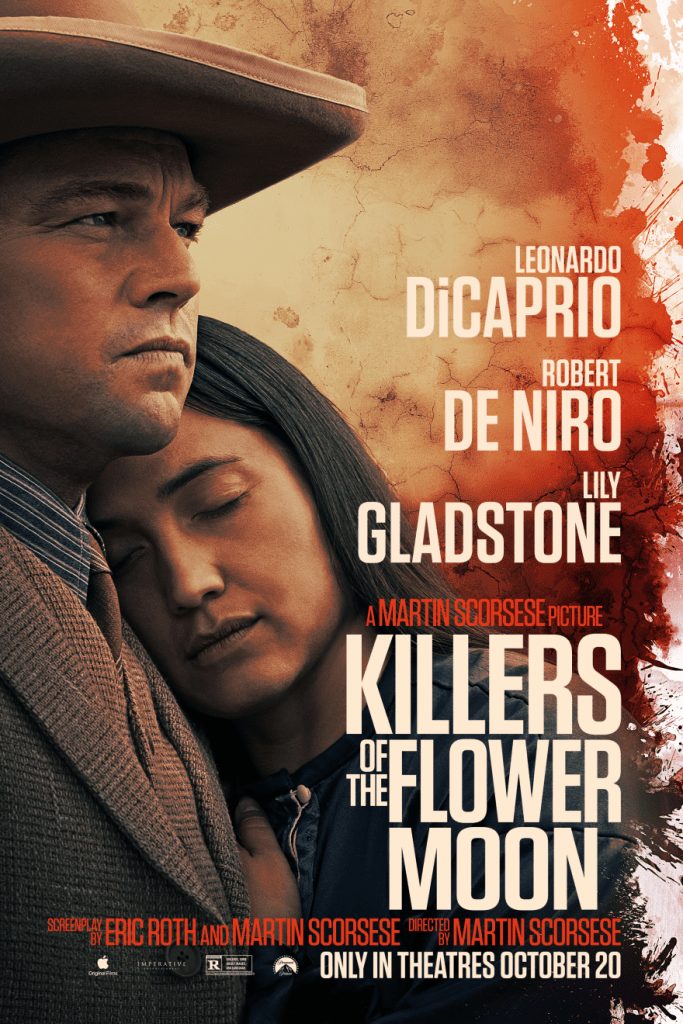
In the 19th century, the American government forcibly shifted Indigenous nations from their rich, fertile lands to unwanted backwater reservations. The Osage nation was moved from Missouri to Oklahoma, land no-one wanted… Until oil was discovered there in the early 20th century. Suddenly hugely rich, the Osage nation’s land once again became the focus of white Americans, as keen to dispossess these Indigenous people as they were in the last century. This ruthless grab of oil rights – and the brutal exploitation and murder of dozens of Osage people – is the theme of Scorsese’s epic Killers of the Flower Moon.

Ernest Buckhart (Leonardo DiCaprio) returns from war service (as a cook) to live with his uncle William King Hale (Robert De Niro) in Oklahoma. Hale lives on a ranch in the heart of reservation country and has built himself a powerful local presence by acting as benefactor of the Osage people. But Hale is, in fact, a ruthless sociopath who smiles cheerily at his neighbours, while plotting ceaselessly to steal their oil rights. Hale persuades Buckhart to marry Mollie Kyle (Lily Gladstone), whose family own headrights. While the gullible and easily-led Buckhart truly loves Mollie, he also willingly takes an active part for years in Hale’s schemes to murder the rest of Mollie’s family, so that their oil rights will collect with Mollie – and, in effect, with Hale.

Scorsese’s film is certainly a rich tapestry, but also a curiously mixed viewing experience. It feels at times like what it is – a film that dramatically changed its focus several times during its development, eventually reaching towards bringing the Indigenous experience to the screen, only to find that reach exceeding its grasp. The original book by David Grann focused on the FBI investigation into the crimes with DiCaprio originally set to play FBI investigator White (now played by Jesse Plemons). DiCaprio instead was drawn to the role of Buckhart, with the film repositioned to focus on the killers rather than the investigators or victims. During Scorsese’s extensive work with the Osage nation, the filmmaker became increasingly compelled by the exploitation of the Indigenous people.

Watching the film, it feels like a late swerve in focus Scorsese isn’t quite able to deliver on. However, some of the film’s most compelling content is its commentary on the Indigenous experience and the brutal exploitation and murders by a white community that sees the Osage people as second-class human beings. As a sort of twisted natural progression from encroaching on land a hundred years ago, people like Hale talk of marrying into Indigenous families, breeding out the blood and turning these communities into extensions of their own white families so they can control their wealth.

Over the course of the film, Scorsese carefully shows community gatherings becoming more and more dominated by white faces. Even tribal functions and ceremonies become awash with white faces, staring on with paternalistic, unfeeling smiles. From an early montage of Indigenous people enjoying their unexpected wealth (in a mix of historical and recreations photos and film stock), we progress ever more sharply into seeing whites take over. These fall into two firm categories: Masonic pinstripe types who stick together to cover-up crimes, and trailer trash and inept lesser-family members who are farmed out like cattle to soak up Osage wealth.

Scorsese’s film doesn’t shirk from depicting the casual racism of this community. A KKK march heads through the town. When Hale attends the cinema, he first sees newsreel footage of the Tulsa massacre then The Birth of the Nation. A montage of suspicious Osage deaths is marked by a Mollie voiceover stressing the lack of investigation. Osage oil owners are dispatched with increasing blatantness, as pretence of staged suicides and accidents degenerates into shootings, executions and finally bombs. Hale rants about the need to “take back control” and coldly states that they can escape any retribution because, fundamentally, no one cares or will remember.

But yet… this is still a film where we see a traumatic event happen to a group, but which focuses overwhelmingly on the perpetrators rather than the victims. I find myself agreeing with one reviewer that it feels at times like Get Out, told from the perspective of the white people. Scorsese’s film’s main beat feels like regret and guilt and perhaps what it needed was anger. For all its noble efforts, it’s hard to escape the fact that Mollie is the only Osage character in its epic runtime who is made to feel like a character, and she remains a person things happen to. The other Osage characters are, by and large, victims – Mollie’s sisters or William Belleau as Hale’s drunken, depressed neighbour – people who pop up in order to be dispatched.

I was reminded somewhat of The Searchers. In 1956, a film that criticised a John Wayne hero as an unpleasant racist was a big statement – but in a film where the Indigenous characters were still faceless nobodies, villains or comic relief. It’s similar here: Killers of the Flower Moon shows us the vileness of its white villains, but doesn’t really give us a full Indigenous perspective. And it feels, in 2023, we should do better. Even the impact and workings of reservations, land displacements and white-guardians isn’t explained in the film. Gladstone is marvellous – her eyes are full of suppressed pain, suspicion, fury and glimmers of the possibilities of forgiveness – but her character remains somewhat of a cipher, never quite receiving the exploration the killers of her family receive.

It feels like a realisation made during the filming, but without the time to deliver (after all the stars are playing the killers). Scorsese gives two beautiful Osage-themed bookends (and his carefulness around avoiding cultural appropriation is to be applauded), but the Osage themselves become passengers in their own story, allowed only a few brief moments to protest or express their anger. In a film that stretches over 200 leisurely minutes, more really should have been done.

Saying that, the film is blessed with two wonderful performances by Di Caprio and De Niro. DiCaprio, his mouth stuffed with rotten teeth, his body stumbling from scene-to-scene, expertly walks a tightrope between weakling and coward. Does he realise the moral morass he has climbed into? Or does he not care? How does he manage the mental gymnastics of plotting the deaths of his wife and her family and yet also convince himself that he is protecting her? It’s a fascinating performance. De Niro gives his greatest performance in 25 years as a polite, gentle man who warmly means every word of his friendliness but is also capable of acts of shocking murder and violence towards ‘his friends’ without even batting an eyelid. De Niro’s avuncular presence chills noticeably over the course of the film, brilliantly letting the egotistical dark heart leak out into the surface.

There is a lot to respect about Scorsese’s film, not least the way the late Robbie Robertson’s heartbeat-inspired score constantly creates an air of menace. It’s beautifully filmed – even if it is incredibly stately in its huge runtime – and it’s trying, very hard, to address an under-addressed issue in American culture. But it fumbles the ball because, for all its good intent, it still tells the story of an Indigenous group through the eyes of white people. Worse – their white persecutors. A braver, better (and shorter) film would have centred Gladstone’s Mollie rather than making her, at times, a passenger on a very long ride. Killers of the Flower Moon strains to make amends to Indigenous Americans – but instead it feels like a long guilt-trip for its white film-makers.

The Wolf of Wall Street (2013)

The Wolf of Wall Street (2013)

Greed is Good? Scorsese’s masterpiece is a heady deconstruction of the excess of white collar criminals

Director: Martin Scorsese

Cast: Leonardo DiCaprio (Jordon Belfort), Jonah Hill (Donnie Azoff), Margot Robbie (Naomi Lapaglia), Kyle Chandler (FBI Agent Patrick Denham), Rob Reiner (Max Belfort), Jon Bernthal (Brad Brodnick), Matthew McConaughey (Mark Hanna), Jon Favreau (Manny Riskin), Jean Dujardin (Jean-Jacques Saurel), Joanna Lumley (Aunt Emma), Cristin Milioti (Teresa Patrillo), Christine Eberle (Leah Belfort), Kenneth Choi (Chester Ming), Brian Sacca (Robbie Feinberg), Henry Zebrowski (Alden Kupferberg)

All The Wolf of Wall Street is really missing is an early freeze frame of a coke-fuelled banker slamming the phone down on a closed deal and a wistful voiceover from Jordan Belfort: “As far back as I can remember, I always wanted to be Wall Street trader”. If Goodfellas was Scorsese’s exploration of the attractions – and dangers – of a life in blue collar crime, then The Wolf of Wall Street is its white collar companion piece. The fact that so many viewers find the behaviour of Belfort morally outrageous in a way that no one ever objects about Henry Hill is, for me, an indication of how much we loath these masters-of-the-universe. For all their faults, we’d still rather see a violent criminal as one of us.

Based on Jordan Belfort’s (Leonardo DiCaprio) autobiography, The Wolf of Wall Street follows his time building a dodgy trading empire and a large fortune. Not that he can remember most of it, as he seems to be on a permanent intoxicated binge of drinks, hookers and every drug you can ever imagine (and some you can’t). The FBI catches up with him eventually, but Belfort learns precious little from his experiences. Other than, perhaps, that so long as you are rich and white in America, you can basically get away with anything.

That’s perhaps the key to Wolf of Wall Street. Scorsese may not shy away from the delicious dark comedy of Belfort’s life of excess, but it doesn’t blind him to the shallow awfulness of the man or his unthinking, instinctive greed and self-obsession. You would need to be a pretty shallow person to look at Belfort’s greed, moral emptiness and self-destructive binges and want to ape him. If you think watching DiCaprio literally paralytic on quaaludes is the life you want, frankly there is something wrong with you.

What perhaps made some feel Wolf of Wall Street was oddly in love with Belfort is its electric pace. The film is a brilliant reminder of Scorsese’s faultless understanding of pace. Or one who matches unparalleled cinematic skill with the rambunctious energy of a first-timer allowed to play with his movie toys for the first time. Brilliantly assembled, this is a superb collection of cinematic techniques, from jump cuts to fluid transitions that power through a series of increasingly bacchanalian parties and isn’t afraid to admit that, in the moment, this stuff can be fun (rather like getting the best table in Goodfellas) but ultimately self-destructive. (After all, few know the dangers of drugs like Scorsese.)

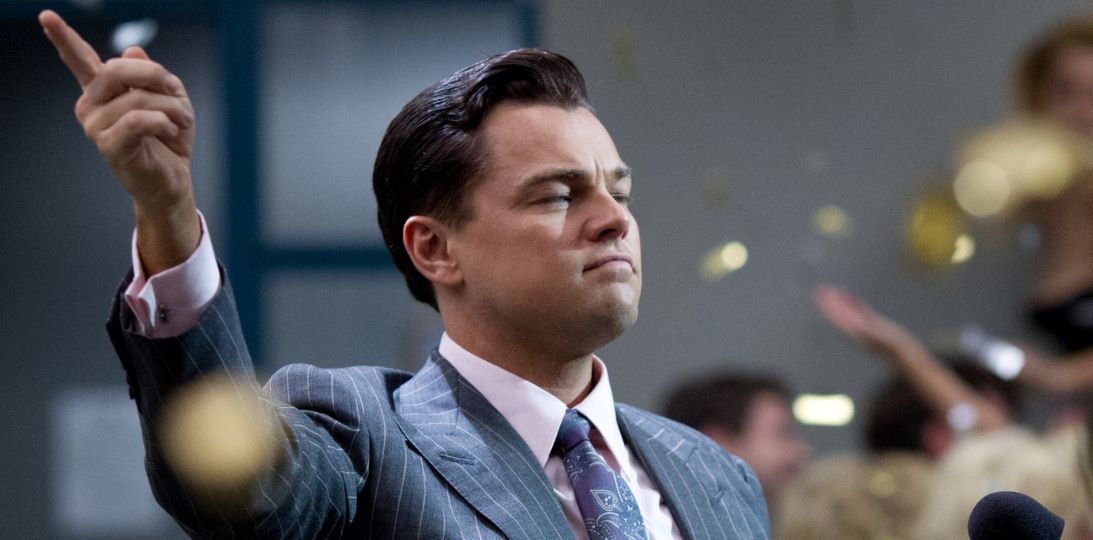
At the centre of this whirlwind is a stunning performance from Leonardo DiCaprio. With his still youthful, charismatic handsomeness, DiCaprio only needed to tweak his screen persona to provoke the sort of perverted idolatry Belfort receives from his co-workers. But he goes above and beyond in his transformation in this role. He makes Belfort simultaneously oddly childlike and revoltingly corrupted, someone whom we enjoy spending time with while finding repulsive. He rips through Belfort’s trademark, drug-fuelled motivational speeches, monologues of insanely eye-popping intensity, explosions of off-the-chain wildness. At other times he’ll sulk and whine like a spoilt child. DiCaprio struts across the screen with an unpredictable physicality – his embodying of the physical effects of mind-altering drugs is hilarious and horrifying –in possibly his finest ever performance.

DiCaprio is the raw energy source that helps power the rest of the film. Scorsese matches him blow-by-blow with this dynamic expose of white-collar corruption. Using Belfort as a narrator – which serves to further expose his shallowness, greed and utter inability to learn any sustained messages from the depths he plummets to – the entire film is all about how the flip side of the American Dream tacitly promotes and encourages this sort of behaviour.

Belfort is the rash the system has come out as. In a highly effective early cameo, McConaughey plays Belfort’s first mentor, a coke-fuelled hedonist hooked on the buzz of closing deals, who pushes Belfort towards a career of success (including introducing a brilliant breathing exercise – improvised by McConaughey based on his own warm-up exercises – that becomes a mantra in the film). DiCaprio’s eyes have already lit up at watching a deal closing. Drugs and sex are just an attempt for Belfort to replicate the buzz of the real addiction: money.

Scorsese recognises that we don’t need to know the details of Belfort’s illegal dealings. (In his voiceover Belfort literally tells us it doesn’t matter, all that does is the shitload of cash they were bringing in.) We learn enough about the huge mark-ups (50% of the deal’s value) he can make from selling penny stocks (trades of small public companies) and “pump and dump” tactics to know it’s wrong. I will admit the film does little to show the victims – but then Belfort never cares either, proudly stating at one point he has no guilt fleecing his clients out of cash, because he knows how to spend it, better than they do.

It all pours into a hedonistic, alpha-male environment where the air is as littered with fucks (the film held a record for most use of the word) as the floors and desks of Belfort’s offices are during his hooker-filled end-of-week parties. Wolf of Wall Street is also an expose of toxic alpha-maledom. Bullying, abuse and screaming are ripe, women are basically commodities traded as easily as shares. The only exceptions are those allowed into the boys’ club as either surrogate-male fellow traders or trophies to adorn the arm. Margot Robbie (superb in a star-making role) plays Belfort’s glamourous wife, who knows she needs to use her physical assets to make her way in this world.

The film rips along through a party-deal-party structure. Belfort goes from wowing his fellow penny stock traders by making $2k in two minutes to wrapping the trading floor of his fake-old-school Wall Street firm around his finger in excess filled speeches. He also goes from a charming party animal to an incoherent, rambling, deeply unpleasant and dangerous drunk and drug addict. But crucially, he learns nothing . There is no life-and-soul shattering payback like Henry Hill undergoes. Fault, guilt and consequences roll off his rich, spoilt back. He ends the film still winning the adulation of would-be millionaires, his conscience (if it exists) untroubled by any impact his actions have had on others.

Perhaps Scorsese could have allowed more space to victims – and to Kyle Chandler’s dutiful and dedicated FBI agent who brings him down (our final shot of this character stresses his humble, low-paid status – echoing back to his confession to at times regretting leaving a trading career for a law one). But that’s to criticise the film for not being obvious enough. Of course parties are fun. But each party becomes wilder, more orgiastic and uncomfortable as the film goes on. But if we didn’t understand the fun, we couldn’t understand how people get hooked on this adrenalin fuelled life.

Wolf of Wall Street though is a warning to the curious – if you are smart enough to look. Belfort’s soulless, horrible life is not one to aspire to, and his moral emptiness not one to wish to have. It’s a funny film, but it’s also a dark one. DiCaprio is brilliant beyond belief, Jonah Hill funny and pathetic as his best friend, Margot Robbie becomes a star and Scorsese rips through the film with the energy, passion and dynamism of a much younger director. An outstanding tentpole film in his CV.

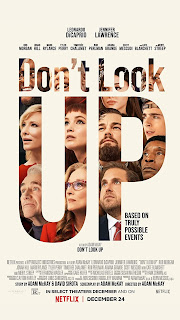
Don’t Look Up (2021)

Don’t Look Up (2021)

A host of stars tell us the world us coming to an end in this self-satisfied film

Director: Adam McKay

Cast: Leonardo DiCaprio (Dr Randall Mindy), Jennifer Lawrence (Kate Diabiasky), Rob Morgan (Dr Teddy Oglethorpe), Meryl Streep (President Janie Orlean), Cate Blanchett (Brie Evantree), Jonah Hill (Jason Orlean), Mark Rylance (Peter Isherwell), Tyler Perry (Jack Bremmer), Timothée Chalamet (Yule), Ron Perlman (Colonel Benedict Drask), Ariana Grande (Riley Bina), Scott Mescudi (DJ Chello), Himesh Patel (Philip Kaj), Melanie Lynsky (June Mindy), Michael Chiklis (Dan Pawketty)

Climate Change. It’s the impending disaster where we stick our head in the sand and pretend it’s not incoming. Governments have been told for decades our carefree use of fossil fuels and slicing down of rainforests will have a cataclysmic impact. But it’s always easiest for governments and people to just say “nah” and not let those thoughts get in the way of our everyday lives. Adam McKay’s satire Don’t Look Now takes these trends of indifference, disbelief and denial climate scientists have faced their whole careers and reapplies them to a comet-hits-the-Earth disaster movie.

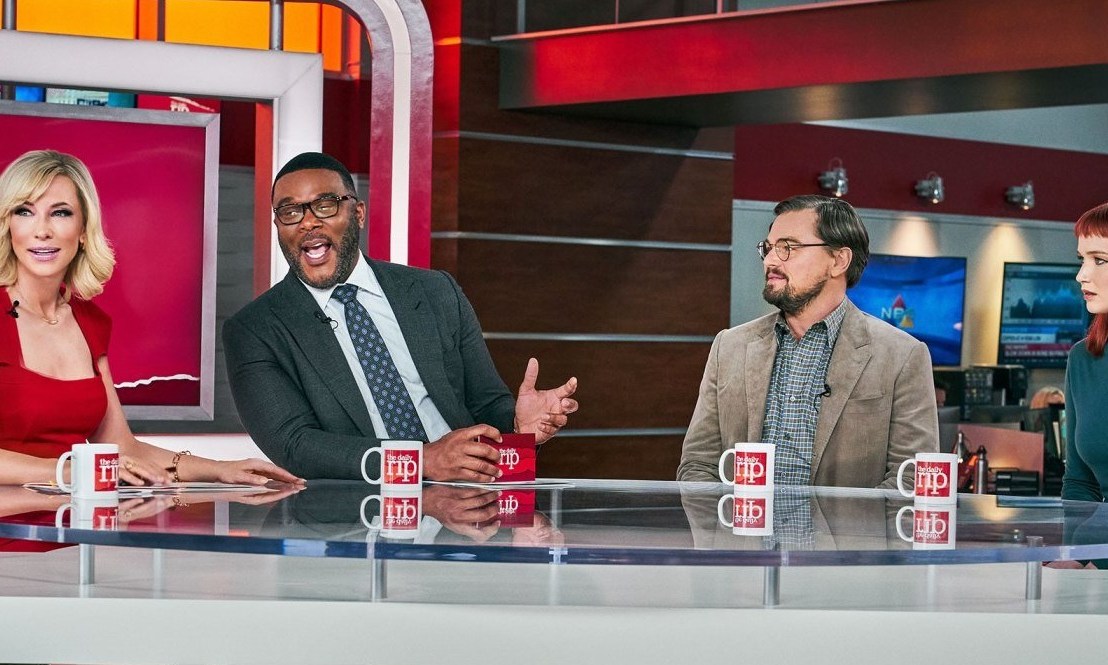
So, when Michigan State University astronomers Dr Randall Mindy (Leonardo DiCaprio) and Kate Diabiasky (Jennifer Lawrence) spot a hunk of ruck the size of Everest on a collision course with the Earth they are met with a chorus of… yawns, memes and flat-out denials. The Trumpian President (Meryl Streep) is only interested in her donors, the mid-terms and dodging the fall-out from a host of scandals. The media – represented by Fox News style anchors Brie Evantree (Cate Blanchett) and Jack Bremmer (Tyler Perry) – aren’t interested in a story they can’t process down into a feel-good social media meme. And even when people start to listen, plans to destroy the comet are benched in favour of a wildly risky scheme, dreamed up by Steve Jobs/Elon Musk style tech billionaire Peter Isherwell (Mark Rylance) to mine the rare ores it contains for money. What could go wrong?

I can see what Adam McKay is aiming for here, to create a sort of Dr Strangelove for climate change, where the great and the good we are counting on to get us through a crisis, turn out to be the blinkered morons who end up causing it. There are moments where it sort-of hits on a rich mixture of farce and genuine anger. Moments where first Kate then Mindy – thelatter with lashings of Howard Beale – melt down on National TV, apoplectic at the comet-denying indifference of millions of people stand out as both hilarious and also compelling.

But, like a lot of McKay’s would-be satirical attacks over the last year, on finance and politics, the message sometimes fails to land because of the heavy-handed, self-satisfied, smug tone of the delivery. Don’t Look Up frequently isn’t very funny – and yes I know it ends with the world being destroyed due to everyone’s indifference and incompetence – and it ladles most of the blame on obvious targets. It’s takedown of Trump – here represented by Meryl Streep – is basic, it hits open goals with the agenda-driven bias of American news reporters and takes pot-shots at messianic tech billionaires. A real punch would perhaps have focused in more on how all the mindless, unfocused greed and ambition of these people is fed by the bland, social media focused, sound-bite obsessed shallowness of the masses. But Don’t Look Up remains focused on the big people.

So focused in fact that, even in this satire, only America has the wherewithal to launch a mission against the comet. A joint Russian, Chinese and Indian mission fails to get off the ground and other world leaders are noticeable by their absence. We never really spend time with any normal people. While much of the blame does lie with governments not taking a lead, we do live in a world where normal people are radicalised by reading about nonsensical mush like QAnon through chat rooms. Imagine a satire that looked at how ordinary people can be made to believe wild theories rather than the evidence of their own eyes as a comet heads towards Earth? Instead Don’t Look Up wants to stick with something vaguely comforting – that there are big, selfish, elites running us who act out of greed and stupidity and they carry all the danger (and the blame).

Where the film is strongest is the doubt and nonsense thrown at scientists. Mindy and Diabasky are first ignored by the administration because they aren’t Ivy League. Attempting to leak their findings on the TV, they are overshadowed by an on-air-proposal of a celebrity DJ to his singer girlfriend and when they hit the news, the only takeaway is that Mindy is ‘cute’, while Diabasky is a freaky angry woman, ranting about the world ending (she’s a meme in minutes). At every point the science is questioned or put on the same level as gut feelings and political agendas. Even their campaign to encourage the world to “Just Look Up” to see the impending catastrophe is countered by the President’s “Don’t Look Up” campaign that persuades millions of people the comet isn’t real.

Really rule by social media and the dumbing down of humanity should be the main target here. A comet isn’t even a great metaphor for climate change – which is gradual, can’t be just blown up and needs to be prevented by society making changes to the way we live. In some ways, by replacing climate change with a comet, even the film is acknowledging its not sexy or exciting enough – and that it doesn’t want to turn its critical fire on millions of people who would rather turn the heating up or drive to the corner shop rather than push to make changes in their lives.

So, it’s easier and simple for McKay to create a cartoon freak show of easy targets and bash them rather than tackle the underlying causes of climate change – that our world and its population wants to have its cake and eat it, and governments for generations have been too focused on the here and now to ever worry about the years to come. So funny as it can be to see Streep Trump it up, or Rylance channel his softness into insanity, or Hill play another of his mindless frat boys turned power brokers, the film doesn’t feel like it really goes for the real causes of climate change: our own culture. It takes hits at our social media simpleness, but not at our short sightedness.

McKay does at least direct without much of the fourth-wall leaning flashiness of his earlier works, and there are committed – if not exactly stretching – performances from Lawrence (whose characters checks out in despair at the shallowness) and DiCaprio (who is seduced by fame, power and Blanchett into becoming an apologetic mouthpiece for the administration). But Don’t Look Up is a little too pleased with itself, a little too focused on easy targets and doesn’t do enough to spread the blame wider. It stills see many of us as victims or mislead – when really we are as to blame a everyone else.

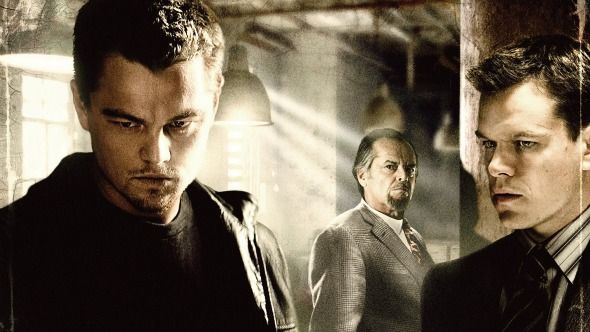
The Departed (2006)

DiCaprio, Nicholson and Damon runaround in Scorsese’s cartoonish Oscar-winner The Departed

Director: Martin Scorsese

Cast: Leonardo DiCaprio (Billy Costigan), Matt Damon (Colin Sullivan), Jack Nicholson (Frank Costello), Mark Wahlberg (Sean Dignam), Martin Sheen (Captain Queenan), Ray Winstone (Mr French), Vera Farmiga (Dr Madolyn Madden), Alec Baldwin (Captain Ellerby), Anthony Anderson (Trooper Brown), James Badge Dale (Trooper Barrigan), David O’Hara (Fitzy), Mark Rolston (Tim Delahunt)

It’s one of those historical oddities that Scorsese finally won his Oscar for his lightest (comparatively speaking) most out-right entertaining film. I’ll confess I’ve never been a huge fan of The Departed. It won Best Picture in a year without a clear front runner, with the Academy feeling an overwhelming sense that Scorsese was ‘due a win’. The Departed is certainly entertaining, but as a great big, violent cartoon which feels like a different universe from the director’s real gangster masterpieces, such as Goodfellas, Mean Streets and Casino. The Departed also can’t hold a candle to Raging Bull, Taxi Driver and The Aviator (I know that last one is controversial). Still it may be just a bit of fun, but at least it is fun.

Boston is a city where the Irish community is split, between cops and robbers. Crime lord Frank Costello (Jack Nicholson) gets a man on the inside by pushing his protégé Colin Sullivan (Matt Damon) to train as a police officer so he can get tips from the inside. Simultaneously, Captain Queenan (Martin Sheen) recruits officer trainee Billy Costigan (Leonardo DiCaprio), an honest young man with a dodgy family, to go under cover in Costello’s gang. Both moles feed information on their ‘side’ to the other – but the stakes heighten as they both become aware of the others existence and race to unmask the other’s identity.

Based on a Hong Kong action film, Infernal Affairs (which has the same plot, but tells the story in about half the time). The Departed takes the basic template and ratchets almost everything up to an even more frenzied pitch. Scorsese throws in fast-cutting visual flair, makes effective use of montage and lays The Rolling Stones over the soundtrack (he really does love Gimme Shelter doesn’t he?). It’s hard to tell, watching The Departed, how much Scorsese’s tongue was in his cheek. This could very easily be a parody piss-take of Casino, with its bright-lights, extreme violence, effing and jeffing and toxic masculinity.

What is clear is that The Departed has all the logic of a playground game. Nothing ever feels particularly real, all emotions and personalities are dialled up to eleven. Big name actors have fun with big, chewable dialogue fully of sweary one-liners. There is barely any sense of a wider world, The Departed really being a chamber piece involving a few key characters, played out in a graphic novel style. In real life both Costigan and Sullivan would have been uncovered in seconds (it makes Line of Dutylook like a fly-on-the-wall documentary). If it has links to any Scorsese film, it’s probably Cape Fear, which was a similar heightened pastiche (of Hitchcock). Don’t get me wrong, there is a lot of fun in watching Scorsese essentially take himself off, and it’s nice to see him having fun, but the film’s constant resorting to foul-mouthed, cartoonish action means depths are missed.

For starters, the film touches on but never really dives into the complex divided loyalties Costigan and Sullivan feel for their sides. After years (at least I think its years, there is very little sense of timeline in the film) pretending to serve one master while actually serving another, you’d expect an exploration of loyalty being increasingly torn between these two masters. It’s not a sense that comes across in the film. Instead, both of them feel fear of their false master and resentment to the true master. Both want to retire – seemingly to the same (lawful) side. The film spends time on the psychological impact of the constant stress of living a lie – but its analysis of this is skin-deep, trauma exhibiting as a bubbling, unpredictable temper (especially with DiCaprio’s Costigan) rather than really giving us an understanding of the psychological trauma. All the final shots in the world of a rat crawling across a railing in front of the court house, doesn’t translate into insight.

The film also misses the mark in exploring the dangerous masculinity of this world. The intense male attitudes here – with the macho posturing and the constant use of sexual and homophobic slurs – are obviously part and parcel of this world. But you feel a smarter film would have unpacked this more, rather than using it for punchlines and chuckles. There’s only really one woman here – a female psychiatrist who (obviously) becomes involved with both men – and you feel more could have been made of how the destructive bloodshed of this film is at least partly powered by overgrown schoolboys on both sides burning the world down to prove their manliness.

But this film is designed as an entertainment, not the sort of insightful character study Scorsese has delivered in the past. And with its primary colour pallet and shots – like a character falling from a building, and low-angle Dutch angle shots of characters checking phones – that seem inspired by graphic novels, it’s clear that we are not meant to take things too seriously here.

That carries across to the performances, many of which are Grand Guignal in their excess. None more so than Jack Nicholson in a performance of such flamboyant “Jack-ness” that it will either delight you or make you wonder whether Scorsese gave him any limits at all. The cast is roughly split between the OTT and the method. Mark Wahlberg follows Nicholson’s lead as a foul-mouthed, permanently angry cop, with rigid morals (he was Oscar-nominated and gets most of the film’s funniest lines) while Baldwin showboats amusingly on the chewy dialogue. At the other end, Sheen brings a fatherly warmth to Queenan while Winstone mumbles a lot as Costello’s number two.

In the leads, DiCaprio brings an edgy, firecracker intensity to Costigan, a man who seems constantly on the edge of a nervous breakdown. Damon, by contrast, underplays rather effectively as the seemingly straight-laced Sullivan, letting the Boston accent roll around his tongue and riffing effectively off his “boy next door” looks. Vera Farmiga does decent work as the woman caught in the middle – even if she’s not 1% convincing as a trained trauma psychologist.

That doesn’t matter though in the heightened, cartoony posturing, blazing gun battles and operatic shouting that makes up the crazy world of The Departed. Scorsese lifting the Oscar for this is rather like David Hockney winning the Turner Prize for a doodle. I enjoyed it a lot more this time around, but it’s still a big, crude, graphic novel, something that looks and sounds clever., but is only a B-movie imitation of Scorsese’s finest work. The Departed is frothy but misses the mark when it aims for true thematic or character exploration.

The Aviator (2004)

Leonardo DiCaprio excels as Howard Hughes in The Aviator

Director: Martin Scorsese

Cast: Leonardo DiCaprio (Howard Hughes), Cate Blanchett (Katharine Hepburn), John C Reilly (Noah Dietrich), Kate Beckinsale (Ava Gardner), Alec Baldwin (Juan Trippe), Alan Alda (Senator Owen Brewster), Ian Holm (Professor Fitz), Danny Huston (Jack Frye), Gwen Stefani (Jean Harlow), Jude Law (Errol Flynn), Willem Dafoe (Roland Sweet), Adam Scott (Johnny Meyer), Matt Ross (Glen Odekrik), Kevin O’Rourke (Spencer Tracy), Kelli Garner (Faith Domergue), Frances Conroy (Katharine Houghton), Brent Spiner (Robert E Gross), Edward Herrmann (Joseph Breen)

Howard Hughes grew up wanting to make the biggest movies in the world, fly the greatest plans and be the richest man in the world. He achieved all of this. He ended his life a wild-haired long-nailed recluse, terrified of stepping outside his controlled zone, a victim to crippling OCD. Martin Scorsese’s The Aviator is a triumphant, brilliantly engrossing, sumptuous exploration of Hughes’ years of triumph, where everything seemed to go right publicly – even while everything was beginning to go wrong internally.

It’s Scorsese’s second teaming with Leonardo DiCaprio – and while DiCaprio’s boyish good looks don’t really relate to what the real Hughes looked like, his charismatic enthusiasm, passion and determination brings Hughes triumphantly to life. It’s a brilliant performance, which dominates the movie. DiCaprio seems to completely understand power of driving ambition, who will mortgage everything he has time and time again to achieve his dream – and also the force of personality needed to turn those dreams into success. But obsession drives both success and eventual personal disaster. There is always something slightly fragile about DiCaprio – maybe its those boyish good looks – and here he brilliantly captures the tragedy of a man clinging to his sense of self, struggling with the demons within him.

Scorsese’s film gloriously balances the epic with the personal. It so brilliantly relates to the irrational but very convincing fears of those suffering from OCD, that scenes featuring Hughes obsessively plucking tissues from boxes, or stuck in restrooms scared of touching the door carry a real sense of threat. The grandness of much of the rest of the film – and the sense we get have how much more Hughes could have achieved – means the demons he carries are even more affecting. Imagine what he could have done, if he wasn’t terrified of even the smallest germ, or was able to put aside his destructive urge to control every inch of his environment and the people in it.

All this tragedy works because the grandness is so impressive. Scorsese’s film looks beautiful. The filming was inspired by replicating the visual and colour styles of contemporary Hollywood. The early 1930s-set section of the film apes the toned look of early-colour (green appears blue, most strikingly at a golf course) with full colour only appearing when the film hits the years of technicolour. The 1940s sequences are inspired by touches of film noir, leaning into the early days of epic technicolour by the end. It looks striking and also amazing. The production design is similarly breathtaking, while the film is shot and assembled with a wonderfully vibrant energy.

It’s also got plenty of wit. John Logan’s fast-paced script captures the sense of a fun of a man who was determined to turn his dreams into reality. John C Reilly is a lot of a fun as the weary number 2, constantly performing financial gymnastics to keep his bosses dreams afloat. Compulsion and obsession makes Hughes the sort of guy who will rebuild an aeroplane from scratch because of a minor flaw, or will reshoot a film because it will work better with sound. During the shooting of Hell’s Angels he keeps a private fleet of planes on the ground while waiting for clouds that will make the scene work. Frequently thousands of dollars a day are spent keeping projects ticking over, while Hughes waits for perfection. He’s not a man to compromise – and you can see why an artist like Scorsese would relate to that. While the film never lets you forget this obsessive perfectionism cuts both ways – and is as much a symptom of OCD as obsessive handwashing.

Scorsese’s passion for classic Hollywood clearly informs much of the first half of the film, that covers the shooting of Hell’s Angels and Hughes’ relationship with Katharine Hepburn. There are delightful cameos from Hollywood icons like Errol Flynn and Louis B Mayer. Playful references abound. The film’s emotional heart is the bond between the two larger-than-life ambitious figures Hughes and Hepburn. Cate Blanchett (Oscar-winning) is fantastic as Hepburn, a pitch-perfect impersonation that also captures her gsharp, uncompromising intelligence and no-nonsense energy. The chemistry between the two is spot-on.

The film’s second half covers more the aviation of the title, with Hughes’ struggle to break the near-monopoly of the skies owned by PanAm, with his own airline TWA. With Hughes starting to teeter on the edge of OCD collapse, even while energetically setting records in the air and fighting battles in the senate, its perhaps even stronger. It also introduces nemesis in Alec Baldwin’s smoothly manipulative Pan Am chairman Juan Trippe and, most delightfully, an Oscar-nominated Alan Alda as a hypocritically corrupt Senator Brewster. The dinner and senate clashes between Alda and DiCaprio provide glorious energy to power the film’s final act.

It also serves as a last hurrah for Hughes. It’s DiCaprio that really makes the film work as this star burns itself out, finally succumbing to the compulsions that we know will see him end his days locked into a room at the top of a Las Vegas hotel. Moments carry a suggestion of fantasy – is Hughes imagining some of the shady figures he sees at the edges of frames? Are oddly toned late meetings with Ava Gardner (an underpowered Kate Beckinsale) an illusion? It’s all part of the the powerful sense of tragedy of seeing him end, wild-haired, peeing into milk bottles and stuck into loops of repeating phrases over and over again. Scorsese’s film superbly captures the immense sense of lost opportunities.

The Aviator is undeniably grand and triumphant film-making, that looks a million dollars. But it also manages – in thanks to a superb performance from DiCaprio – to capture a tragic sense of a man who burnt himself out at the height of fame and success. It tells two parallel stories without us realising it: a man achieving his dreams, even while his nightmares consume him. With Scorsese’s perfectly judged direction and some wonderful performances, this is both a sprawling epic and a very personal story of loss. While it seems very different from the films we might expect from the master, I think it might be one of his finest works.

Inception (2010)

Leonardo DiCaprio caught between dreams and reality in Inception

Director: Christopher Nolan

Cast: Leonardo DiCaprio (Dom Cobb), Joseph Gordon-Levitt (Arthur), Marion Cotillard (Mal Cobb), Ellen Page (Ariadne), Tom Hardy (Eames), Ken Watanabe (Saito), Dileep Rao (Yusof), Cillian Murphy (Robert Fischer), Tom Berenger (Peter Browning), Pete Postlethwaite (Maurice Fischer), Michael Caine (Professor Stephen Miles), Lukas Haas (Nash), Tallulah Riley (Disguise woman)

What is reality? It’s a question that for many of us never comes up. But in the artificial and exciting world of film, it’s a legitimate question. These worlds we watch unspooling before us on the cinema screen, so large, so real, so exciting. Could we get lost in them? And how much do the films we love echo the dreams that fill our nights, the movies we create in our mind to keep our brain active during those hours of complete physical inactivity? And what happens when the world of imagination and possibility becomes more compelling, more comfortable – and perhaps more real – to us than the actual flesh-and-blood world around us? These are ideas tackled in Inception: the blockbuster with a brain. 

Set in some unspecified point in the not-too-distant future, Dom Cobb (Leonardo DiCaprio) and his partner Arthur (Joseph Gordon-Levitt) are “extractors”, shady corporate espionage experts who use experimental military technology to enter shared dream states with their targets. While in their dreams, they have complete access to their subconscious mind, where secrets can be extracted. A wanted man in the States, Cobb is forced to ply his trade despite his yearning to return home to his children. After a job goes wrong, their would-be target Saito (Ken Watanabe) hires the pair to take on a far more challenging role: rather than extract an idea he wants them to plant one – a technique called “inception” – into the mind of a business rival (Cillian Murphy) to get him to dismantle his father’s empire. To do the job, Cobb needs a new team, including dream “architect” Ariadne (Ellen Page), dream identity forger Eames (Tom Hardy) and dream compound chemist Yusof (Dileep Rao) – and needs to try and control his own dangerous subconscious version of his late wife Mal (Marion Cotillard) who is determined to destroy his missions.

Just a plot summary should give an idea of the twisty-turny world of imagination and ideas that Christopher Nolan mixes in with big budget thrills and excitements, in the most original sci-fi/philosophy film marriage since The Matrix. Of course it helps when you have the clout of having directed a hugely successful comic book series, but Nolan was brave enough to trust that an audience for this sort of action-adventure caper wanted to have their brains stretched as far as their nerves. So he creates a dizzying and challenging piece of escapism that plays around with the audience’s perceptions and understanding of the nature of dreams. 

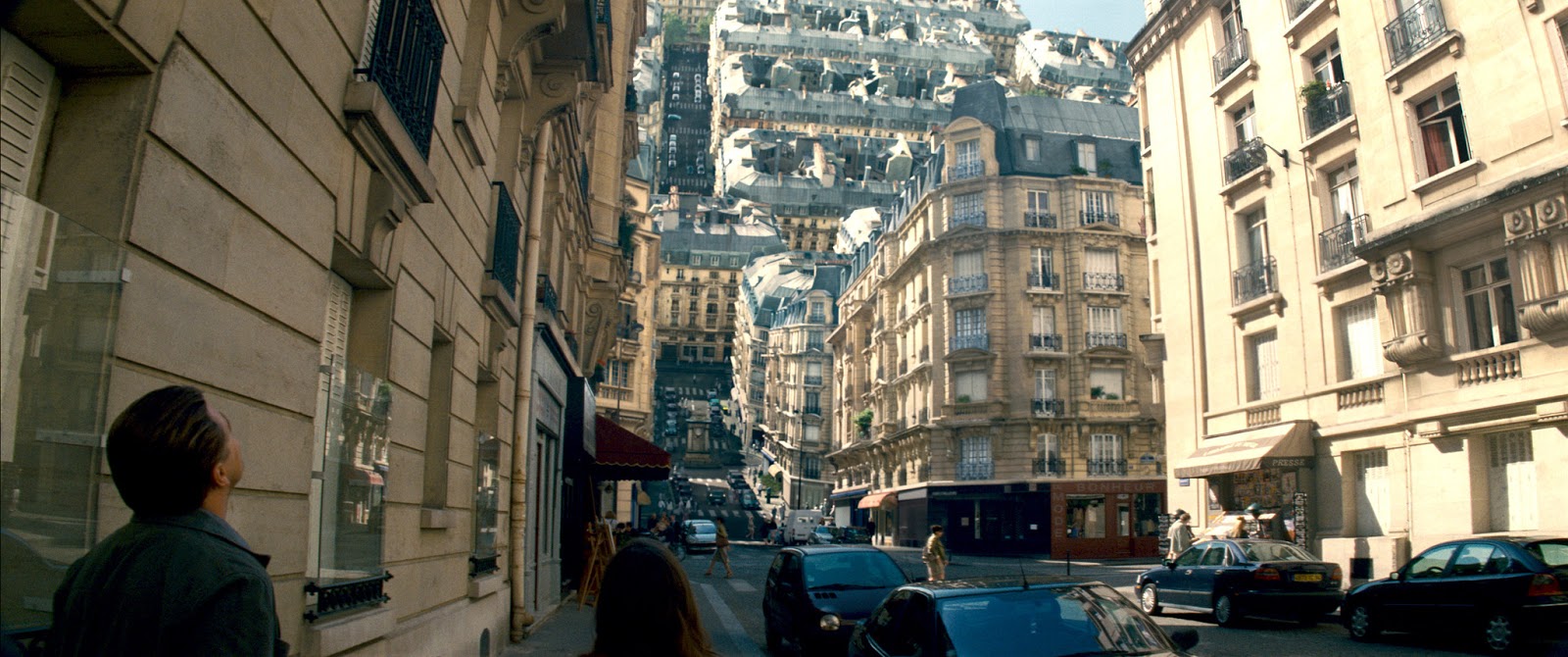
In the world of dreams, the film is a fabulous tight-rope-walk of dazzling concepts. Here everything is possible, with Nolan throwing at us worlds from film fantasy: intricate Samurai houses, brawling third-world streets, luxurious hotels, Bond-style winter bases and entire cities that literally fold, bend and reinvent themselves around the film’s dreamers, worlds that defy conventional rules of physics and time. This world is presented with genuine visual panache at every point, Nolan’s mastery of the language of film leading to a sensational series of slight-of-hand tricks and compelling set-pieces, all the while making you question which events are real and which are dreams or even dreams within dreams. In these worlds, the characters have the ability to literally shape a world to meet their needs, and the dangerous attraction of these worlds – even if they are not real – is the dark temptation that hangs over every frame. 

Because it’s those ideas beneath the action that give the film depth as well as excitement, that ability to ask questions and openly invite the audience to begin theorising themselves to fill in any blanks. Within the world of Inception, characters can create dream states within dreams, to share one person’s dream while simultaneously all being inside the dream of someone else. These multiple levels are cleverly established as being as much of a risk for the characters in getting confused as they are for the audience, with the characters carrying personal “totems” to help them judge if what they are seeing is reality or not. This is made all the more difficult by the establishment that your subconscious will manifest people to populate the dream worlds – and these will turn on invaders they detect in the dream.

All of this tunnels down into the deep limbo of our subconscious – and also introduces as a concept Nolan’s fascination with time. In dreams, time moves at a different pace, and this differential becomes all the greater as you descend down levels in dreams within dreams. A few minutes can become an hour in a dream and become almost a day in the dream within it – and years within the dreams beyond that. This is brilliantly demonstrated by Nolan in the film’s dazzling central sequence as the film intercuts between three timelines in three different dreams – each impacting the other.

It’s another masterful touch – the impact of actions on dreamers’ bodies in the level above can be felt in their world. A slap to the face in the real world can send someone in the dream flying across a room. A bucketful of water turns into a tidal wave in the dream. The dreamer falling in the world above removes gravity in their dream (giving Joseph Gordon-Levitt a cult fight scene in a gravity free world that sees him gracefully leaping from floor to ceiling to wall). The visuals are extraordinary, but the intriguing logic of the inter-relation between reality and the dreams – and the way dreams struggle to explain external effects – lend all the more credence to the mixing of reality.

But then, as Nolan suggests, isn’t that film after all? In dreams we move from location to location and struggle to remember the journey in between. We find ourselves doing tasks and not knowing how we started. Chases, faulty logic, sudden reversals and changes – these are the rules of film, it’s editing slicing out the boring bits and focusing on the reality. We are dropped into the middle of Cobb’s story and only slowly find the backstory, a gun filled chase through an African city is almost indistinguishable from similar sequences in the dreams. The final sequence of the film is a purposefully cut series of images that are very true to the rules of film, but feel alarmingly close to the rules of dream (unsettling us about whether what we see at the end is truth or dream, a debate that continues today). It makes for fascinating stuff, as well as a commentary on film itself.

Nolan’s film is gloriously entertaining, even if in its haste at points it does fail to explain how certain events and concepts truly work – but doesn’t really matter so compelling is the journey. The cast, enjoying the chance to mix action hijinks with genuine characters and dialogue are very strong, with DiCaprio anchoring the film wonderfully as the conflicted, lonely, defensive and daring Cobb. Hardy made a name for himself in a cheekily flirtatious performance, which sparks wonderfully with Gordon-Levitt’s more po-faced Arthur. Page creates a character both naïve and at times almost gratingly intrusive. Cotillard makes a difficult balance look easy playing a character part real and part dream figure. Watanabe is archly dry as the investor. There isn’t a weak link in there.

It may at times move too fast and not always make itself completely clear. It might be a bit too long in places and take a little too long to make its point – but it’s ambitious, challenging, intriguing film-making that rewards repeated viewing. Not least with its cryptic ending in which we are forced to ask how much of what we have seen is real and whether – like Cobb perhaps? – we should even care at all if the end result is so positive. With the fascinating world of dreams – and the rules there that we encounter – it gives us a firm grounding for the its meditation of the dark attraction of fantasy, embodied by the genial wish fulfilment of the movies where adventure lies around each corner and the heroes triumph.

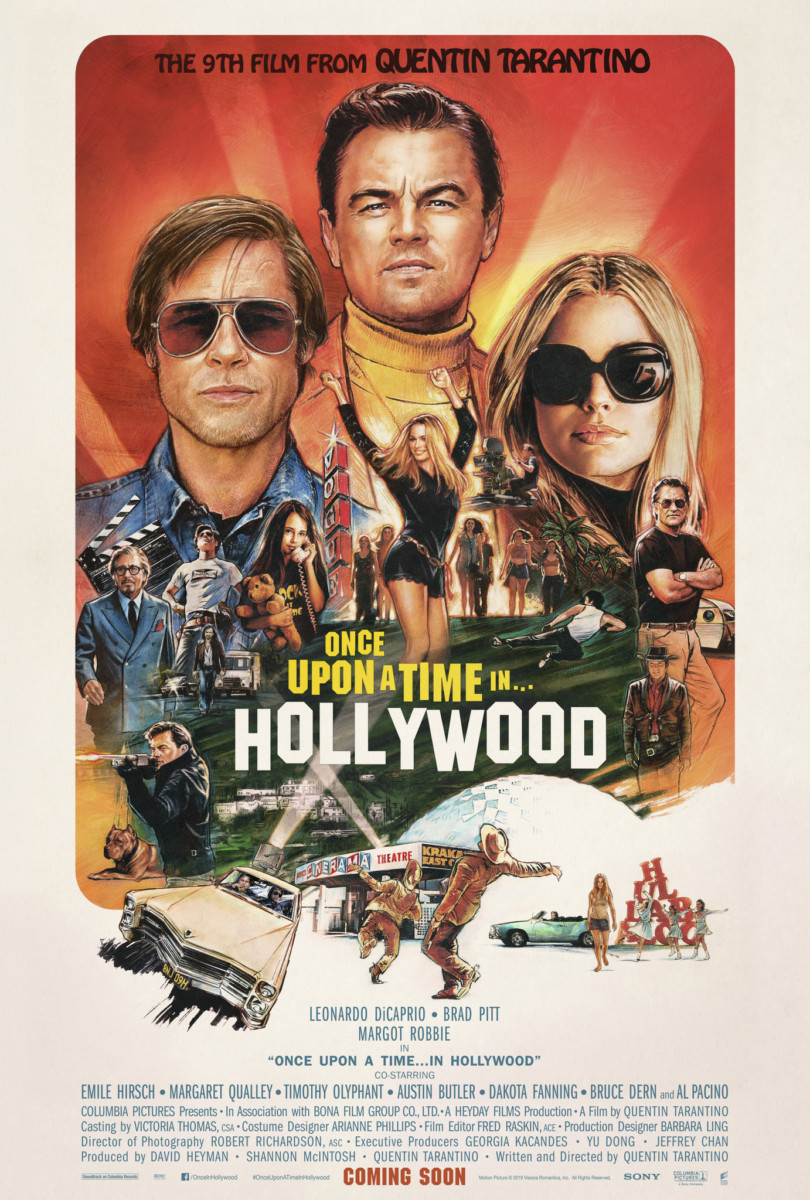
Once Upon a Time In Hollywood (2019)

Brad Pitt and Leonardo DiCaprio have fun in Tarantino’s appalling Once Upon a Time in Hollywood

Director: Quentin Tarantino

Cast: Leonardo DiCaprio (Rick Dalton), Brad Pitt (Cliff Booth), Margot Robbie (Sharon Tate), Al Pacino (Marvin Schwarz), Emile Hirsch (Jay Sebring), Margaret Quailey (Pussycat), Timothy Olyphant (James Stacy), Julia Butters (Trudi Fraser), Austin Butler (“Tex” Watson), Dakota Fanning (Squeaky), Bruce Dern (George Spahn), Mike Moh (Bruce Lee), Luke Perry (Wayne Maunder), Damian Lewis (Steve McQueen), Brenda Vaccaro (Mary Alice Schwarz), Nicholas Hammond (Sam Wanamaker)

Spoilers: I’ll discuss the film’s final 40 minutes in detail. I mean when you watch it you can guess where it’s going. But those final moments are truly central to my visceral hatred of this film.

There seems to be three eras of Tarantino movies. The first (Reservoir Dogs, Pulp Fiction and Jackie Brown) saw him work with pulpy themes focused on strong stories and character development. The second (Kill Bill and Grindhouse) saw him indulge his fascination with the B-movie and low-rent TV of his childhood. His third (Inglorious Basterds, Django Unchained) sees him making strange revenge fantasies on behalf of other groups. Once Upon a Time is a marriage between his second and third eras. And I hated it. I hated, hated, hated, hated it. I genuinely can’t remember seeing a film I hated more at the cinema (maybe Transformers: Revenge of the Fallen). It’s a self-indulgent, tasteless, overlong, smug, unbearable pile of pleased with itself shit. It’s grotesque and it left me feeling dirty.

The plot (such as it is) follows three days in the lives of fictional Hollywood-turned-TV actor Rick Dalton (Leonardo DiCaprio) and his stunt double Cliff Booth (Brad Pitt), Dalton’s best friend, chauffeur and personal assistant who can’t get a job in Hollywood due to his terrible reputation. Dalton lives next door to Roman Polanski and his wife Sharon Tate (Margot Robbie). On Feb 8th 1969, Dalton is offered a role in spaghetti westerns and preps for his next episodic TV show. On Feb 9thDalton shoots the pilot of Lancer a new TV western (and a real TV show) as the baddie, suffering a crisis of confidence about his career and talent. Meanwhile Booth does some odd jobs and has an odd encounter with the Manson family. Intercut with this are scenes of Sharon Tate going about her everyday life, including joyfully watching one of her films in the cinema. Finally we join the action after a time jump on August 8thas, after returning from filming in Italy, Dalton and Booth get drunk and high and accidentally waylay the Manson gang on their way to Sharon Tate’s house and – this being now Tarantino’s thing – brutally and bloodily murder the three Manson family killers.

Sigh. I think a question now has to be asked about what Tarantino’s problem is. As I realised where this film was going, my heart sank. This sort of revenge porn is, I’ll be honest, revolting, demeaning, tasteless and, leaving all else aside, not Tarantino’s place. It also demeans and cheapens the actual tragedies that happened to real people. Just as shots of Hitler’s head being machine-gunned to pieces in Inglorious Basterds while Jewish-American paratroopers machine-gunned a room of Nazi’s seemed to be grossly inappropriate, lowered the victims to the level of the killers and cheapened the actual deaths of real people in the Holocaust, making them seem like weak victims (as well as hardly being Tarantino’s place being neither Jewish or having any connection to the Holocaust) so it’s equally tasteless here. He just about gets away with it in Django Unchained, a black revenge thriller from a director who is not black and has littered his scripts with the “n-word” as all these guys were at least fictional people. But here it’s just grotesque.

We pride ourselves now that we have left the Gladiatorial ring behind, or that we no longer gather round on a Bank Holiday weekend to watch a convicted criminal being hung, drawn and quartered. But as I watched the Manson killers being bludgeoned to death, mutilated by a dog, their Glasgow kissed skulls crushed against a mantelpiece and immolated by flame thrower, I thought we’re not that far off. It’s basically a pornographic level of violence, that the film excuses because the Manson killers were bad guys (don’t get me wrong they were) but asking us to take pleasure in killing, is basically what Manson himself asked his followers to do. I find watching this sort of stuff not only feels like it cheapens the actual brutal, tragic murders of an eight-month pregnant Tate and her three friends, but also lowers me the level of the killers themselves. Tarantino’s films increasingly feel like the director himself would be fully on board with that episode of Black Mirror (“White Bear”) – where a killer is tortured everyday by tourists, and then has her mind wiped so she can go through it every single day – being turned into a reality.

In fact Once Upon a Time in Hollywood is a worrying voyage into the man’s soul, and what I saw there was partly this muddled vanity and obsession with revenge (I mean who gives him the right to take revenge on behalf of others? Someone please tell me? There is an arrogance to that I find deeply unattractive), partly the tragically boring geeky tedium of the video-store nerd, mixed with a loving regard for white men and a worrying lack of interest (bordering on contempt) for anyone different.

I loathed and despised the final forty minutes of this film, but to be honest the opening two hours are not a lot better. This film is almost three hours long and contains about thirty minutes of plot if that. What it mostly is, is a chance for Tarantino to indulge to a ludicrous degree his obsession with low-rent culture of the 1950s and 1960s. To show off his knowledge of obscure films of the age (he’s heard of The Night They Raided Minsky’s you know…) and recreate in painstaking detail pastiches of the type of TV shows he grew up watching. These sequences seem to go on forever and ever, with the odd good line and decent gag not suddenly making it anything other than increasingly tedious.

What he really, really, really needs is a collaborator to tell him when less is more and certainly when too much is too much. The first two thirds of the film seem to stretch on for an indulgent eternity, and their content reveals more and more of the director’s obsession. White men are idealised and the old-school values of Hollywood, the world of the studio and simpler non-PC times are looked back on with a fussy nostalgia. The film takes every opportunity for Booth and Dalton to lambast hippie culture and the growing anti-establishment of the era, and has every character we meant to like yearning for the good old days.

Bruce Lee appears in the film, here interpreted as a braggart arsehole, showing off to the stunt men, who is humiliated by Cliff in a brawl. It’s a scene that amuses for a second and then makes you uncomfortably realise you are watching the most prominent non-white person in the film being put into his place by a middle-aged white man. It’s got more than a hint of racism to it. And Tarantino claims to be a fan of Bruce Lee! By contrast, while the film brutally murders the Manson killers, James Stacy (played by Timothy Olyphant here) the chiselled white-male star of Lancer, a man later jailed for repeated child molestation, is treated with a laudatory romance. Guess there are different rules for white guys who starred in Tarantino’s favourite shows. Whither the revenge saga where his victims mutilate him eh?

Women don’t get a better deal in this film. Sharon Tate is essentially an elevated extra, although Tarantino gets one lovely sequence out of her watching her latest film – a playful swinging 60s spy caper with Dean Martin – in a cinema and gleefully enjoying both the film and the audience reaction with a childish, delighted grin. But then a lot of the success of this is due to Robbie’s marvellous performance. Tarantino himself does his best to ruin it with his foot fetish, throwing Margot Robbie’s naked feet into virtually every shot. Aside from this, the film shoots and treats Tate like a teenager observing someone they have a crush on, romantically idealising her without ever getting anyway near understanding her or scratching the surface of her personality, instead following her with doe-eyed devotion.

But at least she gets lines. Every other woman in this is either a slut or murderer (or both) from the Manson cult, a shrew (like Booth’s dead wife and Kurt Russell’s stunt manager’s wife) or a bimbo (like Dalton’s eventual Euro-wife). There is no in between. It’s a film for men, written by a man, where the men take centre-stage, and a smugly held up as never doing anything wrong, with the film uncritically indulging their vices as symptoms of their tragedy of being left behind by a more progressive and changing country.

Both Pitt and DiCaprio enjoy swaggering twists on their images. DiCaprio overacts wildly, in an overly mannered performance full of actorly quirks (he has a stammer so we know he’s a sensitive soul deep down!), that riffs on other performances of his and largely involves shouting and swearing. Even scenes of emotional vulnerability carry a method fakeness about them – but then Once Upon a Time is a film with no heart, so it’s not surprising that when one of its characters tries to show one, the film stumbles spectacularly into artificiality. Pitt fares better, with a performance of McQueen like-cool, even if the film seems to believe that even if Cliff did kill his wife (as many believe) it’s fine because she was clearly a bitch.

All of this is shot with a flatness and lack of visual interest that is surprising for Tarantino, usually a much more vibrant director. Maybe he was just echoing the TV styles at the time. Maybe he was saving the fireworks for his orgy of (what he would call) cathartic violence at the end. Maybe it’s just a pretty mundane film. Maybe if Tarantino wasn’t the film-buffs darling, more people would call out his flatness and lack of imagination behind the camera and the soulless flatness of much of the films shooting and pacing. Its mediocrity and smug wallowing in the culture of yesteryear is appalling.

Because Once Upon a Time is a teenager’s film, and worst of all, a teenage bore. It’s got a major crush on Sharon Tate, but barely any interest in her personality. It drones on endlessly about geeky knowledge and old film and television that no one else knows anything about so that it sounds interesting and cool. It takes a childish, immature, sickening delight in fantasising about killing bad people in the most horrific ways it can possible imagine. It thinks it’s really clever and profound, but it’s actually a horrible, horrible film that’s also really tedious and which leaves a deeply unpleasant taste in the mouth, while demeaning the real-life victims of a crime by spinning some ludicrous revenge fantasy around them. It morally offended me after two hours of boring me. I hated it. I hated it. I really, really, really, really hated it. I hated it so very much.

Body of Lies (2008)

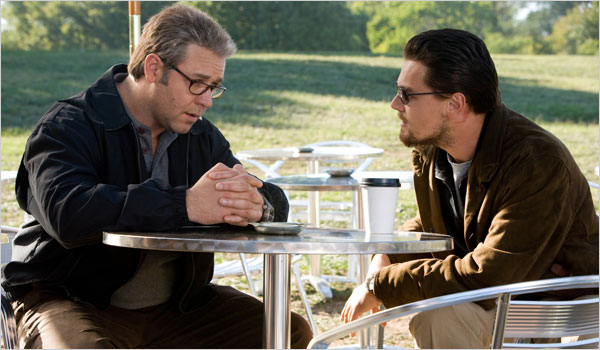
Russell Crowe and Leonardo DiCaprio fail to master the Middle East in Ridley Scott’s spy thriller Body of Lies

Director: Ridley Scott

Cast: Leonardo DiCaprio (Roger Ferris), Russell Crowe (Ed Hoffman), Mark Strong (Hani Salaam), Golshifteh Farahani (Aisha), Oscar Isaac (Bassam), Ali Suliman (Omar Sadiki), Alon Abutbul (Al-Saleem), Vince Colosimo (Skip), Simon McBurney (Garland), Lubna Azabal (Cala)

Ridley Scott is a bit of a curate’s egg as a director. You can always expect a film with a certain visual flair, as well as a story that attempts to tackle big themes and engaging topics. However, it doesn’t always produce an end result that really grips or feels like something that particularly stands out from the crowd. That’s what you end up with Body of Lies, a film that constantly feels like it is on the cusp of saying something important or interesting about the relationship between East and West, but constantly falls back on the sort of spy movie tropes it initially feels like it wants to debunk.

In the Middle East, Roger Ferris (Leonardo DiCaprio) is a dedicated CIA operative, with an intricate knowledge of the cultures and issues of the region. He constantly finds himself frustrated and undermined by his boss Ed Hoffman (Russell Crowe), based in Langley, who is constantly willing to sacrifice long-term gains for short-term political pay-offs. Assigned to Jordan, Ferris begins an investigation into a terrorist cell, working closely with head of Jordanian security Hani Salaam (Mark Strong) – but Hoffman’s intercessions increasingly cause tension.

Scott’s film is stylish and well assembled, with a great sense of pace and place. The contrasts between DiCaprio on the ground (in the dirt, facing dangers and tackling everything from terrorists to rabid dogs) and Crowe back in the States (rarely if ever seen without a hands-free phone set dangling from his ear, viewing everything at a distance with no understanding of the intricacies) is well drawn. The sense of complete cultural misunderstanding and lack of connection between East and West is established early, and attempts to cross it generally lead to disaster. The patience and expertise of the Jordanian security forces is contrasted constantly with the more slap-dash, hasty efforts of the CIA to meet the same goals. It’s all set for something quite interesting.

But then the film somehow doesn’t quite come together. Its episodic structure increasingly stretches out as action moves back and forth from Jordan to Langley and back again. A particularly wild scheme by Ferris (which, to the viewer not the film, suggests he is as incompetent and reckless as Hoffman) turns the film towards the sort of kidnap/torture/nick-of-time-rescue plotline that wouldn’t look out of place in 24 or James Bond. Basically, the plot turns on the film transitioning from something with a genuine political statement to make into the sort of disposal rent-a-spy-thriller that you forget pretty quickly. 

DiCaprio gets a lot of “big” moments to juggle with, as well as a rather forced romance with a Jordanian nurse (something that he and Golshifteh Farahani play very well, but seems to have wandered in from an even more conventional film) but the film works hard to paint him as the “hero” who knows better than his superiors, despite the film chronicling a string of mistakes. Crowe enjoys himself as self-important windbag behind a computer, as uncaring as the institutions he represents.

The real star of the show however is Mark Strong, excellent as the suave head of Jordanian intelligence, seemingly the only character who has any understanding about what is going on. With a cool sharpness, slightly playful politeness and a slight chill of threat, Strong is the film’s most interesting character. There is a striking point made here that the most effective person in the film is a Jordanian spy chief with a mixed reputation – but the film largely shirks the possibility of really using this to demonstrate how out-of-their-depth the CIA agents are, as if worried that flagging up their manifest incompetence at every turn would sell badly Stateside.

It’s part of the film’s general lack of soul behind the skill of its construction. I know Scott is deeply interested in these themes of East vs West and the culture clashes that develop from it, but it just doesn’t come out here at all. There was a film to be made here about how the war on terror has thrown the CIA and the West into a setting they don’t understand, playing by rules they haven’t been briefed on. But all too often the film instead settles for telling us the same-old-same-old, padding out its runtime with spy story clichés and thriller plotting. Scott himself even uses visual tricks – surveillance drone shots and 24 style action – which suggest that somewhere along the line his heart wasn’t really in it. Body of Lies could have been a really interesting thriller about the world today. Instead it’s just another spy thriller about the war on terror.