Tag: Lionel Stander

Mr Deeds Goes to Town (1936)

Mr Deeds Goes to Town (1936)

Capra’s brilliant comedy lays out his world version – and is extremely entertaining to boot

Director: Frank Capra

Cast: Gary Cooper (Longfellow Deeds), Jean Arthur (Babe Bennett), George Bancroft (McWade), Lionel Stander (Cornelius Cobb), Douglass Dumbrille (John Cedar), Raymond Walburn (Walter), HB Warner (Judge May), Ruth Donnelly (Mabel Dawson), Walter Catlett (Morrow), John Wray (Farmer)
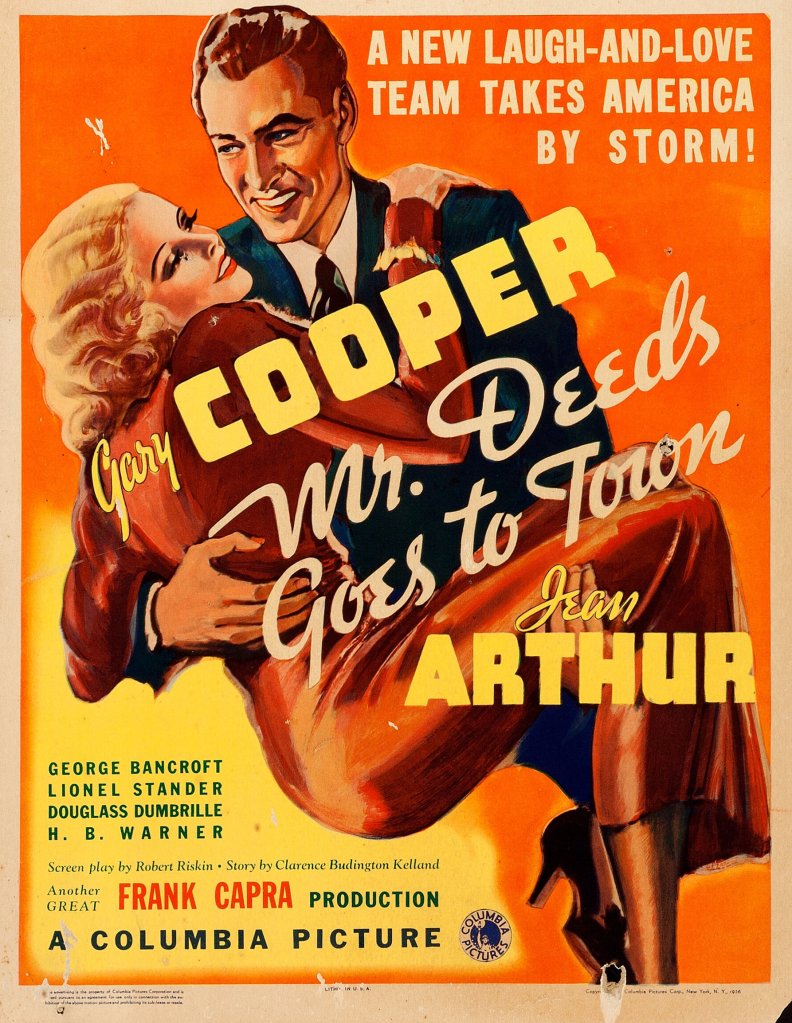
If any film first set out what we think of today as ‘Capraesque’ it might well be Mr Deeds Goes to Town. This was the film where so many of the elements we associate Capra – the honest little guy and his small-town, homespun American values against the selfish, two-faced, disingenuousness of the elites – really came into focus. Mr Deeds Goes to Town develops these ideas with a crisp, sharp comic wit, with Capra’s reassuringly liberal-conservative message delivered to perfect, audience-winning effect. It led to the even-better Mr Smith Goes to Washington and the template for every film which celebrates the little guy asking ‘why’ things have to be done this way.

Longfellow Deeds (Gary Cooper) is just your-average-Joe from small-town Mandrake Falls in Vermont who suddenly finds that he has inherited the unheard-of sum of $20million from a recently deceased uncle. His uncle’s assorted lawyers, led by suavely corrupt John Cedar (Douglass Drumbille) expect the naïve Deeds will happily allow them to continue riding the gravy train they’ve enjoyed for years. However, Deeds proves to have a mind of his own, refusing to kowtow to opportunists.

However, Deeds has an Achilles heel: he’s fallen hard for Babe Bennett (Jean Arthur), who he believes to be an out-of-work office girl but is in fact a star reporter, spinning the stories she picks up from their dates into articles about Deed that make him a laughing stock (the ‘Cinderella Man’). When Deeds discovers the truth – and is simultaneously threatened by Cedar with institutionalisation over his plans to give away his fortune to help the poor – he’s flung into a desperate court case to establish his sanity. Will a heart-broken Deeds defend himself?

Mr Deeds, with a sparkling script from Riskin, captures Capra’s idea of true American values. Deeds is a softly-spoken, unfailingly honest, no-nonsense type who won’t waste a minute on flattery and forlock-tugging and respects hard-work and plain, simple decency. He’s an independent spirit: be that playing the tuba, sliding down the banisters of his grand home, jumping on board fire trucks to help out or sweetly scribbling limericks, he’s as endearingly enthusiastic as he is lacking in patience for pretension.

He also proves an honest man is no fool, but a shrewd judge of character – expertly recognising a lawyer who turns up pushing for his uncle’s ‘common law wife’ to take a share of his fortune is an ambulance-chasing crook – and he’s no push-over or empty suit (made the chair of his uncle’s Opera board, he shocks the rest by actually proceeding to chair the meeting and make decisions). He’s the sort of humble-stock, common-roots, middle-class hero without any sense of snobbery or self-importance, just like his hero President Grant, judging people on their merits not their finery.

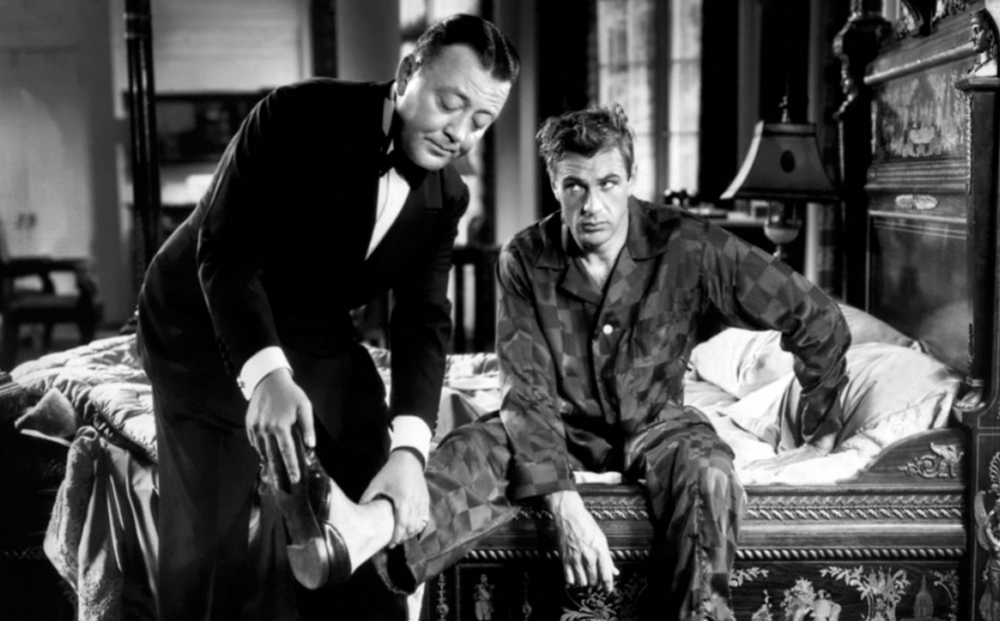
It is, in short, a near perfect role for Gary Cooper, at the absolute top-of-his game here: funny, charming and hugely endearing. Cooper can also convincingly back-up Deeds’ affability with a (literal) fist when pushed too far. Cooper is an expert at preventing an otherwise almost-too-good-to-be-true character from becoming grating or irritating. He’s also extremely touching when called upon – his giddy, bed-rolling phone call to Jean Arthur’s Babe is as sweet as his broken edge-of-tears sadness when he discovers she’s been lying to him (I can think of very few 30s actors who would have been comfortable looking as emotionally vulnerable as Cooper does here).
But Capra’s world view was always more complex though than we think. It’s easy to see Mr Deeds as arguing we should re-direct our efforts to helping the poor and needy, and the greed and hypocrisy of the rich (the sort of snobs who mock Deeds to his face at the dinner table). That might be closer to screenwriter Robert Riskin’s views: but actually, Capra’s vision has more of an Edwardian paternalism to it. He sees Deeds’s destiny – once he renounces the wild living of suddenly being loaded – not be a Tony Benn style-radical but the sort of paternalistic benefactor of the deserving poor you might see in a cosy Downton Abbey-style costume-drama.

Because the people Deeds ends up helping share his view of the world, as one where hard-work and having the right attitude should lead to rewards (with the implicit message, that if you can’t succeed then, it’s your fault). Deeds is tugged out of his slowly forming playboy lifestyle by John Wray’s desperate farmer. Wray is at the heart of a genuinely affecting sequence, determined to cause Deeds harm (believing stories of him frittering away money on eccentric trifles) and ending it in shameful tears, accepting Deeds unasked-for help. Like this man, those Deeds helps have lost farms and land due to the depression, screwed by the games of the financial elites.

But Mr Deeds Goes to Town never once tries to suggest there is anything fundamentally wrong with this system – only some of the people who have risen to the top. And even then, it’s their personal greed and inverted snobbery that’s their crime, not the fundamentally unbalanced financial system. The main strawman for elite’s financial frippery is the Opera house committee Deeds chairs for: he can’t see the point of taking a loss on an art institution, essentially arguing it should focus more on commerce to earn its way – the sort of art view that it’s only good if loads of people pay for it (on that basis Avengers Endgame is the greatest film ever made).

It’s part of a criticism of snobbery that the homely, common-man, Deeds can’t abide: captured in the idea that enjoying the plays and books ordinary people don’t want to read is somehow proof of an elitist coldness that doesnt value ordinary people. There’s an inverted Conservative snobbery here.

Now, don’t get me wrong: there’s still a decent world-view in Capra at valuing hard working people who want to help themselves. In the big city where life is a “crazy competition for nothing”, it’s refreshing to have someone who doesn’t care about societies ins and outs society, but does care that hungry farmers have a sandwich to eat. But it’s also a more conservative, and safe message than people remember.

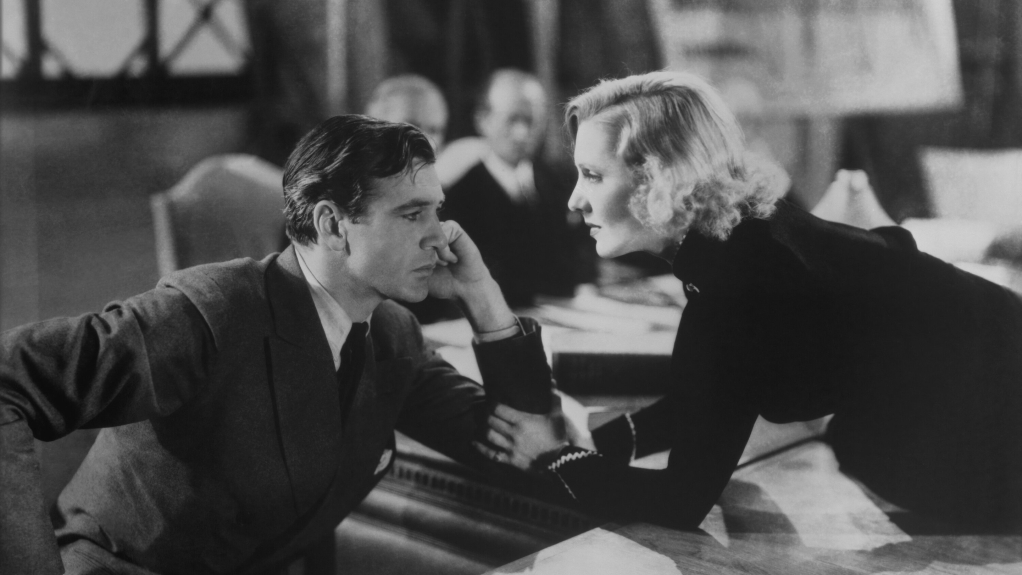
Saying all that, Mr Deeds is a hugely entertaining film. The romance between Cooper and Jean Arthur (absolutely in her element as the screwball femme fatale with a heart-of-gold) expertly mixes genuine sweetness with spark. The film’s Act Five trial scene is perfectly executed, a brilliant parade of snobs and slander leading to an inevitable final reel rebuttal from Cooper that the actor knocks out of the park. (It works so well, the whole structure would be largely repeated in Mr Smith with the twist that here Deeds doesn’t speak at all) There are a host of superb performances: Stander is perfect as the cynical hack who finds himself surprised at his own conscience, perfectly balanced by Drumbrille as the suave lawyer who has no conscience at all.

All of these elements come together to sublime effect in a film that is rich, entertaining and genuinely sweet – with a possibly career-best performance from Cooper (Again, it’s refreshing to see an alpha-male actor so willing to be vulnerable). Capra’s direction is sublime: dynamic, witty and providing constant visual and emotional interest. Its politics are more conservative and simplistic than at first appears, but as a setting-out of Capra’s mission statement for warmer, kinder, small-town American values of simplicity, plainness, honesty and decency it entertainingly puts forward as brilliant a case as Deeds does.

A Star is Born (1937)

A Star is Born (1937)

One of the first iterations of the tale, and with two winning performances one of the best

Director: William A Wellman

Cast: Janet Gaynor (Esther Blodgett/Vicki Lester), Fredric March (Norman Maine), Adolphe Menjou (Oliver Niles), May Robson (Lettie Blodgett), Andy Devine (Danny McGuire), Lionel Stander (Matt Libby), Owen Moore (Casey Burke), Peggy Wood (Miss Phillips), Elizabeth Jenns (Anita Regis), Edgar Kennedy (Pop Randall)

A Star is Born wasn’t the first time this story was told and it certainly wasn’t the last. Each generation in Hollywood has produced its own version of the story, not to mention a gallery of other culture creating their own unofficial and otherwise remakes. What Price Hollywood had even effectively told the same story five years earlier, and the entire concept has the air of a medieval ‘fortune’s wheel’ – two souls bound together, one goes up as the other goes down. There may in fact not be nothing new about A Star is Born at all but gave such a bright new polish to the familiar, that we’ve been inspired to come back to it again and again.

In the farmyard sticks, Esther Blodgett (Janet Gaynor) has a dream:  to become one of those stars of Hollywood’s silver screen. With grandma’s (May Robson) money in her pocket (‘What have I got to spend it on?’) she heads to Los Angeles, only to find the city is awash with similarly starry-eyed dreamers desperate for a big break. Esther gets hers in an unusual manner: serving drinks at a Hollywood party she strikes up conversation with famous star Norman Maine (Fredric March). Norman is very taken with Esther – in fact he’s almost immediately in love with her – and arranges a screen test. Soon Esther has a new career, a new name – Vicki Lester – and a new marriage to Norman. Problem is, as her star rises and she becomes the next big thing, Norman stops letting “his acting get in the way of his drinking” and his career slides into oblivion.

It’s high romance, very effectively filmed by Wellman, that requires – and gets – two very strong, highly relatable performances from its leads. Wellman’s film carefully gives both of them the space to grow a relationship that begins shyly and becomes deep and tender. Gaynor is bright, naïve and gentle with just enough ambition and determination to impress. She’s eager to please, but also firm and knows her own mind, far from a pushover in this town of press releases and media spin. Gaynor never lets us forget that under ‘Vicki Lester’ there’s that ordinary Esther Blodgett (could there be a more grounded, less starry name than Blodgett?), a woman with principles in a world of fakes.

Perhaps even better though is Fredric March (it’s the first indication, borne out by nearly all the remakes, that Norman is the better part). March is charismatic, engaging, funny, down-to-earth and everything you would want from a star – while also being a mean drunk with anger management issues. He’s introduced getting into a drunken scuffle at the Hollywood Bowl, and his love of booze makes him just as likely to laugh and flirt with Esther as it can make him take a slug at a guy who looks at him the wrong way. March’s drunk acting is very effectively restrained and he captures extremely well the self-disgust behind Norman at his weakness. March makes him a star who burns away his career through appalling choices, who fervently believes he can stay on the wagon until he can’t. In his hands it becomes a classic tragic piece, a Greek hero destroyed by his fatal flaw, his inability to escape the bottle.

This rich romantic tragedy builds wonderfully, Wellman keeping us deeply invested in this couple. The good times are really endearing: it’s hard not to grin along as they laugh and joke in a camper van after their elopement, or as they cover each other with encouragement and support for their careers. It makes the bad times unbearably painful: Norman’s drunken crashing of Esther’s Oscar win, a shambling monologue of self-pity and resentment, both heartbreaking and excruciatingly embarrassing. Norman’s fateful final decision is full of romantic imagery, as he smiling walks towards a sun-kissed beach, a beautifully staged inversion of a romantic ending.

A Star is Born’s other most interesting feature is its inside glimpse at Hollywood: or at least the version Hollywood was willing to present of itself to people. It even has a meta-theatrical element to it, the film book-marked by images of the shooting script describing the action immediately following or preceding it. Here Hollywood is a ruthless machine, chewing up the dreams of wannabes. An agent bluntly shows Esther the vast numbers of phone calls of wannabe extras they receive every day. Esther struggles just as much as assistant director Danny (Andy Devine) to find regular work. Careers are made and broken by chance, whims or the reaction of the audience to your face on screen. Names in lights one month and being pasted over the next.

Hollywood loves to be cynical about itself. A Star is Born delightedly shows its spin operation as ruthless, cut throat and controlling, planting stories about stars, covering up their misdemeanours (a regular requirement for the drunken Norman) and repackaging their lives into saleable commodities. Lionel Stander, as a heartlessly controlling press agent, is the heart of this, and the film doesn’t hold back on showing the dark powers of these studio fixers in action. But this is just a version of Hollywood: its telling that in A Star is Born while the middle management are condemned, the studio heads are absolved completely. Adolphe Menjou’s Selznick-like producer is an avuncular, uncle-like figure, endlessly caring and supportive of his stars who wouldn’t dream of any funny games to earn some money. This is a portrait of Hollywood where the top man is an affectionate saint – exposure only goes so far.

A Star is Born is also an interesting time capsule. Esther stares in admiration at a host of Hollywood Avenue stars of people must of the viewing public today would struggle to name (Norman Cantor anyone?). Seeking to impress while serving at a dinner party she’ll do impersonations of Garbo, Hepburn, Crawford and Mae West (the last even named). It’s a world where the continual production of content is even more on-going than on Netflix and the studios can start or end careers instantly. It’s a fascinating extra piece of interest in a highly effective, well-staged film. Even with its slightly murky early colour photography (it looks like a colourised black and white film), it’s a well-staged, effective romance with two very winning performances from its leads. Possibly one of the best versions of the story.

Once Upon a Time in the West (1968)

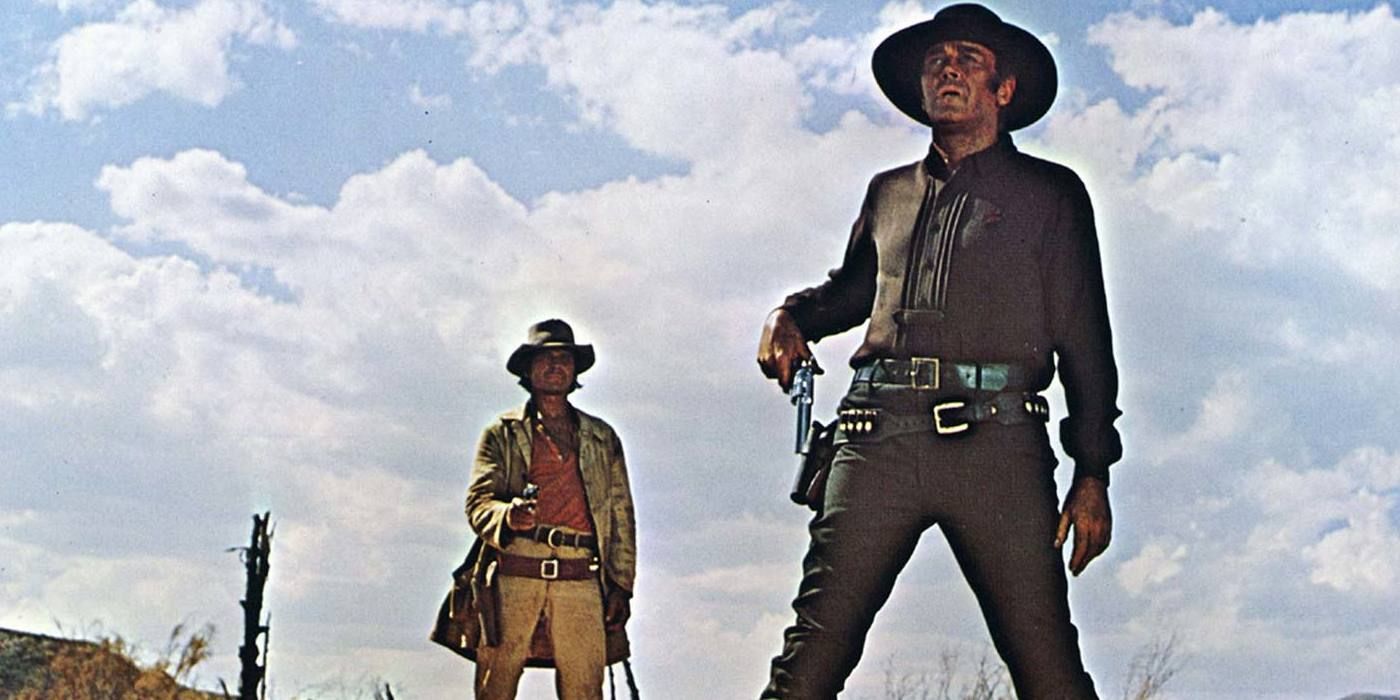
Fonda and Bronson prepare to face off in Leone’s epic Once Upon a Time in the West

Director: Sergio Leone

Cast: Henry Fonda (Frank), Claudia Cardinale (Jill McBain), Charles Bronson (“Harmonica”), Jason Robards (“Cheyenne”), Gabrielle Ferzetti (Morton), Paolo Stoppa (Sam), Marco Zuanelli (Wobbles), Keenan Wynn (Sheriff), Frank Wolff (Brett McBain), Lionel Stander (Barman), Woody Strode (First Gunman), Jack Elam (Second Gunman), Al Mulock (Third Gunman

Sergio Leone’s Westerns were always based, first and foremost, on his own love for the genre – and the great filmmakers, from John Ford onwards, who made them. Returning to the genre for the final time – putting on hold (for what turned out to be nearly fifteen years) his plans for a New York gangster film – Leone wanted to make his final, and ultimate, tribute to the Hollywood western. Collaborating with Bernardo Bertoloucci and Dario Argento (now there is an odd trio!) on the scripting, Leone’s final Western is a sweeping, grandiose, operatic Western littered with visual quotations from films he loved.

The story rather takes second fiddle to the general ambiance and visuals, but it never bothered Leone to have only the sketchiest of plots stretched across the many hours of his movies. The railroad is being built across America – changing the face of the West as it goes. Frank (Henry Fonda), hired gun of crippled railway tycoon Morton (Gabrielle Ferzetti), guns down farmer Brett McBain and his children. He had been sent to threaten them to clear off the land of Sweetwater. But why? And how will the return of McBain’s new wife Jill (Claudia Cardinale) – now heir to all of Frank’s holdings – affect their plans? And why does the mysterious “Harmonica” (Charles Bronson) – a shadowy gunman with no name have such an interest in events, and in Frank in particular? And will criminal gunman Cheyenne (Jason Robards) and his gang – blamed for the McCain killings – be able to establish their innocence?

The answers to all these questions come slowly – and often confusingly – in this long, slow but – as with many Leone films – engrossing Western, which features 3-5 minutes of Morricone build-up and extreme close-up before even the slightest action. This makes it very easy to mock, and perhaps by this point Leone had started to believe too heavily that he was an artist daubing in genre, rather than a purveyor of entertainments. Certainly, Once Upon a Time in the West is consciously weighted down with its own importance, it’s ominous sense of events heading to a pre-ordained conclusion and its half-hearted attempt to depict itself as sitting at a crossroads in American history, as technology squeezed out the old West.

But somehow you give Leone’s film a pass for all its many faults because it’s assembled with such unrivalled skill and breathtaking pizzazz. Sure the film is only half as smart as it thinks it is, but when at its strongest it offers unrivalled entertainment. Leone also mastered here his balance between the slow, tense, agonising build-up to violence – followed by its sudden and brutal enactment. 

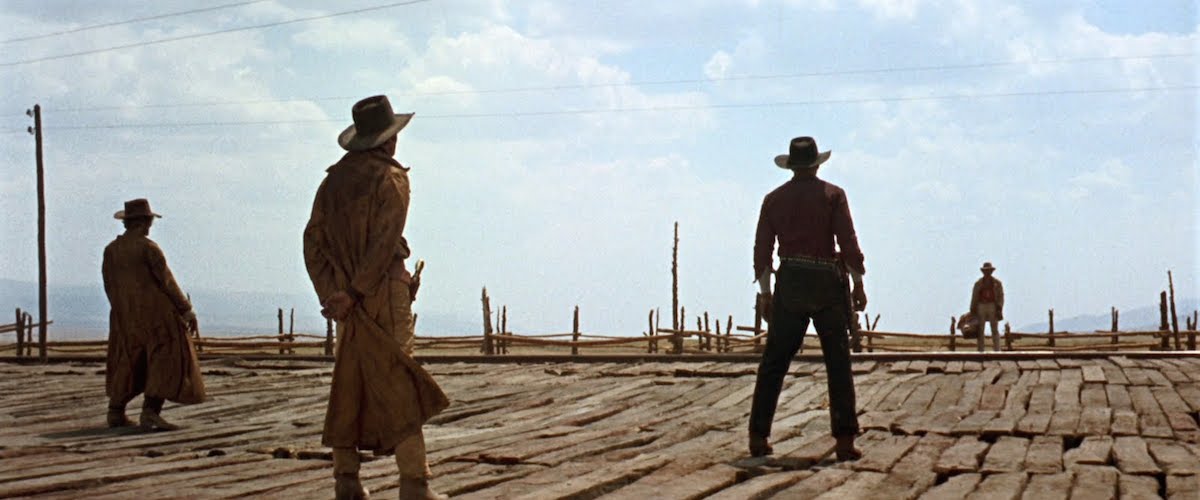
Never is that more clear than in the film’s opening ten minutes which features three gunmen (among them Ford favourite Woody Strode and reliable minor bad-guy Jack Elam) waiting at a train station for what turns-out to be the arrival of Charles Bronson’s “Harmonica”. The three gunmen sit, waiting, in silence. Around them the everyday sounds of windmills, buzzing flies and dripping water builds and relapses with all the dread of distant thunder. Leone’s camera crashes in for long, intense close-ups, as if drilling down into the souls of these bored men, the camera studying every detail of their faces. After almost ten minutes – during which the credits roll – “Harmonica” arrives. And promptly shoots all three men dead in seconds. You know it’s coming, but the tension and expectation of this confrontation makes the entire sequence compelling. 

It’s a trick that Leone repeats time and time again. Effectively the whole film is only prolonged extension of this sequence – the inconsequential back-and-forth of the lacklustre plot all really about giving us a chance to drill down into the character of Henry Fonda’s bad-to-the-bone Frank, while we wait for the inevitable gunfight between him and “Harmonica”. Leone’s film is a triumph of mood, filled with sweeping beautiful camera shot and luxiously paced editing, all mixed down with some stunning scoring from Ennio Morricone.

Once Upon a Time echoes a fairy tale in its title, and that’s what it is. For all that Leone attempts to throw in plotlines around progress, the influence of big money and the new order leaving gunmen behind, really everything it knows about America is taken from movies. Leone litters the film with visual quotes from High Noon, Shane and dozens of others, most especially Ford (he even insisted in transplanting some of the scenes to be shot at Monument Valley, which led to merry hell trying to get the other Spanish-shot locations to visually match). The entire film unfolds like a dream. At about the half way mark in particular – this might be due to cuts to be fair – the narrative suddenly becomes almost deliberately unconnected, key events seemingly skipped over and sudden character reversals taking place. There is a rumbling sense of everything in the film being artificial and the characters themselves being manipulated by something larger than them (like a film director!).

This is further heightened by “Harmonica” himself. Played with an empty blankness by Charles Bronson – the camera zooms into his expressionlessly craggy face endlessly as if searching for meaning – “Harmonica” is an almost mystical presence. He’s always in the right place at the right time, seems to be the only person in the film who knows what’s going on and Leone even shoots him regularly sliding into frame, as if the camera has stumbled upon him at the least expected times. Perhaps Bronson’s lack of real character helped make him perfect for this near-mystical presence. It also fits in with the shamanic feeling of a film where frequently not much happens at great length, but the inconsequential moments of events are filmed with a pregnant importance.

Compared to him the other principles are painted in earthy tones. Robards makes his bandit – who switches allegiances and escapes from undefined imprisonment several times in the movie – a jovial, grimy figure with a rogueish temperament. Claudia Cardinale – in what passes for a strong female character at the time – is a whore with a heart of gold who may, or may not be willing to do anything to ensure her own survival (the film is unclear). Is she a ruthless woman using sex as a weapon? Or is she the sort of radiant Earth-mother that the new West needs? Or is she a bit of both? The film isn’t really sure.

What it is sure about is that Fonda’s Frank is the meanest of the mean. Looking lean and tough, Fonda revels in the chance to play a villain – and not just any villain, this grinning sadist is so mean the first thing he does is gun down a child on screen. Leone loved Fonda – and above all he wanted those “baby blue” eyes to be the thing the viewers see as unspeakable deeds take place, expecting the cry of “Jesus Christ, that’s Henry Fonda!” Frank is a bully and tirelessly ambitious, and if we never get a real sense of what motivates him, it’s balanced by Fonda’s charismatic viciousness in the role.

It’s a pointer though to the fact that this is not a film about the West – as always the strange mixture of accents, faces and locations never makes the film feel for one moment like a real slice of America – but rather a film that is aiming to reflect the romance of movies. It’s a piece of Americana, that is really a love letter to other films. Perhaps it’s one of the first post-modern films ever made? But really your appreciation of the film can only really be complete if you have seen a lot of Westerns. Then it’s fairy tale like logic, and Leone’s operatic style and languid pace suddenly make sense. It’s not a film deep in meaning, other than perhaps our own love for cinema and the story it tells.