Tag: Margot Robbie

Barbie (2023)

Barbie (2023)

Fabulously pink comedy with serious – and very earnest – things to say on sexism and gender

Director: Greta Gerwig

Cast: Margot Robbie (Barbie), Ryan Gosling (Ken), America Ferrera (Gloria), Will Ferrell (Mattel CEO), Ariana Greenblatt (Sasha), Kate McKinnon (Weird Barbie), Issa Rae (President Barbie), Alexandria Shipp (Writer Barbie), Emma Mackey (Physicist Barbie), Hari Nef (Dr Barbie), Sharon Rooney (Lawyer Barbie), Kingsley Ben-Adir (Basketball Ken), Simu Liu (Tourist Ken), Ncuti Gatwa (Artist Ken), Michael Cera (Alan), Rhea Pearlman (Ruth Handler), Helen Mirren (Narrator)
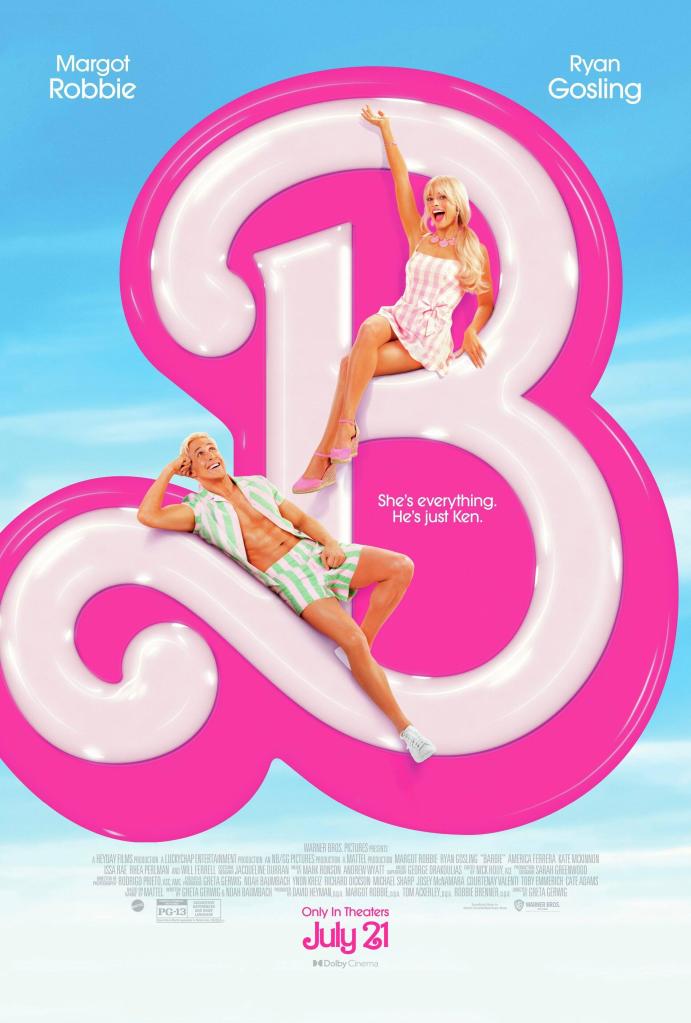
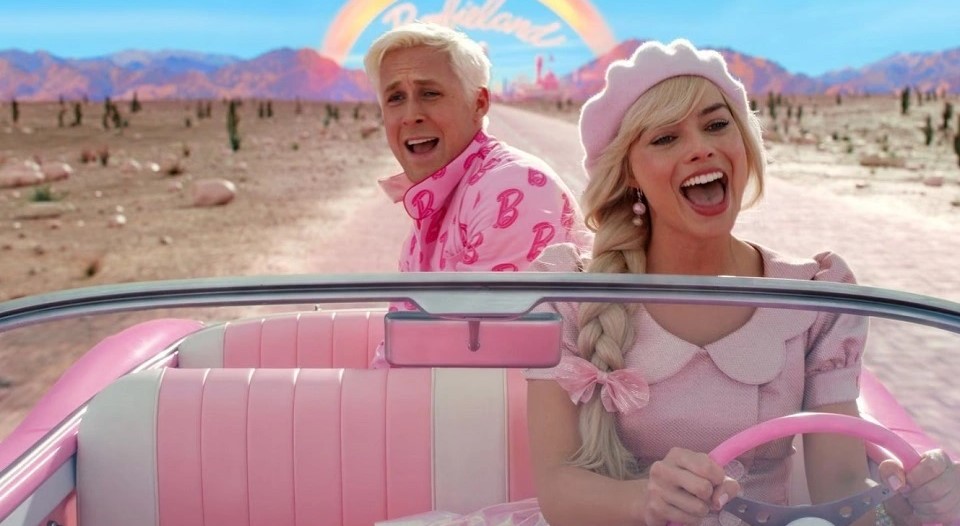
Who knew that the film which sparked the most conversation in 2023 about the roles of men and women would be one launched by a toy company, with the goal of selling toys? Barbie feels a little like a project happily hijacked. In another world this could have been a straight-forward, Adventures of Barbie flick, designed only to get kids crying out for that Margot Robbie Barbie to be appearing under the Christmas tree. Instead, thanks to the team of Gerwig and Robbie, this is a self-reverential, witty, smart and highly engaging look at gender politics which also manages to be a fun, gag-filled evening out at the cinema.

Stereotypical Barbie (Margot Robbie) leads a blissful life in Barbie-Land, where every day is the best day ever. Every Barbie knows they’ve inspired change for the better for women in the Real World. Everything is perfect until one day Barbie starts thinking about Death. Before she knows it, she has flat feet, cellulite and a crisis of confidence. The only way to fix this? A journey to that Real World to meet with the child who’s playing with her. But Barbie and Ken (Ryan Gosling) find the Real World very different from what they expected: all women’s problems are not solved and Ken discovers The Patriarchy, a wonder he is determined to bring back with him to Barbie-Land. Can Barbie save Barbie-Land and help rebuild a relationship between moody teenager Sasha (Ariana Greenblatt) and her mother Gloria (America Ferrera) in the real world?

Barbie’s sharp playfulness mixes heartfelt messages on gender politics with the sort of joyful fish-out-of-water stuff beloved of family films where a naïve figure from our childhoods finds the real world a much harsher, more cynical place than they expected. Barbie’s expects our world to reflect of the female-dominated  Barbie-Land is immediately exploded. Arriving in California, the reaction to an attractive woman roller-skating along a beach is remarkably different to what she’s used to. Wolf whistles, a parade of sexualised comments from construction workers (not a woman among them, to her shock) and a world where nearly all the top jobs are held by men.

Barbie addresses head-on whether a doll can really be an aspirational figure. In a surprisingly complex manner, Gerwig’s film looks at the pros and cons. Teenage Sasha doesn’t think Barbie has shown her world of possibilities, but instead sees her as a puppet of corporate America presenting a veneer of opportunity to women, while pushing them back into a box marked “pretty woman”. (This deadpan tirade provokes one the film’s many laugh-out loud lines as Barbie bemoans she can’t be a fascist as “I don’t control the railways!”.) Barbie may be able to do any job under the sun but this encourages attainment and also piles expectations on young women. If you can be almost anything at all, doesn’t that make it even the obligation to be something even more of a burden?

The real world is also a revelation – in a different way – to Ken. In our world, Ken discovers men (and possibly horses, Ken isn’t sure) rule though a marvellous thing called “the patriarchy”. Watching the Kens become infected by toxic masculinity, becoming high-fiveing bros who down beers, mansplain and call all the shots, is both funny and also a continuation of the film’s earnest exploration of gender politics. You can see, unpleasant as he becomes, that Ken might well want a piece of that action, coming from a world where men are so marginal they don’t even have homes (after all Mattel never made “Ken’s Dream House”). It’s also a neat gag that the other Barbies are easily brain-washed into accepting demeaning Stepfordish roles (dressed almost uniformly as French maids or in bikinis) because the confidence with which the Kens express their rightful place as masters-of-the-universe is literally mesmerising.

It’s also a neat part of Gerwig’s commentary here that the crucial factor to breaking out of this state is all about embracing the pressures of being expected to do it all: of being clever but not a know-it-all, ambitious but not a monster, raising a family but also having a career etc. If Barbie-Land in its beginning is a sort of vision of utopian feminism, then its salvation lies in accepting and embracing the struggle of marrying together a raft of contradictions and expectations. Sure, this isn’t exactly reimagining the wheel and its fairly easily digestible stuff – but it also rings true and you can’t argue with the connection its made with people.

All of which might make you think ­Barbie might be a po-faced political lecture. Fortunately, not the case when every point is filled with laugh-out-loud, irreverent humour expertly delivered by a cast clearly having the time of their lives. They are led by Margot Robbie, sensational in bringing to life a character who begins the film feeling like a doll made flesh and ends it as a three-dimensional character who embraces the contradictions of life. Robbie, who produced and set out much of the film’s agenda, is fabulous – funny, endearing, heartbreakingly vulnerable and extraordinarily sweet, mixing light comedy with genuine moments of pathos.

Equally good is Gosling playing the almost preternaturally stupid Ken with a winning sense of self-mockery, walking a brilliant line presenting a character who is (at times) the nominal villain but also a lost soul. Barbie also employs him and Robbie in some outstanding song-and-dance routines, deliciously performed and exquisitely funny. The other Barbies and Kens are uniformly excellent in their winning mix of initial shallowness and growing emotional depth while America Ferrera and Ariana Greenblatt are immensely winning as a mother and daughter overcoming a divide.

Barbie is also an explosion of delightful design and superb eye-for-detail, in its pitch-perfect recreation of a host of Barbie toys and props in real-life size, all thrown together with the perfect level of pink presentationalism. Drily narrated by an unseen Helen Mirren, every scene has a winning gag or laugh-inducing piece of business, especially when poking fun at the naïve optimism and artificiality of the Barbie world. Saying that, the film stumbles when it blurs the lines in the real world, which is half presented straight, half as a weirdly Wes-Andersonish oddity, particularly in the Mattel building and its corporate board, who are played as even more cartoonish than the actual toys populating Barbie-Land.

Barbie though generally works because it successfully mixes a heartfelt, earnest look at gender politics and the pressures on women with great gags, winning performances and a bouncy sense of off-the-wall fun that ensures nothing gets too serious. From its 2001 style opening, through its pink-led-primary colour settings, to its song-and-dance and larger-than-life-but-grounded performances, it’s a treat and in particular a triumph for its originator, producer and star Margot Robbie.

Amsterdam (2022)

Amsterdam (2022)

Lots of quirk, whimsy and smugness, not a lot of interest or dynamism in this satirical mis-fire

Director: David O. Russell

Cast: Christian Bale (Burt Berendsen), Margot Robbie (Valerie Voze), John David Washington (Harold Woodsman), Robert De Niro (General Gil Dillenbeck), Chris Rock (Milton King), Rami Malek (Tom Voze), Anya Taylor-Joy (Libby Voze), Zoe Saldana (Irma St Clair), Mike Myers (Paul Canterbury), Michael Shannon (Henry Norcross), Timothy Olyphant (Tarim Milfax), Andrea Riseborough (Beatrice Vandenheuvel), Taylor Swift (Elizabeth Meekins), Matthias Schoenaerts (Detective Lem Getwiller), Alessandro Nivola (Detective Hiltz), Ed Begley Jnr (General Bill Meekins)

David O Russell’s has made a niche for himself with his ensemble awards-bait films, filled with touches of quirk and offering rich opportunities for eccentric, showy performances from actors. Some of these have walked a fine line between charm and smugness: Amsterdam tips too far over that line. Like American Hustle it’s a twist on a real-life event (opening with a pleased with itself “A lot of this really happened” caption) but, unlike that film, it fails to insert any compelling storyline, settling for a whimsical shaggy-dog story that frequently grinds to a halt for infodumps or lectures.

Set in 1933, just as Roosevelt has taken office, it follows three friends who formed a friendship for life in post-war Amsterdam. They are: wounded veterans doctor Burt Berendsen (Christian Bale) and lawyer Harold Woodsman (John David Washington) and socialite-artist-turned-nurse Valerie Voze (Margot Robbie). Berendsen and Woodsman lost touch with Valerie in the 1920s, but now they are all bought together after the murder of their respected former commander as part of a plot from various nefarious types to overthrow the government in a fascist-inspired coup.

Sounds gripping right? Well, Amsterdam fails to find any urgency in this. In fact, details of this plot and the political context it’s happening in are sprinkled around the film as if Russell kept forgetting what the film was supposed to be about. It’s almost as if he stumbled on an unknown piece of American history – a rumoured coup attempt, thwarted by being denounced by the ex-Marine General approached to lead it (here represented by De Niro’s ramrod straight General Dillenbeck) – but got more and more bored with it the longer he spent on it.

Instead, his real interest is in the faint overtones of Jules et Jim style thruple between Berendsen, Woodsman and Voze (though this is American not French, so any trace of homoeroticism is dispatched, despite the obvious bond between the two men). The most engaging part of the film is the Act two flashback to these three healing, dancing and bonding in post-war Amsterdam, in a “our troubles are behind us” bliss. Even if it’s self-satisfied in its bohemianism.

To be honest, even then, they have an air of smugness behind them. They pass the time singing improvised nonsense songs based on words pulled out of a hat and playfully posing in Valerie’s modernist artwork. Valerie is played with almost enough charm by Robbie for you to overlook she is a standard Manic Pixie Dreamgirl, the sort of babe who pulls shrapnel from bodies to turn it into artistic tea-sets as a commentary on the madness of war. She and Woodsman form a relationship (with the married Berendsen as a sort of – well I’m not sure what, but definitely not a sexual third wheel) and these blissful Amsterdam days are the times of their life. Russell is so keen for us to know it, that all three pop up in short cutaways at key moments to whisper “Amsterdam” direct to the camera, an affectation that fails to deliver the spiritual impact its straining for.

It’s better than the shaggy dog story around the conspiracy that fills the 1930s part of the storyline. This remains so poorly defined, that Bale has to narrate a concluding slideshow of clips and fake newsreel and newspaper coverage to explain what on earth has just happened. The lack of clarity about the stakes – and the general lack of seriousness or urgency anyone treats them with –fails to provide any narrative oomph. Instead, it drifts along from casual meeting to casual meeting, every scene populated with a big-name actor showboating.

There is a lot of showboating in this film. Bale, an actor with an increasingly worrying tendency for funny voices and tics, fully embraces the facially scarred, glass-eye wearing Berendsen, perpetually stooped with a war wound and prone to fainting from pain-killer overuse. It’s a showy, actorly performance with a licence to go OTT. Bale does manage to invest it with an emotional depth and vulnerability, but there’s more than an air of indulgence here.

Most of the rest follow his lead. Malek and Taylor-Joy sink their teeth into a snobby socialite married couple. Rock essentially turns his role as a veteran into a less sweary extension of his stand-up act. Myers and Shannon seize with relish roles as ornithologist spies (is this meant to be a joke about the origins of the James Bond name from the author of a bird-spotting guidebook?) Poor John David Washington ends up feeling flat with his decision to underplay (like he’s in a different movie) and only De Niro really manages to feel like anything other than an actor on holiday.

Russell wants to make a point about the continual corruption of the rich and how their hunger for more power will never be sated. There are some half-hearted attempts at attacking racism, with the ill treatment of black veterans, but it lacks bite or edge. His attempts to draw parallels with Trump are all too clear, but the film largely fails to integrate these ideas into the film. In fact, it ends up relying on voiceover lectures from Bale about dangers to democracy. It ends up like being hectored by an angry socialist after a student revue night.

The film is shot with a series of low angle shots and medium and close ups that eventually made me feel like I was watching it from the bottom of a well. A vague sepia-ish tone is given by Emmanuel Lubezki, but the film looks flat and visually uninteresting (so much so I was stunned to see $80million had somehow been blown on it, despite most of the cast working for scale). It drifts towards a conclusion, without giving us anything human to invest in (as Russell managed so well in Silver Linings Playbook or The Fighter) or providing the sort of caper enjoyment he delivered in American Hustle. Instead, it’s oscillates between smug and dull.

The Wolf of Wall Street (2013)

The Wolf of Wall Street (2013)

Greed is Good? Scorsese’s masterpiece is a heady deconstruction of the excess of white collar criminals

Director: Martin Scorsese

Cast: Leonardo DiCaprio (Jordon Belfort), Jonah Hill (Donnie Azoff), Margot Robbie (Naomi Lapaglia), Kyle Chandler (FBI Agent Patrick Denham), Rob Reiner (Max Belfort), Jon Bernthal (Brad Brodnick), Matthew McConaughey (Mark Hanna), Jon Favreau (Manny Riskin), Jean Dujardin (Jean-Jacques Saurel), Joanna Lumley (Aunt Emma), Cristin Milioti (Teresa Patrillo), Christine Eberle (Leah Belfort), Kenneth Choi (Chester Ming), Brian Sacca (Robbie Feinberg), Henry Zebrowski (Alden Kupferberg)

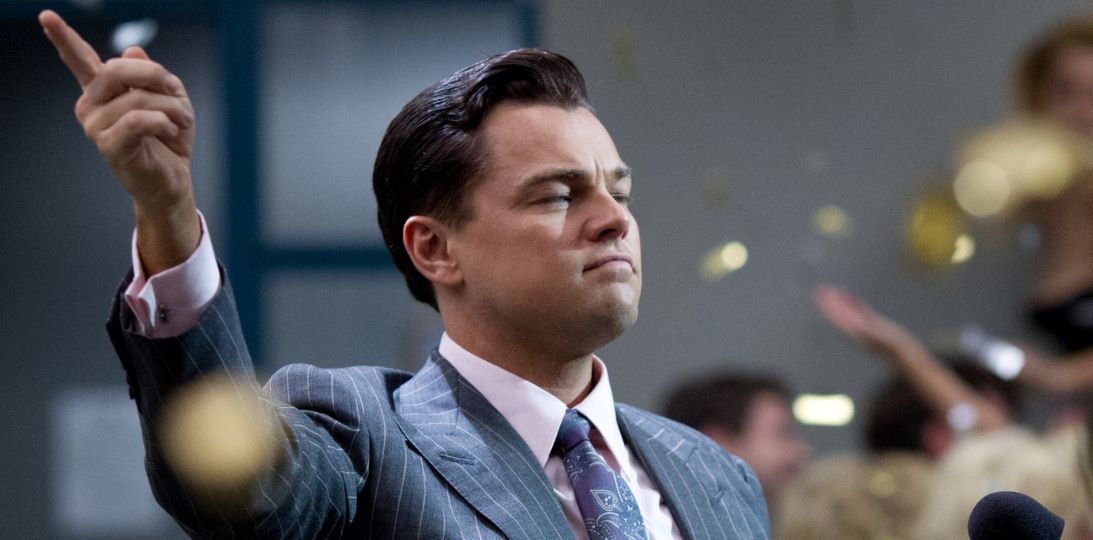
All The Wolf of Wall Street is really missing is an early freeze frame of a coke-fuelled banker slamming the phone down on a closed deal and a wistful voiceover from Jordan Belfort: “As far back as I can remember, I always wanted to be Wall Street trader”. If Goodfellas was Scorsese’s exploration of the attractions – and dangers – of a life in blue collar crime, then The Wolf of Wall Street is its white collar companion piece. The fact that so many viewers find the behaviour of Belfort morally outrageous in a way that no one ever objects about Henry Hill is, for me, an indication of how much we loath these masters-of-the-universe. For all their faults, we’d still rather see a violent criminal as one of us.

Based on Jordan Belfort’s (Leonardo DiCaprio) autobiography, The Wolf of Wall Street follows his time building a dodgy trading empire and a large fortune. Not that he can remember most of it, as he seems to be on a permanent intoxicated binge of drinks, hookers and every drug you can ever imagine (and some you can’t). The FBI catches up with him eventually, but Belfort learns precious little from his experiences. Other than, perhaps, that so long as you are rich and white in America, you can basically get away with anything.

That’s perhaps the key to Wolf of Wall Street. Scorsese may not shy away from the delicious dark comedy of Belfort’s life of excess, but it doesn’t blind him to the shallow awfulness of the man or his unthinking, instinctive greed and self-obsession. You would need to be a pretty shallow person to look at Belfort’s greed, moral emptiness and self-destructive binges and want to ape him. If you think watching DiCaprio literally paralytic on quaaludes is the life you want, frankly there is something wrong with you.

What perhaps made some feel Wolf of Wall Street was oddly in love with Belfort is its electric pace. The film is a brilliant reminder of Scorsese’s faultless understanding of pace. Or one who matches unparalleled cinematic skill with the rambunctious energy of a first-timer allowed to play with his movie toys for the first time. Brilliantly assembled, this is a superb collection of cinematic techniques, from jump cuts to fluid transitions that power through a series of increasingly bacchanalian parties and isn’t afraid to admit that, in the moment, this stuff can be fun (rather like getting the best table in Goodfellas) but ultimately self-destructive. (After all, few know the dangers of drugs like Scorsese.)

At the centre of this whirlwind is a stunning performance from Leonardo DiCaprio. With his still youthful, charismatic handsomeness, DiCaprio only needed to tweak his screen persona to provoke the sort of perverted idolatry Belfort receives from his co-workers. But he goes above and beyond in his transformation in this role. He makes Belfort simultaneously oddly childlike and revoltingly corrupted, someone whom we enjoy spending time with while finding repulsive. He rips through Belfort’s trademark, drug-fuelled motivational speeches, monologues of insanely eye-popping intensity, explosions of off-the-chain wildness. At other times he’ll sulk and whine like a spoilt child. DiCaprio struts across the screen with an unpredictable physicality – his embodying of the physical effects of mind-altering drugs is hilarious and horrifying –in possibly his finest ever performance.

DiCaprio is the raw energy source that helps power the rest of the film. Scorsese matches him blow-by-blow with this dynamic expose of white-collar corruption. Using Belfort as a narrator – which serves to further expose his shallowness, greed and utter inability to learn any sustained messages from the depths he plummets to – the entire film is all about how the flip side of the American Dream tacitly promotes and encourages this sort of behaviour.

Belfort is the rash the system has come out as. In a highly effective early cameo, McConaughey plays Belfort’s first mentor, a coke-fuelled hedonist hooked on the buzz of closing deals, who pushes Belfort towards a career of success (including introducing a brilliant breathing exercise – improvised by McConaughey based on his own warm-up exercises – that becomes a mantra in the film). DiCaprio’s eyes have already lit up at watching a deal closing. Drugs and sex are just an attempt for Belfort to replicate the buzz of the real addiction: money.

Scorsese recognises that we don’t need to know the details of Belfort’s illegal dealings. (In his voiceover Belfort literally tells us it doesn’t matter, all that does is the shitload of cash they were bringing in.) We learn enough about the huge mark-ups (50% of the deal’s value) he can make from selling penny stocks (trades of small public companies) and “pump and dump” tactics to know it’s wrong. I will admit the film does little to show the victims – but then Belfort never cares either, proudly stating at one point he has no guilt fleecing his clients out of cash, because he knows how to spend it, better than they do.

It all pours into a hedonistic, alpha-male environment where the air is as littered with fucks (the film held a record for most use of the word) as the floors and desks of Belfort’s offices are during his hooker-filled end-of-week parties. Wolf of Wall Street is also an expose of toxic alpha-maledom. Bullying, abuse and screaming are ripe, women are basically commodities traded as easily as shares. The only exceptions are those allowed into the boys’ club as either surrogate-male fellow traders or trophies to adorn the arm. Margot Robbie (superb in a star-making role) plays Belfort’s glamourous wife, who knows she needs to use her physical assets to make her way in this world.

The film rips along through a party-deal-party structure. Belfort goes from wowing his fellow penny stock traders by making $2k in two minutes to wrapping the trading floor of his fake-old-school Wall Street firm around his finger in excess filled speeches. He also goes from a charming party animal to an incoherent, rambling, deeply unpleasant and dangerous drunk and drug addict. But crucially, he learns nothing . There is no life-and-soul shattering payback like Henry Hill undergoes. Fault, guilt and consequences roll off his rich, spoilt back. He ends the film still winning the adulation of would-be millionaires, his conscience (if it exists) untroubled by any impact his actions have had on others.

Perhaps Scorsese could have allowed more space to victims – and to Kyle Chandler’s dutiful and dedicated FBI agent who brings him down (our final shot of this character stresses his humble, low-paid status – echoing back to his confession to at times regretting leaving a trading career for a law one). But that’s to criticise the film for not being obvious enough. Of course parties are fun. But each party becomes wilder, more orgiastic and uncomfortable as the film goes on. But if we didn’t understand the fun, we couldn’t understand how people get hooked on this adrenalin fuelled life.

Wolf of Wall Street though is a warning to the curious – if you are smart enough to look. Belfort’s soulless, horrible life is not one to aspire to, and his moral emptiness not one to wish to have. It’s a funny film, but it’s also a dark one. DiCaprio is brilliant beyond belief, Jonah Hill funny and pathetic as his best friend, Margot Robbie becomes a star and Scorsese rips through the film with the energy, passion and dynamism of a much younger director. An outstanding tentpole film in his CV.

Once Upon a Time In Hollywood (2019)

Brad Pitt and Leonardo DiCaprio have fun in Tarantino’s appalling Once Upon a Time in Hollywood

Director: Quentin Tarantino

Cast: Leonardo DiCaprio (Rick Dalton), Brad Pitt (Cliff Booth), Margot Robbie (Sharon Tate), Al Pacino (Marvin Schwarz), Emile Hirsch (Jay Sebring), Margaret Quailey (Pussycat), Timothy Olyphant (James Stacy), Julia Butters (Trudi Fraser), Austin Butler (“Tex” Watson), Dakota Fanning (Squeaky), Bruce Dern (George Spahn), Mike Moh (Bruce Lee), Luke Perry (Wayne Maunder), Damian Lewis (Steve McQueen), Brenda Vaccaro (Mary Alice Schwarz), Nicholas Hammond (Sam Wanamaker)

Spoilers: I’ll discuss the film’s final 40 minutes in detail. I mean when you watch it you can guess where it’s going. But those final moments are truly central to my visceral hatred of this film.

There seems to be three eras of Tarantino movies. The first (Reservoir Dogs, Pulp Fiction and Jackie Brown) saw him work with pulpy themes focused on strong stories and character development. The second (Kill Bill and Grindhouse) saw him indulge his fascination with the B-movie and low-rent TV of his childhood. His third (Inglorious Basterds, Django Unchained) sees him making strange revenge fantasies on behalf of other groups. Once Upon a Time is a marriage between his second and third eras. And I hated it. I hated, hated, hated, hated it. I genuinely can’t remember seeing a film I hated more at the cinema (maybe Transformers: Revenge of the Fallen). It’s a self-indulgent, tasteless, overlong, smug, unbearable pile of pleased with itself shit. It’s grotesque and it left me feeling dirty.

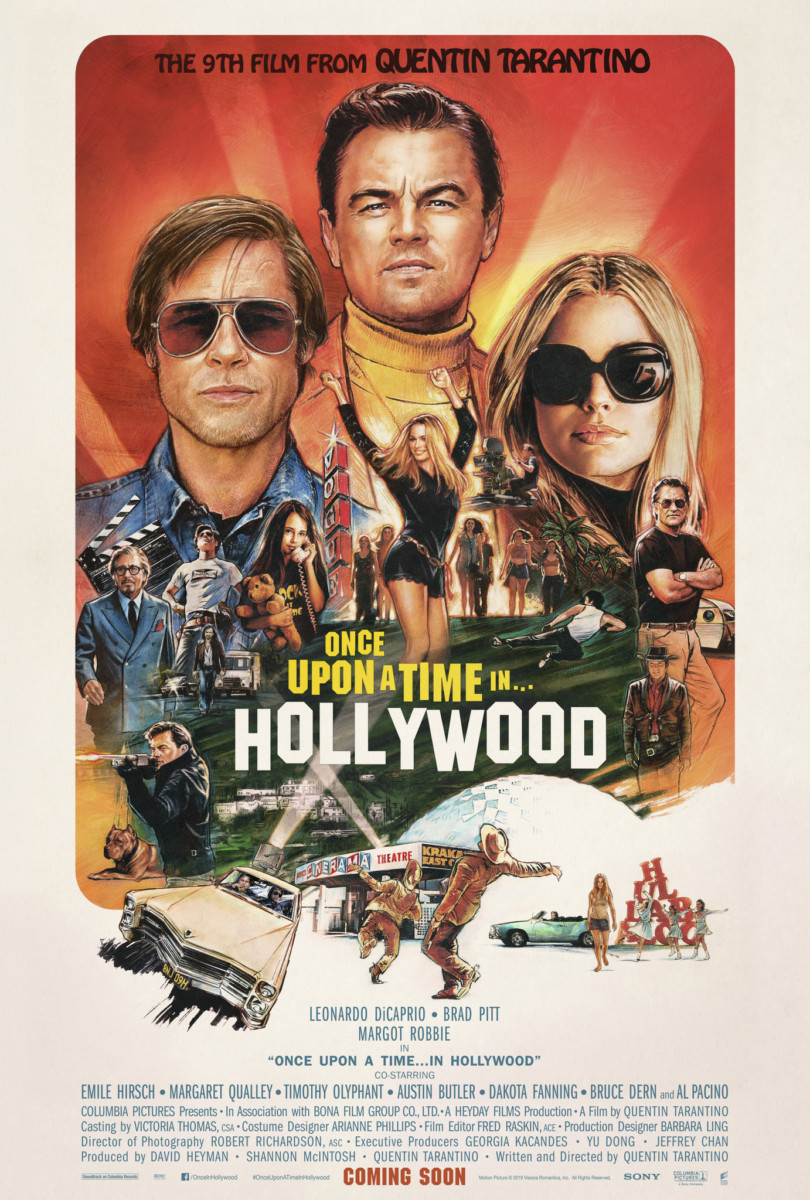
The plot (such as it is) follows three days in the lives of fictional Hollywood-turned-TV actor Rick Dalton (Leonardo DiCaprio) and his stunt double Cliff Booth (Brad Pitt), Dalton’s best friend, chauffeur and personal assistant who can’t get a job in Hollywood due to his terrible reputation. Dalton lives next door to Roman Polanski and his wife Sharon Tate (Margot Robbie). On Feb 8th 1969, Dalton is offered a role in spaghetti westerns and preps for his next episodic TV show. On Feb 9thDalton shoots the pilot of Lancer a new TV western (and a real TV show) as the baddie, suffering a crisis of confidence about his career and talent. Meanwhile Booth does some odd jobs and has an odd encounter with the Manson family. Intercut with this are scenes of Sharon Tate going about her everyday life, including joyfully watching one of her films in the cinema. Finally we join the action after a time jump on August 8thas, after returning from filming in Italy, Dalton and Booth get drunk and high and accidentally waylay the Manson gang on their way to Sharon Tate’s house and – this being now Tarantino’s thing – brutally and bloodily murder the three Manson family killers.

Sigh. I think a question now has to be asked about what Tarantino’s problem is. As I realised where this film was going, my heart sank. This sort of revenge porn is, I’ll be honest, revolting, demeaning, tasteless and, leaving all else aside, not Tarantino’s place. It also demeans and cheapens the actual tragedies that happened to real people. Just as shots of Hitler’s head being machine-gunned to pieces in Inglorious Basterds while Jewish-American paratroopers machine-gunned a room of Nazi’s seemed to be grossly inappropriate, lowered the victims to the level of the killers and cheapened the actual deaths of real people in the Holocaust, making them seem like weak victims (as well as hardly being Tarantino’s place being neither Jewish or having any connection to the Holocaust) so it’s equally tasteless here. He just about gets away with it in Django Unchained, a black revenge thriller from a director who is not black and has littered his scripts with the “n-word” as all these guys were at least fictional people. But here it’s just grotesque.

We pride ourselves now that we have left the Gladiatorial ring behind, or that we no longer gather round on a Bank Holiday weekend to watch a convicted criminal being hung, drawn and quartered. But as I watched the Manson killers being bludgeoned to death, mutilated by a dog, their Glasgow kissed skulls crushed against a mantelpiece and immolated by flame thrower, I thought we’re not that far off. It’s basically a pornographic level of violence, that the film excuses because the Manson killers were bad guys (don’t get me wrong they were) but asking us to take pleasure in killing, is basically what Manson himself asked his followers to do. I find watching this sort of stuff not only feels like it cheapens the actual brutal, tragic murders of an eight-month pregnant Tate and her three friends, but also lowers me the level of the killers themselves. Tarantino’s films increasingly feel like the director himself would be fully on board with that episode of Black Mirror (“White Bear”) – where a killer is tortured everyday by tourists, and then has her mind wiped so she can go through it every single day – being turned into a reality.

In fact Once Upon a Time in Hollywood is a worrying voyage into the man’s soul, and what I saw there was partly this muddled vanity and obsession with revenge (I mean who gives him the right to take revenge on behalf of others? Someone please tell me? There is an arrogance to that I find deeply unattractive), partly the tragically boring geeky tedium of the video-store nerd, mixed with a loving regard for white men and a worrying lack of interest (bordering on contempt) for anyone different.

I loathed and despised the final forty minutes of this film, but to be honest the opening two hours are not a lot better. This film is almost three hours long and contains about thirty minutes of plot if that. What it mostly is, is a chance for Tarantino to indulge to a ludicrous degree his obsession with low-rent culture of the 1950s and 1960s. To show off his knowledge of obscure films of the age (he’s heard of The Night They Raided Minsky’s you know…) and recreate in painstaking detail pastiches of the type of TV shows he grew up watching. These sequences seem to go on forever and ever, with the odd good line and decent gag not suddenly making it anything other than increasingly tedious.

What he really, really, really needs is a collaborator to tell him when less is more and certainly when too much is too much. The first two thirds of the film seem to stretch on for an indulgent eternity, and their content reveals more and more of the director’s obsession. White men are idealised and the old-school values of Hollywood, the world of the studio and simpler non-PC times are looked back on with a fussy nostalgia. The film takes every opportunity for Booth and Dalton to lambast hippie culture and the growing anti-establishment of the era, and has every character we meant to like yearning for the good old days.

Bruce Lee appears in the film, here interpreted as a braggart arsehole, showing off to the stunt men, who is humiliated by Cliff in a brawl. It’s a scene that amuses for a second and then makes you uncomfortably realise you are watching the most prominent non-white person in the film being put into his place by a middle-aged white man. It’s got more than a hint of racism to it. And Tarantino claims to be a fan of Bruce Lee! By contrast, while the film brutally murders the Manson killers, James Stacy (played by Timothy Olyphant here) the chiselled white-male star of Lancer, a man later jailed for repeated child molestation, is treated with a laudatory romance. Guess there are different rules for white guys who starred in Tarantino’s favourite shows. Whither the revenge saga where his victims mutilate him eh?

Women don’t get a better deal in this film. Sharon Tate is essentially an elevated extra, although Tarantino gets one lovely sequence out of her watching her latest film – a playful swinging 60s spy caper with Dean Martin – in a cinema and gleefully enjoying both the film and the audience reaction with a childish, delighted grin. But then a lot of the success of this is due to Robbie’s marvellous performance. Tarantino himself does his best to ruin it with his foot fetish, throwing Margot Robbie’s naked feet into virtually every shot. Aside from this, the film shoots and treats Tate like a teenager observing someone they have a crush on, romantically idealising her without ever getting anyway near understanding her or scratching the surface of her personality, instead following her with doe-eyed devotion.

But at least she gets lines. Every other woman in this is either a slut or murderer (or both) from the Manson cult, a shrew (like Booth’s dead wife and Kurt Russell’s stunt manager’s wife) or a bimbo (like Dalton’s eventual Euro-wife). There is no in between. It’s a film for men, written by a man, where the men take centre-stage, and a smugly held up as never doing anything wrong, with the film uncritically indulging their vices as symptoms of their tragedy of being left behind by a more progressive and changing country.

Both Pitt and DiCaprio enjoy swaggering twists on their images. DiCaprio overacts wildly, in an overly mannered performance full of actorly quirks (he has a stammer so we know he’s a sensitive soul deep down!), that riffs on other performances of his and largely involves shouting and swearing. Even scenes of emotional vulnerability carry a method fakeness about them – but then Once Upon a Time is a film with no heart, so it’s not surprising that when one of its characters tries to show one, the film stumbles spectacularly into artificiality. Pitt fares better, with a performance of McQueen like-cool, even if the film seems to believe that even if Cliff did kill his wife (as many believe) it’s fine because she was clearly a bitch.

All of this is shot with a flatness and lack of visual interest that is surprising for Tarantino, usually a much more vibrant director. Maybe he was just echoing the TV styles at the time. Maybe he was saving the fireworks for his orgy of (what he would call) cathartic violence at the end. Maybe it’s just a pretty mundane film. Maybe if Tarantino wasn’t the film-buffs darling, more people would call out his flatness and lack of imagination behind the camera and the soulless flatness of much of the films shooting and pacing. Its mediocrity and smug wallowing in the culture of yesteryear is appalling.

Because Once Upon a Time is a teenager’s film, and worst of all, a teenage bore. It’s got a major crush on Sharon Tate, but barely any interest in her personality. It drones on endlessly about geeky knowledge and old film and television that no one else knows anything about so that it sounds interesting and cool. It takes a childish, immature, sickening delight in fantasising about killing bad people in the most horrific ways it can possible imagine. It thinks it’s really clever and profound, but it’s actually a horrible, horrible film that’s also really tedious and which leaves a deeply unpleasant taste in the mouth, while demeaning the real-life victims of a crime by spinning some ludicrous revenge fantasy around them. It morally offended me after two hours of boring me. I hated it. I hated it. I really, really, really, really hated it. I hated it so very much.

Mary, Queen of Scots (2018)

Margot Robbie as a particularly dense version of Elizabeth in misfire Mary, Queen of Scots

Director: Josie Rourke

Cast: Saoirse Ronan (Mary Queen of Scots), Margot Robbie (Elizabeth I), Guy Pearce (William Cecil), David Tennant (John Knox), Jack Lowden (Lord Henry Darnley), Joe Alwyn (Lord Robert Dudley), Gemma Chan (Elizabeth Hardwick), James McArdle (Earl of Moray), Martin Compston (Earl of Bothwell), Ismael Cruz Cordova (David Rizzio), Brendan Coyle (Earl of Lennox), Ian Hart (Lord Maitland), Adrian Lester (Lord Randolph), Simon Russell Beale (Robert Beale)

Mary Queen of Scots posterThe history of the Tudors has been mined so often by film and theatre that there can hardly be any hidden stories left to tell, barely any twists that can be unveiled or reimaginings that haven’t already been imagined. Mary Queen of Scots certainly fails to find any new angles on its oh-so-familiar tale, and even its attempt to rework events and characters keeps banging its head on those damn, unchangeable real events that spoil the story it seems to want to tell.
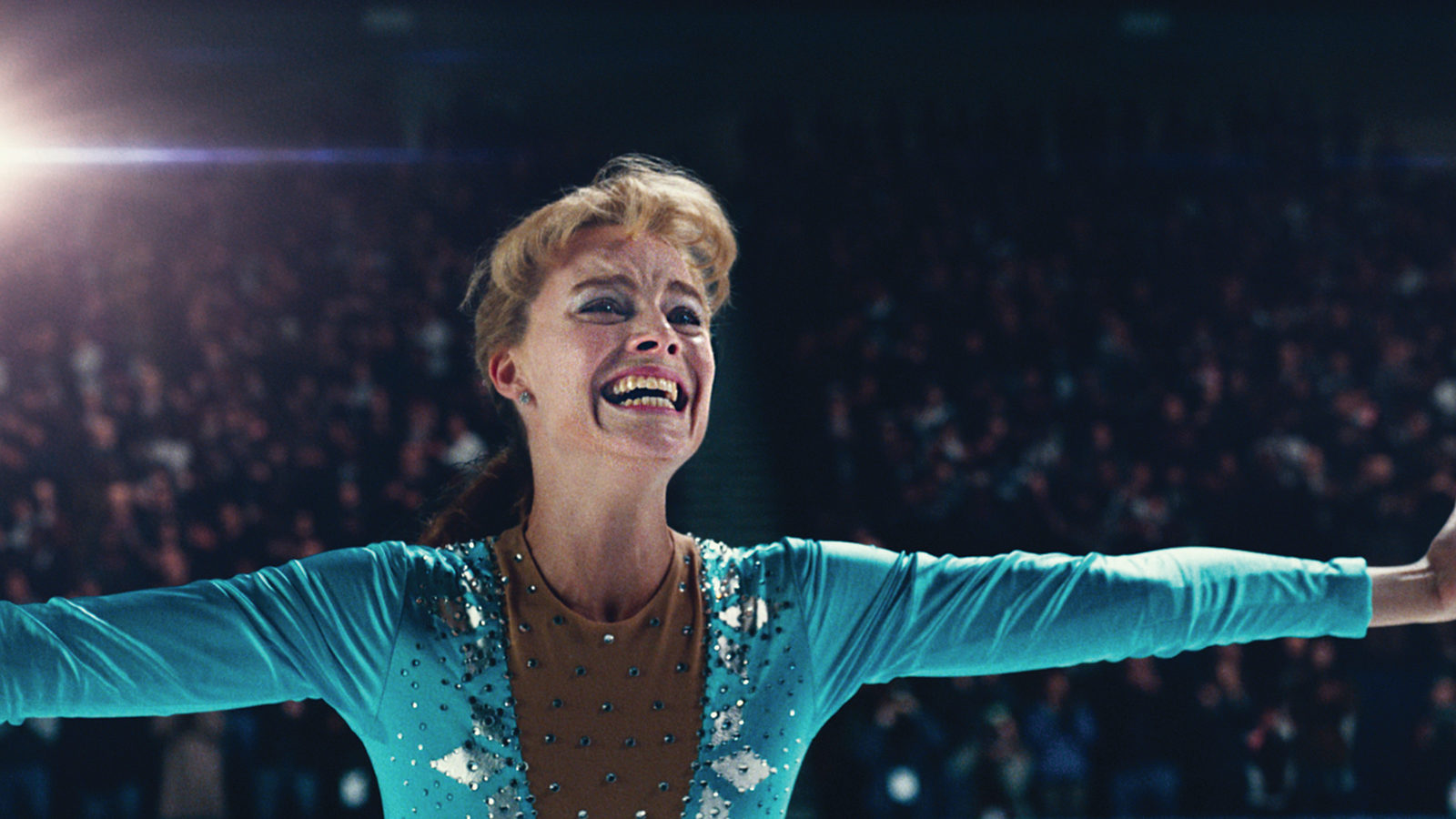
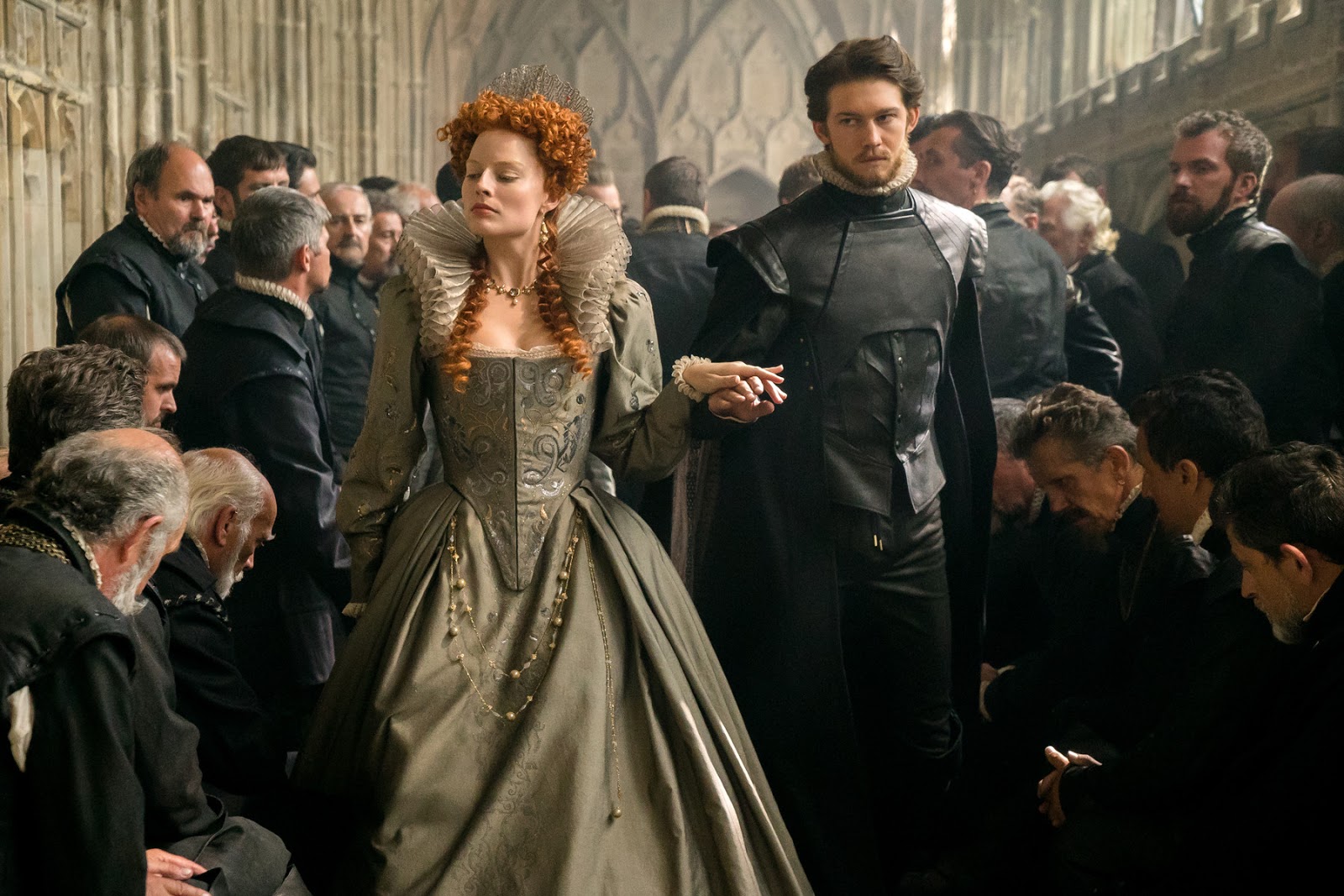
And it’s a familiar story. Mary (Saoirse Ronan) returns to Scotland from France after the death of her husband. Naturally many people aren’t keen to see this Queen, not least her half-brother the Earl of Moray (James McArdle) who was running the country, and protestant firebrand anti-feminist John Knox (David Tennant). But Mary is plugged in, sharp and savvy and she’s going to rule the country her way – and also put forward her claim for the throne of England currently held by her cousin Elizabeth I (Margot Robbie). It seems all is set for Mary’s success – until fortune begins to turn with her marriage to drunken playboy Henry Darnley (Jack Lowden). Conspiracy, murder, exile and execution are on the cards.

Mary Queen of Scots is a mess. For starters, Beau Willmon’s script does the near impossible of turning one of the most electric periods of British history into something stodgy, dull and hard to follow. Perhaps wrapped up in his House of Cards background, a show where there is a never ending stream of betrayals, counter crosses and twists for twists’ sake, Mary Queen of Scots is the same. The film is a constant parade of betrayals in Scotland, as lords shift and move sides from scene to scene with such swiftness, such lack of explanation, such lack of exploration of character and motivation, that you end up not only confused by ceasing to care. Decent actors like James McArdle and Ian Hart struggle through with ciphers (Hart literally changes sides every single scene). Martin Compston is given a confused character design as Bothwell that makes Mary’s third husband a hero until he makes a left-field heel reversal and becomes a bullying rapist. What a mess.

It’s even worse in England, where poor Guy Pearce’s every scene is a never-ending stream of exposition and historical context. Every single scene in England at the court drags and claws itself into nothingness, simply a load of dry, dense, uninvolving dialogue with characters whom we are never given any real reason to invest in. Just as the Scottish lords are ciphers who do whatever the plot requires them to do, with no time invested in developing their characters, so it’s the case with the English lords. There are many, many, many people to keep on top of but virtually no characters to invest in.

Willmon’s script also falls wildly in love with Mary herself, desperate to turn her into some genius politician and master of realpolitik, who we are frequently told is playing the game of courtly politics with aplomb and genius. “She’s out-manoeuvred us” one character constantly bemoans. However, the problem Willman has is that he eventually has to deal with the fact that the real life Mary made hideous, disastrous, stupid decisions. And since those decisions are basically the building blocks of the story (who she marries, who she trusts, who dies, where she goes, who she abandons etc etc.), there is no way around them. You are left with a film that tells you all the time how smart your lead character is, while most of the things she does are foolish.

Not least the marriage to Lord Darnley. Jack Lowdon gives a very good performance as a feckless, arrogant weakling. But surely only the densest woman alive could fail to see that Darnley is a hideously inappropriate husband? The film gets round this by stressing his charm and, in one hilariously misjudged scene, his intense skill at cunnilingus as being the thing that pulls the wool over her eyes. (After this first soft focus bit of oral play, Mary bashfully asks Darnley if he would like some “satisfaction” as well. No that’s fine he sweetly says – she really should be suspicious by then.) The film tries to course-correct by having Mary realise literally five minutes into the marriage that she has made a terrible mistake. But she doesn’t learn from it, as the rest of her life is a series of disastrous decisions, promoting the wrong people, snubbing others, leaving her son (the SINGLE MOST IMPORTANT PERSON IN THE COUNTRY) behind when she runs away… need I go on.

As well as trying to make Mary a genius, it also balances by trying to make Elizabeth an idiot. I swear there is not a single scene in this film where Elizabeth is not in tears about something. She shows no judgement whatsoever, struggles with her hormones, blindly follows the advice of her counsellors, spends half the movie making paper roses and stroking horses rather than running the kingdom. On top of which, this film which wants to make a point about the sexism women face dealing with a world of men, turns Elizabeth (the greatest queen England ever had) into a hormonal idiot, blindly led by men and obsessed with the idea of having children (even longingly trying to make her shadow appear pregnant) because, you know, deep down the ladies just be wanting babies. 

Now Saoirse Ronan and Margot Robbie do decent jobs with the versions of these people they play, even if none of this rings true. Josie Rourke does a decent job directing the film visually, with its Game of Thrones inspired look and feel (Edinburgh castle is turned into some sort of bizarre Dragonstone structure, half hewn out of a mountain). But its story is, to put it bluntly, really, really BORING. You are never given any reason to care about most of these characters, so the constant stream of betrayals and side shifting eventually becomes utterly unengaging. Every time you get near to thinking Mary is smart, she has to do a terribly dumb historically inspired real event, that actually makes her look even more stupid than she was. Mary Queen of Scots is a stodgy, dense, dull mess of a film that ends up being drier and less interesting than the sort of high-Hollywood epics from the 1970s it’s trying to update.

I, Tonya (2017)

Margot Robbie triumphs as Tonya Harding in I, Tonya

Director:  Craig Gillespie

Cast: Margot Robbie (Tonya Harding), Sebastian Stan (Jeff Gillooly), Allison Janney (LaVona Golden), Julianne Nicholson (Diane Rawlinson), Bobby Carnavale (Martin Maddox), Paul Walter Hauser (Shawn Eckhardt), Caitlin Carver (Nancy Kerrigan), Bojana Novakovic (Dody Teachman)

In 1994, Tonya Harding (Margot Robbie) is the bad-girl of ice skating. From a working-class Portland background, with a domineering mother (Allison Janney), she struggles to be accepted in the upper-class world of ice skating. After some success, including becoming the first American ice skater to complete two triple axel jumps, she constantly finds success undermined by her own failings and indiscipline, and the influence of her wastrel, abusive husband Jeff (Sebastian Stan). When competing with rival Nancy Kerrigan for a place on the 1994 Winter Olympic team, Tonya encourages her husband to send Kerrigan threatening letters to put her off. What happens instead is an attack on Kerrigan that breaks her knee – and the fallout will have devastating consequences.

I,Tonya is much more than a film about an attack on a rival skater. Tonya (in the film) complains that the event (which she claims to have had so little to do with) has overshadowed her whole life, but that’s not a mistake the film makes. The film is instead a brilliant deconstruction of class and media in America. Tonya struggles in the world of ice skating because she comes from a working-class, trailer-trash background. This leads her to grow up with several chips on her shoulder, aggressively acting out against judges and fellow competitors, because she wants to belong but never feels she does. In a country that likes to pride itself that it doesn’t have the sort of class system the UK has, it’s a striking commentary on how Tonya completely fails to escape the impact of her poor, violent background – and uses it as a justification and excuse for everything that happens to her in the film.

Her background also makes it every easy for the media to cast Tonya as a villain, first as the difficult punk of ice skating, later as the Machiavellian arch schemer of a vile plot. The worst part of this is – like the reality stars of the 00s who would follow her – Tonya feels she needs to keep playing a role in order to “stay in the public eye”. In turn, the media – largely embodied here by Bobby Cannavale’s delighted media commentator, who gleefully recounts every key moment of the film in a smug series of talking head interviews – keeps the pressure on, puffing her up into whatever it requires her to be to fill a 24 hours news cycle. It’s surely no accident that the film ends with camera moving away from Jeff’s house, while news of OJ Simpson’s arrest plays on the television.

And why does Tonya fit herself into this role? Because, the film suggests, she is a victim who has confusingly absorbed her victim status into her personal relationships and self-value. Treated appallingly be her domineering mother, and hit constantly by her worthless husband, Tonya clearly believes that she is personally of very little worth. If she is so used to being an angry, raging punchbag at home, is it any wonder that she settles into that role publically? To the extent that, throughout, Tonya constantly sidelines or pushes away the more supportive people around her, like Julianne Nicholson’s (who is very good) dedicated coach.

The film handles this range of complex psychological and social themes with aplomb. In a neat touch, the film acknowledges that the events of its narrative are so controversial that everyone in it has a different view. The film is framed through a series of talking head interviews with the leading players (played by the actors) twenty years on. Each of them tells a contradictory version of the story and around the “incident”. The film, bravely, gives some weight to all these viewpoints. It’s brilliantly handled, as we see certain scenes from the perspectives of different characters, which makes them much easier to relate to. Gillespie also has a lot of fun with the film leaning on the fourth wall – frequently characters turn to the camera mid-scene for a few words of commentary, sometimes to stress a point, other times to deny the thing we have just watched ever happened. 

The eclectic and dynamic storytelling works an absolute treat, and Gillespie gets the tone absolutely right. While dealing with serious themes, the film is also blissfully funny. Much of the fourth wall humour is brilliant. While taking the characters seriously, the film is also written with a real dark wit. And (once you remind yourself that Kerrigan’s career was not seriously affected by the attack), the build up to the scheme itself, and the feeble cover up, is hilarious. Everyone in the chain of events is stupider than the person above them. Tonya is no genius, her weak husband is a clumsy fool, his friend Shawn an idiotic fantasist, the men hired to attack Kerrigan almost unbelievably stupid. The inevitable crumbling of the plot is hilarious in its disintegration.

It works as well because of the strength of the acting. Margot Robbie is superb as Tonya. She fills her performance with empathy for Tonya, but never lets her off the hook – Tonya never takes responsibility at any point for anything she does. Robbie gets the balance just right between the “little girl looking for love” vulnerability of Tonya, mixed with the bitterness and rage that always lurks just below the surface. She acutely understands the messed up psychology of someone who has been treated badly by everyone around her, and then finds it impossible to form a healthy relationship with the world.

On Oscar-winning form, Allison Janney rips into the sort of part that must have (rightly) looked like a total gift on the page. It’s a scene-stealing role: Harding’s mother is a foul-mouthed bully whose every other line is a zinging put down or resentment-filled burst of cruelty. Janney, however, keeps the part real: there is always a sense that somewhere in there, she genuinely feels she is doing what’s best for her daughter, even if her methods are completely misguided. Sebastian Stan is equally good as Tonya’s weak-willed, not-too-smart husband and Paul Walter Hauser is hilarious (as well as a remarkable physical match) as Shawn. 

I, Tonya is a very smart, very funny piece of social satire mixed with tragedy. While being very funny, it’s also sad and rather moving. It has some terrific acting in it and is directed with confident, but not overly flashy, aplomb by Gillespie. As a commentary on the media it’s well judged, and as a look at the impact of class at America it feels fresher than ever.

Suite Française (2015)

Matthias Schoenaerts and Michelle Williams love across the divide in this disappointing French Occupation epic

Director: Saul Dibb

Cast: Michelle Williams (Lucile Angellier), Kristin Scott Thomas (Madame Angellier), Matthias Schoenaerts (Oberleutnant Bruno van Falk), Sam Riley (Benoit), Ruth Wilson (Madeleine), Margot Robbie (Celine), Lambert Wilson (Viscount de Montmort), Harriet Walter (Viscountess de Montmort), Clare Holman (Marthe), Alexandra Maria Lara (Leah), Tom Schilling (Oberleutnant Kurt Bonnet), Eric Godon (Monsieur Joseph), Deborah Findlay (Madame Joseph)

The story behind the writing of Suite Française is compelling. Living in Nazi-occupied France, Irène Némirovsky began work on a five-novel series, Suite Française, which she intended to depict life in her homeland under German rule. She had only written two of the five books when she was arrested by the Gestapo as a Jew, and tragically died in Auschwitz. The books were written in a small notebook and kept by Némirovsky’s daughter while she moved from hiding place to hiding place evading the Nazis. Sixty years later, donating her mother’s papers to an archive, she deciphered the notebook and discovered the novels. They were published as a single volume to great success in 2004, regarded as an accomplished piece of literary fiction and a remarkable work of contemporary witness. 

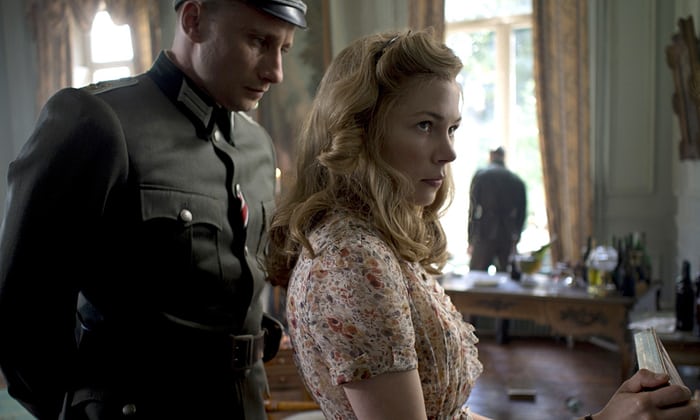
The short summary of the novel’s richness and complexity provided by this film can’t really compete. Based on the second of the two novels, the story takes place in a small French village in 1940. Following the arrival of the Germans, officers are billeted in people’s homes: Lucile Angellier (Michelle Williams) and her mother-in-law (Kristin Scott-Thomas) are assigned sensitive musician Bruno van Falk (Matthias Schoenaerts), while their neighbours, farmers Benoit and Madeleine (Sam Riley and Ruth Wilson), are forced to accommodate bullying officer Kurt Bonnet (Tom Schilling). As hostilities between the French residents and the German occupiers grow, so does the attraction between Lucile and Bruno, but Bonnet’s pursuit of Madeleine threatens to ignite the simmering tensions in the community.

Suite Française manages to turn its promising material into a conventional, chocolate box wartime romance – you can’t help but think that it does a great deal of disservice to the original novel. It’s filmed in an unremarkable style (there are at best 1-2 imaginatively done shots and sequences) and poorly paced. With its short runtime (barely more than an hour and a half), it constantly feels rushed. Quite simply it’s a story about simmering tensions in a confined environment – it needed more time for us to get a sense of the drama building, of the resentments between the Germans and the French growing. Because the film is so short we don’t get that at all.

Most notably, in a film about a romance between a French woman and a German officer, there is no sense at all of the risks that French women who started relationships with German officers were running. Besides a few small throw away lines, there is no sense of the physical danger and the social stigma that would be applied to these women. Instead, the tension of Lucile falling for Bruno seems to be based more on whether her mother-in-law will discover that she’s considering cheating on her (absent, unfaithful) husband. Even Celine the promiscuous farmgirl (a wasted Margot Robbie in a terrible wig) doesn’t seem to be running any risks of reprisals from the villagers when she’s banging a German officer in the woods.

This, however, is where the film’s rushing undermines it. If it had allowed us to develop a sense of the resentment, shame and loathing the occupied French felt for their German oppressors, a feeling of the whole town being willing to close doors on anyone they perceive as being too close to the  Germans, we could have felt a real danger for Lucile in flirting with a dalliance with Bruno. As well as giving the situation a bit of stakes, it would have made it a lot more emotionally engaging too. We could have witnessed her inner conflict at considering a romance with the enemy, and the emerging feelings between them would have had the conflict of a forbidden love. Instead the film rushes us as quickly as it can towards getting Bruno and Lucile into a passionate clinch, at times taking giant unsupported leaps forward in their relationship, so when it arrives it packs no punch.

This passionate clinch undermines the film. If it wasn’t going to take the time to really build the relationship through lingering glances and brief moments, convincingly charting the journey from hostility and suspicion to a forbidden attraction, it should have cut the relationship down to being something that tempts them both but which they cannot express. Have these two recognise a deep bond between them, a bond that in another time would have brought them together but cannot in the time of war. It’s a film where the only physical contact between them should feel like a window on what might have been – not a passionate locking of lips and sexy fondle or two. Think how much more affecting that might have been.

It would also have fit the structure of the film far better. As Lucile finally finds herself having to choose a side – deciding whether to help a renegade hunted by the Germans or not – her decision to sacrifice her chance of love with Bruno might have worked much better. Similarly, Bruno having to revert to the soldier taking responsibility for the growing persecution of the villagers would have been more affecting. (It further doesn’t help that the film doesn’t give time for Williams and Schoenaerts to build up an effective chemistry.) By chucking them into a clinch as soon as it can, the film undermines its message and also manages to make itself feel more like “Mills and Boon in Occupied France” than the serious tragedy it could have been.

When the film finally focuses on the battles between the French and Germans in its final third, it’s much more interesting than the slightly tired romance. Here we get tensions, stakes, drama – and finally a sense of the danger that being in this situation could have. After the rather soft focus romance that comes before, it really seizes the attention.

Williams does a decent job as Lucile, Scott Thomas could play her austere mother-in-law with hidden depths standing on her head (the film fumbles the unexpected alliance between these characters late on). Schoenaerts is a bit wasted in an underwritten role but does good work. The best performances largely come from the second tier: Lambert Wilson is excellent as the local Viscount who wants to try and work with the Germans but quickly finds himself out of his depth. Harriet Walter is similarly strong as his wife, as is Ruth Wilson.

But Suite Française could have been so much better than the movie that it actually becomes. A film that focused on the dangers of occupation and the tensions of a small community would have been great. A film that rushes through a Romeo and Juliet style romance, without building the sense of forbidden love, is a film that just doesn’t work.

The Legend of Tarzan (2016)


The Legend of Tarzan: The King of the Jungle takes on the MCU style. And loses.

Director: David Yates

Cast: Alexander Skarsgård (Tarzan/John Clayton III), Margot Robbie (Jane Porter Clayton), Samuel L. Jackson (George Washington Williams), Christoph Waltz (Captain Leon Rom), Djimon Hounsou (Chief Mbonga), Jim Broadbent (Lord Salisbury), Simon Russell Beale (Mr Frum)

Every so often you seriously wonder what the point of a film was. Are movie studios so desperate for a franchise that literally anything that has any kind of name recognition is considered a money-spinning franchise in the waiting? Welcome to the latest feeble attempt to jumpstart an epic franchise: the first (and surely last entry) in the Tarzan-verse.

In the late 1880s, the Belgians are carrying out terrible acts in Africa, spearheaded by ruthless Captain Leon Rom (a painting-by-numbers Christoph Waltz). To get hold of diamonds held by an H Rider Haggard gang of natives, he needs to lure Lord John Clayton III (better known as the legendary Tarzan) back into the jungle. But John (Alexander Skarsgård) has tried to put his life as the King of the Jungle behind him (for reasons never really made clear) and only once his wife Jane (Margot Robbie) is put at risk does he begin to reclaim what he has lost.

Was there any real demand for a Tarzan movie? Perhaps even more to the point, was there any audience for one? Since, I imagine, today most people only  on-screen Tarzan viewing experience was watching the Disney animated version, it’s hard to understand who the makers of this film imagined was going to engage with a confused, clichéd movie part dull origins story, intercut with a “rediscovering your roots” plot. And that’s the first of the major errors the film makes.

So determined is the film not to jump straight in with the context of who Tarzan is, that it keeps dribbling away from the actual plot to cram in small (confusing) moments establishing who his parents were, how he met Jane, how they left Africa etc. etc. etc. This stuff is far more interesting than any of the tiresome diamonds / kidnapped wife / White Man Saving Africa nonsense in the main plot, making all the “main” action feel like a sidetrack; not to mention that you’re several flashbacks in before you have any idea how Tarzan has ended up as a stuffed-shirt sitting in a clichéd London, slurping tea with his little finger extended, rather than swinging from vines in the jungle.

The film assumes a level of Tarzan-legend knowledge in its audience I sincerely doubt most viewers had, and the lag while you wait to catch up through the flashbacks is frustrating. The final product is a confused mess with no clear vision about what film it actually wanted to be. If it film wants to deal with the legend, why not just do that – and if it wants to introduce the origins, why doesn’t it just do that? Instead it’s neither one thing nor the other.

Mixed in with some feeble, faux superhero heroics is some clumsy post-colonial criticism of the Belgians’ terrible Congo record, but it goes nowhere in particular. A week on from watching it, I can’t remember what it was about at all. Stuff sort of happens, and there is a vague idea Tarzan is trying to save the Congo, but the film never kicks into gear. Events happen without any real narrative thrust – our heroes and villains literally meander down a river towards no-where in particular. It doesn’t help that almost every narrative beat in the film is completely predictable – this is the epitome of safe, uninspired film-making and storytelling, as if everything has been carefully honed in focus groups and committees.

A large part of the problem is Skarsgård’s lifeless performance in the lead role. Clearly bulging muscles and decent features were all the part really required, because there’s nothing in the way of character. He’s supposed to be a man who has lost touch with his past, confused and ashamed about his background. The film is building towards his emotional acceptance that his gorilla mother was his true mother. It’s a viable, if not especially original, plot – but it falls flat, simply because Skarsgård just isn’t interesting enough. His stilted performance conveys no inner pain or turmoil. Who cares who his mother was? Skarsgård doesn’t seem to, and neither did I.

It doesn’t help that all the rest of the actors (I mean all of them) are more interesting, eye catching presences. Jackson and Waltz are such seasoned pros they invest their paper-thin characters with their own charisma, though each of them could do what they are asked to here standing on their heads. Margot Robbie is actually rather radiant as Jane – even though she is never much more than a (defiant) damsel-in-distress.

The Legend of Tarzan is, at best, okay. It’s desperate to turn Tarzan into some sort of all-action superman, a competitor for the Marvel universe. But it focuses so much on trying to fill out the backstory and beef up the action that it fails to make a film with any characters in it we really care about. Instead this is the blandest, B-movie cornpuff you are likely to see and so instantly forgettable you’ll barely remember each scene as you watch it. It’s enjoyable enough but totally unsurprising, uninspired and fundamentally totally forgettable.