Tag: Marion Cotillard

Lee (2024)

Lee (2024)

Kate Winslet plays with passion in an otherwise rather safe and traditional biopic

Director: Ellen Kuras

Cast: Kate Winslet (Lee Miller), Marion Cotillard (Solange d’Ayen), Andrea Riseborough (Audrey Withers), Andy Samberg (David Scherman), Noémie Merlant (Nusch Éluard), Josh O’Connor (Interviewer), Alexander Skarsgård (Roland Penrose), Arinzé Kene (Major Jonesy), Vincent Colombe (Paul Éluard), Patrick Mille (Jean D’Ayen), Samuel Barnett (Cecil Beaton), Zita Hanrot (Ady Fidelin)

“War? That’s no place for a woman!” That’s the message photographer Lee Miller (Kate Winslet) received when she applied to head to the Western Front for Vogue in World War Two. An experienced artist and photographer, with a strongly independent mindset, Miller wasn’t taking no for an answer: her stunning images of the horrors of war and the Holocaust would become a vital historical record.

That’s the key message of this well-meaning, rather earnest, slightly old-fashioned film, a callback to hagiographic biopics of yesteryear. It’s told through a framing device of an older Lee being interviewed in the 70s. The interviewer is played, in a thankless role, by Josh O’Connor (the character’s identity is a late act reveal that most viewers will probably guess early) and his dialogue is awash with either the sort of “and then you married and left France and moved back to London where you became the first woman photographer hired by Vogue” narration that links time-jumped scenes together, or blunt statements about Lee’s emotional state (“you must have been very frustrated”) that Winslet is definitely skilled enough to do with her face alone.

This was a passion project for Winslet, who spent a decade bringing it to the screen and which she bailed it out during a funding wobble, and she is the main reason to watch Lee. This strong-willed, take-no-nonsense bohemian turned hardened professional is a gift for Winslet, but she also gives Miller a strong streak of inner doubt and fear. Under her force-of-nature exterior, there is a strong streak of vulnerability in Miller, her life marked by past trauma. Winslet lets this rawness out at key moments, bringing great depth and shade to a character who could otherwise be blunt and difficult, and the film works best when it gives her free reign.

It’s unflinching but also tasteful in its depiction of war. Experienced cinematographer and first-time film director Ellen Kuras shoots its grimy, hand-held immediacy with an intensity that makes a lot of the film’s limited budget. Lee’s dirt and dust-sprayed combat scenes – with Miller dodging explosions and bullets to get into position to get the perfect shot – are tensely assembled and make a punchy impact. But Lee also knows when not to show us things, and its visual restraint when Miller and colleague David Scherman (Andy Samberg) photograph the horrific aftermath of Buchenwald and Dachau is admirable, the camera focusing on the characters’ stunned faces as they capture the terrible moments, with the horrific reality just out of focus.

There are some fine moments in Lee, which makes it more of a shame that so much of it feels safe, predictable and unchallenging. Lee focuses on Lee Miller as an artist and downplays her daring, unconventional life. Tellingly it’s adapted from a biographer by her son, titled The Lives of Lee Miller, which chronicles her life of constant reinvention. This is after all a woman who maintained a relationship with her Egyptian husband in the 30s, after meeting her second husband Roland who himself remained married for several years (they only married in 1947). She was a model, a surrealist artist, photographic pioneer, ahead of her time. That’s rinsed out to make her more conventional.

In the film, she and husband Penrose (a generously low-key performance from Alexander Skarsgård) have an uncomplicated meet-cute in a French villa owned by a friend (an extended cameo by Marion Cottillard) – admittedly it as at an outdoor picnic where Lee and others sunbathe topless – before settling into a life of middle-class suburbia (right down to Lee cooking meals for Roland when he returns from work). Hints that she has a consensual affair with Scherman linger, but the film seems prissily determined to reposition Lee as a far more conventional person than she really was. It’s a conservative attitude that comes from a good place – focusing on the work not the gossip – but it also makes her feel less unique or challenging than she was.

With the work as its focus, it’s surprising Lee doesn’t make more of the extensive collection of masterpiece photos Miller took. Although an inevitable credits montage shows how some of these were re-created for the film, actually including the images in the film itself might have carried more power and placed Miller’s work more prominently at its heart.

Lee also fumbles slightly with its final revelation of Miller’s past trauma. Shocking as this is, attempting to suggest what happened to Lee in her teens is on the same scale as the Holocaust or that she has a unique understanding of an act of ethnic genocide because she suffered in the past stinks. It’s especially notable since Lee does an excellent job of showing the quiet distress the Jewish Scherman feels as he realises only an accident of geography saved his life. Andy Samberg, in his first dramatic role, is extremely good in a role that clearly carries a very personal feeling for him.

Lee has things going for it, not least Winslet’s barn-stormingly committed and passionate performance. But in the end, it turns its lead character into someone who feels less provocative and revolutionary than she was. Its safely traditional structure and narrative approach turn her into a “role model” and make Lee the sort of middle-brow biopics Hollywood churned out in the 80s. It’s solid, interesting but essentially safe and forgettable.

Inception (2010)

Leonardo DiCaprio caught between dreams and reality in Inception

Director: Christopher Nolan

Cast: Leonardo DiCaprio (Dom Cobb), Joseph Gordon-Levitt (Arthur), Marion Cotillard (Mal Cobb), Ellen Page (Ariadne), Tom Hardy (Eames), Ken Watanabe (Saito), Dileep Rao (Yusof), Cillian Murphy (Robert Fischer), Tom Berenger (Peter Browning), Pete Postlethwaite (Maurice Fischer), Michael Caine (Professor Stephen Miles), Lukas Haas (Nash), Tallulah Riley (Disguise woman)

What is reality? It’s a question that for many of us never comes up. But in the artificial and exciting world of film, it’s a legitimate question. These worlds we watch unspooling before us on the cinema screen, so large, so real, so exciting. Could we get lost in them? And how much do the films we love echo the dreams that fill our nights, the movies we create in our mind to keep our brain active during those hours of complete physical inactivity? And what happens when the world of imagination and possibility becomes more compelling, more comfortable – and perhaps more real – to us than the actual flesh-and-blood world around us? These are ideas tackled in Inception: the blockbuster with a brain. 

Set in some unspecified point in the not-too-distant future, Dom Cobb (Leonardo DiCaprio) and his partner Arthur (Joseph Gordon-Levitt) are “extractors”, shady corporate espionage experts who use experimental military technology to enter shared dream states with their targets. While in their dreams, they have complete access to their subconscious mind, where secrets can be extracted. A wanted man in the States, Cobb is forced to ply his trade despite his yearning to return home to his children. After a job goes wrong, their would-be target Saito (Ken Watanabe) hires the pair to take on a far more challenging role: rather than extract an idea he wants them to plant one – a technique called “inception” – into the mind of a business rival (Cillian Murphy) to get him to dismantle his father’s empire. To do the job, Cobb needs a new team, including dream “architect” Ariadne (Ellen Page), dream identity forger Eames (Tom Hardy) and dream compound chemist Yusof (Dileep Rao) – and needs to try and control his own dangerous subconscious version of his late wife Mal (Marion Cotillard) who is determined to destroy his missions.

Just a plot summary should give an idea of the twisty-turny world of imagination and ideas that Christopher Nolan mixes in with big budget thrills and excitements, in the most original sci-fi/philosophy film marriage since The Matrix. Of course it helps when you have the clout of having directed a hugely successful comic book series, but Nolan was brave enough to trust that an audience for this sort of action-adventure caper wanted to have their brains stretched as far as their nerves. So he creates a dizzying and challenging piece of escapism that plays around with the audience’s perceptions and understanding of the nature of dreams. 

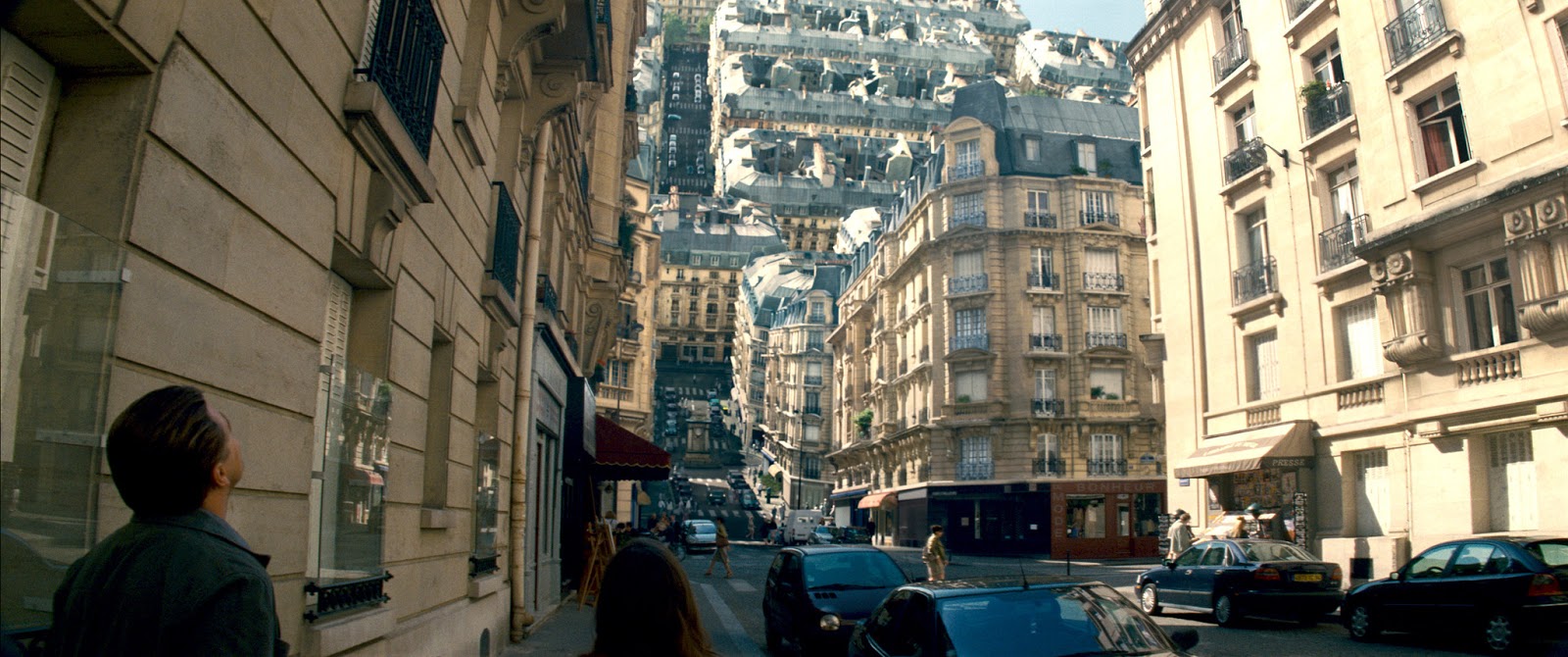
In the world of dreams, the film is a fabulous tight-rope-walk of dazzling concepts. Here everything is possible, with Nolan throwing at us worlds from film fantasy: intricate Samurai houses, brawling third-world streets, luxurious hotels, Bond-style winter bases and entire cities that literally fold, bend and reinvent themselves around the film’s dreamers, worlds that defy conventional rules of physics and time. This world is presented with genuine visual panache at every point, Nolan’s mastery of the language of film leading to a sensational series of slight-of-hand tricks and compelling set-pieces, all the while making you question which events are real and which are dreams or even dreams within dreams. In these worlds, the characters have the ability to literally shape a world to meet their needs, and the dangerous attraction of these worlds – even if they are not real – is the dark temptation that hangs over every frame. 

Because it’s those ideas beneath the action that give the film depth as well as excitement, that ability to ask questions and openly invite the audience to begin theorising themselves to fill in any blanks. Within the world of Inception, characters can create dream states within dreams, to share one person’s dream while simultaneously all being inside the dream of someone else. These multiple levels are cleverly established as being as much of a risk for the characters in getting confused as they are for the audience, with the characters carrying personal “totems” to help them judge if what they are seeing is reality or not. This is made all the more difficult by the establishment that your subconscious will manifest people to populate the dream worlds – and these will turn on invaders they detect in the dream.

All of this tunnels down into the deep limbo of our subconscious – and also introduces as a concept Nolan’s fascination with time. In dreams, time moves at a different pace, and this differential becomes all the greater as you descend down levels in dreams within dreams. A few minutes can become an hour in a dream and become almost a day in the dream within it – and years within the dreams beyond that. This is brilliantly demonstrated by Nolan in the film’s dazzling central sequence as the film intercuts between three timelines in three different dreams – each impacting the other.

It’s another masterful touch – the impact of actions on dreamers’ bodies in the level above can be felt in their world. A slap to the face in the real world can send someone in the dream flying across a room. A bucketful of water turns into a tidal wave in the dream. The dreamer falling in the world above removes gravity in their dream (giving Joseph Gordon-Levitt a cult fight scene in a gravity free world that sees him gracefully leaping from floor to ceiling to wall). The visuals are extraordinary, but the intriguing logic of the inter-relation between reality and the dreams – and the way dreams struggle to explain external effects – lend all the more credence to the mixing of reality.

But then, as Nolan suggests, isn’t that film after all? In dreams we move from location to location and struggle to remember the journey in between. We find ourselves doing tasks and not knowing how we started. Chases, faulty logic, sudden reversals and changes – these are the rules of film, it’s editing slicing out the boring bits and focusing on the reality. We are dropped into the middle of Cobb’s story and only slowly find the backstory, a gun filled chase through an African city is almost indistinguishable from similar sequences in the dreams. The final sequence of the film is a purposefully cut series of images that are very true to the rules of film, but feel alarmingly close to the rules of dream (unsettling us about whether what we see at the end is truth or dream, a debate that continues today). It makes for fascinating stuff, as well as a commentary on film itself.

Nolan’s film is gloriously entertaining, even if in its haste at points it does fail to explain how certain events and concepts truly work – but doesn’t really matter so compelling is the journey. The cast, enjoying the chance to mix action hijinks with genuine characters and dialogue are very strong, with DiCaprio anchoring the film wonderfully as the conflicted, lonely, defensive and daring Cobb. Hardy made a name for himself in a cheekily flirtatious performance, which sparks wonderfully with Gordon-Levitt’s more po-faced Arthur. Page creates a character both naïve and at times almost gratingly intrusive. Cotillard makes a difficult balance look easy playing a character part real and part dream figure. Watanabe is archly dry as the investor. There isn’t a weak link in there.

It may at times move too fast and not always make itself completely clear. It might be a bit too long in places and take a little too long to make its point – but it’s ambitious, challenging, intriguing film-making that rewards repeated viewing. Not least with its cryptic ending in which we are forced to ask how much of what we have seen is real and whether – like Cobb perhaps? – we should even care at all if the end result is so positive. With the fascinating world of dreams – and the rules there that we encounter – it gives us a firm grounding for the its meditation of the dark attraction of fantasy, embodied by the genial wish fulfilment of the movies where adventure lies around each corner and the heroes triumph.

Contagion (2011)

Laurence Fishburne leads the drive to fight a pandemic in Soderbergh’s outbreak thriller Contagion

Director: Steven Soderbergh

Cast: Marion Cotillard (Dr Leonara Orantes), Matt Damon (Mitch Emhoff), Laurence Fishburne (Dr Ellis Cheever), Jude Law (Alan Krumwiede), Gwyneth Paltrow (Beth Emhoff), Kate Winslet (Dr Erin Mears), Jennifer Ehle (Dr Ally Hextall), Elliott Gould (Dr Ian Sussman), Chin Han (Sun Feng), Bryan Cranston (Rear Admiral Lyle Haggerty), John Hawkes (Roger), Enrico Colantoni (Dennis French)

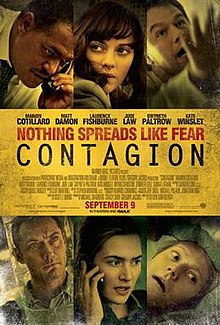
It’s a fear that has gripped the world several times this century: the pandemic that will wipe us all out. It’s the theme of Steven Soderbergh’s impressively mounted epidemic drama, which mixes in an astute commentary on how the modern world is likely to respond to an event that could herald the end of times.

Beth Emhoff (Gwyneth Paltrow) is a businesswoman flying back to Minneapolis from Hong Kong (with a stopover in Chicago for a bit of rumpy-pumpy with an ex-boyfriend) who becomes Patient Zero for an outbreak of a virulent strain of swine and bat flu that proves near fatal for the immune system. While her stunned husband Mitch (Matt Damon) is immune, most of the population aren’t. Across the world, health organisations swing to action – from Dr Ellis Cheever (Laurence Fishburne) and Dr Ally Hextall (Jennifer Ehle) at the CDC, to Dr Erin Mears (Kate Winslet) running things on the ground in Minneapolis to Dr Leonara Orantes (Marion Cotillard) investigating for the WHO in Switzerland and Hong Kong. As populations panic, conspiracy-theorist blogger Alan Krumwiede (Jude Law) sees this as an opportunity for personal promotion and enrichment.

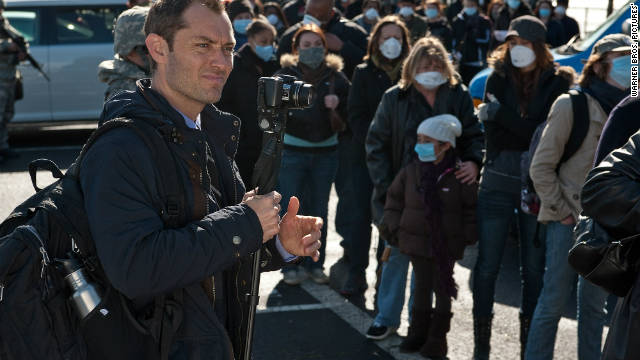
Soderbergh’s clinical filming approach makes for a chillingly realistic piece of cinema realitie, possibly one of the director’s finest films in his oddly-uneven career. Soderbergh presents events as they are, laying out the film like a giant Pandemic board. Captions regularly tell us what day we are on from initial outbreak, as well as the populations of the various cities the plot lands us in. The film is shot with a documentary lack of fussiness, and largely avoids either sensationalism or the sort of Hollywood virus clichés of films like Outbreak. It also succeeds in largely avoiding heroes or villains (even the usual baddies for this sort of film, Big Phama companies, are shown as part of a potential solution not the problem) – even the outbreak is largely an act of chance, prompted by mankind’s actions, but there is no reveal that shady suits or military types are behind it all.

Watching the film today in the light of Brexit and Trump it actually appears strikingly profound and prescient in its depiction of the knee-jerk paranoia and wilful blindness of internet and media pundits who believe every opinion is equal and valid regardless of expertise. Alan Krumwiede (a slightly pantomime performance from Jude Law, complete with bad hair, bad teeth and an Aussie accent perhaps intended to echo Julian Assange) all but denounces the views of experts as “fake news”, claims his opinions on the causes and treatment of the disease are as valid as the expert professionals (all but saying “I think we have had enough of so-called experts”), uses his unique hit count as evidence for the validity of his (bogus) conspiracy theories and makes a fortune peddling a snake-oil natural cure which he claims saved his life (and leads to millions of people ignoring the proper precautions and treatments recommended by the WHO and CDC). 

Soderbergh shows that this sort of crap is as much a dangerous pandemic as the disease itself, encouraging an atmosphere of fear and hostility. At the time it just seemed a bit snide to say “a blog is not writing, it’s graffiti with punctuation”, but today, as websites spout up presenting all sorts of horseshit as legitimate fact, this film looks more and more ahead of the curve in its analysis of a public disillusioned and untrusting of authorities can turn their attention and trust to a venal liar who claims to be a tribune of the people, but is interested only in lining his own pocket. 

But then that’s one of this film’s interesting psychological points. If there is an antagonist in this film, it’s human nature itself. The “wisdom of crowds” is continuously a dangerous thing, as areas devolve into rioting and looting. The bureaucracy of local and international governments causes as many problems as the disease: even as bodies pile up in Minneapolis, Kate Winslet’s on-site CDC crisis manager must bat away furious lackeys of the State Governor, demanding to know if the federal government will cover the extra medical precautions. Announcements of public danger are pushed back until after Thanksgiving, so as not to have a negative impact on the holiday. The decent Dr Cheever, who unwisely leaks news of a lockdown of Chicago to his fiancée, is thrown to the dogs by the government who need some sort of scapegoat they can blame the whole mess on.

If our enemies are red tape and the selfish rumour-mongering of the unqualified and the self-important, acts of heroism here are generally rogue moments of rule-benders. A scientist at a private pharmaceutical company continues his work after being ordered to destroy his samples (and then shares his crucial findings about the disease with the world, free of charge). CDC scientist Ally Hextall tests a crucial antibody on herself because there simply isn’t time to go through the lengthy trials needed (needless to say Krumwiede uses this as further evidence that the outbreak is a government stitch-up). 

Alongside all this, Soderbergh’s detailed direction and editing chillingly chart the spread of the disease. Having explained carefully how it can be spread by touch, the camera details every move of infected people, carefully lingering for half a second on every touched item, with the implication clear that everyone else who will touch these objects soon (such as door handles) will themselves become infected. The film pulls no punches in showing the grim effects of the disease (poor Gwyneth Paltrow!) and the resulting chaos as the pandemic progresses, with social structure breaking down, chaos only held in check by mobilising army forces and imposing curfews and a national lottery for cure distribution, with areas off-limits for those not carrying a wristband barcode identifying them as inoculated.

Soderbergh assembles a fine cast for this drama, helping to put human faces to characters who often have to spout reams of scientific and medicinal dialogue. Fishburne is particularly good as a noble and reasonable head of the CDC, who succumbs only once to putting his loved ones first. Matt Damon is the face of “regular joes” as a father going to any lengths to protect his last surviving child. As one reviewer said the “undercard” of the cast is particularly strong, with Jennifer Ehle perhaps the outstanding performer as the eccentrically driven CDC research scientist. Cranston, Gould, Han, Hawkes and Colantoni are also equally fine.

Soderbergh’s film was a bit overlooked at the time, but rewatching it again, the more I think it might be strikingly intelligent analysis of our modern world, ahead of its time in understanding how new media and human nature can interact with government and society, and how this can lead to a spiralling in times of crisis. One of his best.

Public Enemies (2009)

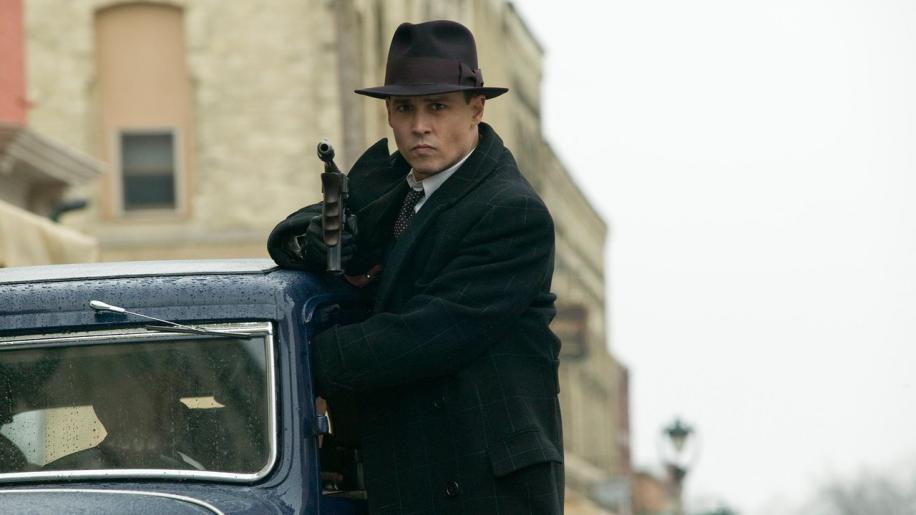
Johnny Depp rides into action as John Dillinger in Michael Mann’s underwhelming Public Enemies

Director: Michael Mann

Cast: Johnny Depp (John Dillinger), Christian Bale (FBI Special Agent Melvin Purvis), Marion Cotillard (Billie Frechette), Billy Crudup (J Edgar Hoover), Stephen Dorff (Homar van Meter), Stephen Lang (Agent Charles Winstead), Stephen Graham (Baby Face Nelson), Jason Clarke (Red Hamilton), David Wenham (Harry Pierpont), Spencer Garrett (Tommy Carroll), Christian Stolte (Charles Makley), Giovanni Ribisi (Alvin Karpis), Bill Camp (Frank Nitti), Branka Katic (Anna Sage)

Michael Mann has an affinity for crime films. With Heat as one of his calling cards, Public Enemies is his attempt to do the same in the classic prohibition and bank robbery era of the 1920s. The guys going head-to-head this time?  John Dillinger (Johnny Depp), coolest robber there is, an icon of the criminal classes, and Melvin Purvis (Christian Bale) rigid and committed FBI agent. Public Enemies however fails to match Heat, falling part way between history lesson and action thriller. Covering the last few years of Dillinger’s life, and the rise of the FBI, it’s a cold, strangely uninvolving film mixed with a few stand out action scenes where tommy guns go blazing.

One of the first things it impossible to miss about the film is Mann’s decision to shoot the film using HD video cameras. The advantages of this is it gives much of the film an immediacy and modern look that throws the viewer into the middle of the action and makes this at times look and feel like a piece of news reel footage rather than a period piece. The camera choice allows Mann to put the camera right into the action, capturing every detail at a fast pace. The film has the look at times of a genuine documentary, and removing the richness of film also gives it the air of being caught on a phone, like some of this was some sort of found footage. Or rather, a phone that has been handled by a gifted cinematographer for perfect framing.

The downside of the choice of HD camera is that it makes the film at times look rather like a behind-the-scenes DVD documentary, with its untextured shadows and lack of lighting. Frankly at points it makes the film look bizarrely a little bit dull in places, or unusually unprofessional. Personally, I feel the benefits it gives in immediacy are cancelled out by this. But that’s just me.

Away from Mann’s shooting style – and his usual high octane skill of cutting and assembling action scenes – the film showpieces a strange lack of insight into its characters or any real developments of their hinterland. This is particularly so in the case of Purvis who never comes to life either in the film’s staging of him, or in Bale’s firm jawed, muted performance. When the final film caption throws up news of his later resignation and years later possible suicide it doesn’t make you question things you have seen in the film or feel like a logical progression: it just doesn’t tally up at all. 

The film does get some material out of how both sides play the media game. Purvis is a reluctant but fairly skilled player. His boss J Edgar Hoover (rather well played by Billy Crudup in one of the films best performances) is obsessed with spinning the nascent FBI to the media – half his scenes are bookended by press conferences – and his primary motivation is to exhibit himself to the media as the only logical choice for leading the FBI and the essentialness that it gains the powers it needs. Similarly, Dillinger and his fellow criminals delight in their media profile and do their damnedest to build up images of themselves as Robin Hoods (without the giving to the poor of course).

This is captured in Johnny Depp’s charismatic performance as Dillinger, a brooding, intense figure who would like to see himself as a sort of poet of the underworld. Dillinger talks about the banks money being their only interest and is frequently charming with an edge with regular people. He prefers bloodless robberies as they are cleaner and demonstrates a genuine sense of romantic openness with his girlfriend Billie. However, he is no angel. While he does not use violence as a first resort, he has no hesitation about using it as a second and will happily put bystanders at risk and rough up bank staff to get what he wants. He talks of escaping, but it’s clear that the game is an addiction for him and the danger is enjoyable – he takes an illicit thrill at one point of sitting in a cinema while his mugshot appears on the screen, wondering if anyone will dare spot him.

Depp’s performance is the finest thing in the film, a subtle and intelligent tightrope walk that teases depths that are perhaps not there, and suggests sympathies and agendas he perhaps does not have. While the character remains unknowable, you sense a great complexity and conflict there somewhere. He’s helped by being given a great actress like Marion Cottilard to play off, who makes Billie much more than just a gangster’s moll.

There is potential in the film, but it never really comes to life. For all the exciting shoot outs and drama, none of its characters are engaging or really interesting. The rest of the supporting cast feel like pieces to be moved around the board – many disappear with no real trace – and their fates pre-ordained by the demands of the plot. It makes for a rather flat experience, full of style, but never making you invest in it.

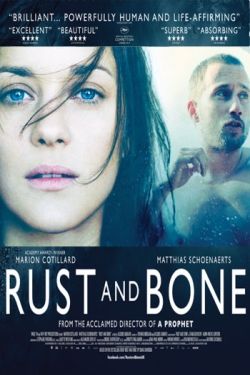
Rust and Bone (2012)


Matthias Schoenaerts and Marion Cotillard in an unusual romantic drama

Director: Jacques Audiad

Cast: Marion Cotillard (Stéph), Matthias Schoenaerts (Ali), Armand Verdure (Sam), Corinne Masiero (Anna), Céline Sallette (Louise), Bouli Lanners (Martial)

Audiad’s films combine cinematic artistry with profound, sometimes elliptical, character studies that provoke great work from talented actors. Rust and Bone is no exception.

It’s the plot of a melodrama, staged like social-realism. Written down it sounds like the purest Hollywood schlock: crippled killer whale trainer Stéph (Cotillard) enters into a friendship that grows deeper with would-be kickboxer Ali (Schoenarts), who has a troubled relationship with his 5-year-old son. But the realistic portrayal of the pain of losing your limbs (in a scene of raw intensity from Cotillard) and Ali’s troubled homelife, penchant for casual sex and occasional resorting to violence when frustrated, pegs the film style farcloser to a hard-edged Bicycle Thieves. The film also has a lyrical poetry about it, as their relationship gently develops from friends with benefits to genuine feeling, which stops it from feeling gritty or hard-edged.

The film’s main strength is the brilliance of its two leads. Cotillard is outstanding as a passionate free-spirit whose entire world ends overnight. Her expressive face carries a host of confused feelings which shift and reform across her like a human kaleidoscope. Stéph’s vulnerability is married with a great strength of character, but Cotillard avoids many of the clichés of movie paraplegics by making her a woman who adapts without anger to her new condition. Instead, after overcoming depression, Stéph is looking actively (and with a curiosity) for something new to fill her life with.

Cotillard is so wonderful in the role, it’s very easy to overlook Schoenaerts’ skilful underplaying and Brandoish physical mastery. Ali is, I’ve got to be honest, a hard character to like – selfish, childish, in many ways thoughtless, blunt and fixated on himself. He’s also a terrible dad. Not malicious or cruel, just easily bored and frustrated with his kid. This frustration appears with anyone who doesn’t react the way he wants – “You’re so annoying!” he whines at both Stéph and Sam. Despite this, Schoenaerts’ is the heart of the movie. The film is his story, and he makes a difficult character engaging enough to carry the audience with him.

Rust and Bone is a film constructed around brilliant scenes and striking moments. In a wonderful sequence, Stéph repeats the arm signals she used to train the whales: at first she seems sad, then a warmth of enjoyment crosses her face. It’s the prompt for her to revisit the zoo, but the visit seems bittersweet: we see hugs with her friends, but Audiad cuts out the dialogue, adding to Cotillard’s own confused feelings about her return. Later she visits the whale that crippled her. Her mood here (with the camera to her back) is hard to read – is she forgiving the whale? Is she saying goodbye to this part of her life? Moments like this work so well because of the brilliance and humanity of the performances of both leads and Audiad’s patience and control as a filmmaker.

Audiad packs this beautiful film with moments like this. I particularly liked the bookend images he uses for each act. Each sets up the act thematically, from a bloodied tooth spinning on a pavement to the cover of a transit van flapping in motion. Audiad bathes the film in a series of cool blue colours, interspersed with flashes of light at moments of suggested revelation. He also has the discipline not to belabour the points of scenes or hammer home the feelings of characters (sometimes leaving you wanting more definition for the emotions they experience).

For a film immersed (to a certain degree) in a social realist world, there are odd gaps in logic: after throwing Ali out of her home (at gun point!) over his serial disregard for Sam, his indirect responsibility for her losing her job and his stroppy temper, would Anna really happily allow Sam to visit him a few months later? The disappearance of Stéph for much of the final reel of the film also pulls the focus from the central relationship and makes the final ending both rather sudden and slightly pat, out of step with the rest of the movie.

Audiad does bring a degree of engaging ambiguity to the story. The relationship between Ali and Stéph is intriguingly hard to define. She seems drawn to him for his lack of guile and his treatment of her disability with a matter-of-factness free of pity or embarrassment (qualities that linger around many of her other interactions). However, shifts in her character over the course of the film are deliberately kept low-key and open-ended, allowing moments where she surprises herself and the audience with the strength of her feeling. Similarly, the lack of depth in Ali’s personality makes his emotional development halting and discordant – he is attracted to her physically, but which qualities in her cause those feelings to deepen? It’s not immediately clear watching it – and I suspect many viewers would have different opinions from watching this curiously inscrutable film.

It’s a thoughtful film, but somehow never quite as moving as you expect. I think a lot of your connection with it depends on how much you feel Ali deserves redemption, or if you can forgive the constant stream of selfish and thoughtless things he does. I’m not quite sure I did. Similarly Stéph remains, for all the expressive humanity Cotillard brings to her, strangely unknowable.

That’s partly the problem with the film. Despite its beauty, it’s a little too enigmatic to be completely engaging. Wonderfully shot, and strangely haunting as it is, I think this is one every viewer will have a personal reaction to. I can imagine many would be deeply moved by its blue-tinted mystery and fragile dissection of damaged souls. For me it didn’t quite have the impact I think the film needs, and I didn’t feel this love story quite coalesced into a something truly profound in itself. It’s a beautifully made and intelligent film but not one I fell in love with – though I can imagine many people have.