Tag: Mark Ruffalo

Mickey 17 (2025)

Mickey 17 (2025)

Indulgent, over-long satire that mixes painfully obvious political targets with on-the-nose comedy

Director: Bong Joon-Ho

Cast: Robert Pattinson (Mickey 17/Mickey 18), Naomi Ackie (Nasha Barridge), Steven Yeun (Timo), Toni Collette (Ylfa Marshall), Mark Ruffalo (Kenneth Marshall), Patsy Ferran (Dorothy), Cameron Britton (Arkady), Daniel Henshall (Preston), Stephen Park (Agent Zeke), Anamaria Vartolomei (Kai Katz), Holliday Grainger (Red Haired recruiter)

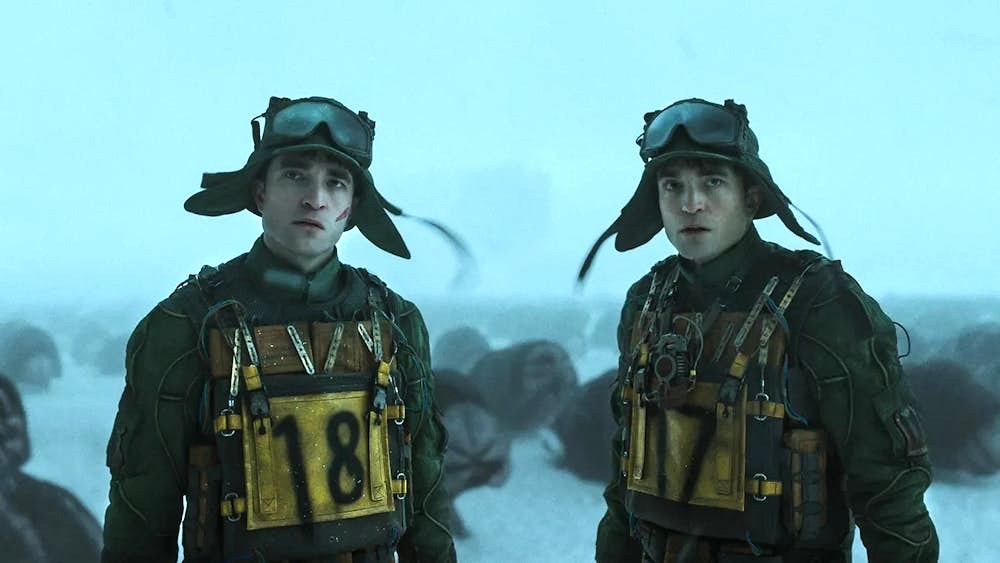
In 2050, everyone on the colony ship to the planet Niflheim has a job. Even a washed-up loser like Mickey (Robert Pattinson). His job is the most loserish of all: he’s an ‘expendable’, hired to die repeatedly in all forms of dangerous mission or twisted scientific and medical experiments, with a new body containing all his backed-up memories rolling out of the human body printer. The one rule is there can never be more than one Mickey at a time – so it’s a problem when 17 is thought dead and the more assertive 18 is printed: especially as they are flung into a clash between the colonisers and Niflheim’s giant grub-resembling lifeforms ‘Creepers’. Can Mickey(s) prevent a war that the colony’s leader, a failed politician and TV-star Kenneth Marshall (Mark Ruffalo) and his socialite wife Ylfa (Toni Collette), want to provoke?

It’s all thrown together in Bong Joon-Ho’s follow-up to Parasite which trades that film’s sharp, dark social satire and insidious sense of danger for something more-like a brash, loud, obvious joke in the vein of (but grossly inferior to) his Snowpiercer. Mickey 17 is awash in potentially interesting ideas, nearly all of which feel underexplored and poorly exploited over the film’s whoppingly indulgent runtime of nearly two-and-a-half hours, and Bong lines up political targets so thuddingly obvious that you couldn’t miss these fish-in-a-barrel with a half-power pea-shooter.

Mickey 17 actually has more of a feel of a director cutting-lose for a crowd-pleaser, after some intense work. Mickey 17 is almost a knock-about farce, helped a lot by Robert Pattinson’s winning performance as the weakly obliging Mickey 17 who grows both a spine and sense of self-worth. A sense of self-worth that has, not surprisingly, been crushed after a lifetime of failure on Earth leads him to series of blackly-comic deaths (the film’s most successful sequence) that has seen him irradiated and mutilated in space, gassed with a noxious chemical, crushed, incinerated and several other fates.

Not surprisingly, there is a bit of social commentary here: Mickey is essentially a zero-hours contract worker, treated as sub-human by the businessmen and scientists who run this corporate-space-trip. It’s an idea you wish the film had run with more: the darkly comic idea of people so desperate to find a new life that they willingly agree to have that life ended over-and-over again as the price. It’s not something Mickey 17 really explores though: right down to having Mickey sign on due to his lack of attention to contract detail (how interesting would it have been to see a wave of migrant workers actively pushing for the job as their only hope of landing some sort of green card?).

Mickey 17 similarly shirks ideas around the nature of life and death. Questions of how ‘real’ Mickey is – like the Ship of Theseus, if all his parts are replaced is he still the ship? – don’t trouble the film. Neither does it explore an interesting idea that each clone is subtly different: we’ve already got a clear difference between the more ‘Mickey’ like 17 and his assertively defiant 18, and 17 references that other clones have been more biddable, anxious or decisive. Again, it’s a throwaway comment the film doesn’t grasp. Neither, despite the many references to Mickey’s unique experience of death (and the many times he is asked about it) do questions of mortality come into shape: perhaps because Mickey is simply not articulate or imaginative enough to answer them.

Either way, it feels like a series of missed opportunities to say something truly interesting among the knock-about farce of Mickey copies flopping to the floor out of the printer, or resignedly accepting his (many) fates. Especially since what the film does dedicate time to, is a painfully (almost unwatchably so) on-the-nose attack on a certain US leader with Mark Ruffalo’s performance so transparent, they might as well have named the character Tonald Drump. Ruffalo’s performance is the worst kind-of satire: smug, superior and treats it’s target like an idiot, who only morons could support. It’s a large cartoony performance of buck-teeth, preening dialogue matched only by Toni Collette’s equally overblown, ludicrous performance as his cuisine-obsessed wife.

Endless scenes are given to these two, for the film to sneer at them (and, by extension, the millions of people who voted Trump). Now I don’t care for Trump at all, but this sort of clumsy, lazy, arrogant satire essentially only does him a favour by reminding us all how smugly superior Hollywood types can be. So RuffaTrump fakes devout evangelical views, obsesses about being the centre of attention, dreams of his place in the history books while his wife is horrified about shooting Mickey because blood will get on her Persian carpet. It’s the most obvious of obvious targets.

It’s made worse that the film’s corporate satire is as compromised and fake as the conclusion of Minority Report. It’s a film where a colonialist corporate elite defers to a preening autocrat, keeps its colonists on rationed food and sex and sacrifices workers left-and-right for profit. But guess which body eventually emerges to save the day? Yup, those very corporate committee once they learn ‘the truth’. Mickey 17 essentially settles down into the sort of predictably safe Hollywood ending, with all corporate malfeasance rotten apples punished. For a film that starts with big anti-corporate swings, it ends safely certain those in charge will always do the right thing when given the chance.

Much of the rest of Mickey 17 is crammed with ideas that usually pad out a semi-decent 45 minute episode of Doctor Who. Of course, the deadly, giant insect-like aliens are going to turn out to be decent, humanitarian souls – just as inevitable as the mankind bosses being the baddies. It’s as obvious, as the film’s continual divide of its cast list into goodies and baddies.

Mickey 17’s overlong, slow pacing doesn’t help. An elongated sequence with Anamaria Vartolomei’s security guard who has the hots for Mickey 17 (every female in the film, except maybe Collette, fancies him proving even losers get girls if they look like Robert Pattinson) could (and should) have been cut – especially as that would also involve losing an interminable dinner-party scene with Ruffalo and Collette. The final sequence aims for anti-populist messaging and action – but is really just a long series of characters saying obvious things to each other. Despite Pattinson’s fine performance – and some good work from Ackie – Mickey 17 is a huge let-down which, despite flashes of Bong’s skill, feels like a great director cruising on self-indulgent autopilot, taking every opportunity for gags over depth or heart. Not a success.

Poor Things (2023)

Poor Things (2023)

Distinctive, challenging and hilarious film that mixes social issues with quotable dialogue

Director: Yorgos Lanthimos

Cast: Emma Stone (Bella Baxter/Victoria Blessington), Mark Ruffalo (Duncan Wedderburn), Willem Dafoe (Dr Godwin Baxter), Ramy Youssef (Max McCandles), Christopher Abbott (Alfie Blessington), Kathryn Hunter (Madame Swiney), Jerrod Carmichael (Harry Astley), Hanna Schygulla (Martha von Kurtzroc), Margaret Qualley (Felicity), Vicki Pepperdine (Mrs Prim), Suzy Bemba (Toinette)

“It’s Alive!” cries Frankenstein as his creation is sparked to life before abandoning it to become a revenging monster. Yorgos Lanthimos’ Poor Things imagines a different creature – nurtured (admittedly as part of an eccentric experiment), maturing at an accelerated rate, discovering physical and intellectual stimulation and deciding they can’t get enough of either of them. Adapted from Alastair Gray’s novel, Poor Things is a vibrant and challenging film that, for all its sex, is a feminism-tinged Frankenstein that says no to societally enforced ideas of shame and conformity.

In Victorian London, Bella Baxter (Emma Stone) is the creature, a stumbling, barely articulate young woman when she is introduced to trainee doctor Max McCandles (Ramy Youssef) by her guardian (her “God”) Dr Godwin Baxter (Willem Dafoe). “Bella” is resurrected corpse – the body of a suicidal pregnant woman, the brain of the child she carried. Developing at an accelerated rate, Bella is both Godwin’s experiment and his surrogate child. But as Bella discovers the pleasures of the body and the wonders of the world around her, she wants to experience life outside of the house. Eloping – with the agreement of her guardian – with roguish lawyer Duncan Wedderburn (Mark Ruffalo), Bella discovers not only sensual pleasures but deeply engaging intellectual pleasures across Europe, determined to become her own woman defined by no-one.

Poor Things is practically a dictionary definition of a Lanthimos epic (fish-eyed lenses, spidery text captions, a jarring mix of period and modern) and is almost impossible to categorise. It is, in turn, serious and thought-provoking, laugh-out-loud funny, uncomfortable and challenging. Shot in a deliberately artificial manner, its cinematography and sets reminiscent of Bram Stoker’s Dracula, it’s Victorian but also a remix of everything from Metropolis to the mansion at the heart of Sunset Boulevard, here turned into a Dr Moreau style den of freakishly spliced animals. It makes for something wildly, unpredictably unique visually, a smorgasbord of the real, the overblown and plain weird.

With a sharp script by Tony MacNamara, crammed with quotable lines (sometimes Lanthimos has a bit too much of an eye on creating GIF moments) Poor Things reinvents itself as constantly as its hero. Opening in rich black-and-white to chronicle Bella’s early years, it explodes into a gorgeously expressive Powell and Pressburger colours as she experiences the world. It superbly mixes the real with the weird, shaping its collection of bizarre characters into living-breathing people while keeping the world around them a melting-pot of styles and genres.

Poor Things has been attacked by some as semi-pornographic or exploitative. In fact, it’s a complex and daring look at female empowerment. On first discovering the pleasures of, well, self-pleasure (with a selection of vegetables), Bella is immediately told such things are not done in polite society. But Bella refuses to see “furious jumping” as shameful, but just a source of pleasure and experience like any other. If she takes pleasure in the act with someone, why should be ashamed? And if she makes all the decisions about what does and doesn’t happen with her body, who should judge her?

Bella is a curious hybrid her whole life: the body and feelings of an adult, with a swiftly developing brain, absorbing understanding of the world around her swiftly. Like a child she lashes out at the rules Godwin and his protégé Max place over her (partly for her protection, partly to continue their psychological development experiment). But this comes from her increasing frustration at having her horizons limited by these men, deciding what and who she can see. Lanthimos takes clear from the start Bella can take as much sensual pleasure in feeling fallen leaves under her body or watching fireworks in the sky as anything else and doesn’t feel she should be denied it.

Poor Things sees Bella demanding, and then making, her own decisions – and to hell with expectations. Whether throwing plates at dinner because she wants to leave or choosing to run away to Europe with caddish Duncan for the experience of it, she shall make her own choices. Decisions being made for her, infuriate her: Max’s refusal to let her leave or Duncan’s decision to take her, unannounced, on a cruise. Bella will talk to who she wants and experience anything she finds curious. If she decides to go on the game in Paris in a high-class brothel (on the basis that she enjoys sex, the hours are short and it pays well) who gives a damn if Duncan is appalled. He doesn’t – for all he might like to think so – own her.

These are complex and challenging ideas, as Bella jokes she has become “the means of her own production”. But Bella believes the only thing in the world should make us ashamed is the suffering of others: witnessing a slum in Alexandria she is moved to tears at the indifference that lets children die in poverty, with only platitudes for these “poor things”. And you can see her point: why flinch at personal misconduct but not even blush at the idea of others dying because of our inaction. That’s why she doesn’t want to be constrained by societies ideal, be that enjoying sex, reading Marxism, dancing all night long or wanting to punch a baby that won’t stop crying in a restaurant.

All these complex ideas are brilliantly captured in Emma Stone’s extraordinary performance. It is, of course, a physical marvel, her body slowly, jerkily, developing, but also a rivetingly complex embodiment of a hugely complex personality, absorbing everything around her, processing it and then shaping it into her own world view. It’s reflected in the gorgeous eccentricity of her dialogue – she is “a changeable feast” of views, peppering her sentences with astute (and funny) unique metaphors “finding being alive fascinating”. She makes Bella determined, naïve, exceptionally wise and insightful, uncertain, kind and unforgiving. It sits perfectly at the heart of a film about a woman refusing to be ashamed and determined to better the world around her. It’s a brilliant creation.

One of many in the film. Godwin, a hideously disfigured famous surgeon, was the subject of his own father’s experiments (Godwin describes with matter-of-fact scientific curiosity a series of repugnant surgical experiments, including the removal of organs to discover if the body needs them – “turns out we do”). Godwin seems at first a blinkered mad scientist, but in Dafoe’s brilliantly layered performance, a humanitarian with a sense of fair play is revealed, who genuinely cares for his creation and refuses to stand in her way. Although she calls him “God” he is far from a messianic tyrant, instead refusing to repeat the mistakes of his own tyrannical parent.

He contrasts neatly with Ruffalo’s rake. Ruffalo has a whale of a time in a ‘leave nothing in the locker room’ performance of comedic excess. Duncan seems at first a threatening rake, but becomes infatuated with the mysterious Bella (something she finds more and more wearing), crumbling from worldly-wise playboy to a spoilt schoolboy whining about things he can’t have. Ruffalo inverts Bella’s development: as she becomes more mature, he degenerates into a dependent child.

Which fits because Poor Things is a Frankenstein-in-reverse story of a woman not being defined by men. Those who try fail, left to choose either to support her or flail against her rights. Lanthimos’ work is striking, original and hugely dynamic, brilliantly mixing striking visuals with searching questions. Why shouldn’t women feel the same lack of shame in their bodies and accomplishments as Bella does? It’s an urgent question – that’s getting lost in discussions about the films. Often as wildly funny as it is freakily weird, its deliberate artificiality and anachronisms help create a film that is a playground of ideas. I’m still working out what I feel about it all now – and how refreshing to have a film as bold as that to consider?

Zodiac (2007)

Zodiac (2007)

A chilling chronicle of the hunt for a serial killer told with a superb mix of journalism and filmic flair

Director: David Fincher

Cast: Jake Gyllenhaal (Robert Graysmith), Mark Ruffalo (Inspector Dave Toschi), Robert Downey Jnr (Paul Avery), Anthony Edwards (Inspector Bill Armstrong), Brian Cox (Melvin Belli), Elias Koteas (Sergeant Jack Mulanax), Donal Logue (Captain Ken Narlow), John Carroll Lynch (Arthur Leigh Allen), Dermot Mulroney (Captain Marty Lee), Chloë Sevingy (Melanie Graysmith), John Terry (Charles Thieriot), Philip Baker Hall (Sherwood Morrill), Zach Grenier (Mel Nicolai)

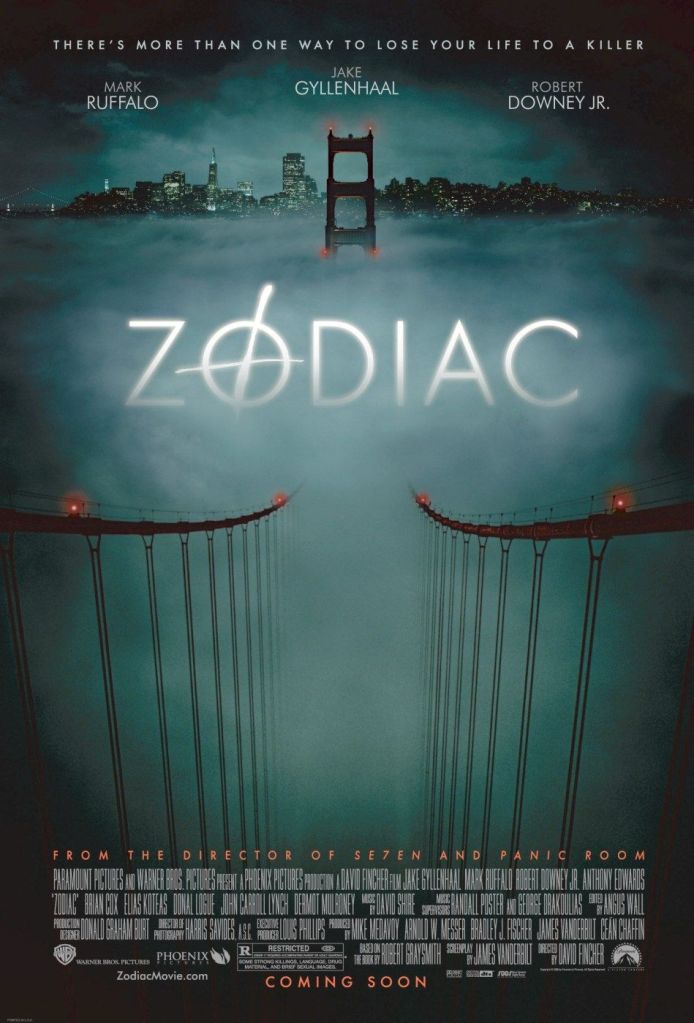
It’s one of the great unsolved mysteries of American history, like San Francisco’s version of Jack the Ripper. For a large chunk of the late 60s and early 70s, a serial killer known only as “the Zodiac killer” murdered at least five (and claimed 37) innocent people, all while sending mysterious, cipher-filled letters to San Francisco newspapers, taunting police and journalists for failing to catch him and threatening further violent acts. The investigation sifted through mountains of tips and half clues but only produced one possible suspect, Arthur Leigh Allen: though no fingerprint or handwriting match could conclude a case.

The story of the hunt for this elusive killer, stretching into the 1980s and concluding with another dead-end coda in 1992, is bought to the screen in a film from David Fincher that expertly mixes cinematic flair with journalistic observation. Channelling All the President’s Men and 70s conspiracy thrillers as much as it does the dark obsession of Fincher’s Seven, Zodiac is a master-class not only in the bewildering detail of large-scale investigations (in the days before computer records and DNA evidence) but also the grinding, destructive qualities of obsession, as those hunting the Zodiac killer struggle to escape the shadow of a case that grows to dominate their lives.

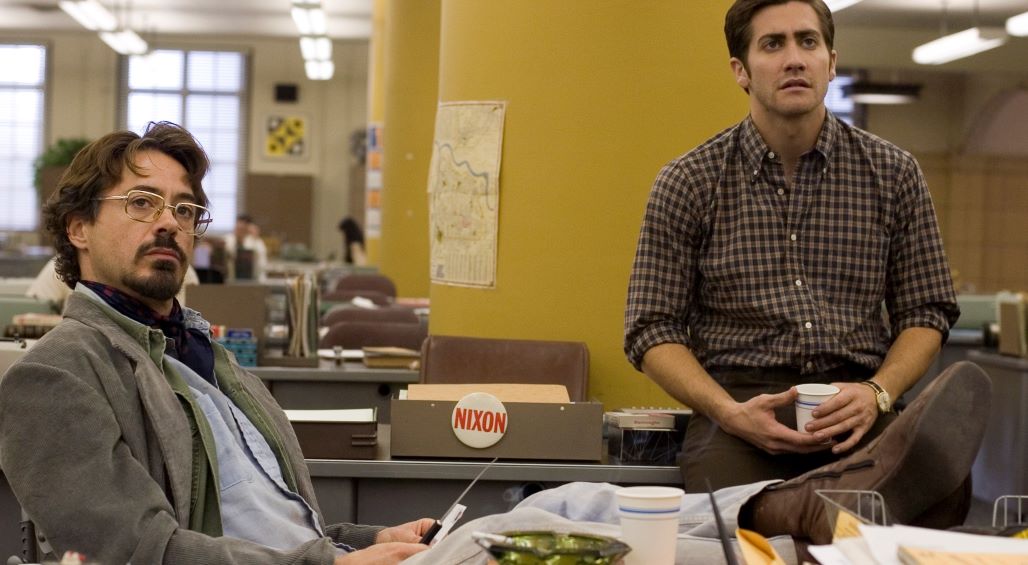
Zodiac focuses on three men, all of whom find their lives irretrievably damaged by their investigation. At first, it seems the drive will come from Robert Downey Jnr’s Paul Avery. Avery is the hard-drinking, charismatic, old-school crime correspondent on the San Francisco Chronicle. In a performance exactly the right-side of flamboyant narcissism, Downey Jnr’s Avery is a man who likes to appear like he takes nothing seriously, even while the burden of the case (and a threat to his life from the Zodiac killer) tips him even further into a drink habit that is going to leave him living in a derelict houseboat, in a permanent state of vodka-induced intoxication.

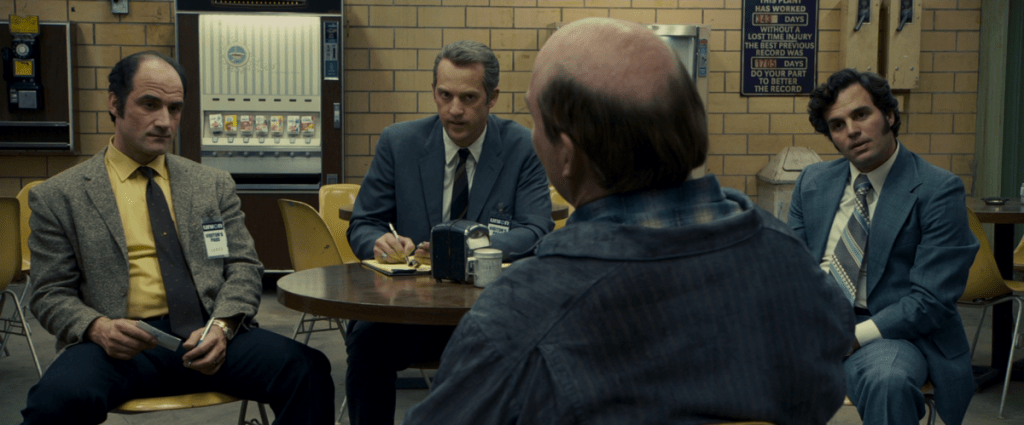
The second is Inspector Dave Tosci, a performance of dogged, focused professionalism from Mark Ruffalo. He’s confident he’ll find his man, and will go to any lengths to do it, staying on call night and day, and hoarding facts about the case like a miser. He relies more than he knows on level-headed, decent partner Bill Armstrong (played with real warmth by Anthony Edwards). Tosci’s self-image and belief slowly crumble as every lead turns dead end, every gut instinct refuses to be backed by the evidence. The killing spree becomes his personal responsibility, a cross he bears alone for so long that when a belated letter from Zodiac surfaces in 1978, his own superiors believe Tosci sent it in some vain attempt to keep a cooling case alive.

Our third protagonist, present from the arrival of the very first Zodiac letter at the door of the Chronicle, is Jake Gyllenhaal’s Robert Graysmith. A quiet, studious, teetotal political cartoonist who is literally a boy scout, Graysmith spent a huge chunk of the 70s and 80s trying to crack the case, eventually turning his investigation into a best-selling book. It’s Graysmith who becomes the focus of Fincher’s investigation of obsession. The glow of monomania is in Gyllenhaal’s eyes from the very start, as the cipher and its deadly message spark a mix of curiosity and moral duty in him. He feels compelled to solve the crime, but it’s a compulsion that will overwhelm his life. The Zodiac is his Moby Dick, the all-powerful monster he must slay to save the city. (“Bobby, you almost look disappointed” Avery tells him, when Avery suggests some of the Zodiac’s murderous claims are false, as if reducing the wickedness of the Zodiac also reduces the power of Graysmith’s quest.)

The real Graysmith commented when he saw the film, “I understand why my wife left me”. It’s a superb performance of school-boy doggedness, mixed with quietly fanatical, all-consuming obsession from Gyllenhaal, as the film makes clear how close he came (closer than almost anyone else) to cracking the case, but nearly at the cost of his own sanity. Graysmith pop quizzes his pre-teen children on the case over their breakfast (a far cry from, at first, his instinct to shield his son from the press coverage) and as he becomes increasingly unkempt, so his house more and more becomes a mountain of boxes and case notes.

It’s the secondary theme of Zodiac: how obsession doesn’t dim, even when events and evidence drop off. The second half of the film features very little new in the case (which peaked in the early 70s) but focuses on the lingering impact of the ever more desperate and lonely attempts to solve it. Armstrong, the most well-adjusted of the characters, perhaps knew it was a hopeless crusade when he threw his cards in and left the table after a few years to spend time with his children while they grew up. Avery cashes out as well – even if his health never recovers. Tosci is cashiered from the game, and even Graysmith finally realises the impact on him.

That second half of the film is long. Too long. It also, naturally, leaves us with no ending – a sad coda that hints at the guilt of primary (only) suspect Arthur Leigh Allen, but gives us (just like the surviving victims) no closure. It’s fitting, and deliberate, but still the only real flaw of Zodiac is that, at 150 minutes, it’s too long. The deliberate draining of life from the case, like a deflating balloon, also impacts the narrative, which consciously drops in intensity (and, to a degree, interest – despite Gyllenhaal’s subtle and complex work as Graysmith). It’s even more noticeable considering the compelling flair with which Fincher delivers the first half of his scrupulously researched film.

Fincher and screenwriter James Vanderbilt spent almost 18 months interviewing everyone involved with the case. Nothing was included in the film unless it could be verified by witnesses. That included the crimes of the Zodiac: only attacks where there were survivors are shown, the only minor exception being Zodiac’s murder of a taxi driver (where only distant eye-witnesses were available) – even then, every event is confirmed by ballistics and no dialogue is placed into the mouth of the victim. The film also acknowledges the unknown nature of the Zodiac killer: each time the masked killer appears in recreations of his crime he is played by a different (masked) actor, subtle differences in build, tone of voice and manner reflecting the contradictory eye-witness statements. These chilling scenes are shot with a sensitivity that sits alongside their horrifying brutality. Fincher felt a genuine responsibility to reflect the horror of what happened, but with no sensationalism.

Instead, he keeps his virtuoso brilliance for the investigation. The newspaper room filling with the super-imposed scrawl of the Zodiac killer, while the actors read out the words. Restrained but hypnotic editing, carefully grimed photography, camera angles that present everyday items in alarming new ways, a mounting sense of grim tension at several moments that makes the film hard to watch. A superb sequence surrounding the Zodiac’s demand to speak to celebrity lawyer Melvin Belli (a gorgeous cameo from Brian Cox), first on a live TV call-in show, then in person (a “secret meeting” swamped by armed police, which Zodiac, of course, doesn’t turn up to). This is direction – aided by masterful photography (Harris Savides) and editing (Angus Wall) – that immerses us in a world (like drowning in a non-fiction bestseller), while never letting its flair draw attention to itself.

Zodiac was a box-office disappointment and roundly forgotten in 2007. It’s too long and loses energy, but that’s bizarrely the point. It implies, heavily, that Allen (played with a smug blankness by John Carroll Lynch) was indeed the killer, but doesn’t stack the deck – every single piece of counter evidence is exhaustingly shown. In fact, that’s what the film is: exhaustive in every sense. It leaves you reeling and tired. It might well have worked better, in many ways, as a mini-series. But it’s still a masterclass from Fincher and one of the most honest, studiously researched and respectful true-life crime dramas ever made. And just like life, it offers neither easy answers, obvious heroes or clean-cut resolutions, only doubts and lingering regrets.

The Kids Are All Right (2010)

The Kids Are All Right (2010)

Questions of family, up-bringing and sexuality are explored with tenderness and a great deal of wit in this thought-provoking family drama

Director: Lisa Cholodenko

Cast: Annette Bening (Nic Allgood), Julianne Moore (Jules Allgood), Mark Ruffalo (Paul Hatfield), Mia Wasikowska (Joni Algood), Josh Hutcherson (Laser Allgood), Yaya DaCosta (Tanya), Eddie Hassell (Clay), Zosia Mamet (Sasha)

Nic (Annette Bening) and Jules (Julianne Moore) Allgood are just like any other married couple after years of living together and raising two children: seemingly contented, settled in their ways and routines, missing some of the passion they had in the beginning, locked into their designated roles in the marriage. Nic is the dedicated doctor (with a slight drink problem) whose alpha personality dictates much of how the household is run; Jules is the more relaxed, more bohemian figure, who has rotated through several possible careers while raising their children.

Those children are inadvertently about to shake things up. Both mothers have each given birth to one of the children, using sperm from the same anonymous donor. Older daughter – straight A high-school graduating Joni (Mia Wasikowska) – is Nic’s child; slightly slacker, sports-fixated son Laser (Josh Hutcherson) is Jules’. But both children are curious about who their father is: and, with Joni now old enough to request the information, they discover him to be local bohemian restauranteur Paul (Mark Ruffalo). Meeting Paul – and bringing him into their family life – opens up cracks in their parents’ marriage which will have far-reaching consequences.

Some from the LGBTQ community criticised Lisa Cholodenko’ film on its release for presenting a lesbian marriage in such a largely conventional way. In many ways though that is in fact its strength. This engaging dramady doesn’t see anything unusual or unworldly about a lesbian marriage: in fact it shows that the problems that can beset long-term heterosexual marriages are just as likely to happen in homosexual ones. Nic and Jules are essentially – even if they don’t realise it at first – stuck in a rut. The passion has largely gone after years, the knowledge that you need to make an effort has evaporated, too many conversations are about household and parental duties. Jules quietly, almost unknowingly, resents what she sees as Nic’s dominance in their lives, while Nic privately feels she pulls much more weight in keeping things running. Not that they consciously realise this at first, in conversations that drip with in-jokes and a very casual familiarity (both Bening and Moore are superb at embodying a relationship that has become so long-term it has developed its own language).

But into this drops a bombshell in Paul. Wonderfully played by Mark Ruffalo, Paul is relaxed, playful, optimistic and upbeat. To some in the family – in particular Jules and Joni – he is everything that the more uptight and regimented Nic is not. No wonder these two both find themselves drawn to him. Unfortunately, nice guy that he is, Paul is also superbly unruffled by consequences. Events roll off his back. At first this seems like a great thing. He’s patient, understanding and thoughtful when talking to the kids. He helps the uptight Joni to relax. He gives helpful advice to Laser about his unpleasant friend Clay. But his lack of thought about his actions is there from the start (Laser, astutely, is disappointed in his first impression of Paul as self-obsessed). His advice for Joni openly encourages her to defy Nic’s boundaries. He accompanies Laser to watch Clay attempt a dangerous skating stunt like he’s a bro not a dad. And then there is Jules.

The film also drew fire from the LGBTQ community for presenting one half of its normalised lesbian couple entering into an affair with a man. But for Jules, it’s clear, the relationship is really about getting the sort of attention, focus and (to be honest) sexual interest that Nic seemed to stop giving her a long time ago (at one point, Nic prepares a luxurious bath for Jules – but then takes a phone call from work and abandons the promised massage for work). Paul is flirty, sensual and horny: sure he’s a man, but he can give her the sort of sexual pleasure that absent-minded fondlings with Nic late at night no longer even begin to give.

But that’s all it really is to Jules – a sudden, unexpected craving. There is no doubt that her heart belongs to Nic – just as there is no doubt that both she and Nic will be devastated when the affair comes out. (Cholodenko shoots Nic’s realisation beautifully. During a “family dinner” with Paul, the sound drains out during a fixed shot on Bening’s face which pained, heartbroken realisation and anger crosses across. It’s a tour-de-force for Bening that probably went a long way to securing her Oscar nomination). Paul, conversely, seems supremely unaware of the likely impact of his actions – during that family dinner he shows no compunction about bonding for the first time with Nic (who relaxes as we have never seen before until the truth is revealed) over a mutual love for Joni Mitchell.

Paul is, unknowingly, the serpent in the garden that will unbalance the careful equilibrium in the family. Nic is hostile to him from the start, his presence seeming to play into deep rooted insecurities and a fear of being supplanted. For Jules he presents an exotic alternative chance – a relationship with someone who feels accommodating and deferential to her. It blows open the comfortable but familiar rut the two of them are in. In the cracks, Jules becomes distracted and selfish, Nic doubles down on drinking and demands for obedience to her family rules.

If it sounds heavy going, it surprisingly isn’t. Cholodenko (sharing script writing with Stuart Blomberg) throws in plenty of jokes and moments of sweetness. Bening and Moore are both incredibly good in the lead roles: Moore is bubbly, relaxed, sexy but sad deep down dissatisfied and surprisingly selfish. Bening seems at first merely a domineering control freak with a drink problem, but she is revealed as deeply fragile, loving and devoted, a woman whose love is expressed in ways the objects can find overbearing, however well meaning they are. (Wasikowska and Hutcherson are both also great as their kids.)

The Kids Are All Right bubbles with some well judged moments of comedy, drama and tragedy. This is a film, eventually, about the strength of family. Paul may tempt with his care-free optimism and consequence-free thinking. But this film sides, overwhelmingly, with people like Nic who may sometimes make you want to tear your hair out, but will be there time and again, day-after-day, offering love in a way people like Paul never can. Laser and Joni may tease her, may bridle at her rules – but they love her unconditionally, in a way the film shows us with gestures small and large time and again. So, for that matter, does Jules: her actions grow from wanting a more overt return on the affection she more naturally gives.

It’s a film that wears its heart firmly and shamelessly on its sleeve, as it urges us to both recognise and empathise with this fundamentally loving marriage going through a rough patch. And by normalising families like this, it sends a strong message of inclusivity: after all, if we all share the same problems, doesn’t that all help us realise we are the same?

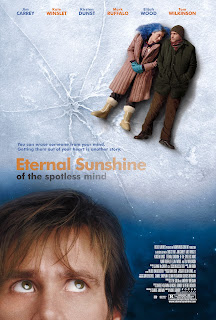
Eternal Sunshine of the Spotless Mind (2004)

Eternal Sunshine of the Spotless Mind (2004)

An impulsive decision leads to a wild tour through mind and memory in this mind-bending, desperately romantic classic

Director: Michel Gondry

Cast: Jim Carrey (Joel Barish), Kate Winslet (Clementine Kruczynski), Kirsten Dunst (Mary Svevo), Mark Ruffalo (Stan Fink), Elijah Wood (Patrick Wertz), Tom Wilkinson (Dr Howard Mierzwiak), Jane Adams (Carrie Eakin), David Cross (Rob Eakin), Dierdre O’Connell (Hollis Mierzwiak)

What makes us who we are? If it’s anything, it might just be the sum total of our experiences. The events of our lives, and the emotions they cause in us, shape and define us. If we cut some of them away, what would we be? Is losing painful memories worth it, if we also cut away memories we cling to as treasured possessions? What makes us love someone: instinct or the sum total of our memories with them? Ideas around this and how love works are at the centre of Michel Gondry and Charlie Kaufman’s extraordinarily inventive, imaginative but also romantic and heartfelt Eternal Sunshine of the Spotless Mind, a truly original film crammed with rewarding moments.

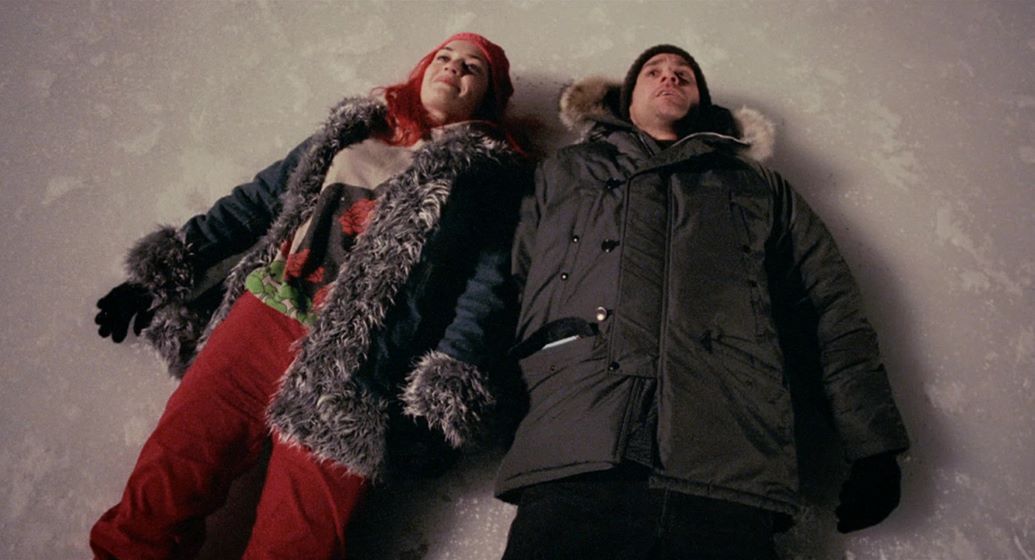
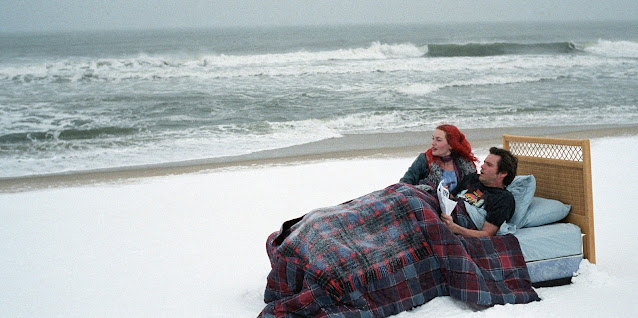
Joel Barish (Jim Carrey) wants to make-up with his electric but troubled girlfriend Clementine Kruczynski (Kate Winslet). Imagine his pain when he goes to see her and she seems not to recognise him – and how much worse that might be when he discovers Clementine has erased him from her memory. An experimental surgery, Lacuna, run by Dr Howard Mierzwiak (Tom Wilkinson), offers its clients an unmatchable service: they will erase a person from your memory. Struggling to get over the loss of a partner, wife, friend, child or even dog? No problem, they’ll be gone from your mind and you never need worry about their memory causing you pain again.

Hurt and angry, Joel decides to undergo the same surgery to forget Clementine. While the procedure takes place over night – supervised by techs Stan (Mark Ruffalo) and Patrick (Elijah Wood) and Stan’s girlfriend (and Dr Mierzwiak hero-worshipper) Mary (Kirsten Dunst) – Joel comes to realise in his sub-conscious that he doesn’t want his memory stripped of Clementine. The cost of losing so many good memories isn’t worth it. In his sub conscious he tries to protect his memories – while in the real world the team battle to complete their contract and erase them.

Not many films like that are there? Gondry’s film could have been a slave to its concept. Instead though, it manages to juggle its deeper meanings with a truly heartfelt, winning and very sweet human story about two people who, for all their faults, become people you completely invest in. Kaufman’s script, as you would expect, triumphs as a complex and inventive magic tour but it’s also a wonderfully placed romance and heartfelt relationship story. Effectively the film manages to have something for everyone to invest in, from sci-fi nerds to lovers of romcoms to philosophy students.

It’s also a triumph of style. Set largely in Joel’s mind, the film reflects the fractured nature of the surgery as his memories are assaulted, deconstructed and destroyed. Lights fade, buildings disassemble and disappear, faces melt away from bodies and memories start to crash into each other. In his mind Joel walks through a door in a library to find himself on a beach, or rounds a corner to find himself back in his childhood memories. All of this is filmed with a series of stunning in-camera effects that make characters disappear, duplicate or seem to be in several places at once, all shot in a series of one-take effects that sees buildings disappear in front of us or fascinating memory loops. Visually the film is a feast, a tribute to Gondry’s playful imagination.

But it sticks with people because of the heart at the centre of it. Joel and Clementine become people we care about. We root for Joel to defy the odds and preserve some of his memory. Because, the film makes clear, being consciously aware of his memories being deleted is basically like going through the pain of losing her a second time – only this time knowing you won’t even be left with the parts you want to hold onto. In fact – re-enforced by the distress we see in Clementine when we see her undergoing the panic of being subconsciously aware of memory loss in the real world – Joel’s horror of what he has asked for is likely what all the other patients of Lacuna’s ‘brain damage for your own good’ surgery have gone through.

Superbly played by Jim Carrey and Kate Winslet in cast-well-against-type performances, Joel and Clementine might at times be selfish, frustrating, even irritating people – but it’s clear their love for each other is real. Jim Carrey, dialling down his gonzo mania to an unprecedented degree, is perfect as the shy and gentle Joel, bewitched by this explosive presence in his life. Winslet is electric – cranky, brittle, damaged but also caring and playful. Kaufman’s film shows they hurt and snap at each other, but also that they bring each other happiness they can’t get anywhere else.

So, it comes back to that question: do we accept that part of the price of loving and living is pain? That the people who we love the most, are the ones that may also hurt us the most. The film is also clear that love can’t be forced or replicated. In the ‘real world’ Clementine is being wooed by Elijah Wood’s creepily needy techie, using his records of her romantic memories of Joel to replicate their special moments. The falseness of this isn’t a remote match for the true emotion of the real event: and it’s a testament to the film’s commitment that you can’t forge or force love, and that eventually it might just find a way.

Because, even without our memories, will we still be drawn towards the same people? Can love in fact survive, even if you don’t know who the person who love is anymore? It’s another fascinating thread in this film. Romantic couples throughout find themselves drawn to each other continually, a subconscious emotion surviving the purging of actual memories. It adds even more to the horrific trauma of seeing what’s happening to Joel here. His obvious distress as he realises the implications of what he rashly asked for – and there is plenty of suggestion Clementine feels the same – gets worse and worse as he realises he has signed away his own rights to decide who he loves.

Those ethical questions – is it even possible to make an informed decision here about lobotomizing your memory – mix with those philosophical questions of what makes us what we are. Will Joel and Clementine be the same people or not after this operation? How will they adjust to losing such a hugely important part of their histories? Especially as they won’t even know that they have. Kaufman’s script explores this all carefully, but never once losing track of the emotional story driving it.

So Eternal Sunshine becomes a touching love story, about two people going to huge ends against impossible odds to stay together. That, I think, is what lies behind its appeal. What makes it one of the most lasting films of the 00s is the invention and flair the story is told with – Gondry’s direction and its non-linear structure all only add to the fabulous script from Kaufman and Gondry – and the way it very lightly tackles a whole host of fascinating ideas while never losing track of its nature as an entertainment. It’s a brilliant film.

Spotlight (2015)

SPotlight header
Ruffalo, McAdams, Keaton and James head up the investigation into the church in Spotlight

Director: Tom McCarthy

Cast: Michael Keaton (Walter “Robby” Robinson), Mark Ruffalo (Michael Rezendes), Rachel McAdams (Sacha Pfeiffer), Brian d’Arcy James (Matt Carroll), Liev Schreiber (Marty Baron), John Slattery (Ben Bradlee Jnr), Stanley Tucci (Mitchell Garabedian), Billy Crudup (Eric MacLeish), Jamey Sheridan (Jim Sullivan), Paul Guilfoyle (Peter Conley), Len Cariou (Cardinal Bernard Law), Neal Huff (Phil Saviano)

True villains are hard to spot: those clothed in good deeds are particularly well hidden. Few clothe themselves in good deeds more effectively than priests – and the small minority who use their positions of trust and power to abuse vulnerable children. It’s an unforgiveable, abominable betrayal that has ruined the lives of thousands of victims around the world. This century, the Catholic Church was rocked by a scandal: many in the church hierarchy were all too aware of these appalling acts, but protected priests from exposure rather than submitting them to well-deserved punishment. It took the work of crusading journalists to lift this veil and force the Church to begin to change its policy from protecting priests to protecting children.

The story was bought to wider attention by the dedicated work of the Boston Globe’s Spotlight team – the US’s finest investigative journalist team, a small team of reporters who work for months at one story. Boston is a firmly Catholic city, where the Church still holds a huge influence over the lives of its population. For years, faint suspicions of misconduct from any of the nearly 1,500 priests in the city was hushed up. It takes the arrival of an outsider at the Boston Globe – the paper’s unassuming new Jewish, Floridian editor Marty Baron (Liev Schreiber) – to push the Spotlight team to delve deeper into this story. He finds plenty of support from the team – respected editor “Robby” Robinson (Michael Keaton), the passionate Michael Rezendes (Mark Ruffalo), dedicated and empathetic Sacha Pfeiffer (Rachel McAdams) and increasingly disgusted Matt Caroll (Brian d’Arcy James). Using tried-and-trusted journalistic methods, passionate investigation, archival work and winning the confidence of survivors, the team piece together a systematic cover-up by the Catholic Church that extends all the way to the Vatican.

Spotlight scooped the Oscar for Best Picture (along with an Oscar for its brilliantly researched screenplay). It feels like a late Oscar partly awarded in memory of All the President’s Men, the film that Spotlight bears the most relation to. But, even more so than Pakula’s film, this is a low-key, reserved but strikingly effective and engrossing film that takes an almost documentary approach to the patient work required to uncover a story (no Deep Throat here) and the grinding shoe leather needed to get there. Fittingly, given the tragic story the team were reporting on, Spotlight is almost totally devoid of histrionics (there is at best one scene where a member of the team gets angry – only to be met with a quiet “are you done?”), instead being a tribute to the professionalism and integrity of journalists powered, but never overwhelmed by, their anger.

McCarthy’s film is refreshingly free of flourish or over-emphasis. It’s brave enough to let the story speak for itself, and trusts the viewer to understand both the emotional weight of abuse and the feelings of those involved without resorting to dramatic speeches or tearful dialogue. The details dominate – searching through archives for old newspaper clippings, waiting for access to court papers, days spent reading over a decade of parish records. Nothing is earned cheaply: every revelation the result of patient leg-work and following where the story leads without agenda or bias.

Agenda is something these journalists are deeply aware of. All of the team were raised in the faith to one degree or another, with strong roots in a community. The team’s leader, Robby, is an esteemed alumnus of a Catholic school one of the guilty priests worked at when he was a child – a revelation that quietly leads him to question both his implicit turning of a blind eye, but also how only a single man’s choices prevented him from becoming a victim. There is discomfort throughout the Boston Globe at the story – assistant Editor Ben Bradlee Jnr (a fine performance from John Slattery), while supportive of the team, is prickly at revelations that the Globe had previously not followed up reports of abuse and is deeply unhappy at the thought of accusing the Church itself.

The power of the Church in communities like this is subtly, but brilliantly, depicted. The film opens in the 70s with a paedophile priest having his actions being quietly hushed up by the police after the intervention of an ADA. Virtually every important person in the city is a Catholic and, like Robby, has been bought up and schooled in the Church. In exterior shots, McCarthy’s camera constantly frames churches on the edges of shot, their spires visible over residential blocks. The scale of the power of this institution – its reach and influence – is constantly demonstrated. It’s a big challenge for the team to take on – and one which they are not even sure their readers are ready to read about.

But McCarthy’s film isn’t crude. It’s made clear that these priests are a minority – 6% – and the anger is not with faith itself, but with the flawed and wrong decisions taken by men (the psychologist the team consults, an ex-priest, makes clear his faith is not shaken by his discoveries, only his trust in the institution). Equal care is given to the victims themselves. Their stories are reported by two characters in the film, each time with a careful lack of over-emphasis and a quiet, yet emotional, honesty. No attempt is made to sensationalise any of this.

And the film also makes clear that everyone is in some way complicit in this. The Globe has failed to report it. The police and government have covered it up. People might whisper about it – or say a particular priest is “dodgy” – but no one has made an effort to rock the boat and find out about it. Instead, victims are paid off, priests are moved to new parishes and everyone tries to carry on as normal. It’s a grimy and quiet conspiracy – miles away from the Grisham-esque danger the film’s trailer suggested – rather a collective failure of moral responsibility.

The film’s low-key approach, professionalism and absorption in how people do their jobs is deeply engrossing. Few things, after all, are as involving as watching highly professional people execute their jobs flawlessly. The performances are superb. Michael Keaton gives possibly the finest performance of his career – surely connected to it being his most restrained – as the team’s leader, whose sense of personal guilt and regret quietly build along with determination. Ruffalo (Oscar-nominated) is fantastic as his passionate, committed colleague (he gets the one shouting scene). McAdams delivers quiet empathy and powerful intelligence. Schreiber confounds expectations as the numbers man who emerges as a dedicated searcher for the truth.

The truth is exposed – but it’s just a tip of the iceberg. The story might be out there, but as the film shows in its coda, the struggle goes on. Crusading maverick lawyer Mitchell Garabedian (Stanley Tucci, very good) can’t celebrate the story’s publication – he’s got two child victims he needs to talk to. Cardinal Law (a fine performance of assured, misguided, certainty from Len Cariou) is promoted to the Vatican. Similar scandals emerge across the world. But the problem doesn’t go away. Just as the story needs time and work, the same qualities are needed to reform the Church.

Spotlight is quiet, engrossing and finely moving and triumphant film-making. It focuses brilliantly on professionalism and dedication producing results and shows that hyperbole and embellishment are not needed for outstanding drama. Told with documentary realism, acted with reserved grace and skill, McCarthy’s film is a call-back to 1970s film-making in the best possible way. A deserved winner and a small triumph.

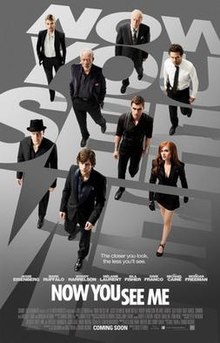
Now You See Me (2013)

A gang of magicians get up to all sorts of antics in light and empty caper Now You See Me

Director: Louis Leterrier

Cast: Jesse Eisenberg (J Daniel Atlas), Woody Harrelson (Merritt McKinney), Isla Fisher (Henley Reeves), Dave Franco (Jack Wilder), Mark Ruffalo (Agent Dylan Rhodes), Mélanie Laurent (Agent Alma Dray), Morgan Freeman (Thaddeus Bradley), Michael Caine (Arthur Tressler), Michael Kelly (Agent Fuller), Common (Agent Evans)

Sometimes the simplest tricks are the best. Remember David Blaine? All his huge illusions and stunts weren’t worth thruppence compared to the simple awe of watching him perform card tricks in front of stunned regular folks in the streets. This film is pretty much the same, a dazzlingly shot con-trick of a film that wants to reveal a stream of tricks that it was holding up its sleeves over its runtime, each twist being less and less impactful. The most magic thing in this is the sleight of hand card trick Jesse Eisenberg performs at the start of the film – after that it’s like watching your soul drain away over two hours under an onslaught of wham-bam twists.

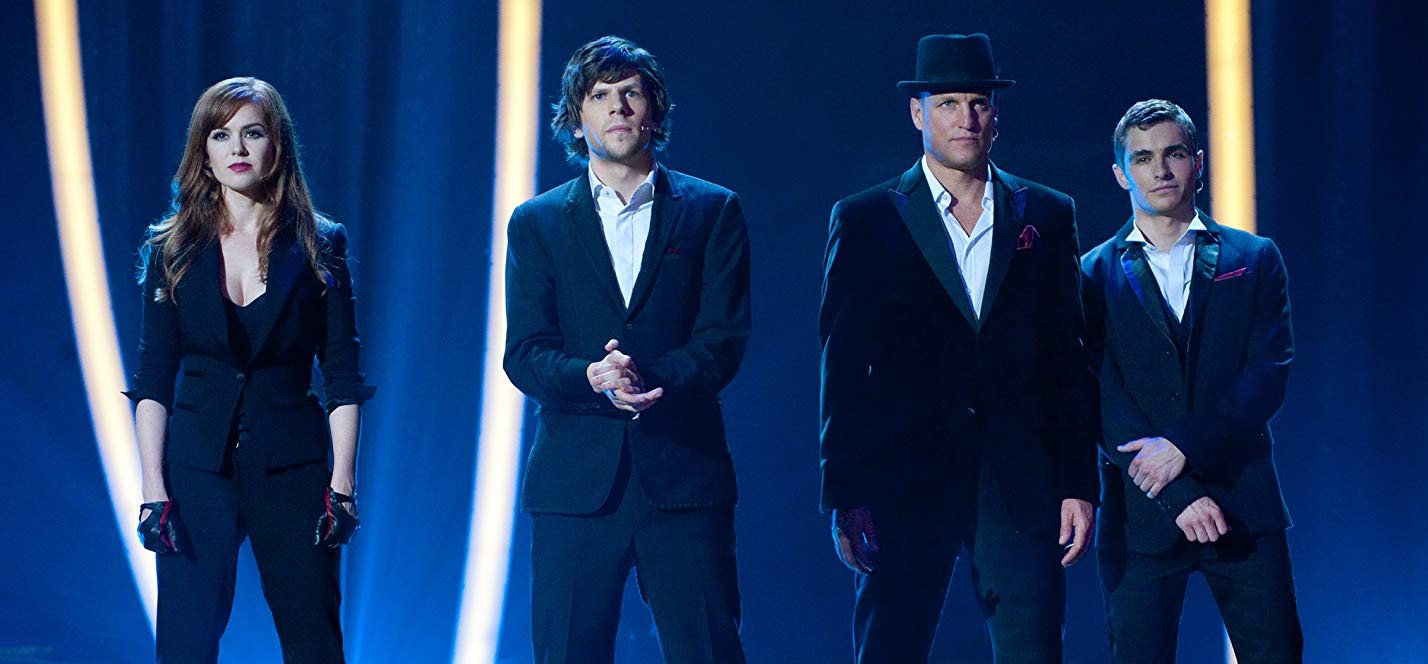
Anyway, J Daniel Atlas (Jesse Eisenberg), Merritt McKinney (Woody Harrelson), Henley Reeves (Isla Fisher) and Jack Wilder (Dave Franco) are a ragtag bunch of professional magicians, hypnotists, stunt performers and conmen who are recruited by a shadowy magical organisation known only as The Eye for reasons unknown. One year later they are performing huge stadium gigs, with the support of millionaire insurance man Arthur Tressler (Michael Caine), as The Four Horseman. During their first show they magic millions of Euros out of a bank in Paris while performing in Las Vegas – a stunt that attracts the attention of the FBI and Interpol who send agents Dylan Rhodes (Mark Ruffalo) and Alma Dray (Mélanie Laurent) to investigate. Meanwhile, the Horsemen are on the run from the law, and still working towards ends unknown, while dodging magic debunker Thaddeus Bradley (Morgan Freeman). But is anything as it seems?

The answer of course is no. But then what do you expect from a film that proudly announces (frequently) “the closer you look, the less you will see”. It’s a pretty good message for the film – but not in a good way – as Now You See Me is as insubstantial as air, a puff of showmanship so pleased with its twists and tricks that it completely fails to have a heart. By the time we get to the end of the film and realise almost everything we saw over its runtime wasn’t real you’ll feel disconnected rather than engaged.

In fact, as a heist/con movie, this isn’t that good. The formula depends on you thinking you’ve got it worked out and then BOOM you realise you didn’t. It also by and large depends on charming, playful leads (think Newman and Redford in The Sting) and on a sort of consistent logic where you get the satisfaction of pieces you didn’t even notice falling into place as vital clues. Now You See Me does none of this.

In fact, it’s so pleased to tell you that it pulled the wool over your eyes that it rushes several of its reveals with an indecent haste. It largely fails to sprinkle clues throughout the film and basically plays unfair with the whole audience. There are things you can never hope to work out as they are based on not being shown vital clues early on. Characters and the film carefully never reveal any hints of true allegiances or motivations until the last possible minute.

In fact it’s one of those films where most of the characters are, for large chunks of time, really pretending to be someone else. This can work, but it doesn’t here as most of the Horsemen are basically rather unlikeable arrogant arseholes. The four actors mostly coast through basic set-ups, and you’ll be pleased when they fade into the background in the second half of the move (all four of them are basically decoy protagonists, and the film shelves them when it can no longer think of a way of hiding their true motivations in plain sight any more). The real lead is actually Mark Ruffalo’s FBI agent, and Ruffalo is a charming, likeable, schleppy presence that you can root for, even if the plot takes us on a character journey with him that makes no real sense (the clue for this is the film’s references to a magician who buried a card in a tree years earlier for one trick). 

It’s flashy in its film making, and Leterrier has a workmanlike touch with making things look cooland putting the camera in interesting places. He has no real idea of character or pacing – the film is frequently quick, quick, slow – and he creates a film here that has nowhere near the brains it thinks it has. It’s all flash and no substance. Look too closely and you’ll see nothing there.

Avengers: Endgame (2019)

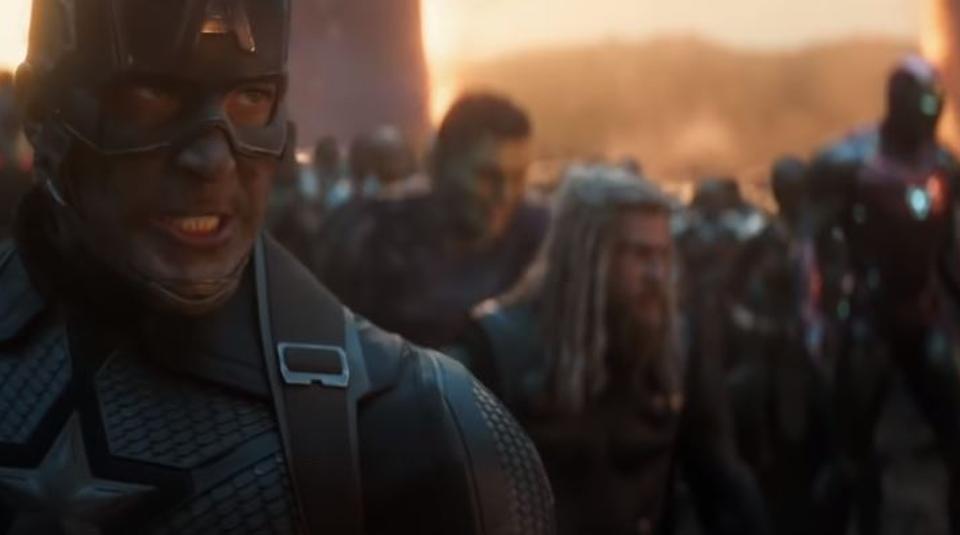
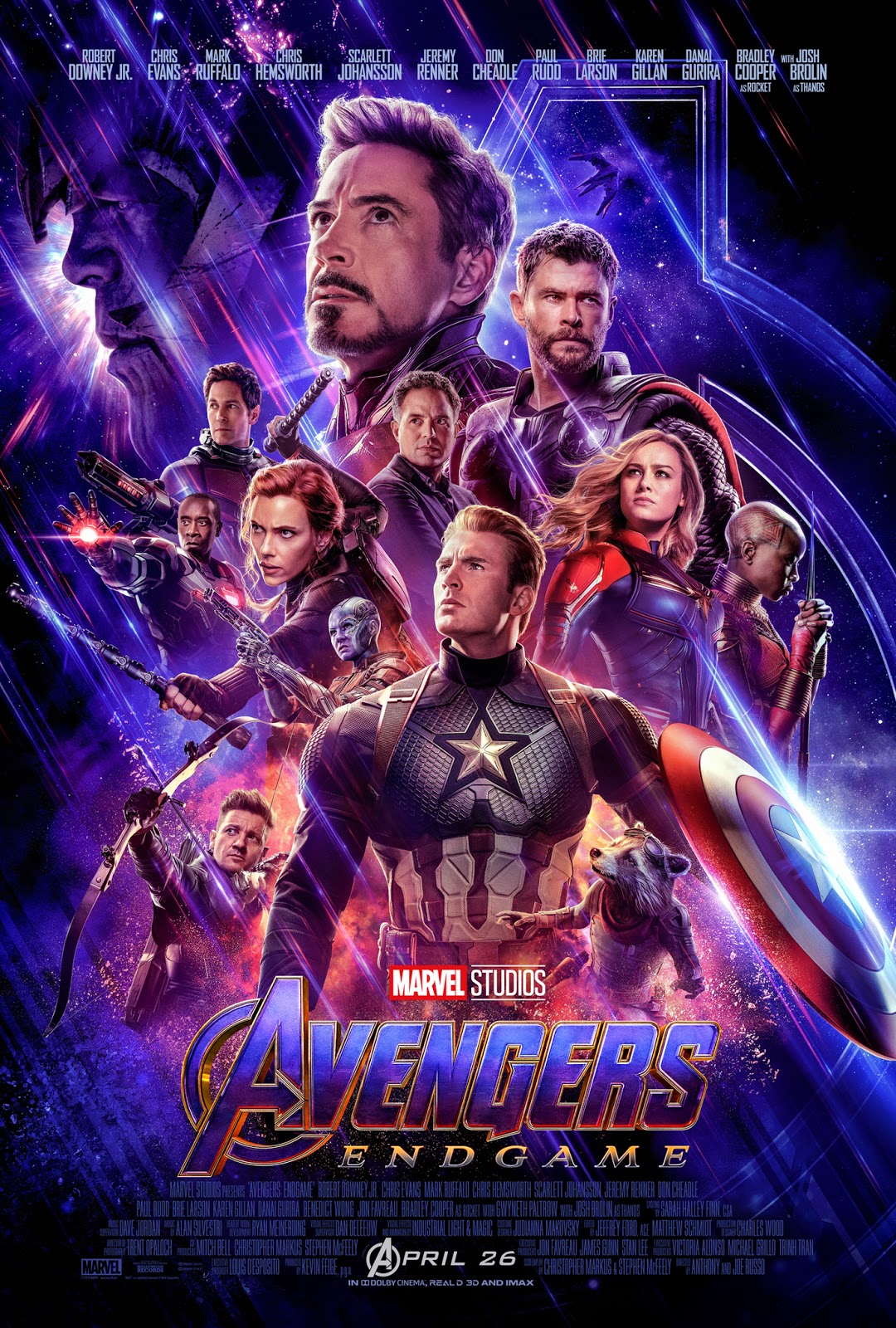
Time to got to work: Avengers: Endgame caps off a 22 film series

Director: Anthony and Joe Russo

Cast: Robert Downey Jnr (Tony Stark), Chris Evans (Steve Rodgers), Mark Ruffalo (Bruce Banner/Hulk), Chris Hemsworth (Thor), Scarlett Johansson (Natasha Romanoff), Jeremy Renner (Clint Barton), Don Cheadle (Rhodey), Paul Rudd (Scott Lang), Karen Gillan (Nebula), Bradley Cooper (Rocket), Gwyneth Paltrow (Pepper Potts), Josh Brolin (Thanos), Zoe Saldana (Gamora), Danai Gurira (Okoye), Brie Larson (Carol Danvers), Chadwick Boseman (T’Challa), Benedict Cumberbatch (Dr Stephen Strange), Tom Holland (Peter Parker), Evangeline Lilly (Hope van Dyne), Anthony Mackie (Sam Wilson), Elizabeth Olsen (Wanda Maximoff), Chris Pratt (Peter Quill), Sebastian Stan (Bucky Barnes), Rene Russo (Frigga), John Slattery (Howard Stark), Tilda Swinton (Ancient One), Robert Redford (Alexander Pierce), Linda Cardellini (Laura Barton), Tom Hiddleston (Loki), Tom Vaughen-Lawlor (Ebony Maw)

So this really is it. For now. As Dr Strange says at one point “we are into the Endgame now”. Avengers: Endgame is Act Two of the Marvel Cinematic Universe’s ten-years-in-the-making finale. It’s also a sequel that, for me, enriches and improves the “bangs before brains” Infinity War. Where that film played too hard to the fanboy wet dream of seeing X teaming up with Y and lots of bashing, Avengers: Endgame focuses more on the intelligent character work and decent acting and writing that has underpinned what has turned what used to be the preserve of geeks into a franchise now almost universally beloved across the world.

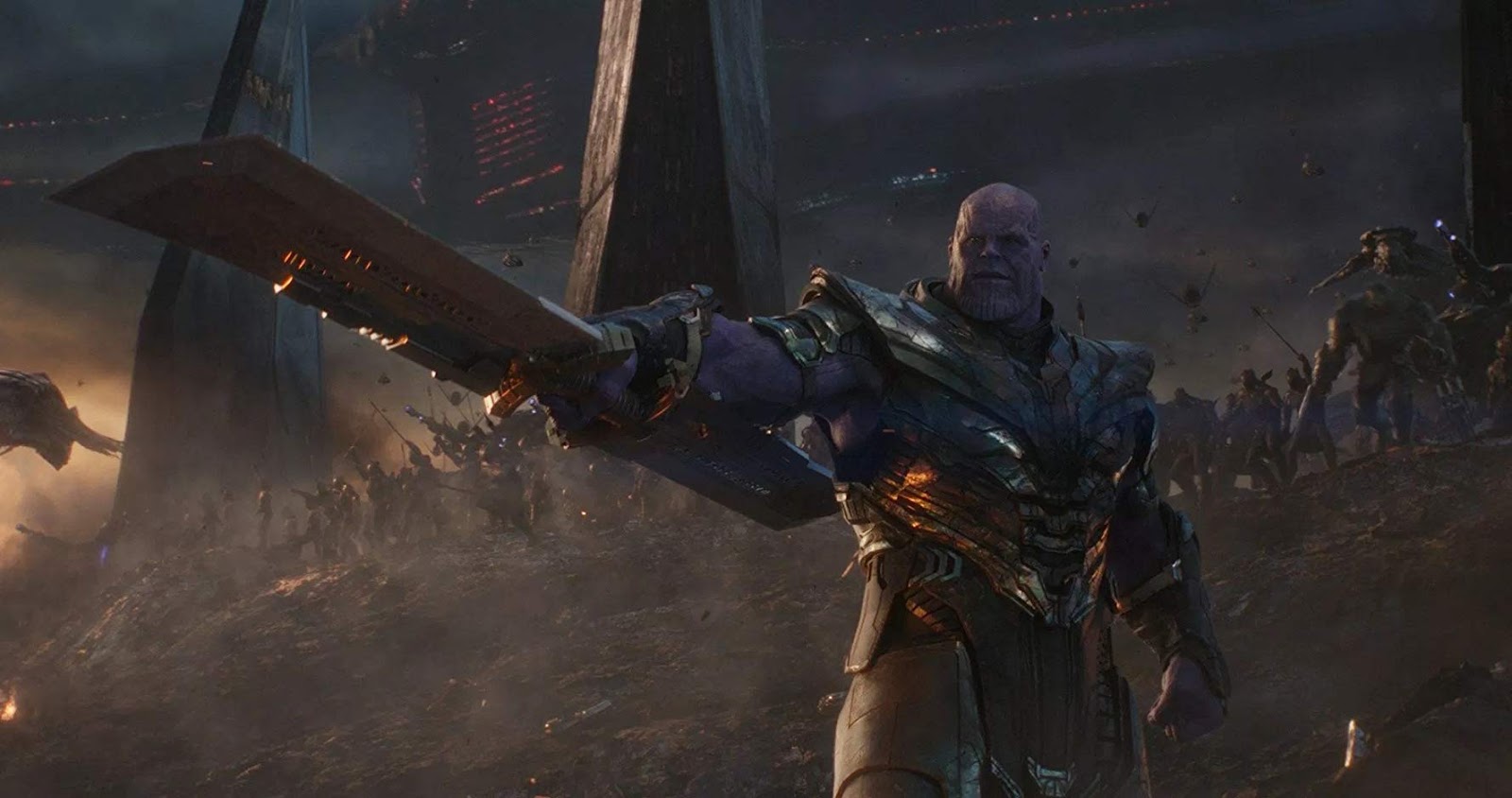
The film picks up almost immediately after über-Baddie and misguided-humanitarian Thanos (James Brolin) has successfully used the powers of the infinity stones (a series of mystical macguffins that have been omnipresent in the series so far) to wipe out half of the population of the universe to save it from overpopulation, including dozens of our heroes. Those that remain – predominantly the original roster from the first Avengers film – must work together to find a way to overturn this destruction that Thanos has wrought. But more sacrifices are inevitable along the way.

Avengers: Endgame is a film that the less you know about where it is going, the more you are likely to enjoy its twists and turns. Viewers who may have been anticipating a series of increasingly brutal smackdowns between the Avengers and their nemesis Thanos will however be disappointed. This is not a film of acative avenging: it’s a film where our heroes cope with the burden of unbearable failure, survivor guilt, PTSD and are desperate to try anything to try and make amends. Surprisingly, for the biggest budget entry in the whole cannon, this feels like a smaller-scale, character driven film which carries far bigger (and realistic) stakes than several films earlier in the franchise.

For the opening two hours of this three hour epic, there is actually precious little in the way of action. Instead we explore individual reactions and struggles of each of our heroes. Some have slumped into depression. Some are struggling to move on. Others have shut down and focus on their work. Some have managed to put their past failure and loss behind them to rebuild their lives. Others have embraced the darkness altogether to extract a revenge upon the world that they feel has taken everything from them. It’s a real change of pace from the high octane action and smart banter of the first film. This feels more earned, more invested and more designed to engage our brains and emotions rather than pound us into joyful submission with its bangs and crashes.

In fact it builds back into what has made this franchise so successful and so beloved. It turns these heroes into people, rather than just monoliths of action. Way back in the day, when making the first Iron Man film, Kevin Feige said if they got the film right the name “Tony Stark” would become as famous as “Iron Man”. It sums the aims of the franchise up – that these should be real people to us rather than just comic book cartoons. If we think of Chris Evans, we think of him as being “Steve” not Captain America. Jeremy Renner is as well-known as Clint Barton as “Hawkeye”. If Scarlett Johansson is addressed as Natasha we don’t blink an eye in the film, in the way we would if she was called “Black Widow”. The Hulk can be calmly addressed as Bruce or Ant Man as “Scott” and we never think it strange. In fact it would feel odd to have them calling each other by their cartoon names. It’s normalised the personalities behind the badges and masks.

And that works so well because the writing, when it works, focuses on making these characters feel real – and the actors they have brought on board to fill out the roles have excelled at adding depth and shading to the roles. Chris Evans will probably forever by the noble, dedicated humanitarian Steve Rodgers and rightly so as he has turned this potential stick-in-the-mud into a person we deeply respect and love. He’s terrific here, marshalling a plot arc that brings his time in this crazy franchise to an end with a neat bow that feels fitting and fair (even if it’s got some logic gaps).

Robert Downey Jnr also does some excellent work in his final sign off from the series. The role here plays to all the strengths Downey Jnr has brought to the role:  the smartness, the intelligence, the slight smugness, the charisma. But also the vulnerability and longing to be genuinely loved and to build a family around him. The desire to protect people. The nobility under the off-the-cuff exterior. Downey Jnr’s departure was well advertised and again it works a treat here.

But then the whole cast are marvellous. Hemsworth gets to stretch his comic muscles even more than his regular ones, and balances marvellously a plot about a hero who has lost his way. Scarlett Johansson gets some of her meatiest material as Natasha, unable to fully take on board what has happened but determined to make amends. Jeremy Renner has some of the film’s darker material – and confirms that he has always been the heart of the team – with a plot line that hinges on the loss of his family. Mark Ruffalo’s Bruce Banner is presented in an intriguing new light that both delights and feels like a real rounding up of his character arc.

The eventual plan to underdo the work of Thanos revolves, it’s not a spoiler to say, around Time Travel. With a run, jump and leap the Russo Brothers acknowledge every cliché of time travel lore from dozens of films (Rhodes and Lang at one point hilariously name check virtually every time-travel-based film ever as back-up for their concerns about the mission) before basically throwing it all out of the window by making up its own rules (since, hey, time travel is impossible anyway so why not say all that “you could kill your own grandfather” stuff is bollocks?).

The time travel allows us to fly back into the plots and events of several other Marvel films, principally the first Avengers film, Guardians of the Galaxy and (hilariously considering it might be the worst one) Thor: The Dark World. This flashback structure works extremely well, with our heroes woven neatly into the events of films past – as well as allowing for “unseen” moments from those films to be staged here for the first time.

For a film that, up until now, has dealt with the pain of loss it also makes for a playful series of missions (or at least until one of them turns out to carry huge personal cost) that contrasts really well with the first half. The missions focus on a “heist” structure also gives us the chance for our heroes to work through the demons, often with the help of several (deceased) characters from past films living again (Rene Russo in particular gets easily her best ever scenes in the series as Thor’s mother in the past urging her son to come to terms with his guilt).

All this intelligent and emotional character work, mixed with sequences that are focused less on action and more on adventure and capery means that when we get the inevitable battle scenes at the end of the film – and I don’t think it’s a spoiler to say most of the film’s final act returns us to the action beats that governed Infinity War – actually feel really earned. Having reminded ourselves why we loved many of these characters in the first place, seeing them fight for good and do incredibly cool things while doing it suddenly feels both really earned and also hugely entertaining. Investment in these action scenes grows from the detailed work earlier.

It’s also a testament to the Russo Brothers direction. I will say right away that while I found part of Infinity War lacking in personality and identity behind the camera, I think I massively overlooked how effortless the Russo brothers make balancing all these plot lines, characters and events seem. Never once does the film seem to dip or droop the ball, and I don’t think there are many directors who could even begin to manage what they achieve here: a fusion of popcorn action with character study, which juggles 20-40 characters at various points. My hat sirs.

Avengers: Endgame is a delightful film. I went into it sceptical after Infinity War left me a little cold, but I needn’t have been so concerned. This is a film that, on its own merits, is almost a sort of masterpiece. Have you ever seen a film that juggled so much – not least the crushing expectation of its fans – and delivered so superbly? Chalk that up as another success for the Russos just turning in a film that the huge fanbase loved. Avengers: Endgame isn’t Citizen Kane – but just as the Russos couldn’t make a film as great as that, you can’t imagine Orson Welles would ever have managed to direct a film like it.

Collateral (2004)

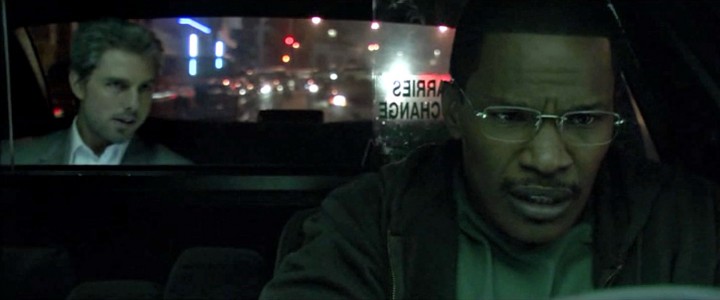
Tom Cruise and Jamie Foxx take a long taxi ride in Michael Mann’s thriller Collateral

Director: Michael Mann

Cast: Tom Cruise (Vincent), Jamie Foxx (Max Durocher), Jada Pinkett Smith (Annie Farrell), Mark Ruffalo (Detective Ray Fanning), Peter Berg (Detective Richard Weidner), Bruce McGill (Frank Pedrosa), Irma P. Hall (Ida Durocher), Barry Shabaka Henley (Daniel Baker), Javier Bardem (Felix Reyes-Torrena)

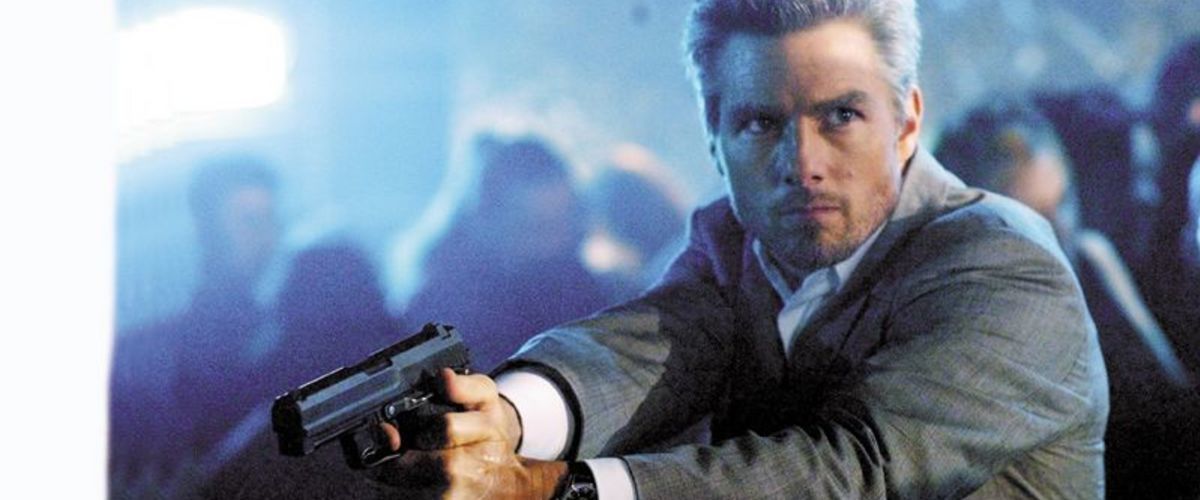
Tom Cruise enjoys throwing us film-goers curveballs every now and again. In Collateral he pops up as a sociopathic hitman, grey of hair and suit (like a buzzcut, rampaging John Major) leaving bodies strewn about the place. It’s great to see him in Michael Mann’s lean, very enjoyable action thriller, looking as sleek and soulless as the rest of LA.

Cruise’s Vincent is a hitman in LA to knock off a list of targets. But how will he get from hit to hit? Why by hiring a taxi driver for a night: risk-averse dreamer Max (Jamie Foxx) who has been working “temporarily” as a taxi driver while he builds plans for his dream limo business for a mere 12 years. Max is thrilled to have a big spender in his car – until something goes wrong on hit #1 and a body lands on his cab. Max no has no choice but to assist Vincent – although Vincent ends up becoming more attached to Max than he might ever have imagined.

Mann shot his film on a high-definition video and it gives a very unique look at LA, really capturing the hazy yellows and cool blues of the city and giving everything in the picture a slightly grainier, starker look. But that would count for nothing if the story of the film wasn’t pretty good, and Collateral is a very effective action thriller, which doesn’t reimagine the genre but offers more than enough freshness to enliven the familiar elements it’s made up from. 

Its main assets (along with Mann’s cool, detached and pin-point sharp direction) are the performances of its two leads. Cruise is just about bang-on as a professional hitman, devoid of empathy, who finds surprising possibilities of friendship open in front of him. He’s a fascinating character, like someone who has spent so long studying people that he can just about replicate human reactions, without understanding the humanity behind them. Cruise’s obsessive preparation for his roles also help makes him flawlessly convincing as this lethal ubermensh.

Foxx however is just as good as a basically decent, friendly, low-key guy who is kidding himself that he is not drifting through life. It’s Max’s story we follow throughout the film – and it’s his sense of personal morality, his strict belief in right and wrong, that gives the film its dramatic force. Foxx also avoids undermining or laughing at Max, who is basically a man so buttoned up and cautious that (without a major push) he’ll clearly die of old age in that cab. 

These two characters thrown together have a curious chemistry – a sort of riff on the casual bonds that can develop between driver and passenger as they talk about their lives, views and interests. It’s not a friendship – certainly not in Max’s case – but it’s a strange sort of bond nevertheless. Vincent, you feel, hasn’t talked to many people like this – and while he’s still willing to threaten Max or put him at great risk, he still develops a strange protectiveness about him. It’s this quirky and different relationship that powers the film and finally makes it unique. This odd couple don’t overcome boundaries to become bosom friends, but they also don’t come together as fierce rivals. Instead they sort of work out a co-existence in that cab.

It’s the most interesting thing about a film that otherwise – to be honest – deals a pretty familiar deck with confidence. Sometimes the film plays its cards so well you overlook them – the first time I watched it, I was semi-surprised at the reveal of the final victim, but really it should be pretty obvious to anyone who has seen a movie before. The plot is full of moments like this that are played with a freshness – or with a cunning – that stops them from feeling familiar.

But that’s really what it is. The journey around LA from hit-to-hit is a familiar sounding idea. The encounters between Vincent and the targets are pretty familiar – the exception being a fascinating, and hard to read, encounter with Barry Shabaka Henley’s jazz player turned informant, which sizzles with tension – and the action scenes, while well staged, are the sort of shoot-outs we’ve seen before. Mann shoots them with a vibrant excitement, but it’s mostly B-movie stuff presented freshly.

What it comes down to is that relationship between those two characters, and the skill of director and actor in drawing out subtleties in performance. (Don’t listen by the way to the director’s commentary, which ruthlessly strips these subtleties away as Mann bangs on about heavy-handed, predictable backstories which thankfully don’t make it into the movie, but make it sound dumber than it is). Cruise and Foxx are both fantastic, Mann’s direction of this sort of icy-cold, impersonal, dangerous city is impeccable and the film itself doesn’t fail to entertain.

Avengers: Infinity War (2018)

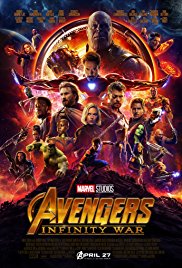
Josh Brolin is hero-villain Thanos in the latest chapter (and it really is a chapter) of the Marvel franchise Avengers: Infinity War

Director: Anthony & Joe Russo

Cast: Robert Downey Jnr (Tony Stark), Chris Hemsworth (Thor), Mark Ruffalo (Bruce Banner), Chris Evans (Steve Rogers), Scarlett Johansson (Natasha Romanoff), Josh Brolin (Thanos), Chris Pratt (Peter Quill), Benedict Cumberbatch (Dr Stephen Strange), Don Cheadle (James Rhodes), Tom Holland (Peter Parker), Chadwick Boseman (T’Challa), Paul Bettany (Vision), Elizabeth Olsen (Wanda Maximoff), Anthony Mackie (Sam Wilson), Sebastian Stan (Bucky Barnes), Tom Hiddleston (Loki), Idris Elba (Heimdall), Peter Dinklage (Eitri), Benedict Wong (Wong), Pom Klementieff (Mantis), Karen Gillan (Nebula), Dave Bautista (Deax), Zoe Saldana (Gamora), Vin Diesel (Groot), Bradley Cooper (Rocket), Gwyneth Paltrow (Pepper Potts), Benecio del Toro (Collector), William Hurt (Thaddeus Ross), Danai Gurira (Okota), Letita Wright (Shuri)

Well this is what it has all been building towards. Or at the very least, this is the start of what it has been building towards, since the film ends on a (slightly underwhelming as soon as you think about it) cliffhanger leadinginto the next film. You never reach the end in these movies – each one, while serving some of the story, is also a jumping-off point for the next one. Marvel’s Cinematic Universe is a triumph of long-form storytelling and juggling characters – but it’s also like a shark moving forward, promising us even more thrills and spills if we tune in next time.

This time the Avengers come together (and overcome inevitable personality clashes) to defeat Thanos (a motion-captured Josh Brolin). Thanos is a lunking purple beast who believes the universe is vastly overpopulated. The solution? Why kill half the universe’s population, so the other half can lead lives of perfect contentment on the remaining resources. How? Well he needs the Infinity Stones, six all-powerful gems that, together, will give him control of time and space. He just needs to wrestle them from their various hiding places.

Avengers: Infinity War has been called less of film and more an episode in a long running TV series. I think that’s fair. This film is in no way designed for anyone new to the saga to step in – half of the expansive cast are not even fully introduced. And actually it’s a good thing: we’re almost 20 films in now into this expanded universe, and if you are one of those critics sniffing that there wasn’t any concession made to the newcomer, well tough. One of the film’s strengths is that it understanding its playing to the galleries of long-established fans. Your enjoyment of the film will only increase the more Marvel films you’ve seen.

Unfortunately this sort of “dive straight in and to hell with the consequences” approach is also the root of the film’s weaknesses. This film’s primary aim is to juggle all its characters successfully, balancing its huge number of events and locations so they remain coherent, throwing in enough set pieces along the way for whoops and cheers. What it manifestly is not for is to tell a story about character or to give us striking visual images.

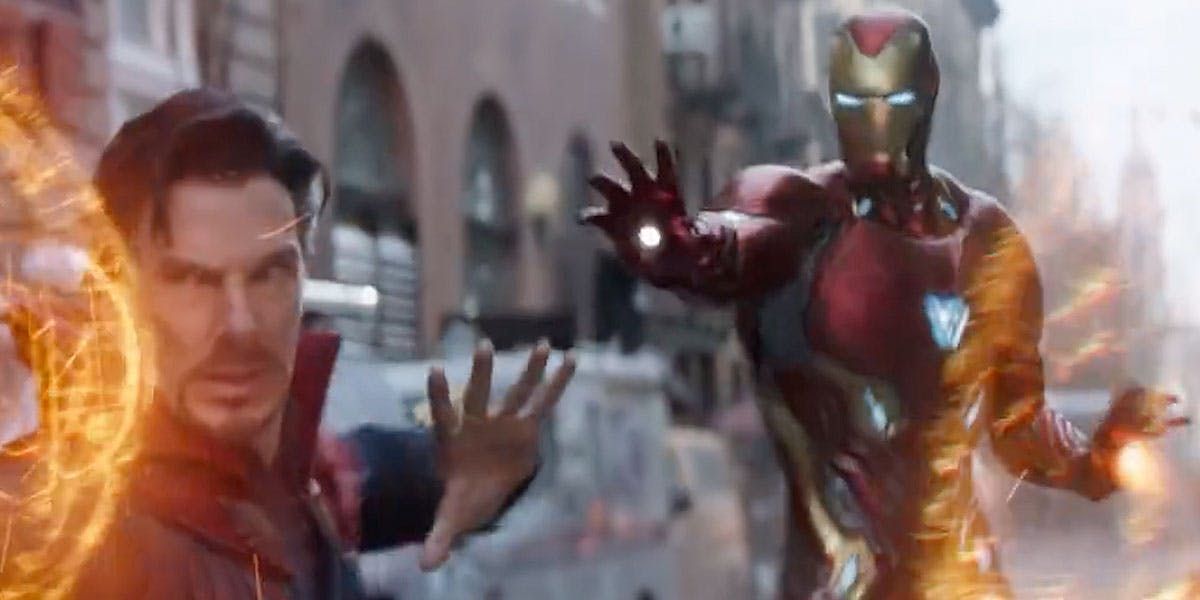
It’s like a mega, mega, mega budget all-action crossover episode of something. The excitement for the viewer is, say, Iron Man and Doctor Strange butting heads or Thor and the Guardians of the Galaxy exchanging comic riffs. It’s not designed for us to learn anything new about these heroes. In fact, the character beats are pretty formulaic. A standard arc generally goes like this: brief individual introduction doing something everyday, a meeting where much plot is quickly exchanged, bickering, a huge battle and some self sacrifice. Repeat. The film does nothing fresh on this formula which Joss Whedon introduced so well in The Avengers. If it ain’t broke, don’t fix it.

The difference with The Avengers was that it felt like a real novelty, and there was a smaller number of characters to bring together (it seems almost timid now to remember the original Avengers gang was only 6-7 strong – it’s almost 20+ now). Each character had more time and we got a much better sense of how their individual personalities affected the other. Here the Russos have to try and deal with the vast number of heroes by effectively breaking them up into 3-4 silos, giving even the most prominent ones probably no more than 20 minutes of screen time.

On top of which, despite the much vaunted “all bets are off” promotion of the movie, the action still has a stakes-free weightlessness to it. Yes some characters die, and while 1-2 of these might well stick, by the end of the film the main question is how many of the deaths will be reversed, not the impact of them. In fact the final sequence (which sees several deaths) slowly carries less and less weight the more you realise these deaths are really serving as a cheeky “how will they get out of that” moment.

Which is the dark secret of Avengers: Infinity War: it’s really nothing more than a trailer for its sequel. At the end of its vast running time – after all the functionally filmed action and odd decent one liner – you realise you have watched an extended prologue for the next film. That’s the one we’ve all been building for. The events of this film, in the long run, are the long road we need to take to get there.

This is not to say the film doesn’t have moments of enjoyment. The spectacle may not be filmed with much more than a derivative traditionalism, but it can’t help but be enjoyable. There isn’t much imagination about the implications of these heroes’ powers, in the way of say X-Men 2, but it’s still impressive to watch. Thor and Captain America get some pretty cool entrances. 

But I got the impression it must have been pretty boring to act in. Most of the vast cast have very little to do except a few one-liners and then punching. The character who most emerges as a three-dimensional figure is Thanos. Josh Brolin’s interpretation of the character as a sort of misguided humanitarian, who feels to do a great right he must do a greater wrong, yearns not for control of the universe but (in a perverse way) to save it. His quest for these stones is built like some sort of Arthurian epic, involving sacrifice and struggle. It would have been easy to make Thanos a sadistic maniac, but making him someone who believes he is doing the right thing is much more interesting. Essentially he’s the main character of the film.

Of the rest those that get the most to do are those with a connection with Thanos. Zoe Saldana as his adopted daughter turned foe Gamora gets some meaty emotional material, as does Chris Pratt as her would-be boyfriend Peter Quill (Pratt is the actor who probably gets the most “actorly” material in the film by far). Paul Bettany as Vision (the robot with an infinity stone in his head) gets to centre a plot that balances self-sacrifice with his love for Wanda Maximoff (Elisabeth Olson pretty good, even if her character oscillates between bad assery and weeping).

For the rest, it’s just their actor’s charisma that carries them through. Robert Downey Jnr gets a touching moment or two (most notably his reaction to another character’s distressed fear on facing death). Benedict Cumberbatch is great value as Strange. Chris Hemsworth gets to continue flexing his comic muscle as Thor. Others like Chris Evans are criminally wasted.

But then their time will come. Because there is another film in the pipeline – and if our heroes still feel slightly like they can survive anything up to and including getting crushed by a moon, it’s because we know that there are still movies to be made, and money for Marvel to take to the bank. And that’s probably the real nemesis of these expansive, bombastic films: the lack of danger is only going to continue while the studio doesn’t want to kill anyone major off. Hopefully that will change, but without it it’s still a film of the invulnerable hitting the inevitable.

Avengers: Infinity War is pretty good – but largely as a spectacle and because it superficially pays off what you were being hyped up to see in its action and character partnerships. But give it a year or so – and repeat viewings – and I think its stock will fall.  Because it doesn’t really do anything that unexpected, and most of its more daring movies are designed with loopholes to undo them. There are enough bright lights to entertain you (and I mostly was) but I don’t think there is much depth for you to swim in when you come back for a second dip.