Tag: Mel Gibson

Ransom (1996)

Ransom (1996)

Every parent’s nightmare gets tackled in this efficient, smart (but not quite smart enough) thriller from Ron Howard

Director: Ron Howard

Cast: Mel Gibson (Tom Mullen), Rene Russo (Kate Mullen), Gary Sinise (Detective Jimmy Shaker), Delroy Lindo (FBI Special Agent Lonnie Hawkins), Lili Taylor (Maris Conner), Liev Schreiber (Clark Barnes), Donnie Wahlberg (‘Cubby’ Barnes), Evan Handler (Miles Roberts), Brawley Nolte (Sean Mullen), Paul Guilfoyle (FBI Director Stan Wallace), Dan Hedaya (Jackie Brown)
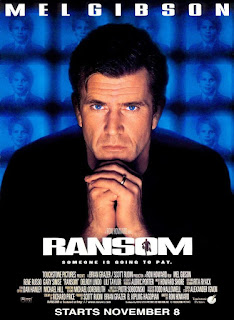
There is no greater fear for any parent than losing a child. Doesn’t matter if you are prince or pauper, the same heart-pounding dread is there. But sometimes the risks are greater if you a prince. Because the more money you have, the more likely a kidnapper might think you’d be willing to swop that money to get your kid back.

It’s what kidnappers decide when they take the son of Airline owner Tom Mullen (Mel Gibson). The kidnappers want $2million and no questions asked, in return for his son Sean (Brawley Nolte). Tom and his wife Kate Mullen (Rene Russo) are willing to pay – with the advice of FBI Agent Lonnie Hawkins (Delroy Lindo). But after the first bungled handover, Tom becomes convinced the kidnappers have no intention of returning his son alive. So, he takes a desperate gamble to try and turn the tables, much to the fury of secretive kidnapper (and police detective) Jimmy Shaker (Gary Sinise).

Ransom is a change of pace for Ron Howard, his first flat-out thriller. And it’s a very good one. Ransom has a compulsive energy to it, powered by sharp filming and cutting and some impressively emotional performances from the leads. It also takes a number of unexpected narrative twists and turns – before it reverts to a more conventional final act – and manages to keep the viewer on their toes.

Its main strength is an emotionally committed performance from Mel Gibson. Taking a leaf from Spencer Tracy’s book, this is Gibson at his best, very effectively letting us see him listen and consider everything that happens around him. Mullen is a determined man who plays the odds, and cuts corners only when he must – but is also convinced of his own certainty. He applies his own business learning – of negotiation and corporate deal-making – to this kidnapping, which is an intriguingly unique approach. Gibson’s performance is also raw, unnerved and vulnerable and he plays some scenes with a searing grief you won’t often see in a mainstream movie. Russo does some equally fine work – determined, scared, desperate – and their chemistry is superb.

Howard coaches, as he so often does, wonderful performances from his leads and from the rest of the cast. Gary Sinise turns what could have been a lip-smacking villain into someone chippy, over-confident and struggling with his own insecurities and genuine feelings for his girlfriend (a doe-eyed Lili Taylor, roped into kidnapping). Delroy Lindo is very good as the professional kidnap resolver and there are a host of interesting and engaging performances from Schreiber, Wahlberg, Handler and Hedaya. Ransom turns into a showpiece for some engagingly inventive performances.

Howard also triumphs with his control of the film’s set-pieces. The kidnapping sequence is highly unsettling in its slow build of the parent’s dread. The first attempted exchange is a masterclass in quick-quick-slow tension, with Gibson and Sinise very effective in a series of cryptic phone calls. The ransom phone calls are similarly feasts of good acting and careful cross-cutting, which throb like fight scenes. Howard understands that this is a head-to-head between two men struggling in a game of deadly one-up-manship, both of them constantly trying to figure out not only their next move, but the likely reaction of their opponent.

For much of the first two thirds of the film, Ransom is very effective in its unpredictability. There is a genuine sense of dread for how this might play out and the radical changes of plan both sides of the kidnap play out land events in a very different place than you might expect at the start. The more hero and villain try to out-think each other, the murkier the plot becomes.

It’s unfortunate that the final third devolves into a more traditional goody/baddy standoff with guns, punches and our hero reasserting his control (and the safety of his family) through the fist and the trigger. But then I guess in the 90s you couldn’t have a Gibson film without a bit of action. But when the film focuses on the thinking, talking, slow-burn tension and the sheer terror of parents who have lost a child, it’s a very effective and tense film that stands up to repeat viewings.

Braveheart (1995)

Braveheart (1995)

Gibson’s Oscar-winning epic mixes great action and bad everything else – how did it win?

Director: Mel Gibson

Cast: Mel Gibson (William Wallace), Sophie Marceau (Princess Isabelle), Patrick McGoohan (Edward I), Angus MacFadyen (Robert the Bruce), Brendan Gleeson (Hamish), David O’Hara (Stephen), James Cosmo (Campbell), Peter Hanly (Prince Edward), Catherine McCormack (Murron MacClannough), Ian Bannen (Bruce’s Father), Sean McGinley (MacClannough), Brian Cox (Argyle Wallace)

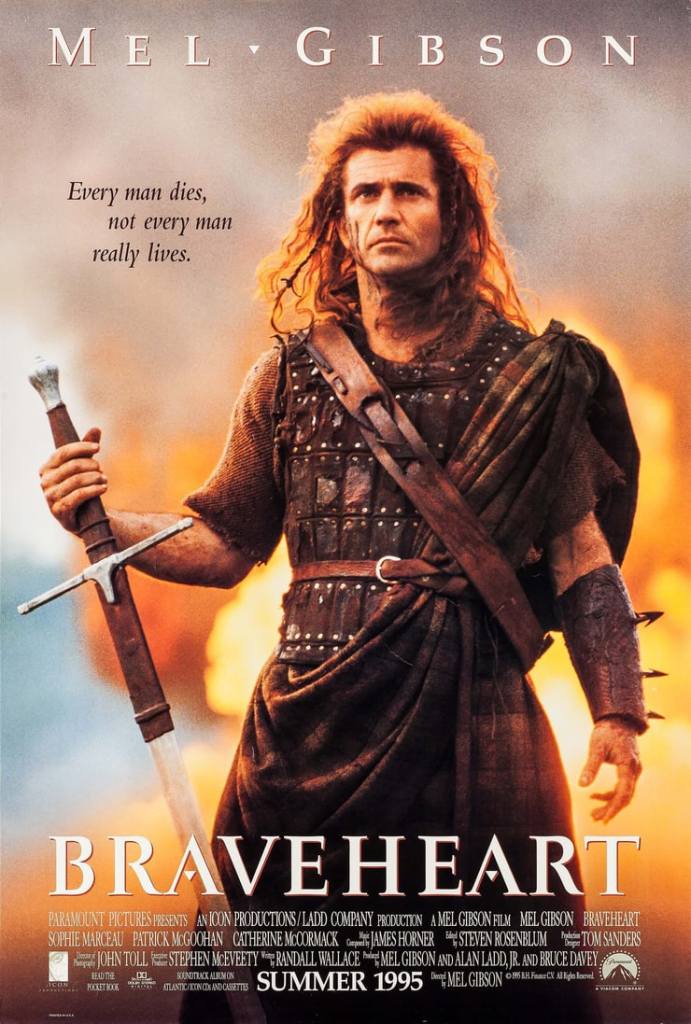
Think back to 1994 and a time when no one really knew who William Wallace was and Mel Gibson was the world’s favourite sexy bad-boy. Because by 1995, William Wallace had become the international symbol of Scottish “Freedom!” and Mel Gibson was an Oscar-winning auteur. Can you believe a film like Braveheart won no fewer than five Oscars, including the Big One? History has not always been kind to it – but then the film was hardly kind to history, so swings and roundabouts.

It’s the late 13th century and Scotland has been conquered by the cruel Edward I (Patrick McGoohan) – a pagan apparently, which just makes you think that Gibson and screenwriter Randall Wallace simply don’t know what that word means. William Wallace (Mel Gibson) saw his whole family killed, but now he’s grown and married to his sweetheart Murron (Catherine McCormack). In secret, as the wicked king has introduced Prima Nocte to Scotland, giving English landlords the right to do as they please with brides on the wedding night. When Murron is killed after a fight to avoid her rape, Wallace’s desire for revenge transforms into a crusade to win Scotland its freedom. A brilliant tactician and leader of men, battles can be won – but can Wallace win the support of the ever-shifting lords, such as the conflicted Robert the Bruce (Angus MacFadyen)? Will this end in freedom or death?

Even in 1995, Braveheart was a very old-fashioned piece of film-making. You can easily imagine exactly the same film being made (with less sex and violence) in the 1950s, with Chuck Heston in a kilt and a “Hoots Mon!” accent. In fact, watching it again, I was struck that narratively the film follows almost exactly the same tone and narrative arc as Robin Hood: Prince of Thieves – with the only difference being if that film had concluded after the Sheriff’s attack on Sherwood Forest with Robin Hood gutted alive in the streets of Nottingham.

This is a big, silly cartoon of a movie, that serves up plenty of moments of crowd-pleasing violence, low comedy, heroes we can cheer and villains we can hiss. Mel Gibson, truth be told, sticks out like a sore thumb with his chiselled Hollywood looks and defiantly modern mannerisms. The film takes a ridiculously simplistic view of the world that categorises everything and everyone into goodies (Wallace and his supporters) and the baddies (almost everyone else).

It’s also far longer than you remember it being. It takes the best part of 50 minutes to build up to Wallace going full berserker after the death of his wife. A later section of the film spends 30 minutes spinning plates between Wallace being betrayed at the Battle of Falkirk and then being betrayed again into captivity (you could have combined both events into one and lost nothing from the film). There is some lovely footage of the Scottish (largely actually Irish) countryside, lusciously shot by John Toll and an effectively Celtic-influenced romantic score by James Horner. In fact, Toll and Horner contribute almost as much to the success of the film as Gibson.

Gibson is by no means a bad director. In fact, very few directors can shoot action and energy as effectively as the controversial Australian. The best bits of Braveheart reflect this. When he’s shooting battles, or fights, or brutal executions he knows what he’s doing. Even if I’d argue that Kenneth Branagh managed to make much less than this look more impressive in Henry V. The battles have an “ain’t it cool” cheek to them, that invites the audience to delight in watching limbs hacked off, horses cut down and screaming Woad-covered warriors ripping through stuffy English soldiers. It’s probably not an accident that the film channels more than a little bit of sport-fan culture into its Scottish warriors.

Where Gibson’s film is more mundane is in almost everything else. The rest of the film is shot with a functional mundanity, mixed with the odd sweeping helicopter shot over the highlands. Its similarities to Robin Hood: Prince of Thieves are actually really strong, from the matey bonhomie of the gang at its heart, its pantomime villain, the moral certainty of its crusades and the fact that Mel Gibson is no more convincing as a 13th-century Scot than Kevin Costner was as Robin Hood. But at least Prince of Thieves knew it was a silly bit of fun. Braveheart thinks it’s got an important message about the immortality of Freedom.

Alongside that, it’s a film that focuses on giving you what you it thinks you want. Gladiator – in many ways a similar film – is a richer and more emotional film, not least because it has the courage to stick to being a film where the hero is faithful to his dead wife and whose triumph is joining her in death. In this film, there are callbacks throughout to the dead Murron – but it doesn’t stop Wallace banging Princess Isabelle, or the film using the same sweeping romantic score to backdrop this as it did for the marriage of Murron and Wallace. What on earth is it trying to say here?

It goes without saying that the real Wallace did not have sex with Princess Isabelle and father Edward III – not least because the real Isabelle was about ten when Wallace died and I’m not sure putting thatin the film would have had us rooting for Wallace. Almost nothing in the film is historically accurate. Wallace is presented as a peasant champion, when he in fact was a minor lord (the film even bizarrely keeps in Wallace travelling Europe and learning French and Latin – a big reach for a penniless medieval Scots peasant). Even the name Braveheart is taken from Robert the Bruce and given to Wallace. The Bruce himself – a decent performance by Angus MacFadyen – is turned into a weak vacillator, under the thumb of his leprous Dad (a lip-smacking Ian Bannen).

The historical messing about doesn’t stop there. Even Wallace’s finest hour, the Battle of Stirling Bridge, is transformed. The film-makers apparently felt the vital eponymous bridge “got in the way” – a sentiment shared by the English, who in reality were drawn into its bottleneck and promptly massacred. Instead we get a tactics free scrap in a field – fun as it is to watch the Scots lift their kilts, it hardly makes sense. The Scots culture in this film is a curious remix of about five hundred years of influences all thrown into one. Prima Nocte never happened. The real Edward II was a martial superstar – but here is a fey, limp-wristed sissy (the film’s attitude towards him stinks of homophobia). Almost nothing in the film actually happened.

But the romance of the film made it popular. It’s a big, crowd-pleasing, cheesy slice of Hollywood silliness. The sort of film where Wallace sneaks into someone’s room at the top of a castle riding a freaking horse and no-one notices. It tells a simple story in simple terms, using narrative tricks and rules familiar from countless adventure films since The Adventures of Robin Hood. It looks and sounds great, enough to disguise the fact that it isn’t really any good. Because it has a sad ending, scored with sad music, it tricked enough people to think it had depth and style. In fact is a very mediocre film, hellishly overlong, that turns history into a cheap comic book. It remains in the top 100 most popular films of all time on IMDB. It’s about as likely an Oscar winner as 300.

The Bounty (1984)

The Bounty (1984)

Hopkins and Gibson present a more historically-accurate Bounty movie that’s serious but solid

Director: Roger Donaldson

Cast: Mel Gibson (Fletcher Christian), Anthony Hopkins (Lt William Bligh), Laurence Olivier (Admiral Hood), Edward Fox (Captain Greetham), Daniel Day-Lewis (John Fryer), Bernard Hill (William Cole), Phil Davis (Edward Young), Liam Neeson (Charles Churchill), Wi Kuku Kaa (King Tynah), Tevaite Vernette (Mauatua), Philip Martin Brown (John Adams), Simon Chandler (David Nelson)

The story of the mutiny on The Bounty has intrigued for centuries. It’s been made into plays, novels and no fewer than three films. Most versions have been inspired by a 1932 novel that painted Bligh as an ogre and Christian as a matinee idol. That image was cemented by the classic Best Picture winning Laughton/Gable version. The real story is far more intriguing – and operates much more in shades of grey – and this 1984 film tries to find a middle ground, with mixed success.

In real life, Bligh was a prickly, difficult but fundamentally decent man, who had worked his way up the naval ranks through merit. He was a superb sailor – as seen by his feat of navigating a small open boat of loyalists over hundreds of miles back to a British port. Cleared of any guilt for the mutiny, he had a successful career and retired as Vice Admiral. Fletcher Christian, on the other hand, was an entitled young man who owed everything to his rich family, rather than merit. The truth has been lost in fictionalised versions who were devil and saint. The truth was far more complex.

This film was a long-standing dream of David Lean, who planned the film for many years, before pulling out at the last moment. The script was written by long-time collaborator Robert Bolt (although ill health meant it was finished by an uncredited Melvyn Bragg). Producer Dino de Laurentis – not wanting to write off the money invested – bought in Australian Roger Donaldson to direct. The final product is a competent, if uninspired, middle-brow history film with a slight air of stodge, and a haunting – if incredibly 80s – electronic score from Vangelis. Where the film really lucked out is the superb cast of actors assembled, with Gibson on the cusp of mega stardom and the cast stuffed with future Oscar winners and nominees.

Anthony Hopkins had been attached to the film for almost seven years, and his carefully researched performance as Bligh is what really gives makes the film work. He gets closer to the personality of the real Bligh than anyone else ever has. Awkward, shy, uneasy with men under his command, insecure at his poor background and the West Country burr to his accent, Hopkins’ Bligh is a world away from a bad man. But he is a demanding and rigid leader, who inspires fear but not respect. He’s far from cruel, but he’s short-tempered, inflexible and has trouble empathising. All too often, he relies on his position alone to ensure obedience, rather than building respect. You sympathise with him, at the same time becoming deeply frustrated at his intransigence. You can understand why many would find him an extremely difficult man to work with (let alone work for).

Fletcher Christian is young, naïve and impetuous, a man whose experiences in Tahiti lead him to become surly and impatient with the confines of a naval life. Gibson later said he felt the film didn’t go far enough to depict Christian as selfish and motivated by a desire for the ‘good life’, and the film does try to show him standing up for the crew against Bligh’s demands for perfection. But Gibson is willing to embrace Christian’s darkness. He hurls himself into the (historically attested) near mental collapse, consumed with violent and unpredictable emotion, that Christian demonstrated during the mutiny, losing all control of himself in an explosion of self-pity and frustration.

The film’s highpoints revolve invariably around these actors. Hopkins’ demanding Bligh sets the tone on the ship. The roots of the mutiny can be seen in Bligh’s public bawling out (and demotion) of his first officer Mr Fryer (a disdainful Daniel Day-Lewis) in front of the entire ship, setting a precedent for disrespect. Every action he intends to build spirit and health in the crew has the exact opposite effect (from pushing them to excel, to enforced dancing sessions for exercise). Hopkins is perfect as man believing he is acting for the best but constantly getting the tone wrong, either too distant and reserved to inspire affection, or too enraged to inspire loyalty. Similarly Gibson, in the less intriguing part, really sells the growing self-absorption of Christian, especially his feckless weakness, easily manipulated into actions that go a step beyond his desires (Phil Davis is very good as a darkly Iago-ish Ned Young, using Christian’s popularity to his own ends).

However, the film itself is a little too traditional. Using Bligh’s trial (all captains who lost their ship were placed on trial to judge their responsibility) as a framing device brings us slightly too many interjections of the “and then you did this” variety – even if it allows actors as impressive as Olivier and Edward Fox to narrate us through the film. This stodgy structure carries us into a narrative that is professionally handled but lacks inspiration, ticking off events but not giving them a force outside of the performances of the actors. The film is competently but not inspiringly made, and never quite captures the sense of the epic that the location and scale should bring.

Perhaps this is because a true-to-life version of the mutiny is a little less traditionally dramatic. Despite some truly impressive performances from the leads (and the rest of the superbly chosen cast), it never quite shakes off the feeling of being a history lesson.

Apocalypto (2006)


Rudy Youngblood is on the run in Mel Gibson’s Mayan experience epic

Director: Mel Gibson

Cast: Rudy Youngblood (Jaguar Paw), Dalia Hernández (Seven), Jonathan Brewer (Blunted), Morris Birdyellowhead (Flint Sky), Gerardo Taracena (Middle Eye), Raoul Trujiilo (Zero Wolf)

In the early 1500s, the Mayan civilisation is at its final peak before its collapse. However, it is a civilisation built on human sacrifice and exploitation. A peaceful village is brutally attacked by Mayan soldiers, who take the women to be sold into slavery and the men to be sacrificed to the sun. Jaguar Paw (Rudy Youngblood) manages to save his wife and child, but is captured and taken to the Mayan capital where he struggles to survive, escape and find his family.

Setting a film in the long gone Mayan civilisation, in an entirely dead language, with no stars is a brave choice for any film-maker. So you have to tip your hat to Mel Gibson, for all his undoubted unpleasantness, that he was brave enough (or powerful enough) to put the project together. It could have been a grand folly but, thanks largely to Gibson’s undoubted prowess as a film-maker, it’s a relentless experience movie, with moments of horror expertly mixed with terrifying edge-of-the-seat tension. It’s a clear sign that, for all his personal issues, Gibson is a very fine director.

The chase, when it comes in the final third is unrelenting, and brilliantly shot and edited. Gibson uses a range of different cameras, from those mounted on Youngblood, to tracking shots, to aerial shots to throw us into the middle of the action. Trees blur by, the soundtrack pounds, the camera doesn’t let up. Gibson also knows to throw in quieter moments – pause points, moments to take breath for both the pursuers and the pursued. Jaguar Paw carries a dreadful wound – and runs on the same level of adrenalin as the film provokes in its audience.

Of course, it’s also, as per a Gibson film, very bloody stuff. Faces are bludgeoned. Bodies are cut to pieces. A jaguar literally rips a man’s head apart. The film wants us to experience this bloody world first hand. As a piece of film-making, it’s addictive in its unremitting violence and tension. It’s also compelling how the odds slowly change throughout the chase – like a Die Hard in the jungle, the further the pursuit heads into the jungle, the greater confidence Jaguar Paw possesses, and the more he is able to turn the tables on his pursuers. This also highlights the savage danger of nature itself – the jungle is full of potential dangers, from jaguars to hornets to poisonous animals.

It’s far from perfect of course. The script is dire – the subtitled content we read if often terrible clunky. The opening sequence is a long series of jokes about eating a wild pig’s bollocks. There are strange anachronistic turns of phrase – at one point a collapsing tree nearly takes out the convey of slaves, leading Zero Wolf to shout “I’m walking here!”. If you were in any doubt about the essential crudeness and simplicity of Gibson’s sense of humour, you only really need to read the subtitles.

But because the film is subtitled and feels like a brave piece of film-making, it’s very easy to assign a depth to it that the film doesn’t really have. It is, to all intents and purposes, an 80s action film transposed to an ancient civilisation. It would like to think it has some profound message about the nature of man. But it’s largely an experience movie that throws you into an old civilisation and wants you to vicariously feel the suffering of its central character. It’s Gibson at his most visceral, throwing us into worlds of violence, tapping into elemental feelings of pity and horror. 

I guess there are themes in there about the universal corruption and cruelty of great civilisations, with their violence, greed and cruelty – and we know the conquistadors are just round the corner. But other than presenting this as is, the film doesn’t make too much of an effort to draw real contrasts with our world. It is what it is. The audience is there to feel the fear and the horror of the innocent villagers being fed to the Mayan human sacrifice machine. Any pretence to this being a profound movie on top of that is just that: a pretence.

But Gibson can shoot the hell out of a film, and this is tense, engrossing viewing – largely because you’ve not really seen anything else really like this. The scenes at the Mayan sacrifice temple are horrifyingly hypnotic in their orgy of death. Our villagers have a chilling powerlessness in the face of this death machine that awakens all our feelings of vulnerability and sympathy. Violence and murder is shown to be central to Mayan civilisation – and it might not carry that thematic idea forward too much, but at least it’s an interesting suggestion.

But Gibson’s primary purpose here is to make a high-octane chase movie – an actioner, set in a primitive civilisation, where human beings on foot carry all the energy of the chases, and the stakes feel impossibly high. You have to admire Gibson’s power as an immersive film-maker, and the unique vision he presents, difficult as it can be to watch. It’s something truly unique, often shockingly so. And if it is, at heart, part chase part slasher with slightly more depth, it’s also something you can’t imagine many other directors having the chutzpah to put together.

Hacksaw Ridge (2016)


Andrew Garfield embodies true heroism in Mel Gibson’s war drama

Director: Mel Gibson

Cast: Andrew Garfield (Desmond Doss), Vince Vaughn (Sergeant Howell), Sam Worthington (Captain Glover), Luke Bracey (Smitty Riker), Teresa Palmer (Dorothy Schutte), Hugo Weaving (Tom Doss), Rachael Griffiths (Bertha Doss), Ryan Corr (Lieutenant Manville).

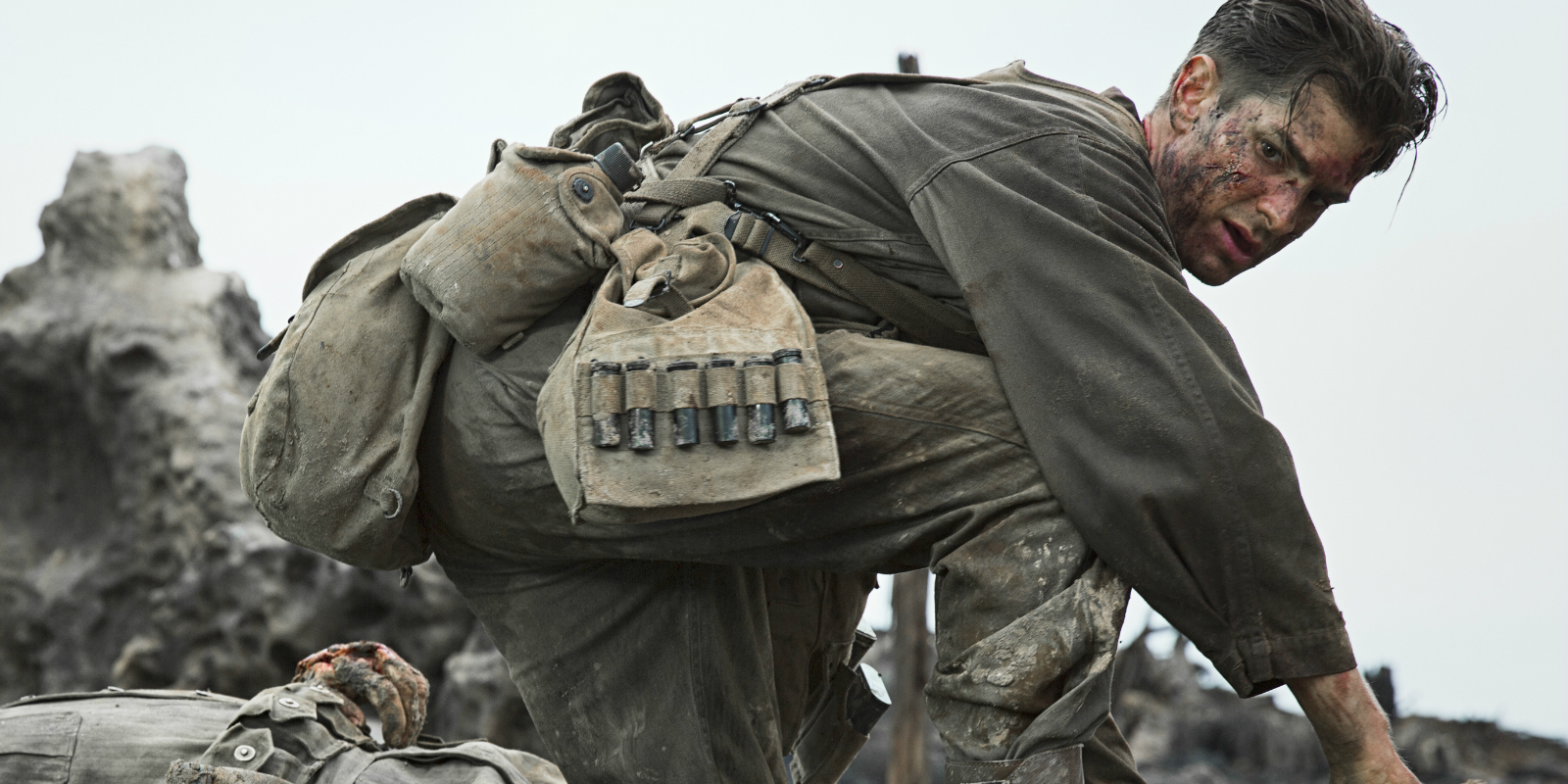
There is a slight odour hanging over Hacksaw Ridge. Few Hollywood superstars fell as hard and as far as Mel Gibson has done in the past few years. As such, the fact that this film has been such a critical and commercial hit is being seen as redemption. While I’m not sure any film could really be that, it’s certainly a clear expression of many of the things that made him a successful superstar – a  carefully made blockbuster that tells a simple story, in a way that mixes sentiment and violence, built around a hero it is impossible not to admire and respect.

Desmond Doss (Andrew Garfield) is a young Virginian, deterred from violence early in his childhood, who volunteers for service in the Second World War, willing to do everything he can to support the war effort except hold a rifle and take a life. Instead, inspired by his fiancée (a nurse) he wants to serve as an army medic – to do his bit for his country, while standing by his principles. Needless to say his decision is not greeted warmly by his army comrades – but  at the Battle of Okinawa, as his unit goes into service, he proves his heroism saving lives during the Battle of Hacksaw Ridge.

Firstly, before going any further into the merits of the film, Andrew Garfield’s performance in the lead role is extraordinarily good in its simplicity, straightforwardness and aw-shuckscharm. Never once does his guilelessness and honesty ever become wearing – instead (and Gibson’s direction helps) he is a man you immediately root for, who you can respect without him feeling perfect. It’s a terrific performance, respectful and admiring but also real. Gibson’s camera showcases his heroism in an unfussy way, avoiding too many directing flourishes – which makes these scenes of life-saving all the more inspiring. A perfect match of actor and role.

There are also plenty of fine supporting performances – Hugo Weaving is very good as Doss’s  shell shocked father, barely able to understand his emotions, with Rachael Griffiths similarly good as his caring mother. Sam Worthington gives perhaps a career best performance as Doss’ captain. Even Vince Vaughan, while sometimes trying too hard as a gruff sergeant, quickly settles into giving one of his finest performances. Teresa Palmer is very sweet as Doss’ fiancée. In fact, there is not a bad performance in it.

But what of the film? Perhaps only Mel Gibson could direct a film that is simultaneously a celebration of pacifism and an endorsement of righteous war. This is perhaps one of the most visceral war films you are likely to see, with bullets ripping bodies in half, the camera unflinchingly recording every injury in gory detail. Say what you like about Gibson, but as an ‘experience’ film maker he is extraordinarily good – he knows how to immerse the audience in ways few others do. He also brilliantly shows both the terror of combat and the courage of soldiers. His staging of the war is tense and gripping, without being sensationalist. In fact, I don’t hesitate to place its depiction of war up there with Saving Private Ryan, combining the savagery of combat with the uplifting courage of a man who only went there to save lives.

Surprisingly one of the strengths of Gibson’s film-making is that he is a very simplistic story teller. His films are morality tales of right and wrong. His heroes, be they William Wallace or Jesus Christ, have overcome burdens to build peaceful homes before a call of duty shatters their world. In a way, that makes Desmond Doss a perfect match for him. The structure of the film, and the familiar beats in the first half of the film, ticking off influences on Doss’ life with a straightforwardness bordering on cliché, all work because they are presented with a guileless genuineness. Gibson successfully establishes a character who feels like an ordinary man who goes on to place himself in an extraordinary position.

Gibson’s simplicity as a story-teller has its drawbacks in the presentations of the antagonists in the film. The Japanese are presented as little better than a faceless horde, a fanatical band of killers, consumed with ruthlessness and lacking all sense of moral decency. Of course, that is to be expected from seeing the film solely from the Western side. But it sits slightly uncomfortably in a film that want to endorse Doss’ values. There are touches of even-handedness – a moment where Doss treats a terrified Japanese soldier in a bunker, or references to a few of the enemy that he lowered off the cliff (although Gibson isn’t afraid to have a soldier bluntly state “They all died” when asked what happened to them). But in a film that claims pacifism is something to admire, showing one half of the conflict as almost universally unfeeling monsters doesn’t always sit right.

This conflict between pacifism and righteous war, is one the film struggles with throughout. If anything it wants to have its cake and eat it too. It wants us to acknowledge the principle of pacifism as a good thing. But it’s also almost scared of being accused of presenting any idea that might be accused of detracting anything from the heroism of the generation that fought the Second World War.

How Doss squared his moral beliefs with helping the men alongside him to carry on killing is none of my business. It’s certain Doss is a far wiser, braver and kinder man than I could ever hope to be, and his actions were genuine, decent, honest and in keeping with his personal morality. I don’t understand his thinking, but that doesn’t matter and the film knows it doesn’t  matter, that we don’t need to completely understand to respect. The film wisely avoids any hokey scenes where Doss explains his convictions. It presents what Doss did as a fact, and says to us “here it is”. The man was involved in a hellish war, but he did what he believed was the right thing to do, and he saved dozens of lives doing it. If we can celebrate the actions of the men on the Normandy beaches fighting Nazism, or the pilots of the Battle of Britain, then we certainly can salute Gibson for bringing to the world’s attention this honourable, decent, brave and above all genuine man.

For all his faults, this film proves Gibson is a first rate filmmaker. Here,  he has made a moving war film that, although it seems to be trying to be many things to many people, still manages to contain a moral message and highlights a man who deserves to be remembered. It may have confusion at its heart about its true attitude towards war – but I believe it does have that heart in the right place, is trying to send a positive message to the world, and is a highly impressive and compelling piece of filmmaking.