Tag: Melissa Leo

The Fighter (2010)

The Fighter (2010)

A fighter has a title shot, in a surprisingly heartwarming film about the importance of family, no matter how messed up it is

Director: David O Russell

Cast: Mark Wahlberg (Micky Ward), Christian Bale (Dicky Eklund), Amy Adams (Charlene Fleming), Melissa Leo (Alice Eklund-Ward), Jack McGee (George Ward), Frank Renzulli (Sal Lanano), Mickey O’Keefe (Himself)

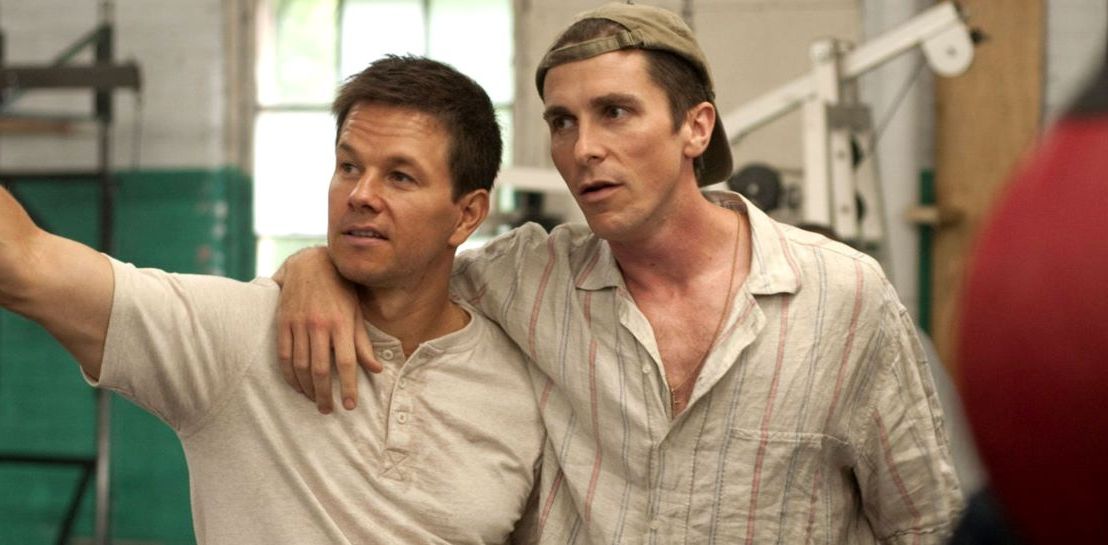
Everyone loves Rocky. We all want to that local-hero-turned-good, the guy who went the distance. Lowell, Massachusetts had that in Dicky Eklund. Eklund, a minor pro-boxer, once went the distance against Sugar Ray Leonard in 1978 (he argues he knocked him down, although many are convinced Leonard slipped). “The Pride of Lowell” then became… a crack addict, tumbling from disaster to let-down, helping and hindering the career of his brother, fellow boxer Micky Ward.

The story of the two brothers – leading up to Ward’s eventual title shot in 1997 – comes to the screen in Russell’s affectionate, if traditional, boxing drama, long a passion project of Mark Wahlberg who plays Micky. Wahlberg kept himself in boxer-condition for years as he dreamed of making the film, recruiting director and cast and producing the film. The fine, sensitive film we’ve ended up with is a tribute to his commitment and producing skills, while the fact that Wahlberg casts himself in the least dynamic part is a nice sign of his generosity.

Because it’s only really on the surface a Micky Ward film. Sure, the film follows the vital events in his life. It opens with him bashed up in a mis-match, filling his role as a “stepping stone” fighter, someone the future champs flex their muscles against. We follow his struggles to escape from under the thumb of his large brash family – above all his bombastic, domineering mother Alice (Melissa Leo). He forms a relationship with ambitious-but-caring Charlene (Amy Adams), moves up the ranking, lands that title shot, fights the big bout. But it never quite feels like Micky is the star.

Because, really, this feels like it’s about Dicky Eklund working out the first act of his life is over, and trying to find if he has what it takes to start a second, more humble, one. The film opens with Dicky followed by an HBO crew for a fly-on-the-wall documentary. Dicky’s convinced himself it’s to chart his boxing come-back. It’s actually about the horrific impact of crack addiction. Dicky is a strung-out, unreliable junkie, living on past glories but screwing up everything he touches, being enabled by the fawning worship of his mother and sisters, who still worship him as the families main event (and continue to do so, even as Micky rises to title shot). The film’s heart is Eklund sinking to rock bottom and realising he has forced the compliant Micky into playing a subservient role in his own life.

Perhaps it feels like a film more focused on the remoulding of this charming but selfish figure because of the compelling performance of Christian Bale. Starving himself down to match Eklund’s wizened, strung-out physique (he’s still got the boxer moves, but his body has wasted away) is a day’s work for a transformative actor like Bale. But this isn’t just a physical performance, but a deep immersion into the personality of a person who almost doesn’t realise until it is too late how fundamentally flawed he is. Bale’s a ball of fizzling energy and electric wit coated in a lethargic drug-induced incoherence. His energy is frantic but uncontrolled, wild and mis-focused. It’s a superb, heartfelt performance of loveable but dangerous uselessness that nabbed Bale an Oscar.

But what makes The Fighter a surprisingly warm film is that, for all his many flaws, selfishness and self-obsession, Dicky genuinely cares for his brother. He wants the best for him, he believes in and loves him. Much of the power of Bale’s performance comes from the fact he never forgets this, even when Dicky is at his worst. In fact, Russell’s whole film works because that warmth and love everyone feels for Micky is never forgotten and never weaponised by Russell into helping us make moral judgements about the characters. Nor does it forget that Micky may sometimes hate his family, but he never stops loving and needing them.

A weaker film would have stressed the trailer-trash greed of Melissa Leo’s Alice. Leo (who also scored an Oscar and famously dropped the f-bomb on live TV, condemning the ceremony to a permanent time delayed broadcast ever since) is in many ways playing an awful character: controlling, nakedly favouring Eklund over his brother, quick to judge, rude and aggressive. She’s never truly likeable – but Russell’s film understands everything she does is motivated by love. She genuinely wants the best for Micky, even while she pushes him into bad fights and never listens to him. She tries to protect him, and expresses this in destructive selfishness.

In many ways she’s just like Micky’s girlfriend Charlene, who recognises early that Micky’s family (who have turned him into a timid hen-pecked type) can’t be trusted to run his whole career, but who also subtly pushes herself into Alice’s place as the leading decision-making influence in his life. Very well played by Amy Adams (who lost the Oscar to Leo), Charlene is smart, sexy, loving but just as determined that it’s her way or the highway.

What Micky needs to do, the film carefully (if rather safely) outlines, is take the best qualities of all his influences. It’s Eklund’s “job” to realise Micky needs everyone he loves singing from the same hymn-sheet. It needs compromise and putting other people first. It makes for a nice little paean to the importance of family relationships, founded on forgiveness and admitting when you are wrong. Micky forgives his mother and brother for their selfishness: they, in turn, acknowledge their mistakes. Eklund is crucial here: Bale is again superb as a man who suddenly realises pride has nearly ruined his life and embraces the junior role in the relationship with his brother.

Sure, none of this reinvents this wheel, but it still makes for engaging and rather sweet drama. Russell mixes it with some neat stylistic flourishes that don’t overwhelm the film. It’s shot with an edgy, handheld immediacy reflecting its street roots. The fights are shot with old TV cameras, so that invented footage can fuse with 90s HBO coverage. Russell of course gets great performances from his actors, as he always does.

The Fighter is in many ways predictable. But it wears its heart very much on its sleeve, and Wahlberg deserves credit for assembling it and for giving a quiet, generous performance at the centre of it. And the film’s commitment to the idea that, no matter the problems in our families, we can all find the courage to admit our mistakes and pull in the same direction remains heartwarming.
The Big Short (2015)

The Big Short (2015)

An all-star cast juggle dollars, acronyms and lots of shouting in McKay’s smart but heartless film

Director: Adam McKay

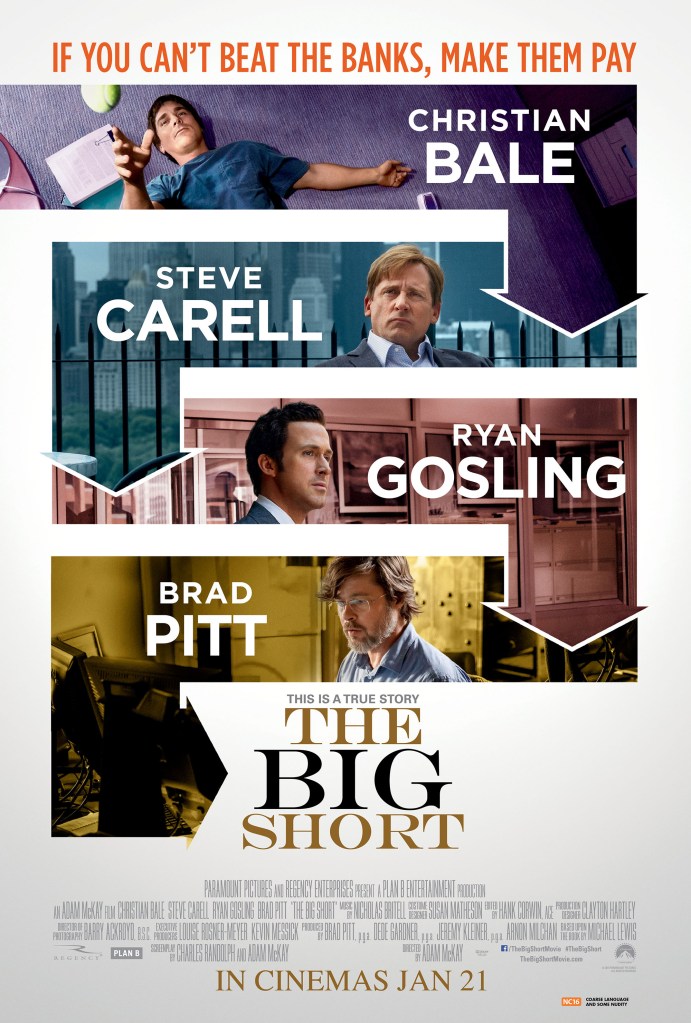
Cast: Christian Bale (Michael Burry), Steve Carell (Mark Baum), Ryan Gosling (Jared Vennett), Brad Pitt (Ben Rickert), John Magure (Charlie Geller), Finn Wittrock (Jamie Shipley), Hamish Linklater (Porter Collins), Rafe Spall (Danny Moses), Jeremy Strong (Vinny Daniel), Marisa Tomei (Cynthia Baum), Tracy Letts (Lawrence Fields), Melissa Leo (Georgia Hale), Karen Gillan (Evie)

We all experienced the financial crisis of 2007 but very few of us actually understood it: above all, perhaps, what the hell actually happened and why. That’s what McKay’s film – somewhere between drama, satire, black comedy and tongue-in-cheek infomercial – tries to resolve. Adapting a book by leading financial journalist Michael Lewis, The Big Short charts the whys and wherefores of the collapse, by focusing on the money men who saw the signs of the impending crash and bet against the booming economy.

Those men (and they are all men of course) are played by a series of actors enjoying themselves thoroughly playing larger-than-life characters who it’s never entirely clear if we are supposed to empathise with, sympathise with, cheer on or stand aghast at while they make fortunes from the ruin of others. I’m not sure the film does either though.

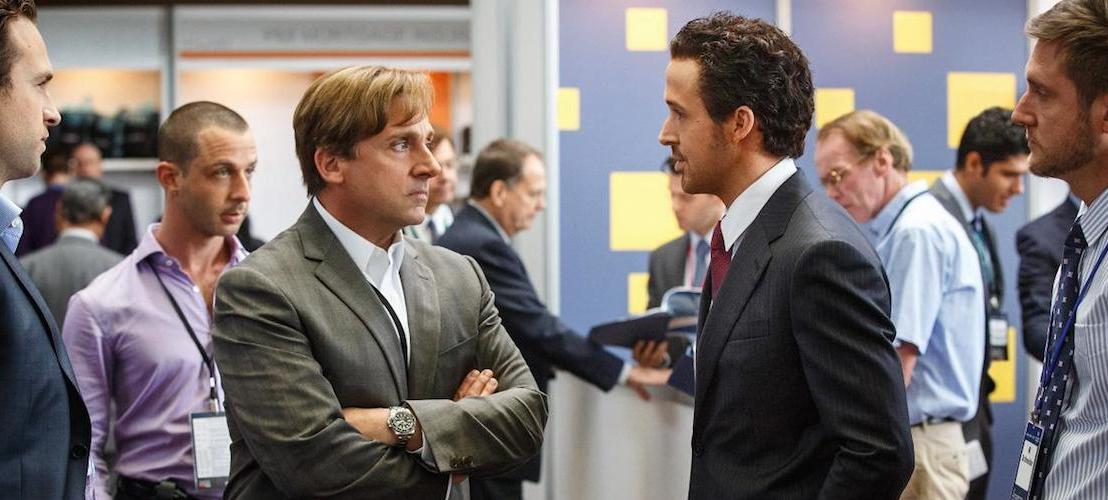
Christian Bale is the eccentric hedge fund manager whose analysis predicts the crash and takes eye-watering investment charges that will pay off thousands of times over when the crash comes. Ryan Gosling is a banking executive who understands that analysis and robs in Steve Carrell’s hedge fund manager to similarly invest to cash in (Carrell’s character, for all his misanthropic oddness is the only one truly outraged at the corruption in the system that will lead to the collapse). Brad Pitt is the retired trader roped in for “one more job” by young traders Finn Wittrock and John Magure to make their own bets against the house. They too will eventually realise the huge impact this will have on people – but are powerless to get anyone to listen as they try and warn against the pending disaster.

McKay’s film, with its tightly-controlled but surprisingly effective off-the-cuff feel (it’s stuffed with neatly edited jokes, straight to camera addresses and a constant running commentary from the characters on the accuracy – or otherwise –  of outlandish moments), may sometimes have the air of a slightly smug student film, but what it does well is explain the financials. If you were unsure about what CDOs, AAA ratings, Quants, credit default swops and sup-prime mortgage were before the start, you’ll have a much better idea later. Neat inventions describe this: from narration, to graphics, to Jenga blocks to famous people (Margot Robbie, Anthony Bourdain and Selena Gomez among others) popping up to glamorously put things in other contexts.

The Big Short does this sort of thing rather well. Sure, it’s got a “lads” feeling to it – there is no “for the girls” equivalent to Margot Robbie in a bath explaining sub-prime mortgages – and the entire dialogue and pace of the film has a frat-house wildness that I suppose does reflect the tone of many of these financial institutions, which were little better than sausage parties. But it presents its ideas nicely and has some good jokes. The verité style McKay goes for is more studied than it natural – and it’s hard not to escape the feeling that the film is very, very pleased with itself, so much so that it’s not a surprise both his follow-up films the dreadful Vice and the shrill Don’t Look Up double down to various degrees on the slightly smug, self-satisfied liberalism here that sees those in power as corrupt, greedy, fools or all three and everyone else as innocent victims.

Where the film is less certain is exactly how it feels about its central characters. In other words, it doesn’t always turn the same critical eye on these people profiting from a disaster that will lead to millions losing their homes (the millions are represented by a single immigrant family). Brad Pitt may reprove his young charges from celebrating gains that will be the losses of millions of others. Steve Carrell gets several lines berating the callous, short-sighted greed of the banks. Christian Bale’s character is appalled by the “you scratch my back, I’ll scratch yours” relationship between banks, investment ratings agencies and insurance companies, all working together to keep artificial profits up. But the film still wants us to celebrate as these plucky outsiders and weirdoes clean out the house and carry home cartloads of cash while the casino burns down.

Basically, the film is all good fun but gives us little to actually care about. It’s highly influenced by the gonzo macho representation of this world Martin Scorsese’s The Wolf of Wall Street gave us, but far less skilled than that film in presenting its players as the childish, amoral vacuums they are. Furthermore, it does far less to really look at the impact of what it’s doing: in fact, it spends so long delighting in how it tells the story, it doesn’t show us what happens. It dwells at the end on abandoned trading floors and closed banks, like the fall of the Roman Empire, but finds no time at any point to hear from a real person who lost their home.

Perhaps because the real impacts are too depressing – and would have made it impossible to feel the triumphal buzz the film wants from seeing its heroes vindicated and the smug assholes we’ve seen from the banks get egg on their face. It might have felt a lot less funny if we had seen even a closing montage of the real victims and the human impact.

It’s where The Big Short falls down and why it feels in the end like a student film made on a huge budget. It nods its head at real mature themes but actually isn’t really interested in them at all.

Oblivion (2013)

Tom Cruise goes all Top Gun (Olga Kurylenko is along for the ride, pretty much all she does in the movie) in would-be intellectual sci-fi thriller Oblivion

Director: Joseph Kosinski

Cast: Tom Cruise (Jack Harper), Morgan Freeman (Malcolm Beech), Olga Kurylenko (Julia Rusakova), Andrea Riseborough (Victoria Olsen), Nikolaj Coster-Waldau (Sykes), Melissa Leo (Sally)

Spoilers: I’m going to discuss the entire content of the plot from the third paragraph. You’ve been warned!

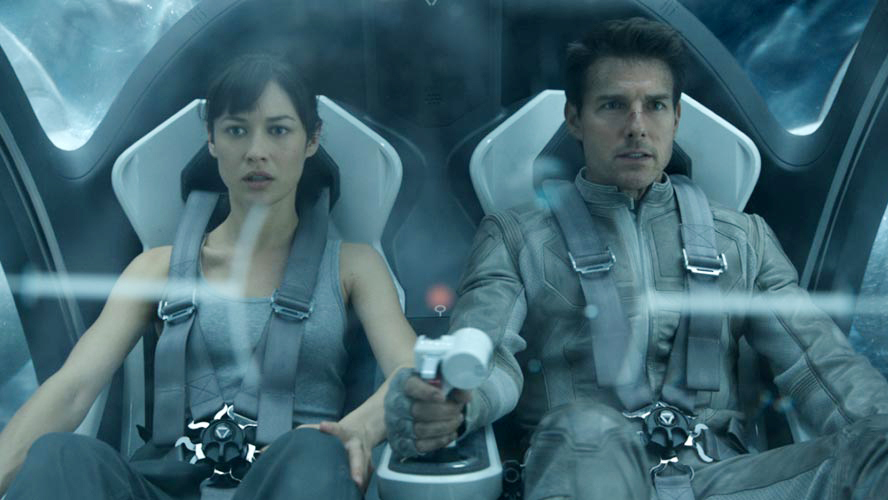
It’s 60 years after an alien attack. The world has been destroyed, cities lie in ruins, and mankind has fled to Jupiter’s moon Titan. Earth is being drained of its last few resources to power the new civilisation on Titan by massive machines. Drones fly around the planet, protecting the machines from the last surviving alien forces still on Earth. The drones are tended by Jack Harper (Tom Cruise) and Vika Wilson (Andrea Riseborough), whose memories have been wiped for security reasons and who are dedicated to keeping the drones functioning. 

Or is this all a lie?

Well it won’t be a huge surprise to hear that it is, of course. And there are some decent ideas in Kosinski’s film: the twist reveal that the organisation Harper and Wilson are working so hard to preserve is in fact the very alien invaders they so hate, or that the strange figures on the planet they are helping the drones to kill are actually the last surviving remnants of mankind. Harper and Wilson are clones of NASA astronauts captured 60 years ago and replicated over and over again in order to serve the robots. The “Tet” in space that they believe is their HQ is the alien mothership. These are all decent twists. So why do they combine together to have so little real impact?

I think it’s because Kosinski rushes the film. He’s so pleased with the narrative rug pulls that he seems to want to reveal many of them one after the other. Additionally, the biggest twist – Tom Cruise is actually working for the baddies! – immediately makes most of the rest easy to predict. Not least the constant references to Base 49 where he and Vika work – sure enough it’s a clone number, so the planet is filled with clones of this pair. The only thing stopping them bumping into each other is that they have been told everything outside of their “patrol zone” is irradiated and they must never enter it. 

All of this world building – and the film does take its time establishing it a piece at a time early on – is interesting stuff. But it loses its way once the film surrenders itself to a string of reveals that overwhelm it. By the time we are watching super-man Jack shooting down drones from his helicopter, the film seems to have lost the more meditative start. With Jack at first we get a sense of a guy longing to find more depth to live with. But the film loses this sense, with Jack become steadily less interesting the more we find out about him.

Then once you accept the idea of Cruise and Riseborough being endlessly cloned, the logic gap starts to click into place. It’s never explained why the aliens are so reliant on human engineers for their drones – if they have conquered loads of planets before without them, why do they need them here? Furthermore, we are told the first wave of Jacks were mindless soldiers who killed everyone on the planet – why then are these engineer Jacks and Vikas given so much independent thought? Why not just make them automatons? Why clone them and then lie to them about who they are working for – why not just program them to obey the robots?

Then after a slow build of questions and revelations about Jack’s world, we get a standard Independence Day style mission up into space to “blow up the mother ship”. Of course this is a mission that only your man Tom can do. And do it he does, because Tom Gotta Do What Tom Gotta Do. It’s all a rather disappointing resolution to a film that toys around with being something a bit more complex and interesting earlier on.

Ah, Tom Cruise. To be honest he’s probably miscast here. There is something so incredibly, movie-star strong about Cruise that he somehow overpowers the shocks and make them seem silly. On top of which, the part is another ego-stroke. Jack is the ultimate man’s man – he fixes things, he loves sports, he builds a cabin in the woods, he’s clearly dynamite in the sack; but he’s also sensitive and caring and in touch with his feelings. On top of which both female characters in the film – Riseborough’s sadly besotted Vika and Kurylenko’s mysterious astronaut who lands on Earth and awakens strange memories in Jack – are both pathetic ciphers who need Tom’s help for everything, while of course also being way, way, way too young for the Cruiser.

But the film still looks good, and still has some very interesting twists. The design and visuals are faultless – in fact they seem to become the main focus, all those long shots of deserted, sand consumed parts of New York. Its main problem is that it’s low on themes – I guess it’s trying to make a case that humanity can’t be bashed out of us, no matter how many times we try and clone it out of someone – but it gets lost a bit in plot mechanics and the delight the director has in executing them. For a film that only really has four characters in it, I still felt they were hazy and undefined. A lot is left to the viewer’s own suppositions, so the film gets pretty reliant on your adding the depth it needs. If you are inclined to do so, this works. But the essential dramatic thrust of the film itself isn’t compelling enough to make you willing to make the effort the film needs.

Oblivion wants to be the next big, thoughtful, twist-filled, sci-fi epic. But it just doesn’t have enough interest and complexity to really engage the viewer. Instead it all becomes a bit forgettable – not because it’s bad but because, at the end of the day, it’s nothing special.

London Has Fallen (2016)

Rather appropriately Gerard Butler takes aim at us. After all the viewer is just about the only person he doesn’t kill in this film.

Director: Babak Najafi
Cast: Gerard Butler (Mike Banning), Aaron Eckhart (President Benjamin Asher), Morgan Freeman (Vice President Allan Trumbull), Alon Moni Aboutboul (Aamir Barkawi), Angela Bassett (Director Lynne Jacobs), Robert Forster (General Clegg), Melissa Leo (Secretary McMillan), Radha Mitchell (Leah Banning), Charlotte Riley (‘Jax’ Marshall), Jackie Earle Haley (DC Mason), Waleed Zuaiter (Kamran Barkawi), Colin Salmon (Com Kevin Hazard), Patrick Kennedy (John Lancaster)

Devoid of any sense of humour, decency,  charm or emotions at all this is a brainless and tasteless action film crammed to the gizoids with extreme knife based violence,  growled threats and paper thin characters none of whom are remotely interesting or engaging. It’s cast iron certainty, it’s self righteousness and brutality make it a deeply unpleasant, off-putting and unlikeable film.

Basically the UK PM is slain and the G8 assemble like besuited Avengers for the funeral. Unfortunately some terrorists have hatched a plan to wipe them out in revenge for a pre-credits missile strike and sure enough we have a series of assassinations in the opening seconds by villainous shady terrorists. Spreading the stereotypes fairly BTW the French leader is a yacht based dilantte, the Italian a geriatric lothario and the German a sour faced deadly serious Angela Merkel type.

The main problem with this is Gerard Butler. The film sinks completely under the weight of Butler’s self importance and chronic lack of humour . At no point in this film does Butler’s Mike Banning make any mistakes or offer up any form of human reaction such as fear or uncertainty. Compare him instead to John McClane and the moments of terror Willis dips into that role to humanise it. Also remember that Willis is charming and witty in that film. Butler however thinks alpha male certainty and grim faced contempt for everyone he meets (bar his bosses and a Scottish SAS captain) will endear us to his character. Instead it makes him border line terrifying – it would surely only take a wrong word, for Banning to turn his fury on an innocent bystander.

Mike Banning however is a violent psychopath, Butler thinking that brutally murdering a captive with a knife while growling some zenophobic one liner counts as wit. To be honest I’d be scared shitless if I was protected by this psycho who growls brutally from start to finish, all too clearly enjoying the mass killing. There is a vague attempt to humanise him with the introduction of a pregnant wife at home but instead you dread what values Banning is likely to invest the infant with in the future.

In fact the whole film has a horrible jingoism, xenophobia and racism running through its centre. It’s attitude to anything not American (or at a push British) is at best suspicion, at worst outright hatred. Anyone with a beef against America is twisted, evil, riven with jealousy and hatred of freedom and shucks we should cheer as Banning brutally tortures one of them in his final moments. America! Fuck Yeah! It gives patriotism a bad name.

The film passes the time if you enjoy seeing London destroyed (again) on film, and the body count of gruesome kills is high enough to satisfy anyone’s needs for violence, although the killing is so graphic and the film lingers so leeringly on each knifes plunge with the perversity of snuff film. A load of Brits (Colin Salmon, Charlotte Riley and Patrick Kennedy) dial in worried expressions from a control room (needless to say one of them is a traitor) while sportingly Morgan Freeman, Melissa Leo, Robert Forster and Jackie Earl Haley do similar jobs in a bunker in America.

But the film is almost proud of the fact it has nothing new to say at all and seems totally unaware of its fundamental unpleasantness. It’s actually a nasty, bigoted, small minded, cruel film that hates anything different. It thinks it has a Die Hard lightness of touch – but it really, really doesn’t. Butler is charmless and horrible and the film is revolting. Avoid it.