Tag: Mia Farrow

Guns at Batasi (1964)

Guns at Batasi (1964)

An excellent lead performance powers a solid film that slightly pulls it’s punches

Director: John Guillermin

Cast: Richard Attenborough (RSM Lauderdale), Jack Hawkins (Colonel Deal), Flora Robson (Miss Barker-Wise MP), John Leyton (Private Wilkes), Mia Farrow (Karen Eriksson), Cecil Parker (Fletcher), Errol John (Lt Boniface), Graham Stark (Sgt ‘Dodger’ Brown), Earl Cameron (Captain Abraham), Percy Herbert (Colour Sgt Ben Parkin), David Lodge (Sgt ‘Muscles’ Dunn), John Meillon (Sgt ‘Aussie’ Drake), Bernard Horsfall (Sgt ‘Schoolie’ Prideaux)
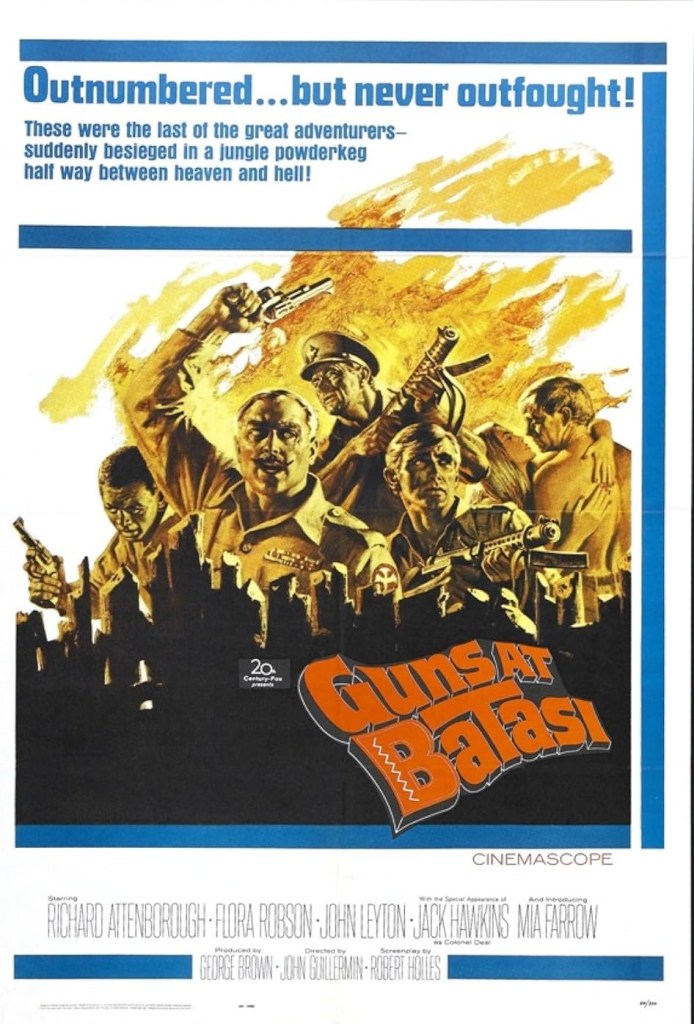
In the dying days of Empire, in an unnamed African nation, the British have agreed to a peaceful handover of power. Something that’s thrown out of kilter when an attempted coup takes place. That appals Regimental Sergeant Major Lauderdale (Richard Attenborough). His whole life has been keeping the peace in the colonies, making sure the mess is kept spick-and-span, drilling recruits, saluting portraits of the Queen and regretting he missed his chance to do his bit at Tobruk or El Alamein. A coup to him is nothing more than a mutiny, and harbouring the new overthrown government commander in the NCO’s mess from the troops looking to lynch him is both a matter of honour and (perhaps) a chance to fight his own little war preserving decency, honour and the British way.

Guns at Batasi is a fascinating slice of post-colonial film-making that succeeds as well as it does because it treats its lead character both as a sort of Blimpish moron and a tragic hangover whose Victorian principles are hideously out-of-step with the world around him. All of that is captured in Richard Attenborough’s rich, BAFTA winning, performance as he makes Lauderdale both faintly ridiculous (obsessed with neat collars, perfectly executed salutes and drill bullshit sitting) with an utter lack of interest in the world outside the parade ground and strangely likeable. He’s got a principled sense of right-and-wrong, a strangely affectionate regard for the soldiers he presses to the uttermost and an utter lack of cynicism or cruelty in his convictions.

It’s near career-best work by Attenborough, one well out of his wheel-house (at the time) of softly spoken eccentrics. In fact, he’s almost unrecognisable, transformed into a sort of walking bullet, rigid as his swagger stick and barking out his every utterance with a parade-ground bellow that emerges from a deep vocal bass. He’s a character soaking in absolute certainty, and Guns at Batasi gives him the dignity of letting him be both right and wrong without crowbarring in any moral judgement. Put bluntly, it trusts us to be intelligent enough to appreciate his determination to protect the lives of those under his care, just as we can feel uncomfortable at his parental attitude towards Africans.

Guillermin’s film places this bolted down man, absolutely certain of his understanding of the world, in two turmoils, one on-top of the other. Firstly, he’s the sort of bloke who wouldn’t have been out of place in the height of the Raj, barely able to believe that the British army (embodied by the decent, gentlemanly but subtly ineffective Colonel Deal expertly played by Jack Hawkins) doesn’t sweep everything before it anymore but has to negotiate with the locals. Secondly, he’s flung into the middle of a siege of the NCO’s mess, shepherding a mix of other sergeants, a young private (John Leyton) whose mocking 60’s swagger feels like he’s from a different planet and a painfully liberal visiting MP (Flora Robson) who feels Lauderdale is the problem not the solution.

Guns at Batasi builds its base-under-siege storyline very effectively, with Guillermin skilfully shooting a small set, interspersed with some well-staged action set pieces, not least Captain Abrahams (Earl Cameron) escape from his would-be lynch-mob. There is a neat sense throughout of a world pushing in on Lauderdale and his sergeants, from artillery pieces gathering on the lawn outside to an ever more searching series of questions for Lauderdale from the others about what exactly he thinks he’s preserving here. What’s well-handled about the film is you could see this as both Lauderdale making a stubborn stand that’s more about his pride than anything else, and a genuinely selfless noble attempt to save a persecuted man.

The film does slightly weight the deck in favour of Lauderdale. We warm to his witty sergeants-cunning to prevent the noble Abraham handing himself over to save lives (drafting a hugely wordy written order to do so, which he knows Abrahams will never stay conscious long-enough to sign). It’s hard not to sympathise with him, when the voice of liberalism is placed in the piously self-important lips of Flora Robson’s MP who insists, until she’s finally shown she’s terribly wrong, that coup lickspittle Lt Boniface (Errol John) isn’t the ruthless two-faced man-of-no-honour he so plainly is. It’s hard not to sympathise when Lauderdale tears Boniface off a titanic strip (a tour-de-force moment from Attenborough) or hard not to admire the professional pride in his duty to keep others safe.

If you could criticise the film, it gives less scope to putting into an explicitly critical viewpoint or giving much scope to Lauderdale’s probably less charming or attractive features. You could well imagine that, returning to Blighty, his attitudes could curdle into an unattractive ‘Britain First’ attitude. Sure, we are encouraged to see his obsession with perfectly ironed uniforms and the exact perfection of a salute as something quite silly. But he’s also a man who doesn’t question for a minute Britain’s inherent superiority or its right to dominate large chunks of the globe. But Guns at Batasi lacks a real character who challenges Lauderdale – even Leyton’s cheeky private ends up being adopted in an affectionate strict-fatherly way by the RSM, rather than someone who could really signpost Lauderdale’s relic nature or the potentially darker implications of his character. Just as the film treats the other sergeants lack of knowledge or interest in this country (right down to continually mis-pronouncing the local town as Battersea) as comedic rather than an insight into underlying complacent understanding as the world being a place run by and for the British.

But the film stands out as one of the best acting showcases Attenborough ever had, a swaggering role of bombast that he absolutely rips through while humanising it. There are great supporting turns from Horsfall, Herbert, Lodge and Mellion as wildly different types of sergeant and the film manages to be both quietly satirical, nostalgic and pack in some derring-do along the way. If it doesn’t quite manage to really seize on its potential, it’s still an interesting film.

Husbands and Wives (1992)

Husbands and Wives (1992)

Does life reframe art in Allen’s slightly bitter collapsing marriage story with himself the hero?

Director: Woody Allen

Cast: Woody Allen (Gabe Roth), Judy Davis (Sally Simmons), Mia Farrow (Judy Roth), Juliette Lewis (Rain), Liam Neeson (Michael Gates), Sydney Pollack (Jack Simmons), Lysette Anthony (Sam), Blythe Danner (Rain’s mother), Ron Rifkin (Richard), Cristi Conaway (Shawn Grainger)

Gabe (Woody Allen) and Judy (Mia Farrow) are shocked and confused when their best friends Sally (Judy Davis) and Jack (Sydney Pollack) calmly announce before dinner they are separating. Both find themselves new partners – Judy’s colleague Michael (Liam Neeson), who Judy is also attracted to, and new-age aerobics trainer Sam (Lysette Anthony) – but also discover the grass is not always greener. Meanwhile, Judy is increasingly discontented with her childless marriage and Gabe develops a flirtatious friendship with his student Rain (Juliette Lewis), an aspiring writer with a fixation on older men.

You can’t watch Husbands and Wives and not think about the real-life relationship between Allen and Farrow. The film was their last collaboration and released just as their incredibly public separation filled the newspapers (which it has continued to do ever since). Farrow is cast as a character that, like Hannah and Her Sisters, feels like a twist on her own life – only this time darker. Again, the conceiving of children is a major problem for the Allen-Farrow characters and Farrow’s character is described as considerate but overbearing, with the addition here that she is passive-aggressive and manipulative. You can’t help but think, how much was Allen already resenting her?

But, leaving aside the psychology (I think it’s a fair thought though – Allen’s own films have commented numerous times on how writers re-write their own lives, and there are more than enough signs Allen does the same) this is still one of Allen’s most impressive works. Husbands and Wives explores the complex nature of adult relationships, in particular how familiarity can breed a dissatisfaction with our own lives. It also looks at how moving on is never easy and how we are still tied with emotional cords we can’t easily cut to the very people we might want to leave behind.

So, Jack can jump into his new relationship with the younger and sexually exciting Sam (Jack smugly sings the virtues of healthy living and watching silly films). But he is still overcome with jealousy when Sally also starts dating. Sally says she enjoys the single life – but during a date constantly retreats into a side room (where she can be easily overheard by her date) to phone Jack and berate him for moving on so soon after their separation. Allen argues that, discontented and problematic as Jack and Sally’s marriage may be, it is so familiar to them that the idea of leaving it is too much.

Essentially, the shared memories and experiences of a long-term relationship make it too difficult to move on. The separation of their friends makes Gabe and Judy readdress their own relationship – and the find its closer to the rocks than they think. With the passion gone, Gabe feels Judy doesn’t need him while Judy is unhappy with Gabe’s unwillingness to have a child. Judy doesn’t share her poetry with him and Gabe feels she is overly critical of his new novel (and is unhappy about the character in it who is clearly her). Inevitably (it is Allen) sex comes into play – both Gabe and Jack are sexually dissatisfied: Judy has lost interest and Sally can’t enjoy sex (not even with Liam Neeson).

Gabe, therefore, allows himself to get closer to Juliette Lewis’ student on the creative writing course he teaches. Again, being Allen, there is a considerable age difference – but at least that’s addressed in the film, as every single one of Rain’s exes are older men, all with positions of authority over her (a family friend, her psychiatrist, her teacher…). Lewis is rather good as this coquetteish flirt, and Gabe is (at first) much more open to her criticism of his book than he was from Judy (largely as, consciously or not, he wants to get in her pants).

The film is shot with a cinema verité fly-on-the-wall immediacy, echoing documentary. It has the characters pop-up as talking heads throughout, discussing their perceptions and feelings to an unseen interviewer. It’s an approach that has mixed results – although an interesting new way for Allen to use the internal monologue. The documentary approach does, however, produce some excellent scenes. Most striking, the raw hand-held energy of the opening scene, where Jack and Sally announce their separation to the rising horror and shock of Gabe and Judy, surely one of Allen’s finest shot and acted scenes.

Of course, they are mainly horrified because they see they have even less in common, really, than Jack and Sally. While Allen throws in one happy marriage – Rain’s parents seem loving – he also makes it clear their daughter is maladjusted. Husbands and Wives suffers under Allen’s cynicism for humanity – there isn’t a lot of hope in here, other than you might find a more functional type of contented misery. The sympathy also drifts more to the male characters: Gabe is a sort of innocent, Jack impulsive but his actions justified. On the other hand, Judy is a manipulator, Sally an shrill, frigid neurotic, Sam an idiot and Rain a temptress.

The performances are good. Judy Davis is very good (and Oscar-nominated) as the difficult, emotionally confused Sally. Pollack is fittingly smug as a man in the midst of a mid-life crisis. Neeson rather touching as an overly needy editor. Allen and Farrow play familiar parts, but with an accomplished ease. It’s just that Husbands and Wives is a rather glum watch – for all the jokes. It takes a depressing, rather archly cynical look at a world that doesn’t have a lot of promise in it. While it might well be truthful, the documentary approach of the film sometimes brings it closer to the Allen/Farrow home than you might find comfortable.

Crimes and Misdemeanors (1989)

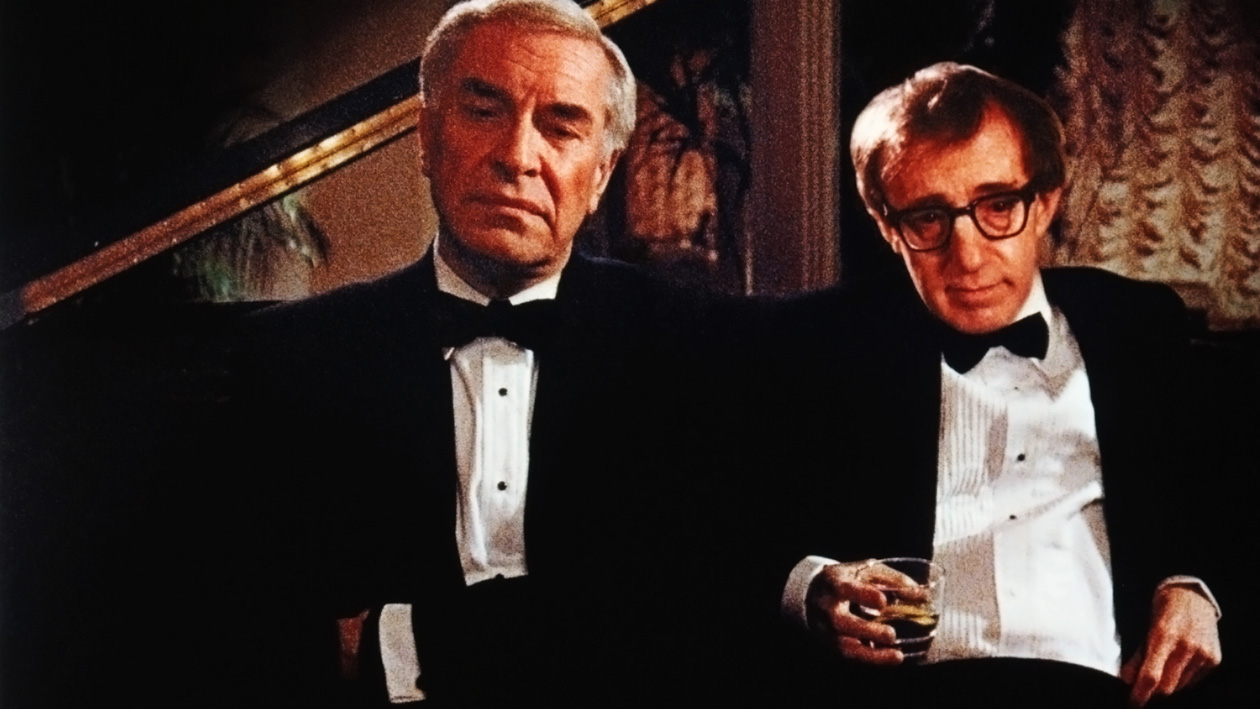
Martin Landau and Woody Allen reflect on Crimes and Misdemeanors

Director: Woody Allen

Cast: Caroline Aaron (Barbara), Alan Alda (Lester), Woody Allen (Cliff Stern), Claire Bloom (Miriam Rosenthal), Mia Farrow (Halley Reed), Joanna Gleason (Wendy Stern), Anjelica Huston (Dolores Paley), Martin Landau (Judah Rosenthal), Jerry Orbach (Jack Rosenthal), Sam Waterston (Ben)

Successful ophthalmologist Judah Rosenthal (Martin Landau) has it all: respect, fortune, a loving family…and a mistress. That mistress, Dolores (Anjelica Huston), won’t play ball and disappear but actually wants Judah to deliver on his half promises of leaving his wife. Should Judah confess all, as his rabbi friend Ben (Sam Waterston) suggests? Or should he follow the advice of his gangster brother Jack (Jerry Orbach) and remove Dolores permanently? Meanwhile, documentary film-maker Cliff (Woody Allen) has been hired by his brother-in-law, pompously successful TV producer Lester (Alan Alda), to shoot a film celebrating Lester’s life. During the shooting, Cliff can barely hide his irritation – or his growing attraction to Halley (Mia Farrow), the associate producer both he and Lester are romancing. Who will she end up with?

Dostoyevsky – could you live with a murder? – gets the Woody Allen treatment in one of Allen’s most highly respected, but troubling films. To be honest, I didn’t much care for Crimes and Misdemeanors. I have moral qualms about it – and, I will hasten to add, these qualms have nothing to do with the lack of punishment for Judah. Crimes and Misdemeanors hides its blatant cynicism and loathing for people, underneath some fine acting and good jokes. But its possibly one of Allen’s most unlikeable works, where his sympathies seem hideously astray.

It wants to be an exploration of the guilt that follows a crime. But to be honest, aside from some expert furrowing of brow and distressed line deliveries from Landau, I’m not sure Woody has much to say about guilt. Furthermore, I think he is inviting us to sympathise with Judah not because he feels bad (and even then, so what?), but for various extenuating circumstances. Namely, he’s a good man (he has all but funded a new hospital wing by himself) with a loving family and is a dedicated doctor. Furthermore, his mistress is presented almost exclusively as a demanding and difficult floozy (Anjelica Huston in an unflattering part – although at least she gets more to do than Claire Bloom in the thankless part of Judah’s wife, an almost non-existent role).

Frankly, the film suggests Judah’s motives are more complex than just removing a self-caused problem and since he feels shock (sorrow for Dolores or the crime seems noticeable absent, and it feels like Allen mistakes the one for the other) and is a nice guy, we should think again about our knee-jerk reactions of right and wrong. Problem is, Judah is not a nice guy – he’s shallow, self-pitying and self-justifying – and watching a character with, it turns out, no real morals go through a moral quandary doesn’t make for engaging viewing.

Judah’s moral reaction to the murder is insubstantial. Essentially guilt makes him wonder where there is in fact a God after all – before deciding that, on balance, the probability is that the universe will not punish him. Other than that, I’m not sure Allen has much more to add to the discussions of right and wrong. Dostoyevsky made hundreds of pages of conscious and guilt shattering a man’s equilibrium. Allen can’t manage more than about ten minutes of screen time, let alone 90 minutes.

Perhaps that’s why Crimes and Misdemeanors is padded out with a second, almost as long, unconnected secondary plot. It’s a one-sided rivalry between Allen’s film-maker and Alda’s pompous producer, with Mia Farrow as an artistic waif who serves as the prize for this unspoken competition. (This is perhaps one of the worst Allen films for female characters: we have two cold, personality-free wives for the main characters, a shrill mistress, a bland artistic waif and Woody’s character has a sister who is tied to a bed and defecated on. How did the same guy write Hannah and Her Sisters?)

Again, Allen’s sympathies lie with the idealistic, uncompromising Cliff, even more so because his interest in making films people don’t want to see makes him, in Allen’s eyes, noble. Compare and contrast with the film’s loathing for Lester – hilariously played by Alan Alda as a neat self-parody. Lester is everything Cliff isn’t, but secretly wants to be (though I’m not sure Allen realises this): successful, well-regarded, admired, rich and gets all the girls. No wonder the film hates him – even though, to be honest, he doesn’t seem the bad. After all, the sort of drive and ambition that Lester has is exactly what makes a man successful.

It wouldn’t matter so much if Cliff wasn’t remarkably similar to him, but considerably less charming. Just like Lester, Cliff is a self-important bore, cuddling his lack of success as proof of his genuineness. Cliff has no problem with effectively creepily stalking Halley (despite being married – fine though as Allen thinks she’s a bitch). Cliff’s passive aggressive assertions that Halley deserves someone like him rather than someone like Lester aren’t romantic, they’re creepy. (Needless to say, Halley ends up with Lester, to Cliff’s shock, horror and disappointment – while his wife plans to leave him).

Now I get it, there are people reading this who will think “well yes you just don’t like it because you want a simple ending where the baddies are punished – well life isn’t like that”. That’s not the case: I’m fine with films where murderers escape scot-free: but I generally want the film to know they are bad people. Crimes and Misdemeanors doesn’t. And it doesn’t really have anything of interest to say. It’s one of Allen’s films where his cynicism about humanity is exposed too heavily. You long for a bit more critical insight into Cliff, or for a more acute exposing of Judah’s self-interested excuses. You get neither, instead Allen ending on the note that the universe is dark and indifferent and only love can change things. There’s lots of the first two and precious little of the third here.

Hannah and Her Sisters (1986)

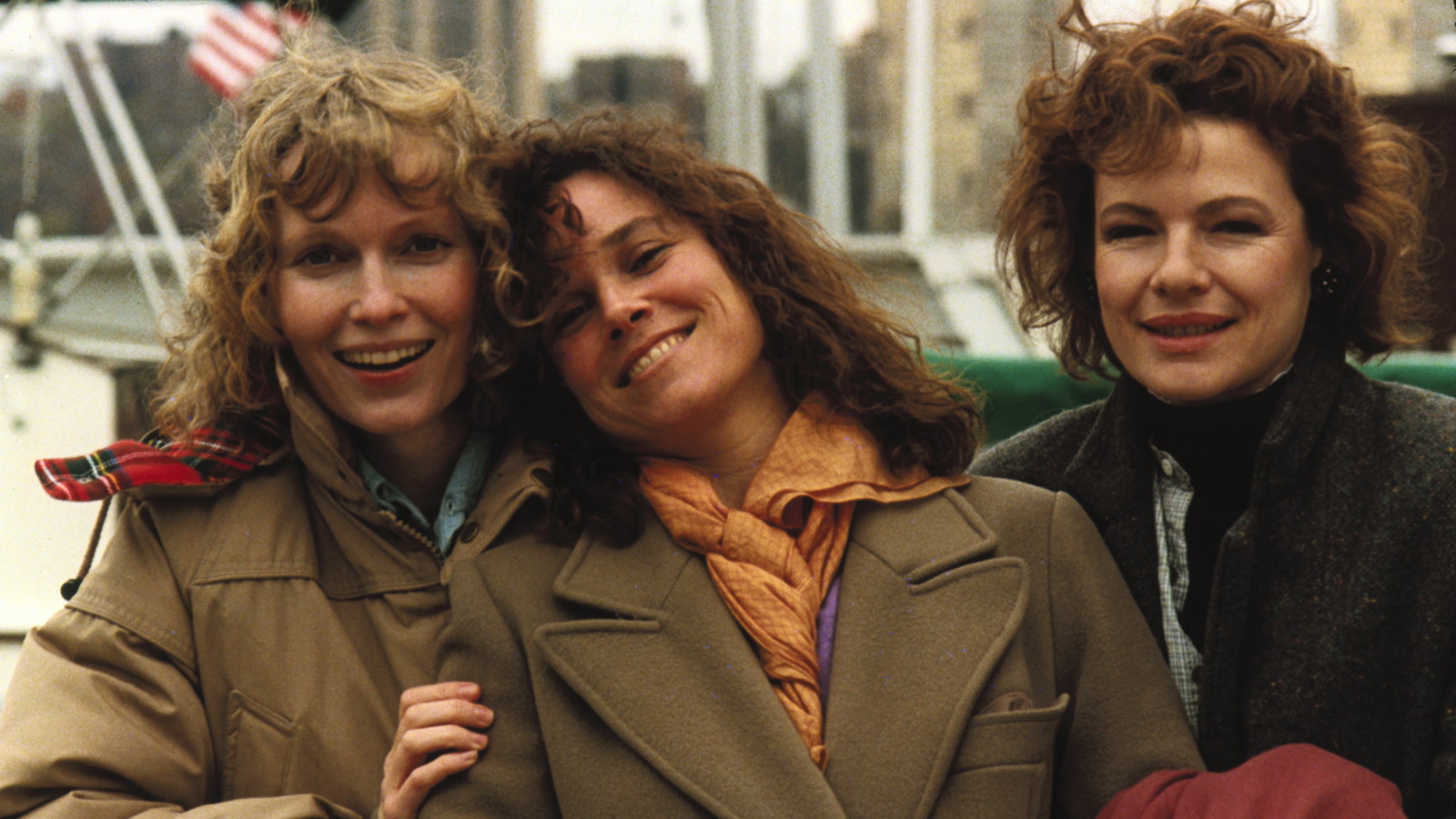
Mia Farrow, Barbara Hershey and Dianne Wiest are Hannah and Her Sisters one of Allen’s finest films

Director: Woody Allen

Cast: Woody Allen (Mickey), Michael Caine (Elliot), Mia Farrow (Hannah), Carrie Fisher (April), Barbara Hershey (Lee), Lloyd Nolan (Evan), Maureen O’Sullivan (Norman), Daniel Stern (Dusty), Max von Sydow (Frederick), Dianne Wiest (Holly), Sam Waterston (David)

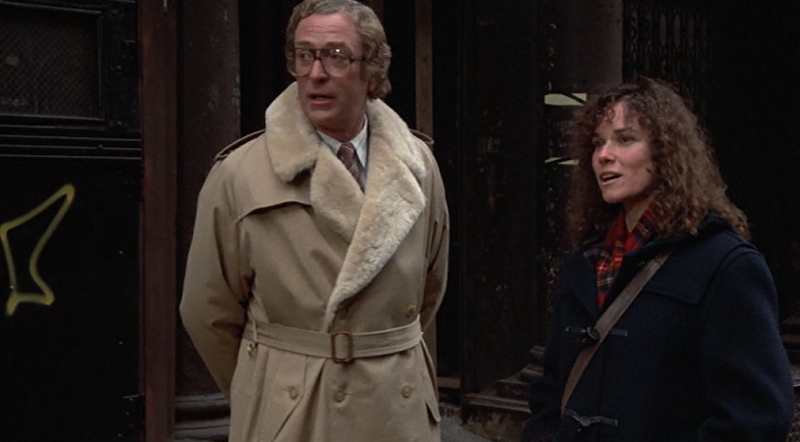
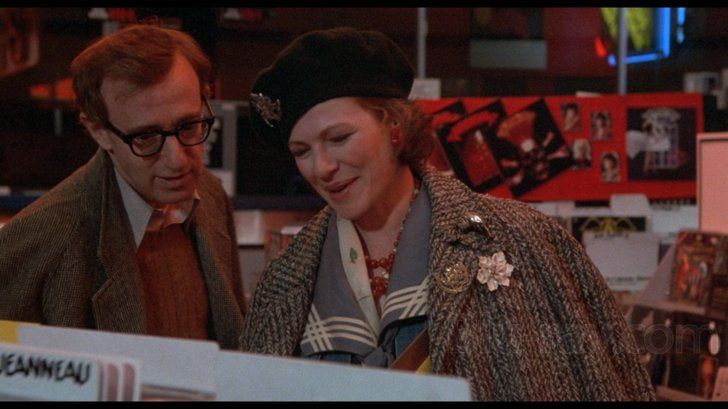
Hannah (Mia Farrow) is divorced from Mickey (Woody Allen) and happily married to Elliot (Michael Caine). Eliot is in love with Lee (Barbara Hershey). Lee is Hannah’s sister. Holly (Dianne Wiest) is considering dating Mickey. Holly is also Hannah’s sister. This whirligig of relationships is the heart of Hannah and Her Sisters, one of Woody Allen’s finest and certainly most humane films. Witty and heartfelt, it’s one of his sharpest scripts, crammed with acute observation and fine gags and is directed with a coolly introspective eye.

Allen splits the film into multiple sections, each opening (like the chapter of a novel) with a quote from the scene we are about to watch. Music plucked from Allen’s beloved classics (most often, and fittingly considering its romance theme, Bewitched, Bothered and Bewildered) frequently bridge scenes. Internal monologues is used often to allow us to explore the inner lives of the characters (the actors do a marvellous job reacting on screen to this internal thought process we are hearing).

The film uses a host of inspirations carefully mixed into Allen’s Manhattan Metropolitan middle-class milieu. The entire film has an autumnal Chekovian feel to it, with a rich sense of lives continuing ‘off stage’ as much as on. While the title obviously echoes Three Sisters, it’s study of romantic and intellectual entanglements overlaps with Chekov, as does the film’s love of wordplay. There are also, of course, echoes of Bergman (with gags) both in the film’s episodic structure but also its framing device of three Thanksgivings dinners, reflecting Bergman’s triumphant Fanny and Alexander.

The most effective thing about the film, in addition to its wit, is the surprising warmth it feels for the characters. Not always in an Allen film does one find the sympathy and empathy so widely spread – there is usually at least one character who is the target for the writer’s scorn. But here, no major character is presented as either the butt of snide humour or sneers. Even von Sydow’s pretentious artist is capable of searing emotional pain, and its hard not to sympathise with him as clients enquire whether his art will fit with their home décor. Each scene carefully balances the perspectives of multiple characters to allow us to relate to what each of them is going through. It’s possibly the largest cast of fully-rounded characters in an Allen film, and his most generous film.

It’s a film that avoids judgement over its characters, despite the frequently terrible and morally troubling things they do. It’s a film that understands the heart is an uncontrollable but resilient muscle, which doesn’t always guide us to the right or the easy things. Of course today, with Allen, you think it’s probably not a surprise he had sympathy with a group of people engaged in relationships that often involve profoundly betraying others. But at least her understands the irresistible urge people have to continue doing things they shouldn’t.

It’s hard not to overlook that the film’s least explored character (despite her multi-layered performance) is Mia Farrow’s Hannah. Poor Hannah, the still, moral centre of the film, is betrayed by both her husband and her sister (to their mutual guilt). Allen leaves her in ignorance – even though she knows something is wrong – and while Allen acknowledges what Elliot and Lee is doing is wrong, he mitigates things by making clear Hannah’s decency and generosity makes her overwhelming. While we see the impact a sudden distance from her husband has on Hannah (in a great shot she talks to him while he is off camera in another room, making her look like she is talking to a wall), Hannah is one of the few characters we don’t get the insight of an internal monologue for, and that feels like an easier way for Allen to maintain our sympathies for others.

The person whose internal monologue we hear the most is her conflicted husband Elliot. Hannah and Her Sisters may be unique in that it has two characters who are clear Allen substitutes. While Allen plays one, Caine is the husband (who looks alarmingly like a prediction of future developments in the Allen-Farrow relationship). Caine is superb, not least because he turns lines you can hear could be delivered with an Allenesque twitchiness, into ones crammed with utter emotional genuineness.

For all that he is a cheat, Elliot is strangely guileless and rather sweet, plagued with guilt and also giddy as a schoolboy, begging Lee to read an ee cummings poem that carries special meaning for him. Caine makes Elliot a genuine human character, a flawed man trying to avoid hurting people (but causing pain everywhere). If Branagh in Celebrity (with his distracting Allen imitation) showed how much of a slave to Allenesque delivery you can become, Caine shows how heartfelt simplicity and underplaying can bring out deeper emotion from Allen’s dialogue. Allen also rather brilliantly directs this abashed dance of attraction: from Caine’s internal monologue telling him to play it cool, moments before he kisses Lee, to the camera framing Frederick’s sketches of a naked Lee directly in Elliot’s line of sight while he tries to think of literally anything else.

Caine also matches superbly with Barbara Hershey, excellent as a woman who feels trapped in her life and drawn to Elliot despite herself. Lee’s current relationship is with Frederick, wittily played in a near parody of Bergmanesque brooding by Max von Sydow, who takes a late lurch into real vulnerability, a pretentious artist who is part-lover-part-tutor and is disconnected from the real world, Lee is virtually his only link left with it. Frederick is clearly a tutor and surrogate parent, as much as a lover to Lee – and that attraction to a figure who can take responsibility in her life is clearly something she’s attracted in Elliot. The slow, guilt-ridden coming together of Elliot and Lee – and the slow deflation of this fling – is the emotional heart of the movie.

The film’s other two arcs provide more of the gags. Woody Allen gifts himself some of his finest comic moments as Hannah’s hypochondriac ex-husband (the second Allen stand-in) undergoing an existential crisis after he discovers he is in fact not dying of a terminal disease. Dianne Wiest is similarly excellent (and also Oscar winning) as Hannah’s unsuccessful sister Holly, a would-be actress too insecure to find success. Wiest is not only funny, but also vulnerable and affecting, as she tries to find her place in the world. In many ways Wiest plays a third version of Allen here, as she becomes a neurotic writer channelling her real life into writing (to the consternation of her sister).

Changing reality into scripts is the only thing awkward about Hannah and Her Sisters today. Hannah and her extended family (and many children) are a thinly veiled portrait of Farrow’s own family (Hannah’s mother is even played by Farrow’s real life mother Maureen O’Sullivan). Like Allen and Farrow, Mickey and Hannah needed to adopt and foster children. And of course Eliot’s affair with Hannah’s sister eerily mirrors Allen’s own affair with Farrow’s adopted daughter, and the film’s sympathy for Elliot sometimes seems like an unsettling excusing of Allen’s future conduct. That’s not even mentioning one of the film’s earliest jokes is Allen’s character complaining about the cutting of a child molestation skit from his Saturday Night Live-ish show (“what’s the problem half the country’s doing it” quips Allen, a joke that doesn’t work today for so many reasons).

But put that aside because, whatever your opinion of Allen, Hannah and Her Sisters is one of his finest films. It’s expertly shot and directed with a real unobtrusive ease (Allen’s innate understanding of this Manhattan world contrasts sharply with how at sea he is in his European movies). The acting is spot on. As well as being very funny, the moral conundrums the film explores are sympathetic and witty, as are the flawed human beings behind them. Possibly his best film.

Death on the Nile (1978)

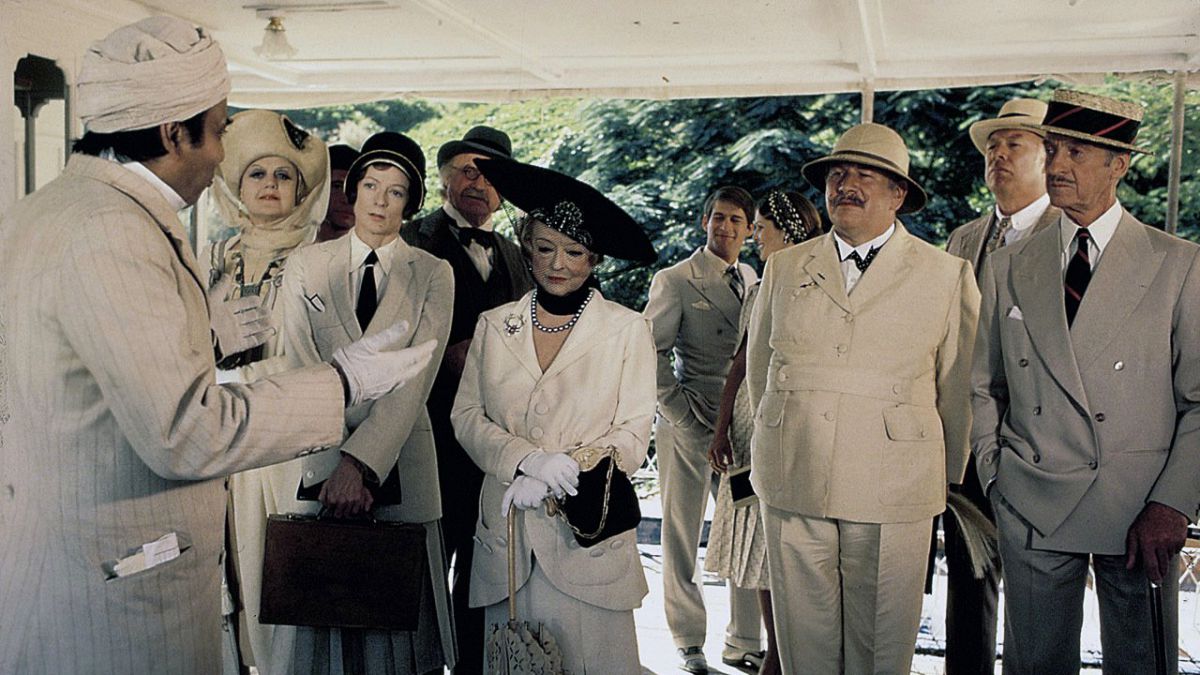
The all-star cast line-up for murder and mayhem in Death on the Nile

Director: John Guillermin

Cast: Peter Ustinov (Hercule Poirot), Jane Birkin (Louise Bourget), Lois Chiles (Linnet Ridgeway Doyle), Bette Davis (Marie van Schuyler), Mia Farrow (Jacqueline de Bellefort), Jon Finch (James Ferguson), Olivia Hussey (Rosalie Otterbourne), George Kennedy (Andrew Pennington), Angela Lansbury (Salome Otterbourne), Simon MacCorkindale (Simon Doyle), David Niven (Colonel Race), Maggie Smith (Miss Bowers), Jack Warden (Dr Bessner), IS Johar (Mr Choudhury), Harry Andrews (Barnstaple)

Is there anything more perfect for a Bank Holiday afternoon than an all-star Agatha Christie adaptation? Take a look at the TV schedules on those days and sure enough one of them will pop up. So on New Year’s Day, I took my place on the sofa for a welcome revisit to dastardly goings-on aboard a luxury cruise ship sailing down the Nile. 

Simon Doyle (Simon MacCorkindale) has jilted his lover Jacqueline de Bellefort (Mia Farrow) in order to marry the fabulously wealthy Linnet Ridgeway (Lois Chiles). It’s a tricky love triangle – so you can imagine the newly-married Doyles are far from pleased to find Jacqueline popping up on their Nile cruise holiday. Things eventually explode into a confrontation between Simon and Jacqueline that leaves him shot in the leg and her sedated. While they are both out of the picture, Linnet is murdered in her bed. With the two obvious suspects out of the picture, who among the (all-star) passenger line-up did the deed? Just as well Hercule Poirot (Peter Ustinov) is on the ship to solve the puzzle.

Following on the heels of the smash hit success of 1974’s Murder on the Orient Express, the producers of that film didn’t really shake up the formula too much. Hire a load of star actors, pick one of Agatha Christie’s most picturesque-set novels and then watch the money come pouring in. Albert Finney wasn’t available to come back (rumour had it he wasn’t keen in any case on the huge amount of make-up involved) so instead Peter Ustinov came on board and away we went.

Death on the Nile feels very much like a film following a formula. Perhaps it struggles to live up to the first film because it is a slightly less compelling mystery than the first film (although still a damn good puzzle with a real twist of a solution). Perhaps it was more difficult to recapture the magic? Or perhaps it’s because it lacks the quality of direction that Sidney Lumet brought to the first film. Lumet managed to create something that always felt more than a vehicle for star turns – the more plodding John Guillermin instead feels like the sort of guy brought in to manage the day-to-day realisation of a producer’s vision (essentially the same role he fulfilled on The Towering Inferno). Death on the Nile feels very comfortable on the television perhaps because it is filmed in a very straightforward, unobtrusive style with less visual panache than many of the David Suchet series Poirots (even the earlier ones).

But the film does a good job in hiring Peter Ustinov. Ustinov has the comedic chops – matched with the acting prowess – to walk a fine line between the drama and the slight air of comedy that underpins the film. The sort of performance that tells everyone that this is essentially a Christmas treat and shouldn’t be treated too seriously – but still conveys enough of the character’s humanistic shock and anger at violence and murder. Poirot can very easily become a slightly ridiculous character, and Ustinov is canny enough to realise that (relative) underplaying of the character actually works rather well to make him engaging and entertaining, but not too heavy.

Not that heavy is the film’s problem, as this is a pretty light soufflé. The all-star actors happily go through their paces, although you can pretty much tell most of them are in this for the free holiday and the pay cheque. Most of them have fun with their parts – none more so than Angela Lansbury who goes way way way over the top as a bohemian novelist – but they pretty much go through the motions. Shaffer’s decent screenplay doesn’t do much in any case to sketch these characters out – and you suspect much of the bitchy duelling between Bette Davis’ selfish rich widow and Maggie Smith’s put-upon companion was spun out post casting. 

Saying that, I was rather taken with Olivia Hussey’s performance as a fundamentally decent person in the middle of the madness, while Lois Chiles is good enough that you regret her career didn’t really go anywhere after this film. Simon MacCorkindale and Mia Farrow also do well with tricky parts. But it’s all pretty much paint-by-numbers stuff.

Visually the film looks lovely on the Nile. The costumes and designs are great – even if some of them look pretty much straight out of the 1970s rather than the 1930s – and you can tell that the money has been lavished on it to make a pure, old-fashioned entertainment. Shaffer’s script does a decent job of adapting one of Christie’s most twisty tales – even if it does give us what feels now a pretty racist portrait of the meek and crawling ship manager played by IS Johar.

But this is safe and comfortable entertainment – and it definitely is entertaining – rather than something that feels truly filmic. You could argue that this film more than any other set the tone for what we expect from an Agatha Christie adaptation – and its mixture of light comedy and grisly murder set in a lush 1930s location is pretty much de rigeur for everything else that follows. And you know what, I don’t think that’s a bad thing.