Tag: Michael Caine

The Wrong Box (1966)

The Wrong Box (1966)

Farce, murder, mayhem and comic energy abounds in this sometimes try-hard but fun enough knockabout comedy

Director: Bryan Forbes

Cast: John Mills (Masterman Finsbury), Ralph Richardson (Joseph Finsbury), Michael Caine (Michael Finsbury), Peter Cook (Morris Finsbury), Dudley Moore (John Finsbury), Nanette Newman (Julia Finsbury), Tony Hancock (Inspector), Peter Sellers (Dr Pratt), Cicely Courtneidge (Major Martha), Wilfrid Lawson (Peacock), Thorley Walters (Patience), Irene Handl (Mrs Hackett)

Do you know what a tontine is? For those who don’t (come on, own up!) it’s basically an investment named after the Florentine banker Lorenzo di Tonti in 1653. Investors pay into a scheme which gives a regular income while accumulating interest on the initial capital. As the investors die off, the individual payouts increase until the final surviving investor claims the full ‘pot’ of cash. It’s essentially a lottery for being the last surviving investor. That’s ripe for two things: murder and farce.

We got dollops of the latter in this slap-stick, old-school farce loosely (very loosely) based on a Robert Louis Stevenson and Lloyd Osbourne novel. A Victorian tontine sees its members fall at regular intervals until there are only two survivors: estranged brothers, cantankerous Masterman (John Mills) and almost supernaturally tedious Joseph (Ralph Richardson). With Masterman pretending to be on his own deathbed to lure his brother out (to murder him), the blithely dotty Joseph is kept in health by his greedy nephews Morris (Peter Cook) and John (Dudley Finsbury). En route to see Masterman, a train accident leads to a series of farcical misunderstandings involving mis-identity, confusion and a dead body packed into a box and delivered to the wrong house.

Directed with an, at times, slightly too overtly zany bent by Bryan Forbes, The Wrong Box oscillates between being rather funny and trying too hard. It’s all too obvious to see the influence of the Oscar-winning Tom Jones in the film’s jaunty musical score and use of flowery-lined caption cards to announce events and locations. It’s also clear in the fast-paced, at times overblown, delivery of performances and dialogue, with its mix of improvisational humour and cheeky lines. Despite this though, The Wrong Box manages to be just about be fun enough (and it’s funnier than Tom Jones).

That’s probably because it’s not aspiring to be much more than a jaunt, an end-of-term treat in which a host of famous actors and comedians put on a show. Forbes might not have the inspired flair at comedy or the sort of timing this needs. But he’s got a nifty touch with dialogue and does a decent job of translating classic British theatre farce to the screen. The Wrong Box – even the title leans into this – is all about those classic farcical tropes of things being delivered to the wrong people because they have similar names, mistaken or misheard messages being passed on and people obliviously talking at cross purposes.

We get set-ups like Mills’ fake-bed-ridden old man trying multiple times to off Richardson’s bore, each attempt obliviously foiled by coincidence and accident. A body misidentified because its wearing someone else’s coat, then packed into a crate and delivered (to the wrong house) to disguise a death that hasn’t actually happened. Undertakers mistakenly taking away a man who has fainted at the foot of the stairs rather than a body in another room. All classic farce.

It’s not a surprise that experienced theatre actors emerge best. Richardson, in particular, is a delight as a man who has made such a study of trivia that he compulsively bores anyone he encounters. Fellow passengers on a train, a farmer who gives him a lift in his cart, attendees at a funeral – all of them glaze over in despair while Richardson’s Uncle Joseph, with monotonous eloquence, expounds mind-numbing trivia (including, at one point, in Swahili). He makes a fine contrast with Mills’ angry short-man, constantly fuming at a string of slights, real and imagined.

These two leads set the standard for the rest of the cast, a mix of comedians, theatre pros and star names. Peter Cook occasionally tries a little too hard as a bossy-boots determined to inherit the tontine – it’s remarkably that, even this early, Dudley Moore looks more relaxed in front of the camera (Moore’s later stardom would be inexplicable to the jealous Cook). Tony Hancock looks rather sadly like a rabbit-in-the-headlights as an inspector. Peter Sellers, not surprisingly, shows how it’s done: his two-scene cameo as a drunken doctor of loose morals, surrounded by cats and permanently sozzled is a master-class in low-key, rambling hilarity.

Michael Caine and Nanette Newman also acquit themselves very well. Throwing themselves into the spirit of things as our romantic leads – fulfilling the requirements of the genre by being both charming and sweet but also naïve and a little dim – they strike up a romance that manages to be both rather touching and also a neat parody of costume drama flirtation. Forbes shoots a rather nice scene where they breathlessly eye each other up, the camera cutting rapidly from exposed arms to facial features one after the other. Both are very funny, with Caine striking up a lovely double-act with Wilfrid Lawson as an almost incoherently drunk butler (Lawson’s finest hour since Pygmalion).

The film keeps its comic energy flowing well, with Forbes using a good mix of interiors and some attractive Bath locations (doubling for London). It’s also a film which – surprisingly since its written by a pair of Americans – really captures a sense of British eccentricity. I really enjoyed, in particular, the opening sequence that charts the deaths of the other members of the tontine – a parade of inept empire builders (soldiers, explorers, big game hunters) meting a series of surreal (often self-inflicted) deaths.

It probably does slightly outstay its welcome – 90 minutes would have been perfect. It’s a little too pleased with its semi-surreal set-up and stylistic flourishes – the floral on-screen captions definitely are far less funny than the films thinks. There is, at times, a little too much of the “isn’t this zany!” air about the film that can grate, with set-ups groaning with their desire to amuse (a late hearse chase scene falls into this) like a pub bore telling you a story in his self-proclaimed “inimical style”.

But at least The Wrong Box does make you laugh. And when that is all it is aiming to do, its hard not to have a soft spot for it.

Escape to Victory (1981)

Escape to Victory (1981)

The sort of odd movie pitch that could only have been made in the 80’s: it’s a POW film – but with footballers! And Stallone in goal! Cult nonsense, but fun.

Director: John Huston

Cast: Sylvester Stallone (Captain Robert Hatch), Michael Caine (Captain John Colby), Pelé (Cpl Luis Fernandez), Max von Sydow (Major Karl von Steiner), Bobby Moore (Terry Brady), Osvaldo Ardilles (Carlos Rey), Paul von Himst (Michel Fileu), Kazimier Deyna (Paul Wolchek), Hallvar Thoresen (Gunnar Hilsson), Mike Summerbee (Sid Harmor), Russell Osman (Doug Cluire), John Wark (Arthur Hayes), Daniel Massey (Colonel Waldron), Tim Pigott-Smith (Major Rose), Carole Laure (Renee)

It’s possibly the most bizarre idea in movies. An old-school, boy’s-own-adventure about POWs starring a Panini sticker album’s worth of footballers, led by Michael Caine and Sylvester Stallone playing the Germans (actually represented by a team of ringers from the New York Cosmos) in a ‘friendly’ football match in Paris. Oh, and it’s directed by John Huston. Who thought this one up?

Needless to say Escape to Victory is a cult hit. Caine plays professional footballer John Colby, his career interrupted by internment in a POW camp, challenged to an exhibition match by football-mad Major von Steiner (Max von Sydow). When von Steiner’s bosses turns the game into a propaganda vehicle, Colby is under intense pressure to pull out. When he refuses – not wanting to put his players lives at risk, some of whom (the Eastern European ones) have been rescued from labour camps – instead he is asked to accommodate a daring escape plan, led by American Robert Hatch (Sylvester Stallone) who joins as ‘trainer’ and back-up goalie. With the match scheduled, a plan is formed: the team will escape at half time. But will the players abandon the game, or will sporting pride kick in?

Well, what do you think? The whole film is a build up to the game. Are they really going to leave it at 4-1 to the Germans? The pedestrian opening two thirds of the film can pass you by. You certainly feel it passed John Huston by (if you ever want to see a great director do a pay cheque movie, watch this). The film settles into familiar rhythms of both genres (sports and POW movies) mashed together. For the latter; forgers, escape committees, roll-calls, daring escape attempts over and under wire, muttered attempts to board trains with fake papers are all dutifully ticked-off. Nothing unusual: the interest is all in the sports film.

And if you are going to make a sports film – crammed with training montages – who else would you hire than a dream list of footballers to perform them. And no footballer was more of a God-like figure than Pelé. Welcome to the only film the Greatest Player Ever made (as soon as he opens his mouth, you’ll see why). Alongside him England’s legendary World Cup winner Bobby Moore, charming Argentinian Ossie Ardilles (not trusted with a line), several other internationals from across Europe and (filling out the numbers) half a dozen players from Ipswich Town (though, to be fair, John Wark might just be the best actor). Most of the best parts involve watching these stars go through their paces.

Michael Caine – who only took the film so he could say he had genuinely played with Pelé – anchors all this reasonably well (even though, at 47, he looks noticeably out-of-shape considering he’s playing an international footballer at the peak of his career). The role of Colby is no stetch for him, but Caine conveys carrying responsibility rather well, and there is some decent material as he butts heads against the unhappy upper-class officers who want him to tell the Germans to shove it.

The officers – decent performances from Daniel Massey and Tim Pigott-Smith among others – point out the Germans won’t give them a sporting chance. But, this is the sort of film where boy’s own pride kicks in, and we get a classic ‘let’s show em’ attitude. This culminates, of course, in the half-time planned escape attempt being aborted as the players protest “We can win this!” and the side head back out for the second half (and, of course, glory).

It’s a big shout as our heroes take a heck of a drubbing in the first half. (This despite Caine’s ahead-of-his-time coaching advice to make the ball do the running, which sounds like tika-taka seventy years early – was Escape to Victory required viewing in Spanish football academies?). To the disappointment of von Steiner – our token ‘Good German’ played with his customary professionalism of von Sydow – who gave his word it would be a fair game, his superiors hire “a very good referee” who will “make no mistakes”. German tackles fly in un-punished, a dubious penalty is awarded and Pelé’s ribs are broken in a filthy foul forcing the team to play with ten men. Those dirty, cheating Germans! Thank goodness Bobby Moore scores to give them a chance.

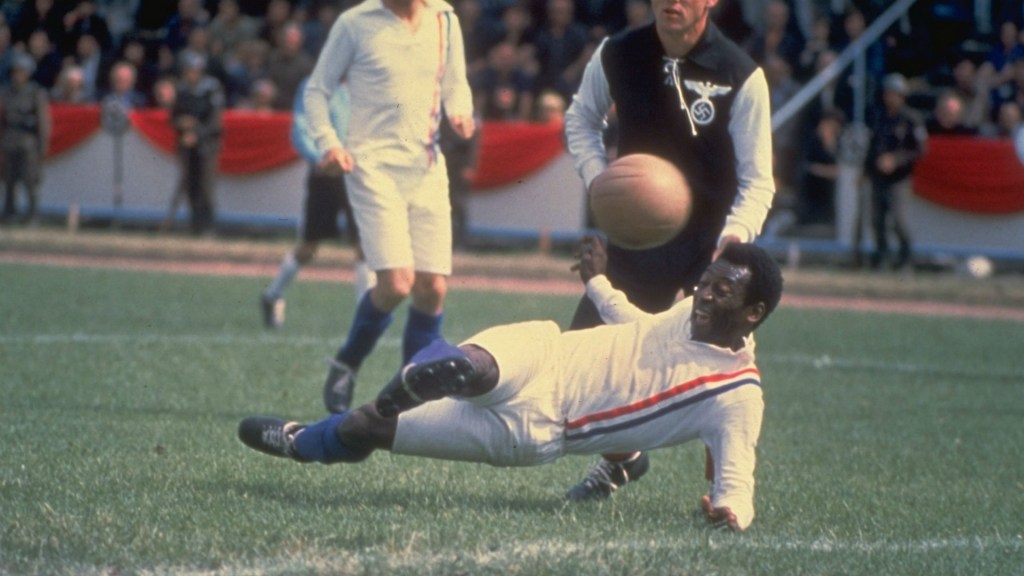
Every star player gets their moment in the spotlight, most of all Pelé who scores with a trademark bicycle kick. (I wonder if Pelé counted this one in his career goals record?) It’s a breath-taking piece of skill – von Steiner even proves his “Decent German” credentials by rising to applaud (to the fury of his fellow officers). Our heroes pull it back to 4-4 before having a goal disallowed for a false off-side (mind you it feels less inexplicable in an age where VAR chalks off goals for offside elbows). Then of course the Germans are awarded a penalty as the last kick of the game after a fair tackle by Ardiles.

And so, we come to Stallone. Perhaps the most inexplicable thing in this, the Italian Stallion at least convinces as a man who knows nothing about football. Looking trim, Stallone handles most of the POW and escape stuff (and a token romance subplot with a French resistance fighter) but of course space had to be made for him in the game. So, he plays as keeper (the team’s first choice keeper volunteers for Caine to break his arm so Stallone can be released from lock-up to play in the film’s most difficult to watch moment). Stallone wanted to score the winning goal, but was told that was unlikely for a keeper, so instead he saves the penalty to preserve the moral victory. Stallone mumbles his way through the film, feeling bizarrely out of place, but he was the big star.

Escape to Victory is a truly bizarre thing. But it’s got a fun football game in it and as sort of exhibition match it’s a bit of a treat. And watching it shortly after the passing of Pelé, it feels almost like a rather lovely tribute.

Get Carter (1971)

Get Carter (1971)

Brutal, dark and nihilistic British gangster film removes any chance that you might fancy trying a life of crime

Director: Mike Hodges

Cast: Michael Caine (Jack Carter), Ian Hendry (Eric), John Osborne (Kinnear), Britt Ekland (Anna), Brian Mosley (Cliff Brumby), George Sewell (Con McCarty), Tony Beckley (Peter the Dutchman), Glynn Edwards (Albert Swift), Alun Armstrong (Keith), Bernard Hepton (Thorpe), Petra Markham (Doreen), Geraldine Moffat (Glenda), Dorothy White (Margaret)

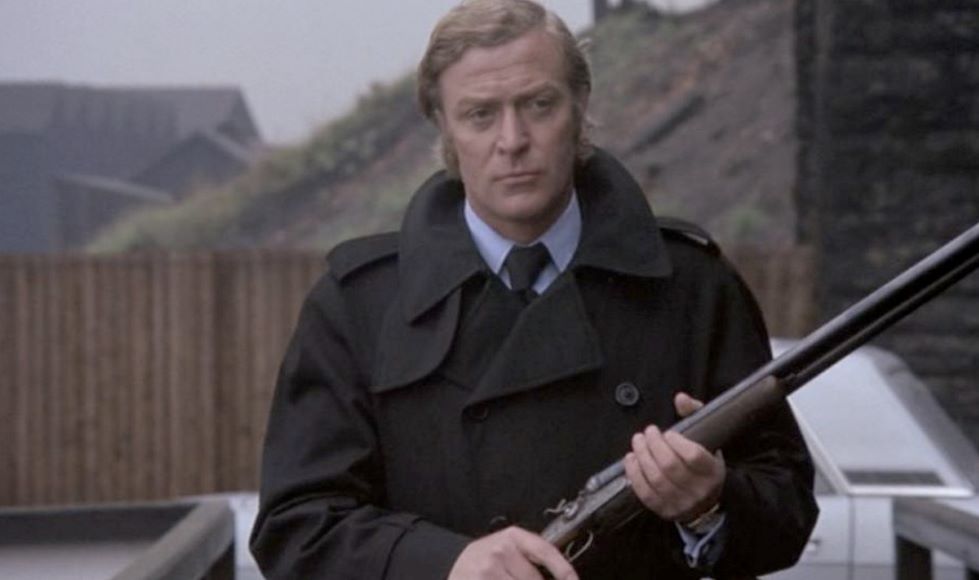
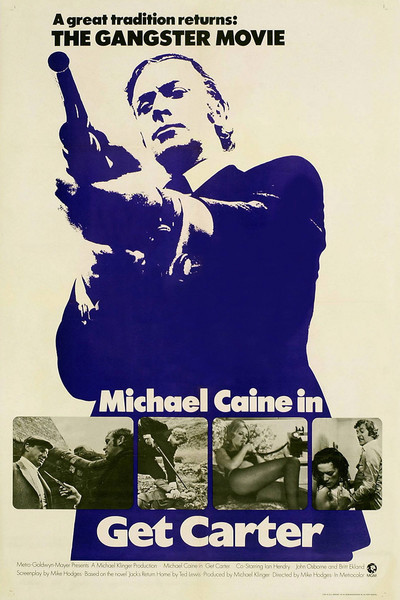
It’s probably the finest British gangster film ever made. Get Carter is a cold, dark, grimy film – a punch to the solar plexus, which completely rejects any sense of charm in its gangster characters. Michael Caine called Jack Carter a shadow Caine, the man he could have become if his life had broken out slightly differently. It’s set in an unremittingly bleak Newcastle, but it feels like it might be happening in an anti-chamber of hell, with its thoroughly amoral lead barely aware he’s spiralling towards destruction. It’s a sociopathic, Jacobean revenge tragedy set among the dirt filled suburbs of Newcastle.

Jack Carter (Michael Caine) is a professional fixer for London gangster brothers. He returns to his childhood home of Newcastle after the sudden death of his brother. But he’s not satisfied with the official explanation. Instead, he dives into an investigation, in which he cares not a jot about the collateral damage he causes or the likely reaction of the underworld powers that be as he rocks the boat to destruction, trashing the lives of everyone he meets, good and bad.

Powered by an extraordinary performance of blank nihilism and cold, unexpressed fury by Caine, nominally Jack is a man motivated by the harm done to his family. However, Hodges film is so cold-eyed and realistic about the mentality of gangsters, we know it’s just an excuse. Carter is never heart-broken, he’s annoyed. His brother may have been punished and his niece (it transpires) misused, but fundamentally what motivates Carter is the affront. By taking a pop at his family, he feels they really think they can take a pop at him. How dare they: he’s Jack Carter.

Any charm Carter has, solely comes from residual affection for Caine. By any measure, Carter is an awful man (even if he has a good turn of phrase). He is a sociopath with no concern for anyone. When friendly Keith (a young Alun Armstrong) is beaten black and blue for helping Carter, how does our hero respond? Tosses a few bank notes on his bed and tells him “buy some karate lessons”. Carter sees the world solely as made up of debts, which can be discharged by money, never mind the situation. His niece throws beer over a friend? He’ll pay for the dry-clean. Keith gets bashed up: take a roll of twenties, what’s your problem?

Carter directly kills four people (and is responsible for several other deaths), all with a blank-eyed lack of reaction. There isn’t any sadism to what he does – the deaths are mostly efficient and to his mind, justified, because by taking actions against his family they disrespected him. When he locks a woman in the boot of his car, and a pair of heavies push the car into the Tyne he doesn’t bat an eyelid at her inevitable death (never mind he slept with her hours before). People who find themselves close to Jack, or drawn into his circle, suffer terribly and he literally couldn’t care less.

Get Carter is the bleakest of all gangster films, shot with an imaginative kitchen-sink beauty by Mike Hodges, which actually carries a lot more visual glory than you might expect. Drained out colours abound – there are virtually no bright primary colours in this, with the whole of Newcastle a mix of muddy browns, soot-stained greys and filthy charcoals. Hodges’ film is also dynamic and fast-paced: he throws in striking aerial and crane shots (there is a beautiful shot that follows a car chase from a bird’s eye view), but also gets down and dirty in this grainy world.

It’s an urgent, lean and mean film constantly kicking you in the shins, but told with skill and artistry. Hodges pieces together a marvellous early scene, where Carter visits local heavy Kinnear (a suave, chillingly well-spoken John Osborne): simultaneously, in one single location, two scenes (both with vital information) play out at the same time – Carter chats to Kinnear’s moll Glenda (Geraldine Moffat), picking up vital information while on the same sofa Kinnear beats his guests at cards. Everything though is perfectly clear: masterful stuff. It’s also a film crammed with small details that reward careful viewing: Carter’s bed has a cross-stitch of “What would Jesus say?” above it (I dread to think) and on his train journey, look out for a fellow passenger with a distinctive ring.

So confidently is this put together, it’s amazing to think Hodges was a first-time director. This is a film dripping with menace, but also a horrifyingly immersive camera. We are frequently thrown into the midst of the action. Carter frequently looms over the camera or is filmed in violent motion moving towards his next goal. There is not a jot of romanticism around the film: neither about the gangsters or the bleak world they operate in. Newcastle is pre-Thatcherite hellhole, with precious little glamour. Even the gangster locales – the clubs and pubs – are bashed-up and unpleasant.

Across the board, the gangsters are exposed as cruel, heartless and vile. Touches of class are ruined by everyone’s fundamental lack of class. Cliff Brumby’s (Brian Mosley) planned classy restaurant sits atop a concrete multi-story car-park. Kinnear’s (John Osborne) fancy country house is the setting of the grimmest, most depressing orgy you’re likely to see. Carter is trying his best to dress classily, but his cruelty always punctures the illusion. He’s introduced watching a porn film with his bosses in London and the film revolves around the seamy underworld of homemade porn.

The women in the film are primarily used by the gangster as props for these films, and Get Carter doesn’t shy away from the exploitative fate for women in this world. However, you can’t disagree that it takes in a bit of exploitation itself. Britt Ekland has high billing for her single scene, where she lies mostly naked on a bed pantily having phone sex with Carter (who goes about this, as all things, with a functional efficiency, at least as interested in the excited reaction of his middle-aged landlady who is sitting in the room with him while he chats on the phone). It’s undeniably a moment for us to gawp but it still feels less cold and cruel than those awful porn films.

Carter discovers his niece has found her way into these. He even sheds a tear over this: but he doesn’t care because of what has happened to her. Again it’s all about him: Carter couldn’t care less about the morals and is perfectly happy for porn to soak up other women. He’s not really that interested in his niece: it’s all about the damage to him, that a “made man” like him should have a member of his family getting boffed like a slag for others entertainment. How bloody dare they?

Get Carter understands this is a dark and soulless world, and is a film bereft of hope. Its hero is a revenge obsessed sociopath, who only smiles in the film after he has burnt everything around him down. Gangsters destroy everything they touch and care about nothing other than themselves. All debts can be settled with money, all women are toys to be used and thrown away. Death means nothing and the world is a drained-out hell of shabby houses and dirty clubs. It’s the grimmest and finest British gangster film out there. Who would want to be gangster after seeing this?

Hannah and Her Sisters (1986)

Mia Farrow, Barbara Hershey and Dianne Wiest are Hannah and Her Sisters one of Allen’s finest films

Director: Woody Allen

Cast: Woody Allen (Mickey), Michael Caine (Elliot), Mia Farrow (Hannah), Carrie Fisher (April), Barbara Hershey (Lee), Lloyd Nolan (Evan), Maureen O’Sullivan (Norman), Daniel Stern (Dusty), Max von Sydow (Frederick), Dianne Wiest (Holly), Sam Waterston (David)

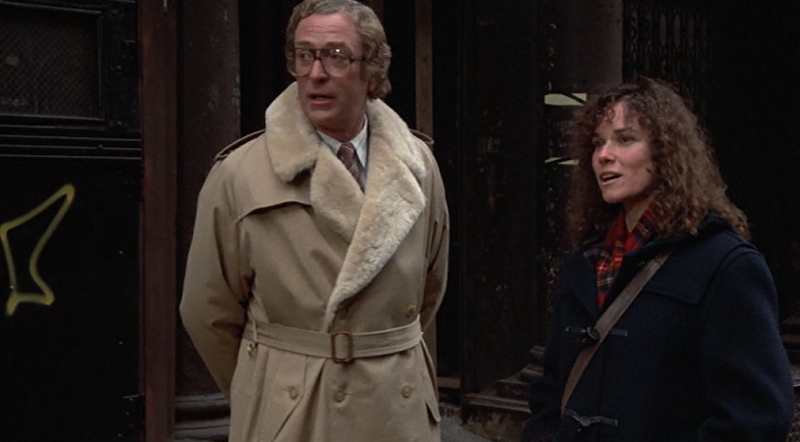
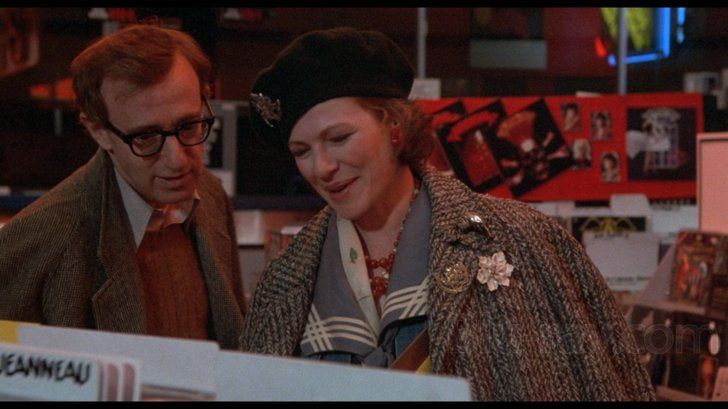
Hannah (Mia Farrow) is divorced from Mickey (Woody Allen) and happily married to Elliot (Michael Caine). Eliot is in love with Lee (Barbara Hershey). Lee is Hannah’s sister. Holly (Dianne Wiest) is considering dating Mickey. Holly is also Hannah’s sister. This whirligig of relationships is the heart of Hannah and Her Sisters, one of Woody Allen’s finest and certainly most humane films. Witty and heartfelt, it’s one of his sharpest scripts, crammed with acute observation and fine gags and is directed with a coolly introspective eye.

Allen splits the film into multiple sections, each opening (like the chapter of a novel) with a quote from the scene we are about to watch. Music plucked from Allen’s beloved classics (most often, and fittingly considering its romance theme, Bewitched, Bothered and Bewildered) frequently bridge scenes. Internal monologues is used often to allow us to explore the inner lives of the characters (the actors do a marvellous job reacting on screen to this internal thought process we are hearing).

The film uses a host of inspirations carefully mixed into Allen’s Manhattan Metropolitan middle-class milieu. The entire film has an autumnal Chekovian feel to it, with a rich sense of lives continuing ‘off stage’ as much as on. While the title obviously echoes Three Sisters, it’s study of romantic and intellectual entanglements overlaps with Chekov, as does the film’s love of wordplay. There are also, of course, echoes of Bergman (with gags) both in the film’s episodic structure but also its framing device of three Thanksgivings dinners, reflecting Bergman’s triumphant Fanny and Alexander.

The most effective thing about the film, in addition to its wit, is the surprising warmth it feels for the characters. Not always in an Allen film does one find the sympathy and empathy so widely spread – there is usually at least one character who is the target for the writer’s scorn. But here, no major character is presented as either the butt of snide humour or sneers. Even von Sydow’s pretentious artist is capable of searing emotional pain, and its hard not to sympathise with him as clients enquire whether his art will fit with their home décor. Each scene carefully balances the perspectives of multiple characters to allow us to relate to what each of them is going through. It’s possibly the largest cast of fully-rounded characters in an Allen film, and his most generous film.

It’s a film that avoids judgement over its characters, despite the frequently terrible and morally troubling things they do. It’s a film that understands the heart is an uncontrollable but resilient muscle, which doesn’t always guide us to the right or the easy things. Of course today, with Allen, you think it’s probably not a surprise he had sympathy with a group of people engaged in relationships that often involve profoundly betraying others. But at least her understands the irresistible urge people have to continue doing things they shouldn’t.

It’s hard not to overlook that the film’s least explored character (despite her multi-layered performance) is Mia Farrow’s Hannah. Poor Hannah, the still, moral centre of the film, is betrayed by both her husband and her sister (to their mutual guilt). Allen leaves her in ignorance – even though she knows something is wrong – and while Allen acknowledges what Elliot and Lee is doing is wrong, he mitigates things by making clear Hannah’s decency and generosity makes her overwhelming. While we see the impact a sudden distance from her husband has on Hannah (in a great shot she talks to him while he is off camera in another room, making her look like she is talking to a wall), Hannah is one of the few characters we don’t get the insight of an internal monologue for, and that feels like an easier way for Allen to maintain our sympathies for others.

The person whose internal monologue we hear the most is her conflicted husband Elliot. Hannah and Her Sisters may be unique in that it has two characters who are clear Allen substitutes. While Allen plays one, Caine is the husband (who looks alarmingly like a prediction of future developments in the Allen-Farrow relationship). Caine is superb, not least because he turns lines you can hear could be delivered with an Allenesque twitchiness, into ones crammed with utter emotional genuineness.

For all that he is a cheat, Elliot is strangely guileless and rather sweet, plagued with guilt and also giddy as a schoolboy, begging Lee to read an ee cummings poem that carries special meaning for him. Caine makes Elliot a genuine human character, a flawed man trying to avoid hurting people (but causing pain everywhere). If Branagh in Celebrity (with his distracting Allen imitation) showed how much of a slave to Allenesque delivery you can become, Caine shows how heartfelt simplicity and underplaying can bring out deeper emotion from Allen’s dialogue. Allen also rather brilliantly directs this abashed dance of attraction: from Caine’s internal monologue telling him to play it cool, moments before he kisses Lee, to the camera framing Frederick’s sketches of a naked Lee directly in Elliot’s line of sight while he tries to think of literally anything else.

Caine also matches superbly with Barbara Hershey, excellent as a woman who feels trapped in her life and drawn to Elliot despite herself. Lee’s current relationship is with Frederick, wittily played in a near parody of Bergmanesque brooding by Max von Sydow, who takes a late lurch into real vulnerability, a pretentious artist who is part-lover-part-tutor and is disconnected from the real world, Lee is virtually his only link left with it. Frederick is clearly a tutor and surrogate parent, as much as a lover to Lee – and that attraction to a figure who can take responsibility in her life is clearly something she’s attracted in Elliot. The slow, guilt-ridden coming together of Elliot and Lee – and the slow deflation of this fling – is the emotional heart of the movie.

The film’s other two arcs provide more of the gags. Woody Allen gifts himself some of his finest comic moments as Hannah’s hypochondriac ex-husband (the second Allen stand-in) undergoing an existential crisis after he discovers he is in fact not dying of a terminal disease. Dianne Wiest is similarly excellent (and also Oscar winning) as Hannah’s unsuccessful sister Holly, a would-be actress too insecure to find success. Wiest is not only funny, but also vulnerable and affecting, as she tries to find her place in the world. In many ways Wiest plays a third version of Allen here, as she becomes a neurotic writer channelling her real life into writing (to the consternation of her sister).

Changing reality into scripts is the only thing awkward about Hannah and Her Sisters today. Hannah and her extended family (and many children) are a thinly veiled portrait of Farrow’s own family (Hannah’s mother is even played by Farrow’s real life mother Maureen O’Sullivan). Like Allen and Farrow, Mickey and Hannah needed to adopt and foster children. And of course Eliot’s affair with Hannah’s sister eerily mirrors Allen’s own affair with Farrow’s adopted daughter, and the film’s sympathy for Elliot sometimes seems like an unsettling excusing of Allen’s future conduct. That’s not even mentioning one of the film’s earliest jokes is Allen’s character complaining about the cutting of a child molestation skit from his Saturday Night Live-ish show (“what’s the problem half the country’s doing it” quips Allen, a joke that doesn’t work today for so many reasons).

But put that aside because, whatever your opinion of Allen, Hannah and Her Sisters is one of his finest films. It’s expertly shot and directed with a real unobtrusive ease (Allen’s innate understanding of this Manhattan world contrasts sharply with how at sea he is in his European movies). The acting is spot on. As well as being very funny, the moral conundrums the film explores are sympathetic and witty, as are the flawed human beings behind them. Possibly his best film.

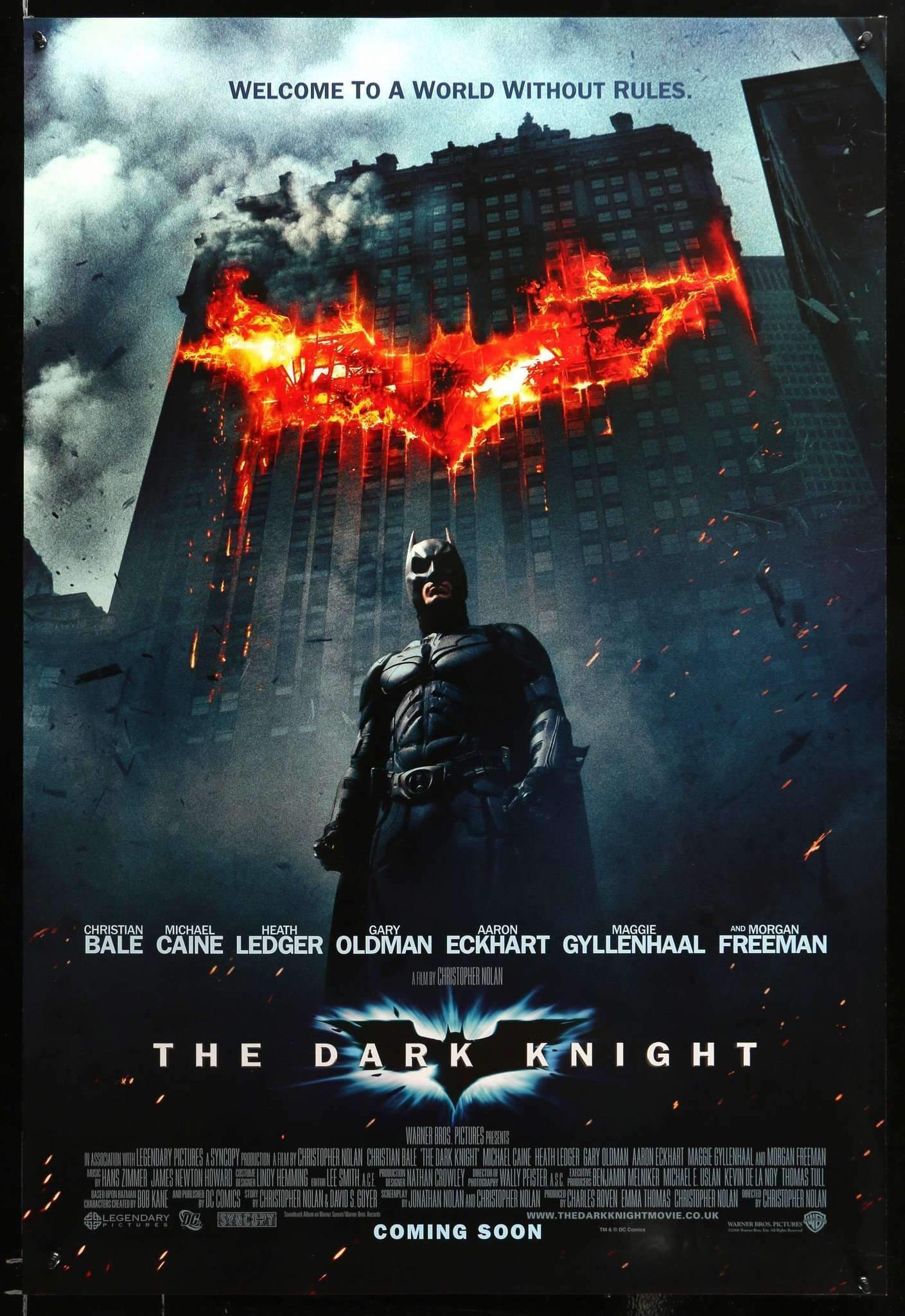
The Dark Knight (2008)

Heath Ledger leaves a great legacy as The Joker in The Dark Knight

Director: Christopher Nolan

Cast: Christian Bale (Bruce Wayne/Batman), Michael Caine (Alfred Pennyworth), Heath Ledger (The Joker), Gary Oldman (Lt James Gordon), Aaron Eckhart (Harvey Dent), Maggie Gyllenhaal (Rachel Dawes), Morgan Freeman (Lucius Fox), Eric Roberts (Sal Maroni), Monique Gabriela Curnen (Detective Ramirez), Ng Chn Han (Lau), Ritchie Oster (The Chechan), Colin McFarlane (Commissioner Loeb) Anthony Michael Hall (Mike Engel), Joshua Harto (Coleman Reese), Cillian Murphy (Scarecrow)

Christopher Nolan’s Batman Begins reset the table for superhero films. The Dark Knight took that table, picked it up, overturned it and rebuilt it from scratch. This influential film is certainly the greatest superhero film ever made and the calling card Nolan will carry for the rest of his life. Its exclusion from the 2008 Best Picture list at the Oscars (and Nolan’s snubbing for Best Director) was so widely condemned as snobbery (especially as the slot went to the atrocious awards-bait The Reader, a film even Oscar-host Hugh Jackman quipped he hadn’t seen) it led to the Oscars doubling the number of Best Picture Nominees (something benefiting several genre films inferior to this one). The Dark Knight declared forever superhero films could be proper films with characters, intriguing stories and interesting things to say.

It’s been a year or so since Bruce Wayne (Christian Bale) began his caped crusade as Batman, wiping out organised crime in the city. District Attorney Harvey Dent (Aaron Eckhart) – working closely with Bruce’s childhood sweetheart Rachael Dawes (Maggie Gyllenhaal) – has launched his own tough on crime crusade that has led to many mobsters landing behind bars. In the police force, Lt James Gordon (Gary Oldman – superb as a man whose good intentions lead to great harm) is straightening out the most bent police force on record. Now the gangs are desperate and in retreat – so desperate that they turn to the sort of dangerous, anarchic freak they would never usually countenance working with: a man known only as The Joker (Heath Ledger). The Joker though has his own plans for the city, for Batman and his own crazed ideas of social anarchy.

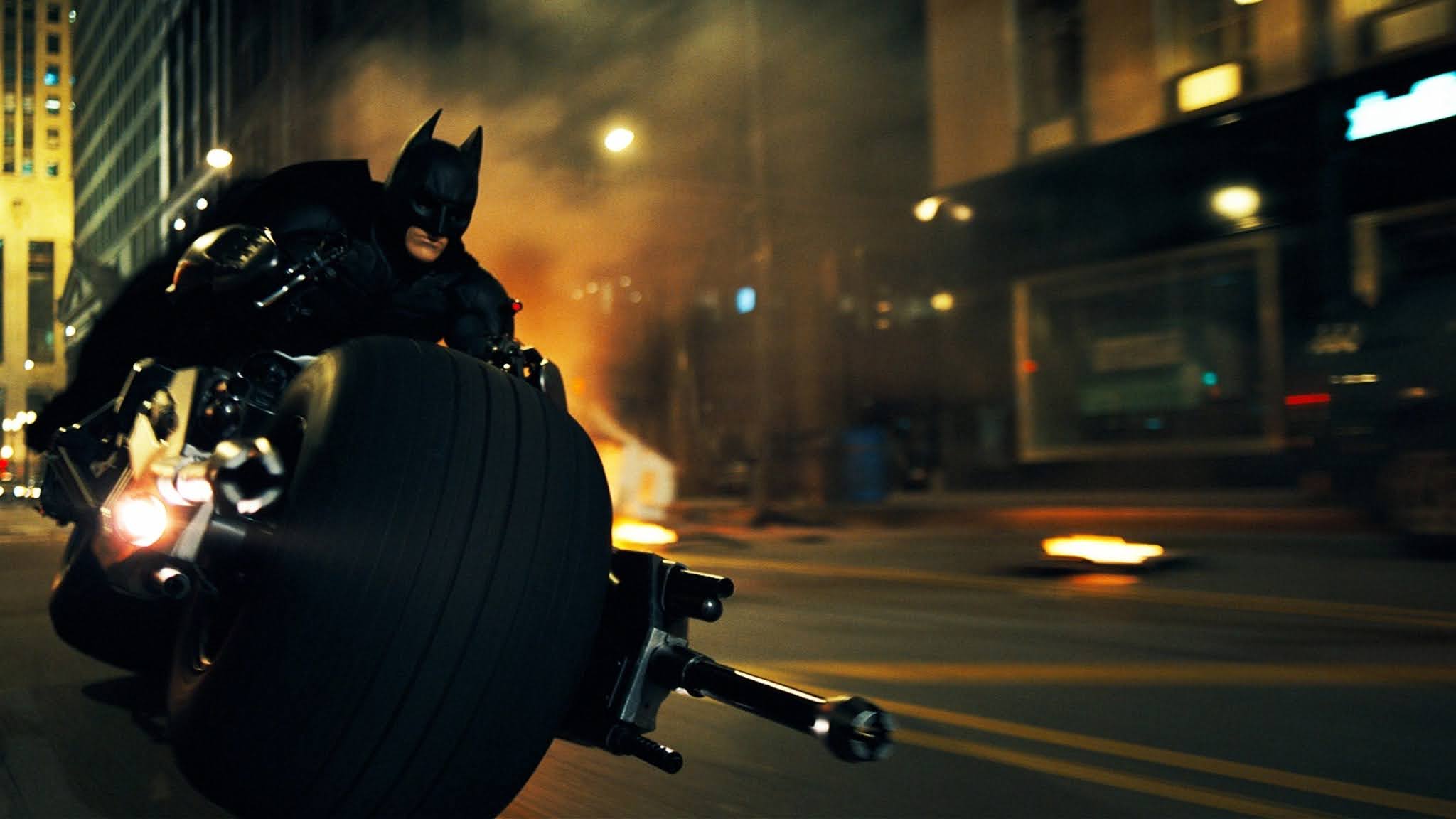
The Dark Knight is told on a huge scale: but Nolan never once loses sense of the fact this is an adventure film, while making sure that it explores ideas around society and humanity that leaves most high-brow films standing. Sumptuously made, a technical marvel it has set-pieces that stand with the greatest in cinema, dialogue that is crisp and brimming with intelligence and every performance in it excels. Nolan’s cinematic verve creates a film that always feels fresh.

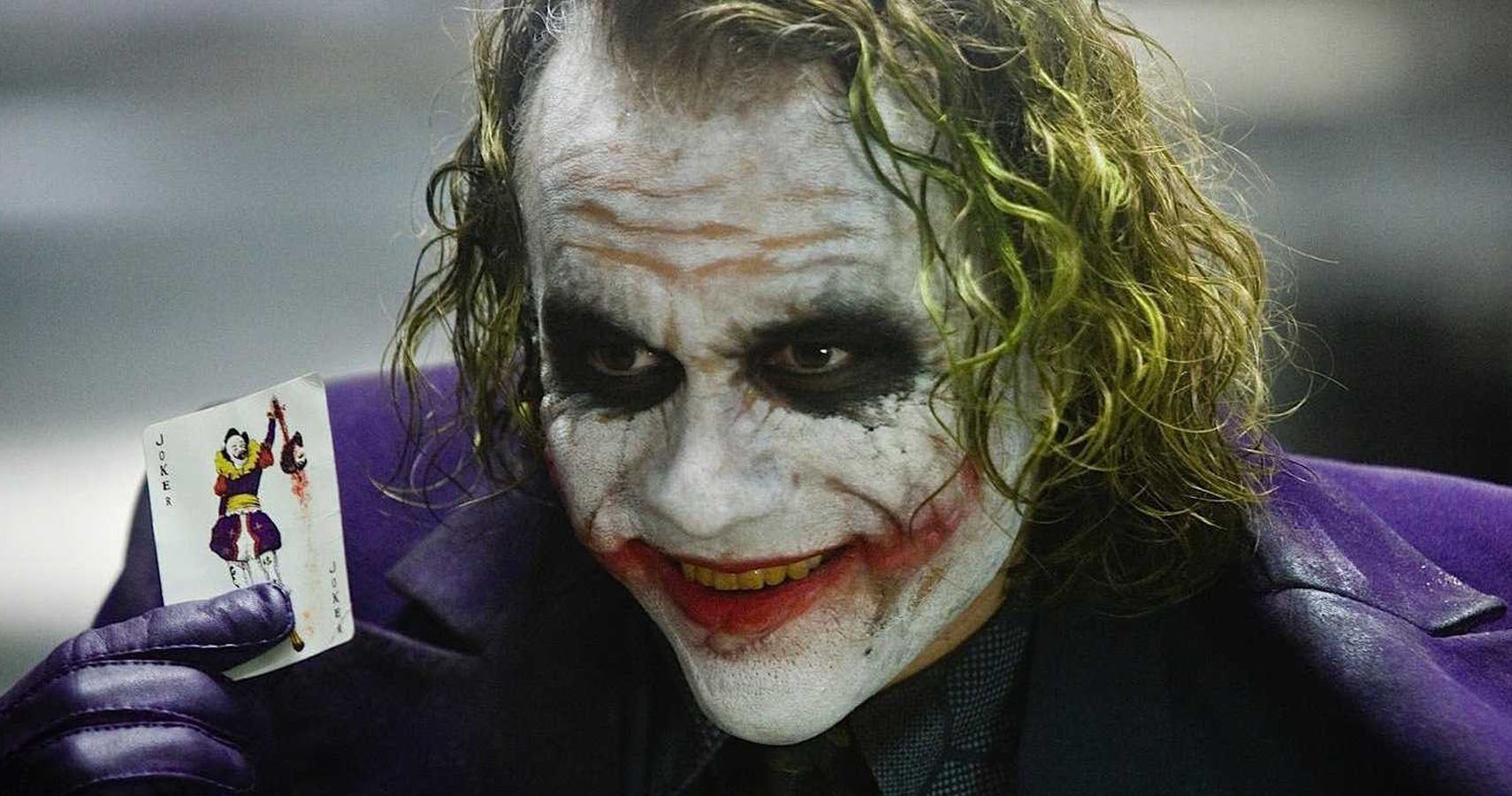
It’s hard not to reflect on the film without remembering the tragic death of Heath Ledger. A controversial choice for the Joker – despite Brokeback Mountain he was seen by many as a lightweight actor – Ledger’s performance is astounding. He radically redefines the character, giving every scene an eerie edge somewhere between violence and black comedy. His Joker has the bowed head and animalistic prowling of a hyena (along with the laugh), a snake-like licking exploration of his facial wounds, a voice that switches from a deep baritone to a high-pitched giggle.

He’s dangerously, psychotically violent, with a dark, demonic delight in mayhem, a wickedness that is not funny so much as unsettlingly comic and an unpredictability laced with a sharp and intimidating intelligence. Ledger essentially redefined a character who had existed for decades. It’s an extraordinary performance, winning numerous awards, that stands as the definitive interpretation of the character as a scuzzy, streetwise hood with the willingness to do anything at all.

The Joker is the channel Nolan’s film uses to explore fascinating ideas around order and chaos, and the clash between anarchy and rules. Nolan understands that, for all his confused psyche – heading out to beat up criminals for his nightly activities – Batman is a bastion of law and order and moral righteousness. He’s a fiercely ordered and meticulous man, who plans several steps ahead of his enemies, holds rigidly to a moral code and has the confidence (arrogance?) to believe he is best placed to make the big calls for the many. They are personally traits he shares with all the films heroes: he, Gordon and Dent are all men who harvest long-term plans to deliver mass benefits.

Standing against them is their antithesis. The Joker believes principles are bunkum, with life motivated by randomness and selfishness. These are polar opposite theories of life being explored here – and the Joker’s plans (such as they are) are to show that mankind is, at heart, an awful, terrible thing that can only destroy. But the schemes of our heroes also smack of arrogance and control – a sense of almost divine certainty in their righteousness.

Basically, what we get here is a discussion on our fear of anarchy. Deep down we all like conspiracy theories, because it shows someone is in charge. Randomness is terrifying. We all like to feel there is an organising force behind events – no one wants to meet their end by the toss of coin. We feel comforted by being part of an overall plan – even if it’s a plan for our demise. The Joker’s power comes not from his skills in themselves, but his willingness to break all rules and destroy anything and anyone at any time for any reason. There is no protecting against this. And it’s terrifying.

Nolan introduces the concept – and the character’s warped way of thinking – from the very start. The stunning opening sequence features a bank heist (with a neat cameo from Heat veteran William Fichtner – a deliberate homage) where the Joker has devised a ragged, but brutal plan which involves each member of the gang offing each other in turn (not that they are aware of that!). It’s a blazingly, triumphantly cinematic opening and a brilliant entrée to Nolan’s superbly directed, engrossing film.

While juggling intelligent ideas it’s also a brilliant, edge-of-the-seat ride crammed with jaw-dropping set-pieces. Each of them is underpinned by that rich psychological clash. Bruce Wayne is trapped in tactics utterly unsuited for his opponent, his assumption that criminals are simple people motivated by greed. Even worse, the Joker delights in identifying the clear lines Batman won’t cross, and dances right across them, wiping out the psychological advantages that Batman has over other criminals: once the Joker establishes Batman will never kill him, he forever knows he has the upper-hand.

Bravely the film ends not with a bang, but a character-driven, personal three-way confrontation between its three heroes (Batman, Gordon and Dent), low-key but bubbling with resentments, fury and pain. It’s a perfect cap – and a capturing of the film’s argument that the greatest damage people like the Joker can cause is not to our property but to our souls.

It’s easy in all this to overlook Christian Bale, but he is wonderful as Wayne (and again this is a film that is as much, if not more, about Wayne than Batman). Increasingly distancing himself from people – his last links to human warmth being Alfred (Michael Caine, again in wonderful mentor form) and Rachel Dawes (re-cast to terrific effect with Maggie Gyllenhaal, who brings wonderful depth and complexity to the role) – Wayne carries a martyr complex, damaging to his psyche.

Nolan’s film is a dense and rich thematic exploration of chaos and certainty which expertly combines thills and actions with a character driven plot. Superbly acted, wonderfully paced, rich and intelligent – with a genre defining performance by Ledger – this is truly great film-making, one of the greatest blockbusters of all time.

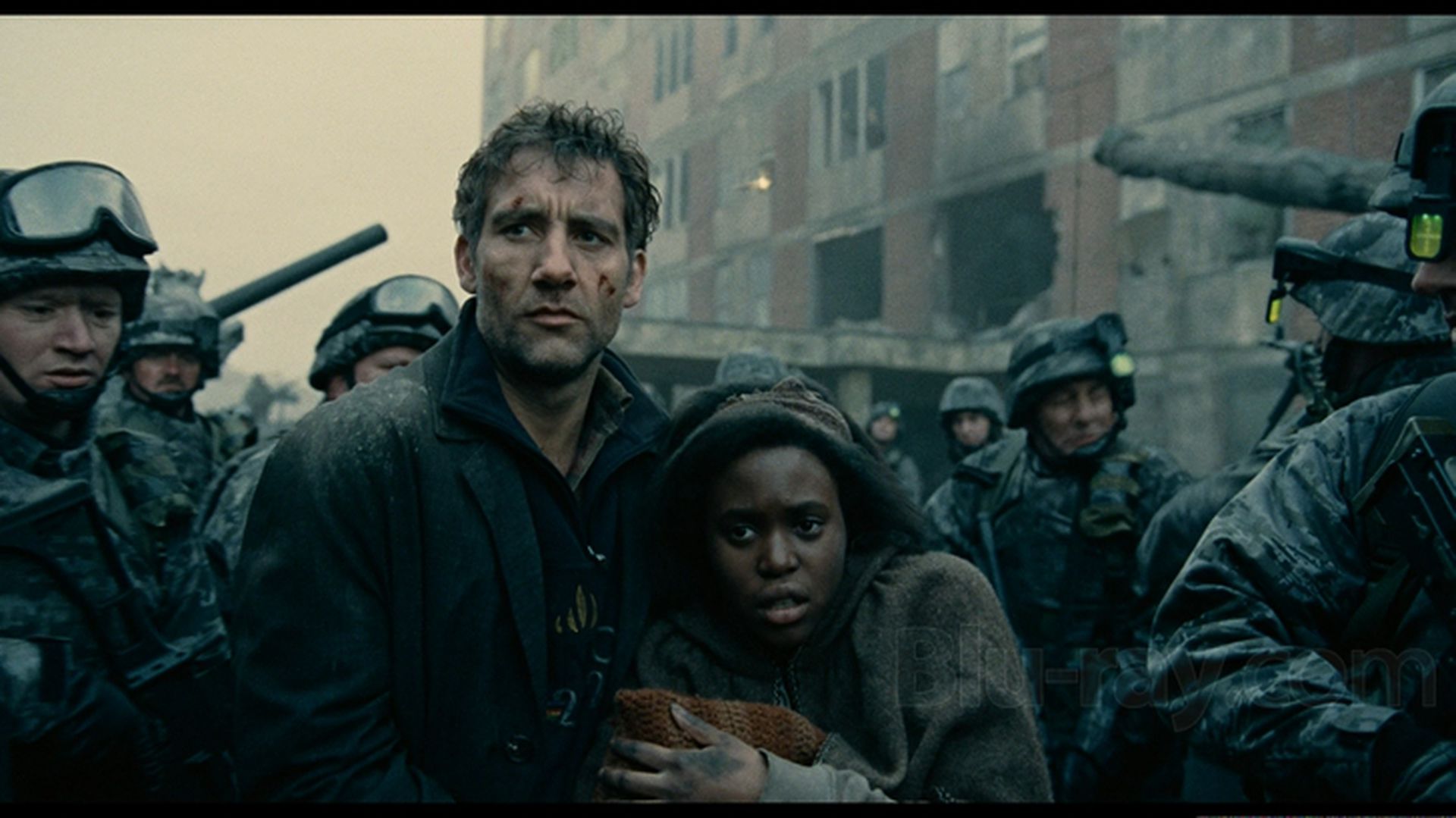
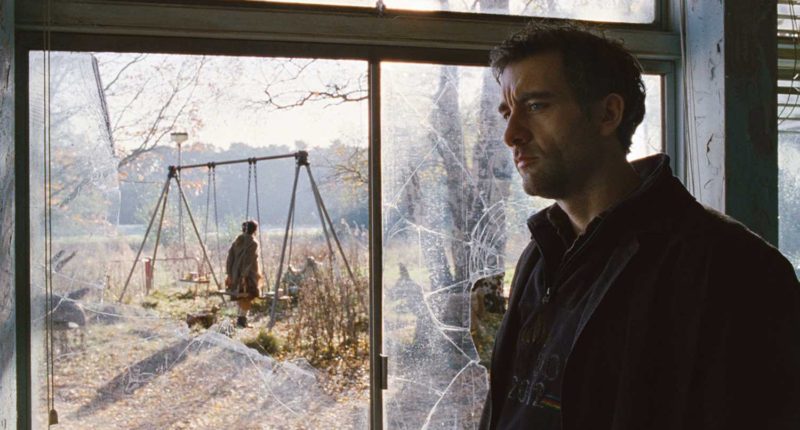
Children of Men (2006)

Clive Owen and Claire-Hope Ashitey could be the last hope for mankind in the masterful Children of Men

Director: Alfonso Cuarón

Cast: Clive Owen (Theo Faron), Julianne Moore (Julian Taylor), Claire-Hope Ashitey (Kee), Michael Caine (Jasper Palmer), Chiwetel Ejiofor (Luke), Charlie Hunnam (Patric), Pam Ferris (Miriam), Peter Mullan (Syd), Danny Huston (Nigel)

Children of Men was overlooked on release. But the more it ages, the more it clearly hasn’t aged it at all. Criminally ignored at the major awards, this might well be the finest film of 2006 and certainly one of the best movies of the noughties. Rich in thought-provoking content and cinematic skill, this is truly great-film-making from Alfonso Cuarón. Dark, grim, edgy but also laced with hope, faith and kindness, Children of Men grows in statue with each viewing, rewarding you more and more.

It’s 2027 and the world has gone to hell. Mysteriously mankind became infertile 18 years ago, and faced with the despair that the extinction of the human race is inevitable, society has collapsed. Cities lie in ruins and war has torn countries apart: Britain “stands alone”, one of the few with a functioning government – even though that government is a totalitarian, nationalist police state. Aggressive campaigns are waged against refugees from around the world, who are herded into hellish concentration camps. In this chaos, Theo (Clive Owen) is a disaffected civil rights activist, now plodding through a dead-end job and smoking weed with his friend, ex-newspaper cartoonist Jasper (Michael Owen). All this changes when he is entrusted by his activist/’terrorist’ estranged wife Julian (Julianne Moore) to protect Kee (Claire-Hope Ashitey) who carries inside her something that could change the whole of humanity: an unborn child.

Today Children of Men seems alarmingly prescient. In a world of migrant crises, Brexit, Trump and coronavirus (the film even refers to a flu pandemic of 2008!) the vision of the future it presents seems only a few degrees away from our reality. Rather than a hellish view, it seems more and more like something that could happen. Everything is worn out and grubby. Streets are lined with rubbish, buildings coated with graffiti. Televisions and advertising screens alternate between demands to report immigrants with promotions for “Quietus”, a suicide pill. Fences, armed police, barbed wire and crowds of filthy, terrified and brutalised people are common. Humanity has given-up: there is no hope in the world.

It’s that collapse of any sense of hope and optimism that has driven this collapse of society in Cuarón’s vision. In a world where the extinction of mankind is inevitable, what’s the point contributing to society or worrying about your legacy or the future? Why preserve anything when no-one will be around to see it in a hundred years? By such fragile threads, does society hold itself together. The crushing depression of knowing you live in the final days of humanity is everywhere. There is not a single person alive in their teens: a fact hammered home by the characters visiting a deserted and derelict school. Everyone has lost any sense of purpose, with life a grim daily grind.

Perhaps that’s also why physically the world hasn’t changed much. Unlike most “future set” dramas, this view of 2027 could be 2006, just dirtier and with a few more electronic screens (in fact this has helped hugely in not dating the film). It’s like all life has stagnated. And liberals like Theo have turned into apathetic drunks, drifting blithely through life not bothering to engage or change anything about the shit show all around them

All this makes the film sound impossibly grim – and Cuarón is superb in building this world (including the genius stroke of never explaining, even in the smallest detail, what has caused this pandemic of infertility – the film is refreshingly free of any clumsy scene setting) – but it works because it’s a film laced with hope and a belief in the fundamental goodness of people. The story has overtones of a religious fable: Theo and Kee as a sort of Joseph and Mary travelling to protect an unborn child whose birth could save the world. Specially composed choral music, rife with religious overtones, underplays key moments and scenes subtly leaning into this spiritual journey.

And the goodness that people find in themselves is inspiring. Theo, brilliantly played by Clive Owen who has just the right dissolute cynicism hiding crusading courage, may have given up but actually he’s a deeply empathetic and caring man. Animals instinctively love him. He’s a natural protector, who shows concern in all sorts of ways for people him, who puts himself at risk to protect people and refuses to ever accept defeat. But he’s a million miles away from a super-man, getting increasingly dishevelled, bashed and brutalised, while his struggles with footwear (he carries out action sequences  wearing just socks, then flip-flops and finally barefoot) is both a neat little gag and also a sign of how vulnerable he is in this dangerous world.

Cuarón’s film builds brilliantly on his empathy to carefully and beautifully build the growing understanding and trust between Theo and Kee (equally well played by Claire-Hope Ashitey). Again, it stems first from his protectiveness (Theo also works hard to protect people around him from disturbing sights, twice urging Kee not to look back and that whoever has been left behind is fine), but also from her instinctive trust in him as a good man and above the only one who seems to have her interests at heart (everyone else is concerned only with what Kee can symbolise – Ejiofor’s vigilante Luke can’t even get the sex of the baby right). Kee is vulnerable, but strong and determined, someone trying to carry the burden of being the hope of mankind.

She’s also brilliantly a member of the very migrant community that the government is trying to destroy. Cuarón’s film wants us all to remember that we are all the same deep down, that what happens to one affects us all. The horrors of what the British government are doing in the war-torn slums of migrant prisons (all of Bexhill has become a lawless hell hole, where executions and riots are daily occurrences) reek of everything from Auschwitz to Guantanamo. But amongst these migrants come the only strangers who seek to help Theo and Kee out of simple goodness and humanity. Strangers put themselves at huge risk, and in many cases sacrifice their lives, to help them. It makes a stark contrast with the revolutionaries who claim to fight for the migrants (but show no compunction in shooting them when needed), but really are only interested in their own selfish battles with no understanding of the bigger picture.

This bigger picture is very much like the thematic richness of the film that was missed on its released. It’s almost a victim of its own technical brilliance, which attracted much more attention at the time. Cuarón constructs several sequences to appear as single-takes, and the stunning camera work really helps establish this grimy, brutal world. It’s a wonderfully immersive film, a technical marvel. Every single part of the photography and design is pitch-perfect, and the key sequences are stomach-churningly tense, inspired by everything from The Battle of Algiers to A Clockwork Orange.

But the film works because it is underpinned by faith and trust in the human spirit. Mankind is being challenged like never before, but Cuarón shows us that the human spirit can survive. That simple acts of kindness can still happen. That there is a chance of hope. The final conclusion of the film is both sad but also upliftingly hopeful. Cuarón’s direction is just-about perfect, as are the performers (not just Owen and Ashitey but also an almost unrecognisible Caine as an ageing Hippie). With its acute and brilliant analysis of humanity – both in its grimness and capacity for goodness and selflessness – and with its prescient look at how easily our world could collapse, Children of Men is vibrant, brilliant, essential film-making.

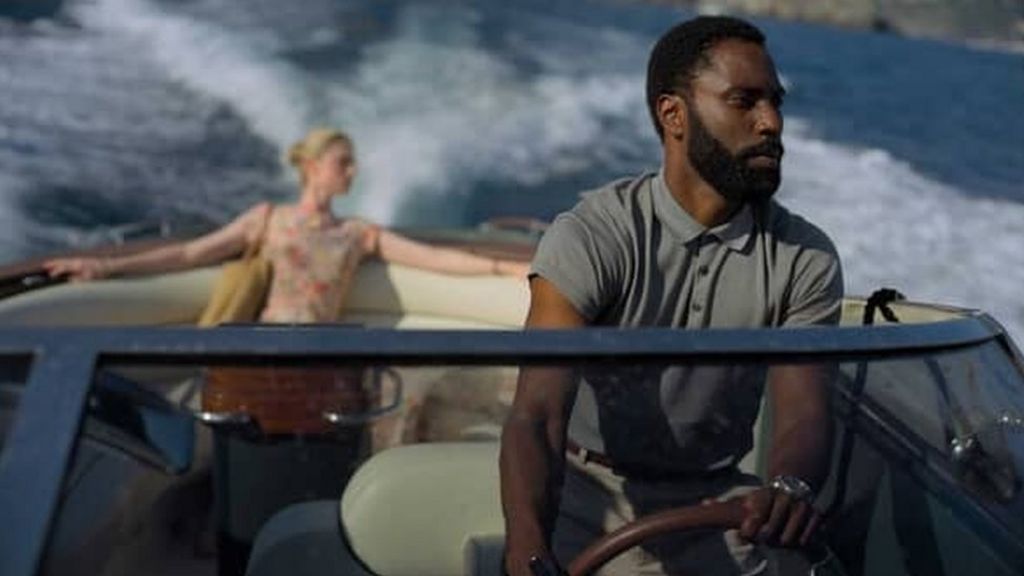
Tenet (2020)

John David Washington has to save the world in the tricksy Tenet

Director: Christopher Nolan

Cast: John David Washington (The Protagonist), Robert Pattinson (Neil), Elizabeth Debicki (Katherine Barton), Kenneth Branagh (Andrei Sator), Dimple Kapadia (Priya), Himesh Patel (Mahir), Aaron Taylor-Johnson (Ives), Michael Caine (Sir Michael Crosby), Clémence Poésy (Barbara), Martin Donovan (Fay), Fiona Dourif (Wheeler), Yuri Kolokolnikov (Volkov)

SPOILERS: I’ll be discussing Nolan’s film, which was kept so secretive, that even revealing what it is about might be considered a spoiler. So if you want to experience the film as intended, watch it first!

Tenet, at this rate the only blockbuster that is going to be released in 2020, was given the mission to save cinema from coronovirus. Match that with the near religious regard Christopher Nolan is held in by fans of cinema, and you had a major cinematic event on your hand. Is Tenet the second coming of cinema? Well of course not. But it is an enjoyable, if frustratingly tricksy, film shot on a jaw-dropping scale. If you ever had any doubt about whether Nolan grew up watching Kubrick intermixed with James Bond, this film dispels it.

Our entry point in the story is an unnamed character – he calls himself The Protagonist of the operation – played by John David Washington. A CIA agent, left critically injured after an operation at the Kiev Opera, is recruited to work for a mysterious organisation, Tenet. He discovers that Tenet is dedicated to preserving mankind in a war that is taking place across time. The tools of this war are “inverted” bullets and other materials. These bullets both backwards through time – explosions reform and bullets return to the guns that fired them. The Protagonist discovers that the inversion bullets are being funnelled through arms dealer Andrei Sator (Kenneth Branagh). Sator is working with a faction from the future, planning to invert time in order to save their world from destruction. Sator also has access to machines that can invert people, allowing them to move physically backwards through time giving him huge advantages in forging his empire and in collecting the components of a time-inverting super weapon that will destroy all life in our present and past.

Confused? Well as characters frequently say throughout the film – don’t think about it too much. I’ve seen Nolan’s epic twice. It’s a film that revolves around Temporal Pincer Movements – military tactics that use normal and inverted people moving backwards through time. The “forward” team lives through the events. The “Inverted” team move backwards, seeing events from the end backwards, supplying real-time information to the forward team. Those carrying out a Temporal Pincer Movement know the exact timeline of what is to happen and are therefore almost unbeatable.

Watching the film twice, I realise it places the viewer in the same position. First time I was lost in the maze of the film’s rushed explanations, hand-waved time mechanics and confused by working out who was inverted and who wasn’t at any one time. Watching the film a second time, knowing the plot, I did a Temporal Pincer Movement on it myself – my “past self” who knew basically how the film ended, helped my second viewing self to understand what was happening.

So you’ve kinda got to watch it twice to understand it properly. Or at least to begin to. Second time around you also know which details are important and which to ignore, which explanations are crucial to its understanding and which are not. Second time around I noticed a lot more how characters, such as Clémence Poésy’s scientist, who introduces inversion, stress “don’t think about it too much”. The science of it all is basically a red-herring. There is talk of various predestination and grandfather paradoxes (as you might expect in a world where the future is plotting to destroy the past). Again, second time around I realised: don’t worry about it too much. 

So the question is, will people rush to see the film a second time around to understand it better? I’m not entirely sure they will. And I think that’s because, unlike Nolan’s other films, Tenet lacks heart. Here’s a man who has been praised for the ingenuity of his films going a little too far. Look back at Nolan’s other films and underneath the trickery and “timey-wimey” there is a core of a beating human heart. Inception and Interstellar, at heart, are about a man trying to reunite with his children. Memento, a man mourning the loss of his wife. Dunkirk, frightened young men trying to get home. In Tenet, there is none of this. It’s literally a film about time-scheneanigans with a huge Macguffin at the middle that will wipe out the world. The Protagonist is just what who he seems, a character who (engagingly played as he is by John David Washington, very good) we feel so little connection with that you could easily not notice we don’t learn his name.

It’s this lack of heart that really weighs the film down. How much can we really care in the end about a world-ending Macguffin so briefly explained, we just take it on trust that it’s bad? Tenet is burdened by Nolan’s slightly-too-pleased-with-itself cleverness, as events are played and replayed from multiple angles throughout the film, in a way that demands repeat viewings rather than giving the first-time viewer more knowledge in each scene. If you fall for this sort of thing, then you will fall hard. But, Nolan’s other mega-hits charmed viewers because they cared about the characters at its heart, not the elaborate tricks about time and memory. We wanted to see DiCaprio find his kids, we wanted those boys on the beach to get home – and people were happy to let other things wash over them slightly, because the emotion was how they interpreted the story. Without that heart, the film is a massive, showy trick – and a bit empty as a result.

Which isn’t to say that Nolan doesn’t shoot the hell out of it, or that the scope of it isn’t incredible. It’s where his Bond influence comes in. Because while half the time, he’s paying homage to Kubrick’s mastery and precision – or wonderfully, with its early scene of objects moving backwards and thick rubber gloves, Cocteau’s Orphée – the other half is straight out of Roger Moore. Massive bases. Huge car chases. Big shoot-outs. A Russian villain who could have walked out of Spectre and straight into the film. Flemingesque touches with the hero infiltrating the villain’s world, taking part in a sport with him. A woman at the middle who has a foot in the camps of both hero and villain. This is all Moore-era Bond, repackaged with a sprinkling of PhD Physics.

If there is a heart in the film, its Elizabeth Debicki’s abused wife of Kenneth Branagh’s lip-smacking villain. The film’s most effective character scenes revolve around this pair, and the destructive, possessive ‘love’ of Branagh’s Sator, a man must possess or destroy a person. The film captures neatly the perverted “love” Sator claims to have for a woman he abuses, beats and terrifies – and Debicki beautifully captures the mix of shame, hate and fear people in such situations often feel. Nolan must have enjoyed BBC’s The Night Manager, as Debicki repackages her role from that film almost exactly, but given the most emotional and heartfelt plotline in the film, she becomes the one character you really care about and invest in. A better film might have put her even more front and centre.

Instead though, the action around time dominates, with Nolan’s brilliantly mounted action scenes that mix forward and backward motion with staggering (and seamless) effect. It’s yet another reason to see the movie twice. The film is big, loud and demanding – often too loud, with dialogue frequently drowned out (a problem you notice less second time around when you have a much better idea about when to concentrate and when to look away). The cast do terrific work. Washington is very assured as the lead, playing with wit and grace. Debicki is a stand-out. Robert Pattinson brings a quirk and originality to a role that has very little to it on paper. Branagh has been more controversial for his Bond-tinged Russian baddie, but I found a chilling horror in his domestic abuse and selfishness that works extremely well (again particularly second time around). Pattinson brings a playfulness to an underwritten role.

Tenet may not rework cinema – and I doubt it would make a top five list of Nolan’s best films – it’s bold and challenging, if a little cold and heartless. While demanding a double viewing, it’s not quite clear if it will make you long to see it again too quickly. But if you take the effort to do so, you will find a film that grows on you more with repeated viewing – and reveals its deliberately impenetrable mysteries much better.

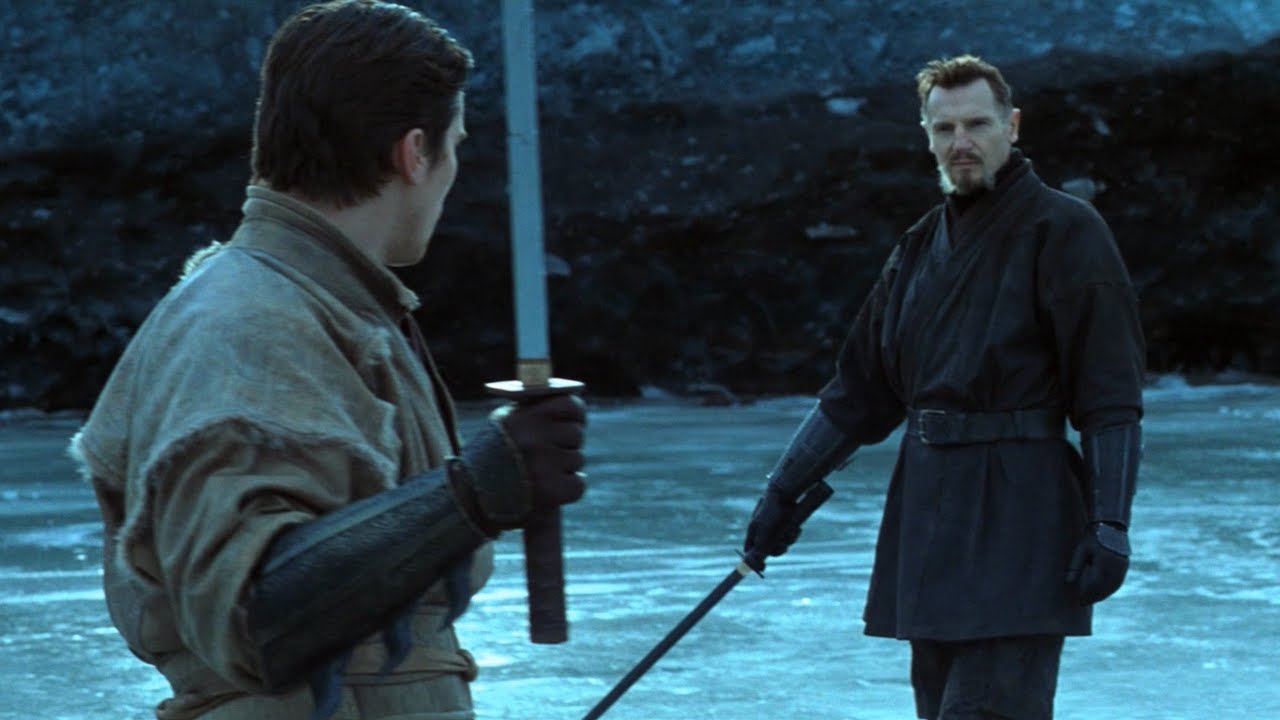
Batman Begins (2005)

Christian Bale redeems the Batman in Batman Begins

Director: Christopher Nolan

Cast: Christian Bale (Bruce Wayne/Batman), Michael Caine (Alfred Pennyworth), Liam Neeson (Henri Ducard), Katie Holmes (Rachel Dawes), Gary Oldman (Lt James Gordon), Morgan Freeman (Lucius Fox), Cillian Murphy (Dr Jonathan Crane/Scarecrow), Tom Wilkinson (Carmine Falcone), Rutger Hauer (William Earle), Ken Watanabe (Ra’s al Ghul), Mark Boone Jnr (Detective Arnold Flass), Linus Roache (Thomas Wayne), Colin McFarlane (Commissioner Loeb)

In the mid-2000s, Batman on film was a joke. A series that started with the Gothic darkness of Tim Burton had collapsed into the pantomime campness of Joel Schumacher. The franchise was functionally dead, so why hot burn it all down and start again from scratch. It was a radical idea – one of the first big “reboots” of a comic book saga. It was a triumphant success, changing the rule book for a host of film series and one of the most influential movies from the last 15 years. 

After the death of his parents, Bruce Wayne’s (Christian Bale) life drifts as he is unable to get over his own guilt at believing he was partly responsible for getting his parents into a situation where they were killed. In a Gotham run by organised crime boss Carmine Falcone (Tom Wilkinson), Bruce exiles himself for years to try and learn the skills he will need to return and try and find some peace and deal with his fears by tackling crime head on. Recruited by his mentor Henri Ducard (Liam Neeson) into the League of Shadows – a dark group of ninja inspired vigilantes – Wayne eventually rejects the group’s ruthlessness and returns to Gotham. There, working with his old guardian and family butler Alfred (Michael Caine), he starts to build a new identity: by day shallow playboy Bruce Wayne, by night The Bat Man ruthless vigilante, fighting crime. 

Why did it work so well? Because Christopher Nolan understood that the key to making a film that will kickstart a series and win the love of both the casual viewer and the fan is ‘simple’ – just make the film good. Make it a film powered by ideas, characters, a deliberate story and intriguing beats and audiences will love it. Make it a lowest common denominator film offering only bangs and crashes and ‘fan service’ and audiences will reject it. Because at the end of the day we know when we are being manipulated, and the assumption too many people behind making films like that is that people don’t really want intelligent films. They do.

Batman Begins works so well because it places character front-and-centre in a way no other Batman film – and very few superhero films – had before. Unlike all the other Batman films, here Bruce Wayne (and it is definitely Bruce Wayne) was the lead character, not a staid stick-in-the-mud around whom more colourful villains danced. Combine that with Nolan’s inspired idea to return Batman to something resembling a real-world, a more grounded, recognisable version of Gotham which has problems with organised crime that we could recognise from the real world. This are intelligent, inspired decisions that instantly allowed the film to take on a thematic and narrative depth the other Batman films had lacked. 

It’s Bruce Wayne’s psyche at the centre of the film – in an excellent performance of emotional honesty and physical commitment by Christian Bale – and his attempts to find solace in a sense of duty from his fears and his loss of a father figure. It’s Fear that is possibly one of the central themes of Batman Begins and the power it has over us. Fear is what Bruce must master – on a visceral level his fear of bats, on a deeper level his fear that he has failed his parents by failing the city they loved – and fear is the weapon all the villains use. Fear is the petrol for Falcone and his gangsters. Fear is the weapon Batman utilises. Fear is the study of choice of disturbed psychologist Joanthan Crane (a smarmily unsettling Cillian Murphy). A weaponised Fear gas is the WMD that the film’s villains intend to introduce into Gotham.

Understanding fear, working with it, finding its strengths and using these for good is at the core of the film. It’s there from the first beat – a traumatised young Bruce attacked by bats after falling into an abandoned well they nest in – and it’s there at the very end. Bruce’s training with mentor Ducard is as much about understanding and living with these terrors as it is physical prowess. His impact as Batman on the city is central towards channelling his own fears – bats, the dark, violence on an empty street – into universal fears he can use to terrorise criminals. 

It’s all part of the film’s quest to work out who Bruce Wayne is. With Bale superb at the centre, the film throws a host of potential father characters at Bruce, all offering different influences. He has no less than three father figures, in his father (a fine performance of decency by Linus Roache), the austere and understanding Ducard (Neeson channelling and inverting brilliantly his natural gravitas and calm) and the firm but fair and caring Alfred (Michael Caine quite brilliantly opening up a whole new career chapter). 

The influences are all there for Bruce to work out. Should he follow a path of compassionate justice as his father would do? How much muscular firmness and earnest duty, such as Alfred represents, should this be spiced with? How does Ducard’s increasingly extreme views of justice, combat and social order play into this? Which influence will win out over Bruce – or rather how will he combine all this into his own rules? It’s telling that the film’s villain turns out to be a dark false-father figure – the entire film is Bruce’s quest to come to turn with his own legacy and allow himself to accept his father and forgive himself.

It’s also telling that both hero and villain are driven by similar (but strikingly different) agendas. Both are looking to impose justice on the world. But where Bruce sees this as compassion with a punch – a necessary evil, protecting the good in the world while bringing down the evil – the League of Shadows see their mission as one of imposing Justice through chaos, of letting a world destroy itself so that a better one can rise from the ashes. 

Its ideas like this that pepper Christopher Nolan’s film. Throw in his superb film-making abilities and you have an absolute treat. Nolan’s direction is spot-on, superbly assembled with a mastery over character and story-telling. Beautifully designed, shot and edited it’s a perfect mixture of comic book rules and logic – the very idea of the League of Shadows – with the real world perils of crime, vigilanteeism and violence. With a superb cast led by Bale – and Gary Oldman also deserves mention, Nolan finally unleashing the decency, honesty and kindness in the actor that revitalised his career – Batman Begins relaunched Batman as a serious and intelligent series, that matched spectacle and excitement (and there is tonnes of it) with weighty themes, fine acting and superb film making. There is a reason why it’s been a touchstone for every reboot of a series made since.

Inception (2010)

Leonardo DiCaprio caught between dreams and reality in Inception

Director: Christopher Nolan

Cast: Leonardo DiCaprio (Dom Cobb), Joseph Gordon-Levitt (Arthur), Marion Cotillard (Mal Cobb), Ellen Page (Ariadne), Tom Hardy (Eames), Ken Watanabe (Saito), Dileep Rao (Yusof), Cillian Murphy (Robert Fischer), Tom Berenger (Peter Browning), Pete Postlethwaite (Maurice Fischer), Michael Caine (Professor Stephen Miles), Lukas Haas (Nash), Tallulah Riley (Disguise woman)

What is reality? It’s a question that for many of us never comes up. But in the artificial and exciting world of film, it’s a legitimate question. These worlds we watch unspooling before us on the cinema screen, so large, so real, so exciting. Could we get lost in them? And how much do the films we love echo the dreams that fill our nights, the movies we create in our mind to keep our brain active during those hours of complete physical inactivity? And what happens when the world of imagination and possibility becomes more compelling, more comfortable – and perhaps more real – to us than the actual flesh-and-blood world around us? These are ideas tackled in Inception: the blockbuster with a brain. 

Set in some unspecified point in the not-too-distant future, Dom Cobb (Leonardo DiCaprio) and his partner Arthur (Joseph Gordon-Levitt) are “extractors”, shady corporate espionage experts who use experimental military technology to enter shared dream states with their targets. While in their dreams, they have complete access to their subconscious mind, where secrets can be extracted. A wanted man in the States, Cobb is forced to ply his trade despite his yearning to return home to his children. After a job goes wrong, their would-be target Saito (Ken Watanabe) hires the pair to take on a far more challenging role: rather than extract an idea he wants them to plant one – a technique called “inception” – into the mind of a business rival (Cillian Murphy) to get him to dismantle his father’s empire. To do the job, Cobb needs a new team, including dream “architect” Ariadne (Ellen Page), dream identity forger Eames (Tom Hardy) and dream compound chemist Yusof (Dileep Rao) – and needs to try and control his own dangerous subconscious version of his late wife Mal (Marion Cotillard) who is determined to destroy his missions.

Just a plot summary should give an idea of the twisty-turny world of imagination and ideas that Christopher Nolan mixes in with big budget thrills and excitements, in the most original sci-fi/philosophy film marriage since The Matrix. Of course it helps when you have the clout of having directed a hugely successful comic book series, but Nolan was brave enough to trust that an audience for this sort of action-adventure caper wanted to have their brains stretched as far as their nerves. So he creates a dizzying and challenging piece of escapism that plays around with the audience’s perceptions and understanding of the nature of dreams. 

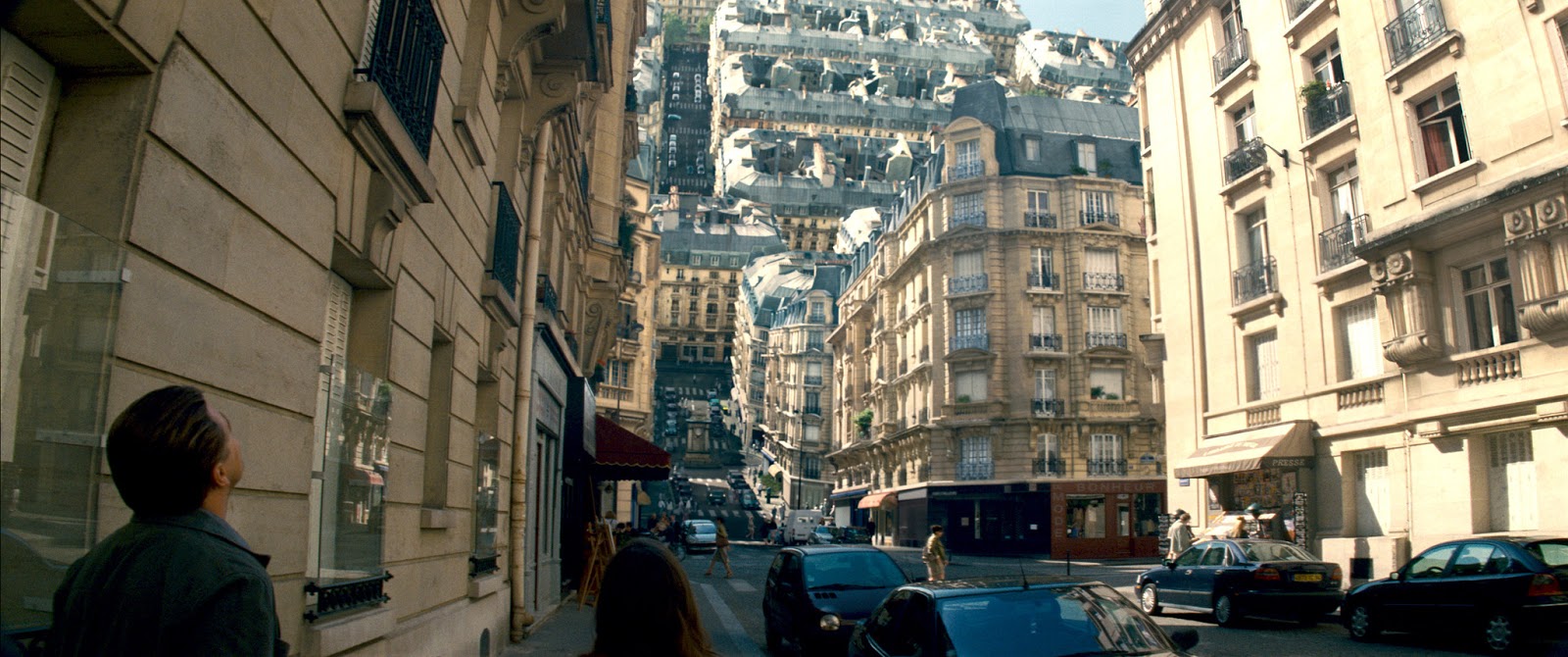
In the world of dreams, the film is a fabulous tight-rope-walk of dazzling concepts. Here everything is possible, with Nolan throwing at us worlds from film fantasy: intricate Samurai houses, brawling third-world streets, luxurious hotels, Bond-style winter bases and entire cities that literally fold, bend and reinvent themselves around the film’s dreamers, worlds that defy conventional rules of physics and time. This world is presented with genuine visual panache at every point, Nolan’s mastery of the language of film leading to a sensational series of slight-of-hand tricks and compelling set-pieces, all the while making you question which events are real and which are dreams or even dreams within dreams. In these worlds, the characters have the ability to literally shape a world to meet their needs, and the dangerous attraction of these worlds – even if they are not real – is the dark temptation that hangs over every frame. 

Because it’s those ideas beneath the action that give the film depth as well as excitement, that ability to ask questions and openly invite the audience to begin theorising themselves to fill in any blanks. Within the world of Inception, characters can create dream states within dreams, to share one person’s dream while simultaneously all being inside the dream of someone else. These multiple levels are cleverly established as being as much of a risk for the characters in getting confused as they are for the audience, with the characters carrying personal “totems” to help them judge if what they are seeing is reality or not. This is made all the more difficult by the establishment that your subconscious will manifest people to populate the dream worlds – and these will turn on invaders they detect in the dream.

All of this tunnels down into the deep limbo of our subconscious – and also introduces as a concept Nolan’s fascination with time. In dreams, time moves at a different pace, and this differential becomes all the greater as you descend down levels in dreams within dreams. A few minutes can become an hour in a dream and become almost a day in the dream within it – and years within the dreams beyond that. This is brilliantly demonstrated by Nolan in the film’s dazzling central sequence as the film intercuts between three timelines in three different dreams – each impacting the other.

It’s another masterful touch – the impact of actions on dreamers’ bodies in the level above can be felt in their world. A slap to the face in the real world can send someone in the dream flying across a room. A bucketful of water turns into a tidal wave in the dream. The dreamer falling in the world above removes gravity in their dream (giving Joseph Gordon-Levitt a cult fight scene in a gravity free world that sees him gracefully leaping from floor to ceiling to wall). The visuals are extraordinary, but the intriguing logic of the inter-relation between reality and the dreams – and the way dreams struggle to explain external effects – lend all the more credence to the mixing of reality.

But then, as Nolan suggests, isn’t that film after all? In dreams we move from location to location and struggle to remember the journey in between. We find ourselves doing tasks and not knowing how we started. Chases, faulty logic, sudden reversals and changes – these are the rules of film, it’s editing slicing out the boring bits and focusing on the reality. We are dropped into the middle of Cobb’s story and only slowly find the backstory, a gun filled chase through an African city is almost indistinguishable from similar sequences in the dreams. The final sequence of the film is a purposefully cut series of images that are very true to the rules of film, but feel alarmingly close to the rules of dream (unsettling us about whether what we see at the end is truth or dream, a debate that continues today). It makes for fascinating stuff, as well as a commentary on film itself.

Nolan’s film is gloriously entertaining, even if in its haste at points it does fail to explain how certain events and concepts truly work – but doesn’t really matter so compelling is the journey. The cast, enjoying the chance to mix action hijinks with genuine characters and dialogue are very strong, with DiCaprio anchoring the film wonderfully as the conflicted, lonely, defensive and daring Cobb. Hardy made a name for himself in a cheekily flirtatious performance, which sparks wonderfully with Gordon-Levitt’s more po-faced Arthur. Page creates a character both naïve and at times almost gratingly intrusive. Cotillard makes a difficult balance look easy playing a character part real and part dream figure. Watanabe is archly dry as the investor. There isn’t a weak link in there.

It may at times move too fast and not always make itself completely clear. It might be a bit too long in places and take a little too long to make its point – but it’s ambitious, challenging, intriguing film-making that rewards repeated viewing. Not least with its cryptic ending in which we are forced to ask how much of what we have seen is real and whether – like Cobb perhaps? – we should even care at all if the end result is so positive. With the fascinating world of dreams – and the rules there that we encounter – it gives us a firm grounding for the its meditation of the dark attraction of fantasy, embodied by the genial wish fulfilment of the movies where adventure lies around each corner and the heroes triumph.

King of Thieves (2018)

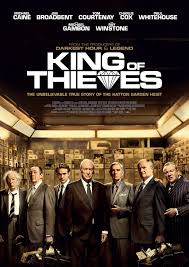
Michael Caine leads the Old Lags on one last hurrah in the misjudged King of Thieves

Director: James Marsh

Cast: Michael Caine (Brian Reader), Jim Broadbent (Terry Perkins), Tom Courtenay (John Kenny Collins), Charlie Cox (Basil/Michael Seed), Paul Whitehouse (Carl Wood), Michael Gambon (Billy “The Fish” Lincoln), Ray Winstone (Danny Jones), Francesca Annis (Lynne Reader)

In 2015, a group of old lags robbed a safety deposit company in Hatton Garden. Over the Easter weekend, the gang broke while the facility was empty, drilled through a wall, climbed into the safe and cleared out almost £14 million in cash, diamonds and other goods. The crime captured the public imagination largely because the robbers, bar one member of the gang, were all over 60. This country has a certain nostalgia for rogues, and a tendency towards a condescending affection for the aged. In real life, the only thing remotely charming about these hardened criminals, many of them with extremely violent backgrounds, was their age.

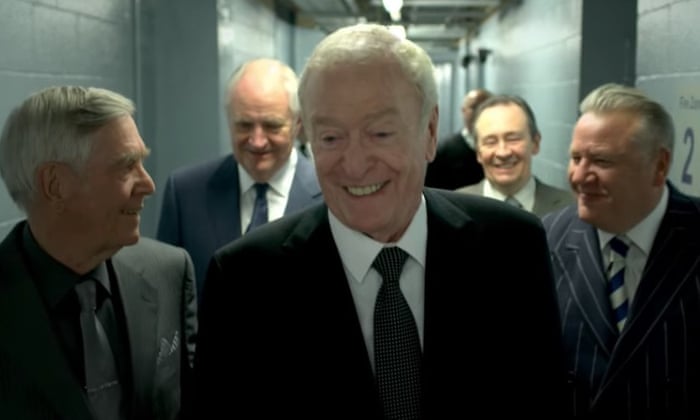
James Marsh pulls together a great cast of actors for his heist caper. Brian Reader, the brains behind the operation, is played with gravitas by Michael Caine. Terry Perkins, the man who cuts Reader out of the profits, is played by Jim Broadbent. Tom Courtenay, Ray Winstone, Paul Whitehouse and Michael Gambon play the rest of the lags while Charlie Cox is the young tech expert who brings the possibility of the heist to Reader’s attention. With a cast like this, it’s a shame the overall film is a complete mess from start to finish.

I watched this film after first watching ITV’s forensically detailed four-part series, Hatton Garden, covering the heist in full detail. That drama was far from perfect, but it was vastly superior to this. The main strength of Hatton Garden was that it never, ever lost sight of the fact that this was not a victimless crime. Real-life small businesses went bust due to property lost in the heist. Families lost priceless, irreplaceable heirlooms. Items of hugely sentimental value have never been recovered. Lives were damaged. On top of that, Hatton Garden stresses the grimy lack of glamour to these thieves, their greed, their paranoia, their aggression and their capacity for violence. Far from charming rogues, they are selfish, greedy old men who fall over themselves to betray each other and are clueless about the powers and abilities of the modern police force.

King of Thieves occasionally tries to remind people that these were hardened career criminals. But it also wants us to have a great time watching actors we love carry out a heist against the odds, like some sort of Ocean’s OAPs. James Marsh never manages to make a consistent decision on the angle he is taking on these men or the crime they carried out. It’s half a comedy, half a drama and the tone and attitude towards the burglars yo-yos violently from scene to scene. The end result, basically, is to let them off with a slap on the wrist.

“It’s patronising” rages Reader at one point at the media coverage of the crime, annoyed at how it stresses their age as if that somehow makes it a jolly jaunt. Never mind that the film does the same. The score contributes atrociously to this, a series of jazzy, caperish tunes that echo the 60s heydays of these violent men (Reader and Perkins had both stood trial for murders, and were lucky to get off) punctured with some cheesily predictable songs. Tom Jones plays as our heroes comes together, and Shirley Bassey warbles The Party’s Over as things fall apart. The old men banter and bicker about the confusions of the modern world like a series of talking heads from Grumpy Old Men and the general mood is one of light comedy.

The film does try and darken the tone in the second half, post-robbery, as things start to fall apart and tensions erupt in the gang. Here we get a little bit of the mettle of the actors involved in this. Jim Broadbent, in particular, goes way against type as Perkins’ capacity of violence (even at a diabetes-wracked 67) starts to emerge. Tom Courtenay’s Kenny Collins emerges as manipulative liar, playing off the robbers against each other. Ray Winstone sprays foul language around with a pitbull aggression. Even Michael Caine roars a few death threats, furious at being betrayed by the gang.

But it never really takes, because the film never throws in any sense of the victims of this crime. Blood is never drawn in this slightly darker sequence of the film. Even the clashes between the gang are played at times for light relief. Anything outside the gang is ignored. The victims? Who cares. The cops? There is barely a policeman in this film who has a line.

The film undermines the whole point it might be trying to make – that these were dangerous men – by succumbing to romanticism at its very end. As the captured old lags await trial, we first see them laughing and joking with each other as they prep for court and then, as they walk towards the dock, the film throws up old footage of the actors from the 60s, 70s and 80s, stressing their romanticism. Look, the film seems to be saying: these were criminals, but they were old fashioned criminals, remember when Britain used to make its own underdog crims instead of being awash with hardened, violent gangs? It’s hard to take. And it’s like the whole film. A tonal mess that finally absolves the robbers who ruined lives and who still haven’t returned almost £10 million of ordinary people’s goods. King of Thieves isn’t charming. It’s alarming.