
Tag: Noémie Merlant

Lee (2024)

Lee (2024)

Kate Winslet plays with passion in an otherwise rather safe and traditional biopic

Director: Ellen Kuras

Cast: Kate Winslet (Lee Miller), Marion Cotillard (Solange d’Ayen), Andrea Riseborough (Audrey Withers), Andy Samberg (David Scherman), Noémie Merlant (Nusch Éluard), Josh O’Connor (Interviewer), Alexander Skarsgård (Roland Penrose), Arinzé Kene (Major Jonesy), Vincent Colombe (Paul Éluard), Patrick Mille (Jean D’Ayen), Samuel Barnett (Cecil Beaton), Zita Hanrot (Ady Fidelin)
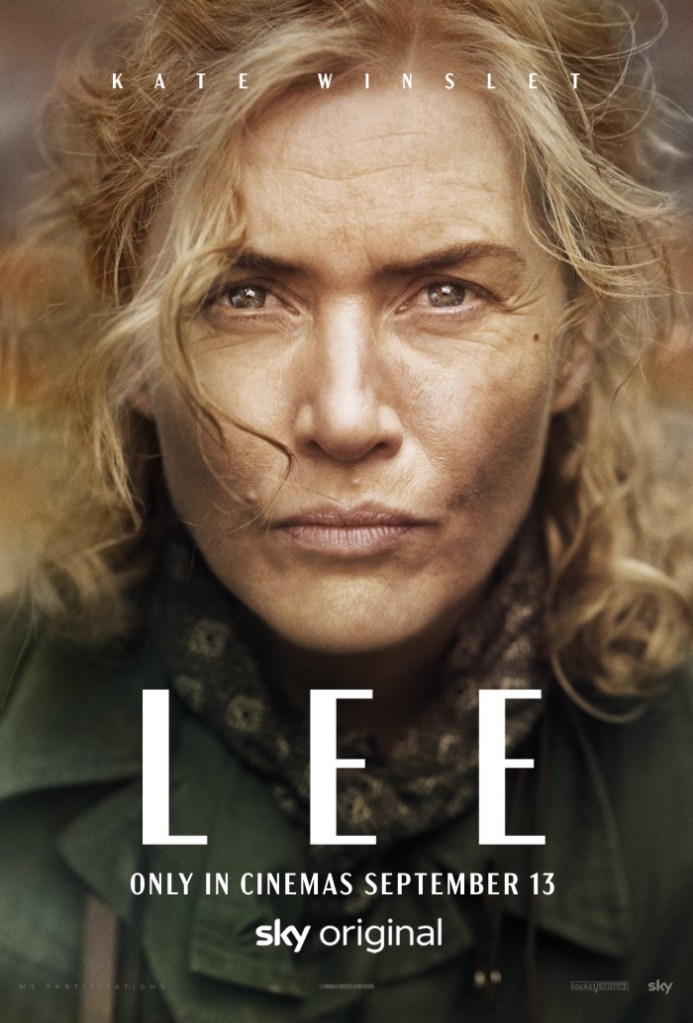
“War? That’s no place for a woman!” That’s the message photographer Lee Miller (Kate Winslet) received when she applied to head to the Western Front for Vogue in World War Two. An experienced artist and photographer, with a strongly independent mindset, Miller wasn’t taking no for an answer: her stunning images of the horrors of war and the Holocaust would become a vital historical record.

That’s the key message of this well-meaning, rather earnest, slightly old-fashioned film, a callback to hagiographic biopics of yesteryear. It’s told through a framing device of an older Lee being interviewed in the 70s. The interviewer is played, in a thankless role, by Josh O’Connor (the character’s identity is a late act reveal that most viewers will probably guess early) and his dialogue is awash with either the sort of “and then you married and left France and moved back to London where you became the first woman photographer hired by Vogue” narration that links time-jumped scenes together, or blunt statements about Lee’s emotional state (“you must have been very frustrated”) that Winslet is definitely skilled enough to do with her face alone.

This was a passion project for Winslet, who spent a decade bringing it to the screen and which she bailed it out during a funding wobble, and she is the main reason to watch Lee. This strong-willed, take-no-nonsense bohemian turned hardened professional is a gift for Winslet, but she also gives Miller a strong streak of inner doubt and fear. Under her force-of-nature exterior, there is a strong streak of vulnerability in Miller, her life marked by past trauma. Winslet lets this rawness out at key moments, bringing great depth and shade to a character who could otherwise be blunt and difficult, and the film works best when it gives her free reign.

It’s unflinching but also tasteful in its depiction of war. Experienced cinematographer and first-time film director Ellen Kuras shoots its grimy, hand-held immediacy with an intensity that makes a lot of the film’s limited budget. Lee’s dirt and dust-sprayed combat scenes – with Miller dodging explosions and bullets to get into position to get the perfect shot – are tensely assembled and make a punchy impact. But Lee also knows when not to show us things, and its visual restraint when Miller and colleague David Scherman (Andy Samberg) photograph the horrific aftermath of Buchenwald and Dachau is admirable, the camera focusing on the characters’ stunned faces as they capture the terrible moments, with the horrific reality just out of focus.

There are some fine moments in Lee, which makes it more of a shame that so much of it feels safe, predictable and unchallenging. Lee focuses on Lee Miller as an artist and downplays her daring, unconventional life. Tellingly it’s adapted from a biographer by her son, titled The Lives of Lee Miller, which chronicles her life of constant reinvention. This is after all a woman who maintained a relationship with her Egyptian husband in the 30s, after meeting her second husband Roland who himself remained married for several years (they only married in 1947). She was a model, a surrealist artist, photographic pioneer, ahead of her time. That’s rinsed out to make her more conventional.

In the film, she and husband Penrose (a generously low-key performance from Alexander Skarsgård) have an uncomplicated meet-cute in a French villa owned by a friend (an extended cameo by Marion Cottillard) – admittedly it as at an outdoor picnic where Lee and others sunbathe topless – before settling into a life of middle-class suburbia (right down to Lee cooking meals for Roland when he returns from work). Hints that she has a consensual affair with Scherman linger, but the film seems prissily determined to reposition Lee as a far more conventional person than she really was. It’s a conservative attitude that comes from a good place – focusing on the work not the gossip – but it also makes her feel less unique or challenging than she was.

With the work as its focus, it’s surprising Lee doesn’t make more of the extensive collection of masterpiece photos Miller took. Although an inevitable credits montage shows how some of these were re-created for the film, actually including the images in the film itself might have carried more power and placed Miller’s work more prominently at its heart.

Lee also fumbles slightly with its final revelation of Miller’s past trauma. Shocking as this is, attempting to suggest what happened to Lee in her teens is on the same scale as the Holocaust or that she has a unique understanding of an act of ethnic genocide because she suffered in the past stinks. It’s especially notable since Lee does an excellent job of showing the quiet distress the Jewish Scherman feels as he realises only an accident of geography saved his life. Andy Samberg, in his first dramatic role, is extremely good in a role that clearly carries a very personal feeling for him.

Lee has things going for it, not least Winslet’s barn-stormingly committed and passionate performance. But in the end, it turns its lead character into someone who feels less provocative and revolutionary than she was. Its safely traditional structure and narrative approach turn her into a “role model” and make Lee the sort of middle-brow biopics Hollywood churned out in the 80s. It’s solid, interesting but essentially safe and forgettable.
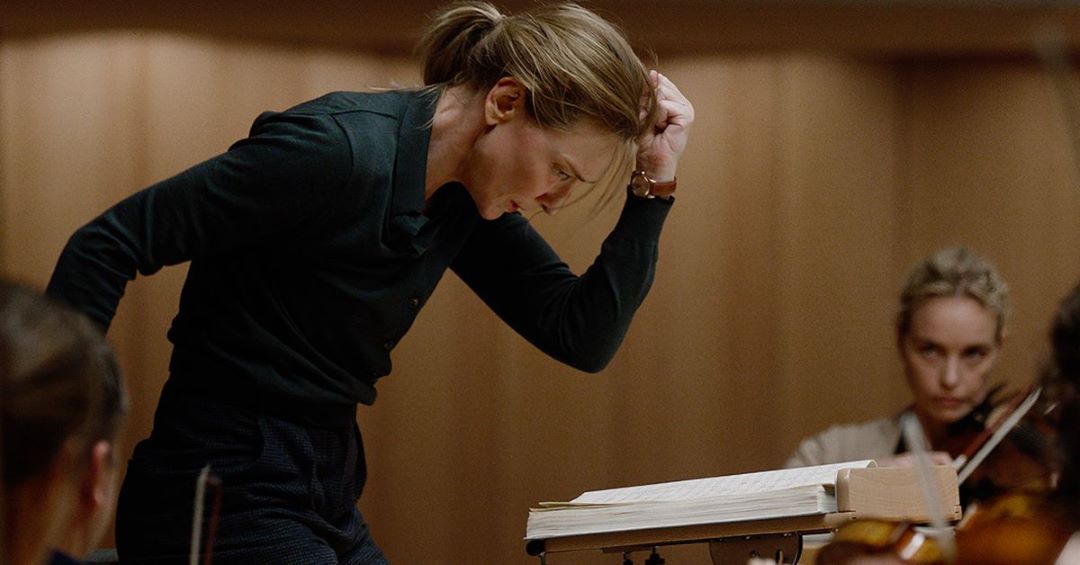
Tár (2022)

Tár (2022)

Character flaws abound in this intriguing and challenging film, open to multiple interpretations

Director: Todd Field

Cast: Cate Blanchett (Lydia Tár), Nina Hoss (Sharon Goodnow), Noémie Merlant (Francesca Lentini), Sophie Kauer (Olga Metkina), Julian Glover (Andris Davis), Allan Corduner (Sebastian Brix), Mark Strong (Eliot Kaplan), Sylvia Flote (Krista Taylor), Mila Bogojevic (Petra)

Absolute power corrupts absolutely. It’s a maxim humanity manages to prove true, time and time again. It doesn’t matter what the field is, when someone holds sway over the dreams and ambitions of others, there’s a decent chance that power can be enjoyed so much it starts being abused. It’s an idea key to Todd Field’s gloriously complex and challenging Tár, a film that defies easy explanations and characterisations, both frighteningly in the “here and now” but also terrifyingly universal.

Lydia Tár (Cate Blanchett) is an internationally renowned conductor and composer. The first ever head of the Berlin Philharmonic Orchestra, she lives a jet-setting life of international acclaim and fame, praised at every stop-off for her stunning reinventions of classical music. But dark shadows swirl around her. She plays favourites: and her favourites are always attractive young women, just starting their career, who see her as inspiration and mentor. And Tár? She sees advantages to this. It’s unspoken knowledge to all, from her partner first violin Sharon (Nina Hoss) to the other members of the Orchestra. But as the suffering of one of Tár’s spurned proteges threatens to leak out into the public domain, her empire topples just as she reaches the summit of her career.

Tár is a brilliantly insidious film, a quiet but compelling character study that borrows elements of Kubrickian unknowability. In particular, Field avoids making moral decisions for the audience, but trusts we are smart enough to come to our own conclusions. Effectively, we spend the film following a deeply flawed, Spacey-like figure, whose life falls apart without being invited to feel morally superior to her. It allows us to feel the pain of her meeting the consequences of her actions, but never lets us forget her own arrogance and cruelty caused them in the first place.

Tár is both an inspirational genius and a dyed-in-the-wool bully. She solves problems with the mindset of an aggressive alpha – her solution to her daughter being picked on by a classmate, is outbullying the bully (“I will get you” she tells her, assuring her no one will believe her because Tár “is a grown-up”). She treats her assistant (and possibly former lover) Francesca who tags behind her in the hope of a junior conductor role like a slave, brow-beats Orchestra members and fellow conductors with friendly pressure and views every relationship in terms of what she can get out of it.

As this deeply flawed human-being, Cate Blanchett is mesmeric. Tár is a firm reminder that she is, perhaps, the greatest actor in the world and all her range is on show here. Blanchett is imperious, assured and totally brilliant. She invests Tár with such – admittedly deeply flawed – humanity, we have to constantly pull ourselves up to remember she’s a dreadful person. Tár is arrogant, convinced of her own genius and sees no-one as her peer. She’s also inspirational, charismatic and oddly charming. Blanchett’s mixes tragedy, grief, denial, panic and bottomless bitterness as Tár’s carefully constructed life falls apart like a time-delay car crash that suddenly jumps back into normal time.

Carefully paced – it’s difficult not to reflect on Tár’s opening words at a career retrospective interview on the importance of timing to give each moment its precise impact – Tár never rushes, unless it needs to and slowly, but assuredly unfolds the final days of her empire. It’s like watching the Indian Summer of an Astro-Hungarian Emperor, barely aware that huge global forces are about to sweep everything away and rob her of her control of events. Field reflects this in the film’s assembly: earlier sequences are marked by their long takes – virtuso set-pieces for Blanchett – and tracking camera, that constantly centres Tár. Later sequences become shorter, choppier, narrative information becomes less clear – it’s like Tár has lost control of the film as much as she has her life.

Control is central, and Tár’s abuse of it her undoing. Her (unspoken but implied) predatory demands for sexual favours in return for career advancement are an open secret among colleagues. Field adds a threatening sense of Tár being watched – either recorded on a phone, or shots of the red-haired back of a mysterious woman at key moments. The woman is Krista, a former protégé, the exact nature of her fall-out with Tár unclear, but who Tár has black-balled in the classical music world. Even as the fallout from this threatens to consume her, Tár can’t help herself from attempting to groom a new cellist (Sophie Kauer), fixing a blind audition, favouring her in private workshops and bypassing the orchestra’s new cellist to land her a juicy lead.

It’s part of Field’s wonderful and searching analysis of the corruption of power – even as the house of cards totters, people can’t seem to see it. While being a universal parable, the film is also fiercely topical. Tár has clear parallels with figures like Spacey. Her ageing former mentor (a crisp Julian Glover) bemoans how the slightest mistaken word to someone can be misinterpreted as lecherous abuse. Attention has focused on the idea of this as a cancel culture movie. Tár, at a Juillard lecture, does strongly disagree with a young BIPOC composer, who can’t relate to cis-gender old white guys like Bach. Tár pushes the rather self-righteous young man to justify himself, which he attempts. But she also goes increasingly further and further, moving from persuasion to brow-beating (her natural resort as a bully) and thinly veiled mockery. She’s smart enough to deconstruct the contradictions in the young man’s views – but cruel enough to mock his bravery at standing up. But Field allows both sides legitimate points, something that you don’t nearly get enough of in our polarised world.

Field also tips Tár more and more into something unsettling and other worldly. Tár’s uniquely perceptive hearing means she is plagued with strange noises: a chiming echoing around her bolt-hole apartment (the reveal of what this is, is another reminder of her indifference to other people), a screaming heard while out running, a metronome that wakes her at night. Strange daydreams, with ghostly, vampiric presences fill her mind. Late, she enters a damp-soaked abandoned building which feels like the gateway to some Lynchian parallel universe, guarded by a Tarkovsky-like dog who might as well be the gatekeeper to her nightmares. Much of the final act of the film unspools like a wild, terrible dream, where key events may not even be real. Reality crumbles, just as Tár’s control over her personal and professional life disintegrates.

Through it all we are invited by Field to empathise, but not sympathise, with this demanding and domineering woman. To understand her, but not forgive her, to dislike her but not tar and feather her. A lesser film would have done the moral work for us. Nothing is explicit about Tár’s cruelty, but the tears of her assistant (a superbly fragile Noémie Merlant) and the tight-lipped frustration of Sharon (Nina Hoss is terrifically pained and long-suffering in a difficult role) speak volumes. But yet, it’s hard not to feel something for someone as their life falls apart, no matter how earned the fall might be. Blanchett uses all her skills to make Tár someone who is frequently awful but never a bogeyman, is categorically in the wrong, but still a figure of hubristic tragedy.

Blanchett is earth-shatteringly good in the lead role and Field’s direction is subtle, balanced and plays just enough with your perceptions. Perhaps some of what we see takes place in Tár’s nightmares, perhaps we only see certain characters from Tár’s biased perceptions. It could even be a fabulous ghost story with past misdeeds haunting the frame, a deconstruction of our willingness to pull down the flawed, a study of the abuse of power – or all three and more. The fact you will debate it for weeks to come, means it’s definitely a great film.

Portrait of a Lady on Fire (2019)

Noémie Merlant and Adèle Haenel are part of an illicit affair in Portrait of a Lady on Fire

Director: Céline Sciamma

Cast: Noémie Merlant (Marianne), Adèle Haenel (Héloïse), Luàna Bajrami (Sophie), Valeria Golino (The Countess)

There have been several well-known, successful films made that have focused on male gay couples but, perhaps because female directors are simply fewer in number, there have been fewer films that have focused on lesbian love stories. Portrait of a Lady on Fire is a triumphant course correction to this, a film that is both a beautiful artistic statement and also a deeply moving and involving romance drama, subtly and truthfully told. 

Marianne (Noémie Merlant) is a young female artist in late eighteenth-century France, who is summoned to an isolated island to paint the daughter of a Countess (Valeria Golino). The daughter – Héloïse (Adèle Haenel) – has been plucked from her chosen life in a convent after the death of her sisterm and is now set to marry a Milanese nobleman. A painting of her is needed to “seal the deal”. Problem is, Héloïse refuses to sit for any artist – so Marianne is to pretend to be her companion in order to study her and paint her from memory. However, as the trust between the two women grows, Marianne confesses to Héloïse – and destroys the painting – an action that finally leads to her agreeing to sit for a new painting. As the Countess leaves the two women alone on the island with just a maid, Sophie (Luàna Bajrami), the painting continues – as does the bond between them.

Sciamma’s film is beautifully made, an artistic triumph of intense feeling that helps us forge a deep emotional bond with these two women. Sciamma uses mid shots and close-ups for almost 70% of the film, an effect that brings the women’s faces – and the often micro-emotions that cross them – into sharp focus, as well as building a stunning sense of intimacy between them and the audience, as if we are pressed close up against them. It allows us as well to really feel the growing physical closeness between the two women, as they more and more share the frame. 

Sciamma only breaks away from these to longer shots when the camera moves outside of the house – to capture the women walking to and from the house across the island’s beach – or when disagreement has broken between them. The effect is stunning, totally immersive, and allows the two actresses to beautifully convey a deeply felt courtship that takes well over half the film to flower into an actual relationship after a prolonged, hesitant, second-guessing courtship.

Noémie Merlant is wonderful as Marianne, the artist who has struggled all her life as a woman in a man’s world, restricted by what she is and is not allowed to paint (from themes to nude men – which are of course out). Marianne is a woman with a thick skin, who is careful to avoid opening herself up, but eager to form a bond beyond this. The “artist” of the relationship, she has spent her life observing the world but only rarely allowed herself to be part of it. Her quietness is neatly contrasted with Héloïse’s more noticeable immediate chill, which is itself a careful shield from a world where she has no choices, but reveals a deep longing for emotional and intellectual freedom and a humming tenderness and gentleness. It’s an equally superb performance from Adèle Haenel.

Both women are struggling to express themselves in a men’s world. A man hardly speaks in the entire film (and other than in the film’s opening and coda, they don’t even appear) but the presence of men hangs over the entire film. The little commune of independence that Marianne, Héloïse and Sophie form – a very equal, comfortable naturalness where they cheerfully exchange roles, with the maid relaxing while the mistress cooks – can only exist while men are distant. The judgements and decisions of men affect all their lives – from Marianne’s painting to Sophie’s pregnancy, which the women work together to avert. 

When we do see men they are distant and selfish. On the boat over to the island at the start of the film, not a single man lifts a finger to save her painting gear after it is dropped in the ocean (forcing Marianne to dive in herself); at the film’s conclusion, the male servant who arrives promptly takes the centre of the kitchen and demands to be served dinner. The women’s enjoyment of leading their own lives – from their relationship, to Marianne’s triumphant decision to sketch a recreation of Sophie’s abortion, capturing a moment no man would ever choose to paint (or have a clue how to) stresses that, never mind sexuality, women got to make very few decisions of their own in the eighteenth century.

But it’s the relationship that is central, and it’s beautifully and organically developed with an immensely involving delicacy. Every beat is perfectly placed and the effect is overwhelmingly emotional. Sciamma uses music only three times in the film: once Marianne’s enthusiastic to recreate Vivaldi on a harpsichord for Héloïse’s enjoyment early in the film (a touching sign of her eagerness to share her passions), again for a haunting but beautiful moment of singing from a group of peasant women on the beach, and finally a powerful echo of the movie’s first use of music, surely bound to take its place as one of the great endings of film. 

For the titular painting itself, the one that captures Marianne’s feelings about Héloïse rather than the one she paints for the suitor, it appears only briefly on screen and we never see its creation. What we see is the moment that inspired it – a Héloïse so wrapped up in Marianne that she never even notices her dress catch fire in a bonfire on a beach – and it’s that which is truly important. At that moment we know everything about what that moment means to both women, and the force of a love that will last the lifetime of both women and shape their emotions and lives in profound ways. Sad, beautiful, joyful, triumphant Portrait of a Lady on Fire is a great piece of film-making.