Tag: Olga Kurylenko

Black Widow (2021)

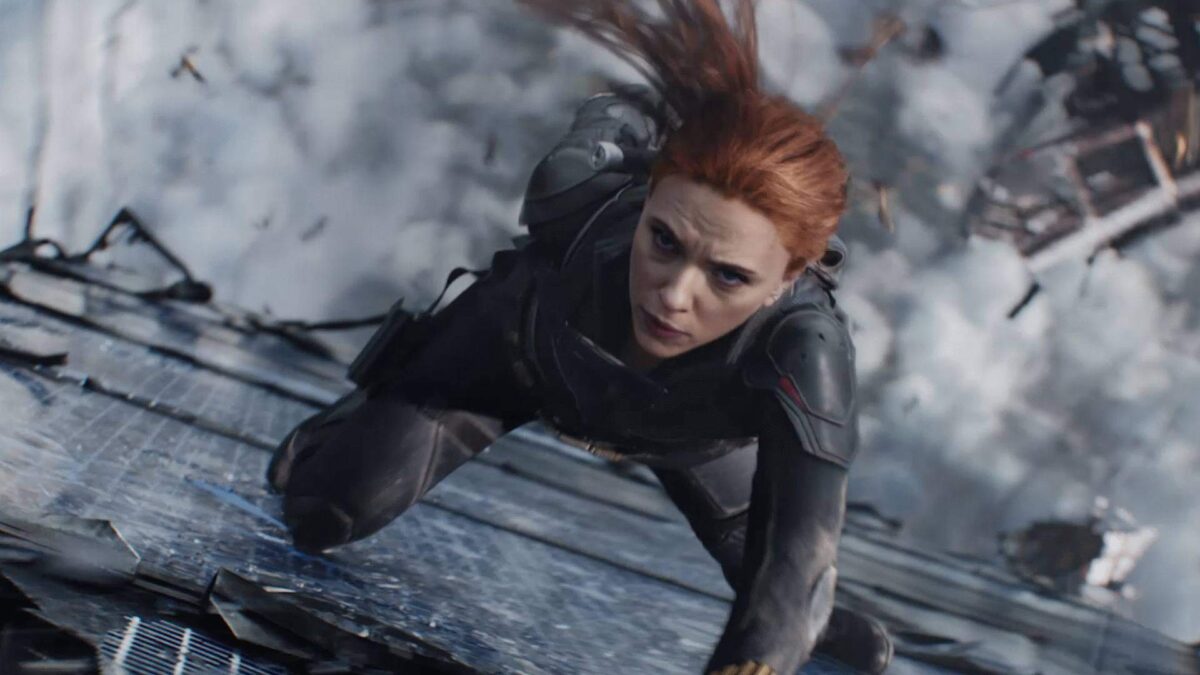
Scarlett Johansson crashes through a film that seems to exist by contractual obligation, Black Widow

Director: Cate Shortland

Cast: Scarlett Johansson (Natasha Romanoff), Florence Pugh (Yelena Belova), David Harbour (Alexei Shostakov), O-T Fagbenle (Rick Mason), Olga Kurylenko (Antonia Dreykov), William Hurt (Thaddeus Ross), Ray Winstone (General Dreykov), Rachel Weisz (Melina Vostokoff)
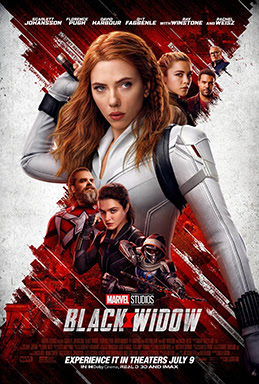
After the events of Captain America: Civil War, Natasha Romanoff (Scarlett Johansson) is on the run, when she receives a mysterious parcel from her “sister” – or rather the young girl she spent a few years with as a “family” of Russian agents undercover in America in the 1980s – Yelena Beloba (Florence Pugh). The parcel contains a drug that can be used to break the mind-control that nasty General Dreykov (Ray Winstone) has over his army of Widows: young girls like Natasha and Yelena, forced to become assassins in a torture chamber/training room called The Red Room. Natasha and Yelena team up to free the other assassins, but they will need the help of their “parents”, Russian super-soldier Shostakov (David Harbour) and genius inventor Melina (Rachel Weisz).

As the credits rolled on this formulaic slice of Marvel adventurism, I couldn’t for the life of me work out why it even existed in the first place. For a film centred around Scarlett Johansson’s Black Widow character, I expected to come out of this epic with some new understanding of her character. Not only do we not learn anything about her at all, we get no additional insight into what makes her tick, no deeper look into her character. We learn nothing about her that we don’t know already: and the film isn’t even smart or profound enough to reflect on the fact that we all know that the character died in the last film we saw her in. Does it exist solely so Marvel can say “Look we made a film about the only female Avenger, so shut up already!”

The film is stuck between being a greatest hits celebration of Johansson’s work elsewhere and providing as much focus as possible for Florence Pugh to take up the mantle in future films. In fact, the focus is so much on Pugh – who is terrific and gets all the best lines – that Johansson becomes a bit of a straight-man in her own damn movie. It’s Black Widow who has to say all the unhip, dull things (“We can’t steal that car!”) while her sister snipes, swears and plays devil-may-care with the consequences. For what should be her moment in the sun, Johansson gets rather short-changed here. But then perhaps she didn’t really care – it certainly never feels that she had anything she was determined to say or do here, other than cash a huge cheque.

The film is framed around a back story of villainy involving the nasty Dollshouse-style assassin school that both sisters were forced to attend, here revealed to still be in operation with a team of brainwashed female assassins. At the centre, like a creepy Charlie with brain-washed Angels, is General Dreykov, played by a barely-even-trying Ray Winstone (his accent is laughably atrocious). Dreykov is such a peripheral figure in the film that he never feels like either a threat or a dark manipulative force and his “plan” is such an after-thought, Winstone has to hurriedly state it for the first time in a final act monologue.

The film is supposed to be about misogyny, and how Dreykov has left a poisonous legacy of abuse of young women for his own ends. This includes forcing his daughter (a thankless mute role under a helmet for Olga Kurylenko) into a killer robber-suit as the sort of uber-assassin. Natasha is plagued with guilt about harming this character in the past – a guilt that would have way more impact on the viewer if we had seen even one bloody scene of them together to establish a relationship. How much more interesting, too, would the film have been if we had seen Kurylenko’s character as the new head of this abusive ring of spies, having taken up her father’s mantle and absorbing his poisonous world view. But no, such nuances are beyond this film.

There are a few moments of emotion and comedy gained from Natasha’s fake family – the parents who are not her parents, the sister who is not her sister. This odd group reunion makes for some laughs, but its noticeable that the main emotional impact is on Pugh’s younger, less settled character rather than the confident, assured Natasha. It’s another major flaw in the film: at the end of the day, I can’t imagine this had any real impact on the character at all. Does Natasha really change her view of herself at the end? No: she talks the talk about having “a new family” but her level of connection with them (certainly with her parents) doesn’t seem to go much beyond patient affection. Again, the real emotional impact is on Pugh’s character who has finally found something to base her life on: this would have worked so much better as an origins story.

Instead, this seems to exist solely to answer a trivia question I’m not sure anyone was asking: “What did Black Widow do in between Captain America: Civil War and Avengers: Infinity War?” If your life really was lacking without the answer to that, this is the film for you. Otherwise, there is little at all to make any of this stand out from any of the other 20+ Marvel films. Its action scenes are cookie-cutter (naturally everywhere Natasha goes, the place is destroyed), the emotional beats are completely unrevealing, the baddie so forgettable you might even miss it when he dies, and we get a few actors (Harbour and Weisz) coasting on a couple of decent lines and bit of comic business. Apart from anything involving Florence Pugh, this film is totally and utterly forgettable.

The Water Diviner (2014)

The Water Diviner (2014)

Crowe’s enjoyable debut is traditional but heartfelt with a well-meaning message

Director: Russell Crowe

Cast: Russell Crowe (Joshua Connor), Olga Kurylenko (Ayshe), Dylan Georgiades (Orhan), Yılmaz Erdoğan (Major Hasan), Cem Yılmaz (Sergeant Jemal), Jai Courtnay (Lt Colonel Cyril Hodges), Jacqueline McKenzie (Eliza Connor), Isabel Lucas (Natalia)

Russell Crowe’s directorial debut is a heartfelt, well-meaning, if rather traditional movie that explores the lasting impact of one of Australia’s deepest national scars, the Gallipoli campaign. Joshua Connor (Russell Crowe) is a water diviner who, in 1919, after the death of his wife, travels to Turkey wanting to bring home the remains of their three sons who all died on the campaign. He finds the country to be far more complex than the enemy nation he had expected, with the Turks themselves struggling with occupation. With the help of Lt Colonel Hodges (Jai Courtenay) and the Turkish Major Hasan (Yılmaz Erdoğan), Connor discovers two of his sons’ bodies – and hears rumours that his third son may in fact still be alive somewhere in Turkey. Meanwhile, a bond is forming between Connor and hotel owner Ayshe (Olga Kurylenko) and her son Orhan (Dylan Georgiades).

Crowe’s film in many ways tells a very traditional morality story: deep down, despite all the ways we’re different, we are all the same, and the biggest part of coming to terms with anything is taking the decision to move forward and put it behind you. The film bravely attempts to engage with this national trauma, that saw tens of thousands of ANZAC troops ruthlessly (and arguably pointlessly) sacrificed in an ill-planned Turkish campaign. Rather than just presenting the ANZACs as victims, it builds sympathy and empathy with the Turkish side and points out violence and crimes on both sides, from executing prisoners to equivalent casualty lists (including pointing out that the Turks were defending their home from invasion).

It brings this home by filtering this experience through one personal story. Connor is a man who has lost everything to this campaign, who has sacrificed his sons and has every reason to blame the Turks for his loss. But, bar one moment of provoked rage, his natural decency and quiet humility cause him to quickly see these former enemies as people as scarred by war as him. It’s a note the film repeats constantly. The characters we are intended to relate to – such as Connor and Lt Colonel Hodges – frequently treat the Turks with respect (which is returned), while more bitter figures are shown as blinkered and misguided.

Of course, the film can’t resist capturing this détente in a personal relationship, showing the growing intimacy between Connor and Turkish war widow Ayshe. It’s a gentle, but not at all surprising romance – a shame that there is such an age gap between Crowe and Kurylenko – but it does at times feel like a slightly on-the-nose personal reflection of growing understanding between Turks and Aussies.

It’s arguably unnecessary anyway, since a more engaging relationship develops between Connor and Yılmaz Erdoğan’s honourable and slightly world-weary Major Hasan. The very image of the worthy opponent, Hasan is practically human decency made flesh, a man who goes out of his way to help Connor’s quest and becomes the human face of a Turkish army that suffered as many losses as the ANZAC forces. The warmth between these two characters is really the emotional heart of the film, for all it tries to interest us in a will-they-won’t-they romantic relationship elsewhere.

The film is not without flaws. It’s been pointed out that it makes no reference to the Turks’ atrocious actions during the war towards Armenians and Greeks (indeed some dirty Greek vagabonds make an entry late on as final-act baddies). While this isn’t a film trying to tell that story, a single line of acknowledgement – even if it was dismissed by a Turkish character – would have gone a long way.  To speed up the search for his sons’ bodies, Connor is given some sort of loosely defined Shamanic power connected to his ability to find water (later he has vision in his dreams) – it’s a bit of magic that the film could do without. The film introduces several clumsy obstructive Brit officer characters (because nothing brings Aussie and Turk together like a loathing for arrogant Brits!), that serve as script-required roadblocks, either uninterested or fanatically intent on stopping Connor as the scene requires.

But fundamentally this is a very earnest and straightforward plea for understanding and forgiveness that doesn’t reinvent the wheel, but is a decent piece of storytelling. Crowe directs the thing with assurance (helped by some beautiful if slightly chocolate-box photography from Andrew Lesnie), contributing a low-key, reserved performance of quiet emotion. There are decent performances throughout: it’s great to see Jai Courtenay get a proper acting role, while Erdoğan is the stand out as Major Hasan. As a gentle Sunday afternoon would-be-epic it more or less fits the bill exactly.

Centurion (2010)

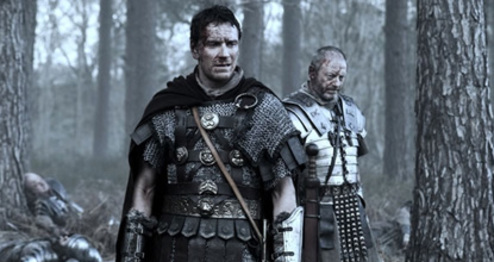
Michael Fassbender surveys the devastation that is Centurion

Director: Neil Marshall

Cast: Michael Fassbender (Quintus Dias), Olga Kurylenko (Etain), Dominic West (General Titus Flavius Virilus), Liam Cunningham (Brick), David Morrissey (Bothos), JJ Feild (Thax), Noel Clarke (Macros), Riz Ahmed (Tarak), Dimitri Leonidas (Leonidas), Ulrich Thomsen (Gorlacon), Imogen Poots (Arianne), Paul Freeman (Gnaeus Julius Agricola), Rachael Stirling (Drusilla), Less Ross (Septus)

It’s an old fable: the “missing” Roman legion, the 9thLegion that allegedly marched to Scotland around 120 AD. We don’t know what happened (if anything) but it usually gets tied into Hadrian’s decision to build his famous wall. Anyway, Neil Marshall’s film tries to plug the gap, with the Legion eradicated on an ill-judged expedition north to settle affairs there once for all. A “ragtag bunch” of survivors (all of whom match expected character tropes) have to run over hostile countryside, led by surviving senior officer Centurion Quintus Dias (Michael Fassbender) to get back to safety and Roman lines.

It’s a Neil Marshall film, so you can expect blood-letting aplenty and high-octane action on a budget. And you more or less get it, mixed with his love for accelerator-hitting chases and against-the-odds action. It’s entertaining enough, but its main problem is that it feels a little too by-the-numbers, as if all the thought about how to make it original and exciting went straight into the look and style of the film – all drained out colours and serious claret – and none at all into storytelling or character.

You sort of end up caring for the characters in a functional way – largely because they are all such familiar types – but their personalities seem to have been designed entirely around the various deaths that have been invented for them. So the enthusiastic meet unjust ends, the likeable fall to cruel chance, the world-weary give their lives for one more stand, the selfish meet justice. At the end, the characters you would basically expect to stumble to the finish line do. It’s a film that lacks any uniqueness.

In fact, what gives the characters life is the professional character actors playing them, all of whom can do what they are doing here standing on their heads and look like they were largely there with an eye on pleasant after-shooting hours in a series of local pubs. It’s hard otherwise to think what attracted them to these cardboard cut-outs and pretty familiar structure.

Not that there is anything wrong with what Marshall does with his film here – it’s a lot of fun when stuff is happening, it’s just that nothing feels like it carries enough weight or originality to survive in the memory. Everything is fine but nothing is really inspired. There is very little sense of Ancient Rome or any other place. The Romans are basically squaddies, an idea that sounds interesting until you remember turning period warriors into versions of modern soldiers is hardly new, while the Brits chasing them are woad-covered psycho stereotypes.

So while it passes the time, Centurion does nothing special with it. It feels like a wasted opportunity – that with a cast this good and a decent premise, plus a nice little historical mystery to pin it onto in order to give it depth, Marshall could have come up with something that was more than the sum of its parts rather than less. Perhaps it needed more time with its ragtag group so they actually became characters rather than plot devices. Perhaps it needed to take more of a rest from its constant chasing to allow quieter moments of reflection and character. Perhaps it’s just a chase film that is never quite compelling enough to make you overlook these things. Either way, Centurion isn’t an all-conquering empire of  film.

Oblivion (2013)

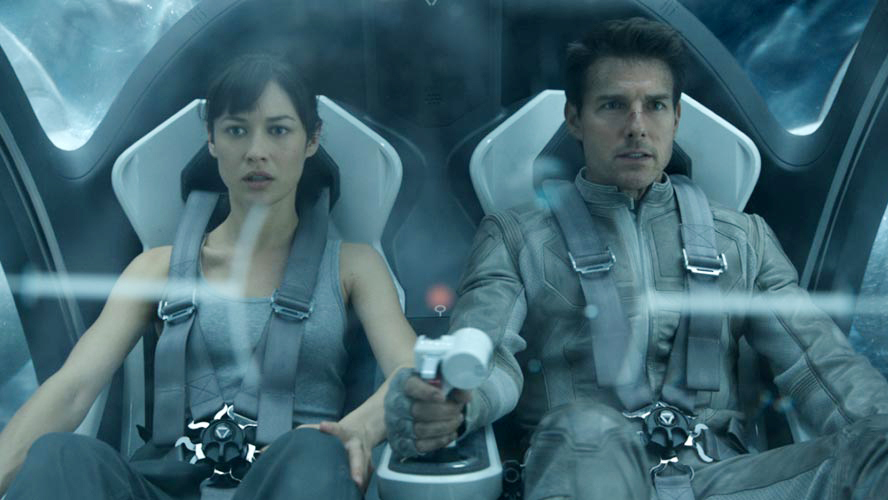
Tom Cruise goes all Top Gun (Olga Kurylenko is along for the ride, pretty much all she does in the movie) in would-be intellectual sci-fi thriller Oblivion

Director: Joseph Kosinski

Cast: Tom Cruise (Jack Harper), Morgan Freeman (Malcolm Beech), Olga Kurylenko (Julia Rusakova), Andrea Riseborough (Victoria Olsen), Nikolaj Coster-Waldau (Sykes), Melissa Leo (Sally)

Spoilers: I’m going to discuss the entire content of the plot from the third paragraph. You’ve been warned!

It’s 60 years after an alien attack. The world has been destroyed, cities lie in ruins, and mankind has fled to Jupiter’s moon Titan. Earth is being drained of its last few resources to power the new civilisation on Titan by massive machines. Drones fly around the planet, protecting the machines from the last surviving alien forces still on Earth. The drones are tended by Jack Harper (Tom Cruise) and Vika Wilson (Andrea Riseborough), whose memories have been wiped for security reasons and who are dedicated to keeping the drones functioning. 

Or is this all a lie?

Well it won’t be a huge surprise to hear that it is, of course. And there are some decent ideas in Kosinski’s film: the twist reveal that the organisation Harper and Wilson are working so hard to preserve is in fact the very alien invaders they so hate, or that the strange figures on the planet they are helping the drones to kill are actually the last surviving remnants of mankind. Harper and Wilson are clones of NASA astronauts captured 60 years ago and replicated over and over again in order to serve the robots. The “Tet” in space that they believe is their HQ is the alien mothership. These are all decent twists. So why do they combine together to have so little real impact?

I think it’s because Kosinski rushes the film. He’s so pleased with the narrative rug pulls that he seems to want to reveal many of them one after the other. Additionally, the biggest twist – Tom Cruise is actually working for the baddies! – immediately makes most of the rest easy to predict. Not least the constant references to Base 49 where he and Vika work – sure enough it’s a clone number, so the planet is filled with clones of this pair. The only thing stopping them bumping into each other is that they have been told everything outside of their “patrol zone” is irradiated and they must never enter it. 

All of this world building – and the film does take its time establishing it a piece at a time early on – is interesting stuff. But it loses its way once the film surrenders itself to a string of reveals that overwhelm it. By the time we are watching super-man Jack shooting down drones from his helicopter, the film seems to have lost the more meditative start. With Jack at first we get a sense of a guy longing to find more depth to live with. But the film loses this sense, with Jack become steadily less interesting the more we find out about him.

Then once you accept the idea of Cruise and Riseborough being endlessly cloned, the logic gap starts to click into place. It’s never explained why the aliens are so reliant on human engineers for their drones – if they have conquered loads of planets before without them, why do they need them here? Furthermore, we are told the first wave of Jacks were mindless soldiers who killed everyone on the planet – why then are these engineer Jacks and Vikas given so much independent thought? Why not just make them automatons? Why clone them and then lie to them about who they are working for – why not just program them to obey the robots?

Then after a slow build of questions and revelations about Jack’s world, we get a standard Independence Day style mission up into space to “blow up the mother ship”. Of course this is a mission that only your man Tom can do. And do it he does, because Tom Gotta Do What Tom Gotta Do. It’s all a rather disappointing resolution to a film that toys around with being something a bit more complex and interesting earlier on.

Ah, Tom Cruise. To be honest he’s probably miscast here. There is something so incredibly, movie-star strong about Cruise that he somehow overpowers the shocks and make them seem silly. On top of which, the part is another ego-stroke. Jack is the ultimate man’s man – he fixes things, he loves sports, he builds a cabin in the woods, he’s clearly dynamite in the sack; but he’s also sensitive and caring and in touch with his feelings. On top of which both female characters in the film – Riseborough’s sadly besotted Vika and Kurylenko’s mysterious astronaut who lands on Earth and awakens strange memories in Jack – are both pathetic ciphers who need Tom’s help for everything, while of course also being way, way, way too young for the Cruiser.

But the film still looks good, and still has some very interesting twists. The design and visuals are faultless – in fact they seem to become the main focus, all those long shots of deserted, sand consumed parts of New York. Its main problem is that it’s low on themes – I guess it’s trying to make a case that humanity can’t be bashed out of us, no matter how many times we try and clone it out of someone – but it gets lost a bit in plot mechanics and the delight the director has in executing them. For a film that only really has four characters in it, I still felt they were hazy and undefined. A lot is left to the viewer’s own suppositions, so the film gets pretty reliant on your adding the depth it needs. If you are inclined to do so, this works. But the essential dramatic thrust of the film itself isn’t compelling enough to make you willing to make the effort the film needs.

Oblivion wants to be the next big, thoughtful, twist-filled, sci-fi epic. But it just doesn’t have enough interest and complexity to really engage the viewer. Instead it all becomes a bit forgettable – not because it’s bad but because, at the end of the day, it’s nothing special.

The Death of Stalin (2017)


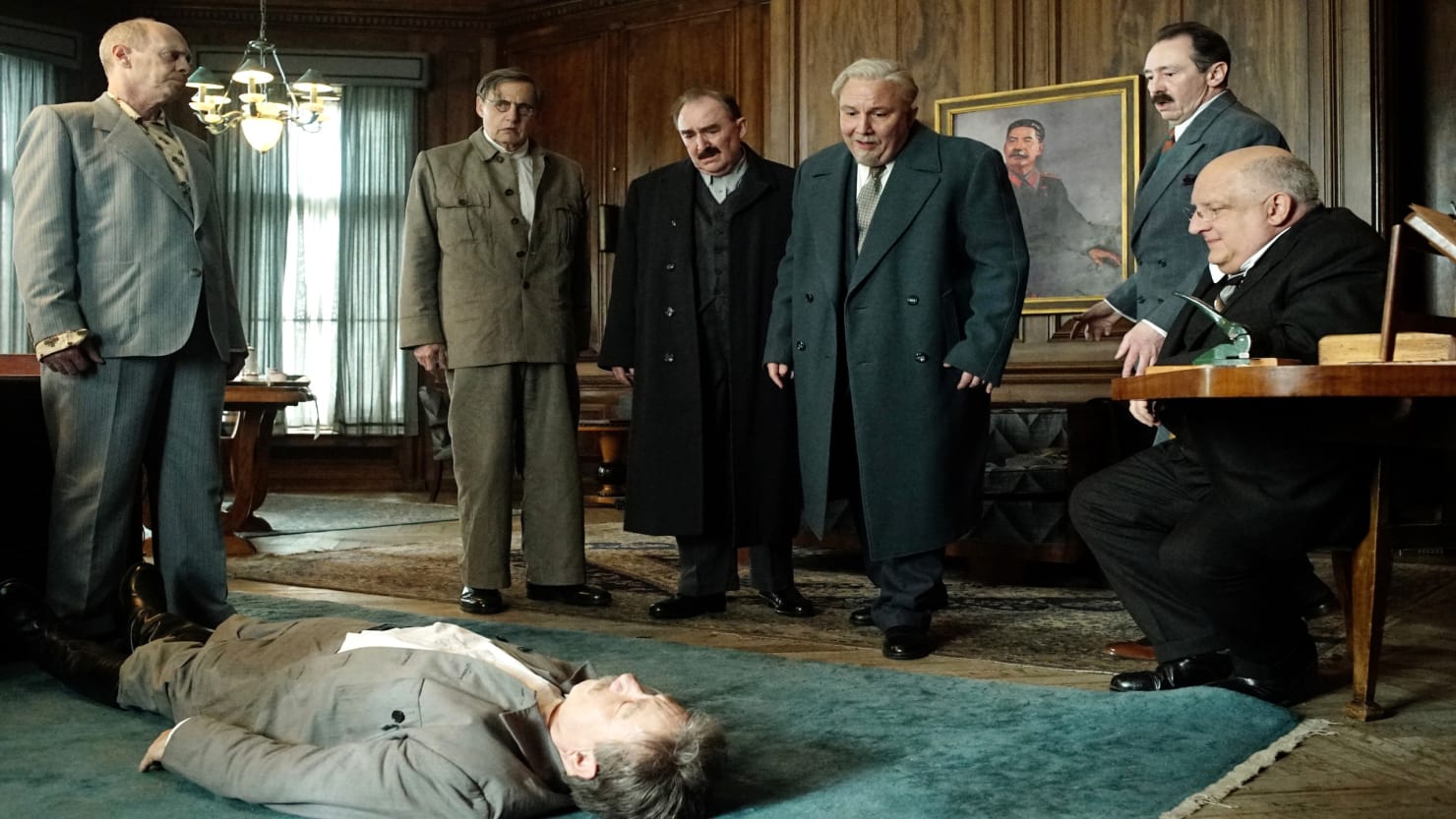
Hilarious hi-jinks in Soviet Russia as the politburo struggle to deal with The Death of Stalin

Director: Armando Iannucci

Cast: Steve Buscemi (Nikita Khrushchev), Simon Russell Beale (Lavrenti Beria), Paddy Considine (Comrade Andreyev), Dermot Crowley (Lazar Kaganovich), Rupert Friend (Vasily Stalin), Jason Isaacs (Georgy Zhukov), Olga Kurylenko (Maria Yudina), Michael Palin (Vyacheslav Molotov), Andrea Riseborough (Svetlana Stalin), Jeffrey Tambor (Georgy Malenkov), Paul Whitehouse (Anastas Mikoyan), Paul Chahidi (Nikolai Bulganin), Adrian Mcloughlin (Joseph Stalin)

Armando Iannucci is a brilliant television satirist, who spring to wider fame with the success of foul mouthed political satire The Thick of It (re-imagined as Veep in the USA). His sweaty, sweary, fly-on-the-wall style, and characters who embody the panicked agitation of the nakedly ambitious but not-too-bright, was a perfect match for our modern world. Does the style work for the past? You betcha.

In Soviet Russia, a country near paralysed with terror, the ruthless dictator Stalin dies. This starts an immediate scramble to succeed him, with the leading candidates being weak-willed, vain and foolish deputy Malenkov (Jeffrey Tambor), vaguely principled but fiercely ambitious opportunist Khrushchev (Steve Buscemi) and sinisterly sadistic police chief Beria (Simon Russell Beale). Soviet Russia though is a pretty ruthless place for political manoeuvring, with retirement usually coming in the form of a single bullet to the back of the head.

First off the bat, The Death of Stalin is a blisteringly funny film, a real laugh-out loud riot. Why does it work so well? Because it understands that, hand-in-hand with the horror, Stalinist Russia was so completely barking mad that it lends itself completely to black comedy. Imagine The Thick of It, but with Malcolm Tucker executing rather than dismissing terrified ministers. Welcome to the madness. Events that seem crazy are pretty much true: although time has been telescoped, the struggle for the succession did more or less play out like this (with less swearing).

Every scene of this dark farce has a memorable, stand-out line or moment. The sweaty panic of these over-promoted yes-men is brilliantly reminiscent of the sort of panic you can imagine seeing in your office, with the exception that it probably isn’t literally life-and-death. Iannucci completely understands the wild improvisation of the fiercely ambitious in high-stress situations. If you think the ministers of The Thick of It were adrift when confronted with parliamentary enquiries, imagine how their counterparts struggle when faced with the threats of a bullet in the head.

Because that’s the great thing about this film – while still being hilariously foul-mouthed, it actually gives a pretty good idea of what it might have been like to live in Soviet Russia. The characters are constantly having to adjust to who is in favour and who isn’t, what it is permissible to think and say and what isn’t, who is “dead and who isn’t”. Iannucci totally understands human nature doesn’t change – those left alive around Stalin are just the sort of shallow, selfish, weaklings he’s been lampooning in The Thick of It. Most of the ordinary people we see are just desperate to keep their heads down – getting noticed for regular joes in this film is basically a death sentence. 

The opening sequence really gets this idea across. Paddy Considine is hilariously nervy and terrified as a radio producer ordered to send a recording of the live concert they’ve just broadcast (unrecorded) to Stalin. The frantic rush to reassemble the orchestra, fill the audience up again with people from the street, replace the conductor (the original having passed out in terror at the possibility that he may have been bugged questioning Stalin’s musical knowledge) is brilliantly funny – but works because the genuine expectation that doing the slightest thing wrong could lead to immediate execution is completely clear. Especially as the scene is intercut with Beria’s heavies rounding up innocent civilians to disappear into a gulag. 

Iannucci doesn’t dodge the ruthlessness. The film is punctured throughout by executions, often carried out with a black farcical desperation. It doesn’t shy away from the brutality of Beria, whose violence, sadism and pathological rape addiction we are constantly reminded of (and which are even more effectively sinister as he’s played by the cuddly Simon Russell Beale). In turn, a frantic Beria berates the rest of the politburo for their participation in the orgy of killings and show trials Stalin organised. We see people about to be taken to their deaths hurriedly offering terrified goodbyes to their loved ones. The final sequence of the film, as the battle for the succession reaches its end-game, tones down the jokes to give us an alarmingly realistic picture of a coup. Black farce ending in death: it’s as legitimate a picture as any of living in Stalinist Russia.

All of this is presented in a razor-sharp and witty script, and the cast who deliver it are brilliant. In a fantastic touch, the actors (with the exception of Isaacs) use their own accents, which only adds to the crazy fun. The acting is, across the board, fabulous. Russell Beale gives his greatest ever film performance as a grubby, ambitious, not-quite-as-smart-as-he-thinks Beria, with bonhomie only lightly hiding his chilling sadism and cruelty. Buscemi is equally brilliant as Khrushchev, who has the ego and self-delusion to convince himself that he is the only hope for a reformed USSR, while actually being a weaselly political player with naked ambition.

Around these two central players there is a gallery of supporting roles. Tambor gives a brilliant moral and intellectual shallowness to the hapless Malenkov. Friend is hysterical as Stalin’s drunken son, a deluded man-child barely tolerated by those around him. Palin’s cuddliness works perfectly as fanatical Stalinist Molotov. Whitehouse, Crowley and Chadihi are also excellent, while Riseborough does well with a thankless role as Stalin’s daughter. The film may be hijacked though by Isaacs as a swaggeringly blunt General Zhukov, re-imagined as a bombastic, plain spoken Yorkshireman, literally entering the film with a bang half-way through and bagging most of the best lines.

The Death of Stalin is not just a brilliantly hilarious comedy, it also feels like a film that completely understands both the terror and the confused ineptitude of dictatorship. In a world where it is death to question the supreme leader, is it any surprise that his underlings are all such clueless, ambitious idiots? Has anyone else understood the black comedy of dictatorship before? I’m not sure they have. You’ll laugh dozens and dozens of times in this film. And then you’ll remember at the end that when this shit happens, people die. This might be the best thing Iannucci has ever made.