Tag: Olivia de Havilland

A Midsummer Night’s Dream (1935)

A Midsummer Night’s Dream (1935)

Handsomely staged and quietly influential production, full of invention and good ideas

Director: Max Reinhardt, William Dieterle

Cast: James Cagney (Bottom), Joe E. Brown (Francis Flute), Dick Powell (Lysander), Jean Muir (Helena), Victor Jory (Oberon), Verree Teasdale (Hippolyta), Hugh Herbert (Snout), Anita Louise (Titania), Frank McHugh (Quince), Ross Alexander (Demetrius), Ian Hunter (Theseus), Mickey Rooney (Puck), Olivia de Havilland (Hermia), Dewey Robinson (Snug), Grant Mitchell (Egeus), Arthur Treacher (Epilogue)

It says something about Hollywood’s back-and-forth relationship with Shakespeare, that Reinhardt and Dieterle’s film can still make a case for being one of its finest Hollywood Shakespeare films. What’s fascinating about it is how much attitudes towards it have changed over time. Opening to a chorus of sniffs from the critics (“It should never have been filmed!”), horrified about the blasphemy of the Bard on celluloid, the things praised at the time now feel the stuffiest while the elements criticised feel fresh and dynamic. Personally, it’s crazy mix of genres, eras, comedic styles and dramatic tone feels like the sort of thing Shakespeare (a consummate showman who spoke in poetry) might have enjoyed.

It came about because Jack Warner wanted a bit of class. Max Reinhardt, internationally famous avant-garde theatre director, as part of Warner’s power thruple: direction by Reinhardt, music by Mendelssohn, words by Shakespeare! Reinhardt had directed a lavish production at the Hollywood Bowl (which also featured Rooney as Puck and de Havilland as Hermia), that would form the basis of his film, incorporating ballet and impressive visual effects. William Dieterle, was bought in to translate Reinhardt’s vision to film (since it quickly became clear Reinhardt didn’t know how to make a movie).

We get an MND that mixes farcical comedy with a dark, sensuous energy. Athen’s forest was transformed by Hal Mohr’s Oscar-winning photography into a glittering fantasy land, created with a mixture of superimposition and miles of cellophane wrapped around the perfectly-recreated trees to reflect the studio lights in a shimmering dance. But in this, is a fairy world of danger and chaos: Reinhardt’s pioneered the interpretation of Puck (played with malicious gusto by Mickey Rooney) as a fire-lighting child, revelling in the chaos his actions cause. Rooney (or rather his double, as Rooney broke a leg early in production) skips and sways, laughing maniacally, tormenting the lovers (possibly even controlling their words and actions), unleashing dark forces of the night.

The film is full of such dark forces – a surprise to critics who saw Dream as a gentle comedy. The ballet sequences, used by Reinhardt to visually demonstrate Oberon’s and Titania’s power to manipulate the environment around them, feature demonic dancers who wouldn’t look out of place in Faust, creepy music-playing goblins and a constant sense of unknowable power. Victor Jory – highly praised at the time, although his precise, poetic reading feels austere and lacking in feeling today – is a darkly imperious Oberon, with barely a trace of warmth to him. (Anita Louise’s Titania also takes a traditional line, speaking with a slightly irritating sing-song that should serve the poetry but instead drains it of life.)

You suspect, if he could have got away with it, Reinhardt might have allowed a trace of bestiality to enter into Titania’s romance with the transformed Bottom. As it is, he settles for Titania snatching a coronet from the Indian boy (nicely introduced early, to cement the split between the two fairy monarchs) who bursts into tears, increasing the feeling that the fairies are inconsistent, temporary creatures, perfectly willing to drop previously treasured people for whoever else captures their attention.

Lavish spectacle runs throughout a play that feels highly indebted to Raphael and the other Renaissance masters. Reinhardt has no problem switching styles: Theseus’ arrival is staged like an Ancient Roman pageant, before settling into a Renaissance style court while the Mechanicals could have stepped straight out of Brueghel. Again, it’s a playing around with style and location that looks very modern today but short-circuited reverentially literal critics at the time. Reinhardt even plays with the idea of Hippolyta being a less-than-willing partner for Theseus (she appears defiantly restrained in the opening scene), although this is largely benched for later scenes.

The lavish opening also shows the production’s ability to balance comedy and drama. Alongside the traditionalist grandiosity, we have low comedy from both the lovers and mechanicals. In a fast-cut, skilfully assembled array of moments (surely Dieterle’s work), the relationships between the four lovers are expertly displayed and mined for comic energy (particularly Lysander’s and Demetrius’ private competition to sing loudest) as are those between the mechanicals (from Bottom’s enthusiasm to Quince’s frustration at the terminal stupidity of Flute).

The mechanicals are one of the greatest divergence in critical opinion between then and now. To critics at the time it was a jaw-dropping mistake to cast Cagney and a host of film comedians in Shakespeare – surely these were roles for the likes of Gielgud? Everything from their delivery to the posture was lambasted for being crude and too damn American for a genre considered the exclusive preserve of the well-spoken likes of Jory and Hunter. However, the energy and naturalness of these actors – and the consummate comic timing they pull out of their roles – is one of the film’s greatest touches.

Cagney was never afraid to look beat-up or ridiculous, and he revels as an explosive ball of energy as Bottom. He flings himself, with the same energy as Bottom, into over-enunciated voices and grand displays of ‘bad acting’, parodying a host of styles from classical to pantomime to stage comedy. Cagney also makes him sweetly naïve and childishly literal, while his gentle, polite mystification about being treated like a king by the fairies seems rather sweet. The other mechanicals are also genuinely excellent, doing one of the hardest things: making Shakespearean comedy work on screen. Joe E Brown is hilarious as a supernaturally dim Flute, barely able to remember what gender he is playing; Hugh Herbert’s Snout has an infectious nervous giggle he can’t control, Frank McHugh’s Quince parodies directors like DeMille. Each of them contributes to a genuinely funny Pyramus and Thisbe that closes the film.

It’s more funny than the sometimes-forced banter between the lovers, not helped by a far too broad performance by Dick Powell (who later claimed he didn’t understand a word he was saying) that makes Lysander somewhere between a buffoon and an egotist. Olivia de Havilland (perhaps not surprisingly) emerges best here as a heartfelt Hermia, although the quarrel between the lovers is perhaps the least well staged sequence in the film (Reinhardt and Dieterle resort to all four of them at points speaking their lines at the same time, as if wanting to get the scene over and done with).

But MND is awash with other touches of cinematic and interpretative invention, it’s darkish vision of the Fairy world (with superimposition and ballet interjections giving it a darkly surreal touch) as influential as it’s haphazard approach to place and setting. Its comic performances come alive with real energy, devoid of the more stately approach from others. Above all, MND feels like an actual interpretation of its source material, rather than just a respectful staging – and its influence played out over decades of productions to come. Overlooked for too long, it’s a fine and daring piece of film Shakespeare, far better than it has a right to be.

Hold Back the Dawn (1941)

Hold Back the Dawn (1941)

A potentially cynical drama becomes a sweet romance, with three excellent lead performances

Director: Mitchell Leisen

Cast: Charles Boyer (Georges Iscovescu), Olivia de Havilland (Emmy Brown), Paulette Goddard (Antia Dixon), Victor Francen (Professor van der Luecken), Walter Abel (Inspector Hummock), Curt Bois (Bonbois), Rosemary DeCamp (Berta Kurz), Eric Feldary (Josef Kurz), Nestor Paiva (Fred Flores)

Refugees flock at the USA-Mexican border, desperate to squeeze into the Land of the Free, only to meet with a stringent border control and tight rules on immigration quotas. No, it’s not a story from today – it’s from the 1940s, with Mexico awash with refugees from Europe, fleeing Hitler. But the USA only has a certain quota of refugees it will accept from each country – and Romanian Georges Iscovescu (Charles Boyer) finds he’s got no less than a five to eight year wait before his quota number will come up. His ex-flame Anita (Paulette Goddard) suggests there might be a way around this: if Georges can get married to an American citizen, he will fly through the border on a green card. Georges sets his eye on spinsterish teacher Emmy Brown (Olivia de Havilland) marrying her in a whirlwind romance – only to find feelings of guilt and growing affection for Emmy making his plan more difficult.

Hold Back the Dawn is well-assembled, well-paced mix of romance and black-comedy which pulls its jet-black punches in favour of a more conventional happy ending. Perhaps that’s why it was the last Billy Wilder script (working with regular collaborator Charles Brackett) he didn’t direct himself. You can imagine a director as prone to the cynical as Wilder, may not have settled quite as happily for the more optimistic and reassuring film Hold Back the Dawn becomes. Wilder was also unhappy with how he felt the film pruned back the more cutting political criticism of America’s immigration policy. As a refugee from Hitler himself, Wilder knew of what he was talking about.

However, that’s not to say Hold Back the Dawn isn’t awash with Wilder and Brackett’s patented mix of waspish character comedy and sharp dialogue tinted with more than a touch of arch cynicism. Mitchell Leisen’s success here, is to smooth the wheels to allow enough of this mix of black and absurdist humour to carry through a film you feel the studio has attempted to shoe-horn into being a conventional ‘love conquers all’ narrative (not least with its ending, which has the look and feel of a mix of hurried re-shoots and re-purposed footage to create a late upbeat ending, filmed after de Havilland was no longer available from her loan from Warner Brothers).

Hold Back the Dawn doesn’t shirk on the vicious, oppressive cycle of being stuck in a holding pattern waiting to be allowed into the US. Georges only gains his room in the overstuffed hotel because the previous tenant hangs himself (the manager matter-of-factly says he’ll have the room ready shortly). There is quite a lot of both dark humour (from Georges and Anita’s nakedly opportunist cadism) to little touches of high farce (a pregnant woman gaming the system to give birth on US soil) and the faintly surreal (a would-be refugee who might just be a descendant of honorary US citizen Lafayette). Throughout most of Hold Back the Dawn this never feels out of keeping with the slow-burning romance between Georges and Emmy.

A lot of this is also due to Charles Boyer’s highly successful performance in the lead role. Few actors were as skilled at mixing suave European class and louche rotter-ness than Boyer, and Georges is a gift of a part. A playboy stuck in a boring, dead-end purgatory of a town (one he aimlessly walks around time and time again to kill the hours), Boyer makes Georges believable charm personified – certainly enough to back the film’s implication he keeps himself afloat as a gigolo for tourists. Boyer’s arch voiceover relays every-step of the nakedly self-centred plan he initiates to squirm his way over the border. His performance is full of charm, tender shyness and love-struck adoration to Emmy, punctured throughout by Boyer’s canny side-eye to check on the effect of his shameless lies (there is a glorious moment when Boyer checks himself and cocks an eye when walking down a street, to make sure Emmy is following him).

The character works though because Boyer is a master at balancing this ruthless, self-serving charm with a general decency just below the surface that, no matter how hard he tries, he can never quite dampen down. It excels in the film’s middle act as the couple’s ‘spontaneous’ (so Georges can escape the notice of Walter Abel’s excellently shrewd immigration inspector) honeymoon in Mexico. Boyer brilliantly demonstrates through the slightest of vocal inflections and subtle shifts in body language (there is a point during a village fiesta where his face lights up with a genuine smile the like of which we have never seen before) that make us totally believe this is a man who, much to his surprise, is actually falling in love.

It helps with this that he shares scenes with such a winning presence as Olivia de Havilland as Emmy. Oscar-nominated, de Havilland takes a role (a spinsterish frump, who has never been loved) that could be ridiculous and makes it utterly and completely real. Throughout Georges initially cynical courting, there is a little sense of doubt throughout in de Havilland’s manner (she knows instant love is too good to be true), but such is her loneliness we can see and feel her willing herself into belief. As she does so, de Havilland lets the shy Emmy flourish into a woman of greater confidence, wit and burgeoning sexual desire (hilariously, the increasingly shamed Georges begins to event injuries to put off the consummation of this marriage). De Havilland makes Emmy a living, breathing person, someone miles away from the joke she is set up as initially: instead she is a genuine, true-hearted, increasingly brave woman whose decency and sense of warmth we grow to love as much as Georges does.

She makes an excellent contrast with Paulette Goddard’s ruthlessly amoral Anita. In one of her finest performances outside of her work with Chaplin, Goddard makes Anita utterly ruthless in seeking out what she wants and full of a hilariously honesty about her willingness to use anyone and anything to get it. She’s Georges even darker reflection, Goddard’s dialogue awash with brutal firecracker one-liners. But even she is capable at points of depth, a late act of petty cruelty awakening in her underlying feelings of sympathy and empathy that seem to surprise even her. It’s a lovely performance of darkly comedic ruthlessness.

These three leads all elevate a film that at times compromises on its vision of the harshness of the system these people are all stuck in. Hold Back the Dawn doesn’t want to make a statement as such – it wants to offer a more reassuring vision of hope and decency. This it does well: the film is even built around Georges pitching it as a possible film project to the actual Mitchell Leisen (effectively playing himself, on set shooting a real film with the real Veronica Lake and Brian Donlevy). After a start that suggests something darker and more dangerous, it ends as a comforting and safe picture – but one that works extremely well.

The Heiress (1949)

The Heiress (1949)

Is it love or is it avarice? Wyler’s sumptuous costume drama is a brilliant translation of Henry James to the screen

Director: William Wyler

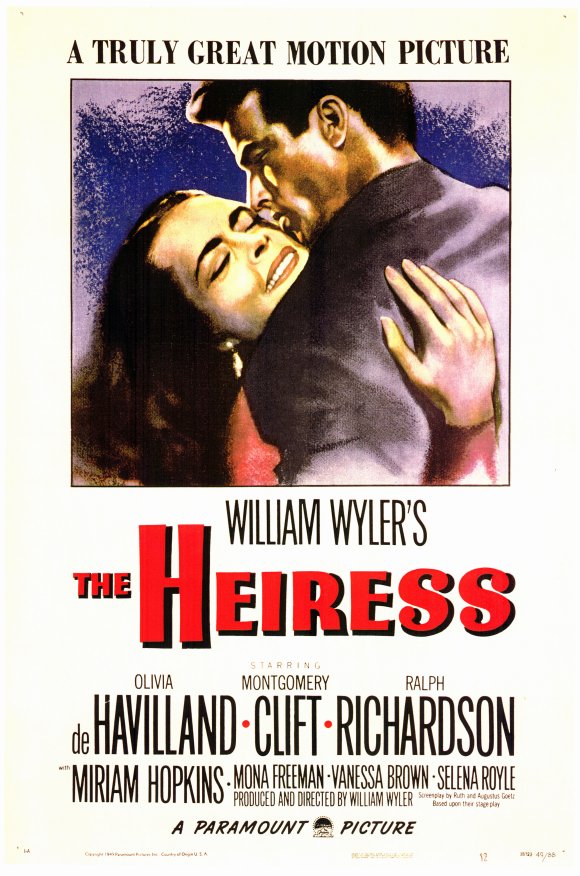
Cast: Olivia de Havilland (Catherine Sloper), Montgomery Clift (Morris Townsend), Ralph Richardson (Dr Austin Sloper), Miriam Hopkins (Lavinia Penniman), Vanessa Brown (Maria), Betty Linley (Mrs Montgomery), Ray Collins (Jefferson Almond), Mona Freeman (Marian Almond), Selena Royle (Elizabeth Almond), Paul Lees (Arthur Townsend)

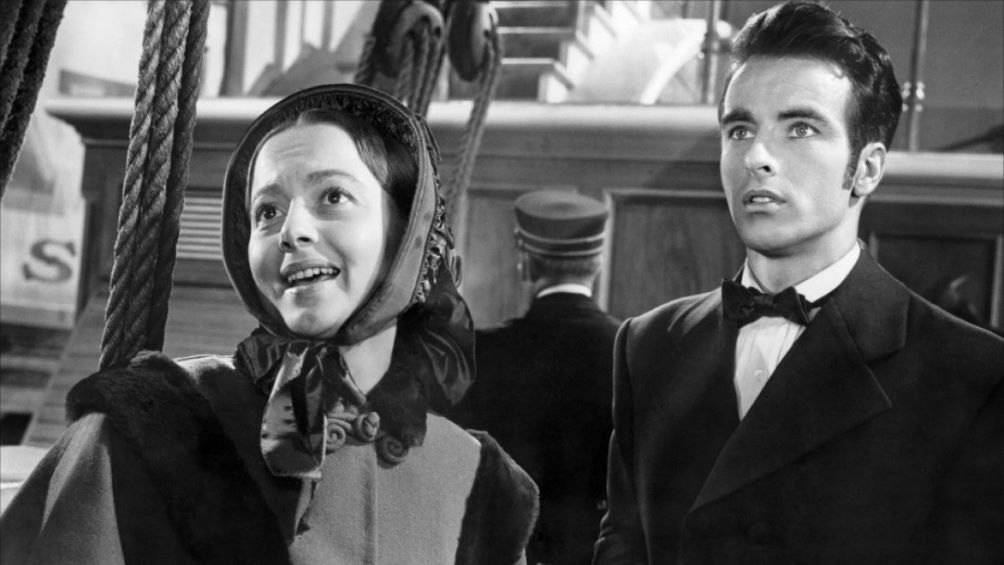
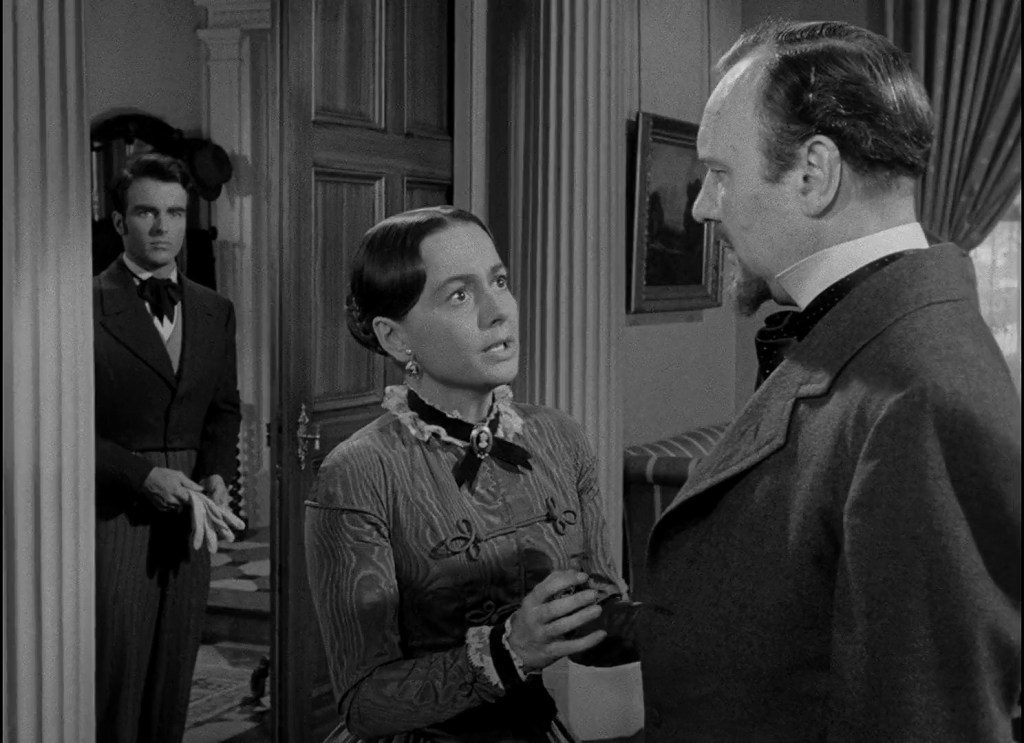
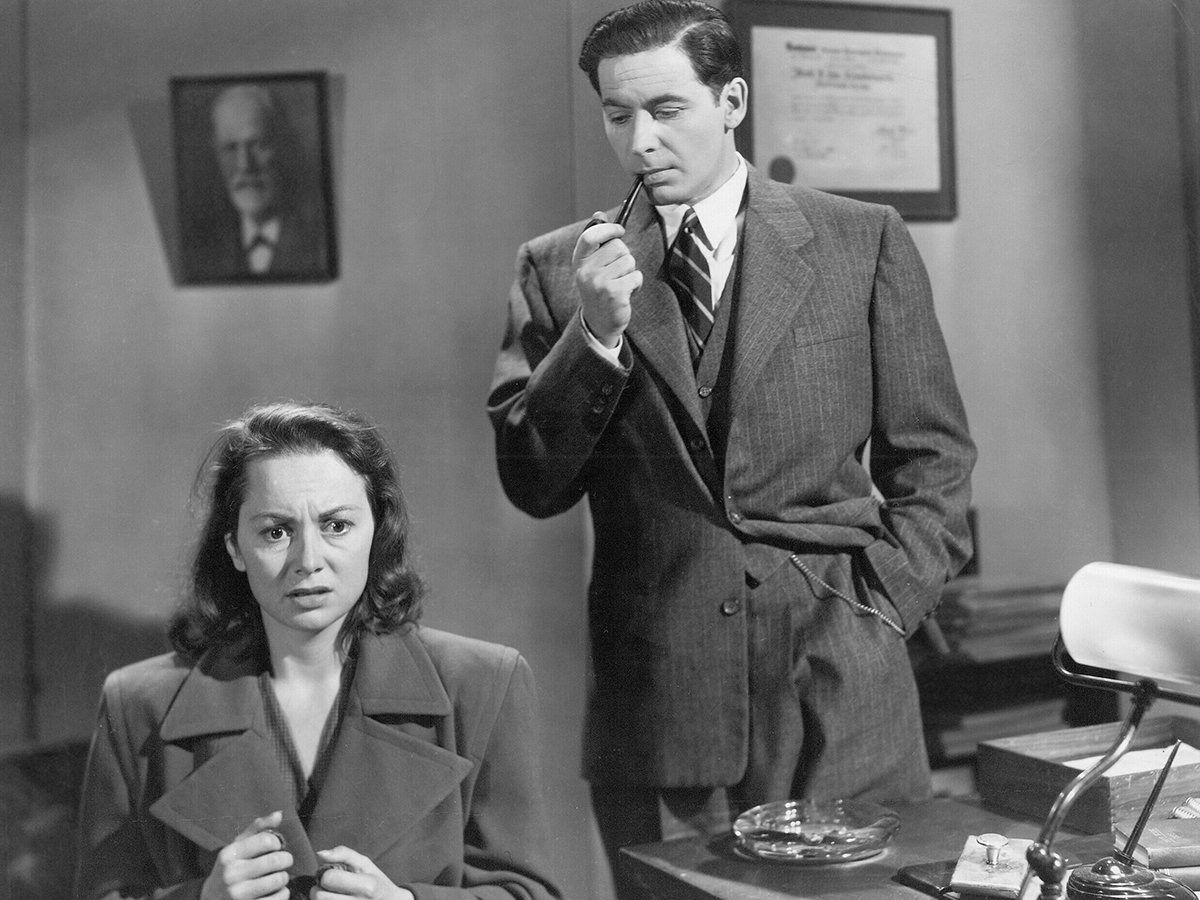
Pity poor Catherine Sloper (Olivia de Havilland). She’s seems destined forever to be the spinster, the last person anyone glances at during a party. Her father Dr Sloper (Ralph Richardson) can’t so much as walk into a room without gently telling how infinitely inferior she is to her mother. And when a man finally seems keen to court her, her father tells her that of course handsome Morris Townsend (Montgomery Clift) will only be interested in her inheritance. After all, there is nothing a young man could love in a forgettable, dull, second-rate woman like Catherine. He’s cruel, but is he right – is Morris a mercenary?

The Heiress was adapted from a play itself a version of Henry James’ Washington Square. It’s bought magnificently to the screen in a lush, sensational costume drama that comes closer than anyone else at capturing those uniquely Jamesian qualities of ambiguity and contradictory motives among the New American elites. Magnificently directed by William Wyler, it brilliantly turns a theatrical character piece into something that feels intensely cinematic, without once resorting to clumsy ‘opening up the play’ techniques. And it marshals brilliant performances at its heart.

Sumptuously costumed by Edith Head, whose costumes subtly change and develop along with its central character’s emotional state throughout the story, it’s largely set in a magnificently detailed Upper New York household, shot in deep focus perfection by Leo Tover, which soaks up both the reaction of every character and the rich, detailed perfection of decoration which may just be motivating some of the characters. Not that we can be sure about that, since the motives of Morris Townsend and his pursuit of Catherine remain cunningly unreadable: just as you convince yourself he’s genuine, he’ll show a flash of avarice – then he’ll seem so genuinely warm and loving, you’ll be sure he must be telling the truth or be the world’s greatest liar.

Catherine certainly wants it to be true – and believes it with a passion. The project was also a passion piece for de Havilland, and this is an extraordinary, Oscar-winning performance that delves deeply into the psyche of someone who has been (inadvertently perhaps) humiliated and belittled all her life and eventually reacts in ways you could not predict. Catherine is clumsy, naïve and lacking in any finesse. With her light, breathless voice and inability to find the right words, she’s a doormat for anyone. She even offers to carry the fishmonger’s wares into the house for him. At social functions, her empty dance card is studiously checked and her only skill seems to be cross-stitch.

She is an eternal disappointment to her father, who meets her every action and utterance with a weary smile and a throwaway, unthinking comment that cuts her to the quick. Richardson, funnelling his eccentric energy into tight control and casual cruelty, is magnificent here. In some ways he might be one of the biggest monsters in the movies. This is a man who has grown so accustomed to weighing his daughter against his deceased wife (and finding her wanting) that the implications of the impact of this on his daughter never crosses his mind.

Catherine is never allowed to forget that she is a dumpy dullard and a complete inadequate compared to the perfection of her mother. Richardson’s eyes glaze over with undying devotion when remembering this perfection of a woman, and mementoes of her around the house or places she visited (even a Parisian café table later in the film) are treated as Holy Relics. In case we are in any doubts, his words when she tries on a dress for a cousin’s engagement party sum it up. It’s red, her mother’s colour, and looks rather good on her although he sighs “your mother was fair: she dominated the colour”. Like Rebecca this paragon can never be lived up to.

So, it’s a life-changing event when handsome Morris Townsend enters her life. There was criticism at the time that Clift may have been too nice and too handsome to play a (possible) scoundrel. Quite the opposite: Clift’s earnestness, handsomeness and charm are perfect for the role, while his relaxed modernism as an actor translates neatly in this period setting into what could-be arrogant self-entitlement. Nevertheless, his attention and flirtation with Catherine at a party is a blast from the blue for this woman, caught mumbling her words, dropping her bag and fiddling nervously with her dance card (pretending its fuller than of course it is).

Her father, who sees no value in her, assumes it is not his tedious child Morris has his eyes on, but the $30k a year she stands to inherit. And maybe he knows because these two men have tastes in common, Morris even commenting “we like the same things” while starring round a house he all too clearly can imagine himself living in – by implication, they also have dislikes in common. (And who does Sloper dislike more, in a way, than Catherine?) Morris protests his affections so vehemently (and Sloper lays out his case with such matter-of-fact bluntness) that we want to believe him, even while we think someone who makes himself so at home in Sloper’s absence (helping himself to brandy and cigars) can’t be as genuine as he wants us to think.

As does Catherine. Part of the brilliance of de Havilland’s performance is how her performance physically alters and her mentality changes as events buffet her. A woman who starts the film mousey and barely able to look at herself in the mirror, ends it firm-backed and cold-eyed, her voice changing from a light, embarrassed breathlessness into something hard, deep and sharp. De Havilland in fact swallows Richardson’s characteristics, Sloper’s precision and inflexibility becoming her core characteristics. The wide-eyed woman at the ball is a memory by the film’s conclusion, Catherine becoming tough but making her own choices. As she says to her father, she has lived all her life with a man who doesn’t love her. If she spends the rest of it with another, at least that will be her choice.

Wyler assembles this superbly, with careful camera placement helping to draw out some gorgeous performances from the three leads – not to forgetting Miriam Hopkins as a spinster aunt, who seems as infatuated with Morris as Catherine is. The film is shaped, at key moments, around the house’s dominant staircase. Catherine runs up it in glee at the film’s start with her new dress, later sits on it watching eagerly as Morris asks (disastrously) for her hand. Later again, she will trudge up it in defeated misery and will end the film ascending it with unreadable certainty.

The Heiress is a magnificent family drama, faultlessly acted by the cast under pitch-perfect direction, that captures something subtly unreadable. We can believe that motives change, grow and even alter over time – and maybe that someone can love somebody and their money at the same time (perhaps). But we also understand the trauma of constant emotional pain and the hardening a lifetime of disappointment can have. It’s the best James adaption you’ll ever see.

Gone with the Wind (1939)

Gone with the Wind (1939)

For decades unchallenged as the best loved Hollywood film ever made, but showing some signs of its age, it’s still an undeniable marvel

Director: Victor Fleming

Cast: Vivien Leigh (Scarlett O’Hara), Clark Gable (Rhett Butler), Leslie Howard (Ashley Wilkes), Olivia de Havilland (Melanie Hamilton), Thomas Mitchell (Gerald O’Hara), Evelyn Keyes (Suellen O’Hara), Ann Rutherford (Careen O’Hara), Barbara O’Neil (Ellen O’Hara), Hattie McDaniel (Mammy), Butterfly McQueen (Prissy), Oscar Polk (Pork), Rand Brooks (Charles Hamilton), Carroll Nye (Frank Kennedy), Jane Darwell (Mrs Meriweather), Ona Munson (Belle Watling), Harry Davenport (Dr Meade)

For most of the twentieth century, if you asked people to draw up a list of the greatest Hollywood films of all time, you can be pretty sure this would be close to the top. A landmark in Hollywood history, everything about Gone with the Wind is huge: sets, run time, costs, legend. It’s crammed with moments that have developed lives of their own in popular culture. Its score from Max Steiner – luscious and romantic – is instantly recognisable, practically Hollywood’s soundtrack. It’s the most famous moment in the lives of virtually all involved and for decades whenever it was released, it raked in the cash. But as we head into the twenty-first century, does GWTW (as it called itself even at the time) still claim its place at the head of Hollywood’s table?

It’s the love child of David O. Selznick. Never mind your auteur theory: GWTW credits Victor Fleming as the director, but parts of it were shot by George Cukor (the original director, who continued to coach Leigh and de Havilland), William Cameron Menzies (the legendary art director, who shot the Atlanta sequences) and Sam Wood (who covered for an exhausted Fleming for several weeks). This is a Selznick joint from top to bottom. GWTW is possibly the ultimate producer’s film: a massive show piece, where not a single cent isn’t up on the screen. Huge sets, vast casts, colossal set pieces, thousands of costumes and extras. It’s an extravaganza and Selznick was determined that it would be an event like no other. And a hugely entertaining event it was.

It would also be scrupulously faithful to Margaret Mitchell’s novel, with a dozen screenwriters working on it (including Selznick). GWTW was the ultimate door-stop romance novel. Set in Atlanta, Georgia, the entire film is a no-holds barred “Lost cause” romance of the South during the Civil War and Reconstruction. Scarlett O’Hara (Vivien Leigh) is the passionate, wilful daughter of a plantation owner, desperately in love with Ashley Wilkes (Leslie Howard), who is attracted to her but all set to marry his cousin Melanie (Olivia de Havilland). Also interested in Scarlett is playboy Rhett Butler (Clark Gable). Romantic complications are set to one side when the Civil War breaks out, bringing disaster to the South. As the war comes to its end will Scarlett and Rhett find love, or will Scarlett’s fixation on Ashley continue to come between them?

GWTW’s casting was the sort of national obsession not even the casting of a superhero gets today. Every actress in Hollywood seemed to screen test for Scarlett O’Hara, with Selznick playing the search for all the publicity it was worth. No one suggested Vivien Leigh. But, lord almighty, Leigh was placed on this Earth to play Scarlett O’Hara. GWTW is dominated by Leigh, dripping movie star charisma. She would be synonymous with the role for the rest of her life, and it’s no exaggeration to say this one of the greatest acting performances in movie history. Leigh balances a character stuffed with contradictions. Scarlett is wilful and vulnerable, impulsive and calculated, childish and dependable, selfish and generous, spoilt and sensible, romantic and realistic… But Leigh balances all this with complete ease. It’s an act of complete transformation, an astonishingly confident, charismatic and complicated performance.

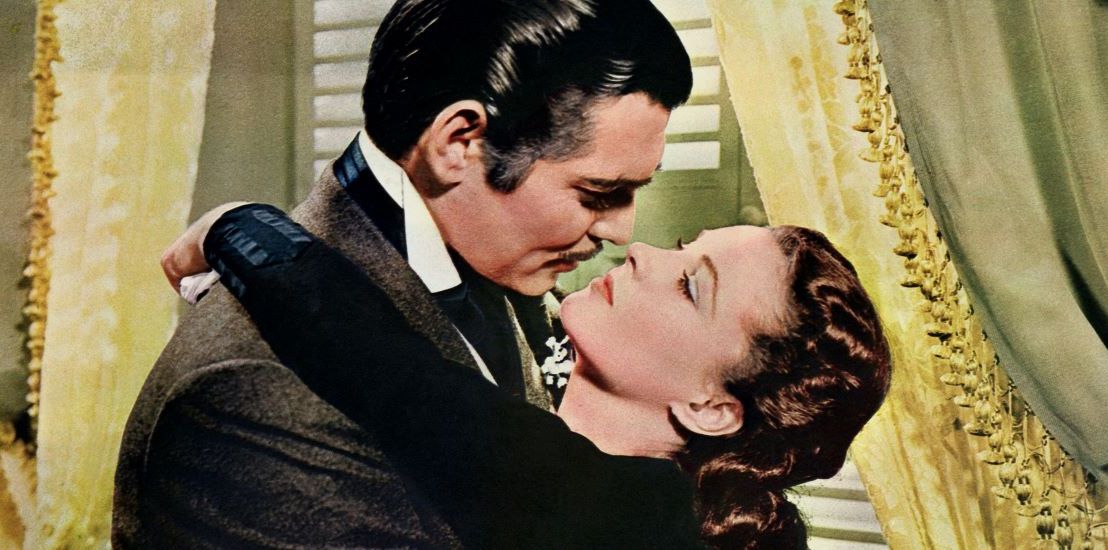
There was no debate about who would play the romantic hero, Rhett Butler. He basically was Clark Gable. And Gable was perfect casting – so perfect, he was almost too scared to play it. But he did, and he is sublime: matinee idol charismatic, but also wise, witty and vulnerable (it’s easy to forget that Rhett is really in the traditional “woman’s role” – the ever-devoted lover who sticks by his woman, no matter how badly she treats him, spending chunks the latter half of the film halfway to depressed tears). For the rest, Leslie Howard was oddly miscast as Wilkes (he seems too English and too inhibited by the dull role) but Olivia de Havilland excels in a generous performance as Melanie, endearingly sweet and loyal.

These stars were placed in a film production that’s beyond stunning. Shot in glorious technicolour, with those distinctive luscious colours, astonishingly detailed sets were built (plantations, massive dance halls, whole towns). Everything about GWTW is designed to scream prestige quality. It lacks directorial personality – the best shots, including a crane shot of the Civil War wounded or a tracking shot on Leigh through a crowded staircase, seem designed to showpiece the sets and volume of extras. It’s a film designed to wow, crammed with soaring emotions and vintage melodrama. Nothing is ever low key in GWTW: disasters are epic, love is all-consuming passionate clinches. They built stretches of Atlanta so they could burn it down on camera. It’s extraordinary.

And much of GWTW is extremely entertaining. Especially the first half. It’s an often overlooked fact that if you ask people to name things that happen in GWTW, nearly everything (bar the film’s final scene obviously) they will come up with is in the first half. Rhett behind a sofa in the library? Atlanta on fire? Rhett and Scarlett at the ball? Scarlett surrounded by admirers at a garden party? “I’ll never be hungry again?” All before the interval. The first half is a rollicking, fast-paced rollercoaster that takes us from the height of the South to the devastation after the war. It grabs you by the collar and never lets go, supremely romantic, gripping and exciting.

The second half? Always duller. Bar the start and finish of the second half (nearly two hours in all), it’s a Less memorable film. Sure, it has the O’Hara’s in extreme poverty, Scarlett reduced to converting a curtain into a dress to glamour up some cash to keep Tara. It’s got Ashley and Melanie’s adorably sweet reunion. And it’s got possibly the most famous line ever in movies “Frankly my dear, I don’t give a damn” (not to mention “Tomorrow is another day”).

Other than that? It’s a bitty, plot-heavy series of forgettable, episodic moments which you feel really should have been cut. Who remembers Frank Kennedy? Or Scarlett’s lumber mill? Rhett pushing his daughter in a pram? The London sequence? There is a solid hour of this film which is flatly shot, dully paced and devoid of anything memorable at all. GWTW owes all its beloved reputation to the first half: and to be fair you’ll be so swept up in that you’ll give the film a pass for its middling second act. After all you get just about enough quality to keep you going.

But what about the elephant in the room? GWTW, like no other beloved film, has a deeply troubling legacy. They were partly aware of it at the time – after all, every racial epithet was cut, as is every reference to the KKK (it’s referred to as a “political meeting” and Rhett and Ashley’s membership is glossed over) and we never see the attack they carry out on a shanty town of former slaves. But GWTW remains, in many ways, a racist film peddling an unpleasant and dangerous mythology that the “Lost Cause” of the South was all about gentlemanly fair play, rather than coining it off plantations full of enslaved workers.

GWTW, in many ways, plays today a bit like a beloved elderly relative who comes round for dinner and then says something deeply inappropriate half-way through the main course. The dangerous mythology is there from the opening crawl which talks of the South as a land of “Cavaliers and cotton fields” where “Gallantry took its last bow…[full of] knights and their ladies fair, of Master and Slave”. The third shot of the film is a field of smiling slaves, working in a cotton field. Hattie McDaniel won an Oscar (at a segregated ceremony) and she is wonderfully warm as Mammy, but her character is another contented underling. At least she seems smarter than the other main black characters, Pork and Prissy: both are like children reliant on the guidance of their masters.

The Cause of the South is luscious and romantic, as are the people who fight it. Nearly every Yankee we see is corrupt, ugly and greedy, rubbing defeat in our heroes’ faces. It’s not quite Birth of a Nation, but the second half has a creeping suspicion of freed black people. A carpetbagger from the North is a smug, fat black man who mocks wounded Southern soldiers. Scarlett’s walk through the streets of a rebuilt Atlanta sees her startled and mildly hustled by black people who no longer know their place. Every prominent black character is sentimental about the good old days. GWTW would make an interesting double feature with 12 Years a Slave.

It’s this dangerous and false mythology that makes the film troubling today. It’s why you need to imagine the entire thing with a massive asterisk – and why you should be encouraged to find out more about the era than the fake and self-serving fantasy the film peddles as reality. But for all that, GWTW is so marvellous as a film that it will always be watched (and rightly so), even if it was always a film of two halves and only becomes more controversial in time. But watch it with a pinch of salt, and it is still one of the most gorgeous, sweeping and romantic films of all time: that’s why it still remains, for many, the definitive “Hollywood” film.

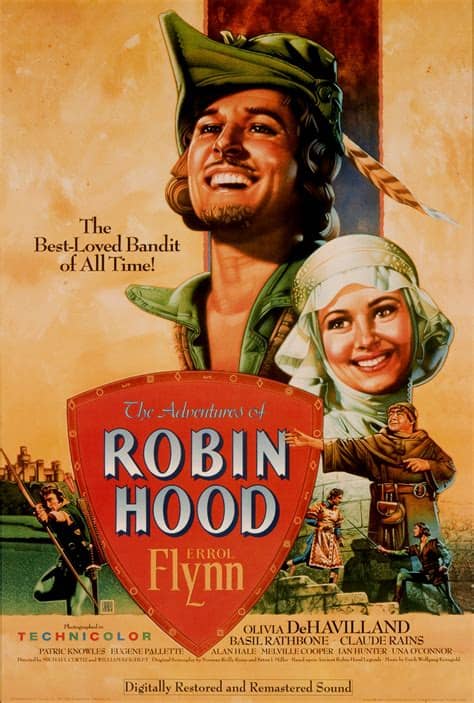
The Adventures of Robin Hood (1938)

Errol Flynn hits the spot in The Adventures of Robin Hood

Director: Michael Curtiz, William Keighley

Cast: Errol Flynn (Robin Hood), Olivia de Havilland (Maid Marian), Basil Rathbone (Sir Guy of Gisbourne), Claude Rains (Prince John), Patrick Knowles (Will Scarlet), Eugene Pallette (Friar Tuck), Alan Hale (Little John), Herbert Mundin (Much, the Miller’s Son), Melville Cooper (Sheriff of Nottingham), Una O’Connor (Bess), Ian Hunter (King Richard)

Has a more enjoyable film ever been made? The Adventures of Robin Hood is such a glorious technicolour treat it’s pretty much an archetype of a Hollywood blockbuster. Reportedly the only film in history that had exactly no changes made to it after preview screenings (so much did the audience lap it up), it’s been entertaining people pretty much non-stop since 1938. Never mind its influence on Robin Hood legend – almost every Robin Hood based film or show recycles elements of the plot here – it’s pretty much built up a picture of what a classic Hollywood Olde Medieval England epic is.

It’s Medieval England at the time of the Crusades (actual history is of course no-one’s concern). King Richard’s wicked brother, the greedy Prince John (Claude Rains) is plotting to seize the throne while bis brother languishes in an Austrian dungeon. Up go the taxes – especially on those pesky Saxons who still fill England’s lands, under the yoke of their Norman rulers. Who can stand in the way of John – and his arrogantly ruthless right-hand man Sir Guy of Gisbourne (Basil Rathbone)? Only the Lincoln-green coated Saxon nobleman Robin of Locksley (Errol Flynn), the most upstandingly, thigh-slappingly, decent chap you could imagine. Taking the name Robin Hood, he takes refuge in Sherwood Forest and builds up a group of like-minded fellows who resolve to rob from the rich, give to the poor and protect the realm for Richard. But things get complicated when Robin falls in love with brave and whipper-smart Maid Maran (Olivia de Havilland) – especially as she is the intended of non-other than the wicked Sir Guy of Gisbourne…

Looking like an explosion in a technicolour workshop, The Adventures of Robin Hood is fast-paced, crammed with rollicking action, packed with good lines and played with a knowing wink by a cast of actors clearly having a whale of a time. It’s a prime slice of entertainment, and it succeeds completely. It’s hard to imagine someone not finding something to enjoy here. Sword fights and chases? Check. Romance and flirtation? Check. Some cheeky gags and a hero thumbing his nose at authority? Check. Villains to hiss and heroes to cheer? You better believe it. I don’t think there is a single type in Hollywood history where the cocktail of action and entertainment was mixed better.

The film has two credited directors. William Keighley was the original, who shot the material in the film shot on location. It’s Keighley who helped tee up the atmosphere, and to get the actors to relax into the style of the thing. Crucial sequences showing the characters meeting (including the encounter with Little John) and a large chunk of the middle-act archery contest were Keighley’s work. So, we have him to thank for working in a competition that includes an arrow piecing straight through the middle of another (a stunt put together with a bit of clever wire work and some genuinely gifted archery skills). However, Keighley was less accomplished at shooting action. And to be honest you can see it, during the sequence where Robin and his Merry Men take hostage Gisborne and the Sheriff. It’s fine, but there is a reason why it’s also not a scene anyone particularly remembers from the film. When the shoot returned to Hollywood for the interiors, a new director was sought out to handle the rest – which included all the big fight scenes.

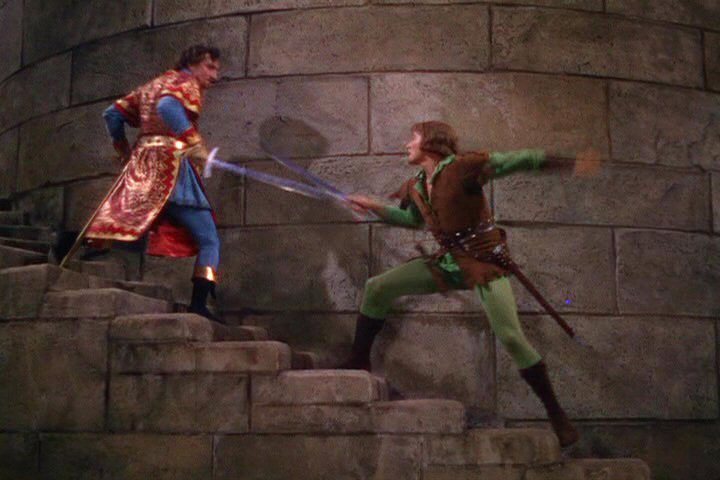
The man they called on was one of the masters of the studio system, Michael Curtiz. A director famed for his dictatorial approach to film-making (hilariously Flynn agreed to the film on condition that it wouldn’t be directed by Curtiz, the relationship between the two having collapsed during earlier collaborations), what Curtiz could do that Keighley couldn’t was add a really visual scale to the action. And it worked a treat – because Curtiz gifted us two of the greatest, instantly recognisible, action showpieces in Hollywood history. Both epic sword fights in Nottingham Castle are down to him, his camera employing crane, tracking and long shots to add an epic quality. He was also full of cool ideas – it’s him we have to thank for a portion of the closing sword fight being shown through shadow play.

It’s the pace as well that Curtiz really understand. Compare the careful, single shot, used by Keighley for the quarterstaff duel between Robin and Little John. Now admittedly the stakes are lower. But then watch the immediacy and dynamism of Curtiz’s camera moves while Robin fights for his life in Nottingham against dozens of guards, or duels with Sir Guy. The energy – and above all the pace and speed – of these scenes help make them gripping. And it wasn’t just the action. Curtiz bought a romantic jolt of energy to the interplay between Maid Marion and Robin, framing a key scene with a romantic intimacy on the edge of a window sill. While Keighley laid the ground work, it’s arguably Curtiz’ work that makes the film what it is.

Well that and the actors. Errol Flynn was perfectly cast as Robin Hood, the part a wonderful fit for his ability to mix charm with just a hint of rogueish sexuality and cheek. Combine that with his athleticism – some of the stunts he carries out in this film are eye-openingly intense – and you’ve got the man you pretty much cemented the public impression of who Robin Hood was. It’s beyond bizarre to imagine the original choice of actor – James Cagney – playing the role.

Flynn also of course has winning chemistry with Olivia de Havilland. De Havilland uses her great skill to make Maid Marian far more than just a damsel in distress. She’s proactive, plugged in and defiant, convinced of the need for justice and more alert to dangers and opportunities than almost anyone else in the film.

Both of these two go up against one of the finest arrays of baddies I think film has ever seen. Rains is arrogant, aloof and ever-so-slightly camp as the superior Prince John. Rathbone is scowlingly austere and deliciously pleased-with-himself as Sir Guy. And for the chuckles we have the bumbingly cowardly Sheriff, played with comic delight by Melville Cooper. All three of these actors combine perfectly, offering a marvellous troika of villains, each a mirror image of different facets of Flynn’s hero.

It makes for a gloriously entertaining film, all washed down with Erich Wolfgang Korngold’s marvellous symphonic score, the bombast and romantic sweep of the music perfectly counterbalancing the action on screen. Still the greatest of all Robin Hood films, The Adventures of Robin Hood is entertaining no matter when you watch it.

The Snake Pit (1948)

Olivia de Havilland struggles with her sanity in the engaging The Snake Pit

Director: Anatole Litvak

Cast: Olivia de Havilland (Virginia Stuart Cunningham), Mark Stevens (Robert Cunningham), Leo Genn (Dr Mark van Kensdelaerik “Dr. Kik”), Celeste Holm (Grace), Glenn Langan (Dr Terry), Helen Craig (Nurse Davis), Leif Erickson (Gordon), Beulah Bondi (Mrs Greer), Lee Patrick (Asylum inmate), Betsy Blair (Hester), Howard Freeman (Dr Curtis)

Virginia Stuart Cunningham (Olivia de Havilland) wakes up on a park bench with no idea where she is – and only the vaguest idea of who she is – and reckons she could be anywhere from a zoo to a prison. She’s actually in an asylum – or Juniper Hill State Hospital – and has been for some time, struggling with a schizophrenia and anxiety-related condition and with no idea of when – or if – she will ever leave. She is treated by the kindly, professorial “Dr Kik” (Leo Genn) and generally fails to recognise her husband Robert (Mark Stevens).

The Snake Pit is a very earnest but dramatically engaging and even quite moving story of one woman’s struggle to try and preserve her mental health, despite being stuck in a system that is a complete lottery with some patients lucky enough to be cared for and others dumped and forgotten. Litvak’s film is a passionate expose on the conditions that lack of funding and public interest had allowed to prosper in mental institutions in America, with parts of the facility little better than a Dickensian work-house, others like something out of Dante’s Inferno. It was a passion project for Anatole Litvak, who bought the rights to the book personally and pushed the studio to fund the creation of the film.

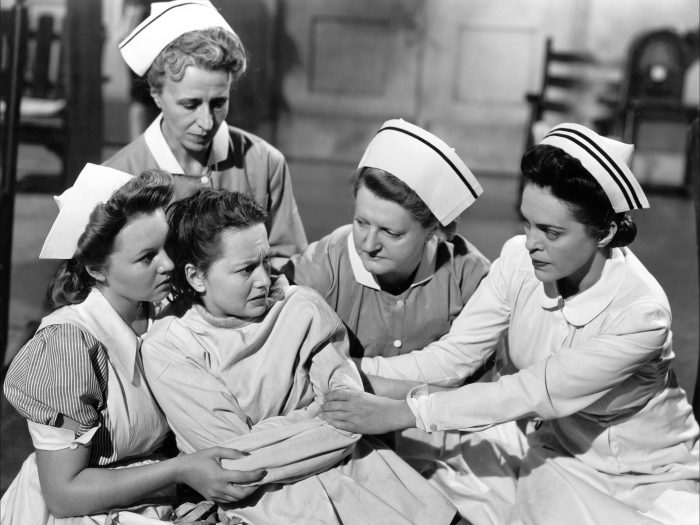
The story is centred around Virginia’s experiences of the asylum as she moves from ward to ward – low numbered wards being reserved for those considered likely to leave, with the ward number increasing as the prospect of the patient ever getting out of the asylum (or ever getting any focus from the doctors) decreasing. The staff are harassed, overworked, underpaid and frequently struggle with being heavily outnumbered by the patients, having only a few minutes a day for each one. They are also a mixed bag – there seems to be very little in the way of training – with some dedicated and caring, others seeing the patients as at best irritants and at worst little more than objects. Virginia’s real problems start when she gets on the wrong side of Ward 1 nurse Davis (Helen Craig), an officious, domineering bully who treats her patients like pupils in a finishing school and punishes ruthlessly any deviation from her rules.

Litvak’s film exposes the conditions here, but apart from the odd individual largely avoids attacks on the staff. Instead it seems to be the general air of indifference and disregard that society has for those who end up in these places that seems to be taking the brunt of the blame. Litvak’s direction is impeccable as he uses a combination of interesting angles, sympathetic close-ups and clever transitions and fades (which serve as a neat contrast for Virginia’s own struggles to understand where and when she is). In one particular tour-de-force moment, Litvak’s camera pulls up-and-away from Virginia in the middle of the hellish Ward 33 (the Snake Pit of the title), pulling away to make the ward indeed appear it is at the bottom of a pit with the patients a mass of figures within. 

Litvak’s film also benefits hugely from the simply superb performance by Olivia de Havilland. De Havilland brings the role such commitment and such emotional performance, that she is largely to thank for making the story (and not just the setting) as engrossing as it is. De Havilland is gentle, vulnerable, scared but mixes it with touches of determination and also carries with her a sensitivity that makes her as much a caring and gentle figure as it does a victim. She appears in almost every scene and dominates the film, handling the moments of quiet panic as well as she does the moments of immense distress. Her increasingly sorry state as she progresses down through the wards is heart-rendering, and her confusion and fear makes her someone we care for deeply, even while her concern and care for her fellow inmates – particularly a violent patient, played by Betsy Blair, who she takes under her wing and helps recover some of her equilibrium – makes her admirable and less of a victim.

Though lord knows she suffers enough, from claustrophobic locked-in baths (her screaming fit as she fears drowning being all-but-ignored by her dismissive nurses who have heard it all before) to being strapped into a straitjacket for god knows how long (after being provoked into an angry outburst by Nurse Davis). Around this she also undergoes bullying medical examinations from doctor’s unfamiliar with her case to watching her fellow inmates being mocked and laughed at my visitors. That’s not even to begin to mention the ECT treatment she undergoes at the start of the film (“to bring her back” from the edge of disappearing into a fantasy world), a series of detailed and observed procedures which are clinically sinister. 

Despite its many strengths, the film is dated in many ways. The original book avoided all reasons for Virginia’s illness. The film works overtime to give a “reason” for why she is, and of course this is rooted above all to issues related to Virginia’s failure to relax into the “proper” role for a woman in this man’s world. Her conditions are clumsily linked back to a troubled relationship with her mother and father, that led to a lack of development of maternal feelings. Guilt over a failed engagement has made her uncomfortable with marriage and nervous of men. Many of these revelations come out through a series of slightly clichéd therapy sessions that, for all the skill of Leo Genn’s performance as the doctor, carry the “and now we know all the answers” certainties of film psychiatry. 

Attitudes like this date The Snake Pit – so what if Virginia perhaps isn’t wild about marriage and isn’t sure if she wants children – and the film works overtime to suggest what will make her better above all is settling down into the sort of conventional life represented by her dull-as-ditch-water husband Robert, flatly played by Mark Stevens. While the film shows that healing like this takes time – and a lot of it – it also can’t imagine a world where a woman might find a life outside of the domestic norm healthier for them. But the film remains an emotional and moving one – moments like the one near the end where the patients listen enraptured, with enchanted faces, to a singer singing about home carry real emotional force – and it has a simply superb performance from de Havilland. Litvak’s film maybe slightly dated, but it’s still an impressive piece of work.